

The Hartung-Knapp-Sidik-Jonkman method for random effects meta-analysis is straightforward and considerably outperforms the standard DerSimonian-Laird method
Open accessThe DOI matches its Crossref record; 34 of the 34 references it cites were found in a registry or an index.
Abstract
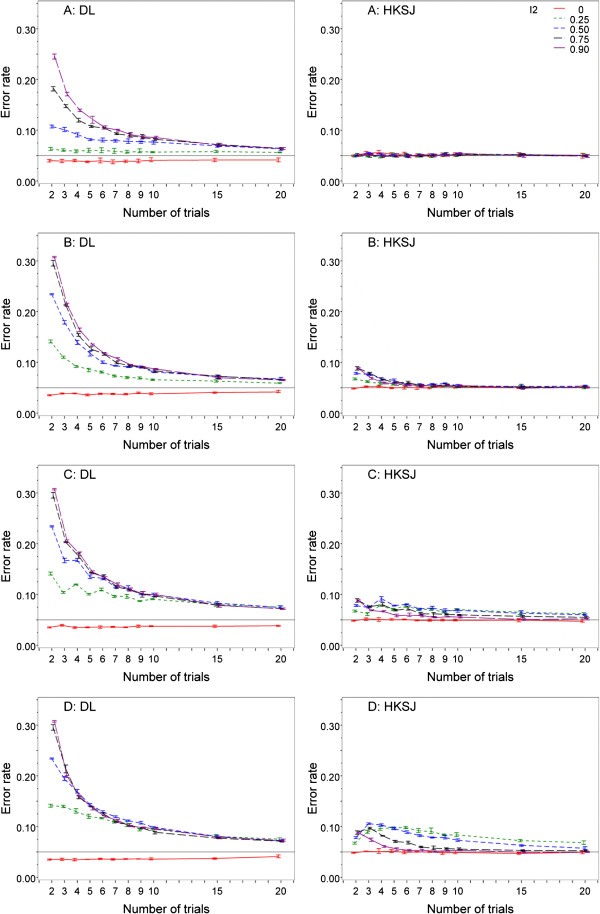
BACKGROUND: The DerSimonian and Laird approach (DL) is widely used for random effects meta-analysis, but this often results in inappropriate type I error rates. The method described by Hartung, Knapp, Sidik and Jonkman (HKSJ) is known to perform better when trials of similar size are combined. However evidence in realistic situations, where one trial might be much larger than the other trials, is lacking. We aimed to evaluate the relative performance of the DL and HKSJ methods when studies of different sizes are combined and to develop a simple method to convert DL results to HKSJ results. METHODS: We evaluated the performance of the HKSJ versus DL approach in simulated meta-analyses of 2-20 trials with varying sample sizes and between-study heterogeneity, and allowing trials to have various sizes, e.g. 25% of the trials being 10-times larger than the smaller trials. We also compared the number of "positive" (statistically significant at p < 0.05) findings using empirical data of recent meta-analyses with > = 3 studies of interventions from the Cochrane Database of Systematic Reviews. RESULTS: The simulations showed that the HKSJ method consistently resulted in more adequate error rates than the DL method. When the significance level was 5%, the HKSJ error rates at most doubled, whereas for DL they could be over 30%. DL, and, far less so, HKSJ had more inflated error rates when the combined studies had unequal sizes and between-study heterogeneity. The empirical data from 689 meta-analyses showed that 25.1% of the significant findings for the DL method were non-significant with the HKSJ method. DL results can be easily converted into HKSJ results. CONCLUSIONS: Our simulations showed that the HKSJ method consistently results in more adequate error rates than the DL method, especially when the number of studies is small, and can easily be applied routinely in meta-analyses. Even with the HKSJ method, extra caution is needed when there are = <5 studies of very unequal sizes.
Overview
The claims and statistics of this paper haven’t been checked yet.
Free: it reads the open-access text and checks the first 5 claims that cite a source we can check. Create a free account to check every claim.
Integrity signals
Registry
Cites
Statistics
Figures
Verification
Claims the paper makes
The claims and statistics of this paper haven’t been checked yet.
Free: it reads the open-access text and checks the first 5 claims that cite a source we can check. Create a free account to check every claim.
Claims other papers make about this one
Each is checked against this paper’s own text: does it say what the citing paper says it does?
The source backs part of the claim, not all of it — or backs it for a different population, condition or comparison.
In the citing paper
“Random-effects meta-regression with Knapp–Hartung adjustment was applied to account for between-study heterogeneity and to calculate 95% prediction intervals, estimating the likely range of effect sizes in future studies (30).”
From The association of screen time and the risk of sleep outcomes: a systematic review and meta-analysis. (2025) · cites this paper as [30]
Experimental — accuracy not yet measuredThe cited source says what the claim attributes to it.
In the citing paper
“To evaluate robustness of pooled estimates, prespecified sensitivity analyses included fixed-effect models, Hartung–Knapp adjustment for random-effects inference, alternative τ² estimators, leave-one-out analyses, and Bayesian random-effects meta-analysis (45–49).”
In the citing paper
“An inverse-variance method with a random-effects model and Hartung-Knapp-Sidik-Jonkman adjustment (33) was used to adjust for study variability in sample sizes.”
From Digital Media Use and Adolescents' Mental Health During the Covid-19 Pandemic: A Systematic Review and Meta-Analysis (2022) · cites this paper as [33]
Self-check
Percentages, sums and reported differences re-computed from the paper’s own numbers.
The self-check needs the paper’s full text.
Citations
Cites
2 retracted
Singh, M., & Das, R. R. (2013) · Cochrane Database of Systematic Reviews · doi:10.1002/14651858.cd001364.pub4 · Cited by 237
RetractedSingh, M., & Das, R. R. (2011) · Cochrane Database of Systematic Reviews · doi:10.1002/14651858.cd001364.pub3 · Cited by 86
RetractedMeasuring inconsistency in meta-analyses
Higgins, J. P. T., Thompson, S. G., Deeks, J. J., & Altman, D. G. (2003) · BMJ · doi:10.1136/bmj.327.7414.557 · Cited by 63,139 · cited 8×
“The levels correspond to no, low, moderate, high and very high heterogeneity, respectively [16].”
BackgroundMethodResultInfluentialMeta-analysis in clinical trials
DerSimonian, R., & Laird, N. (1986) · Controlled Clinical Trials · doi:10.1016/0197-2456(86)90046-2 · Cited by 39,552 · cited 2×
“Background The commonly used method for a random effects metaanalysis is the DerSimonian and Laird approach (DL method) [1].”
MethodQuantifying heterogeneity in a meta‐analysis
Higgins, J. P. T., & Thompson, S. G. (2002) · Statistics in Medicine · doi:10.1002/sim.1186 · Cited by 36,763 · cited 1×
“the degree of inconsistency in the studies’ results, in comparison to the total amount of variation [16,22].”
ResultConducting Meta-Analyses in R with the metafor Package
Viechtbauer, W. (2010) · Journal of Statistical Software · doi:10.18637/jss.v036.i03 · Cited by 20,464 · cited 2×
“The R package metafor [20] can also be used to perform an HKSJ analysis.”
MethodBorenstein, M., Hedges, L. V., Higgins, J. P. T., & Rothstein, H. R. (2009) · doi:10.1002/9780470743386 · Cited by 14,225
Borenstein, M., Hedges, L. V., Higgins, J. P. T., & Rothstein, H. R. (2021) · doi:10.1002/9781119558378 · Cited by 9,799
Improved tests for a random effects meta‐regression with a single covariate
Knapp, G., & Hartung, J. (2003) · Statistics in Medicine · doi:10.1002/sim.1482 · Cited by 2,075 · cited 1×
“The implementation is based on the meta-regression paper by Knapp and Hartung [34]: when no covariates or moderator variables are used, the meta-regression reduces to a random effects metaanalysis as proposed by Hartung/Knapp and Sidik/ Jonkman.”
MethodUncertainty in heterogeneity estimates in meta-analyses
Ioannidis, J. P. A., Patsopoulos, N. A., & Evangelou, E. (2007) · BMJ · doi:10.1136/bmj.39343.408449.80 · Cited by 1,254 · cited 1×
“Some detectable heterogeneity is present in about half of meta-analyses of clinical studies [15-18].”
BackgroundSelf-citation
Research works printed but not linked: 3
- The Cochrane Collaboration Review Manager (RevMan) 5.1.4 2011 Copenhagen: The Nordic Cochrane Centre
- Borenstein M Hedges L Higgins J Rothstein H Comprehensive Meta-analysis Version 2 2005 Englewood NJ: Biostat
- Hartung J An alternative method for meta-analysis Biom J 1999 901 916
Cited by
Items 801–900 of 1,007
Worku, S. A., Mittiku, Y. M., & Wubetu, A. D. (2020) · Contraception and Reproductive Medicine · doi:10.1186/s40834-020-00121-w · Cited by 17
A Systematic Review and Meta-Analysis of Food Insecurity and Dyslipidemia
Arenas, D. J., Beltrán, S., Montgomery, C. T., Pharel, M., López-Hinojosa, I. J., Vilá-Arroyo, G., & DeLisser, H. M. (2022) · The Journal of the American Board of Family Medicine · doi:10.3122/jabfm.2022.04.210413 · Cited by 17
Urquhart, O., DeLong, H. R., Ziegler, K. M., Pilcher, L., Pahlke, S. C., Tampi, M. P., O’Brien, K. K., Patton, L. L., Agrawal, N., Hofstede, T. M., et al. (2022) · The Journal of the American Dental Association · doi:10.1016/j.adaj.2022.06.003 · Cited by 17
Nolde, M., Ahn, N., Dreischulte, T., Krause, E., Güntner, F., Günter, A., Gerlach, R., Tauscher, M., Amann, U., Linseisen, J., et al. (2022) · European Journal of Internal Medicine · doi:10.1016/j.ejim.2022.09.021 · Cited by 20
“We used the Hartung-Knapp-Sidik-Jonkman random-effects meta-analysis approach with inverse-variance weighting which showed to produce adequate standard errors even when the number of studies is small [14,15] to estimate the between-study variance ( τ 2 ) and combine study-specific log HRs.”
Machado, E. D., Cole, M. H., Miller, L., McGuckian, T. B., & Wilson, P. H. (2023) · Disability and Rehabilitation · doi:10.1080/09638288.2023.2200259 · Cited by 22
“The Hartung-Knapp-Sidik-Jonkman method was applied to estimate the variance of pooled effects as it outperforms other methods when there are few studies or substantial heterogeneity [57,58].”
MethodGeraldini, F., Diana, P., Fregolent, D., CASSAI, A. D., Boscolo, A., Pettenuzzo, T., Sella, N., Lupelli, I., Navalesi, P., & Munari, M. (2023) · Canadian Journal of Anesthesia/Journal canadien d anesthésie · doi:10.1007/s12630-023-02481-8 · Cited by 17
Zhao, C., Yin, Y., Zhu, C., Zhu, M., Ji, T., Li, Z., & Cai, J. (2023) · EClinicalMedicine · doi:10.1016/j.eclinm.2023.102071 · Cited by 18
Chen, Y., & Gao, Y. (2023) · Therapeutics and Clinical Risk Management · doi:10.2147/tcrm.s416785 · Cited by 26
“Secondly, with the Hartung-Knapp (HAKN) method or DerSimonian-Laird (DL) method, 26 we measured the risk ratio (RR) with the 95% confidence intervals (CIs) for dichotomized outcome data such as mortality, while the standard mean differences (SMD) with the 95% CIs for continuous outcome data.”
Santana, B. D. M., Moura, J. R., de Toledo, A. M., Burke, T. N., Probst, L. F., Pasinato, F., & Carregaro, R. L. (2023) · JMIR mhealth and uhealth · doi:10.2196/48204 · Cited by 21
“The random effects model with Knapp-Hartung adjustment [36] was used in the calculation of both outcomes.”
MethodKőnig, J., Kelemen, K., Váncsa, S., Szabó, B., Varga, G., Mikulás, K., Borbély, J., Hegyi, P., & Hermann, P. (2023) · Journal of Prosthetic Dentistry · doi:10.1016/j.prosdent.2023.11.023 · Cited by 17
Melanoma‐like features in pediatric longitudinal melanonychia: A systematic review and meta‐analysis
Tsai, S. Y., Hamilton, C., Mologousis, M. A., & Hawryluk, E. B. (2024) · Pediatric Dermatology · doi:10.1111/pde.15597 · Cited by 17
“15,16 In few studies that reported both pediatric and adult LM, we calculated the pooled odds ratios (ORs) using fixed-or random-effects models with the Cochran – Mantel – Haenszel method to compare the occurrence of each feature between children and adults.”
Aldrich, L., Ispoglou, T., Prokopidis, K., Alqallaf, J., Wilson, O. J., & Stavropoulos‐Kalinoglou, A. (2024) · Journal of Cachexia Sarcopenia and Muscle · doi:10.1002/jcsm.13662 · Cited by 24
A Meta-Analysis on the Seroprevalence of Parvovirus B19 among Patients with Sickle Cell Disease
Mohamed, S. O. O., Mohamed, E. M. O., Osman, A. A. A., MohamedElmugadam, F. A. A., & Ibrahim, G. A. A. (2019) · BioMed Research International · doi:10.1155/2019/2757450 · Cited by 17
Hodkinson, A., Heneghan, C. J., Mahtani, K. R., Kontopantelis, E., & Panagioti, M. (2021) · BMC Medicine · doi:10.1186/s12916-021-02062-w · Cited by 23
“Hartung-Knapp confidence intervals were used to account for uncertainty in the variance estimate [45].”
MethodEkundayo, T. C., Olasehinde, T. A., Falade, A. O., Adewoyin, M. A., Iwu, C. D., Igere, B. E., & Ijabadeniyi, O. A. (2022) · Multiple Sclerosis and Related Disorders · doi:10.1016/j.msard.2022.103671 · Cited by 24
Effects of hormonal growth promotants on beef quality: a meta-analysis
Lean, I. J., Golder, H. M., Lees, N. M., McGilchrist, P., & Santos, J. E. P. (2018) · Journal of Animal Science · doi:10.1093/jas/sky123 · Cited by 19
Amoo, E. O., Olawole-Isaac, A., Ajayi, M. P., Adekeye, O., Ogundipe, O. M., & Olawande, T. I. (2019) · Cogent Social Sciences · doi:10.1080/23311886.2019.1677120 · Cited by 18
Qiu, L., Ma, Y., Li, G., Zhou, H., & Jia, W. (2025) · World Neurosurgery · doi:10.1016/j.wneu.2024.123570 · Cited by 15
Hayes, E. J., Alhulaefi, S. S., Siervo, M., Whyte, E., Kimble, R., Matu, J., Griffiths, A., Sim, M., Burleigh, M. C., Easton, C., et al. (2025) · European Journal of Nutrition · doi:10.1007/s00394-025-03616-x · Cited by 23
Bissenov, A., Zhubi, E., Engh, M. A., Gresits, O., Tóth, R., & Terebessy, T. (2025) · Journal of Orthopaedic Surgery and Research · doi:10.1186/s13018-025-06322-w · Cited by 26
Maurizi, N., Ammirati, E., Silver, E., Hong, K., Bui, Q. M., Argirò, A., Olivotto, I., & Adler, E. D. (2026) · Molecular Therapy · doi:10.1016/j.ymthe.2026.01.004 · Cited by 20
Hyysalo, N., Gastelle, M., & Flykt, M. S. (2021) · Development and Psychopathology · doi:10.1017/s0954579421000134 · Cited by 26
ARİKAN, M. S., Mat, B., Alkan, H., ÇEVRİMLİ, M. B., Akin, A. C., ŞAHİN, T. S., & Tekindal, M. A. (2021) · Veterinary Medicine and Science · doi:10.1002/vms3.610 · Cited by 16
Incidence of impaired kidney function among people with HIV: a systematic review and meta-analysis
Shi, R., Chen, X., Lin, H., Ding, Y., & He, N. (2022) · BMC Nephrology · doi:10.1186/s12882-022-02721-x · Cited by 18
“A random-effect model employing Hartung-Knapp method to adjust test statistics and confidence intervals (CIs) with Sidik-Jonkman estimator used for the between-study variance (HKSJ method) was performed to pool incidence rates, as it was proved that the HKSJ method performs better than Der Simonian-Laird (DL) method,…”
MethodPike, A., McGuckian, T. B., Steenbergen, B., Cole, M. H., & Wilson, P. H. (2022) · Archives of Physical Medicine and Rehabilitation · doi:10.1016/j.apmr.2022.07.014 · Cited by 26
Grandi, V., Simontacchi, G., Grassi, T., Pileri, A., & Pimpinelli, N. (2022) · Dermatologic Therapy · doi:10.1111/dth.15840 · Cited by 16
“Data were pooled using a random-effects model calculated via the Mantel–Haenszel method or the inverse variance method and adjusted via the Hartung-Knapp-Sidik-Jonkman method.(4) Tau(2) estimator was calculated used the method by Sidik and Jonkman.”
MethodChristian, P., & Soutschek, A. (2022) · Neuropsychologia · doi:10.1016/j.neuropsychologia.2022.108393 · Cited by 20
Serratus Plane Block in Breast Cancer Surgery: A Systematic Review and Meta-Analysis
Li, Z., Hong, W., Guo, X., Li, X., Jiang, X.-Y., Jiang, Y. Y., & Luo, S. (2022) · Clinical Breast Cancer · doi:10.1016/j.clbc.2022.10.009 · Cited by 23
Using phosphate amendments to reduce bioaccessible Pb in contaminated soils: A meta-analysis
Mayer, M. M., Basta, N. T., & Scheckel, K. G. (2022) · Frontiers in Soil Science · doi:10.3389/fsoil.2022.1028328 · Cited by 19
“The Hartung-Knapp-Sidik-Jonkman method was used (29).”
Flaps for lower limb diabetic wound reconstruction: A systematic review and meta-analysis
Tan, C. H., Wu, Y., & Satkunanantham, M. (2023) · Journal of Plastic Reconstructive & Aesthetic Surgery · doi:10.1016/j.bjps.2023.01.032 · Cited by 22
Horvath, I. R., Zhang, K., Mayer, B. K., & Parolari, A. J. (2023) · Environmental Science & Technology · doi:10.1021/acs.est.2c05942 · Cited by 19
Saracco, M., Ciriello, V., D’Angelo, F., Zagra, L., Solarino, G., & Logroscino, G. (2023) · EFORT Open Reviews · doi:10.1530/eor-23-0028 · Cited by 16
Chou, T.-Y., Tsuang, F.-Y., Hsu, Y., & Chai, C. L. (2023) · Global Spine Journal · doi:10.1177/21925682231181875 · Cited by 18
Cuijpers, P. J., Miguel, C., Čihařová, M., Harrer, M., Moir, F., Roskvist, R. P., van Straten, A., Karyotaki, E., & Arroll, B. (2023) · Journal of Affective Disorders · doi:10.1016/j.jad.2023.07.011 · Cited by 23
Hong, X. L., Cheng, L. J., Feng, R. C., Goh, J., Gyanwali, B., Itoh, S., Tam, W., & Wu, X. V. (2023) · Archives of Gerontology and Geriatrics · doi:10.1016/j.archger.2023.105161 · Cited by 22
Rojas‐Castillo, O. A., Kepfer‐Rojas, S., Juen, L., Montag, L. F. D. A., de Carvalho, F. G., Mendes, T. P., Chua, K. W. J., Wilkinson, C. L., Amal, M. N. A., Fahmi‐Ahmad, M., et al. (2023) · Conservation Biology · doi:10.1111/cobi.14172 · Cited by 21
“The standardized mean difference is applicable when contrasting different sampling methods (Borenstein et al., 2009), and the Hartung–Knapp–Sidik–Jonkman is effective with small sample sizes and high heterogeneity (IntHout et al., 2014).”
MethodLiddle, N., Taylor, J. M., Chesterton, P., & Atkinson, G. (2023) · Sports Medicine · doi:10.1007/s40279-023-01950-w · Cited by 22
“Random-effects models were selected with a restricted maximum likelihood estimator and the Knapp–Hartung adjustment [18].”
Non-directive supportive therapy for depression: A meta-analytic review
Cuijpers, P. J., Miguel, C., Čihařová, M., Harrer, M., & Karyotaki, E. (2024) · Journal of Affective Disorders · doi:10.1016/j.jad.2024.01.073 · Cited by 23
Chew, H. S. J., Soong, R. Y., Teo, Y. Q. J., Flølo, T. N., Chong, B., Yong, C. L., Ang, S. H., Ho, Y., Chew, N., So, J. B. Y., et al. (2024) · Nutrition Reviews · doi:10.1093/nutrit/nuad163 · Cited by 20
Rushton, T. J., Tian, D. H., Baron, A., Hess, J. R., & Burns, B. (2024) · European Journal of Trauma and Emergency Surgery · doi:10.1007/s00068-024-02454-6 · Cited by 16
“…to mean and standard deviation (SD) to facilitate meta-analysis using the methods of Luo et al. [35] and Wan et al. [36]. iCa concentration was pooled using the Hartung-Knapp-Sidik-Jonkman random-effects meta-analysis of proportions for both overall aggregation and between-group comparisons [37].”
MethodAssessment of suicidality in trials of psychological interventions for depression: a meta-analysis
Miguel, C., Cecconi, J., Harrer, M., van Ballegooijen, W., Bhattacharya, S., Karyotaki, E., Cuijpers, P. J., Gentili, C., & Cristea, I. A. (2024) · The Lancet Psychiatry · doi:10.1016/s2215-0366(24)00027-0 · Cited by 20
de Moraes, F. C. A., Pessôa, F. D. D. L., Ribeiro, C. H. D. D. C., Fernandes, M. R., Burbano, R. M. R., & dos Santos, N. P. C. (2024) · BMC Cancer · doi:10.1186/s12885-024-12447-8 · Cited by 18
“The Sidik-Jonkman estimator was used to calculate the tau2 variance between studies [32].”
MethodQiu, Y., Wu, M., Liu, J., Li, C., Yu, Y., Zeng, L., Yang, F., Zhang, X., & Chen, G. (2024) · General Hospital Psychiatry · doi:10.1016/j.genhosppsych.2024.12.022 · Cited by 18
Wong, H. J., Lin, N., Teo, Y. H., Yeo, B. S. Y., Toh, K. Z. X., Teo, Y. N., Chan, M. Y., Yeo, L. L. L., Poh, K. K., Kong, W. K. F., et al. (2024) · Diabetes Obesity and Metabolism · doi:10.1111/dom.16136 · Cited by 20
“24 There was no change in the direction nor significance of results (Figures S29 and S30), suggesting that the overall results remain robust to different statistical models.”
Liebs, T. R., Ziebarth, K., & Berger, S. (2018) · Arthroscopy The Journal of Arthroscopic and Related Surgery · doi:10.1016/j.arthro.2017.12.016 · Cited by 17
Apolipoprotein E-ε4 allele predicts escalation of psychotic symptoms in late adulthood
Jonas, K. G., Clouston, S., Li, K., Fochtmann, L. J., Lencz, T., Malhotra, A. K., Cicero, D. C., Perlman, G., Bromet, E. J., & Kotov, R. (2018) · Schizophrenia Research · doi:10.1016/j.schres.2018.12.010 · Cited by 18
“We followed the Hartung-Knapp-Sidik-Jonkman (HKSJ) method for metaanalysis because it consistently outperforms other estimators in smalln studies (IntHout et al., 2014).”
MethodEfficacy of intracuff lidocaine in reducing coughing on tube: a systematic review and meta-analysis
Peng, F., Wang, M., Yang, H., Yang, X., & Long, M. (2020) · Journal of International Medical Research · doi:10.1177/0300060520901872 · Cited by 16
“Analysis of the secondary outcome showed that by comparison with controls, intracuff administration of alkalinized lidocaine or non-alkalinized lidocaine produced a significant reduction in the incidence of other intubation-related complications (Table 3) According to the GRADE recommendations for level of evidence qu…”
ResultZhang, S., Holy, C. E., Eichenbaum, G. M., Perkins, L. E. L., Hasgall, P. A., Katz, L. B., Brown, J. R., Orlandini, L. C., Fessel, G., Nasseri-Aghbosh, B., et al. (2021) · Regulatory Toxicology and Pharmacology · doi:10.1016/j.yrtph.2021.104987 · Cited by 16
Meta-analytical comparison of energy consumed by two sorting algorithms
Dlamini, G., Jolha, F., Kholmatova, Z., & Succi, G. (2021) · Information Sciences · doi:10.1016/j.ins.2021.09.061 · Cited by 15
Bala, F., Béland, B., Mistry, E. A., Almekhlafi, M., Goyal, M., & Ganesh, A. (2022) · Journal of NeuroInterventional Surgery · doi:10.1136/neurintsurg-2021-018573 · Cited by 18
Zhang, X., Zhang, X., Wei, Z.-H., Kang, L., Lan, R., Chen, J.-Z., Xie, J., Wang, L., Xu, W., & Xu, B. (2022) · Journal of Cardiology · doi:10.1016/j.jjcc.2022.04.011 · Cited by 17
McParland, A., Bhatia, A., Matelski, J. J., Tian, C., Diep, C., Clarke, H. A., Kapustin, D., Triveda, A., Brull, R., & Singh, M. (2022) · Regional Anesthesia & Pain Medicine · doi:10.1136/rapm-2021-103431 · Cited by 23
Material Scarcity and Unethical Economic Behavior: A Systematic Review and Meta-AnalysisPreprint
Elbaek, C., Mitkidis, P., Aarøe, L., & Otterbring, T. (2021) · Research Square · doi:10.21203/rs.3.rs-800481/v2 · Cited by 18
Vitai, V., Németh, A. M., Teutsch, B., Kelemen, K., Fazekas, A., Hegyi, P. J., Németh, O., Kerémi, B., & Borbély, J. (2024) · Journal of Esthetic and Restorative Dentistry · doi:10.1111/jerd.13309 · Cited by 20
The Efficacy of Experiential Dynamic Therapies: A 10‐Year Systematic Review and Meta‐Analysis Update
Lilliengren, P., Mechler, J., Lindqvist, K., Maroti, D., & Johansson, R. (2025) · Clinical Psychology & Psychotherapy · doi:10.1002/cpp.70086 · Cited by 19
“These adjustments are particularly beneficial when including small studies or in the presence of substantial between-study heterogeneity (IntHout et al. 2014).”
Henschke, N., Bergman, H., Buckley, B. S., Crosbie, E. J., Dwan, K. M., Golder, S., Kyrgiou, M., Loke, Y. K., McIntosh, H. M., Probyn, K., et al. (2025) · Cochrane Database of Systematic Reviews · doi:10.1002/14651858.cd015363.pub2 · Cited by 40
Calzada-Gonzales, N., Moreno-Colina, I., Chu-Fuentes, L., Andrade-Girón, D., Tito-Chura, H., Quispe‐Vicuña, C., Torres-Balarezo, P., Bautista-Pariona, A., & Barboza, J. J. (2025) · BMC Complementary Medicine and Therapies · doi:10.1186/s12906-025-05149-6 · Cited by 19
“Relative risks (RR) with 95% confidence intervals (CI) were reported for dichotomous outcomes, and the Hartung-Knapp method was applied for meta-analyses involving more than five studies [20].”
Hölmich, E. R., Hasselager, R. P., Madsen, M. T., Orhan, A., & Gögenür, I. (2019) · Cancers · doi:10.3390/cancers12010076 · Cited by 16
“The Sidik-Jonkman estimator for tau2 was applied with Hartung-Knapp adjustment in the given random effect model [35].”
MethodHo, E. K., Ferreira, M. L., Chen, L., Simić, M., Ashton-James, C. E., Comachio, J., Hayden, J. A., & Ferreira, P. H. (2020) · BMJ Open · doi:10.1136/bmjopen-2019-034996 · Cited by 20
Fetensa, G., Wirtu, D., Etana, B., Tolossa, T., & Wakuma, B. (2022) · Archives of Public Health · doi:10.1186/s13690-022-00837-y · Cited by 17
“It compares the variation due to heterogeneity (τ 2) to the total amount of variation in a ‘typical’ study (τ 2 + ∈ 2), where ∈ is the standard error of a typical study of the review [36].”
BackgroundBalaouras, G., Eusebi, P., & Kostoulas, P. (2022) · PLoS ONE · doi:10.1371/journal.pone.0271451 · Cited by 20
“Due to the amount of heterogeneity a random-effects model has been used for the ABO gene, by applying the Hartung-Knapp-Sidik-Jonkman method [12] for τ 2 .”
Craige, E. A., Memon, A. R., Belavý, D. L., Vincent, G. E., & Owen, P. J. (2023) · Sleep Medicine Reviews · doi:10.1016/j.smrv.2023.101761 · Cited by 23
Zhao, C., Chen, W., Wang, D., Cong, X., Zhu, M., Zhu, C., Xu, J., & Cai, J. (2023) · Journal of Ethnopharmacology · doi:10.1016/j.jep.2023.116791 · Cited by 19
Arribas‐Romano, A., Fernández‐Carnero, J., Beltrán-Alacreu, H., Diego, I. M. A., Cuenca‐Zaldívar, J. N., Rodríguez‐Lagos, L., Runge, N., & Mercado, F. (2023) · Journal of Pain · doi:10.1016/j.jpain.2023.09.002 · Cited by 18
Iakovidou, M. C., Kolibianakis, E. M., Zepiridis, L. I., & Venetis, C. A. (2023) · Reproductive Biology and Endocrinology · doi:10.1186/s12958-023-01141-2 · Cited by 15
“These results were combined for meta-analysis using the Mantel/Haenszel model when using the fixed effects model and the restricted maximum likelihood method with Hartung-Knapp-Sidik-Jonkman correction [50, 51] when using the random effects model (in case of high heterogeneity, i.e.”
MethodLi, J., Lai, M.-Y., Lin, Z., Guan, W., Sun, Y., Yang, J., Wang, W.-X., Yang, Z., & Qiu, M. (2024) · Cancer Immunology Immunotherapy · doi:10.1007/s00262-024-03726-1 · Cited by 22
“The Hartung–Knapp correction was applied to properly analyze the outcomes generated by a few articles [15], as this method has been shown to substantially outperform the DerSimonian–Laird method [16].”
MethodWan, W., Peters, S., Portengen, L., Babigumira, R., Stenehjem, J. S., Richardson, D. B., & Vermeulen, R. C. H. (2024) · Environmental Health Perspectives · doi:10.1289/ehp15086 · Cited by 20
Damen, J. A., Yang, B., Idema, D. L., Vernooij, R. W. M., Veld, L. F. H. I. ’., Kusters, M. P. T., Spijker, R., van der Braak, K., Heus, P., Jenniskens, K., et al. (2025) · Annals of Internal Medicine · doi:10.7326/annals-24-00315 · Cited by 17
“However, because few studies reported on the same direct comparison (that is, 5 studies [25]), we did fi xed-effects pairwise meta-analyses instead.”
St. John's Wort for Major Depressive Disorder: A Systematic Review
Maher, A. R., Hempel, S., Apaydin, E. A., Shanman, R., Booth, M. S., Miles, J. N. V., & Sorbero, M. E. S. (2015) · Rand health quarterly · doi:10.7249/rhq-05-04-12 · Cited by 20
“This approach may be preferred when the number of studies pooled is small and when there is evidence of heterogeneity (IntHout, Ioannidis, and Borm, 2014).”
Meta-Analysis of Price Responsiveness of Timber Supply
Tian, N., Poudyal, N. C., Augé, R. M., Hodges, D. G., & Young, T. M. (2017) · Forest Products Journal · doi:10.13073/fpj-d-16-00017 · Cited by 16
Klimek, P., Wei, B., & Blashill, A. J. (2020) · Eating Disorders · doi:10.1080/10640266.2020.1791665 · Cited by 15
“A random-effects model approach was used, with a maximum-likelihood estimator and implementing the Hartung-Knapp-Sidik-Jonkman method, which performs well with few studies and marked heterogeneity (IntHout et al., 2014).”
MethodShah, U. J., Nguyen, D. L., Karuppiah, N., Martin, J. E., & Sehmbi, H. (2021) · Regional Anesthesia & Pain Medicine · doi:10.1136/rapm-2020-102024 · Cited by 16
Stuurman, A. L., Levi, M., Beutels, P., Bricout, H., Descamps, A., Santos, G. D., McGovern, I., Mira‐Iglesias, A., Nauta, J. J. P., Torcel‐Pagnon, L., et al. (2022) · Influenza and Other Respiratory Viruses · doi:10.1111/irv.13087 · Cited by 19
“Austria Medical U Vienna 432 (21) 422 (21) 33 (8) 639 (27) 673 (30) 47 (14)”
MacDonald, I., de Goumoëns, V., Marston, M. T., Alvarado, S., Favre, E., Cavin-Trombert, A., Perez, M., & Ramelet, A. (2023) · Frontiers in Pediatrics · doi:10.3389/fped.2023.1204622 · Cited by 24
“Sidik-Jonkman method were used to measure effectiveness of algorithms across continuous outcomes of interest using the standardized mean difference (SMD) and its 95% confidence interval (CI) (55).”
Arbidol for preventing and treating influenza in adults and children
Huang, L., Zhang, L., Liu, Y., Luo, R., Zeng, L., Telegina, I., & Vlassov, V. (2017) · Cochrane Database of Systematic Reviews · doi:10.1002/14651858.cd011489.pub2 · Cited by 15
Ahn, E. J., Choi, G.-J., Kang, H., Baek, C. W., Jung, Y., Woo, Y. C., Lee, S., & Chang, Y.-G. (2016) · PLoS ONE · doi:10.1371/journal.pone.0168509 · Cited by 16
Lingling, C., Qiao, T., Xu, F., Li, Z., Chen, T., Su, H., Chen, G., Zhang, L., Xu, D., & Zhang, X. (2019) · Cytokine · doi:10.1016/j.cyto.2019.154924 · Cited by 16
Jin, X., Antony, B., Wang, X., Persson, M. S. M., McAlindon, T. E., Arden, N., Srivastava, S. R., Srivastava, R. N., van Middelkoop, M., Bierma‐Zeinstra, S., et al. (2020) · BMJ Open · doi:10.1136/bmjopen-2019-035302 · Cited by 19
Chua, R. E. C., Lau, Y., Ang, W. W., Boey, A. A. Y. F., & Lau, S. T. (2024) · Journal of Diabetes · doi:10.1111/1753-0407.70002 · Cited by 14
“38 This method provided actual coverage probabilities, which was more accurate than the conventional method.”
BackgroundMethodInfluentialHwang, J., You, S., Lee, Y. J., & Sun, J. S. (2024) · European Radiology · doi:10.1007/s00330-024-10952-9 · Cited by 14
“We conducted a meta-analysis for single proportions and binary outcomes using a random effects model with restricted maximum likelihood and Hartung – Knapp adjustment method [19].”
Chen, L., Guan, B., Anderson, D., Ferreira, P. H., Stanford, R., Beckenkamp, P. R., van Gelder, J. M., Bayartai, M.-E., Radojčić, M. R., Fairbank, J. C. T., et al. (2024) · BMC Medicine · doi:10.1186/s12916-024-03653-z · Cited by 22
“Given The random effects NMA through a frequentist approach was performed using the restricted maximum likelihood method, and the 95% confidence intervals (CI) were estimated using the Hartung-Knapp-Sidik-Jonk-man approach [80].”
MethodHoang, L. N., Lee, H., & Lee, S. J. (2025) · Frontiers in Aging Neuroscience · doi:10.3389/fnagi.2024.1531278 · Cited by 20
“The Hartung-Knapp-Sidik-Jonkman random-effects model was used to account for heterogeneity in treatment effects (Inthout et al., 2014).”
Mahmud, O., Fatimi, A. S., Grewal, M., DiMaggio, C. J., Hewitt, D. B., Javed, A. A., Wolfgang, C. L., & Sacks, G. D. (2025) · European Journal of Surgical Oncology · doi:10.1016/j.ejso.2025.109742 · Cited by 18
Amstutz, A., Schandelmaier, S., Ewald, H., Speich, B., Schwenke, J. M., Schönenberger, C., Schobinger, S., Agoritsas, T., Tomashek, K. M., Nayak, S., et al. (2025) · The Lancet Respiratory Medicine · doi:10.1016/s2213-2600(25)00055-4 · Cited by 18
Wenzl, F. A., Kofoed, K. F., Simonsson, M., Ambler, G., van der Sangen, N. M. R., Lampa, E., Bruno, F., de Belder, M., Hlásenský, J., Mueller‐Hennessen, M., et al. (2025) · The Lancet Digital Health · doi:10.1016/j.landig.2025.100907 · Cited by 15
“…3.0 in-hospital mortality model was well calibrated (slope 1 ⋅ 06, 95% CI 0 ⋅ 90–1 ⋅ 22; calibration-in-the-large –0 ⋅ 15, 95% CI –0 ⋅ 86 to 0 ⋅ 57) with decision curve analyses suggesting high utility across a range of clinically relevant thresholds beyond GRACE 2.0 (figure 2; appendix pp 26–28).”
InfluentialCuijpers, P. J., Harrer, M., Miguel, C., Karyotaki, E., & Papola, D. (2026) · Journal of Affective Disorders · doi:10.1016/j.jad.2025.121106 · Cited by 18
Plication versus Resection in Horizontal Strabismus Surgery: A Systematic Review with Meta-Analysis
Issaho, D. C., de Freitas, D., & Cronemberger, M. F. (2020) · Journal of Ophthalmology · doi:10.1155/2020/5625062 · Cited by 14
Hwang, J., Jo, S. W., Kwon, E. B., Lee, S. A., & Chang, S. (2021) · Neuroradiology · doi:10.1007/s00234-021-02665-3 · Cited by 14
Michael, H. U., Youbi, E., Ohadoma, S. C., Ramlall, S., Oosthuizen, F., & Polyakova, M. (2021) · Neuropsychology Review · doi:10.1007/s11065-021-09527-y · Cited by 16
Galimzhanov, A. M., Tenekecioğlu, E., Rustamova, F., Tun, H. N., & Mamas, M. A. (2022) · Angiology · doi:10.1177/00033197211070908 · Cited by 15
An older adult advantage in autobiographical recall
Badham, S. P., Justice, L. V., Jones, L. N., & Myers, J. A. C. (2022) · Aging Neuropsychology and Cognition · doi:10.1080/13825585.2022.2063789 · Cited by 16
“Further, the Hartung-Knapp-Sidik-Jonkman method of estimating variance of the pooled effect was used since it has shown to produce more robust estimates when the number of studies is small and substantial heterogeneity is suspected (IntHout et al., 2014).”
MethodFollow-up after ED visits for opioid use disorder: Do they reduce future overdoses?
Cunningham, P. J., Barnes, A. J., Mohamoud, S., Allen, L., Talbert, J., Jarlenski, M., Kim, J. Y., Gordon, A. J., Tang, L., Chang, C.-C. H., et al. (2022) · Journal of Substance Abuse Treatment · doi:10.1016/j.jsat.2022.108807 · Cited by 18
“Using the Hartung-Knapp-Sidik-Jonkman method, we estimated between-state variances due to potential heterogeneity across states to construct valid confidence intervals (IntHout et al., 2014).”
MethodPergialiotis, V., Panagiotopoulos, M. G., Constantinou, T., Vokotopoulou, L. V., Koumenis, A., Stavros, S., Voskos, A., & Daskalakis, G. J. (2022) · Archives of Gynecology and Obstetrics · doi:10.1007/s00404-022-06867-9 · Cited by 14
“In our analysis the Hartung-Knapp-Sidik-Jonkman random effects model was used which outperforms the traditional DerSimonian-Laird model as it consistently results in more adequate error rates when heterogeneous studies are considered for analysis; hence, confounders can be partially overlooked [13].”
MethodResultHilly, C., Wilson, P. H., Lucas, B. R., McGuckian, T. B., Swanton, R., & Froude, E. (2023) · Disability and Rehabilitation · doi:10.1080/09638288.2023.2207043 · Cited by 18
“Given there were few studies included in the multi-level meta-analysis, the Hartung-Knapp-Sidik-Jonkman method was applied to estimate the variance of pooled effects [90, 91].”
MethodSalem, A., Trabelsi, K., Jahrami, H., Al-Rasheed, M. M., Boukhris, O. F., Puce, L., Bragazzi, N. L., Ammar, A., Glenn, J. M., & Chtourou, H. (2024) · Journal of the American Nutrition Association · doi:10.1080/27697061.2023.2297899 · Cited by 24
The effect of unpredictability on the perception of pain: a systematic review and meta-analysis
Pavy, F., Zaman, J., Noortgate, W. V. D., Scarpa, A., von Leupoldt, A., & Torta, D. M. E. (2024) · Pain · doi:10.1097/j.pain.0000000000003199 · Cited by 18
Mheissen, S., Khan, H., Normando, D., Vaiid, N., & Flores‐Mir, C. (2024) · PLoS ONE · doi:10.1371/journal.pone.0298526 · Cited by 14
Cheng, J. Y., Nurul, S. B. M. S., Cheng, L. J., & He, H. G. (2024) · International Journal of Mental Health Nursing · doi:10.1111/inm.13390 · Cited by 16
Salcher‐Konrad, M., Nguyen, M., Savović, J., Higgins, J. P. T., & Naci, H. (2024) · JAMA Network Open · doi:10.1001/jamanetworkopen.2024.36230 · Cited by 22
Prophylactic Antibiotics in Adults With Acute Brain Injury Who Are Invasively Ventilated in the ICU
Hadley-Brown, K., Hailstone, L., Devane, R., Chan, T. W., Devaux, A., Davis, J. S., Hammond, N. E., Li, Q., Litton, E., Myburgh, J., et al. (2024) · CHEST Journal · doi:10.1016/j.chest.2024.10.031 · Cited by 15
Metadata
- Authors
- IntHout, J., Ioannidis, J. P., & Borm, G. F.
- Affiliations
- Radboud University Medical Center (NL)
- Stanford Medicine (US)
- Corresponding author
- IntHout, Joanna
- Venue
- BMC Medical Research Methodology
- Published
- 2014-02-18
- Volume
- 14
- Issue
- 1
- Pages
- 25-25
- ISSN
- 1471-2288 (ISSN-L)
- PMC
- PMC4015721
- OpenAlex
- W2032506622
- Cited by
- 2,419
- References
- 32
- Citations by year
- 2026: 599 · 2025: 299 · 2024: 319 · 2023: 279 · 2022: 263 · 2021: 243 · 2020: 144 · 2019: 81 · 2018: 62 · 2017: 50 · 2016: 37 · 2015: 37 · 2014: 3
- FWCI
- 41.47
- Type
- journal article
- Language
- en
- Open access
- gold
- doi.org
- Licence
- Locations
- BMC Medical Research Methodology (publishedVersion, cc-by)
- Europe PMC (PubMed Central) (publishedVersion, cc-by)
- PubMed Central (publishedVersion, cc-by)
- PubMed (publishedVersion)
- Radboud Repository (Radboud University) (submittedVersion)
- Radboud Repository (Radboud University) (submittedVersion, other-oa)
- Topics
- Social Sciences › Decision Sciences › Statistics, Probability and Uncertainty › Meta-analysis and systematic reviews
- Physical Sciences › Mathematics › Statistics and Probability › Statistical Methods in Clinical Trials
- Physical Sciences › Mathematics › Statistics and Probability › Statistical Methods in Epidemiology
- Keywords
- random-effects meta-analysis, DerSimonian-Laird method, type I error rate, study heterogeneity, significance testing
- MeSH terms
- Clinical Trials as Topic, Common Cold, Data Interpretation, Statistical, Humans, Zinc, Proportional Hazards Models, Odds Ratio, Sample Size, Precursor Cell Lymphoblastic Leukemia-Lymphoma
About these checks
Registry, retraction, Cites and statistics results are computed, not judged, with one exception: a printed reference that no index lists is read once by a model before it counts as a citation error. Claims are extracted by a model and kept only when their quote appears verbatim in the text; each cited source is then checked, with a model’s help, for whether it says what the claim relies on. Those verdicts can be wrong — read the claim’s quote and the cited source before relying on one.
Statistics and arithmetic are recomputed, not judged.
Confidence bands are shown only for fields calibrated on our annotated test set. None is calibrated yet, so no band is shown.
What counts as a claim ›How we measure confidence ›How we check this ›
Are you an author, or do you see a problem with this page? Request a review
Data sources
Bibliographic data: Semantic Scholar, OpenAlex, Crossref.
Contains information from the Semantic Scholar Academic Graph Datasets, made available under the ODC Attribution License (ODC-BY 1.0).
Semantic Scholar’s data is described in: Kinney, R., et al. (2023). The Semantic Scholar Open Data Platform. arXiv:2301.10140.
