

The Hartung-Knapp-Sidik-Jonkman method for random effects meta-analysis is straightforward and considerably outperforms the standard DerSimonian-Laird method
Open accessThe DOI matches its Crossref record; 34 of the 34 references it cites were found in a registry or an index.
Abstract
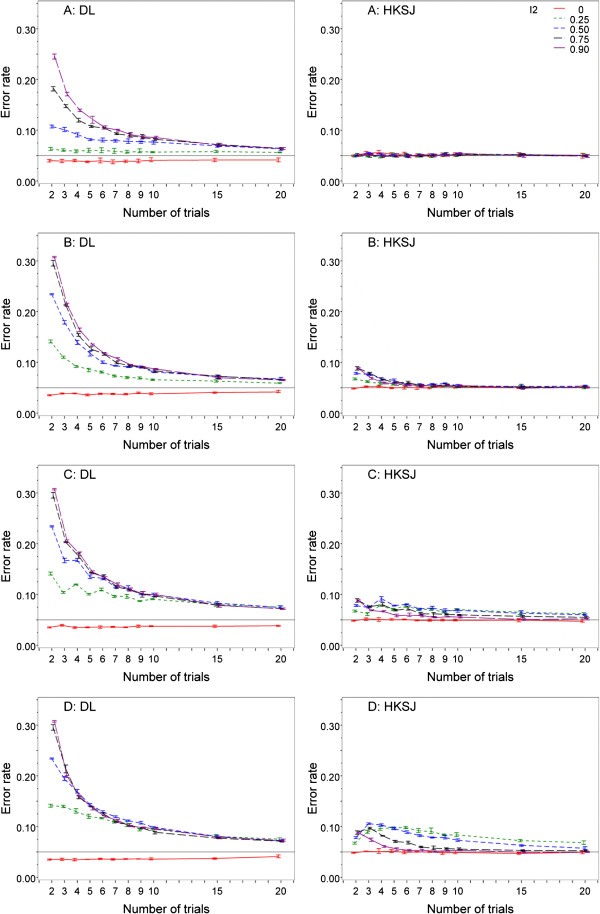
BACKGROUND: The DerSimonian and Laird approach (DL) is widely used for random effects meta-analysis, but this often results in inappropriate type I error rates. The method described by Hartung, Knapp, Sidik and Jonkman (HKSJ) is known to perform better when trials of similar size are combined. However evidence in realistic situations, where one trial might be much larger than the other trials, is lacking. We aimed to evaluate the relative performance of the DL and HKSJ methods when studies of different sizes are combined and to develop a simple method to convert DL results to HKSJ results. METHODS: We evaluated the performance of the HKSJ versus DL approach in simulated meta-analyses of 2-20 trials with varying sample sizes and between-study heterogeneity, and allowing trials to have various sizes, e.g. 25% of the trials being 10-times larger than the smaller trials. We also compared the number of "positive" (statistically significant at p < 0.05) findings using empirical data of recent meta-analyses with > = 3 studies of interventions from the Cochrane Database of Systematic Reviews. RESULTS: The simulations showed that the HKSJ method consistently resulted in more adequate error rates than the DL method. When the significance level was 5%, the HKSJ error rates at most doubled, whereas for DL they could be over 30%. DL, and, far less so, HKSJ had more inflated error rates when the combined studies had unequal sizes and between-study heterogeneity. The empirical data from 689 meta-analyses showed that 25.1% of the significant findings for the DL method were non-significant with the HKSJ method. DL results can be easily converted into HKSJ results. CONCLUSIONS: Our simulations showed that the HKSJ method consistently results in more adequate error rates than the DL method, especially when the number of studies is small, and can easily be applied routinely in meta-analyses. Even with the HKSJ method, extra caution is needed when there are = <5 studies of very unequal sizes.
Overview
The claims and statistics of this paper haven’t been checked yet.
Free: it reads the open-access text and checks the first 5 claims that cite a source we can check. Create a free account to check every claim.
Integrity signals
Registry
Cites
Statistics
Figures
Verification
Claims the paper makes
The claims and statistics of this paper haven’t been checked yet.
Free: it reads the open-access text and checks the first 5 claims that cite a source we can check. Create a free account to check every claim.
Claims other papers make about this one
Each is checked against this paper’s own text: does it say what the citing paper says it does?
The source backs part of the claim, not all of it — or backs it for a different population, condition or comparison.
In the citing paper
“Random-effects meta-regression with Knapp–Hartung adjustment was applied to account for between-study heterogeneity and to calculate 95% prediction intervals, estimating the likely range of effect sizes in future studies (30).”
From The association of screen time and the risk of sleep outcomes: a systematic review and meta-analysis. (2025) · cites this paper as [30]
Experimental — accuracy not yet measuredThe cited source says what the claim attributes to it.
In the citing paper
“To evaluate robustness of pooled estimates, prespecified sensitivity analyses included fixed-effect models, Hartung–Knapp adjustment for random-effects inference, alternative τ² estimators, leave-one-out analyses, and Bayesian random-effects meta-analysis (45–49).”
In the citing paper
“An inverse-variance method with a random-effects model and Hartung-Knapp-Sidik-Jonkman adjustment (33) was used to adjust for study variability in sample sizes.”
From Digital Media Use and Adolescents' Mental Health During the Covid-19 Pandemic: A Systematic Review and Meta-Analysis (2022) · cites this paper as [33]
Self-check
Percentages, sums and reported differences re-computed from the paper’s own numbers.
The self-check needs the paper’s full text.
Citations
Cites
2 retracted
Singh, M., & Das, R. R. (2013) · Cochrane Database of Systematic Reviews · doi:10.1002/14651858.cd001364.pub4 · Cited by 237
RetractedSingh, M., & Das, R. R. (2011) · Cochrane Database of Systematic Reviews · doi:10.1002/14651858.cd001364.pub3 · Cited by 86
RetractedMeasuring inconsistency in meta-analyses
Higgins, J. P. T., Thompson, S. G., Deeks, J. J., & Altman, D. G. (2003) · BMJ · doi:10.1136/bmj.327.7414.557 · Cited by 63,139 · cited 8×
“The levels correspond to no, low, moderate, high and very high heterogeneity, respectively [16].”
BackgroundMethodResultInfluentialMeta-analysis in clinical trials
DerSimonian, R., & Laird, N. (1986) · Controlled Clinical Trials · doi:10.1016/0197-2456(86)90046-2 · Cited by 39,552 · cited 2×
“Background The commonly used method for a random effects metaanalysis is the DerSimonian and Laird approach (DL method) [1].”
MethodQuantifying heterogeneity in a meta‐analysis
Higgins, J. P. T., & Thompson, S. G. (2002) · Statistics in Medicine · doi:10.1002/sim.1186 · Cited by 36,763 · cited 1×
“the degree of inconsistency in the studies’ results, in comparison to the total amount of variation [16,22].”
ResultConducting Meta-Analyses in R with the metafor Package
Viechtbauer, W. (2010) · Journal of Statistical Software · doi:10.18637/jss.v036.i03 · Cited by 20,464 · cited 2×
“The R package metafor [20] can also be used to perform an HKSJ analysis.”
MethodBorenstein, M., Hedges, L. V., Higgins, J. P. T., & Rothstein, H. R. (2009) · doi:10.1002/9780470743386 · Cited by 14,225
Borenstein, M., Hedges, L. V., Higgins, J. P. T., & Rothstein, H. R. (2021) · doi:10.1002/9781119558378 · Cited by 9,799
Improved tests for a random effects meta‐regression with a single covariate
Knapp, G., & Hartung, J. (2003) · Statistics in Medicine · doi:10.1002/sim.1482 · Cited by 2,075 · cited 1×
“The implementation is based on the meta-regression paper by Knapp and Hartung [34]: when no covariates or moderator variables are used, the meta-regression reduces to a random effects metaanalysis as proposed by Hartung/Knapp and Sidik/ Jonkman.”
MethodUncertainty in heterogeneity estimates in meta-analyses
Ioannidis, J. P. A., Patsopoulos, N. A., & Evangelou, E. (2007) · BMJ · doi:10.1136/bmj.39343.408449.80 · Cited by 1,254 · cited 1×
“Some detectable heterogeneity is present in about half of meta-analyses of clinical studies [15-18].”
BackgroundSelf-citation
Research works printed but not linked: 3
- The Cochrane Collaboration Review Manager (RevMan) 5.1.4 2011 Copenhagen: The Nordic Cochrane Centre
- Borenstein M Hedges L Higgins J Rothstein H Comprehensive Meta-analysis Version 2 2005 Englewood NJ: Biostat
- Hartung J An alternative method for meta-analysis Biom J 1999 901 916
Cited by
Items 301–400 of 1,008
Wang, Y., Lara, J., Haskell‐Ramsay, C. F., & Lodge, J. K. (2020) · European Journal of Nutrition · doi:10.1007/s00394-020-02299-w · Cited by 81
Dunlop, B. J., Hartley, S., Oladokun, O., & Taylor, P. J. (2020) · Journal of Affective Disorders · doi:10.1016/j.jad.2020.07.103 · Cited by 71
Mc Cord, K. A., Ewald, H., Agarwal, A., Glinz, D., Aghlmandi, S., Ioannidis, J. P. A., & Hemkens, L. G. (2021) · BMJ · doi:10.1136/bmj.n450 · Cited by 61
Self-citationCarrillo-Reche, J., Vallejo‐Marín, M., & Quilliam, R. S. (2018) · Agronomy for Sustainable Development · doi:10.1007/s13593-018-0536-0 · Cited by 80
“The influence of each moderator was assessed with FM (test of moderator) by meta-regression using restricted maximum likelihood with Knapp-Hartung adjustment (Viechtbauer 2010; Inthout et al. 2014), assuming a fixed effect across levels and a random effect within levels (Borenstein et al. 2009).”
MethodShoskes, A., Migdady, I., Rice, C., Hassett, C. E., Deshpande, A., Price, C. L., Hernández, A. V., & Cho, S. (2020) · Critical Care Medicine · doi:10.1097/ccm.0000000000004618 · Cited by 62
“The SidikJonkman estimator was used for tau (21) and Hartung-Knapp adjustment was used to calculate CIs (22).”
MethodSocioeconomic status and depression—a systematic review
Jespersen, A., Madden, R. A., Whalley, H. C., Reynolds, R. M., Lawrie, S. M., McIntosh, A. M., & Iveson, M. H. (2025) · Epidemiologic Reviews · doi:10.1093/epirev/mxaf011 · Cited by 91
Iceta, S., Rodrigue, C., Legendre, M., Daoust, J., Flaudias, V., Michaud, A., & Bégin, C. (2021) · Progress in Neuro-Psychopharmacology and Biological Psychiatry · doi:10.1016/j.pnpbp.2021.110400 · Cited by 75
Chu, D. K., Lee, D. J., Lee, K. M., Schünemann, H. J., Szczeklik, W., & Lee, J. M. (2019) · International Forum of Allergy & Rhinology · doi:10.1002/alr.22428 · Cited by 65
Dwivedi, A. K., & Shukla, R. (2019) · Cancer Reports · doi:10.1002/cnr2.1211 · Cited by 74
Thomsen, S. N., Lahart, I. M., Thomsen, L. M., Fridh, M. K., Larsen, A. T. S., Mau‐Sørensen, M., Bolam, K. A., Fairman, C. M., Christensen, J. F., & Simonsen, C. (2023) · EClinicalMedicine · doi:10.1016/j.eclinm.2023.101937 · Cited by 67
Wu, Q., Xu, F., Wang, J., & Jiang, M. (2023) · Journal of Clinical Medicine · doi:10.3390/jcm12237316 · Cited by 63
“In cases where the number of included studies was limited, and there was substantial heterogeneity, we employed the Hartung–Knapp– Sidik–Jonkman method for random-effects meta-analysis to mitigate the risk of obtaining erroneous results [30].”
MethodEichhorn, C., Koeckerling, D., Reddy, R. K., Ardissino, M., Rogowski, M., Coles, B., Hunziker, L., Greulich, S., Shiri, I., Frey, N., et al. (2024) · JAMA · doi:10.1001/jama.2024.13946 · Cited by 73
Baumeister, S. E., Leitzmann, M. F., Linseisen, J., & Schlesinger, S. (2019) · JNCI Journal of the National Cancer Institute · doi:10.1093/jnci/djz111 · Cited by 63
“Statistical Analysis We used the Hartung-Knapp-Sidik-Jonkman random-effects meta-analysis approach [whose advantages were demonstrated previously (30,31)] to combined study-specific log hazard ratio, with the empirical Bayes estimator for the between-study variance (s(2)) (30), for estimation of a mean hazard ratio, w…”
MethodBayesian evaluation of effect size after replicating an original study
van Aert, R. C. M., & van Assen, M. A. L. M. (2017) · PLoS ONE · doi:10.1371/journal.pone.0175302 · Cited by 61
Collet, C. A., Asano, T., Miyazaki, Y., Tenekecioğlu, E., Katagiri, Y., Sotomi, Y., Cavalcante, R., de Winter, R. J., Kimura, T., Gao, R., et al. (2017) · European Heart Journal · doi:10.1093/eurheartj/ehx155 · Cited by 63
“The incidence of VLDT was 1.4% (95% CI 0.8–2.5%), which represents a three-fold increase in the risk of VLDT compared with EES.”
MethodInfluentialBrini, S., Sohrabi, H. R., Hébert, J. J., Forrest, M. R. L., Laine, M., Hämäläinen, H., Karrasch, M., Peiffer, J. J., Martins, R. N., & Fairchild, T. J. (2020) · Neuropsychology Review · doi:10.1007/s11065-020-09426-8 · Cited by 71
Naci, H., Wouters, O. J., GUPTA, R., & Ioannidis, J. P. A. (2017) · Milbank Quarterly · doi:10.1111/1468-0009.12261 · Cited by 66
Self-citationLou, S., Yin, X., Wang, Y., Zhang, Y., & Xue, Y. (2022) · International Journal of Surgery · doi:10.1016/j.ijsu.2022.106678 · Cited by 64
Yan, Y., López‐Alcalde, J., Zhang, L., Siebenhüner, A. R., Witt, C. M., & Barth, J. (2023) · Cancer Medicine · doi:10.1002/cam4.5962 · Cited by 70
Cuijpers, P. J., Miguel, C., Harrer, M., Čihařová, M., & Karyotaki, E. (2024) · Epidemiology and Psychiatric Sciences · doi:10.1017/s2045796024000611 · Cited by 65
“We applied the Knapp–Hartung method to obtain robust confidence intervals (CIs) and significance tests of the over-all effect (IntHout et al. , 2014).”
Hempel, S., Graham, G. D., Fu, N., Estrada, E., Chen, A. Y., Miake-Lye, I. M., Miles, J. N. V., Shanman, R., Shekelle, P., Beroes, J. M., et al. (2017) · Multiple Sclerosis Journal · doi:10.1177/1352458517690271 · Cited by 57
Ultrastaging methods of sentinel lymph nodes in endometrial cancer – a systematic review
Burg, L. C., Hengeveld, E. M., Hout, J. I. ’., Bulten, J., Bult, P., & Zusterzeel, P. L. M. (2020) · International Journal of Gynecological Cancer · doi:10.1136/ijgc-2020-001964 · Cited by 62
“41 The estimates of the mean proportions of patients with a positive sentinel lymph node were based on all studies and in addition – to check robustness of the results – based on the larger studies: once for studies with at least 50 patients.”
BackgroundKamel, A. M., Monem, M. S. A., Sharaf, N. A., Magdy, N., & Farid, S. F. (2021) · Reviews in Medical Virology · doi:10.1002/rmv.2258 · Cited by 70
Karyotaki, E., Miguel, C., Panagiotopoulou, O. M., Harrer, M., Seward, N., Sijbrandij, M., Araya, R., Patel, V., & Cuijpers, P. (2023) · Cambridge Prisms Global Mental Health · doi:10.1017/gmh.2023.50 · Cited by 56
“For models not fitted using RVE, we applied the Knapp – Hartung method to obtain robust confidence intervals and significance tests of the overall effect (IntHout et al., 2014).”
MethodEffectiveness of eHealth smoking cessation interventions: systematic review and meta-analysis
Fang, Y. E., Zhang, Z., Wang, R., Yang, B., Chen, C., Nisa, C., Tong, X., & Yan, L. L. (2023) · Journal of Medical Internet Research · doi:10.2196/45111 · Cited by 58
“Considering the potential treatment effect heterogeneity, differences in trial size, and the limited number of included studies, this study used the Sidik-Jonkman random-effects model method to pool log RRs and 95% CIs calculated for the abstinence outcome [25].”
MethodZhang, Q., Zhang, R., Xiong, Y., Sui, Y., Tong, C., & Lin, F.-H. (2025) · Journal of Medical Internet Research · doi:10.2196/78238 · Cited by 127
“In addition, the HKSJ method was found to outperform the standard DerSimonian-Laird method [39,40].”
Probst, C., Lange, S., Kilian, C., Saul, C., & Rehm, J. T. (2021) · BMC Medicine · doi:10.1186/s12916-021-02132-z · Cited by 63
“the random effects meta-regressions [20].”
The relationship between rumination and NSSI: A systematic review and meta‐analysis
Coleman, S. E., Dunlop, B. J., Hartley, S., & Taylor, P. J. (2021) · British Journal of Clinical Psychology · doi:10.1111/bjc.12350 · Cited by 65
Park, J. M., Lee, S. C., Ham, C., & Kim, Y. W. (2023) · Gut Pathogens · doi:10.1186/s13099-023-00536-1 · Cited by 64
“Due to the relatively small number of heterogeneous studies, we used a random-effects meta-analysis with Hartung–Knapp–Sidik–Jonkman (HKSJ) adjustments [23].”
MethodHussain, N., Speer, J., & Abdallah, F. W. (2024) · Anesthesiology · doi:10.1097/aln.0000000000004932 · Cited by 64
“21,22 For all continuous outcomes of this review, a mean difference with a HKSJ 95% CI was calculated if the same scale or measurement tool was used, and for all dichotomous outcomes, an odds ratio with a HKSJ 95% CI was calculated.”
MethodZimmermann, C., Strohmaier, S., Herkner, H., Niederkrotenthaler, T., & Schernhammer, E. S. (2024) · BMJ · doi:10.1136/bmj-2023-078964 · Cited by 82
Ueno, T., Fastrich, G. M., & Murayama, K. (2016) · Journal of Experimental Psychology: General · doi:10.1037/xge0000159 · Cited by 56
Hodkinson, A., Kontopantelis, E., Adeniji, C., van Marwijk, H., McMillan, B., Bower, P., & Panagioti, M. (2019) · JAMA Network Open · doi:10.1001/jamanetworkopen.2019.12895 · Cited by 55
RetractedPersonality traits in adolescents with eating disorder: A meta‐analytic review
Dufresne, L., Bussières, È.-L., Bédard, A., Gingras, N., Blanchette‐Sarrasin, A., & Bégin, C. (2019) · International Journal of Eating Disorders · doi:10.1002/eat.23183 · Cited by 73
Fernandes, G., Spiers, A. D. V., Vaidya, N., Zhang, Y., Sharma, E., Holla, B., Heron, J., Hickman, M., Murthy, P., Chakrabarti, A., et al. (2021) · BMC Public Health · doi:10.1186/s12889-021-11892-5 · Cited by 70
“Simulation studies have shown that standard Dersimonian-Laird random effects meta-analysis are more likely to given anticonservative (narrow) confidence intervals [32, 33].”
BackgroundStracke, M., Heinzl, M., Müller, A. D., Gilbert, K., Thorup, A. A. E., Paul, J. L., & Christiansen, H. (2023) · International Journal of Environmental Research and Public Health · doi:10.3390/ijerph20054485 · Cited by 83
“As proposed for small numbers of studies and heterogeneity, the random effect model based on the inverse variance approach with Knapp–Hartung adjustment [48,49] was used.”
MethodPreventing posttraumatic stress disorder following childbirth: a systematic review and meta-analysis
Dekel, S., Papadakis, J. E., Quagliarini, B., Pham, C. T., Pacheco‐Barrios, K., Hughes, F., Jagodnik, K. M., & Nandru, R. (2023) · American Journal of Obstetrics and Gynecology · doi:10.1016/j.ajog.2023.12.013 · Cited by 66
Ringleb, M., Javelle, F., Haunhorst, S., Bloch, W., Fennen, L., Baumgart, S., Drube, S., Reuken, P. A., Pletz, M. W., Wagner, H., et al. (2024) · The FASEB Journal · doi:10.1096/fj.202301619r · Cited by 85
Zhu, S., Sinha, D., Kirk, M., Michalopoulou, M., Hajizadeh, A., Wren, G., Doody, P., Mackillop, L. H., Smith, R., Jebb, S. A., et al. (2024) · BMJ · doi:10.1136/bmj-2023-078713 · Cited by 83
Kanbour, S., Ageeb, R. A., Malik, R. A., & Abu-Raddad, L. J. (2025) · The Lancet Diabetes & Endocrinology · doi:10.1016/s2213-8587(24)00346-2 · Cited by 79
Fiorella, D. J., Gache, L. M., Frame, D., & Arthur, A. S. (2020) · Journal of NeuroInterventional Surgery · doi:10.1136/neurintsurg-2019-015535 · Cited by 55
Buzquurz, F., Bojesen, R. D., Grube, C., Madsen, M. T., & Gögenür, I. (2020) · BJS Open · doi:10.1002/bjs5.50314 · Cited by 61
Zhao, G., Bhatia, D., Jung, F., & Lipscombe, L. (2021) · Diabetologia · doi:10.1007/s00125-020-05343-w · Cited by 54
Hechtman, R. K., Rogers, M. A. M., Conte, M. L., Mann, J., Saint, S. K., & Chopra, V. (2016) · American Journal of Infection Control · doi:10.1016/j.ajic.2016.07.021 · Cited by 59
Predictive Markers for the Early Prognosis of Dengue Severity: A Systematic Review and Meta-Analysis
Thach, T. Q., Eisa, H. G., Hmeda, A. B., Faraj, H. A. A., Tieu, T. M., Abdelrahman, M. M., Awadallah, M. G., Ha, N. X., Noeske, M., Aziz, J. M. A., et al. (2021) · PLoS neglected tropical diseases · doi:10.1371/journal.pntd.0009808 · Cited by 78
“Next, we performed a meta-analysis of the relationship between patient-derived data and severe dengue development using the Sidik-Jonkman method for a random-effect model that bears an adequate error rate in estimating the between-study variance [39].”
MethodFan, T. H., Huang, M., Gedansky, A., Price, C. L., Robba, C., Hernández, A. V., & Cho, S. (2021) · Lung · doi:10.1007/s00408-021-00491-1 · Cited by 59
“The Sidik–Jonkman estimator was used for tau [18] and Hartung–Knapp adjustment was used to calculate Confidence intervals (CI) [19].”
MethodYong, J. N., Lim, W. H., Ng, C. H., Tan, D. J. H., Xiao, J., Tay, P. W. L., Lin, S. Y., Syn, N., Chew, N., Nah, B., et al. (2023) · Clinical Gastroenterology and Hepatology · doi:10.1016/j.cgh.2021.11.014 · Cited by 52
Zheng, J., Mednick, T., Heidenreich, P. A., & Sandhu, A. T. (2023) · Journal of Cardiac Failure · doi:10.1016/j.cardfail.2023.03.012 · Cited by 64
Radiofrequency Ablation Versus Antiarrhythmic Drug Therapy for Atrial Fibrillation
Siontis, K. C., Ioannidis, J. P. A., Katritsis, G., Noseworthy, P. A., Packer, D. L., Hummel, J. D., Jaïs, P., Krittayaphong, R., Mont, L., Morillo, C. A., et al. (2015) · JACC. Clinical electrophysiology · doi:10.1016/j.jacep.2015.10.003 · Cited by 68
“For all outcomes, DerSimonian-Laird randomeffect summary estimates were calculated and converted to Hartung-Knapp-Sidik-Jonkman randomeffect estimates, which are more accurate, especially with a small number of studies (25).”
MethodSelf-citationVerburg, I. W. M., Holman, R., Peek, N. B., Abu–Hanna, A., & de Keizer, N. F. (2017) · Statistical Methods in Medical Research · doi:10.1177/0962280217700169 · Cited by 58
Metformin Use May Moderate the Effect of DPP-4 Inhibitors on Cardiovascular Outcomes
Crowley, M. J., Williams, J. W., Kosinski, A. S., D’Alessio, D. A., & Buse, J. B. (2017) · Diabetes Care · doi:10.2337/dc17-1528 · Cited by 54
Saletti, S. M. R., den Broucke, S. V., & Chau, C. (2021) · Cyberpsychology Journal of Psychosocial Research on Cyberspace · doi:10.5817/cp2021-2-10 · Cited by 76
Bourne, R. S., Jennings, J. K., Panagioti, M., Hodkinson, A., Sutton, A., & Ashcroft, D. M. (2022) · BMJ Quality & Safety · doi:10.1136/bmjqs-2021-013760 · Cited by 71
Blood pressure and childhood obstructive sleep apnea: A systematic review and meta-analysis
Ai, S., Li, Z., Wang, S., Chen, S., Chan, J. W. Y., Au, C. T., Bao, Y., Li, A. M., Zhang, J., Chan, K. C. C., et al. (2022) · Sleep Medicine Reviews · doi:10.1016/j.smrv.2022.101663 · Cited by 62
Man, I. S. C., Shao, R., Hou, W. K., Li, S. X., Liu, F. Y., Lee, M., Wing, Y. K., Yau, S., & Lee, T. M. C. (2022) · Frontiers in Neuroendocrinology · doi:10.1016/j.yfrne.2022.101050 · Cited by 69
Spencer, F. A., Prasad, M., Vandvik, P. O., Chetan, D., Zhou, Q., & Guyatt, G. (2015) · Annals of Internal Medicine · doi:10.7326/m15-0083 · Cited by 52
van der Endt, V. H. W., Milders, J., de Vries, B. B. L. P., Trines, S. A. I. P., Groenwold, R. H. H., Dekkers, O. M., Trevisan, M., Carrero, J. J., van Diepen, M., Dekker, F. W., et al. (2022) · EP Europace · doi:10.1093/europace/euac096 · Cited by 62
Caminiti, C., Maglietta, G., Diodati, F., Puntoni, M., Marcomini, B., Lazzarelli, S., Pinto, C., & Perrone, F. (2022) · Cancers · doi:10.3390/cancers14215470 · Cited by 59
Garcia-Argibay, M., Li, L., Du Rietz, E., Zhang, L., Yao, H., Jendle, J., Ramos-Quiroga, J. A., Ribasés, M., Chang, Z., Brikell, I., et al. (2023) · Neuroscience & Biobehavioral Reviews · doi:10.1016/j.neubiorev.2023.105076 · Cited by 52
“Given the expected variability across studies, a random-effects model with a restricted maximum likelihood (REML) estimator and the Knapp – Hartung (IntHout et al., 2014; Knapp and Hartung, 2003) small-sample adjustment was fitted to calculate the pooled OR with 95 % confidence interval (CI).”
Bisaccia, G., Ricci, F., Khanji, M. Y., Sorella, A., Melchiorre, E., Iannetti, G., Galanti, K., Mantini, C., Pizzi, A. D., Tana, C., et al. (2023) · Current Problems in Cardiology · doi:10.1016/j.cpcardiol.2023.101643 · Cited by 57
Risk prediction models for maternal mortality: A systematic review and meta-analysis
Aoyama, K., D'Souza, R. D., Pinto, R. L., Ray, J. G., Hill, A. D., Scales, D. C., Lapinsky, S. E., Seaward, G. R., Hladunewich, M., Shah, P. S., et al. (2018) · PLoS ONE · doi:10.1371/journal.pone.0208563 · Cited by 58
Bayesian model‐averaged meta‐analysis in medicine
Bartos̆, F., Gronau, Q. F., Timmers, B., Otte, W. M., Ly, A., & Wagenmakers, E. (2021) · Statistics in Medicine · doi:10.1002/sim.9170 · Cited by 62
Premraj, L., Camarda, C., White, N. M., Godoy, D. A., Cuthbertson, B. H., Rocco, P. R. M., Pelosi, P. P., Robba, C., Suárez, J. I., Cho, S., et al. (2023) · Critical Care · doi:10.1186/s13054-023-04417-6 · Cited by 57
Roos, T., Hermanns, N., Groß, C., Kulzer, B., Haak, T., & Ehrmann, D. (2024) · EClinicalMedicine · doi:10.1016/j.eclinm.2024.102852 · Cited by 62
“In case of suf fi cient studies (>4 studies), random-effects meta-analyses were conducted using the Knapp-Hartung method 29 and the Paule-Mandel method 30 – 32 for estimating heterogeneity.”
MethodGao, H., Li, L., Zhang, C., Tu, J., Geng, X., Wang, J., Zhou, X., Jing, J., & Pan, W. (2019) · Gastroenterology Research and Practice · doi:10.1155/2019/1953497 · Cited by 51
“If there is moderate heterogeneity or above, we use the HartungKnapp-Sidik-Jonkman (HKSJ) method for further statistics [24].”
MethodYong, J. N., Ng, C. H., Lee, C. W.-M., Chan, Y. Y., Tang, A. S. P., Teng, M. L. P., Tan, D. J. H., Lim, W. H., Quek, J., Xiao, J., et al. (2022) · Hepatology International · doi:10.1007/s12072-022-10319-6 · Cited by 58
Dakin, C. A., Beaulieu, K., Hopkins, M., Gibbons, C., Finlayson, G., & Stubbs, R. J. (2022) · Obesity Reviews · doi:10.1111/obr.13515 · Cited by 68
“The Knapp-Hartung adjustment can reduce the chance of false positives, especially when the number of studies is small.(35) The”
Franco, J. V. A., Garegnani, L., Metzendorf, M., Heldt, K., Mumm, R., & Scheidt‐Nave, C. (2024) · BMJ Medicine · doi:10.1136/bmjmed-2023-000723 · Cited by 61
“28 Based on the input of our experts at the Robert Koch Institute, we defined a minimum set of five confounders: age, sex, race and ethnicity, comorbidities (either as a set of common or relevant conditions related to the outcome or a cumulative index of morbidity, and the number of consultations…”
Ramadanov, N., Voss, M., Diallo, R. M., Lettner, J., Hakam, H. T., Prill, R., Becker, R., & Hable, R. (2025) · Orthopaedic Surgery · doi:10.1111/os.70077 · Cited by 57
“This is, particularly, the case in meta-analyses with a small number of primary studies [6], when studies are unequally sized [7], or when heterogeneity is high [8].”
Belias, M., Rovers, M. M., Reitsma, J. B., Debray, T. P. A., & IntHout, J. (2019) · BMC Medical Research Methodology · doi:10.1186/s12874-019-0817-6 · Cited by 56
Self-citationLung Recruitment Maneuvers for ARDS Patients: A Systematic Review and Meta-Analysis
Cui, Y., Cao, R., Wang, Y., & Li, G. (2019) · Respiration · doi:10.1159/000501045 · Cited by 48
Baldomero, A. K., Melzer, A. C., Greer, N. L., Majeski, B., MacDonald, R. H., Linskens, E. J., & Wilt, T. J. (2021) · Annals of Internal Medicine · doi:10.7326/m20-4675 · Cited by 54
Antequera, A., López‐Alcalde, J., Stallings, E., Muriel, A., Félix, B. F., del Campo, R., Alonso, M. P., Fidalgo, P., Halperín, A. V., Madrid-Pascual, O., et al. (2021) · BMJ Open · doi:10.1136/bmjopen-2021-048982 · Cited by 61
The carcinogenicity of opium consumption: a systematic review and meta-analysis
Miranda‐Filho, A., Turner, M. C., Warnakulasuriya, S., Richardson, D. B., Hosseini, B., Kamangar, F., Pourshams, A., Sewram, V., Cronin-Fenton, D. P., Etemadi, A., et al. (2023) · European Journal of Epidemiology · doi:10.1007/s10654-023-00969-7 · Cited by 48
Dedeilia, A., Papapanou, M., Παπαδόπουλος, Α., Karela, N.-R., Androutsou, A., Mitsopoulou, D., Nikolakea, M., Konstantinidis, C. I., Papageorgakopoulou, M. A., Sideris, M. C., et al. (2023) · Human Resources for Health · doi:10.1186/s12960-023-00799-4 · Cited by 58
Jurek, L., Duchier, A., Gauld, C., Henault, L., Giroudon, C., Fourneret, P., Cortese, S., & Nourredine, M. (2025) · Journal of the American Academy of Child & Adolescent Psychiatry · doi:10.1016/j.jaac.2025.02.019 · Cited by 75
Deprescribing in Community-Dwelling Older Adults: A Systematic Review and Meta-Analysis
Linsky, A. M., Motala, A., Booth, M. S., Lawson, E. K., & Shekelle, P. (2025) · JAMA Network Open · doi:10.1001/jamanetworkopen.2025.9375 · Cited by 63
Orange, S. T., Hritz, A., Pearson, L. T., Jeffries, O., Jones, T. W. A., & Steele, J. (2022) · Journal of Sports Sciences · doi:10.1080/02640414.2022.2059320 · Cited by 61
“The HKSJ approach for random effects meta-analysis results in superior error rates compared with the standard DerSimonian-Laird (DL) method when the number of included studies is small (IntHout et al., 2014).”
MethodRaschpichler, M., de Waha, S., Holzhey, D. M., Schwarzer, G., Flint, N., Kaewkes, D., Bräuchle, P. T., Dvir, D., Makkar, R., Ailawadi, G., et al. (2022) · Journal of the American Heart Association · doi:10.1161/jaha.121.024848 · Cited by 50
Fabiano, N., Wong, S., Zhou, C., Correll, C. U., Højlund, M., & Solmi, M. (2024) · European Neuropsychopharmacology · doi:10.1016/j.euroneuro.2024.11.013 · Cited by 53
“(IntHout et al., 2014) Variability in effect sizes that were not caused by sampling error were assessed using the I 2 statistic.”
Chaibi, A., Stavem, K., & Russell, M. B. (2021) · Journal of Clinical Medicine · doi:10.3390/jcm10215011 · Cited by 61
Tagliaferri, S. D., Mitchell, U. H., Saueressig, T., Owen, P. J., Miller, C. T., & Belavý, D. L. (2021) · Journal of Orthopaedic and Sports Physical Therapy · doi:10.2519/jospt.2022.10761 · Cited by 57
Plant Invasion Has Limited Impact on Soil Microbial α-Diversity: A Meta-Analysis
Custer, G., & van Diepen, L. T. A. (2020) · Diversity · doi:10.3390/d12030112 · Cited by 51
Bigarella, L. G., Ballotin, V. R., Mazurkiewicz, L. F., Ballardin, A. C., Rech, D. L., Bigarella, R. L., & Selistre, L. D. S. (2021) · Aging & Mental Health · doi:10.1080/13607863.2021.1951660 · Cited by 61
“The variance was evaluated with Sidik-Jonkman method because it better estimates the between-study variance (Harrer et al., 2019; intHout et al., 2014).”
MethodA comprehensive meta-analysis of character education programs
Brown, M., McGrath, R. E., Bier, M. C., Johnson, K., & Berkowitz, M. W. (2022) · Journal of Moral Education · doi:10.1080/03057240.2022.2060196 · Cited by 156
“Knapp-Hartung-Sidik-Jonkan correction for heterogeneity (IntHout et al., 2014) resulted in no change in these values.”
BackgroundBaradács, I., Teutsch, B., Váradi, A., Bilá, A., Vincze, Á., Hegyi, P., Fazekas, T., Komoróczy, B., Nyírády, P., Ács, N., et al. (2024) · Journal of Ovarian Research · doi:10.1186/s13048-024-01362-y · Cited by 66
“For the outcomes where the study number was over 5, a Hartung-Knapp adjustment [27, 28] was used.”
Methodvan Doorn, S., Debray, T. P. A., Kaasenbrood, F., Hoes, A. W., Rutten, F. H., Moons, K. G. M., & Geersing, G. (2017) · Journal of Thrombosis and Haemostasis · doi:10.1111/jth.13690 · Cited by 50
“In accordance with recent guidelines, CIs were calculated with the Hartung – Knapp – Sidik – Jonkman method [21].”
A Comprehensive Review of Continuous Glucose Monitoring Accuracy during Exercise Periods
Muñoz Fabra, E., Díez, J.-L., Bondia, J., & Laguna Sanz, A. J. (2021) · Sensors · doi:10.3390/s21020479 · Cited by 42
“The Hartung–Knapp method (also proposed by Sidik and Jonkman) was used for this purpose, since superior accuracy has been reported, especially when the number of studies is small [17,18].”
MethodNasal High-Frequency Ventilation
Luca, D. D., & Centorrino, R. (2021) · Clinics in Perinatology · doi:10.1016/j.clp.2021.07.006 · Cited by 48
Chen, J.-H., Lu, L. W., Ge, Q., Feng, D., Yu, J., Liu, B., Zhang, R., Zhang, X., Ouyang, C., & Chen, F. (2023) · Critical Reviews in Food Science and Nutrition · doi:10.1080/10408398.2021.1974335 · Cited by 45
“The latter was more often used but prone to producing false positives (IntHout, Ioannidis, and Borm 2014), especially in the case when the number of studies is small, and when there is substantial heterogeneity (Follmann and Proschan 1999; Hartung 1999; Hartung and Knapp 2001a, 2001b; Makambi 2004).”
BackgroundReparaz-Escudero, I., Izquierdo, M., Bischoff-Ferrari, H. A., Martínez-Lage, P., & Sáez de Asteasu, M. L. (2024) · Ageing Research Reviews · doi:10.1016/j.arr.2024.102463 · Cited by 45
Comber, L., Murchú, É. Ó., Jordan, K., Hawkshaw, S., Marshall, L., O’Neill, M., Teljeur, C., Ryan, M., Carnahan, A., Martín, J. J. P., et al. (2022) · Reviews in Medical Virology · doi:10.1002/rmv.2330 · Cited by 50
“Meta‐analysis was conducted using the Mantel–Haenszel method for fixed effect and the Sidik–Jonkman estimator combined with the Hartung and Knapp adjustment for random effects.(19,20) Given the clinical heterogeneity across studies, preference was for a Random‐effects model (REM).”
MethodVenetis, C. A., Storr, A., Chua, S. J., Mol, B. W., Longobardi, S., Yin, X., & D’Hooghe, T. (2023) · Human Reproduction Update · doi:10.1093/humupd/dmac040 · Cited by 55
Pravastatin in preeclampsia: A meta-analysis and systematic review
Mészáros, B., Veres, D. S., Nagyistók, L., Somogyi, A., Rosta, K., Herold, Z., Kukor, Z., & Valent, S. (2023) · Frontiers in Medicine · doi:10.3389/fmed.2022.1076372 · Cited by 45
“We applied a Hartung-Knapp adjustment (31, 33) if it was more conservative compared to without this adjustment.”
MethodTesfai, K., Pace, J., El-Newihi, N., Martinez, M. E., Tincopa, M. A., & Loomba, R. S. (2024) · Clinical Gastroenterology and Hepatology · doi:10.1016/j.cgh.2024.06.038 · Cited by 52
Hussain, N., den Langenbergh, T. V., Sermer, C., Fontes, M. L., Atrey, A., Shaparin, N., Sawyer, T. R., & Vydyanathan, A. (2017) · Canadian Journal of Anesthesia/Journal canadien d anesthésie · doi:10.1007/s12630-017-1008-8 · Cited by 48
Wood, G., Taylor, E., Ng, V., Murrell, A., Patil, A., van der Touw, T., Sigal, R., Wolden, M., & Smart, N. (2022) · British Journal of Sports Medicine · doi:10.1136/bjsports-2021-103999 · Cited by 45
Fan, X., Shen, W., Wang, L., & Zhang, Y. (2022) · Frontiers in Pharmacology · doi:10.3389/fphar.2021.810297 · Cited by 49
Welz, T., Doebler, P., & Pauly, M. (2021) · British Journal of Mathematical and Statistical Psychology · doi:10.1111/bmsp.12242 · Cited by 59
Hanegraaf, L., van Baal, S. T., Hohwy, J., & Verdejo‐García, A. (2021) · Neuroscience & Biobehavioral Reviews · doi:10.1016/j.neubiorev.2021.04.013 · Cited by 59
Metadata
- Authors
- IntHout, J., Ioannidis, J. P., & Borm, G. F.
- Affiliations
- Radboud University Medical Center (NL)
- Stanford Medicine (US)
- Corresponding author
- IntHout, Joanna
- Venue
- BMC Medical Research Methodology
- Published
- 2014-02-18
- Volume
- 14
- Issue
- 1
- Pages
- 25-25
- ISSN
- 1471-2288 (ISSN-L)
- PMC
- PMC4015721
- OpenAlex
- W2032506622
- Cited by
- 2,419
- References
- 32
- Citations by year
- 2026: 599 · 2025: 299 · 2024: 319 · 2023: 279 · 2022: 263 · 2021: 243 · 2020: 144 · 2019: 81 · 2018: 62 · 2017: 50 · 2016: 37 · 2015: 37 · 2014: 3
- FWCI
- 41.47
- Type
- journal article
- Language
- en
- Open access
- gold
- doi.org
- Licence
- Locations
- BMC Medical Research Methodology (publishedVersion, cc-by)
- Europe PMC (PubMed Central) (publishedVersion, cc-by)
- PubMed Central (publishedVersion, cc-by)
- PubMed (publishedVersion)
- Radboud Repository (Radboud University) (submittedVersion)
- Radboud Repository (Radboud University) (submittedVersion, other-oa)
- Topics
- Social Sciences › Decision Sciences › Statistics, Probability and Uncertainty › Meta-analysis and systematic reviews
- Physical Sciences › Mathematics › Statistics and Probability › Statistical Methods in Clinical Trials
- Physical Sciences › Mathematics › Statistics and Probability › Statistical Methods in Epidemiology
- Keywords
- random-effects meta-analysis, DerSimonian-Laird method, type I error rate, study heterogeneity, significance testing
- MeSH terms
- Clinical Trials as Topic, Common Cold, Data Interpretation, Statistical, Humans, Zinc, Proportional Hazards Models, Odds Ratio, Sample Size, Precursor Cell Lymphoblastic Leukemia-Lymphoma
About these checks
Registry, retraction, Cites and statistics results are computed, not judged, with one exception: a printed reference that no index lists is read once by a model before it counts as a citation error. Claims are extracted by a model and kept only when their quote appears verbatim in the text; each cited source is then checked, with a model’s help, for whether it says what the claim relies on. Those verdicts can be wrong — read the claim’s quote and the cited source before relying on one.
Statistics and arithmetic are recomputed, not judged.
Confidence bands are shown only for fields calibrated on our annotated test set. None is calibrated yet, so no band is shown.
What counts as a claim ›How we measure confidence ›How we check this ›
Are you an author, or do you see a problem with this page? Request a review
Data sources
Bibliographic data: Semantic Scholar, OpenAlex, Crossref.
Contains information from the Semantic Scholar Academic Graph Datasets, made available under the ODC Attribution License (ODC-BY 1.0).
Semantic Scholar’s data is described in: Kinney, R., et al. (2023). The Semantic Scholar Open Data Platform. arXiv:2301.10140.
