

Characteristics of compounds that cross the blood-brain barrier
Open accessThe DOI matches its Crossref record; 50 of the 50 references it cites were found in a registry or an index.
Abstract
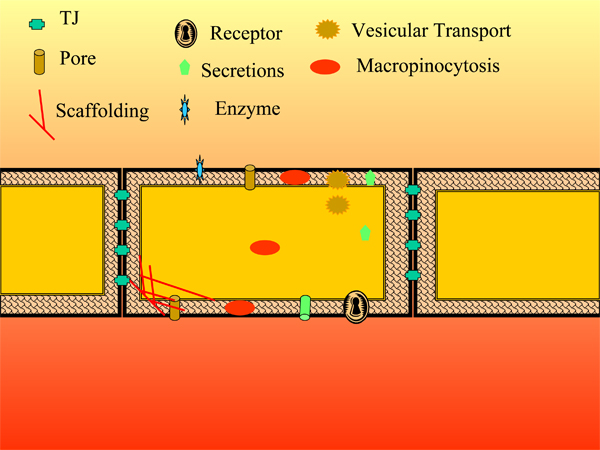
Substances cross the blood-brain barrier (BBB) by a variety of mechanisms. These include transmembrane diffusion, saturable transporters, adsorptive endocytosis, and the extracellular pathways. Here, we focus on the chief characteristics of two mechanisms especially important in drug delivery: transmembrane diffusion and transporters. Transmembrane diffusion is non-saturable and depends, on first analysis, on the physicochemical characteristics of the substance. However, brain-to-blood efflux systems, enzymatic activity, plasma protein binding, and cerebral blood flow can greatly alter the amount of the substance crossing the BBB. Transport systems increase uptake of ligands by roughly 10-fold and are modified by physiological events and disease states. Most drugs in clinical use to date are small, lipid soluble molecules that cross the BBB by transmembrane diffusion. However, many drug delivery strategies in development target peptides, regulatory proteins, oligonucleotides, glycoproteins, and enzymes for which transporters have been described in recent years. We discuss two examples of drug delivery for newly discovered transporters: that for phosphorothioate oligonucleotides and for enzymes.
Overview
The claims and statistics of this paper haven’t been checked yet.
Free: it reads the open-access text and checks the first 5 claims that cite a source we can check. Create a free account to check every claim.
Integrity signals
Registry
Cites
Statistics
Figures
Verification
Claims the paper makes
The claims and statistics of this paper haven’t been checked yet.
Free: it reads the open-access text and checks the first 5 claims that cite a source we can check. Create a free account to check every claim.
Claims other papers make about this one
Each is checked against this paper’s own text: does it say what the citing paper says it does?
The source backs part of the claim, not all of it — or backs it for a different population, condition or comparison.
In the citing paper
“Although lipophilicity is important for transmembrane diffusion through the BBB, some compounds that are too lipophilic can be discharged after crossing into the brain by the P-gp efflux transporter (Abbott, 2002; Banks, 2009).”
From A Critical Review and Meta-Analysis of Impacts of Per- and Polyfluorinated Substances on the Brain and Behavior (2022) · cites this paper as Banks, 2009
Experimental — accuracy not yet measuredIn the citing paper
“The amphipathic nature of this motif permits the crossing of biological membranes, a property that is important for traversing the blood–brain barrier and accessing cryptococcal cells that reside within the lysosome or phagolysosome of host cells114.”
From Treatment strategies for cryptococcal infection: challenges, advances and future outlook (2021) · cites this paper as [114]
In the citing paper
“BBB permeability can also be influenced by physiological factors such as efflux transporters (e.g., P-glycoprotein (P-gp)), enzymatic activity, plasma protein binding and cerebral blood flow 8.”
From Current Strategies for Brain Drug Delivery (2018) · cites this paper as [8]
Self-check
Percentages, sums and reported differences re-computed from the paper’s own numbers.
The self-check needs the paper’s full text.
Citations
Cites
Lipinski, C. A., Lombardo, F., Dominy, B. W., & Feeney, P. J. (2001) · Advanced Drug Delivery Reviews · doi:10.1016/s0169-409x(00)00129-0 · Cited by 18,139
Lipinski, C. A., Lombardo, F., Dominy, B. W., & Feeney, P. J. (1997) · Advanced Drug Delivery Reviews · doi:10.1016/s0169-409x(96)00423-1 · Cited by 11,385
FINE STRUCTURAL LOCALIZATION OF A BLOOD-BRAIN BARRIER TO EXOGENOUS PEROXIDASE
Reese, T. S., & Karnovsky, M. J. (1967) · The Journal of Cell Biology · doi:10.1083/jcb.34.1.207 · Cited by 2,629
Brain uptake of radiolabeled amino acids, amines, and hexoses after arterial injection
Oldendorf, W. (1971) · American Journal of Physiology-Legacy Content · doi:10.1152/ajplegacy.1971.221.6.1629 · Cited by 1,683
Glucagon-like peptide-1 receptor is involved in learning and neuroprotection
During, M. J., Cao, L., Zuzga, D. S., Francis, J. S., Fitzsimons, H. L., Jiao, X., Bland, R. J., Klugmann, M., Banks, W. A., Drucker, D. J., et al. (2003) · Nature Medicine · doi:10.1038/nm919 · Cited by 851 · cited 1×
“Intranasal delivery of drugs, including peptides [35], shows a great deal of promise [36].”
Self-citationLevin, V. A. (1980) · Journal of Medicinal Chemistry · doi:10.1021/jm00180a022 · Cited by 813 · cited 2×
“Levin VA: Relationship of octanol/water partition coefficient and molecular weight to rat brain capillary permeability.”
Intranasal insulin improves memory in humans
Benedict, C., Hallschmid, M., Hatke, A., Schultes, B., Fehm, H. L., Born, J., & Kern, W. (2004) · Psychoneuroendocrinology · doi:10.1016/j.psyneuen.2004.04.003 · Cited by 699 · cited 1×
“Nasal delivery of insulin, for example, has had positive effects in treating Alzheimer's disease [37,38].”
Delivery of therapeutic agents to the central nervous system: the problems and the possibilities
Begley, D. J. (2004) · Pharmacology & Therapeutics · doi:10.1016/j.pharmthera.2004.08.001 · Cited by 679 · cited 2×
“However, the endogenous compounds have poor peripheral pharmacokinetics and this limits their usefulness [3].”
Fellay, J., Marzolini, C., Meaden, E. R., Back, D. J., Buclin, T., Chave, J.-P., Decosterd, L. A., Furrer, H., Opravil, M., Pantaleo, G., et al. (2002) · The Lancet · doi:10.1016/s0140-6736(02)07276-8 · Cited by 658
Brain-immune communication pathways
Quan, N., & Banks, W. A. (2007) · Brain, Behavior, and Immunity · doi:10.1016/j.bbi.2007.05.005 · Cited by 626 · cited 1×
“These extra-barrier functions allow the BBB to influence the homeostatic, nutritive, and immune environments of the CNS and to regulate the exchange of informational molecules between the CNS and blood [4].”
Self-citation
Cited by
Items 101–200 of 755
Benefits of Zebrafish Xenograft Models in Cancer Research
Chen, X., Li, Y., Yao, T., & Jia, R. (2021) · Frontiers in Cell and Developmental Biology · doi:10.3389/fcell.2021.616551 · Cited by 94
Pornnoppadol, G., Bond, L. G., Lucas, M. J., Zupancic, J. M., Kuo, Y.-H., Zhang, B., Greineder, C. F., & Tessier, P. M. (2024) · Cell Chemical Biology · doi:10.1016/j.chembiol.2023.09.008 · Cited by 62
Lochhead, J. J., Ronaldson, P. T., & Davis, T. P. (2017) · The AAPS Journal · doi:10.1208/s12248-017-0076-6 · Cited by 89
“Typically, only small (<500 Da), lipophilic compounds are able to appreciably cross the BBB by transcellular diffusion [9].”
Khaddour, K., Johanns, T. M., & Ansstas, G. (2020) · Pharmaceuticals · doi:10.3390/ph13110389 · Cited by 80
“This is of importance as the BBB allows passage of limited small size compounds less than 400 Da, whereas nivolumab and pembrolizumab have a molecular weight of 146 kDA and 149 kDa respectively [107–109].”
In vitro models of molecular and nano-particle transport across the blood-brain barrier
Hajal, C., Campisi, M., Mattu, C., Chiono, V., & Kamm, R. D. (2018) · Biomicrofluidics · doi:10.1063/1.5027118 · Cited by 77
Model systems for studying the blood-brain barrier: Applications and challenges
Jackson, S., Meeks, C., Vézina, A., Robey, R. W., Tanner, K., & Gottesman, M. M. (2019) · Biomaterials · doi:10.1016/j.biomaterials.2019.05.028 · Cited by 83
Hou, S. S., Yang, J. L., Lee, J. H., Kwon, Y., Calvo-Rodríguez, M., Bao, K., Ahn, S., Kashiwagi, S., Kumar, A. T. N., Bacskai, B. J., et al. (2023) · Nature Biomedical Engineering · doi:10.1038/s41551-023-01003-7 · Cited by 79
The Potential of Selected Brominated Flame Retardants to Affect Neurological Development
Williams, A. L., & DeSesso, J. M. (2010) · Journal of Toxicology and Environmental Health, Part B · doi:10.1080/10937401003751630 · Cited by 75
Perfluoroalkyl Chemicals in Neurological Health and Disease: Human Concerns and Animal Models
Piekarski, D., Diaz, K., & McNerney, M. (2020) · NeuroToxicology · doi:10.1016/j.neuro.2020.01.001 · Cited by 76
Borrajo, M. L., & Alonso, M. J. (2021) · Drug Delivery and Translational Research · doi:10.1007/s13346-021-01086-2 · Cited by 78
A Novel CMKLR1 Small Molecule Antagonist Suppresses CNS Autoimmune Inflammatory Disease
Graham, K. L., Zhang, J. V., Lewén, S., Burke, T. M., Dang, T., Zoudilova, M., Sobel, R. A., Butcher, E. C., & Zabel, B. A. (2014) · PLoS ONE · doi:10.1371/journal.pone.0112925 · Cited by 82
La Barbera, L., Mauri, E., D’Amelio, M., & Gori, M. (2022) · Frontiers in Neuroscience · doi:10.3389/fnins.2022.939855 · Cited by 74
Macrophage reprogramming for therapy
Bart, V. M. T., Pickering, R. J., Taylor, P. R., & Ipseiz, N. (2021) · Immunology · doi:10.1111/imm.13300 · Cited by 78
Antibiotic exposure at the site of infection: principles and assessment of tissue penetration
Jager, N. G. L., van Hest, R. M., Lipman, J., Roberts, J. A., & Cotta, M. O. (2019) · Expert Review of Clinical Pharmacology · doi:10.1080/17512433.2019.1621161 · Cited by 74
Gong, L., Manaenko, A., Fan, R., Huang, L., Enkhjargal, B., McBride, D. W., Ding, Y. P., Tang, J., Xiao, X., & Zhang, J. H. (2018) · Neuropharmacology · doi:10.1016/j.neuropharm.2018.06.009 · Cited by 73
RetractedOvulation‐inducing factor ( OIF / NGF ) in seminal plasma: a review and update
Adams, G. P., Ratto, M. H., Silva, M., & Carrasco, R. (2016) · Reproduction in Domestic Animals · doi:10.1111/rda.12795 · Cited by 72
Shaw, T. K., Mandal, D., Dey, G., Pal, M. M., Paul, P., Chakraborty, S., Ali, K. A., Mukherjee, B., Bandyopadhyay, A. K., & Mandal, M. (2017) · Drug Delivery · doi:10.1080/10717544.2016.1253798 · Cited by 75
Yu, F., Kumar, N. D. S., Foo, L. C., Ng, S. H., Hunziker, W., & Choudhury, D. (2020) · Biotechnology and Bioengineering · doi:10.1002/bit.27260 · Cited by 66
Balmik, A. A., & Chinnathambi, S. (2018) · Journal of Alzheimer’s Disease · doi:10.3233/jad-170900 · Cited by 69
Cyanotoxins and the Nervous System
Metcalf, J. S., Tischbein, M., Cox, P. A., & Stommel, E. W. (2021) · Toxins · doi:10.3390/toxins13090660 · Cited by 69
Enneking, D. (2010) · Food and Chemical Toxicology · doi:10.1016/j.fct.2010.11.029 · Cited by 72
Nanoparticle-mediated growth factor delivery systems: A new way to treat Alzheimer's disease
Lauzon, M.-A., Daviau, A., Marcos, B., & Faucheux, N. (2015) · Journal of Controlled Release · doi:10.1016/j.jconrel.2015.03.024 · Cited by 70
Chen, Y.-R., Lai, P., Chien, Y., Lee, P.-H., Lai, Y., Ma, H., Shiau, C., & Wang, K. (2020) · International Journal of Molecular Sciences · doi:10.3390/ijms21113807 · Cited by 71
The Expanding Cell Diversity of the Brain Vasculature
Ross, J. M., Kim, C. N., Allen, D. E., Crouch, E. E., Narsinh, K. H., Cooke, D. L., Abla, A. A., Nowakowski, T. J., & Winkler, E. A. (2020) · Frontiers in Physiology · doi:10.3389/fphys.2020.600767 · Cited by 76
Zhang, X., He, T., Chai, Z., Samulski, R. J., & Li, C. (2018) · Biomaterials · doi:10.1016/j.biomaterials.2018.05.041 · Cited by 65
“In general, substances p rmeate the BBB by a variety of either active 394 or passive mechanisms [28, 41].”
Qosa, H., Mohamed, L. A., Rihani, S. B. A., Batarseh, Y. S., Duong, Q.-V., Keller, J. N., & Kaddoumi, A. (2016) · Journal of Alzheimer s Disease · doi:10.3233/jad-151179 · Cited by 71
“BBB comprises of different cellular components; however, the barrier or gate function of the BBB is provided primarily by the endothelial cells (ECs) lining the brain capillaries [1, 2].”
Plant Derived Phytocompound, Embelin in CNS Disorders: A Systematic Review
Kundap, U. P., Bhuvanendran, S., Kumari, Y., Othman, I., & Shaikh, M. F. (2017) · Frontiers in Pharmacology · doi:10.3389/fphar.2017.00076 · Cited by 66
Abourehab, M. A. S., Ahmed, O. A. A., Balata, G. F., & Almalki, W. H. (2018) · International Journal of Nanomedicine · doi:10.2147/ijn.s168148 · Cited by 63
“15 Permeability through the BBB relies on drug hydrophobicity.”
Rapid and Reversible Enhancement of Blood–Brain Barrier Permeability Using Lysophosphatidic Acid
On, N. H., Savant, S., Toews, M., & Miller, D. W. (2013) · Journal of Cerebral Blood Flow & Metabolism · doi:10.1038/jcbfm.2013.154 · Cited by 62
Chaves, J. C. S., Dando, S. J., White, A. R., & Oikari, L. E. (2024) · Biochimica et Biophysica Acta (BBA) - Molecular Basis of Disease · doi:10.1016/j.bbadis.2023.166967 · Cited by 62
Glioma and the gut–brain axis: opportunities and future perspectives
Dono, A., Nickles, J., Rodriguez-Armendariz, A. G., McFarland, B. C., Ajami, N. J., Ballester, L. Y., Wargo, J. A., & Esquenazi, Y. (2022) · Neuro-Oncology Advances · doi:10.1093/noajnl/vdac054 · Cited by 68
Ankul Singh, S., & Vellapandian, C. (2023) · Current Drug Metabolism · doi:10.2174/1389200224666230608110349 · Cited by 65
Strategies for non-invasive delivery of biologics
Chung, S. W., Hil-lal, T. A., & Byun, Y. (2012) · Journal of drug targeting · doi:10.3109/1061186x.2012.693499 · Cited by 67
Mészáros, M., Porkoláb, G., Kiss, L., Pilbat, A.-M., Kóta, Z., Kupihár, Z., Kéri, A., Galbács, G., Siklós, L., Tóth, A., et al. (2018) · European Journal of Pharmaceutical Sciences · doi:10.1016/j.ejps.2018.07.042 · Cited by 60
Knutson, D. E., Kodali, R., Divović, B., Treven, M., Stephen, M. R., Zahn, N. M., Dobričić, V., Huber, A. T., Meirelles, M. A., Verma, R. S., et al. (2018) · Journal of Medicinal Chemistry · doi:10.1021/acs.jmedchem.7b01664 · Cited by 73
Tal, T., Myhre, O., Fritsche, E., Rüegg, J., Craenen, K., Aiello-Holden, K., Agrillo, C., Babin, P. J., Escher, B. I., Dirven, H., et al. (2024) · Frontiers in Toxicology · doi:10.3389/ftox.2024.1359507 · Cited by 58
“The BBB determines the ability of some environmental chemicals to reach the central nervous system (Banks, 2009).”
Neurological manifestations of SARS-CoV-2: complexity, mechanism and associated disorders
Tyagi, K., Rai, P., Gautam, A., Kaur, H., Kapoor, S., Suttee, A., Jaiswal, P. K., Sharma, A., Singh, G., & Barnwal, R. P. (2023) · European journal of medical research · doi:10.1186/s40001-023-01293-2 · Cited by 61
“These drugs include phenytoin, carbamazepine, oxprenolol, and timolol [40, 41, 45].”
Extracts of Sideritis scardica as triple monoamine reuptake inhibitors
Knörle, R. (2012) · Journal of Neural Transmission · doi:10.1007/s00702-012-0824-9 · Cited by 58
The Isoxazole Ring and Its N‐Oxide: A Privileged Core Structure in Neuropsychiatric Therapeutics
Pairas, G., Perperopoulou, F., Tsoungas, P. G., & Varvounis, G. (2017) · ChemMedChem · doi:10.1002/cmdc.201700023 · Cited by 59
Leiro, V., Duque Santos, S., Lopes, C. D. F., & Paula Pêgo, A. (2018) · Advanced Functional Materials · doi:10.1002/adfm.201700313 · Cited by 56
van den Broek, S. L., Shalgunov, V., & Herth, M. M. (2022) · Biomaterials Advances · doi:10.1016/j.bioadv.2022.213125 · Cited by 52
Novais, J. S., Moreira, C. D. S., Silva, A. C. J. A., Loureiro, R. D. S., Figueiredo, A. M. S., Ferreira, V. F., Castro, H. C., & da Rocha, D. R. (2018) · Microbial Pathogenesis · doi:10.1016/j.micpath.2018.03.024 · Cited by 61
Intranasal Zotepine Nanosuspension: intended for improved brain distribution in rats
Pailla, S. R., Talluri, S., Rangaraj, N., Ramavath, R., Challa, V. S., Doijad, N. S., & Sampathi, S. (2019) · DARU Journal of Pharmaceutical Sciences · doi:10.1007/s40199-019-00281-4 · Cited by 66
Chang, K., Huang, X., Chang, J. T., Huang, Y., Weng, J., & Tsai, N. (2020) · Cancer Letters · doi:10.1016/j.canlet.2020.09.007 · Cited by 58
Maghrouni, A., Givari, M., Jalili‐Nik, M., Mollazadeh, H., Bibak, B., Sadeghi, M. M., Afshari, A. R., Johnston, T. P., & Sahebkar, A. (2021) · International Immunopharmacology · doi:10.1016/j.intimp.2021.107403 · Cited by 61
Escalation and reinstatement of fentanyl self-administration in male and female rats
Malone, S. G., Keller, P. S., Hammerslag, L. R., & Bardo, M. T. (2021) · Psychopharmacology · doi:10.1007/s00213-021-05850-7 · Cited by 59
Dalla, C., Jarić, I., Pavlidi, P., Hodes, G. E., Kokras, N., Bespalov, A., Kas, M. J., Steckler, T., Kabbaj, M., Würbel, H., et al. (2023) · Journal of Neuroscience Methods · doi:10.1016/j.jneumeth.2023.110003 · Cited by 60
“Certain drug properties are also known to enhance crossing of the blood brain barrier (size of the molecule, whether it is hydrophilic, and its solubility) (Banks, 2009; Alavijeh et al., 2005; Pardridge, 2012).”
Liew, K.-F., Chan, K., & Lee, C. Y. (2015) · European Journal of Medicinal Chemistry · doi:10.1016/j.ejmech.2015.02.055 · Cited by 57
Ghițman, J., & Voicu, Ș. I. (2022) · Carbohydrate Polymer Technologies and Applications · doi:10.1016/j.carpta.2022.100266 · Cited by 59
“The blood-brain barrier (BBB) is a diffusion barrier with important contribution in the homeostasis and protection of central nervous sys-tem (CNS), owing to its high semipermeable properties (Banks, 2009; Mulvihill et al., 2020).”
Lee, J., & Freeman, J. L. (2014) · Toxics · doi:10.3390/toxics2030464 · Cited by 60
Cerqueira‐Coutinho, C., Santos‐Oliveira, R., dos Santos, E. P., & Mansur, C. R. E. (2015) · Engineering in Life Sciences · doi:10.1002/elsc.201400154 · Cited by 57
Quorum Sensing Peptides Selectively Penetrate the Blood-Brain Barrier
Wynendaele, E., Verbeke, F., Stalmans, S., Gevaert, B., Janssens, Y., de Wiele, C. V., Peremans, K. Y., Burvenich, C., & Spiegeleer, B. M. J. D. (2015) · PLoS ONE · doi:10.1371/journal.pone.0142071 · Cited by 58
Dalsgaard, N. B., Vilsbøll, T., & Knop, F. K. (2018) · Diabetes, Obesity and Metabolism · doi:10.1111/dom.13128 · Cited by 54
Giezen, T. J., Mantel-Teeuwisse, A. K., Meyboom, R. H. B., Straus, S. M. J. M., Leufkens, H. G. M., & Egberts, T. C. G. (2010) · Drug Safety · doi:10.2165/11538330-000000000-00000 · Cited by 54
The panoramic view of amyotrophic lateral sclerosis: A fatal intricate neurological disorder
Dhasmana, S., Dhasmana, A., Narula, A. S., Jaggi, M., Yallapu, M. M., & Chauhan, S. C. (2021) · Life Sciences · doi:10.1016/j.lfs.2021.120156 · Cited by 59
Blood–brain barrier: An impediment to neuropharmaceuticals
Henderson, J., & Piquette‐Miller, M. (2015) · Clinical Pharmacology & Therapeutics · doi:10.1002/cpt.77 · Cited by 60
Pneumococcal meningitis is promoted by single cocci expressing pilus adhesin RrgA
Iovino, F., Hammarlöf, D. L., Garriss, G., Browall, S., Nannapaneni, P., & Henriques‐Normark, B. (2016) · Journal of Clinical Investigation · doi:10.1172/jci84705 · Cited by 53
“It has previously been demonstrated that particles of small molecular size penetrate the BBB more easily than do larger molecules (23, 24).”
Lundy, D. J., Nguyen, H. H., & Hsieh, P. C. H. (2021) · Pharmaceutics · doi:10.3390/pharmaceutics13081193 · Cited by 52
Palladium-Catalyzed Oxidative Amination of Unactivated Olefins with Primary Aliphatic Amines
Li, M., Jin, Y., Chen, Y., Wu, W., & Jiang, H. (2023) · Journal of the American Chemical Society · doi:10.1021/jacs.3c02114 · Cited by 52
Stéen, E. J. L., Vugts, D. J., & Windhorst, A. D. (2022) · Frontiers in Nuclear Medicine · doi:10.3389/fnume.2022.853475 · Cited by 55
Chen, Y., Chou, C., Chang, T., Ting, H., Dembélé, J., Chu, Y.-T., Liu, T., Changou, C. A., Liu, C.-W., & Chen, C.-T. (2022) · Frontiers in Chemistry · doi:10.3389/fchem.2022.931584 · Cited by 59
In Vitro Models for Studying Transport Across Epithelial Tissue Barriers
Arumugasaamy, N., Navarro, J., Leach, J. K., Kim, P. C. W., & Fisher, J. P. (2018) · Annals of Biomedical Engineering · doi:10.1007/s10439-018-02124-w · Cited by 54
Intravenous Infusion of AAV for Widespread Gene Delivery to the Nervous System
Gessler, D. J., Tai, P. W. L., Li, J., & Gao, G. (2019) · Methods in molecular biology · doi:10.1007/978-1-4939-9139-6_8 · Cited by 57
Jia, Y., Wang, N., Zhang, Y., Xue, D., Lou, H., & Liu, X. (2020) · Aging and disease · doi:10.14336/ad.2019.0519 · Cited by 46
Puigdelloses, M., García-Moure, M., Labiano, S., Laspidea, V., González-Huarriz, M., Zalacaín, M., Marrodán, L., Martínez-Vélez, N., de la Nava, D., Ausejo‐Mauleon, I., et al. (2021) · Journal for ImmunoTherapy of Cancer · doi:10.1136/jitc-2021-002644 · Cited by 52
Sun, Y.-R., Lv, Q.-K., Liu, J., Wang, F., & Liu, C. (2025) · Neurobiology of Disease · doi:10.1016/j.nbd.2025.106791 · Cited by 53
“Passive diffusion is the simplest mechanism, favoring small molecules ( 400 Da) that are highly lipophilic and electrically neutral(Banks, 2009).”
Lesniak, W. G., Chu, C., Jabłońska, A., Azad, B. B., Zwaenepoel, O., Zawadzki, M., Lisok, A., Pomper, M. G., Walczak, P., Gettemans, J., et al. (2019) · European Journal of Nuclear Medicine and Molecular Imaging · doi:10.1007/s00259-019-04347-y · Cited by 49
Lübtow, M. M., Oerter, S., Quader, S., Jeanclos, E. M., Cubukova, A., Krafft, M., Haider, M. S., Schulte, C., Meier, L., Rist, M., et al. (2020) · Molecular Pharmaceutics · doi:10.1021/acs.molpharmaceut.9b01117 · Cited by 53
Li, J., Long, Q., Ding, H., Wang, Y., Luo, D., Li, Z., & Zhang, W. (2024) · Advanced Science · doi:10.1002/advs.202308677 · Cited by 57
Complementary therapy and survival in glioblastoma
Mulpur, B., Nabors, B., Thompson, R. C., Olson, J. J., LaRocca, R. V., Thompson, Z., & Egan, K. M. (2015) · Neuro-Oncology Practice · doi:10.1093/nop/npv008 · Cited by 48
The Involvement of Microglial Cells in Japanese Encephalitis Infections
Thongtan, T., Thepparit, C., & Smith, D. R. (2012) · Clinical and Developmental Immunology · doi:10.1155/2012/890586 · Cited by 48
“The BBB itself represents a significant hurdle in developing compounds to treat the CNS inflammatory response in JE, and the majority of drugs for other conditions in current use capable of crossing the BBB are small lipidsoluble molecules that cross by transmembrane diffusion [79].”
Correale, J. D., Halfón, M. J., Jack, D. L., Rubstein, A., & Villa, A. M. (2021) · Multiple Sclerosis and Related Disorders · doi:10.1016/j.msard.2021.103264 · Cited by 49
Borsini, A., Merrick, B., Edgeworth, J., Mandal, G., Srivastava, D. P., Vernon, A. C., Nebbia, G., Thuret, S., & Pariante, C. M. (2022) · Molecular Psychiatry · doi:10.1038/s41380-022-01741-1 · Cited by 49
Zhang, S., Gong, P., Zhang, J., Mao, X., Zhao, Y., Wang, H., Gan, L., & Lin, X. (2020) · Frontiers in Neuroscience · doi:10.3389/fnins.2020.582324 · Cited by 48
Microphysiological systems for recapitulating physiology and function of blood-brain barrier
Seo, S., Kim, H., Sung, J. H., Choi, N., Lee, K., & Kim, H. N. (2019) · Biomaterials · doi:10.1016/j.biomaterials.2019.119732 · Cited by 47
Molecular therapy in myotonic dystrophy: focus on RNA gain-of-function
Mulders, S. A. M., van Engelen, B. G. M., Wieringa, B., & Wansink, D. G. (2010) · Human Molecular Genetics · doi:10.1093/hmg/ddq161 · Cited by 50
Tincu, C.-E., Andrițoiu, C. V., Popa, M., & Ochiuz, L. (2023) · Polymers · doi:10.3390/polym15193969 · Cited by 51
“Therapeutical substances can overcome the BBB through various mechanisms, including transmembrane diffusion, saturable transport, endocytosis, and extracellular pathways [61].”
Ronaldson, P. T., & Davis, T. P. (2024) · Expert Opinion on Drug Delivery · doi:10.1080/17425247.2024.2306138 · Cited by 45
Targeting Brain Drug Delivery with Macromolecules Through Receptor-Mediated Transcytosis
Li, Y., Liu, R., & Zhao, Z. (2025) · Pharmaceutics · doi:10.3390/pharmaceutics17010109 · Cited by 48
“This process involves the drug molecules diffusing directly through the cell membranes of the BCECs that constitute the BBB [19].”
Strategies for enhancing antibody delivery to the brain
Frank, R. T., Aboody, K. S., & Najbauer, J. (2011) · Biochimica et Biophysica Acta (BBA) - Reviews on Cancer · doi:10.1016/j.bbcan.2011.07.002 · Cited by 48
Nikoubashman, O., Reich, A., Gindullis, M., Frohnhofen, K., Pjontek, R., Brockmann, M., Schulz, J. B., & Wiesmann, M. (2013) · Neuroradiology · doi:10.1007/s00234-013-1303-1 · Cited by 46
Koenig, J. A., Dao, T. L., Kan, R. K., & Shih, T. (2016) · Annals of the New York Academy of Sciences · doi:10.1111/nyas.13051 · Cited by 44
Tissue-Specific Accumulation and Body Burden of Parabens and Their Metabolites in Small Cetaceans
Jeong, Y., Xue, J., Park, K. J., Kannan, K., & Moon, H. (2018) · Environmental Science & Technology · doi:10.1021/acs.est.8b04670 · Cited by 44
Whether short peptides are good candidates for future neuroprotective therapeutics?
Perlikowska, R. (2021) · Peptides · doi:10.1016/j.peptides.2021.170528 · Cited by 46
Wang, J., Nolte, T. M., Owen, S. F., Beaudouin, R., Hendriks, A. J., & Ragas, A. M. J. (2022) · Environmental Science & Technology · doi:10.1021/acs.est.1c08068 · Cited by 44
Crofton, K. M., Bassan, A., Behl, M., Chushak, Y. G., Fritsche, E., Gearhart, J. M., Marty, M. S., Mumtaz, M. M., Pavan, M., Ruíz, P., et al. (2022) · Computational Toxicology · doi:10.1016/j.comtox.2022.100223 · Cited by 47
Schnorr, I., Siegl, A., Luckhardt, S., Wenz, S., Friedrichsen, H., Jomaa, H. E., Steinmann, A., Kilencz, T., Arteaga-Henríquez, G., Ramos-Sayalero, C., et al. (2024) · Translational Psychiatry · doi:10.1038/s41398-023-02729-3 · Cited by 46
“For example, some cytokines can cross the blood-brain barrier, induce the blood-brain barrier ’ s endothelial cells to secrete cytokines into the CNS [14], and/or contribute to a more permeable blood-brain barrier [15].”
Bijari, N., Balalaie, S., Akbari, V., Golmohammadi, F., Moradi, S., Adibi, H., & Khodarahmi, R. (2018) · International Journal of Biological Macromolecules · doi:10.1016/j.ijbiomac.2018.08.175 · Cited by 43
Janicka, M., Sztanke, M., & Sztanke, K. (2020) · Molecules · doi:10.3390/molecules25030487 · Cited by 45
Visible-light-mediated tungsten-catalyzed C-H amination of unactivated alkanes with nitroarenes
Wang, Q., Ni, S., Wang, X., Wang, Y., & Pan, Y. (2022) · Science China Chemistry · doi:10.1007/s11426-021-1170-2 · Cited by 43
Kumar, N., Sahoo, N. K., Mehan, S., & verma, B. (2023) · Multiple Sclerosis and Related Disorders · doi:10.1016/j.msard.2023.104547 · Cited by 46
Nikoubashman, O., Reich, A., Pjontek, R., Jungbluth, M., & Wiesmann, M. (2014) · Neuroradiology · doi:10.1007/s00234-014-1424-1 · Cited by 43
Challenges and advances for glioma therapy based on inorganic nanoparticles
Hu, D., Xia, M., Wu, L., Liu, H., Chen, Z., Xu, H., He, C., Wen, J., & Xu, X. (2023) · Materials Today Bio · doi:10.1016/j.mtbio.2023.100673 · Cited by 49
Probing the drug delivery strategies in ischemic stroke therapy
Wu, Q., Yan, R., & Sun, J. (2020) · Drug Delivery · doi:10.1080/10717544.2020.1850918 · Cited by 45
Pinkiewicz, M., Pinkiewicz, M., Walecki, J. M., Zaczyński, A., & Zawadzki, M. (2024) · Cancers · doi:10.3390/cancers16010236 · Cited by 42
“Formed by a monolayer of microvascular endothelial cells cemented by tight junctions, the blood–brain barrier (BBB) serves as the primary site for the blood–central nervous system (CNS) exchange, offering a total exchange area ranging from 12 to 18 m 2 for the average human adult brain [1–4].”
Latacz, G., Lubelska, A., Jastrzębska‐Więsek, M., Partyka, A., Kucwaj‐Brysz, K., Wesołowska, A., Kieć‐Kononowicz, K., & Handzlik, J. (2018) · Bioorganic & Medicinal Chemistry Letters · doi:10.1016/j.bmcl.2018.02.003 · Cited by 42
Guo, Y., Hu, G., Xia, Y., Li, H., Ji, Y., Zhang, J., Chen, Y., Guo, H., Yang, Y., Wang, Y., et al. (2022) · Bioactive Materials · doi:10.1016/j.bioactmat.2022.02.013 · Cited by 46
Lam, M. S. Y., Aw, J., Tan, D., Vijayakumar, R., Lim, H. Y. G., Yada, S., Pang, Q. Y., Barker, N., Tang, C., Ang, B. T., et al. (2023) · Small · doi:10.1002/smll.202302280 · Cited by 41
Peixoto-Rodrigues, M. C., Monteiro-Neto, J. R., Téglás, T., Toborek, M. J., Quinete, N., Hauser‐Davis, R. A., & Adesse, D. (2024) · Journal of Hazardous Materials · doi:10.1016/j.jhazmat.2024.136832 · Cited by 41
“This barrier plays a crucial role in regulating nutrient, toxicant, and cell entry into the central nervous system (CNS) [98,99].”
Biomaterials for Drugs Nose–Brain Transport: A New Therapeutic Approach for Neurological Diseases
Cassano, R., Servidio, C., & Trombino, S. (2021) · Materials · doi:10.3390/ma14071802 · Cited by 40
Metadata
- Authors
- Banks, W. A.
- Affiliations
- Veterans Health Administration (US)
- Corresponding author
- Banks, William A
- ORCID
- Banks, William A
- Venue
- BMC Neurology
- Published
- 2009
- Volume
- 9
- Issue
- Suppl 1
- Pages
- S3
- ISSN
- 1471-2377 (ISSN-L)
- PMC
- PMC2697631
- OpenAlex
- W2029206557
- Semantic Scholar
- 734a274ed2c7eb4f665b6c3f176435733ba7858e
- Cited by
- 710
- References
- 49
- Citations by year
- 2026: 37 · 2025: 54 · 2024: 62 · 2023: 77 · 2022: 77 · 2021: 63 · 2020: 72 · 2019: 48 · 2018: 65 · 2017: 36 · 2016: 24 · 2015: 24 · 2014: 18 · 2013: 17 · 2012: 8
- Type
- conference abstract
- Language
- en
- Open access
- gold
- doi.org
- Licence
- cc-by
- Locations
- BMC Neurology (publishedVersion, cc-by)
- PubMed Central (publishedVersion, cc-by)
- PubMed (publishedVersion)
- DOAJ (DOAJ: Directory of Open Access Journals) (submittedVersion)
- Funders
- Michael J. Fox Foundation for Parkinson's Research
- Eli Lilly and Company
- Sanofi
- Biogen
- National Institutes of Health
- National Institute on Aging
- National Institute of Neurological Disorders and Stroke
- Topics
- Life Sciences › Neuroscience › Neurology › Barrier Structure and Function Studies
- Health Sciences › Medicine › Oncology › Drug Transport and Resistance Mechanisms
- Physical Sciences › Materials Science › Biomaterials › Nanoparticle-Based Drug Delivery
- Keywords
- blood-brain barrier, membrane diffusion, brain drug delivery, plasma protein binding, cerebral blood flow, phosphorothioate oligonucleotides, enzyme delivery, peptide transporters, lipid-soluble drugs
- MeSH terms
- Animals, Biological Transport, Blood-Brain Barrier, Central Nervous System Agents, Humans, Drug Delivery Systems
About these checks
Registry, retraction, Cites and statistics results are computed, not judged, with one exception: a printed reference that no index lists is read once by a model before it counts as a citation error. Claims are extracted by a model and kept only when their quote appears verbatim in the text; each cited source is then checked, with a model’s help, for whether it says what the claim relies on. Those verdicts can be wrong — read the claim’s quote and the cited source before relying on one.
Statistics and arithmetic are recomputed, not judged.
Confidence bands are shown only for fields calibrated on our annotated test set. None is calibrated yet, so no band is shown.
What counts as a claim ›How we measure confidence ›How we check this ›
Are you an author, or do you see a problem with this page? Request a review
Data sources
Bibliographic data: Semantic Scholar, OpenAlex, Crossref.
Contains information from the Semantic Scholar Academic Graph Datasets, made available under the ODC Attribution License (ODC-BY 1.0).
Semantic Scholar’s data is described in: Kinney, R., et al. (2023). The Semantic Scholar Open Data Platform. arXiv:2301.10140.
