

Characteristics of compounds that cross the blood-brain barrier
Open accessThe DOI matches its Crossref record; 50 of the 50 references it cites were found in a registry or an index.
Abstract
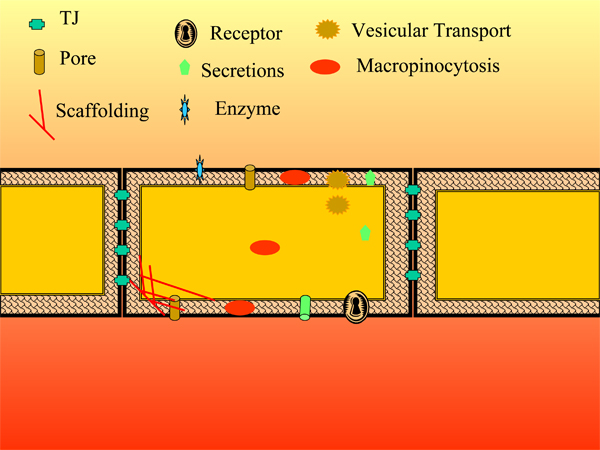
Substances cross the blood-brain barrier (BBB) by a variety of mechanisms. These include transmembrane diffusion, saturable transporters, adsorptive endocytosis, and the extracellular pathways. Here, we focus on the chief characteristics of two mechanisms especially important in drug delivery: transmembrane diffusion and transporters. Transmembrane diffusion is non-saturable and depends, on first analysis, on the physicochemical characteristics of the substance. However, brain-to-blood efflux systems, enzymatic activity, plasma protein binding, and cerebral blood flow can greatly alter the amount of the substance crossing the BBB. Transport systems increase uptake of ligands by roughly 10-fold and are modified by physiological events and disease states. Most drugs in clinical use to date are small, lipid soluble molecules that cross the BBB by transmembrane diffusion. However, many drug delivery strategies in development target peptides, regulatory proteins, oligonucleotides, glycoproteins, and enzymes for which transporters have been described in recent years. We discuss two examples of drug delivery for newly discovered transporters: that for phosphorothioate oligonucleotides and for enzymes.
Overview
The claims and statistics of this paper haven’t been checked yet.
Free: it reads the open-access text and checks the first 5 claims that cite a source we can check. Create a free account to check every claim.
Integrity signals
Registry
Cites
Statistics
Figures
Verification
Claims the paper makes
The claims and statistics of this paper haven’t been checked yet.
Free: it reads the open-access text and checks the first 5 claims that cite a source we can check. Create a free account to check every claim.
Claims other papers make about this one
Each is checked against this paper’s own text: does it say what the citing paper says it does?
The source backs part of the claim, not all of it — or backs it for a different population, condition or comparison.
In the citing paper
“Although lipophilicity is important for transmembrane diffusion through the BBB, some compounds that are too lipophilic can be discharged after crossing into the brain by the P-gp efflux transporter (Abbott, 2002; Banks, 2009).”
From A Critical Review and Meta-Analysis of Impacts of Per- and Polyfluorinated Substances on the Brain and Behavior (2022) · cites this paper as Banks, 2009
Experimental — accuracy not yet measuredIn the citing paper
“The amphipathic nature of this motif permits the crossing of biological membranes, a property that is important for traversing the blood–brain barrier and accessing cryptococcal cells that reside within the lysosome or phagolysosome of host cells114.”
From Treatment strategies for cryptococcal infection: challenges, advances and future outlook (2021) · cites this paper as [114]
In the citing paper
“BBB permeability can also be influenced by physiological factors such as efflux transporters (e.g., P-glycoprotein (P-gp)), enzymatic activity, plasma protein binding and cerebral blood flow 8.”
From Current Strategies for Brain Drug Delivery (2018) · cites this paper as [8]
Self-check
Percentages, sums and reported differences re-computed from the paper’s own numbers.
The self-check needs the paper’s full text.
Citations
Cites
Lipinski, C. A., Lombardo, F., Dominy, B. W., & Feeney, P. J. (2001) · Advanced Drug Delivery Reviews · doi:10.1016/s0169-409x(00)00129-0 · Cited by 18,139
Lipinski, C. A., Lombardo, F., Dominy, B. W., & Feeney, P. J. (1997) · Advanced Drug Delivery Reviews · doi:10.1016/s0169-409x(96)00423-1 · Cited by 11,385
FINE STRUCTURAL LOCALIZATION OF A BLOOD-BRAIN BARRIER TO EXOGENOUS PEROXIDASE
Reese, T. S., & Karnovsky, M. J. (1967) · The Journal of Cell Biology · doi:10.1083/jcb.34.1.207 · Cited by 2,629
Brain uptake of radiolabeled amino acids, amines, and hexoses after arterial injection
Oldendorf, W. (1971) · American Journal of Physiology-Legacy Content · doi:10.1152/ajplegacy.1971.221.6.1629 · Cited by 1,683
Glucagon-like peptide-1 receptor is involved in learning and neuroprotection
During, M. J., Cao, L., Zuzga, D. S., Francis, J. S., Fitzsimons, H. L., Jiao, X., Bland, R. J., Klugmann, M., Banks, W. A., Drucker, D. J., et al. (2003) · Nature Medicine · doi:10.1038/nm919 · Cited by 851 · cited 1×
“Intranasal delivery of drugs, including peptides [35], shows a great deal of promise [36].”
Self-citationLevin, V. A. (1980) · Journal of Medicinal Chemistry · doi:10.1021/jm00180a022 · Cited by 813 · cited 2×
“Levin VA: Relationship of octanol/water partition coefficient and molecular weight to rat brain capillary permeability.”
Intranasal insulin improves memory in humans
Benedict, C., Hallschmid, M., Hatke, A., Schultes, B., Fehm, H. L., Born, J., & Kern, W. (2004) · Psychoneuroendocrinology · doi:10.1016/j.psyneuen.2004.04.003 · Cited by 699 · cited 1×
“Nasal delivery of insulin, for example, has had positive effects in treating Alzheimer's disease [37,38].”
Delivery of therapeutic agents to the central nervous system: the problems and the possibilities
Begley, D. J. (2004) · Pharmacology & Therapeutics · doi:10.1016/j.pharmthera.2004.08.001 · Cited by 679 · cited 2×
“However, the endogenous compounds have poor peripheral pharmacokinetics and this limits their usefulness [3].”
Fellay, J., Marzolini, C., Meaden, E. R., Back, D. J., Buclin, T., Chave, J.-P., Decosterd, L. A., Furrer, H., Opravil, M., Pantaleo, G., et al. (2002) · The Lancet · doi:10.1016/s0140-6736(02)07276-8 · Cited by 658
Brain-immune communication pathways
Quan, N., & Banks, W. A. (2007) · Brain, Behavior, and Immunity · doi:10.1016/j.bbi.2007.05.005 · Cited by 626 · cited 1×
“These extra-barrier functions allow the BBB to influence the homeostatic, nutritive, and immune environments of the CNS and to regulate the exchange of informational molecules between the CNS and blood [4].”
Self-citation
Cited by
Items 601–700 of 755
Heale, K. A., Nath, S. C., & Rancourt, D. E. (2021) · Current Protocols · doi:10.1002/cpz1.230 · Cited by 2
Gut microbiome and neurocritically ill patients
Dono, A., Esquenazi, Y., & Choi, H. A. (2022) · Journal of Neurocritical Care · doi:10.18700/jnc.220058 · Cited by 2
Tavakoli, M., Ghadami, S. A., Adibi, H., & Gülcan, H. O. (2023) · Journal of Biomolecular Structure and Dynamics · doi:10.1080/07391102.2023.2184635 · Cited by 3
“Since compounds without a permanent positive charge are mainly capable of crossing the blood-brain barrier (BBB) (Banks, 2009; Lipinski et al., 1997), in this study, we employed benzylidene-benzofura-none derivatives as fluorescent probes to quantitatively determine the amyloid fibrils made of A b .”
InfluentialModern method of drug delivery across blood brain barrier
Padmawar, S. S., Sawale, A. V., Dhage, D. N., & Fadnis, J. A. (2023) · World Journal of Biology Pharmacy and Health Sciences · doi:10.30574/wjbphs.2023.14.2.0198 · Cited by 2
Designing Drug Delivery Vehicles based on N-(2-Hydroxypropyl) Methacrylamide
Are, R. P., & Babu, A. R. (2024) · Current Computer - Aided Drug Design · doi:10.2174/0115734099278986231228070823 · Cited by 2
Nanobiosensing disease diagnostics for in vivo applications
Sharotri, N., Ahmed, K., Sharma, D., & Agrawal, N. (2024) · Elsevier eBooks · doi:10.1016/b978-0-323-95513-3.00028-9 · Cited by 4
Suresh, V., Kirankumar, S. I., Shahjahan, A., Jamuna, S., Kirubakaran, R., Macrin, D., & ArulJothi, K. N. (2024) · The Natural Products Journal · doi:10.2174/0122103155308142240602120718 · Cited by 2
Enhancing the bioavailability of BCS Class IV drugs using polymeric nanoparticles
Soundararajan, R. (2016) · UCL Discovery (University College London) · Cited by 4
Mészáros, M. (2019) · SZTE Repository of Dissertations (University of Szeged) · doi:10.14232/phd.10157 · Cited by 2
Advances in Delivery Across the Blood-Brain Barrier: A Case-Study PerspectivePreprint
Niazi, S. K., & Magoola, M. (2023) · Preprints.org · doi:10.20944/preprints202309.1793.v1 · Cited by 2
Tutorial on Drug Development for Central Nervous System
Yoon, H.-J., & Kim, J.-S. (2010) · Interdisciplinary Bio Central · doi:10.4051/ibc.2010.2.4.0009 · Cited by 1
ET-traps offer a potential therapeutic tool for use in different autoimmune diseases
Jain, A., & Johnson, M. H. (2020) · Drug Discovery Today · doi:10.1016/j.drudis.2020.04.011 · Cited by 1
Kraft, M., Foerster, K. I., Wiedmann, F., Sauter, M., Paasche, A., Blochberger, P. L., Yesilgoez, B., L’hoste, Y., Frey, N., Haefeli, W. E., et al. (2022) · Pharmaceutics · doi:10.3390/pharmaceutics14040762 · Cited by 1
Ayurvedic management of Schizophrenia (Unmada) – A case report
Lekshmi, J. P. I., Madhavan, J., & Aradan, F. J. (2024) · Journal of Ayurveda Case Reports · doi:10.4103/jacr.jacr_50_23 · Cited by 1
Studi Farmakokinetik dan Toksisitas Senyawa Biji Jintan Hitam (Nigella sativa)
Anwar, L. O. M., Anugrah, A. K., Pramestyani, E. D., Harahap, K. P., Rohmah, H. N. F., Widyawati, A. A., & Koniasari, K. (2024) · Jurnal Mandala Pharmacon Indonesia · doi:10.35311/jmpi.v10i2.661 · Cited by 1
“Menurut Banks (2009) sebagian besar obat yang digunakan secara klinis hingga saat ini adalah molekul kecil yang larut dalam lipid yang melintasi BBB melalui difusi transmembran.”
Mondou, P., Pagé, G., Cornu, C., Morisset, C., Djaballah, E., Fayard, A., Lecourtois, S., Gay, M., Roustan, M., Flament, J., et al. (2025) · Physics in Medicine and Biology · doi:10.1088/1361-6560/addf0c · Cited by 1
“The blood–brain barrier (BBB) is a selective barrier that regulates the passage of molecules between the blood and the central nervous system (Taylor 2002, Banks 2009).”
Rational Design and Applications of Ultrasmall Gold Nanoparticles
Parambath, J. B. M., Arooj, M., Anand, K. V., Kanan, S., & Mohamed, A. A. M. (2025) · Topics in Current Chemistry · doi:10.1007/s41061-025-00520-0 · Cited by 3
Towards Precise Modelling of Diffusion Across the Blood-Brain Barrier
Charemis, D., Sivolapenko, G. B., & Hadjinicolaou, Μ. (2025) · Advances in experimental medicine and biology · doi:10.1007/978-3-032-03398-7_43 · Cited by 1
Plata-Calzado, C., Prieto, A. I., Cameán, A. M., & Jos, A. M. (2026) · Environmental Research · doi:10.1016/j.envres.2026.123850 · Cited by 1
Synthesis and in vitro characterization of novel IRAK-4 inhibitor compounds
Shrivastava, D., Gupta, L. K., Yerrapureddy, A., & Nune, S. S. K. (2026) · Preparative Biochemistry & Biotechnology · doi:10.1080/10826068.2026.2620804 · Cited by 1
“[53,54] The compounds also exhibit good human intestinal absorption, suggesting they can have the potential for high bioavailability.”
Emerging use of bio-nanomaterials for brain pathologies
Noor, L., Singh, M. S., Upadhyay, A. K., & Joshi, V. (2026) · Nanotoxicology · doi:10.1080/17435390.2026.2634094 · Cited by 1
“…2020). tight connections of BBB seal the intercellular gap, and reduce pino-cytosis from the luminal side, preventing uncontrolled cell entry (Banks 2009; Krol 2012). there is no fenestration, which prevents endothelial intercellular communication, only a small number of hydrophobic…”
Kurtenbach, P., Hahn, M., Thevis, M., & Lamshöft, M. (2026) · NAM journal. · doi:10.1016/j.namjnl.2026.100092 · Cited by 1
Progress and challenges in drug delivery for the treatment of Alzheimer’s disease
Haghighi, F. H., Xie, J., Ebert, E., & Siahaan, T. J. (2026) · Expert Opinion on Drug Delivery · doi:10.1080/17425247.2026.2663114 · Cited by 1
Mechanisms of transport across the blood–brain barrier
Das, N. G., & Das, S. K. (2026) · Elsevier eBooks · doi:10.1016/b978-0-443-33623-2.00019-2 · Cited by 1
A novel pipeline for the validation of manganese chelators for the treatment of manganese overload
Vogt, H., Pojani, C., Devonport, J., McGown, A., Firth, G., Doykov, I., Nikolaenko, V., Anagianni, S., Valdivia, L. E., Khalil, Y., et al. (2026) · Biochemical Pharmacology · doi:10.1016/j.bcp.2026.118465 · Cited by 1
Medicinal Chemistry and Brain Drug Penetrance
Hilaire, J. R., & Gendelman, H. E. (2016) · Springer eBooks · doi:10.1007/978-3-319-44022-4_49 · Cited by 1
Suba Malani, S., & Sasi Kumar, A. (2017) · International Journal of Pharma and Bio Sciences · doi:10.22376/ijpbs.2017.8.1.p195-201 · Cited by 3
Focused Ultrasound Ablation for Neurological Disorders
Sammartino, F., Taylor, T., Rezai, A. R., & Krishna, V. (2018) · Elsevier eBooks · doi:10.1016/b978-0-12-805353-9.00031-0 · Cited by 2
Botz, B., Bátai, I. Z., Kiss, T., Pintér, E., Helyes, Z., & Bölcskei, K. (2019) · Brain Research Bulletin · doi:10.1016/j.brainresbull.2019.12.009 · Cited by 1
Nanoparticles beyond the blood-brain barrier for glioblastoma
Jena, L., Dunne, N., & McCarthy, H. O. (2021) · Elsevier eBooks · doi:10.1016/b978-0-12-821567-8.00027-0 · Cited by 1
Clostridium perfringens Epsilon Toxin: Structural and Mechanistic Insights
Popoff, M. R., Stiles, B. G., & Poulain, B. (2018) · Toxinology · doi:10.1007/978-94-007-6449-1_9 · Cited by 2
Almasi, F., & Mohammadipanah, F. (2022) · Journal of drug targeting · doi:10.1080/1061186x.2022.2110252 · Cited by 1
Martins, J. E., D’Alimonte, D., Simões, J., Sousa, S., Esteves, E., Rosa, N. D. N., Correia, M. J., Simões, M., & Barros, M. (2022) · Symmetry · doi:10.3390/sym15010042 · Cited by 1
Novel cell delivery systems: Intracranial and intrathecal
Feldman, L. A., & Badie, B. (2023) · Elsevier eBooks · doi:10.1016/b978-0-12-822620-9.00007-0 · Cited by 2
Carrasco, R. A., Pezo, S., Zwiefelhofer, E. M., Lanigan, E., Singh, J. K., Berland, M., Ulloa-Leal, C., Ratto, M. H., & Adams, G. P. (2023) · Reproduction · doi:10.1530/rep-22-0331 · Cited by 2
Advanced nanoformulations for neurological therapeutics
Noah, N. M., Mbatia, B. N., & Omolo, C. A. (2023) · Elsevier eBooks · doi:10.1016/b978-0-323-85785-7.00001-2 · Cited by 1
Environnement et santé publique
Noisel, N., Bonvallot, N., & Coumoul, X. (2023) · Presses de l’EHESP eBooks · doi:10.3917/ehesp.goupi.2023.01.0277 · Cited by 2
Intranasal Delivery of Drugs to the Central Nervous System
Crowe, T. P., & Hsu, W. H. (2024) · AAPS introductions in the pharmaceutical sciences · doi:10.1007/978-3-031-62604-3_6 · Cited by 2
Venkatesh, U. S. (2024) · African Journal of Biomedical Research · doi:10.53555/ajbr.v27i3s.1710 · Cited by 1
The Guardian of the Brain: Understanding the Blood–Brain Barrier and its Role in CNS Drug Discovery
Rohfleisch, L., & Mishuris, B. (2024) · Springer eBooks · doi:10.1007/978-3-031-61992-2_5 · Cited by 1
Junior, A. U. R. S., & de Sousa, J. A. (2025) · Revista Multidisciplinar do Nordeste Mineiro · doi:10.61164/remunom.v1i1.3334 · Cited by 1
A Mini-review on Unlocking Cognitive Enhancement: An Innovative Strategy for Optimal Brain Functions
Vikal, A., Maurya, R., Patel, B. B., Patel, P., Kumar, M., & Kurmi, B. D. (2025) · Central Nervous System Agents in Medicinal Chemistry · doi:10.2174/0118715249357704250702140026 · Cited by 1
Litchman, G. H., Thibodeaux, Q. G., Rivera‐Oyola, R., Koo, J. Y. M., Fried, R., Goldenberg, G., Han, G., Hsu, S., Kircik, L., Knuckles, M. L. F., et al. (2021) · SKIN The Journal of Cutaneous Medicine · doi:10.25251/skin.5.1.1 · Cited by 1
Käsmann‐Kellner, B., Blankenagel, A., & Daus, W. (1992) · PubMed · Cited by 1
Comprehensive metabolite ratio QTL mapping reveals disease relevant enzyme biologyPreprint
Rizi, S., Goss, N., Kutalik, Z., & van der Graaf, A. (2025) · medRxiv · doi:10.64898/2025.12.04.25341616 · Cited by 1
Hayes, A., Klug, M. E., Sharma, M., Kao, A. E., Sun, S., Gonzalez, E. D. J. L., Zhu, H., Dent, J. C., Clark, R. J., Sell, D. R., et al. (2026) · bioRxiv (Cold Spring Harbor Laboratory) · doi:10.64898/2026.01.07.698065 · Cited by 1
Verreault, M., Yip, S. S. F., Toyota, B. D., & Bally, M. B. (2012) · InTech eBooks · doi:10.5772/23031
“Carmustine wafers: localized delivery of chemotherapeutic agents in CNS malignancies.”
InfluentialImproving treatment outcomes in models of glioblastoma cancer
Verreault, M. (2011) · cIRcle (University of British Columbia) · doi:10.14288/1.0105090
“Saturable transport systems can be used to improve the pharmacokinetic profile of a substance and to target uptake into specific regions of the CNS [47].”
InfluentialAlteration of cholesterol homeostasis in the Huntington's disease brain
Kreilaus, F. (2015) · Research Online (University of Wollongong)
Animal Models of Viral Encephalitis
Steele, K. E. (2013) · CRC Press eBooks · doi:10.1201/b13907-7
Axerio-Cilies, P. (2017) · cIRcle (University of British Columbia) · doi:10.14288/1.0319183 · Cited by 3
Atypical Post Partum Eclampsia and Posterior Reversible Encephalopathy Syndrome
Sharma, N., Manivel, S., Ethiraj, S., Kalimuthu, K., & Aarthi, C. (2017) · Journal of Advances in Medicine and Medical Research · doi:10.9734/jammr/2017/34997
Advancements and Challenges in Hyperacute Stroke Translational Research
Dambinova, S. A., Peplow, P. V., & Gennarelli, T. A. (2017) · Royal Society of Chemistry eBooks · doi:10.1039/9781788012539-00327
Resveratrol in Experimental Models and Humans
Gambini, J., Gimeno-Mallench, L., Mas‐Bargues, C., Pérez-López, G., Borrás, C., & Viña, J. (2018) · Elsevier eBooks · doi:10.1016/b978-0-12-811353-0.00080-4 · Cited by 1
Begcevic, I. (2018) · TSpace (University of Toronto)
Other MRI Approaches to Perfusion Imaging (ASL, DSC, DCE)
Barbier, E., Grand, S., Krainik, A., & Warnking, J. M. (2018) · doi:10.1201/9780429427275-2
NEUROPROTECTIVE EFFECT OF EMBELIN IN EXPERIMENTAL MODELS OF ALZHEIMER’S DISEASE
PILLAI, B. S. B. (2019) · Figshare · doi:10.26180/5c8b75be3d374
Metastatic brain tumor models and drug brain penetration analysis
Li, Y.-W. (2019) · Animal Models in Cancer Drug Discovery · doi:10.1016/b978-0-12-814704-7.00008-8
Lakkadwala, S. (2019) · NDSU Repository (North Dakota State University)
Melanoma Brain Metastases: Unique Biology and Implications for Systemic Therapy
Margolin, K. A., Davies, M. A., Kluger, H. M., & Tawbi, H. A. (2019) · Springer eBooks · doi:10.1007/978-3-319-46029-1_65-1 · Cited by 1
ET-traps-a Novel Therapeutic for Treatment of Neurological Disorders
Jain, A. (2019) · Archives in Biomedical Engineering & Biotechnology · doi:10.33552/abeb.2019.03.000559
Obulesu, M. (2020) · Elsevier eBooks · doi:10.1016/b978-0-12-819882-7.00002-7
Tehrani, M. A., & Veney, S. L. (2020) · General and Comparative Endocrinology · doi:10.1016/j.ygcen.2020.113492
Fruit bromelain derived peptides destabilize growth of amyloidal fibrilsPreprint
Das, S., Dutta, S. M., Paidi, R. K., Biswas, S. C., Halder, U. C., & Bhattacharyya, D. (2020) · bioRxiv (Cold Spring Harbor Laboratory) · doi:10.1101/2020.04.20.051193
Zbesko, J. C. (2020) · UA Campus Repository (The University of Arizona)
Nucleic Acid Architectures for Therapeutics, Diagnostics, Devices and Materials
Afonin, K. A. (2019) · MDPI eBooks · doi:10.3390/books978-3-03921-260-6 · Cited by 1
Polymeric Carriers for Transporting Nucleic Acids—Contributions to the Field
Clima, L., Dascalu, A. I., Craciun, B. F., & Pinteala, M. (2021) · Springer eBooks · doi:10.1007/978-3-030-57456-7_7
PINK1 modulators as novel treatments for Parkinson’s Disease
Lambourne, O. A. (2021) · ORCA Online Research @Cardiff (Cardiff University)
Fu, T. (2021) · UA Campus Repository (The University of Arizona)
Gut microbiota and brain function and pathophysiology
Duttaroy, A. K. (2021) · Elsevier eBooks · doi:10.1016/b978-0-12-822405-2.00014-1
Mechanisms of Blood Brain Barrier Dysfunction in Stroke: A Therapeutic Opportunity
Sami, A. (2021) · UA Campus Repository (The University of Arizona)
Μαζαράκη, Μ. Ε. (2021) · DSpace - NTUA (National Technical University of Athens) · doi:10.26240/heal.ntua.21474
Central Nervous System Molecular Imaging
Sólnes, L. B., Jacobs, A. H., Coughlin, J. M., Du, Y., Goel, R., Hammoud, D. A., & Pomper, M. G. (2021) · Elsevier eBooks · doi:10.1016/b978-0-12-816386-3.00088-0 · Cited by 1
Modelling, characterization, and therapeutic targeting of human brain metastasis
Singh, M. (2018) · MacSphere (McMaster University) · doi:10.71548/9289
Especial diseño 2007: 5 claves para el diseño español
Faerna, J. M., & Astigarraga, M. P. (2007) · Diseño interior
ROLE OF DRUG DISCOVERY IN CENTRAL NERVOUS SYSTEM DISORDERS: AN OVERVIEW
GUPTA, M., SHEKHAR, R., & Sahu, J. K. (2021) · Current Research in Pharmaceutical Sciences · doi:10.24092/crps.2021.110302
Nanomedicines encountering HIV dementia: A guiding star for neurotherapeutics
Jadhav, S. S., Yenorkar, N. Y., Bondre, R. M., Karemore, M. N., & Bali, N. R. (2022) · Journal of Drug Delivery Science and Technology · doi:10.1016/j.jddst.2022.103315
Animal Models of Viral Encephalitis
Steele, K. E. (2013) · CRC Press eBooks · doi:10.1201/b13907-8
Melanoma Brain Metastases: Unique Biology and Implications for Systemic Therapy
Margolin, K. A., Davies, M. A., Kluger, H. M., & Tawbi, H. A. (2020) · Springer eBooks · doi:10.1007/978-3-030-05070-2_65 · Cited by 1
Sho, C., KAWANO, K., Hou, D., Yoshimoto, M., & Okuno, H. (2022) · Journal of Bioscience and Bioengineering · doi:10.1016/j.jbiosc.2022.10.004
TAT-functionalized pH-sensitive liposomes for the treatment of bacterial meningitis
Garcia, C. B. (2022) · Digital Repository Service (Northeastern University) · doi:10.17760/d20467260 · Cited by 1
The Importance of Appropriate Taurine Formulations to Target Mitochondria
Heidari, R., & Ommati, M. M. (2023) · BENTHAM SCIENCE PUBLISHERS eBooks · doi:10.2174/9789815124484123010014
Tiotropium Bromide/Olodaterol Related Acute Cognitive Impairments
Alkhuja, S., & Girgis, M. (2023) · Case Reports in Clinical Medicine · doi:10.4236/crcm.2023.125017
Glioblastoma heterogeneity and resistance: A glance in biology and therapeutic approach
Coelho‐Santos, V., Matias, D., Dubois, L. G., Aran, V., Moura‐Neto, V., & Balça-Silva, J. (2023) · Elsevier eBooks · doi:10.1016/b978-0-323-99873-4.00018-9
The role of exosomes in glioblastoma treatment
Magalhães, M., Delgado, J., Gomes, C. M. F., & Cabral, C. (2023) · Elsevier eBooks · doi:10.1016/b978-0-323-99873-4.00025-6
Jing, Y., & Xie, X. (2023) · Wiley eBooks · doi:10.1002/9781119660699.ch45
A One-Pot Microwave Green Synthesis of Pyrrolo[1,2-C]Imidazole-1-One Analogs and Structural Studies
Kumari, N., Kumar, S., Desai, V. A., Patel, D. B., & Sharon, A. (2024) · Journal of Structural Chemistry · doi:10.1134/s0022476624050159
Role of Exosomes in Management of Depression
Nigade, A., Pathak, G., Anitha, K., Mishra, N., Bali, V., & Bhatt, S. (2024) · Springer eBooks · doi:10.1007/978-981-99-8373-5_8
Caractérisation du mécanisme d’action de petites molécules dans le cancer
Lesire, L. (2020) · theses.fr (ABES) · doi:10.70675/936c9a7az4fb6z408cz825az4ace1a99284f
Analysis of transporter activity in an Alzheimer’s disease blood-brain barrier cell model
Chaves, J. (2024) · Queensland University of Technology · doi:10.5204/thesis.eprints.248279
Unveiling the Mysteries of the Blood-brain Barrier: The Problem of the Brain/spinal Pharmacotherapy
Walia, A., Kaur, A., Singh, R., Rani, N., & Swami, R. (2024) · Central Nervous System Agents in Medicinal Chemistry · doi:10.2174/0118715249297247240813104929
Exploring the Connection Between Nanomaterials and Neurodegenerative Disorders
Nanda, S. S., & Yi, D. K. (2024) · Micromachines · doi:10.3390/mi15111382
Crosstalk between gut-brain axis and brain components along with associated neurological disorders
Bindal, P., Kaushal, S., Singh, C., & Singh, A. (2025) · Elsevier eBooks · doi:10.1016/b978-0-443-21680-0.00005-5
REVOLUTIONIZING ALZHEIMER’S THERAPEUTICS: FROM MICROTECHNOLOGIES TO AI-DRIVEN INNOVATIONS
Lahiri, A., Balamuralidhara, V., Manohar, S. K., & R., A. A. (2025) · International Journal of Applied Pharmaceutics · doi:10.22159/ijap.2025v17i3.53726
“Although tacrine was the first Cholinesterase Inhibitor (ChEI) approved for the therapy of mild to moderate AD, its use is now restricted to very specific circumstances due to its hepatotoxic adverse effects [85].”
Antibiotherapy in neurosurgical patients as a blood-brain barrier cheater – is it worth it?
Croitoru, D., Andronachi, V., Pavlovschi, E., Visnevschi, S., & Dumitrasco, A.-M. (2024) · Bulletin of the Academy of Sciences of Moldova Medical Sciences · doi:10.52692/1857-0011.2024.2-79.44
Metadata
- Authors
- Banks, W. A.
- Affiliations
- Veterans Health Administration (US)
- Corresponding author
- Banks, William A
- ORCID
- Banks, William A
- Venue
- BMC Neurology
- Published
- 2009
- Volume
- 9
- Issue
- Suppl 1
- Pages
- S3
- ISSN
- 1471-2377 (ISSN-L)
- PMC
- PMC2697631
- OpenAlex
- W2029206557
- Semantic Scholar
- 734a274ed2c7eb4f665b6c3f176435733ba7858e
- Cited by
- 710
- References
- 49
- Citations by year
- 2026: 37 · 2025: 54 · 2024: 62 · 2023: 77 · 2022: 77 · 2021: 63 · 2020: 72 · 2019: 48 · 2018: 65 · 2017: 36 · 2016: 24 · 2015: 24 · 2014: 18 · 2013: 17 · 2012: 8
- Type
- conference abstract
- Language
- en
- Open access
- gold
- doi.org
- Licence
- cc-by
- Locations
- BMC Neurology (publishedVersion, cc-by)
- PubMed Central (publishedVersion, cc-by)
- PubMed (publishedVersion)
- DOAJ (DOAJ: Directory of Open Access Journals) (submittedVersion)
- Funders
- Michael J. Fox Foundation for Parkinson's Research
- Eli Lilly and Company
- Sanofi
- Biogen
- National Institutes of Health
- National Institute on Aging
- National Institute of Neurological Disorders and Stroke
- Topics
- Life Sciences › Neuroscience › Neurology › Barrier Structure and Function Studies
- Health Sciences › Medicine › Oncology › Drug Transport and Resistance Mechanisms
- Physical Sciences › Materials Science › Biomaterials › Nanoparticle-Based Drug Delivery
- Keywords
- blood-brain barrier, membrane diffusion, brain drug delivery, plasma protein binding, cerebral blood flow, phosphorothioate oligonucleotides, enzyme delivery, peptide transporters, lipid-soluble drugs
- MeSH terms
- Animals, Biological Transport, Blood-Brain Barrier, Central Nervous System Agents, Humans, Drug Delivery Systems
About these checks
Registry, retraction, Cites and statistics results are computed, not judged, with one exception: a printed reference that no index lists is read once by a model before it counts as a citation error. Claims are extracted by a model and kept only when their quote appears verbatim in the text; each cited source is then checked, with a model’s help, for whether it says what the claim relies on. Those verdicts can be wrong — read the claim’s quote and the cited source before relying on one.
Statistics and arithmetic are recomputed, not judged.
Confidence bands are shown only for fields calibrated on our annotated test set. None is calibrated yet, so no band is shown.
What counts as a claim ›How we measure confidence ›How we check this ›
Are you an author, or do you see a problem with this page? Request a review
Data sources
Bibliographic data: Semantic Scholar, OpenAlex, Crossref.
Contains information from the Semantic Scholar Academic Graph Datasets, made available under the ODC Attribution License (ODC-BY 1.0).
Semantic Scholar’s data is described in: Kinney, R., et al. (2023). The Semantic Scholar Open Data Platform. arXiv:2301.10140.
