

Characteristics of compounds that cross the blood-brain barrier
Open accessThe DOI matches its Crossref record; 50 of the 50 references it cites were found in a registry or an index.
Abstract
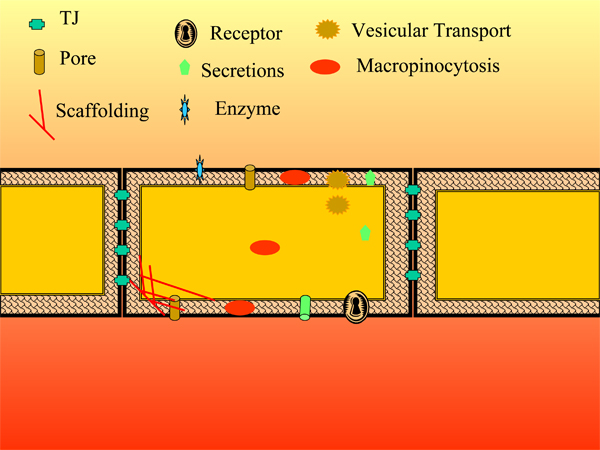
Substances cross the blood-brain barrier (BBB) by a variety of mechanisms. These include transmembrane diffusion, saturable transporters, adsorptive endocytosis, and the extracellular pathways. Here, we focus on the chief characteristics of two mechanisms especially important in drug delivery: transmembrane diffusion and transporters. Transmembrane diffusion is non-saturable and depends, on first analysis, on the physicochemical characteristics of the substance. However, brain-to-blood efflux systems, enzymatic activity, plasma protein binding, and cerebral blood flow can greatly alter the amount of the substance crossing the BBB. Transport systems increase uptake of ligands by roughly 10-fold and are modified by physiological events and disease states. Most drugs in clinical use to date are small, lipid soluble molecules that cross the BBB by transmembrane diffusion. However, many drug delivery strategies in development target peptides, regulatory proteins, oligonucleotides, glycoproteins, and enzymes for which transporters have been described in recent years. We discuss two examples of drug delivery for newly discovered transporters: that for phosphorothioate oligonucleotides and for enzymes.
Overview
The claims and statistics of this paper haven’t been checked yet.
Free: it reads the open-access text and checks the first 5 claims that cite a source we can check. Create a free account to check every claim.
Integrity signals
Registry
Cites
Statistics
Figures
Verification
Claims the paper makes
The claims and statistics of this paper haven’t been checked yet.
Free: it reads the open-access text and checks the first 5 claims that cite a source we can check. Create a free account to check every claim.
Claims other papers make about this one
Each is checked against this paper’s own text: does it say what the citing paper says it does?
The source backs part of the claim, not all of it — or backs it for a different population, condition or comparison.
In the citing paper
“Although lipophilicity is important for transmembrane diffusion through the BBB, some compounds that are too lipophilic can be discharged after crossing into the brain by the P-gp efflux transporter (Abbott, 2002; Banks, 2009).”
From A Critical Review and Meta-Analysis of Impacts of Per- and Polyfluorinated Substances on the Brain and Behavior (2022) · cites this paper as Banks, 2009
Experimental — accuracy not yet measuredIn the citing paper
“The amphipathic nature of this motif permits the crossing of biological membranes, a property that is important for traversing the blood–brain barrier and accessing cryptococcal cells that reside within the lysosome or phagolysosome of host cells114.”
From Treatment strategies for cryptococcal infection: challenges, advances and future outlook (2021) · cites this paper as [114]
In the citing paper
“BBB permeability can also be influenced by physiological factors such as efflux transporters (e.g., P-glycoprotein (P-gp)), enzymatic activity, plasma protein binding and cerebral blood flow 8.”
From Current Strategies for Brain Drug Delivery (2018) · cites this paper as [8]
Self-check
Percentages, sums and reported differences re-computed from the paper’s own numbers.
The self-check needs the paper’s full text.
Citations
Cites
Lipinski, C. A., Lombardo, F., Dominy, B. W., & Feeney, P. J. (2001) · Advanced Drug Delivery Reviews · doi:10.1016/s0169-409x(00)00129-0 · Cited by 18,139
Lipinski, C. A., Lombardo, F., Dominy, B. W., & Feeney, P. J. (1997) · Advanced Drug Delivery Reviews · doi:10.1016/s0169-409x(96)00423-1 · Cited by 11,385
FINE STRUCTURAL LOCALIZATION OF A BLOOD-BRAIN BARRIER TO EXOGENOUS PEROXIDASE
Reese, T. S., & Karnovsky, M. J. (1967) · The Journal of Cell Biology · doi:10.1083/jcb.34.1.207 · Cited by 2,629
Brain uptake of radiolabeled amino acids, amines, and hexoses after arterial injection
Oldendorf, W. (1971) · American Journal of Physiology-Legacy Content · doi:10.1152/ajplegacy.1971.221.6.1629 · Cited by 1,683
Glucagon-like peptide-1 receptor is involved in learning and neuroprotection
During, M. J., Cao, L., Zuzga, D. S., Francis, J. S., Fitzsimons, H. L., Jiao, X., Bland, R. J., Klugmann, M., Banks, W. A., Drucker, D. J., et al. (2003) · Nature Medicine · doi:10.1038/nm919 · Cited by 851 · cited 1×
“Intranasal delivery of drugs, including peptides [35], shows a great deal of promise [36].”
Self-citationLevin, V. A. (1980) · Journal of Medicinal Chemistry · doi:10.1021/jm00180a022 · Cited by 813 · cited 2×
“Levin VA: Relationship of octanol/water partition coefficient and molecular weight to rat brain capillary permeability.”
Intranasal insulin improves memory in humans
Benedict, C., Hallschmid, M., Hatke, A., Schultes, B., Fehm, H. L., Born, J., & Kern, W. (2004) · Psychoneuroendocrinology · doi:10.1016/j.psyneuen.2004.04.003 · Cited by 699 · cited 1×
“Nasal delivery of insulin, for example, has had positive effects in treating Alzheimer's disease [37,38].”
Delivery of therapeutic agents to the central nervous system: the problems and the possibilities
Begley, D. J. (2004) · Pharmacology & Therapeutics · doi:10.1016/j.pharmthera.2004.08.001 · Cited by 679 · cited 2×
“However, the endogenous compounds have poor peripheral pharmacokinetics and this limits their usefulness [3].”
Fellay, J., Marzolini, C., Meaden, E. R., Back, D. J., Buclin, T., Chave, J.-P., Decosterd, L. A., Furrer, H., Opravil, M., Pantaleo, G., et al. (2002) · The Lancet · doi:10.1016/s0140-6736(02)07276-8 · Cited by 658
Brain-immune communication pathways
Quan, N., & Banks, W. A. (2007) · Brain, Behavior, and Immunity · doi:10.1016/j.bbi.2007.05.005 · Cited by 626 · cited 1×
“These extra-barrier functions allow the BBB to influence the homeostatic, nutritive, and immune environments of the CNS and to regulate the exchange of informational molecules between the CNS and blood [4].”
Self-citation
Cited by
Items 401–500 of 755
Murugavel, S., Sundramoorthy, S., Subashini, R., & Pavan, P. (2018) · Structural Chemistry · doi:10.1007/s11224-018-1149-6 · Cited by 13
On the hydration of DOPE in solution
Rhys, N. H., Duffy, I. B., Sowden, C. L., Lorenz, C. D., & McLain, S. E. (2019) · The Journal of Chemical Physics · doi:10.1063/1.5085736 · Cited by 13
Epinephrine Production in Th17 Cells and Experimental Autoimmune Encephalitis
Yang, P., Tian, H. W., Zou, Y.-R., Chambon, P., Ichinose, H., Honig, G., Diamond, B., & Kim, S. J. (2021) · Frontiers in Immunology · doi:10.3389/fimmu.2021.616583 · Cited by 13
Pitsillou, E., Liang, J. J., Beh, R. C., Prestedge, J., Catak, S., Hung, A., & Karagiannis, T. C. (2022) · Computers in Biology and Medicine · doi:10.1016/j.compbiomed.2022.105247 · Cited by 13
Management of CNS metastases in patients with EGFR mutation-positive NSCLC
Shetty, V. V., & Suresh Babu, M. C. (2019) · Indian Journal of Cancer · doi:10.4103/ijc.ijc_455_19 · Cited by 14
Friedli, C., Wagner, F., Hammer, H. N., Kamber, N., Wiest, R., Diem, L., Chan, A., Salmen, A., & Hoepner, R. (2022) · Multiple Sclerosis Journal · doi:10.1177/13524585221122210 · Cited by 12
Siderol Inhibits Proliferation of Glioblastoma Cells and Acts Synergistically with Temozolomide
Giannakopoulou, M., Dimitriadis, K., Koromili, M., Zoi, V., Vartholomatos, E., Galani, V., Kyritsis, A. P., Alexiou, G. Α., & Lazari, D. M. (2022) · Biomedicines · doi:10.3390/biomedicines10123216 · Cited by 12
Luo, T., Kang, Y., Liu, Y., Li, J., & Li, J. (2023) · Frontiers in Bioengineering and Biotechnology · doi:10.3389/fbioe.2023.1162089 · Cited by 13
Alzheimer's disease imaging with a novel Tau targeted near infrared ratiometric probe.
Kim, H.-Y., Sengupta, U., Shao, P., Guerrero‐Munoz, M. J., Kayed, R., & Bai, M. (2013) · Europe PMC (PubMed Central) · Cited by 18
MR−Based Molecular Imaging of the Brain: The Next Frontier
de Backer, M. E., Nabuurs, R. J. A., van Buchem, M. A., & van der Weerd, L. (2010) · American Journal of Neuroradiology · doi:10.3174/ajnr.a2264 · Cited by 12
“However, lipophilic compounds have major drawbacks, including enhanced uptake and retention by peripheral tissues, complicating the compound biodistribution and pharmacokinetics.(12) In practical terms, lipophilic compounds are generally not soluble in aqueous solutions.”
Brastianos, P. K., Ippen, F. M., Hafeez, U., & Gan, H. K. (2018) · The Oncologist · doi:10.1634/theoncologist.2017-0614 · Cited by 12
Yang, H., An, J., Choi, I., Lee, K., Park, S.-M., Jou, I., & Joe, E.-H. (2020) · Molecular Brain · doi:10.1186/s13041-020-00642-0 · Cited by 14
Reddiar, S. B., Jin, L., Wai, D. C. C., Csóti, A., Panyi, G., Norton, R. S., & Nicolazzo, J. A. (2021) · Toxicon · doi:10.1016/j.toxicon.2021.03.002 · Cited by 12
Review of Current Strategies for Delivering Alzheimer's Disease Drugs Across the Blood-Brain Barrier
Wong, K. H., Riaz, M. K., Xie, Y., Zhang, X., Liu, Q., Chen, H., Bian, Z., Chen, X., Lü, A., & Yang, Z. (2022) · FOCUS The Journal of Lifelong Learning in Psychiatry · doi:10.1176/appi.focus.20106 · Cited by 13
Ha, Y., Liew, H., Park, H. Y., Kim, K., Suh, Y., & Churchill, D. G. (2011) · Neuroscience Research · doi:10.1016/j.neures.2011.07.003 · Cited by 12
Arévalo-Villalobos, J. I., Rosales‐Mendoza, S., & Zarazúa, S. (2016) · Expert Review of Vaccines · doi:10.1080/14760584.2016.1229602 · Cited by 12
Jing, Y., Zhao, G., Xu, Y., McGuire, T. F., Hou, G., Zhao, J. J., Chen, M., López, O. L., Xue, Y., & Xie, X. (2025) · The AAPS Journal · doi:10.1208/s12248-025-01059-0 · Cited by 14
“Both water-soluble and lipophilic drugs face barriers to CNS entry, complicating the development of neurological treatments (8, 29).”
Ryan, R. C., Leslie, M. N., He, P., Young, P. M., Hoyos, C. M., Ong, H. X., & Traini, D. (2025) · Advanced Drug Delivery Reviews · doi:10.1016/j.addr.2025.115575 · Cited by 11
Pokharel, S., Gliyazova, N. S., Dandepally, S. R., Williams, A. L., & Ibeanu, G. C. (2021) · Experimental and Therapeutic Medicine · doi:10.3892/etm.2021.11002 · Cited by 11
Sakamoto, Y., Ochiya, T., & Yoshioka, Y. (2023) · Frontiers in Human Neuroscience · doi:10.3389/fnhum.2023.1278501 · Cited by 12
“…tight junction proteins abundantly and have a very weak endocytic function, which rigorously restricts the entry of various substances into the brain, contributing to the physical barrier between the peripheral circulatory system and the central nervous system (Banks, 2009; Chow and Gu, 2015).”
Rathore, S. S., Muthukrishnan, I., Sridharan, V., Chellappan, D. R., Cheepurupalli, L., Raman, T., & Ramakrishnan, J. (2017) · Scientific Reports · doi:10.1038/s41598-017-15500-8 · Cited by 11
Wiratpruk, N., Noor, A., McLean, C., Donnelly, P. S., & Barnard, P. J. (2020) · Dalton Transactions · doi:10.1039/c9dt04687a · Cited by 12
Wu, X.-X., Yue, G. G., Dong, J.-R., Lam, C. W.-K., Wong, C.-K., Qiu, M., & Lau, C. B. (2020) · Frontiers in Oncology · doi:10.3389/fonc.2020.00854 · Cited by 12
Formulation and in vitro Characterization of Donepezil-loaded Chitosan Nanoparticles
Amjad, M. W., & Alotaibi, N. M. (2020) · Journal of Pharmaceutical Research International · doi:10.9734/jpri/2020/v32i1030488 · Cited by 11
Li, H. X., Heo, M., Go, Y., Kim, Y. H., Kim, Y. H., Yang, S. Y., & Li, W. (2020) · Molecules · doi:10.3390/molecules25173967 · Cited by 11
Janicka, M., Śliwińska, A., Sztanke, M., & Sztanke, K. (2022) · International Journal of Molecular Sciences · doi:10.3390/ijms232415887 · Cited by 11
Santarsiero, A., Bochicchio, A., Funicello, M., Lupattelli, P., Choppin, S., Colobert, F., Hanquet, G., Schiavo, L., Convertini, P., Chiummiento, L., et al. (2020) · Biochemical and Biophysical Research Communications · doi:10.1016/j.bbrc.2020.06.122 · Cited by 11
A 3D brain unit model to further improve prediction of local drug distribution within the brain
Vendel, E., Rottschäfer, V., & de Lange, E. C. M. (2020) · PLoS ONE · doi:10.1371/journal.pone.0238397 · Cited by 11
Iannone, M., Cosco, D., Cilurzo, F., Celia, C., Paolino, D., Mollace, V., Rotiroti, D., & Fresta, M. (2009) · Neuroscience Letters · doi:10.1016/j.neulet.2009.11.051 · Cited by 11
Labrak, Y., Alhouayek, M., Mwema, A., D’Auria, L., Učakar, B., Pesch, V. V., Muccioli, G. G., & Rieux, A. D. (2024) · International Journal of Pharmaceutics · doi:10.1016/j.ijpharm.2024.124237 · Cited by 10
Plata-Calzado, C., Prieto, A. I., Cameán, A. M., & Jos, A. M. (2025) · Archives of Toxicology · doi:10.1007/s00204-025-04057-5 · Cited by 10
“In addition, our results support the argument that CYN is likely to fail to cross the blood–brain barrier through passive diffusion because of its hydrophilic properties (Banks 2009).”
cGAS–STING axis: A central regulator of neural homeostasis and neuroinflammatory pathogenesis
Zhang, J., Li, J., Li, Y., Liu, C., Shi, L., Qian, Y., Chen, Q., & Zhang, Q. (2025) · Neural Regeneration Research · doi:10.4103/nrr.nrr-d-25-00367 · Cited by 12
“Finally, the therapeutic targeting of cGAS–STING axis requires a substantial amount of clinical trial data for efficacy evaluation in clinical translation and safety.”
Antioxidants encapsulated milk-derived exosomes for functional food development
Onizuka, Y., Fujita, K., Ide, S., Naito, T., & Kaji, N. (2023) · Analytical Sciences · doi:10.1007/s44211-023-00278-9 · Cited by 11
Chaves, J. C. S., Wasielewska, J. M., Cuní‐López, C., Rantanen, L. M., Lee, S., Koıstınaho, J., White, A. R., & Oikari, L. E. (2023) · Neurotherapeutics · doi:10.1016/j.neurot.2023.10.009 · Cited by 11
“Moreover, the exchange of molecules between the brain and the blood is controlled by BBB transporters expressed in BECs [12 – 15].”
Alshehri, M. M., Kumar, N., Kuthi, N. A., Olaide, Z., Alshammari, M. K., Bello, R. O., Alghazwni, M. K., Alshehri, A. M., Alshlali, O. M., Ashimiyu‐Abdusalam, Z., et al. (2024) · Journal of Biomolecular Structure and Dynamics · doi:10.1080/07391102.2024.2329297 · Cited by 10
“This suggests a potential advantage for isovitexin in crossing the BBB, which could be of significance for neurological applications (Banks, 2009; Bors & Erd € o, 2019; Helms et al., 2022).”
Advancements in ultrasound-mediated drug delivery for central nervous system disorders
Chuang, C.-F., Phan, T.-N., Fan, C., Le, T.-T. V., & Yeh, C. (2024) · Expert Opinion on Drug Delivery · doi:10.1080/17425247.2024.2438188 · Cited by 10
“These mechanisms safeguard the CNS from harmful substances while still allowing the exchange of nutrients and metabolites [9].”
Heath, F., Newman, A. H., Clementi, C., Pasut, G., Lin, H., Stephens, G. J., Whalley, B. J., Osborn, H. M. I., & Greco, F. (2016) · Polymer Chemistry · doi:10.1039/c6py01418f · Cited by 10
Preclinical Modeling and Therapeutic Avenues for Cancer Metastasis to the Central Nervous System
Singh, M., Bakhshinyan, D., Venugopal, C., & Singh, S. K. (2017) · Frontiers in Oncology · doi:10.3389/fonc.2017.00220 · Cited by 13
Dynamic constitutional chemistry towards efficient nonviral vectors
Ailincai, D., Peptanariu, D., Pinteală, M., & Marin, L. B. (2018) · Materials Science and Engineering C · doi:10.1016/j.msec.2018.10.002 · Cited by 10
“Studies on blood brain barrier, which is one of the most di ffi cult to be crossed biological membranes, demonstrated that lipophilic molecules are able to penetrate it, precisely due to their hydrophobicity [50,51].”
Kabdesh, I. M., Arkhipova, S. S., Mukhamedshina, Y. O., James, V. H., Rizvanov, A. A., & Chelyshev, Y. A. (2021) · Neuroscience · doi:10.1016/j.neuroscience.2021.05.031 · Cited by 10
Desai, D., & Shende, P. K. (2022) · Nanomedicine Nanotechnology Biology and Medicine · doi:10.1016/j.nano.2022.102594 · Cited by 14
Rajendran, R., Kunnil, A., Radhakrishnan, A., Thomas, S., & Nair, S. C. (2023) · Therapeutic Delivery · doi:10.4155/tde-2022-0064 · Cited by 11
Ramachandran, C., Portalatin, G. M., Prado, A. M., Quirin, K., Escalon, E., & Melnick, S. J. (2016) · Journal of Evidence-Based Complementary & Alternative Medicine · doi:10.1177/2156587216659390 · Cited by 10
Zhou, X., Alambyan, V., Ostergard, T. A., Pace, J., Kohen, M. C., Manjila, S. V., & Ramos-Estébanez, C. (2017) · World Neurosurgery · doi:10.1016/j.wneu.2017.09.196 · Cited by 10
Burden‐Gulley, S. M., Gates, T. J., Craig, S., Gupta, M., & Brady‐Kalnay, S. M. (2010) · Peptides · doi:10.1016/j.peptides.2010.02.002 · Cited by 10
“Of interest to neuroscientists, many small molecules can cross the restrictive blood–brain barrier [1].”
Quinlan, J. A., Baumiller, K., Gaur, A., Chiou, W., Robey, R. W., Gottesman, M. M., & Huang, H. (2024) · Advanced NanoBiomed Research · doi:10.1002/anbr.202400098 · Cited by 9
Zhang, C., Cabreiro, F., Barron, L., & Stürzenbaum, S. R. (2025) · Environment International · doi:10.1016/j.envint.2025.109357 · Cited by 9
Maio, A. D., Lin, F., Stefanovic, B., & O’Reilly, M. A. (2025) · Theranostics · doi:10.7150/thno.117691 · Cited by 11
“These can cross the BBB either through the endothelial lipid bilayer or the tight junctions [4], specialized endothelial cell contacts that are dynamically regulated to maintain barrier integrity [5].”
Giri, R., & Sharma, R. K. (2022) · Nutrition Reviews · doi:10.1093/nutrit/nuac019 · Cited by 12
The Sojourn of Polymeric Micelles for Effective Brain Drug Delivery System
Kaur, P., Rajput, A., Singh, D., Singh, G., Mehra, A., Kaur, S., Bedi, N., & Arora, S. (2023) · Current Drug Delivery · doi:10.2174/1567201820666230413082352 · Cited by 9
A pilot trial of ocrelizumab for modulation of meningeal enhancement in multiple sclerosis
Dahal, S., Allette, Y. M., Naunton, K., & Harrison, D. M. (2023) · Multiple Sclerosis and Related Disorders · doi:10.1016/j.msard.2023.105344 · Cited by 10
Hong, X., Chen, T., Liu, Y., Li, J., Huang, D., Ye, K., Liao, W., Wang, Y., Liu, M., & Luan, P. (2025) · Ageing Research Reviews · doi:10.1016/j.arr.2025.102669 · Cited by 10
Parupudi, T., Rahimi, R., Ammirati, M., Sundararajan, R., Garner, A. L., & Ziaie, B. (2018) · Electrophoresis · doi:10.1002/elps.201800161 · Cited by 11
Kammula, S. V., Tripathi, S., Wang, N., Dawson, V. L., Dawson, T. M., & Mao, X. (2023) · Ageing and Neurodegenerative Diseases · doi:10.20517/and.2023.20 · Cited by 16
Novel Treatment Approaches for Brain Tumour from a Blood–Brain Barrier Perspective
Wu, S., Tsai, C., & Hynynen, K. (2020) · Handbook of experimental pharmacology · doi:10.1007/164_2020_408 · Cited by 9
Dietary Piperine is Transferred into the Milk of Nursing Mothers
N'Diaye, K., Debong, M. W., Behr, J., Dirndorfer, S., Duggan, T., Beusch, A., Schlagbauer, V., Dawid, C., Loos, H. M., Buettner, A., et al. (2021) · Molecular Nutrition & Food Research · doi:10.1002/mnfr.202100508 · Cited by 9
Immune response to primary glioblastoma
Sklyar, S. S., Trashkov, A. P., Мацко, М. В., Safarov, B. I., & Vasiliev, A. G. (2022) · Pediatrician (St Petersburg) · doi:10.17816/ped13249-60 · Cited by 9
Yuet, W. C., Ebert, D., & Jann, M. (2021) · Therapeutic Advances in Drug Safety · doi:10.1177/2042098620959271 · Cited by 8
Wu, K., Yun, Z., Xue, W., Yu, T., Dai, A., Han, I., Kotheeranurak, V., Limthongkul, W., Liu, Y., & Liu, Q. (2025) · Materials Today Bio · doi:10.1016/j.mtbio.2025.102514 · Cited by 12
“However, this selective barrier also restricts the entry of many therapeutic molecules [40].”
Cheng, Y., Wang, Q., Li, K., Shi, J., Han, B., Wu, L., Chen, G., He, J., Wang, J., Qin, H., et al. (2023) · Cancer Innovation · doi:10.1002/cai2.43 · Cited by 9
“Besides, hydrophobic molecules with molecular weights of less than 500 Da were able to cross the BBB/BTB [26].”
Özçiçek, İ., Baydas, G., Erim, Ü. C., & Üstündağ, Ü. V. (2024) · Journal of Pharmaceutical Sciences · doi:10.1016/j.xphs.2024.08.008 · Cited by 8
Ardiansah, B., Farhan, A., Nurhasanah, N. S., Nasution, M. A. F., Salleh, N. M., Mizuguchi, K., Cahyana, A. H., & Mardiana, L. (2024) · Case Studies in Chemical and Environmental Engineering · doi:10.1016/j.cscee.2024.101031 · Cited by 8
Analyzing Oxygen Atom Distribution in FDA‐Approved Drugs to Enhance Drug Discovery Strategies
Masand, V. H., Patil, M. K., Al‐Hussain, S. A., Samad, A., Rastija, V., Jawarkar, R. D., Masand, G. S., Gawali, R. G., & Zaki, M. E. A. (2025) · Chemical Biology & Drug Design · doi:10.1111/cbdd.70060 · Cited by 8
“These properties can negatively impact BBB penetration, as larger molecules tend to have a reduced ability to cross the barrier, and compounds with high lipophilicity may be prone to efflux transporters at the BBB (Banks 2009; Di and Kerns 2016; Wanat 2020).”
Intranasal Drug Delivery to the Brain
Lochhead, J. J., Kumar, N. N., Nehra, G., Stenslik, M. J., Bradley, L. H., & Thorne, R. G. (2022) · AAPS advances in the pharmaceutical sciences series · doi:10.1007/978-3-030-88773-5_15 · Cited by 11
A new detection method for canine and feline cancer using the olfactory system of nematodes
Sugimoto, T., Okuda, Y., Shima, A., Sugiura, N., Kondo, N., Ishihara, G., Hirotsu, T., & di Luccio, E. (2022) · Biochemistry and Biophysics Reports · doi:10.1016/j.bbrep.2022.101332 · Cited by 8
Kim, E., Reet, J. V., Kim, H., Kowsari, K., & Yoo, S. (2022) · Pharmaceutics · doi:10.3390/pharmaceutics14102120 · Cited by 8
Sherif, S., Sameh, A., Salah, S. M., Omar, A., Elhaes, H., Ibrahim, A., Refaat, A., & Ibrahim, M. (2024) · Optical and Quantum Electronics · doi:10.1007/s11082-023-06125-5 · Cited by 9
“The proposed drugs are more lipophilic than DNC which assures they can cross lipid membrane more easily than DNC. Additionally, they are qualified to penetrate the blood-brain barrier which is required to increase the efficiency of COMT inhibitors (Banks 2009).”
Hamedi, A., Sakhteman, A., & Moheimani, S. M. (2020) · Cardiovascular & Hematological Agents in Medicinal Chemistry · doi:10.2174/1871524920666200510013039 · Cited by 8
Hull, R., Lolas, G., Makrogkikas, S., Jensen, L. D., Syrigos, K. N., Evangelou, G., Padayachy, L. C., Egbor, C., Mehrotra, R., Makhafola, T. J., et al. (2021) · Microorganisms · doi:10.3390/microorganisms9102129 · Cited by 8
Metoprolol Inhibits Developmental Brain Sterol Biosynthesis in Mice
Allen, L. B., & Mirnics, K. (2022) · Biomolecules · doi:10.3390/biom12091211 · Cited by 8
Nanoparticles Navigating the Intranasal Route: Innovative Approaches in Neurodegenerative Diseases
Borbolla‐Jiménez, F. V., Gutiérrez-Ruíz, S. C., Hernández‐Parra, H., Peña‐Corona, S. I., Tamez-González, A., Rivas-Amores, R. D., Magaña, J. J., & Leyva‐Gómez, G. (2025) · Journal of Nanotechnology · doi:10.1155/jnt/7697122 · Cited by 11
“…lipid solubility; however, this process is inefcient for many therapeutic agents, especially those that are highly lipophilic, as they may become sequestered in capillary membranes or preferentially accumulate in peripheral tissues, ultimately decreasing their bioavailability in the brain [15, 62].”
Barrier breakdown: lung-brain crosstalk in systemic inflammation
Villalba, N., Beard, R. S., & Yuan, S. Y. (2026) · Journal of Neuroinflammation · doi:10.1186/s12974-026-03807-1 · Cited by 8
Jaberi, K. R., Haghighi, M. R., Aligholi, H., Takallu, S., Asadi, P., Mirzaei, E., Jaberi, A. R., & Sahraian, A. (2026) · Biomedicine & Pharmacotherapy · doi:10.1016/j.biopha.2026.119622 · Cited by 7
Oligodendrocyte Progenitor Cell Transplantation Reduces White Matter Injury in a Fetal Goat Model
Yue, Y., Deng, B., Zeng, Y., Li, W., Qiu, X., Hu, P., Shen, L., Ruan, T., Zhou, R., Li, S., et al. (2024) · CNS Neuroscience & Therapeutics · doi:10.1111/cns.70178 · Cited by 7
“For instance, the blood–brain barrier makes it difficult for donor cells to enter the central nervous system after systemic administration [20].”
Achappa, S., Aldabaan, N. A., Alasmary, M. Y., Shaikh, I. A., Mahnashi, M. H., Desai, S. V., Muddapur, U. M., Khan, A. A., & Mannasaheb, B. A. (2025) · PLoS ONE · doi:10.1371/journal.pone.0325613 · Cited by 7
“None of the compounds cross the blood-brain barrier (BBB) [112,113].”
Devnarain, N., Ramharack, P., & Soliman, M. E. S. (2017) · RSC Advances · doi:10.1039/c7ra05918c · Cited by 9
Edache, E. I., Uzairu, A., Mamza, P. A., & Shallangwa, G. A. (2024) · Turkish computational and theoretical chemistry/Turkish computational and theoretical chemistry : · doi:10.33435/tcandtc.1196019 · Cited by 7
“The three compounds that were chosen (Table S8) have a low probability of penetrating the BBB, according to the calculations, and may not have any effect on CNS function.”
InfluentialRaveendrakumar, E., Gopichand, B., Bhosale, H., Melethadathil, N., & Valadi, J. K. (2024) · SAR and QSAR in environmental research · doi:10.1080/1062936x.2024.2446352 · Cited by 7
“Drugs for diseases such as Alzheimer’s, Parkinson’s, Multiple Sclerosis, CNS-based infections and Glioblastoma which target CNS disorders, the effectiveness of the treatment is affected due to the presence of the BBB [3,4].”
Effect of a newly synthesized quinoline-based compound (PPQ-8) on murine schistosomiasis mansoni
Taman, A. I., Alhusseiny, S. M., Saleh, N. E., Youssef, M., Mansour, B., Massoud, M. A. M., & El-Beshbishi, S. N. (2020) · Journal of Helminthology · doi:10.1017/s0022149x2000005x · Cited by 8
The Neuroimmune Role of Intestinal Microbiota in the Pathogenesis of Cardiovascular Disease
Suslov, A. V., Chairkina, E., Davidovna, S. M., Suslova, I. S., Khotina, V. A., Kirichenko, T. V., & Postnov, A. Y. (2021) · Journal of Clinical Medicine · doi:10.3390/jcm10091995 · Cited by 8
Liposomes: Production Methods and Application in Alzheimer’s Disease
Naziris, N., & Demetzos, C. (2021) · Advances in experimental medicine and biology · doi:10.1007/978-3-030-78787-5_48 · Cited by 7
Advances in Brain Delivery Systems Based on Biomimetic Nanoparticles
Li, C., Qian, J., & Chu, Y. (2022) · ChemNanoMat · doi:10.1002/cnma.202200066 · Cited by 9
Nanodelivery of antiretroviral drugs to nervous tissues
Lawal, S. K., Olojede, S. O., Faborode, O. S., Aladeyelu, O. S., Matshipi, M. N., Sulaiman, S. O., Naidu, E. C., Rennie, C. O., & Azu, O. O. (2022) · Frontiers in Pharmacology · doi:10.3389/fphar.2022.1025160 · Cited by 8
Kongkaew, N., Hengphasatporn, K., Injongkol, Y., Mee-udorn, P., Shi, L., Mahalapbutr, P., Maitarad, P., Harada, R., Shigeta, Y., Rungrotmongkol, T., et al. (2023) · RSC Advances · doi:10.1039/d3ra03087c · Cited by 7
Dash, S., Xiao, C., Stahel, P., Koulajian, K., Giacca, A., & Lewis, G. F. (2017) · Diabetes Obesity and Metabolism · doi:10.1111/dom.13069 · Cited by 7
Kislyuk, S., den Bosch, W. V., Adams, E., de Witte, P. A. M., & Cabooter, D. (2018) · Analytical and Bioanalytical Chemistry · doi:10.1007/s00216-018-0955-4 · Cited by 7
Kim, Y. Y., Chao, J. R., Kim, C., Jung, H., Kim, B. Y., Kang, T., Chang, J., Park, H. S., Suh, J., & Lee, J. H. (2019) · The Anatomical Record · doi:10.1002/ar.24146 · Cited by 7
Central Nervous System Drug Delivery After Ischemic or Hemorrhagic Stroke
Hoang, N., & Nimjee, S. M. (2019) · Elsevier eBooks · doi:10.1016/b978-0-12-813997-4.00024-4 · Cited by 10
Baxevanis, F., Zarmpi, P., Kuiper, J. L., & Fotaki, N. (2020) · European Journal of Pharmaceutical Sciences · doi:10.1016/j.ejps.2020.105263 · Cited by 7
Sharma, V., Firdaus, Z., Rai, H., Nayak, P. K., Singh, T. D., & Gautam, D. N. S. (2021) · Drug Metabolism and Personalized Therapy · doi:10.1515/dmpt-2021-0108 · Cited by 8
Mamun, A. A., Akter, F., Khan, M., Ahmed, S. S., Uddin, M. G., Tasfia, N. T., Efaz, F. M., Ali, M., Sultana, M. U. C., & Halim, M. A. (2021) · Journal of Biomolecular Structure and Dynamics · doi:10.1080/07391102.2021.1980109 · Cited by 7
Gudi, C. R., Wannemuehler, M. J., & Mansell, T. J. (2025) · Advanced Drug Delivery Reviews · doi:10.1016/j.addr.2025.115650 · Cited by 7
Zhu, B., & Liu, S. (2025) · International Journal of Molecular Sciences · doi:10.3390/ijms262211228 · Cited by 7
Jain, N., Roy, A. A., Madhusoodanan, G., Preman, N. K., Pokale, R., Pisay, M., Mukharya, A., Pandey, A. P., & Mutalik, S. (2025) · International Journal of Biological Macromolecules · doi:10.1016/j.ijbiomac.2025.143515 · Cited by 7
Tallon, M. J., Koturbash, I., & Blum, J. L. (2025) · Phytotherapy Research · doi:10.1002/ptr.70079 · Cited by 6
“This may be due to the relatively high molecular weight of these compounds (> 700 Da) and, as such, for molecules to cross the BBB, they should be~400 to 500 Da (Levin 1980; Banks 2009).”
InfluentialFontenelle, C. Q., Wang, Z., Fossey, C., Cailly, T., Linclau, B., & Fabis, F. (2013) · Bioorganic & Medicinal Chemistry · doi:10.1016/j.bmc.2013.08.061 · Cited by 6
Adamantinomatous craniopharyngioma associated with a compromised blood–brain barrier: patient series
Prince, E. W., Hoffman, L. M., Vijmasi, T., Dorris, K. M. O., McWilliams, J. A., Jordan, K. R., Mirsky, D. M., & Hankinson, T. C. (2021) · Journal of Neurosurgery Case Lessons · doi:10.3171/case2150 · Cited by 6
The New PI3K/mTOR Inhibitor GNE-477 Inhibits the Malignant Behavior of Human Glioblastoma Cells
Wang, Y., Shen, H., Sun, Q., Zhao, L., Liu, H., Ye, L., Xu, Y., Cai, J., Li, Y., Gao, L., et al. (2021) · Frontiers in Pharmacology · doi:10.3389/fphar.2021.659511 · Cited by 6
Arberas-Jiménez, I., Rodríguez-Expósito, R. L., Nicolás-Hernández, D. S., Chao-Pellicer, J., Sifaoui, I., Díaz‐Marrero, A. R., Fernández, J. J., Piñero, J. E., & Lorenzo‐Morales, J. (2023) · Pharmaceuticals · doi:10.3390/ph16071010 · Cited by 7
Fayez, H., Selim, A. A., Shamma, R. N., & Rashed, H. M. (2024) · Current Radiopharmaceuticals · doi:10.2174/0118744710269885231113070356 · Cited by 6
Metadata
- Authors
- Banks, W. A.
- Affiliations
- Veterans Health Administration (US)
- Corresponding author
- Banks, William A
- ORCID
- Banks, William A
- Venue
- BMC Neurology
- Published
- 2009
- Volume
- 9
- Issue
- Suppl 1
- Pages
- S3
- ISSN
- 1471-2377 (ISSN-L)
- PMC
- PMC2697631
- OpenAlex
- W2029206557
- Semantic Scholar
- 734a274ed2c7eb4f665b6c3f176435733ba7858e
- Cited by
- 710
- References
- 49
- Citations by year
- 2026: 37 · 2025: 54 · 2024: 62 · 2023: 77 · 2022: 77 · 2021: 63 · 2020: 72 · 2019: 48 · 2018: 65 · 2017: 36 · 2016: 24 · 2015: 24 · 2014: 18 · 2013: 17 · 2012: 8
- Type
- conference abstract
- Language
- en
- Open access
- gold
- doi.org
- Licence
- cc-by
- Locations
- BMC Neurology (publishedVersion, cc-by)
- PubMed Central (publishedVersion, cc-by)
- PubMed (publishedVersion)
- DOAJ (DOAJ: Directory of Open Access Journals) (submittedVersion)
- Funders
- Michael J. Fox Foundation for Parkinson's Research
- Eli Lilly and Company
- Sanofi
- Biogen
- National Institutes of Health
- National Institute on Aging
- National Institute of Neurological Disorders and Stroke
- Topics
- Life Sciences › Neuroscience › Neurology › Barrier Structure and Function Studies
- Health Sciences › Medicine › Oncology › Drug Transport and Resistance Mechanisms
- Physical Sciences › Materials Science › Biomaterials › Nanoparticle-Based Drug Delivery
- Keywords
- blood-brain barrier, membrane diffusion, brain drug delivery, plasma protein binding, cerebral blood flow, phosphorothioate oligonucleotides, enzyme delivery, peptide transporters, lipid-soluble drugs
- MeSH terms
- Animals, Biological Transport, Blood-Brain Barrier, Central Nervous System Agents, Humans, Drug Delivery Systems
About these checks
Registry, retraction, Cites and statistics results are computed, not judged, with one exception: a printed reference that no index lists is read once by a model before it counts as a citation error. Claims are extracted by a model and kept only when their quote appears verbatim in the text; each cited source is then checked, with a model’s help, for whether it says what the claim relies on. Those verdicts can be wrong — read the claim’s quote and the cited source before relying on one.
Statistics and arithmetic are recomputed, not judged.
Confidence bands are shown only for fields calibrated on our annotated test set. None is calibrated yet, so no band is shown.
What counts as a claim ›How we measure confidence ›How we check this ›
Are you an author, or do you see a problem with this page? Request a review
Data sources
Bibliographic data: Semantic Scholar, OpenAlex, Crossref.
Contains information from the Semantic Scholar Academic Graph Datasets, made available under the ODC Attribution License (ODC-BY 1.0).
Semantic Scholar’s data is described in: Kinney, R., et al. (2023). The Semantic Scholar Open Data Platform. arXiv:2301.10140.
