

Characteristics of compounds that cross the blood-brain barrier
Open accessThe DOI matches its Crossref record; 50 of the 50 references it cites were found in a registry or an index.
Abstract
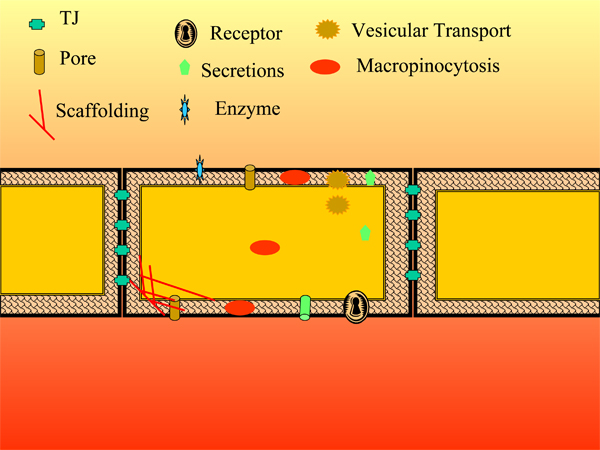
Substances cross the blood-brain barrier (BBB) by a variety of mechanisms. These include transmembrane diffusion, saturable transporters, adsorptive endocytosis, and the extracellular pathways. Here, we focus on the chief characteristics of two mechanisms especially important in drug delivery: transmembrane diffusion and transporters. Transmembrane diffusion is non-saturable and depends, on first analysis, on the physicochemical characteristics of the substance. However, brain-to-blood efflux systems, enzymatic activity, plasma protein binding, and cerebral blood flow can greatly alter the amount of the substance crossing the BBB. Transport systems increase uptake of ligands by roughly 10-fold and are modified by physiological events and disease states. Most drugs in clinical use to date are small, lipid soluble molecules that cross the BBB by transmembrane diffusion. However, many drug delivery strategies in development target peptides, regulatory proteins, oligonucleotides, glycoproteins, and enzymes for which transporters have been described in recent years. We discuss two examples of drug delivery for newly discovered transporters: that for phosphorothioate oligonucleotides and for enzymes.
Overview
The claims and statistics of this paper haven’t been checked yet.
Free: it reads the open-access text and checks the first 5 claims that cite a source we can check. Create a free account to check every claim.
Integrity signals
Registry
Cites
Statistics
Figures
Verification
Claims the paper makes
The claims and statistics of this paper haven’t been checked yet.
Free: it reads the open-access text and checks the first 5 claims that cite a source we can check. Create a free account to check every claim.
Claims other papers make about this one
Each is checked against this paper’s own text: does it say what the citing paper says it does?
The source backs part of the claim, not all of it — or backs it for a different population, condition or comparison.
In the citing paper
“Although lipophilicity is important for transmembrane diffusion through the BBB, some compounds that are too lipophilic can be discharged after crossing into the brain by the P-gp efflux transporter (Abbott, 2002; Banks, 2009).”
From A Critical Review and Meta-Analysis of Impacts of Per- and Polyfluorinated Substances on the Brain and Behavior (2022) · cites this paper as Banks, 2009
Experimental — accuracy not yet measuredIn the citing paper
“The amphipathic nature of this motif permits the crossing of biological membranes, a property that is important for traversing the blood–brain barrier and accessing cryptococcal cells that reside within the lysosome or phagolysosome of host cells114.”
From Treatment strategies for cryptococcal infection: challenges, advances and future outlook (2021) · cites this paper as [114]
In the citing paper
“BBB permeability can also be influenced by physiological factors such as efflux transporters (e.g., P-glycoprotein (P-gp)), enzymatic activity, plasma protein binding and cerebral blood flow 8.”
From Current Strategies for Brain Drug Delivery (2018) · cites this paper as [8]
Self-check
Percentages, sums and reported differences re-computed from the paper’s own numbers.
The self-check needs the paper’s full text.
Citations
Cites
Lipinski, C. A., Lombardo, F., Dominy, B. W., & Feeney, P. J. (2001) · Advanced Drug Delivery Reviews · doi:10.1016/s0169-409x(00)00129-0 · Cited by 18,139
Lipinski, C. A., Lombardo, F., Dominy, B. W., & Feeney, P. J. (1997) · Advanced Drug Delivery Reviews · doi:10.1016/s0169-409x(96)00423-1 · Cited by 11,385
FINE STRUCTURAL LOCALIZATION OF A BLOOD-BRAIN BARRIER TO EXOGENOUS PEROXIDASE
Reese, T. S., & Karnovsky, M. J. (1967) · The Journal of Cell Biology · doi:10.1083/jcb.34.1.207 · Cited by 2,629
Brain uptake of radiolabeled amino acids, amines, and hexoses after arterial injection
Oldendorf, W. (1971) · American Journal of Physiology-Legacy Content · doi:10.1152/ajplegacy.1971.221.6.1629 · Cited by 1,683
Glucagon-like peptide-1 receptor is involved in learning and neuroprotection
During, M. J., Cao, L., Zuzga, D. S., Francis, J. S., Fitzsimons, H. L., Jiao, X., Bland, R. J., Klugmann, M., Banks, W. A., Drucker, D. J., et al. (2003) · Nature Medicine · doi:10.1038/nm919 · Cited by 851 · cited 1×
“Intranasal delivery of drugs, including peptides [35], shows a great deal of promise [36].”
Self-citationLevin, V. A. (1980) · Journal of Medicinal Chemistry · doi:10.1021/jm00180a022 · Cited by 813 · cited 2×
“Levin VA: Relationship of octanol/water partition coefficient and molecular weight to rat brain capillary permeability.”
Intranasal insulin improves memory in humans
Benedict, C., Hallschmid, M., Hatke, A., Schultes, B., Fehm, H. L., Born, J., & Kern, W. (2004) · Psychoneuroendocrinology · doi:10.1016/j.psyneuen.2004.04.003 · Cited by 699 · cited 1×
“Nasal delivery of insulin, for example, has had positive effects in treating Alzheimer's disease [37,38].”
Delivery of therapeutic agents to the central nervous system: the problems and the possibilities
Begley, D. J. (2004) · Pharmacology & Therapeutics · doi:10.1016/j.pharmthera.2004.08.001 · Cited by 679 · cited 2×
“However, the endogenous compounds have poor peripheral pharmacokinetics and this limits their usefulness [3].”
Fellay, J., Marzolini, C., Meaden, E. R., Back, D. J., Buclin, T., Chave, J.-P., Decosterd, L. A., Furrer, H., Opravil, M., Pantaleo, G., et al. (2002) · The Lancet · doi:10.1016/s0140-6736(02)07276-8 · Cited by 658
Brain-immune communication pathways
Quan, N., & Banks, W. A. (2007) · Brain, Behavior, and Immunity · doi:10.1016/j.bbi.2007.05.005 · Cited by 626 · cited 1×
“These extra-barrier functions allow the BBB to influence the homeostatic, nutritive, and immune environments of the CNS and to regulate the exchange of informational molecules between the CNS and blood [4].”
Self-citation
Cited by
Items 701–755 of 755
Kopec, B. M., Ebert, E., Ulapane, K. R., Moral, M. E. G., & Siahaan, T. J. (2025) · Neuromethods · doi:10.1007/978-1-0716-4474-4_12
Zeng, Q., Lin, J. M., Syrrou, A., İnam, O., Wesley, S. F., & Tezel, T. H. (2025) · BMC Ophthalmology · doi:10.1186/s12886-025-04302-6
“The molecular cut-off of the blood-brain barrier is generally considered to be around 400 Da [17].”
Alli, O. O., Bankole, O. A., Balogun, A. A., & Abioye, M. T. (2025) · Journal of Medical Science Biology and Chemistry · doi:10.69739/jmsbc.v2i2.918
de Freitas, P. H. S., dos Santos, L. P. M., Fernandes, M. F., Leite, V. C., Pinto, N. D. C. C., de Souza, V. C., Goliatt, P. V. Z. C., & Scio, E. (2025) · BIOFARM - Journal of Biology & Pharmacy and Agricultural Management · doi:10.18391/biofarm.v20i1.4126
Anticancer Therapy Against Glioma by Peptide-Based Therapeutics
Mitra, S., Das, S., Mukherjee, S., Karati, D., & Meur, S. (2025) · International Journal of Peptide Research and Therapeutics · doi:10.1007/s10989-025-10755-6
“Furthermore, higher lipophilic medications have a tendency to cross the blood– brain barrier and reach other organs, which reduces the amount of medication that can enter the brain (Banks 2009).”
Zan, N., Yu, D., Zhang, X., & Lin, Z. (2025) · Science Progress · doi:10.1177/00368504251382043
Wołodkiewicz, P., Juszczak, M., Tokarz, P., Woźniak, K., & Tokarz, P. (2025) · Scientific Reports · doi:10.1038/s41598-025-22754-0
“Given that no current treatment regimen for GBM is curative, the National Comprehensive Cancer Network (NCCN) recommends clinical trials as the preferred option for eligible patients, reflecting the need for innovative approaches 41 .”
Chupel, M. U. (2018) · Portuguese National Funding Agency for Science, Research and Technology (RCAAP Project by FCT)
Tiozzo Fasiolo, L. (2019) · DSpasce-unipr
Simon, K. A. M. (2017) · bonndoc (University of Bonn)
Divović, B. (2023) · FarFar - Pharmacy Repository
In vitro study of a selective PI3K inhibitor on brain metastases
Rigg, E. (2020) · NVA (Nasjonalt vitenarkiv)
Molecular Drug Delivery Vehicle for Crossing Blood Brain Barrier
Suthar, P. S. P. (2025) · International Journal for Research in Applied Science and Engineering Technology · doi:10.22214/ijraset.2025.76689
Correia, C., Ung, C. Y., Grenko, C. M., Zhu, S., Billadeau, D. D., & Li, H. (2026) · Challenges and advances in computational chemistry and physics · doi:10.1007/978-3-032-07880-3_1
Saxena, V. K., Medarametla, P., Mahla, A. S., & Singh, R. L. (2026) · bioRxiv (Cold Spring Harbor Laboratory) · doi:10.64898/2026.02.04.703727
Chowdhury, T., Muruganandan, S., Ferretti, D., Luo, Y., Dion, J., Zhang, M., & Lo, S. (2026) · Journal of Visualized Experiments · doi:10.3791/69788
Preclinical models for chemotherapy development
Shakya, S., Kaur, R., Speier, L. J., & Hubert, C. G. (2026) · Elsevier eBooks · doi:10.1016/b978-0-443-27356-8.00004-8
Maio, A. D. (2026) · TSpace (University of Toronto)
Thomas, É. (2017) · theses.fr (ABES) · doi:10.70675/a7507598zc632z4369zbad1z5ffa38b37283
Vidal, A. (2019) · theses.fr (ABES) · doi:10.70675/23cbceafzee01z4aadz9c76ze02250f4b351 · Cited by 2
Singh, A. D., Kumar, M., Swathi, B. H., Bhargavi, P., Godbole, A., & Khushu, S. (2026) · Neurochemistry International · doi:10.1016/j.neuint.2026.106163 · Cited by 1
Shaikh, S. S., Alte, A. R., Pande, V. V., & Tawale, S. S. (2026) · International Journal of Pharmaceutical Chemistry and Analysis · doi:10.18231/j.ijpca.16522.1775122878
Synthetic Polymer Based Nano Drug Delivery Systems for Precise Alzheimer’s Disease Therapy
Kamei, K., Abedrabbo, B., Alhaddad, N., Aly, J., Castaño, J. F., & Makhambetova, Z. (2026) · Cell Therapy & Engineering Connect · doi:10.69709/ctec.2026.104050
Biomaterials for intranasal administration
Garg, S., Vikal, A., Singhai, N., Sharma, R., Kumar, A., Singh, C., Singh, N., Patel, P., & Kurmi, B. D. (2026) · Elsevier eBooks · doi:10.1016/b978-0-443-31604-3.00013-6
Mesoporous Silica Nanoparticles for Delivery of Therapeutic Agents in Brain Disorders
Alijanpourtolouti, O. (2025) · Murdoch University Research Portal · doi:10.60867/00000107
Deng, L., Li, H., Yang, S., Chen, F., Qiao, J., 包慧中, Wang, X., Fang, S., Xu, B., & Tang, Z. (2026) · Journal of Nanobiotechnology · doi:10.1186/s12951-026-04654-1
“This limitation significantly reduces the clinical efficacy of conventional TCM formulations for CNS disorders [113].”
Rim, J., Ha, J.-H., Yu, J. W., Mun, H. Y., Hong, S. W., Oh, S., Kim, J., Jung, H. H., Cho, S.-R., & Chang, W. S. (2026) · Clinical Neurology and Neurosurgery · doi:10.1016/j.clineuro.2026.109549
A staged zebrafish–mouse screening strategy for antiseizure compound prioritization
Christie, C. F., Bendell, E., Renaud, L., Williamson, T., Li, X., Himes, R. A., Prosser, L. C., Edwards, S. F., Metcalf, C. S., West, P. J., et al. (2026) · Neuropharmacology · doi:10.1016/j.neuropharm.2026.111085
“Compounds that can pass the BBB are often lipophilic and have a small molecular weight to allow transmembrane diffusion (Banks, 2009; Pardridge, 2012).”
Tumor-targeted pan-RAS inhibition as a novel biologic therapy for diffuse midline glioma
Sbergio, S.-G., Liang, H., Chen, L., Canty, L., Carette, S., Pajovic, S., Sabha, N. S., Vadivel, A. K. A., Beilhartz, G. L., Melnyk, R. A., et al. (2026) · Neuro-Oncology · doi:10.1093/neuonc/noag148
BEAM-1: A Biophysics-Informed Multiscale Mathematical Framework for CNS Pharmaceutical PermeabilityPreprint
Allabanda, N. U. (2026) · Research Square · doi:10.21203/rs.3.rs-10421816/v1
Challenges and Opportunities of Tuberoinfundibular Axis in Brain Disorder Immunotherapy
Jirvankar, P., Khobragade, D. S., Agrawal, S. S., Potbhare, M. S., Tiwari, P., & Kadiri, S. K. (2026) · Wiley eBooks · doi:10.1002/9781394336241.ch18
A PET reporter ligand for quantitative imaging of gene expression in the brain
Stotz, S., Dunkel, G., Haas, S., Seyfried, P., Kinzler, J., Berner, J., Schaller, M., Lämmerhofer, M., Grant, S. G. N., Pichler, B. J., et al. (2026) · Nature Biomedical Engineering · doi:10.1038/s41551-026-01748-x
Cataldi, V., Tailor, D., Montaño, A. R., Rizvi, S. Z. H., Chakraborty, S., Saldivar, J. C., Malhotra, S. V., Wang, L. G., Gibbs, S. L., & Alani, A. W. G. (2026) · Cancers · doi:10.3390/cancers18162684
“As shown in Figures 1 and 5, the oxazine probes possess molecular weights within a range generally compatible with blood–brain barrier permeability and exhibit moderate lipophilicity, which may facilitate membrane diffusion [20,22–24].”
Prediction of blood–brain barrier permeability using modified poly(dimethylsiloxane)
Waters, L. J., Tahir, S., & Whiteley, J. (2026) · Analytical Methods · doi:10.1039/d6ay00998k
Masand, V. H., Al-Hussain, S. A., Quadri, M. S. A., Samad, A., & Zaki, M. E. A. (2026) · ChemMedChem · doi:10.1002/cmdc.70462
Kurtenbach, P., Hahn, M., Thevis, M., & Lamshoeft, M. (2026) · Toxicology Letters · doi:10.1016/j.toxlet.2026.112763
El-Nablaway, M., Hassan, H. M., Erfan, O. S., Ebrahim, H. A., Muhammad, M. E., Shukry, M., Hendawy, M., Elsherbiny, M., Embaby, E. M., & Eldesoqui, M. B. (2026) · Tissue and Cell · doi:10.1016/j.tice.2026.103975
Rohman, N., Ardiansah, B., Wukirsari, T., Ilham, M. I., Anita, Y., Putra, A. B. N., Palupi, K. D., Ariyani, T., Lo, L., Menéndez, J. C., et al. (2026) · South African Journal of Chemical Engineering · doi:10.1016/j.sajce.2026.101010
Pharmacological Characterization and Chemo-informatics analysis of Compounds from Leonotis leonurus.
N, O. C. O. (2021) · University of the Western Cape Electronic Theses and Dissertations Repository (University of the Western Cape) · Cited by 1
Wang, J., Jin, N., Li, S., Wang, B., & Chen, X. (2026) · Frontiers in Pharmacology · doi:10.3389/fphar.2026.1961846
“Such disparity is presumably attributed to their relatively high molecular weight ( > 700 Da) (Levin, 1980; Banks, 2009).”
Microencapsulation in CNS Drug Delivery Systems: Recent Advances and Future Perspectives
Sundaram, M. S., Anju., C. L., & Raman, K. (2026) · Scientific Hub of Applied Research in Emerging Medical science & technology
Chadaram, B. (2025) · Journal of chemical health risks · Cited by 1
Bay, C., Kästing, M., Chu, J., Mühlberg, E., Scherkl, C., Uhl, P., Stingl, J., Burhenne, J., Bajraktari‐Sylejmani, G., Sauter, M., et al. (2026) · Research Square · doi:10.21203/rs.3.rs-11433171/v1
BindingDB (2019) · UC San Diego · doi:10.7270/q2n58psv
BindingDB Entry 50002213: MF-8, a novel promising arylpiperazine-hydantoin based 5-HT
BindingDB (2020) · UC San Diego · doi:10.7270/q2pn9877
Brás, J. R. M. (2021) · Portuguese National Funding Agency for Science, Research and Technology (RCAAP Project by FCT)
Herman, A. (2026) · Repository of the University of Ljubljana (University of Ljubljana)
Youssef, E., El‐Mehdi, E., Zazouli, S., Sara, B., Khibech, O., Alqahtani, M. J., Alqahtani, J., Basilua, J. M., Noureddine, E., Laglaoui, A., et al. (2026) · ChemistrySelect · doi:10.1002/slct.74837
WITHAFERIN A: A NOVEL THERAPEUTIC APPROACH FOR MALIGANT BRAIN TUMORS
Grogan, P. T. (2014) · KU ScholarWorks (The University of Kansas) · Cited by 1
Metadata
- Authors
- Banks, W. A.
- Affiliations
- Veterans Health Administration (US)
- Corresponding author
- Banks, William A
- ORCID
- Banks, William A
- Venue
- BMC Neurology
- Published
- 2009
- Volume
- 9
- Issue
- Suppl 1
- Pages
- S3
- ISSN
- 1471-2377 (ISSN-L)
- PMC
- PMC2697631
- OpenAlex
- W2029206557
- Semantic Scholar
- 734a274ed2c7eb4f665b6c3f176435733ba7858e
- Cited by
- 710
- References
- 49
- Citations by year
- 2026: 37 · 2025: 54 · 2024: 62 · 2023: 77 · 2022: 77 · 2021: 63 · 2020: 72 · 2019: 48 · 2018: 65 · 2017: 36 · 2016: 24 · 2015: 24 · 2014: 18 · 2013: 17 · 2012: 8
- Type
- conference abstract
- Language
- en
- Open access
- gold
- doi.org
- Licence
- cc-by
- Locations
- BMC Neurology (publishedVersion, cc-by)
- PubMed Central (publishedVersion, cc-by)
- PubMed (publishedVersion)
- DOAJ (DOAJ: Directory of Open Access Journals) (submittedVersion)
- Funders
- Michael J. Fox Foundation for Parkinson's Research
- Eli Lilly and Company
- Sanofi
- Biogen
- National Institutes of Health
- National Institute on Aging
- National Institute of Neurological Disorders and Stroke
- Topics
- Life Sciences › Neuroscience › Neurology › Barrier Structure and Function Studies
- Health Sciences › Medicine › Oncology › Drug Transport and Resistance Mechanisms
- Physical Sciences › Materials Science › Biomaterials › Nanoparticle-Based Drug Delivery
- Keywords
- blood-brain barrier, membrane diffusion, brain drug delivery, plasma protein binding, cerebral blood flow, phosphorothioate oligonucleotides, enzyme delivery, peptide transporters, lipid-soluble drugs
- MeSH terms
- Animals, Biological Transport, Blood-Brain Barrier, Central Nervous System Agents, Humans, Drug Delivery Systems
About these checks
Registry, retraction, Cites and statistics results are computed, not judged, with one exception: a printed reference that no index lists is read once by a model before it counts as a citation error. Claims are extracted by a model and kept only when their quote appears verbatim in the text; each cited source is then checked, with a model’s help, for whether it says what the claim relies on. Those verdicts can be wrong — read the claim’s quote and the cited source before relying on one.
Statistics and arithmetic are recomputed, not judged.
Confidence bands are shown only for fields calibrated on our annotated test set. None is calibrated yet, so no band is shown.
What counts as a claim ›How we measure confidence ›How we check this ›
Are you an author, or do you see a problem with this page? Request a review
Data sources
Bibliographic data: Semantic Scholar, OpenAlex, Crossref.
Contains information from the Semantic Scholar Academic Graph Datasets, made available under the ODC Attribution License (ODC-BY 1.0).
Semantic Scholar’s data is described in: Kinney, R., et al. (2023). The Semantic Scholar Open Data Platform. arXiv:2301.10140.
