

Characteristics of compounds that cross the blood-brain barrier
Open accessThe DOI matches its Crossref record; 50 of the 50 references it cites were found in a registry or an index.
Abstract
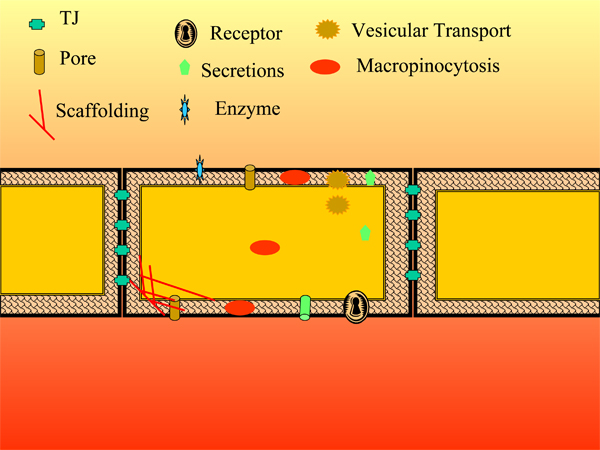
Substances cross the blood-brain barrier (BBB) by a variety of mechanisms. These include transmembrane diffusion, saturable transporters, adsorptive endocytosis, and the extracellular pathways. Here, we focus on the chief characteristics of two mechanisms especially important in drug delivery: transmembrane diffusion and transporters. Transmembrane diffusion is non-saturable and depends, on first analysis, on the physicochemical characteristics of the substance. However, brain-to-blood efflux systems, enzymatic activity, plasma protein binding, and cerebral blood flow can greatly alter the amount of the substance crossing the BBB. Transport systems increase uptake of ligands by roughly 10-fold and are modified by physiological events and disease states. Most drugs in clinical use to date are small, lipid soluble molecules that cross the BBB by transmembrane diffusion. However, many drug delivery strategies in development target peptides, regulatory proteins, oligonucleotides, glycoproteins, and enzymes for which transporters have been described in recent years. We discuss two examples of drug delivery for newly discovered transporters: that for phosphorothioate oligonucleotides and for enzymes.
Overview
The claims and statistics of this paper haven’t been checked yet.
Free: it reads the open-access text and checks the first 5 claims that cite a source we can check. Create a free account to check every claim.
Integrity signals
Registry
Cites
Statistics
Figures
Verification
Claims the paper makes
The claims and statistics of this paper haven’t been checked yet.
Free: it reads the open-access text and checks the first 5 claims that cite a source we can check. Create a free account to check every claim.
Claims other papers make about this one
Each is checked against this paper’s own text: does it say what the citing paper says it does?
The source backs part of the claim, not all of it — or backs it for a different population, condition or comparison.
In the citing paper
“Although lipophilicity is important for transmembrane diffusion through the BBB, some compounds that are too lipophilic can be discharged after crossing into the brain by the P-gp efflux transporter (Abbott, 2002; Banks, 2009).”
From A Critical Review and Meta-Analysis of Impacts of Per- and Polyfluorinated Substances on the Brain and Behavior (2022) · cites this paper as Banks, 2009
Experimental — accuracy not yet measuredIn the citing paper
“The amphipathic nature of this motif permits the crossing of biological membranes, a property that is important for traversing the blood–brain barrier and accessing cryptococcal cells that reside within the lysosome or phagolysosome of host cells114.”
From Treatment strategies for cryptococcal infection: challenges, advances and future outlook (2021) · cites this paper as [114]
In the citing paper
“BBB permeability can also be influenced by physiological factors such as efflux transporters (e.g., P-glycoprotein (P-gp)), enzymatic activity, plasma protein binding and cerebral blood flow 8.”
From Current Strategies for Brain Drug Delivery (2018) · cites this paper as [8]
Self-check
Percentages, sums and reported differences re-computed from the paper’s own numbers.
The self-check needs the paper’s full text.
Citations
Cites
Lipinski, C. A., Lombardo, F., Dominy, B. W., & Feeney, P. J. (2001) · Advanced Drug Delivery Reviews · doi:10.1016/s0169-409x(00)00129-0 · Cited by 18,139
Lipinski, C. A., Lombardo, F., Dominy, B. W., & Feeney, P. J. (1997) · Advanced Drug Delivery Reviews · doi:10.1016/s0169-409x(96)00423-1 · Cited by 11,385
FINE STRUCTURAL LOCALIZATION OF A BLOOD-BRAIN BARRIER TO EXOGENOUS PEROXIDASE
Reese, T. S., & Karnovsky, M. J. (1967) · The Journal of Cell Biology · doi:10.1083/jcb.34.1.207 · Cited by 2,629
Brain uptake of radiolabeled amino acids, amines, and hexoses after arterial injection
Oldendorf, W. (1971) · American Journal of Physiology-Legacy Content · doi:10.1152/ajplegacy.1971.221.6.1629 · Cited by 1,683
Glucagon-like peptide-1 receptor is involved in learning and neuroprotection
During, M. J., Cao, L., Zuzga, D. S., Francis, J. S., Fitzsimons, H. L., Jiao, X., Bland, R. J., Klugmann, M., Banks, W. A., Drucker, D. J., et al. (2003) · Nature Medicine · doi:10.1038/nm919 · Cited by 851 · cited 1×
“Intranasal delivery of drugs, including peptides [35], shows a great deal of promise [36].”
Self-citationLevin, V. A. (1980) · Journal of Medicinal Chemistry · doi:10.1021/jm00180a022 · Cited by 813 · cited 2×
“Levin VA: Relationship of octanol/water partition coefficient and molecular weight to rat brain capillary permeability.”
Intranasal insulin improves memory in humans
Benedict, C., Hallschmid, M., Hatke, A., Schultes, B., Fehm, H. L., Born, J., & Kern, W. (2004) · Psychoneuroendocrinology · doi:10.1016/j.psyneuen.2004.04.003 · Cited by 699 · cited 1×
“Nasal delivery of insulin, for example, has had positive effects in treating Alzheimer's disease [37,38].”
Delivery of therapeutic agents to the central nervous system: the problems and the possibilities
Begley, D. J. (2004) · Pharmacology & Therapeutics · doi:10.1016/j.pharmthera.2004.08.001 · Cited by 679 · cited 2×
“However, the endogenous compounds have poor peripheral pharmacokinetics and this limits their usefulness [3].”
Fellay, J., Marzolini, C., Meaden, E. R., Back, D. J., Buclin, T., Chave, J.-P., Decosterd, L. A., Furrer, H., Opravil, M., Pantaleo, G., et al. (2002) · The Lancet · doi:10.1016/s0140-6736(02)07276-8 · Cited by 658
Brain-immune communication pathways
Quan, N., & Banks, W. A. (2007) · Brain, Behavior, and Immunity · doi:10.1016/j.bbi.2007.05.005 · Cited by 626 · cited 1×
“These extra-barrier functions allow the BBB to influence the homeostatic, nutritive, and immune environments of the CNS and to regulate the exchange of informational molecules between the CNS and blood [4].”
Self-citation
Cited by
Items 201–300 of 755
Sreeharsha, N., Meravanige, G., Karnati, R. K., Bakir, E. M., & Pund, S. (2021) · Pharmaceutics · doi:10.3390/pharmaceutics13081216 · Cited by 40
Huang, J., Li, Y. B., Charlebois, C., Nguyen, T., Liu, Z., Bloemberg, D., Zafer, A., Baumann, E., Sodja, C., Leclerc, S., et al. (2022) · Fluids and Barriers of the CNS · doi:10.1186/s12987-022-00342-y · Cited by 43
Zhao, Y., Haney, M. J., Fallon, J. K., Rodriguez, M., Swain, C. J., Arzt, C. J., Smith, P. C., Loop, M. S., Harrison, E. B., El-Hage, N., et al. (2022) · Cells · doi:10.3390/cells11121933 · Cited by 39
Ronaldson, P. T., & Davis, T. P. (2022) · Pharmaceutics · doi:10.3390/pharmaceutics14071501 · Cited by 40
Inhibition of protein phosphatase-2A with LB-100 enhances antitumor immunity against glioblastoma
Maggio, D. M., Ho, W. S., Breese, R., Walbridge, S., Wang, H., Cui, J., Heiss, J. D., Gilbert, M. R., Kovach, J. S., Lu, R. O., et al. (2020) · Journal of Neuro-Oncology · doi:10.1007/s11060-020-03517-5 · Cited by 42
Importance of the Role of ω-3 and ω-6 Polyunsaturated Fatty Acids in the Progression of Brain Cancer
Montecillo-Aguado, M. R., Tirado-Rodríguez, B., Tong, Z., Vega, O. M., Morales-Martínez, M., Abkenari, S., Pedraza‐Chaverrí, J., & Huerta‐Yépez, S. (2020) · Brain Sciences · doi:10.3390/brainsci10060381 · Cited by 40
Nose to brain delivery of antiretroviral drugs in the treatment of neuroAIDS
Sarma, A., & Das, M. K. (2020) · Molecular Biomedicine · doi:10.1186/s43556-020-00019-8 · Cited by 43
Anti-tumor effects of Solanum nigrum L. extraction on C6 high-grade glioma
Li, J., Li, S.-Y., Shen, M.-X., Qiu, R.-Z., Fan, H., & Li, Y. (2021) · Journal of Ethnopharmacology · doi:10.1016/j.jep.2021.114034 · Cited by 41
Targeting organic cation transporters at the blood-brain barrier to treat ischemic stroke in rats
Stanton, J. A., Williams, E. I., Betterton, R. D., Davis, T. P., & Ronaldson, P. T. (2022) · Experimental Neurology · doi:10.1016/j.expneurol.2022.114181 · Cited by 40
Kato, R., Zeng, W., Siramshetty, V. B., Williams, J. W., Kabir, M., Hagen, N. R., Padilha, E. C., Wang, A. Q., Mathé, E. A., Xu, X., et al. (2023) · Frontiers in Pharmacology · doi:10.3389/fphar.2023.1291246 · Cited by 42
“Due to its non-cellular nature, this assay cannot assess active ef fl ux transport however, this is offset by the fact that majority of CNS drugs are passively diffused (Banks, 2009; Mikitsh and Chacko, 2014).”
Diagnostic and Therapeutic Uses of Nanomaterials in the Brain
Garbayo, E., de Mendoza, A. E., & Blanco‐Prieto, M. J. (2014) · Current Medicinal Chemistry · doi:10.2174/0929867321666140815124246 · Cited by 41
“However, in order to become applicable, they need a brain targeting moiety because, as it has been observed for other drugs, they cannot effectively reach the brain [37].”
Natural Scaffolds with Multi-Target Activity for the Potential Treatment of Alzheimer’s Disease
Piemontese, L., Vitucci, G., Catto, M., Laghezza, A., Perna, F. M., Rullo, M., Loiodice, F., Capriati, V., & Solfrizzo, M. (2018) · Molecules · doi:10.3390/molecules23092182 · Cited by 38
Ephrin-Eph signaling usage by a variety of viruses
de Boer, E. C. W., van Gils, J. M., & van Gils, M. J. (2020) · Pharmacological Research · doi:10.1016/j.phrs.2020.105038 · Cited by 38
Lim, X. Y., Tan, T. Y. C., Rosli, S. H. M., Sa’at, M. N. F., Ali, S. S., & Mohamed, A. F. S. (2021) · PLoS ONE · doi:10.1371/journal.pone.0245471 · Cited by 39
Charalambous, M., Volk, H. A., Ham, L. V., & Bhatti, S. F. M. (2021) · BMC Veterinary Research · doi:10.1186/s12917-021-02805-0 · Cited by 40
Liquid Biopsy for Glioma Using Cell-Free DNA in Cerebrospinal Fluid
Otsuji, R., Fujioka, Y., Hata, N., Kuga, D., Hatae, R., Sangatsuda, Y., Nakamizo, A., Mizoguchi, M., & Yoshimoto, K. (2024) · Cancers · doi:10.3390/cancers16051009 · Cited by 40
Gold nanoparticles: A plausible tool to combat neurological bacterial infections in humans
Rizvi, S. M. D., Hussain, T., Ahmed, A. B. F., Alshammari, T. M., Moin, A., Ahmed, M. Q., Barreto, G. E., Kamal, M. A., & Ashraf, G. M. (2018) · Biomedicine & Pharmacotherapy · doi:10.1016/j.biopha.2018.07.130 · Cited by 39
Photobiomodulation Mitigates Cerebrovascular Leakage Induced by the Parkinsonian Neurotoxin MPTP
Miguel, M. S., Martin, K. L., Stone, J., & Johnstone, D. M. (2019) · Biomolecules · doi:10.3390/biom9100564 · Cited by 37
Viscusi, E. R., & Viscusi, A. R. (2020) · Regional Anesthesia & Pain Medicine · doi:10.1136/rapm-2020-101403 · Cited by 41
Bedini, A., Baiula, M., Gentilucci, L., Tolomelli, A., Marco, R. D., & Spampinato, S. M. (2010) · Peptides · doi:10.1016/j.peptides.2010.08.005 · Cited by 37
Kumar, G., & Patnaik, R. (2017) · Interdisciplinary Sciences Computational Life Sciences · doi:10.1007/s12539-017-0231-x · Cited by 40
Srinageshwar, B., Dils, A., Sturgis, J., Wedster, A. E., Kathirvelu, B., Baiyasi, S., Swanson, D. R., Sharma, A., Dunbar, G. L., & Rossignol, J. (2019) · ACS Chemical Neuroscience · doi:10.1021/acschemneuro.9b00347 · Cited by 37
Voiculescu, D. I., Roman, D. L., Ostafe, V., & Isvoran, A. (2022) · Molecules · doi:10.3390/molecules27154682 · Cited by 39
“36), and, taking into account these properties, it is expected to cross the blood– brain barrier by transmembrane diffusion [56].”
In Silico Prediction of P-glycoprotein Binding: Insights from Molecular Docking Studies
Vilar, S., Sobarzo‐Sánchez, E., & Uriarte, E. (2018) · Current Medicinal Chemistry · doi:10.2174/0929867325666171129121924 · Cited by 36
Srivastava, P., & Kim, K.-S. (2022) · Pharmaceutics · doi:10.3390/pharmaceutics14112370 · Cited by 36
“Moreover, the complicated structure of the CNS limits the access of several antimicrobial agents to the nervous system [43], however, facilitating the transport of lipophilic drugs with a molecular weight <400 Da [44] that form fewer than eight hydrogen bonds via lipid-mediated free diffusion [45], into the bloodstrea…”
Metabolic Syndrome and the Immunological Affair with the Blood–Brain Barrier
Mauro, C., De Rosa, V., Marelli-Berg, F., & Solito, E. (2015) · Frontiers in Immunology · doi:10.3389/fimmu.2014.00677 · Cited by 34
Jindal, A., Mainuddin, Kumar, A., Ratnesh, R. K., & Singh, J. (2024) · Indian Journal of Microbiology · doi:10.1007/s12088-024-01330-6 · Cited by 38
“There are some basic rules for blood-to-brain-delivery had been reported in concern with molecular permeability except at some extent [18].”
Latacz, G., Hogendorf, A. S., Hogendorf, A., Lubelska, A., Wierońska, J. M., Woźniak, M., Cieślik, P., Kieć‐Kononowicz, K., Handzlik, J., & Bojarski, A. J. (2018) · MedChemComm · doi:10.1039/c8md00313k · Cited by 35
A model of dopamine and serotonin-kynurenine metabolism in cortisolemia: Implications for depression
Dalvi-Garcia, F., Fonseca, L. L., de Vasconcelos, A. T. R., Hedin‐Pereira, C., & Voit, E. O. (2021) · PLoS Computational Biology · doi:10.1371/journal.pcbi.1008956 · Cited by 34
Tyrosine Kinase Inhibitors in Adult Glioblastoma: An (Un)Closed Chapter?
Aldaz, P., & Arozarena, I. (2021) · Cancers · doi:10.3390/cancers13225799 · Cited by 36
Photoexcited Direct Amination/Amidation of Inert Csp3–H Bonds via Tungsten–Nickel Catalytic Relay
Wang, Q., Ni, S., Yu, L., Pan, Y., & Wang, Y. (2022) · ACS Catalysis · doi:10.1021/acscatal.2c03456 · Cited by 34
Verreault, M., Strutt, D., Masin, D., Anantha, M., Waterhouse, D., Yapp, D. T. T., & Bally, M. B. (2011) · Journal of Controlled Release · doi:10.1016/j.jconrel.2011.09.095 · Cited by 36
Polyphenolic Nutraceuticals to Combat Oxidative Stress Through Microbiota Modulation
Vamanu, E. (2019) · Frontiers in Pharmacology · doi:10.3389/fphar.2019.00492 · Cited by 39
Recent advances in liposomes and peptide-based therapeutics for glioblastoma treatment
Jourdain, M. A., & Eyer, J. (2024) · Journal of Controlled Release · doi:10.1016/j.jconrel.2024.10.037 · Cited by 35
Neurovascular dysfunction in dementia – human cellular models and molecular mechanisms
Parkes, I., Chintawar, S., & Cader, M. Z. (2018) · Clinical Science · doi:10.1042/cs20160720 · Cited by 35
Smilowitz, H. M., Meyers, A., Rahman, K., Dyment, N. A., Sasso, D., Xue, C., Oliver, D. L., Lichtler, A. C., Deng, X., Ridwan, S. M., et al. (2018) · International Journal of Nanomedicine · doi:10.2147/ijn.s154555 · Cited by 34
“38 Our data suggest that the manifold efforts to increase the access of therapeutics through the BTB would seem to be especially helpful for the development of brain tumor therapies.”
Enhancement of glioblastoma multiforme therapy through a novel Quercetin-Losartan hybrid
Tsiailanis, A. D., Renziehausen, A., Kiriakidi, S., Vrettos, E. I., Markopoulos, G. S., Sayyad, N., Hirmiz, B., Aguilar, M., Borgo, M. P. D., Kolettas, E., et al. (2020) · Free Radical Biology and Medicine · doi:10.1016/j.freeradbiomed.2020.08.007 · Cited by 33
Neuropharmacological Potential of Diterpenoid Alkaloids
Salehi, A., Ghanadian, M., Zolfaghari, B., Jassbi, A. R., Fattahian, M., Reisi, P., Csupor, D., Khan, I. A., & Ali, Z. (2023) · Pharmaceuticals · doi:10.3390/ph16050747 · Cited by 33
“Transmembrane diffusion is the most common route of drugs to pass the BBB and, in contrast to the transport system, shows a non-saturable kinetic.”
InfluentialHo, T. C., Teresi, G. I., Segarra, J. R., Ojha, A., Walker, J. C., Gu, M., Spielman, D. M., Sacchet, M. D., Jiang, F., Rosenberg-Hasson, Y., et al. (2021) · Frontiers in Psychiatry · doi:10.3389/fpsyt.2021.642976 · Cited by 32
A Role for the Drosophila Blood-Brain Barrier in the Regulation of Sleep
Axelrod, S., Li, X., Sun, Y., Lincoln, S., Terceros, A. A., O'Neil, J. L., Wang, Z., Nguyen, A. D., Vora, A., Spicer, C., et al. (2021) · Proceedings of the National Academy of Sciences · doi:10.1073/pnas.2309331120 · Cited by 32
“…distinct mechanisms to exclude molecules from the brain including xenobiotic transporters in the cell membrane that efflux most small hydrophobic molecules [ 0.4 kDa (96)] taken up transcellularly through the membrane, and the paracellular barrier formed by junctions between the BBB forming cells.”
InfluentialCation-independent mannose 6-phosphate receptor: From roles and functions to targeted therapies
Gauthier, C., Cheikh, K. E., Basile, I., Daurat, M., Morère, E., Garcia, M., Maynadier, M., Morère, A., & Gary‐Bobo, M. (2023) · Journal of Controlled Release · doi:10.1016/j.jconrel.2023.12.014 · Cited by 34
Molecular Tweezers with Additional Recognition Sites
Heid, C., Sowislok, A., Schaller, T., Niemeyer, F. C., Klärner, F., & Schrader, T. H. (2018) · Chemistry - A European Journal · doi:10.1002/chem.201801508 · Cited by 33
Singh, S. P., Mishra, S. K., Mishra, G., Maurya, A., Awasthi, R., Yadav, M. K., Atri, N., Pandey, P. K., & Singh, S. K. (2019) · Drug Development and Industrial Pharmacy · doi:10.1080/03639045.2019.1698594 · Cited by 35
Intranasal Drug Delivery to the Brain
Lochhead, J. J., & Thorne, R. G. (2013) · AAPS advances in the pharmaceutical sciences series · doi:10.1007/978-1-4614-9105-7_14 · Cited by 39
Tosi, G., Ruozi, B., Belletti, D., Vilella, A., Zoli, M., Vandelli, M. A., & Forni, F. (2013) · Nanomedicine · doi:10.2217/nnm.12.172 · Cited by 36
Gładysz, M. Z., Stevanoska, M., Włodarczyk‐Biegun, M. K., & Nagelkerke, A. (2022) · Advanced Drug Delivery Reviews · doi:10.1016/j.addr.2022.114183 · Cited by 32
TIMP-1 Protects Tight Junctions of Brain Endothelial Cells From MMP-Mediated Degradation
Ahmadighadykolaei, H., Lambert, J. A., & Raeeszadeh‐Sarmazdeh, M. (2023) · Pharmaceutical Research · doi:10.1007/s11095-023-03593-y · Cited by 31
Drug transport and the blood-brain barrier
Deli, M. (2011) · BENTHAM SCIENCE PUBLISHERS eBooks · doi:10.2174/978160805120511101010144 · Cited by 27
Vascular endothelial growth factor inhibitors and cognitive impairment: evidence and controversies
Ng, T. R. D., Cheung, Y. T., Ng, Q. S., Ho, H. K., & Chan, A. (2013) · Expert Opinion on Drug Safety · doi:10.1517/14740338.2013.828034 · Cited by 37
“Although these drugs are able to penetrate the BBB, the presence of such efflux transporters as the ATP-binding cassette drug transporters P-glycoprotein and breast cancer resistance protein at the BBB prevents their accumulation in the CNS [59,60].”
InfluentialMolecular Basis for Allosteric Inhibition of Acid-Sensing Ion Channel 1a by Ibuprofen
Lynagh, T., Romero-Rojo, J. L., Lund, C., & Pless, S. A. (2017) · Journal of Medicinal Chemistry · doi:10.1021/acs.jmedchem.7b01072 · Cited by 31
Statin use and safety concerns: an overview of the past, present, and the future
Mulchandani, R., Lyngdoh, T., & Kakkar, A. K. (2020) · Expert Opinion on Drug Safety · doi:10.1080/14740338.2020.1796966 · Cited by 34
CNS Drug Delivery in Stroke: Improving Therapeutic Translation From the Bench to the Bedside
Ronaldson, P. T., Williams, E. I., Betterton, R. D., Stanton, J. A., Nilles, K. L., & Davis, T. P. (2023) · Stroke · doi:10.1161/strokeaha.123.043764 · Cited by 33
“64,65 In contrast, reversible enhancement of brain drug uptake can be accomplished by targeting tight junction constituent proteins using peptidomimetic compounds 66 or via intra-arterial infusion of hyperosmotic mannitol that shrinks microvascular endothelial cells and opens a paracellular…”
Trisal, A., Singh, I., Garg, G., Jorwal, K., & Singh, A. K. (2024) · 3 Biotech · doi:10.1007/s13205-024-04187-0 · Cited by 32
“Increasing evidence links gut dysbiosis, a disruption of microbiota balance, with CNS disorders, where dysbiosis and GBA dysfunction increase the levels of bacterial metabolites and cytokines, potentially crossing the blood–brain barrier to provoke neuroinflammation (Banks 2009).”
Ntshangase, S., Mdanda, S., Singh, S. D., Naicker, T., Kruger, H. G., Baijnath, S., & Govender, T. (2019) · ACS Omega · doi:10.1021/acsomega.9b02582 · Cited by 33
New 3-O-substituted xanthone derivatives as promising acetylcholinesterase inhibitors
Loh, Z. H., Kwong, H. C., Lam, K. W., Teh, S. S., Ee, G. C. L., Quah, C. K., Ho, A. S. H., & Mah, S. H. (2021) · Journal of Enzyme Inhibition and Medicinal Chemistry · doi:10.1080/14756366.2021.1882452 · Cited by 30
Lozinski, M., Bowden, N. A., Graves, M. C., Fay, M. F., & Tooney, P. A. (2021) · Cellular Oncology · doi:10.1007/s13402-021-00613-0 · Cited by 32
Oligonucleotide‐induced alternative splicing of serotonin 2C receptor reduces food intake
Zhang, Z., Shen, M., Gresch, P. J., Ghamari‐Langroudi, M., Rabchevsky, A. G., Emeson, R. B., & Stamm, S. (2016) · EMBO Molecular Medicine · doi:10.15252/emmm.201506030 · Cited by 32
“Previous studies showed that, in general, oligonucleotides do not cross the blood – brain barrier (Banks, 2009).”
Gb3-binding lectins as potential carriers for transcellular drug delivery
Müller, S. K., Wilhelm, I., Schubert, T., Zittlau, K. I., Imberty, A., Madl, J., Eierhoff, T., Thuenauer, R., & Römer, W. (2016) · Expert Opinion on Drug Delivery · doi:10.1080/17425247.2017.1266327 · Cited by 30
Lipid nanoparticles for administration of poorly water soluble neuroactive drugs
Esposito, E., Drechsler, M., Mariani, P., Carducci, F., Servadio, M., Melancia, F., Ratano, P., Campolongo, P., Trezza, V., Cortesi, R., et al. (2017) · Biomedical Microdevices · doi:10.1007/s10544-017-0188-x · Cited by 31
Circadian Rhythms of the Blood-Brain Barrier and Drug Delivery
Kim, M., Keep, R. F., & Zhang, S. (2024) · Circulation Research · doi:10.1161/circresaha.123.323521 · Cited by 30
Ashique, S., Afzal, O., Yasmin, S., Hussain, A., Altamimi, M. A., Webster, T. J., & Altamimi, A. S. A. (2023) · International Journal of Pharmaceutics · doi:10.1016/j.ijpharm.2023.122614 · Cited by 32
Kato, R., Zhang, L., Kinatukara, N., Huang, R., Asthana, A., Weber, C., Xia, M., Xu, X., & Shah, P. (2025) · Scientific Reports · doi:10.1038/s41598-025-90888-2 · Cited by 29
“This disadvantage is offset by the fact that majority of compounds that penetrate the BBB do so passively 75,76 .”
Farouk, F., & Shamma, R. N. (2019) · Archiv der Pharmazie · doi:10.1002/ardp.201800213 · Cited by 31
Optimal Route of Gold Nanoclusters Administration in Mice Targeting Parkinson’S Disease
Hu, J., Gao, G., He, M. X., Yin, Q., Gao, X., Xu, H., & Sun, T. (2020) · Nanomedicine · doi:10.2217/nnm-2019-0268 · Cited by 30
Umar, A. K., Zothantluanga, J. H., Luckanagul, J. A., Limpikirati, P. K., & Sriwidodo, S. (2023) · PeerJ · doi:10.7717/peerj.14915 · Cited by 28
Protective action of green tea catechins in neuronal mitochondria during aging
Andrade, J. P. (2015) · Frontiers in bioscience · doi:10.2741/4307 · Cited by 29
Walker, J., Rohm, B., Lang, R., Pariza, M. W., Hofmann, T. F., & Somoza, V. (2011) · Food and Chemical Toxicology · doi:10.1016/j.fct.2011.09.041 · Cited by 29
DARK Classics in Chemical Neuroscience: Carfentanil
Ringuette, A. E., Spock, M., Lindsley, C. W., & Bender, A. M. (2020) · ACS Chemical Neuroscience · doi:10.1021/acschemneuro.0c00441 · Cited by 28
Chen, H.-L., Hsu, F., Kao, Y. C. J., Liu, H. S., Huang, W. Z., Lu, C. F., Tsai, P. H., Ali, A., Lee, G. A., Chen, R. J., et al. (2017) · Journal of Nanobiotechnology · doi:10.1186/s12951-017-0313-2 · Cited by 27
Is carbonyl/AGE/RAGE stress a hallmark of the brain aging?
Semchyshyn, H. M. (2021) · Pflügers Archiv - European Journal of Physiology · doi:10.1007/s00424-021-02529-y · Cited by 28
Unveiling the hidden connection: the blood-brain barrier’s role in epilepsy
Han, J., Wang, Y., Wei, P., Lu, D., & Shan, Y. (2024) · Frontiers in Neurology · doi:10.3389/fneur.2024.1413023 · Cited by 30
Drug Delivery Systems for Overcoming Physical Barriers in Cancer Therapy
Yi, X., Jin, X., Hu, Y., Shen, Z., Zheng, X., Luo, D., Xu, T., Yan, J., & Huang, P. C. (2025) · Molecular Pharmaceutics · doi:10.1021/acs.molpharmaceut.5c00474 · Cited by 27
Runge, K., Fiebich, B. L., Kuzior, H., Saliba, S. W., Yousif, N. M., Meixensberger, S., Nickel, K., Denzel, D., Schiele, M. A., Maier, S. J., et al. (2021) · Schizophrenia Research · doi:10.1016/j.schres.2021.03.022 · Cited by 28
Vus, K. O., Trusova, V. M., Gorbenko, G. P., Sood, R., & Kinnunen, P. K. J. (2014) · Journal of Luminescence · doi:10.1016/j.jlumin.2014.10.042 · Cited by 26
Denecke, S., Nowell, C. J., Fournier‐Level, A., Perry, T., & Batterham, P. (2015) · PLoS ONE · doi:10.1371/journal.pone.0145051 · Cited by 29
An Overview of the Blood-Brain Barrier
Barichello, T., Collodel, A., Hasbun, R., & Morales, R. (2018) · Neuromethods · doi:10.1007/978-1-4939-8946-1_1 · Cited by 31
Intranasal delivery of gabapentin loaded optimized nanoemulsion for augmented permeation
Mallick, A., Gupta, A., Hussain, A., Aparajay, P., Singh, S., Singh, S. K., & Dev, A. (2020) · Journal of Drug Delivery Science and Technology · doi:10.1016/j.jddst.2020.101606 · Cited by 26
Christofoletti, G., Freitas, R. T., Cândido, E. R., & Cardoso, C. S. (2010) · Fisioterapia e Pesquisa · doi:10.1590/s1809-29502010000300013 · Cited by 26
Metabolite Profiling and Distribution of Militarine in Rats Using UPLC-Q-TOF-MS/MS
Li, L., Hao, B., Zhang, Y., Shen, J., & Chou, G. (2020) · Molecules · doi:10.3390/molecules25051082 · Cited by 25
Pandey, N., & Ghosh, A. (2022) · Journal of Drug Delivery Science and Technology · doi:10.1016/j.jddst.2022.103757 · Cited by 29
Blood-brain barrier biomarkers
Zapata-Acevedo, J. F., Mantilla-Galindo, A., Vargas-Sánchez, K., & González-Reyes, R. E. (2024) · Advances in clinical chemistry · doi:10.1016/bs.acc.2024.04.004 · Cited by 29
Tress, E. E., Clark, R. S. B., Foley, L. M., Alexander, H. L., Hickey, R. W., Drábek, T., Kochanek, P. M., & Manole, M. D. (2014) · Neuroscience Letters · doi:10.1016/j.neulet.2014.06.020 · Cited by 25
Martinez, C., Nué-Martínez, J. J., Ebiloma, G. U., de Koning, H. P., Alkorta, I., & Dardonville, C. Y. (2015) · European Journal of Medicinal Chemistry · doi:10.1016/j.ejmech.2015.07.013 · Cited by 25
Sandoval, K. E., Farr, S. A., Banks, W. A., Niehoff, M. L., Morley, J. E., Crider, A. M., & WITT, K. A. (2010) · European Journal of Pharmacology · doi:10.1016/j.ejphar.2010.12.013 · Cited by 26
“Transport of drugs across the blood-brain barrier is essential in determining the clinical feasibility of peripherally administered CNS directed therapeutics (Banks, 2009).”
Self-citationG-protein coupled receptor expression patterns delineate medulloblastoma subgroups
Whittier, K. L., Boese, E. A., Gibson-Corley, K. N., Kirby, P., Darbro, B. W., Qian, Q., Ingram, W. J., Robertson, T., Remke, M., Taylor, M. D., et al. (2013) · Acta Neuropathologica Communications · doi:10.1186/2051-5960-1-66 · Cited by 26
Lipid Based Nanoparticles: Current Strategies for Brain Tumor Targeting
Mohanta, B. C., Palei, N. N., Surendran, V., Dinda, S. C., Rajangam, J., Deb, J., & Sahoo, B. M. (2019) · Current Nanomaterials · doi:10.2174/2405461504666190510121911 · Cited by 24
Endothelin-1 traps as a potential therapeutic tool: from diabetes to beyond?
Jain, A., Coffey, C. G., Mehrotra, V., & Flammer, J. (2019) · Drug Discovery Today · doi:10.1016/j.drudis.2019.07.008 · Cited by 26
Brain-Targeted Intranasal Delivery of Zotepine Microemulsion: Pharmacokinetics and Pharmacodynamics
Pailla, S. R., Sampathi, S., Junnuthula, V., Maddukuri, S., Dodoala, S., & Dyawanapelly, S. (2022) · Pharmaceutics · doi:10.3390/pharmaceutics14050978 · Cited by 24
Salim, H., & Jones, A. M. (2022) · British Journal of Clinical Pharmacology · doi:10.1111/bcp.15411 · Cited by 24
WADHWA, K., Chauhan, P., Kumar, S., Pahwa, R., Verma, R., Goyal, R., Singh, G., Sharma, A., RAO, N., & Kaushik, D. K. (2024) · Oncology Research Featuring Preclinical and Clinical Cancer Therapeutics · doi:10.32604/or.2024.047278 · Cited by 25
On the atomic structure of cocaine in solution
Johnston, A. J., Büsch, S., Pardo, L. C., Callear, S. K., Biggin, P. C., & McLain, S. E. (2015) · Physical Chemistry Chemical Physics · doi:10.1039/c5cp06090g · Cited by 24
Grossman, T. R., Carrer, M., Shen, L., Johnson, R. B., Hettrick, L. A., Henry, S. P., Monia, B. P., & McCaleb, M. L. (2017) · PubMed Central · Cited by 24
Sakhteman, A., Pasdaran, A., Afifi, M., & Hamedi, A. (2020) · Journal of Evidence-Based Integrative Medicine · doi:10.1177/2515690x20932527 · Cited by 24
Carradori, D., Chen, H., Werner, B., Shah, A. S., Leonardi, C., Usuelli, M., Mezzenga, R., Platt, F. M., & Leroux, J. (2020) · Small · doi:10.1002/smll.202004735 · Cited by 25
Ng, D.-Q., Chu, Y., Tan, S.-W., Wang, S., Lin, Y.-P., Chu, C.-H., Soo, Y. L., Song, Y., & Chen, P. (2019) · Environmental Science Nano · doi:10.1039/c8en00893k · Cited by 27
Localized Disruption of Blood Albumin–Phenytoin Binding Using Transcranial Focused Ultrasound
Xu, L., Lee, W., Rotenberg, A., Böhlke, M., Yoon, K., & Yoo, S. (2020) · Ultrasound in Medicine & Biology · doi:10.1016/j.ultrasmedbio.2020.04.011 · Cited by 23
Enhanced Vascular Permeability by Microbubbles and Ultrasound in Drug Delivery
Omata, D., Munakata, L., Maruyama, K., & Suzuki, R. (2021) · Biological and Pharmaceutical Bulletin · doi:10.1248/bpb.b21-00453 · Cited by 24
Treatment advances in high-grade gliomas
Chen, X., Cui, Y., & Zou, L. (2024) · Frontiers in Oncology · doi:10.3389/fonc.2024.1287725 · Cited by 30
“This is unfavourable for ICI macromolecules (84).”
Current Strategies for Therapeutic Drug Delivery After Traumatic CNS Injury
Lee, H. J., Ryu, J. S., & Vig, P. J. S. (2019) · Therapeutic Delivery · doi:10.4155/tde-2019-0006 · Cited by 23
Nejo, T., Mende, A., & Okada, H. (2020) · Japanese Journal of Clinical Oncology · doi:10.1093/jjco/hyaa164 · Cited by 23
Metadata
- Authors
- Banks, W. A.
- Affiliations
- Veterans Health Administration (US)
- Corresponding author
- Banks, William A
- ORCID
- Banks, William A
- Venue
- BMC Neurology
- Published
- 2009
- Volume
- 9
- Issue
- Suppl 1
- Pages
- S3
- ISSN
- 1471-2377 (ISSN-L)
- PMC
- PMC2697631
- OpenAlex
- W2029206557
- Semantic Scholar
- 734a274ed2c7eb4f665b6c3f176435733ba7858e
- Cited by
- 710
- References
- 49
- Citations by year
- 2026: 37 · 2025: 54 · 2024: 62 · 2023: 77 · 2022: 77 · 2021: 63 · 2020: 72 · 2019: 48 · 2018: 65 · 2017: 36 · 2016: 24 · 2015: 24 · 2014: 18 · 2013: 17 · 2012: 8
- Type
- conference abstract
- Language
- en
- Open access
- gold
- doi.org
- Licence
- cc-by
- Locations
- BMC Neurology (publishedVersion, cc-by)
- PubMed Central (publishedVersion, cc-by)
- PubMed (publishedVersion)
- DOAJ (DOAJ: Directory of Open Access Journals) (submittedVersion)
- Funders
- Michael J. Fox Foundation for Parkinson's Research
- Eli Lilly and Company
- Sanofi
- Biogen
- National Institutes of Health
- National Institute on Aging
- National Institute of Neurological Disorders and Stroke
- Topics
- Life Sciences › Neuroscience › Neurology › Barrier Structure and Function Studies
- Health Sciences › Medicine › Oncology › Drug Transport and Resistance Mechanisms
- Physical Sciences › Materials Science › Biomaterials › Nanoparticle-Based Drug Delivery
- Keywords
- blood-brain barrier, membrane diffusion, brain drug delivery, plasma protein binding, cerebral blood flow, phosphorothioate oligonucleotides, enzyme delivery, peptide transporters, lipid-soluble drugs
- MeSH terms
- Animals, Biological Transport, Blood-Brain Barrier, Central Nervous System Agents, Humans, Drug Delivery Systems
About these checks
Registry, retraction, Cites and statistics results are computed, not judged, with one exception: a printed reference that no index lists is read once by a model before it counts as a citation error. Claims are extracted by a model and kept only when their quote appears verbatim in the text; each cited source is then checked, with a model’s help, for whether it says what the claim relies on. Those verdicts can be wrong — read the claim’s quote and the cited source before relying on one.
Statistics and arithmetic are recomputed, not judged.
Confidence bands are shown only for fields calibrated on our annotated test set. None is calibrated yet, so no band is shown.
What counts as a claim ›How we measure confidence ›How we check this ›
Are you an author, or do you see a problem with this page? Request a review
Data sources
Bibliographic data: Semantic Scholar, OpenAlex, Crossref.
Contains information from the Semantic Scholar Academic Graph Datasets, made available under the ODC Attribution License (ODC-BY 1.0).
Semantic Scholar’s data is described in: Kinney, R., et al. (2023). The Semantic Scholar Open Data Platform. arXiv:2301.10140.
