

Characteristics of compounds that cross the blood-brain barrier
Open accessThe DOI matches its Crossref record; 50 of the 50 references it cites were found in a registry or an index.
Abstract
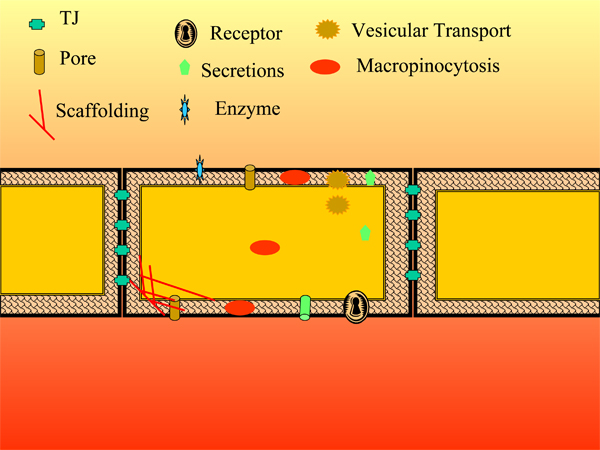
Substances cross the blood-brain barrier (BBB) by a variety of mechanisms. These include transmembrane diffusion, saturable transporters, adsorptive endocytosis, and the extracellular pathways. Here, we focus on the chief characteristics of two mechanisms especially important in drug delivery: transmembrane diffusion and transporters. Transmembrane diffusion is non-saturable and depends, on first analysis, on the physicochemical characteristics of the substance. However, brain-to-blood efflux systems, enzymatic activity, plasma protein binding, and cerebral blood flow can greatly alter the amount of the substance crossing the BBB. Transport systems increase uptake of ligands by roughly 10-fold and are modified by physiological events and disease states. Most drugs in clinical use to date are small, lipid soluble molecules that cross the BBB by transmembrane diffusion. However, many drug delivery strategies in development target peptides, regulatory proteins, oligonucleotides, glycoproteins, and enzymes for which transporters have been described in recent years. We discuss two examples of drug delivery for newly discovered transporters: that for phosphorothioate oligonucleotides and for enzymes.
Overview
The claims and statistics of this paper haven’t been checked yet.
Free: it reads the open-access text and checks the first 5 claims that cite a source we can check. Create a free account to check every claim.
Integrity signals
Registry
Cites
Statistics
Figures
Verification
Claims the paper makes
The claims and statistics of this paper haven’t been checked yet.
Free: it reads the open-access text and checks the first 5 claims that cite a source we can check. Create a free account to check every claim.
Claims other papers make about this one
Each is checked against this paper’s own text: does it say what the citing paper says it does?
The source backs part of the claim, not all of it — or backs it for a different population, condition or comparison.
In the citing paper
“Although lipophilicity is important for transmembrane diffusion through the BBB, some compounds that are too lipophilic can be discharged after crossing into the brain by the P-gp efflux transporter (Abbott, 2002; Banks, 2009).”
From A Critical Review and Meta-Analysis of Impacts of Per- and Polyfluorinated Substances on the Brain and Behavior (2022) · cites this paper as Banks, 2009
Experimental — accuracy not yet measuredIn the citing paper
“The amphipathic nature of this motif permits the crossing of biological membranes, a property that is important for traversing the blood–brain barrier and accessing cryptococcal cells that reside within the lysosome or phagolysosome of host cells114.”
From Treatment strategies for cryptococcal infection: challenges, advances and future outlook (2021) · cites this paper as [114]
In the citing paper
“BBB permeability can also be influenced by physiological factors such as efflux transporters (e.g., P-glycoprotein (P-gp)), enzymatic activity, plasma protein binding and cerebral blood flow 8.”
From Current Strategies for Brain Drug Delivery (2018) · cites this paper as [8]
Self-check
Percentages, sums and reported differences re-computed from the paper’s own numbers.
The self-check needs the paper’s full text.
Citations
Cites
Lipinski, C. A., Lombardo, F., Dominy, B. W., & Feeney, P. J. (2001) · Advanced Drug Delivery Reviews · doi:10.1016/s0169-409x(00)00129-0 · Cited by 18,139
Lipinski, C. A., Lombardo, F., Dominy, B. W., & Feeney, P. J. (1997) · Advanced Drug Delivery Reviews · doi:10.1016/s0169-409x(96)00423-1 · Cited by 11,385
FINE STRUCTURAL LOCALIZATION OF A BLOOD-BRAIN BARRIER TO EXOGENOUS PEROXIDASE
Reese, T. S., & Karnovsky, M. J. (1967) · The Journal of Cell Biology · doi:10.1083/jcb.34.1.207 · Cited by 2,629
Brain uptake of radiolabeled amino acids, amines, and hexoses after arterial injection
Oldendorf, W. (1971) · American Journal of Physiology-Legacy Content · doi:10.1152/ajplegacy.1971.221.6.1629 · Cited by 1,683
Glucagon-like peptide-1 receptor is involved in learning and neuroprotection
During, M. J., Cao, L., Zuzga, D. S., Francis, J. S., Fitzsimons, H. L., Jiao, X., Bland, R. J., Klugmann, M., Banks, W. A., Drucker, D. J., et al. (2003) · Nature Medicine · doi:10.1038/nm919 · Cited by 851 · cited 1×
“Intranasal delivery of drugs, including peptides [35], shows a great deal of promise [36].”
Self-citationLevin, V. A. (1980) · Journal of Medicinal Chemistry · doi:10.1021/jm00180a022 · Cited by 813 · cited 2×
“Levin VA: Relationship of octanol/water partition coefficient and molecular weight to rat brain capillary permeability.”
Intranasal insulin improves memory in humans
Benedict, C., Hallschmid, M., Hatke, A., Schultes, B., Fehm, H. L., Born, J., & Kern, W. (2004) · Psychoneuroendocrinology · doi:10.1016/j.psyneuen.2004.04.003 · Cited by 699 · cited 1×
“Nasal delivery of insulin, for example, has had positive effects in treating Alzheimer's disease [37,38].”
Delivery of therapeutic agents to the central nervous system: the problems and the possibilities
Begley, D. J. (2004) · Pharmacology & Therapeutics · doi:10.1016/j.pharmthera.2004.08.001 · Cited by 679 · cited 2×
“However, the endogenous compounds have poor peripheral pharmacokinetics and this limits their usefulness [3].”
Fellay, J., Marzolini, C., Meaden, E. R., Back, D. J., Buclin, T., Chave, J.-P., Decosterd, L. A., Furrer, H., Opravil, M., Pantaleo, G., et al. (2002) · The Lancet · doi:10.1016/s0140-6736(02)07276-8 · Cited by 658
Brain-immune communication pathways
Quan, N., & Banks, W. A. (2007) · Brain, Behavior, and Immunity · doi:10.1016/j.bbi.2007.05.005 · Cited by 626 · cited 1×
“These extra-barrier functions allow the BBB to influence the homeostatic, nutritive, and immune environments of the CNS and to regulate the exchange of informational molecules between the CNS and blood [4].”
Self-citation
Cited by
Items 301–400 of 755
Recent Advances in Boron Delivery Agents for Boron Neutron Capture Therapy (BNCT)
Xuan, S., & Vicente, M. G. H. (2018) · Wiley eBooks · doi:10.1002/9781119275602.ch3.2 · Cited by 23
Extracellular vesicles: the “Trojan Horse” within breast cancer host microenvironments
Kang, Y., Meng, L., Bai, S., & Li, S. (2025) · Molecular Cancer · doi:10.1186/s12943-025-02358-y · Cited by 25
“…poses a significant obstacle in the treat-ment and management of numerous brain disorders, encompassing both primary and metastatic brain tumors [99]. miR-181c targets and degrades 3-phosphoinositide-dependent protein kinase-1 (PDPK1) [100], the upstream protein responsible for cofilin…”
Wang, S., Song, H., Yin, C., & Huo, F. (2025) · Coordination Chemistry Reviews · doi:10.1016/j.ccr.2025.216940 · Cited by 23
A Narrative Review on Axonal Neuroprotection in Multiple Sclerosis
Collongues, N., Becker, G., Jolivel, V., Ayme‐Dietrich, E., Seze, J. D., Binamé, F., Patte‐Mensah, C., Monassier, L., & Mensah‐Nyagan, A. G. (2022) · Neurology and Therapy · doi:10.1007/s40120-022-00363-7 · Cited by 25
Linot, B., Campone, M., Augereau, P., Delva, R., Abadie‐Lacourtoisie, S., Nebout-Mesgouez, N., & Capitain, O. (2014) · Journal of Neuro-Oncology · doi:10.1007/s11060-014-1378-5 · Cited by 22
“The BBB, which results from interaction between astrocytes and vascular endothelium, limits the penetration of most agents into the CNS [10].”
Improving nucleoside analogs via lipid conjugation: Is fatter any better?
Alexander, P., Kucera, G. L., & Pardee, T. S. (2016) · Critical Reviews in Oncology/Hematology · doi:10.1016/j.critrevonc.2016.01.015 · Cited by 23
Dube, T., Chibh, S., Mishra, J., & Panda, J. J. (2017) · ACS Chemical Neuroscience · doi:10.1021/acschemneuro.7b00207 · Cited by 22
Litchfield, M., Wuest, M., Glubrecht, D. D., & Wuest, F. R. (2019) · Molecular Pharmaceutics · doi:10.1021/acs.molpharmaceut.9b00986 · Cited by 23
Todd, N., McDannold, N. J., & Borsook, D. (2020) · Neuroscience & Biobehavioral Reviews · doi:10.1016/j.neubiorev.2020.06.007 · Cited by 22
Tapia-Arellano, A., Toledo, E. G., Ortiz, C. M., Henríquez, J., Feijóo, C. G., Araya, E., Sierpe, R., & Kogan, M. J. (2020) · Materials Science and Engineering C · doi:10.1016/j.msec.2020.111785 · Cited by 22
Amengor, C. D. K., Orman, E., Danquah, C. A., Ben, I. O., Biniyam, P. D., & Harley, B. K. (2022) · BioMed Research International · doi:10.1155/2022/6261528 · Cited by 21
“When drugs are too hydrophilic, they do not cross the blood brain barrier [29].”
Komorowska, J., Wątroba, M., Bednarzak, M., Grabowska, A. D., & Szukiewicz, D. (2024) · International Journal of Molecular Sciences · doi:10.3390/ijms25063110 · Cited by 24
“The above-described proinflammatory effects of metabolic disturbances in the CNS accompanying hyperglycemia and hypoglycemia are presented in Figure 1.”
Kostelnik, K. B., Els-Heindl, S., Klöting, N., Baumann, S., von Bergen, M., & Beck-Sickinger, A. G. (2015) · Bioorganic & Medicinal Chemistry · doi:10.1016/j.bmc.2014.12.008 · Cited by 21
Nanoformulated Antiretrovirals for Penetration of the Central Nervous System: State of the Art
Fiandra, L., Capetti, A. F., Sorrentino, L., & Corsi, F. (2016) · Journal of Neuroimmune Pharmacology · doi:10.1007/s11481-016-9716-3 · Cited by 21
Ryu, J., Pyo, J., Lee, C., & Kim, J. (2018) · Cancer Medicine · doi:10.1002/cam4.1771 · Cited by 21
Elgawad, H. A., Alhusseiny, S. M., Taman, A. I., Youssef, M., Mansour, B., Massoud, M. A. M., & Handousa, A. E. (2019) · Experimental Parasitology · doi:10.1016/j.exppara.2019.107756 · Cited by 23
Zhou, X., Xie, L., Altınel, Y., & Qiao, N. (2020) · Frontiers in Neurology · doi:10.3389/fneur.2020.00426 · Cited by 21
Schauer, C., Tong, T., Petitjean, H., Blum, T. S., Peron, S., Mai, O., Schmitz, F., Boehm, U., & Leinders‐Zufall, T. (2015) · Journal of Neurophysiology · doi:10.1152/jn.00357.2015 · Cited by 22
Radwan, D. A., El-Helbawy, N. F., Salem, M. M., & El-Sawaf, M. (2017) · Tanta Medical Journal · doi:10.4103/tmj.tmj_11_17 · Cited by 21
Carrasco, R. A., Singh, J. K., & Adams, G. P. (2018) · Reproductive Biology and Endocrinology · doi:10.1186/s12958-018-0402-6 · Cited by 20
Sakyi, P. O., Broni, E., Amewu, R. K., Miller, W. A., Wilson, M. D., & Kwofie, S. K. (2022) · Frontiers in Cellular and Infection Microbiology · doi:10.3389/fcimb.2022.859981 · Cited by 23
Image-guided drug delivery to the brain using nanotechnology
Ding, H., Wu, F., & Nair, M. (2013) · Drug Discovery Today · doi:10.1016/j.drudis.2013.06.010 · Cited by 20
Pardon, M. (2018) · Expert Opinion on Biological Therapy · doi:10.1080/14712598.2018.1486817 · Cited by 21
Švalbe, B., Stelfa, G., Vavers, E., Zvejniece, B., Grīnberga, S., Sevostjanovs, E., Pugovičs, O., Dambrova, M., & Zvejniece, L. (2019) · Behavioural Brain Research · doi:10.1016/j.bbr.2019.112067 · Cited by 23
McCarthy, B., O’Neill, G. J., & Abu‐Ghannam, N. (2022) · Marine Drugs · doi:10.3390/md20080493 · Cited by 22
Altered cytokine levels in the cerebrospinal fluid of adult patients with autism spectrum disorder
Runge, K., Fiebich, B. L., Kuzior, H., Rausch, J., Maier, S. J., Dersch, R. S., Nickel, K., Domschke, K., van Elst, L. T., & Endres, D. (2022) · Journal of Psychiatric Research · doi:10.1016/j.jpsychires.2022.12.032 · Cited by 21
Rashed, H. M., Shamma, R. N., & El-Sabagh, H. A. (2018) · European Journal of Pharmaceutical Sciences · doi:10.1016/j.ejps.2018.05.019 · Cited by 21
Brain-targeted intranasal delivery of biologics: a perspective for Alzheimer's disease treatment
Li, H., Shen, X., Zhang, B., Li, Y., Alexander, C., Harvey, P., & Zhu, Z. (2025) · RSC Pharmaceutics · doi:10.1039/d5pm00148j · Cited by 22
Sakyi, P. O., Kwofie, S. K., Tuekpe, J. K. K., Gwira, T. M., Broni, E., Miller, W. A., Wilson, M. D., & Amewu, R. K. (2023) · Pharmaceuticals · doi:10.3390/ph16030330 · Cited by 20
“The ability of a drug to cross the blood–brain barrier (BBB) to the brain is called BBB permeation [87].”
Emerging Anesthetic Nanomedicines: Current State and Challenges
Zhang, S., Wang, Y., Zhang, S., Huang, C., Ding, Q., Xia, J., Wu, D., & Gao, W. (2023) · International Journal of Nanomedicine · doi:10.2147/ijn.s417855 · Cited by 22
Intranasal Nanoparticulate Delivery Systems for Neurodegenerative Disorders: a Review
Babu, S. R., Shekara, H. H., Sahoo, A. K., Vardhan, P. V. H., Thiruppathi, N., & Venkatesh, M. P. (2023) · Therapeutic Delivery · doi:10.4155/tde-2023-0019 · Cited by 23
Mitra, D., Afreen, S., MOHAPATRA, P. K. D., & Abdalla, M. (2024) · Journal of Biomolecular Structure and Dynamics · doi:10.1080/07391102.2023.2300408 · Cited by 24
“This mechanism favors crossing due to its low molecular weight and a high degree of lipid solubility (Banks, 2009).”
Nakkazi, A., Forster, D. M., Whitfield, G. A., Dyer, D. P., & Dickie, B. (2024) · Neuro-Oncology Advances · doi:10.1093/noajnl/vdae098 · Cited by 22
“160 The transcellular pathway acts as the major transport route, and it allows crossing of small hydrophilic and lipophilic molecules (molecular weight 500 Da) through ECs by diffusion or specific transport channels.”
Therapeutic manipulation and bypass of the blood–brain barrier: powerful tools in glioma treatment
Giantini-Larsen, A., Pandey, A., Garton, A. L. A., Rampichini, M., Winston, G. M., Goldberg, J. L., Magge, R., Stieg, P. E., Souweidane, M. M., & Ramakrishna, R. R. (2025) · Neuro-Oncology Advances · doi:10.1093/noajnl/vdae201 · Cited by 24
“68 LITT works to increase diffusion through the BBB by decreasing tight junction integrity and increasing endothelial cell permeability.”
Adult precision medicine: learning from the past to enhance the future
Ghiaseddin, A. P., Hoang-Minh, L., Janiszewska, M., Shin, D. H., Wick, W., Mitchell, D. A., Wen, P. Y., & Grossman, S. A. (2020) · Neuro-Oncology Advances · doi:10.1093/noajnl/vdaa145 · Cited by 23
In vitro and in silico evaluation of chromene based aroyl hydrazones as anticonvulsant agents
Angelova, V. T., Voynikov, Y., Andreeva-Gateva, P. A., Surcheva, S. K., Vassilev, N. G., Pencheva, T., & Tchekalarova, J. D. (2017) · Medicinal Chemistry Research · doi:10.1007/s00044-017-1902-1 · Cited by 19
Valipour, M. (2023) · Phytotherapy Research · doi:10.1002/ptr.7902 · Cited by 18
Monoclonal antibody therapy for Alzheimer's disease focusing on intracerebral targets
Gu, X., Long, Q., Qi, Q., Zhou, J., Chen, S., & Wang, L. (2024) · BioScience Trends · doi:10.5582/bst.2023.01288 · Cited by 19
Sun, M., Manson, M. L., Guo, T., & de Lange, E. C. M. (2024) · CNS Drugs · doi:10.1007/s40263-024-01082-3 · Cited by 19
“In addition, the balance between lipophilicity and hydrophilicity is very important as compounds with a real high lipid solubility can readily penetrate the lipid membrane, but tend to accumulate there (i.e., non-specific binding) [147].”
Lechpammer, M., Rao, R., Shah, S., Mirheydari, M., Bhattacharya, D., Koehler, A., Toukam, D. K., Haworth, K. J., Krummel, D. P., & Sengupta, S. (2022) · Cancers · doi:10.3390/cancers14071627 · Cited by 19
Rojas, H. A., Ritter, C., & Dal‐Pizzol, F. (2011) · Revista Brasileira de Terapia Intensiva · doi:10.1590/s0103-507x2011000200016 · Cited by 41
Stahel, P., Lee, S. J., Sud, S. K., Floh, A., & Dash, S. (2019) · Diabetes, Obesity and Metabolism · doi:10.1111/dom.13661 · Cited by 18
It's Time For Combination Therapies: in Multiple Sclerosis.
Avasarala, J. (2017) · Europe PMC (PubMed Central) · Cited by 20
Kim, J. H., Ju, I. G., Kim, N., Huh, E., Son, S.-R., Hong, J. P., Choi, Y., Jang, D. S., & Oh, M. S. (2022) · Antioxidants · doi:10.3390/antiox12010106 · Cited by 17
Valipour, M., Mohammadi, M., & Valipour, H. (2023) · Molecular Neurobiology · doi:10.1007/s12035-023-03829-3 · Cited by 17
“Of course, it should also be noted that excessively high lipophilicity often leads to fast/high metabolic turnover and low solubility, resulting in poor absorption [42].”
The curse of blood–brain barrier and blood–tumor barrier in malignant brain tumor treatment
Kawauchi, D., & Narita, Y. (2025) · International Journal of Clinical Oncology · doi:10.1007/s10147-025-02777-3 · Cited by 17
Kakio, S., Funakoshi‐Tago, M., Kobata, K., & Tamura, H. (2016) · Nutritional Neuroscience · doi:10.1080/1028415x.2015.1133106 · Cited by 17
Developments in the discovery and design of intranasal antidepressants
Panek, M., Kawalec, P., Pilc, A., & Lasoń, W. (2020) · Expert Opinion on Drug Discovery · doi:10.1080/17460441.2020.1776697 · Cited by 17
Neuroanatomical basis of the nerve growth factor ovulation–induction pathway in llamas†
Carrasco, R. A., Singh, J. K., Ratto, M. H., & Adams, G. P. (2020) · Biology of Reproduction · doi:10.1093/biolre/ioaa223 · Cited by 17
Sakamoto, K. (2022) · Biochemistry and Biophysics Reports · doi:10.1016/j.bbrep.2022.101367 · Cited by 19
Fisher, C., & Lilge, L. D. (2015) · Journal of Innovative Optical Health Sciences · doi:10.1142/s1793545815300050 · Cited by 17
Fiandra, L., Mazzucchelli, S., Truffi, M., Bellini, M., Sorrentino, L., & Corsi, F. (2016) · Journal of Visualized Experiments · doi:10.3791/54279-v · Cited by 19
Targeted Brain Delivery of Bioactive Molecules Using Nanocarriers
Gajbhiye, V. (2015) · Journal of Bioequivalence & Bioavailability · doi:10.4172/jbb.1000224 · Cited by 18
“In contrast to this, small lipophilic substances diffuse without restraint across plasma membranes alongside their concentration gradient [6,7].”
Therapeutically targeting the unique disease landscape of pediatric high-grade gliomas
Fernando, D., Ahmed, A. U., & Williams, B. R. G. (2024) · Frontiers in Oncology · doi:10.3389/fonc.2024.1347694 · Cited by 19
“…contend with a barrier preferentially selective for smaller or lipophilic compounds, but drugs which have successfully crossed the BBB may be actively transported back out via ef fl ux pumps such as p-glycoprotein, rendering the drug therapeutically void in that speci fi c instance (61, 62).”
Ibrutinib disrupts blood-tumor barrier integrity and prolongs survival in rodent glioma model
Lim, S., Kwak, M., Kang, J. H., Cesaire, M., Tang, K., Robey, R. W., Frye, W. J. E., Karim, B. O., Butcher, D. O., Lizak, M. J., et al. (2024) · Acta Neuropathologica Communications · doi:10.1186/s40478-024-01763-6 · Cited by 17
“The dynamic nature of the BBB allows for permeability adjustment in response to changes in the microenvironment, especially in the presence of malignant glioma cells [10, 11].”
Accelerated click reactions using boronic acids for heterocyclic synthesis in microdroplets
Ghosh, J., & Cooks, R. G. (2025) · Chemical Science · doi:10.1039/d5sc00851d · Cited by 16
Pruitt, D. G., Baumann, S. M., Place, G. J., Oyeamalu, A. N., Sinn, E., & Jelliss, P. A. (2015) · Journal of Organometallic Chemistry · doi:10.1016/j.jorganchem.2015.08.006 · Cited by 16
Blood-brain barrier co-culture models to study nanoparticle penetration: focus on co-culture systems
Veszelka, S., Bocsik, A., Walter, F. R., Hantosi, D., & Deli, M. A. (2015) · Repository of the Academy's Library (Library of the Hungarian Academy of Sciences) · Cited by 25
Vendel, E., Rottschäfer, V., & de Lange, E. C. M. (2018) · Bulletin of Mathematical Biology · doi:10.1007/s11538-018-0469-4 · Cited by 18
Chen, B., Wu, Y.-C., Lin, Y.-H. T., Tayo, L. L., Tacas, A. C. J., & Hsueh, C. (2020) · Industrial & Engineering Chemistry Research · doi:10.1021/acs.iecr.0c01062 · Cited by 16
Chang, K., Chang, J. T., Huang, X., Huang, Y., Li, C., Weng, J., Hsiao, C., Hsu, H.-J., & Tsai, N. (2021) · International Journal of Medical Sciences · doi:10.7150/ijms.54468 · Cited by 18
Lu, X., Han, X., Meirovitch, Y., Sjöstedt, E., Schalek, R. L., & Lichtman, J. W. (2023) · Cell Reports Methods · doi:10.1016/j.crmeth.2023.100520 · Cited by 19
Fresneau, N., Dumas, N., Tournier, B. B., Fossey, C., Ballandonne, C., Lesnard, A., Millet, P., Charnay, Y., Cailly, T., Bouillon, J., et al. (2015) · European Journal of Medicinal Chemistry · doi:10.1016/j.ejmech.2015.03.017 · Cited by 16
Efficient Transduction of 11 Poly-arginine Peptide in an Ischemic Lesion of Mouse Brain
Gotanda, Y., Wei, F., Harada, H., Ohta, K., Nakamura, K., Tomizawa, K., & Ushijima, K. (2014) · Journal of Stroke and Cerebrovascular Diseases · doi:10.1016/j.jstrokecerebrovasdis.2014.02.027 · Cited by 16
Żołek, T., Dömötör, O., Ostrowska, K., Enyedy, É. A., & Maciejewska, D. (2018) · Bioorganic Chemistry · doi:10.1016/j.bioorg.2018.11.034 · Cited by 17
Thakkar, J. P., & Chamberlain, M. C. (2022) · Elsevier eBooks · doi:10.1016/b978-0-12-821976-8.00035-9 · Cited by 16
Computer modeling of blood brain barrier permeability of physiologically active compounds
Raevsky, O. A., Solodova, S. L., Lagunin, A. A., & Poroikov, V. (2014) · Biomeditsinskaya Khimiya · doi:10.18097/pbmc20146002161 · Cited by 16
Imamura, T., Fujita, K., Tagawa, K., Ikura, T., Chen, X., Homma, H., Tamura, T., Mao, Y., Taniguchi, J. B., Motoki, K., et al. (2016) · Scientific Reports · doi:10.1038/srep33861 · Cited by 17
“Although the molecular weights of the chemicals, including Kemptide acetate, are greater than 500 kDa, peptides and proteins larger than 600 kDa are known to cross the BBB not only by transmembrane diffusion but also by peptide transporter or endocytosis 46 .”
Intranasal delivery of iron chelators and management of central nervous system disease
Cheng, R., & Kim, J. (2025) · Frontiers in Pharmacology · doi:10.3389/fphar.2025.1709259 · Cited by 15
Yu, T., Wang, K., Wang, J., Liu, Y., Meng, T., Hu, F., & Yuan, H. (2024) · Journal of Controlled Release · doi:10.1016/j.jconrel.2024.03.043 · Cited by 16
Han, A. A., Fabyanic, E. B., Miller, J. V., Prediger, M. S., Prince, N., Mouch, J. A., & Boyd, J. W. (2017) · Environmental Monitoring and Assessment · doi:10.1007/s10661-017-5895-5 · Cited by 15
Kumar, G., Paliwal, P., Patnaik, N., & Patnaik, R. (2017) · Journal of Theoretical and Computational Chemistry · doi:10.1142/s0219633617500420 · Cited by 15
Yusof, N. I. S. M., Abdullah, Z. L., Othman, N., & Fauzi, F. M. (2022) · Frontiers in Chemistry · doi:10.3389/fchem.2022.874615 · Cited by 17
Antiinflammatory activity of herbal bioactive-based formulations for topical administration
Sharma, M., Rathi, R., Kaur, S., Singh, I., Kadir, E. A., Chahardehi, A.-M., & Lim, V. (2023) · Elsevier eBooks · doi:10.1016/b978-0-323-99988-5.00015-2 · Cited by 16
Cyclo(His-Pro): A further step in the management of steatohepatitis
Masi, A. D., Li, X., Lee, D., Jeon, J., Wang, Q., Baek, S., Park, O., Mottis, A., Strotjohann, K., Rapin, A., et al. (2023) · JHEP Reports · doi:10.1016/j.jhepr.2023.100815 · Cited by 16
“This is required for its active transport in the intestine 15 and through the blood – brain barrier, 16,17 allowing CHP to be distributed systemically.”
Age Dependency of Blood-Brain Barrier Penetration by cis- and trans-Permethrin in the Rat
Mortuza, T. B., Edwards, G. L., White, C. A., Patel, V., Cummings, B. S., & Bruckner, J. V. (2018) · Drug Metabolism and Disposition · doi:10.1124/dmd.118.084822 · Cited by 17
Amyloid-β Peptide Targeting Peptidomimetics for Prevention of Neurotoxicity
Honcharenko, D., Juneja, A., Kurudenkandy, F. R., Maity, J., Galán-Acosta, L., Biverstål, H., Hjorth, E., Johansson, J., Fisahn, A., Nilsson, L., et al. (2019) · ACS Chemical Neuroscience · doi:10.1021/acschemneuro.8b00485 · Cited by 16
Treating viruses in the brain: Perspectives from NeuroAIDS
Nicol, M. R., & McRae, M. (2021) · Neuroscience Letters · doi:10.1016/j.neulet.2021.135691 · Cited by 16
Abidi, S. M. S., Sharma, C., Randhawa, S., Shukla, A. K., & Acharya, A. (2023) · International Journal of Biological Macromolecules · doi:10.1016/j.ijbiomac.2023.126821 · Cited by 14
X‐Ray Crystal Structure of Embelin and Its DFT Scavenging of Superoxide Radical
Caruso, F., Paumier, S., & Rossi, M. (2017) · Journal of Computational Chemistry · doi:10.1002/jcc.24915 · Cited by 14
A new descriptor via bio-mimetic chromatography and modeling for the blood brain barrier (Part II)
Kouskoura, M. G., Piteni, A. I., & Markopoulou, C. K. (2018) · Journal of Pharmaceutical and Biomedical Analysis · doi:10.1016/j.jpba.2018.05.021 · Cited by 16
Saah, S. A., Sakyi, P. O., Adu-Poku, D., Boadi, N. O., Djan, G., Amponsah, D., Devine, R. N. O. A., & Ayittey, K. (2023) · Journal of Chemistry · doi:10.1155/2023/8880213 · Cited by 15
Škurlová, M., Holubová, K., Kletečková, L., Kozák, T., Kubová, H., Horáček, J., & Valeš, K. (2023) · Medicinal Research Reviews · doi:10.1002/med.21977 · Cited by 14
“38,39”
Ghorbanzad‘e, M., & Fatemi, M. H. (2011) · Chemometrics and Intelligent Laboratory Systems · doi:10.1016/j.chemolab.2011.10.003 · Cited by 14
Marlow, M. M., Shah, S. S., Véliz, E. A., Ivan, M. E., & Graham, R. M. (2016) · Journal of Natural Medicines · doi:10.1007/s11418-016-1020-2 · Cited by 14
Sesquiterpene lactones as potential therapeutic agents against Naegleria fowleri
Arberas-Jiménez, I., Rizo-Liendo, A., Nocchi, N., Sifaoui, I., Chao-Pellicer, J., Souto, M. L., Suárez‐Gómez, B., Díaz‐Marrero, A. R., Fernández, J. J., Piñero, J. E., et al. (2022) · Biomedicine & Pharmacotherapy · doi:10.1016/j.biopha.2022.112694 · Cited by 15
Wang, C., Qiu, T.-T., Diao, Y.-X., Zhang, Y., & Gu, N. (2015) · Biochimie · doi:10.1016/j.biochi.2015.06.008 · Cited by 14
Li, Z., Tremble, S. M., & Cipolla, M. J. (2018) · American Journal of Physiology-Heart and Circulatory Physiology · doi:10.1152/ajpheart.00402.2018 · Cited by 17
“Papaverine has a limited molecular weight (339 Da), which might allow it to cross the blood-brain barrier (5).”
Sanavio, B., Librizzi, L., Pennacchio, P., Beznoussenko, G. V., Sousa, F., Silva, P. J., Aa, M., Frassoni, C., Stellacci, F., de Curtis, M., et al. (2018) · Nanoscale · doi:10.1039/c8nr07182a · Cited by 14
Aducanumab delivery via focused ultrasound-induced transient blood–brain barrier opening in vivo
Jeong, J., Han, M., Jeon, S., Kim, Y., Choi, H. J., Choi, W., Kwon, K., Choi, J.-R., & Lee, E.-H. (2025) · Scientific Reports · doi:10.1038/s41598-025-02412-1 · Cited by 13
Characteristics of the blood–brain barrier in pediatric brain tumors
Gao, Q., Song, D., Xu, D., Chai, X., & Ge, M. (2025) · Frontiers in Pediatrics · doi:10.3389/fped.2025.1646641 · Cited by 13
“With respect to the molecular size, most publications report an absolute cutoff of 400 – 600 Da (12), and the largest substance reported to cross the BBB to date had a molecular weight of 7.8 kDa (13).”
InfluentialNon-Invasive, Targeted Nanoparticle-Mediated Drug Delivery across a Novel Human BBB Model
Kaya, S., Callan, B., & Hawthorne, S. J. (2023) · Pharmaceutics · doi:10.3390/pharmaceutics15051382 · Cited by 13
Jiang, D. Q. Y., & Guo, T. L. (2024) · Toxics · doi:10.3390/toxics12010039 · Cited by 14
“However, in rats [38], neurotransmitters can cross the blood–brain barrier indirectly through neurotransmitter precursors, such as tryptophan (serotonin precursor), before being converted into active neurotransmitters [39–41].”
Impact of Peptide Transport and Memory Function in the Brain
Cheng, L., Shi, C., Li, X., & Matsui, T. (2024) · Nutrients · doi:10.3390/nu16172947 · Cited by 13
“Early reports indicated that only lipophilic molecules with molecular weights of 400–500 Da can cross the BBB via passive diffusion [15].”
Improving glioma drug delivery: A multifaceted approach for glioma drug development
Yonk, M. G., Lim, M. A., Thompson, C. M., Tora, M. S., Lakhina, Y., Du, Y., Hoang, K. B., Molinaro, A. M., Boulis, N. M., Hassaneen, W., et al. (2024) · Pharmacological Research · doi:10.1016/j.phrs.2024.107390 · Cited by 14
Płatosz, N., Bączek, N., Topolska, J., Szawara‐Nowak, D., Misztal, T., & Wiczkowski, W. (2020) · Journal of Agricultural and Food Chemistry · doi:10.1021/acs.jafc.0c03170 · Cited by 13
Recent advances in drug delivery to the central nervous system by inhalation
Tai, W., & Kwok, P. C. L. (2022) · Expert Opinion on Drug Delivery · doi:10.1080/17425247.2022.2074975 · Cited by 13
First in vivo fluorine-19 magnetic resonance imaging of the multiple sclerosis drug siponimod
Starke, L., Millward, J. M., Prinz, C., Sherazi, F., Waiczies, H., Lippert, C., Nazaré, M., Paul, F., Niendorf, T., & Waiczies, S. (2023) · Theranostics · doi:10.7150/thno.77041 · Cited by 13
“Drug plasma protein binding reduces passive diffusion and uptake by peripheral tissue, as well as penetration into the CNS [78].”
Antifungal Distribution Into Cerebrospinal Fluid, Vitreous Humor, Bone, and Other Difficult Sites
Eltoukhy, N., & Crank, C. W. (2010) · Current Fungal Infection Reports · doi:10.1007/s12281-010-0016-8 · Cited by 14
Snir, J. A., Suchý, M., Lawrence, K. S., Hudson, R. H. E., Pasternak, S., & Bartha, R. (2015) · Journal of Alzheimer s Disease · doi:10.3233/jad-150123 · Cited by 14
Metadata
- Authors
- Banks, W. A.
- Affiliations
- Veterans Health Administration (US)
- Corresponding author
- Banks, William A
- ORCID
- Banks, William A
- Venue
- BMC Neurology
- Published
- 2009
- Volume
- 9
- Issue
- Suppl 1
- Pages
- S3
- ISSN
- 1471-2377 (ISSN-L)
- PMC
- PMC2697631
- OpenAlex
- W2029206557
- Semantic Scholar
- 734a274ed2c7eb4f665b6c3f176435733ba7858e
- Cited by
- 710
- References
- 49
- Citations by year
- 2026: 37 · 2025: 54 · 2024: 62 · 2023: 77 · 2022: 77 · 2021: 63 · 2020: 72 · 2019: 48 · 2018: 65 · 2017: 36 · 2016: 24 · 2015: 24 · 2014: 18 · 2013: 17 · 2012: 8
- Type
- conference abstract
- Language
- en
- Open access
- gold
- doi.org
- Licence
- cc-by
- Locations
- BMC Neurology (publishedVersion, cc-by)
- PubMed Central (publishedVersion, cc-by)
- PubMed (publishedVersion)
- DOAJ (DOAJ: Directory of Open Access Journals) (submittedVersion)
- Funders
- Michael J. Fox Foundation for Parkinson's Research
- Eli Lilly and Company
- Sanofi
- Biogen
- National Institutes of Health
- National Institute on Aging
- National Institute of Neurological Disorders and Stroke
- Topics
- Life Sciences › Neuroscience › Neurology › Barrier Structure and Function Studies
- Health Sciences › Medicine › Oncology › Drug Transport and Resistance Mechanisms
- Physical Sciences › Materials Science › Biomaterials › Nanoparticle-Based Drug Delivery
- Keywords
- blood-brain barrier, membrane diffusion, brain drug delivery, plasma protein binding, cerebral blood flow, phosphorothioate oligonucleotides, enzyme delivery, peptide transporters, lipid-soluble drugs
- MeSH terms
- Animals, Biological Transport, Blood-Brain Barrier, Central Nervous System Agents, Humans, Drug Delivery Systems
About these checks
Registry, retraction, Cites and statistics results are computed, not judged, with one exception: a printed reference that no index lists is read once by a model before it counts as a citation error. Claims are extracted by a model and kept only when their quote appears verbatim in the text; each cited source is then checked, with a model’s help, for whether it says what the claim relies on. Those verdicts can be wrong — read the claim’s quote and the cited source before relying on one.
Statistics and arithmetic are recomputed, not judged.
Confidence bands are shown only for fields calibrated on our annotated test set. None is calibrated yet, so no band is shown.
What counts as a claim ›How we measure confidence ›How we check this ›
Are you an author, or do you see a problem with this page? Request a review
Data sources
Bibliographic data: Semantic Scholar, OpenAlex, Crossref.
Contains information from the Semantic Scholar Academic Graph Datasets, made available under the ODC Attribution License (ODC-BY 1.0).
Semantic Scholar’s data is described in: Kinney, R., et al. (2023). The Semantic Scholar Open Data Platform. arXiv:2301.10140.
