

Characteristics of compounds that cross the blood-brain barrier
Open accessThe DOI matches its Crossref record; 50 of the 50 references it cites were found in a registry or an index.
Abstract
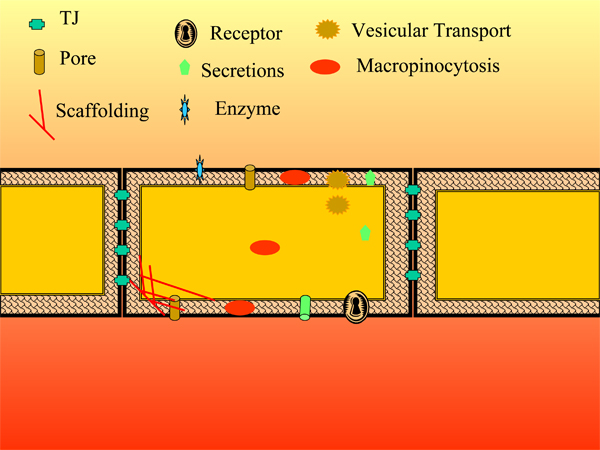
Substances cross the blood-brain barrier (BBB) by a variety of mechanisms. These include transmembrane diffusion, saturable transporters, adsorptive endocytosis, and the extracellular pathways. Here, we focus on the chief characteristics of two mechanisms especially important in drug delivery: transmembrane diffusion and transporters. Transmembrane diffusion is non-saturable and depends, on first analysis, on the physicochemical characteristics of the substance. However, brain-to-blood efflux systems, enzymatic activity, plasma protein binding, and cerebral blood flow can greatly alter the amount of the substance crossing the BBB. Transport systems increase uptake of ligands by roughly 10-fold and are modified by physiological events and disease states. Most drugs in clinical use to date are small, lipid soluble molecules that cross the BBB by transmembrane diffusion. However, many drug delivery strategies in development target peptides, regulatory proteins, oligonucleotides, glycoproteins, and enzymes for which transporters have been described in recent years. We discuss two examples of drug delivery for newly discovered transporters: that for phosphorothioate oligonucleotides and for enzymes.
Overview
The claims and statistics of this paper haven’t been checked yet.
Free: it reads the open-access text and checks the first 5 claims that cite a source we can check. Create a free account to check every claim.
Integrity signals
Registry
Cites
Statistics
Figures
Verification
Claims the paper makes
The claims and statistics of this paper haven’t been checked yet.
Free: it reads the open-access text and checks the first 5 claims that cite a source we can check. Create a free account to check every claim.
Claims other papers make about this one
Each is checked against this paper’s own text: does it say what the citing paper says it does?
The source backs part of the claim, not all of it — or backs it for a different population, condition or comparison.
In the citing paper
“Although lipophilicity is important for transmembrane diffusion through the BBB, some compounds that are too lipophilic can be discharged after crossing into the brain by the P-gp efflux transporter (Abbott, 2002; Banks, 2009).”
From A Critical Review and Meta-Analysis of Impacts of Per- and Polyfluorinated Substances on the Brain and Behavior (2022) · cites this paper as Banks, 2009
Experimental — accuracy not yet measuredIn the citing paper
“The amphipathic nature of this motif permits the crossing of biological membranes, a property that is important for traversing the blood–brain barrier and accessing cryptococcal cells that reside within the lysosome or phagolysosome of host cells114.”
From Treatment strategies for cryptococcal infection: challenges, advances and future outlook (2021) · cites this paper as [114]
In the citing paper
“BBB permeability can also be influenced by physiological factors such as efflux transporters (e.g., P-glycoprotein (P-gp)), enzymatic activity, plasma protein binding and cerebral blood flow 8.”
From Current Strategies for Brain Drug Delivery (2018) · cites this paper as [8]
Self-check
Percentages, sums and reported differences re-computed from the paper’s own numbers.
The self-check needs the paper’s full text.
Citations
Cites
Lipinski, C. A., Lombardo, F., Dominy, B. W., & Feeney, P. J. (2001) · Advanced Drug Delivery Reviews · doi:10.1016/s0169-409x(00)00129-0 · Cited by 18,139
Lipinski, C. A., Lombardo, F., Dominy, B. W., & Feeney, P. J. (1997) · Advanced Drug Delivery Reviews · doi:10.1016/s0169-409x(96)00423-1 · Cited by 11,385
FINE STRUCTURAL LOCALIZATION OF A BLOOD-BRAIN BARRIER TO EXOGENOUS PEROXIDASE
Reese, T. S., & Karnovsky, M. J. (1967) · The Journal of Cell Biology · doi:10.1083/jcb.34.1.207 · Cited by 2,629
Brain uptake of radiolabeled amino acids, amines, and hexoses after arterial injection
Oldendorf, W. (1971) · American Journal of Physiology-Legacy Content · doi:10.1152/ajplegacy.1971.221.6.1629 · Cited by 1,683
Glucagon-like peptide-1 receptor is involved in learning and neuroprotection
During, M. J., Cao, L., Zuzga, D. S., Francis, J. S., Fitzsimons, H. L., Jiao, X., Bland, R. J., Klugmann, M., Banks, W. A., Drucker, D. J., et al. (2003) · Nature Medicine · doi:10.1038/nm919 · Cited by 851 · cited 1×
“Intranasal delivery of drugs, including peptides [35], shows a great deal of promise [36].”
Self-citationLevin, V. A. (1980) · Journal of Medicinal Chemistry · doi:10.1021/jm00180a022 · Cited by 813 · cited 2×
“Levin VA: Relationship of octanol/water partition coefficient and molecular weight to rat brain capillary permeability.”
Intranasal insulin improves memory in humans
Benedict, C., Hallschmid, M., Hatke, A., Schultes, B., Fehm, H. L., Born, J., & Kern, W. (2004) · Psychoneuroendocrinology · doi:10.1016/j.psyneuen.2004.04.003 · Cited by 699 · cited 1×
“Nasal delivery of insulin, for example, has had positive effects in treating Alzheimer's disease [37,38].”
Delivery of therapeutic agents to the central nervous system: the problems and the possibilities
Begley, D. J. (2004) · Pharmacology & Therapeutics · doi:10.1016/j.pharmthera.2004.08.001 · Cited by 679 · cited 2×
“However, the endogenous compounds have poor peripheral pharmacokinetics and this limits their usefulness [3].”
Fellay, J., Marzolini, C., Meaden, E. R., Back, D. J., Buclin, T., Chave, J.-P., Decosterd, L. A., Furrer, H., Opravil, M., Pantaleo, G., et al. (2002) · The Lancet · doi:10.1016/s0140-6736(02)07276-8 · Cited by 658
Brain-immune communication pathways
Quan, N., & Banks, W. A. (2007) · Brain, Behavior, and Immunity · doi:10.1016/j.bbi.2007.05.005 · Cited by 626 · cited 1×
“These extra-barrier functions allow the BBB to influence the homeostatic, nutritive, and immune environments of the CNS and to regulate the exchange of informational molecules between the CNS and blood [4].”
Self-citation
Cited by
Items 501–600 of 755
Development of Novel Anticancer Pyrazolopyrimidinones Targeting Glioblastoma
Byrne, K., Bednarz‐Knoll, N., McEvoy, C., Stephens, J. C., Curtin, J. F., & Kinsella, G. K. (2025) · ChemMedChem · doi:10.1002/cmdc.202500337 · Cited by 6
ALZHEIMER’S DISEASE: DELIVERY OF DRUGs THROUGH INTRANASAL ROUTE
Farooqui, S. (2016) · Journal of Drug Delivery and Therapeutics · doi:10.22270/jddt.v6i6.1348 · Cited by 8
Current knowledge of environmental exposure in children during the sensitive developmental periods
Perlroth, N. H., & Branco, C. W. C. (2017) · Jornal de Pediatria (Versão em Português) · doi:10.1016/j.jpedp.2016.11.003 · Cited by 6
Singh, R., Ali, M. S., & Dubey, A. K. (2022) · Journal of Applied Microbiology · doi:10.1093/jambio/lxac024 · Cited by 8
Therapeutic Potential of Orally Administered Rubiscolin-6
Karasawa, Y., Miyano, K., Yamaguchi, M., Nonaka, M., Yamaguchi, K., Iseki, M., Kawagoe, I., & Uezono, Y. (2023) · International Journal of Molecular Sciences · doi:10.3390/ijms24129959 · Cited by 6
Tuning the Emission of Bis-ethylenedioxythiophene-thiophenes upon Aggregation
Sahalianov, I. Y., Abrahamsson, T., Priyadarshini, D., Mousa, A. H., Arja, K., Gerasimov, J. Y., Linares, M., Simon, D. T., Olsson, R., Baryshnikov, G., et al. (2024) · The Journal of Physical Chemistry B · doi:10.1021/acs.jpcb.4c02891 · Cited by 6
Advances in Neurotherapeutic Delivery Technologies
Pradeep, K. (2015) · OMICS International eBooks · doi:10.4172/978-1-63278-036-2-037 · Cited by 7
Diet, Microbiome, and Neuropsychiatric Disorders
Javitt, G. A., & Javitt, D. C. (2018) · Elsevier eBooks · doi:10.1016/b978-0-12-811440-7.00013-2 · Cited by 8
Whitener, R., Henchir, J. J., Miller, T. A., Levy, E. S., Krysiewicz-Bell, A., Abrams, E. S. L., Carlson, S. W., Menon, N., Dixon, C. E., Whalen, M. J., et al. (2022) · Neurotrauma Reports · doi:10.1089/neur.2021.0049 · Cited by 6
Xie, W.-S., Shehzadi, K., Ma, H.-L., & Liang, J. (2022) · Current Medicinal Chemistry · doi:10.2174/0929867329666220509114232 · Cited by 5
Tibbs, G. R., Uprety, R., Warren, J. D., Beyer, N. P., Joyce, R. L., Ferrer, M. A., Mellado, W., Wong, V. S. C., Goldberg, D. C., Cohen, M. W., et al. (2023) · British Journal of Anaesthesia · doi:10.1016/j.bja.2023.06.067 · Cited by 5
Nanoformulations targeting Alzheimer's disease
Kapoor, D. U., Sharma, D., Pathak, Y. V., Prajapati, B. G., & Satani, B. (2024) · Elsevier eBooks · doi:10.1016/b978-0-443-13205-6.00010-8 · Cited by 8
Ebert, A., & Goss, K. (2025) · European Journal of Pharmaceutical Sciences · doi:10.1016/j.ejps.2025.107354 · Cited by 6
Patil, S. P. (2013) · Medical Hypotheses · doi:10.1016/j.mehy.2013.10.014 · Cited by 5
Siwy, C. M., Delfing, B. M., Smith, A. K., & Klimov, D. K. (2020) · Journal of Chemical Information and Modeling · doi:10.1021/acs.jcim.0c00590 · Cited by 5
Brenner, D. M., Slatkin, N. E., Stambler, N., Israel, R. J., & Coluzzi, P. H. (2021) · Supportive Care in Cancer · doi:10.1007/s00520-021-06070-7 · Cited by 5
Development of potent cholinesterase inhibitors based on a marine pharmacophore
Elumalai, V., Trobec, T., Grundner, M., Labrière, C., Frangež, R., Sepčić, K., Hansen, J. H., & Svenson, J. (2022) · Organic & Biomolecular Chemistry · doi:10.1039/d2ob01064j · Cited by 5
Amorim, J. C., & Amorim, J. C. (2023) · Microorganisms · doi:10.3390/microorganisms11092351 · Cited by 5
“However, its ability to cross the blood–brain barrier (BBB) could lead to adverse effects on the central nervous system [33].”
The Interplay Between Gut Microbiota and Central Nervous System
Gervasi, T., & Mandalari, G. (2023) · Current Pharmaceutical Design · doi:10.2174/0113816128264312231101110307 · Cited by 5
Al‐Majid, A. M., Haukka, M., Soliman, S. M., Alamary, A. S., Alshahrani, S., Ali, M. S., Islam, M. S., & Barakat, A. (2020) · Symmetry · doi:10.3390/sym13010020 · Cited by 5
99mTc-Anionic Linear Globular Dendrimer-G2-Phenylalanine Conjugate: Novel Brain Tumor SPECT Imaging
(2020) · Biointerface Research in Applied Chemistry · doi:10.33263/briac114.1124411255 · Cited by 9
Soliman, A. F., Elimam, D. M., El‐Senduny, F. F., Alossaimi, M. A., Alamri, M. A., & Bar, F. M. A. (2023) · Journal of Enzyme Inhibition and Medicinal Chemistry · doi:10.1080/14756366.2023.2187327 · Cited by 5
“The blood-brain barrier (BBB) represents an obstacle in the delivery of drugs to the brain, derivatives 1 – 3 , 8 , and 10 were able to cross BBB but 4 – 7 and 9 were not 30 .”
Pasdaran, A., Grice, I. D., & Hamedi, A. (2024) · Drug Development Research · doi:10.1002/ddr.22180 · Cited by 6
The Advances of Biomacromolecule-based Nanomedicine in Brain Disease
Weng, Y., & Huang, Y. (2019) · Springer eBooks · doi:10.1007/978-981-13-8731-9_7 · Cited by 6
Singh, K., Gupta, J. K., Lakhchora, G., Jain, D., Bhatt, A., Sharma, M. C., Chaitanya, M., & Tabish, M. (2025) · Current Alzheimer Research · doi:10.2174/0115672050380959250530112247 · Cited by 4
Genetic therapies for neurological diseases
Rahim, A. A., Kurian, M. A., Zhou, H., Ferguson, R., Tabrizi, S. J., Lignani, G., Aquilina, K., & Waddington, S. N. (2025) · Pharmacological Reviews · doi:10.1016/j.pharmr.2025.100093 · Cited by 5
Recurrent Glioblastoma and the Tumor Immune Landscape: Emerging Immunotherapeutic Strategies
Cao, Z., Tong, S., Wang, Z., 纪, 晨., Zhang, C., Dai, X., & Wu, B. (2026) · ImmunoTargets and Therapy · doi:10.2147/itt.s581012 · Cited by 4
Silant’ev, V. E., Shmelev, M. E., Belousov, A. S., Trukhin, F. O., Struppul, N. E., Patlay, A. A., Кравченко, А. А., Петрович, Щ. С., & Kumeiko, V. V. (2025) · Polymers · doi:10.3390/polym17121690 · Cited by 4
Molecular Mechanisms Involved in the Neuroprotective Action of Phytochemicals
Sunkaria, A., Yadav, A., Sharma, S. K., & Sandhir, R. (2017) · Wiley eBooks · doi:10.1002/9781119155195.ch27 · Cited by 4
Wei, F. X., Gaurav, A., & Al-Nema, M. Y. (2022) · Brazilian Journal of Pharmaceutical Sciences · doi:10.1590/s2175-97902022e191134 · Cited by 4
Recent Advances of Carbon dots for Treatment of Alzheimer’s and Parkinson’s Diseases
Vedhanayagam, M. (2023) · International Journal of Advanced Nano Computing and Analytics · doi:10.61797/ijanca.v2i1.240 · Cited by 6
Ambamba, B. D. A., Cicilien, N. P. Q., Kenassi, M. B. N., Ebouel, F. L. E., Nanhah, J. V. K., Ella, F. A., Ngoumen, D. J. N., Talla, R. M., Mandob, D. E., & Ngondi, J. L. (2023) · Journal of Drug Delivery and Therapeutics · doi:10.22270/jddt.v13i12.6322 · Cited by 4
Wang, L., Lu, Y., Li, H., Lin, J., Li, G., Sun, Y., Cui, N., Zhu, Q., & Wang, A. (2024) · ChemistrySelect · doi:10.1002/slct.202403414 · Cited by 4
Overcoming the Blood-Brain Barrier: Focused Ultrasound in Glioblastoma Treatment
Jurgaitis, J., Mickeviciute, K., & Jablonskienė, V. (2025) · Cureus · doi:10.7759/cureus.82869 · Cited by 4
“Most molecules that successfully penetrate the BBB do so through either transmembrane diffusion or active transport [12].”
Kocher, A., Hagl, S., Schiborr, C., Eckert, G. P., & Frank, J. (2015) · NFS Journal · doi:10.1016/j.nfs.2015.03.002 · Cited by 5
Clostridium perfringens Epsilon Toxin: Structural and Mechanistic Insights
Popoff, M. R., Stiles, B. G., & Poulain, B. (2016) · Springer eBooks · doi:10.1007/978-94-007-6725-6_9-1 · Cited by 4
Nano-Based Carriers for Brain Drug Delivery
Öztürk, K., Yemişçi, M., Eroğlu, H., & Çapan, Y. (2018) · Elsevier eBooks · doi:10.1016/b978-0-12-814031-4.00020-9 · Cited by 5
Dhungel, K., & Narayan, J. (2019) · Springer eBooks · doi:10.1007/978-981-13-7142-4_16 · Cited by 4
Li, D., Wang, Z., Kumari, B., Mei, X., & Wang, Z.-Y. (2022) · Materials Today Chemistry · doi:10.1016/j.mtchem.2022.101256 · Cited by 6
Mphaphuli, M. T., Sithole, M. N., Kumar, P., Kondiah, P. P. D., Mabrouk, M., & Choonara, Y. E. (2023) · Journal of Drug Delivery Science and Technology · doi:10.1016/j.jddst.2023.105039 · Cited by 4
The anti-COVID-19 drug Paxlovid crosses biological barriers of the placenta and brain in rats
Lee, W.-H., Sun, C., Chang, C., Yang, M., & Tsai, T. (2024) · npj Viruses · doi:10.1038/s44298-023-00013-1 · Cited by 5
“Biological barriers are characterized by tight connections, typically allowing only compounds smaller than 500 Da to pass through 49 .”
Djurdjević, D., Djukic, M. M., Ninković, M., Stevanović, I. D., Jovanović, M., & Vasic, U. (2013) · Acta veterinaria · doi:10.2298/avb1303159d · Cited by 4
Kopec, B. M., Ulapane, K. R., Moral, M. E. G., & Siahaan, T. J. (2018) · Neuromethods · doi:10.1007/978-1-4939-8946-1_2 · Cited by 5
Glycoconjugate journal special issue on: the glycobiology of Parkinson’s disease
Brockhausen, I., Schutzbach, J. S., Wang, J., Fishwick, B., & Brockhausen, J. (2021) · Glycoconjugate Journal · doi:10.1007/s10719-021-10024-w · Cited by 4
“However, research should confirm their mechanism of action, transport across BBB, and clinical trials are required to confirm their effectiveness and safety.”
InfluentialJafarpour, S., Asefzadeh, M., & Aboutaleb, E. (2024) · Iranian journal of pharmaceutical research · doi:10.5812/ijpr-149367 · Cited by 4
Pan, X.-H., Wang, N., He, Y., Su, J., & Gao, Y. (2025) · Frontiers in Oncology · doi:10.3389/fonc.2025.1649414 · Cited by 3
Kumari, S., Vartak, S. V., Tamang, S., Desai, S. S., Mukerjee, S., Choudary, B., & Raghavan, S. C. (2025) · Molecular and Cellular Biology · doi:10.1080/10985549.2025.2579050 · Cited by 4
장성현, Jeong, J.-Y., & Huh, W. (2026) · Cell Communication and Signaling · doi:10.1186/s12964-026-02660-2 · Cited by 3
“…on PAC1R signaling as well as neuroblastoma cell proliferation and migration in vitro, the therapeutic application of antibody-based approaches in the central nervous system may be limited by restricted blood–brain barrier penetration, a challenge commonly encountered by bio-logics [81, 82].”
Combining AI design and molecular dynamics to disrupt amyloid aggregation in Alzheimer’s disease
Esmaeilzadeh, A., Irani, M. A., Javanmard, A., & Khezri, M. G. (2026) · Discover Applied Sciences · doi:10.1007/s42452-026-08245-5 · Cited by 4
ToxiTaRGET: a multi-omics database for toxicant-responsive molecular targets
Kumar, R., Fu, T., Kuntala, P. K., Miao, B., Fu, S., Li, D., Tyson, F. L., Bartolomei, M. S., Walker, C. L., Wang, T., et al. (2026) · Nature Communications · doi:10.1038/s41467-026-73695-9 · Cited by 4
“Many toxicants examined in the TaRGET II study could penetrate the BBB, directly or indirectly, and further exert lasting effects on neural tissues 43,44 .”
Helmbrecht, H., Ardalan, M., Kelly, L. A., Robinson, S., Fleiss, B., Doherty, D. G., Gressèns, P., Mallard, C. E., Molloy, E. J., & Jantzie, L. L. (2026) · Journal of Neuroinflammation · doi:10.1186/s12974-026-03900-5 · Cited by 3
WU, W., Sivaneri, N. S., Akin, E., Spesia, C. J., Huang, Y. J., Bond, L. G., Doi, D. L. Q., Stad, J., Djouadi, A., Xie, Y., et al. (2026) · Nature Biomedical Engineering · doi:10.1038/s41551-026-01718-3 · Cited by 3
RETRACTED: Development of carbon dots to manage Alzheimer's disease and Parkinson's disease
Kuo, Y., & De, S. (2023) · Journal of the Taiwan Institute of Chemical Engineers · doi:10.1016/j.jtice.2023.104799 · Cited by 3
RetractedQuantifying the Lymphatic Transport of Model Therapeutics from the Brain in Rats
Hoang, T. A., Gracia, G., Cao, E., Nicolazzo, J. A., & Trevaskis, N. L. (2024) · Molecular Pharmaceutics · doi:10.1021/acs.molpharmaceut.4c00026 · Cited by 4
Phipps, M. D., Sanders, V. A., & Deri, M. A. (2021) · Bioconjugate Chemistry · doi:10.1021/acs.bioconjchem.1c00180 · Cited by 3
Parameters and Strategies to Overcome Barriers to Systemic Delivery
Narayanaswamy, R., Attia, S. A., & Torchilin, V. P. (2020) · Healthy ageing and longevity · doi:10.1007/978-3-030-54490-4_19 · Cited by 3
Patil, S. B. (2021) · Elsevier eBooks · doi:10.1016/b978-0-12-822522-6.00012-6 · Cited by 3
Martins, A. C., Teixeira, G. M., Oshiro, M. Y., & Santos, B. S. (2021) · Revista Ibero-Americana de Humanidades, Ciências e Educação · doi:10.51891/rease.v7i9.2268 · Cited by 3
Brain metastases: Nanomedicine-boosted diagnosis and treatment
Han, L. (2021) · Medicine in Drug Discovery · doi:10.1016/j.medidd.2021.100111 · Cited by 3
New Insights into Nanoparticulate Carriers for Direct Nose‐to‐Brain Drug Delivery
Pardeshi, C. V., Handa, M., & Shukla, R. (2021) · Wiley eBooks · doi:10.1002/9783527832095.ch9 · Cited by 4
Antibody-Based Formats to Target Glioblastoma: Overcoming Barriers to Protein Drug Delivery
Ghosh, S., Huda, P., Fletcher, N. L., Howard, C. B., Walsh, B. J., Campbell, D., Pinkham, M. B., & Thurecht, K. J. (2022) · Molecular Pharmaceutics · doi:10.1021/acs.molpharmaceut.1c00996 · Cited by 3
Husain, A., Bhutani, M., Parveen, S., Khan, S., Ahmad, A., & Iqbal, M. A. (2022) · Russian Journal of Organic Chemistry · doi:10.1134/s1070428022100098 · Cited by 3
Complex Mixtures: Array PBPK Modeling of Jet Fuel Components
Sterner, T. R., Covington, T. R., & Mattie, D. R. (2023) · Toxics · doi:10.3390/toxics11020187 · Cited by 3
Habiballah, S., Chambers, J. E., Meek, E. C., & Reisfeld, B. (2023) · Journal of Computer-Aided Molecular Design · doi:10.1007/s10822-023-00537-x · Cited by 3
“The optimal RS included descriptors, TPSA, molecular weight, number of hydrogen bond donors, and logP, that are consistent with those found in other modeling studies [42, 48], as well as with known characteristics of BBB penetrating chemicals [49].”
Achappa, S., Aldabaan, N. A., Desai, S. V., Muddapur, U. M., Shaikh, I. A., Mahnashi, M. H., Alshehri, A. A., Mannasaheb, B. A., & Khan, A. A. (2024) · Pharmaceuticals · doi:10.3390/ph17070884 · Cited by 3
“None of the compounds were predicted to cross the blood–brain barrier [55,56].”
Snake venom bioprospecting as an approach to finding potential anti-glioblastoma molecules
Mera, J. O., Montoya‐Gómez, A., Lopes, D. S., & Jiménez–Charris, E. (2024) · The Journal of venomous animals and toxins including tropical diseases · doi:10.1590/1678-9199-jvatitd-2024-0015 · Cited by 3
“However, other molecular properties like the charge, tertiary structure, and degree of protein binding are additional factors that affect the ability of a drug to cross the BBB [56].”
Hou, S. S., Yang, J. L., Kwon, Y., Pian, Q., Tang, Y., Dauphinais, C. A., Calvo-Rodríguez, M., Khatib, M. E., Vinogradov, S. A., Sakadžić, S., et al. (2025) · Neurophotonics · doi:10.1117/1.nph.12.2.025001 · Cited by 3
Lu, W., Xu, J., Zhang, S., Zhang, M., Huang, J., & Lu, H. (2025) · Ecotoxicology and Environmental Safety · doi:10.1016/j.ecoenv.2025.118055 · Cited by 3
Lysozyme transport to the brain by liposomes
Nordling‐David, M. M., Rachamin, E., Grad, E., & Golomb, G. (2018) · Precision Nanomedicine · doi:10.33218/prnano1(2).180712.1 · Cited by 3
Pharmacokinetics of Systemic Drug Delivery
O’Connor, C., Ramanath, N., & Campbell, M. (2019) · Elsevier eBooks · doi:10.1016/b978-0-12-813997-4.00003-7 · Cited by 4
Phytomolecules for Therapeutic Targets of Alzheimer’s Disease Pathology - A Virtual Analysis
Srirangaramasamy, J., Sasikumar, A., Suba Malani, S., Maheshraj, L. S., & Balamurugan, M. (2019) · International Journal of Contemporary Medical Research [IJCMR] · doi:10.21276/ijcmr.2019.6.6.15 · Cited by 3
Fei, L. C., Gaurav, A., & Al-Nema, M. Y. (2021) · Letters in Organic Chemistry · doi:10.2174/1570178618666210315152721 · Cited by 3
Blachier, F. (2023) · Springer eBooks · doi:10.1007/978-3-031-26322-4_5 · Cited by 2
Kecskés, S., Mészáros, M., Dvorácskó, S., Szabó, Í., Porkoláb, G., Barna, L., Harazin, A., Szecskó, A., Menyhárt, Á., Bari, F., et al. (2025) · European Journal of Pharmacology · doi:10.1016/j.ejphar.2025.177724 · Cited by 3
Zattoni, J., Ludueña, R. F., Aminpour, M., & Tuszyński, J. A. (2025) · PLoS ONE · doi:10.1371/journal.pone.0327621 · Cited by 3
“We speculate that this method could be applied to anti-tubulin drugs similarly to insulin [127], to support effective delivery to the brain potentially expanding the range of usable compounds.”
Material considerations for delivering therapeutics across the blood–brain barrier
Zoba, A. N., & Tringides, C. M. (2025) · APL Materials · doi:10.1063/5.0284305 · Cited by 2
Carbon Dot Nanoparticle-based Therapeutic Approaches in Major Neurological Disorders
Haseeb, M., & Hatiboğlu, M. A. (2025) · Mini-Reviews in Medicinal Chemistry · doi:10.2174/0113895575398775250811070903 · Cited by 3
Kim, I., Griffith, K. R., Brockway, D. F., Crowley, N. A., & Medina, S. H. (2025) · Journal of Colloid and Interface Science · doi:10.1016/j.jcis.2025.139466 · Cited by 2
Delivery and Developmental Strategies for Enhanced Blood–Brain Barrier Permeation—A Review
Selvaraj, P., Ravindran, C. C., Balasubramaniam, A. K., Shankar, P. R., Thirunavukkarasu, M. B., & Pushpanathan, M. S. (2025) · ChemistrySelect · doi:10.1002/slct.202505570 · Cited by 2
Decoding the Biology of the Blood–Brain Tumor Barrier in Brain Cancer
Jimenez-Macias, J. L., Vaughn-Beaucaire, P. C., Yan, J., Clark, J. S., & Lawler, S. E. (2026) · Molecular Cancer Research · doi:10.1158/1541-7786.mcr-25-0908 · Cited by 2
Antibody-drug conjugates for primary brain tumors
Castro, L. N. G., & Santagata, S. (2026) · Frontiers in Oncology · doi:10.3389/fonc.2026.1811494 · Cited by 2
“As such a large biologic such as an ADC is not expected to cross ef fi ciently under normal conditions (14, 15).”
Singh, M. P., Chettupalli, A. K., Bukke, S. P. N., Mugaiahgari, B. K. M., Uppu, P., Pathak, P., & Narapureddy, B. R. (2026) · BioMedical Engineering OnLine · doi:10.1186/s12938-026-01582-x · Cited by 2
“A molecule must be hydrophobic/lipophilic and must have a 400 Da to 500 Da molecular weight to traverse the BBB passively [16].”
Muhammad, N., Ai, R., Yang, L., Cui, Y., Wang, L., Weng, S., Wang, Y., Kakar, M. U., Khan, S., Ahmad, S., et al. (2026) · Frontiers in Aging Neuroscience · doi:10.3389/fnagi.2026.1877358 · Cited by 2
“Although no absolute molecular-weight cutoff exists, the influence of size is inversely related to the square root of molecular weight, and some compounds larger than 600 Da cross the BBB sufficiently using this mechanism (Banks, 2009; Pardridge, 2020).”
Sarwal, A., Singh, G., Prasad, P., Sharma, S., & Ali, W. (2020) · Springer eBooks · doi:10.1007/978-3-030-41858-8_9 · Cited by 2
Poojary, R., Nayanatara, A. K., Kumarchandra, R., & Sanjeev, G. (2021) · Research Journal of Pharmacy and Technology · doi:10.52711/0974-360x.2021.00452 · Cited by 2
Sugiura, T., Okumura, K., Sasaki, M., Matsumoto, J., Ogi, T., Yoneda, N., Kitao, A., Kozaka, K., Koda, W., Kobayashi, S., et al. (2022) · PLoS ONE · doi:10.1371/journal.pone.0265588 · Cited by 2
Synthesis of benzylidene-indandione derivatives as quantification of amyloid fibrils
Ghadami, S. A., Ahadi-Amandi, K., Khodarahmi, R., Ghanbari, S., & Adibi, H. (2023) · Biophysical Chemistry · doi:10.1016/j.bpc.2023.106982 · Cited by 2
Veselov, V. V., Николаевич, Е. Н., Trukhan, V. M., Zvyagin, A. V., & Nosyrev, A. E. (2023) · Pharmaceutical Chemistry Journal · doi:10.1007/s11094-023-02845-w · Cited by 3
Fluid Management in Neurocritical Care
Kishen, R. (2023) · Springer eBooks · doi:10.1007/978-3-031-42205-8_17 · Cited by 2
Antitumor effects of natural molecules in the brain: a nanotechnology-based approach
Sharma, S., Kumar, S., Rabbani, S. A., Sardana, S., Baboota, S., & Ali, J. (2024) · Elsevier eBooks · doi:10.1016/b978-0-443-23763-8.00084-1 · Cited by 2
Tsafa, E., Dimitriadis, K. S., Kalampoki, L., Papapetrou, P., Georgalis, P. A., Bozios, G., Sioka, C., Tsekeris, P. G., Kyritsis, A. P., Alexiou, G. Α., et al. (2024) · Biomedicines · doi:10.3390/biomedicines12122793 · Cited by 3
The use of nanocarriers in treating Batten disease: A systematic review
Henke, L., Ghorbani, A., & Mole, S. (2024) · International Journal of Pharmaceutics · doi:10.1016/j.ijpharm.2024.125094 · Cited by 4
“Efflux transporters and lipid solubility significantly influence the permeability of substances across the BBB. Larger molecules are more impeded in their ability to cross the BBB (Banks, 2009).”
Scarlett, K. R., Langan, L. M., Lovin, L. M., Henke, A. N., Kim, S., Stroski, K. M., Chambliss, C. K., Chatterjee, S., Scott, J. T., & Brooks, B. W. (2025) · The Science of The Total Environment · doi:10.1016/j.scitotenv.2025.178665 · Cited by 4
Serendipity in Neuro-Oncology: The Evolution of Chemotherapeutic Agents
Nadora, D., Ezzati, S., Bol, B., & Aboud, O. (2025) · International Journal of Molecular Sciences · doi:10.3390/ijms26072955 · Cited by 2
“Generally, compounds that are able to cross the BBB are small, lipophilic molecules that are able to passively diffuse across the membrane [3].”
Pituitary Hormones in Human Cerebrospinal Fluid
Capatina, C. A.-M. (2011) · Acta Endocrinologica (Bucharest) · doi:10.4183/aeb.2011.1 · Cited by 2
Basic Principles of Formulation for Biotherapeutics: Approaches to Alternative Drug Delivery
Otvos, L. (2016) · Elsevier eBooks · doi:10.1016/b978-0-12-409547-2.12415-1 · Cited by 2
Patil, V. M., Masand, N., & Gupta, S. P. (2018) · Elsevier eBooks · doi:10.1016/b978-0-12-815422-9.00013-9 · Cited by 3
Pyaram, A., Rampilla, M., Deore, J., & Sengupta, P. (2020) · Critical Reviews in Analytical Chemistry · doi:10.1080/10408347.2020.1791041 · Cited by 2
The rate of dasotraline brain entry is slow following intravenous administration
Lew, R., Constantinescu, C. C., Holden, D., Carson, R. E., Carroll, V. M., Galluppi, G. R., Koblan, K. S., & Hopkins, S. C. (2020) · Psychopharmacology · doi:10.1007/s00213-020-05623-8 · Cited by 2
Neurosurgical Implant-Based Strategy for Brain Cancer Therapy
Casaos, J., Gorelick, N. L., & Tyler, B. (2020) · Neuromethods · doi:10.1007/978-1-0716-1052-7_9 · Cited by 2
Metadata
- Authors
- Banks, W. A.
- Affiliations
- Veterans Health Administration (US)
- Corresponding author
- Banks, William A
- ORCID
- Banks, William A
- Venue
- BMC Neurology
- Published
- 2009
- Volume
- 9
- Issue
- Suppl 1
- Pages
- S3
- ISSN
- 1471-2377 (ISSN-L)
- PMC
- PMC2697631
- OpenAlex
- W2029206557
- Semantic Scholar
- 734a274ed2c7eb4f665b6c3f176435733ba7858e
- Cited by
- 710
- References
- 49
- Citations by year
- 2026: 37 · 2025: 54 · 2024: 62 · 2023: 77 · 2022: 77 · 2021: 63 · 2020: 72 · 2019: 48 · 2018: 65 · 2017: 36 · 2016: 24 · 2015: 24 · 2014: 18 · 2013: 17 · 2012: 8
- Type
- conference abstract
- Language
- en
- Open access
- gold
- doi.org
- Licence
- cc-by
- Locations
- BMC Neurology (publishedVersion, cc-by)
- PubMed Central (publishedVersion, cc-by)
- PubMed (publishedVersion)
- DOAJ (DOAJ: Directory of Open Access Journals) (submittedVersion)
- Funders
- Michael J. Fox Foundation for Parkinson's Research
- Eli Lilly and Company
- Sanofi
- Biogen
- National Institutes of Health
- National Institute on Aging
- National Institute of Neurological Disorders and Stroke
- Topics
- Life Sciences › Neuroscience › Neurology › Barrier Structure and Function Studies
- Health Sciences › Medicine › Oncology › Drug Transport and Resistance Mechanisms
- Physical Sciences › Materials Science › Biomaterials › Nanoparticle-Based Drug Delivery
- Keywords
- blood-brain barrier, membrane diffusion, brain drug delivery, plasma protein binding, cerebral blood flow, phosphorothioate oligonucleotides, enzyme delivery, peptide transporters, lipid-soluble drugs
- MeSH terms
- Animals, Biological Transport, Blood-Brain Barrier, Central Nervous System Agents, Humans, Drug Delivery Systems
About these checks
Registry, retraction, Cites and statistics results are computed, not judged, with one exception: a printed reference that no index lists is read once by a model before it counts as a citation error. Claims are extracted by a model and kept only when their quote appears verbatim in the text; each cited source is then checked, with a model’s help, for whether it says what the claim relies on. Those verdicts can be wrong — read the claim’s quote and the cited source before relying on one.
Statistics and arithmetic are recomputed, not judged.
Confidence bands are shown only for fields calibrated on our annotated test set. None is calibrated yet, so no band is shown.
What counts as a claim ›How we measure confidence ›How we check this ›
Are you an author, or do you see a problem with this page? Request a review
Data sources
Bibliographic data: Semantic Scholar, OpenAlex, Crossref.
Contains information from the Semantic Scholar Academic Graph Datasets, made available under the ODC Attribution License (ODC-BY 1.0).
Semantic Scholar’s data is described in: Kinney, R., et al. (2023). The Semantic Scholar Open Data Platform. arXiv:2301.10140.
