

Efficacy of exposure versus cognitive therapy in anxiety disorders: systematic review and meta-analysis
Open accessThe DOI matches its Crossref record; 63 of the 65 references it cites were found in a registry or an index.
Abstract
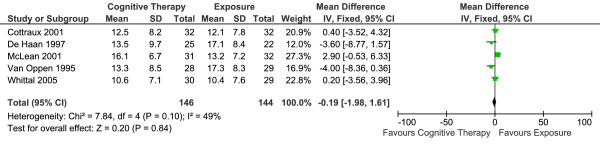
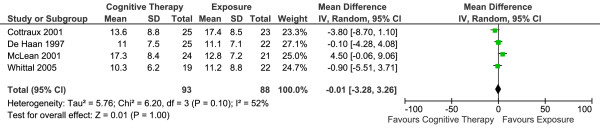
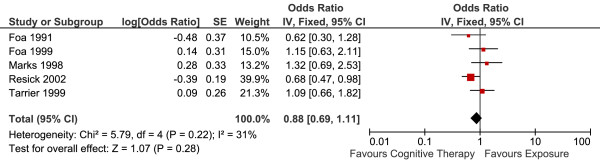
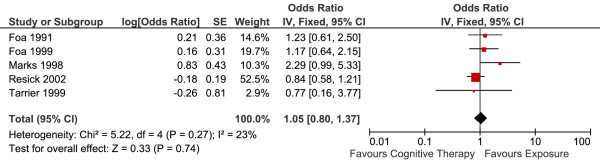
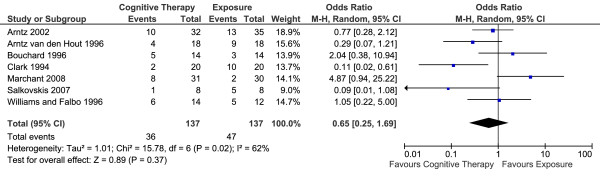
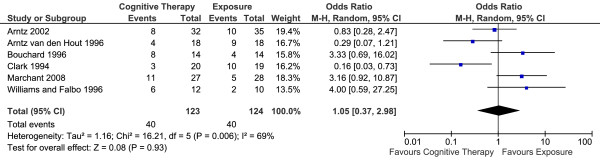
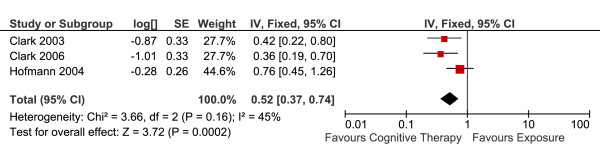
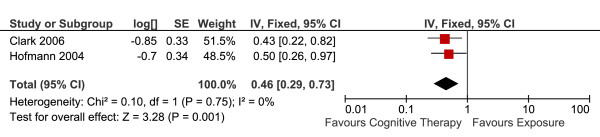
BACKGROUND: There is growing evidence of the effectiveness of Cognitive Behavioural Therapy (CBT) for a wide range of psychological disorders. There is a continued controversy about whether challenging maladaptive thoughts rather than use of behavioural interventions alone is associated with the greatest efficacy. However little is known about the relative efficacy of various components of CBT. This review aims to compare the relative efficacy of Cognitive Therapy (CT) versus Exposure (E) for a range of anxiety disorders using the most clinically relevant outcome measures and estimating the summary relative efficacy by combining the studies in a meta-analysis. METHODS: Psych INFO, MEDLINE and EMBASE were searched from the first available year to May 2010. All randomised controlled studies comparing the efficacy of exposure with cognitive therapy were included. Odds ratios (OR) or standardised means' differences (Hedges' g) for the most clinically relevant primary outcomes were calculated. Outcomes of the studies were grouped according to specific disorders and were combined in meta-analyses exploring short-term and long-term outcomes. RESULTS: 20 Randomised Controlled Trials with (n = 1,308) directly comparing the efficacy of CT and E in anxiety disorders were included in the meta-analysis. No statistically significant difference in the relative efficacy of CT and E was revealed in Post Traumatic Stress Disorder (PTSD), in Obsessive Compulsive Disorder (OCD) and in Panic Disorder (PD). There was a statistically significant difference favouring CT versus E in Social Phobia both in the short-term (Z = 3.72, p = 0.0002) and the long-term (Z = 3.28, p = 0.001) outcomes. CONCLUSIONS: On the basis of extant literature, there appears to be no evidence of differential efficacy between cognitive therapy and exposure in PD, PTSD and OCD and strong evidence of superior efficacy of cognitive therapy in social phobia.
Overview
The claims and statistics of this paper haven’t been checked yet.
Free: it reads the open-access text and checks the first 5 claims that cite a source we can check. Create a free account to check every claim.
Integrity signals
Registry
Cites
Statistics
Figures
Verification
Claims the paper makes
The claims and statistics of this paper haven’t been checked yet.
Free: it reads the open-access text and checks the first 5 claims that cite a source we can check. Create a free account to check every claim.
Claims other papers make about this one
Each is checked against this paper’s own text: does it say what the citing paper says it does?
The source backs part of the claim, not all of it — or backs it for a different population, condition or comparison.
In the citing paper
“Systematic reviews and meta-analyses support that CBT programs are effective in reducing OCD symptoms, with effect sizes ranging from 0.8 to 1.24 from pre to post treatment [10–15].”
From Study protocol for a randomised controlled trial of internet-based cognitive-behavioural therapy for obsessive-compulsive disorder (2014) · cites this paper as [15]
Experimental — accuracy not yet measuredThe cited source says what the claim attributes to it.
In the citing paper
“A recent study by Steketee, Siev, Yovel, Lit, and Wilhelm [32] as well as two meta-analyses showed that CT and ERP both reduced OC symptoms to a similar extent [33, 34].”
From Metacognitive Training for Obsessive-Compulsive Disorder: A study protocol for a randomized controlled trial (2020) · cites this paper as [34]
The cited source says what the claim attributes to it.
In the citing paper
“There is an exception for social anxiety disorder, where cognitive therapies appear to outperform exposure therapy [13,61,62].”
From Short-term effectiveness of web-based guided self-help for phobic outpatients: randomized controlled trial. (2014) · cites this paper as [62]
Self-check
Percentages, sums and reported differences re-computed from the paper’s own numbers.
The self-check needs the paper’s full text.
Citations
Cites
Baron, R. M., & Kenny, D. A. (1986) · Journal of Personality and Social Psychology · doi:10.1037/0022-3514.51.6.1173 · Cited by 91,532 · cited 1×
“The mediation argument is the most complex one as the criteria for mediation differs depending on the study design [53,54].”
BackgroundCochrane Handbook for Systematic Reviews of Interventions: Cochrane Book Series
(2008) · doi:10.1002/9780470712184 · Cited by 25,048
The Yale-Brown Obsessive Compulsive Scale: I. Development, Use, and Reliability
Goodman, W. K. (1989) · Archives of General Psychiatry · doi:10.1001/archpsyc.1989.01810110048007 · Cited by 7,712 · cited 1×
“This is a semi-structured clinician-administered interview providing a score (range 0-40) for both obsessions (range 0-20) and compulsions (range 0-20) along five dimensions: time spent, interference, distress, resistance, and control [19,20].”
BackgroundThe development of a Clinician-Administered PTSD Scale
Blake, D. D., Weathers, F. W., Nagy, L. M., Kaloupek, D. G., Gusman, F. D., Charney, D. S., & Keane, T. M. (1995) · Journal of Traumatic Stress · doi:10.1002/jts.2490080106 · Cited by 5,024 · cited 3×
“CAPS has 30 items, assessor-rated, rating frequency and intensity of the 17 PTSD symptoms and 8 associated features of PTSD (built over acts of commission or omission, survivor guilt, homicidality, disillusionment with authority, hopelessness, memory impairment and forgetfulness, sadness and depression and feeling ove…”
MethodInfluentialPsychotherapy by reciprocal inhibition
Wolpe, J. (1968) · Conditional Reflex · doi:10.1007/bf03000093 · Cited by 3,387
The empirical status of cognitive-behavioral therapy: A review of meta-analyses
Butler, A. C., Chapman, J. E., Forman, E. M., & Beck, A. T. (2006) · Clinical Psychology Review · doi:10.1016/j.cpr.2005.07.003 · Cited by 3,215
The Yale-Brown Obsessive Compulsive Scale: II. Validity
Goodman, W. K. (1989) · Archives of General Psychiatry · doi:10.1001/archpsyc.1989.01810110054008 · Cited by 2,799
Mediators and Moderators of Treatment Effects in Randomized Clinical Trials
Kraemer, H. C., Wilson, G. T., Fairburn, C. G., & Agras, W. S. (2002) · Archives of General Psychiatry · doi:10.1001/archpsyc.59.10.877 · Cited by 2,562 · cited 1×
“The mediation argument is the most complex one as the criteria for mediation differs depending on the study design [53,54].”
BackgroundReliability and validity of a brief instrument for assessing post-traumatic stress disorder
Foa, E. B., Riggs, D. S., Dancu, C. V., & Rothbaum, B. O. (1993) · Journal of Traumatic Stress · doi:10.1002/jts.2490060405 · Cited by 2,537 · cited 1×
“One study used PTSD Symptom Scale - Interview (PSS-I) [29] The scale contains 17 items that diagnose PTSD according to Diagnostic and Statistical Manual of Mental Disorders-III-Revised (DSM-III-R) criteria and assess the severity of PTSD symptoms.”
MethodThe Yale-Brown Obsessive-Compulsive Scale: Measures of internal consistency
Kim, S. W., Dysken, M. W., Pheley, A. M., & Hoover, K. M. (1994) · Psychiatry Research · doi:10.1016/0165-1781(94)90039-6 · Cited by 2,359
Research works printed but not linked: 1
- Higgins JPT Green S Eds Cochrane Handbook for Systematic Reviews of Interventions 2008 Chichester: Wiley-Blackwell
Cited by
Katzman, M. A., Bleau, P., Blier, P., Chokka, P., Kjernisted, K., Van Ameringen, M., & the Canadian Anxiety Guidelines Initiative Group on behalf of the Anxiety Disorders Association of Canada/Association Canadienne des troubles anxieux and McGill University (2014) · BMC Psychiatry · doi:10.1186/1471-244x-14-s1-s1 · Cited by 1,090
“The guidelines include panic disorder, agoraphobia, specific phobia, social anxiety disorder (SAD), generalized anxiety disorder (GAD), as well as obsessive-compulsive disorder (OCD), and posttraumatic stress disorder (PTSD).”
BackgroundResultInfluentialCarpenter, J. K., Andrews, L. A., Witcraft, S. M., Powers, M. B., Smits, J. A. J., & Hofmann, S. G. (2018) · Depression and Anxiety · doi:10.1002/da.22728 · Cited by 846
“This is inconsistent with an earlier head-to-head comparison that led the author to conclude that exposure and cognitive treatments tend to be equally effective (Ougrin, 2011); however, this interpretation was based on comparisons of relatively small numbers of trials and thereforemay be biased.”
ResultBaldwin, D. S., Anderson, I. M., Nutt, D. J., Allgulander, C., Bandelow, B., den Boer, J. A., Christmas, D. M., Davies, S., Fineberg, N., Lidbetter, N., et al. (2014) · Journal of Psychopharmacology · doi:10.1177/0269881114525674 · Cited by 676
“CBT is efficacious in adults [I (M)] (Hofmann and Smits, 2008) and children [I (M)] (James et al., 2005): cognitive therapy appears superior to exposure therapy [I (M)] (Ougrin, 2011), but the evidence for the efficacy of social skills training is less strong [IV] (Ponniah and Hollon, 2008).”
BackgroundObsessive-Compulsive Disorder: Advances in Diagnosis and Treatment
Hirschtritt, M. E., Bloch, M. H., & Mathews, C. A. (2017) · JAMA · doi:10.1001/jama.2017.2200 · Cited by 493
Controlled trial of psychotherapy for Congolese survivors of sexual violence
Bass, J. K., Annan, J., McIvor Murray, S., Kaysen, D., Griffiths, S., Cetinoglu, T., Wachter, K., Murray, L. K., & Bolton, P. A. (2013) · New England Journal of Medicine · doi:10.1056/nejmoa1211853 · Cited by 423
“6 mo after end of treatment 12/138 (9) 73/175 (42) 4.”
Johnsen, T. J., & Friborg, O. (2015) · Psychological Bulletin · doi:10.1037/bul0000015 · Cited by 331
Efficacy of cognitive-behavioral therapy for obsessive-compulsive disorder
McKay, D., Sookman, D., Neziroglu, F., Wilhelm, S., Stein, D. J., Kyrios, M., Matthews, K., & Veale, D. (2015) · Psychiatry Research · doi:10.1016/j.psychres.2014.11.058 · Cited by 283
Historical and philosophical bases of the cognitive-behavioral therapies.
Dobson, K. S., & Dozois, D. J. A. (2019) · Cited by 272
Boeldt, D., McMahon, E., McFaul, M., & Greenleaf, W. (2019) · Frontiers in Psychiatry · doi:10.3389/fpsyt.2019.00773 · Cited by 242
Li, K., Huang, T., Zheng, J., Wu, K., & Li, D. (2014) · PLoS ONE · doi:10.1371/journal.pone.0088103 · Cited by 226
“30% [26]; recruited subjects with chronic disease (chronic autoimmune or non-autoimmune disease) or healthy subjects.”
Clark, D. A. (2013) · The Wiley Handbook of Cognitive Behavioral Therapy · doi:10.1002/9781118528563.wbcbt02 · Cited by 192
Why do clinicians exclude anxious clients from exposure therapy?
Meyer, J. M., Farrell, N. R., Kemp, J. J., Blakey, S. M., & Deacon, B. J. (2014) · Behaviour Research and Therapy · doi:10.1016/j.brat.2014.01.004 · Cited by 185
“However, exposure does not lead to higher dropout rates than other forms of psychotherapy (Imel, Laska, Jakupcak, & Simpson, 2013; Ougrin, 2011; Swift & Greenberg, 2012).”
BackgroundFineberg, N. A., Hollander, E., Pallanti, S., Walitza, S., Grünblatt, E., Dell’Osso, B. M., Albert, U., Geller, D. A., Brakoulias, V., Janardhan Reddy, Y. C., et al. (2020) · International Clinical Psychopharmacology · doi:10.1097/yic.0000000000000314 · Cited by 161
Miloff, A., Lindner, P., Hamilton, W., Reuterskiöld, L., Andersson, G., & Carlbring, P. (2016) · Trials · doi:10.1186/s13063-016-1171-1 · Cited by 141
“tematically and repeatedly presented with a feared or avoided internal or external cue is highly effective in reducing anxiety disorders [7, 8].”
BackgroundApolinário-Hagen, J., Drüge, M., & Fritsche, L. (2020) · Advances in Experimental Medicine and Biology · doi:10.1007/978-981-32-9705-0_17 · Cited by 100
Cognitive restructuring and psychotherapy outcome: A meta-analytic review.
Ezawa, I. D., & Hollon, S. D. (2023) · Psychotherapy · doi:10.1037/pst0000474 · Cited by 139
Transdiagnostic treatment of depression and anxiety: a meta-analysis
Cuijpers, P., Miguel, C., Ciharova, M., Ebert, D., Harrer, M., & Karyotaki, E. (2023) · Psychological Medicine · doi:10.1017/s0033291722003841 · Cited by 96
“, 2021), or anxiety, such as exposure (Freitas et al., 2021; Ougrin, 2011).”
BackgroundPanic Disorder and Agoraphobia
Craske, M. G., & Simos, G. (2013) · CBT for Anxiety Disorders · doi:10.1002/9781118330043.ch1 · Cited by 95
Efficacy of cognitive-behavioral therapy for obsessive–compulsive disorder
McKay, D., Sookman, D., Neziroglu, F. A., Wilhelm, S., Stein, D. J., Kyrios, M., Matthews, K., & Veale, D. M. (2015) · Psychiatry Research · doi:10.1016/j.psychres.2015.02.004 · Cited by 112
Predictors of perceived stigmatization in patients with psoriasis
van Beugen, S., van Middendorp, H., Ferwerda, M., Smit, J. V., Zeeuwen-Franssen, M. E. J., Kroft, E. B. M., de Jong, E. M. G. J., Donders, A. R. T., van de Kerkhof, P. C. M., & Evers, A. W. M. (2016) · British Journal of Dermatology · doi:10.1111/bjd.14875 · Cited by 100
Chronic Antidepressant Treatment Impairs the Acquisition of Fear Extinction
Burghardt, N. S., Sigurdsson, T., Gorman, J. M., McEwen, B. S., & LeDoux, J. E. (2013) · Biological Psychiatry · doi:10.1016/j.biopsych.2012.10.012 · Cited by 88
Matsumoto, K., Sutoh, C., Asano, K., Seki, Y., Urao, Y., Yokoo, M., Takanashi, R., Yoshida, T., Tanaka, M., Noguchi, R., et al. (2018) · Journal of Medical Internet Research · doi:10.2196/12091 · Cited by 83
“Cognitive behavioral therapy (CBT) has been found to be effective in treating all of the 3 disorders [5-16].”
Clark, D. A. (2022) · Cognitive and Behavioral Practice · doi:10.1016/j.cbpra.2022.02.018 · Cited by 83
Jericho, B., Luo, A., & Berle, D. (2021) · Acta Psychiatrica Scandinavica · doi:10.1111/acps.13366 · Cited by 105
“11-14 A meta-analysis by Ourgin 14 found no difference between cognitive therapy (CT) and exposure therapy; however, findings were analysed from only five studies.”
BackgroundDisruption of human fear reconsolidation using imaginal and in vivo extinction
Ågren, T., Björkstrand, J., & Fredrikson, M. G. (2016) · Behavioural Brain Research · doi:10.1016/j.bbr.2016.11.014 · Cited by 82
“Exposure therpy is derived from the extinction process, and display ecological alidity as demonstrated by the clinical utility of exposure therpy [7,8], and the presence of renewal and spontaneous recovery oth in experimental and clinical settings [9,10].”
Treatment-resistant panic disorder: clinical significance, concept and management
Chen, M., & Tsai, S. (2016) · Progress in Neuro-Psychopharmacology and Biological Psychiatry · doi:10.1016/j.pnpbp.2016.02.001 · Cited by 80
“Finally, interpersonal psychotherapy, coping skills and exposure therapy may have a potential benefit in treatment of panic disorder (Ougrin 2011; Meuret, Wolitzky-Taylor et al. 2012; Markowitz, Lipsitz et al. 2014).”
BackgroundLange, I., Goossens, L., Michielse, S., Bakker, J. M., Vervliet, B., Marcelis, M. C., Wichers, M., van Os, J., van Amelsvoort, T., & Schruers, K. R. J. (2019) · Neuropsychopharmacology · doi:10.1038/s41386-019-0467-8 · Cited by 87
Tran, U. S., & Gregor, B. (2016) · BMC Psychiatry · doi:10.1186/s12888-016-0979-2 · Cited by 86
Psychedelics and psychotherapy
Nayak, S., & Johnson, M. W. (2021) · Pharmacopsychiatry · doi:10.1055/a-1312-7297 · Cited by 71
Cognitive-Behavioral Therapy: Nature and Relation to Non-Cognitive Behavioral Therapy
Lorenzo‐Luaces, L., Keefe, J. R., & DeRubeis, R. J. (2016) · Behavior Therapy · doi:10.1016/j.beth.2016.02.012 · Cited by 82
“Another exception is that, in social anxiety, the CT component appears to add to the efficacy of exposure (Hofmann, 2004; Mayo-Wilson et al., 2014; Ougrin, 2011; but see Chambless & Gillis, 1993).”
BackgroundInfluentialLuyten, L., & Beckers, T. (2017) · Neurobiology of Learning and Memory · doi:10.1016/j.nlm.2017.07.014 · Cited by 69
“An effective behavioral treatment strategy for these disorders is exposure (Hofmann & Smits, 2008; Ougrin, 2011), which entails in vivo or imaginal contact with the feared object or situation.”
BackgroundLuck, C. C., & Lipp, O. V. (2015) · Behaviour Research and Therapy · doi:10.1016/j.brat.2015.01.001 · Cited by 64
Marić, M., de Haan, E., Hogendoorn, S. M., Wolters, L. H., & Huizenga, H. M. (2014) · Behavior Therapy · doi:10.1016/j.beth.2014.09.005 · Cited by 77
“Testing such innovative research questions in RCTs can be challenging, given the number of participants, and properly trained therapists needed for such a study (Ougrin, 2011).”
BackgroundTherapeutic strategies for social anxiety disorder: where are we now?
Pelissolo, A., Abou Kassm, S., & Delhay, L. (2019) · Expert Review of Neurotherapeutics · doi:10.1080/14737175.2019.1666713 · Cited by 57
Wessing, I., Rehbein, M. A., Postert, C., Fürniss, T., & Junghöfer, M. (2013) · NeuroImage · doi:10.1016/j.neuroimage.2013.04.117 · Cited by 61
“Consequently, in cognitive behavioural therapy, the regulation of negative emotions may be restored by interventions that cognitively change these biases, and considerable evidence shows this approach to be successful (Hallion and Ruscio, 2011; Jacobsen et al., 2011; Ougrin, 2011).”
The Role of Disgust in Eating Disorders
Anderson, L. M., Berg, H. E., Brown, T. A., Menzel, J. E., & Reilly, E. E. (2021) · Current Psychiatry Reports · doi:10.1007/s11920-020-01217-5 · Cited by 63
Trivasse, H., Webb, T. L., & Waller, G. (2020) · Clinical Psychology Review · doi:10.1016/j.cpr.2020.101887 · Cited by 51
Kok, R. N., van Straten, A., Beekman, A. T. F., & Cuijpers, P. (2014) · Journal of Medical Internet Research · doi:10.2196/jmir.3429 · Cited by 49
“There is an exception for social anxiety disorder, where cognitive therapies appear to outperform exposure therapy [13,61,62].”
Luck, C. C., & Lipp, O. V. (2016) · Australian Journal of Psychology · doi:10.1111/ajpy.12135 · Cited by 51
Buyukturkoglu, K., Roettgers, H., Sommer, J. B., Rana, M., Dietzsch, L., Arikan, B. E., Veit, R., Malekshahi, R., Kircher, T. T. J., Birbaumer, N., et al. (2015) · PLoS ONE · doi:10.1371/journal.pone.0135872 · Cited by 47
“Pharmacological therapy (performed by drugs that exert their action on the serotoninergic neurotransmission), and cognitive behavioral therapy (CBT) are the most commonly used methods in the treatment of OCD [11–13].”
MethodWang, H., Zhao, Q., Mu, W., Rodriguez, M., Qian, M., & Berger, T. (2020) · JMIR Mental Health · doi:10.2196/15797 · Cited by 42
Schwartze, D., Barkowski, S., Burlingame, G. M., Strauss, B., & Rosendahl, J. (2016) · Journal of Obsessive-Compulsive and Related Disorders · doi:10.1016/j.jocrd.2016.05.001 · Cited by 40
The Psychopharmacology of Obsessive-Compulsive Disorder: A Preclinical Roadmap
Szechtman, H., Harvey, B. H., Woody, E. Z., & Hoffman, K. L. (2019) · Pharmacological Reviews · doi:10.1124/pr.119.017772 · Cited by 41
“…and meta-analyses are available that evaluate and compare the efficacy of psychologic treatments for OCD (National Collaborating Centre for Mental Health, 2006; Rosa-Alcázar et al., 2008, 2015; Ougrin, 2011; Olatunji et al., 2013; Katzman et al., 2014; Öst et al., 2015; Skapinakis et al., 2016b).”
BackgroundYang, L., Zhou, X., Pu, J., Liu, L., Cuijpers, P. J., Zhang, Y., Zhang, H., Yuan, S., Teng, T., Tian, L., et al. (2018) · European Child & Adolescent Psychiatry · doi:10.1007/s00787-018-1189-x · Cited by 51
“Our findings are different from those among adults, with previous meta-analyses reporting that individual cognitive therapy may be associated with the largest effect sizes in adults [15, 49].”
ResultOugrin, D., Zundel, T., Corrigall, R. J., Padmore, J., & Loh, C. B.-L. (2013) · Child and Adolescent Mental Health · doi:10.1111/camh.12038 · Cited by 36
Self-citationGenetic influences on the acquisition and inhibition of fear
Wendt, J., Neubert, J., Lindner, K., Ernst, F. D., Homuth, G., Weike, A. I., & Hamm, A. O. (2014) · International Journal of Psychophysiology · doi:10.1016/j.ijpsycho.2014.10.007 · Cited by 39
Management and treatment of obsessive–compulsive disorder
Fineberg, N. A., Drummond, L. M., Reid, J. E., Cinosi, E., Carmi, L., & Mpavaenda, D. (2020) · doi:10.1093/med/9780198713005.003.0098 · Cited by 33
Pederson, C. A., Fite, P. J., & Bortolato, M. (2017) · Journal of Aggression Maltreatment & Trauma · doi:10.1080/10926771.2017.1370053 · Cited by 38
“, behavioral activation; Sturmey, 2009) and anxiety (i.e., exposure; Ougrin, 2011).”
BackgroundIrie, T., Yokomitsu, K., & Sakano, Y. (2019) · PLoS ONE · doi:10.1371/journal.pone.0223310 · Cited by 44
Virtual Reality Exposure Therapy for Driving Phobia Disorder: System Design and Development
Trappey, A. J. C., Trappey, C. V., Chang, C., Kuo, R. R. T., Lin, A. P. C., & Nieh, C. H. (2020) · Applied Sciences · doi:10.3390/app10144860 · Cited by 32
“CBT reduces cognitive anxiety by letting patients understand the causes of their reactions and how to manage and change reactions that may exasperate their mental condition.”
BackgroundInfluentialExposure-Based Family Therapy (FBT-E): An Open Case Series of a New Treatment for Anorexia Nervosa
Hildebrandt, T., Bacow, T. L., Greif, R., & Flores, A. (2013) · Cognitive and Behavioral Practice · doi:10.1016/j.cbpra.2013.10.006 · Cited by 37
“1 Video patients/clients are portrayed by actors. www.elsevier.com/locate/cabp Available online at www.sciencedirect.com ScienceDirect Cognitive and Behavioral Practice 21 (2014) 470-484 conditioned fear responses among individuals with anxiety disorders (Antony & Barlow, 2002; Ougrin, 2011).”
BackgroundMetacognitive Training for Obsessive-Compulsive Disorder: A randomized controlled trial
Miegel, F. S., Moritz, S., Hottenrott, B., Demiralay, C., & Jelinek, L. (2021) · Journal of Obsessive-Compulsive and Related Disorders · doi:10.1016/j.jocrd.2021.100647 · Cited by 33
Ohi, K., Fujikane, D., Takai, K., Kuramitsu, A., Muto, Y., Sugiyama, S., & Shioiri, T. (2025) · Molecular Psychiatry · doi:10.1038/s41380-025-03155-1 · Cited by 45
A new conception and subsequent taxonomy of clinical psychological problems
Bakker, G. (2019) · BMC Psychology · doi:10.1186/s40359-019-0318-8 · Cited by 31
All’s Bad That Ends Bad: There Is a Peak-End Memory Bias in Anxiety
Müller, U. W. D., Witteman, C. L. M., Spijker, J., & Alpers, G. W. (2019) · Frontiers in Psychology · doi:10.3389/fpsyg.2019.01272 · Cited by 36
“One of the most effective treatments for anxiety-related disorders is exposure therapy (Powers et al., 2010; Ougrin, 2011), in which patients are exposed to the objects of their pathological fears.”
BackgroundNutritional and herbal supplements in the treatment of obsessive compulsive disorder
Kuygun-Karci, C., & Çelik, G. G. (2020) · General Psychiatry · doi:10.1136/gpsych-2019-100159 · Cited by 22
Langthorne, D., Beard, J., & Waller, G. (2023) · Cognitive Behaviour Therapy · doi:10.1080/16506073.2023.2191824 · Cited by 25
“The terms on which this article has been published allow the posting of the Accepted Manuscript in a repository by the author(s) or with their consent. disorders that the exposure element on its own can be as effective as when the broader cognitive elements are added (e.g. Ougrin, 2011).”
BackgroundPsychiatric Disorders Associated with FXTAS
Seritan, A. L., Ortigas, M., Seritan, S., Bourgeois, J. A., & Hagerman, R. J. (2013) · Current Psychiatry Reviews · doi:10.2174/157340013805289699 · Cited by 29
“CBT is indicated for social phobia, other anxiety disorders, depression, and somatoform disorders [44, 45].”
BackgroundUsing Retrieval Cues to Attenuate Return of Fear in Individuals With Public Speaking Anxiety
Shin, K. E., & Newman, M. G. (2017) · Behavior Therapy · doi:10.1016/j.beth.2017.07.011 · Cited by 27
Behavioral Interventions in the Treatment of Eating Disorders
Waller, G., & Raykos, B. C. (2019) · Psychiatric Clinics of North America · doi:10.1016/j.psc.2019.01.002 · Cited by 30
Chiang, L. F., Chen, J., Gladden, M. R., Mercy, J. A., Kwesigabo, G., Mrisho, F., Dahlberg, L. L., Nyunt, M. Z., Brookmeyer, K. A., & Vagi, K. J. (2015) · AIDS Education and Prevention · doi:10.1521/aeap.2015.27.5.474 · Cited by 24
“There is clinical evidence that cognitive behavioral therapy (CBT) can be effective for reducing mental health symptoms in survivors of sexual violence (Nishith, Nixon, & Resick, 2005; Ougrin, 2011; Resick & Schnicke, 1992; Resick et al., 2008).”
BackgroundVirtual Reality Exposure Therapy for Driving Phobia Disorder (2): System Refinement and Verification
Trappey, A., Trappey, C. V., Chang, C.-M., Tsai, M.-C., Kuo, R. R. T., & Lin, A. P. C. (2020) · Applied Sciences · doi:10.3390/app11010347 · Cited by 20
“In some SD literature, VRET has been verified for being as effective as the traditional cognitive behavioral therapy (CBT) [4].”
MethodInfluentialNew Developments in Cognitive-Behavioral Therapy for Social Anxiety Disorder
Stangier, U. (2016) · Current Psychiatry Reports · doi:10.1007/s11920-016-0667-4 · Cited by 25
Miegel, F., Demiralay, C., Moritz, S., Wirtz, J., Hottenrott, B., & Jelinek, L. (2020) · BMC Psychiatry · doi:10.1186/s12888-020-02648-3 · Cited by 18
“A recent study by Steketee, Siev, Yovel, Lit, and Wilhelm [32] as well as two meta-analyses showed that CT and ERP both reduced OC symptoms to a similar extent [33, 34].”
ResultPodina, I. R., Vîslă, A., Fodor, L. A., & Flückiger, C. (2019) · Clinical Psychology Review · doi:10.1016/j.cpr.2019.101774 · Cited by 21
Krompinger, J. W., Monaghan, S. C., Gironda, C. M., Garner, L. E., Crosby, J. M., Brennan, B. P., & Elias, J. A. (2017) · Journal of Obsessive-Compulsive and Related Disorders · doi:10.1016/j.jocrd.2017.10.001 · Cited by 17
The gold-standard treatment for social anxiety disorder: A roadmap for the future
Chowdhury, N., & Khandoker, A. H. (2023) · Frontiers in Psychology · doi:10.3389/fpsyg.2022.1070975 · Cited by 17
Hilton, R., Rengasamy, M. L., Mansoor, B., He, J., Mayes, T. L., Emslie, G. J., Porta, G., Clarke, G. N., Wagner, K. D., Birmaher, B. B., et al. (2013) · Journal of the American Academy of Child & Adolescent Psychiatry · doi:10.1016/j.jaac.2013.02.013 · Cited by 22
Gensichen, J. S., Hiller, T. S., Breitbart, J., Teismann, T., Brettschneider, C., Schumacher, U., Piwtorak, A., König, H., Hoyer, H., Schneider, N., et al. (2014) · Trials · doi:10.1186/1745-6215-15-112 · Cited by 18
“Metaanalyses compared the relative effectiveness of the different CBT elements in the treatment of PD/AG [23,39,40].”
BackgroundExposure Therapy and Its Mechanisms
Hamlett, G. E., Foa, E. B., & Brown, L. A. (2023) · Current Topics in Behavioral Neurosciences · doi:10.1007/7854_2023_428 · Cited by 16
Brief Imaginal Exposure for PTSD: Trajectories of Change in Distress
Zoellner, L. A., Lehinger, E. A., Rosencrans, P. L., Cornell-Maier, S., Foa, E. B., Telch, M. J., Gonzalez-Lima, F., & Bedard‐Gilligan, M. A. (2022) · Cognitive and Behavioral Practice · doi:10.1016/j.cbpra.2022.04.005 · Cited by 23
Woody, E. Z., Hoffman, K. L., & Szechtman, H. (2019) · Advances in pharmacology · doi:10.1016/bs.apha.2019.04.003 · Cited by 17
Adamczyk, A. K., Wyczesany, M., Roelofs, K., & van Peer, J. M. (2023) · Psychophysiology · doi:10.1111/psyp.14316 · Cited by 17
McCrae, N., Correa, A., Chan, T., Jones, S., & de Lusignan, S. (2015) · Journal of Mental Health · doi:10.3109/09638237.2015.1022254 · Cited by 19
Smith, D., Dunn, K. I., Harvey, P. W., Battersby, M., & Pols, R. G. (2013) · Behaviour Change · doi:10.1017/bec.2013.15 · Cited by 20
“to heterogeneity between studies including therapy-specific expertise of individual research groups and modality of treatment (individual vs. group; Ougrin, 2011).”
BackgroundInfluentialReichenberger, J., Wechsler, T. F., Diemer, J., Mühlberger, A., & Notzon, S. (2022) · Biological Psychology · doi:10.1016/j.biopsycho.2022.108432 · Cited by 14
Addressing Sexual Violence Related Trauma in Eastern DRC with Cognitive Processing Therapy
Bass, J., Bolton, P. A., Kaysen, D. L., Griffith, S., Murray, S. M., Cetinoglu, T., Robinette, K., Guimond, M.-F., Wachter, K., & Annan, J. R. (2013) · World Bank, Washington, DC eBooks · doi:10.1596/26449 · Cited by 16
Bostan, Z. Z., Bulut, M. Ş., & Karadağ, M. G. (2025) · Current Nutrition Reports · doi:10.1007/s13668-025-00630-7 · Cited by 19
“Cognitive behaviour therapy and/or medication with SSRIs, the tricyclic antidepressants, are recommended for OCD [63–65].”
Rabasco, A., McKay, D., Smits, J. A., Powers, M. B., Meuret, A. E., & McGrath, P. B. (2022) · Journal of Anxiety Disorders · doi:10.1016/j.janxdis.2022.102528 · Cited by 14
Lognoul, M., Nasello, J., & Triffaux, J. (2020) · L Encéphale · doi:10.1016/j.encep.2020.01.005 · Cited by 22
Lervik, L. V., Hoffart, A., Knapstad, M., & Smith, O. R. F. (2021) · Psychotherapy Research · doi:10.1080/10503307.2021.1930243 · Cited by 15
“…exposure) techniques work best with most of the more recent evidence suggesting that there may not be differential efficacy between cognitive and behavioral techniques (Carpenter et al., 2018; Hofmann & Smits, 2008; Longmore & Worrell, 2007; Norton & Price, 2007; Ougrin, 2011; Podina et al., 2019).”
BackgroundCampagne, D. M. (2014) · Revista de la Asociación Española de Neuropsiquiatría · doi:10.4321/s0211-57352014000100005 · Cited by 21
An Interdisciplinary Intervention for Fear of Falling: Lessons Learned from Two Case Studies
Robinson, J. B., & Wetherell, J. L. (2017) · Clinical Gerontologist · doi:10.1080/07317115.2017.1325423 · Cited by 15
“Though others have shown similar or even greater efficacy of cognitivebased interventions in the treatment of social phobia and other anxiety-disorders (Ougrin, 2011), this was not the case in the current sample.”
ResultKatzman, M. A., Bleau, P., Blier, P., Chokka, P. R., Kjernisted, K. D., & Ameringen, M. V. (2023) · doi:10.32920/14638581 · Cited by 13
Kyrios, M., Nedeljkovic, M., Moulding, R., Klein, B., Austin, D., Meyer, D., & Ahern, C. (2014) · BMC Psychiatry · doi:10.1186/1471-244x-14-209 · Cited by 12
“24 from pre to post treatment [10-15].”
Cordero‐Andrés, P., González‐Blanch, C., Umaran‐Alfageme, O., Muñoz‐Navarro, R., Ruiz‐Rodríguez, P., Medrano, L. A., Hernández-de-Hita, F., Pérez-Poo, T., & Vindel, A. C. (2017) · Ansiedad y Estrés · doi:10.1016/j.anyes.2017.10.004 · Cited by 31
“A su vez, tanto la exposición como la reestructuración cognitiva aplicadas a personas con trastornos de ansiedad presentan un tamaño del efecto que puede ser entre 2 y 3 veces superior a la relajación (Ougrin, 2011).”
BackgroundOutcome Benchmarks for Adaptations of Research-Supported Treatments for Adult Traumatic Stress
Rubin, A., Parrish, D. E., & Washburn, M. (2014) · Research on Social Work Practice · doi:10.1177/1049731514547906 · Cited by 12
“Of the remaining 13 meta-analyses or systematic reviews, 1 focused solely on PE (Powers, Halpern, Ferenschak, Gillihan, & Foa, 2010), 1 on PE and CP (Ougrin, 2011), 4 on EMDR (Davidson & Parker, 2001; DeBell & Jones, 1997; Hertlein & Ricci, 2004; Shepherd, Stein, & Milne, 2000), and 7 on one of the…”
BackgroundCaetano, K. A. S., Depreeuw, B., Papenfuss, I., Curtiss, J., Langwerden, R. J., Hofmann, S. G., & Neufeld, C. B. (2018) · International Journal of Cognitive Therapy · doi:10.1007/s41811-018-0028-7 · Cited by 11
“…of TBCT on promoting in cognitive changes may make this a promising new approach to the treatment of SAD, since the literature shows that treatments focusing on cognitive change are effective in treating this condition (Clark et al., 2006; Mörtberg, Clark, Sundin, & Wistedt, 2007; Ougrin, 2011).”
BackgroundPsychotherapie der Angststörungen: State of the Art
Hoyer, J., & Lueken, U. (2021) · Der Nervenarzt · doi:10.1007/s00115-021-01069-1 · Cited by 13
“Zwar ließ sich im Bereich der sozialen Angststörung ein Vorteil zugunsten der kognitiven Therapie belegen [21], es gilt aber der Hinweis, dass auch in dieser Variante Elemente der Exposition mit auslösenden Situationen genutzt werden, dass sich also die Unterformen der Verhaltenstherapie in ihrem Vorgehen stark ähneln.”
BackgroundOnline computer-aided vicarious exposure for OCD symptoms: A pilot study
Matthews, A. J., Maunder, R., Scanlan, J. D., & Kirkby, K. C. (2016) · Journal of Behavior Therapy and Experimental Psychiatry · doi:10.1016/j.jbtep.2016.06.002 · Cited by 14
Ouimet, A. J., Dixon‐Luinenburg, T., & Rooyakkers, M. (2020) · International Journal of Cognitive Therapy · doi:10.1007/s41811-020-00093-4 · Cited by 13
Cognitive Behavioral Therapy for Anxiety Disorders
Trent, E. S., & Storch, E. A. (2024) · Psychiatric Clinics of North America · doi:10.1016/j.psc.2024.04.011 · Cited by 20
Petrowski, K., Wintermann, G.-B., Kirschbaum, C., & Strahler, J. (2016) · Journal of Anxiety Disorders · doi:10.1016/j.janxdis.2015.10.001 · Cited by 9
Transcranial sonography in obsessive–compulsive disorder
Mavrogiorgou, P., Nalato, F., Meves, S. H., Luksnat, S., Norra, C., Gold, R., Juckel, G., & Krogias, C. (2013) · Journal of Psychiatric Research · doi:10.1016/j.jpsychires.2013.07.020 · Cited by 13
Smith, D., Harvey, P. W., HUMENIUK, R. E., Battersby, M., & Pols, R. G. (2014) · Journal of Gambling Studies · doi:10.1007/s10899-014-9465-2 · Cited by 11
“It has been shown to be clinically effective in treating psychological conditions such as post-traumatic stress disorder (PTSD) (Nemeroff et al. 2006) and specific phobias (Ougrin 2011).”
BackgroundFuture Research Directions for REBT
David, D. O., Matu, S. A., Podina, I. R., & Predatu, R. (2019) · Springer eBooks · doi:10.1007/978-3-319-93118-0_6 · Cited by 11
Cognitive behavioral therapy around the globe
Kuo, C. (2019) · Elsevier eBooks · doi:10.1016/b978-0-12-814932-4.00005-7 · Cited by 11
Levin, O. S., Chimagomedova, A. S., & Arefieva, A. P. (2019) · S S Korsakov Journal of Neurology and Psychiatry · doi:10.17116/jnevro2019119061113 · Cited by 12
Murphy, S. T., Cooper, A. A., Hollars, S. N., & Strunk, D. R. (2021) · Behavior Therapy · doi:10.1016/j.beth.2021.03.012 · Cited by 9
Monzel, M., Ågren, T., Tengler, M., Karneboge, J., & Reuter, M. (2025) · Psychophysiology · doi:10.1111/psyp.14756 · Cited by 11
Metadata
- Authors
- Ougrin, D.
- Affiliations
- King's College London (GB)
- Corresponding author
- Ougrin, Dennis
- ORCID
- Ougrin, Dennis
- Venue
- BMC Psychiatry
- Published
- 2011-12
- Volume
- 11
- Issue
- 1
- Pages
- 200-200
- ISSN
- 1471-244X (ISSN-L)
- PMC
- PMC3347982
- OpenAlex
- W2167240603
- Cited by
- 201
- References
- 65
- Citations by year
- 2026: 10 · 2025: 12 · 2024: 10 · 2023: 14 · 2022: 8 · 2021: 15 · 2020: 17 · 2019: 22 · 2018: 16 · 2017: 14 · 2016: 12 · 2015: 14 · 2014: 18 · 2013: 16 · 2012: 3
- FWCI
- 1.57
- Type
- journal article
- Language
- en
- Open access
- gold
- doi.org
- Licence
- Locations
- BMC Psychiatry (publishedVersion, cc-by)
- Europe PMC (PubMed Central) (publishedVersion, cc-by)
- PubMed Central (publishedVersion, cc-by)
- PubMed (publishedVersion)
- Research Portal (King's College London) (publishedVersion, other-oa)
- DOAJ (DOAJ: Directory of Open Access Journals) (submittedVersion, cc-by-sa)
- Funders
- Psychiatry Research Trust
- Topics
- Social Sciences › Psychology › Experimental and Cognitive Psychology › Anxiety, Depression, Psychometrics, Treatment, Cognitive Processes
- Social Sciences › Psychology › Clinical Psychology › Psychological Treatments and Assessments
- Social Sciences › Psychology › Clinical Psychology › Psychotherapy Techniques and Applications
- Keywords
- cognitive therapy, exposure therapy, anxiety disorders, cognitive behavioral therapy, social anxiety disorder, post-traumatic stress disorder, obsessive-compulsive disorder, panic disorder, short-term and long-term outcomes
- MeSH terms
- Anxiety Disorders, Behavior Therapy, Humans, Implosive Therapy, Odds Ratio, Randomized Controlled Trials as Topic, Comparative Effectiveness Research
About these checks
Registry, retraction, Cites and statistics results are computed, not judged, with one exception: a printed reference that no index lists is read once by a model before it counts as a citation error. Claims are extracted by a model and kept only when their quote appears verbatim in the text; each cited source is then checked, with a model’s help, for whether it says what the claim relies on. Those verdicts can be wrong — read the claim’s quote and the cited source before relying on one.
Statistics and arithmetic are recomputed, not judged.
Confidence bands are shown only for fields calibrated on our annotated test set. None is calibrated yet, so no band is shown.
What counts as a claim ›How we measure confidence ›How we check this ›
Are you an author, or do you see a problem with this page? Request a review
Data sources
Bibliographic data: Semantic Scholar, OpenAlex, Crossref.
Contains information from the Semantic Scholar Academic Graph Datasets, made available under the ODC Attribution License (ODC-BY 1.0).
Semantic Scholar’s data is described in: Kinney, R., et al. (2023). The Semantic Scholar Open Data Platform. arXiv:2301.10140.
