

A systematic review and meta-analysis of randomised controlled trials of peer support for people with severe mental illness
Open accessThe DOI matches its Crossref record; 61 of the 62 references it cites were found in a registry or an index.
Abstract
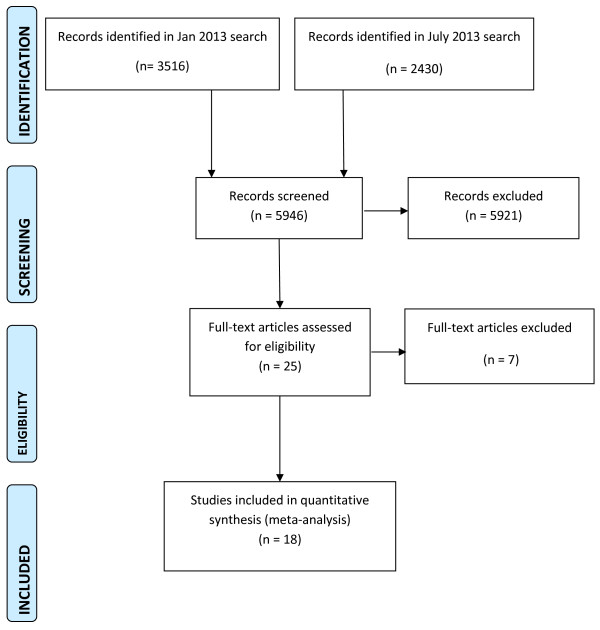
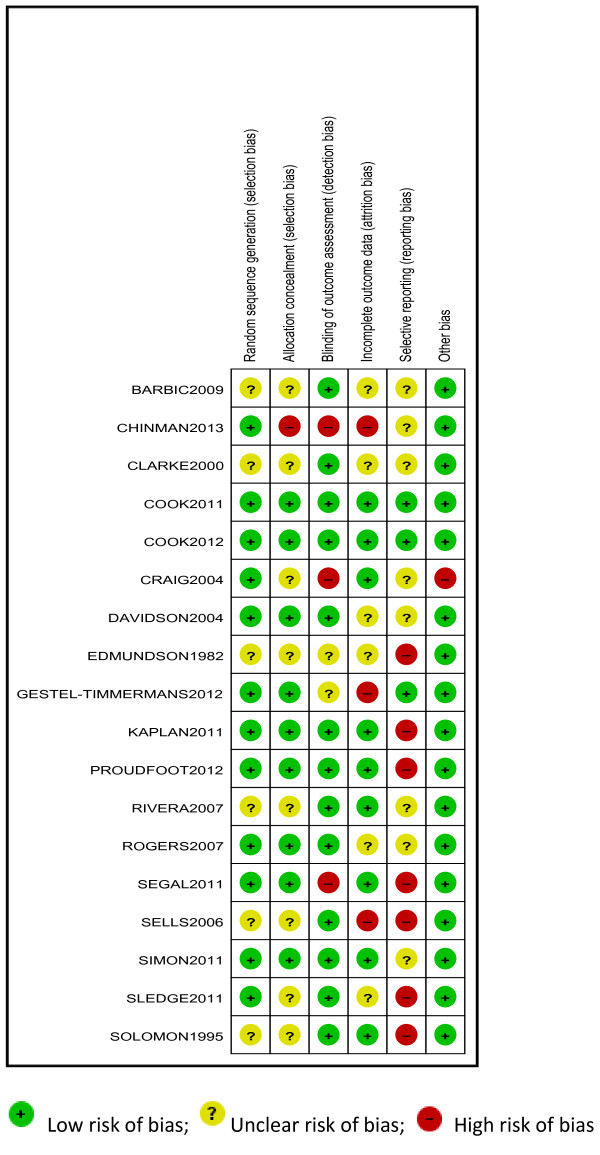
BACKGROUND: Little is known about whether peer support improves outcomes for people with severe mental illness. METHOD: A systematic review and meta-analysis was conducted. Cochrane CENTRAL Register, Medline, Embase, PsycINFO, and CINAHL were searched to July 2013 without restriction by publication status. Randomised trials of non-residential peer support interventions were included. Trial interventions were categorised and analysed separately as: mutual peer support, peer support services, or peer delivered mental health services. Meta-analyses were performed where possible, and studies were assessed for bias and the quality of evidence described. RESULTS: Eighteen trials including 5597 participants were included. These comprised four trials of mutual support programmes, eleven trials of peer support services, and three trials of peer-delivered services. There was substantial variation between trials in participants' characteristics and programme content. Outcomes were incompletely reported; there was high risk of bias. From small numbers of studies in the analyses it was possible to conduct, there was little or no evidence that peer support was associated with positive effects on hospitalisation, overall symptoms or satisfaction with services. There was some evidence that peer support was associated with positive effects on measures of hope, recovery and empowerment at and beyond the end of the intervention, although this was not consistent within or across different types of peer support. CONCLUSIONS: Despite the promotion and uptake of peer support internationally, there is little evidence from current trials about the effects of peer support for people with severe mental illness. Although there are few positive findings, this review has important implications for policy and practice: current evidence does not support recommendations or mandatory requirements from policy makers for mental health services to provide peer support programmes. Further peer support programmes should be implemented within the context of high quality research projects wherever possible. Deficiencies in the conduct and reporting of existing trials exemplify difficulties in the evaluation of complex interventions.
Overview
The claims and statistics of this paper haven’t been checked yet.
Free: it reads the open-access text and checks the first 5 claims that cite a source we can check. Create a free account to check every claim.
Integrity signals
Registry
Cites
Statistics
Figures
Verification
Claims the paper makes
The claims and statistics of this paper haven’t been checked yet.
Free: it reads the open-access text and checks the first 5 claims that cite a source we can check. Create a free account to check every claim.
Claims other papers make about this one
Each is checked against this paper’s own text: does it say what the citing paper says it does?
The source backs part of the claim, not all of it — or backs it for a different population, condition or comparison.
In the citing paper
“Reviews of peer interventions for persons with serious mental illnesses, usually incorporating a small but significant number of individuals with BD, have demonstrated modest evidence from RCTs and other controlled studies suggesting that there are important improvements in self‐efficacy and reduction in self‐stigma.106, 107, 108, 109”
From Canadian Network for Mood and Anxiety Treatments ( CANMAT ) and International Society for Bipolar Disorders ( ISBD ) 2018 guidelines for the management of patients with bipolar disorder (2018) · cites this paper as [106]
Experimental — accuracy not yet measuredThe source backs part of the claim, not all of it — or backs it for a different population, condition or comparison.
In the citing paper
“Studies have reported the benefits of peer-led intervention programs in various settings, including prisons.52, 56–58”
From Psychosocial Interventions for Prisoners with Mental and Substance Use Disorders: A Systematic Review (2022) · cites this paper as [58]
Experimental — accuracy not yet measured
Self-check
Percentages, sums and reported differences re-computed from the paper’s own numbers.
The self-check needs the paper’s full text.
Citations
Cites
The Cochrane Collaboration's tool for assessing risk of bias in randomised trials
Higgins, J. P. T., Altman, D. G., Gotzsche, P. C., Juni, P., Moher, D., Oxman, A. D., Savovic, J., Schulz, K. F., Weeks, L., Sterne, J. A. C., et al. (2011) · BMJ · doi:10.1136/bmj.d5928 · Cited by 33,817
Kytle, J., & Bandura, A. (1978) · Contemporary Sociology · doi:10.2307/2065952 · Cited by 25,422
Dermyshi, E., Wang, Y., Yan, C., Hong, W., Qiu, G., Gong, X., & Zhang, T. (2017) · Neonatology · doi:10.1159/000454668 · Cited by 24,451
A theory of social comparison processes
Festinger, L. (1954) · Human Relations · doi:10.1177/001872675400700202 · Cited by 20,926 · cited 1×
“This is consistent with psychological theories of change: peers’ social proximity to the people they are supporting may enhance their value as pro-social models [4] and promote motivation to achieve recovery by providing an upward social comparison [5].”
BackgroundCONSORT 2010 Statement: updated guidelines for reporting parallel group randomised trials
the CONSORT Group, Schulz, K. F., Altman, D. G., & Moher, D. (2010) · BMC Medicine · doi:10.1186/1741-7015-8-18 · Cited by 13,371
Grading quality of evidence and strength of recommendations
(2004) · BMJ · doi:10.1136/bmj.328.7454.1490 · Cited by 8,477 · cited 2×
“Meta-analysis was conducted using RevMan and a summary of results was prepared using the GRADE system [26], which is a structured assessment of confidence in the evidence for individual outcomes attending: threats to internal validity, inconsistency, indirectness, imprecision, and reporting bias.”
BackgroundMethodLeamy, M., Bird, V., Boutillier, C. L., Williams, J., & Slade, M. (2011) · British Journal of Psychiatry · doi:10.1192/bjp.bp.110.083733 · Cited by 3,038 · cited 1×
“selfrated recovery, hope and empowerment [53].”
Evaluating non-randomised intervention studies
Deeks, J., Dinnes, J., D'Amico, R., Sowden, A., Sakarovitch, C., Song, F., Petticrew, M., & Altman, D. (2003) · Health Technology Assessment · doi:10.3310/hta7270 · Cited by 2,907 · cited 1×
“In line with best practice guidelines for systematic reviews [54], we have not sought to supplement existing randomised trial evidence by including non-randomised trials in our review [55].”
Process evaluation in randomised controlled trials of complex interventions
Oakley, A., Strange, V., Bonell, C., Allen, E., & Stephenson, J. (2006) · BMJ · doi:10.1136/bmj.332.7538.413 · Cited by 1,247
A review of the literature on peer support in mental health services
Repper, J., & Carter, T. (2011) · Journal of Mental Health · doi:10.3109/09638237.2011.583947 · Cited by 1,103 · cited 3×
“However, they often accentuate positive findings from poor quality evidence, highlighting “limited but promising evidence,” [20] the “potential to drive through recovery-focused changes in services,” [21] and the possibility for peer-provided mental health services “without detrimental effect” [24] or “with no evidenc…”
Background
Research works printed but not linked: 10
- Mead S Defining Peer Support 2003 Web resource: http://www.intentionalpeersupport.org/documents/DefiningPeerSupport.pdf
- Halvorson A Whitter M Approaches to Recovery-Oriented Systems of Care at the State and Local Levels: Three Case Studies 2009 Rockville, MD: Center for Substance Abuse Treatment, Substance Abuse and Mental Health Services Administration
- The Royal College of Psychiatrists Social Inclusion Scoping Group Mental Health and Social Inclusion: Making Psychiatry and Mental Health Services Fit for the 21st Century 2009 London: Royal College of Psychiatrists
- Scottish Recovery Network The role and potential development of peer support services 2005 Glasgow: Scottish Recovery Network
- Minnesota Department of Human Services “Certified peer support services” 2013 Web Resource: http://www.mhcsn.org/certified-peer-specialist/
- Repper J Peer support workers: theory and practice 2013 London: Centre for Mental Health
- NCCMH Schizophrenia: Core Interventions in the Treatment and Management of Schizophrenia in Adults in Primary and Secondary Care. Updated ed Leicester and London: The British Psychological Society and the Royal College of Psychiatrists In press 20704054
- Reeves BD Higgins J Wells J Wells G Higgins J, Green S Chapter 13: including non-randomised studies Cochrane Handbook for Systematic reviews of Interventions v.5.1.0 2011 Cochrane Collaboration Web resource: http://www.cochrane-handbook.org
- New Freedom Commission on Mental Health Achieving the promise: transforming mental health care in America. Final report 2003 MD: Department of Health and Human Services DHHS pub no SMA-03-3832
- Perkins R Repper J Rinaldi M Brown H Recovery Colleges: Implementing Recovery through Organisational Change (ImROC) briefing paper 2012 London: Centre for Mental Health
Cited by
Items 301–400 of 673
Meurk, C., Parker, S., Newman, E., & Dark, F. (2019) · Frontiers in Psychiatry · doi:10.3389/fpsyt.2019.00468 · Cited by 10
“Job security concerns for PSWs remain a challenge, particularly where there is an ongoing debate about the value of PSWs in the empirical literature (13, 37, 38).”
BackgroundMainstream Integration of Mental Health Peer Support in Canada: A Mixed Method Study
Gruhl, K. R., Lacarte, S., & Boucher, M. (2023) · Canadian Journal of Community Mental Health · doi:10.7870/cjcmh-2023-007 · Cited by 10
Rønne, S. T., Joensen, L. E., Zabell, V., Arnfred, S., Brown, J. V. E., & Jørgensen, R. (2023) · International Journal of Mental Health Nursing · doi:10.1111/inm.13135 · Cited by 10
Walde, P., Hadala, J., Peipe, V., & Vӧllm, B. (2023) · Frontiers in Psychiatry · doi:10.3389/fpsyt.2023.1061106 · Cited by 10
“(10) identify six themes in their review about forensic mental health patients’ views on recovery—(1) connectedness, (2) sense of self, (3) coming to terms with the past, (4) freedom, (5) hope, and (6) health and intervention.”
BackgroundResultInfluentialPeer and lay health work for people experiencing homelessness: A scoping review
Mangan, J. E., Nunez, P. D. C., Daou, S., Richandi, G. E.-K., Siddiqui, A., Wong, J., Birk-Urovitz, L., Bond, A., & Orkin, A. M. (2024) · PLOS Global Public Health · doi:10.1371/journal.pgph.0003332 · Cited by 10
Thekkumkara, S. N., Jagannathan, A., Muliyala, K. P., Joseph, A., & Murthy, P. (2023) · Criminal Behaviour and Mental Health · doi:10.1002/cbm.2287 · Cited by 10
Mutual Aid Groups for Loneliness, Psychosocial Disability, and Continuity of Care
Agudelo‐Hernández, F., Guapacha-Montoya, M., & Andrade, R. M. R. (2024) · Community Mental Health Journal · doi:10.1007/s10597-023-01216-9 · Cited by 10
“As effects of loneliness, it has been described that those who feel lonely may also have a weaker immune system and a higher risk of disability and premature mortality (Lloyd-Evans et al., 2014).”
InfluentialSeifert, L. S., & Seifert, C. A. (2017) · Current Psychology · doi:10.1007/s12144-017-9676-7 · Cited by 10
Tang, J., Tse, S. S.-K., Davidson, L., & Cheng, P. (2017) · Journal of Mental Health · doi:10.1080/09638237.2017.1417546 · Cited by 10
“mixed results have also been found (Lloyd-Evans et al., 2014).”
ResultPeer support for youth suicide prevention: a scoping review protocol
Hilario, C. T., Kamanzi, J., Kennedy, M., Gilchrist, L., & Richter, S. M. (2021) · BMJ Open · doi:10.1136/bmjopen-2021-048837 · Cited by 10
Professional Support for Children Bereaved by Domestic Homicide in the UK
Gomersall, A., Alisic, E., Devaney, J., Humphreys, C., Stanley, N., Trickey, D., & Howarth, E. (2024) · Journal of Family Violence · doi:10.1007/s10896-024-00704-0 · Cited by 9
“While there is evidence on the value of peer support for children in other contexts such as mental health (Lloyd-Evans et al., 2014), there is currently a lack of evidence informing group interventions for traumatically-bereaved children, or for children exposed to domestic abuse (Journot-Reverbel…”
Ong, L. E., Speicher, S., Villasenor, D., Kim, J., Jacobs, A., Macia, K. S., & Cloître, M. (2024) · Journal of Medical Internet Research · doi:10.2196/52130 · Cited by 9
“However, randomized controlled trials assessing the impact of peers on symptom change are relatively few in number [23] including for mHealth interventions [21].”
Application of the Supportive Accountability Model in Digital Health Interventions: Scoping Review
Kwok, G., Cheung, S., Duffecy, J. L., & Devine, K. A. (2025) · Journal of Medical Internet Research · doi:10.2196/72639 · Cited by 11
“These inconsistencies may be due, in part, to the lack of structured interventions, formalized training, and quality assurance mechanisms for peer specialists and other paraprofessional human supports [97,100].”
Advances in implementation strategies for treatment adherence in schizophrenia: a narrative review
Shen, Y., & Wu, X. (2026) · Frontiers in Psychiatry · doi:10.3389/fpsyt.2026.1752130 · Cited by 9
von Peter, S., Krämer, U. M., Cubellis, L., Fehler, G., Ruiz‐Pérez, G., Schmidt, D., Ziegenhagen, J., Kuesel, M., Ackers, S., Mahlke, C., et al. (2023) · Health Expectations · doi:10.1111/hex.13938 · Cited by 9
Reeves, V., Loughhead, M., Teague, C., Halpin, M. A., & Procter, N. G. (2024) · International Journal of Mental Health Nursing · doi:10.1111/inm.13322 · Cited by 9
Gühne, U., Weinmann, S., Becker, T., & Riedel-Heller, S. G. (2020) · Der Nervenarzt · doi:10.1007/s00115-020-00955-4 · Cited by 9
McLeod, B., Meyer, C., Meyer, D., Nunan, C., Murray, G., Farhall, J., & Thomas, N. (2022) · Psychology and Psychotherapy Theory Research and Practice · doi:10.1111/papt.12415 · Cited by 9
Bäcklin, E. (2022) · Frontiers in Psychiatry · doi:10.3389/fpsyt.2022.937228 · Cited by 9
“(29) found little evidence of the effectiveness of peer support for this particular target group.”
BackgroundEiroá‐Orosa, F. J., & Sanchez‐Moscona, C. (2023) · Salud Colectiva · doi:10.18294/sc.2023.4252 · Cited by 9
Sources of Women's Health Information: A Qualitative Study
Sabzevari, S., Nasrabadi, A. N., & Bonabi, T. N. (2015) · Research Information System of Ardabil University of Medical Sciences (Ardabil University of Medical Sciences) · Cited by 9
Predictors of perceived social effectiveness of individuals with serious mental illness.
Sánchez, J., Sung, C. Y. Y., Phillips, B. N., Tschopp, M. K., Muller, V. R., Lee, H.-L., & Chan, F. (2019) · Psychiatric Rehabilitation Journal · doi:10.1037/prj0000321 · Cited by 9
Patient-appraised beneficial moments during inpatient psychiatric treatment
Locher, C., Mansour, R., Koechlin, H., & Büchi, S. (2020) · BMC Health Services Research · doi:10.1186/s12913-020-05617-4 · Cited by 9
“Accordingly, research indicates that peer support for various mental disorders show significant effects on psychological wellbeing [37, 38].”
BackgroundEstigma y salud mental: estigma internalizado
González-Domínguez, S. (2019) · LA Referencia (Red Federada de Repositorios Institucionales de Publicaciones Científicas) · Cited by 10
Orsi, J. A., Malinowski, F. R. L., Kagan, S., Weingarten, R., Villares, C. C., Bressan, R. A., de Oliveira, W. F., Andrade, M. C. R., & Gadelha, A. (2021) · Psychiatric Quarterly · doi:10.1007/s11126-021-09893-z · Cited by 8
“In the literature, peer interventions have been usually divided into three main types: (1) Mutual support groups, where relationships are considered to be mutually reciprocal, even in the case in which some of the participants are viewed as more qualified or experienced than others; (2) Peer support services, in which…”
BackgroundVogel, J. S., Bruins, J., Swart, M., Liemburg, E. J., van der Gaag, M., & Castelein, S. (2023) · Journal of Behavior Therapy and Experimental Psychiatry · doi:10.1016/j.jbtep.2023.101871 · Cited by 8
Variability in the Integration of Peers in a Multi-site Digital Mental Health Innovation Project
Cha, B. S., Borghouts, J. W., Eikey, E. V., Mukamel, D. B., Schueller, S. M., Sorkin, D. H., Stadnick, N. A., Zhao, X., Zheng, K., & Schneider, M. L. (2024) · Administration and Policy in Mental Health and Mental Health Services Research · doi:10.1007/s10488-023-01331-5 · Cited by 8
Eastwood, O., Conroy, R., Chavez, K. M., Joy, K., Devaney, J., Kurdi, Z., Frederick, J., & Alisic, E. (2024) · Australian Psychologist · doi:10.1080/00050067.2024.2378144 · Cited by 8
“Peer support models have been implemented in diverse settings and received meta-analytic support in improving self-reported hope, recovery, and empowerment in the context of adult mental ill-health (Lloyd-Evans et al., 2014; White et al., 2020).”
Pilot study of a ketogenic diet in bipolar disorder: a process evaluation
Rigby, B. P., Needham, N., Grossi, H., Kamenská, I., Campbell, I. H., Meadowcroft, B., Creasy, F., Fisher, C., Bahuguna, P., Norrie, J. D., et al. (2025) · BMC Psychiatry · doi:10.1186/s12888-025-06479-y · Cited by 8
Morton, E. E., Willis, E., Brozena, J., Kcomt, A., & Michalak, E. E. (2025) · Bipolar Disorders · doi:10.1111/bdi.70006 · Cited by 8
“This challenge has been similarly noted in other systematic reviews and meta-analyses of peer support interventions, which have also recorded a great deal of heterogeneity in intervention design [14].”
Chan, K. K. S., & Tsui, J. K. C. (2025) · Mindfulness · doi:10.1007/s12671-025-02571-2 · Cited by 8
“In addition, it can empower them to seek more meaningful and fulfilling lives, resulting in more positive experiences and perceptions of the recovery process, as well as higher levels of life satisfaction and enjoyment (Lloyd-Evans et al., 2014).”
Liu, J., Zhao, J., & Wang, Z. (2025) · Frontiers in Psychology · doi:10.3389/fpsyg.2025.1567812 · Cited by 8
Identification of Components Associated with the Operation of Mutual Aid Groups: A Scoping Review
Agudelo‐Hernández, F., Andrade, R. M. R., Guapacha-Montoya, M., & Reyes, A. C. D. (2023) · Revista Colombiana de Psicología · doi:10.15446/rcp.v32n2.103633 · Cited by 8
“Some meta-analyses that have included randomized studies mention the little impact on clinical manifestations (Lloyd-Evans et al., 2014).”
BackgroundBanfield, M., Morse, A. R., & Gulliver, A. (2020) · Implementation Science Communications · doi:10.1186/s43058-020-00002-y · Cited by 8
Peer Support for Mental Health
Stefančić, A., Bochicchio, L. A., & Tuda, D. (2021) · Springer eBooks · doi:10.1007/978-3-030-58660-7_2 · Cited by 8
O’Connor, N., Clark, S. C., & Ryan, C. J. (2017) · Australasian Psychiatry · doi:10.1177/1039856217700777 · Cited by 8
“1177/1039856217700777 Australasian Psychiatry 2017, Vol 25(5) 445 –447 © The Royal Australian and New Zealand College of Psychiatrists 2017 Reprints and permissions: sagepub.”
BackgroundKhan, N., & Tracy, D. K. (2021) · BJPsych Bulletin · doi:10.1192/bjb.2021.4 · Cited by 8
Being, belonging and becoming: Development of the 3B Scale
Gruhl, K. R., Lacarte, S., Boucher, M., & Ledrew, L. (2018) · Australian Occupational Therapy Journal · doi:10.1111/1440-1630.12468 · Cited by 8
“Typically, program evaluation in peer-led programs has been limited (Lloyd-Evans et al., 2014; Rogers & Swarbrick, 2016), using weak methodology or less rigorous designs (Lloyd-Evans et al., 2014), or has been non-existent (Lloyd-Evans et al.).”
The efficacy of peer support in stroke rehabilitation
Stamatakis, C. (2015) · ORCA Online Research @Cardiff (Cardiff University) · Cited by 8
Mental health and the NDIS: A literature review
Nicholas, A., Reifels, L., King, K. M., & Pollock, S. (2014) · Minerva Access (University of Melbourne) · Cited by 8
Nash, E., Taplin, S., Rust, L. J., & Percival, R. (2022) · Journal of Forensic Practice · doi:10.1108/jfp-05-2021-0030 · Cited by 7
Diverse elements comprising studies of peer support complicate evidence synthesis
Evans, M., Cuddeback, G. S., Golin, C. E., Muessig, K. E., Bellamy, C. D., Costa, M. N., O’Connell, M. J., & Fisher, E. B. (2024) · Journal of Mental Health · doi:10.1080/09638237.2024.2332798 · Cited by 7
“Lloyd-Evans et al. (2014) organized their review by categorizing peer interventions as mutual support groups, peer support services, and peer mental health providers.”
InfluentialBest, P., Maddock, A., Ean, N., Montgomery, L., Armour, C., Mulholland, C. C., & Blair, C. (2024) · Frontiers in Digital Health · doi:10.3389/fdgth.2024.1372062 · Cited by 7
The Reakiro Care Model for Persons With a Chronic Death Wish: An Epidemiological Study
Vanhie, T., Verdegem, S., Cuypers, A., Bemelmans, L., Onghena, P., & Vandenberghe, J. U. (2025) · Journal of Humanistic Psychology · doi:10.1177/00221678241313088 · Cited by 7
Ver-rückte Expertisen: Ethnografische Perspektiven auf Genesungsbegleitung
Schmid, C. (2020) · transcript Verlag eBooks · doi:10.14361/9783839453858 · Cited by 7
Factors Influencing Self-Management of Schizophrenia: A Cross-Sectional Study
Zhang, X., Liu, L., Ning, J., Wu, S., Li, S., Zhang, Z., & Li, X. (2022) · Journal of Psychosocial Nursing and Mental Health Services · doi:10.3928/02793695-20221027-06 · Cited by 7
Gillard, S., Foster, R., White, S. J., Healey, A., Bremner, S. A., Gibson, S., Goldsmith, L. P., Lucock, M. P., Marks, J., Morshead, R., et al. (2023) · Programme Grants for Applied Research · doi:10.3310/lqkp9822 · Cited by 7
Mahon, D. (2023) · Mental Health and Social Inclusion · doi:10.1108/mhsi-11-2023-0129 · Cited by 7
Korsbek, L., & Petersen, L. (2016) · Tidsskrift for psykisk helsearbeid · doi:10.18261/issn.1504-3010-2016-04-02 · Cited by 7
Can Podcast Listening Influence Attitudes About Mental Illness?: An Exploratory Study
Nathan, S. B. (2018) · OhioLink ETD Center (Ohio Library and Information Network) · Cited by 7
Predictors of Outcome of Acute Partial Hospitalization: An Exploratory Study
Lieberman, P. B., Gentes, E. L., & Russell, S. A. (2020) · The Journal of Nervous and Mental Disease · doi:10.1097/nmd.0000000000001109 · Cited by 7
Zeng, G., Chung, D., & McNamara, B. A. (2020) · Journal of Health Organization and Management · doi:10.1108/jhom-09-2019-0281 · Cited by 7
Side by side: supporting youth peer work in mental health services
Fava, N., Simmons, M. B., Anderson, R., Zbukvic, I., & Baker, D. G. (2020) · Cited by 7
Thekkumkara, S. N., Jagannathan, A., Prasad-Muliyala, K., & Murthy, P. (2022) · Indian Journal of Psychiatry · doi:10.4103/indianjpsychiatry.indianjpsychiatry_416_21 · Cited by 7
Alvarez-Monjarás, M., Lotmore, M., Razzaque, R., Hopfenbeck, M. S., & Pilling, S. (2023) · Frontiers in Psychology · doi:10.3389/fpsyg.2023.1076791 · Cited by 7
Self-citationPeer Support Services in Behavioral Health Facilities: Secondary Analysis From Two National Surveys
Videka, L., Page, C., Buche, J., Neale, J., Evans, E. M. W., Beck, A. J., Grazier, K. L., Railey, J. A., & Gaiser, M. (2023) · Psychiatric Services · doi:10.1176/appi.ps.20220366 · Cited by 7
A survey of personnel and services offered in 32 outpatient US clozapine clinics
Cotes, R. O., Rolin, D. G., Meyer, J. M., Young, A. S., Cohen, A. N., & Gorrindo, T. (2021) · BMC Psychiatry · doi:10.1186/s12888-021-03584-6 · Cited by 7
“Peer specialists were rarely included in the sample, but could be important additions to many teams, as peer support for people with serious mental illness is associated with recovery, hope, and empowerment [10].”
BackgroundHutton, P. (2016) · Wiley eBooks · doi:10.1002/9781118468197.ch17 · Cited by 7
Knowing our own minds : the role and value of experiential knowledge in mental health research
Faulkner, A. (2017) · City Research Online (City University London) · Cited by 7
Réduction de la stigmatisation de la schizophrénie dans les pratiques en santé mentale
Valéry, K.-M. (2021) · theses.fr (ABES) · doi:10.70675/e139d6b0z0e80z4e2czbfa9z84d2d0589f1d · Cited by 7
Behler, J., Daniels, A., Scott, J., & Mehl-Madrona, L. (2017) · The Qualitative Report · doi:10.46743/2160-3715/2017.2964 · Cited by 6
“In a systemic review and meta-analysis of 18 trials with 5597 participants (Lloyd-Evans et al., 2014), including 4 trials of mutual support programs, 11 trials of peer support services, and 3 trials of peer-delivered services, substantial variation was found between participants’ characteristics…”
Lobban, F. A., Marshall, P., Barbrook, J., Collins, G., Foster, S., Glossop, Z., Inkster, C., Jebb, P., Johnston, R., Khan, H., et al. (2023) · BMJ Open · doi:10.1136/bmjopen-2022-068548 · Cited by 6
Pyle, M., Loftus, L., Emsley, R., Freeman, D. H., Gillard, S., Gumley, A. I., Sierpatowska, J., Wood, L., O’Connor, R. C., Pfeiffer, P., et al. (2024) · Trials · doi:10.1186/s13063-024-08293-5 · Cited by 6
“PS is highly valued by service users, forming part of the vision for the future of mental health services [26] and is associated with positive effects on measures of hope [27], which protects against suicidal ideation [28].”
BackgroundEaspaig, B. N. G., Lindeman, M. A., Watson, P., & Liu, X. (2024) · Australian Journal of Rural Health · doi:10.1111/ajr.13192 · Cited by 6
“5,8 However, the successful implementation of peer work is vital to the realisation of these benefits.”
Psychosocial interventions in bipolar disorders: A guidelines’ review
Ventriglio, A., Ricci, F., Giallanella, D., Gaggiano, C., Torales, J. C., Castaldelli-Maia, J. M., Smith, A. J., Liebrenz, M., Caycho‐Rodríguez, T., & Bellomo, A. (2025) · International Journal of Social Psychiatry · doi:10.1177/00207640251333296 · Cited by 6
“…for individuals with BD have yielded modest findings from randomized controlled trials (RCTs) and other controlled studies, indicating improvements in self-efficacy and reductions in self-stigma (Cabassa et al., 2017; Chinman et al., 2014; Lloyd-Evans et al., 2014; Mahlke et al., 2017).”
Silva, K. T. D., Cockshaw, W. D., Rehm, I. C., & Hancock, N. (2021) · Clinical Psychology & Psychotherapy · doi:10.1002/cpp.2563 · Cited by 6
“…indicators (e.g., quality of life, hope and optimism) as key outcome measures of psychosocial interventions (e.g., befriending and peer-support programs) for so-called serious mental illnesses, such as schizophrenia and bipolar disorder (Lloyd-Evans et al., 2014; Siette et al., 2017).”
González, R. Z., Barbero, F. L., Martínez-Pérez, A., & Muñoz, R. C. (2023) · Interface - Comunicação Saúde Educação · doi:10.1590/interface.220108 · Cited by 6
Kuek, J. H. L., Raeburn, T., Chow, M. Y. Z., & Wand, T. (2023) · Community Mental Health Journal · doi:10.1007/s10597-023-01184-0 · Cited by 6
“…research and involving people with experiences of mental ill-health to better appreciate their perspectives (Cleary et al., 2013; Gillard et al., 2015; Kidd et al., 2015; Lloyd-Evans et al., 2014; McKenna et al., 2014; Slade et al., 2014, 2015; Slade & Longden, 2015; Wyder & Bland, 2014).”
BackgroundChalker, S. A., Serafez, J., Imai, Y., Stinchcomb, J., Mendez, E., Depp, C. A., Twamley, E. W., Fortuna, K. L., Goodman, M. S., & Chinman, M. (2024) · Journal of Participatory Medicine · doi:10.2196/56204 · Cited by 6
“Recent reviews of peer support services both in and out of VHA have documented a variety of positive outcomes for service users with SMI (eg, reduced inpatient use and improved recovery, hope, empowerment) [18,20], although some studies found little to no impact on outcomes [18,20,21].”
BackgroundGrenyer, B. F. S., Lucas, S., Barr, K. R., Finch, A. W., Denmeade, G., & Day, N. J. S. (2025) · Psychotherapy Research · doi:10.1080/10503307.2025.2498430 · Cited by 6
“…interventions for depression indicate their effectiveness in reducing symptoms (Pfeiffer et al., 2011), whereas peer models for more severe mental illness (schizophrenia, bipolar and comorbid conditions excluding personality disorder) were not found to be effective (Lloyd-Evans et al., 2014).”
Hyun, M. S., Kim, H., Nam, K. A., & Kim, S. Y. (2022) · Journal of Korean Academy of Nursing · doi:10.4040/jkan.21208 · Cited by 6
Reinke, B., Mahlke, C., Botros, C., Kläring, A., Lambert, M., Karow, A., Gallinat, J., Zapf, A., Ozga, A., Höller, A., et al. (2022) · BMC Psychiatry · doi:10.1186/s12888-022-04247-w · Cited by 6
“Volume 1 | Issue 1 | 2021 3 ger follow-up periods are called for [27, 28, 36].”
BackgroundResultMentoring: A Traditional Cook Island Approach to Support Men
Patterson, T., Egan, R., Gross, J., Leov, J., Hobbs, L., & Rooy, D. J. L. (2023) · International Journal of Offender Therapy and Comparative Criminology · doi:10.1177/0306624x231172638 · Cited by 6
“For example, Pfeiffer et al. (2011) examined studies that used randomized control trial methodology and found that peer-support reduced the symptoms of depression, whereas Lloyd-Evans et al. (2014) found that peer-support had no effect on mental health symptoms.”
Shankar, J., & Ip, C. K. C. (2018) · InTech eBooks · doi:10.5772/intechopen.75661 · Cited by 6
Wallot, H.-A. (2019) · Santé mentale au Québec · doi:10.7202/1060279ar · Cited by 6
Peer-Unterstützungsbeziehungen im Kontext psychischer Beeinträchtigung
Lammers, K. (2025) · Beiträge zur Teilhabeforschung · doi:10.1007/978-3-658-47045-6 · Cited by 5
Pollice, G., Bodini, C. F., Menchetti, M., Mosto, D. D., Negrogno, L., Betti, L., Furlan, M., & Quaranta, I. (2025) · Community Mental Health Journal · doi:10.1007/s10597-025-01513-5 · Cited by 5
Recovery processes within peer provision: testing the CHIME model using a mixed methods design
Zeng, G., & Chung, D. (2020) · The Journal of Mental Health Training Education and Practice · doi:10.1108/jmhtep-01-2020-0007 · Cited by 5
Ruiz‐Pérez, G., Küsel, M., & von Peter, S. (2025) · PLoS ONE · doi:10.1371/journal.pone.0319830 · Cited by 5
“Mounting evidence suggests that peer support work leads to increased user engagement and participation [9,10], heightened satisfaction among users [11,12], and reduced hospitalizations or alleviation of symptom severity [13–16].”
Peer support work on an inpatient unit for adults experiencing psychosis
Wood, H. J., & Padilla, S. B. (2019) · Psychosis · doi:10.1080/17522439.2019.1603321 · Cited by 5
“Peer support may take one of three forms: mutual peer support, peers working within a peer/consumerrun organization, or peers working for a mainstream health-care organization (Castelein, Bruggeman, Davidson, & van der Gaag, 2015; Davidson et al., 2006; Lloyd-Evans et al., 2014).”
BackgroundInfluentialCommunity Rehabilitation for Youth with Psychosis Spectrum Disorders
Rouhakhtar, P. R., & Schiffman, J. E. (2019) · Child and Adolescent Psychiatric Clinics of North America · doi:10.1016/j.chc.2019.08.012 · Cited by 5
Servant leadership informed trauma peer support
Mahon, D. (2021) · Mental Health and Social Inclusion · doi:10.1108/mhsi-06-2021-0029 · Cited by 5
The Promise of Digital Health Interventions for Addressing Loneliness in Serious Mental Illness
Gandhi, A., Mote, J., & Fulford, D. (2023) · Current Treatment Options in Psychiatry · doi:10.1007/s40501-023-00289-3 · Cited by 5
Integrating Lived Experience Perspectives Into Clinical Practice
van Zelst, C. (2019) · Elsevier eBooks · doi:10.1016/b978-0-12-815012-2.00029-8 · Cited by 5
Palmeira, L., Keusen, A. L., Neto, E. C., Barreto, S., Leao, O. M. D. A., & Cavalcanti, M. T. (2019) · Community Mental Health Journal · doi:10.1007/s10597-019-00505-6 · Cited by 5
da Costa, M. P., Foster, R., Gillard, S., & Priebe, S. (2021) · Springer eBooks · doi:10.1007/978-3-030-57296-9_72 · Cited by 5
Versorgungsstrukturen in der Psychiatrie
Kallert, T. W., Gühne, U., Harter, C., Eikelmann, B., Lang, F. U., Puschner, B., Riedel-Heller, S. G., Weisbrod, M., Becker, T. M., & Wulf Rössler, A. (2016) · Springer eBooks · doi:10.1007/978-3-642-45028-0_54-1 · Cited by 5
Peer-delivered self-management programmes in mental health
Valenstein, M. M., & Pfeiffer, P. (2018) · The Lancet · doi:10.1016/s0140-6736(18)31718-5 · Cited by 5
Alonso, L. D. S. (2015) · Biblos-e Archivo (Universidad Autónoma de Madrid) · Cited by 5
Leemeijer, A. (2024) · Utrecht University Repository (Utrecht University) · doi:10.33540/2164 · Cited by 5
Wahyuni, S., Suttharangsee, W., & Nukaew, O. (2024) · Journal of the Pakistan Medical Association · doi:10.47391/jpma.ind-rinc-11 · Cited by 4
“24 Furthermore, the tasks of the families in the current study were identified as developing partnerships to provide extending care to the home; to transfer information from one nurse to other nurses or doctors, and also to the schizophrenia patients; and to support flexible and consistent nursing…”
Milton, A. C., Brown, E., Arnautovska, U., Vaughan, P., Gao, C. X., Chatterton, M. L., Stratton, E., Hancock, N., Chapman, J., Iyer, R., et al. (2026) · BJPsych Open · doi:10.1192/bjo.2026.12056 · Cited by 4
Self-citationLavdas, M., Sandal, G. M., & Bendixsen, S. K. N. (2024) · BMC Psychiatry · doi:10.1186/s12888-024-06255-4 · Cited by 4
“Peer support has been found to foster hope and empowerment among individuals (beneficiaries) receiving these services [34].”
Palanisamy, B., Kosalram, K. B., & Chinnaiyan, S. (2023) · Clinical Epidemiology and Global Health · doi:10.1016/j.cegh.2023.101491 · Cited by 4
Kinnafick, F., Anthony, J., & Tweed, L. M. (2024) · Mental health and physical activity · doi:10.1016/j.mhpa.2024.100669 · Cited by 4
Bilkay, H. İ., & Gürhan, N. (2025) · Current Psychology · doi:10.1007/s12144-025-07504-9 · Cited by 4
“Despite support for and use of peer support, there is a lack of evidence about its effectiveness for individuals with men - tal illness (Lloyd-Evans et al., 2014 ; Lyons et al., 2021 ).”
da Costa, M. P., Foster, R., Gillard, S., & Priebe, S. (2019) · Springer eBooks · doi:10.1007/978-3-319-70134-9_72-1 · Cited by 4
Ng, J. T. L., & Barlas, J. (2023) · International Journal of Qualitative Studies on Health and Well-Being · doi:10.1080/17482631.2022.2164399 · Cited by 4
“For example, across three review papers, a meta-synthesis (Walker & Bryant, 2013), a meta-analysis (Lloyd-Evans et al., 2014) and a systematic review (Mutschler et al., 2021), no studies outside Western countries were included.”
BackgroundInfluentialSchmutte, T. J., Guy, K., Davidson, L., & Bellamy, C. D. (2020) · Springer eBooks · doi:10.1007/978-3-030-19847-3_21 · Cited by 4
Gegenseitige Unterstützung Psychiatrieerfahrener in Krisenunterkünften – ein Scoping Review
von Peter, S., & Schwarz, J. (2020) · Psychiatrische Praxis · doi:10.1055/a-1307-7160 · Cited by 4
“[38] Lloyd-Evans B, Mayo-Wilson E, Harrison B et al.”
Background
Metadata
- Authors
- Lloyd-Evans, B., Mayo-Wilson, E., Harrison, B., Istead, H., Brown, E., Pilling, S., Johnson, S., & Kendall, T.
- Affiliations
- University College London (GB)
- University of the West of England (GB)
- Sheffield Health and Social Care NHS Foundation Trust (GB)
- Venue
- BMC Psychiatry
- Published
- 2014-02-14
- Volume
- 14
- Issue
- 1
- Pages
- 39-39
- ISSN
- 1471-244X (ISSN-L)
- PMC
- PMC3933205
- OpenAlex
- W1989263398
- Cited by
- 558
- References
- 62
- Citations by year
- 2026: 20 · 2025: 41 · 2024: 47 · 2023: 64 · 2022: 64 · 2021: 67 · 2020: 60 · 2019: 53 · 2018: 40 · 2017: 39 · 2016: 36 · 2015: 14 · 2014: 13
- FWCI
- 5.75
- Type
- journal article
- Language
- en
- Open access
- gold
- doi.org
- Licence
- Locations
- BMC Psychiatry (publishedVersion, cc-by)
- Europe PMC (PubMed Central) (publishedVersion, cc-by)
- PubMed Central (publishedVersion, cc-by)
- PubMed (publishedVersion)
- Minerva Access (University of Melbourne) (submittedVersion, cc-by)
- UCL Discovery (University College London) (submittedVersion)
- Figshare (submittedVersion, cc-by)
- Funders
- National Institute for Health and Care Research (RP-PG-0109-10078)
- Programme Grants for Applied Research (RP-PG-0109-10078)
- Topics
- Health Sciences › Health Professions › General Health Professions › Mental Health and Patient Involvement
- Social Sciences › Psychology › Clinical Psychology › Psychiatric care and mental health services
- Health Sciences › Medicine › Psychiatry and Mental health › Mental Health Treatment and Access
- Keywords
- peer support, severe mental illness, peer support services, hospitalization, symptom severity, service satisfaction, hope, recovery, empowerment, complex interventions, trial quality
- MeSH terms
- Adult, Mental Disorders, Counseling, Female, Humans, Male, Mental Health Services, Peer Group, Social Support, Randomized Controlled Trials as Topic
About these checks
Registry, retraction, Cites and statistics results are computed, not judged, with one exception: a printed reference that no index lists is read once by a model before it counts as a citation error. Claims are extracted by a model and kept only when their quote appears verbatim in the text; each cited source is then checked, with a model’s help, for whether it says what the claim relies on. Those verdicts can be wrong — read the claim’s quote and the cited source before relying on one.
Statistics and arithmetic are recomputed, not judged.
Confidence bands are shown only for fields calibrated on our annotated test set. None is calibrated yet, so no band is shown.
What counts as a claim ›How we measure confidence ›How we check this ›
Are you an author, or do you see a problem with this page? Request a review
Data sources
Bibliographic data: Semantic Scholar, OpenAlex, Crossref.
Contains information from the Semantic Scholar Academic Graph Datasets, made available under the ODC Attribution License (ODC-BY 1.0).
Semantic Scholar’s data is described in: Kinney, R., et al. (2023). The Semantic Scholar Open Data Platform. arXiv:2301.10140.
