

A systematic review and meta-analysis of randomised controlled trials of peer support for people with severe mental illness
Open accessThe DOI matches its Crossref record; 61 of the 62 references it cites were found in a registry or an index.
Abstract
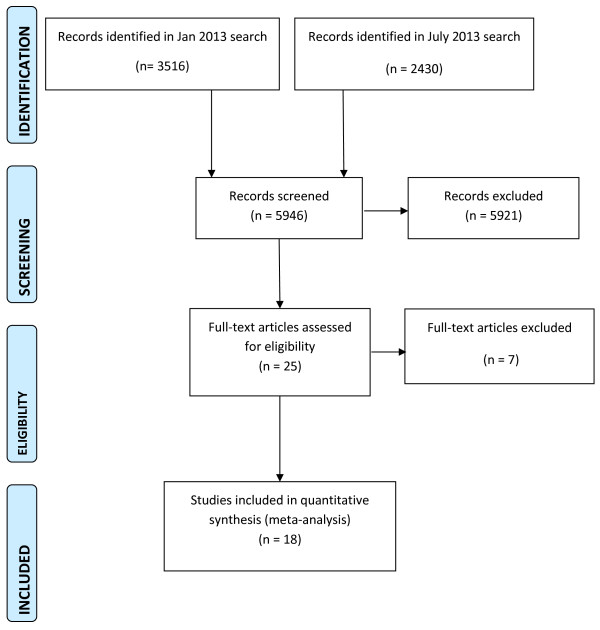
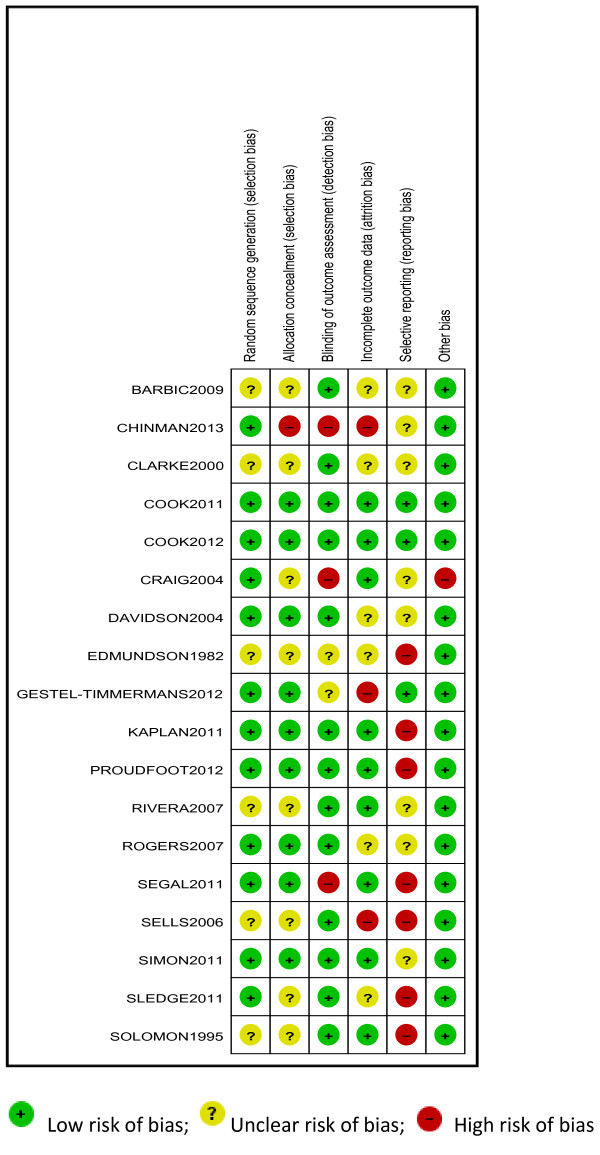
BACKGROUND: Little is known about whether peer support improves outcomes for people with severe mental illness. METHOD: A systematic review and meta-analysis was conducted. Cochrane CENTRAL Register, Medline, Embase, PsycINFO, and CINAHL were searched to July 2013 without restriction by publication status. Randomised trials of non-residential peer support interventions were included. Trial interventions were categorised and analysed separately as: mutual peer support, peer support services, or peer delivered mental health services. Meta-analyses were performed where possible, and studies were assessed for bias and the quality of evidence described. RESULTS: Eighteen trials including 5597 participants were included. These comprised four trials of mutual support programmes, eleven trials of peer support services, and three trials of peer-delivered services. There was substantial variation between trials in participants' characteristics and programme content. Outcomes were incompletely reported; there was high risk of bias. From small numbers of studies in the analyses it was possible to conduct, there was little or no evidence that peer support was associated with positive effects on hospitalisation, overall symptoms or satisfaction with services. There was some evidence that peer support was associated with positive effects on measures of hope, recovery and empowerment at and beyond the end of the intervention, although this was not consistent within or across different types of peer support. CONCLUSIONS: Despite the promotion and uptake of peer support internationally, there is little evidence from current trials about the effects of peer support for people with severe mental illness. Although there are few positive findings, this review has important implications for policy and practice: current evidence does not support recommendations or mandatory requirements from policy makers for mental health services to provide peer support programmes. Further peer support programmes should be implemented within the context of high quality research projects wherever possible. Deficiencies in the conduct and reporting of existing trials exemplify difficulties in the evaluation of complex interventions.
Overview
The claims and statistics of this paper haven’t been checked yet.
Free: it reads the open-access text and checks the first 5 claims that cite a source we can check. Create a free account to check every claim.
Integrity signals
Registry
Cites
Statistics
Figures
Verification
Claims the paper makes
The claims and statistics of this paper haven’t been checked yet.
Free: it reads the open-access text and checks the first 5 claims that cite a source we can check. Create a free account to check every claim.
Claims other papers make about this one
Each is checked against this paper’s own text: does it say what the citing paper says it does?
The source backs part of the claim, not all of it — or backs it for a different population, condition or comparison.
In the citing paper
“Reviews of peer interventions for persons with serious mental illnesses, usually incorporating a small but significant number of individuals with BD, have demonstrated modest evidence from RCTs and other controlled studies suggesting that there are important improvements in self‐efficacy and reduction in self‐stigma.106, 107, 108, 109”
From Canadian Network for Mood and Anxiety Treatments ( CANMAT ) and International Society for Bipolar Disorders ( ISBD ) 2018 guidelines for the management of patients with bipolar disorder (2018) · cites this paper as [106]
Experimental — accuracy not yet measuredThe source backs part of the claim, not all of it — or backs it for a different population, condition or comparison.
In the citing paper
“Studies have reported the benefits of peer-led intervention programs in various settings, including prisons.52, 56–58”
From Psychosocial Interventions for Prisoners with Mental and Substance Use Disorders: A Systematic Review (2022) · cites this paper as [58]
Experimental — accuracy not yet measured
Self-check
Percentages, sums and reported differences re-computed from the paper’s own numbers.
The self-check needs the paper’s full text.
Citations
Cites
The Cochrane Collaboration's tool for assessing risk of bias in randomised trials
Higgins, J. P. T., Altman, D. G., Gotzsche, P. C., Juni, P., Moher, D., Oxman, A. D., Savovic, J., Schulz, K. F., Weeks, L., Sterne, J. A. C., et al. (2011) · BMJ · doi:10.1136/bmj.d5928 · Cited by 33,817
Kytle, J., & Bandura, A. (1978) · Contemporary Sociology · doi:10.2307/2065952 · Cited by 25,422
Dermyshi, E., Wang, Y., Yan, C., Hong, W., Qiu, G., Gong, X., & Zhang, T. (2017) · Neonatology · doi:10.1159/000454668 · Cited by 24,451
A theory of social comparison processes
Festinger, L. (1954) · Human Relations · doi:10.1177/001872675400700202 · Cited by 20,926 · cited 1×
“This is consistent with psychological theories of change: peers’ social proximity to the people they are supporting may enhance their value as pro-social models [4] and promote motivation to achieve recovery by providing an upward social comparison [5].”
BackgroundCONSORT 2010 Statement: updated guidelines for reporting parallel group randomised trials
the CONSORT Group, Schulz, K. F., Altman, D. G., & Moher, D. (2010) · BMC Medicine · doi:10.1186/1741-7015-8-18 · Cited by 13,371
Grading quality of evidence and strength of recommendations
(2004) · BMJ · doi:10.1136/bmj.328.7454.1490 · Cited by 8,477 · cited 2×
“Meta-analysis was conducted using RevMan and a summary of results was prepared using the GRADE system [26], which is a structured assessment of confidence in the evidence for individual outcomes attending: threats to internal validity, inconsistency, indirectness, imprecision, and reporting bias.”
BackgroundMethodLeamy, M., Bird, V., Boutillier, C. L., Williams, J., & Slade, M. (2011) · British Journal of Psychiatry · doi:10.1192/bjp.bp.110.083733 · Cited by 3,038 · cited 1×
“selfrated recovery, hope and empowerment [53].”
Evaluating non-randomised intervention studies
Deeks, J., Dinnes, J., D'Amico, R., Sowden, A., Sakarovitch, C., Song, F., Petticrew, M., & Altman, D. (2003) · Health Technology Assessment · doi:10.3310/hta7270 · Cited by 2,907 · cited 1×
“In line with best practice guidelines for systematic reviews [54], we have not sought to supplement existing randomised trial evidence by including non-randomised trials in our review [55].”
Process evaluation in randomised controlled trials of complex interventions
Oakley, A., Strange, V., Bonell, C., Allen, E., & Stephenson, J. (2006) · BMJ · doi:10.1136/bmj.332.7538.413 · Cited by 1,247
A review of the literature on peer support in mental health services
Repper, J., & Carter, T. (2011) · Journal of Mental Health · doi:10.3109/09638237.2011.583947 · Cited by 1,103 · cited 3×
“However, they often accentuate positive findings from poor quality evidence, highlighting “limited but promising evidence,” [20] the “potential to drive through recovery-focused changes in services,” [21] and the possibility for peer-provided mental health services “without detrimental effect” [24] or “with no evidenc…”
Background
Research works printed but not linked: 10
- Mead S Defining Peer Support 2003 Web resource: http://www.intentionalpeersupport.org/documents/DefiningPeerSupport.pdf
- Halvorson A Whitter M Approaches to Recovery-Oriented Systems of Care at the State and Local Levels: Three Case Studies 2009 Rockville, MD: Center for Substance Abuse Treatment, Substance Abuse and Mental Health Services Administration
- The Royal College of Psychiatrists Social Inclusion Scoping Group Mental Health and Social Inclusion: Making Psychiatry and Mental Health Services Fit for the 21st Century 2009 London: Royal College of Psychiatrists
- Scottish Recovery Network The role and potential development of peer support services 2005 Glasgow: Scottish Recovery Network
- Minnesota Department of Human Services “Certified peer support services” 2013 Web Resource: http://www.mhcsn.org/certified-peer-specialist/
- Repper J Peer support workers: theory and practice 2013 London: Centre for Mental Health
- NCCMH Schizophrenia: Core Interventions in the Treatment and Management of Schizophrenia in Adults in Primary and Secondary Care. Updated ed Leicester and London: The British Psychological Society and the Royal College of Psychiatrists In press 20704054
- Reeves BD Higgins J Wells J Wells G Higgins J, Green S Chapter 13: including non-randomised studies Cochrane Handbook for Systematic reviews of Interventions v.5.1.0 2011 Cochrane Collaboration Web resource: http://www.cochrane-handbook.org
- New Freedom Commission on Mental Health Achieving the promise: transforming mental health care in America. Final report 2003 MD: Department of Health and Human Services DHHS pub no SMA-03-3832
- Perkins R Repper J Rinaldi M Brown H Recovery Colleges: Implementing Recovery through Organisational Change (ImROC) briefing paper 2012 London: Centre for Mental Health
Cited by
Items 101–200 of 673
Murphy, R., Huggard, L., Fitzgerald, A., Hennessy, E., & Booth, A. (2023) · Journal of Community Psychology · doi:10.1002/jcop.23090 · Cited by 50
Involvement in mental health self-help groups and recovery
Markowitz, F. E. (2015) · Health Sociology Review · doi:10.1080/14461242.2015.1015149 · Cited by 51
“However, the processes by which involvement in self-help impacts recovery are not fully understood, in part due to the atheoretical nature of research (Brown & Lucksted, 2010; Lloyd-Evans et al., 2014; Pistrang, Baker, & Humphreys, 2010).”
BackgroundMethodRosenberg, D., & Argentzell, E. (2018) · Journal of Psychosocial Rehabilitation and Mental Health · doi:10.1007/s40737-018-0109-1 · Cited by 52
“Research on peer support has not succeeded however, in proving that the effects of peer worker provided services differ significantly from those provided by ordinary staff, and has yet to demonstrate that the positive tendencies described in the literature can be confirmed in practice [3].”
BackgroundPeer specialist services: New frontiers and new roles.
Klee, A. S., Chinman, M., & Kearney, L. K. (2019) · Psychological Services · doi:10.1037/ser0000332 · Cited by 50
Myers, N. A. L. (2016) · Transcultural Psychiatry · doi:10.1177/1363461516663124 · Cited by 48
“Several peer models have been shown to be successful in providing effective case managementstyle services, reducing stigma, and increasing hope in the users of those services, but more research is needed to build the evidence base (Lloyd-Evans et al., 2014; Chinman et al., 2014; Clay, Schell, & Corrigan, 2005), especi…”
BackgroundEnacting lived experiences: Peer specialists with criminal justice histories.
Barrenger, S. L., Hamovitch, E., & Rothman, M. R. (2019) · Psychiatric Rehabilitation Journal · doi:10.1037/prj0000327 · Cited by 48
Bochicchio, L. A., Stefančić, A., Gurdak, K., Swarbrick, M. A., & Cabassa, L. J. (2018) · Administration and Policy in Mental Health and Mental Health Services Research · doi:10.1007/s10488-018-0914-6 · Cited by 49
“, schizophrenia, bipolar disorder) may work as effectively as interventions delivered by non-peer clinicians, and that peer services may offer distinct advantages (Chinman et al. 2014; Cook 2011; Lloyd-Evans et al. 2014).”
BackgroundHalsall, T., Daley, M., Hawke, L. D., Henderson, J. L., & Matheson, K. (2022) · BMC Health Services Research · doi:10.1186/s12913-022-08743-3 · Cited by 47
Understanding everyday life and mental health recovery through CHIME
Piat, M., Seida, K., & Sabetti, J. (2017) · Mental Health and Social Inclusion · doi:10.1108/mhsi-08-2017-0034 · Cited by 46
Hope in Health Care: A Synthesis of Review Studies
Olsman, E. (2020) · Springer eBooks · doi:10.1007/978-3-030-46489-9_11 · Cited by 49
“…describe the experiences and perspectives of children and adolescents with cystic fibrosis to direct care toward areas that patients regard as important Lloyd-Evans 2014 To systematically review trials of community-based, peer-provided support for people with severe mental illness Olsman 2014 To…”
BackgroundEllison, M. L., Schutt, R. K., Glickman, M. E., Schultz, M. R., Chinman, M., Jensen, K., Mitchell-Miland, C., Smelson, D. A., & Eisen, S. V. (2016) · Psychiatric Rehabilitation Journal · doi:10.1037/prj0000221 · Cited by 45
McGrath, M., Duncan, F., Dotsikas, K., Baskin, C., Crosby, L., Gnani, S., Hunter, R. M., Kaner, E., Kirkbride, J. B., Lafortune, L., et al. (2021) · Journal of Epidemiology & Community Health · doi:10.1136/jech-2020-215574 · Cited by 46
Tisdale, C., Snowdon, N., Allan, J., Hides, L. M., Williams, P. L., & de Andrade, D. (2021) · Adolescents · doi:10.3390/adolescents1040030 · Cited by 45
The Effectiveness of a Peer-Staffed Crisis Respite Program as an Alternative to Hospitalization
Bouchery, E., Barna, M. J., Babalola, E., Friend, D., Brown, J. D., Blyler, C. R., & Ireys, H. T. (2018) · Psychiatric Services · doi:10.1176/appi.ps.201700451 · Cited by 44
“They also have shown that peer supports increase rates of engagement in care (4,14).”
BackgroundInfluentialSchwartz, A., Kramer, J. M., Rogers, E. S., McDonald, K., & Cohn, E. S. (2020) · Journal of Applied Research in Intellectual Disabilities · doi:10.1111/jar.12721 · Cited by 44
Ali, R. S. A., Jalal, Z., & Paudyal, V. (2020) · BMC Psychiatry · doi:10.1186/s12888-020-02990-6 · Cited by 44
“Peer-led support groups have also been shown to be effective in improving hope, recovery and empowerment [36].”
BackgroundGumley, A. I., Bradstreet, S., Ainsworth, J. D., Allan, S., Álvarez‐Jiménez, M., Birchwood, M. J., Briggs, A. H., Bucci, S., Cotton, S., Engel, L., et al. (2022) · Health Technology Assessment · doi:10.3310/hlze0479 · Cited by 44
Peer support in Switzerland – Results from the first national survey
Burr, C., Rother, K., Elhilali, L., Winter, A., Weidling, K., Kozel, B., & Gurtner, C. (2019) · International Journal of Mental Health Nursing · doi:10.1111/inm.12665 · Cited by 43
Podcasts, Mental Health, and Stigma: Exploring Motivations, Behaviors, and Attitudes Among Listeners
Carrotte, E. R., Blanchard, M., Groot, C., Hopgood, F., & Phillips, L. (2023) · Communication Studies · doi:10.1080/10510974.2023.2196433 · Cited by 44
Abelson, S., Lipson, S. K., & Eisenberg, D. (2021) · Higher education · doi:10.1007/978-3-030-66959-1_6-1 · Cited by 43
Mullard, J., Kawalek, J. C., Parkin, A., Rayner, C. R., Mir, G., Sivan, M., & Greenhalgh, T. (2023) · Social Science & Medicine · doi:10.1016/j.socscimed.2023.115669 · Cited by 43
“However, few studies exploring different models had been rigorously evaluated (Dale et al., 2012; Grant et al., 2021; Lloyd-Evans et al., 2014).”
BackgroundGrégoire, S., Beaulieu, F., Lachance, L., Bouffard, T., Vezeau, C., & Perreault, M. (2024) · Journal of American College Health · doi:10.1080/07448481.2022.2099224 · Cited by 41
“30 To extend previous literature on peer support in post-secondary settings, we developed in 2019 a new peer-led program that has distinctive features.”
Developing a Strategy to Embed Peer Support into Mental Health Systems
Kent, M. (2018) · Administration and Policy in Mental Health and Mental Health Services Research · doi:10.1007/s10488-018-0912-8 · Cited by 41
A Novel Peer-to-Peer Coaching Program to Support Digital Mental Health: Design and Implementation
Rosenberg, B. M., Kodish, T., Cohen, Z. D., Gong-Guy, E., & Craske, M. G. (2022) · JMIR Mental Health · doi:10.2196/32430 · Cited by 39
“Standardized procedures for peer training, certification, and fidelity monitoring are not well described in the literature [47,56].”
Burke, E., Pyle, M., Machin, K., & Morrison, A. P. (2018) · International Journal of Social Psychiatry · doi:10.1177/0020764018810307 · Cited by 39
“The evidence for formalised peer support as an effective ‘intervention’ is growing (Chinman et al., 2014; Lloyd-Evans et al., 2014; Pitt et al., 2013), potentially having unique benefits over traditional care for service users who have ‘received’ it (Bradstreet, 2006; Davidson, Bellamy, Guy, &…”
BackgroundBieler, P., Bister, M. D., & Schmid, C. (2021) · edoc Publication server (Humboldt University of Berlin) · doi:10.18452/22407 · Cited by 38
Representation through Lived Experience: Expanding Representative Bureaucracy Theory
Merritt, C. C., Farnworth, M. D., Kennedy, S. S., Abner, G., Wright, J. E., & Merritt, B. (2020) · Human Services Organizations Management Leadership & Governance · doi:10.1080/23303131.2020.1797969 · Cited by 38
Peer support as a catalyst for recovery: A mixed-methods study
Wrobleski, T., Walker, G., Jarus‐Hakak, A., & Suto, M. (2014) · Canadian Journal of Occupational Therapy · doi:10.1177/0008417414551784 · Cited by 39
“This finding complements existing research, which has found that PSWs produce similar outcomes to nonpeer staff (see Davidson et al., 2006; Lloyd-Evans et al., 2014; Pitt et al., 2013; Resnick & Rosenheck, 2008; Rivera et al., 2007; Schmidt, Gill, Pratt, & Solomon, 2008; Sells, Black, Davidson, &…”
BackgroundResultPeer support in early intervention in psychosis: a qualitative research study
Nguyen, J., Goldsmith, L. P., Rains, L. S., & Gillard, S. (2021) · Journal of Mental Health · doi:10.1080/09638237.2021.1922647 · Cited by 37
“Research studies have indicated a lack of clarity in reporting of what peer support workers do and the mechanisms by which they may bring about change (Pitt et al., 2013; Lloyd-Evans et al., 2014).”
BackgroundKane, L. T., Portman, R. M., Eberhardt, J., Walker, L., Proctor, E., Poulter, H. L., & O'Neill, C. (2023) · Health Expectations · doi:10.1111/hex.13836 · Cited by 36
“8,9 Although peer support schemes can yield positive outcomes, 3,7,8 implementing peer supporters in support settings can bring significant challenges.”
BackgroundEaston, K., Diggle, J., Ruethi-Davis, M., Holmes, M., Byron-Parker, D., Nuttall, J., & Blackmore, C. (2017) · JMIR Mental Health · doi:10.2196/mental.8168 · Cited by 36
Galloway, A., & Pistrang, N. (2018) · Journal of Mental Health · doi:10.1080/09638237.2018.1521925 · Cited by 36
“…coming together, recent decades have seen an enormous growth (and corresponding research interest) in structured peer support programmes, particularly the employment of peer support workers in mental health services (Chinman et al., 2014; Gillard et al., 2015; Lloyd-Evans et al., 2014).”
BackgroundStanton, J., R.Thomas, D., Jarbin, M., & MacKay, P. (2020) · PLoS ONE · doi:10.1371/journal.pone.0239815 · Cited by 36
“Peer support is well established in adult mental health care with some evidence of effectiveness in community care [41,42].”
BackgroundUmbrella review on peer support in mental disorders
Yim, C. S. T., Chieng, J. H. L., Tang, X. R., Tan, J. X., Kwok, V. K. F., & Tan, S. M. (2023) · International Journal of Mental Health · doi:10.1080/00207411.2023.2166444 · Cited by 36
“Similarly, Lloyd-Evans et al. (2014), which utilized the Cochrane Risk of Bias tool, found that all but 2 studies had high risk of bias, and overall there was little to no effect of peer support on hospitalization rates and symptom control.”
MethodInfluentialLiu, Y., Kornfield, R., Shaw, B. R., Shah, D. V., Mctavish, F. M., & Gustafson, D. H. (2017) · Digital Health · doi:10.1177/2055207617704274 · Cited by 36
“Support delivery is also influenced by the ways that designers and administrators of online communities establish guidance and training for supportive interactions between peers.(8,28) This guidance may emphasize different ideals of support provision.”
BackgroundCunningham, C. E., Zipursky, R. B., Christensen, B. K., Bieling, P. J., Madsen, V., Rimas, H., Mielko, S., Wilson, F., Furimsky, I., Jeffs, L., et al. (2017) · Journal of American College Health · doi:10.1080/07448481.2017.1322090 · Cited by 35
Crisanti, A. S., Duran, D., Greene, R. N., Reno, J., Luna-Anderson, C., & Altschul, D. B. (2017) · Psychological Services · doi:10.1037/ser0000135 · Cited by 35
“…a growing body of literature now demonstrates the effectiveness of peer-delivered services for behavioral health care (Bassuk, Hanson, Greene, Richard, & Laudet, 2016; Chinman et al., 2014; Davidson, Bellamy, Guy, & Miller, 2012; Fuhr et al., 2014; Lloyd-Evans et al., 2014; Repper & Carter, 2011).”
BackgroundMercier, J.-M., Hosseiny, F., Rodrigues, S., Friio, A., Brémault‐Phillips, S., Shields, D., & Dupuis, G. (2023) · International Journal of Environmental Research and Public Health · doi:10.3390/ijerph20043628 · Cited by 35
“Currently, the peer support literature is quite heterogeneous, which may be contributing to the lack of empirical support on effectiveness [2,17].”
BackgroundParker, S., Dark, F. L., Newman, E., Korman, N., Meurk, C., Siskind, D. J., & Harris, M. (2016) · BMC Psychiatry · doi:10.1186/s12888-016-0882-x · Cited by 35
“However, despite this strong policy backing, available evidence regarding the effectiveness of peer support has been criticised with regards to methodological rigor and potential bias [10, 13].”
BackgroundMarks, B., Sisirak, J., Magallanes, R., Krok, K., & Donohue-Chase, D. (2019) · Intellectual and developmental disabilities · doi:10.1352/1934-9556-57.3.242 · Cited by 35
“Peer-assisted studies are increasingly being led by people with disabilities, including autism (Kasari, Rotheram-Fuller, Locke, & Gulsrud, 2012); psychiatric disabilities (Acri et al., 2015; Ali, Farrer, Gulliver, & Griffiths, 2015; Castelein, Bruggeman, Davidson, & van der Gaag, 2015; Davidson et al., 1999; Griffiths…”
Tweed, L. M., Rogers, E. N., & Kinnafick, F. (2020) · Health Psychology Review · doi:10.1080/17437199.2020.1715812 · Cited by 36
“Within the context of mental health, peer support is support provided to individuals with poor mental health or mental illness by other individuals who also have a lived experience of mental health problems or illness (Lloyd-Evans et al., 2014, p. 2).”
BackgroundAnderson, S. L. (2020) · Loading · doi:10.7202/1071449ar · Cited by 37
Milton, A. C., Lloyd‐Evans, B., Fullarton, K., Morant, N. J., Paterson, B., Hindle, D., Kelly, K. J., Mason, O. J., Lambert, M., & Johnson, S. (2017) · BMC Research Notes · doi:10.1186/s13104-017-2900-6 · Cited by 34
“In the absence of a convincing evidence-base regarding the clinical effectiveness of peer support programmes in mental health services [27], our study provides some corroboration for existing national guidance [20] that peer support should be considered for people with severe mental illness as a means to improve servi…”
BackgroundMethodInfluentialSelf-citationCharles, A., Thompson, D. M., Nixdorf, R., Ryan, G. K., Shamba, D., Kalha, J., Moran, G. S., Hiltensperger, R., Mahlke, C., Puschner, B., et al. (2020) · The British Journal of Psychiatry · doi:10.1192/bjp.2019.264 · Cited by 34
A critical discussion of Peer Workers: implications for the mental health nursing workforce
Hurley, J., Cashin, A. J., Mills, J., Hutchinson, M., & GRAHAM, I. W. (2016) · Journal of Psychiatric and Mental Health Nursing · doi:10.1111/jpm.12286 · Cited by 34
Finding the right connections: Peer support within a community‐based mental health service
Gray, M., Davies, K., & Butcher, L. (2016) · International Journal of Social Welfare · doi:10.1111/ijsw.12222 · Cited by 34
“…that peer support mentoring may correlate with reduced hospital admissions (Davidson, Bellamy, Guy, & Miller, 2012), though there is limited evidence on whether or not it improves recovery outcomes (Eysenbach, Powell, Englesakis, Rizo, & Stern, 2004; Lloyd-Evans et al., 2014; Pitt et al., 2013).”
BackgroundPyle, M., Pilling, S., Machin, K., Allende-Cullen, G., & Morrison, A. P. (2018) · Psychosis · doi:10.1080/17522439.2018.1437212 · Cited by 33
“Drawing from recent systematic reviews and meta-analyses of internalised stigma interventions and peer support (Lloyd-Evans et al., 2014; Wood, Byrne, Varese, & Morrison, 2016), we provide a narrative review on the potential value of peer support for people with experience of psychosis who also…”
BackgroundMethodInfluentialSelf-citationPeer Specialists in Community Mental Health: Ongoing Challenges of Inclusion
Jones, N., Niu, G. C., Thomas, M. D., Riano, N. S., Hinshaw, S. P., & Mangurian, C. V. (2019) · Psychiatric Services · doi:10.1176/appi.ps.201800552 · Cited by 32
Strategies Used to Support Peer Provision in Mental Health: A Scoping Review
Zeng, G., & McNamara, B. A. (2021) · Administration and Policy in Mental Health and Mental Health Services Research · doi:10.1007/s10488-021-01118-6 · Cited by 32
Krumm, S., Haun, M., Hiller, S., Charles, A., Kalha, J., Niwemuhwezi, J., Nixdorf, R., Puschner, B., Ryan, G. K., Shamba, D., et al. (2022) · BMC Psychiatry · doi:10.1186/s12888-022-04206-5 · Cited by 32
Brasier, C., Roennfeldt, H., Hamilton, B. E., Martel, A., Hill, N., Stratford, A., Buchanan‐Hagen, S., Byrne, L., Castle, D. J., Cocks, N., et al. (2021) · Emergency Medicine Australasia · doi:10.1111/1742-6723.13848 · Cited by 31
Beckers, T., Maassen, N., Koekkoek, B., Tiemens, B. G., & Hutschemaekers, G. J. M. (2022) · Current Psychology · doi:10.1007/s12144-021-02694-4 · Cited by 32
“This distinction between generic and personalized interventions for people with a SMI has previously been made, and it was suggested that the distinction warranted future research (Lederman et al., 2019; Lloyd-Evans et al., 2014).”
BackgroundAutistic-Delivered Peer Support: A Feasibility Study
Shea, L., Wong, M.-Y., Song, W., Kaplan, K., Uppal, D., & Salzer, M. S. (2022) · Journal of Autism and Developmental Disorders · doi:10.1007/s10803-022-05816-4 · Cited by 31
“In published research involving other disability populations, peer support is commonly delivered by individuals who experience similar issues or conditions (Lloyd-Evans et al., 2014; Shalaby & Agyapong, 2020).”
BackgroundBizzotto, N., Marciano, L., de Bruijn, G., & Schulz, P. J. (2023) · Journal of Medical Internet Research · doi:10.2196/36964 · Cited by 32
“In particular, chronic patients increasingly seek web-based help to self-manage their conditions [7-10], and, as in the case of depressive symptomatology, they prefer to discuss their illness with others with the same disease [11].”
Krämer, U., Kilian, R., Becker, T. M., & Mahlke, C. (2015) · Nervenheilkunde · doi:10.1055/s-0038-1627580 · Cited by 31
Easter, A., Pollock, M., Pope, L. G., Wisdom, J. P., & Smith, T. E. (2015) · The Journal of Behavioral Health Services & Research · doi:10.1007/s11414-015-9492-5 · Cited by 31
“However, some findings are less positive and bring into question the efficacy of peer support programs on outcomes for people with severe mental illness, suggesting that experimental trials evaluating peer support are needed.(48) These differences extend to client and treatment provider perceptions of goals for treatm…”
Einsatzmöglichkeiten von Peerbegleitung in der psychiatrischen Versorgung
Mahlke, C., Schulz, G., Sielaff, G., Nixdorf, R., & Bock, T. A. (2019) · Bundesgesundheitsblatt - Gesundheitsforschung - Gesundheitsschutz · doi:10.1007/s00103-018-2875-z · Cited by 31
Triece, P., Massazza, A., & Fuhr, D. C. (2022) · Social Psychiatry and Psychiatric Epidemiology · doi:10.1007/s00127-022-02294-y · Cited by 30
“In general, much of the literature reviewing PC-led interventions has focused primarily on effectiveness in lieu of implementation outcomes [19, 20, 56, 58].”
BackgroundTraining of Lived Experience Workforces: A Rapid Review of Content and Outcomes
Opie, J. E., McLean, S. A., Vuong, A. T., Pickard, H., & McIntosh, J. E. (2022) · Administration and Policy in Mental Health and Mental Health Services Research · doi:10.1007/s10488-022-01232-z · Cited by 30
“Meta-analytic evidence suggests that LLE-delivered interventions for mental health problems are efficacious for the service user at the psychosocial self-management level, for fostering patients’ hope, recovery, and empowerment, and for improved quality of life (Cabassa et al., 2017; Fuhr et al., 2014; Lloyd-Evans et…”
BackgroundTypology of Mental Health Peer Support Work Components: Systematised Review and Expert Consultation
Kotera, Y., Newby, C., Charles, A., Ng, F., Watson, E., Davidson, L., Nixdorf, R., Bradstreet, S., Brophy, L. M., Brasier, C., et al. (2023) · International Journal of Mental Health and Addiction · doi:10.1007/s11469-023-01126-7 · Cited by 30
“For people with severe mental illness, a meta-analysis found little evidence on hospitalisation, overall symptoms, or satisfaction with services; however, some evidence on hope, recovery, and empowerment was found (Lloyd-Evans et al., 2014).”
From Community to Meta-Community Mental Health Care
Bouras, N., Ikkos, G., & Craig, T. (2018) · International Journal of Environmental Research and Public Health · doi:10.3390/ijerph15040806 · Cited by 31
“Less well evidenced than IAPT or RAID, but also of interest, are initiatives based on lay health workers, some of whom are in paid roles [52], and on peer support workers who bring the benefits of fellowship and shared experience and are able to model recovery and thus convey credible hope [53].”
BackgroundGillard, S., Bremner, S. A., Foster, R., Gibson, S. L., Goldsmith, L. P., Healey, A., Lucock, M. P., Marks, J., Morshead, R., Patel, A., et al. (2020) · Medicine · doi:10.1097/md.0000000000019192 · Cited by 29
Hiller-Venegas, S., Gilmer, T., Jones, N., Munson, M. R., & Ojeda, V. D. (2022) · The Journal of Behavioral Health Services & Research · doi:10.1007/s11414-022-09792-6 · Cited by 29
Developing and testing a principle-based fidelity index for peer support in mental health services
Gillard, S., Banach, N., Barlow, E., Byrne, J., Foster, R., Goldsmith, L. P., Marks, J., McWilliam, C., Morshead, R., Stepanian, K., et al. (2021) · Social Psychiatry and Psychiatric Epidemiology · doi:10.1007/s00127-021-02038-4 · Cited by 29
Burke, E., Pyle, M., Machin, K., & Morrison, A. P. (2018) · International Journal of Social Psychiatry · doi:10.1177/0020764018810299 · Cited by 28
“Consensus on statements related to ‘empowering peers’ may be seen as consistent with evidence for improved empowerment as a result of peer support interventions (Lloyd-Evans et al., 2014).”
BackgroundInfluentialJames, K., Brooks, H. L., Susanti, H., Waddingham, J., Irmansyah, I., Keliat, B. A., Utomo, B., Rose, D. S., Colucci, E., & Lovell, K. (2020) · International Journal of Mental Health Systems · doi:10.1186/s13033-020-00352-z · Cited by 28
Bjørkedal, S. T. B., Bejerholm, U., Eplov, L. F., & Møller, T. (2020) · Trials · doi:10.1186/s13063-020-04722-3 · Cited by 28
The complex terrain of peer support in mental health: What does it all mean?
Murphy, R., & Higgins, A. (2018) · Journal of Psychiatric and Mental Health Nursing · doi:10.1111/jpm.12474 · Cited by 28
Feasibility of peer support services among people with severe mental illness in China
Fan, Y., Ma, N., Ma, L., Zhang, W., Xu, W., Shi, R., Chen, H., Lamberti, J. S., & Caine, E. D. (2019) · BMC Psychiatry · doi:10.1186/s12888-019-2334-x · Cited by 28
Training mental health peer support training facilitators: a qualitative, participatory evaluation
Sanchez‐Moscona, C., & Eiroá‐Orosa, F. J. (2020) · International Journal of Mental Health Nursing · doi:10.1111/inm.12781 · Cited by 28
Lee, S.-N., & Yu, H.-J. (2024) · Healthcare · doi:10.3390/healthcare12121179 · Cited by 27
Vocational Peer Support: Results of a Qualitative Study
Balogun‐Mwangi, O., Rogers, E. S., Maru, M., & Magee, C. (2017) · The Journal of Behavioral Health Services & Research · doi:10.1007/s11414-017-9583-6 · Cited by 27
Emergency Medicine Research Priorities for Early Intervention for Substance Use Disorders
Hawk, K. F., Glick, R. L., Jey, A., Gaylor, S., Doucet, J., Wilson, M. P., & Rozel, J. S. (2019) · Western Journal of Emergency Medicine · doi:10.5811/westjem.2019.1.39261 · Cited by 27
Forensic peer specialists: Training, employment, and lived experience.
Adams, W. E., & Lincoln, A. K. (2020) · Psychiatric Rehabilitation Journal · doi:10.1037/prj0000392 · Cited by 27
Thekkumkara, S. N., Jagannathan, A., Muliyala, K. P., & Murthy, P. (2022) · Indian Journal of Psychological Medicine · doi:10.1177/02537176211061655 · Cited by 26
“One such cost-effective approach could be through training and using peers (prisoners who are ready to engage in voluntary activities) to screen and provide essential psychosocial support to prisoners with CMDs or SUDs, under the supervision of MHPs. 58 The models presented in these studies can be culturally adapted a…”
BackgroundHalsall, T., Daley, M., Hawke, L. D., & Henderson, J. L. (2021) · International Journal of Qualitative Methods · doi:10.1177/1609406921995680 · Cited by 26
“This is likely the result of identified benefits within the adult literature (Cabassa et al., 2017; Chinman et al., 2014; Lloyd-Evans et al., 2014) as well as recent interest in peer support as a method to integrate youth voice within services (Daley & Egag, 2019; Salt et al., 2017).”
BackgroundInfluentialStevović, L. I., Repišti, S., Radojičić, T., Sartorius, N., Tomori, S., Kulenović, A. D., Popova, A., Kuzman, M. R., Vlachos, I. I., Statovci, S., et al. (2022) · Schizophrenia · doi:10.1038/s41537-022-00226-y · Cited by 26
Mahon, D. (2022) · Trauma Care · doi:10.3390/traumacare2010005 · Cited by 26
Tansella, M., Thornicroft, G., & Lempp, H. K. (2014) · International Journal of Environmental Research and Public Health · doi:10.3390/ijerph110504714 · Cited by 26
“From this it follows that innovations such as self-management for long-term conditions (intended to promote autonomy) need to be subjected to the same level of rigorous scientific scrutiny as any other treatment or service intervention 03[11,98–103].”
BackgroundEarly discharge in acute mental health: A rapid literature review
Clibbens, N., Harrop, D., & Blackett, S. (2018) · International Journal of Mental Health Nursing · doi:10.1111/inm.12515 · Cited by 27
Best, M. W., Grossman, M., Milanovic, M., Renaud, S., & Bowie, C. R. (2018) · Psychosis · doi:10.1080/17522439.2018.1472630 · Cited by 27
“A recent meta-analysis did not find evidence of the effectiveness of peer support for reducing psychiatric symptoms or hospitalizations; however, there were some potential small effects on measures of hope, empowerment and recovery (Lloyd-Evans et al., 2014).”
BackgroundLloyd‐Evans, B., Christoforou, M., Osborn, D., Ambler, G., Marston, L., Lamb, D., Mason, O. J., Morant, N. J., Sullivan, S. A., Henderson, C., et al. (2019) · Programme Grants for Applied Research · doi:10.3310/pgfar07010 · Cited by 26
Self-citationValenstein, M., Pfeiffer, P. N., Brandfon, S., Walters, H., Ganoczy, D., Kim, H. M., Cohen, J. L., Benn-Burton, W., Carroll, E., Henry, J., et al. (2016) · Psychiatric Services · doi:10.1176/appi.ps.201400454 · Cited by 25
Jambawo, S., Owolewa, R., & Jambawo, T. T. (2024) · Schizophrenia Research · doi:10.1016/j.schres.2024.10.006 · Cited by 26
Valimaki, M. A., Kuosmanen, L., Hätönen, H. M., Koivunen, M. H., Pitkänen, A., Athanasopoulou, C., & Anttila, M. (2017) · Neuropsychiatric Disease and Treatment · doi:10.2147/ndt.s130818 · Cited by 26
“The Internet can also be seen as a form of peer support for individuals with psychiatric disabilities, although a recent systematic review and meta-analysis found little evidence on the effects of peer support for people with severe mental illness.(24,25) In addition, the evidence base of the effects of ICT-based prom…”
Chinman, M., McCarthy, S., Bachrach, R. L., Mitchell-Miland, C., Schutt, R. K., & Ellison, M. L. (2018) · Psychiatric Services · doi:10.1176/appi.ps.201800118 · Cited by 25
Roles of peer specialists and use of mental health services among youth with serious mental illness
Ojeda, V. D., Jones, N., Munson, M. R., Berliant, E., & Gilmer, T. (2020) · Early Intervention in Psychiatry · doi:10.1111/eip.13036 · Cited by 25
“Systematic reviews andmeta-analyses of peer support among adults have come to differing conclusions (Davidson, Bellamy, Guy, & Miller, 2012; Lloyd-Evans et al., 2014; Reif et al., 2014).”
BackgroundBitter, N., Roeg, D., van Nieuwenhuizen, C., & van Weeghel, J. (2020) · Community Mental Health Journal · doi:10.1007/s10597-020-00561-3 · Cited by 24
Kooperieren − Kollaborieren − Kuratieren
Hauer, J., Faust, F., & Binder, B. (2021) · edoc Publication server (Humboldt University of Berlin) · doi:10.18452/22401 · Cited by 24
Wilson, M. P., Waliski, A., & Thompson, R. G. (2022) · Psychiatric Services · doi:10.1176/appi.ps.202100561 · Cited by 24
Evaluating the Prosper peer-led peer support network: a participatory, coproduced evaluation
Gillard, S., Foster, R., & Turner, K. (2016) · Mental Health and Social Inclusion · doi:10.1108/mhsi-12-2015-0045 · Cited by 24
Hegedüs, A., Burr, C., Pfluger, V., Sieg, D., Nienaber, A., & Schulz, M. (2020) · International Journal of Mental Health Nursing · doi:10.1111/inm.12805 · Cited by 25
Co-creating an assistive technology peer-support community: learnings from AT Chat
Layton, N. A., Harper, K., Martinez, K., Berrick, N., & Naseri, C. (2021) · Disability and Rehabilitation Assistive Technology · doi:10.1080/17483107.2021.1897694 · Cited by 24
Peer-delivered services and peer support reaching people with schizophrenia: A scoping review
Evans, M., Barker, H., Peddireddy, S. R., Zhang, A., Luu, S., Qian, Y., Tang, P. Y., & Fisher, E. B. (2021) · International Journal of Mental Health · doi:10.1080/00207411.2021.1975441 · Cited by 24
“However, ambiguities exist in studies examining peer-delivered services and mental health problems, including mixed findings of effectiveness (Chinman et al., 2014; Fuhr et al., 2014; Lloyd-Evans et al., 2014; Pitt, 2013).”
BackgroundResultPeer specialists: Exploring the influence of program structure on their emerging role.
McCarthy, S., Chinman, M., Mitchell-Miland, C., Schutt, R. K., Zickmund, S. L., & Ellison, M. L. (2019) · Psychological Services · doi:10.1037/ser0000250 · Cited by 24
“Meta-analyses that include only randomized controlled trials (RCT) report little impact from Peer Specialists (Fuhr et al., 2014; Lloyd-Evans et al., 2014; Pitt et al., 2013).”
BackgroundPeck, C. K. H., Thangavelu, D. P., Li, Z., & Goh, Y. S. (2022) · Journal of Psychiatric and Mental Health Nursing · doi:10.1111/jpm.12853 · Cited by 23
What will it take for recovery to flourish in Hong Kong?
Davidson, L., & Tse, S. S.-K. (2014) · PubMed · Cited by 23
Hoffmann, D. D., Sundby, J., Biering‐Sørensen, F., & Kasch, H. (2019) · Spinal Cord · doi:10.1038/s41393-019-0294-0 · Cited by 24
“In mental health services peer mentoring seems to have a positive influence on wellbeing in patients with mental disorders [14, 15] and in persons who have suffered a traumatic brain injury [16].”
BackgroundAhmed, A. O., Marino, B., Rosenthal, E., Buckner, A., Hunter, K. M., Mabe, P. A., & Buckley, P. F. (2016) · Psychiatric Clinics of North America · doi:10.1016/j.psc.2016.01.009 · Cited by 23
Lincoln, T. M., Möbius, C., Huber, M., Nagel, M., & Moritz, S. (2014) · Cognitive Neuropsychiatry · doi:10.1080/13546805.2014.931220 · Cited by 23
Metadata
- Authors
- Lloyd-Evans, B., Mayo-Wilson, E., Harrison, B., Istead, H., Brown, E., Pilling, S., Johnson, S., & Kendall, T.
- Affiliations
- University College London (GB)
- University of the West of England (GB)
- Sheffield Health and Social Care NHS Foundation Trust (GB)
- Venue
- BMC Psychiatry
- Published
- 2014-02-14
- Volume
- 14
- Issue
- 1
- Pages
- 39-39
- ISSN
- 1471-244X (ISSN-L)
- PMC
- PMC3933205
- OpenAlex
- W1989263398
- Cited by
- 558
- References
- 62
- Citations by year
- 2026: 20 · 2025: 41 · 2024: 47 · 2023: 64 · 2022: 64 · 2021: 67 · 2020: 60 · 2019: 53 · 2018: 40 · 2017: 39 · 2016: 36 · 2015: 14 · 2014: 13
- FWCI
- 5.75
- Type
- journal article
- Language
- en
- Open access
- gold
- doi.org
- Licence
- Locations
- BMC Psychiatry (publishedVersion, cc-by)
- Europe PMC (PubMed Central) (publishedVersion, cc-by)
- PubMed Central (publishedVersion, cc-by)
- PubMed (publishedVersion)
- Minerva Access (University of Melbourne) (submittedVersion, cc-by)
- UCL Discovery (University College London) (submittedVersion)
- Figshare (submittedVersion, cc-by)
- Funders
- National Institute for Health and Care Research (RP-PG-0109-10078)
- Programme Grants for Applied Research (RP-PG-0109-10078)
- Topics
- Health Sciences › Health Professions › General Health Professions › Mental Health and Patient Involvement
- Social Sciences › Psychology › Clinical Psychology › Psychiatric care and mental health services
- Health Sciences › Medicine › Psychiatry and Mental health › Mental Health Treatment and Access
- Keywords
- peer support, severe mental illness, peer support services, hospitalization, symptom severity, service satisfaction, hope, recovery, empowerment, complex interventions, trial quality
- MeSH terms
- Adult, Mental Disorders, Counseling, Female, Humans, Male, Mental Health Services, Peer Group, Social Support, Randomized Controlled Trials as Topic
About these checks
Registry, retraction, Cites and statistics results are computed, not judged, with one exception: a printed reference that no index lists is read once by a model before it counts as a citation error. Claims are extracted by a model and kept only when their quote appears verbatim in the text; each cited source is then checked, with a model’s help, for whether it says what the claim relies on. Those verdicts can be wrong — read the claim’s quote and the cited source before relying on one.
Statistics and arithmetic are recomputed, not judged.
Confidence bands are shown only for fields calibrated on our annotated test set. None is calibrated yet, so no band is shown.
What counts as a claim ›How we measure confidence ›How we check this ›
Are you an author, or do you see a problem with this page? Request a review
Data sources
Bibliographic data: Semantic Scholar, OpenAlex, Crossref.
Contains information from the Semantic Scholar Academic Graph Datasets, made available under the ODC Attribution License (ODC-BY 1.0).
Semantic Scholar’s data is described in: Kinney, R., et al. (2023). The Semantic Scholar Open Data Platform. arXiv:2301.10140.
