

A systematic review and meta-analysis of randomised controlled trials of peer support for people with severe mental illness
Open accessThe DOI matches its Crossref record; 61 of the 62 references it cites were found in a registry or an index.
Abstract
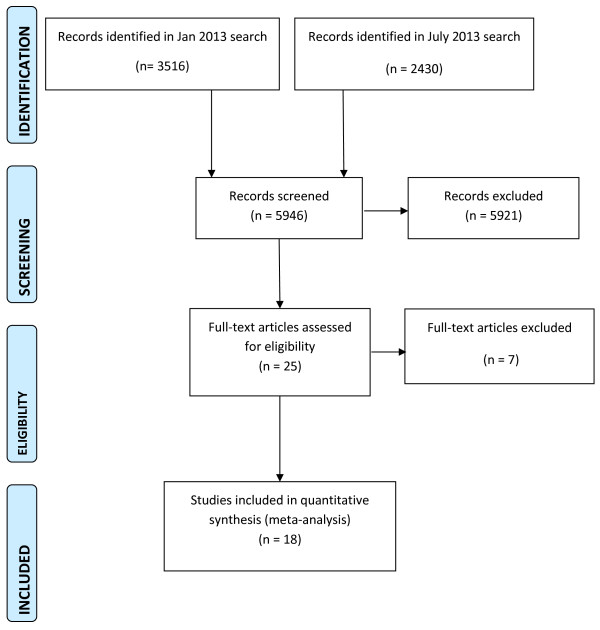
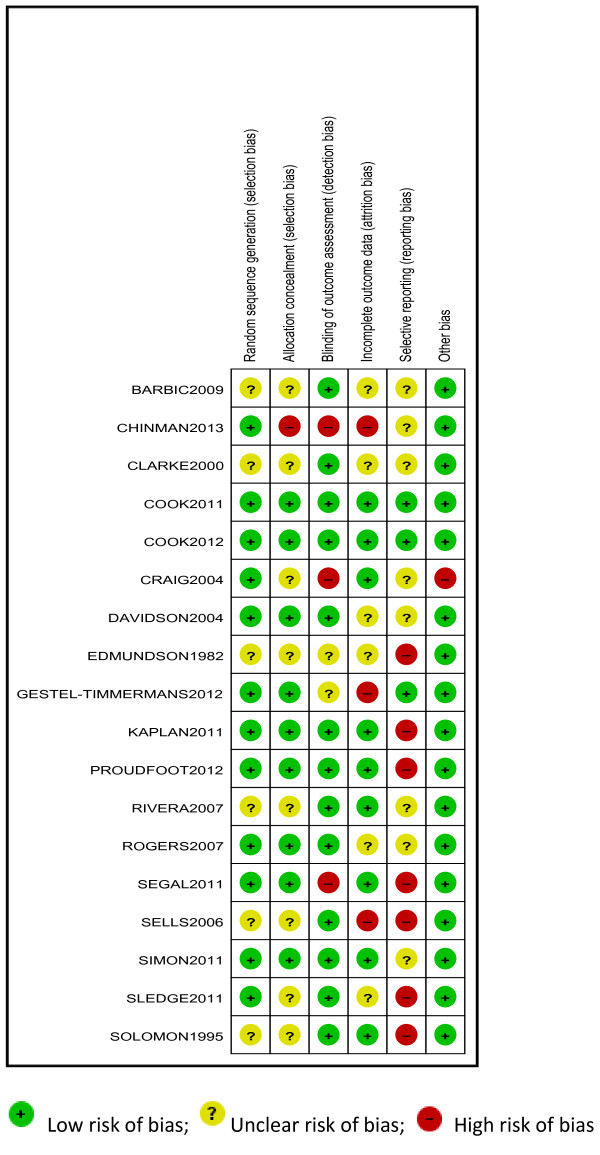
BACKGROUND: Little is known about whether peer support improves outcomes for people with severe mental illness. METHOD: A systematic review and meta-analysis was conducted. Cochrane CENTRAL Register, Medline, Embase, PsycINFO, and CINAHL were searched to July 2013 without restriction by publication status. Randomised trials of non-residential peer support interventions were included. Trial interventions were categorised and analysed separately as: mutual peer support, peer support services, or peer delivered mental health services. Meta-analyses were performed where possible, and studies were assessed for bias and the quality of evidence described. RESULTS: Eighteen trials including 5597 participants were included. These comprised four trials of mutual support programmes, eleven trials of peer support services, and three trials of peer-delivered services. There was substantial variation between trials in participants' characteristics and programme content. Outcomes were incompletely reported; there was high risk of bias. From small numbers of studies in the analyses it was possible to conduct, there was little or no evidence that peer support was associated with positive effects on hospitalisation, overall symptoms or satisfaction with services. There was some evidence that peer support was associated with positive effects on measures of hope, recovery and empowerment at and beyond the end of the intervention, although this was not consistent within or across different types of peer support. CONCLUSIONS: Despite the promotion and uptake of peer support internationally, there is little evidence from current trials about the effects of peer support for people with severe mental illness. Although there are few positive findings, this review has important implications for policy and practice: current evidence does not support recommendations or mandatory requirements from policy makers for mental health services to provide peer support programmes. Further peer support programmes should be implemented within the context of high quality research projects wherever possible. Deficiencies in the conduct and reporting of existing trials exemplify difficulties in the evaluation of complex interventions.
Overview
The claims and statistics of this paper haven’t been checked yet.
Free: it reads the open-access text and checks the first 5 claims that cite a source we can check. Create a free account to check every claim.
Integrity signals
Registry
Cites
Statistics
Figures
Verification
Claims the paper makes
The claims and statistics of this paper haven’t been checked yet.
Free: it reads the open-access text and checks the first 5 claims that cite a source we can check. Create a free account to check every claim.
Claims other papers make about this one
Each is checked against this paper’s own text: does it say what the citing paper says it does?
The source backs part of the claim, not all of it — or backs it for a different population, condition or comparison.
In the citing paper
“Reviews of peer interventions for persons with serious mental illnesses, usually incorporating a small but significant number of individuals with BD, have demonstrated modest evidence from RCTs and other controlled studies suggesting that there are important improvements in self‐efficacy and reduction in self‐stigma.106, 107, 108, 109”
From Canadian Network for Mood and Anxiety Treatments ( CANMAT ) and International Society for Bipolar Disorders ( ISBD ) 2018 guidelines for the management of patients with bipolar disorder (2018) · cites this paper as [106]
Experimental — accuracy not yet measuredThe source backs part of the claim, not all of it — or backs it for a different population, condition or comparison.
In the citing paper
“Studies have reported the benefits of peer-led intervention programs in various settings, including prisons.52, 56–58”
From Psychosocial Interventions for Prisoners with Mental and Substance Use Disorders: A Systematic Review (2022) · cites this paper as [58]
Experimental — accuracy not yet measured
Self-check
Percentages, sums and reported differences re-computed from the paper’s own numbers.
The self-check needs the paper’s full text.
Citations
Cites
The Cochrane Collaboration's tool for assessing risk of bias in randomised trials
Higgins, J. P. T., Altman, D. G., Gotzsche, P. C., Juni, P., Moher, D., Oxman, A. D., Savovic, J., Schulz, K. F., Weeks, L., Sterne, J. A. C., et al. (2011) · BMJ · doi:10.1136/bmj.d5928 · Cited by 33,817
Kytle, J., & Bandura, A. (1978) · Contemporary Sociology · doi:10.2307/2065952 · Cited by 25,422
Dermyshi, E., Wang, Y., Yan, C., Hong, W., Qiu, G., Gong, X., & Zhang, T. (2017) · Neonatology · doi:10.1159/000454668 · Cited by 24,451
A theory of social comparison processes
Festinger, L. (1954) · Human Relations · doi:10.1177/001872675400700202 · Cited by 20,926 · cited 1×
“This is consistent with psychological theories of change: peers’ social proximity to the people they are supporting may enhance their value as pro-social models [4] and promote motivation to achieve recovery by providing an upward social comparison [5].”
BackgroundCONSORT 2010 Statement: updated guidelines for reporting parallel group randomised trials
the CONSORT Group, Schulz, K. F., Altman, D. G., & Moher, D. (2010) · BMC Medicine · doi:10.1186/1741-7015-8-18 · Cited by 13,371
Grading quality of evidence and strength of recommendations
(2004) · BMJ · doi:10.1136/bmj.328.7454.1490 · Cited by 8,477 · cited 2×
“Meta-analysis was conducted using RevMan and a summary of results was prepared using the GRADE system [26], which is a structured assessment of confidence in the evidence for individual outcomes attending: threats to internal validity, inconsistency, indirectness, imprecision, and reporting bias.”
BackgroundMethodLeamy, M., Bird, V., Boutillier, C. L., Williams, J., & Slade, M. (2011) · British Journal of Psychiatry · doi:10.1192/bjp.bp.110.083733 · Cited by 3,038 · cited 1×
“selfrated recovery, hope and empowerment [53].”
Evaluating non-randomised intervention studies
Deeks, J., Dinnes, J., D'Amico, R., Sowden, A., Sakarovitch, C., Song, F., Petticrew, M., & Altman, D. (2003) · Health Technology Assessment · doi:10.3310/hta7270 · Cited by 2,907 · cited 1×
“In line with best practice guidelines for systematic reviews [54], we have not sought to supplement existing randomised trial evidence by including non-randomised trials in our review [55].”
Process evaluation in randomised controlled trials of complex interventions
Oakley, A., Strange, V., Bonell, C., Allen, E., & Stephenson, J. (2006) · BMJ · doi:10.1136/bmj.332.7538.413 · Cited by 1,247
A review of the literature on peer support in mental health services
Repper, J., & Carter, T. (2011) · Journal of Mental Health · doi:10.3109/09638237.2011.583947 · Cited by 1,103 · cited 3×
“However, they often accentuate positive findings from poor quality evidence, highlighting “limited but promising evidence,” [20] the “potential to drive through recovery-focused changes in services,” [21] and the possibility for peer-provided mental health services “without detrimental effect” [24] or “with no evidenc…”
Background
Research works printed but not linked: 10
- Mead S Defining Peer Support 2003 Web resource: http://www.intentionalpeersupport.org/documents/DefiningPeerSupport.pdf
- Halvorson A Whitter M Approaches to Recovery-Oriented Systems of Care at the State and Local Levels: Three Case Studies 2009 Rockville, MD: Center for Substance Abuse Treatment, Substance Abuse and Mental Health Services Administration
- The Royal College of Psychiatrists Social Inclusion Scoping Group Mental Health and Social Inclusion: Making Psychiatry and Mental Health Services Fit for the 21st Century 2009 London: Royal College of Psychiatrists
- Scottish Recovery Network The role and potential development of peer support services 2005 Glasgow: Scottish Recovery Network
- Minnesota Department of Human Services “Certified peer support services” 2013 Web Resource: http://www.mhcsn.org/certified-peer-specialist/
- Repper J Peer support workers: theory and practice 2013 London: Centre for Mental Health
- NCCMH Schizophrenia: Core Interventions in the Treatment and Management of Schizophrenia in Adults in Primary and Secondary Care. Updated ed Leicester and London: The British Psychological Society and the Royal College of Psychiatrists In press 20704054
- Reeves BD Higgins J Wells J Wells G Higgins J, Green S Chapter 13: including non-randomised studies Cochrane Handbook for Systematic reviews of Interventions v.5.1.0 2011 Cochrane Collaboration Web resource: http://www.cochrane-handbook.org
- New Freedom Commission on Mental Health Achieving the promise: transforming mental health care in America. Final report 2003 MD: Department of Health and Human Services DHHS pub no SMA-03-3832
- Perkins R Repper J Rinaldi M Brown H Recovery Colleges: Implementing Recovery through Organisational Change (ImROC) briefing paper 2012 London: Centre for Mental Health
Cited by
Yatham, L. N., Kennedy, S. H., Parikh, S. V., Schaffer, A., Bond, D. J., Frey, B. N., Sharma, V., Goldstein, B. I., Rej, S., Beaulieu, S., et al. (2018) · Bipolar Disorders · doi:10.1111/bdi.12609 · Cited by 1,852
“Reviews of peer interventions for persons with serious mental illness es, usually incorporating a small but significant number of individuals with bipolar disorder, have demonstrated modest evidence from RCTs and other controlled studies suggesting that there are important improvements in self-efficacy and reduction i…”
Castro, E. M., Van Regenmortel, T., Vanhaecht, K., Sermeus, W., & Van Hecke, A. (2016) · Patient Education and Counseling · doi:10.1016/j.pec.2016.07.026 · Cited by 952
Peer Support in Mental Health: Literature Review
Shalaby, R. A. H., & Agyapong, V. I. O. (2020) · JMIR Mental Health · doi:10.2196/15572 · Cited by 522
Investing in the Health and Well-Being of Young Adults
Stroud, C., Walker, L. R., Davis, M., & Irwin, C. E. (2015) · Journal of Adolescent Health · doi:10.1016/j.jadohealth.2014.11.012 · Cited by 435
Stubbs, B., Firth, J., Berry, A., Schuch, F. B., Rosenbaum, S., Gaughran, F., Veronesse, N., Williams, J., Craig, T., Yung, A. R., et al. (2016) · Schizophrenia Research · doi:10.1016/j.schres.2016.05.017 · Cited by 379
Mann, F., Bone, J. K., Lloyd-Evans, B., Frerichs, J., Pinfold, V., Ma, R., Wang, J., & Johnson, S. (2017) · Social Psychiatry and Psychiatric Epidemiology · doi:10.1007/s00127-017-1392-y · Cited by 346
“illness, and suggested that new interventions are best rolled out in the context of well-designed research studies [64].”
BackgroundSelf-citationWhite, S., Foster, R., Marks, J., Morshead, R., Goldsmith, L., Barlow, S., Sin, J., & Gillard, S. (2020) · BMC Psychiatry · doi:10.1186/s12888-020-02923-3 · Cited by 334
“Interventions While descriptions of peer support interventions remains thin in some studies published since the last review [8], a number of more recent studies do provide detailed descriptions of peer worker roles and what constitutes peer support.”
BackgroundMethodResultInfluentialvan Weeghel, J., van Zelst, C., Boertien, D., & Hasson-Ohayon, I. (2019) · Psychiatric Rehabilitation Journal · doi:10.1037/prj0000356 · Cited by 314
Lam, R. W., McIntosh, D., Wang, J., Enns, M. W., Kolivakis, T., Michalak, E. E., Sareen, J., Song, W.-Y., Kennedy, S. H., MacQueen, G. M., et al. (2016) · The Canadian Journal of Psychiatry · doi:10.1177/0706743716659416 · Cited by 288
“Peer-support service delivery models are seeing broad uptake and may offer promise, but further research is required to fully evaluate effectiveness.(87)”
BackgroundIbrahim, N., Thompson, D., Nixdorf, R., Kalha, J., Mpango, R., Moran, G., Mueller-Stierlin, A., Ryan, G., Mahlke, C., Shamba, D., et al. (2020) · Social Psychiatry and Psychiatric Epidemiology · doi:10.1007/s00127-019-01739-1 · Cited by 251
The mechanisms underpinning peer support: a literature review
Watson, E. (2019) · Journal of Mental Health · doi:10.1080/09638237.2017.1417559 · Cited by 233
“…argued that in order to understand the unique contribution that peer support can offer, there needs to be a clearer understanding of the mechanisms that underpin peer support, enabling research to be tailored around examining these (Chinman et al., 2017; Lloyd-Evans et al., 2014; Rogers, 2017).”
BackgroundAn update on the growing evidence base for peer support
Bellamy, C., Schmutte, T., & Davidson, L. (2017) · Mental Health and Social Inclusion · doi:10.1108/mhsi-03-2017-0014 · Cited by 220
Men’s Experiences of Mental Illness Stigma Across the Lifespan: A Scoping Review
McKenzie, S., Oliffe, J. L., Black, A., & Collings, S. C. (2022) · American Journal of Men s Health · doi:10.1177/15579883221074789 · Cited by 215
“Formalized peer support services, that is men with mental illness being supported by other people with similar illness experiences, has been proposed as a way to promote recovery and is increasingly found in voluntary settings and as part of secondary mental health care (Lloyd-Evans et al., 2014).”
BackgroundVandewalle, J., Debyser, B., Beeckman, D., Vandecasteele, T., Van Hecke, A., & Verhaeghe, S. (2016) · International Journal of Nursing Studies · doi:10.1016/j.ijnurstu.2016.04.018 · Cited by 214
A review of social participation interventions for people with mental health problems
Webber, M., & Fendt-Newlin, M. (2017) · Social Psychiatry and Psychiatric Epidemiology · doi:10.1007/s00127-017-1372-2 · Cited by 207
“Many of the 18 trials included in a systematic review of peer support interventions [72] were at high risk of bias and did not include social network outcomes.”
BackgroundLyons, N., Cooper, C., & Lloyd-Evans, B. (2021) · BMC Psychiatry · doi:10.1186/s12888-021-03321-z · Cited by 197
Self-citationJohnson, S., Lamb, D., Marston, L., Osborn, D., Mason, O., Henderson, C., Ambler, G., Milton, A., Davidson, M., Christoforou, M., et al. (2018) · The Lancet · doi:10.1016/s0140-6736(18)31470-3 · Cited by 195
Self-citationJohnson, S., Dalton‐Locke, C., Baker, J. A., Hanlon, C., Salisbury, T. T., Fossey, M. J., Newbigging, K., Carr, S., Hensel, J. M., Carrà, G., et al. (2022) · World Psychiatry · doi:10.1002/wps.20962 · Cited by 196
Self-citationSmit, D., Miguel, C., Vrijsen, J. N., Groeneweg, B. F., Spijker, J., & Cuijpers, P. J. (2022) · Psychological Medicine · doi:10.1017/s0033291722002422 · Cited by 195
Berghs, M., Atkin, K., Graham, H., Hatton, C., & Thomas, C. (2016) · Public Health Research · doi:10.3310/phr04080 · Cited by 186
Cooper, R. E., Saunders, K. R. K., Greenburgh, A., Shah, P., Appleton, R., Machin, K., Jeynes, T., Barnett, P., Allan, S. M., Griffiths, J., et al. (2024) · BMC Medicine · doi:10.1186/s12916-024-03260-y · Cited by 181
“…review of group peer support for adults with any mental health condition continued to find no effect at 3–6 months follow-up [35], while the other involving adults with SMI reported improvements in depression and anxiety at 6 months follow-up, despite reporting no effect at post-intervention [22].”
BackgroundInfluentialSelf-citationUsing Peer Support to Strengthen Mental Health During the COVID-19 Pandemic: A Review
Suresh, R., Alam, A., & Karkossa, Z. (2021) · Frontiers in Psychiatry · doi:10.3389/fpsyt.2021.714181 · Cited by 116
“Altogether, they state that current evidence is promising but does not support the requirement of mental health services to provide peer support programmes (86).”
BackgroundUses of strength-based interventions for people with serious mental illness: A critical review
Tse, S., Tsoi, E. W., Hamilton, B., O’Hagan, M., Shepherd, G., Slade, M., Whitley, R., & Petrakis, M. (2016) · International Journal of Social Psychiatry · doi:10.1177/0020764015623970 · Cited by 178
“Peer support is also embedded in recovery philosophy and shares similar origins with the consumer or survivor movement (for recent reviews on effectiveness of peer support services, see Chinman et al., 2014; Lloyd-Evans et al., 2014; Trachtenberg, Parsonage, Shepherd, & Boardman, 2013).”
BackgroundExperts by Experience: Peer Support and its Use with the Homeless
Barker, S. L., & Maguire, N. (2017) · Community Mental Health Journal · doi:10.1007/s10597-017-0102-2 · Cited by 177
“However, a recent review suggests peers have only a minor positive impact on those with severe mental illness (Lloyd-Evans et al. 2014).”
BackgroundBerry, N., Lobban, F., & Bucci, S. (2019) · BMC Psychiatry · doi:10.1186/s12888-018-1979-1 · Cited by 170
“Peer support can provide hope for recovery and empowerment [56] and is recommended by NICE [1, 2].”
BackgroundFortuna, K. L., Solomon, P., & Rivera, J. (2022) · Psychiatric Quarterly · doi:10.1007/s11126-022-09971-w · Cited by 167
Individual Peer Support: A Qualitative Study of Mechanisms of Its Effectiveness
Gidugu, V., Rogers, E. S., Harrington, S., Maru, M., Johnson, G., Cohee, J., & Hinkel, J. (2014) · Community Mental Health Journal · doi:10.1007/s10597-014-9801-0 · Cited by 167
“Study findings have been largely very mixed, depending on the authors (Rogers et al. 2009; Chinman et al. 2014; Lloyd-Evans et al. 2014; Pitt et al. 2013).”
BackgroundPeer support in mental health services: where is the research taking us, and do we want to go there?
Gillard, S. (2019) · Journal of Mental Health · doi:10.1080/09638237.2019.1608935 · Cited by 166
“…we normally expect the ‘does it work’ type question to be answered through randomized controlled trials (RCTs) of effectiveness, with meta-analyses of existing RCTs suggesting that evidence for the effectiveness of peer support is equivocal at best (Pitt et al., 2013; Lloyd-Evans et al., 2014).”
BackgroundGillard, S., Foster, R., Gibson, S., Goldsmith, L., Marks, J., & White, S. (2017) · Mental Health and Social Inclusion · doi:10.1108/mhsi-03-2017-0016 · Cited by 164
“The reviews cited above also note a lack of reporting of what peers do, how that is distinctive from what other mental health workers do and how that might bring about change (Pitt et al., 2013; Lloyd-Evans et al., 2014).”
BackgroundThe peer support workforce: Results of a national survey.
Cronise, R., Teixeira, C., Rogers, E. S., & Harrington, S. (2016) · Psychiatric Rehabilitation Journal · doi:10.1037/prj0000222 · Cited by 162
Burke, E., Pyle, M., Machin, K., Varese, F., & Morrison, A. P. (2019) · Stigma and Health · doi:10.1037/sah0000148 · Cited by 161
Mental health service provision in low and middle-income countries: recent developments
Weinmann, S., & Koesters, M. (2016) · Current Opinion in Psychiatry · doi:10.1097/yco.0000000000000256 · Cited by 143
“Although there is evidence from studies that these interventions may, for example, reduce inpatient service use or lead to better engagement with care [44], the latest systematic review of RCTs concluded that there is no evidence for effectiveness of peer support [45].”
BackgroundPaton, F., Wright, K., Ayre, N., Dare, C., Johnson, S., Lloyd-Evans, B., Simpson, A., Webber, M., & Meader, N. (2016) · Health Technology Assessment · doi:10.3310/hta20030 · Cited by 118
Self-citationDiminishing the self-stigma of mental illness by coming out proud
Corrigan, P. W., Larson, J. E., Michaels, P. J., Buchholz, B. A., Rossi, R. D., Fontecchio, M. J., Castro, D., Gause, M., Krzyżanowski, R., & Rüsch, N. (2015) · Psychiatry Research · doi:10.1016/j.psychres.2015.07.053 · Cited by 149
“over time (Lloyd-Evans et al., 2014).”
BackgroundMahlke, C. I., Priebe, S., Heumann, K., Daubmann, A., Wegscheider, K., & Bock, T. (2017) · European Psychiatry · doi:10.1016/j.eurpsy.2016.12.007 · Cited by 148
Emerging Roles for Peer Providers in Mental Health and Substance Use Disorders
Chapman, S. A., Blash, L. K., Mayer, K., & Spetz, J. (2018) · American Journal of Preventive Medicine · doi:10.1016/j.amepre.2018.02.019 · Cited by 145
Peer Support Services for Bereaved Survivors: A Systematic Review
Bartone, P. T., Bartone, J., Violanti, J. M., & Gileno, Z. M. (2017) · OMEGA - Journal of Death and Dying · doi:10.1177/0030222817728204 · Cited by 147
“A similar review of studies on patients with severe mental illness found modest positive effects on hope and recovery, but no benefits in terms of hospitalizations or symptoms (Lloyd-Evans et al., 2014).”
BackgroundRayland, A., & Andrews, J. A. (2023) · JMIR Mental Health · doi:10.2196/41855 · Cited by 143
“It is as yet unclear whether models like these transfer to online peer support, and there is a gap in research in this area [14,59,60].”
Mancini, M. A. (2017) · Community Mental Health Journal · doi:10.1007/s10597-017-0145-4 · Cited by 142
“A number of studies and systemic reviews have found that the effectiveness of peer support to be equivalent to non-peer providers on a range of psychiatric outcomes (Chinman et al. 2000, 2014; Davidson et al. 2006; Fuhr et al. 2014; Lloyd-Evans et al. 2014; Pitt et al. 2013; Rivera et al. 2007; Rogers et al. 2009; Sch…”
BackgroundKirsch, D. J., Pinder-Amaker, S. L., Morse, C. C., Ellison, M. L., Doerfler, L. A., & Riba, M. (2014) · Current Psychiatry Reports · doi:10.1007/s11920-014-0525-1 · Cited by 138
King, A. J., & Simmons, M. B. (2018) · Psychiatric Services · doi:10.1176/appi.ps.201700564 · Cited by 137
Simmons, M. B., Cartner, S., MacDonald, R., Whitson, S., Bailey, A. P., & Brown, E. (2023) · BMC Psychiatry · doi:10.1186/s12888-023-04578-2 · Cited by 129
“Regardless, peer support interventions appear to be effective at improving hope, empowerment, increasing patient activation and self-efficacy [15, 16].”
BackgroundSelf-citationLived experience peer support programs for suicide prevention: a systematic scoping review
Schlichthorst, M., Ozols, I., Reifels, L., & Morgan, A. (2020) · International Journal of Mental Health Systems · doi:10.1186/s13033-020-00396-1 · Cited by 113
“While there is evidence for the effectiveness of peer support programs for people with severe mental illness and also for people bereaved by suicide [14, 18], only little and mostly anecdotal data has been published on peer-led support programs with a focus on reducing suicidality.”
BackgroundPeer support for people with schizophrenia or other serious mental illness
Chien, W. T., Clifton, A. V., Zhao, S., & Lui, S. (2019) · Cochrane Database of Systematic Reviews · doi:10.1002/14651858.cd010880.pub2 · Cited by 96
Degnan, A., Berry, K., Humphrey, C., & Bucci, S. (2021) · Clinical Psychology Review · doi:10.1016/j.cpr.2021.102003 · Cited by 121
Peer support in critical care: A systematic review.
Haines, K. J., Beesley, S. J., Hopkins, R. O., McPeake, J., Quasim, T., Ritchie, K., & Iwashyna, T. J. (2018) · Critical Care Medicine · doi:10.1097/ccm.0000000000003293 · Cited by 117
Liminality in the occupational identity of mental health peer support workers: A qualitative study
Simpson, A., Oster, C., & Muir‐Cochrane, E. (2017) · International Journal of Mental Health Nursing · doi:10.1111/inm.12351 · Cited by 108
“(Faulkner & Basset 2012; Walker & Bryant 2013), although some suggest caution in interpreting benefits from predominantly weak evidence (Lloyd-Evans et al. 2014).”
BackgroundSinclair, A., Gillieatt, S. J., Fernandes, C., & Mahboub, L. (2023) · Qualitative Health Research · doi:10.1177/10497323231163735 · Cited by 107
“…attainment (Fan et al., 2018), ‘self-management of difficulties’, ‘social functioning, and ‘improved relations with providers’ (Chinman et al., 2014; Lloyd-Evans et al., 2014; Pitt et al., 2013; Smith et al., 2017; White et al., 2020), suggest a widening of outcomes, these were produced as…”
BackgroundMirbahaeddin, E., & Chreim, S. (2022) · Administration and Policy in Mental Health and Mental Health Services Research · doi:10.1007/s10488-021-01186-8 · Cited by 100
Peer‐based interventions targeting suicide prevention: A scoping review
Bowersox, N. W., Jagusch, J., Garlick, J., Chen, J. I., & Pfeiffer, P. N. (2021) · American Journal of Community Psychology · doi:10.1002/ajcp.12510 · Cited by 91
Biagianti, B., Quraishi, S. H., & Schlosser, D. A. (2018) · Psychiatric Services · doi:10.1176/appi.ps.201700283 · Cited by 90
“Although the value of peer support groups is acknowledged (13), such groups are not yet offered as standard care for individualswith psychotic disorders (12).”
BackgroundChinman, M., McInnes, D. K., Eisen, S. V., Ellison, M. L., Farkas, M. D., Armstrong, M., & Resnick, S. G. (2017) · Psychiatric Services · doi:10.1176/appi.ps.201700054 · Cited by 90
“Also, two recent meta-analyses (10,11) found very little impact of peer specialists.”
BackgroundUnintended consequences of institutionalizing peer support work in mental healthcare
Adams, W. E. (2020) · Social Science & Medicine · doi:10.1016/j.socscimed.2020.113249 · Cited by 88
Trevillion, K., Stuart, R., Ocloo, J. E., Broeckelmann, E., Jeffreys, S., Jeynes, T., Allen, D., Russell, J., Billings, J., Crawford, M., et al. (2022) · BMC Psychiatry · doi:10.1186/s12888-021-03605-4 · Cited by 88
“Peer support approaches are increasing within mental health care settings but there is an absence of high-quality evaluations on the effectiveness of these models in improving service user outcomes (37) and warnings from some commentators that the formalisation of peer roles may threaten the equality and independence…”
BackgroundSelf-citationThomas, E. C., Despeaux, K. E., Drapalski, A. L., & Bennett, M. (2018) · Psychiatric Services · doi:10.1176/appi.ps.201700058 · Cited by 65
Strand, M., Eng, L. S., & Gammon, D. (2020) · International Journal of Mental Health Systems · doi:10.1186/s13033-020-00370-x · Cited by 86
“However, the complexity of researching the diverse types and contexts of peer support, whether provided individually or in groups, has hampered efforts to amass conclusive evidence of its effectiveness [16, 19].”
BackgroundEffective Peer Employment Within Multidisciplinary Organizations: Model for Best Practice
Byrne, L., Roennfeldt, H., Wolf, J., Linfoot, A., Foglesong, D., Davidson, L., & Bellamy, C. D. (2021) · Administration and Policy in Mental Health and Mental Health Services Research · doi:10.1007/s10488-021-01162-2 · Cited by 86
Personal recovery within positive psychiatry
Bejerholm, U., & Roe, D. (2018) · Nordic Journal of Psychiatry · doi:10.1080/08039488.2018.1492015 · Cited by 84
“However, more rigorous research is this area is needed [52,57].”
BackgroundEvidence-Based Psychotherapies for Bipolar Disorder
Novick, D. M., & Swartz, H. A. (2019) · FOCUS The Journal of Lifelong Learning in Psychiatry · doi:10.1176/appi.focus.20190004 · Cited by 83
“Toclarify,thereare reviewsandmeta-analysesofotherRCTsofpeersupport(73,74), but these interventions are for severe mental illness in general and not necessarily bipolar speci fi c.”
Abelson, S., Lipson, S. K., & Eisenberg, D. (2022) · Higher education · doi:10.1007/978-3-030-76660-3_6 · Cited by 83
Tinland, A., Loubière, S., Mougeot, F., Jouet, E., Pontier, M., Baumstarck, K., Loundou, A., Franck, N., Lançon, C., Auquier, P., et al. (2022) · JAMA Psychiatry · doi:10.1001/jamapsychiatry.2022.1627 · Cited by 82
“8%) were included during a hospitalization, with no significant differences in median (IQR) number of inpatient days between inclusion and discharge (34 [7-76] days vs 36 [11-67] days; P = .”
BackgroundParticipation in peer support services and outcomes related to recovery.
Vayshenker, B., Mulay, A. L., Gonzales, L., West, M. L., Brown, I. S., & Yanos, P. T. (2016) · Psychiatric Rehabilitation Journal · doi:10.1037/prj0000178 · Cited by 82
“Peer support has taken on many forms, including stand-alone self-help agencies exclusively operated and staffed by people with lived experience, peers embedded in traditional systems of care, and mutual support groups facilitated by peers (Lloyd-Evans et al., 2014).”
BackgroundÅkerblom, K. B., & Ness, O. (2022) · Administration and Policy in Mental Health and Mental Health Services Research · doi:10.1007/s10488-022-01242-x · Cited by 79
“However, the findings are mixed (Lloyd-Evans et al., 2014); Pitt et al.”
BackgroundCreating a Supportive Environment: Peer Support Groups for Psychotic Disorders
Castelein, S., Bruggeman, R., Davidson, L., & Gaag, M. V. D. (2015) · Schizophrenia Bulletin · doi:10.1093/schbul/sbv113 · Cited by 63
Spotlight on the Challenges of Depression following Retirement and Opportunities for Interventions
Dang, L., Ananthasubramaniam, A., & Mezuk, B. R. (2022) · Clinical Interventions in Aging · doi:10.2147/cia.s336301 · Cited by 81
“Peer Support Programs Beyond volunteering, engagement with peers (ie, other older adults or people who are also experiencing poor mental health) can support management and recovery from depression and can be used to counter social isolation.(158,159) Peer support interventions have been shown to reduce depressive symp…”
ResultPalmer, V. J., Chondros, P., Piper, D., Callander, R., Weavell, W., Godbee, K., Potiriadis, M., Richard, L., Densely, K., Herrman, H., et al. (2015) · BMJ Open · doi:10.1136/bmjopen-2014-006688 · Cited by 71
Knowledge and expertise in care practices: the role of the peer worker in mental health teams
Oborn, E., Barrett, M. I., Gibson, S., & Gillard, S. (2019) · Sociology of Health & Illness · doi:10.1111/1467-9566.12944 · Cited by 74
Piat, M., Wainwright, M., Sofouli, E., Vachon, B., Deslauriers, T., Préfontaine, C., & Frati, F. (2021) · Systematic Reviews · doi:10.1186/s13643-021-01646-0 · Cited by 75
Barr, K. R., Townsend, M. L., & Grenyer, B. F. S. (2020) · Borderline Personality Disorder and Emotion Dysregulation · doi:10.1186/s40479-020-00135-5 · Cited by 73
Boevink, W., Kroon, H., van Vugt, M., Delespaul, P., & van Os, J. (2016) · Psychosis · doi:10.1080/17522439.2016.1172335 · Cited by 66
“In a recent meta-analysis, only three studies reported on interventions that lasted more than one year (Lloyd-Evans et al., 2014).”
BackgroundResultEhrlich, C., Slattery, M., Vilic, G., Chester, P., & Crompton, D. (2019) · Journal of Interprofessional Care · doi:10.1080/13561820.2019.1612334 · Cited by 73
“Other studies have been less conclusive about the success and viability of PSWs in the mental health workforce (Lloyd-Evans et al., 2014; MacLellan, Surey, Abubakar, & Stagg, 2015; Siskind, Harris, Pirkis, & Whiteford, 2012).”
BackgroundEgmose, C. H., Poulsen, C. H., Hjorthøj, C. R., Mundy, S. S., Hellström, L. C., Nielsen, M. N., Korsbek, L., Rasmussen, K. S., & Eplov, L. F. (2023) · Psychiatric Services · doi:10.1176/appi.ps.202100138 · Cited by 71
“…ndings that peer support has small positive effects on personal recovery and little or no effect on clinical recovery in poor-to-fair-quality trials with high heterogeneity are consistent with previous fi ndings of reviews evaluating peer support for individuals with severe mental illness (15 – 17).”
BackgroundResultHistorical and Multidisciplinary Perspectives on Hope
van den Heuvel, S. C. (2020) · Springer eBooks · doi:10.1007/978-3-030-46489-9 · Cited by 68
Early stages of development of a peer specialist fidelity measure.
Chinman, M., McCarthy, S., Mitchell-Miland, C., Daniels, K., Youk, A., & Edelen, M. (2016) · Psychiatric Rehabilitation Journal · doi:10.1037/prj0000209 · Cited by 60
“More narrowly defined meta-analyses that only include randomized trials have found less impact (Fuhr et al., 2014; Lloyd-Evans et al., 2014; Pitt et al., 2013).”
BackgroundA community-based peer support service for persons with severe mental illness in China
Fan, Y., Ma, N., Ma, L., Xu, W., Lamberti, J. S., & Caine, E. D. (2018) · BMC Psychiatry · doi:10.1186/s12888-018-1763-2 · Cited by 67
Otte, I., Werning, A., Nossek, A., Vollmann, J., Juckel, G., & Gather, J. (2020) · International Journal of Social Psychiatry · doi:10.1177/0020764020904764 · Cited by 67
“Randomized controlled trials, meta-analyses and systematic reviews of quantitative-empirical studies focus mainly on the outcomes of peer support (Bellamy et al., 2017; Chinman et al., 2014; Fuhr et al., 2014; King & Simmons, 2018; Lloyd-Evans et al., 2014; Mahlke et al., 2017; Pitt et al., 2013).”
Smit, D., Vrijsen, J. N., Groeneweg, B. F., Vellinga‐Dings, A., Peelen, J., & Spijker, J. (2021) · Journal of Medical Internet Research · doi:10.2196/25917 · Cited by 66
“In light of the promising evidence for depression ISGs [3,11,63,64], we evaluated the relevance of Depression Connect, a newly launched online peer support community based on interviews with a selection of its users.”
Salzer, M. S., Rogers, J., Salandra, N., O'Callaghan, C., Fulton, F., Balletta, A. A., Pizziketti, K., & Brusilovskiy, E. (2016) · Psychiatric Rehabilitation Journal · doi:10.1037/prj0000220 · Cited by 59
Outcomes of a Peer Mentor Intervention for Persons With Recurrent Psychiatric Hospitalization
O’Connell, M. J., Sledge, W. H., Lawless, M. S., Sells, D., Costa, M. N., Wieland, M. E., & Davidson, L. (2018) · Psychiatric Services · doi:10.1176/appi.ps.201600478 · Cited by 65
Peer support for mental illness in India: an underutilised resource
Pathare, S., Kalha, J., & Krishnamoorthy, S. (2018) · Epidemiology and Psychiatric Sciences · doi:10.1017/s2045796018000161 · Cited by 64
“There are many types of peer support ranging from informal peer support groups, which are loosely structured at one end to a more professiona-lised form where peer support workers are employed by mental health services and work alongside other mental health professionals (Lloyd-Evans et al. 2014).”
Integrating Treatment for Co-Occurring Mental Health Conditions
Yule, A. (2019) · Alcohol Research: Current Reviews · doi:10.35946/arcr.v40.1.07 · Cited by 63
Gillard, S., Bremner, S. A., Patel, A., Goldsmith, L. P., Marks, J., Foster, R., Morshead, R., White, S. J., Gibson, S. L., Healey, A., et al. (2022) · The Lancet Psychiatry · doi:10.1016/s2215-0366(21)00398-9 · Cited by 63
“Considering the shortcomings of existing trials of peer support to date, 17,18 our trial has important strengths.”
Stubbs, B., Williams, J., Shannon, J., Gaughran, F., & Craig, T. (2016) · International Journal of Mental Health Nursing · doi:10.1111/inm.12256 · Cited by 64
Peer support – the what, why, who, how and now
Beales, A., & Wilson, J. (2015) · The Journal of Mental Health Training Education and Practice · doi:10.1108/jmhtep-03-2015-0013 · Cited by 61
Harnessing the potential of community-based participatory research approaches in bipolar disorder
Engagement, T. I. T. O. C., Michalak, E. E., CREST.BD, Jones, S. H., Lobban, F. A., Algorta, G. P., Barnes, S. J., Berk, L., Berk, M., Hole, R., et al. (2016) · International Journal of Bipolar Disorders · doi:10.1186/s40345-016-0045-5 · Cited by 61
Self-citationSkin in the game: The professionalization of lived experience roles in mental health
Roennfeldt, H., & Byrne, L. (2021) · International Journal of Mental Health Nursing · doi:10.1111/inm.12898 · Cited by 60
Tse, S. S.-K., Mak, W. W. S., Lo, I. W. K., Liu, L. L., Yuen, W. W. Y., Yau, S. S. W., Ho, K., Chan, S.-K., & Wong, S. H. (2017) · Psychiatry Research · doi:10.1016/j.psychres.2017.05.007 · Cited by 59
“…that peer support services are effective in raising service users’ levels of hope, empowerment, and quality of life, and connecting people with wider health services (for details, see the following three recent reviews: Cabassa et al., 2017; Chinman et al., 2014; Lloyd-Evans et al., 2014).”
InfluentialJones, N., Teague, G. B., Wolf, J., & Rosen, C. (2019) · Administration and Policy in Mental Health and Mental Health Services Research · doi:10.1007/s10488-019-00980-9 · Cited by 59
“It saves lives”: Peer support and resilience in transgender and gender diverse communities
Kia, H., Kenney, K., MacKinnon, K. R., Abramovich, A., Salway, T., Ferlatte, O., Knight, R., Charles, G., & Marshall, S. K. (2023) · SSM - Qualitative Research in Health · doi:10.1016/j.ssmqr.2023.100264 · Cited by 57
Yeo, G., Fortuna, K. L., Lansford, J. E., & Rudolph, K. D. (2025) · Epidemiology and Psychiatric Sciences · doi:10.1017/s2045796024000854 · Cited by 58
“Existing reviews and meta-analysesofdigitalpeersupportinterventionsinvolveindividualsalreadydiagnosedwithclinical conditions (Lloyd-Evans et al. , 2014; Patil et al. , 2018).”
Ojeda, V. D., Munson, M. R., Jones, N., Berliant, E., & Gilmer, T. (2020) · Administration and Policy in Mental Health and Mental Health Services Research · doi:10.1007/s10488-020-01073-8 · Cited by 56
Strategic Storytelling: An Exploration of the Professional Practices of Mental Health Peer Providers
Mancini, M. A. (2019) · Qualitative Health Research · doi:10.1177/1049732318821689 · Cited by 55
“…match the effectiveness of nonpeer mental health professionals across a range of psychiatric outcomes (Davidson et al., 2012; Davidson et al., 2006; Fuhr et al., 2014; Hamilton, Chinman, Cohen, Oberman, & Young, 2015; Lloyd-Evans et al., 2014; Pitt et al., 2013; Rivera, Sullivan, & Valenti, 2007).”
BackgroundWebber, M., Reidy, H., Ansari, D., Stevens, M., & Morris, D. (2014) · Health & Social Care in the Community · doi:10.1111/hsc.12135 · Cited by 55
Fendt-Newlin, M., Webber, M., Morris, D., & Howarth, S. (2015) · Social Work Research · doi:10.1093/swr/svv015 · Cited by 54
Treatments for Schizophrenia in Adults: A Systematic Review
McDonagh, M. S., Dana, T., Selph, S., Devine, E. B., Cantor, A. G., Bougatsos, C., Blazina, I., Grusing, S., Fu, R., Kopelovich, S. L., et al. (2017) · doi:10.23970/ahrqepccer198 · Cited by 54
Gamieldien, F., Galvaan, R., MYERS, B. J., Syed, Z., & Sorsdahl, K. R. (2021) · BMJ Open · doi:10.1136/bmjopen-2020-045005 · Cited by 54
Vandewalle, J., Debyser, B., Beeckman, D., Vandecasteele, T., Deproost, E., Hecke, A. V., & Verhaeghe, S. T. L. (2017) · International Journal of Mental Health Nursing · doi:10.1111/inm.12332 · Cited by 52
“Very much evolving”: a qualitative study of the views of psychiatrists about peer support workers
Collins, R., Firth, L., & Shakespeare, T. (2016) · Journal of Mental Health · doi:10.3109/09638237.2016.1167858 · Cited by 51
Vally, Z., & Abrahams, L. (2016) · International Journal for the Advancement of Counselling · doi:10.1007/s10447-016-9275-6 · Cited by 50
Qualitative study of peer workers within the ‘Partners in Recovery’ programme in regional Australia
Hurley, J., Cashin, A. J., Mills, J., Hutchinson, M., Kozlowski, D., & GRAHAM, I. W. (2016) · International Journal of Mental Health Nursing · doi:10.1111/inm.12308 · Cited by 50
Metadata
- Authors
- Lloyd-Evans, B., Mayo-Wilson, E., Harrison, B., Istead, H., Brown, E., Pilling, S., Johnson, S., & Kendall, T.
- Affiliations
- University College London (GB)
- University of the West of England (GB)
- Sheffield Health and Social Care NHS Foundation Trust (GB)
- Venue
- BMC Psychiatry
- Published
- 2014-02-14
- Volume
- 14
- Issue
- 1
- Pages
- 39-39
- ISSN
- 1471-244X (ISSN-L)
- PMC
- PMC3933205
- OpenAlex
- W1989263398
- Cited by
- 558
- References
- 62
- Citations by year
- 2026: 20 · 2025: 41 · 2024: 47 · 2023: 64 · 2022: 64 · 2021: 67 · 2020: 60 · 2019: 53 · 2018: 40 · 2017: 39 · 2016: 36 · 2015: 14 · 2014: 13
- FWCI
- 5.75
- Type
- journal article
- Language
- en
- Open access
- gold
- doi.org
- Licence
- Locations
- BMC Psychiatry (publishedVersion, cc-by)
- Europe PMC (PubMed Central) (publishedVersion, cc-by)
- PubMed Central (publishedVersion, cc-by)
- PubMed (publishedVersion)
- Minerva Access (University of Melbourne) (submittedVersion, cc-by)
- UCL Discovery (University College London) (submittedVersion)
- Figshare (submittedVersion, cc-by)
- Funders
- National Institute for Health and Care Research (RP-PG-0109-10078)
- Programme Grants for Applied Research (RP-PG-0109-10078)
- Topics
- Health Sciences › Health Professions › General Health Professions › Mental Health and Patient Involvement
- Social Sciences › Psychology › Clinical Psychology › Psychiatric care and mental health services
- Health Sciences › Medicine › Psychiatry and Mental health › Mental Health Treatment and Access
- Keywords
- peer support, severe mental illness, peer support services, hospitalization, symptom severity, service satisfaction, hope, recovery, empowerment, complex interventions, trial quality
- MeSH terms
- Adult, Mental Disorders, Counseling, Female, Humans, Male, Mental Health Services, Peer Group, Social Support, Randomized Controlled Trials as Topic
About these checks
Registry, retraction, Cites and statistics results are computed, not judged, with one exception: a printed reference that no index lists is read once by a model before it counts as a citation error. Claims are extracted by a model and kept only when their quote appears verbatim in the text; each cited source is then checked, with a model’s help, for whether it says what the claim relies on. Those verdicts can be wrong — read the claim’s quote and the cited source before relying on one.
Statistics and arithmetic are recomputed, not judged.
Confidence bands are shown only for fields calibrated on our annotated test set. None is calibrated yet, so no band is shown.
What counts as a claim ›How we measure confidence ›How we check this ›
Are you an author, or do you see a problem with this page? Request a review
Data sources
Bibliographic data: Semantic Scholar, OpenAlex, Crossref.
Contains information from the Semantic Scholar Academic Graph Datasets, made available under the ODC Attribution License (ODC-BY 1.0).
Semantic Scholar’s data is described in: Kinney, R., et al. (2023). The Semantic Scholar Open Data Platform. arXiv:2301.10140.
