

A systematic review and meta-analysis of randomised controlled trials of peer support for people with severe mental illness
Open accessThe DOI matches its Crossref record; 61 of the 62 references it cites were found in a registry or an index.
Abstract
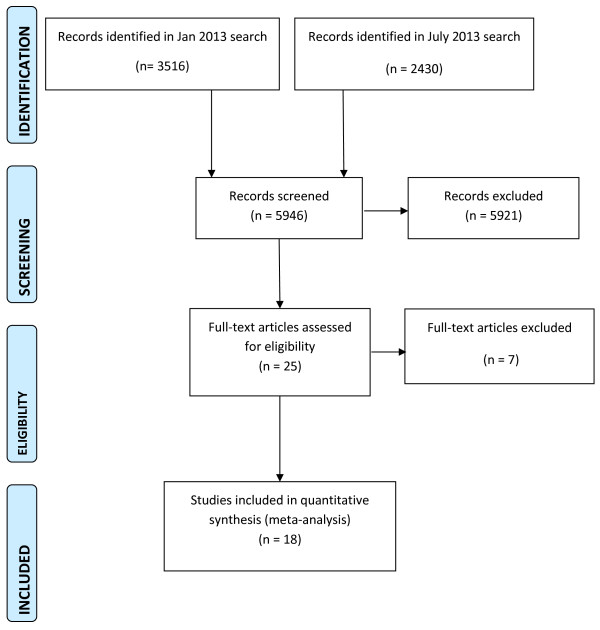
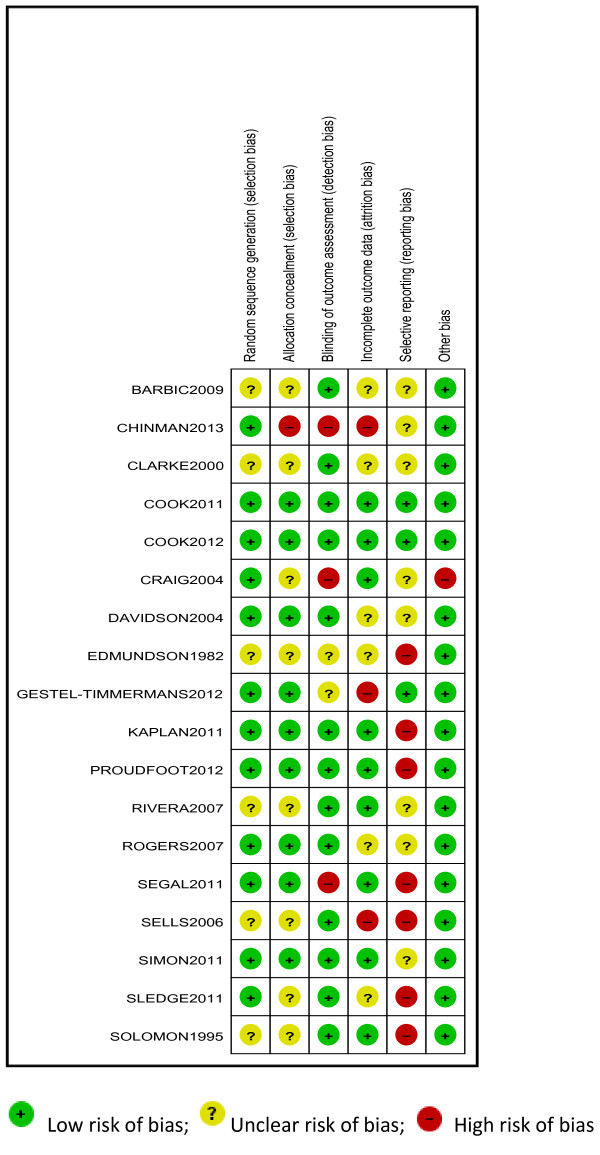
BACKGROUND: Little is known about whether peer support improves outcomes for people with severe mental illness. METHOD: A systematic review and meta-analysis was conducted. Cochrane CENTRAL Register, Medline, Embase, PsycINFO, and CINAHL were searched to July 2013 without restriction by publication status. Randomised trials of non-residential peer support interventions were included. Trial interventions were categorised and analysed separately as: mutual peer support, peer support services, or peer delivered mental health services. Meta-analyses were performed where possible, and studies were assessed for bias and the quality of evidence described. RESULTS: Eighteen trials including 5597 participants were included. These comprised four trials of mutual support programmes, eleven trials of peer support services, and three trials of peer-delivered services. There was substantial variation between trials in participants' characteristics and programme content. Outcomes were incompletely reported; there was high risk of bias. From small numbers of studies in the analyses it was possible to conduct, there was little or no evidence that peer support was associated with positive effects on hospitalisation, overall symptoms or satisfaction with services. There was some evidence that peer support was associated with positive effects on measures of hope, recovery and empowerment at and beyond the end of the intervention, although this was not consistent within or across different types of peer support. CONCLUSIONS: Despite the promotion and uptake of peer support internationally, there is little evidence from current trials about the effects of peer support for people with severe mental illness. Although there are few positive findings, this review has important implications for policy and practice: current evidence does not support recommendations or mandatory requirements from policy makers for mental health services to provide peer support programmes. Further peer support programmes should be implemented within the context of high quality research projects wherever possible. Deficiencies in the conduct and reporting of existing trials exemplify difficulties in the evaluation of complex interventions.
Overview
The claims and statistics of this paper haven’t been checked yet.
Free: it reads the open-access text and checks the first 5 claims that cite a source we can check. Create a free account to check every claim.
Integrity signals
Registry
Cites
Statistics
Figures
Verification
Claims the paper makes
The claims and statistics of this paper haven’t been checked yet.
Free: it reads the open-access text and checks the first 5 claims that cite a source we can check. Create a free account to check every claim.
Claims other papers make about this one
Each is checked against this paper’s own text: does it say what the citing paper says it does?
The source backs part of the claim, not all of it — or backs it for a different population, condition or comparison.
In the citing paper
“Reviews of peer interventions for persons with serious mental illnesses, usually incorporating a small but significant number of individuals with BD, have demonstrated modest evidence from RCTs and other controlled studies suggesting that there are important improvements in self‐efficacy and reduction in self‐stigma.106, 107, 108, 109”
From Canadian Network for Mood and Anxiety Treatments ( CANMAT ) and International Society for Bipolar Disorders ( ISBD ) 2018 guidelines for the management of patients with bipolar disorder (2018) · cites this paper as [106]
Experimental — accuracy not yet measuredThe source backs part of the claim, not all of it — or backs it for a different population, condition or comparison.
In the citing paper
“Studies have reported the benefits of peer-led intervention programs in various settings, including prisons.52, 56–58”
From Psychosocial Interventions for Prisoners with Mental and Substance Use Disorders: A Systematic Review (2022) · cites this paper as [58]
Experimental — accuracy not yet measured
Self-check
Percentages, sums and reported differences re-computed from the paper’s own numbers.
The self-check needs the paper’s full text.
Citations
Cites
The Cochrane Collaboration's tool for assessing risk of bias in randomised trials
Higgins, J. P. T., Altman, D. G., Gotzsche, P. C., Juni, P., Moher, D., Oxman, A. D., Savovic, J., Schulz, K. F., Weeks, L., Sterne, J. A. C., et al. (2011) · BMJ · doi:10.1136/bmj.d5928 · Cited by 33,817
Kytle, J., & Bandura, A. (1978) · Contemporary Sociology · doi:10.2307/2065952 · Cited by 25,422
Dermyshi, E., Wang, Y., Yan, C., Hong, W., Qiu, G., Gong, X., & Zhang, T. (2017) · Neonatology · doi:10.1159/000454668 · Cited by 24,451
A theory of social comparison processes
Festinger, L. (1954) · Human Relations · doi:10.1177/001872675400700202 · Cited by 20,926 · cited 1×
“This is consistent with psychological theories of change: peers’ social proximity to the people they are supporting may enhance their value as pro-social models [4] and promote motivation to achieve recovery by providing an upward social comparison [5].”
BackgroundCONSORT 2010 Statement: updated guidelines for reporting parallel group randomised trials
the CONSORT Group, Schulz, K. F., Altman, D. G., & Moher, D. (2010) · BMC Medicine · doi:10.1186/1741-7015-8-18 · Cited by 13,371
Grading quality of evidence and strength of recommendations
(2004) · BMJ · doi:10.1136/bmj.328.7454.1490 · Cited by 8,477 · cited 2×
“Meta-analysis was conducted using RevMan and a summary of results was prepared using the GRADE system [26], which is a structured assessment of confidence in the evidence for individual outcomes attending: threats to internal validity, inconsistency, indirectness, imprecision, and reporting bias.”
BackgroundMethodLeamy, M., Bird, V., Boutillier, C. L., Williams, J., & Slade, M. (2011) · British Journal of Psychiatry · doi:10.1192/bjp.bp.110.083733 · Cited by 3,038 · cited 1×
“selfrated recovery, hope and empowerment [53].”
Evaluating non-randomised intervention studies
Deeks, J., Dinnes, J., D'Amico, R., Sowden, A., Sakarovitch, C., Song, F., Petticrew, M., & Altman, D. (2003) · Health Technology Assessment · doi:10.3310/hta7270 · Cited by 2,907 · cited 1×
“In line with best practice guidelines for systematic reviews [54], we have not sought to supplement existing randomised trial evidence by including non-randomised trials in our review [55].”
Process evaluation in randomised controlled trials of complex interventions
Oakley, A., Strange, V., Bonell, C., Allen, E., & Stephenson, J. (2006) · BMJ · doi:10.1136/bmj.332.7538.413 · Cited by 1,247
A review of the literature on peer support in mental health services
Repper, J., & Carter, T. (2011) · Journal of Mental Health · doi:10.3109/09638237.2011.583947 · Cited by 1,103 · cited 3×
“However, they often accentuate positive findings from poor quality evidence, highlighting “limited but promising evidence,” [20] the “potential to drive through recovery-focused changes in services,” [21] and the possibility for peer-provided mental health services “without detrimental effect” [24] or “with no evidenc…”
Background
Research works printed but not linked: 10
- Mead S Defining Peer Support 2003 Web resource: http://www.intentionalpeersupport.org/documents/DefiningPeerSupport.pdf
- Halvorson A Whitter M Approaches to Recovery-Oriented Systems of Care at the State and Local Levels: Three Case Studies 2009 Rockville, MD: Center for Substance Abuse Treatment, Substance Abuse and Mental Health Services Administration
- The Royal College of Psychiatrists Social Inclusion Scoping Group Mental Health and Social Inclusion: Making Psychiatry and Mental Health Services Fit for the 21st Century 2009 London: Royal College of Psychiatrists
- Scottish Recovery Network The role and potential development of peer support services 2005 Glasgow: Scottish Recovery Network
- Minnesota Department of Human Services “Certified peer support services” 2013 Web Resource: http://www.mhcsn.org/certified-peer-specialist/
- Repper J Peer support workers: theory and practice 2013 London: Centre for Mental Health
- NCCMH Schizophrenia: Core Interventions in the Treatment and Management of Schizophrenia in Adults in Primary and Secondary Care. Updated ed Leicester and London: The British Psychological Society and the Royal College of Psychiatrists In press 20704054
- Reeves BD Higgins J Wells J Wells G Higgins J, Green S Chapter 13: including non-randomised studies Cochrane Handbook for Systematic reviews of Interventions v.5.1.0 2011 Cochrane Collaboration Web resource: http://www.cochrane-handbook.org
- New Freedom Commission on Mental Health Achieving the promise: transforming mental health care in America. Final report 2003 MD: Department of Health and Human Services DHHS pub no SMA-03-3832
- Perkins R Repper J Rinaldi M Brown H Recovery Colleges: Implementing Recovery through Organisational Change (ImROC) briefing paper 2012 London: Centre for Mental Health
Cited by
Items 201–300 of 673
Men’s peer support for mental health challenges: future directions for research and practice
Sharp, P., Zhu, P., Ogrodniczuk, J. S., McKenzie, S., Seidler, Z. E., Rice, S., & Oliffe, J. L. (2024) · Health Promotion International · doi:10.1093/heapro/daae046 · Cited by 24
Parker, S., Meurk, C., Newman, E., Fletcher, C., Swinson, I., & Dark, F. L. (2018) · International Journal of Mental Health Nursing · doi:10.1111/inm.12461 · Cited by 22
Key Informants Specify Core Elements of Peer Supports for Parents With Serious Mental Illness
Nicholson, J., & Valentine, A. M. (2019) · Frontiers in Psychiatry · doi:10.3389/fpsyt.2019.00106 · Cited by 22
“However, recent meta-analyses of peer-delivered services, particularly for individuals with SMI, provide a more tentative assessment of the empirical evidence and raise questions about the methodological rigor of published studies (18, 22, 23).”
BackgroundOlesen, L. K., la Cour, K., Thorne, S. E., With, H., & Handberg, C. (2023) · Journal of Evaluation in Clinical Practice · doi:10.1111/jep.13808 · Cited by 22
Myers, N., Alolayan, Y., Smith, K., Pope, S. A., Broussard, B., Haynes, N. L., & Compton, M. T. (2015) · Psychiatric Services · doi:10.1176/appi.ps.201300569 · Cited by 24
Milton, A. C., & Mullan, B. A. (2014) · Community Mental Health Journal · doi:10.1007/s10597-014-9761-4 · Cited by 23
Piat, M., Sofouli, E., Sabetti, J., Lambrou, A., Chodos, H., Briand, C., Vachon, B., & Curran, J. (2017) · BMJ Open · doi:10.1136/bmjopen-2017-017080 · Cited by 21
Adams, W. E., & Lincoln, A. K. (2021) · Psychiatric Services · doi:10.1176/appi.ps.201900627 · Cited by 21
Khanthavudh, C., Grealish, A., Tzouvara, V., Huang, J., & Leamy, M. C. (2023) · International Journal of Nursing Studies · doi:10.1016/j.ijnurstu.2023.104591 · Cited by 21
Innovative Versorgungsmodelle für Menschen mit schizophrenen Erkrankungen
Lambert, M., Kraft, V., Rohenkohl, A. C., Ruppelt, F., Schröter, R., Lüdecke, D., Linschmann, B., Eich, S., Tlach, L., Lion, D., et al. (2019) · Bundesgesundheitsblatt - Gesundheitsforschung - Gesundheitsschutz · doi:10.1007/s00103-018-2868-y · Cited by 21
Peer support services: state of the workforce-state of the field in the USA
Rogers, E. S. (2017) · Mental Health and Social Inclusion · doi:10.1108/mhsi-03-2017-0015 · Cited by 21
Forchuk, C., Martin, M., Sherman, D., Corring, D., Srivastava, R., O’Regan, T., Gyamfi, S., & Harerimana, B. (2020) · International Journal of Mental Health Systems · doi:10.1186/s13033-020-00353-y · Cited by 21
“[21] substantiated deficiencies in the literature related to peer support programs despite their worldwide implementation.”
BackgroundPractice Guidelines for Bipolar Disorder by the JSMD (Japanese Society of Mood Disorders)
Kato, T., Ogasawara, K., Motomura, K., Kato, M., Tanaka, T., Takaesu, Y., Nio, S., Kishi, T., So, M., Nemoto, K., et al. (2024) · Psychiatry and Clinical Neurosciences · doi:10.1111/pcn.13724 · Cited by 22
Expert viewpoints of peer support for people experiencing homelessness: A Q sort study.
Barker, S. L., Maguire, N., Bishop, F. L., & Stopa, L. L. (2019) · Psychological Services · doi:10.1037/ser0000258 · Cited by 20
Heumann, K., Schmid, C., Wilfer, A., Bolkan, S., Mahlke, C., & von Peter, S. (2018) · Psychiatrische Praxis · doi:10.1055/a-0597-8188 · Cited by 20
“Der Kontakt zu GB verbessert die Lebensqualität [10], das Vertrauen zu den Behandlern, das Aktivitätsniveau [2], die Selbstwirksamkeit und das Empowerment der behandelten PatientInnen [8, 11, 12].”
BackgroundInfluentialNorthcott, S., Behn, N., Monnelly, K., Moss, B., Marshall, J., Thomas, S., Simpson, A., McVicker, S. J., Flood, C., Goldsmith, K., et al. (2021) · Disability and Rehabilitation · doi:10.1080/09638288.2021.1922520 · Cited by 20
“A review found people with severe mental illness who received peer-befriending improved on measures of hope, recovery, and empowerment [18].”
Marshall, C., Piat, M., & Perreault, M. (2017) · Drugs Education Prevention and Policy · doi:10.1080/09687637.2016.1269724 · Cited by 21
“In a systematic review and metaanalysis of randomised controlled trials, Lloyd-Evans et al. (2014) researched the effects of peer support for people with severe mental illness.”
BackgroundPsychosocial and functional contributors to personal recovery in serious mental illness
Treichler, E. B. H., Li, F., O’Hare, M., Evans, E. A., Johnson, J. R., & Spaulding, W. D. (2019) · Journal of Mental Health · doi:10.1080/09638237.2018.1521932 · Cited by 21
“These studies indicate that peer support, psychoeducation and skills training about recovery, stigma, and psychiatric self-management processes improve recovery as well as hope and empowerment (Barbic et al., 2009; Lloyd-Evans et al., 2014; Lucksted et al., 2011).”
BackgroundPsychosocial therapies in severe mental illness: update on evidence and recommendations
Gühne, U., Weinmann, S., Riedel-Heller, S. G., & Becker, T. (2020) · Current Opinion in Psychiatry · doi:10.1097/yco.0000000000000618 · Cited by 19
“The findings indicate positive effects on recovery outcomes such as hope, quality of life and empowerment [20,21,26].”
BackgroundPeer support to reduce readmission in Medicaid-enrolled adults with substance use disorder
Hutchison, S. L., MacDonald‐Wilson, K. L., Karpov, I. O., Herschell, A. D., & Carney, T. (2022) · Journal of Substance Abuse Treatment · doi:10.1016/j.jsat.2022.108901 · Cited by 19
Healy, L. C., Benkwitz, A., McVinnie, Z., Sarkar, M., Islin, M., Brinded, A., Dodge, B., Opacic, S., Swithenbank, Z., Ranasinghe, S., et al. (2023) · International Journal of Environmental Research and Public Health · doi:10.3390/ijerph20032291 · Cited by 20
“mental health services), the term “peer support” can mean a specific (sometimes paid) role using their lived experiences of mental illness to support others [27].”
BackgroundGillard, S., Foster, R., White, S. J., Bhattacharya, R., Binfield, P., Eborall, R., Gibson, S. L., Harnett, D., Simpson, A., Lucock, M. P., et al. (2024) · BMC Health Services Research · doi:10.1186/s12913-024-11447-5 · Cited by 19
“It has been noted that peer support is often poorly described in the trial literature, [17, 18] with a lack of research assessing association between implementation and outcome.”
BackgroundBaker, A., Borland, R., Bonevski, B., Segan, C., Turner, A., Brophy, L. M., McCarter, K. L., Kelly, P. J., Williams, J. M., Baird, D. E., et al. (2019) · Frontiers in Psychiatry · doi:10.3389/fpsyt.2019.00124 · Cited by 19
Crisanti, A. S., Murray-Krezan, C. M., Reno, J., & Killough, C. M. (2019) · Community Mental Health Journal · doi:10.1007/s10597-019-00443-3 · Cited by 19
Cheng, K.-Y., & Yen, C.-F. (2021) · BMC Psychiatry · doi:10.1186/s12888-021-03277-0 · Cited by 19
“Empirical evidence also shows that peer support services can be effective in installing hope and overcoming the aforementioned di culties, both of which can help persons with psychiatric disabilities to engage more actively in their journey of recovery [9, 10].”
BackgroundMarks, J., Foster, R., Gibson, S. L., Simpson, A., Rinaldi, M., Repper, J., Worner, J., Patel, S., Lucock, M. P., USSHER, M. H., et al. (2021) · BMC Research Notes · doi:10.1186/s13104-021-05735-0 · Cited by 19
Poulsen, C. H., Egmose, C. H., Ebersbach, B. K., Hjorthøj, C. R., & Eplov, L. F. (2022) · Trials · doi:10.1186/s13063-022-06670-6 · Cited by 20
“The content of the group sessions is developed from themes identified in the CHIME (Connectedness; Hope; Identity; Meaning; Empowerment) framework as promoting the personal recovery process [19], as well as knowledge from systematic reviews and meta-analyses in the field focusing on the effect of peer support [5, 6, 9…”
BackgroundInfluentialParker, S., Arnautovska, U., Korman, N., Harris, M., & Dark, F. L. (2022) · Community Mental Health Journal · doi:10.1007/s10597-022-01023-8 · Cited by 19
A substantial peer workforce in a psychiatric service will improve patient outcomes: the case for
Dark, F. L., Patton, M., & Newton, R. (2017) · Australasian Psychiatry · doi:10.1177/1039856217700297 · Cited by 19
Hall, T., Kakuma, R., Palmer, L. R., Martins, J. S., Minas, H., & Kermode, M. (2019) · Health Policy and Planning · doi:10.1093/heapol/czz108 · Cited by 20
Badouin, J., Bechdolf, A., Bermpohl, F., Baumgardt, J., & Weinmann, S. (2023) · Frontiers in Psychiatry · doi:10.3389/fpsyt.2023.1089484 · Cited by 18
Ramesh, M., Charles, A., Grayzman, A., Hiltensperger, R., Kalha, J., Kulkarni, A., Mahlke, C., Moran, G. S., Mpango, R. S., Mueller‐Stierlin, A. S., et al. (2023) · BMJ Open · doi:10.1136/bmjopen-2021-058724 · Cited by 18
A theory of change for one-on-one peer support for older adolescents and young adults
Walker, J. S., Klodnick, V. V., LaPelusa, B., Blajeski, S. M., Freedman, A. R., & Marble, S. (2023) · Children and Youth Services Review · doi:10.1016/j.childyouth.2023.107386 · Cited by 18
Evaluation of the Perceived Benefits of a Peer Support Group for People with Mental Health Problems
Beard, D., Cottam, C., & Painter, J. (2024) · Nursing Reports · doi:10.3390/nursrep14030124 · Cited by 19
Rohrbach, P. J., Dingemans, A. E., Spinhoven, P., Marle, M. E. V. D. A., van Ginkel, J. R., Fokkema, M., Moessner, M., Bauer, S., & van Furth, E. F. (2019) · Trials · doi:10.1186/s13063-019-3574-2 · Cited by 18
Vogel, J. S., Swart, M., Slade, M., Bruins, J., van der Gaag, M., & Castelein, S. (2019) · Journal of Behavior Therapy and Experimental Psychiatry · doi:10.1016/j.jbtep.2019.02.007 · Cited by 18
“Furthermore, peer support effectively improves recovery, empowerment and feelings of hope (Chinman et al., 2014; Lloyd-Evans et al., 2014).”
BackgroundSmit, D., Peelen, J., Vrijsen, J. N., & Spijker, J. (2020) · BMC Psychiatry · doi:10.1186/s12888-020-02559-3 · Cited by 18
Lammers, E. J., Zickafoose, J. S., Peterson, G. G., Blue, L., Stewart, K. A., & Kranker, K. (2019) · Academic Pediatrics · doi:10.1016/j.acap.2019.06.001 · Cited by 17
Predictors of Employment Burnout Among VHA Peer Support Specialists
Park, S. G., Chang, B., Mueller, L. N., Resnick, S. G., & Eisen, S. V. (2016) · Psychiatric Services · doi:10.1176/appi.ps.201500239 · Cited by 17
Patients’ views: peer support worker on inpatient wards
Rooney, J. M., Miles, N., & Barker, T. (2016) · Mental Health and Social Inclusion · doi:10.1108/mhsi-02-2016-0007 · Cited by 17
“However, Lloyd-Evans et al. (2014) do suggest there was some evidence was associated with the positive effects of hope, recovery and empowerment beyond the end of the intervention, although this was not consistent within or across different types of PS.”
BackgroundResultPoremski, D., Kuek, J. H. L., Yuan, Q., Li, Z., Yow, K. L., Eu, P. W., & Chua, H. C. (2021) · Administration and Policy in Mental Health and Mental Health Services Research · doi:10.1007/s10488-021-01158-y · Cited by 17
Prieto, I. C., Algado, S. S., & Prat, G. (2022) · Occupational Therapy in Mental Health · doi:10.1080/0164212x.2022.2085645 · Cited by 17
“Like Lloyd-Evans, the risk-of-bias analysis shows certain inconsistencies which we believe are due to the nature of the practice itself: for example, the fact that the participants and the staff cannot be blinded.”
BackgroundInfluentialVillani, M., & Kovess–Masféty, V. (2018) · L Encéphale · doi:10.1016/j.encep.2018.01.003 · Cited by 17
Social care: an essential aspect of mental health rehabilitation services
Craig, T. J. (2018) · Epidemiology and Psychiatric Sciences · doi:10.1017/s204579601800029x · Cited by 18
“While the majority of studies may be too small to draw finite conclusions (Lloyd-Evans et al. 2014), several point to the value of shared experiences particularly with peers who have found a meaningful life despite ongoing disability.”
Hall, C., Baillie, D., Basangwa, D., & Atukunda, J. (2017) · Palgrave Macmillan UK eBooks · doi:10.1057/978-1-137-39510-8_30 · Cited by 17
Yuen, W. W., Tse, S., Murray, G., & Davidson, L. (2019) · International Journal of Social Psychiatry · doi:10.1177/0020764019842287 · Cited by 16
Us helping us: The evolution of a peer support group for formerly incarcerated people
Boles, W., Tatum, T., Wall, J. M., Nguyen, L. A., Dall, A. V., Mulhollem, C., Sacks, A., Wennerstrom, A., Reilly, B., & Niyogi, A. (2022) · Frontiers in Psychiatry · doi:10.3389/fpsyt.2022.920640 · Cited by 16
“Previous meta-analyses and systematic reviews have indicated that trauma from imprisonment has a stronger association with later mental disorders relative to other forms of trauma, such as in childhood or through one’s total lifetime, despite the fact that these points in the life-course are more well-studied (14).”
BackgroundLiu, J., He, L., Wang, S., He, Y., & Zhu, L. (2024) · Behaviour and Information Technology · doi:10.1080/0144929x.2024.2314746 · Cited by 18
“Studies have shown that peers can provide emotional, informational, and instrumental support (Lloyd-Evans et al. 2014).”
Bouabida, K., Pomey, M., Cyr, G., Aho-Glele, U., & Chaves, B. G. (2021) · Patient Experience Journal · doi:10.35680/2372-0247.1538 · Cited by 17
“17,18,19,20,21,22,23 In this first group, we also find another type of professional displaying resistances, the middle managers and services leaders who sometimes oppose and resist PEP programs because of the importance of the work and the complex functioning processes generated by the…”
BackgroundMahon, D. (2022) · Mental Health and Social Inclusion · doi:10.1108/mhsi-12-2021-0085 · Cited by 16
“Here if you need me”: exploring peer support to enhance access to physical health care
Bocking, J., Ewart, S. B., Happell, B., Platania‐Phung, C., Stanton, R., & Scholz, B. (2017) · Journal of Mental Health · doi:10.1080/09638237.2017.1385741 · Cited by 16
“Despite the widespread support for peer roles in mental health services, the evidence linking this intervention to improved health outcomes has not yet been clearly established (Lloyd-Evans et al., 2014; Wrobleski et al., 2015).”
BackgroundStrategies for Accessible Breast Screening for People With Intellectual Disability
Weise, J. C., Cvejic, R. C., & Trollor, J. N. (2024) · Journal of Primary Care & Community Health · doi:10.1177/21501319241251938 · Cited by 15
Consumer-run services research and implications for mental health care
Segal, S. P., & Hayes, S. L. (2016) · Epidemiology and Psychiatric Sciences · doi:10.1017/s2045796016000287 · Cited by 15
“The consequence of the lack of fidelity to the origins of the self-help movement has been a general finding in multiple meta-analyses and some multisite studies of no or little difference in outcomes attributable to the consumer service (Lloyd-Evans et al. 2014), or when focused on randomised control trials (RCTs), in…”
BackgroundMethodResultInfluentialShalaby, R., Hrabok, M., Spurvey, P., El-Magd, R. M. A., Knox, M., Rude, R., Vuong, W., Surood, S., Urichuk, L., Snaterse, M., et al. (2021) · JMIR Formative Research · doi:10.2196/27137 · Cited by 15
Smit, D., Vrijsen, J. N., Broekman, T. G., Groeneweg, B. F., & Spijker, J. (2022) · JMIR Formative Research · doi:10.2196/39912 · Cited by 16
Swinkels, L. T. A., Hoeve, M., ter Harmsel, J. F., Schoonmade, L. J., Dekker, J., Popma, A., & van der Pol, T. M. (2023) · Clinical Psychology Review · doi:10.1016/j.cpr.2023.102321 · Cited by 15
Integrated staffing model for residential mental health rehabilitation
Parker, S., Dark, F. L., Vilic, G., McCann, K. L., O'Sullivan, R., Doyle, C., & Lendich, B. (2016) · Mental Health and Social Inclusion · doi:10.1108/mhsi-12-2015-0043 · Cited by 15
HEE! Over Herstel, Empowerment en Ervaringsdeskundigheid in de psychiatrie
Boevink (2017) · Research Publications (Maastricht University) · doi:10.26481/dis.20170413wb · Cited by 15
Weise, J., Fisher, K. R., Whittle, E., & Trollor, J. N. (2018) · Journal of Mental Health Research in Intellectual Disabilities · doi:10.1080/19315864.2018.1469700 · Cited by 14
“However, currently there is inconclusive evidence about the effects of peer support for people with mental ill health and further research is required in this area (Lloyd-Evans et al., 2014).”
BackgroundLoubière, S., Loundou, A., Auquier, P., & Tinland, A. (2023) · Epidemiology and Psychiatric Sciences · doi:10.1017/s2045796023000197 · Cited by 14
“, 2007), and part of the results could be due to this law-oriented form; on the other hand, peer workers’ involvement in healthcare has been shown to be associated with improvements in quality of life, self-efficacy, hope and empowerment (e.g., Fuhr et al., 2014; Lloyd-Evans et al., 2014; Mahlke et al., 2017; Vayshenk…”
ResultKlingemann, J. I., Sienkiewicz‐Jarosz, H., Molenda, B., & Świtaj, P. (2024) · Community Mental Health Journal · doi:10.1007/s10597-024-01370-8 · Cited by 14
“Ongoing studies have identified a number of methodological concerns, and the results do not clearly demonstrate improvements in clinical outcomes (Chinman et al., 2014; Cooper et al., 2024; Gillard et al., 2022; Lloyd-Evans et al., 2014; White et al., 2020).”
Walker, J. S., Baird, C., & Welch, M. B. (2018) · PDXScholar (Portland State University) · Cited by 14
Urichuk, L., Hrabok, M., Hay, K., Spurvey, P., Sosdjan, D., Knox, M., Fu, A., Surood, S., Brown, R., Coulombe, J., et al. (2018) · BMJ Open · doi:10.1136/bmjopen-2018-022433 · Cited by 14
Wang, Y., Chen, Y., & Deng, H. (2021) · Journal of Psychosocial Nursing and Mental Health Services · doi:10.3928/02793695-20210818-01 · Cited by 14
Ali, I., Benkwitz, A., McDonald, P., Allen, K., & Glover, A. (2022) · Journal of Recovery in Mental Health · doi:10.33137/jrmh.v5i2.37890 · Cited by 14
Davies, K., & Butler, K. (2022) · Australian Journal of Social Issues · doi:10.1002/ajs4.238 · Cited by 14
Johnson, S., Mason, O. J., Osborn, D., Milton, A. C., Henderson, C., Marston, L., Ambler, G., Hunter, R. M., Pilling, S., Morant, N. J., et al. (2017) · BMJ Open · doi:10.1136/bmjopen-2016-015665 · Cited by 14
Self-citationBreitborde, N. J. K., Guirgis, H., Stearns, W. H., Carpenter, K. M., Lteif, G. N., Pine, J. G., Storey, N., Wastler, H. M., & Moe, A. M. (2020) · BMJ Open · doi:10.1136/bmjopen-2019-034031 · Cited by 14
Robertson, A. M., Cruwys, T., Quayle, A., Stevens, M. R., Platow, M. J., & Scholz, B. (2025) · Psychological Services · doi:10.1037/ser0000959 · Cited by 13
Åkerblom, K. B., Mohn-Haugen, T., Agdal, R., & Ness, O. (2023) · International Journal of Mental Health Systems · doi:10.1186/s13033-023-00588-5 · Cited by 13
Markström, U., Näslund, H., Schön, U., Rosenberg, D., Bejerholm, U., Gustafsson, A., Jansson, M., Argentzell, E., Grim, K., Engdahl, P., et al. (2023) · Frontiers in Psychiatry · doi:10.3389/fpsyt.2023.1282700 · Cited by 13
Exploratory factor analysis of peer support workers job obstacles and barriers survey (PSWJOBS)
Clossey, L., Hu, C., Gillen, J., Rosky, J. W., Zinn, M., & Bolger, K. (2019) · Social Work in Mental Health · doi:10.1080/15332985.2019.1576154 · Cited by 13
“One critical study found peer support outcomes to be no different than the outcomes of professional work (Pitt et al., 2013) and a small meta-analysis that could not conclude the intervention was efficacious still agree that the intervention requires ongoing study (Lloyd-Evans et al., 2014).”
Bailie, H. A., Tickle, A., & Rennoldson, M. (2016) · Mental Health Review Journal · doi:10.1108/mhrj-02-2016-0004 · Cited by 13
Wellbeing and Recovery: A Possible Future
Oades, L. G., Slade, M., & Jarden, A. (2017) · Cambridge University Press eBooks · doi:10.1017/9781316339275.027 · Cited by 13
McLeod, B., Meyer, D., Murray, G., Foley, F., Jones, N., & Thomas, N. (2019) · BJPsych Open · doi:10.1192/bjo.2019.72 · Cited by 13
Shin, S., & Choi, H. (2020) · Journal of Korean Academy of Psychiatric and Mental Health Nursing · doi:10.12934/jkpmhn.2020.29.1.51 · Cited by 13
Lederle, M., & Bitzer, E. (2019) · German medical science · doi:10.3205/000269 · Cited by 13
“From these two searches, we included 12 reviews, among which were 4meta-analyses [21], [22], [23], [24], 1 Cochrane review [12], 5 systematic reviews [25], [26], [27], [28], [29], 1 narrative review [30], and 1 Health Technology Assessment [31].”
BackgroundMethodUnderstanding Users’ Perspectives of Psychosocial Mechanisms Underpinning Peer Support Work in Chile
Le, P. D., Agrest, M., Mascayano, F., Dev, S., Kankan, T., Dishy, G. A., Tapia‐Muñoz, T., Tapia, E., Toso-Salman, J., Pratt, C., et al. (2021) · Community Mental Health Journal · doi:10.1007/s10597-021-00800-1 · Cited by 13
Lammers, K., Dobslaw, G., Stricker, M., & Wegner, J. (2023) · VOLUNTAS International Journal of Voluntary and Nonprofit Organizations · doi:10.1007/s11266-022-00476-5 · Cited by 13
“The term peer support unites a wide range of different approaches—extending from rather informal settings of mutual support to highly formalized counseling settings (Lloyd-Evans et al., 2014, p. 2).”
BackgroundBond, B., Wright, J., & Bacon, A. M. (2017) · Journal of Mental Health · doi:10.1080/09638237.2017.1370634 · Cited by 14
Schel, S. H. H., van den Dries, L., & Wolf, J. (2022) · Qualitative Health Research · doi:10.1177/10497323221083356 · Cited by 12
Programas de formación para el apoyo entre iguales en salud mental en España
González, R. Z., Barbero, F. L., & Bartolomé, M. V. P. (2021) · Interdisciplinaria Revista de Psicología y Ciencias Afines · doi:10.16888/interd.2021.38.2.12 · Cited by 13
Robertson, A. M., Cruwys, T., Stevens, M. R., & Platow, M. J. (2022) · British Journal of Clinical Psychology · doi:10.1111/bjc.12406 · Cited by 12
“…concerns that consumer-led healthcare can create role conflict and blur professional boundaries (Faulkner & Basset, 2012)—a perspective supported by evidence that consumer-led interventions may be less beneficial for severe mental health conditions such as schizophrenia (Lloyd-Evans et al., 2014).”
BackgroundPeer support in Brazil: experiences and strategies of inclusion, empowerment and citizenship
Corradi-Webster, C. M., Reis, G. D. C., Brisola, E. B. V., Araujo, C. N. D. P., Ricci, É. C., Rufato, L. S., Sampaio, C. A., Andrade, M. C. R., Orsi, J. A., Oliveira, R. A. S., et al. (2023) · Journal of Public Mental Health · doi:10.1108/jpmh-10-2022-0105 · Cited by 12
Capturing the value of peer support: measuring recovery-oriented services
Barrenger, S. L., Stanhope, V., & Miller, E. (2019) · Journal of Public Mental Health · doi:10.1108/jpmh-02-2019-0022 · Cited by 12
Social skills training for persons with schizophrenia
Browne, J., Mueser, K. T., & Pratt, S. I. (2020) · Elsevier eBooks · doi:10.1016/b978-0-12-817752-5.00017-2 · Cited by 12
Pelletier, J., Houle, J., Goulet, M., Juster, R., Giguère, C., Bordet, J., Hénault, I., LESAGE, A. D., Benedictis, L. D., Denis, F., et al. (2020) · JMIR Research Protocols · doi:10.2196/22500 · Cited by 13
“In 2014, Lloyd-Evans et al [42] published a systematic review and meta-analysis of RCTs of peer support programs, defining peer support “as a way to promote recovery for anyone who has experienced mental ill health, irrespective of diagnosis.”
Parker, S., Dark, F. L., Newman, E., Wyder, M., Pommeranz, M., Walgers, R., & Meurk, C. (2022) · Community Mental Health Journal · doi:10.1007/s10597-022-01054-1 · Cited by 12
An exploration of the implementation of peer work across multiple fields in Ireland
Mahon, D., & Sharek, D. (2023) · Mental Health and Social Inclusion · doi:10.1108/mhsi-12-2022-0082 · Cited by 12
Lindh, J. J. K., Härkäpää, K., & Kostamo-Pääkkö, K. (2018) · LaCRIS (University of Lapland) · Cited by 12
Gulliver, A., Banfield, M., Morse, A. R., Reynolds, J., Miller, S., & Galati, C. (2019) · JMIR Formative Research · doi:10.2196/12550 · Cited by 11
“Thus, there is growing demand for peer workers to work alongside consumers to improve outcomes and recovery [13,14].”
A brief, residential peer‐support retreat for trichotillomania: A mixed methods evaluation
Slikboer, R., Rehm, I. C., Lam, S., Maloney, A., & Nedeljkovic, M. (2020) · Australian Psychologist · doi:10.1111/ap.12420 · Cited by 12
“but feelings of hope, empowerment and self-rated psychosocial recovery does improve (Lloyd-Evans et al., 2014).”
BackgroundMackay, T., Ahmed, N., Andleeb, H., Billsborough, J., Currie, R. B., Hazzard, R., Haider, F., Iqbal, N., Matthews, F., Mesarič, A., et al. (2022) · Advances in Mental Health · doi:10.1080/18387357.2022.2033128 · Cited by 11
“peer support worker roles have emerged in many countries (Lloyd-Evans et al., 2014).”
BackgroundBaker, A., McCarter, K. L., Brophy, L. M., Castle, D. J., Kelly, P. J., Cocks, N., McKinlay, M. L., Brasier, C., Borland, R., Bonevski, B., et al. (2022) · Frontiers in Psychiatry · doi:10.3389/fpsyt.2022.869169 · Cited by 11
“Peer workers are strong role models for clients, and are particularly successful in developing hope, promoting self-esteem and empowering consumers (22).”
BackgroundWhat Is the Meaning of Recovery?
Davidson, L., & Schmutte, T. J. (2019) · Springer eBooks · doi:10.1007/978-3-030-11908-9_4 · Cited by 11
Greenwood, J., Hurley, M., McGregor, A. H., McCourt, O., & Jones, F. (2022) · Pilot and Feasibility Studies · doi:10.1186/s40814-022-01050-y · Cited by 11
Development and refinement of the open dialog adherence protocol in complex mental health care
Lotmore, M., Ziedonis, D. M., Alvarez-Monjarás, M., Hopfenbeck, M. S., Razzaque, R., Wilson, E., & Pilling, S. (2023) · Frontiers in Psychology · doi:10.3389/fpsyg.2022.1041375 · Cited by 12
Self-citationRelationship of peer specialists to mental health outcomes in South Florida
Castellanos, D., Capo, M., Valderrama, D., Jean‐Francois, M. N., & Luna, A. M. (2018) · International Journal of Mental Health Systems · doi:10.1186/s13033-018-0239-6 · Cited by 11
Exploring the role of engagement in well-being and personal development
Montague, A. C., & Eiroá‐Orosa, F. J. (2017) · Routledge eBooks · doi:10.4324/9781315659794-32 · Cited by 11
Evaluation of an evidence-based practice training for peer support workers in behavioral health care
Crisanti, A. S., Murray-Krezan, C. M., Karlin, L. S., Sutherland-Bruaw, K., & Najavits, L. M. (2016) · Cogent Psychology · doi:10.1080/23311908.2016.1212453 · Cited by 11
“There are several reasons for this growth, including the reimbursement of peer support services under the Medicaid program, a growing body of literature on the effectiveness of peer-delivered services, and an emphasis on recovery-oriented behavioral health systems (Chinman et al., 2014; Daniels, Bergeson, Fricks, Ashe…”
Background
Metadata
- Authors
- Lloyd-Evans, B., Mayo-Wilson, E., Harrison, B., Istead, H., Brown, E., Pilling, S., Johnson, S., & Kendall, T.
- Affiliations
- University College London (GB)
- University of the West of England (GB)
- Sheffield Health and Social Care NHS Foundation Trust (GB)
- Venue
- BMC Psychiatry
- Published
- 2014-02-14
- Volume
- 14
- Issue
- 1
- Pages
- 39-39
- ISSN
- 1471-244X (ISSN-L)
- PMC
- PMC3933205
- OpenAlex
- W1989263398
- Cited by
- 558
- References
- 62
- Citations by year
- 2026: 20 · 2025: 41 · 2024: 47 · 2023: 64 · 2022: 64 · 2021: 67 · 2020: 60 · 2019: 53 · 2018: 40 · 2017: 39 · 2016: 36 · 2015: 14 · 2014: 13
- FWCI
- 5.75
- Type
- journal article
- Language
- en
- Open access
- gold
- doi.org
- Licence
- Locations
- BMC Psychiatry (publishedVersion, cc-by)
- Europe PMC (PubMed Central) (publishedVersion, cc-by)
- PubMed Central (publishedVersion, cc-by)
- PubMed (publishedVersion)
- Minerva Access (University of Melbourne) (submittedVersion, cc-by)
- UCL Discovery (University College London) (submittedVersion)
- Figshare (submittedVersion, cc-by)
- Funders
- National Institute for Health and Care Research (RP-PG-0109-10078)
- Programme Grants for Applied Research (RP-PG-0109-10078)
- Topics
- Health Sciences › Health Professions › General Health Professions › Mental Health and Patient Involvement
- Social Sciences › Psychology › Clinical Psychology › Psychiatric care and mental health services
- Health Sciences › Medicine › Psychiatry and Mental health › Mental Health Treatment and Access
- Keywords
- peer support, severe mental illness, peer support services, hospitalization, symptom severity, service satisfaction, hope, recovery, empowerment, complex interventions, trial quality
- MeSH terms
- Adult, Mental Disorders, Counseling, Female, Humans, Male, Mental Health Services, Peer Group, Social Support, Randomized Controlled Trials as Topic
About these checks
Registry, retraction, Cites and statistics results are computed, not judged, with one exception: a printed reference that no index lists is read once by a model before it counts as a citation error. Claims are extracted by a model and kept only when their quote appears verbatim in the text; each cited source is then checked, with a model’s help, for whether it says what the claim relies on. Those verdicts can be wrong — read the claim’s quote and the cited source before relying on one.
Statistics and arithmetic are recomputed, not judged.
Confidence bands are shown only for fields calibrated on our annotated test set. None is calibrated yet, so no band is shown.
What counts as a claim ›How we measure confidence ›How we check this ›
Are you an author, or do you see a problem with this page? Request a review
Data sources
Bibliographic data: Semantic Scholar, OpenAlex, Crossref.
Contains information from the Semantic Scholar Academic Graph Datasets, made available under the ODC Attribution License (ODC-BY 1.0).
Semantic Scholar’s data is described in: Kinney, R., et al. (2023). The Semantic Scholar Open Data Platform. arXiv:2301.10140.
