

A systematic review and meta-analysis of randomised controlled trials of peer support for people with severe mental illness
Open accessThe DOI matches its Crossref record; 61 of the 62 references it cites were found in a registry or an index.
Abstract
BACKGROUND: Little is known about whether peer support improves outcomes for people with severe mental illness. METHOD: A systematic review and meta-analysis was conducted. Cochrane CENTRAL Register, Medline, Embase, PsycINFO, and CINAHL were searched to July 2013 without restriction by publication status. Randomised trials of non-residential peer support interventions were included. Trial interventions were categorised and analysed separately as: mutual peer support, peer support services, or peer delivered mental health services. Meta-analyses were performed where possible, and studies were assessed for bias and the quality of evidence described. RESULTS: Eighteen trials including 5597 participants were included. These comprised four trials of mutual support programmes, eleven trials of peer support services, and three trials of peer-delivered services. There was substantial variation between trials in participants' characteristics and programme content. Outcomes were incompletely reported; there was high risk of bias. From small numbers of studies in the analyses it was possible to conduct, there was little or no evidence that peer support was associated with positive effects on hospitalisation, overall symptoms or satisfaction with services. There was some evidence that peer support was associated with positive effects on measures of hope, recovery and empowerment at and beyond the end of the intervention, although this was not consistent within or across different types of peer support. CONCLUSIONS: Despite the promotion and uptake of peer support internationally, there is little evidence from current trials about the effects of peer support for people with severe mental illness. Although there are few positive findings, this review has important implications for policy and practice: current evidence does not support recommendations or mandatory requirements from policy makers for mental health services to provide peer support programmes. Further peer support programmes should be implemented within the context of high quality research projects wherever possible. Deficiencies in the conduct and reporting of existing trials exemplify difficulties in the evaluation of complex interventions.
Overview
The claims and statistics of this paper haven’t been checked yet.
Free: it reads the open-access text and checks the first 5 claims that cite a source we can check. Create a free account to check every claim.
Integrity signals
Registry
Cites
Statistics
Figures
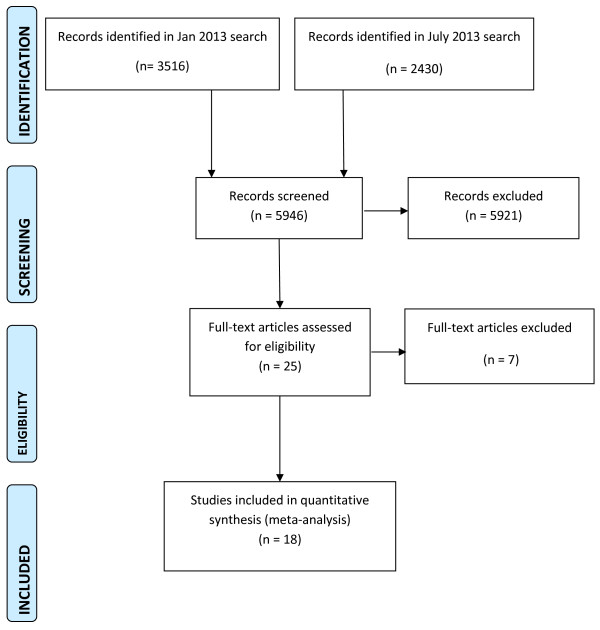
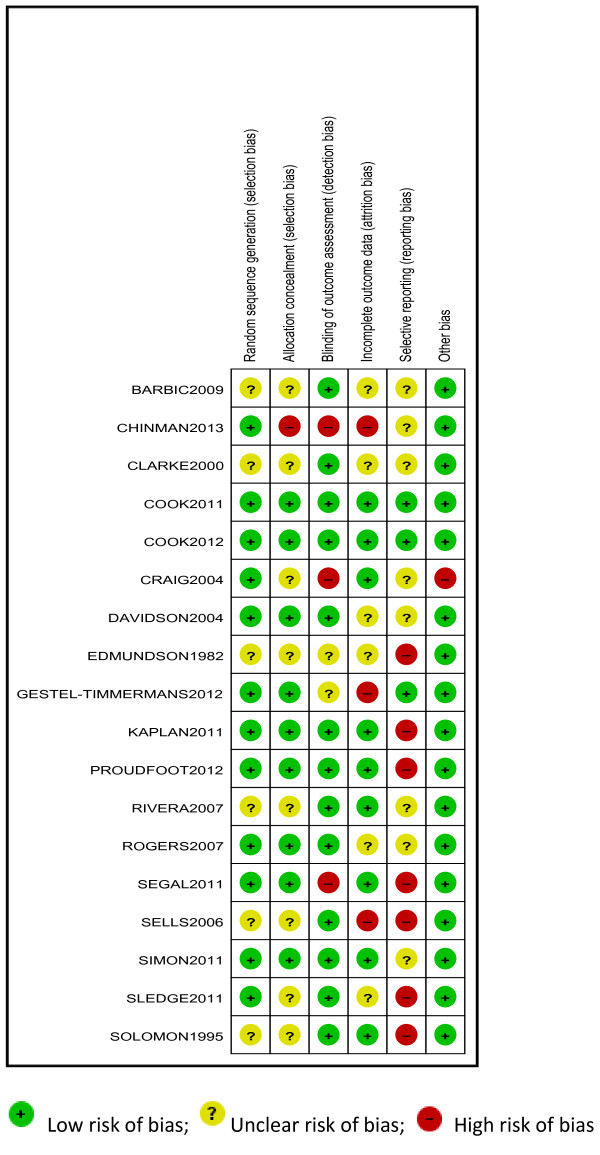
Verification
Claims the paper makes
The claims and statistics of this paper haven’t been checked yet.
Free: it reads the open-access text and checks the first 5 claims that cite a source we can check. Create a free account to check every claim.
Claims other papers make about this one
Each is checked against this paper’s own text: does it say what the citing paper says it does?
The source backs part of the claim, not all of it — or backs it for a different population, condition or comparison.
In the citing paper
“Reviews of peer interventions for persons with serious mental illnesses, usually incorporating a small but significant number of individuals with BD, have demonstrated modest evidence from RCTs and other controlled studies suggesting that there are important improvements in self‐efficacy and reduction in self‐stigma.106, 107, 108, 109”
From Canadian Network for Mood and Anxiety Treatments ( CANMAT ) and International Society for Bipolar Disorders ( ISBD ) 2018 guidelines for the management of patients with bipolar disorder (2018) · cites this paper as [106]
Experimental — accuracy not yet measuredThe source backs part of the claim, not all of it — or backs it for a different population, condition or comparison.
In the citing paper
“Studies have reported the benefits of peer-led intervention programs in various settings, including prisons.52, 56–58”
From Psychosocial Interventions for Prisoners with Mental and Substance Use Disorders: A Systematic Review (2022) · cites this paper as [58]
Experimental — accuracy not yet measured
Self-check
Percentages, sums and reported differences re-computed from the paper’s own numbers.
The self-check needs the paper’s full text.
Citations
Cites
The Cochrane Collaboration's tool for assessing risk of bias in randomised trials
Higgins, J. P. T., Altman, D. G., Gotzsche, P. C., Juni, P., Moher, D., Oxman, A. D., Savovic, J., Schulz, K. F., Weeks, L., Sterne, J. A. C., et al. (2011) · BMJ · doi:10.1136/bmj.d5928 · Cited by 33,817
Kytle, J., & Bandura, A. (1978) · Contemporary Sociology · doi:10.2307/2065952 · Cited by 25,422
Dermyshi, E., Wang, Y., Yan, C., Hong, W., Qiu, G., Gong, X., & Zhang, T. (2017) · Neonatology · doi:10.1159/000454668 · Cited by 24,451
A theory of social comparison processes
Festinger, L. (1954) · Human Relations · doi:10.1177/001872675400700202 · Cited by 20,926 · cited 1×
“This is consistent with psychological theories of change: peers’ social proximity to the people they are supporting may enhance their value as pro-social models [4] and promote motivation to achieve recovery by providing an upward social comparison [5].”
BackgroundCONSORT 2010 Statement: updated guidelines for reporting parallel group randomised trials
the CONSORT Group, Schulz, K. F., Altman, D. G., & Moher, D. (2010) · BMC Medicine · doi:10.1186/1741-7015-8-18 · Cited by 13,371
Grading quality of evidence and strength of recommendations
(2004) · BMJ · doi:10.1136/bmj.328.7454.1490 · Cited by 8,477 · cited 2×
“Meta-analysis was conducted using RevMan and a summary of results was prepared using the GRADE system [26], which is a structured assessment of confidence in the evidence for individual outcomes attending: threats to internal validity, inconsistency, indirectness, imprecision, and reporting bias.”
BackgroundMethodLeamy, M., Bird, V., Boutillier, C. L., Williams, J., & Slade, M. (2011) · British Journal of Psychiatry · doi:10.1192/bjp.bp.110.083733 · Cited by 3,038 · cited 1×
“selfrated recovery, hope and empowerment [53].”
Evaluating non-randomised intervention studies
Deeks, J., Dinnes, J., D'Amico, R., Sowden, A., Sakarovitch, C., Song, F., Petticrew, M., & Altman, D. (2003) · Health Technology Assessment · doi:10.3310/hta7270 · Cited by 2,907 · cited 1×
“In line with best practice guidelines for systematic reviews [54], we have not sought to supplement existing randomised trial evidence by including non-randomised trials in our review [55].”
Process evaluation in randomised controlled trials of complex interventions
Oakley, A., Strange, V., Bonell, C., Allen, E., & Stephenson, J. (2006) · BMJ · doi:10.1136/bmj.332.7538.413 · Cited by 1,247
A review of the literature on peer support in mental health services
Repper, J., & Carter, T. (2011) · Journal of Mental Health · doi:10.3109/09638237.2011.583947 · Cited by 1,103 · cited 3×
“However, they often accentuate positive findings from poor quality evidence, highlighting “limited but promising evidence,” [20] the “potential to drive through recovery-focused changes in services,” [21] and the possibility for peer-provided mental health services “without detrimental effect” [24] or “with no evidenc…”
Background
Research works printed but not linked: 10
- Mead S Defining Peer Support 2003 Web resource: http://www.intentionalpeersupport.org/documents/DefiningPeerSupport.pdf
- Halvorson A Whitter M Approaches to Recovery-Oriented Systems of Care at the State and Local Levels: Three Case Studies 2009 Rockville, MD: Center for Substance Abuse Treatment, Substance Abuse and Mental Health Services Administration
- The Royal College of Psychiatrists Social Inclusion Scoping Group Mental Health and Social Inclusion: Making Psychiatry and Mental Health Services Fit for the 21st Century 2009 London: Royal College of Psychiatrists
- Scottish Recovery Network The role and potential development of peer support services 2005 Glasgow: Scottish Recovery Network
- Minnesota Department of Human Services “Certified peer support services” 2013 Web Resource: http://www.mhcsn.org/certified-peer-specialist/
- Repper J Peer support workers: theory and practice 2013 London: Centre for Mental Health
- NCCMH Schizophrenia: Core Interventions in the Treatment and Management of Schizophrenia in Adults in Primary and Secondary Care. Updated ed Leicester and London: The British Psychological Society and the Royal College of Psychiatrists In press 20704054
- Reeves BD Higgins J Wells J Wells G Higgins J, Green S Chapter 13: including non-randomised studies Cochrane Handbook for Systematic reviews of Interventions v.5.1.0 2011 Cochrane Collaboration Web resource: http://www.cochrane-handbook.org
- New Freedom Commission on Mental Health Achieving the promise: transforming mental health care in America. Final report 2003 MD: Department of Health and Human Services DHHS pub no SMA-03-3832
- Perkins R Repper J Rinaldi M Brown H Recovery Colleges: Implementing Recovery through Organisational Change (ImROC) briefing paper 2012 London: Centre for Mental Health
Cited by
Items 501–600 of 673
Factors that influence treatment choices made by people with depression
Ivanecka, A. (2015) · UEA Digital Repository (University of East Anglia) · Cited by 1
Metonymy and pragmatic inferencing in mental health
Moors, A. J. (2015) · UTS ePRESS (University of Technology Sydney) · Cited by 1
Shining a light: Active participation in a mental health Internet support group
Carron‐Arthur, B. (2018) · ANU Open Research (Australian National University) · doi:10.25911/5d67b4d3a4430 · Cited by 1
Tosangwarn, S. (2018) · Nottingham ePrints (University of Nottingham) · Cited by 1
Meaning and value of patient perspective and patient expertise in healthcare
Debyser, B. (2020) · Ghent University Academic Bibliography (Ghent University) · Cited by 2
Vertaisohjaajina toimivien mielenterveyskuntoutujien oppiminen ja vertaisohjaajana toimimisen hyödyt
Turunen, S. (2017) · UEF eRepo (University of Eastern Finland) · Cited by 1
O'Brien, A. O. (2018) · University of Limerick Institutional Repository (University of Limerick) · doi:10.34961/8030 · Cited by 1
Schlichthorst, M., Ozols, I., Reifels, L., & Morgan, A. J. (2019) · Research Square · doi:10.21203/rs.2.16656/v1 · Cited by 1
Cheng, K.-Y., & Yen, C.-F. (2021) · Research Square · doi:10.21203/rs.3.rs-50709/v2 · Cited by 1
Facilitating recovery in people with psychosis
Vogel, S. (2022) · University of Groningen research database (University of Groningen / Centre for Information Technology) · doi:10.33612/diss.217103261 · Cited by 1
Voss, M. W., Barrett, T. S., Lapidos, A., Werner, P., Bennett, P. J., Campbell, A., & Komen, A. V. (2023) · Research Square · doi:10.21203/rs.3.rs-3405876/v1 · Cited by 1
A Blessing and a Curse: Social Interaction Between Youth Inpatients with Anorexia NervosaPreprint
Dekker, L., Offringa, T. M., Vermeiren, R. R. J. M., Krabbendam, A. A., & Nooteboom, L. A. (2023) · Research Square · doi:10.21203/rs.3.rs-3491038/v1 · Cited by 1
Hewitson, N. (2021) · Lancaster EPrints (Lancaster University) · doi:10.17635/lancaster/thesis/1472 · Cited by 1
Yakeley, J. W. (2023) · UCL Discovery (University College London) · Cited by 1
Brydges, S. (2023) · Nottingham ePrints (University of Nottingham) · Cited by 1
Ward, E. (2021) · London Met Repository (London Metropolitan University) · Cited by 1
"Það er eins og að fara úr zombie yfir í íslensku valkyrjuna"
Hermannsdóttir, G. H. (2017) · Skemman · Cited by 1
Accueillir la crise psychique. Expérimentation et expérience du rétablissement
Bechla, I. (2023) · theses.fr (ABES) · doi:10.70675/f08ef38bzc911z4fd1z8cfbze4d55f4ef7e4 · Cited by 1
Discharge Transition and Self-Regulation of Youth Between 15 and 24 Years of Age with Mental Illness
Collins, R. C. (2014) · Libraries and Cultural Resources (University of Calgary) · doi:10.5072/prism/25715
Istead, H. (2015) · Figshare
Self-citationGonzález-Rico, H. A., Urrea, B. S., & Manosalva, F. E. P. (2015) · Panamerican Journal of Trauma Critical Care & Emergency Surgery · doi:10.5005/jp-journals-10030-1130
Reed, J. A. (2015) · OhioLink ETD Center (Ohio Library and Information Network)
Swanson, J. D. (2016) · KiltHub Repository · doi:10.1184/r1/6686312
Rapid Synthesis: Examining the Impact of Drop-in Centres
Wilson, M. G. (2015) · MacSphere (McMaster University) · doi:10.71548/3031
Exploring Acceptable Alternatives to Psychotherapy for Distressed Clients in Integrated Primary Care
Leandri, P. N. (2017) · OhioLink ETD Center (Ohio Library and Information Network)
Yamatani, H. (2017) · Journal of Forensic Sciences & Criminal Investigation · doi:10.19080/jfsci.2017.02.555587
Ghosh, S. (2018) · Drug Designing & Intellectual Properties International Journal · doi:10.32474/ddipij.2018.01.000111
Self Help Organized Through Mutual Assistance in Helping Communities
Segal, S. P. (2018) · Handbooks of sociology and social research · doi:10.1007/978-3-319-77416-9_19
Ghofur, A. (2019) · Journal of Nursing and Health · doi:10.25099/jnh.vol1.iss1.14
Organizational Strategies in the Mortgage Industry
Sutton, R. (2017) · ScholarWorks (Walden University)
The role of social networks and social support on mental health
Allie, S.-L. N. (2016) · Unisa Institutional Repository (University of South Africa)
The underlying psychological processes of peer support in stroke.
Marshall, C. S. (2017) · ORCA Online Research @Cardiff (Cardiff University)
Predictive Relationship Between Family Support Partners and Caregiver Empowerment Levels
Taylor, K. D. (2019) · ScholarWorks (Walden University)
Mixed methods investigation of distress related to psychosis experiences
Akoral, M. (2019) · Queen Margaret University Publications Repository (Queen Margaret University)
Versorgungskoordination (Modul 5)
Gäebel, W., Hasan, A., & Falkai, P. (2019) · Springer eBooks · doi:10.1007/978-3-662-59380-6_9
Buetikofer, N. M. (2020) · Oxford University Research Archive (ORA) (University of Oxford) · doi:10.5287/ora-da08qz5bk
Tarannum, R. (2018) · Victoria University Research Repository (Victoria University)
Maunder, R. D. (2020) · The Sydney eScholarship Repository (The University of Sydney)
Reynolds, D. (2018) · University of Limerick Institutional Repository (University of Limerick) · doi:10.34961/8037
Determining the Effectiveness of a Peer Support Person in Individuals with Depression Symptoms
Reeves, D. (2020) · Digital Commons - ACU (Abilene Christian University)
Empfohlene psychosoziale Therapien bei schweren psychischen Erkrankungen
Gühne, U., Weinmann, S., Becker, T. M., & Riedel-Heller, S. G. (2020) · InFo Neurologie + Psychiatrie · doi:10.1007/s15005-020-1327-0
“Einzelstudien und systematische Übersichtsarbeiten verweisen auf positive Effekte hinsichtlich Re covery-bezogener Outcomes wie Hoffnung und Empowerment, sowie auf die Lebensqualität und das Inanspruchnahmeverhalten von Behandlungsleistungen [21, 22, 23, 24, 25, 26].”
BackgroundEvaluation of The PeerTalk Charitable Foundation
Dlamini, T., Usman, J., Painter, J., & Turner, J. (2021) · SHURA (Sheffield Hallam University Research Archive) (Sheffield Hallam University)
McFadden, T. (2021) · uO Research (University of Ottawa) · doi:10.20381/ruor-26076
Du Rétablissement à l’Hôpital de Jour Colbert
Dutech, C., Canceil, O., & Condemine, M. (2021) · Pratiques en santé mentale · doi:10.3917/psm.212.0063
Strand, M. (2021) · NVA (Nasjonalt vitenarkiv)
Geerligs, N. (2021) · SerWisS (University of Applied Sciences and Arts Hannover) · doi:10.25968/opus-1977
Taylor, L. (2020) · ePrints Soton (University of Southampton)
Social Return on Investment in the Context of Rehabilitation
Ilomäki, T. (2019) · UEF eRepo (University of Eastern Finland)
Using peer support to strengthen mental health during the COVID-19 pandemic: a review (Preprint)Preprint
Suresh, R., Alam, A., & Karkossa, Z. (2021) · doi:10.2196/preprints.30585
Schmid, C. (2020) · transcript Verlag eBooks · doi:10.1515/9783839453858-012
Cheng, K.-Y., & Yen, C.-F. (2020) · Research Square · doi:10.21203/rs.3.rs-50709/v1
Campion, J. (2022) · Oxford University Press eBooks · doi:10.1093/med/9780198861478.003.0051
Research and Practice or What About the Wild?
Rose, D. S. (2022) · The politics of mental health and illness · doi:10.1007/978-3-031-07551-3_4
Intersectionality and Mental Life Disturbed
Rose, D. S. (2022) · The politics of mental health and illness · doi:10.1007/978-3-031-07551-3_9
Realist Perspective and Methodology
Evans, M. (2023) · Springer eBooks · doi:10.1007/978-3-031-29042-8_6
Summary, Implications, and Future Directions
Evans, M. (2023) · Springer eBooks · doi:10.1007/978-3-031-29042-8_9
Entendeurs de voix: L’expérience subjective des groupes d’entraide entre pairs
Denis, J., Kouaovi, E., Priels, J.-M., & Trine, M. (2023) · Cahiers de psychologie clinique · doi:10.3917/cpc.061.0179
“A Light at the End of the Tunnel”: Experiences With Peer Specialists in the Open Dialogue Model
Friesen, P., Wusinich, C., Lynch, K., & Russell, D. (2023) · Psychiatric Services · doi:10.1176/appi.ps.20230126
Advanced Nursing Strategies in Psychiatric Hospitals and Clinics
Majd, Z., & Majd, S. (2023) · Zenodo (CERN European Organization for Nuclear Research) · doi:10.5281/zenodo.8405166
Sylvest-Berg, R., Mathiesen, M. R., & Pedersen, S. (2023) · Nordiske Udkast · doi:10.7146/nu.v51i1.140349
Wedema, D., Wardenaar, K. J., Alma, M., van Asselt, A. D. I., Korevaar, E. L., & Schoevers, R. A. (2023) · BMC Psychiatry · doi:10.1186/s12888-023-05213-w
Buthelezi, M. M. (2023) · International Journal of Education and Social Science Research · doi:10.37500/ijessr.2023.6522
Bellamy, C. D., Reis, G. D. C., Costa, M. N., McKenley, C., Blackman, K. D., & Evans, M. (2023) · Elsevier eBooks · doi:10.1016/b978-0-323-95702-1.00063-4
Webb, L., Messas, G. P., Fox, S., & Skårner, A. (2023) · Frontiers research topics · doi:10.3389/978-2-8325-4119-7
McDonald, M., & Linden, M. (2024) · Journal of Cognitive Psychotherapy · doi:10.1891/jcp-2023-0022
Understanding the Value Base That Supports the Development of Peer Support Relationships
Andleeb, H., Currie, R. B., Haider, F., Hazzard, R., Mackay, T., Mesarič, A., Parker, J., Pinfold, V., Richmond, L., & Thompson, R. (2023) · Springer eBooks · doi:10.1007/978-3-031-50047-3_7
Peer Support Work: A Brief Introduction
Mahon, D. (2024) · Emerald Group Publishing Limited eBooks · doi:10.1108/978-1-83753-018-220241001
The Impact of Community-based Mental Health Interventions on Mental Disorders
Noronha, F. S., Jose, T. T., George, L. S., Bhandary, R. P., & Praharaj, S. K. (2024) · Current Psychiatry Research and Reviews · doi:10.2174/0126660822317419240805103954
Thompson, E. A., Visser, K. F., Ward, M., & Gaudiano, B. A. (2025) · Cambridge University Press eBooks · doi:10.1017/9781009086264.017
Rakesh, N., Anantharamu, B. G., & Kosagi, S. (2025) · Journal of Neurosciences in Rural Practice · doi:10.25259/jnrp_350_2024
Walker, J. S., LaPelusa, B., Klodnick, V. V., Johnson, R. P., Hermsen-Kritz, M., & Blajeski, S. M. (2026) · BMC Psychology · doi:10.1186/s40359-026-05128-7
“…peer support for both adults and young people, namely, that research and practice are hampered by a lack of theory that clearly defines the activities and skills of specific peer support roles, and that explains why skilled performance of a given role should lead to positive outcomes [8, 16–18].”
Elmes, A., Campain, R., Brown, C., & Wilson, E. (2025) · Community Mental Health Journal · doi:10.1007/s10597-025-01477-6
“…coaching can contribute to recovery-related outcomes such as connectedness, hope, empowerment and coping with difficulties (King & Sim - mons, 2018; Lloyd-Evans et al., 2014; Pitt et al., 2013; Rep-per & Carter, 2011), illness management (Corrigan et al., 2022; King & Simmons, 2018; Simmons et…”
Pair-aidance et psychoéducation
Niard, C. (2020) · Elsevier eBooks · doi:10.1016/b978-2-294-77119-4.00013-4
Todesco, B., Iyer, S. N., Ferrari, M., Roy, M., Morin, M., Deschênes, J. M., Arbaud, C., Julien, G., Bossé, A., Levasseur, M. A., et al. (2025) · Early Intervention in Psychiatry · doi:10.1111/eip.70092
Haines, N. (2025) · Journal of Psychiatric and Mental Health Nursing · doi:10.1111/jpm.70043
Jarldorn, M., Moulding, N., & Deuter, K. (2025) · Springer eBooks · doi:10.1007/978-3-032-04406-8_3
Morton, E. E., Kcomt, A., & Michalak, E. E. (2025) · PLoS ONE · doi:10.1371/journal.pone.0338306
“Reviews of peer support for mental health challenges in general have described small positive effects on recovery-oriented outcomes, such as stigma, hope, QoL, subjective recovery, self-efficacy, and empowerment [8–10].”
James, K., Brooks, H. L., Susanti, H., Waddingham, J., Irmansyah, I., Keliat, B.-A., Utomo, B., Rose, D., Colucci, E., & Lovell, K. (2020) · Figshare · doi:10.6084/m9.figshare.11967126
Marks, J., Foster, R., Gibson, S. L., Simpson, A., Rinaldi, M., Repper, J., Worner, J., Patel, S., Lucock, M., Ussher, M., et al. (2021) · Figshare · doi:10.6084/m9.figshare.16305483
Banfield, M., Morse, A. R., & Gulliver, A. (2020) · Figshare · doi:10.6084/m9.figshare.11986665
Lyons, N., Cooper, C., & Lloyd‐Evans, B. (2021) · Figshare · doi:10.6084/m9.figshare.14833333
Self-citationCotes, R. O., Rolin, D. G., Meyer, J. M., Young, A. S., Cohen, A. N., & Gorrindo, T. (2021) · Figshare · doi:10.6084/m9.figshare.17054713
Pilot study of a ketogenic diet in bipolar disorder: a process evaluation
P. Rigby, B., Needham, N., Grossi, H., Kamenská, I., H. Campbell, I., Meadowcroft, B., Creasy, F., Fisher, C., Bahuguna, P., Norrie, J. D., et al. (2025) · Oxford University Research Archive (ORA) (University of Oxford) · doi:10.6084/m9.figshare.c.7636599
Musgrave, G., Gross, S. A., & Carney, D. (2024) · Goldsmiths (University of London) · doi:10.5281/zenodo.10808042
Piat, M., Wainwright, M., Sofouli, E., Vachon, B., Deslauriers, T., Préfontaine, C., & Frati, F. (2021) · Figshare · doi:10.6084/m9.figshare.14545090
Piat, M., Wainwright, M., Sofouli, E., Vachon, B., Deslauriers, T., Préfontaine, C., & Frati, F. (2021) · Figshare · doi:10.6084/m9.figshare.14545078
Piat, M., Wainwright, M., Sofouli, E., Vachon, B., Deslauriers, T., Préfontaine, C., & Frati, F. (2021) · Figshare · doi:10.6084/m9.figshare.14545072
Piat, M., Wainwright, M., Sofouli, E., Vachon, B., Deslauriers, T., Préfontaine, C., & Frati, F. (2021) · Figshare · doi:10.6084/m9.figshare.14545084
Krumm, S., Haun, M., Hiller, S., Charles, A., Kalha, J., Niwemuhwezi, J., Nixdorf, R., Puschner, B., Ryan, G. K., Shamba, D., et al. (2022) · Figshare · doi:10.6084/m9.figshare.21077831
Gillard, S., Foster, R., White, S., Bhattacharya, R., Binfield, P., Eborall, R., Gibson, S. L., Harnett, D., Simpson, A., Lucock, M., et al. (2024) · Figshare · doi:10.6084/m9.figshare.27000693
Cooper, R. E., Saunders, K. R. K., Greenburgh, A., Shah, P., Appleton, R., Machin, K., Jeynes, T., Barnett, P., Allan, S. M., Griffiths, J., et al. (2024) · Figshare · doi:10.6084/m9.figshare.25310124
Self-citationPiat, M., Wainwright, M., Sofouli, E., Vachon, B., Deslauriers, T., Préfontaine, C., & Frati, F. (2021) · Figshare · doi:10.6084/m9.figshare.14545093
Ali, R. A., Jalal, Z., & Paudyal, V. (2020) · Figshare · doi:10.6084/m9.figshare.13336099
Marks, J., Foster, R., Gibson, S. L., Simpson, A., Rinaldi, M., Repper, J., Worner, J., Patel, S., Lucock, M., USSHER, M. H., et al. (2021) · Figshare · doi:10.6084/m9.figshare.16305477
Devane, C. (2023) · cIRcle (University of British Columbia) · doi:10.14288/1.0437234
An Exploration of Peer Support and its Relationship with Employee Mental Wellbeing
Jarlvik, S. (2022) · Lancaster EPrints (Lancaster University) · doi:10.17635/lancaster/thesis/1840
A social identity approach to facilitating therapy groups
Robertson, A. M. (2025) · ANU Open Research (Australian National University) · doi:10.25911/x056-jt92
Lyons, N., Cooper, C., & Lloyd‐Evans, B. (2021) · Figshare · doi:10.6084/m9.figshare.14833339
Self-citation
Metadata
- Authors
- Lloyd-Evans, B., Mayo-Wilson, E., Harrison, B., Istead, H., Brown, E., Pilling, S., Johnson, S., & Kendall, T.
- Affiliations
- University College London (GB)
- University of the West of England (GB)
- Sheffield Health and Social Care NHS Foundation Trust (GB)
- Venue
- BMC Psychiatry
- Published
- 2014-02-14
- Volume
- 14
- Issue
- 1
- Pages
- 39-39
- ISSN
- 1471-244X (ISSN-L)
- PMC
- PMC3933205
- OpenAlex
- W1989263398
- Cited by
- 558
- References
- 62
- Citations by year
- 2026: 20 · 2025: 41 · 2024: 47 · 2023: 64 · 2022: 64 · 2021: 67 · 2020: 60 · 2019: 53 · 2018: 40 · 2017: 39 · 2016: 36 · 2015: 14 · 2014: 13
- FWCI
- 5.75
- Type
- journal article
- Language
- en
- Open access
- gold
- doi.org
- Licence
- Locations
- BMC Psychiatry (publishedVersion, cc-by)
- Europe PMC (PubMed Central) (publishedVersion, cc-by)
- PubMed Central (publishedVersion, cc-by)
- PubMed (publishedVersion)
- Minerva Access (University of Melbourne) (submittedVersion, cc-by)
- UCL Discovery (University College London) (submittedVersion)
- Figshare (submittedVersion, cc-by)
- Funders
- National Institute for Health and Care Research (RP-PG-0109-10078)
- Programme Grants for Applied Research (RP-PG-0109-10078)
- Topics
- Health Sciences › Health Professions › General Health Professions › Mental Health and Patient Involvement
- Social Sciences › Psychology › Clinical Psychology › Psychiatric care and mental health services
- Health Sciences › Medicine › Psychiatry and Mental health › Mental Health Treatment and Access
- Keywords
- peer support, severe mental illness, peer support services, hospitalization, symptom severity, service satisfaction, hope, recovery, empowerment, complex interventions, trial quality
- MeSH terms
- Adult, Mental Disorders, Counseling, Female, Humans, Male, Mental Health Services, Peer Group, Social Support, Randomized Controlled Trials as Topic
About these checks
Registry, retraction, Cites and statistics results are computed, not judged, with one exception: a printed reference that no index lists is read once by a model before it counts as a citation error. Claims are extracted by a model and kept only when their quote appears verbatim in the text; each cited source is then checked, with a model’s help, for whether it says what the claim relies on. Those verdicts can be wrong — read the claim’s quote and the cited source before relying on one.
Statistics and arithmetic are recomputed, not judged.
Confidence bands are shown only for fields calibrated on our annotated test set. None is calibrated yet, so no band is shown.
What counts as a claim ›How we measure confidence ›How we check this ›
Are you an author, or do you see a problem with this page? Request a review
Data sources
Bibliographic data: Semantic Scholar, OpenAlex, Crossref.
Contains information from the Semantic Scholar Academic Graph Datasets, made available under the ODC Attribution License (ODC-BY 1.0).
Semantic Scholar’s data is described in: Kinney, R., et al. (2023). The Semantic Scholar Open Data Platform. arXiv:2301.10140.
