

What factors are associated with recent intimate partner violence? findings from the WHO multi-country study on women's health and domestic violence
Open accessThe DOI matches its Crossref record; 41 of the 42 references it cites were found in a registry or an index, and 1 are not checked yet; 5 of the 24 sources its claims cite were checked for support.
Abstract
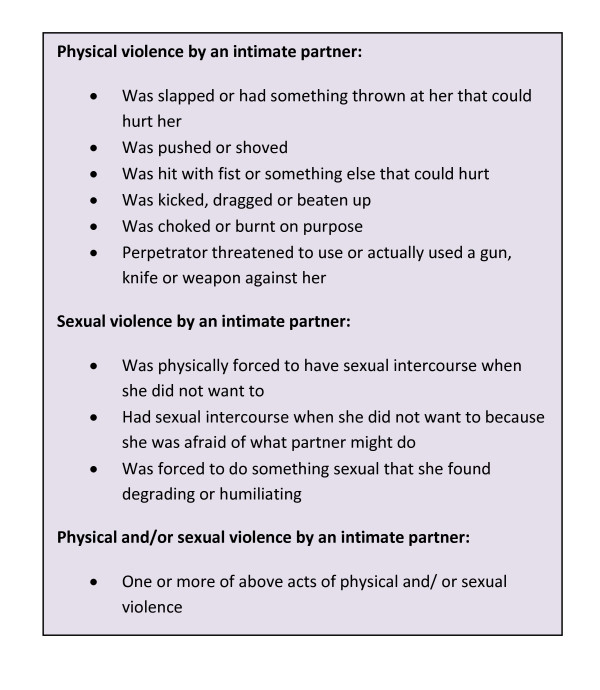
BACKGROUND: Intimate partner violence (IPV) against women is a global public health and human rights concern. Despite a growing body of research into risk factors for IPV, methodological differences limit the extent to which comparisons can be made between studies. We used data from ten countries included in the WHO Multi-country Study on Women's Health and Domestic Violence to identify factors that are consistently associated with abuse across sites, in order to inform the design of IPV prevention programs. METHODS: Standardised population-based household surveys were done between 2000 and 2003. One woman aged 15-49 years was randomly selected from each sampled household. Those who had ever had a male partner were asked about their experiences of physically and sexually violent acts. We performed multivariate logistic regression to identify predictors of physical and/or sexual partner violence within the past 12 months. RESULTS: Despite wide variations in the prevalence of IPV, many factors affected IPV risk similarly across sites. Secondary education, high SES, and formal marriage offered protection, while alcohol abuse, cohabitation, young age, attitudes supportive of wife beating, having outside sexual partners, experiencing childhood abuse, growing up with domestic violence, and experiencing or perpetrating other forms of violence in adulthood, increased the risk of IPV. The strength of the association was greatest when both the woman and her partner had the risk factor. CONCLUSIONS: IPV prevention programs should increase focus on transforming gender norms and attitudes, addressing childhood abuse, and reducing harmful drinking. Development initiatives to improve access to education for girls and boys may also have an important role in violence prevention.
Verified 2026-11-25 · 1 reference not checked yet
Overview
CoChat Summary
TL;DR
This WHO multi-country study used standardized household survey data from 10 countries and 15 sites to identify factors consistently associated with past-year physical and/or sexual intimate partner violence (IPV) among ever-partnered women. It found secondary education, high socioeconomic status, and formal marriage were protective, while alcohol abuse, cohabitation, young age, attitudes supportive of wife beating, outside sexual partners, childhood abuse, growing up with domestic violence, and other violence in adulthood increased risk, often most strongly when both partners had the factor.
Key findings
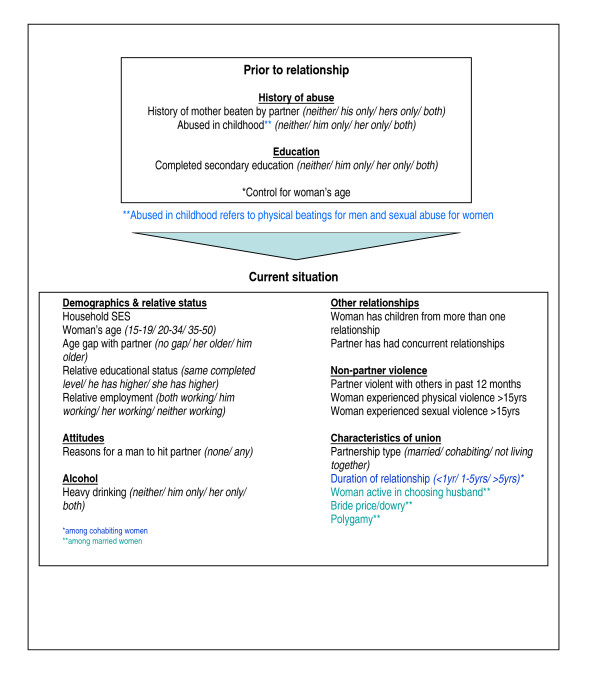
- Secondary education (or primary in Bangladesh, Ethiopia, and Tanzania) completed by both partners was protective in 12/14 sites (10 significant), and high SES was protective in 14 sites (8 significant comparing highest to lowest status).
- Alcohol problems in either or both partners were associated with higher IPV: him 14/14 sites (12 significant), her 10/11 (5 significant), both 11/11 (7 significant); attitudes supportive of wife beating were associated with increased IPV in 13/15 sites (8 significant).
- Prior abuse was consistently associated with IPV: reported abuse of the woman’s mother, partner’s mother, or both increased risk in all sites (10 significant for women, 10 for partners, 12 for both); childhood sexual abuse of the woman, childhood beatings of her partner, or both increased risk (15/15 for partners, all significant; 13/15 for women and both, 10 significant).
- Cohabitation without formal marriage increased IPV in 10/12 sites (3 significant); younger women aged 15–19 and 20–35 had increased risk in all sites (significant in 12); polygamy increased risk in all 6 sites where practiced (3 significant).
Methods
- Standardized population-based household surveys were conducted between 2000 and 2003 in Bangladesh, Brazil, Ethiopia, Japan, Namibia, Peru, Republic of Tanzania, Samoa, Serbia and Montenegro, and Thailand; one woman aged 15–49 was randomly selected per household, with 24,097 women interviewed and 19,517 ever-partnered women asked about partner violence.
- The outcome compared women reporting any physical and/or sexual partner violence in the past 12 months with women reporting no partner violence; women with lifetime but not past-year violence were excluded. Analyses included 15,207 women for “prior to relationship” models and 15,058 for “current situation” models.
- Multivariate logistic regression was run separately by site, with prior-to-relationship and current-situation variables modeled separately; ORs of 0.95–1.05 were considered no association, ≥1.05 risk factors, and ≤0.95 protective factors, with significance at 5%.
Limitations
- The paper states that the cross-sectional design limits conclusions about temporality or causality, although separating early-life and current characteristics clarifies temporality for some factors.
- The paper states that only women were interviewed, so partner characteristics rely on women’s reports and refer to the current or most recent partner, who may not be the perpetrator; any resulting misclassification would bias results toward the null.
- The text makes evident that small numbers in extreme exposure categories produced wide confidence intervals for some abuse-related ORs, and many site-specific associations were non-significant or varied in direction, so consistency is based on patterns across sites rather than uniform statistical significance.
Model-written summary. Check it against the paper before relying on it.
Integrity signals
Registry
Cites
Statistics
Figures
Verification
Claims the paper makes
3 Valid · 0 Not valid · 13 Not checked · 62 Own results and interpretations
Every source the paper cites for this claim was checked and supports it.
In the paper
“Higher socioeconomic status is generally associated with lower levels of physical and/or sexual partner violence.”
§ What factors are associated with recent intimate partner violence? findings from the WHO multi-country study on women's health and domestic violence > Discussion
What the sources say
- Supportedcites [27] Vyas S Watts C How does economic empowerment affect women's risk of intimate partner violence in low and middle income country settings?: A systematic review of published evidence J Int Dev 2009 21 577 602 10.1002/jid.1500 source
Section 4 (Discussion) says higher household socioeconomic status, measured by assets, is predominantly protective against intimate partner violence. Section 3.1 reports lower physical and/or sexual violence in several higher-wealth groups, while also noting null and contrary findings; the claim's word “generally” accommodates that variation. Page numbers are not provided for these passages. (LLM, conf=0.88)
plainstates an association- Asserted: passes — The authors put it forward as true.
- Checkable: passes — It can be checked against evidence.
- Load-bearing: passes — The paper’s conclusions depend on it.
- Based: passes — The paper gives a reason why it holds.
- Supported
A result the paper reports from its own data — it cites no other source for it, so there is none to check. The quote shows it is in the paper.
In the paper
“There was no consistent pattern of association between IPV and relative employment status.”
§ What factors are associated with recent intimate partner violence? findings from the WHO multi-country study on women's health and domestic violence > Results > Current situation model
plain- Asserted: passes — The authors put it forward as true.
- Checkable: passes — It can be checked against evidence.
- Load-bearing: unclear — It is unclear whether the paper’s conclusions depend on it.
- Based: passes — The paper gives a reason why it holds.
A result the paper reports from its own data — it cites no other source for it, so there is none to check. The quote shows it is in the paper.
In the paper
“Secondary education, high SES, and formal marriage offered protection, while alcohol abuse, cohabitation, young age, attitudes supportive of wife beating, having outside sexual partners, experiencing childhood abuse, growing up with domestic violence, and experiencing or perpetrating other forms of violence in adulthood, increased the risk of IPV.”
§ What factors are associated with recent intimate partner violence? findings from the WHO multi-country study on women's health and domestic violence > Abstract > Results
plainstates a cause- Asserted: passes — The authors put it forward as true.
- Checkable: passes — It can be checked against evidence.
- Load-bearing: passes — The paper’s conclusions depend on it.
- Based: passes — The paper gives a reason why it holds.
A result the paper reports from its own data — it cites no other source for it, so there is none to check. The quote shows it is in the paper.
In the paper
“In all sites odds of IPV were higher in relationships where one or both partners had problems with alcohol, compared to relationships where neither of them did (him 14/14, 12 significant; her 10/11, 5 significant; both 11/11, 7 significant).”
§ What factors are associated with recent intimate partner violence? findings from the WHO multi-country study on women's health and domestic violence > Results > Current situation model
plainstates an association- Asserted: passes — The authors put it forward as true.
- Checkable: passes — It can be checked against evidence.
- Load-bearing: passes — The paper’s conclusions depend on it.
- Based: passes — The paper gives a reason why it holds.
56 more claims
Create a free account to see all 78 claims and to verify the 3 references still open.
- It may state two separate claims as one. 8
- Probably not a substantial claim. 9
Self-check
Percentages, sums and reported differences re-computed from the paper’s own numbers.
Each contradiction between two passages listed here was confirmed by an independent check.
Rated minor: it would not touch a result — a value no result rests on, a p-value that stays on the same side of the significance level, or a conflict that is clerical, resolved elsewhere in the paper, or outside its own findings.
In the paper
§ What factors are associated with recent intimate partner violence? findings from the WHO multi-country study on women's health and domestic violence > Results > Prior to relationship
“15/15 sites for partners, all significant”
§ What factors are associated with recent intimate partner violence? findings from the WHO multi-country study on women's health and domestic violence > Results
“| 7 | 2.5 (1.4 - 4.3) | 5 | 1.6 (0.89 - 2.8) |”
Rated minor: it would not touch a result — a value no result rests on, a p-value that stays on the same side of the significance level, or a conflict that is clerical, resolved elsewhere in the paper, or outside its own findings.
In the paper
§ What factors are associated with recent intimate partner violence? findings from the WHO multi-country study on women's health and domestic violence > Results > Prior to relationship
“reports of abuse of the woman's mother, her partners' mother, or both (compared to no known reported abuse of either mother) being associated with increased risk of IPV in all sites”
§ What factors are associated with recent intimate partner violence? findings from the WHO multi-country study on women's health and domestic violence > Results
“| 4 | 2.5 (1.1 - 5.5) | 2 | 0.47 (0.06 - 4.0) | 2 | 2.2 (0.93 - 5.3) |”
Citations
Cites
The world report on violence and health
Krug, E. G., Mercy, J. A., Dahlberg, L. L., & Zwi, A. B. (2002) · The Lancet · doi:10.1016/s0140-6736(02)11133-0 · Cited by 9,110 · cited 1×
“The consistent association between IPV and other forms of violence against women also point to the need for integrated responses to violence across sectors and programmes [30,31].”
BackgroundMultilevel analysis techniques and applications
Hox, J. J., Moerbeek, M., & van de Schoot, R. (2002) · Cited by 6,886
Garcia-Moreno, C., Jansen, H. A., Ellsberg, M., Heise, L., & Watts, C. H. (2006) · The Lancet · doi:10.1016/s0140-6736(06)69523-8 · Cited by 3,176
Self-citationBehind Closed Doors: Violence in the American Family.
Boudouris, J., Straus, M. A., Gelles, R. J., & Steinmetz, S. K. (1982) · Contemporary Sociology · doi:10.2307/2068814 · Cited by 3,088
Hox, J., Moerbeek, M., & van de Schoot, R. (2002) · doi:10.4324/9781410604118 · Cited by 2,419
Violence Against Women: An Integrated, Ecological Framework
HEISE, L. L. (1998) · Violence Against Women · doi:10.1177/1077801298004003002 · Cited by 2,042
Self-citationIntimate partner violence: causes and prevention
Jewkes, R. (2002) · The Lancet · doi:10.1016/s0140-6736(02)08357-5 · Cited by 1,993
Ellsberg, M., Jansen, H. A., Heise, L., Watts, C. H., & Garcia-Moreno, C. (2008) · The Lancet · doi:10.1016/s0140-6736(08)60522-x · Cited by 1,820 · cited 1×
“In addition to being a concern in its own right, IPV is associated with a range of adverse physical, mental, sexual and reproductive health outcomes [2-8].”
BackgroundSelf-citationDunkle, K. L., Jewkes, R. K., Brown, H. C., Gray, G. E., McIntryre, J. A., & Harlow, S. D. (2004) · The Lancet · doi:10.1016/s0140-6736(04)16098-4 · Cited by 1,323 · cited 1×
“In addition to being a concern in its own right, IPV is associated with a range of adverse physical, mental, sexual and reproductive health outcomes [2-8].”
BackgroundIntimate partner physical abuse perpetration and victimization risk factors: A meta-analytic review
Stith, S. M., Smith, D. B., Penn, C. E., Ward, D. B., & Tritt, D. (2004) · Aggression and Violent Behavior · doi:10.1016/j.avb.2003.09.001 · Cited by 1,082 · cited 1×
“Studies in various countries have identified a range of factors that influence IPV risk [9-13], but in some cases, protective factors in one setting may be ineffective or actually increase risk in another [14].”
Background
Research works printed but not linked: 4
- Kishor S Johnson K Profiling domestic violence: A multicountry study 2004 Calverton, Maryland, USA: ORC Macro
- DoH South Africa Demographic and Health Survey 1998: final report 2002 Pretoria: Department of Health
- Harvey A Garcia Moreno C Butchart A Primary prevention of intimate partner violence and sexual violence: Background paper for WHO expert meeting May 2-3, 2007 2007 Geneva: World Health Organization, Department of Violence and Injuy Prevention and Disability
- Counts D Brown J Campbell J Sanctions and Sanctuary 1992 Boulder: Westview Press
Cited by
Items 1,001–1,100 of 1,413
Solanke, B. L., & Ilevbare, F. M. (2017) · European Scientific Journal ESJ · doi:10.19044/esj.2017.v13n11p201 · Cited by 3
“DePaul Journal of Women, Gender and the Law, 5(2), Retrieved from http://via.”
BackgroundResultInfluential1. Preventing Alcohol-Related Problems
Giesbrecht, N., & Bosma, L. M. (2017) · American Public Health Association eBooks · doi:10.2105/9780875532929ch01 · Cited by 2
Abdulkader, R. S., Sathiyamoorthy, K., & Jeyashree, K. (2019) · International Journal of Adolescent Medicine and Health · doi:10.1515/ijamh-2018-0207 · Cited by 2
Kurebwa, J. (2019) · International Journal of Political Activism and Engagement · doi:10.4018/ijpae.2019010103 · Cited by 2
Bird, A. L., Underwood, L., Berry, S., Grant, C. C., Gulliver, P. J., Fanslow, J., Carr, P. A., Fa’alili‐Fidow, J., & Morton, S. (2020) · Violence Against Women · doi:10.1177/1077801220971356 · Cited by 6
“Consistencies in risk factors [young maternal age, low education, low socioeconomic status (SES), unmarried/marital status, history of childhood abuse, alcohol use] were also identified (Abramsky et al., 2011).”
BackgroundOla, B. E. (2021) · The Journal of Social Policy Studies · doi:10.17323/727-0634-2021-19-3-495-508 · Cited by 2
Santos, V. T. A., Rates, M. L. S., da Cunha, L. A., et al. (2021) · Research Society and Development · doi:10.33448/rsd-v10i13.21098 · Cited by 2
Change in spousal violence before and during Covid-19 pandemic in Egypt
Tosson, E. E., & Saudi, R. A. (2021) · Family Medicine & Primary Care Review · doi:10.5114/fmpcr.2020.100447 · Cited by 2
Bradley, T., & Tanwar, J. (2022) · Journal of Asian and African Studies · doi:10.1177/00219096221141347 · Cited by 3
“We also know that there are common triggers across contexts (e.g. alcohol abuse, young age, external sexual relations, experiencing childhood abuse, growing up with domestic violence etc.) (Abramsky et al., 2011).”
Violence Detection with Machine Learning: A Sociodemographic Approach
Ensarı, T., ENSARİ, B., & Dağtekin, M. (2023) · European Journal of Science and Technology · doi:10.31590/ejosat.1225896 · Cited by 2
Perceived Parental Violence, Sexism, and Attitudes towards Dating Violence against Women
Ünal, Ö., Er-Vargün, G., & Akgün, S. (2022) · Psikiyatride Guncel Yaklasimlar - Current Approaches in Psychiatry · doi:10.18863/pgy.1168422 · Cited by 3
Mathania, M., & Sirili, N. S. (2023) · Frontiers in Public Health · doi:10.3389/fpubh.2022.938624 · Cited by 2
“Common factors associated with women’s increased likelihood of experiencing violence are young age, low level of education, unemployment, and prior history of sexual abuse (12).”
BackgroundResultAdhikari, S. P., Maldonado-Rodriguez, N., Smirl, J. D., Boyle, Q., Mason, K., & van Donkelaar, P. (2022) · Springer eBooks · doi:10.1007/978-3-030-98711-4_40-1 · Cited by 5
McCulloch, F., Abramksy, T., Lawi, H., Lees, S. S., Mshana, G. H., Kapiga, S., & Harvey, S. E. (2023) · Evaluation and Program Planning · doi:10.1016/j.evalprogplan.2023.102248 · Cited by 2
Community Perceptions on Intimate Partner Violence: A Qualitative Study From Sri Lanka
Reyal, H. P., Perera, M. N., & Guruge, D. (2023) · Asia Pacific Journal of Public Health · doi:10.1177/10105395231152949 · Cited by 2
Barriers to domestic violence education in Northern Ireland: Pupils' views and experiences
Maguire, S., & Pentaraki, M. (2023) · British Educational Research Journal · doi:10.1002/berj.3858 · Cited by 8
Orozco-Olvera, V., & Malhotra, N. (2023) · Springer eBooks · doi:10.1007/978-3-319-57365-6_385-1 · Cited by 2
Prevalence and Determinants of Intimate Partner Violence Against Women in India
Mog, M., Neogi, D., Ghosh, K., & Chakraborty, A. S. (2023) · Journal of Population and Social Studies · doi:10.25133/jpssv312023.048 · Cited by 2
Cockcroft, A., Sarmiento, I., & Andersson, N. (2023) · Vulnerable Children and Youth Studies · doi:10.1080/17450128.2023.2287623 · Cited by 3
“Her current work includes participatory research to improve adolescent sexual and reproductive health and community responses to the impacts of COVID-19 pandemic in Bauchi State, Nigeria, and a study of community-based interventions to reduce youth personal and interpersonal violence in Botswana.”
BackgroundInfluentialChipalo, E. (2023) · Texila international journal of public health · doi:10.21522/tijph.2013.11.04.art030 · Cited by 3
Nyakio, O., Kibukila, F., Mukwege, D. M., Bwani, J., Tambwe, A., Bhattacharjee, P., Bandyopadhyay, S., Akilimali, A., Kakudji, P. L., & Kakoma, J. B. (2024) · Australian and New Zealand Journal of Obstetrics and Gynaecology · doi:10.1111/ajo.13789 · Cited by 3
“23,25 Thus, initiatives to enhance women's access to education and economic opportunities are imperative.”
BackgroundIslam, M. J., & Broidy, L. M. (2024) · Violence Against Women · doi:10.1177/10778012241238240 · Cited by 4
“A prevailing view is that IPV is closely linked to the cultural and social norms that not only tolerate but also legitimate violence within intimate relationships (Abramsky et al., 2011; Herzog, 2007).”
BackgroundSchellhammer, S. K., Starnes, J. R., Mudhune, S. A., Goore, L., Marlar, L., Oyugi, S. O., Wamae, J., Shumba, C. S., Rogers, A., Mbeya, J., et al. (2024) · Frontiers in Global Women s Health · doi:10.3389/fgwh.2024.1345153 · Cited by 4
Investigating causes of femicide in Egypt: review
Hassan, F. M., Hussein, M. N., & Moawad, A. M. (2024) · Egyptian Journal of Forensic Sciences · doi:10.1186/s41935-024-00397-y · Cited by 7
“According to the WHO multi-country study on women’s health and domestic violence against women, the increased women’s experiences of IPV were found to be associated with lower socioeconomic status in all studied countries (Abramsky et al. 2011).”
MethodLinn, N., Chuemchit, M., Mon, A. S., & Boonshuyar, C. (2024) · Journal of Migration and Health · doi:10.1016/j.jmh.2024.100272 · Cited by 7
“Moreover, sociodemographic characteristics, such as education, occupation, and income, have been associated with violence (Abramsky et al., 2011; Dabaghi et al., 2023; Ribeiro et al., 2017).”
Social networks and gender inequitable attitudes among men and women in rural Nepal
Tomar, S., Clark, C. J., Shervinskie, A., Ferguson, G., & Shakya, H. B. (2024) · Global Public Health · doi:10.1080/17441692.2024.2420706 · Cited by 3
“Studies across multiple contexts have shown that women who believe that IPV is acceptable are more likely to experience IPV (Abramsky et al., 2011; Kulczycki, 2014; Sambisa et al., 2011; Shakya et al., 2022), although, it’s not clear whether women in violent relationships justify their experiences…”
InfluentialPetros, B., Semahegn, A., Birhanu, S., Bushra, A. A., & Tekle, M. G. (2024) · BMC Women s Health · doi:10.1186/s12905-024-03450-z · Cited by 2
Perceptions of violence and their socio-economic determinants: evidence from transition countries
Babych, Y., Grigoryan, A. H., Lvovskiy, L., & Pignatti, N. (2024) · Baltic Journal of Economics · doi:10.1080/1406099x.2024.2426919 · Cited by 3
“Many single-country studies have documented and discussed related issues such as loss of employment, loss of income, healthcare costs associated with treating injuries, as well as the psychological impact (PTSD, depression) on victims and their families (Abramsky et al., 2011).”
Tekeba, B., Tamir, T. T., Zeleke, G. A., & Zegeye, A. F. (2024) · Women s Health · doi:10.1177/17455057241305268 · Cited by 5
“61 This is because economically independent women’s are shielded from gender inequity and sexual assault 62 ; on the contrary, women from poorer wealth index households experience more sexual violence.”
The contributory factors leading to intimate partner violence against male victims in South Africa
Rakgwata, P. A., Munzhelele, D., & Mphephu, P. (2024) · International Journal of Research in Business and Social Science (2147-4478) · doi:10.20525/ijrbs.v13i9.3768 · Cited by 3
Damtew, S. A., Atnafu, N. T., Yihdego, M. G., Awoke, T., & Yohannes, M. (2025) · Scientific Reports · doi:10.1038/s41598-025-85421-4 · Cited by 2
“Moreover, the unadjusted prevalence of IPV has shown statistically significant increase in the two years’ time from 2019 to 21.”
InfluentialMurphy, M., Paul, E., Siebert, S., Elie, J. P., Bourassa, A., Ovince, J., Contreras-Urbina, M., Seager, J. E., & Ellsberg, M. C. (2025) · Journal of Family Violence · doi:10.1007/s10896-025-00852-x · Cited by 2
Self-citationDelkhosh, M., Ardalan, A., Rahimiforoushani, A., Salehpoor-Emran, M., & Khoei, E. M. (2025) · BMC Public Health · doi:10.1186/s12889-024-21239-5 · Cited by 4
“Since the global refugee crisis, the increasing rate of IPV against refugee women [35], and the adverse reproductive health outcomes associated with IPV [34, 36–40], researchers and policymakers have turned this field into a priority for research evidence [41, 42].”
Intimate Partner Violence in Georgia: An Ecological Systems Analyses
Mestvirishvili, M., Mestvirishvili, N., Kvitsiani, M., & Tsomaia, T. (2025) · Gender Issues · doi:10.1007/s12147-025-09366-8 · Cited by 7
“Global trends have consistently shown that women who enter into marriage before the age of 18 are at a heightened risk for IPV (Abramsky et al., 2011; Campbell & Mace, 2022; Kidman, 2016).”
Sánchez, O. D. R., Rodrigues, L., Tanaka, É. Z., & Surita, F. G. (2025) · BMJ Open · doi:10.1136/bmjopen-2024-087987 · Cited by 2
“11 However, concerning socio-demographic characteristics as risk factors for experiences of domestic violence, there are still inconsistent findings.”
Fanslow, J., Gulliver, P. J., Mellar, B. M., Selak, V., & Mcintosh, T. K. D. (2025) · Scandinavian Journal of Public Health · doi:10.1177/14034948251355754 · Cited by 3
Ragona, A., Morelli, M., Ruggeri, L., Cattelino, E., & Chirumbolo, A. (2025) · Societies · doi:10.3390/soc15090258 · Cited by 5
“This study will contribute to the growing body of evidence identifying key risk factors for aggression and violence [71–73], furthering the understanding of how digital media use may impact these behaviors.”
Heiden‐Rootes, K. M., Asiimwe, R., Rastogi, M., & Miller, R. B. (2025) · Journal of Marital and Family Therapy · doi:10.1111/jmft.70076 · Cited by 3
Union Formation Among Youth in Sub-Saharan Africa: Does Early Sexual Debut Matter?
Somefun, O. D., Odimegwu, C. O., Fotso, A. S., & Adebayo, K. O. (2019) · Emerging Adulthood · doi:10.1177/2167696818817905 · Cited by 2
“This is leading to increased cohabitation, a practice that has been associated with unprotected sexual activity (Rosenbaum, Zenilman, Rose, Wingood, & DiClemente, 2016) and intimate sexual violence (Abramsky et al., 2011).”
BackgroundRecognizing the Co-Occurrence of Child and Domestic Abuse in Pregnancy and the First Postnatal Year
Lazenbatt, A. (2012) · InTech eBooks · doi:10.5772/49963 · Cited by 3
“The UK Department of Health’s (2002) [19] definition is: “Any incident of threatening behaviour, violence or abuse (psychological, physical, sexual, finan‐ cial or emotional) between adults who are or have been intimate partners or family mem‐ bers, regardless of gender or sexuality.”
BackgroundInfluentialSocial Consequences of Alcohol Use among Urban Poor: A Cross-sectional Study in Kathmandu Valley.
Thapa, P., Mishra, S. R., Bista, B., Dhungana, R. R., Adhikari, N., Sóti, L., Puri, S., & Aryal, K. K. (2015) · PubMed · Cited by 2
Kayibanda, J. F., Bitéra, R., Demers, E., Moisan, J., & Alary, M. (2014) · Women & Health · doi:10.1080/03630242.2014.896444 · Cited by 2
“Based on prior literature, childhood exposure to interparental violence (Abramsky et al., 2011; Bensley et al., 2003; Vung & Krantz, 2009), attitudes justifying wife beating (Speizer, 2010), socio-demographic characteristics (age [Makasa et al.”
BackgroundCaracterización de pacientes en edad pediátrica, testigos de violencia doméstica
Arrom, C., Arrom, M. D. P. F., Samudio, M., Suhurt, C. M. A., Ramírez, A. C. A., Arrom, M. A., Capurro, M. H., & Peña, V. V. (2015) · Memorias del Instituto de Investigaciones en Ciencias de la Salud · doi:10.18004/mem.iics/1812-9528/2015.013(03)45-050 · Cited by 2
Penn, J. N. C. (2014) · Arts and Social Sciences Journal · doi:10.4172/2151-6200.s1-007 · Cited by 3
Nishat, K. J., & Rahman, M. S. (2018) · IGI Global eBooks · doi:10.4018/978-1-5225-6912-1.ch098 · Cited by 2
Yang, P., DeBartolo, P., McCaul, M. E., Hutton, H. E., Gebrekristos, H. T., & Chander, G. (2017) · AIDS Care · doi:10.1080/09540121.2017.1417972 · Cited by 3
“mate partner violence (IPV) (Abramsky et al., 2011; Choenni, Hammink, & van de Mheen, 2015; Moore, Easton, & McMahon, 2011), which may also contribute to poor mental HRQOL.”
BackgroundKimuna, S. R., Tenkorang, E. Y., & Djamba, Y. K. (2018) · Journal of Interpersonal Violence · doi:10.1177/0886260517752157 · Cited by 3
“Her research is interdisciplinary and covers the following areas: gender-based violence, immigration, race and ethnic relations, sexual and reproductive health, including HIV/AIDS, and socioeconomic support of older people in Sub-Saharan Africa.”
BackgroundInfluentialImpact of Spousal Violence on Employment at the Post-Leaving Stage in Japan
Tsukasaki, Y. (2018) · Violence and Victims · doi:10.1891/0886-6708.vv-d-17-00132 · Cited by 2
Comparing Husbands’ Addiction in Women With and Without Exposure to Domestic Violence
Rahnavardi, M., Dolabi, M. A., Kiani, M., et al. (2018) · Journal of Holistic Nursing and Midwifery · doi:10.29252/hnmj.28.4.231 · Cited by 2
“However in another study, the younger age of the wives has been indicated among the risk factors for the increase of violence committed by the husbands [13].”
Johnson, I. M., & Sigler, R. T. (2018) · Routledge eBooks · doi:10.4324/9780429456916-7 · Cited by 2
Garg, N., Hans, G., Gupta, S. K., Bhatnagar, A., Vikas, H., & Pandey, V. (2018) · International Journal of Research Foundation of Hospital and Healthcare Administration · doi:10.5005/jp-journals-10035-1092 · Cited by 2
Sandberg, J., Fennell, R., Boujija, Y., Douillot, L., Delaunay, V., Bignami, S., Xie, W., Sokhna, C., & Rytina, S. (2020) · Population Health Metrics · doi:10.1186/s12963-020-00233-0 · Cited by 4
FACTORS RELATED TO SUBSEQUENT ADOLESCENT PREGNANCY IN THE DOMINICAN REPUBLIC
Fay, C. J., Fay, K. E., Messina, L., Halpern, M., & Stonbraker, S. (2020) · UTC Scholar (University of Tennessee at Chattanooga) · Cited by 3
Imran, M., & Yasmeen, R. (2020) · International Journal of Women Empowerment · doi:10.29052/2413-4252.v6.i1.2020.1-9 · Cited by 2
Household Factors Forcing Women to Accept Domestic Violence in Pakistan
Akram, N. (2021) · Violence and Gender · doi:10.1089/vio.2020.0073 · Cited by 11
Domestic Abuse and Intimate Partner Violence: A Review of Police-Led and Multi-agency Interventions
McGuire, J., Evans, E., & Kane, E. (2021) · Springer eBooks · doi:10.1007/978-3-030-76363-3_4 · Cited by 4
López‐Zerón, G., Bilbao‐Nieva, M. I., Sullivan, C. M., & Chiaramonte, D. M. (2021) · Revista Interamericana de Psicología/Interamerican Journal of Psychology · doi:10.30849/ripijp.v55i2.1569 · Cited by 2
Relational Mobility and Other Contributors to Decline in Intimate Partner Violence
Hashemi, L., Fanslow, J., Gulliver, P. J., & McIntosh, T. (2021) · Journal of Interpersonal Violence · doi:10.1177/08862605211055193 · Cited by 4
“This is not surprising given the strong association between problematic alcohol or drug use and IPV experience in this study and in previous studies (Abramsky et al., 2011; Klostermann & Fals-Stewart, 2006).”
BackgroundResultInfluentialMen’s role in violence against women in disasters: studies in Iran and Australia
Sohrabizadeh, S., & Parkinson, D. (2022) · Australian Journal of Emergency Management · doi:10.47389/37.1.65 · Cited by 2
Campoverde, F., Aljovín, M. C. D. L. C., & Blitchtein-Winicki, D. (2022) · International Journal of Environmental Research and Public Health · doi:10.3390/ijerph192114403 · Cited by 4
“According to the World Health Organization, one in three women in the world has suffered physical and/or sexual violence at some point in her life [5].”
BackgroundIntimate Partner Violence and Relationship Maintenance
Gallup, G. G., & Burch, R. L. (2023) · Oxford University Press eBooks · doi:10.1093/oxfordhb/9780197524718.013.15 · Cited by 1
Karakurt, G., Yılmaz, S., Kumari, M., Gao, K., & Koyutürk, M. (2023) · PubMed Central · Cited by 3
How does empowering men affect intimate partner violence? Evidence from Bangladesh
Francis‐Tan, A. (2024) · SSM - Population Health · doi:10.1016/j.ssmph.2024.101656 · Cited by 5
“…like women ’ s education (Ahinkorah et al., 2018; Oluwagbemiga et al., 2023; Rahman et al., 2020a), women ’ s age at marriage (Murshid, 2017; Terrazas-Car-rillo & McWhirter, 2015; Tsegaw et al., 2022), and exposure to violence during childhood (Abramsky et al., 2011; Murshid & Murshid, 2018).”
BackgroundViolencia de género: un estudio de los expedientes de la Fiscalía de Área de Santiago de Compostela
Fernández, M. D., Seijas, F. V.-P., & Rodríguez-Calvo, M. S. (2018) · Revista Española de Investigación Criminológica · doi:10.46381/reic.v16i0.146 · Cited by 9
Vyas, S. (2021) · Violence Against Women · doi:10.1177/10778012211014555 · Cited by 3
“Of the additional covariates explored, AGYW’s tolerant attitude toward wife beating was significantly associated with higher rates of partner violence, a finding consistent with other studies (Abramsky et al., 2011; Jansen et al., 2016; Vyas & Jansen, 2018).”
BackgroundResultDuffy, C. (2016) · University of Minnesota Digital Conservancy (University of Minnesota) · Cited by 2
Humeny, C. (2017) · Carleton University's Institutional Repository (MacOdrum Library, Carleton University) · doi:10.22215/etd/2017-11770 · Cited by 3
“Substance abuse is a consistent risk factor for perpetration of domestic violence (Abramsky et al., 2011; Stith et al., 2004).”
BackgroundCampeiz, A. B. (2018) · Digital Library of Theses and Dissertations (Universidade de São Paulo) · doi:10.11606/d.22.2018.tde-05102018-191013 · Cited by 6
Berk, R. A., & Sorenson, S. B. (2019) · arXiv (Cornell University) · doi:10.48550/arxiv.1903.00604 · Cited by 2
Intimate Partner Violence around the Time of Pregnancy: A Public Health Challenge
Islam, M. J. (2017) · Griffith Research Online · doi:10.25904/1912/998 · Cited by 3
Mützel, E. (2013) · Encyclopedia of Forensic Sciences · doi:10.1016/b978-0-12-382165-2.00326-3 · Cited by 2
The Effect of Christianity on Intimate Partner Violence: Evidence from Sub-Saharan AfricaPreprint
Sánchez, C. S. (2023) · SSRN Electronic Journal · doi:10.2139/ssrn.4533214 · Cited by 2
Chepuka, L., Banda, C. K., Kafulafula, U. K., Sefasi, A., & Chorwe‐Sungani, G. (2021) · South African Family Practice · doi:10.4102/safp.v63i1.5271 · Cited by 1
Deogan, C., Bergström, J., Heimer, G. M., Mannheimer, L. N., & Björkenstam, C. (2022) · Scandinavian Journal of Public Health · doi:10.1177/14034948221079064 · Cited by 1
“[5] Abramsky T, Watts CH, Garcia-Moreno C, et al.”
BackgroundThe issue of domestic violence towards women in Poland and Europe
Graduszyńska, A., Augustynowicz, A., Borowicz, J., & Pihowicz, N. (2022) · Medycyna Ogólna i Nauki o Zdrowiu · doi:10.26444/monz/147410 · Cited by 1
“Yet new studies explaining the Nordic Paradox phenomenon show that besides cultural reasons, women who are more educated, have financial security and are generally independent (improving the Gender Equality Index) may actually be at higher risk of intimate partner violence [10, 11, 12].”
BackgroundKurebwa, J. (2022) · IGI Global eBooks · doi:10.4018/978-1-6684-5598-2.ch045 · Cited by 1
A Socio-Legal Study on The Impacts of Covid-19 Pandemic towards Domestic Violence Cases
Ismail, N., Ali, A., Shahwir, S. F., Yusoff, R. M., Haniff, W. A. A. W., & Yusof, Z. (2022) · International Journal of Academic Research in Business and Social Sciences · doi:10.6007/ijarbss/v12-i7/13973 · Cited by 4
Análisis desde de la Perspectiva de Familia de la Ley 30364 para prevenir la violencia
Flor, A. T., Zavala, G. P. G., Arela-Bobadilla, R. W., et al. (2023) · REVISTA CUHSO · doi:10.7770/cuhso-v33n1-art627 · Cited by 1
“…de las diferencias de género (artículo 3°, ley 30364), desconoce la relación que existe entre la violencia y las estructuras y dinámicas familiares (Abramsky et al., 2011; Iman’ishimwe et al., 2020; Pliego, 2012). y la necesidad de considerarlas para atacar el origen de la violencia, así como…”
BackgroundInfluentialA Study on the Effects of Community Factors on Domestic Violence Experience
Shin, N., & Jung, S. (2024) · Journal of Social Science · doi:10.16881/jss.2024.01.35.1.171 · Cited by 1
Jatta, J. W., & Ouédraogo, J. C. R. P. (2024) · PLOS Global Public Health · doi:10.1371/journal.pgph.0001257 · Cited by 1
High times and troubled relationships: Recreational marijuana laws and intimate partner violence
Baggio, M., Chong, A. E., & Suryanarayana, R. (2024) · Economics & Human Biology · doi:10.1016/j.ehb.2024.101399 · Cited by 2
Zimbabwean Women’s Attitudes Toward Wife-Beating and Associated Factors: A Latent Class Analysis
Bengesai, A. V., & Mutereko, S. (2024) · SAGE Open · doi:10.1177/21582440241257603 · Cited by 1
“Consequently, several socio-cultural, structural, relationship, and environmental factors have been identified (Abramsky et al., 2011; Iman’ishimwe Mukamana et al., 2020).”
Ahmed, D. S., AboElela, A. M., Ismail, S. S., Almowafy, A. A., & Abou-Elyazid, H. (2024) · BMC Public Health · doi:10.1186/s12889-024-19433-6 · Cited by 2
“Attitudes have the power to affect both the victims of violence and their perpetrators [31].”
BackgroundTeen Unions and Intimate Partner Violence in South America
Torrisi, O. (2024) · Population and Development Review · doi:10.1111/padr.12696 · Cited by 2
“…attitudes toward violence (Fitzpatrick et al. 2004), while women’s lower educational attainment and power imbalances with partners may imply that those who marry early end up endorsing traditional gender norms and/or may not perceive abusive behavior as unacceptable (Abramsky et al. 2011).”
Shervinskie, A., Negi, J., Bhandari, A., et al. (2025) · Journal of Family Violence · doi:10.1007/s10896-025-00820-5 · Cited by 1
Toxic Relationships: A Multidisciplinary Exploration of Mental Health Implications
Mukhopadhyay, J., Singh, R., & Bhattacharjee, A. (2024) · Springer eBooks · doi:10.1007/978-981-96-0986-4_8 · Cited by 9
Belihu, W. B., Herder, T., Amogne, M. D., Sundewall, J., Palmieri, J., & Agardh, A. (2025) · PLoS ONE · doi:10.1371/journal.pone.0319792 · Cited by 2
“…of perpetrator characteristics shown here could be linked to experiences of childhood abuse and growing up with domestic violence, factors which have previously been shown to be significantly associated with intimate partner violence in a multi-country population-based study among women [58].”
Knowledge and perception of wives’ violence against husbands in Northern Ghana
Issahaku, P. A., Asitik, A. J., & Iddrisu, A.-R. (2025) · Journal of Human Behavior in the Social Environment · doi:10.1080/10911359.2025.2523900 · Cited by 1
Linn, N., Chuemchit, M., & Boonshuyar, C. (2025) · Violence Against Women · doi:10.1177/10778012251369030 · Cited by 2
“These fi ndings are similar to those of previous research worldwide, which has consistently identi fi ed signi fi cant associations between the alcohol consumption of intimate partners and IPV between them (Abramsky et al., 2011; Lasong et al., 2020; Owusu Adjah & Agbema fl e, 2016).”
Song, Y., Wang, J., Wang, J., Ren, Y., & Ma, J. (2025) · Frontiers in Psychiatry · doi:10.3389/fpsyt.2025.1515828 · Cited by 1
Krajewska, J., Meyer, S. R., Mosha, N. R., Mshana, G. H., & Stöckl, H. (2025) · Violence Against Women · doi:10.1177/10778012251369029 · Cited by 2
“Hence, holding positive attitudes toward IPV can put women at risk of experiencing it (Abramsky et al., 2011; Capaldi et al., 2012; Krishnan et al., 2012; Sunmola et al., 2020).”
Sowan, W., & Saba, A. (2025) · Social Sciences · doi:10.3390/socsci14090507 · Cited by 3
“In many such studies, women are required to report the man’s violence toward her as well as her own violence toward him (Abramsky et al. 2011).”
Women, Gender Inequality, and Citizenship Among Immigrants in Western Europe
Just, A. (2025) · Politics & Gender · doi:10.1017/s1743923x25100160 · Cited by 2
Paganini, N. (2024) · Agenda · doi:10.1080/10130950.2025.2543244 · Cited by 1
“…gender norms contribute to the perpetuation of GBV (Buqa, 2022) and various household and individual factors, such as low educational attainment, alcohol consumption, substance abuse, history of childhood abuse are consistently associated with GBV risk (Abramsky et al., 2011; Usman et al., 2019).”
Bawuah, A., Baatiema, L., Sarfo, M., Appiah, F., & Yaya, S. (2025) · PLOS Global Public Health · doi:10.1371/journal.pgph.0005470 · Cited by 1
“Moreover, Abramsky et al. [14], using data from the WHO Multi-country Study, demonstrated that IPV is a consistent predictor of reduced health-seeking behavior among women, particularly in resource-constrained settings.”
Predictors of Early Marital Intimate Partner Violence Onset in India
Bhise, M. D., Kalokhe, A. S., Begum, S., & Prusty, R. K. (2025) · Journal of Interpersonal Violence · doi:10.1177/08862605251392272 · Cited by 1
Zepro, N. B., Schüpbach, C., Paris, D. H., Abongomera, C., Maigetter, K., Medhanyie, A. A., Probst-Hensch, N. M., & Merten, S. (2025) · Reproductive Health · doi:10.1186/s12978-025-02197-6 · Cited by 4
“A study in Ethiopia and South Africa provided a similar suggestion that women who were in abusive situations might be more likely to control their fertility [58, 70–72].”
Uçar, S., & Coşkun, U. H. (2025) · Journal of Forensic Psychology Research and Practice · doi:10.1080/24732850.2025.2594538 · Cited by 1
Naved, R. T., Antu, J. F., Mamun, M. A., Parvin, K., & Ziaei, S. (2025) · BMJ Global Health · doi:10.1136/bmjgh-2024-018458 · Cited by 1
Chakrabarty, M., Singh, A., Singh, A., Sonowal, T., & Jain, U. (2026) · Victims & Offenders · doi:10.1080/15564886.2025.2611845 · Cited by 1
“After reviewing the current literature, we identified relevant information in the dataset that may influence physical violence against women (Abramsky et al., 2011; Bahati et al., 2022; Gunarathne et al., 2023; Wang, 2016).”
Metadata
- Authors
- Abramsky, T., Watts, C. H., Garcia-Moreno, C., Devries, K., Kiss, L., Ellsberg, M., Jansen, H. A., & Heise, L.
- Affiliations
- London School of Hygiene & Tropical Medicine (GB)
- International Center for Research on Women (US)
- Corresponding author
- Abramsky, Tanya
- Venue
- BMC Public Health
- Published
- 2011-02-16
- Volume
- 11
- Issue
- 1
- Pages
- 109-109
- ISSN
- 1471-2458 (ISSN-L)
- PMC
- PMC3049145
- OpenAlex
- W2146316233
- Semantic Scholar
- 124d14c4c5378026a820318c409f305314e161d1
- Cited by
- 1,413
- References
- 42
- Citations by year
- 2026: 66 · 2025: 85 · 2024: 102 · 2023: 96 · 2022: 108 · 2021: 133 · 2020: 137 · 2019: 105 · 2018: 103 · 2017: 106 · 2016: 95 · 2015: 89 · 2014: 75 · 2013: 69 · 2012: 28
- FWCI
- 60.57
- Type
- journal article
- Language
- en
- Open access
- gold
- doi.org
- Licence
- Locations
- BMC Public Health (publishedVersion, cc-by)
- PubMed Central (publishedVersion, cc-by)
- PubMed (publishedVersion)
- LSHTM Research Online (London School of Hygiene and Tropical Medicine) (acceptedVersion)
- DOAJ (DOAJ: Directory of Open Access Journals) (submittedVersion)
- Funders
- Rockefeller Foundation
- Styrelsen för Internationellt Utvecklingssamarbete
- United Nations Fund for Population Activities
- Mahidol University
- Umeå Universitet
- Universidade de São Paulo
- Uppsala Universitet
- Addis Ababa University
- Universidade Federal de Pernambuco
- Universidade de Pernambuco
- International Centre for Diarrhoeal Disease Research, Bangladesh
- Topics
- Social Sciences › Health › Intimate Partner and Family Violence
- Health Sciences › Medicine › Geriatrics and Gerontology › Elder Abuse and Neglect
- Social Sciences › Gender Studies › Sexual Assault and Victimization Studies
- Keywords
- intimate partner violence, domestic violence against women, risk factors, physical violence, sexual violence, alcohol abuse, childhood abuse, gender norms, IPV prevention, secondary education, socioeconomic status, cohabitation
- MeSH terms
- Adolescent, Adult, Data Collection, Female, Humans, Middle Aged, Risk Factors, Rural Population, Sexual Partners, Urban Population, World Health Organization, Logistic Models, Domestic Violence, Battered Women, Internationality, Young Adult
About these checks
Registry, retraction, Cites and statistics results are computed, not judged, with one exception: a printed reference that no index lists is read once by a model before it counts as a citation error. Claims are extracted by a model and kept only when their quote appears verbatim in the text; each cited source is then checked, with a model’s help, for whether it says what the claim relies on. Those verdicts can be wrong — read the claim’s quote and the cited source before relying on one.
The claim verdicts this report counts are experimental: their accuracy is not yet measured.
A language model drew the claims from the paper on 2026-10-10, under version 3 of the claim definition (model deepseek-v4.1-flash, prompt extract-v3).
A second model labelled each claim on 2026-10-10 (model jev-1.13-20260917, definition revision gold-guideline-v0.2).
Cited sources are checked with a language model’s help (gpt-6-sol).
Statistics and arithmetic are recomputed, not judged.
Confidence bands are shown only for fields calibrated on our annotated test set. None is calibrated yet, so no band is shown.
What counts as a claim ›How we measure confidence ›How we check this ›
Are you an author, or do you see a problem with this page? Request a review
Data sources
Bibliographic data: Semantic Scholar, OpenAlex, Crossref.
Contains information from the Semantic Scholar Academic Graph Datasets, made available under the ODC Attribution License (ODC-BY 1.0).
Semantic Scholar’s data is described in: Kinney, R., et al. (2023). The Semantic Scholar Open Data Platform. arXiv:2301.10140.
