

What factors are associated with recent intimate partner violence? findings from the WHO multi-country study on women's health and domestic violence
Open accessThe DOI matches its Crossref record; 41 of the 42 references it cites were found in a registry or an index, and 1 are not checked yet; 5 of the 24 sources its claims cite were checked for support.
Abstract
BACKGROUND: Intimate partner violence (IPV) against women is a global public health and human rights concern. Despite a growing body of research into risk factors for IPV, methodological differences limit the extent to which comparisons can be made between studies. We used data from ten countries included in the WHO Multi-country Study on Women's Health and Domestic Violence to identify factors that are consistently associated with abuse across sites, in order to inform the design of IPV prevention programs. METHODS: Standardised population-based household surveys were done between 2000 and 2003. One woman aged 15-49 years was randomly selected from each sampled household. Those who had ever had a male partner were asked about their experiences of physically and sexually violent acts. We performed multivariate logistic regression to identify predictors of physical and/or sexual partner violence within the past 12 months. RESULTS: Despite wide variations in the prevalence of IPV, many factors affected IPV risk similarly across sites. Secondary education, high SES, and formal marriage offered protection, while alcohol abuse, cohabitation, young age, attitudes supportive of wife beating, having outside sexual partners, experiencing childhood abuse, growing up with domestic violence, and experiencing or perpetrating other forms of violence in adulthood, increased the risk of IPV. The strength of the association was greatest when both the woman and her partner had the risk factor. CONCLUSIONS: IPV prevention programs should increase focus on transforming gender norms and attitudes, addressing childhood abuse, and reducing harmful drinking. Development initiatives to improve access to education for girls and boys may also have an important role in violence prevention.
Verified 2026-11-25 · 1 reference not checked yet
Overview
CoChat Summary
TL;DR
This WHO multi-country study used standardized household survey data from 10 countries and 15 sites to identify factors consistently associated with past-year physical and/or sexual intimate partner violence (IPV) among ever-partnered women. It found secondary education, high socioeconomic status, and formal marriage were protective, while alcohol abuse, cohabitation, young age, attitudes supportive of wife beating, outside sexual partners, childhood abuse, growing up with domestic violence, and other violence in adulthood increased risk, often most strongly when both partners had the factor.
Key findings
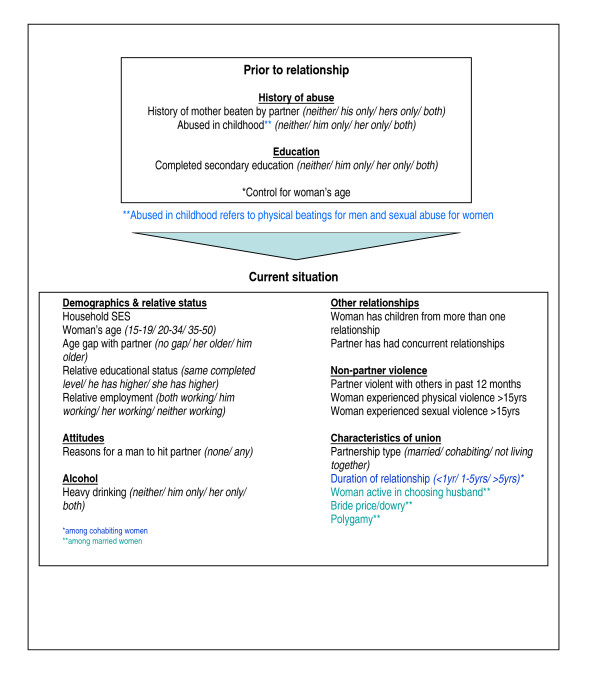
- Secondary education (or primary in Bangladesh, Ethiopia, and Tanzania) completed by both partners was protective in 12/14 sites (10 significant), and high SES was protective in 14 sites (8 significant comparing highest to lowest status).
- Alcohol problems in either or both partners were associated with higher IPV: him 14/14 sites (12 significant), her 10/11 (5 significant), both 11/11 (7 significant); attitudes supportive of wife beating were associated with increased IPV in 13/15 sites (8 significant).
- Prior abuse was consistently associated with IPV: reported abuse of the woman’s mother, partner’s mother, or both increased risk in all sites (10 significant for women, 10 for partners, 12 for both); childhood sexual abuse of the woman, childhood beatings of her partner, or both increased risk (15/15 for partners, all significant; 13/15 for women and both, 10 significant).
- Cohabitation without formal marriage increased IPV in 10/12 sites (3 significant); younger women aged 15–19 and 20–35 had increased risk in all sites (significant in 12); polygamy increased risk in all 6 sites where practiced (3 significant).
Methods
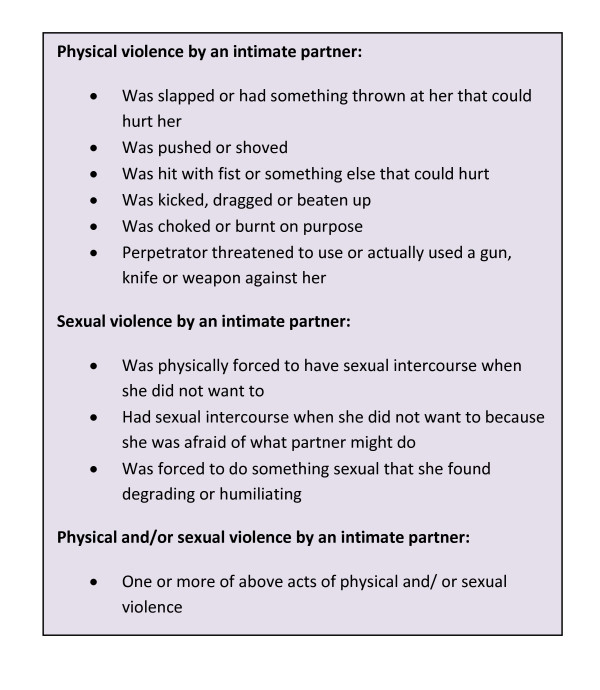
- Standardized population-based household surveys were conducted between 2000 and 2003 in Bangladesh, Brazil, Ethiopia, Japan, Namibia, Peru, Republic of Tanzania, Samoa, Serbia and Montenegro, and Thailand; one woman aged 15–49 was randomly selected per household, with 24,097 women interviewed and 19,517 ever-partnered women asked about partner violence.
- The outcome compared women reporting any physical and/or sexual partner violence in the past 12 months with women reporting no partner violence; women with lifetime but not past-year violence were excluded. Analyses included 15,207 women for “prior to relationship” models and 15,058 for “current situation” models.
- Multivariate logistic regression was run separately by site, with prior-to-relationship and current-situation variables modeled separately; ORs of 0.95–1.05 were considered no association, ≥1.05 risk factors, and ≤0.95 protective factors, with significance at 5%.
Limitations
- The paper states that the cross-sectional design limits conclusions about temporality or causality, although separating early-life and current characteristics clarifies temporality for some factors.
- The paper states that only women were interviewed, so partner characteristics rely on women’s reports and refer to the current or most recent partner, who may not be the perpetrator; any resulting misclassification would bias results toward the null.
- The text makes evident that small numbers in extreme exposure categories produced wide confidence intervals for some abuse-related ORs, and many site-specific associations were non-significant or varied in direction, so consistency is based on patterns across sites rather than uniform statistical significance.
Model-written summary. Check it against the paper before relying on it.
Integrity signals
Registry
Cites
Statistics
Figures
Verification
Claims the paper makes
3 Valid · 0 Not valid · 13 Not checked · 62 Own results and interpretations
Every source the paper cites for this claim was checked and supports it.
In the paper
“Higher socioeconomic status is generally associated with lower levels of physical and/or sexual partner violence.”
§ What factors are associated with recent intimate partner violence? findings from the WHO multi-country study on women's health and domestic violence > Discussion
What the sources say
- Supportedcites [27] Vyas S Watts C How does economic empowerment affect women's risk of intimate partner violence in low and middle income country settings?: A systematic review of published evidence J Int Dev 2009 21 577 602 10.1002/jid.1500 source
Section 4 (Discussion) says higher household socioeconomic status, measured by assets, is predominantly protective against intimate partner violence. Section 3.1 reports lower physical and/or sexual violence in several higher-wealth groups, while also noting null and contrary findings; the claim's word “generally” accommodates that variation. Page numbers are not provided for these passages. (LLM, conf=0.88)
plainstates an association- Asserted: passes — The authors put it forward as true.
- Checkable: passes — It can be checked against evidence.
- Load-bearing: passes — The paper’s conclusions depend on it.
- Based: passes — The paper gives a reason why it holds.
- Supported
A result the paper reports from its own data — it cites no other source for it, so there is none to check. The quote shows it is in the paper.
In the paper
“There was no consistent pattern of association between IPV and relative employment status.”
§ What factors are associated with recent intimate partner violence? findings from the WHO multi-country study on women's health and domestic violence > Results > Current situation model
plain- Asserted: passes — The authors put it forward as true.
- Checkable: passes — It can be checked against evidence.
- Load-bearing: unclear — It is unclear whether the paper’s conclusions depend on it.
- Based: passes — The paper gives a reason why it holds.
A result the paper reports from its own data — it cites no other source for it, so there is none to check. The quote shows it is in the paper.
In the paper
“Secondary education, high SES, and formal marriage offered protection, while alcohol abuse, cohabitation, young age, attitudes supportive of wife beating, having outside sexual partners, experiencing childhood abuse, growing up with domestic violence, and experiencing or perpetrating other forms of violence in adulthood, increased the risk of IPV.”
§ What factors are associated with recent intimate partner violence? findings from the WHO multi-country study on women's health and domestic violence > Abstract > Results
plainstates a cause- Asserted: passes — The authors put it forward as true.
- Checkable: passes — It can be checked against evidence.
- Load-bearing: passes — The paper’s conclusions depend on it.
- Based: passes — The paper gives a reason why it holds.
A result the paper reports from its own data — it cites no other source for it, so there is none to check. The quote shows it is in the paper.
In the paper
“In all sites odds of IPV were higher in relationships where one or both partners had problems with alcohol, compared to relationships where neither of them did (him 14/14, 12 significant; her 10/11, 5 significant; both 11/11, 7 significant).”
§ What factors are associated with recent intimate partner violence? findings from the WHO multi-country study on women's health and domestic violence > Results > Current situation model
plainstates an association- Asserted: passes — The authors put it forward as true.
- Checkable: passes — It can be checked against evidence.
- Load-bearing: passes — The paper’s conclusions depend on it.
- Based: passes — The paper gives a reason why it holds.
56 more claims
Create a free account to see all 78 claims and to verify the 3 references still open.
- It may state two separate claims as one. 8
- Probably not a substantial claim. 9
Self-check
Percentages, sums and reported differences re-computed from the paper’s own numbers.
Each contradiction between two passages listed here was confirmed by an independent check.
Rated minor: it would not touch a result — a value no result rests on, a p-value that stays on the same side of the significance level, or a conflict that is clerical, resolved elsewhere in the paper, or outside its own findings.
In the paper
§ What factors are associated with recent intimate partner violence? findings from the WHO multi-country study on women's health and domestic violence > Results > Prior to relationship
“15/15 sites for partners, all significant”
§ What factors are associated with recent intimate partner violence? findings from the WHO multi-country study on women's health and domestic violence > Results
“| 7 | 2.5 (1.4 - 4.3) | 5 | 1.6 (0.89 - 2.8) |”
Rated minor: it would not touch a result — a value no result rests on, a p-value that stays on the same side of the significance level, or a conflict that is clerical, resolved elsewhere in the paper, or outside its own findings.
In the paper
§ What factors are associated with recent intimate partner violence? findings from the WHO multi-country study on women's health and domestic violence > Results > Prior to relationship
“reports of abuse of the woman's mother, her partners' mother, or both (compared to no known reported abuse of either mother) being associated with increased risk of IPV in all sites”
§ What factors are associated with recent intimate partner violence? findings from the WHO multi-country study on women's health and domestic violence > Results
“| 4 | 2.5 (1.1 - 5.5) | 2 | 0.47 (0.06 - 4.0) | 2 | 2.2 (0.93 - 5.3) |”
Citations
Cites
The world report on violence and health
Krug, E. G., Mercy, J. A., Dahlberg, L. L., & Zwi, A. B. (2002) · The Lancet · doi:10.1016/s0140-6736(02)11133-0 · Cited by 9,110 · cited 1×
“The consistent association between IPV and other forms of violence against women also point to the need for integrated responses to violence across sectors and programmes [30,31].”
BackgroundMultilevel analysis techniques and applications
Hox, J. J., Moerbeek, M., & van de Schoot, R. (2002) · Cited by 6,886
Garcia-Moreno, C., Jansen, H. A., Ellsberg, M., Heise, L., & Watts, C. H. (2006) · The Lancet · doi:10.1016/s0140-6736(06)69523-8 · Cited by 3,176
Self-citationBehind Closed Doors: Violence in the American Family.
Boudouris, J., Straus, M. A., Gelles, R. J., & Steinmetz, S. K. (1982) · Contemporary Sociology · doi:10.2307/2068814 · Cited by 3,088
Hox, J., Moerbeek, M., & van de Schoot, R. (2002) · doi:10.4324/9781410604118 · Cited by 2,419
Violence Against Women: An Integrated, Ecological Framework
HEISE, L. L. (1998) · Violence Against Women · doi:10.1177/1077801298004003002 · Cited by 2,042
Self-citationIntimate partner violence: causes and prevention
Jewkes, R. (2002) · The Lancet · doi:10.1016/s0140-6736(02)08357-5 · Cited by 1,993
Ellsberg, M., Jansen, H. A., Heise, L., Watts, C. H., & Garcia-Moreno, C. (2008) · The Lancet · doi:10.1016/s0140-6736(08)60522-x · Cited by 1,820 · cited 1×
“In addition to being a concern in its own right, IPV is associated with a range of adverse physical, mental, sexual and reproductive health outcomes [2-8].”
BackgroundSelf-citationDunkle, K. L., Jewkes, R. K., Brown, H. C., Gray, G. E., McIntryre, J. A., & Harlow, S. D. (2004) · The Lancet · doi:10.1016/s0140-6736(04)16098-4 · Cited by 1,323 · cited 1×
“In addition to being a concern in its own right, IPV is associated with a range of adverse physical, mental, sexual and reproductive health outcomes [2-8].”
BackgroundIntimate partner physical abuse perpetration and victimization risk factors: A meta-analytic review
Stith, S. M., Smith, D. B., Penn, C. E., Ward, D. B., & Tritt, D. (2004) · Aggression and Violent Behavior · doi:10.1016/j.avb.2003.09.001 · Cited by 1,082 · cited 1×
“Studies in various countries have identified a range of factors that influence IPV risk [9-13], but in some cases, protective factors in one setting may be ineffective or actually increase risk in another [14].”
Background
Research works printed but not linked: 4
- Kishor S Johnson K Profiling domestic violence: A multicountry study 2004 Calverton, Maryland, USA: ORC Macro
- DoH South Africa Demographic and Health Survey 1998: final report 2002 Pretoria: Department of Health
- Harvey A Garcia Moreno C Butchart A Primary prevention of intimate partner violence and sexual violence: Background paper for WHO expert meeting May 2-3, 2007 2007 Geneva: World Health Organization, Department of Violence and Injuy Prevention and Disability
- Counts D Brown J Campbell J Sanctions and Sanctuary 1992 Boulder: Westview Press
Cited by
Items 901–1,000 of 1,413
Tarzia, L., Egan, N., Harris, M. L., et al. (2025) · Journal of Interpersonal Violence · doi:10.1177/08862605251372576 · Cited by 4
The tripartite tragedy: Alcohol and other drugs, intimate partner violence and child abuse
Hameed, M. A. (2019) · Children Australia · doi:10.1017/cha.2018.52 · Cited by 7
“Intimate partner violence (IPV), while a complex phenomenon, is a preventable (Campbell, 2002) public health concern (Abramsky et al., 2011) that is of global significance (Devries et al., 2013).”
BackgroundInfluentialWong, J. S., & Bouchard, J. (2020) · Journal of Aggression Maltreatment & Trauma · doi:10.1080/10926771.2020.1832172 · Cited by 5
“, 2009), misogynistic beliefs and patriarchal ideologies (Abramsky et al., 2011; Stith et al., 2004), justification of violent behaviors (e.”
BackgroundVictims of Gender-Based Violence at One-stop Crisis Centers of Bangladesh
Newaz, M. S., Saha, S., Salekuzzaman, K., & Sultana, S. (2023) · International Journal of Social Science Research and Review · doi:10.47814/ijssrr.v6i1.886 · Cited by 9
Abeyasekera, A. L. (2023) · Ethnos · doi:10.1080/00141844.2023.2240537 · Cited by 5
“Public health scholarship has tended to collapse DV with IPV (cf., Garcia-Moreno et al. 2006; Abramsky et al. 2011), obfuscating how women simultaneously endure IPV and familial violence (WHO 2005: 44).”
The Association Between Food Insecurity and Intimate Partner Violence Among U.S. Army Soldiers
Beymer, M. R., & Rabbitt, M. P. (2024) · Journal of Interpersonal Violence · doi:10.1177/08862605241253024 · Cited by 4
“…attitudinal (attitudes supportive of domestic violence), behavioral (having outside sexual partners, alcohol abuse), and historical (experiencing childhood abuse, growing up with domestic violence, and experiencing or perpetrating other forms of violence in adulthood) (Abramsky et al., 2011).”
Intimate Partner Violence and HIV Outcomes Among Women Living with HIV in Durban, South Africa
Ojeaburu, S. O., Dorward, J., Violette, L. R., Gibbs, A., Shozi, H., Sookrajh, Y., Mhlongo-Gumbi, T., Ngobese, H., Garrett, N., & Drain, P. K. (2024) · AIDS and Behavior · doi:10.1007/s10461-024-04318-x · Cited by 6
“Poorer women with lower educational attainment have an increased risk of both prior and future IPV [44]; studies have demonstrated a u-shaped relationship between educational attainment and IPV risk, with higher risk at the extremes of educational attainment [45], though with protective effects as…”
BackgroundCorboz, J., Dartnall, E., Brown, C., Fulu, E., Gordon, S. L., & Tomlinson, M. (2024) · Health Research Policy and Systems · doi:10.1186/s12961-024-01153-3 · Cited by 6
“The study also made an important contribution to the literature on factors associated with women’s experience of IPV [5].”
BackgroundNakie, G., Tadesse, G., Fentahun, S., Rtbey, G., Andualem, F., Kibralew, G., Kelebie, M. A., Melkam, M., Tinsae, T., Kassa, M. A., et al. (2025) · BMC Public Health · doi:10.1186/s12889-025-23544-z · Cited by 13
“Additionally, compared to women without jobs, working women may be more exposed to social networks, which increases their awareness of their rights and their likelihood of reporting domestic violence incidents [44–46].”
Rende, S. (2014) · Journal of Interpersonal Violence · doi:10.1177/0886260513520468 · Cited by 6
“…identified, previous exposure to violence, particularly in the natal families of both husband and wife, contributes to its exercise and acceptance (Abramsky et al., 2011; Dhaher, Mikolajczyk, Maxwell, & Krämer, 2010; Linos, Khawaja, & Al-Nsour, 2010; Ozcakir, Bayram, Ergin, Selimoglu, & Bilgel,…”
BackgroundGoyette, M. S., Wilson, K. S., Deya, R. W., et al. (2017) · JAIDS Journal of Acquired Immune Deficiency Syndromes · doi:10.1097/qai.0000000000001282 · Cited by 4
Substanzbezogene Störungen und traumatische Erfahrungen in der Kindheit: Ein Überblick
Wieland, N., & Klein, M. C. (2018) · Suchttherapie · doi:10.1055/a-0582-1751 · Cited by 6
Problem-Oriented Public Safety
Kennedy, D. M. (2020) · Routledge eBooks · doi:10.4324/9780429457357-31 · Cited by 4
Males' attitudes towards violence against women and the affecting factors
Polat, S., Aktaş, B., Bakan, A. B., et al. (2020) · Perspectives In Psychiatric Care · doi:10.1111/ppc.12631 · Cited by 4
“29 Especially violence against women is accepted as a public health problem by the World Health Organization, and researchers who are worried about violence against women are reported to have an emergency call for action to governments and international platforms.”
Knowledge and Attitude Towards Intimate Partner Violence Among Ever-Married Women
Reyal, H. P., Perera, M. N., & Guruge, G. N. D. (2020) · Advanced Journal of Social Science · doi:10.21467/ajss.7.1.1-13 · Cited by 6
Wagle, S., Pandey, G., & Sharma, B. (2021) · Journal of Health and Allied Sciences · doi:10.37107/jhas.216 · Cited by 4
Factors associated with men’s perpetration of physical violence against intimate partners in India
Gautam, A., Singh, K. K., Singh, B. P., & Verma, R. K. (2021) · Canadian Studies in Population · doi:10.1007/s42650-021-00052-0 · Cited by 6
“The relationship between age and violence perpetration by men is not consistent; there are studies which shows that young age is linked with higher likelihood of committing IPV (WHO, 2012; Abramsky et al., 2011; Carlson & Worden, 2005), while there are studies that show that older men are more likely to perpetrate vio…”
BackgroundResultInfluentialHoward, J. A., & Gibson, M. A. (2021) · Global Public Health · doi:10.1080/17441692.2021.1991974 · Cited by 4
“The co-occurrence of IPV specifically with other forms of VAWG has also been demonstrated, such as IPV and early marriage (Kidman, 2017), and IPV and non-partner violence (Abramsky et al., 2011; Krebs et al., 2011).”
BackgroundMethodBand‐Winterstein, T., Goldblatt, H., Lev, S., & Harel, D. (2021) · Health & Social Care in the Community · doi:10.1111/hsc.13672 · Cited by 7
Akombi-Inyang, B. J., Ghimire, P. R., Archibong, E., Woolley, E., & Razee, H. (2021) · PLoS ONE · doi:10.1371/journal.pone.0259980 · Cited by 6
Li, Y., Levy, J. A., & Hershow, R. C. (2022) · AIDS and Behavior · doi:10.1007/s10461-022-03722-5 · Cited by 4
“At the individual level, individual sociodemographic and household characteristics such as younger age, lower education, poorer health, lower family income, and greater number of young children [1, 36, 37] appear to condition a relationship for increased risk of violence for women.”
BackgroundWomen autonomy and its sociodemographic correlates in high focus states of India
Patel, V. S., Patel, S. A., & Patel, P. K. (2022) · International Journal of Community Medicine and Public Health · doi:10.18203/2394-6040.ijcmph20221755 · Cited by 4
Pettitt, L. A., Biswas, R. K., & Bhowmik, J. (2023) · American Journal of Health Promotion · doi:10.1177/08901171231198451 · Cited by 8
“…insights about sociodemo-graphic associations with women ’ s attitudes toward IPV, fi ve consistently documented IPVrisk indicator, population-based, demographic explanatory variables were considered: wealth index, age, education level, marital status, and area of residence 2,4-6, 8, 11, 12, 14 .”
BackgroundGulliver, P. J., Fanslow, J., Fleming, T. M., Lucassen, M. F. G., & Dixon, R. (2018) · Australian and New Zealand Journal of Public Health · doi:10.1111/1753-6405.12775 · Cited by 6
DUKUNGAN SOSIAL DAN KUALITAS HIDUP FISIK PEREMPUAN KORBAN KEKERASAN DALAM RUMAH TANGGA
Hitijahubessy, C. N. M., Affiyanti, Y., & Budiati, T. (2018) · Jurnal Kesehatan Terpadu (Integrated Health Journal) · doi:10.32695/jkt.v1i9.8 · Cited by 4
ÖZDEMİR, G., & Ucar, G. K. (2021) · Nesne Psikoloji Dergisi · doi:10.7816/nesne-09-21-06 · Cited by 4
Intimate Partner Violence, Spiritual Well-Being, and Parenting Stress in African-American Women
Wilson, C. K., Lamis, D. A., Winn, S., & Kaslow, N. J. (2014) · Journal of Spirituality in Mental Health · doi:10.1080/19349637.2014.957604 · Cited by 7
“Intimate partner violence (IPV) is a critical global public health issue and human rights concern (Abramsky et al., 2011).”
BackgroundAmoran, O., Oni, O., & Salako, A. A. (2017) · Journal of Clinical Sciences · doi:10.4103/2468-6859.199161 · Cited by 4
Violence between Different Members in the Family System: A Household Survey in a Brazilian City
Gebara, C. F. D. P., Ferri, C. P., Bhona, F. M. D. C., Vieira, M. D. T., Lourenço, L. M., & Noto, A. R. (2019) · Journal of Family Issues · doi:10.1177/0192513x19887415 · Cited by 5
“Even though this aspect was not the object of investigation in the present study, early exposure to domestic violence (as a direct victim or as a witness) is often thought to be a risk factor for violence in adulthood (Abramsky et al., 2011; Capaldi et al., 2012).”
BackgroundResultInfluential‘If You Do Not Believe That It Happens You Won’t See It Either!’-Sexual Abuse in Later Life
Malmedal, W. (2020) · International perspectives on aging · doi:10.1007/978-3-030-25093-5_6 · Cited by 5
Goldberg, X., Espelt, C., Palao, D. J., Nadal, R. A., & Armario, A. (2020) · BMJ Open · doi:10.1136/bmjopen-2019-036561 · Cited by 4
Trefán, L., Akbari, A., Morgan, J. S., Farewell, D. M., Fone, D. L., Lyons, R. A., Jones, H., & Moore, S. (2021) · International Journal for Population Data Science · doi:10.23889/ijpds.v6i1.1373 · Cited by 6
“There is also an increased risk of harm resulting from violence, including homicide [5], suicide [6], road traffic accidents [7], domestic violence [8], and assaults [9].”
BackgroundAlcohol Consumption and Intimate Partner Violence: Evidence from a recent policy in IndiaPreprint
Dixit, M., & Mukherjee, S. (2023) · SSRN Electronic Journal · doi:10.2139/ssrn.4316324 · Cited by 4
Intimate partner violence, adverse childhood experiences and prenatal substance use in South Africa
Ndumo, M. L., Bhengu, B. S., Mashaphu, S., et al. (2022) · South African Journal of Psychiatry · doi:10.4102/sajpsychiatry.v28i0.1937 · Cited by 3
“The eligibility criteria were female participants who: (1) could read and/or write English or IsiZulu, (2) had given birth in the past week receiving in- or out-patient services at the hospital and (3) were aged between 18 and 45 years.”
BackgroundMethodInfluentialGuermazi, F., Tabib, F., Cherif, F., Masmoudi, R., Mnif, D., Féki, I., Baati, I., & Masmoudi, J. (2024) · Social Sciences · doi:10.3390/socsci13100503 · Cited by 14
“In addition, other authors have confirmed that the difference in educational level is the main factor that could increase the risk of any type of IPV by generating frustration among men regarding their belief in their socially dominant role (Klibi et al. 2022; Abramsky et al. 2011).”
BackgroundZinzow, H. M., Pericot‐Valverde, I., Smalls, L., Brancato, M. G., Chapman, G., Smith, A., Thompson, A., Greco, C., Shank, M., Eichelberger, K. Y., et al. (2025) · JMIR Research Protocols · doi:10.2196/68673 · Cited by 3
“The THRIVE program is one of only a few programs to adopt an integrated approach to these 2 co-occurring forms of violence [53,89].”
Fouad, A. E. A., Ali, S. I., Soliman, M. G., & Osman, A. (2019) · Ain Shams Journal of Forensic Medicine and Clinical Toxicology · doi:10.21608/ajfm.2019.23655 · Cited by 4
“he current definition of domestic violence according to The World Health Organization's (WHO) including the physical acts, threat isolation, sexual compulsion, emotional abuse as well as limiting approximation to health attention or fiscal resources (Abramsky et al.,2011).”
MethodOn the Relationship Between Intimate Partner Violence and Quality of Life Among Menopausal Women
Ghazanfarpour, M., Dolatabadi, Z., Saeedi, M., Shojania, S., Kiani, M. A., Abadi, M. M., & Babakhanian, M. (2022) · Journal of Archives in Military Medicine · doi:10.5812/jamm.116322 · Cited by 6
Karaaziz, M., & Tansel, E. (2022) · Cyprus Journal of Medical Sciences · doi:10.4274/cjms.2020.1437 · Cited by 4
Domestic violence among women in slums: scope for public health intervention
Chatterjee, D., & Ganguly, S. (2022) · International Journal of Community Medicine and Public Health · doi:10.18203/2394-6040.ijcmph20222019 · Cited by 2
The nexus between harmful alcohol use and intimate partner violence, a case study
Mathebula, W. N., Makhubele, J. C., & Singwane, T. P. (2022) · International Journal of Research in Business and Social Science (2147-4478) · doi:10.20525/ijrbs.v11i9.2199 · Cited by 7
Singkhorn, O., Apidechkul, T., Srichan, P., Mulikaburt, T., Kitchanapaibul, S., Udplong, A., Upala, P., Chomchoei, C., Yeemard, F., Tamornpark, R., et al. (2023) · BMC Public Health · doi:10.1186/s12889-023-15162-4 · Cited by 6
Brem, M. J., Wolford‐Clevenger, C., Garner, A. R., Edwards, K. M., & Shorey, R. C. (2023) · Journal of Interpersonal Violence · doi:10.1177/08862605231195818 · Cited by 6
“…the strength of the association between alcohol use and PA perpetration is comparable to the strength of the associations between PA and other factors (e.g., gender, violence-condoning attitudes, and anger; Abramsky et al., 2011; Foran & O’Leary, 2008; Leonard & Quigley, 2017; Stith et al., 2004).”
BackgroundStalkers and Substance Use: A Scoping Review
Landwehr, E., Roberts, L. D., Garratt‐Reed, D., & Maxwell‐Smith, C. (2024) · Aggression and Violent Behavior · doi:10.1016/j.avb.2024.101927 · Cited by 4
Ola, B. E. (2024) · Violence Against Women · doi:10.1177/10778012241238238 · Cited by 3
“IPVAW is higher both in relationships where one or both partners justify IPVAW (Abramsky et al., 2011; Johnson, 2001; Ola & Smith, 2023; Yoshikawa et al., 2014) and in communities where it is popularly accepted (Cools & Kotsadam, 2017; Hindin et al., 2008; Uthman et al., 2011).”
BackgroundInfluentialTanyos, A., Jiang, J., Jenkinson, R., & Laslett, A. (2024) · The International Journal of Alcohol and Drug Research · doi:10.7895/ijadr.497 · Cited by 5
Shiakou, M., Alexopoulos, A., Vasou, C., Nicolaou, P., Epaminonda, M., & Neofitides, S. (2025) · Violence Against Women · doi:10.1177/10778012241309361 · Cited by 5
“Drawing upon the aims of the Play Equal project, key peer-reviewed scienti fi c articles (Abramsky et al., 2011; APA, 2018; Barker et al., 2007; Baugher & Gazmararian, 2015; Slegh & Richters, 2012) and empirically reliable, similar tools were consulted to design the fi rst draft of the discussion…”
Messner, W. (2025) · World Development · doi:10.1016/j.worlddev.2025.107121 · Cited by 8
Katague, M., Kershaw, T., Sharpless, L., Alexander, K. A., & Willie, T. C. (2025) · Women s Health Issues · doi:10.1016/j.whi.2025.09.001 · Cited by 3
Domestic Violence and Sexual Health among Young Women in Zambia
Thankian, K., Mwaba, S. O. C., & Menon, J. A. (2015) · African Research Review · doi:10.4314/afrrev.v9i4.1 · Cited by 3
Disseminating the Community Advocacy Project in Mexico: A Feasibility Study
Sullivan, C. M., Aguilar, E., López‐Zerón, G., & Parra‐Cardona, J. R. (2016) · Journal of Interpersonal Violence · doi:10.1177/0886260516663901 · Cited by 4
“, 2000), and most communities are still insufficiently holding perpetrators accountable for their abuse (Abramsky et al., 2011; Frantzen, Miguel, & Kwak, 2011).”
BackgroundA REPORT ABOUT INTIMATE PARTNER VIOLENCE IN SOUTHERN AND WESTERN RWANDA
Mukashema, I. (2018) · International Journal of Child Youth and Family Studies · doi:10.18357/ijcyfs93201818277 · Cited by 6
Manivong, D., Rahman, M., Nakamura, K., & Seino, K. (2018) · Journal of Rural Medicine · doi:10.2185/jrm.2968 · Cited by 4
Do women justify the violence they face? Intimate partner violence among married women
Mukherjee, R., Joshi, R., & Arora, M. (2020) · Medical Journal of Dr D Y Patil Vidyapeeth · doi:10.4103/mjdrdypu.mjdrdypu_255_18 · Cited by 4
Ghosh, K., & Mog, M. (2020) · International Journal of Community Medicine and Public Health · doi:10.18203/2394-6040.ijcmph20204377 · Cited by 3
“On the other hand, the consistency factors accompanying with man's attempting Violence against women is more likely if that individual has lower education level, premature marriage, addicted to drugs, intrinsic witness or experience by others.(9)”
BackgroundSeff, I., & Stark, L. (2021) · Springer eBooks · doi:10.1007/978-3-030-83707-5_9 · Cited by 5
Cardenas, I., & Cuesta, L. (2022) · Family Relations · doi:10.1111/fare.12656 · Cited by 5
Goyomsa, G. G., Arga, T., Debela, S. A., & Deribe, L. (2022) · International Journal for Equity in Health · doi:10.1186/s12939-022-01647-y · Cited by 6
Lyons, M. J., Swahn, M. H., Culbreth, R. E., Reidy, D. E., Musuya, T., & Bukuluki, P. (2022) · International Journal of Environmental Research and Public Health · doi:10.3390/ijerph192013373 · Cited by 3
“For example, socioeconomic status (SES) has been shown to be associated with IPV perpetration and risk across settings, with one study across 10 countries showing a protective effect of high SES against IPV victimization [24].”
BackgroundParenthood: Disrupting the Intergenerational Transmission of Social Disadvantage
Burke, K., & Dittman, C. K. (2022) · Life course research and social policies · doi:10.1007/978-3-031-12224-8_11 · Cited by 6
Lin, K., & Liu, L. (2023) · Crime & Delinquency · doi:10.1177/00111287231178676 · Cited by 3
“…hegemonic masculinity increases males’ propensity to partner violence by cultivating a sense of entitled dominance and control over female partners (Abramsky et al., 2011; Fulu et al., 2013; Loveland & Raghavan, 2017) and that women who accept male-dom-inance ideology are more likely to condone…”
Cherian, R. M., & Anna Reshmy, N. Y. (2023) · Critical and Radical Social Work · doi:10.1332/204986021x16844918105641 · Cited by 4
Ola, B. E., & Smith, P. M. (2023) · Journal of Family Violence · doi:10.1007/s10896-023-00607-6 · Cited by 4
“While it has been well established in alcohol-IPVAW literature that alcohol is indeed a strong predictor of IPVAW (Leonard, 2005; Abramsky et al., 2011 ; Laslett et al., 2021), what has been less investigated is the extent to which increases or decreases in alcohol consumption behaviors among men…”
InfluentialKuunibe, N., Bountogo, M., Ouèrmi, L., Sié, A., Bärnighausen, T., & Harling, G. (2023) · BMJ Open · doi:10.1136/bmjopen-2022-071104 · Cited by 6
Dzinamarira, T. R., Mutevere, M., Nyoka, S., Moyo, E., Muzenda, L., Kakumura, F., & Dzinamarira, T. (2023) · Global Journal of Health Science · doi:10.5539/gjhs.v16n1p1 · Cited by 4
Impulsivity and intimate partner violence
Humbert, I., Laurin, A., Sauvaget, A., Nabhan-Abou, N., & Bulteau, S. (2024) · Elsevier eBooks · doi:10.1016/b978-0-443-13437-1.00008-2 · Cited by 7
Refuting Six Misconceptions about Romantic Love
Langeslag, S. J. E. (2024) · Behavioral Sciences · doi:10.3390/bs14050383 · Cited by 6
Zhang, B. (2024) · Victims & Offenders · doi:10.1080/15564886.2024.2410343 · Cited by 8
“The determinants of violence against females vary significantly across regions (Abramsky et al., 2011).”
Chakraborty, A., & Jungari, S. B. (2024) · Global Social Welfare · doi:10.1007/s40609-024-00360-8 · Cited by 5
“Many studies have focused on understanding the frequency and causes of intimate partner violence in India, exploring various risk factors at the individual, household, and community levels (Abramsky et al., 2011).”
Transteoretical Approaches on Domestic Violence
Popa-Nedelcu, R., Siserman, C., & Domnariu, C. D. (2019) · Acta Medica Transilvanica · doi:10.2478/amtsb-2019-0001 · Cited by 2
“(15) Also, these two elements are associated with other psycho-social components with a strong impact on communities, such as: psychological integrity, precarious socioeconomic status, educational deficiencies, disorganized social environment, organic and psychic comorbidities.(16,17) Of the most associated domestic p…”
BackgroundThomas, T., Guddattu, V., & M3, M. (2020) · Indian Journal of Public Health Research & Development · doi:10.37506/ijphrd.v11i6.9942 · Cited by 5
Nishat, K. J., & Rahman, M. S. (2018) · IGI Global eBooks · doi:10.4018/978-1-5225-7036-3.ch036 · Cited by 3
Mulheres violentadas: caracterização dos casos registrados no estado do Maranhão/Brasil, 2011-2019
Oliveira, M. G. R., Dantas, J. R., da Conceição, H. N., Cardoso, G. G. S., da Conceição, H. N., & Silva, Í. R. C. (2023) · O Mundo da Saúde · doi:10.15343/0104-7809.202347e13932022p · Cited by 3
Toward a transformed system to address child abuse and family violence in New Zealand
Foote, J., Taylor, A., Nicholas, G., Carswell, S., Wood, D., Winstanley, A., & Hepi, M. (2014) · Cited by 8
Burke, A. (2015) · OhioLink ETD Center (Ohio Library and Information Network) · Cited by 8
Alcohol and the legal system: Effects of alcohol on eyewitness testimony
Gawrylowicz, J., & Bartlett, G. (2021) · Elsevier eBooks · doi:10.1016/b978-0-12-816720-5.00016-5 · Cited by 3
Kosia, A. L., Frumence, G., Nyamhanga, T. M., et al. (2021) · International Journal of Community Medicine and Public Health · doi:10.18203/2394-6040.ijcmph20211966 · Cited by 3
“According to the WHO multi-country study on women’s health and domestic violence (2000-2003), the prevalence of IPV was 41% and 56%, respectively, among a representative sample of ever-partnered women in Dar es Salaam and the southern district of Mbeya.18,19 Particular concern is the evidence of links between IPV, sex…”
MethodThe Impact of Aggregate Level Alcohol Consumption on Homicide Rates: A Time Series Analysis
Kumar, T. K. V. (2021) · International Journal of Offender Therapy and Comparative Criminology · doi:10.1177/0306624x211028774 · Cited by 4
“Higher rates of violence occur involving men consuming alcohol compared to those who do not consume alcohol (O’Farrell & Murphy, 1995) and among male binge drinkers (Abramsky et al., 2011; Foran & O’Leary; 2008).”
BackgroundAnxiety disorder on women of domestic violence victims
Zola, N., Suhaili, N., Marjohan, M., Ifdil, I., & Afdal, A. (2021) · Jurnal Konseling dan Pendidikan · doi:10.29210/170600 · Cited by 7
“Domestic violence victims Domestic violence, also known as intimate partner violence, happens when two people are in a close relationship (Abramsky et al., 2011).”
BackgroundBoodram, C.-A. S. (2022) · Springer eBooks · doi:10.1007/978-3-030-88476-5_8 · Cited by 6
MASIANO, S. P., Tembo, T. A., Yu, X., Wetzel, E., Mphande, M., Chitani, M., Mkandawire, A., Khama, I., Mazenga, A. C., Abrams, E. J., et al. (2023) · Therapeutic Advances in Infectious Disease · doi:10.1177/20499361221148875 · Cited by 3
Exploring intimate partner violence among adult women and men in Sweden
Nybergh, L. (2014) · Gothenburg University Publications Electronic Archive (Gothenburg University) · Cited by 12
Violence against foreign-born women in Sweden
Fernbrant, C. (2013) · Lund University Publications (Lund University) · Cited by 11
The Effect of Alcohol Regulation on Violence Against Women: Evidence from IndiaPreprint
Luca, D. L., Owens, E. G., & Sharma, G. (2015) · SSRN Electronic Journal · doi:10.2139/ssrn.2540275 · Cited by 3
“Despite being a widespread phenomenon that occurs across different socioeconomic and cultural populations, the channels that lead to domestic, or intimate partner violence, remain poorly understood (Abramsky et al. 2011, Kishor and Johnson 2006).”
BackgroundFagbamigbe, A. F., Akintayo, A., Oshodi, O. C., et al. (2019) · bioRxiv (Cold Spring Harbor Laboratory) · doi:10.1101/524637 · Cited by 3
Shamu, S. (2013) · Ghent University Academic Bibliography (Ghent University) · Cited by 5
Paynter, E. (2015) · Digital Archive @ GSU · doi:10.57709/7062190 · Cited by 3
Keilholtz, B. M., Vail, S. L., & Spencer, C. M. (2024) · Aggression and Violent Behavior · doi:10.1016/j.avb.2024.101924 · Cited by 3
A Study on Women’s Perceptions of Intimate Partner Violence in Egypt
Khodary, Y. M., & Kamel, N. (2023) · Cultural Narratives. · doi:10.59066/cn.v1i2.623 · Cited by 2
Are women with disabilities more at risk of intimate partner violence?
Hervé, J., Theiss, K., & Mitra, S. (2025) · Social Forces · doi:10.1093/sf/soaf023 · Cited by 5
Patterns of marital residence and spousal violence among married people in Kogi state, Nigeria
Sulaiman, L. A.-R. (2025) · Social Science & Medicine · doi:10.1016/j.socscimed.2025.118663 · Cited by 2
Miller, F. A., Mannell, J., Brown, L. J., Gibbs, A., & Hatcher, A. M. (2025) · BMJ Global Health · doi:10.1136/bmjgh-2024-018322 · Cited by 5
“Living standards were identified as a confounding variable, and gross domestic product (GDP) based on purchasing power parity (GDP-PPP; the market value of goods and services produced in each country) was included in models to represent this.”
Armah‐Ansah, E. K., Adejumo, S. A., Ezekobe, E. E., Jalili, A., Ahmed, S., Oko-Oboh, E., Budu, E., & Omenka, C. O. (2025) · BMC Public Health · doi:10.1186/s12889-025-25220-8 · Cited by 9
“Studies conducted on IPV in Africa [84], India [87], and among 10 WHO multi-country [88] indicate that the relationship between education and the risk of IPV.”
Climate change, gendered identities, and adaptation strategies in rural Tanzanian households
Mbunda, K. A. (2025) · Climate and Development · doi:10.1080/17565529.2025.2603542 · Cited by 3
Bayoulou, S., Ngangue, P., Touré, I., KOUBATOU, K., KPENGLAM, K. A., Yopa, D. S., Arnaud, B., Nteungue, K., & Kiki, G. M. (2025) · International Journal for Equity in Health · doi:10.1186/s12939-025-02590-4 · Cited by 3
Evaluation of a social media campaign for the prevention of intimate partner violence
Seddig, D., Bartz, L., Bliesener, T., Rühs, F., Schauten, D., & Thomsen, S. L. (2026) · Journal of Experimental Criminology · doi:10.1007/s11292-025-09723-3 · Cited by 3
Avogo, W. A. (2026) · Journal of Family Violence · doi:10.1007/s10896-026-01051-y · Cited by 4
Gender-based violence in Brazil: scoping review of risk factors and associated health consequences
Sánchez, O. D. R., Rodrigues, L., Tanaka, É. Z., Borrego, N. G., & Surita, F. G. (2026) · Ciência & Saúde Coletiva · doi:10.1590/1413-81232026312.17332024en · Cited by 2
Violência de gênero no Brasil: revisão de escopo sobre fatores de risco e agravos à saúde
Sánchez, O. D. R., Rodrigues, L., Tanaka, É. Z., Borrego, N. G., & Surita, F. G. (2026) · Ciência & Saúde Coletiva · doi:10.1590/1413-81232026312.17332024 · Cited by 3
Climate Variability Influences Women’s Attitudes Towards Intimate Partner Violence (IPV)
Lee, J. Y. H. (2016) · USF Scholarship Repository (University of San Francisco) · Cited by 2
Metadata
- Authors
- Abramsky, T., Watts, C. H., Garcia-Moreno, C., Devries, K., Kiss, L., Ellsberg, M., Jansen, H. A., & Heise, L.
- Affiliations
- London School of Hygiene & Tropical Medicine (GB)
- International Center for Research on Women (US)
- Corresponding author
- Abramsky, Tanya
- Venue
- BMC Public Health
- Published
- 2011-02-16
- Volume
- 11
- Issue
- 1
- Pages
- 109-109
- ISSN
- 1471-2458 (ISSN-L)
- PMC
- PMC3049145
- OpenAlex
- W2146316233
- Semantic Scholar
- 124d14c4c5378026a820318c409f305314e161d1
- Cited by
- 1,413
- References
- 42
- Citations by year
- 2026: 66 · 2025: 85 · 2024: 102 · 2023: 96 · 2022: 108 · 2021: 133 · 2020: 137 · 2019: 105 · 2018: 103 · 2017: 106 · 2016: 95 · 2015: 89 · 2014: 75 · 2013: 69 · 2012: 28
- FWCI
- 60.57
- Type
- journal article
- Language
- en
- Open access
- gold
- doi.org
- Licence
- Locations
- BMC Public Health (publishedVersion, cc-by)
- PubMed Central (publishedVersion, cc-by)
- PubMed (publishedVersion)
- LSHTM Research Online (London School of Hygiene and Tropical Medicine) (acceptedVersion)
- DOAJ (DOAJ: Directory of Open Access Journals) (submittedVersion)
- Funders
- Rockefeller Foundation
- Styrelsen för Internationellt Utvecklingssamarbete
- United Nations Fund for Population Activities
- Mahidol University
- Umeå Universitet
- Universidade de São Paulo
- Uppsala Universitet
- Addis Ababa University
- Universidade Federal de Pernambuco
- Universidade de Pernambuco
- International Centre for Diarrhoeal Disease Research, Bangladesh
- Topics
- Social Sciences › Health › Intimate Partner and Family Violence
- Health Sciences › Medicine › Geriatrics and Gerontology › Elder Abuse and Neglect
- Social Sciences › Gender Studies › Sexual Assault and Victimization Studies
- Keywords
- intimate partner violence, domestic violence against women, risk factors, physical violence, sexual violence, alcohol abuse, childhood abuse, gender norms, IPV prevention, secondary education, socioeconomic status, cohabitation
- MeSH terms
- Adolescent, Adult, Data Collection, Female, Humans, Middle Aged, Risk Factors, Rural Population, Sexual Partners, Urban Population, World Health Organization, Logistic Models, Domestic Violence, Battered Women, Internationality, Young Adult
About these checks
Registry, retraction, Cites and statistics results are computed, not judged, with one exception: a printed reference that no index lists is read once by a model before it counts as a citation error. Claims are extracted by a model and kept only when their quote appears verbatim in the text; each cited source is then checked, with a model’s help, for whether it says what the claim relies on. Those verdicts can be wrong — read the claim’s quote and the cited source before relying on one.
The claim verdicts this report counts are experimental: their accuracy is not yet measured.
A language model drew the claims from the paper on 2026-10-10, under version 3 of the claim definition (model deepseek-v4.1-flash, prompt extract-v3).
A second model labelled each claim on 2026-10-10 (model jev-1.13-20260917, definition revision gold-guideline-v0.2).
Cited sources are checked with a language model’s help (gpt-6-sol).
Statistics and arithmetic are recomputed, not judged.
Confidence bands are shown only for fields calibrated on our annotated test set. None is calibrated yet, so no band is shown.
What counts as a claim ›How we measure confidence ›How we check this ›
Are you an author, or do you see a problem with this page? Request a review
Data sources
Bibliographic data: Semantic Scholar, OpenAlex, Crossref.
Contains information from the Semantic Scholar Academic Graph Datasets, made available under the ODC Attribution License (ODC-BY 1.0).
Semantic Scholar’s data is described in: Kinney, R., et al. (2023). The Semantic Scholar Open Data Platform. arXiv:2301.10140.
