

What factors are associated with recent intimate partner violence? findings from the WHO multi-country study on women's health and domestic violence
Open accessThe DOI matches its Crossref record; 41 of the 42 references it cites were found in a registry or an index, and 1 are not checked yet; 5 of the 24 sources its claims cite were checked for support.
Abstract
BACKGROUND: Intimate partner violence (IPV) against women is a global public health and human rights concern. Despite a growing body of research into risk factors for IPV, methodological differences limit the extent to which comparisons can be made between studies. We used data from ten countries included in the WHO Multi-country Study on Women's Health and Domestic Violence to identify factors that are consistently associated with abuse across sites, in order to inform the design of IPV prevention programs. METHODS: Standardised population-based household surveys were done between 2000 and 2003. One woman aged 15-49 years was randomly selected from each sampled household. Those who had ever had a male partner were asked about their experiences of physically and sexually violent acts. We performed multivariate logistic regression to identify predictors of physical and/or sexual partner violence within the past 12 months. RESULTS: Despite wide variations in the prevalence of IPV, many factors affected IPV risk similarly across sites. Secondary education, high SES, and formal marriage offered protection, while alcohol abuse, cohabitation, young age, attitudes supportive of wife beating, having outside sexual partners, experiencing childhood abuse, growing up with domestic violence, and experiencing or perpetrating other forms of violence in adulthood, increased the risk of IPV. The strength of the association was greatest when both the woman and her partner had the risk factor. CONCLUSIONS: IPV prevention programs should increase focus on transforming gender norms and attitudes, addressing childhood abuse, and reducing harmful drinking. Development initiatives to improve access to education for girls and boys may also have an important role in violence prevention.
Verified 2026-11-25 · 1 reference not checked yet
Overview
CoChat Summary
TL;DR
This WHO multi-country study used standardized household survey data from 10 countries and 15 sites to identify factors consistently associated with past-year physical and/or sexual intimate partner violence (IPV) among ever-partnered women. It found secondary education, high socioeconomic status, and formal marriage were protective, while alcohol abuse, cohabitation, young age, attitudes supportive of wife beating, outside sexual partners, childhood abuse, growing up with domestic violence, and other violence in adulthood increased risk, often most strongly when both partners had the factor.
Key findings
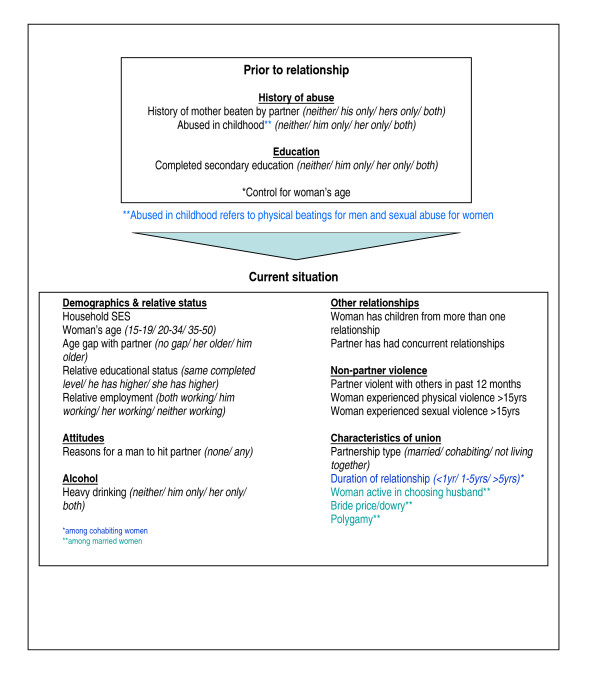
- Secondary education (or primary in Bangladesh, Ethiopia, and Tanzania) completed by both partners was protective in 12/14 sites (10 significant), and high SES was protective in 14 sites (8 significant comparing highest to lowest status).
- Alcohol problems in either or both partners were associated with higher IPV: him 14/14 sites (12 significant), her 10/11 (5 significant), both 11/11 (7 significant); attitudes supportive of wife beating were associated with increased IPV in 13/15 sites (8 significant).
- Prior abuse was consistently associated with IPV: reported abuse of the woman’s mother, partner’s mother, or both increased risk in all sites (10 significant for women, 10 for partners, 12 for both); childhood sexual abuse of the woman, childhood beatings of her partner, or both increased risk (15/15 for partners, all significant; 13/15 for women and both, 10 significant).
- Cohabitation without formal marriage increased IPV in 10/12 sites (3 significant); younger women aged 15–19 and 20–35 had increased risk in all sites (significant in 12); polygamy increased risk in all 6 sites where practiced (3 significant).
Methods
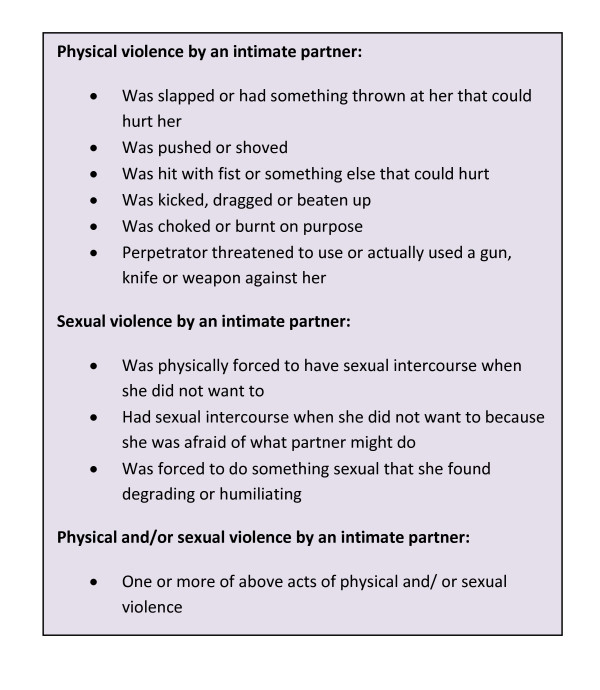
- Standardized population-based household surveys were conducted between 2000 and 2003 in Bangladesh, Brazil, Ethiopia, Japan, Namibia, Peru, Republic of Tanzania, Samoa, Serbia and Montenegro, and Thailand; one woman aged 15–49 was randomly selected per household, with 24,097 women interviewed and 19,517 ever-partnered women asked about partner violence.
- The outcome compared women reporting any physical and/or sexual partner violence in the past 12 months with women reporting no partner violence; women with lifetime but not past-year violence were excluded. Analyses included 15,207 women for “prior to relationship” models and 15,058 for “current situation” models.
- Multivariate logistic regression was run separately by site, with prior-to-relationship and current-situation variables modeled separately; ORs of 0.95–1.05 were considered no association, ≥1.05 risk factors, and ≤0.95 protective factors, with significance at 5%.
Limitations
- The paper states that the cross-sectional design limits conclusions about temporality or causality, although separating early-life and current characteristics clarifies temporality for some factors.
- The paper states that only women were interviewed, so partner characteristics rely on women’s reports and refer to the current or most recent partner, who may not be the perpetrator; any resulting misclassification would bias results toward the null.
- The text makes evident that small numbers in extreme exposure categories produced wide confidence intervals for some abuse-related ORs, and many site-specific associations were non-significant or varied in direction, so consistency is based on patterns across sites rather than uniform statistical significance.
Model-written summary. Check it against the paper before relying on it.
Integrity signals
Registry
Cites
Statistics
Figures
Verification
Claims the paper makes
3 Valid · 0 Not valid · 13 Not checked · 62 Own results and interpretations
Every source the paper cites for this claim was checked and supports it.
In the paper
“Higher socioeconomic status is generally associated with lower levels of physical and/or sexual partner violence.”
§ What factors are associated with recent intimate partner violence? findings from the WHO multi-country study on women's health and domestic violence > Discussion
What the sources say
- Supportedcites [27] Vyas S Watts C How does economic empowerment affect women's risk of intimate partner violence in low and middle income country settings?: A systematic review of published evidence J Int Dev 2009 21 577 602 10.1002/jid.1500 source
Section 4 (Discussion) says higher household socioeconomic status, measured by assets, is predominantly protective against intimate partner violence. Section 3.1 reports lower physical and/or sexual violence in several higher-wealth groups, while also noting null and contrary findings; the claim's word “generally” accommodates that variation. Page numbers are not provided for these passages. (LLM, conf=0.88)
plainstates an association- Asserted: passes — The authors put it forward as true.
- Checkable: passes — It can be checked against evidence.
- Load-bearing: passes — The paper’s conclusions depend on it.
- Based: passes — The paper gives a reason why it holds.
- Supported
A result the paper reports from its own data — it cites no other source for it, so there is none to check. The quote shows it is in the paper.
In the paper
“There was no consistent pattern of association between IPV and relative employment status.”
§ What factors are associated with recent intimate partner violence? findings from the WHO multi-country study on women's health and domestic violence > Results > Current situation model
plain- Asserted: passes — The authors put it forward as true.
- Checkable: passes — It can be checked against evidence.
- Load-bearing: unclear — It is unclear whether the paper’s conclusions depend on it.
- Based: passes — The paper gives a reason why it holds.
A result the paper reports from its own data — it cites no other source for it, so there is none to check. The quote shows it is in the paper.
In the paper
“Secondary education, high SES, and formal marriage offered protection, while alcohol abuse, cohabitation, young age, attitudes supportive of wife beating, having outside sexual partners, experiencing childhood abuse, growing up with domestic violence, and experiencing or perpetrating other forms of violence in adulthood, increased the risk of IPV.”
§ What factors are associated with recent intimate partner violence? findings from the WHO multi-country study on women's health and domestic violence > Abstract > Results
plainstates a cause- Asserted: passes — The authors put it forward as true.
- Checkable: passes — It can be checked against evidence.
- Load-bearing: passes — The paper’s conclusions depend on it.
- Based: passes — The paper gives a reason why it holds.
A result the paper reports from its own data — it cites no other source for it, so there is none to check. The quote shows it is in the paper.
In the paper
“In all sites odds of IPV were higher in relationships where one or both partners had problems with alcohol, compared to relationships where neither of them did (him 14/14, 12 significant; her 10/11, 5 significant; both 11/11, 7 significant).”
§ What factors are associated with recent intimate partner violence? findings from the WHO multi-country study on women's health and domestic violence > Results > Current situation model
plainstates an association- Asserted: passes — The authors put it forward as true.
- Checkable: passes — It can be checked against evidence.
- Load-bearing: passes — The paper’s conclusions depend on it.
- Based: passes — The paper gives a reason why it holds.
56 more claims
Create a free account to see all 78 claims and to verify the 3 references still open.
- It may state two separate claims as one. 8
- Probably not a substantial claim. 9
Self-check
Percentages, sums and reported differences re-computed from the paper’s own numbers.
Each contradiction between two passages listed here was confirmed by an independent check.
Rated minor: it would not touch a result — a value no result rests on, a p-value that stays on the same side of the significance level, or a conflict that is clerical, resolved elsewhere in the paper, or outside its own findings.
In the paper
§ What factors are associated with recent intimate partner violence? findings from the WHO multi-country study on women's health and domestic violence > Results > Prior to relationship
“15/15 sites for partners, all significant”
§ What factors are associated with recent intimate partner violence? findings from the WHO multi-country study on women's health and domestic violence > Results
“| 7 | 2.5 (1.4 - 4.3) | 5 | 1.6 (0.89 - 2.8) |”
Rated minor: it would not touch a result — a value no result rests on, a p-value that stays on the same side of the significance level, or a conflict that is clerical, resolved elsewhere in the paper, or outside its own findings.
In the paper
§ What factors are associated with recent intimate partner violence? findings from the WHO multi-country study on women's health and domestic violence > Results > Prior to relationship
“reports of abuse of the woman's mother, her partners' mother, or both (compared to no known reported abuse of either mother) being associated with increased risk of IPV in all sites”
§ What factors are associated with recent intimate partner violence? findings from the WHO multi-country study on women's health and domestic violence > Results
“| 4 | 2.5 (1.1 - 5.5) | 2 | 0.47 (0.06 - 4.0) | 2 | 2.2 (0.93 - 5.3) |”
Citations
Cites
The world report on violence and health
Krug, E. G., Mercy, J. A., Dahlberg, L. L., & Zwi, A. B. (2002) · The Lancet · doi:10.1016/s0140-6736(02)11133-0 · Cited by 9,110 · cited 1×
“The consistent association between IPV and other forms of violence against women also point to the need for integrated responses to violence across sectors and programmes [30,31].”
BackgroundMultilevel analysis techniques and applications
Hox, J. J., Moerbeek, M., & van de Schoot, R. (2002) · Cited by 6,886
Garcia-Moreno, C., Jansen, H. A., Ellsberg, M., Heise, L., & Watts, C. H. (2006) · The Lancet · doi:10.1016/s0140-6736(06)69523-8 · Cited by 3,176
Self-citationBehind Closed Doors: Violence in the American Family.
Boudouris, J., Straus, M. A., Gelles, R. J., & Steinmetz, S. K. (1982) · Contemporary Sociology · doi:10.2307/2068814 · Cited by 3,088
Hox, J., Moerbeek, M., & van de Schoot, R. (2002) · doi:10.4324/9781410604118 · Cited by 2,419
Violence Against Women: An Integrated, Ecological Framework
HEISE, L. L. (1998) · Violence Against Women · doi:10.1177/1077801298004003002 · Cited by 2,042
Self-citationIntimate partner violence: causes and prevention
Jewkes, R. (2002) · The Lancet · doi:10.1016/s0140-6736(02)08357-5 · Cited by 1,993
Ellsberg, M., Jansen, H. A., Heise, L., Watts, C. H., & Garcia-Moreno, C. (2008) · The Lancet · doi:10.1016/s0140-6736(08)60522-x · Cited by 1,820 · cited 1×
“In addition to being a concern in its own right, IPV is associated with a range of adverse physical, mental, sexual and reproductive health outcomes [2-8].”
BackgroundSelf-citationDunkle, K. L., Jewkes, R. K., Brown, H. C., Gray, G. E., McIntryre, J. A., & Harlow, S. D. (2004) · The Lancet · doi:10.1016/s0140-6736(04)16098-4 · Cited by 1,323 · cited 1×
“In addition to being a concern in its own right, IPV is associated with a range of adverse physical, mental, sexual and reproductive health outcomes [2-8].”
BackgroundIntimate partner physical abuse perpetration and victimization risk factors: A meta-analytic review
Stith, S. M., Smith, D. B., Penn, C. E., Ward, D. B., & Tritt, D. (2004) · Aggression and Violent Behavior · doi:10.1016/j.avb.2003.09.001 · Cited by 1,082 · cited 1×
“Studies in various countries have identified a range of factors that influence IPV risk [9-13], but in some cases, protective factors in one setting may be ineffective or actually increase risk in another [14].”
Background
Research works printed but not linked: 4
- Kishor S Johnson K Profiling domestic violence: A multicountry study 2004 Calverton, Maryland, USA: ORC Macro
- DoH South Africa Demographic and Health Survey 1998: final report 2002 Pretoria: Department of Health
- Harvey A Garcia Moreno C Butchart A Primary prevention of intimate partner violence and sexual violence: Background paper for WHO expert meeting May 2-3, 2007 2007 Geneva: World Health Organization, Department of Violence and Injuy Prevention and Disability
- Counts D Brown J Campbell J Sanctions and Sanctuary 1992 Boulder: Westview Press
Cited by
Items 701–800 of 1,413
Amare, M., Arndt, C., Guo, Z., & Seymour, G. (2023) · World Development · doi:10.1016/j.worlddev.2023.106451 · Cited by 12
Lowe, H., Mannell, J., Faumuina, T., Sinclair, L., Tamanikaiyaroi, L., & Brown, L. J. (2023) · The Lancet Regional Health - Western Pacific · doi:10.1016/j.lanwpc.2023.100957 · Cited by 11
A violência doméstica infantojuvenil na perspectiva dos agentes comunitários de saúde
Gebara, C. F. D. P., Lourenço, L. M., & Ronzani, T. M. (2013) · Psicologia em Estudo · doi:10.1590/s1413-73722013000300006 · Cited by 11
Domestic Violence Prevention Advocacy Program: A Pilot Study in Tehran Urban Area
Bolhari, J., Amiri, T., Keisomi, I. K., et al. (2018) · Iranian Journal of Psychiatry and Clinical Psychology · doi:10.32598/ijpcp.24.2.124 · Cited by 9
Yaya, S., & Bishwajit, G. (2018) · International Journal of Sexual Health · doi:10.1080/19317611.2018.1491924 · Cited by 10
“These factors have been identified in previous studies to be associated with sexual coercion (Abramsky et al., 2011).”
BackgroundWomen's Perceptions of Intimate Partner Violence in Zambia
Payton, E., Eluka, N., Brown, R. A., & Dudley, W. N. (2019) · Violence and Gender · doi:10.1089/vio.2019.0003 · Cited by 9
“…(WHO) found that common risk factors for IPV included sociodemographics and personal characteristics such as a cohabitation, young age, low SES, experiencing childhood abuse, or witnessing domestic violence as a child, and having views that are supportive of wife beating (Abramsky et al. 2011).”
Bedford, L. E., Guo, V. Y., Yu, E. Y. T., Wong, C. K. H., Fung, C. S. C., & Lam, C. L. K. (2020) · Violence Against Women · doi:10.1177/1077801219892648 · Cited by 11
“IPV is the most common form of violence against women and has been recognized as a global public health problem and human rights issue (Abramsky et al., 2011).”
BackgroundIntimate partner violence during pregnancy in Vietnam: role of husbands
Nguyen, H., Ngo, T. T., Nguyen, Q. V., Ngo, T. V., Nguyen, H. D., Nguyen, H. T. T., Nguyen, H. T. T., Gammeltoft, T. M., Meyrowitsch, D. W., & Rasch, V. (2020) · Archives of Women s Mental Health · doi:10.1007/s00737-020-01056-6 · Cited by 12
Thananowan, N., Vongsirimas, N., & Kedcham, A. (2020) · Journal of Interpersonal Violence · doi:10.1177/0886260520967140 · Cited by 14
“There is some evidence that experiencing CA increases the risk of IPV victimization and leads to mental health problems (Abramsky et al., 2011; Fry et al., 2012).”
BackgroundComparison of Classifiers Models for Prediction of Intimate Partner Violence
Guerrero, A., Gutiérrez-Cárdenas, J. M., Romero-Romero, V. S., & Ayma, V. H. (2020) · Advances in intelligent systems and computing · doi:10.1007/978-3-030-63089-8_30 · Cited by 8
Mella, M., Binfa, L., Carrasco, A., Cornejo, C., Cavada, G., & Pantoja, L. (2021) · Revista médica de Chile · doi:10.4067/s0034-98872021000400543 · Cited by 17
Fine, S. L., Kane, J. C., Murray, S. M., Skavenski, S. V. W., Paul, R., & Murray, L. K. (2021) · Drug and Alcohol Dependence · doi:10.1016/j.drugalcdep.2021.108995 · Cited by 13
“To date, however, intervention trials among HIV-affected populations in sub-Saharan Africa have documented mixed findings in terms of their long-term impact on preventing or reducing IPV (Abramsky et al., 2011; Jewkes et al., 2008; Sharma et al., 2020; Wagman et al., 2015).”
BackgroundHow's Life? 2013: Measuring Well-being (Korean version)
OECD (2014) · How’s Life?/How’s life? · doi:10.1787/9789264216068-ko · Cited by 13
Sato, K. N., Yount, K. M., & Schuler, S. R. (2015) · Violence Against Women · doi:10.1177/1077801215591632 · Cited by 9
“Intimate partner violence (IPV) against women is a global public health problem that can greatly affect a woman’s quality of life (Abramsky et al., 2011; Diop-Sidibé, Campbell, & Becker, 2006).”
BackgroundAbuse Across the Lifespan: Prevalence, Risk, and Protective Factors
Symes, L. (2011) · Nursing Clinics of North America · doi:10.1016/j.cnur.2011.08.008 · Cited by 18
Babalola, S. O., Gill-Bailey, A., & Dodo, M. (2014) · Universal Journal of Public Health · doi:10.13189/ujph.2014.020104 · Cited by 15
“The strong relationship between partner problematic use of alcohol and experience of sexual IPV makes intuitive sense and is consistent with findings from other studies.[52-55] Gender-equitable attitudes were significantly associated with sexual IPV for men but physical IPV for women.”
ResultStarting and Sustaining LGBTQ Antiviolence Programs in a Southern State
Strickler, E., & Drew, Q. (2015) · Partner Abuse · doi:10.1891/1946-6560.6.1.78 · Cited by 10
“Abramsky et al. (2011), in a multi-country study, found that Despite wide variations in the prevalence of IPV, many factors affected IPV risk similarly across sites.”
BackgroundInfluentialPrevalence of Domestic Violence in Hong Kong Chinese Women Presenting with Urinary Symptoms
Paulin, W. S., & Pun, T. C. (2016) · PLoS ONE · doi:10.1371/journal.pone.0159367 · Cited by 13
Wangmo, K. (2015) · Bhutan Health Journal · doi:10.47811/bhj.07 · Cited by 9
Trefán, L., Akbari, A., Paranjothy, S., Farewell, D. M., Gärtner, A., Fone, D. L., Greene, G., Evans, A., Smith, A., Adekanmbi, V., et al. (2019) · International Journal for Population Data Science · doi:10.23889/ijpds.v4i1.581 · Cited by 9
James‐Hawkins, L., Hennink, M. M., Bangcaya, M., & Yount, K. M. (2018) · Journal of Interpersonal Violence · doi:10.1177/0886260518817790 · Cited by 11
“…public’s ability to identify exactly what IPV behaviors on the part of a husband should be considered actionable and for which women should seek recourse remains limited despite legal changes (Rydstrøm, 2017), leaving those exposed to IPV vulnerable to continued violence (Abramsky et al., 2011).”
BackgroundGrip, K. K. (2012) · Gothenburg University Publications Electronic Archive (Gothenburg University) · Cited by 20
Gender Norms, Masculine Gender-Role Strain, and HIV Risk Behaviors Among Men in Rural South Africa
Gottert, A. (2014) · Carolina Digital Repository (University of North Carolina at Chapel Hill) · doi:10.17615/j8b4-0f60 · Cited by 14
Kelly, J. T. D., Rubin, A. H., Ekhator-Mobayode, U. E., & Arango, D. J. (2021) · World Bank, Washington, DC eBooks · doi:10.1596/1813-9450-9825 · Cited by 14
Correlates of Intimate Partner Violence Among Young Women Engaged in Sex Work in Southern Uganda
Nabayinda, J., Namirembe, R., Kizito, S., Nsubuga, E., Nabunya, P., Bahar, O. S., Magorokosho, N. K., Kiyingi, J., Nattabi, J., Tozan, Y., et al. (2023) · Journal of Interpersonal Violence · doi:10.1177/08862605231175908 · Cited by 8
“Contrary to other studies that have revealed an association between higher levels of education and reduced IPV experience (Abramsky et al., 2011; Amegbor & Pascoe 2021; Gubi et al., 2020), our study results indicate that WESW with higher levels of education were more likely to experience physical and sexual forms of I…”
BackgroundMethodResultGopalakrishnan, L., Bertozzi, S., Bradshaw, P. T., Deardorff, J., Baker, H. (., & Rabe‐Hesketh, S. (2023) · Violence Against Women · doi:10.1177/10778012231208999 · Cited by 10
Water, sanitation, and intimate partner violence: Insights from Kibra Slums, Nairobi
Ombija, S. O., Wao, H., & Esho, T. C. (2024) · Journal of Global Health · doi:10.7189/jogh.14.04141 · Cited by 8
López, R. F., Andreasen, K., Ankerstjerne, L. B. S., Martín‐de‐las‐Heras, S., Rasch, V., Megías, J. L., Linde, D. S., de‐León‐de‐León, S., Schei, B., Wu, C. S., et al. (2024) · Acta Obstetricia Et Gynecologica Scandinavica · doi:10.1111/aogs.15000 · Cited by 8
Flood exposure and intimate partner violence in low- and middle-income countries
Guo, Y., Zhu, Y., Fatmi, Z., Zhou, L., He, C., Bachwenkizi, J., Kan, H., & Chen, R. (2025) · Nature Water · doi:10.1038/s44221-025-00389-9 · Cited by 9
“A greater education gap between partners can suggest higher differences in personal income and authority within the family 71 , exacerbating household inequality.”
Richardson, R., Hadd, A. R., Rodríguez‐Planas, N., Wiederkehr, K., Jamshed, F., Benmarhnia, T., & Clark, C. J. (2025) · BMJ Public Health · doi:10.1136/bmjph-2024-001837 · Cited by 10
Koly, K. N., Saba, J., Mallick, T., Rashid, F., Watson, J., & Neves, B. B. (2025) · PLOS Global Public Health · doi:10.1371/journal.pgph.0004568 · Cited by 11
“The association of these factors with IPV was also highlighted in previous studies conducted in developing countries [65–69].”
Abidi, L., Nagelhout, G. E., Spruijt, R., Schutte, H., & de Vries, H. (2018) · International Journal of Clinical Trials · doi:10.18203/2349-3259.ijct20183179 · Cited by 9
Intimate Partner Physical Violence During Pregnancy in Kenya: Prevalence and Risk Factors
Kiragu, A., Simon, D. J., Kacou, E. A., & Joseph, F. (2022) · Sexuality & Culture · doi:10.1007/s12119-021-09941-7 · Cited by 8
“This evidence corroborates with the association found in past studies (Abramsky et al., 2011; Dasre et al., 2017; Gebrezgi et al., 2017; Koenig et al., 2003; Sharma & Sanchita, 2016).”
ResultThe Relationship between Spousal Violence and Levels of Education:
Masaiti, G., Mapoma, C. C., Sikwibele, M., et al. (2022) · International Journal of African Higher Education · doi:10.6017/ijahe.v9i1.15229 · Cited by 8
“Violence against women is a global problem that cuts across social, cultural or religious groups (Abramsky et al., 2011).”
BackgroundIntimate partner violence in India: a study of associated factors
Pathak, D. C., & Kumar, R. (2023) · The Journal of Adult Protection · doi:10.1108/jap-11-2022-0033 · Cited by 12
Media representations of femicide. A systematic review of literature in English and Spanish
Aldrete, M., Taşkale, N., Ramirez, E. R., & Vera, V. D. G. (2024) · Annals of the International Communication Association · doi:10.1080/23808985.2024.2336924 · Cited by 21
“…how elite political actors, the justice system, and the community are failing to offer opportunities to the victims to ask and obtain help and serve as a pedagogical tool to disseminate truthful information and produce positive reactions towards the victims (Abramsky et al., 2011; Hunnicutt, 2009).”
Variables asociadas a la experiencia de abuso en la pareja y su denuncia en una muestra de mujeres
Sierra, J. C., Monge, F. S., Bermúdez, M. P., Buela‐Casal, G., & Salinas, J. M. (2014) · Universitas Psychologica · doi:10.11144/javeriana.upsy13-1.vaea · Cited by 11
Understanding the Elevated Prevalence of Intimate Partner Violence in Interracial Relationships
Brownridge, D. A., Taillieu, T., Chan, K. L., & Piotrowski, C. C. (2018) · Journal of Interpersonal Violence · doi:10.1177/0886260518781803 · Cited by 11
“At the individual level, for decades, research has established that a history of child maltreatment strongly correlates with the risk of IPV as an adult (e.g., Abramsky et al., 2011; Hotaling & Sugarman, 1986; Johnson, 1996).”
BackgroundSipilä, M., Hakulinen, T., Helminen, M., Seppänen, J., Paavilainen, E., & Koponen, P. (2018) · Mental Health & Prevention · doi:10.1016/j.mhp.2018.09.006 · Cited by 14
Investigating the Characteristics of Vulnerable Referrals Made to a Multi-Agency Safeguarding Hub
Shorrock, S., McManus, M., & Kirby, S. (2019) · Policing A Journal of Policy and Practice · doi:10.1093/police/paz003 · Cited by 12
DeLong, S. M., Powers, K. A., Pence, B. W., Maman, S., Dunkle, K., Selin, A., Twine, R., Wagner, R. G., Gómez-Olivé, F. X., MacPhail, C. L., et al. (2020) · Journal of Adolescent Health · doi:10.1016/j.jadohealth.2019.12.016 · Cited by 8
“The inverse association that we observed between higher-risk group membership and more gender-equitable norms also aligns with prior studies [11,30] in which less equitable norms were associated with the experience of different forms of IPV.”
ResultFactores de riesgo de violencia a la mujer de parte del cónyuge
Árias, E. F., Baldeón, L. M. V., & Bueno, Y. L. A. (2020) · Socialium · doi:10.26490/uncp.sl.2019.3.1.564 · Cited by 8
Pisoh, D. W., Samje, M., Berinyuy, Z. A., Sama, D. J., Fidelis Atabon, A. K. O., & Foumane, P. (2020) · Open Journal of Obstetrics and Gynecology · doi:10.4236/ojog.2020.10110138 · Cited by 8
“However, in the WHO multi-country study a young age was found to be a risk factor of GBV [24].”
BackgroundInfluentialEsie, P., Osypuk, T. L., Schuler, S. R., & Bates, L. M. (2021) · Social Psychiatry and Psychiatric Epidemiology · doi:10.1007/s00127-021-02044-6 · Cited by 9
“Potential confounders considered for inclusion were variables theorized to precede and be associated with IPV based on the literature [40, 41], and associated with depression based on bivariate analyses.”
MethodMatsumura, K., Hamazaki, K., Tsuchida, A., Inadera, H., & the Japan Environment and Children's Study (JECS) Group (2022) · Epidemiology and Psychiatric Sciences · doi:10.1017/s2045796022000294 · Cited by 13
Intimate Partner Violence and Age at Marriage in Mali: The Moderating Influence of Polygynous Unions
Hayes, B. E., & van Baak, C. (2022) · Violence Against Women · doi:10.1177/10778012221108418 · Cited by 12
“The increased risk of IPV among women in polygynous marriages has also been reported in cross-national studies (Abramsky et al., 2011; Ahinkorah, 2021; Coll et al., 2020; Izugbara et al., 2020).”
BackgroundMuzavazi, W., Makochekanwa, A., Moyo, S., Mhloyi, M., & Mundau, M. (2022) · Cogent Social Sciences · doi:10.1080/23311886.2022.2138104 · Cited by 8
Exposure to interparental violence and intimate partner violence among women in Papua New Guinea
Ahinkorah, B. O., Aboagye, R. G., Cadri, A., Salihu, T., Seidu, A., & Yaya, S. (2023) · BMC Women s Health · doi:10.1186/s12905-023-02179-5 · Cited by 11
Brambilla, R., Mshana, G. H., Mosha, N. R., Malibwa, D., Ayieko, P., Sichalwe, S., Kapiga, S., & Stöckl, H. (2023) · International Journal of Public Health · doi:10.3389/ijph.2023.1605402 · Cited by 9
Women’s Initiation of Physical Violence Against an Abusive Partner Outside of a Violent Episode
Fanslow, J., Gulliver, P. J., Dixon, R., & Ayallo, I. (2014) · Journal of Interpersonal Violence · doi:10.1177/0886260514553632 · Cited by 9
“For instance, studies suggest that children who are subjected to harsh physical punishment who are physically abused themselves, or who witness their mothers being beaten are more likely to abuse their partners or be in abusive relationships later in life (Abramsky et al., 2011; Ehrensaft, Moffitt, & Caspi, 2004; Hamb…”
BackgroundResultInfluentialHendrick, C. E., Cohen, A. K., Deardorff, J., & Cance, J. D. (2016) · Journal of School Health · doi:10.1111/josh.12368 · Cited by 12
Puy, J. D., Abt, M., & Romain-Glassey, N. (2017) · Psychology of Violence · doi:10.1037/vio0000101 · Cited by 16
“The theoretical model informing this study was the ecological framework (Abramsky et al., 2011; Heise, 1998, 2011; Stöckl, Heise, & Watts, 2011).”
MethodChen, Y., Xie, X., & Huang, C.-C. (2021) · Children and Youth Services Review · doi:10.1016/j.childyouth.2020.105917 · Cited by 12
Consanguineous Marriage: Protective or Risk Factor for Intimate Partner Violence?
Usta, J., Khawaja, M., Dandachi, D., & Salem, M. T. (2015) · Springer eBooks · doi:10.1007/978-3-319-16670-4_5 · Cited by 12
Nguyen, A. T. H., Giuliano, A. R., Mbah, A. K., & Sanchez-Anguiano, A. (2017) · International Journal of STD & AIDS · doi:10.1177/0956462417705970 · Cited by 9
“In addition to geographic variations in HIV prevalence, methodical differences could also explain the significant findings from the Uganda and South Africa cohort studies.15,21 The Uganda study lacked data on partner risk behaviors which may account for increased risk of HIV infection from IPV.21 The South Africa stud…”
BackgroundInfluentialDomestic Violence Reporting during the COVID-19 Pandemic: Evidence from Latin America
Perez-Vincent, S. M., & Carreras, E. (2021) · doi:10.18235/0003744 · Cited by 8
Polygyny and Women’s Status: Myths and Evidence
Pesando, L. M. (2021) · Encyclopedia of the UN sustainable development goals · doi:10.1007/978-3-319-95687-9_141 · Cited by 10
Lamade, R. V., Grabanski, C. R., Frenking, N. S., & Pennine, M. (2024) · Springer eBooks · doi:10.1007/978-3-030-85493-5_871-1 · Cited by 9
Periyasamy, C., Ezhumalai, S., Vranda, M. N., Narayanan, G., & Kandasamy, A. (2024) · Journal of Psychiatry Spectrum · doi:10.4103/jopsys.jopsys_17_23 · Cited by 7
“[11] Male alcohol dependence is closely associated with physical violence, suggesting that those who experience withdrawal and intoxication are at high risk for perpetration.”
BackgroundIntimate partner sexual violence against women in Sylhet, Bangladesh: some risk factors
Islam, M. S. (2020) · Journal of Biosocial Science · doi:10.1017/s002193202000067x · Cited by 10
Winter, S. C., Johnson, L., & Obara, L. M. (2021) · American Journal of Community Psychology · doi:10.1002/ajcp.12519 · Cited by 11
Understanding Intimate Partner Violence
Blaydes, L., Fearon, J. D., & MacDonald, M. (2025) · Annual Review of Political Science · doi:10.1146/annurev-polisci-041322-044022 · Cited by 12
Social determinants of hazardous alcohol use in a Ugandan population cohort
Ziegel, L., Sjöland, C. F., Nabunya, E., Bulamba, R., Kyasanku, E., Mugamba, S., Kigozi, G., Daama, A., Kigozi, G. N., Miller, A. P., et al. (2025) · Global Health Action · doi:10.1080/16549716.2025.2484870 · Cited by 8
“Scant evidence exists on female partner alcohol use and IPV against men [53], despite evidence that male and female IPV perpetrators may share the same risk markers [54] and that alcohol use increases violent behaviour of both men and women [55].”
Harm Reduction in Domestic Violence: Does Marijuana Make Assaults Safer?
Kaplan, J., & Goh, L. S. (2019) · Journal of Interpersonal Violence · doi:10.1177/0886260520961876 · Cited by 9
“The past decade of research has seen “increasingly sophisticated studies” (Leonard & Quigley, 2017) supporting alcohol consumption as a contributory cause of violence across countries (Abramsky et al., 2011; Kishor & Johnson, 2004), and over diverse research settings (Hellmuth et al.”
BackgroundMagombo, P. W., Ntenda, P. A. M., & Nkoka, O. (2021) · BMC Women s Health · doi:10.1186/s12905-021-01312-6 · Cited by 7
“The World Health Organization (WHO) multi-country study on women’s health and domestic violence recognized all IPV types, with the prevalence varying from 15% in Ethiopia to 71% in Japan [11].”
BackgroundPrevalence of Intimate Partner Violence Across Urban, Rural and Estate Sectors: A Preliminary Study
Reyal, H. P., Perera, M. N., & Guruge, D. (2021) · Journal of the College of Community Physicians of Sri Lanka · doi:10.4038/jccpsl.v27i2.8399 · Cited by 7
Cid, A., & Leguisamo, M. (2022) · Hispanic Health Care International · doi:10.1177/15404153221137343 · Cited by 14
“In the same vein, the results of Abramsky et al. (2011)—employing data from ten countries —show that married offered protection for women against IPV, while cohabitation increased the risk of IPV.”
BackgroundWhy do they decide to stay? Experience of Indian women surviving intimate partner violence
Azeez, E. P. A., Negi, D. P., Kukreja, T., Tanwar, K. C., Kumar, M. S., Kalyani, V., & Harmain, D. (2023) · Journal of Aggression Conflict and Peace Research · doi:10.1108/jacpr-09-2023-0827 · Cited by 12
Maurya, P., Muhammad, T., & Maurya, C. (2023) · PLoS ONE · doi:10.1371/journal.pone.0283175 · Cited by 9
Male perspectives on intimate partner violence: A qualitative analysis from South Africa
Pelowich, K., Akibu, T., Pellowski, J. A., Hatcher, A. M., Rebombo, D., Christofides, N. J., & Hampanda, K. (2024) · PLoS ONE · doi:10.1371/journal.pone.0298198 · Cited by 15
“Prior research from multiple global settings has similarly reported that experiencing childhood abuse and growing up with domestic violence are risk factors for IPV [25, 26].”
BackgroundAgde, Z. D., Magnus, J. H., Assefa, N., & Wordofa, M. A. (2024) · PLoS ONE · doi:10.1371/journal.pone.0303009 · Cited by 9
Magwegwe, E. (2024) · BMC Public Health · doi:10.1186/s12889-024-20180-x · Cited by 11
Pregnant Adolescents As Perpetrators and Victims of Intimate Partner Violence
Buzi, R. S., Smith, P. B., Kozinetz, C. A., & Wiemann, C. M. (2017) · Journal of Interpersonal Violence · doi:10.1177/0886260517704228 · Cited by 10
“Several studies of women of mixed ages have identified risk factors associated with female IPV victimization (Abramsky et al., 2011; Bazargan-Hejazi et al., 2014; Miszkurka, Zunzunegui, & Goulet, 2012), but few have examined the profile for female perpetration.”
BackgroundAmiri, M., Mohammad‐Alizadeh‐Charandabi, S., Mirghafourvand, M., Farshbaf‐Khalili, A., & Ranjbar, F. (2018) · International Journal of Women s Health and Reproduction Sciences · doi:10.15296/ijwhr.2018.81 · Cited by 7
Violence Rewired: Evidence and Strategies for Public Health Action
Whittington, R., McGuire, J., & Peres, M. F. T. (2020) · Cambridge University Press eBooks · doi:10.1017/9781139086486 · Cited by 8
Barchi, F., Winter, S. C., Mbogo, D., Thomas, B. M., & Ammerman, B. M. (2020) · Journal of Interpersonal Violence · doi:10.1177/0886260520969241 · Cited by 7
“Having witnessed one’s father beat one’s mother was associated with emotional violence in the past 12 months—a finding that is consistent with evidence from previous studies that suggest exposure to domestic violence as a child is associated with risk of experiencing and/or perpetration of violence in adulthood (Abram…”
ResultFiorentino, M., Sow, A., Sagaon‐Teyssier, L., Mora, M., Mengue, M., Vidal, L., Kuaban, C., March, L., Laurent, C., Spire, B., et al. (2021) · PLoS ONE · doi:10.1371/journal.pone.0246192 · Cited by 8
“Cohabitation, a recognized domination factor for increased IPV [56], was also associated with SPV perpetration in our study, and with physical IPV victimization in the study conducted in WLHIV using the EVOLCam data [47].”
Dating Violence and the Impact of Technology: Examining the Lived Experiences of Sorority Members
Emelianchik‐Key, K., Byrd, R., & Gill, C. S. (2021) · Violence Against Women · doi:10.1177/1077801221998799 · Cited by 7
“While secondary education and high socioeconomic status are protective factors against DV (Abramsky et al., 2011) and could indicate how much access to technological resources participants had, we did not collect information on socioeconomic status.”
BackgroundRai, A., Choi, Y. J., Cho, S., Das, U., Tamayo, J., & Menon, G. M. (2021) · Journal of Evidence-Based Social Work · doi:10.1080/26408066.2021.1964671 · Cited by 10
Morgan, S. J., Allison, K., & Klein, B. R. (2022) · Homicide Studies · doi:10.1177/10887679221124848 · Cited by 12
“Noteworthy examples include society-wide media campaigns that advertise prosocial coping skills and positive masculinity (Abramsky et al., 2011; Hossain et al., 2014) and developing in-school programs that foster healthy dating and relationship behaviors and challenge harmful masculinity codes and…”
Adejimi, A. A., Akinyemi, O. O., Sekoni, O. O., & Fawole, O. I. (2022) · International Journal of Qualitative Studies on Health and Well-Being · doi:10.1080/17482631.2022.2128263 · Cited by 15
“Our study participants alluded that IPV is a common phenomenon in the Nigerian society which has also been reported by researchers globally (Abramsky et al., 2011; Ackerson et al., 2008; Okenwa-Emegwa et al., 2016).”
BackgroundCadri, A., Aboagye, R. G., Frimpong, J. B., Yeboah, P. A., Seidu, A., & Ahinkorah, B. O. (2023) · BMJ Open · doi:10.1136/bmjopen-2022-066486 · Cited by 15
From Sexual Assault to Sexual Risk: A Relational Pathway?
Wells, B. E., Starks, T. J., Robel, E., Kelly, B. C., Parsons, J. T., & Golub, S. A. (2015) · Journal of Interpersonal Violence · doi:10.1177/0886260515584353 · Cited by 12
“…particularly as research indicates an association between sexual assault history and current dating violence and interpersonal violence (Abramsky et al., 2011; Senn, Carey, Vanable, Coury-Doniger, & Urban, 2006), both of which are also associated with sexual risk behavior…”
The magnitude of the injury pattern in femicides by stabbing in Colombian women
Vergel, J., & Trompetero-González, A.-C. (2017) · Revista de la Facultad de Medicina · doi:10.15446/revfacmed.v65n4.61615 · Cited by 7
“Although femicide is recognized as a public health problem around the world (1,2), in Colombia, most studies on this topic have focused on characterizing the victims and describing the violent acts (3-7); however, research directed to assess the relationship between femicide risk factors and the severity of the physic…”
BackgroundWolf, B. (2018) · Anàlisi · doi:10.5565/rev/analisi.3164 · Cited by 11
Girard, M., Dugal, C., Hébert, M., & Godbout, N. (2020) · Journal of Child Sexual Abuse · doi:10.1080/10538712.2020.1774697 · Cited by 12
“One salient risk factor that has been consistently empirically linked to sexual coercion experiences among adult women is a history of childhood sexual abuse (CSA) (Abramsky et al., 2011).”
BackgroundChild-witnessed domestic violence: An epidemic in the shadows
Papadimos, T. J., Tsavoussis, A., & Stawicki, S. P. (2015) · International Journal of Critical Illness and Injury Science · doi:10.4103/2229-5151.152354 · Cited by 7
“Dear Editor, Your esteemed journal does great credit to critical care, emergency medicine, surgery, trauma and burn; however, we would like to highlight a very different aspect of injury that occupies a prominent role internationally, but is often ignored; and that is the arena of child‐witnessed domestic violence (DV…”
BackgroundWekwete, N. N., Sanhokwe, H., Murenjekwa, W., Takavarasha, F. R., & Madzingira, N. (2014) · Cited by 7
Social Norms and Gender Equality: A Descriptive Analysis for South Asia
Ezebuihe, J. A., Bussolo, M., Boudet, A. M. M., Poupakis, S., Rahman, T., & Sarma, N. (2022) · World Bank, Washington, DC eBooks · doi:10.1596/1813-9450-10142 · Cited by 17
“Researchers have found a strong positive relationship between IPV experience and justification in several countries in Africa and Asia (Abramsky et al., 2011).”
BackgroundSeidman, H. R., Lamade, R. V., & Grabanski, C. R. (2023) · Springer eBooks · doi:10.1007/978-3-031-08956-5_1242-1 · Cited by 7
Molina, J. E., & Aznar, M. P. M. (2024) · Behavioral Sciences · doi:10.3390/bs14100940 · Cited by 16
“However, its estimated prevalence varies by sociodemographic characteristics [12–20], with lower prevalence among older women [2,13–16 , 19].”
BackgroundAdhikari, S. P., Stranges, T. N., Lorenz, B. R., Marshall, R. A., Jiang, N., & van Donkelaar, P. (2025) · Trauma Violence & Abuse · doi:10.1177/15248380241309292 · Cited by 9
“Furthermore, research has demonstrated that low socioeconomic status increases the risk of experiencing IPV (Abramsky et al., 2011).”
Tadesse, A., Li, K., Helton, J. J., Huang, J. X., & Ansong, D. (2025) · Foods · doi:10.3390/foods14020212 · Cited by 7
Dale, M. T. G., Aakvaag, H. F., Nissen, A., & Strøm, I. F. (2025) · BMC Public Health · doi:10.1186/s12889-025-22763-8 · Cited by 8
“This may cause more conservative prevalence estimates as these are risk factors associated with a higher incidence of violence [49] (see Supplementary).”
Liu, Y. K., Bradford, B., & Ristea, A. (2025) · Journal of Family Violence · doi:10.1007/s10896-025-01001-0 · Cited by 7
Life outside the garment factories: the lived experiences of Cambodian women garment factory workers
McKay, F. H., & McKenzie, H. J. (2020) · International Journal of Migration Health and Social Care · doi:10.1108/ijmhsc-03-2019-0041 · Cited by 6
Vishwakarma, D., Sharma, S. K., Kukreti, S., & Singh, S. K. (2022) · Journal of Biosocial Science · doi:10.1017/s0021932022000220 · Cited by 6
Yu, C., Zuo, X., Lian, Q., Zhong, X., Fang, Y., Lou, C., & Tu, X. (2022) · Children · doi:10.3390/children9091281 · Cited by 8
Economic hardship and intimate partner violence: An analysis of perpetrators in Germany
Schumann, N., Bozoyan, C., & Schmiedeberg, C. (2023) · Journal of Family Research · doi:10.20377/jfr-884 · Cited by 11
Huber‐Krum, S., Miedema, S. S., Shortt, J. W., Villaveces, A., & Kress, H. C. (2023) · Journal of Family Violence · doi:10.1007/s10896-023-00520-y · Cited by 9
“In a multi-country study, women who reported a history of childhood sexual abuse were at increased risk of past year IPV victimization (Abramsky et al., 2011).”
Metadata
- Authors
- Abramsky, T., Watts, C. H., Garcia-Moreno, C., Devries, K., Kiss, L., Ellsberg, M., Jansen, H. A., & Heise, L.
- Affiliations
- London School of Hygiene & Tropical Medicine (GB)
- International Center for Research on Women (US)
- Corresponding author
- Abramsky, Tanya
- Venue
- BMC Public Health
- Published
- 2011-02-16
- Volume
- 11
- Issue
- 1
- Pages
- 109-109
- ISSN
- 1471-2458 (ISSN-L)
- PMC
- PMC3049145
- OpenAlex
- W2146316233
- Semantic Scholar
- 124d14c4c5378026a820318c409f305314e161d1
- Cited by
- 1,413
- References
- 42
- Citations by year
- 2026: 66 · 2025: 85 · 2024: 102 · 2023: 96 · 2022: 108 · 2021: 133 · 2020: 137 · 2019: 105 · 2018: 103 · 2017: 106 · 2016: 95 · 2015: 89 · 2014: 75 · 2013: 69 · 2012: 28
- FWCI
- 60.57
- Type
- journal article
- Language
- en
- Open access
- gold
- doi.org
- Licence
- Locations
- BMC Public Health (publishedVersion, cc-by)
- PubMed Central (publishedVersion, cc-by)
- PubMed (publishedVersion)
- LSHTM Research Online (London School of Hygiene and Tropical Medicine) (acceptedVersion)
- DOAJ (DOAJ: Directory of Open Access Journals) (submittedVersion)
- Funders
- Rockefeller Foundation
- Styrelsen för Internationellt Utvecklingssamarbete
- United Nations Fund for Population Activities
- Mahidol University
- Umeå Universitet
- Universidade de São Paulo
- Uppsala Universitet
- Addis Ababa University
- Universidade Federal de Pernambuco
- Universidade de Pernambuco
- International Centre for Diarrhoeal Disease Research, Bangladesh
- Topics
- Social Sciences › Health › Intimate Partner and Family Violence
- Health Sciences › Medicine › Geriatrics and Gerontology › Elder Abuse and Neglect
- Social Sciences › Gender Studies › Sexual Assault and Victimization Studies
- Keywords
- intimate partner violence, domestic violence against women, risk factors, physical violence, sexual violence, alcohol abuse, childhood abuse, gender norms, IPV prevention, secondary education, socioeconomic status, cohabitation
- MeSH terms
- Adolescent, Adult, Data Collection, Female, Humans, Middle Aged, Risk Factors, Rural Population, Sexual Partners, Urban Population, World Health Organization, Logistic Models, Domestic Violence, Battered Women, Internationality, Young Adult
About these checks
Registry, retraction, Cites and statistics results are computed, not judged, with one exception: a printed reference that no index lists is read once by a model before it counts as a citation error. Claims are extracted by a model and kept only when their quote appears verbatim in the text; each cited source is then checked, with a model’s help, for whether it says what the claim relies on. Those verdicts can be wrong — read the claim’s quote and the cited source before relying on one.
The claim verdicts this report counts are experimental: their accuracy is not yet measured.
A language model drew the claims from the paper on 2026-10-10, under version 3 of the claim definition (model deepseek-v4.1-flash, prompt extract-v3).
A second model labelled each claim on 2026-10-10 (model jev-1.13-20260917, definition revision gold-guideline-v0.2).
Cited sources are checked with a language model’s help (gpt-6-sol).
Statistics and arithmetic are recomputed, not judged.
Confidence bands are shown only for fields calibrated on our annotated test set. None is calibrated yet, so no band is shown.
What counts as a claim ›How we measure confidence ›How we check this ›
Are you an author, or do you see a problem with this page? Request a review
Data sources
Bibliographic data: Semantic Scholar, OpenAlex, Crossref.
Contains information from the Semantic Scholar Academic Graph Datasets, made available under the ODC Attribution License (ODC-BY 1.0).
Semantic Scholar’s data is described in: Kinney, R., et al. (2023). The Semantic Scholar Open Data Platform. arXiv:2301.10140.
