

What factors are associated with recent intimate partner violence? findings from the WHO multi-country study on women's health and domestic violence
Open accessThe DOI matches its Crossref record; 41 of the 42 references it cites were found in a registry or an index, and 1 are not checked yet; 5 of the 24 sources its claims cite were checked for support.
Abstract
BACKGROUND: Intimate partner violence (IPV) against women is a global public health and human rights concern. Despite a growing body of research into risk factors for IPV, methodological differences limit the extent to which comparisons can be made between studies. We used data from ten countries included in the WHO Multi-country Study on Women's Health and Domestic Violence to identify factors that are consistently associated with abuse across sites, in order to inform the design of IPV prevention programs. METHODS: Standardised population-based household surveys were done between 2000 and 2003. One woman aged 15-49 years was randomly selected from each sampled household. Those who had ever had a male partner were asked about their experiences of physically and sexually violent acts. We performed multivariate logistic regression to identify predictors of physical and/or sexual partner violence within the past 12 months. RESULTS: Despite wide variations in the prevalence of IPV, many factors affected IPV risk similarly across sites. Secondary education, high SES, and formal marriage offered protection, while alcohol abuse, cohabitation, young age, attitudes supportive of wife beating, having outside sexual partners, experiencing childhood abuse, growing up with domestic violence, and experiencing or perpetrating other forms of violence in adulthood, increased the risk of IPV. The strength of the association was greatest when both the woman and her partner had the risk factor. CONCLUSIONS: IPV prevention programs should increase focus on transforming gender norms and attitudes, addressing childhood abuse, and reducing harmful drinking. Development initiatives to improve access to education for girls and boys may also have an important role in violence prevention.
Verified 2026-11-25 · 1 reference not checked yet
Overview
CoChat Summary
TL;DR
This WHO multi-country study used standardized household survey data from 10 countries and 15 sites to identify factors consistently associated with past-year physical and/or sexual intimate partner violence (IPV) among ever-partnered women. It found secondary education, high socioeconomic status, and formal marriage were protective, while alcohol abuse, cohabitation, young age, attitudes supportive of wife beating, outside sexual partners, childhood abuse, growing up with domestic violence, and other violence in adulthood increased risk, often most strongly when both partners had the factor.
Key findings
- Secondary education (or primary in Bangladesh, Ethiopia, and Tanzania) completed by both partners was protective in 12/14 sites (10 significant), and high SES was protective in 14 sites (8 significant comparing highest to lowest status).
- Alcohol problems in either or both partners were associated with higher IPV: him 14/14 sites (12 significant), her 10/11 (5 significant), both 11/11 (7 significant); attitudes supportive of wife beating were associated with increased IPV in 13/15 sites (8 significant).
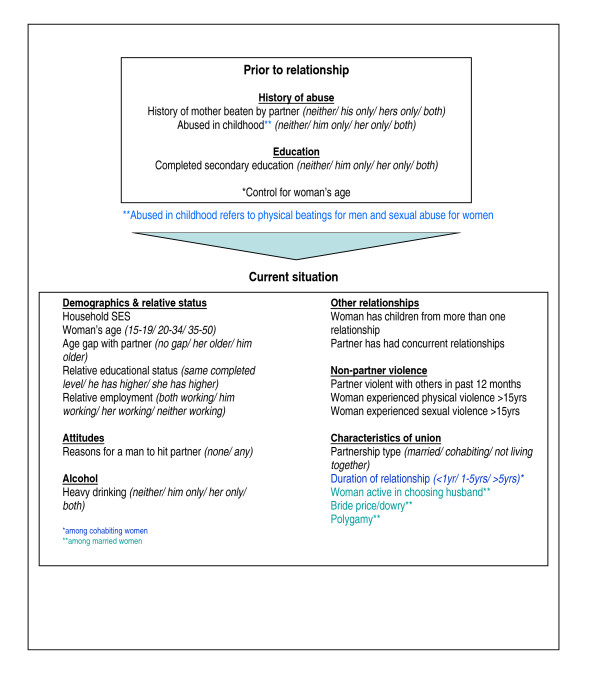
- Prior abuse was consistently associated with IPV: reported abuse of the woman’s mother, partner’s mother, or both increased risk in all sites (10 significant for women, 10 for partners, 12 for both); childhood sexual abuse of the woman, childhood beatings of her partner, or both increased risk (15/15 for partners, all significant; 13/15 for women and both, 10 significant).
- Cohabitation without formal marriage increased IPV in 10/12 sites (3 significant); younger women aged 15–19 and 20–35 had increased risk in all sites (significant in 12); polygamy increased risk in all 6 sites where practiced (3 significant).
Methods
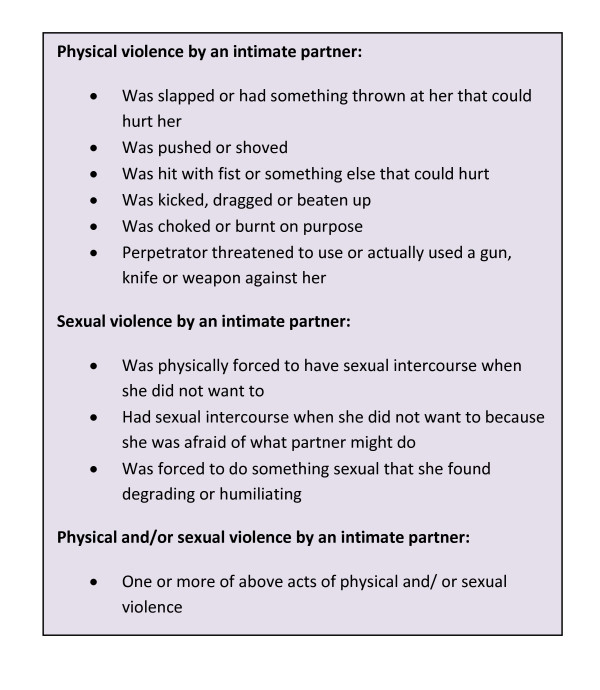
- Standardized population-based household surveys were conducted between 2000 and 2003 in Bangladesh, Brazil, Ethiopia, Japan, Namibia, Peru, Republic of Tanzania, Samoa, Serbia and Montenegro, and Thailand; one woman aged 15–49 was randomly selected per household, with 24,097 women interviewed and 19,517 ever-partnered women asked about partner violence.
- The outcome compared women reporting any physical and/or sexual partner violence in the past 12 months with women reporting no partner violence; women with lifetime but not past-year violence were excluded. Analyses included 15,207 women for “prior to relationship” models and 15,058 for “current situation” models.
- Multivariate logistic regression was run separately by site, with prior-to-relationship and current-situation variables modeled separately; ORs of 0.95–1.05 were considered no association, ≥1.05 risk factors, and ≤0.95 protective factors, with significance at 5%.
Limitations
- The paper states that the cross-sectional design limits conclusions about temporality or causality, although separating early-life and current characteristics clarifies temporality for some factors.
- The paper states that only women were interviewed, so partner characteristics rely on women’s reports and refer to the current or most recent partner, who may not be the perpetrator; any resulting misclassification would bias results toward the null.
- The text makes evident that small numbers in extreme exposure categories produced wide confidence intervals for some abuse-related ORs, and many site-specific associations were non-significant or varied in direction, so consistency is based on patterns across sites rather than uniform statistical significance.
Model-written summary. Check it against the paper before relying on it.
Integrity signals
Registry
Cites
Statistics
Figures
Verification
Claims the paper makes
3 Valid · 0 Not valid · 13 Not checked · 62 Own results and interpretations
Every source the paper cites for this claim was checked and supports it.
In the paper
“Higher socioeconomic status is generally associated with lower levels of physical and/or sexual partner violence.”
§ What factors are associated with recent intimate partner violence? findings from the WHO multi-country study on women's health and domestic violence > Discussion
What the sources say
- Supportedcites [27] Vyas S Watts C How does economic empowerment affect women's risk of intimate partner violence in low and middle income country settings?: A systematic review of published evidence J Int Dev 2009 21 577 602 10.1002/jid.1500 source
Section 4 (Discussion) says higher household socioeconomic status, measured by assets, is predominantly protective against intimate partner violence. Section 3.1 reports lower physical and/or sexual violence in several higher-wealth groups, while also noting null and contrary findings; the claim's word “generally” accommodates that variation. Page numbers are not provided for these passages. (LLM, conf=0.88)
plainstates an association- Asserted: passes — The authors put it forward as true.
- Checkable: passes — It can be checked against evidence.
- Load-bearing: passes — The paper’s conclusions depend on it.
- Based: passes — The paper gives a reason why it holds.
- Supported
A result the paper reports from its own data — it cites no other source for it, so there is none to check. The quote shows it is in the paper.
In the paper
“There was no consistent pattern of association between IPV and relative employment status.”
§ What factors are associated with recent intimate partner violence? findings from the WHO multi-country study on women's health and domestic violence > Results > Current situation model
plain- Asserted: passes — The authors put it forward as true.
- Checkable: passes — It can be checked against evidence.
- Load-bearing: unclear — It is unclear whether the paper’s conclusions depend on it.
- Based: passes — The paper gives a reason why it holds.
A result the paper reports from its own data — it cites no other source for it, so there is none to check. The quote shows it is in the paper.
In the paper
“Secondary education, high SES, and formal marriage offered protection, while alcohol abuse, cohabitation, young age, attitudes supportive of wife beating, having outside sexual partners, experiencing childhood abuse, growing up with domestic violence, and experiencing or perpetrating other forms of violence in adulthood, increased the risk of IPV.”
§ What factors are associated with recent intimate partner violence? findings from the WHO multi-country study on women's health and domestic violence > Abstract > Results
plainstates a cause- Asserted: passes — The authors put it forward as true.
- Checkable: passes — It can be checked against evidence.
- Load-bearing: passes — The paper’s conclusions depend on it.
- Based: passes — The paper gives a reason why it holds.
A result the paper reports from its own data — it cites no other source for it, so there is none to check. The quote shows it is in the paper.
In the paper
“In all sites odds of IPV were higher in relationships where one or both partners had problems with alcohol, compared to relationships where neither of them did (him 14/14, 12 significant; her 10/11, 5 significant; both 11/11, 7 significant).”
§ What factors are associated with recent intimate partner violence? findings from the WHO multi-country study on women's health and domestic violence > Results > Current situation model
plainstates an association- Asserted: passes — The authors put it forward as true.
- Checkable: passes — It can be checked against evidence.
- Load-bearing: passes — The paper’s conclusions depend on it.
- Based: passes — The paper gives a reason why it holds.
56 more claims
Create a free account to see all 78 claims and to verify the 3 references still open.
- It may state two separate claims as one. 8
- Probably not a substantial claim. 9
Self-check
Percentages, sums and reported differences re-computed from the paper’s own numbers.
Each contradiction between two passages listed here was confirmed by an independent check.
Rated minor: it would not touch a result — a value no result rests on, a p-value that stays on the same side of the significance level, or a conflict that is clerical, resolved elsewhere in the paper, or outside its own findings.
In the paper
§ What factors are associated with recent intimate partner violence? findings from the WHO multi-country study on women's health and domestic violence > Results > Prior to relationship
“15/15 sites for partners, all significant”
§ What factors are associated with recent intimate partner violence? findings from the WHO multi-country study on women's health and domestic violence > Results
“| 7 | 2.5 (1.4 - 4.3) | 5 | 1.6 (0.89 - 2.8) |”
Rated minor: it would not touch a result — a value no result rests on, a p-value that stays on the same side of the significance level, or a conflict that is clerical, resolved elsewhere in the paper, or outside its own findings.
In the paper
§ What factors are associated with recent intimate partner violence? findings from the WHO multi-country study on women's health and domestic violence > Results > Prior to relationship
“reports of abuse of the woman's mother, her partners' mother, or both (compared to no known reported abuse of either mother) being associated with increased risk of IPV in all sites”
§ What factors are associated with recent intimate partner violence? findings from the WHO multi-country study on women's health and domestic violence > Results
“| 4 | 2.5 (1.1 - 5.5) | 2 | 0.47 (0.06 - 4.0) | 2 | 2.2 (0.93 - 5.3) |”
Citations
Cites
The world report on violence and health
Krug, E. G., Mercy, J. A., Dahlberg, L. L., & Zwi, A. B. (2002) · The Lancet · doi:10.1016/s0140-6736(02)11133-0 · Cited by 9,110 · cited 1×
“The consistent association between IPV and other forms of violence against women also point to the need for integrated responses to violence across sectors and programmes [30,31].”
BackgroundMultilevel analysis techniques and applications
Hox, J. J., Moerbeek, M., & van de Schoot, R. (2002) · Cited by 6,886
Garcia-Moreno, C., Jansen, H. A., Ellsberg, M., Heise, L., & Watts, C. H. (2006) · The Lancet · doi:10.1016/s0140-6736(06)69523-8 · Cited by 3,176
Self-citationBehind Closed Doors: Violence in the American Family.
Boudouris, J., Straus, M. A., Gelles, R. J., & Steinmetz, S. K. (1982) · Contemporary Sociology · doi:10.2307/2068814 · Cited by 3,088
Hox, J., Moerbeek, M., & van de Schoot, R. (2002) · doi:10.4324/9781410604118 · Cited by 2,419
Violence Against Women: An Integrated, Ecological Framework
HEISE, L. L. (1998) · Violence Against Women · doi:10.1177/1077801298004003002 · Cited by 2,042
Self-citationIntimate partner violence: causes and prevention
Jewkes, R. (2002) · The Lancet · doi:10.1016/s0140-6736(02)08357-5 · Cited by 1,993
Ellsberg, M., Jansen, H. A., Heise, L., Watts, C. H., & Garcia-Moreno, C. (2008) · The Lancet · doi:10.1016/s0140-6736(08)60522-x · Cited by 1,820 · cited 1×
“In addition to being a concern in its own right, IPV is associated with a range of adverse physical, mental, sexual and reproductive health outcomes [2-8].”
BackgroundSelf-citationDunkle, K. L., Jewkes, R. K., Brown, H. C., Gray, G. E., McIntryre, J. A., & Harlow, S. D. (2004) · The Lancet · doi:10.1016/s0140-6736(04)16098-4 · Cited by 1,323 · cited 1×
“In addition to being a concern in its own right, IPV is associated with a range of adverse physical, mental, sexual and reproductive health outcomes [2-8].”
BackgroundIntimate partner physical abuse perpetration and victimization risk factors: A meta-analytic review
Stith, S. M., Smith, D. B., Penn, C. E., Ward, D. B., & Tritt, D. (2004) · Aggression and Violent Behavior · doi:10.1016/j.avb.2003.09.001 · Cited by 1,082 · cited 1×
“Studies in various countries have identified a range of factors that influence IPV risk [9-13], but in some cases, protective factors in one setting may be ineffective or actually increase risk in another [14].”
Background
Research works printed but not linked: 4
- Kishor S Johnson K Profiling domestic violence: A multicountry study 2004 Calverton, Maryland, USA: ORC Macro
- DoH South Africa Demographic and Health Survey 1998: final report 2002 Pretoria: Department of Health
- Harvey A Garcia Moreno C Butchart A Primary prevention of intimate partner violence and sexual violence: Background paper for WHO expert meeting May 2-3, 2007 2007 Geneva: World Health Organization, Department of Violence and Injuy Prevention and Disability
- Counts D Brown J Campbell J Sanctions and Sanctuary 1992 Boulder: Westview Press
Cited by
Items 501–600 of 1,413
Mpondo, F., Ruiter, R. A. C., van den Borne, B. H. P., & Reddy, P. S. (2016) · Journal of Interpersonal Violence · doi:10.1177/0886260516664316 · Cited by 27
“In addition, alcohol or substance use by women or their partners predisposes women to IPV (Abrahams et al., 2014; Abramsky et al., 2011; Dunkle et al., 2004; Gass, Stein, Williams, & Seedat, 2011).”
BackgroundReyal, H. P., Dissanayake, N., Gunarathna, H., Soysa, D., Fernando, M. S., & Senarathna, L. (2024) · BMJ Open · doi:10.1136/bmjopen-2023-080117 · Cited by 26
Adolescent pregnancy and young motherhood in rural Zimbabwe: Findings from a baseline study
Woollett, N., Bandeira, M., Marunda, S., Mudekunye, L., & Ebersöhn, L. (2021) · Health & Social Care in the Community · doi:10.1111/hsc.13362 · Cited by 25
da Conceição, H. N., Coelho, S. F., & Madeiro, A. P. (2021) · Epidemiologia e Serviços de Saúde · doi:10.1590/s1679-49742021000200012 · Cited by 47
Amos, N., Hill, A. O., Donovan, C., Carman, M., Parsons, M., McNair, R., Lyons, A., & Bourne, A. (2023) · Sexuality Research and Social Policy · doi:10.1007/s13178-023-00822-2 · Cited by 21
“Previous research has found both within the non-LGBTQ population (Abramsky et al., 2011) and among sexual minority people (Steele et al., 2020; Edwards et al., 2015; West, 2012) that more advantaged socioeconomic circumstances are associated with a lower risk of experiencing IPV.”
MethodWagman, J. A., Charvat, B., Thoma, M. E., Ndyanabo, A., Nalugoda, F. K., Ssekasanvu, J., Kigozi, G. N., Serwadda, D., Kagaayi, J., Wawer, M. J., et al. (2016) · International Journal of Public Health · doi:10.1007/s00038-016-0891-z · Cited by 21
“Gender inequality is a key driver of IPV at the country level (Heise and Kotsadam 2015) and while formal marriage protects women from IPV in some settings (Abramsky et al. 2011) it increases risk for abuse in some populations, including Uganda.”
BackgroundExperience of Domestic Violence and Psychological Morbidity in Spouses of Alcohol-Dependent Males
Indu, P. V., Jinu, C. R., Pallikkal, N. R., Sampathkumar, R., & Joy, J. (2018) · Indian Journal of Psychological Medicine · doi:10.4103/ijpsym.ijpsym_38_18 · Cited by 18
“Various studies have found that partner alcohol abuse was associated with an increased risk of intimate partner violence (IPV) in women.([3-5]) A study conducted in Pune, India, had assessed IPV using a 4-item questionnaire which assessed physical and emotional abuse, but not sexual violence.”
MethodSandberg, J., Delaunay, V., Boujija, Y., Douillot, L., Bignami, S., Rytina, S., & Sokhna, C. (2018) · Journal of Interpersonal Violence · doi:10.1177/0886260518805778 · Cited by 23
“…or partnership, socioeconomic status, women’s labor force participation, prior experience of violence, alcohol use, female autonomy within relationships, and beliefs about the acceptability of IPV (Abramsky et al., 2011; Hindin & Adair, 2002; Hindin et al., 2008; Jewkes, Flood, & Lang, 2015).”
BackgroundInfluentialPeterman, A., Palermo, T., & Ferrari, G. (2018) · BMJ Global Health · doi:10.1136/bmjgh-2018-001143 · Cited by 20
Settergren, S. K., Mujaya, S., RIDA, W. N., Kajula, L. J., Kamugisha, H., Mbwambo, J., Kisanga, F., Mizinduko, M. M., Dunbar, M. S., Mwandalima, I., et al. (2018) · PLoS ONE · doi:10.1371/journal.pone.0206074 · Cited by 21
Öberg, M., Skalkidou, A., Heimer, G. M., & Lucas, S. (2020) · Scandinavian Journal of Public Health · doi:10.1177/1403494820939015 · Cited by 18
“these results were unexpected, given that lower levels of education have commonly been associated with greater exposure to violence of all types and sexual violence in particular [23, 24].”
ResultIslam, M. M., Khan, M. N., & Rahman, M. M. (2021) · Journal of Interpersonal Violence · doi:10.1177/0886260521991299 · Cited by 24
“There has been a growing consensus about the need to gain a clear understanding of the prevalence of and risk factors for IPA and of the impact it has on women in specific cultural and displacement contexts (Abramsky et al., 2011; Reese Masterson et al., 2014).”
BackgroundMunro‐Kramer, M. L., Skidmore, L. M., Cannon, L. M., Huhman, A. K., Carter, S. N., Williamsen, K. M., & Ngo, Q. (2021) · Journal of Interpersonal Violence · doi:10.1177/08862605211042816 · Cited by 20
“Survivors of IPV also have a higher risk of violence later in life (Abramsky et al., 2011).”
BackgroundAguerrebere, M., Frías, S. M., Fawzi, M. C. S., López, R., & Raviola, G. J. (2021) · PLoS ONE · doi:10.1371/journal.pone.0256850 · Cited by 34
“Our small study sample did not support the analysis of more complex multivariate models of demographic and socioeconomic factors, still, our results are similar to wider cross-cultural studies that show a significant association between, school attainment and number of children [46, 65].”
ResultIntimate Partner Violence among Scheduled Caste Women in India: A Cross-sectional Study
Chowdhury, S., Singh, A., Kasemi, N., Chakrabarty, M., & Pakhadhara, T. R. (2022) · Victims & Offenders · doi:10.1080/15564886.2022.2069897 · Cited by 21
“This is in line with the findings of many previous studies conducted on this issue in the developing and developed countries (Abramsky et al., 2011; Curtis et al., 2019; Dasgupta et al., 2018; Pérez-Diaz & Huré, 2011; Varma et al., 2007; Wagman et al., 2018; Waller et al., 2012).”
Studying partner violence to understand gender motivations - or vice-versa?
Winstok, Z., Weinberg, M., & Smadar‐Dror, R. (2017) · Aggression and Violent Behavior · doi:10.1016/j.avb.2017.01.022 · Cited by 25
Cohen, F., Seff, I., Ssewamala, F. M., Opobo, T., & Stark, L. (2020) · Journal of Interpersonal Violence · doi:10.1177/0886260520938508 · Cited by 19
“Intimate partner violence (IPV), defined as physical, sexual, or emotional abuse that occurs in a relationship with a partner or spouse (Centers for Disease Control and Prevention [CDC], 2019), contributes to a myriad of poor health and mental health outcomes globally (Abramsky et al., 2011; Devries et al., 2013).”
BackgroundJames, L. E., Welton‐Mitchell, C., Michael, S., Santoadi, F., Shakirah, S., Hussin, H., Anwar, M., Kilzar, L., & James, A. S. (2021) · International Journal of Environmental Research and Public Health · doi:10.3390/ijerph182111674 · Cited by 23
Hadush, F., Tsegaye, D., Legass, S. A., Abebe, E., & Zenu, S. (2023) · BMC Public Health · doi:10.1186/s12889-023-16343-x · Cited by 21
“Evidence also indicates that exposure to IPV against the mother is one of the most common factors associated with male perpetration and female experience of IPV later in life [24, 25].”
BackgroundVyas, S., Jansen, H. A. F. M., Gardner, J., Tuladhar, S., Hammond, K., & Diemer, K. (2023) · BMC Women s Health · doi:10.1186/s12905-023-02534-6 · Cited by 18
“Social theories suggest that cohabiting relationships may be more prone to violence because of less commitment to the relationship [28], an assertion which has broader empirical support [29].”
BackgroundResultSelf-citationAldrete, M., & Fernández-Ardèvol, M. (2023) · Crime Media Culture An International Journal · doi:10.1177/17416590231199771 · Cited by 45
“Evidence confirms that attitudes that justify GBV are associated with perpetration among men (Stith et al., 2004), victimization among women (Abramsky et al., 2011) and negative reactions from institutions and the community towards the victims (Flood and Pease, 2009).”
BackgroundAdults' Explanations for Intimate Partner Violence During Childhood and Associated Effects.
Graham-Bermann, S., Cater, Å. K., Miller-Graff, L. E., & Howell, K. H. (2017) · Journal of Clinical Psychology · doi:10.1002/jclp.22345 · Cited by 18
Delkhosh, M., Ardalan, A., Rahimiforoushani, A., Keshtkar, A., Amiri‐Farahani, L., & Khoei, E. M. (2017) · PLoS Currents · doi:10.1371/currents.dis.f41d45fbdca13babe4ae5be0f9732e75 · Cited by 18
Treves-Kagan, S., Ayadi, A. M. E., Morris, J. L., Graham, L. M., Grignon, J. S., Ntswane, L., Gilvydis, J. M., Barnhart, S., & Lippman, S. A. (2019) · Journal of Interpersonal Violence · doi:10.1177/0886260519827661 · Cited by 25
“Emerging literature on this topic suggests that a relationship exists similar to that found in high-income settings (Abramsky et al., 2011; Roman & Frantz, 2013).”
BackgroundResultInfluentialAnálisis ecológico de la violencia sexual de pareja en mujeres peruanas
Canto, Y. E., Montalvo, Y. J. O., Romaní, K. J. O., & Díaz-Gervasi, G. (2020) · Acta Colombiana de Psicología · doi:10.14718/acp.2020.23.1.13 · Cited by 49
Brummer, J., Hesse, M., Frederiksen, K. S., Karriker‐Jaffe, K. J., & Bloomfield, K. (2021) · Journal of Studies on Alcohol and Drugs · doi:10.15288/jsad.2021.82.445 · Cited by 21
Factores asociados a violencia física reciente de pareja hacia la mujer en el Perú, 2004-2007
Blitchtein-Winicki, D., & Reyes-Solari, E. (2012) · Revista Peruana de Medicina Experimental y Salud Pública · doi:10.1590/s1726-46342012000100006 · Cited by 21
“En el Perú se ha identificado previamente un mayor riesgo de violencia física de la pareja a lo largo de la vida de la mujer asociado con residir en lugares diferentes a la costa (27).”
BackgroundInfluentialRadu, M. B., & McManus, L. (2018) · Sociological Spectrum · doi:10.1080/02732173.2018.1502105 · Cited by 20
“…on intimate partner violence IPV is a widespread national (Black et al. 2011; Breiding, Chen, and Black 2014; Thompson et al. 2006) and global (Abramsky et al. 2011; Devries et al. 2013) problem, disproportionately affecting CONTACT Monica Bixby Radu mradu@semo.edu Department of Criminal…”
BackgroundThe Co-Occurrence of Domestic and Child Violence in Urban Peru: Evidence from Three Regions
Benavides, M., Almonte, J. L. J., & Marquina, M. P. D. L. (2015) · Journal of Family Violence · doi:10.1007/s10896-015-9745-3 · Cited by 22
“Different studies suggest that victims of spousal or child abuse also became victims (Abramsky et al. 2011) or perpetrators of IPV (Chan 2011).”
BackgroundDoes where you live influence your socio-economic status?
Lockwood, T., Coffee, N. T., Rossini, P. A., Niyonsenga, T., & McGreal, S. (2017) · Land Use Policy · doi:10.1016/j.landusepol.2017.12.045 · Cited by 22
“, 2005), domestic violence (Abramsky et al., 2011; Aizer, 2010), social cohesion (Berry and Welsh, 2010; Rios et al.”
BackgroundSignorelli, M. C., de Souza, F. G., Pinheiro, R. V. B., Valente, J. Y., Andreoni, S., Rezende, L. F. M., & Sanchez, Z. M. (2023) · Journal of Interpersonal Violence · doi:10.1177/08862605231155141 · Cited by 25
“These findings are aligned with results from other countries (Yakubovich et al., 2018), in which women who lived with a partner without being formally married had an increased risk of IPV (Abramsky et al., 2011).”
BackgroundResultInfluentialEikemo, R., Barimani, M. M., Nowak, Y. E., Eriksson, J. A., Vikström, A., Nyman, V., Backman-Enelius, M. M., & Jonas, W. (2023) · Sexual & Reproductive Healthcare · doi:10.1016/j.srhc.2023.100843 · Cited by 29
Aldrete, M. (2023) · Violence Against Women · doi:10.1177/10778012231174346 · Cited by 23
“This group can be morally evaluated by the audience, in fl u-encing social victim-blaming (Abramsky et al., 2011; Boonzaier, 2022; Flood & Pease, 2009), revictimization (Carranco, 2020), and making invisible the context of systemic gender discrimination (Fairbairn & Dawson, 2013; Wozniak &…”
Risk factors for violence against women by intimate partners in Sakarya, Turkey
Ağçay, G., İnanıcı, S. Y., Çolak, B., & İnanıcı, M. A. (2015) · Journal of Forensic and Legal Medicine · doi:10.1016/j.jflm.2015.08.008 · Cited by 20
Draughon, J. E., Lucea, M. B., Campbell, J. C., Paterno, M. T., Bertrand, D. R., Sharps, P. W., Campbell, D. W., & Stockman, J. K. (2014) · Journal of Immigrant and Minority Health · doi:10.1007/s10903-014-0112-x · Cited by 19
Aaltonen, M., Kivivuori, J., Martikainen, P., & Salmi, V. (2012) · The British Journal of Criminology · doi:10.1093/bjc/azs045 · Cited by 28
Minieri, A. M., Staton, M., Leukefeld, C. G., Clarke, J. G., Surratt, H. L., & Frisman, L. K. (2013) · International Journal of Offender Therapy and Comparative Criminology · doi:10.1177/0306624x12472017 · Cited by 19
“Although previous literature suggests age and IPV are associated (Abramsky et al., 2011), age was not significantly associated with IPV in this sample, r = .057, p = .325, so it was not included in the model.”
MethodTeixeira, S. V. B., Moura, M. A. V., da Silva, L. R., et al. (2015) · Revista da Escola de Enfermagem da USP · doi:10.1590/s0080-623420150000600002 · Cited by 16
“Alcohol use among one or more members of a family can affect all members in a negative way, leading to conflicts, as the user becomes aggressive, creating conditions for arguments and offenses that can end in physical and sexual aggression(2,21).”
BackgroundAlcohol's involvement in an array of harms to intimate partners
Laslett, A., Jiang, H., & Room, R. (2016) · Drug and Alcohol Review · doi:10.1111/dar.12435 · Cited by 20
Gilchrist, G., Canfield, M., Radcliffe, P., & d’Oliveira, A. F. P. L. (2017) · Drug and Alcohol Review · doi:10.1111/dar.12521 · Cited by 19
Longitudinal Trajectory of Exposure to Psychological Interpersonal Violence
Poehacker, S., Phillips, D. G., Riggs, J. L., & Lauterbach, D. (2017) · Journal of Interpersonal Violence · doi:10.1177/0886260517707309 · Cited by 18
“Other contextual variables, such as older maternal age and higher education level, appear to buffer the negative effects of IPV (Abramsky et al., 2011; Capaldi et al., 2012; Rivara et al., 2009).”
BackgroundSemahegn, A., Torpey, K., Manu, A., Assefa, N., & Ankomah, A. (2017) · Reproductive Health · doi:10.1186/s12978-017-0414-2 · Cited by 19
Ragetlie, R., Hounkpatin, W. A., & Luginaah, I. (2021) · Social Science & Medicine · doi:10.1016/j.socscimed.2021.114016 · Cited by 16
Kohrt, B. K., Barrueco, S., & Pérez, C. (2015) · PubMed · Cited by 28
Leadership, the financial sector and development in Nigeria
Gberevbie, D. E. (2011) · Inkanyiso · doi:10.4102/ink.v3i2.279 · Cited by 16
Tiruneh, F. N., Chuang, K., Ntenda, P. A. M., & Chuang, Y. (2017) · Women & Health · doi:10.1080/03630242.2017.1377800 · Cited by 19
Jiwatram-Negrón, T., El‐Bassel, N., Primbetova, S., & Terlikbayeva, A. (2017) · Violence Against Women · doi:10.1177/1077801217741218 · Cited by 20
“For example, several studies have shown that conservative attitudes or acceptability of violence is associated with perpetration of violence among men and victimization reports among women (Abramsky et al., 2011; Burgos-Soto et al., 2014; García-Moreno et al., 2006; J. C. Kim et al., 2007).”
BackgroundResultLee, K., Hutton, H. E., Lesko, C. R., Monroe, A. K., Alvanzo, A. A. H., McCaul, M. E., & Chander, G. (2018) · Women s Health Issues · doi:10.1016/j.whi.2018.04.004 · Cited by 21
Graham‐Bermann, S. A., Howell, K. H., Miller‐Graff, L. E., Galano, M. M., Lilly, M. M., & Grogan‐Kaylor, A. C. (2018) · Journal of Aggression Maltreatment & Trauma · doi:10.1080/10926771.2018.1494652 · Cited by 21
“© 2018 Taylor & Francis In the United States, more than one in five women experience severe intimate partner violence (IPV) during their lifetime (Breiding, 2015), which includes being beaten, burned, stalked, choked, and/or violence involving a gun or knife (Abramsky et al., 2011).”
BackgroundCanfield, M., Radcliffe, P., d’Oliveira, A. F. P. L., & Gilchrist, G. (2019) · Advances in Dual Diagnosis · doi:10.1108/add-04-2019-0003 · Cited by 17
Murray, S. M., Skavenski, S. V. W., Metz, K. L., Munthali, S., Mwenge, M., Kane, J. C., Alto, M. E., Venturo‐Conerly, K. E., Wasil, A. R., Fine, S. L., et al. (2020) · Social Science & Medicine · doi:10.1016/j.socscimed.2020.113458 · Cited by 19
Ola, B. E. (2020) · Journal of Interpersonal Violence · doi:10.1177/0886260520974070 · Cited by 19
“Keywords intimate partner violence, wife-beating, attitudes, men, Ghana Background Information Men’s acceptance of wife-beating as justifiable in the settlement of marital disputes has been found a strong correlate of its actual perpetration (Abramsky et al., 2011; Chirwa et al., 2018; Garcia-Moreno & Watts, 2011; Pie…”
BackgroundMethodInfluentialBourey, C., Bass, J., & Stephenson, R. B. (2022) · Journal of Interpersonal Violence · doi:10.1177/08862605221134086 · Cited by 17
“Extant epidemiological and intervention research points to inconsistent associations between women’s employment and IPV (Abramsky et al., 2011; Gichuru et al., 2019; Heise & Kotsadam, 2015; O’Malley & Burke, 2017; Orton et al., 2016).”
BackgroundOkedare, O. O., & Fawole, O. I. (2023) · BMC Women s Health · doi:10.1186/s12905-023-02446-5 · Cited by 23
Adhikari, S. P., Daugherty, J. C., Molinares, N. Q., Maldonado-Rodriguez, N., Wallace, C., Smirl, J. D., Pérez-García, M., Reyes-Aragón, C. J. D. L., Hidalgo-Ruzzante, N. A., van Donkelaar, P., et al. (2024) · Journal of Neurotrauma · doi:10.1089/neu.2023.0440 · Cited by 21
Wadji, D. L., Pirro, T., & Langevin, R. (2024) · Trauma, Violence, & Abuse · doi:10.1177/15248380241287144 · Cited by 13
Being Superwoman: Low Income Mothers Surviving Problem Drinking and Intimate Partner Violence
Bohrman, C., Tennille, J. A., Levin, K., Rodgers, M. A., & Rhodes, K. V. (2017) · Journal of Family Violence · doi:10.1007/s10896-017-9932-5 · Cited by 21
“While alcohol and other intoxicants can contribute to the likelihood of experiencing violence, they can also dull the daily pain of experiencing violence (Abramsky et al. 2011; Leonard 2005).”
BackgroundMeade, C. N., Jennings, W. G., Gover, A. R., & Richards, T. N. (2017) · Journal of Aggression Conflict and Peace Research · doi:10.1108/jacpr-05-2017-0289 · Cited by 18
Intimate Partner Violence During Pregnancy
Pal, A., & Rao, R. (2019) · Springer eBooks · doi:10.1007/978-981-10-4953-8_52 · Cited by 15
Serrano-Montilla, C., Valor‐Segura, I., Padilla, J., & Fernández, L. M. L. (2020) · International Journal of Environmental Research and Public Health · doi:10.3390/ijerph17176314 · Cited by 21
“, age, marital status, and alcohol abuse) [12], gender-related macrosocial characteristics (i.”
BackgroundMental Health Consequences of Intimate Partner Violence Against Women in El Salvador
Navarro-Mantas, L., de Lemus, S., & Megías, J. L. (2021) · Violence Against Women · doi:10.1177/1077801220978803 · Cited by 33
“This implies undertaking an important effort to address the social problem, the country’s public health services and the redesign of public policies (Abramsky et al., 2011; Ellsberg et al., 2008).”
BackgroundHan, Y. R., & Choi, H. Y. (2021) · PLoS ONE · doi:10.1371/journal.pone.0247916 · Cited by 25
“This finding is consistent with many previous studies; witnessing parents’ violence in childhood is an important or the strongest risk factor of IPV occurrence in both victimization of women and perpetration by men [5,20,29,30].”
ResultMartín-Fernández, M., Gracia, E., & Lila, M. (2021) · Assessment · doi:10.1177/10731911211000110 · Cited by 19
“…of IPVAW may have explaining and accounting for actual IPVAW, no measures available assessing this construct are short enough to be included in large scale studies and sociodemographic surveys in which space and time may be limited (Abramsky et al., 2011; Gracia et al., 2020b; Wang et al., 2016).”
BackgroundCorley, A. G., Glass, N. E., Remy, M. M., & Perrin, N. (2021) · International Journal of Environmental Research and Public Health · doi:10.3390/ijerph18084063 · Cited by 17
“These findings support existing scholarship that indicates that endorsement of hegemonic masculine and tolerance of violence attitudes are associated with increased odds of IPV perpetration and victimization [53,54].”
ResultMachine Learning Analysis of Non-Marital Sexual Violence in India
Raj, A., Dehingia, N., Singh, A., McAuley, J., & McDougal, L. (2020) · EClinicalMedicine · doi:10.1016/j.eclinm.2021.101046 · Cited by 21
Bandara, P., Knipe, D. W., Munasinghe, S. B., Rajapakse, T. N., & Page, A. (2021) · Journal of Interpersonal Violence · doi:10.1177/08862605211055146 · Cited by 18
Mootz, J. J., Fennig, M., & Wainberg, M. L. (2021) · Journal of Substance Abuse Treatment · doi:10.1016/j.jsat.2021.108694 · Cited by 21
Mathias, A. K. R. D. A., Bedone, A. J., Osis, M. J. D., et al. (2013) · Revista Brasileira Ginecologia e Obstetrícia · doi:10.1590/s0100-72032013000400009 · Cited by 15
Shrestha, R., & Copenhaver, M. M. (2016) · Violence Against Women · doi:10.1177/1077801216628690 · Cited by 18
“…and/or sexually abused by a male intimate partner is associated with a greater likelihood of 1638 Violence Against Women 22(13) HIV infection due to the presence of sexual risk behaviors among themselves and their partners (Abramsky et al., 2011; Campbell et al., 2013; Mittal et al., 2013).”
BackgroundMethodResultInfluentialGender Inequality and Gender-Based Violence
Latzman, N. E., D’Inverno, A. S., Niolon, P. H., & Reidy, D. E. (2018) · Elsevier eBooks · doi:10.1016/b978-0-12-811797-2.00012-8 · Cited by 18
THE EFFECT OF A MALE SURPLUS ON INTIMATE PARTNER VIOLENCE IN INDIA.
Bose, S., Trent, K., & South, S. J. (2013) · PubMed · Cited by 19
Selič, P., Švab, I., & Guček, N. K. (2014) · BMC Public Health · doi:10.1186/1471-2458-14-223 · Cited by 23
“Aside from formal marriage, the WHO multi-country study on women’s health and domestic violence showed secondary education and a high socio-economic status to be protective factors for IPV exposure [68].”
Ansari, U., Cobham, B., Etim, E. M., Ahamad, H. M., Owan, N. O., Tijani, Y., Cockcroft, A., & Andersson, N. (2016) · Violence Against Women · doi:10.1177/1077801216644072 · Cited by 20
“Intimate partner violence (IPV) is a major public health problem across the world (Abramsky et al., 2011).”
BackgroundBarchi, F., & Winter, S. C. (2020) · Violence Against Women · doi:10.1177/1077801219853370 · Cited by 14
“Since that time, a number of scholars have adopted this approach to identify individual-, relationship-, household-, and community-level risk factors for VAW in SSA, among them age, alcohol use, cohabitation, education, childhood abuse, controlling behaviors by partner, family size, socioeconomic status, and poverty (…”
BackgroundRees, S. J., Mohsin, M., Tay, A. K., Soares, E. S. D. C., Tam, N., Costa, Z. M. D., Tol, W. A., & Silove, D. M. (2017) · Globalization and Health · doi:10.1186/s12992-017-0291-z · Cited by 16
“Bride price was associated with decreased IPV in four sites and increased IPV in two sites [18].”
BackgroundMengistu, H. Z. D. (2015) · Journal of Nursing & Care · doi:10.4172/2167-1168.1000250 · Cited by 19
“Mostly they exposed because of alcohol drinkers [4], low education and socioeconomic status, and being younger can increase women’s risk of experiencing intimate partner violence [5-7].”
BackgroundNiaz, U., Hassan, S.-U.-N., & Tariq, Q. (2017) · Partner Abuse · doi:10.1891/1946-6560.8.1.47 · Cited by 19
“As previously noted, abused women in developing countries often do not report abuse nor seek legal services because of financial constraints and the poor judicial system response (Abramsky et al., 2011).”
BackgroundThe influence of interviewers on survey responses among female sex workers in Zambia
Harling, G., Chanda, M. M., Ortblad, K. F., Mwale, M., Chongo, S., Kanchele, C., Kamungoma, N., Barresi, L. G., Bärnighausen, T., & Oldenburg, C. E. (2019) · BMC Medical Research Methodology · doi:10.1186/s12874-019-0703-2 · Cited by 20
Khan, Z., Cheong, Y. F., Miedema, S. S., Naved, R. T., & Yount, K. M. (2020) · SSM - Population Health · doi:10.1016/j.ssmph.2020.100641 · Cited by 16
“For household SES, a principal components analysis (PCA) was conducted following Demographic Health Survey guidelines, and the score derived from the first principal component was retained (Rutstein, 2015).”
BackgroundLeight, J., Deyessa, N., Verani, F., Tewolde, S., & Sharma, V. (2020) · PLoS Medicine · doi:10.1371/journal.pmed.1003131 · Cited by 17
“Given the evidence of the UBL intervention’s significant effects on IPV-related outcomes as well as its supportive group-based approach, it is plausible to hypothesize that the intervention may have also been associated with reductions in male use of substances, as well as enhancements in women’s mental health [1,3,4].”
BackgroundWomen’s Experiences of Domestic Violence during Pregnancy: A Qualitative Research in Greece
Antoniou, E. (2020) · International Journal of Environmental Research and Public Health · doi:10.3390/ijerph17197069 · Cited by 17
“These data confirm studies that show that violence in the family web of the abused pregnant women is a highly frequent phenomenon [56,57] running through generations [9] Exposure to domestic violence during childhood or adolescence can be linked to domestic violence during adult life [57].”
BackgroundDETERMINANTS OF DOMESTIC PHYSICAL VIOLENCE AGAINST WOMEN IN TURKEY
Alkan, Ö., & Ünver, Ş. (2021) · Humanities & Social Sciences Reviews · doi:10.18510/hssr.2020.867 · Cited by 17
“It was revealed in studies performed in Turkey that the frequency of physical violence against women varied according to the geographic regions they lived in (Abramsky et al., 2011).”
BackgroundInfluentialBhuwania, P., & Heymann, J. S. (2022) · SSM - Population Health · doi:10.1016/j.ssmph.2022.101046 · Cited by 16
“These attitudes create barriers to exit and can thus influence ongoing exposure (Abramsky et al., 2011; Uthman et al., 2011).”
BackgroundNowshad, G., Jahan, N., Shah, N. Z., Ali, N., Ali, T. S., Alam, S., Khan, A., Mahmood, M. A., Saba, M., Arnone, D., et al. (2022) · PLoS ONE · doi:10.1371/journal.pone.0268735 · Cited by 19
“Nevertheless, our findings are in agreement with the WHO ‘Multi-Country Study’ which suggested that high socioeconomic status at household level and secondary level of education are protective against IPV irrespective of country of origin [39].”
ResultViolence against Women: Methodological and Ethical Issues
Kelmendi, K. (2013) · Psychology · doi:10.4236/psych.2013.47080 · Cited by 26
Fanslow, J., & Gulliver, P. J. (2015) · Violence and Victims · doi:10.1891/0886-6708.vv-d-14-00010 · Cited by 18
“Using data from 10 low- and middleincome countries (15 separate sites), Abramsky and colleagues (2011) reported commonalities in the risk and protective factors associated with current IPV (Abramsky et al., 2011).”
BackgroundMethodResultInfluentialMannell, J., & Guţă, A. (2017) · Global Public Health · doi:10.1080/17441692.2017.1293126 · Cited by 20
“…helped shed light on global factors that mitigate women’s risk of IPV including secondary education, high socio-economic status and formal marriage, as well as factors that increase the risk of IPV including cohabitation, a young age and attitudes that support wife beating (Abramsky et al., 2011).”
BackgroundAlvarado, G., Fenny, A. P., Dakey, S., et al. (2018) · Journal of Public Health in Africa · doi:10.4081/jphia.2018.860 · Cited by 14
Hạnh, H. T. M., Assanangkornchai, S., Geater, A. F., & Hanh, V. T. M. (2019) · Drug and Alcohol Review · doi:10.1111/dar.12909 · Cited by 15
Band‐Winterstein, T., Goldblatt, H., & Lev, S. (2019) · Trauma Violence & Abuse · doi:10.1177/1524838019832979 · Cited by 21
“This phenomenon has been recognized as being carried out by close family members, extended family members, spouses, and additionally—by formal caregivers (Abramsky et al., 2011; Friedman et al., 2011).”
BackgroundMcGhee, S., Shrestha, B., Ferguson, G., Shrestha, P. N., Bergenfeld, I., & Clark, C. J. (2019) · Journal of Interpersonal Violence · doi:10.1177/0886260519839422 · Cited by 18
Agenagnew, L., Tebeje, B., & Tilahun, R. (2020) · International Journal of Reproductive Medicine · doi:10.1155/2020/6513246 · Cited by 27
“from the WHO multicountry study which states to take a look at women and domestic violence [19].”
BackgroundHassan, S.-U.-N., Memon, E., Shahab, M., & Mumtaz, S. (2020) · PLoS ONE · doi:10.1371/journal.pone.0239722 · Cited by 18
“According to global and regional estimates on prevalence of Intimate Partner Violence (IPV), 30 percent of ever-partnered women at some point in their lives have experienced physical and/or sexual violence by an intimate partner and at least 10 percent of them faced IPV during their pregnancy [18].”
BackgroundAbramsky, T., Kapinga, I., Mshana, G. H., Lees, S. S., Hansen, C. H., Hashim, R., Stöckl, H., Kapiga, S., & Harvey, S. E. (2020) · PLoS ONE · doi:10.1371/journal.pone.0240112 · Cited by 15
“Our findings on the association between young age and increased IPV are consistent with other studies [7, 15].”
InfluentialSelf-citationCyr, S. S., Jaramillo, E. T., Garrison, L., Malcoe, L. H., Shamblen, S. R., & Willging, C. E. (2021) · International Journal of Environmental Research and Public Health · doi:10.3390/ijerph18126185 · Cited by 24
“10 in univariate analyses, controlling for age, since it is a known determinant of IPV [46].”
BackgroundRestoring Paradise in the Caribbean: Combatting Violence with Numbers
Sutton, H., Álvarez, L., van Dijk, J., van Kesteren, J., Ruprah, I. J., Puig, L. G., Jaitman, L., Torre, I., & Pecha, C. J. (2017) · Inter-American Development Bank eBooks · doi:10.18235/0012654 · Cited by 27
Gender difference of knowledge and attitude of primary health care staff towards domestic violence
Alazmi, S. F., Alotaibi, D. M., Atwan, A. A., Kamel, M. I., & El-Shazly, M. K. (2011) · Alexandria Journal of Medicine · doi:10.1016/j.ajme.2011.07.018 · Cited by 15
“Attitudes supporting wife beating were revealed to be a risk factor for increased violence against women.(17) Thus, extensive efforts must be performed to change the attitude of both men and women working in the health care system so that their abilities to diagnose and properly manage battered women is not undermined.”
Ferreira, R. M., de Vasconcelos, T. B., Filho, R. E. M., & Macena, R. H. M. (2016) · Ciência & Saúde Coletiva · doi:10.1590/1413-812320152112.09092015 · Cited by 16
Differentials and Predictors of IPV against Nigerian Women in Rural and Urban Areas
Dim, E. E. (2019) · Journal of Aggression Maltreatment & Trauma · doi:10.1080/10926771.2019.1603178 · Cited by 17
“The finding on alcohol consumption aligns with studies by Adejimi et al. (2014), Balogun, Fawole, Owoaje, and Adedokun (2013), Abramsky et al. (2011), Brisibe, Ordinioha, and Dienye (2011), Capaldi et al. (2009), and Ntaganira et al. (2009).”
ResultCash Transfers and Child Nutrition: What We Know and What We Need to Know
de Groot, R., Palermo, T., Handa, S., Ragno, L. P., & Peterman, A. (2015) · Innocenti working papers · doi:10.18356/31de68d5-en · Cited by 26
Metadata
- Authors
- Abramsky, T., Watts, C. H., Garcia-Moreno, C., Devries, K., Kiss, L., Ellsberg, M., Jansen, H. A., & Heise, L.
- Affiliations
- London School of Hygiene & Tropical Medicine (GB)
- International Center for Research on Women (US)
- Corresponding author
- Abramsky, Tanya
- Venue
- BMC Public Health
- Published
- 2011-02-16
- Volume
- 11
- Issue
- 1
- Pages
- 109-109
- ISSN
- 1471-2458 (ISSN-L)
- PMC
- PMC3049145
- OpenAlex
- W2146316233
- Semantic Scholar
- 124d14c4c5378026a820318c409f305314e161d1
- Cited by
- 1,413
- References
- 42
- Citations by year
- 2026: 66 · 2025: 85 · 2024: 102 · 2023: 96 · 2022: 108 · 2021: 133 · 2020: 137 · 2019: 105 · 2018: 103 · 2017: 106 · 2016: 95 · 2015: 89 · 2014: 75 · 2013: 69 · 2012: 28
- FWCI
- 60.57
- Type
- journal article
- Language
- en
- Open access
- gold
- doi.org
- Licence
- Locations
- BMC Public Health (publishedVersion, cc-by)
- PubMed Central (publishedVersion, cc-by)
- PubMed (publishedVersion)
- LSHTM Research Online (London School of Hygiene and Tropical Medicine) (acceptedVersion)
- DOAJ (DOAJ: Directory of Open Access Journals) (submittedVersion)
- Funders
- Rockefeller Foundation
- Styrelsen för Internationellt Utvecklingssamarbete
- United Nations Fund for Population Activities
- Mahidol University
- Umeå Universitet
- Universidade de São Paulo
- Uppsala Universitet
- Addis Ababa University
- Universidade Federal de Pernambuco
- Universidade de Pernambuco
- International Centre for Diarrhoeal Disease Research, Bangladesh
- Topics
- Social Sciences › Health › Intimate Partner and Family Violence
- Health Sciences › Medicine › Geriatrics and Gerontology › Elder Abuse and Neglect
- Social Sciences › Gender Studies › Sexual Assault and Victimization Studies
- Keywords
- intimate partner violence, domestic violence against women, risk factors, physical violence, sexual violence, alcohol abuse, childhood abuse, gender norms, IPV prevention, secondary education, socioeconomic status, cohabitation
- MeSH terms
- Adolescent, Adult, Data Collection, Female, Humans, Middle Aged, Risk Factors, Rural Population, Sexual Partners, Urban Population, World Health Organization, Logistic Models, Domestic Violence, Battered Women, Internationality, Young Adult
About these checks
Registry, retraction, Cites and statistics results are computed, not judged, with one exception: a printed reference that no index lists is read once by a model before it counts as a citation error. Claims are extracted by a model and kept only when their quote appears verbatim in the text; each cited source is then checked, with a model’s help, for whether it says what the claim relies on. Those verdicts can be wrong — read the claim’s quote and the cited source before relying on one.
The claim verdicts this report counts are experimental: their accuracy is not yet measured.
A language model drew the claims from the paper on 2026-10-10, under version 3 of the claim definition (model deepseek-v4.1-flash, prompt extract-v3).
A second model labelled each claim on 2026-10-10 (model jev-1.13-20260917, definition revision gold-guideline-v0.2).
Cited sources are checked with a language model’s help (gpt-6-sol).
Statistics and arithmetic are recomputed, not judged.
Confidence bands are shown only for fields calibrated on our annotated test set. None is calibrated yet, so no band is shown.
What counts as a claim ›How we measure confidence ›How we check this ›
Are you an author, or do you see a problem with this page? Request a review
Data sources
Bibliographic data: Semantic Scholar, OpenAlex, Crossref.
Contains information from the Semantic Scholar Academic Graph Datasets, made available under the ODC Attribution License (ODC-BY 1.0).
Semantic Scholar’s data is described in: Kinney, R., et al. (2023). The Semantic Scholar Open Data Platform. arXiv:2301.10140.
