

Autism spectrum disorder, flea and tick medication, and adjustments for exposure misclassification: the CHARGE (CHildhood Autism Risks from Genetics and Environment) case-control study
Open accessThe DOI matches its Crossref record; 56 of the 58 references it cites were found in a registry or an index.
Abstract
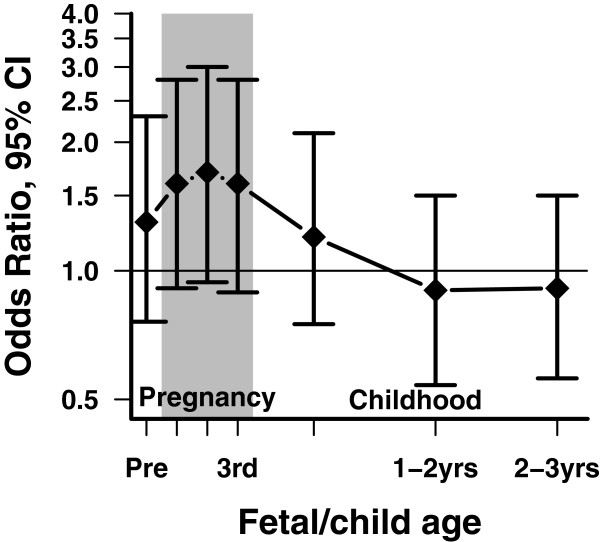
BACKGROUND: The environmental contribution to autism spectrum disorders (ASD) is largely unknown, but household pesticides are receiving increased attention. We examined associations between ASD and maternally-reported use of imidacloprid, a common flea and tick treatment for pets. METHODS: Bayesian logistic models were used to estimate the association between ASD and imidacloprid and to correct for potential differential exposure misclassification due to recall in a case control study of ASD. RESULTS: Our analytic dataset included complete information for 262 typically developing controls and 407 children with ASD. Compared with exposure among controls, the odds of prenatal imidacloprid exposure among children with ASD were slightly higher, with an odds ratio (OR) of 1.3 (95% Credible Interval [CrI] 0.78, 2.2). A susceptibility window analysis yielded higher ORs for exposures during pregnancy than for early life exposures, whereas limiting to frequent users of imidacloprid, the OR increased to 2.0 (95% CI 1.0, 3.9). CONCLUSIONS: Within plausible estimates of sensitivity and specificity, the association could result from exposure misclassification alone. The association between imidacloprid exposure and ASD warrants further investigation, and this work highlights the need for validation studies regarding prenatal exposures in ASD.
Overview
The claims and statistics of this paper haven’t been checked yet.
Free: it reads the open-access text and checks the first 5 claims that cite a source we can check. Create a free account to check every claim.
Integrity signals
Registry
Cites
Statistics
Figures
Verification
Claims the paper makes
The claims and statistics of this paper haven’t been checked yet.
Free: it reads the open-access text and checks the first 5 claims that cite a source we can check. Create a free account to check every claim.
Claims other papers make about this one
Each is checked against this paper’s own text: does it say what the citing paper says it does?
In the citing paper
“Metabolic conditions like diabetes and obesity lead to iron de fi ciency (63, 64), and as their prevalence continues to rise dramatically (65), suboptimal iron status during pregnancy can be expected to increase as well.”
From Maternal Intake of Supplemental Iron and Risk of Autism Spectrum Disorder (2014) · cites this paper as [64]
Self-check
Percentages, sums and reported differences re-computed from the paper’s own numbers.
The self-check needs the paper’s full text.
Citations
Cites
Gelman, A., Carlin, J. B., Stern, H. S., & Rubin, D. B. (2003) · doi:10.1201/9780429258480 · Cited by 27,276
Lord, C., Risi, S., Lambrecht, L., Cook, E. H., Leventhal, B. L., DiLavore, P. C., Pickles, A., & Rutter, M. (2000) · Journal of Autism and Developmental Disorders · doi:10.1023/a:1005592401947 · Cited by 7,520 · cited 2×
“ASD was assessed using the Autism Diagnostic Interview-Revised and the Autism Diagnostic Observation Schedules [26,27].”
MethodCausal Diagrams for Epidemiologic Research
Greenland, S., Pearl, J., & Robins, J. M. (1999) · Epidemiology · doi:10.1097/00001648-199901000-00008 · Cited by 3,728
Air Pollution and Hospital Admissions for Heart Disease in Eight U.S. Counties
Schwartz, J. (1999) · Epidemiology · doi:10.1097/00001648-199901000-00005 · Cited by 3,038
Maternal Pesticide Exposure from Multiple Sources and Selected Congenital Anomalies
Shaw, G. M., Wasserman, C. R., OʼMalley, C. D., Nelson, V., & Jackson, R. J. (1999) · Epidemiology · doi:10.1097/00001648-199901000-00011 · Cited by 1,784
Hernan, M. A. (2002) · American Journal of Epidemiology · doi:10.1093/aje/155.2.176 · Cited by 1,445 · cited 1×
“Hypothesized risk factors chosen for control were on unblocked backdoor paths and not downstream from exposure or outcome [34].”
BackgroundThe Epidemiology of Autism Spectrum Disorders
Newschaffer, C. J., Croen, L. A., Daniels, J., Giarelli, E., Grether, J. K., Levy, S. E., Mandell, D. S., Miller, L. A., Pinto-Martin, J., Reaven, J., et al. (2007) · Annual Review of Public Health · doi:10.1146/annurev.publhealth.28.021406.144007 · Cited by 1,228 · cited 1×
“Autism spectrum disorders (ASD) are a set of developmental conditions characterized by a constellation of impairments in social interaction and communication, and repetitive patterns of interests or behaviors [1-4].”
BackgroundSelf-citationBIAS DUE TO MISCLASSIFICATION IN THE ESTIMATION OF RELATIVE RISK
COPELAND, K. T., CHECKOWAY, H., McMICHAEL, A. J., & HOLBROOK, R. H. (1977) · American Journal of Epidemiology · doi:10.1093/oxfordjournals.aje.a112408 · Cited by 1,000 · cited 1×
“In case–control studies, use of retrospectively reported exposures can be subject recall bias, and overly broad exposure definitions can attenuate the apparent effects of etiologically relevant exposures [20].”
BackgroundRauh, V. A., Garfinkel, R., Perera, F. P., Andrews, H. F., Hoepner, L., Barr, D. B., Whitehead, R., Tang, D., & Whyatt, R. W. (2006) · Pediatrics · doi:10.1542/peds.2006-0338 · Cited by 734
Organophosphate Pesticide Exposure and Neurodevelopment in Young Mexican-American Children
Eskenazi, B., Marks, A. R., Bradman, A., Harley, K., Barr, D. B., Johnson, C., Morga, N., & Jewell, N. P. (2007) · Environmental Health Perspectives · doi:10.1289/ehp.9828 · Cited by 703 · cited 2×
“Further, the primary action of imidacloprid on nicotinic-cholinergic receptors is similar to that of organophosphates [47], which have previously been associated with ASD [14,15].”
BackgroundResultPerera, F. P., Rauh, V., Tsai, W.-Y., Kinney, P., Camann, D., Barr, D., Bernert, T., Garfinkel, R., Tu, Y.-H., Diaz, D., et al. (2003) · Environmental Health Perspectives · doi:10.1289/ehp.5742 · Cited by 625 · cited 1×
“Prenatal and early life exposures to pesticides have been of growing concern in relation to birth outcomes and children’s neurologic or neurocognitive development [5-13].”
BackgroundCombining Information From Multiple Sources in the Diagnosis of Autism Spectrum Disorders
RISI, S., LORD, C., GOTHAM, K., CORSELLO, C., CHRYSLER, C., SZATMARI, P., COOK, E. H., LEVENTHAL, B. L., & PICKLES, A. (2006) · Journal of the American Academy of Child & Adolescent Psychiatry · doi:10.1097/01.chi.0000227880.42780.0e · Cited by 581 · cited 1×
“[32]) or typically developing based on an SCQ score <15 and scoring above the cut-off of two standard deviations below the mean on tests of cognitive and adaptive function.”
BackgroundPerinatal risk factors for infantile autism
Hultman, C. M., Sparén, P., & Cnattingius, S. (2002) · Epidemiology · doi:10.1097/00001648-200207000-00009 · Cited by 561 · cited 1×
“Prior estimates for regression parameters (for maternal education, race, and parity) were derived from crude estimates provided in five studies on perinatal risk factors for ASD [35-39].”
MethodRauh, V., Arunajadai, S., Horton, M., Perera, F., Hoepner, L., Barr, D. B., & Whyatt, R. (2011) · Environmental Health Perspectives · doi:10.1289/ehp.1003160 · Cited by 524 · cited 1×
“Prenatal and early life exposures to pesticides have been of growing concern in relation to birth outcomes and children’s neurologic or neurocognitive development [5-13].”
BackgroundThe Changing Prevalence of Autism in California
Croen, L. A., Grether, J. K., Hoogstrate, J., & Selvin, S. (2002) · Journal of Autism and Developmental Disorders · doi:10.1023/a:1015453830880 · Cited by 497 · cited 1×
“Regional Centers are estimated to provide services to 75-80% of all children with ASD in their catchment areas [24].”
BackgroundAttention-deficit/hyperactivity disorder and urinary metabolites of organophosphate pesticides
Bouchard, M. F., Bellinger, D. C., Wright, R. O., & Weisskopf, M. G. (2010) · Pediatrics · doi:10.1542/peds.2009-3058 · Cited by 457
AUTISM IN THALIDOMIDE EMBRYOPATHY: A POPULATION STUDY
Strömland, K., Nordin, V., Miller, M., Akerström, B., & Gillberg, C. (1994) · Developmental Medicine & Child Neurology · doi:10.1111/j.1469-8749.1994.tb11856.x · Cited by 453 · cited 1×
“Autism spectrum disorders (ASD) are a set of developmental conditions characterized by a constellation of impairments in social interaction and communication, and repetitive patterns of interests or behaviors [1-4].”
BackgroundRoberts, E. M., English, P. B., Grether, J. K., Windham, G. C., Somberg, L., & Wolff, C. (2007) · Environmental Health Perspectives · doi:10.1289/ehp.10168 · Cited by 442 · cited 3×
“Further, the primary action of imidacloprid on nicotinic-cholinergic receptors is similar to that of organophosphates [47], which have previously been associated with ASD [14,15].”
BackgroundResultHertz-Picciotto, I., Croen, L. A., Hansen, R., Jones, C. R., van de Water, J., & Pessah, I. N. (2006) · Environmental Health Perspectives · doi:10.1289/ehp.8483 · Cited by 422
Self-citationMaternal and paternal age and risk of Autism Spectrum Disorders
Croen, L. A., Najjar, D. V., Fireman, B., & Grether, J. K. (2007) · Archives of Pediatrics & Adolescent Medicine · doi:10.1001/archpedi.161.4.334 · Cited by 410 · cited 1×
“Prior estimates for regression parameters (for maternal education, race, and parity) were derived from crude estimates provided in five studies on perinatal risk factors for ASD [35-39].”
MethodSchmidt, R. J., Tancredi, D. J., Ozonoff, S., Hansen, R. L., Hartiala, J., Allayee, H., Schmidt, L. C., Tassone, F., & Hertz-Picciotto, I. (2012) · The American Journal of Clinical Nutrition · doi:10.3945/ajcn.110.004416 · Cited by 408 · cited 1×
“We considered the potential for recently reported variability in ASD risk associated with season and vitamin use to impact our results [56-58].”
BackgroundSelf-citationPrenatal Exposure to Organophosphates, Paraoxonase 1, and Cognitive Development in Childhood
Engel, S. M., Wetmur, J., Chen, J., Zhu, C., Barr, D. B., Canfield, R. L., & Wolff, M. S. (2011) · Environmental Health Perspectives · doi:10.1289/ehp.1003183 · Cited by 396 · cited 1×
“Prenatal and early life exposures to pesticides have been of growing concern in relation to birth outcomes and children’s neurologic or neurocognitive development [5-13].”
BackgroundDiagnosing Autism: Analyses of Data from the Autism Diagnostic Interview
Lord, C., Pickles, A., McLennan, J., Rutter, M., Bregman, J., Folstein, S., Fombonne, E., Leboyer, M., & Minshew, N. (1997) · Journal of Autism and Developmental Disorders · doi:10.1023/a:1025873925661 · Cited by 373 · cited 2×
“ASD was assessed using the Autism Diagnostic Interview-Revised and the Autism Diagnostic Observation Schedules [26,27].”
MethodArndt, T. L., Stodgell, C. J., & Rodier, P. M. (2005) · International Journal of Developmental Neuroscience · doi:10.1016/j.ijdevneu.2004.11.001 · Cited by 360 · cited 1×
“Autism spectrum disorders (ASD) are a set of developmental conditions characterized by a constellation of impairments in social interaction and communication, and repetitive patterns of interests or behaviors [1-4].”
BackgroundCroen, L. A., Grether, J. K., Yoshida, C. K., Odouli, R., & Van de Water, J. (2005) · Archives of Pediatrics & Adolescent Medicine · doi:10.1001/archpedi.159.2.151 · Cited by 359 · cited 1×
“For example, parental autoimmune disease associations with ASD have been well-studied [52-55], so a posterior OR for autoimmune disease-ASD associations would show less variation across sensitivity and false-positive probability estimates than is observed in the current study due to an informative prior.”
ResultDescriptive epidemiology of autism in a California population: Who is at risk?
Croen, L. A., Grether, J. K., & Selvin, S. (2002) · Journal of Autism and Developmental Disorders · doi:10.1023/a:1015405914950 · Cited by 358 · cited 1×
“Prior estimates for regression parameters (for maternal education, race, and parity) were derived from crude estimates provided in five studies on perinatal risk factors for ASD [35-39].”
MethodLow P-Values or Narrow Confidence Intervals: Which Are More Durable?
Poole, C. (2001) · Epidemiology · doi:10.1097/00001648-200105000-00005 · Cited by 350 · cited 1×
“upper 95% confidence/credible limit divided by the lower 95% limit [41].”
BackgroundIn utero pesticide exposure, maternal paraoxonase activity, and head circumference.
Berkowitz, G. S., Wetmur, J. G., Birman-Deych, E., Obel, J., Lapinski, R. H., Godbold, J. H., Holzman, I. R., & Wolff, M. S. (2004) · Environmental Health Perspectives · doi:10.1289/ehp.6414 · Cited by 340
Prenatal vitamins, one-carbon metabolism gene variants, and risk for autism
Schmidt, R. J., Hansen, R. L., Hartiala, J., Allayee, H., Schmidt, L. C., Tancredi, D. J., Tassone, F., & Hertz-Picciotto, I. (2011) · Epidemiology · doi:10.1097/ede.0b013e31821d0e30 · Cited by 308 · cited 1×
“We considered the potential for recently reported variability in ASD risk associated with season and vitamin use to impact our results [56-58].”
BackgroundSelf-citationInvited Commentary: Variable Selection versus Shrinkage in the Control of Multiple Confounders
Greenland, S. (2007) · American Journal of Epidemiology · doi:10.1093/aje/kwm355 · Cited by 283
A sensitive ELISA for glial fibrillary acidic protein: application in CSF of adults
Rosengren, L. E., Wikkelsø, C., & Hagberg, L. (1994) · Journal of Neuroscience Methods · doi:10.1016/0165-0270(94)90011-6 · Cited by 256
Markov Chain Monte Carlo: an introduction for epidemiologists
Hamra, G., MacLehose, R., & Richardson, D. (2013) · International Journal of Epidemiology · doi:10.1093/ije/dyt043 · Cited by 250 · cited 1×
“Our model obtains the posterior estimates using Markov Chain Monte Carlo methods [40], which approximate the analytic solution to the joint-probability model for case–control data with misclassified exposures described by described by Gustafson [21].”
MethodPrenatal, perinatal, and neonatal factors associated with autism spectrum disorders
Bilder, D., Pinborough-Zimmerman, J., Miller, J., & McMahon, W. (2009) · Pediatrics · doi:10.1542/peds.2008-0927 · Cited by 222 · cited 1×
“Prior estimates for regression parameters (for maternal education, race, and parity) were derived from crude estimates provided in five studies on perinatal risk factors for ASD [35-39].”
MethodPesticide toxicity and the developing brain
Eskenazi, B., Rosas, L. G., Marks, A. R., Bradman, A., Harley, K., Holland, N., Johnson, C., Fenster, L., & Barr, D. B. (2008) · Basic & Clinical Pharmacology & Toxicology · doi:10.1111/j.1742-7843.2007.00171.x · Cited by 214
Perinatal risk factors and infantile autism
Maimburg, R. D., & Væth, M. (2006) · Acta Psychiatrica Scandinavica · doi:10.1111/j.1600-0447.2006.00805.x · Cited by 192 · cited 1×
“Prior estimates for regression parameters (for maternal education, race, and parity) were derived from crude estimates provided in five studies on perinatal risk factors for ASD [35-39].”
MethodThe National Children's Study: A 21-Year Prospective Study of 100 000 American Children
Landrigan, P. J., Trasande, L., Thorpe, L. E., Gwynn, C., Lioy, P. J., D'Alton, M. E., Lipkind, H. S., Swanson, J., Wadhwa, P. D., Clark, E. B., et al. (2006) · Pediatrics · doi:10.1542/peds.2006-0360 · Cited by 170 · cited 2×
“the National Children’s Study [60]) have an opportunity to improve on the exposure misclassification estimates by collecting both prospective and retrospective information on pesticide exposures.”
BackgroundParental Autoimmune Diseases Associated With Autism Spectrum Disorders in Offspring
Keil, A., Daniels, J. L., Forssen, U., Hultman, C., Cnattingius, S., Söderberg, K. C., Feychting, M., & Sparen, P. (2010) · Epidemiology · doi:10.1097/ede.0b013e3181f26e3f · Cited by 168 · cited 1×
“For example, parental autoimmune disease associations with ASD have been well-studied [52-55], so a posterior OR for autoimmune disease-ASD associations would show less variation across sensitivity and false-positive probability estimates than is observed in the current study due to an informative prior.”
ResultSelf-citationAbou-Donia, M. B., Goldstein, L. B., Bullman, S., Tu, T., Khan, W. A., Dechkovskaia, A. M., & Abdel-Rahman, A. A. (2008) · Journal of Toxicology and Environmental Health, Part A · doi:10.1080/15287390701613140 · Cited by 167 · cited 1×
“Animal models have revealed that prenatal exposure to the insecticide imidacloprid induces neurobehavioral deficits [16,17].”
BackgroundOzonoff, S., Williams, B. J., & Landa, R. (2005) · Autism · doi:10.1177/1362361305057880 · Cited by 159 · cited 1×
“Clinically trained study personnel determined cognitive function using the Mullen Scales of Early Learning and adaptive function using the Vineland Adaptive Behavior Scales and retrospectively assessed developmental trajectory in all children with the Child Development Questionnaire (a subset of the Early Development…”
MethodMiller, M. T., Strömland, K., Ventura, L., Johansson, M., Bandim, J. M., & Gillberg, C. (2005) · International Journal of Developmental Neuroscience · doi:10.1016/j.ijdevneu.2004.06.007 · Cited by 153 · cited 1×
“Autism spectrum disorders (ASD) are a set of developmental conditions characterized by a constellation of impairments in social interaction and communication, and repetitive patterns of interests or behaviors [1-4].”
BackgroundFatemi, S. H., Pearce, D. A., Brooks, A. I., & Sidwell, R. W. (2005) · Synapse · doi:10.1002/syn.20162 · Cited by 151 · cited 1×
“noted that prenatally exposed rats displayed sensorimotor deficits and increased expression of glial fibrillary acidic protein, which has been previously reported among persons with ASD [44,45], and in a mouse model for ASD [46].”
Perera, F. P., Rauh, V., Whyatt, R. M., Tsai, W.-Y., Bernert, J. T., Tu, Y.-H., Andrews, H., Ramirez, J., Qu, L., & Tang, D. (2004) · Environmental Health Perspectives · doi:10.1289/ehp.6617 · Cited by 138 · cited 1×
“Prenatal and early life exposures to pesticides have been of growing concern in relation to birth outcomes and children’s neurologic or neurocognitive development [5-13].”
BackgroundAhlsén, G., Rosengren, L., Belfrage, M., Palm, A., Haglid, K. G., Hamberger, A., & Gillberg, C. (1993) · Biological Psychiatry · doi:10.1016/0006-3223(93)90124-v · Cited by 131 · cited 1×
“noted that prenatally exposed rats displayed sensorimotor deficits and increased expression of glial fibrillary acidic protein, which has been previously reported among persons with ASD [44,45], and in a mouse model for ASD [46].”
Pesticides and child neurodevelopment
Rosas, L. G., & Eskenazi, B. (2008) · Current Opinion in Pediatrics · doi:10.1097/mop.0b013e3282f60a7d · Cited by 128 · cited 3×
“Prenatal and early life exposures to pesticides have been of growing concern in relation to birth outcomes and children’s neurologic or neurocognitive development [5-13].”
BackgroundMolloy, C. A., Morrow, A. L., Meinzen‐Derr, J. K., Dawson, G., Bernier, R., Dunn, M. A., Hyman, S. L., McMahon, W. M., Goudie-Nice, J., Hepburn, S., et al. (2006) · Journal of Autism and Developmental Disorders · doi:10.1007/s10803-005-0071-0 · Cited by 116 · cited 1×
“For example, parental autoimmune disease associations with ASD have been well-studied [52-55], so a posterior OR for autoimmune disease-ASD associations would show less variation across sensitivity and false-positive probability estimates than is observed in the current study due to an informative prior.”
ResultCase–Control Analysis with Partial Knowledge of Exposure Misclassification Probabilities
Gustafson, P., Le, N. D., & Saskin, R. (2001) · Biometrics · doi:10.1111/j.0006-341x.2001.00598.x · Cited by 100 · cited 7×
“To correct for potential misreporting of exposure by mothers in CHARGE, we estimated the OR of imidacloprid exposure among children with ASD and typically developing children using a Bayesian approach described by Gustafson [21] and previously applied by MacLehose et al. [22].”
MethodResultInfluentialA sensitive ELISA for glial fibrillary acidic protein: application in CSF of children
Rosengren, L., Ahlsén, G., Belfrage, M., Gillberg, C., Haglid, K. G., & Hamberger, A. (1992) · Journal of Neuroscience Methods · doi:10.1016/0165-0270(92)90004-w · Cited by 98 · cited 1×
“noted that prenatally exposed rats displayed sensorimotor deficits and increased expression of glial fibrillary acidic protein, which has been previously reported among persons with ASD [44,45], and in a mouse model for ASD [46].”
Sensitivity Analysis of Misclassification: A Graphical and a Bayesian Approach
Chu, H., Wang, Z., Cole, S. R., & Greenland, S. (2006) · Annals of Epidemiology · doi:10.1016/j.annepidem.2006.04.001 · Cited by 94 · cited 1×
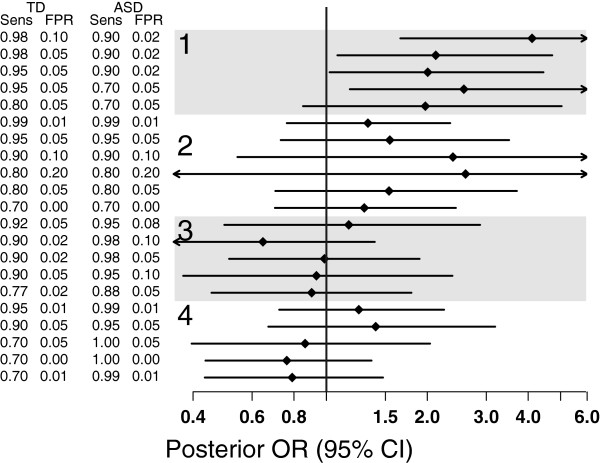
“[51] applied a Bayesian analysis under a range of sensitivity and falsepositive probability values similar to ours, though the authors allowed for both for uncertainty in the misclassification parameters as well as correlation between sensitivity and false-positive probability, which we did not do.”
MethodAutoimmune diseases in parents of children with infantile autism: a case—control study
Mouridsen, S. E., Rich, B., Isager, T., & Nedergaard, N. J. (2007) · Developmental Medicine & Child Neurology · doi:10.1111/j.1469-8749.2007.00429.x · Cited by 93 · cited 1×
“For example, parental autoimmune disease associations with ASD have been well-studied [52-55], so a posterior OR for autoimmune disease-ASD associations would show less variation across sensitivity and false-positive probability estimates than is observed in the current study due to an informative prior.”
ResultMonth of conception and risk of autism
Zerbo, O., Iosif, A.-M., Delwiche, L., Walker, C., & Hertz-Picciotto, I. (2011) · Epidemiology · doi:10.1097/ede.0b013e31821d0b53 · Cited by 81
Self-citationBayesian Methods for Correcting Misclassification: An Example from Birth Defects Epidemiology
MacLehose, R. F., Olshan, A. F., Herring, A. H., Honein, M. A., Shaw, G. M., & Romitti, P. A. (2009) · Epidemiology · doi:10.1097/ede.0b013e31818ab3b0 · Cited by 61 · cited 3×
“We apply analytic methods to address both of these potential sources of error using frequentist and Bayesian methods to account for exposure measurement error and we perform several sensitivity analyses [21,22].”
MethodAutism: Current Theories and Evidence
(2010) · Archives of Neurology · doi:10.1001/archneurol.2010.121 · Cited by 50
The use of dual or multiple reports in epidemiologic studies
Marshall, J. R. (1989) · Statistics in Medicine · doi:10.1002/sim.4780080904 · Cited by 32 · cited 2×
“The analysis shown in Figure 2 indicates that, in misclassification models, small changes in the false-positive probability estimate for children with ASD can lead to disproportionately large changes in the posterior OR, which has also been observed by Marshall [50] and Gustafson and colleagues [21].”
ResultEvidence for Environmental Susceptibility in Autism
Pessah, I. N., & Lein, P. J. (2008) · Humana Press eBooks · doi:10.1007/978-1-60327-489-0_19 · Cited by 30 · cited 1×
“Further, the primary action of imidacloprid on nicotinic-cholinergic receptors is similar to that of organophosphates [47], which have previously been associated with ASD [14,15].”
ResultGuest editorial: autism and the environment
Daniels, J. L. (2006) · Environmental Health Perspectives · doi:10.1289/ehp.114-a396 · Cited by 29
Self-citationPesticide Product Information System (PPIS)
(2017) · Cited by 7
Research works printed but not linked: 7
- Sheets L A developmental neurotoxicity study with technical grade imidacloprid in Wistar Rats 2001 Laboratory report number 110245, Stilwell, Kansas: Bayer Coroporation, Agriculture Division, Toxicology, MRID 45537501
- Cox C Imidacloprid, insecticide fact sheet J Pestic Reform 2001 21 15 21
- Sparrow SS Cicchetti DV The vineland adaptive behavior scales interview edition expanded form manual 1984 Circle Pines, MN: American Guidance Services Inc.
- Sparrow SS Cicchetti DV The vineland adaptive behavior scales interview edition expanded form manual 1984 Circle Pines, MN: American Guidance Services Inc.
- Rutter M Bailey A Lord C Berument S Social Communication Questionnaire (SCQ) 2003 Los Angeles, CA: Western Psychological Services
- Bach T Krebber R Stroking test in dogs after topical application of Imidacloprid 10% (w/v) + Permethrin 50% (w/v) Spot-On. Project No. 1303, Study No. V 02–04, AHD Study No. 142957, Bayer Report No. 75755 MRID 464941–03 2006 Leverkusen, Germany: Bayer Health Care, AH-R&D Antibiotics, Animal Center, Bayer AG
- Anatra-Cordone M Durkin P Imidacloprid---human health and ecological risk assessment---final report 2005: US Forest Service
Cited by
Pesticides: an update of human exposure and toxicity
Mostafalou, S., & Abdollahi, M. (2017) · Archives of Toxicology · doi:10.1007/s00204-016-1849-x · Cited by 786
Effects of Neonicotinoid Pesticide Exposure on Human Health: A Systematic Review
Cimino, A. M., Boyles, A. L., Thayer, K. A., & Perry, M. J. (2017) · Environmental Health Perspectives · doi:10.1289/ehp515 · Cited by 536
Han, W., Tian, Y., & Shen, X. (2018) · Chemosphere · doi:10.1016/j.chemosphere.2017.10.149 · Cited by 466
Thompson, D. A., Lehmler, H.-J., Kolpin, D. W., Hladik, M. L., Vargo, J. D., Schilling, K. E., LeFevre, G. H., Peeples, T. L., Poch, M. C., LaDuca, L. E., et al. (2020) · Environmental Science: Processes & Impacts · doi:10.1039/c9em00586b · Cited by 442
Kalkbrenner, A. E., Schmidt, R. J., & Penlesky, A. C. (2014) · Current Problems in Pediatric and Adolescent Health Care · doi:10.1016/j.cppeds.2014.06.001 · Cited by 268
“OP and OC pesticides and their metabolites, as well as some other pesticides, were measured using maternal and child biological samples, residential proximity to agricultural applications,(138,139) and retrospective parent questionnaires.(87,140) These studies generally supported an association with elevated risk of a…”
Metadata
- Authors
- Keil, A. P., Daniels, J. L., & Hertz-Picciotto, I.
- Affiliations
- University of North Carolina at Chapel Hill (US)
- Corresponding author
- Keil, Alexander P
- Venue
- Environmental Health
- Published
- 2014-01-23
- Volume
- 13
- Issue
- 1
- Pages
- 3-3
- ISSN
- 1476-069X (ISSN-L)
- PMC
- PMC3922790
- OpenAlex
- W2153502190
- Cited by
- 142
- References
- 58
- Citations by year
- 2026: 5 · 2025: 10 · 2024: 22 · 2023: 14 · 2022: 20 · 2021: 14 · 2020: 16 · 2019: 5 · 2018: 12 · 2017: 7 · 2016: 10 · 2015: 3 · 2014: 4
- FWCI
- 4.46
- Type
- journal article
- Language
- en
- Open access
- gold
- doi.org
- Licence
- Locations
- Environmental Health (publishedVersion, cc-by)
- Europe PMC (PubMed Central) (publishedVersion, cc-by)
- PubMed Central (publishedVersion, cc-by)
- PubMed (publishedVersion)
- Carolina Digital Repository (University of North Carolina at Chapel Hill) (submittedVersion)
- eScholarship (California Digital Library) (submittedVersion, cc-by)
- UNC Libraries
- Funders
- U.S. Environmental Protection Agency (R-829388, R-833292, 833292, T32 ES007018, 829388)
- National Institutes of Health (ES11269, ES007018)
- National Institute of Environmental Health Sciences (P01-ES-11269, R01ES015359, P01ES011269, T32ES007018)
- Topics
- Life Sciences › Neuroscience › Cognitive Neuroscience › Autism Spectrum Disorder Research
- Life Sciences › Pharmacology, Toxicology and Pharmaceutics › Toxicology › Pesticide Exposure and Toxicity
- Physical Sciences › Environmental Science › Health, Toxicology and Mutagenesis › Health, Environment, Cognitive Aging
- Keywords
- autism spectrum disorder, imidacloprid, prenatal pesticide exposure, exposure misclassification, household pesticides, CHARGE study, maternal recall
- MeSH terms
- Neonicotinoids, Animals, Bayes Theorem, Child Development Disorders, Pervasive, Child, Preschool, Environmental Exposure, Female, Siphonaptera, Humans, Imidazoles, Male, Nitro Compounds, Pesticides, Pregnancy, Prenatal Exposure Delayed Effects, Research Design, Ticks, United States, Bias, Logistic Models, Odds Ratio, Case-Control Studies
About these checks
Registry, retraction, Cites and statistics results are computed, not judged, with one exception: a printed reference that no index lists is read once by a model before it counts as a citation error. Claims are extracted by a model and kept only when their quote appears verbatim in the text; each cited source is then checked, with a model’s help, for whether it says what the claim relies on. Those verdicts can be wrong — read the claim’s quote and the cited source before relying on one.
Statistics and arithmetic are recomputed, not judged.
Confidence bands are shown only for fields calibrated on our annotated test set. None is calibrated yet, so no band is shown.
What counts as a claim ›How we measure confidence ›How we check this ›
Are you an author, or do you see a problem with this page? Request a review
Data sources
Bibliographic data: Semantic Scholar, OpenAlex, Crossref.
Contains information from the Semantic Scholar Academic Graph Datasets, made available under the ODC Attribution License (ODC-BY 1.0).
Semantic Scholar’s data is described in: Kinney, R., et al. (2023). The Semantic Scholar Open Data Platform. arXiv:2301.10140.
