

Effect of carbohydrate-protein supplement timing on acute exercise-induced muscle damage
Open accessThe DOI matches its Crossref record; 28 of the 28 references it cites were found in a registry or an index.
Abstract
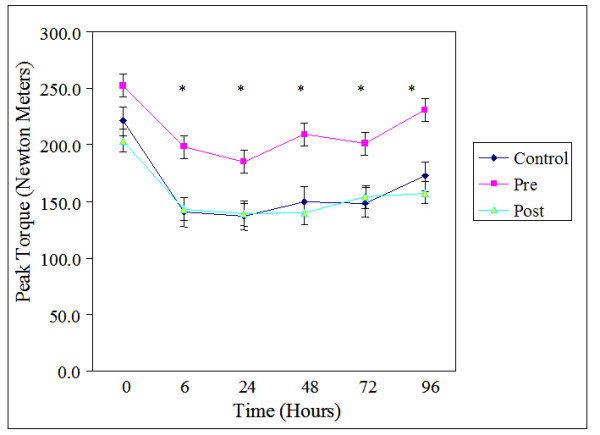
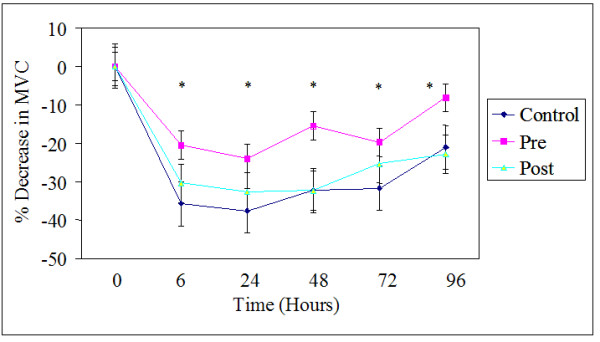
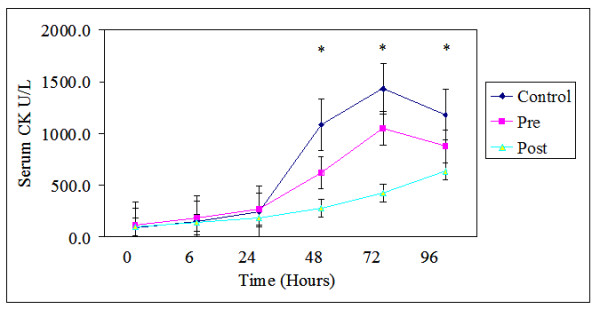
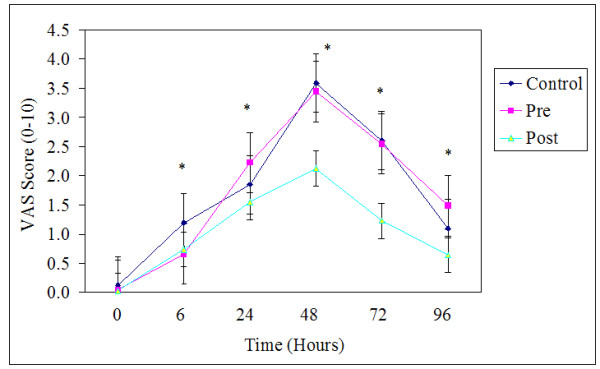
PURPOSE: To determine if timing of a supplement would have an effect on muscle damage, function and soreness. METHODS: Twenty-seven untrained men (21 +/- 3 yrs) were given a supplement before or after exercise. Subjects were randomly assigned to a pre exercise (n = 9), received carbohydrate/protein drink before exercise and placebo after, a post exercise (n = 9), received placebo before exercise and carbohydrate/protein drink after, or a control group (n = 9), received placebo before and after exercise. Subjects performed 50 eccentric quadriceps contractions on an isokinetic dynamometer. Tests for creatine kinase (CK), maximal voluntary contraction (MVC) and muscle soreness were recorded before exercise and at six, 24, 48, 72, and 96 h post exercise. Repeated measures ANOVA were used to analyze data. RESULTS: There were no group by time interactions however, CK significantly increased for all groups when compared to pre exercise (101 +/- 43 U/L) reaching a peak at 48 h (661 +/- 1178 U/L). MVC was significantly reduced at 24 h by 31.4 +/- 14.0%. Muscle soreness was also significantly increased from pre exercise peaking at 48 h. CONCLUSION: Eccentric exercise caused significant muscle damage, loss of strength, and soreness; however timing of ingestion of carbohydrate/protein supplement had no effect.
Overview
The claims and statistics of this paper haven’t been checked yet.
Free: it reads the open-access text and checks the first 5 claims that cite a source we can check. Create a free account to check every claim.
Integrity signals
Registry
Cites
Statistics
Figures
Verification
Claims the paper makes
The claims and statistics of this paper haven’t been checked yet.
Free: it reads the open-access text and checks the first 5 claims that cite a source we can check. Create a free account to check every claim.
Claims other papers make about this one
Each is checked against this paper’s own text: does it say what the citing paper says it does?
The source backs part of the claim, not all of it — or backs it for a different population, condition or comparison.
In the citing paper
“The results suggest that MPS rates can be acutely increased if a combination of carbohydrate + protein is consumed either before or after, but changes in force production or muscle damage may not be impacted by timed ingestion of a carbohydrate + protein combination.”
From International society of sports nutrition position stand: nutrient timing (2017) · cites this paper as [91]
Experimental — accuracy not yet measured
Self-check
Percentages, sums and reported differences re-computed from the paper’s own numbers.
The self-check needs the paper’s full text.
Citations
Cites
Generalized equations for predicting body density of men
Jackson, A. S., & Pollock, M. L. (1978) · British Journal of Nutrition · doi:10.1079/bjn19780152 · Cited by 3,201 · cited 1×
“Body composition was estimated using the sum of three skinfolds (chest, abdomen, thigh) following the procedures outlined by Jackson and Pollock [17].”
Reliability of the Visual Analog Scale for Measurement of Acute Pain
Bijur, P. E., Silver, W., & Gallagher, E. J. (2001) · Academic Emergency Medicine · doi:10.1111/j.1553-2712.2001.tb01132.x · Cited by 2,067 · cited 1×
“…using the visual analogue scale (VAS) which has been utilized as a valid indicator of pain in several studies [3,8,11,18] has correlated with other indices of muscle damage including MVC [8], and CK [8], and has obtained reported reliability scores as high as r = 0.97 for assessing soreness [19].”
InfluentialMyofibrillar damage following intense eccentric exercise in man
Fridén, J., Sjöström, M., & Ekblom, B. (1983) · International Journal of Sports Medicine · doi:10.1055/s-2008-1026030 · Cited by 1,005 · cited 1×
“Currently it is thought that mechanically induced trauma from physical exertion triggers a metabolic cascade of events characterized by progressive increases in microscopic indicators of muscle damage [5,6].”
The digestion rate of protein is an independent regulating factor of postprandial protein retention
Dangin, M., Boirie, Y., Garcia-Rodenas, C., Gachon, P., Fauquant, J., Callier, P., Ballèvre, O., & Beaufrère, B. (2001) · American Journal of Physiology-Endocrinology and Metabolism · doi:10.1152/ajpendo.2001.280.2.e340 · Cited by 572 · cited 1×
“It has been well established that the digestion rate of a protein or amino acid supplement can affect measures of protein balance [22].”
Tipton, K. D., Rasmussen, B. B., Miller, S. L., Wolf, S. E., Owens-Stovall, S. K., Petrini, B. E., & Wolfe, R. R. (2001) · American Journal of Physiology-Endocrinology and Metabolism · doi:10.1152/ajpendo.2001.281.2.e197 · Cited by 526 · cited 1×
“[26] found no differences between pre and post exercise whole protein ingestion on protein balance, which contrasted with past studies [27] which found greater protein balance when free form amino acids were ingested prior to rather than post exercise.”
Nissen, S., Sharp, R., Ray, M., Rathmacher, J. A., Rice, D., Fuller, J. C., Connelly, A. S., & Abumrad, N. (1996) · Journal of Applied Physiology · doi:10.1152/jappl.1996.81.5.2095 · Cited by 393
Damage to Skeletal Muscle from Eccentric Exercise
Proske, U., & Allen, T. J. (2005) · Exercise and Sport Sciences Reviews · doi:10.1097/00003677-200504000-00007 · Cited by 338 · cited 3×
“The compromised state of the myofiber triggers an inflammatory response, partly characterized by edema and subsequent swelling of the muscle tissue [25].”
InfluentialStimulation of net muscle protein synthesis by whey protein ingestion before and after exercise
Tipton, K. D., Elliott, T. A., Cree, M. G., Aarsland, A. A., Sanford, A. P., & Wolfe, R. R. (2007) · American Journal of Physiology-Endocrinology and Metabolism · doi:10.1152/ajpendo.00166.2006 · Cited by 307 · cited 1×
“[26] found no differences between pre and post exercise whole protein ingestion on protein balance, which contrasted with past studies [27] which found greater protein balance when free form amino acids were ingested prior to rather than post exercise.”
Effects of a Carbohydrate-Protein Beverage on Cycling Endurance and Muscle Damage
SAUNDERS, M. J., KANE, M. D., & TODD, M. K. (2004) · Medicine & Science in Sports & Exercise · doi:10.1249/01.mss.0000132377.66177.9f · Cited by 303 · cited 7×
“The discrepancies found in the present study compared to studies which found positive results with intact proteins and endurance exercise [1], or free form amino acids and resistance training [18] make it difficult to provide solid practical applications for sports nutritionists.”
InfluentialMetabolic changes following eccentric exercise in trained and untrained men
Evans, W. J., Meredith, C. N., Cannon, J. G., Dinarello, C. A., Frontera, W. R., Hughes, V. A., Jones, B. H., & Knuttgen, H. G. (1986) · Journal of Applied Physiology · doi:10.1152/jappl.1986.61.5.1864 · Cited by 301 · cited 2×
“3-methylhistidine is an amino acid mainly concentrated in skeletal muscle that is used as an indicator of actomyosin protein breakdown [5] and muscle fiber damage [5,14].”
Cited by
International society of sports nutrition position stand: nutrient timing
Kerksick, C. M., Arent, S., Schoenfeld, B. J., Stout, J. R., Campbell, B., Wilborn, C. D., Taylor, L., Kalman, D., Smith-Ryan, A. E., Kreider, R. B., et al. (2017) · Journal of the International Society of Sports Nutrition · doi:10.1186/s12970-017-0189-4 · Cited by 622
International Society of Sports Nutrition position stand: Nutrient timing
Kerksick, C., Harvey, T., Stout, J., Campbell, B., Wilborn, C., Kreider, R., Kalman, D., Ziegenfuss, T., Lopez, H., Landis, J., et al. (2008) · Journal of the International Society of Sports Nutrition · doi:10.1186/1550-2783-5-17 · Cited by 456
Potential safety issues with blood flow restriction training
Loenneke, J. P., Wilson, J. M., Wilson, G. J., Pujol, T. J., & Bemben, M. G. (2011) · Scandinavian Journal of Medicine & Science in Sports · doi:10.1111/j.1600-0838.2010.01290.x · Cited by 275
Self-citationLow level laser therapy before eccentric exercise reduces muscle damage markers in humans
Baroni, B. M., Leal Junior, E. C. P., De Marchi, T., Lopes, A. L., Salvador, M., & Vaz, M. A. (2010) · European Journal of Applied Physiology · doi:10.1007/s00421-010-1562-z · Cited by 182
Branched-Chain Amino Acid Ingestion Can Ameliorate Soreness from Eccentric Exercise
JACKMAN, S. R., WITARD, O. C., JEUKENDRUP, A. E., & TIPTON, K. D. (2010) · Medicine & Science in Sports & Exercise · doi:10.1249/mss.0b013e3181c1b798 · Cited by 179
Pasiakos, S. M., Lieberman, H. R., & McLellan, T. M. (2014) · Sports Medicine · doi:10.1007/s40279-013-0137-7 · Cited by 178
Meteorin-like facilitates skeletal muscle repair through a Stat3/IGF-1 mechanism
Baht, G. S., Bareja, A., Lee, D. E., Rao, R. R., Huang, R., Huebner, J. L., Bartlett, D. B., Hart, C. R., Gibson, J. R., Lanza, I. R., et al. (2020) · Nature Metabolism · doi:10.1038/s42255-020-0184-y · Cited by 177
Self-citationHeaton, L. E., Davis, J. K., Rawson, E. S., Nuccio, R. P., Witard, O. C., Stein, K. W., Baar, K., Carter, J. M., & Baker, L. B. (2017) · Sports Medicine · doi:10.1007/s40279-017-0759-2 · Cited by 158
Betts, J. A., & Williams, C. (2010) · Sports Medicine · doi:10.2165/11536900-000000000-00000 · Cited by 125
Davies, R., Carson, B., & Jakeman, P. (2018) · Nutrients · doi:10.3390/nu10020221 · Cited by 103
Cooke, M. B., Rybalka, E., Stathis, C. G., Cribb, P. J., & Hayes, A. (2010) · Journal of the International Society of Sports Nutrition · doi:10.1186/1550-2783-7-30 · Cited by 101
Dietary strategies to recover from exercise-induced muscle damage
Sousa, M., Teixeira, V. H., & Soares, J. (2014) · International Journal of Food Sciences and Nutrition · doi:10.3109/09637486.2013.849662 · Cited by 89
Cockburn, E., Stevenson, E., Hayes, P. R., Robson-Ansley, P., & Howatson, G. (2010) · Applied Physiology, Nutrition, and Metabolism · doi:10.1139/h10-017 · Cited by 94
Ra, S.-G., Miyazaki, T., Ishikura, K., Nagayama, H., Komine, S., Nakata, Y., Maeda, S., Matsuzaki, Y., & Ohmori, H. (2013) · Journal of the International Society of Sports Nutrition · doi:10.1186/1550-2783-10-51 · Cited by 94
Smith, A. E., Fukuda, D. H., Kendall, K. L., & Stout, J. R. (2010) · Journal of the International Society of Sports Nutrition · doi:10.1186/1550-2783-7-10 · Cited by 77
Antonio, J., & Ciccone, V. (2013) · Journal of the International Society of Sports Nutrition · doi:10.1186/1550-2783-10-36 · Cited by 83
Wilson, J. M., Kim, J.-S., Lee, S.-R., Rathmacher, J. A., Dalmau, B., Kingsley, J. D., Koch, H., Manninen, A. H., Saadat, R., & Panton, L. B. (2009) · Nutrition & Metabolism · doi:10.1186/1743-7075-6-6 · Cited by 72
Self-citationEffect of Milk on Team Sport Performance after Exercise-Induced Muscle Damage
COCKBURN, E., BELL, P. G., & STEVENSON, E. (2013) · Medicine & Science in Sports & Exercise · doi:10.1249/mss.0b013e31828b7dd0 · Cited by 63
Betts, J. A., Toone, R. J., Stokes, K. A., & Thompson, D. (2009) · Applied Physiology, Nutrition, and Metabolism · doi:10.1139/h09-070 · Cited by 57
Kirby, T. J., Triplett, N. T., Haines, T. L., Skinner, J. W., Fairbrother, K. R., & McBride, J. M. (2011) · Amino Acids · doi:10.1007/s00726-011-0928-9 · Cited by 80
Chocolate Milk: A Post-Exercise Recovery Beverage for Endurance Sports
Pritchett, K., & Pritchett, R. (2012) · Medicine and Sport Science · doi:10.1159/000341954 · Cited by 55
Draganidis, D., Chondrogianni, N., Chatzinikolaou, A., Terzis, G., Karagounis, L. G., Sovatzidis, A., Avloniti, A., Lefaki, M., Protopapa, M., Deli, C. K., et al. (2017) · British Journal of Nutrition · doi:10.1017/s0007114517001829 · Cited by 50
Effect of volume of milk consumed on the attenuation of exercise-induced muscle damage
Cockburn, E., Robson-Ansley, P. J., Hayes, P. R., & Stevenson, E. (2012) · European Journal of Applied Physiology · doi:10.1007/s00421-011-2288-2 · Cited by 63
The effect of milk on the attenuation of exercise-induced muscle damage in males and females
Rankin, P., Stevenson, E., & Cockburn, E. (2015) · European Journal of Applied Physiology · doi:10.1007/s00421-015-3121-0 · Cited by 63
Waskiw-Ford, M., Hannaian, S., Duncan, J., Kato, H., Abou Sawan, S., Locke, M., Kumbhare, D., & Moore, D. (2020) · Nutrients · doi:10.3390/nu12041061 · Cited by 49
Peschek, K., Pritchett, R., Bergman, E., & Pritchett, K. (2013) · Nutrients · doi:10.3390/nu6010050 · Cited by 45
Pearson, A. G., Hind, K., & Macnaughton, L. S. (2022) · European Journal of Clinical Nutrition · doi:10.1038/s41430-022-01250-y · Cited by 53
Khemtong, C., Kuo, C., Chen, C., Jaime, S. J., & Condello, G. (2021) · Nutrients · doi:10.3390/nu13061880 · Cited by 51
Energy and macronutrient requirements for physical fitness in exercising subjects
Genton, L., Melzer, K., & Pichard, C. (2010) · Clinical Nutrition · doi:10.1016/j.clnu.2010.02.002 · Cited by 61
Philpott, J. D., Donnelly, C., Walshe, I. H., MacKinley, E. E., Dick, J., Galloway, S. D. R., Tipton, K. D., & Witard, O. C. (2018) · International Journal of Sport Nutrition and Exercise Metabolism · doi:10.1123/ijsnem.2017-0161 · Cited by 38
Fritsch, C. G., Dornelles, M. P., Severo-Silveira, L., Marques, V. B., Rosso, I. D. A., & Baroni, B. M. (2016) · Lasers in Medical Science · doi:10.1007/s10103-016-2072-y · Cited by 39
Kephart, W. C., Mumford, P. W., McCloskey, A. E., Holland, A. M., Shake, J. J., Mobley, C. B., Jagodinsky, A. E., Weimar, W. H., Oliver, G. D., Young, K. C., et al. (2016) · Journal of the International Society of Sports Nutrition · doi:10.1186/s12970-016-0142-y · Cited by 28
Effect of Aerobic Recovery Intensity on Delayed-Onset Muscle Soreness and Strength
Tufano, J. J., Brown, L. E., Coburn, J. W., Tsang, K. K. W., Cazas, V. L., & LaPorta, J. W. (2012) · The Journal of Strength and Conditioning Research · doi:10.1519/jsc.0b013e3182651c06 · Cited by 39
The efficacy of protein supplementation during recovery from muscle-damaging concurrent exercise
Eddens, L., Browne, S., Stevenson, E., Sanderson, B., van Someren, K. A., & Howatson, G. (2017) · Applied Physiology, Nutrition, and Metabolism · doi:10.1139/apnm-2016-0626 · Cited by 31
Isenmann, E., Blume, F., Bizjak, D. A., Hundsdörfer, V., Pagano, S., Schibrowski, S., Simon, W., Schmandra, L., & Diel, P. R. (2019) · Nutrients · doi:10.3390/nu11040744 · Cited by 28
Jameson, T. S. O., Pavis, G. F., Dirks, M. L., Lee, B. P., Abdelrahman, D. R., Murton, A. J., Porter, C., Alamdari, N., Mikus, C. R., Wall, B. T., et al. (2021) · The Journal of Clinical Endocrinology & Metabolism · doi:10.1210/clinem/dgab106 · Cited by 25
Shirato, M., Tsuchiya, Y., Sato, T., Hamano, S., 具志堅武, Kimura, N., & Ochi, E. (2016) · Journal of the International Society of Sports Nutrition · doi:10.1186/s12970-016-0119-x · Cited by 32
Nutrient Timing: The Means to Improved Exercise Performance, Recovery, and Training Adaptation
Ivy, J. L., & Ferguson-Stegall, L. M. (2014) · American Journal of Lifestyle Medicine · doi:10.1177/1559827613502444 · Cited by 22
Köhne, J. L., Ormsbee, M. J., & McKune, A. J. (2016) · Journal of the International Society of Sports Nutrition · doi:10.1186/s12970-016-0156-5 · Cited by 22
Rabassa-Blanco, J., & Linares, I. P. (2017) · Revista Española de Nutrición Humana y Dietética · doi:10.14306/renhyd.21.1.220 · Cited by 34
Ghosh, A. K., Rahaman, A. A., & Singh, R. (2010) · International Journal of Sport Nutrition and Exercise Metabolism · doi:10.1123/ijsnem.20.3.216 · Cited by 24
Roberts, S., Stokes, K., Trewartha, G., Hogben, P., Doyle, J., & Thompson, D. (2011) · Journal of Sports Sciences · doi:10.1080/02640414.2011.587194 · Cited by 21
Gentle, H. L., Love, T. D., Howe, A. S., & Black, K. E. (2014) · Journal of the International Society of Sports Nutrition · doi:10.1186/1550-2783-11-33 · Cited by 28
Li, Z., McKenna, Z. J., Fennel, Z. J., Nava, R. C., Wells, A. D., Ducharme, J. B., Houck, J. M., Morana, K., Mermier, C. M., Kuennen, M. R., et al. (2022) · European Journal of Applied Physiology · doi:10.1007/s00421-022-04919-1 · Cited by 18
Exercise-Induced Muscle Damage and Protein Intake: A Bibliometric and Visual Analysis
Xu, F., Zeng, J., Liu, X., Lai, J., & Xu, J. (2022) · Nutrients · doi:10.3390/nu14204288 · Cited by 14
Köhne, J. L., Ormsbee, M. J., & McKune, A. J. (2016) · Sports · doi:10.3390/sports4040051 · Cited by 17
Effect of timing of whey protein supplement on muscle damage markers after eccentric exercise
Kim, J., Lee, C., & Lee, J. (2017) · Journal of Exercise Rehabilitation · doi:10.12965/jer.1735034.517 · Cited by 16
Rosid, A., Khomsan, A., Setiawan, B., Riyadi, H., & Briawan, D. (2013) · Pakistan Journal of Nutrition · doi:10.3923/pjn.2013.842.850 · Cited by 12
Protein Supplementation for Military Personnel: A Review of the Mechanisms and Performance Outcomes
McLellan, T. M. (2013) · Journal of Nutrition · doi:10.3945/jn.113.176313 · Cited by 12
Ra, S., Miyazaki, T., Ishikura, K., Nagayama, H., Suzuki, T., Maeda, S., Ito, M., Matsuzaki, Y., & Ohmori, H. (2013) · Advances in experimental medicine and biology · doi:10.1007/978-1-4614-6093-0_18 · Cited by 9
Nutritional strategies for post-exercise recovery: a review
Pritchett, K., Pritchett, R., & Bishop, P. (2011) · South African Journal of Sports Medicine · doi:10.17159/2078-516x/2011/v23i1a370 · Cited by 18
Cheng, G., Zhang, Z., Shi, Z., & Qiu, Y. (2025) · Frontiers in Nutrition · doi:10.3389/fnut.2025.1567438 · Cited by 10
Food Habits And Nutritional Status Of Fiji Rugby Players
Lako, J., Sotheeswaran, S., & Christi, K. (2010) · Zenodo (CERN European Organization for Nuclear Research) · doi:10.5281/zenodo.1077007 · Cited by 8
Cosío-Lima, L., Desai, B. V., & Stelzer, J. W. (2012) · Open Access Journal of Sports Medicine · doi:10.2147/oajsm.s28176 · Cited by 11
Jauhari, M., Sulaeman, A., Riyadi, H., & Ekayant, I. (2013) · Pakistan Journal of Nutrition · doi:10.3923/pjn.2013.924.928 · Cited by 12
Milk Peptide Intake May Decrease Muscle Damage after Eccentric Exercise
Hirose, N., Sato, M., Yanagisawa, O., & Fukubayashi, T. (2013) · International Journal of Sport and Health Science · doi:10.5432/ijshs.201223 · Cited by 7
THE EFFECTS OF OMEGA-3 INTAKE ON DELAYED ONSET MUSCLE SORNESS IN NON-ATHLET MEN
Rajabi, A., Lotfi, N., Abdolmaleki, A., & Rashid-Amiri, S. (2013) · DOAJ (DOAJ: Directory of Open Access Journals) · doi:10.6084/m9.figshare.106946 · Cited by 12
Cooke, M. B., Rybalka, E., Stathis, C. G., & Hayes, A. (2018) · Nutrients · doi:10.3390/nu10050553 · Cited by 6
Coutinho, L. A. A., Cerqueira, L. S., Rodrigues, A. V. S., Porto, C. P. M., & Pierucci, A. P. T. R. (2014) · Revista de Nutrição · doi:10.1590/1415-52732014000300010 · Cited by 7
Is There an Optimal Time for Warfighters to Supplement with Protein?
Atherton, P. J. (2013) · Journal of Nutrition · doi:10.3945/jn.113.175984 · Cited by 7
Huhn, A., Flenker, U., & Diel, P. R. (2022) · Nutrients · doi:10.3390/nu14173565 · Cited by 5
Diel, P. R. (2017) · Journal of Nutritional Health & Food Science · doi:10.15226/jnhfs.2017.001101 · Cited by 5
Corr, L. D., Field, A., Pufal, D., Killey, J., Clifford, T., Harper, L. D., & Naughton, R. J. (2020) · International Journal of Sport Nutrition and Exercise Metabolism · doi:10.1123/ijsnem.2020-0057 · Cited by 6
Effects of Tele-Exercise on Body Weight, Body Mass Index, and Fat Mass of Obese Employees
Kuswari, M., Rimbawan, R., Hardinsyah, H., Dewi, M., & Gifari, N. (2022) · Open Access Macedonian Journal of Medical Sciences · doi:10.3889/oamjms.2022.8186 · Cited by 5
Métodos de recuperação pós-exercício
da Silva, L. P. O., de Oliveira, M. F. M., & Caputo, F. (2013) · journal of physical education · doi:10.4025/reveducfis.v24.3.17487 · Cited by 19
Effects of kinesiology taping on delayed onset muscle soreness: a randomized controlled pilot study
Hazar, Z., & Kafa, N. (2016) · Journal of Exercise Therapy and Rehabilitation · Cited by 5
Jackman, S. R. (2012) · University of Birmingham Institutional Research Archive (University of Birmingham) · Cited by 6
Laser homeostatics on delayed onset muscle soreness
Liu, T. C. Y., Fu, D., Liu, X. G., & Tian, Z. (2011) · Journal of Physics Conference Series · doi:10.1088/1742-6596/277/1/012021 · Cited by 4
Additive effect of diets and training on total Insulin-like Growth Factor-1 (IGF-1) in rats
Elj, N. E., Lac, G., Alya, B. N., Lasram, M. M., Zaouali, M., Tabka, Z., Kammoun, A., Gharbi, N., & Fezaa, S. E. (2010) · Annales d Endocrinologie · doi:10.1016/j.ando.2010.02.002 · Cited by 6
Farhat, A. G., & El-Hachem, C. (2015) · Journal of Sport and Human Performance · doi:10.12922/jshp.v3i4.66 · Cited by 7
Greer, B. K., Price, A. E., & Jones, B. (2014) · Journal of Dietary Supplements · doi:10.3109/19390211.2013.859215 · Cited by 5
Self-citationIntegrated Role of Nutrition and Physical Activity for Lifelong Health
Koehler, K., & Drenowatz, C. J. (2019) · MDPI eBooks · doi:10.3390/books978-3-03921-212-5 · Cited by 4
Tarmast, D., & Ghosh, A. K. (2024) · Asian Journal of Sports Medicine · doi:10.5812/asjsm-144084 · Cited by 3
Intermittent Physical Training Decreases Peak of Blood Glucose Level after Meals in Rats
Putri, E. A. C., Argarini, R., Purwanto, B., & Herawati, L. (2017) · Surabaya International Physiology Seminar (SIPS) · doi:10.5220/0007333100760079 · Cited by 4
Sharifian, M., Behpoor, N., Mohajerani, H. R., & Darabi, F. (2020) · Alborz University Medical Journal · doi:10.29252/aums.9.2.154 · Cited by 2
Barclay, R., Coad, J., Schraders, K., & Barnes, M. J. (2024) · Nutrients · doi:10.3390/nu16244389 · Cited by 4
Compliance level difference of tele-exercising obese office employee on body weight and body fat
Kuswari, M., Rimbawan, R., Hardinsyah, H., Dewi, M., & Gifari, N. (2022) · JOURNAL SPORT AREA · doi:10.25299/sportarea.2022.vol7(2).8917 · Cited by 3
Osmond, A. (2017) · California State University ScholarWorks (system-wide DSpace) · Cited by 3
PERANAN KARBOHIDRAT DAN PROTEIN PADA FASE PEMULIHAN PASCA-LATIHAN
Rahadianti, D. (2019) · JURNAL KEDOKTERAN · doi:10.36679/kedokteran.v4i1.53 · Cited by 2
Pritchett, K. L., & Bishop, P. A. (2012) · Humana Press eBooks · doi:10.1007/978-1-61779-803-0_33 · Cited by 2
Prieto, J. H., & Yanci, J. (2016) · MHSALUD Revista en Ciencias del Movimiento Humano y Salud · doi:10.15359/mhs.13-1.1 · Cited by 1
High-Calorie Diet Reduces Neuroglia Count
Anggraeni, N., Wigati, K. W., Wardani, I. L., & Herawati, L. (2017) · Surabaya International Physiology Seminar (SIPS) · doi:10.5220/0007335001690173 · Cited by 2
The Effects of Nutritional Habits on Physical Fitness Parameters in Athletes
Ural, B., Atıcı, E., Aydın, G., Taşcılar, L. N., Yeşilkaya, B. Y., Akgöl, A. C., Saldıran, T. Ç., & Özkeskin, M. (2020) · Türk Spor Bilimleri Dergisi · doi:10.46385/tsbd.782109 · Cited by 2
Gutierrez, M. G., Ribeiro, F. A. H., Gomes, R. L., Valenti, V. E., & Vanderlei, L. C. M. (2017) · Journal of Cardiology and Therapy · doi:10.17554/j.issn.2309-6861.2017.04.123-2 · Cited by 1
Effect of Different Muscle-Enhancing Supplement Programs on Muscle Strength
Mu, H., Wang, R., Geng, X., Xu, Y., Bai, S., Chen, X., Fang, L., Zhang, L., Liu, P., Li, F., et al. (2021) · Lecture notes in electrical engineering · doi:10.1007/978-981-16-5963-8_13 · Cited by 1
Fritsch, C. G., Dornelles, M. P., Severo-Silveira, L., Marques, V. B., Rosso, I. D. A., & Baroni, B. M. (2016) · Lasers in Medical Science · doi:10.1007/s10103-016-2113-6 · Cited by 1
Efeito da fototerapia prévia ao exercício isocinético sobre a fadiga e o dano muscular
Baroni, B. M. (2010) · LA Referencia (Red Federada de Repositorios Institucionales de Publicaciones Científicas)
Sullivan, Z. M., Hsu, W. H., & King, D. S. (2014) · The FASEB Journal · doi:10.1096/fasebj.28.1_supplement.634.6
Gomes, P. P. G., Conrado, J. F., Afonso, M. R. A. W., Bacurau, R. F. P., de Almeida, S. S., Araújo, R. D. C., & Foschini, D. (2012) · LA Referencia (Red Federada de Repositorios Institucionales de Publicaciones Científicas)
Acute regulation of skeletal muscle protein metabolism by nutrients, exercise and hypoxia
Etheridge, T. (2010) · University of Brighton Repository (University of Brighton)
Post Exercise Ingestion of Plant vs Animal Protein Enhances Exercise Performance Outcomes Similarly
Upshaw, A. N. (2014) · Scholarship@Western (Western University)
Papadopoulos, N. G., Bavbek, S., Čustović, A., Eigenmann, P., Hellings, P. W., Muraro, A. M., Poulsen, L. K., Roberts, G. C., Schmid‐Grendelmeier, P., Werfel, T., et al. (2014)
Nutrient Timing: Carbohydrate–Protein Combinations
Campbell, B. I. (2013) · CRC Press eBooks · doi:10.1201/b16045-8
Boop, C. A. (2010) · JMU Scholoraly Commons (James Madison University)
Dairy milk as an ergogenic aid: assessing athletic performance and perceptions
Leaf, M. (2018) · Mspace (University of Manitoba)
Understanding the role of omega-3 fatty acid supplementation for human performance
Philpott, J. D. (2019) · Stirling Online Research Repository (University of Stirling)
Metadata
- Authors
- White, J. P., Wilson, J. M., Austin, K. G., Greer, B. K., St John, N., & Panton, L. B.
- Affiliations
- University of South Carolina (US)
- Florida State University (US)
- Department of Nutrition, Food and Exercise SciencesFlorida State University FL 32306 Tallahassee USA
- Corresponding author
- White, James P
- Venue
- Journal of the International Society of Sports Nutrition
- Publisher
- Informa UK Limited
- Published
- 2008-01-03
- Volume
- 5
- Issue
- 1
- Pages
- 5-5
- ISSN
- 1550-2783 (ISSN-L)
- PMC
- PMC2288590
- OpenAlex
- W2110056911
- Cited by
- 106
- References
- 27
- Citations by year
- 2026: 1 · 2025: 1 · 2024: 2 · 2022: 7 · 2021: 4 · 2020: 5 · 2019: 6 · 2018: 2 · 2017: 12 · 2016: 8 · 2015: 3 · 2014: 9 · 2013: 16 · 2012: 7
- FWCI
- 8.23
- Type
- journal article
- Language
- en
- Open access
- gold
- doi.org
- Licence
- Locations
- Journal of the International Society of Sports Nutrition (publishedVersion, cc-by)
- PubMed Central (publishedVersion, cc-by)
- PubMed (publishedVersion)
- DOAJ (DOAJ: Directory of Open Access Journals) (submittedVersion)
- Topics
- Health Sciences › Medicine › Physiology (medical) › Exercise and Physiological Responses
- Health Sciences › Nursing › Nutrition and Dietetics › Muscle metabolism and nutrition
- Health Sciences › Medicine › Orthopedics and Sports Medicine › Sports Performance and Training
- Keywords
- eccentric exercise, creatine kinase, muscle soreness, muscle strength, quadriceps, isokinetic dynamometry, untrained men
About these checks
Registry, retraction, Cites and statistics results are computed, not judged, with one exception: a printed reference that no index lists is read once by a model before it counts as a citation error. Claims are extracted by a model and kept only when their quote appears verbatim in the text; each cited source is then checked, with a model’s help, for whether it says what the claim relies on. Those verdicts can be wrong — read the claim’s quote and the cited source before relying on one.
Statistics and arithmetic are recomputed, not judged.
Confidence bands are shown only for fields calibrated on our annotated test set. None is calibrated yet, so no band is shown.
What counts as a claim ›How we measure confidence ›How we check this ›
Are you an author, or do you see a problem with this page? Request a review
Data sources
Bibliographic data: Semantic Scholar, OpenAlex, Crossref.
Contains information from the Semantic Scholar Academic Graph Datasets, made available under the ODC Attribution License (ODC-BY 1.0).
Semantic Scholar’s data is described in: Kinney, R., et al. (2023). The Semantic Scholar Open Data Platform. arXiv:2301.10140.
