

Interleukin-1 beta converting enzyme is necessary for development of depression-like behavior following intracerebroventricular administration of lipopolysaccharide to mice
Open accessThe DOI matches its Crossref record; 54 of the 55 references it cites were found in a registry or an index.
Abstract
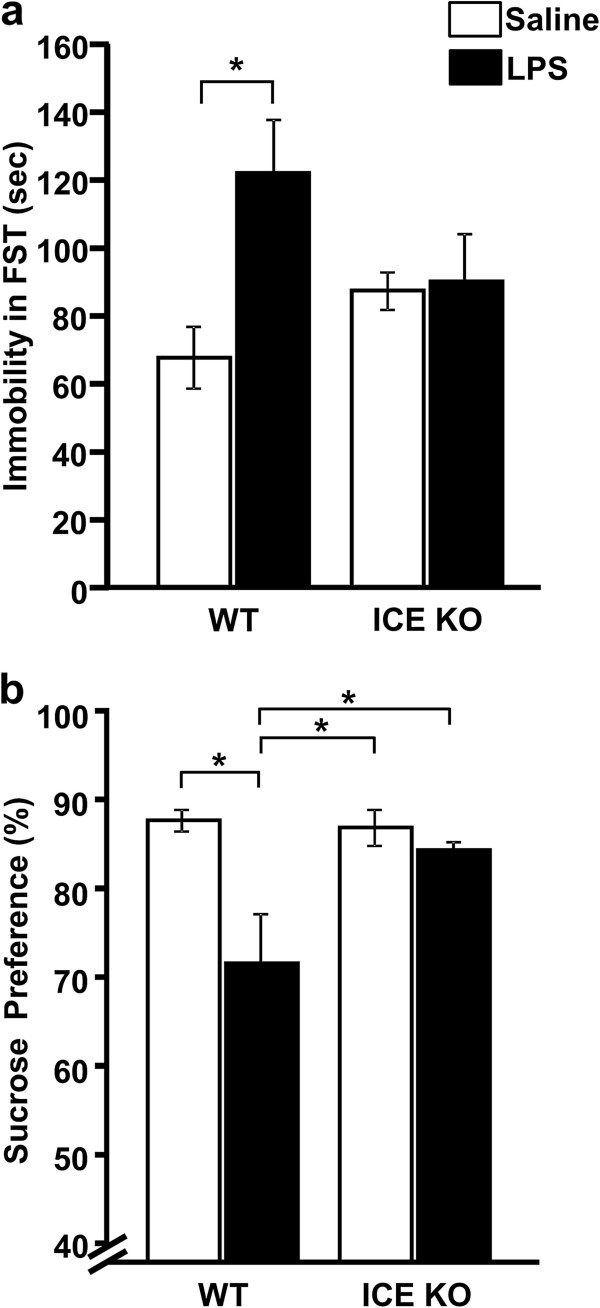
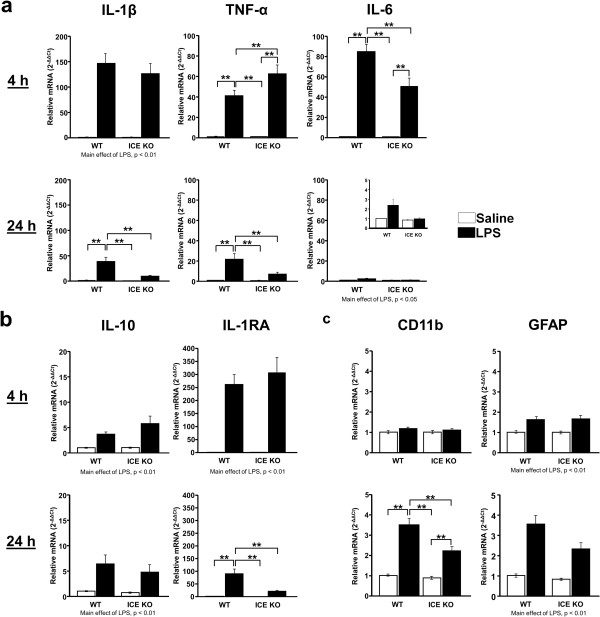
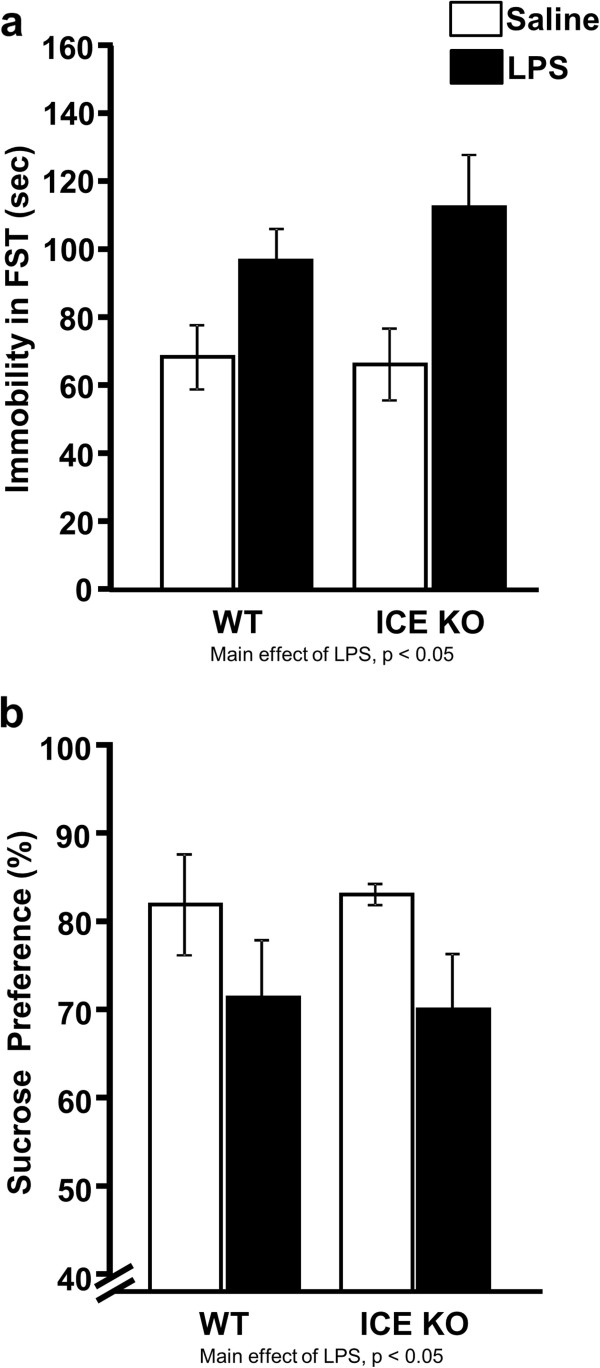
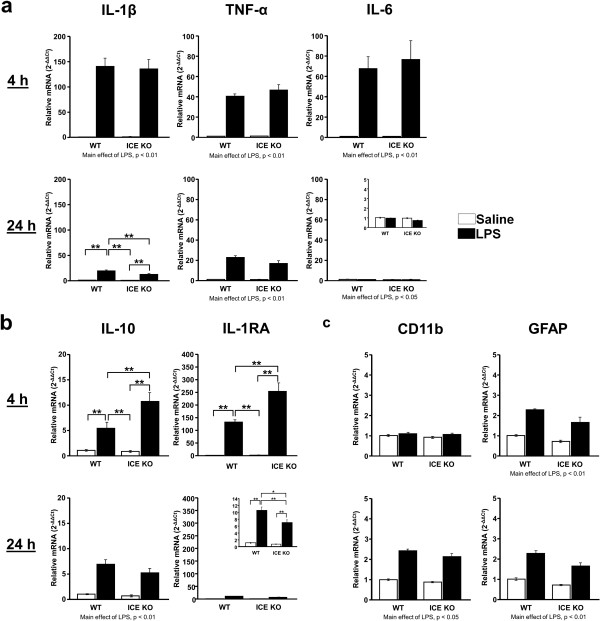
Background: Interleukin-1 beta converting enzyme (ICE, caspase 1) is a cysteine protease that processes immature pro-IL-1β into active mature IL-1β. IL-1β is a pro-inflammatory cytokine that mediates many of the physiological and behavioral responses to inflammation. Genetic deletion of ICE has previously been shown to prevent some negative physiologic responses to lipopolysaccharide (LPS)-induced inflammation. Methods: Here we used a preclinical murine model to test the hypothesis that ICE is necessary for development of depression-like behaviors following intracerebroventricular (ICV) treatment with LPS. Adult male ICE knockout (ICE KO) and congenic wild-type C57BL/6 J (WT) mice were administered LPS either ICV at 100 ng/mouse or intraperitoneally (IP) at 830 μg/kg body weight or an equal volume of saline as controls. Mice were monitored up to 48 h after treatment for both sickness and depression-like behaviors. Results: LPS given ICV induced a loss of body weight in both WT and ICE KO mice. This sickness response was similar between WT and ICE KO mice. As expected, LPS administered ICV increased immobility in the forced swim test (FST) and decreased sucrose preference in WT mice but no change in either of these two depression-like behaviors was observed in ICE KO mice. Expression of TNF-α and CD11b in brain was lower in ICE-KO mice at 24 h following ICV administration of LPS compared to WT mice. In contrast, when LPS was given systemically, sickness response, depression-like behaviors, and expression of these genes were similar between the two strains of mice. Conclusions: These findings indicate that ICE plays a specific role in depression-like behavior induced by a central inflammatory stimuli even though it is not required when LPS is administered systemically.
Overview
The claims and statistics of this paper haven’t been checked yet.
Free: it reads the open-access text and checks the first 5 claims that cite a source we can check. Create a free account to check every claim.
Integrity signals
Registry
Cites
Statistics
Figures
Verification
Claims the paper makes
The claims and statistics of this paper haven’t been checked yet.
Free: it reads the open-access text and checks the first 5 claims that cite a source we can check. Create a free account to check every claim.
Claims other papers make about this one
Each is checked against this paper’s own text: does it say what the citing paper says it does?
The source backs part of the claim, not all of it — or backs it for a different population, condition or comparison.
In the citing paper
“A number of animal studies also support the association of inflammatory states with depressive symptoms, decreased hippocampal volumes, and “sickness behavior” (Goshen et al., 2008;Goshen and Yirmiya, 2009;Lawson et al., 2013).”
From A Review of the Relationship between Proinflammatory Cytokines and Major Depressive Disorder (2014) · cites this paper as Lawson et al., 2013
Experimental — accuracy not yet measured
Self-check
Percentages, sums and reported differences re-computed from the paper’s own numbers.
The self-check needs the paper’s full text.
Citations
Cites
The Mouse Brain in Stereotaxic Coordinates
Paxinos, G. (2001) · Cited by 13,440
Depression, chronic diseases, and decrements in health: results from the World Health Surveys
Moussavi, S., Chatterji, S., Verdes, E., Tandon, A., Patel, V., & Ustun, B. (2007) · The Lancet · doi:10.1016/s0140-6736(07)61415-9 · Cited by 4,070 · cited 1×
“; licensee BioMed Centra Commons Attribution License (http://creativec reproduction in any medium, provided the or sing [4,5].”
BackgroundInflammation and Its Discontents: The Role of Cytokines in the Pathophysiology of Major Depression
Miller, A. H., Maletic, V., & Raison, C. L. (2009) · Biological Psychiatry · doi:10.1016/j.biopsych.2008.11.029 · Cited by 3,848 · cited 1×
“The overall goal is to diminish inflammation by blocking the production of inflammatory cytokines such as IL-1β [13,14].”
BackgroundForecasting the global burden of Alzheimer's disease
Brookmeyer, R., Johnson, E., Ziegler‐Graham, K., & Arrighi, H. M. (2007) · Alzheimer's & Dementia · doi:10.1016/j.jalz.2007.04.381 · Cited by 3,370 · cited 1×
“Similarly, the incidence of neurodegenerative diseases such as Alzheimer’s and Parkinson’s is rising, predominately due to increasing life-span [6,7].”
BackgroundInterleukin-1 in the pathogenesis and treatment of inflammatory diseases
Dinarello, C. A. (2011) · Blood · doi:10.1182/blood-2010-07-273417 · Cited by 2,248 · cited 1×
“IL-1β plays a prominent role in neurodegenerative processes [9,15] and has recently been identified for its role in murine models of depression-like behavior [10,16].”
BackgroundAnimal models of neuropsychiatric disorders
Nestler, E. J., & Hyman, S. E. (2010) · Nature Neuroscience · doi:10.1038/nn.2647 · Cited by 2,023 · cited 2×
“Here we report that ICE KO mice were protected from central inflammation-induced depression-like behavior as measured by two well-accepted behavioral tests [28].”
BackgroundMethodFranchi, L., Eigenbrod, T., Muñoz-Planillo, R., & Nuñez, G. (2009) · Nature Immunology · doi:10.1038/ni.1703 · Cited by 1,834 · cited 3×
“ICE activity has substantial influence over behavioral responses during inflammation, presumably through its role in processing inactive IL-1β [20].”
BackgroundAltered Cytokine Export and Apoptosis in Mice Deficient in Interleukin-1β Converting Enzyme
Kuida, K., Lippke, J. A., Ku, G., Harding, M. W., Livingston, D. J., Su, M. S.-S., & Flavell, R. A. (1995) · Science · doi:10.1126/science.7535475 · Cited by 1,616 · cited 3×
“3Department of Pathology, Colleges of ACES and Medicine, University of Illinois at Urbana-Champaign, Urbana, IL, USA.”
BackgroundInfluentialLi, P., Allen, H., Banerjee, S., Franklin, S., Herzog, L., Johnston, C., McDowell, J., Paskind, M., Rodman, L., Salfeld, J., et al. (1995) · Cell · doi:10.1016/0092-8674(95)90490-5 · Cited by 1,417
O'Connor, J. C., Lawson, M. A., André, C., Moreau, M., Lestage, J., Castanon, N., Kelley, K. W., & Dantzer, R. (2009) · Molecular Psychiatry · doi:10.1038/sj.mp.4002148 · Cited by 1,278 · cited 1×
“Preclinical research using animals to model human depression has provided significant insight into which inflammatory mediators may be good therapeutic drug targets [9-12].”
BackgroundSelf-citation
Cited by
Inflammasome signaling affects anxiety- and depressive-like behavior and gut microbiome composition
Wong, M.-L., Inserra, A., Lewis, M. D., Mastronardi, C. A., Leong, L., Choo, J., Kentish, S., Xie, P., Morrison, M., Wesselingh, S. L., et al. (2016) · Molecular Psychiatry · doi:10.1038/mp.2016.46 · Cited by 568
A Review of the Relationship between Proinflammatory Cytokines and Major Depressive Disorder
Young, J. J., Bruno, D., & Pomara, N. (2014) · Journal of Affective Disorders · doi:10.1016/j.jad.2014.07.032 · Cited by 422
André, C., Dinel, A.-L., Ferreira, G., Layé, S., & Castanon, N. (2014) · Brain Behavior and Immunity · doi:10.1016/j.bbi.2014.03.012 · Cited by 241
Role of Adiposity-Driven Inflammation in Depressive Morbidity
Capuron, L., Lasselin, J., & Castanon, N. (2017) · Neuropsychopharmacology · doi:10.1038/npp.2016.123 · Cited by 182
“…documented associations between emotional/cognitive alterations and both peripheral and brain IDO activation (Andre et al, 2008; Corona et al, 2013; Frenois et al, 2007; Gibney et al, 2013; Lawson et al, 2013; Lestage et al, 2002; Moreau et al, 2005, 2008; Salazar et al, 2012; Xie et al, 2014).”
BackgroundCastanon, N., Luheshi, G., & Layé, S. (2015) · Frontiers in Neuroscience · doi:10.3389/fnins.2015.00229 · Cited by 181
Rodent Models of Depression: Neurotrophic and Neuroinflammatory Biomarkers
Stepanichev, M., Dygalo, N. N., Grigoryan, G., Shishkina, G. T., & Gulyaeva, N. (2014) · BioMed Research International · doi:10.1155/2014/932757 · Cited by 169
“Depressionlike behavioral symptoms induced by icv LPS injection (immobility in the FST but not sickness) were less expressed in mice with genetic knockout of IL-1β converting enzyme (caspase-1), which converts pro-IL-1β into active mature IL1β, additionally indicating involvement of central cytokines in pathogenesis o…”
BackgroundLi, M.-X., Zheng, H.-L., Luo, Y., He, J.-G., Wang, W., Han, J., Zhang, L., Wang, X., Ni, L., Zhou, H.-Y., et al. (2018) · Molecular Psychiatry · doi:10.1038/mp.2017.76 · Cited by 163
Lawson, M. A., Parrott, J. M., McCusker, R. H., Dantzer, R., Kelley, K. W., & O’Connor, J. C. (2013) · Journal of Neuroinflammation · doi:10.1186/1742-2094-10-87 · Cited by 161
“This dose of LPS has been previously demonstrated to induce a transient sickness behavior response in multiple strains of mice that is resolved by 24 hours post administration, and the dose was selected based on its ability to induce depression-like behaviors that are temporally distinct from the acute sickness behavi…”
Self-citationRole of inflammatory cytokines in depression: Focus on interleukin-1β
Farooq, R. K., Asghar, K., Kanwal, S., & Zulqernain, A. (2017) · Biomedical Reports · doi:10.3892/br.2016.807 · Cited by 153
“In an in vivo experiment, where LPS induced sickness behavior in mice, it also led to an increase in the extracellular concentration of 5-hydroxytryptamine and its metabolite, 5-hydroxyindoleacetic acid in the rat hippocampus.”
InfluentialDeferoxamine attenuates lipopolysaccharide-induced neuroinflammation and memory impairment in mice
Zhang, X., Cao, J., Zhang, L., Li, Y., & Mi, W. (2015) · Journal of Neuroinflammation · doi:10.1186/s12974-015-0238-3 · Cited by 143
Liver–brain interactions in inflammatory liver diseases: Implications for fatigue and mood disorders
D’Mello, C., & Swain, M. G. (2013) · Brain Behavior and Immunity · doi:10.1016/j.bbi.2013.10.009 · Cited by 145
“Two behavioral paradigms commonly used to assess ‘depressive-like’ behavior in rodents include the forced swim test, and the assessment of anhedonia (Henry et al., 2008; Lawson et al., 2013; Swain and Maric, 1997).”
Acharjee, S., Nayani, N., Tsutsui, M., Hill, M. N., Ousman, S. S., & Pittman, Q. J. (2013) · Brain Behavior and Immunity · doi:10.1016/j.bbi.2013.07.003 · Cited by 138
“Previous studies have shown that knockout of IL-1b converting enzyme, which converts pro-IL-1b to active form, resulted in reduced depressive behaviour in the background of inflammation (Lawson et al., 2013).”
Zhao, W., Zhang, J.-H., Cao, J., Wang, W., Wang, D., Zhang, X., Yu, J., Zhang, Y.-Y., Zhang, Y., & Mi, W. (2017) · Journal of Neuroinflammation · doi:10.1186/s12974-016-0781-6 · Cited by 129
Systemic inflammation in early neonatal mice induces transient and lasting neurodegenerative effects
Cardoso, F. L., Herz, J., Fernandes, A., Rocha, J., Sepodes, B., Brito, M. A., McGavern, D. B., & Brites, D. (2015) · Journal of Neuroinflammation · doi:10.1186/s12974-015-0299-3 · Cited by 103
“An acute loss in body weight following LPS administration is usually indicative of a sickness behavior in newborns [56], and a three injection regimen with 3 mg/kg in 6to 8-week-old CD-1 mice resulted in significant weight loss, although the animals survived [75].”
BackgroundMethodFatigue in Newly Diagnosed Inflammatory Bowel Disease
Grimstad, T., Norheim, K. B., Isaksen, K., Leitao, K., Hetta, A. K., Carlsen, A., Karlsen, L. N., Skoie, I. M., Gøransson, L., Harboe, E., et al. (2015) · Journal of Crohn's and Colitis · doi:10.1093/ecco-jcc/jjv091 · Cited by 99
Akgün, E., Tüzüner, M. B., Şahin, B., Kilercik, M., Külah, C., Cakiroglu, H. N., Serteser, M., Ünsal, İ., & Baykal, A. T. (2020) · PLoS ONE · doi:10.1371/journal.pone.0240012 · Cited by 107
“ICE has an active role in cell immunity as an initiator of inflammatory response so once activated it triggers the formation of active IL1beta which is secreted from the cell that induces inflammation in the neighboring cells [34].”
BackgroundInserra, A., Mastronardi, C. A., Rogers, G., Licinio, J., & Wong, M.-L. (2019) · Molecular Neurobiology · doi:10.1007/s12035-018-1359-3 · Cited by 96
Russo, E., Andreozzi, F., Iuliano, R., Dattilo, V., Procopio, T., Fiume, G., Mimmi, S., Perrotti, N., Citraro, R., Sesti, G., et al. (2014) · Brain Behavior and Immunity · doi:10.1016/j.bbi.2014.06.016 · Cited by 94
“A different set of rats for every experimental treatment group and time point (n = 10 per group for a total of 70 rats; 1 control group, 3 treatments and 2 time points/treatment) underwent the forced swimming test (FST) for the evaluation of treatment effects on depressive-like/sickness behavior, measured as variation…”
BackgroundInfluentialThe cytokine network in the pathogenesis of major depressive disorder. Close to translation?
Petralia, M. C., Mazzon, E., Fagone, P., Basile, M. S., Lenzo, V., Quattropani, M. C., Di Nuovo, S., Bendtzen, K., & Nicoletti, F. (2020) · Autoimmunity Reviews · doi:10.1016/j.autrev.2020.102504 · Cited by 84
Zielinski, M. R., Gerashchenko, D., Karpova, S. A., Konanki, V., McCarley, R. W., Sutterwala, F. S., Strecker, R. E., & Basheer, R. (2017) · Brain, Behavior, and Immunity · doi:10.1016/j.bbi.2017.01.012 · Cited by 71
Zheng, X., Liang, Y. L., An, K., Ma, S.-J., Xing, L., Zhou, Y.-Y., Dai, C., Xie, H., Xie, L., Wang, G.-J., et al. (2013) · Neuroscience · doi:10.1016/j.neuroscience.2013.10.023 · Cited by 70
Kovacs, D., Eszlari, N., Petschner, P., Pap, D., Vas, S., Kovacs, P., Gonda, X., Juhasz, G., & Bagdy, G. (2016) · Brain, Behavior, and Immunity · doi:10.1016/j.bbi.2016.02.012 · Cited by 66
“, 2001), and IL-1b converting enzyme (ICE) (Lawson et al., 2013) gene knock-out models.”
BackgroundHu, C., Yang, H., Zhao, Y., Chen, X., Dong, Y., Li, L., Dong, Y., Cui, J., Zhu, T., Zheng, P., et al. (2016) · Scientific Reports · doi:10.1038/srep28608 · Cited by 73
Jeon, S.-A., Lee, E., Hwang, I., Han, B., Park, S., Son, S., Yang, J., Hong, S., Kim, C. H., Son, J., et al. (2017) · International Journal of Neuropsychopharmacology · doi:10.1093/ijnp/pyx065 · Cited by 62
“Moreover, selective inhibition of IDO1 by 1-methyl-tryptophan significantly attenuates depressive-like behaviors in mice treated with LPS (O’Connor et al., 2009; Lawson et al., 2013b).”
MethodMicroglial activation contributes to depressive-like behavior in dopamine D3 receptor knockout mice
Wang, J., Lai, S., Li, G., Zhou, T., Wang, B., Cao, F., Chen, T., Zhang, X., & Chen, Y. (2019) · Brain Behavior and Immunity · doi:10.1016/j.bbi.2019.10.016 · Cited by 64
Fatigue in psoriasis: a controlled study
Skoie, I. M., Dalen, I., Ternowitz, T., Jonsson, G., Kvivik, I., Norheim, K. B., & Omdal, R. (2017) · British Journal of Dermatology · doi:10.1111/bjd.15375 · Cited by 64
Heat shock proteins and chronic fatigue in primary Sjögren’s syndrome
Bårdsen, K., Nilsen, M. M., Kvaløy, J. T., Norheim, K. B., Jonsson, G., & Omdal, R. (2016) · Innate Immunity · doi:10.1177/1753425916633236 · Cited by 59
An integrated cytokine and kynurenine network as the basis of neuroimmune communication
Stone, T. W., Clanchy, F. I. L., Huang, Y., Chiang, N., Darlington, L. G., & Williams, R. O. (2022) · Frontiers in Neuroscience · doi:10.3389/fnins.2022.1002004 · Cited by 61
“Mice lacking IDO1 or treated with the inhibitor 1-methyl-tryptophan do not show the loss of spontaneous mobility and social interaction which characterizes depression in the forced swim test (O’Connor et al., 2009a,b; Raison et al., 2010; Alexander et al., 2013; Lawson et al., 2013).”
BackgroundNovel therapeutic targets for epilepsy intervention
Kambli, L., Bhatt, L. K., Oza, M. J., & Prabhavalkar, K. S. (2017) · Seizure · doi:10.1016/j.seizure.2017.07.014 · Cited by 50
Zhang, J., Lin, W., Tang, M., Zhao, Y., Zhang, K., Wang, X., & Li, Y. (2019) · Psychoneuroendocrinology · doi:10.1016/j.psyneuen.2019.104580 · Cited by 48
Role of Stress, Depression, and Aging in Cognitive Decline and Alzheimer’s Disease
Daulatzai, M. A. (2014) · Current topics in behavioral neurosciences · doi:10.1007/7854_2014_350 · Cited by 45
“Current evidences support that inflammation and oxidative and nitrogen stress are intertwined, and their signaling mechanisms are important in upregulating depression pathophysiology (Biesmans et al. 2013; Ferreira Mello et al. 2013; Lawson et al. 2013; van Heesch et al. 2013).”
BackgroundRole of astrocytic GABAergic system on inflammatory cytokine-induced anxiety-like behavior
Shim, H. S., Park, H.-J., Woo, J., Lee, C. J., & Shim, I. (2019) · Neuropharmacology · doi:10.1016/j.neuropharm.2019.107776 · Cited by 44
Balkaya, M., Kim, I., Shakil, F., & Cho, S. (2020) · Journal of Cerebral Blood Flow & Metabolism · doi:10.1177/0271678x20924099 · Cited by 45
“In animal models of stress and depression, it has been suggested that reduction in sucrose preference and increased despair is associated with cytokine levels.(63,64) Accumulating evidence indicates that BBB dysfunction is involved in the pathogenesis of various psychiatric disorders including bipolar disorder(65) and…”
BackgroundKlaus, F., Paterna, J., Marzorati, E., Sigrist, H., Goetze, L., Schwendener, S., Bergamini, G., Jehli, E., Azzinnari, D., Fuertig, R., et al. (2016) · Brain Behavior and Immunity · doi:10.1016/j.bbi.2016.08.001 · Cited by 41
“…(LPS) to activate the innate immune system, led to increased plasma TNF (Biesmans et al., 2013; Dantzer et al., 2008) and brain Tnf mRNA (Lawson et al., 2013), and loss of body weight, reduced social exploration (Bluthé et al., 2000) and sucrose drinking (Frenois et al., 2007; Lawson et al., 2013).”
BackgroundWickens, R. A., Donck, L. V., Mackenzie, A. B., & Bailey, S. (2017) · Behavioural Brain Research · doi:10.1016/j.bbr.2017.07.041 · Cited by 42
“This finding is supported by other work reporting no significant LPS-induced depressive-like behaviour at 24 h post-administration [39,26].”
BackgroundResultInfluentialZeng, C., Hou, Z.-S., Zhao, H.-K., Xin, Y.-R., Liu, M., Yang, X., Wen, H., & Li, J. (2020) · Developmental & Comparative Immunology · doi:10.1016/j.dci.2020.103987 · Cited by 41
Bai, S., Wang, W., Ting, W., Li, J., Zhang, S., Chen, Z., Qi, X., Chen, J., Cheng, K., & Xie, P. (2021) · Translational Psychiatry · doi:10.1038/s41398-020-01130-8 · Cited by 36
Imbeault, S., Goiny, M., Liu, X., & Erhardt, S. (2019) · Acta Neuropsychiatrica · doi:10.1017/neu.2019.44 · Cited by 34
Wang, J., Lai, S., Wang, R., Zhou, T., Dong, N., Zhu, L., Chen, T., Zhang, X., & Chen, Y. (2021) · Brain Behavior and Immunity · doi:10.1016/j.bbi.2021.12.019 · Cited by 33
Impairment of Hepcidin Upregulation by Lipopolysaccharide in the Interleukin-6 Knockout Mouse Brain
Zhang, F., Hou, H., Yin, Z., Chang, L. Y., Li, F., Chen, Y.-J., Ke, Y., & Qian, Z. (2017) · Frontiers in Molecular Neuroscience · doi:10.3389/fnmol.2017.00367 · Cited by 32
“…of Wild Type Mice Based on reported time-points in the response of hepcidin mRNA expression (Qian et al., 2014) and inflammatory cytokines (Lawson et al., 2013; Yanguas-Casás et al., 2014) to LPS treatment, we first measured hepcidin mRNA and IL-6 mRNA and protein content in the cortex…”
BackgroundFaleiros, B. E., de Miranda, A. S., Campos, A. C., Gomides, L. F., Kangussu, L. M., Guatimosim, C., Camargos, E. R. S., Menezes, G. B., Rachid, M. A., & Teixeira, A. L. (2014) · Brain Research · doi:10.1016/j.brainres.2014.07.001 · Cited by 31
Gu, J., Xu, Y.-W., Feng, L.-P., Dong, J., Zhao, L., Liu, C., Wang, H., Zhang, X., Song, C., & Wang, C. (2021) · Brain Research Bulletin · doi:10.1016/j.brainresbull.2021.10.005 · Cited by 33
Clark, S. M., Michael, K. C., Klaus, J., Mert, A., Romano-Verthelyi, A., Sand, J., & Tonelli, L. H. (2015) · Behavioural Brain Research · doi:10.1016/j.bbr.2014.09.030 · Cited by 29
Catanzaro, J. M., Hueston, C. M., Deak, M. M., & Deak, T. (2014) · Behavioural Pharmacology · doi:10.1097/fbp.0000000000000072 · Cited by 27
“The key protease responsible for intracellular IL-1β processing is IL-1 converting enzyme (ICE), also known as caspase-1 (Lawson et al., 2013).”
BackgroundFang, X., Zhan, G., Zhang, J., Xu, H., Zhu, B., Hu, Y., Yang, C., & Luo, A. (2019) · Clinical Psychopharmacology and Neuroscience · doi:10.9758/cpn.2019.17.2.189 · Cited by 29
Long-term obesity is associated with depression and neuroinflammation
Lorena, F. B., do Nascimento, B. P. P., Camargo, E. L. R. A., Bernardi, M. M., Fukushima, A. R., Panizza, J. D. N., Nogueira, P. D. B., Brandão, M. E., & Ribeiro, M. O. (2021) · Archives of Endocrinology and Metabolism · doi:10.20945/2359-3997000000400 · Cited by 30
“Confirming these findings, it has been shown that the induction of inflammation by peripheral administration of lipopolysaccharides leads to IL1β and TNFα release in the brain, inducing depressive behaviors in rodents (14,15).”
BackgroundBrain derived neurotrophic factor deficiency exacerbates inflammation-induced anhedonia in mice
Parrott, J. M., Porter, G. A., Redus, L., & O’Connor, J. C. (2021) · Psychoneuroendocrinology · doi:10.1016/j.psyneuen.2021.105404 · Cited by 29
Matured Hop Bitter Acids in Beer Improve Lipopolysaccharide-Induced Depression-Like Behavior
Fukuda, T., Ohya, R., Kobayashi, K., & Ano, Y. (2019) · Frontiers in Neuroscience · doi:10.3389/fnins.2019.00041 · Cited by 27
Bae, D., Lee, J., Ha, N., Park, J., Baek, J., Suh, D., Lim, H. S., Ko, S. M., Kim, T., Jeong, D. S., et al. (2021) · Scientific Reports · doi:10.1038/s41598-021-93232-6 · Cited by 26
Sorri, A., Järventausta, K., Kampman, O., Lehtimäki, K. A., Björkqvist, M., Tuohimaa, K., Hämäläinen, M., Moilanen, E., & Leinonen, E. V. J. (2018) · Brain and Behavior · doi:10.1002/brb3.933 · Cited by 30
Dal‐Pizzol, F., de Medeiros, G. F., Michels, M., Mazeraud, A., Bozza, F. A., Ritter, C., & Sharshar, T. (2021) · Neurotherapeutics · doi:10.1007/s13311-020-00981-9 · Cited by 26
“Using a dose of 5 mg/lg LPS, they did not show increased anxiety (EPM and OF), either at 7 or 280 days after LPS injection; however, the authors speculated that persistent participation of TNF-α accompanied by a contribution of IL18 can lead to behavioral alteration.”
BackgroundInfluentialTjensvoll, A. B., Gøransson, L. G., Harboe, E., Kvaløy, J. T., & Omdal, R. (2014) · European Journal of Neurology · doi:10.1111/ene.12447 · Cited by 22
“Thus, high headache-related disability in SLE and pSS patients may reflect the burden of chronic disease, although a biological mechanism such as intrathecal cytokine effect cannot be ruled out [24].”
BackgroundRamalho, J. B., Spiazzi, C. C., Bicca, D. F., Rodrigues, J. F., Sehn, C. P., da Silva, W. P., & Cibin, F. W. S. (2022) · Behavioural Brain Research · doi:10.1016/j.bbr.2022.113847 · Cited by 20
Infection, learning, and memory: Focus on immune activation and aversive conditioning
Bishnoi, I. R., Cloutier, C. J., Tyson, C.-D., Matic, V. M., Kavaliers, M., & Ossenkopp, K. (2022) · Neuroscience & Biobehavioral Reviews · doi:10.1016/j.neubiorev.2022.104898 · Cited by 17
Fatigue: A forgotten symptom of asthma
Günaydın, F. E., Ediger, D., & Erbay, M. (2021) · The Clinical Respiratory Journal · doi:10.1111/crj.13356 · Cited by 17
Sickness behavior is delayed in hypothyroid mice
Silva, V. C., & Giusti‐Paiva, A. (2014) · Brain Behavior and Immunity · doi:10.1016/j.bbi.2014.12.014 · Cited by 18
“At the behavioral level, sickness behavior is a motivational state that reprioritizes the functions of an organism to cope with infectious pathogens (Dantzer, 2009; Lawson et al., 2013; Pitychoutis et al., 2009).”
BackgroundPeng, S., Yu, Y., Li, J., Jiang, D., Xu, G., Wu, L., & Hu, J. (2023) · Aging · doi:10.18632/aging.204586 · Cited by 12
Vollmer, L. L., Schmeltzer, S. N., Ahlbrand, R., & Sah, R. (2015) · Physiology & Behavior · doi:10.1016/j.physbeh.2015.03.012 · Cited by 11
Yu, J., Zhao, W., Du, C., Zhang, N., Zhang, W., Jin, S., Wang, H., & Feng, Z. (2017) · Europe PMC (PubMed Central) · doi:10.3969/j.issn.1673-4254.2017.05.06 · Cited by 11
Glial cell responses in a murine multifactorial perinatal brain injury model
Domowicz, M. S., Wadlington, N. L., Henry, J. G., Diaz, K., Munoz, M. J., & Schwartz, N. B. (2017) · Brain Research · doi:10.1016/j.brainres.2017.12.020 · Cited by 9
“…mimics septicemia in premature human infants (Mallard and Wang, 2012), has previously been shown to induce sickness behavior and weight loss in adult mice (Lawson et al., 2013; Walker et al., 2013), as well as a proinflammatory reaction and weight loss in neonatal rodent CNS (Cardoso et al., 2015).”
BackgroundMi, W., Li, Y., Zhang, X., & Zhang, L. (2018) · Neural Regeneration Research · doi:10.4103/1673-5374.239442 · Cited by 8
“Knock-out or down-regulation of cytokines can exert anti-depression-like effects (Lawson et al., 2013a).”
Si, M., Cheng, L., Liu, L., Qu, Y., Liu, Y. F., Zhao, H., Ma, H., Noor, A., Ji, C.-J., & Nie, L. (2019) · Neural Regeneration Research · doi:10.4103/1673-5374.259623 · Cited by 6
“A 1-μL volume of NS or LPS (10 μg/μL; Solarbio, Beijing, China) was administered via ICV injection according to a published protocol with minor modification (Lawson et al., 2013).”
BackgroundMethodInfluentialIdo1 or Ido2 deficiency in myeloid-derived cells attenuates TMEV-induced ictogenesis
Kaswan, Z. A. M., Brooks, A. K., Hurtado, M., Chen, E. Y., Steelman, A. J., & McCusker, R. H. (2025) · Journal of Neuroimmunology · doi:10.1016/j.bbi.2025.07.017 · Cited by 8
“Gene expression was analyzed by the comparative threshold (C t ) cycle method (GAPDH used for normalization) as described previously (Brooks et al., 2016a; Brooks et al., 2016b; Dostal et al., 2018; Juda et al., 2019; Lawson et al., 2013).”
Self-citationNeonatal Immune Activation May Provoke Long-term Depressive Attributes
Marzzani, S. H. S., Dias, P., Freiberger, V., Ventura, L., Silva, B. B., Dutra, M. L., Bobinski, F., Schlindwein, A. D., Cassol-Jr, O. J., & Comim, C. M. (2019) · Current Neurovascular Research · doi:10.2174/1567202616666191007125502 · Cited by 7
The Role of the Microbiome in Mental Health: A Psychoneuroimmunologic Perspective
Brogan, K. (2015) · Alternative and Complementary Therapies · doi:10.1089/act.2015.21204 · Cited by 4
Kim, Y.-J., Kim, J., Kang, H., Lee, J., Kim, S., Shin, I., & Kim, J. (2024) · Clinical Psychopharmacology and Neuroscience · doi:10.9758/cpn.24.1222 · Cited by 6
“In an animal model study, mice induced to produce IL-1 exhibited depression-like behaviors, whereas those not induced to produce IL-1 did not display such behaviors [13].”
The potency of blumeatin and luteolin as caspase-1 inhibitor by molecular docking
Pratama, I. P. A. A. C., Putra, I. M. H., Pujasari, L. W. S., Dewi, K. D. M. S., & Laksmiani, N. P. L. (2022) · Pharmacy Reports · doi:10.51511/pr.22 · Cited by 3
“IL-1β is produced by interleukin-1β converting enzyme (ICE), also known as caspase-1, that can be activated due to OCVID-19 infection [7].”
BackgroundInfluentialAnimal Models to Study the Role of Kynurenine Pathway in Mood, Behavior, and Cognition
Castanon, N. (2015) · Springer eBooks · doi:10.1007/978-3-319-11870-3_25 · Cited by 2
Inflammatory models of depression in rodents and humans
Markov, D., Zozulya, S. A., & Dolotov, O. V. (2026) · Frontiers in Psychiatry · doi:10.3389/fpsyt.2026.1687579 · Cited by 5
Diagnoses and new therapeutic strategy focused on physiological alteration of tryptophan metabolism
Mouri, A., Hasegawa, M., Kunisawa, K., Saito, K., & Nabeshima, T. (2023) · Folia Pharmacologica Japonica · doi:10.1254/fpj.22139 · Cited by 2
Tavakoli, Z., Taheri, M., & Roghani, M. (2024) · Studies in Medical Sciences · doi:10.61186/umj.35.7.604 · Cited by 1
Mediators of neuroinflammation
Tikamdas, R., Zhang, P., & Liu, B. (2016) · Wiley eBooks · doi:10.1002/9781118832431.ch4
Wang, J., Lai, S., Wang, R., Zhou, T., Dong, N., Zhu, L., Chen, T., & Chen, Y. (2021) · Research Square · doi:10.21203/rs.3.rs-433541/v1
Inflammatory Bases of Neuropsychiatric Symptom Domains: Mechanisms and Specificity
Aouizerate, B., Vancassel, S., Castanon, N., & Capuron, L. (2021) · Springer eBooks · doi:10.1007/978-3-030-71229-7_20 · Cited by 3
Up-Regulation of Hsp22 Ameliorates Hippocampus Injury in Acute Phase of LipopolysaccharidePreprint
Hu, J., Yu, Y., Li, J., Liu, H., Zhu, Z., & Xu, G. (2022) · SSRN Electronic Journal · doi:10.2139/ssrn.4194735
Molecular Dynamics and Quantum Chemical Studies on Piperine, a Naturally Occurring Alkaloid
Srivastava, A. K., Kumar, A., Srivastava, H., Pandey, S. K., Kumar, N., Brahmachari, G., & Misra, N. (2023) · Polycyclic aromatic compounds · doi:10.1080/10406638.2023.2237631
Ido1 or Ido2 Deficiency in Myeloid-Derived Cells Attenuates Tmev-Induced IctogenesisPreprint
McCusker, R. H., Kaswan, Z. A. M., Hurtado, M., Chen, E. Y., Steelman, A. J., & Brooks, A. K. (2025) · SSRN Electronic Journal · doi:10.2139/ssrn.5163184
Self-citationEtude de la voie de la kynurénine dans la symptomatologie du sujet obèse
Huet, L. (2019) · theses.fr (ABES) · doi:10.70675/ff26d7c8z4c5fz4c86z9e6ezd8d843268447 · Cited by 2
Hu, J., Zhang, M., Liu, P., Chen, Y., Meng, H., Xia, S., Bao, X., Xu, Y., & Chen, Y. (2026) · Glia · doi:10.1002/glia.70215 · Cited by 1
“The experimental method was as described previously (Lawson et al. 2013).”
Metadata
- Authors
- Lawson, M. A., McCusker, R. H., & Kelley, K. W.
- Affiliations
- University of Illinois Urbana-Champaign (US)
- Corresponding author
- Kelley, Keith W
- Venue
- Journal of Neuroinflammation
- Published
- 2013-05-01
- Volume
- 10
- Issue
- 1
- Pages
- 54-54
- ISSN
- 1742-2094 (ISSN-L)
- PMC
- PMC3663735
- OpenAlex
- W2141059794
- Cited by
- 80
- References
- 54
- Citations by year
- 2026: 2 · 2025: 3 · 2024: 2 · 2023: 3 · 2022: 5 · 2021: 10 · 2020: 4 · 2019: 9 · 2018: 3 · 2017: 10 · 2016: 8 · 2015: 7 · 2014: 10 · 2013: 4
- FWCI
- 3.13
- Type
- journal article
- Language
- en
- Open access
- gold
- doi.org
- Locations
- Journal of Neuroinflammation (publishedVersion, cc-by)
- Europe PMC (PubMed Central) (publishedVersion, cc-by)
- PubMed Central (publishedVersion, cc-by)
- PubMed (publishedVersion)
- Funders
- National Institutes of Health
- National Institute on Aging (AG029573, R01AG029573)
- National Institute of Mental Health (MH083767, R01MH083767)
- Topics
- Life Sciences › Neuroscience › Biological Psychiatry › Tryptophan and brain disorders
- Life Sciences › Neuroscience › Neurology › Neuroinflammation and Neurodegeneration Mechanisms
- Life Sciences › Neuroscience › Behavioral Neuroscience › Stress Responses and Cortisol
- Keywords
- interleukin-1 beta converting enzyme, caspase-1, depression-like behavior, lipopolysaccharide, neuroinflammation, sickness behavior, intracerebroventricular administration, IL-1β, TNF-α, CD11b, forced swim test, sucrose preference
- MeSH terms
- Animals, Behavior, Animal, Body Weight, Brain Chemistry, Depression, Food Preferences, Injections, Intraventricular, Lipopolysaccharides, Male, Mice, Inbred C57BL, Motor Activity, Sucrose, Swimming, Tumor Necrosis Factor-alpha, Cytokines, Mice, Knockout, Caspase 1, CD11b Antigen, Mice, Interleukin-1beta, Real-Time Polymerase Chain Reaction, Caspase Inhibitors
About these checks
Registry, retraction, Cites and statistics results are computed, not judged, with one exception: a printed reference that no index lists is read once by a model before it counts as a citation error. Claims are extracted by a model and kept only when their quote appears verbatim in the text; each cited source is then checked, with a model’s help, for whether it says what the claim relies on. Those verdicts can be wrong — read the claim’s quote and the cited source before relying on one.
Statistics and arithmetic are recomputed, not judged.
Confidence bands are shown only for fields calibrated on our annotated test set. None is calibrated yet, so no band is shown.
What counts as a claim ›How we measure confidence ›How we check this ›
Are you an author, or do you see a problem with this page? Request a review
Data sources
Bibliographic data: Semantic Scholar, OpenAlex, Crossref.
Contains information from the Semantic Scholar Academic Graph Datasets, made available under the ODC Attribution License (ODC-BY 1.0).
Semantic Scholar’s data is described in: Kinney, R., et al. (2023). The Semantic Scholar Open Data Platform. arXiv:2301.10140.
