

Interleukin-1 beta converting enzyme is necessary for development of depression-like behavior following intracerebroventricular administration of lipopolysaccharide to mice
Open accessThe DOI matches its Crossref record; 54 of the 54 references it cites were found in a registry or an index.
Abstract
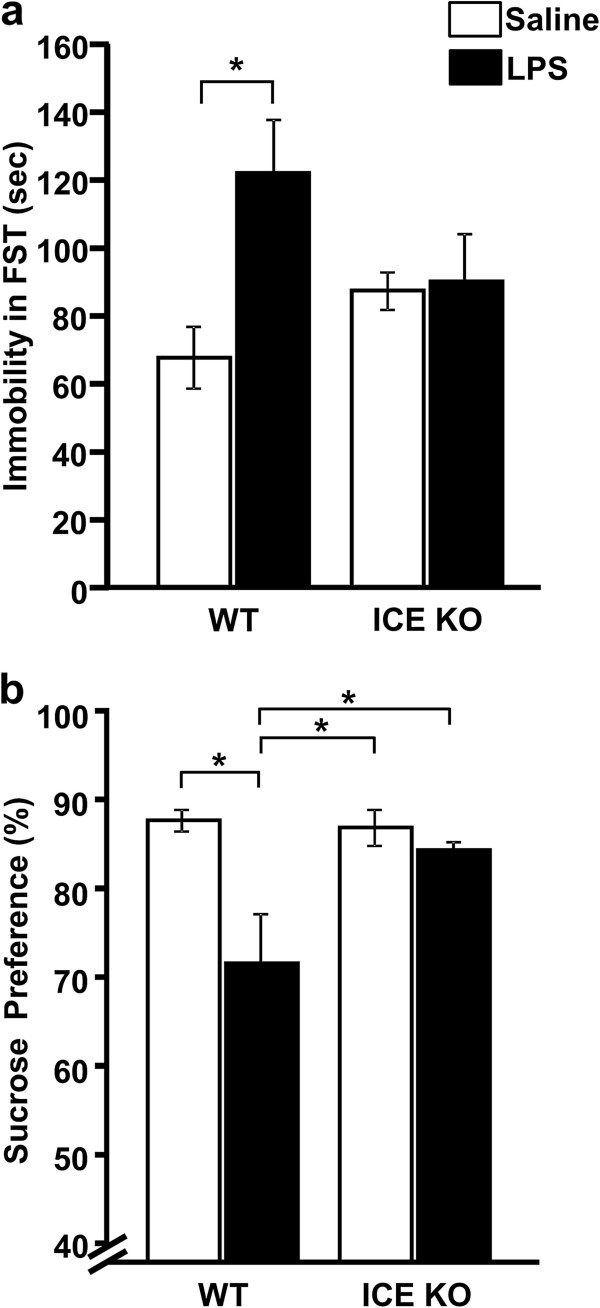
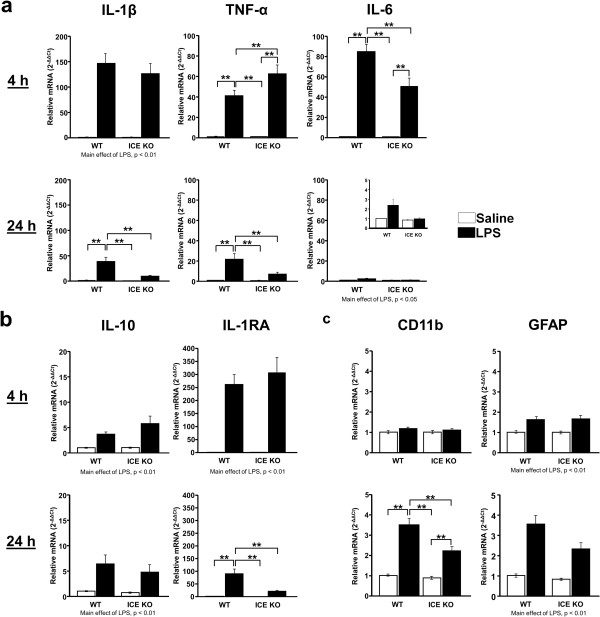
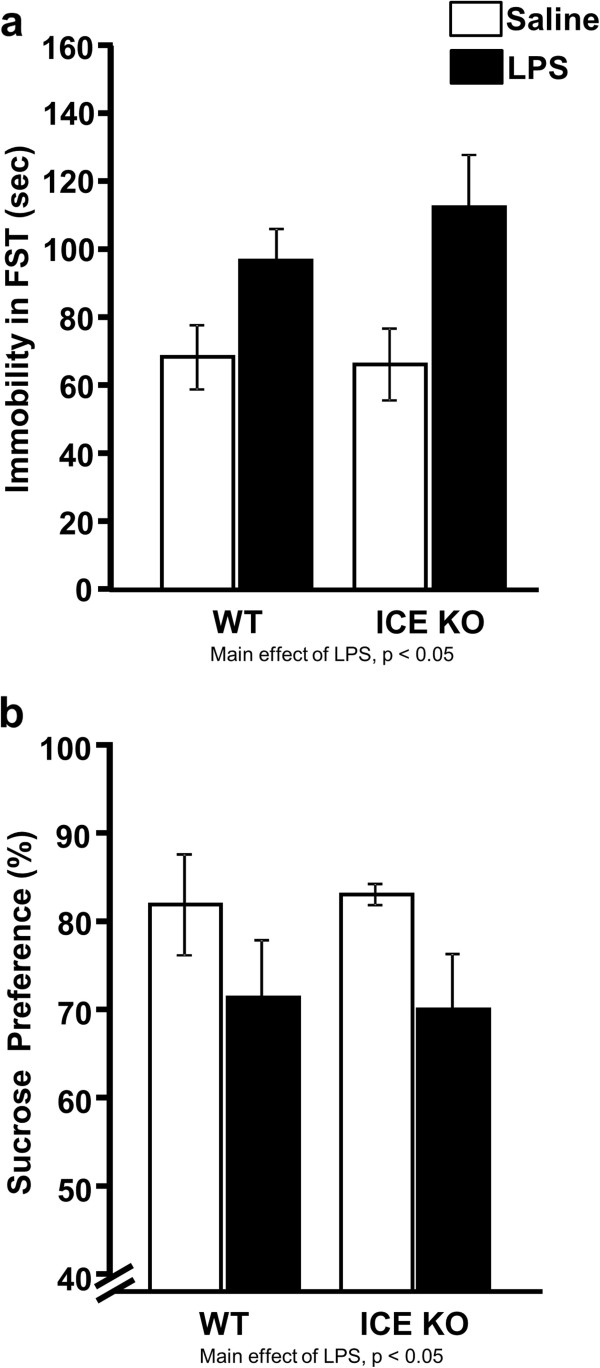
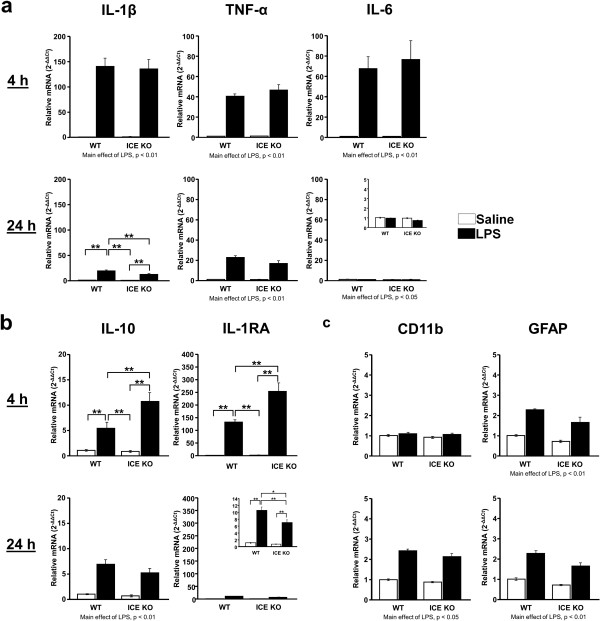
Background: Interleukin-1 beta converting enzyme (ICE, caspase 1) is a cysteine protease that processes immature pro-IL-1β into active mature IL-1β. IL-1β is a pro-inflammatory cytokine that mediates many of the physiological and behavioral responses to inflammation. Genetic deletion of ICE has previously been shown to prevent some negative physiologic responses to lipopolysaccharide (LPS)-induced inflammation. Methods: Here we used a preclinical murine model to test the hypothesis that ICE is necessary for development of depression-like behaviors following intracerebroventricular (ICV) treatment with LPS. Adult male ICE knockout (ICE KO) and congenic wild-type C57BL/6 J (WT) mice were administered LPS either ICV at 100 ng/mouse or intraperitoneally (IP) at 830 μg/kg body weight or an equal volume of saline as controls. Mice were monitored up to 48 h after treatment for both sickness and depression-like behaviors. Results: LPS given ICV induced a loss of body weight in both WT and ICE KO mice. This sickness response was similar between WT and ICE KO mice. As expected, LPS administered ICV increased immobility in the forced swim test (FST) and decreased sucrose preference in WT mice but no change in either of these two depression-like behaviors was observed in ICE KO mice. Expression of TNF-α and CD11b in brain was lower in ICE-KO mice at 24 h following ICV administration of LPS compared to WT mice. In contrast, when LPS was given systemically, sickness response, depression-like behaviors, and expression of these genes were similar between the two strains of mice. Conclusions: These findings indicate that ICE plays a specific role in depression-like behavior induced by a central inflammatory stimuli even though it is not required when LPS is administered systemically.
Overview
The claims and statistics of this paper haven’t been checked yet.
Free: it reads the open-access text and checks the first 5 claims that cite a source we can check. Create a free account to check every claim.
Integrity signals
Registry
Cites
Statistics
Figures
Verification
Claims the paper makes
The claims and statistics of this paper haven’t been checked yet.
Free: it reads the open-access text and checks the first 5 claims that cite a source we can check. Create a free account to check every claim.
Claims other papers make about this one
Each is checked against this paper’s own text: does it say what the citing paper says it does?
The source backs part of the claim, not all of it — or backs it for a different population, condition or comparison.
In the citing paper
“A number of animal studies also support the association of inflammatory states with depressive symptoms, decreased hippocampal volumes, and “sickness behavior” (Goshen et al., 2008;Goshen and Yirmiya, 2009;Lawson et al., 2013).”
From A Review of the Relationship between Proinflammatory Cytokines and Major Depressive Disorder (2014) · cites this paper as Lawson et al., 2013
Experimental — accuracy not yet measured
Self-check
Percentages, sums and reported differences re-computed from the paper’s own numbers.
The self-check needs the paper’s full text.
Citations
Cites
The Mouse Brain in Stereotaxic Coordinates
Paxinos, G. (2001) · Cited by 13,440
Depression, chronic diseases, and decrements in health: results from the World Health Surveys
Moussavi, S., Chatterji, S., Verdes, E., Tandon, A., Patel, V., & Ustun, B. (2007) · The Lancet · doi:10.1016/s0140-6736(07)61415-9 · Cited by 4,070 · cited 1×
“; licensee BioMed Centra Commons Attribution License (http://creativec reproduction in any medium, provided the or sing [4,5].”
BackgroundInflammation and Its Discontents: The Role of Cytokines in the Pathophysiology of Major Depression
Miller, A. H., Maletic, V., & Raison, C. L. (2009) · Biological Psychiatry · doi:10.1016/j.biopsych.2008.11.029 · Cited by 3,848 · cited 1×
“The overall goal is to diminish inflammation by blocking the production of inflammatory cytokines such as IL-1β [13,14].”
BackgroundForecasting the global burden of Alzheimer's disease
Brookmeyer, R., Johnson, E., Ziegler‐Graham, K., & Arrighi, H. M. (2007) · Alzheimer's & Dementia · doi:10.1016/j.jalz.2007.04.381 · Cited by 3,370 · cited 1×
“Similarly, the incidence of neurodegenerative diseases such as Alzheimer’s and Parkinson’s is rising, predominately due to increasing life-span [6,7].”
BackgroundInterleukin-1 in the pathogenesis and treatment of inflammatory diseases
Dinarello, C. A. (2011) · Blood · doi:10.1182/blood-2010-07-273417 · Cited by 2,248 · cited 1×
“IL-1β plays a prominent role in neurodegenerative processes [9,15] and has recently been identified for its role in murine models of depression-like behavior [10,16].”
BackgroundAnimal models of neuropsychiatric disorders
Nestler, E. J., & Hyman, S. E. (2010) · Nature Neuroscience · doi:10.1038/nn.2647 · Cited by 2,023 · cited 2×
“Here we report that ICE KO mice were protected from central inflammation-induced depression-like behavior as measured by two well-accepted behavioral tests [28].”
BackgroundMethodFranchi, L., Eigenbrod, T., Muñoz-Planillo, R., & Nuñez, G. (2009) · Nature Immunology · doi:10.1038/ni.1703 · Cited by 1,834 · cited 3×
“ICE activity has substantial influence over behavioral responses during inflammation, presumably through its role in processing inactive IL-1β [20].”
BackgroundAltered Cytokine Export and Apoptosis in Mice Deficient in Interleukin-1β Converting Enzyme
Kuida, K., Lippke, J. A., Ku, G., Harding, M. W., Livingston, D. J., Su, M. S.-S., & Flavell, R. A. (1995) · Science · doi:10.1126/science.7535475 · Cited by 1,616 · cited 3×
“3Department of Pathology, Colleges of ACES and Medicine, University of Illinois at Urbana-Champaign, Urbana, IL, USA.”
BackgroundInfluentialLi, P., Allen, H., Banerjee, S., Franklin, S., Herzog, L., Johnston, C., McDowell, J., Paskind, M., Rodman, L., Salfeld, J., et al. (1995) · Cell · doi:10.1016/0092-8674(95)90490-5 · Cited by 1,417
O'Connor, J. C., Lawson, M. A., André, C., Moreau, M., Lestage, J., Castanon, N., Kelley, K. W., & Dantzer, R. (2009) · Molecular Psychiatry · doi:10.1038/sj.mp.4002148 · Cited by 1,278 · cited 1×
“Preclinical research using animals to model human depression has provided significant insight into which inflammatory mediators may be good therapeutic drug targets [9-12].”
BackgroundSelf-citationRole of the Immune system in chronic pain
Marchand, F., Perretti, M., & McMahon, S. B. (2005) · Nature Reviews Neuroscience · doi:10.1038/nrn1700 · Cited by 1,098 · cited 1×
“Moreover, IL-1 has been extensively examined for its role in mediating symptoms of neuropathic pain (reviewed in [40]).”
BackgroundChronic pain-associated depression: Antecedent or consequence of chronic pain? A review
Fishbain, D. A., Cutler, R., Rosomoff, H. L., & Rosomoff, R. S. (1997) · The Clinical Journal of Pain · doi:10.1097/00002508-199706000-00006 · Cited by 1,074 · cited 1×
“Chronic pain has also been linked to depression with a possible cause and effect relationship [38,39].”
BackgroundTyring, S., Gottlieb, A., Papp, K., Gordon, K., Leonardi, C., Wang, A., Lalla, D., Woolley, M., Jahreis, A., Zitnik, R., et al. (2006) · The Lancet · doi:10.1016/s0140-6736(05)67763-x · Cited by 1,069 · cited 3×
“Patients treated with Etanercept showed significant improvement in sexual function, sleep, irritability, and other symptoms of depression that impacted quality of life compared to patients receiving placebo.”
InfluentialThe macrophage theory of depression
Smith, R. S. (1991) · Medical Hypotheses · doi:10.1016/0306-9877(91)90272-z · Cited by 931 · cited 1×
“During the past two decades, substantial support has accumulated for the idea that the co-morbid symptoms associated with clinical depression and neurodegenerative diseases share inflammation as a common an important component of their etiology [1-3].”
BackgroundIL-1β is an essential mediator of the antineurogenic and anhedonic effects of stress
Koo, J. W., & Duman, R. S. (2008) · Proceedings of the National Academy of Sciences · doi:10.1073/pnas.0708092105 · Cited by 862 · cited 3×
“Similar CUS causes mice to display decreased preference for sucrose solution compared to unstressed mice, and this anhedonic response is blocked by ICV administration of IL-1RA [34].”
BackgroundResultGoshen, I., Kreisel, T., Ben-Menachem-Zidon, O., Licht, T., Weidenfeld, J., Ben-Hur, T., & Yirmiya, R. (2008) · Molecular Psychiatry · doi:10.1038/sj.mp.4002055 · Cited by 762 · cited 8×
“Preclinical research using animals to model human depression has provided significant insight into which inflammatory mediators may be good therapeutic drug targets [9-12].”
BackgroundResultInfluentialExploratory behavior models of anxiety in mice
Crawley, J. N. (1985) · Neuroscience & Biobehavioral Reviews · doi:10.1016/0149-7634(85)90030-2 · Cited by 753 · cited 1×
“Exploratory behavior is often used as an important screening tool for anxiety-like behavior [43].”
MethodCastagné, V., Moser, P., Roux, S., & Porsolt, R. D. (2011) · Current Protocols in Neuroscience · doi:10.1002/0471142301.ns0810as55 · Cited by 702
Interleukin 1 in the brain: biology, pathology and therapeutic target
Rothwell, N. (2000) · Trends in Neurosciences · doi:10.1016/s0166-2236(00)01661-1 · Cited by 671 · cited 3×
“It has been well established that IL-1β activates the hypothalamic-pituitary-adrenal axis and induces behavioral changes associated with sickness and depression, such as anhedonia, disruption of sleep, cognitive disturbances, temperature disregulation, and consumption of food [9,26,27].”
BackgroundThe inflammasome: Pathways linking psychological stress, depression, and systemic illnesses
Iwata, M., Ota, K. T., & Duman, R. S. (2013) · Brain, Behavior, and Immunity · doi:10.1016/j.bbi.2012.12.008 · Cited by 580 · cited 1×
“and oligomerization domain-like receptor (NLR) family proteins that act as intracellular receptors for pathogenassociated molecular patterns (PAMPs) or dangerassociated molecular patterns (DAMPs) in a similar fashion as the widely recognized toll-like receptors [22,36,37].”
BackgroundConfronting The Growing Burden Of Chronic Disease: Can The U.S. Health Care Workforce Do The Job?
Bodenheimer, T., Chen, E., & Bennett, H. D. (2009) · Health Affairs · doi:10.1377/hlthaff.28.1.64 · Cited by 544 · cited 1×
“; licensee BioMed Centra Commons Attribution License (http://creativec reproduction in any medium, provided the or sing [4,5].”
BackgroundIs depression an inflammatory disorder?
Raison, C. L., & Miller, A. H. (2011) · Current Psychiatry Reports · doi:10.1007/s11920-011-0232-0 · Cited by 524 · cited 1×
“During the past two decades, substantial support has accumulated for the idea that the co-morbid symptoms associated with clinical depression and neurodegenerative diseases share inflammation as a common an important component of their etiology [1-3].”
BackgroundO'Connor, J. C., André, C., Wang, Y., Lawson, M. A., Szegedi, S. S., Lestage, J., Castanon, N., Kelley, K. W., & Dantzer, R. (2009) · The Journal of Neuroscience · doi:10.1523/jneurosci.5032-08.2009 · Cited by 502 · cited 1×
“Preclinical research using animals to model human depression has provided significant insight into which inflammatory mediators may be good therapeutic drug targets [9-12].”
BackgroundSelf-citationAgeing, neurodegeneration and Parkinson's disease
Hindle, J. V. (2010) · Age and Ageing · doi:10.1093/ageing/afp223 · Cited by 430 · cited 1×
“Similarly, the incidence of neurodegenerative diseases such as Alzheimer’s and Parkinson’s is rising, predominately due to increasing life-span [6,7].”
BackgroundImmune–neural connections: how the immune system’s response to infectious agents influences behavior
McCusker, R. H., & Kelley, K. W. (2013) · Journal of Experimental Biology · doi:10.1242/jeb.073411 · Cited by 429 · cited 1×
“Compensatory actions of other cytokines such as TNF-α [54] contribute to peripheral immune activation cascades when IL-1 action is lost.”
BackgroundSelf-citationDantzer, R., Konsman, J.-P., Bluthé, R.-M., & Kelley, K. W. (2000) · Autonomic Neuroscience · doi:10.1016/s1566-0702(00)00220-4 · Cited by 400 · cited 1×
“This propagation occurs primarily by the induction of additional IL-1ß and other pro-inflammatory cytokines in brain resident cells including microglia [44-48].”
BackgroundSelf-citationInterleukin-1 (IL-1): A central regulator of stress responses
Goshen, I., & Yirmiya, R. (2009) · Frontiers in Neuroendocrinology · doi:10.1016/j.yfrne.2008.10.001 · Cited by 399 · cited 2×
“It has been well established that IL-1β activates the hypothalamic-pituitary-adrenal axis and induces behavioral changes associated with sickness and depression, such as anhedonia, disruption of sleep, cognitive disturbances, temperature disregulation, and consumption of food [9,26,27].”
BackgroundCerebrospinal Cytokine Levels in Patients with Acute Depression
Levine, J., Barak, Y., Chengappa, K. N. R., Rapoport, A., Rebey, M., & Barak, V. (1999) · Neuropsychobiology · doi:10.1159/000026615 · Cited by 354 · cited 1×
“models, evidence from human studies indicates higher cerebral spinal fluid IL-1β levels in patients suffering from acute depression [17].”
ResultBeumer, W., Gibney, S. M., Drexhage, R. C., Pont-Lezica, L., Doorduin, J., Klein, H. C., Steiner, J., Connor, T. J., Harkin, A., Versnel, M. A., et al. (2012) · Journal of Leukocyte Biology · doi:10.1189/jlb.0212100 · Cited by 347 · cited 1×
“During the past two decades, substantial support has accumulated for the idea that the co-morbid symptoms associated with clinical depression and neurodegenerative diseases share inflammation as a common an important component of their etiology [1-3].”
BackgroundCytokine signals propagate through the brain
Vitkovic, L., Konsman, J. P., Bockaert, J., Dantzer, R., Homburger, V, & Jacque, C. (2000) · Molecular Psychiatry · doi:10.1038/sj.mp.4000813 · Cited by 310 · cited 1×
“This propagation occurs primarily by the induction of additional IL-1ß and other pro-inflammatory cytokines in brain resident cells including microglia [44-48].”
BackgroundEffects of interleukin-1 receptor antagonist on the behavioral effects of lipopolysaccharide in rat
Bluthe´, R.-M., Dantzer, R., & Kelley, K. W. (1992) · Brain Research · doi:10.1016/0006-8993(92)90779-9 · Cited by 301 · cited 1×
“Further, inhibiting IL-1 signaling with ICV or IP administration of IL-1RA is not sufficient to block body weight loss in LPS treated rats [42].”
BackgroundSelf-citationDepressive-like behavior induced by tumor necrosis factor-α in mice
Kaster, M. P., Gadotti, V. M., Calixto, J. B., Santos, A. R. S., & Rodrigues, A. L. S. (2012) · Neuropharmacology · doi:10.1016/j.neuropharm.2011.08.018 · Cited by 294
Bluthe, R.-M., Laye, S., Michaud, B., Combe, C., Dantzer, R., & Parnet, P. (2000) · European Journal of Neuroscience · doi:10.1046/j.1460-9568.2000.01348.x · Cited by 283
The epidemiology of pain in depression
L�pine, J.-P., & Briley, M. (2004) · Human Psychopharmacology: Clinical and Experimental · doi:10.1002/hup.618 · Cited by 273 · cited 1×
“Chronic pain has also been linked to depression with a possible cause and effect relationship [38,39].”
BackgroundQuan, N., Stern, E. L., Whiteside, M. B., & Herkenham, M. (1999) · Journal of Neuroimmunology · doi:10.1016/s0165-5728(98)00193-3 · Cited by 251 · cited 1×
“This propagation occurs primarily by the induction of additional IL-1ß and other pro-inflammatory cytokines in brain resident cells including microglia [44-48].”
BackgroundTNFα Signaling in Depression and Anxiety: Behavioral Consequences of Individual Receptor Targeting
Simen, B. B., Duman, C. H., Simen, A. A., & Duman, R. S. (2006) · Biological Psychiatry · doi:10.1016/j.biopsych.2005.10.013 · Cited by 250 · cited 1×
“The TNF receptor deficient mice also have increased consumption of a sucrose solution, indicative of an anhedonic response mediated by TNF-α [52].”
BackgroundQuan, N., Sundar, S. K., & Weiss, J. M. (1994) · Journal of Neuroimmunology · doi:10.1016/0165-5728(94)90188-0 · Cited by 230 · cited 1×
“This propagation occurs primarily by the induction of additional IL-1ß and other pro-inflammatory cytokines in brain resident cells including microglia [44-48].”
BackgroundNorman, G. J., Karelina, K., Zhang, N., Walton, J. C., Morris, J. S., & DeVries, A. C. (2010) · Molecular Psychiatry · doi:10.1038/mp.2009.91 · Cited by 209 · cited 19×
“As expected, LPS administered ICV increased immobility in the forced swim test (FST) and decreased sucrose preference in WT mice but no change in either of these two depression-like behaviors was observed in ICE KO mice.”
BackgroundResultInfluentialMaes, M., Song, C., & Yirmiya, R. (2012) · Expert Opinion on Therapeutic Targets · doi:10.1517/14728222.2012.718331 · Cited by 159 · cited 1×
“The overall goal is to diminish inflammation by blocking the production of inflammatory cytokines such as IL-1β [13,14].”
BackgroundMaslanik, T., Mahaffey, L., Tannura, K., Beninson, L., Greenwood, B. N., & Fleshner, M. (2013) · Brain, Behavior, and Immunity · doi:10.1016/j.bbi.2012.10.014 · Cited by 156 · cited 1×
“ICE activation is linked to assembly and activation of the inflammasome following recognition of numerous pathogen- or danger-associated molecular patterns and toll-like receptor binding [20-22].”
BackgroundMacromolecular substrates for the ICE-like proteases during apoptosis
Rosen, A., & Casciola-Rosen, L. (1997) · Journal of Cellular Biochemistry · doi:10.1002/(sici)1097-4644(199701)64:1<50::aid-jcb8>3.0.co;2-z · Cited by 154
Catena-Dell'Osso, M., Bellantuono, C., Consoli, G., Baroni, S., Rotella, F., & Marazziti, D. (2011) · Current Medicinal Chemistry · doi:10.2174/092986711794088353 · Cited by 148 · cited 1×
“As a result of these challenges, therapies targeted to alleviate inflammation are now viewed as potential treatments for clinical depression [8].”
BackgroundThe cytokine-HPA axis feed-back circuit
Besedovsky, H. O., & del Rey, A. (2000) · Zeitschrift für Rheumatologie · doi:10.1007/s003930070014 · Cited by 146 · cited 2×
“It has been well established that IL-1β activates the hypothalamic-pituitary-adrenal axis and induces behavioral changes associated with sickness and depression, such as anhedonia, disruption of sleep, cognitive disturbances, temperature disregulation, and consumption of food [9,26,27].”
BackgroundLamkanfi, M., & Dixit, V. M. (2009) · PLoS Pathogens · doi:10.1371/journal.ppat.1000510 · Cited by 132
Fleshner, M. (2013) · Brain, Behavior, and Immunity · doi:10.1016/j.bbi.2012.08.012 · Cited by 126 · cited 2×
“and oligomerization domain-like receptor (NLR) family proteins that act as intracellular receptors for pathogenassociated molecular patterns (PAMPs) or dangerassociated molecular patterns (DAMPs) in a similar fashion as the widely recognized toll-like receptors [22,36,37].”
Role of IL-1 in Poststroke Depressive-like Behavior in Mice
Craft, T. K. S., & DeVries, A. C. (2006) · Biological Psychiatry · doi:10.1016/j.biopsych.2006.03.011 · Cited by 99 · cited 3×
“Middle cerebral artery occlusion, which is a model of ischemic stroke, leads to a robust induction of brain IL-1β expression and IL-1 signaling in this model plays an important role in poststroke depression as evidenced by a reduction in sucrose consumption that is blocked when mice are treated with an ICV injection o…”
BackgroundResultLawson, M. A., Kelley, K. W., & Dantzer, R. (2011) · Brain, Behavior, and Immunity · doi:10.1016/j.bbi.2011.05.006 · Cited by 89 · cited 1×
“When mice reached at least 10 weeks of age, those mice to be treated ICV were surgically implanted with a guide cannula (Plastics One, Roanoke, VA, USA) directed toward the lateral ventricle as previously described [30].”
MethodSelf-citationDepino, A. M., Ferrari, C. C., Godoy, M. C. P., Tarelli, R., & Pitossi, F. J. (2005) · Journal of Neuroimmunology · doi:10.1016/j.jneuroim.2005.07.009 · Cited by 66
Stern, E. L., Quan, N., Proescholdt, M. G., & Herkenham, M. A. (2000) · Journal of Neuroimmunology · doi:10.1016/s0165-5728(00)00318-0 · Cited by 57
Burgess, W., Gheusi, G., Yao, J., Johnson, R. W., Dantzer, R., & Kelley, K. W. (1998) · American Journal of Physiology-Regulatory, Integrative and Comparative Physiology · doi:10.1152/ajpregu.1998.274.6.r1829 · Cited by 43 · cited 4×
“ICE activity has been shown to influence food intake during inflammation [23,24], presumably through its role in processing IL-1β.”
BackgroundInfluentialSelf-citationCytokine mRNA induction by interleukin-1β or tumor necrosis factor α in vitro and in vivo
Taishi, P., Churchill, L., De, A., Obál, F., & Krueger, J. M. (2008) · Brain Research · doi:10.1016/j.brainres.2008.05.067 · Cited by 37 · cited 1×
“In our model, the reduced induction of IL-1β mRNA expression following LPS treatment likely results from a quicker extinguishing of the feedforward cytokine signaling, in agreement with data demonstrating that IL-1β induces its own expression and the expression of TNF-α and IL-6 within brain [49,50].”
Yao, J.-H., Ye, S.-M., Burgess, W., Zachary, J. F., Kelley, K. W., & Johnson, R. W. (1999) · American Journal of Physiology-Regulatory, Integrative and Comparative Physiology · doi:10.1152/ajpregu.1999.277.5.r1435 · Cited by 35 · cited 3×
“ICE activity has been shown to influence food intake during inflammation [23,24], presumably through its role in processing IL-1β.”
BackgroundSelf-citationInduction of interleukin-1β-converting enzyme (ICE) in murine microglia by lipopolysaccharide
Yao, J. S., & Johnson, R. W. (1997) · Molecular Brain Research · doi:10.1016/s0169-328x(97)00235-0 · Cited by 34 · cited 2×
“Systemic administration of lipopolysaccharide (LPS) induces expression and activity of interleukin-1ß (IL-1β) and IL-1β-converting enzyme (ICE) in myeloid-derived cells that are resident to many organs, including brain microglia [18,19].”
BackgroundBesedovsky, H. O., & del Rey, A. (1989) · PubMed · Cited by 4
Research works printed but not linked: 1
- Li P, Allen H, Banerjee S, Seshadri T: Characterization of mice deficient in interleukin-1 beta converting enzyme. J Cell Biochem 1997, 64:27-32. · doi:10.1002/(sici)1097-4644(199701)64:1<27::aid-jcb5>3.0.co;2-1
Cited by
Inflammasome signaling affects anxiety- and depressive-like behavior and gut microbiome composition
Wong, M.-L., Inserra, A., Lewis, M. D., Mastronardi, C. A., Leong, L., Choo, J., Kentish, S., Xie, P., Morrison, M., Wesselingh, S. L., et al. (2016) · Molecular Psychiatry · doi:10.1038/mp.2016.46 · Cited by 568
A Review of the Relationship between Proinflammatory Cytokines and Major Depressive Disorder
Young, J. J., Bruno, D., & Pomara, N. (2014) · Journal of Affective Disorders · doi:10.1016/j.jad.2014.07.032 · Cited by 422
André, C., Dinel, A.-L., Ferreira, G., Layé, S., & Castanon, N. (2014) · Brain Behavior and Immunity · doi:10.1016/j.bbi.2014.03.012 · Cited by 241
Role of Adiposity-Driven Inflammation in Depressive Morbidity
Capuron, L., Lasselin, J., & Castanon, N. (2017) · Neuropsychopharmacology · doi:10.1038/npp.2016.123 · Cited by 182
“…documented associations between emotional/cognitive alterations and both peripheral and brain IDO activation (Andre et al, 2008; Corona et al, 2013; Frenois et al, 2007; Gibney et al, 2013; Lawson et al, 2013; Lestage et al, 2002; Moreau et al, 2005, 2008; Salazar et al, 2012; Xie et al, 2014).”
BackgroundCastanon, N., Luheshi, G., & Layé, S. (2015) · Frontiers in Neuroscience · doi:10.3389/fnins.2015.00229 · Cited by 181
Metadata
- Authors
- Lawson, M. A., McCusker, R. H., & Kelley, K. W.
- Affiliations
- University of Illinois Urbana-Champaign (US)
- Corresponding author
- Kelley, Keith W
- Venue
- Journal of Neuroinflammation
- Published
- 2013-05-01
- Volume
- 10
- Issue
- 1
- Pages
- 54-54
- ISSN
- 1742-2094 (ISSN-L)
- PMC
- PMC3663735
- OpenAlex
- W2141059794
- Cited by
- 80
- References
- 54
- Citations by year
- 2026: 2 · 2025: 3 · 2024: 2 · 2023: 3 · 2022: 5 · 2021: 10 · 2020: 4 · 2019: 9 · 2018: 3 · 2017: 10 · 2016: 8 · 2015: 7 · 2014: 10 · 2013: 4
- FWCI
- 3.13
- Type
- journal article
- Language
- en
- Open access
- gold
- doi.org
- Locations
- Journal of Neuroinflammation (publishedVersion, cc-by)
- Europe PMC (PubMed Central) (publishedVersion, cc-by)
- PubMed Central (publishedVersion, cc-by)
- PubMed (publishedVersion)
- Funders
- National Institutes of Health
- National Institute on Aging (AG029573, R01AG029573)
- National Institute of Mental Health (MH083767, R01MH083767)
- Topics
- Life Sciences › Neuroscience › Biological Psychiatry › Tryptophan and brain disorders
- Life Sciences › Neuroscience › Neurology › Neuroinflammation and Neurodegeneration Mechanisms
- Life Sciences › Neuroscience › Behavioral Neuroscience › Stress Responses and Cortisol
- Keywords
- interleukin-1 beta converting enzyme, caspase-1, depression-like behavior, lipopolysaccharide, neuroinflammation, sickness behavior, intracerebroventricular administration, IL-1β, TNF-α, CD11b, forced swim test, sucrose preference
- MeSH terms
- Animals, Behavior, Animal, Body Weight, Brain Chemistry, Depression, Food Preferences, Injections, Intraventricular, Lipopolysaccharides, Male, Mice, Inbred C57BL, Motor Activity, Sucrose, Swimming, Tumor Necrosis Factor-alpha, Cytokines, Mice, Knockout, Caspase 1, CD11b Antigen, Mice, Interleukin-1beta, Real-Time Polymerase Chain Reaction, Caspase Inhibitors
About these checks
Registry, retraction, Cites and statistics results are computed, not judged, with one exception: a printed reference that no index lists is read once by a model before it counts as a citation error. Claims are extracted by a model and kept only when their quote appears verbatim in the text; each cited source is then checked, with a model’s help, for whether it says what the claim relies on. Those verdicts can be wrong — read the claim’s quote and the cited source before relying on one.
Statistics and arithmetic are recomputed, not judged.
Confidence bands are shown only for fields calibrated on our annotated test set. None is calibrated yet, so no band is shown.
What counts as a claim ›How we measure confidence ›How we check this ›
Are you an author, or do you see a problem with this page? Request a review
Data sources
Bibliographic data: Semantic Scholar, OpenAlex, Crossref.
Contains information from the Semantic Scholar Academic Graph Datasets, made available under the ODC Attribution License (ODC-BY 1.0).
Semantic Scholar’s data is described in: Kinney, R., et al. (2023). The Semantic Scholar Open Data Platform. arXiv:2301.10140.
