

The DOI matches its Crossref record; 172 of the 173 references it cites were found in a registry or an index, and 1 are not checked yet.
Microglia receptors and their implications in the response to amyloid β for Alzheimer’s disease pathogenesis
Open accessAbstract
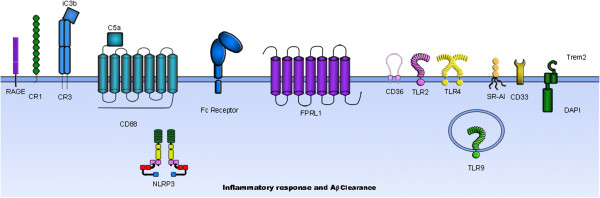
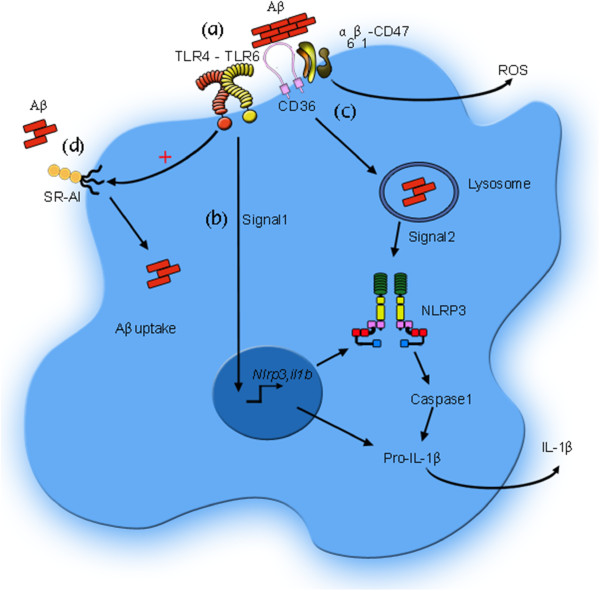
Alzheimer's disease (AD) is a major public health problem with substantial economic and social impacts around the world. The hallmarks of AD pathogenesis include deposition of amyloid β (Aβ), neurofibrillary tangles, and neuroinflammation. For many years, research has been focused on Aβ accumulation in senile plaques, as these aggregations were perceived as the main cause of the neurodegeneration found in AD. However, increasing evidence suggests that inflammation also plays a critical role in the pathogenesis of AD. Microglia cells are the resident macrophages of the brain and act as the first line of defense in the central nervous system. In AD, microglia play a dual role in disease progression, being essential for clearing Aβ deposits and releasing cytotoxic mediators. Aβ activates microglia through a variety of innate immune receptors expressed on these cells. The mechanisms through which amyloid deposits provoke an inflammatory response are not fully understood, but it is believed that these receptors cooperate in the recognition, internalization, and clearance of Aβ and in cell activation. In this review, we discuss the role of several receptors expressed on microglia in Aβ recognition, uptake, and signaling, and their implications for AD pathogenesis.
Overview
The claims and statistics of this paper haven’t been checked yet.
Run the check — free, no account needed. It reads the open-access text and checks the sources it cites.
Integrity signals
Registry
Cites
Statistics
Figures
Verification
Claims the paper makes
The claims and statistics of this paper haven’t been checked yet.
Run the check — free, no account needed. It reads the open-access text and checks the sources it cites.
Claims other papers make about this one
Each is checked against this paper’s own text: does it say what the citing paper says it does?
The source backs part of the claim, not all of it — or backs it for a different population, condition or comparison.
In the citing paper
“FCγR activation also promotes Aβ clearance via phagocytosis [139, 140].”
From Microglial function, INPP5D/SHIP1 signaling, and NLRP3 inflammasome activation: implications for Alzheimer’s disease (2023) · cites this paper as [140]
Experimental — accuracy not yet measuredThe source backs part of the claim, not all of it — or backs it for a different population, condition or comparison.
In the citing paper
“Microglial LRP1 mediates Aβ uptake and activation of microglia (20–22).”
From LRPAP1 is released from activated microglia and inhibits microglial phagocytosis and amyloid beta aggregation (2023) · cites this paper as [20]
Experimental — accuracy not yet measuredThe cited source says what the claim attributes to it.
In the citing paper
“Aβ fibrils also increase inflammation148 (Fig. 5, purple), which may unanchor residual PDE4A125, and further disinhibit stress signaling pathways.”
From Stress weakens prefrontal networks: molecular insults to higher cognition (2015) · cites this paper as [148]
The check wasn’t confident either way, so it gives no verdict — never disputed.
In the citing paper
“In mouse macrophages and COS cells, SHIP1 was shown to activate the ITIM of the inhibitory receptor FCγRIIβ, which inhibits the activating receptor FCγRIIA to block FCγRIIA-mediated phagocytosis (Fig. 3C).”
From Microglial function, INPP5D/SHIP1 signaling, and NLRP3 inflammasome activation: implications for Alzheimer’s disease (2023) · cites this paper as [140]
Experimental — accuracy not yet measuredThe check wasn’t confident either way, so it gives no verdict — never disputed.
In the citing paper
“SHIP1 also was shown to directly inhibit FCγRIIA by binding to its ITAM (Fig. 3C), which prevents the activation of PI3K [134, 137–140].”
From Microglial function, INPP5D/SHIP1 signaling, and NLRP3 inflammasome activation: implications for Alzheimer’s disease (2023) · cites this paper as [140]
Experimental — accuracy not yet measured
Self-check
Percentages, sums and reported differences re-computed from the paper’s own numbers.
The self-check needs the paper’s full text.
Citations
Cites
1 retracted
Retracted: ‘Clinical trials in Alzheimer’s disease’: immunotherapy approaches
Delrieu, J., Ousset, P., Caillaud, C., & Vellas, B. J. (2011) · Journal of Neurochemistry · doi:10.1111/j.1471-4159.2011.07458.x · Cited by 147
RetractedThe Amyloid Hypothesis of Alzheimer’s Disease: Progress and Problems on the Road to Therapeutics
Hardy, J., & Selkoe, D. J. (2002) · Science · doi:10.1126/science.1072994 · Cited by 13,864
Amyloid oligomers exacerbate tau pathology in a mouse model of tauopathy
Selenica, M.-L. B., Brownlow, M., Jimenez, J. P., Lee, D. C., Pena, G., Dickey, C. A., Gordon, M. N., & Morgan, D. (2013) · Neurodegenerative Diseases · doi:10.1159/000337230 · Cited by 10,359
Gout-associated uric acid crystals activate the NALP3 inflammasome
Martinon, F., Pétrilli, V., Mayor, A., Tardivel, A., & Tschopp, J. (2006) · Nature · doi:10.1038/nature04516 · Cited by 5,326
Cytokine-mediated regulation of CXCR4 expression in human neutrophils
Nagase, H., Miyamasu, M., Yamaguchi, M., Imanishi, M., Tsuno, N. H., Matsushima, K., Yamamoto, K., Morita, Y., & Hirai, K. (2002) · Journal of Leukocyte Biology · doi:10.1189/jlb.71.4.711 · Cited by 4,713
Lemaître, B., Nicolas, E., Michaut, L., Reichhart, J., & Hoffmann, J. A. (1996) · Cell · doi:10.1016/s0092-8674(00)80172-5 · Cited by 4,224
Kettenmann, H., Hanisch, U.-K., Noda, M., & Verkhratsky, A. (2011) · Physiological Reviews · doi:10.1152/physrev.00011.2010 · Cited by 3,547
Harold, D., Abraham, R., Hollingworth, P., Sims, R., Gerrish, A., Hamshere, M. L., Pahwa, J. S., Moskvina, V., Dowzell, K., Williams, A., et al. (2009) · Nature Genetics · doi:10.1038/ng.440 · Cited by 3,326
TREM2 Variants in Alzheimer's Disease
Guerreiro, R., Wojtas, A., Bras, J., Carrasquillo, M., Rogaeva, E., Majounie, E., Cruchaga, C., Sassi, C., Kauwe, J. S. K., Younkin, S., et al. (2013) · New England Journal of Medicine · doi:10.1056/nejmoa1211851 · Cited by 3,020
NLRP3 is activated in Alzheimer’s disease and contributes to pathology in APP/PS1 mice
Heneka, M. T., Kummer, M. P., Stutz, A., Delekate, A., Schwartz, S., Vieira-Saecker, A., Griep, A., Axt, D., Remus, A., Tzeng, T.-C., et al. (2013) · Nature · doi:10.1038/nature11729 · Cited by 2,898
Research works printed but not linked: 1
- 10.1146/annurev.bi.63.070194.003125 · DOI
Cited by
Sorted by citations
Neuroinflammation and microglial activation in Alzheimer disease: where do we go from here?
Leng, F., & Edison, P. (2021) · Nature Reviews Neurology · doi:10.1038/s41582-020-00435-y · Cited by 3,179
The Gut Microbiota and Alzheimer’s Disease
Jiang, C., Li, G., Huang, P., Liu, Z., & Zhao, B. (2017) · Journal of Alzheimer's Disease · doi:10.3233/jad-161141 · Cited by 852
TREM2 Is a Receptor for β-Amyloid that Mediates Microglial Function
Zhao, Y., Wu, X., Li, X., Jiang, L.-L., Gui, X., Liu, Y., Sun, Y., Zhu, B., Piña-Crespo, J. C., Zhang, M., et al. (2018) · Neuron · doi:10.1016/j.neuron.2018.01.031 · Cited by 763
Stress weakens prefrontal networks: molecular insults to higher cognition
Arnsten, A. F. T. (2015) · Nature Neuroscience · doi:10.1038/nn.4087 · Cited by 752
Hopperton, K. E., Mohammad, D., Trépanier, M. O., Giuliano, V, & Bazinet, R. P. (2018) · Molecular Psychiatry · doi:10.1038/mp.2017.246 · Cited by 567
Mechanisms of Aβ Clearance and Degradation by Glial Cells
Ries, M., & Sastre, M. (2016) · Frontiers in Aging Neuroscience · doi:10.3389/fnagi.2016.00160 · Cited by 527
“The degree of involvement of Fc receptors in the clearance of Aβ bound by endogenous antibodies such as IgGs is currently not well elucidated (Doens and Fernández, 2014).”
BackgroundHeckmann, B. L., Teubner, B. J. W., Tummers, B., Boada-Romero, E., Harris, L., Yang, M., Guy, C. S., Zakharenko, S. S., & Green, D. R. (2019) · Cell · doi:10.1016/j.cell.2019.05.056 · Cited by 503
“…toll-like receptors (TLRs) (Gurley et al., 2008), Fc receptors (Fuller et al., 2014), Ig-superfamily receptors including TREM2 (Ulrich et al., 2014; Wang et al., 2016; Zhao et al., 2018), scavenger receptors (SR) (Wilkinson and El Khoury, 2012) and complement receptors (Doens and Fernandez, 2014).”
InfluentialSolleiro-Villavicencio, H., & Rivas-Arancibia, S. (2018) · Frontiers in Cellular Neuroscience · doi:10.3389/fncel.2018.00114 · Cited by 463
Alzheimer’s disease: insights into pathology, molecular mechanisms, and therapy
Zheng, Q., & Wang, X. (2024) · Protein & Cell · doi:10.1093/procel/pwae026 · Cited by 483
An early and late peak in microglial activation in Alzheimer’s disease trajectory
Fan, Z., Brooks, D. J., Okello, A., & Edison, P. (2017) · Brain · doi:10.1093/brain/aww349 · Cited by 438
Skrzypczak-Wiercioch, A., & Sałat, K. (2022) · Molecules · doi:10.3390/molecules27175481 · Cited by 406
Microglia-Mediated Synapse Loss in Alzheimer's Disease
Rajendran, L., & Paolicelli, R. C. (2018) · The Journal of Neuroscience · doi:10.1523/jneurosci.1136-17.2017 · Cited by 355
Neuroinflammation after intracerebral hemorrhage
Mracsko, E. Z., & Veltkamp, R. C. (2014) · Frontiers in Cellular Neuroscience · doi:10.3389/fncel.2014.00388 · Cited by 348
Microglia Phenotypes in Aging and Neurodegenerative Diseases
Wendimu, M. Y., & Hooks, S. B. (2022) · Cells · doi:10.3390/cells11132091 · Cited by 336
Gut microbiota in neurodegenerative disorders
Sarkar, S. R., & Banerjee, S. (2019) · Journal of Neuroimmunology · doi:10.1016/j.jneuroim.2019.01.004 · Cited by 325
Ganguly, G., Chakrabarti, S., Chatterjee, U., & Saso, L. (2017) · Drug Design Development and Therapy · doi:10.2147/dddt.s130514 · Cited by 305
Alzheimer's disease and type 2 diabetes: a critical assessment of the shared pathological traits
Chatterjee, S., & Mudher, A. (2018) · Frontiers in Neuroscience · doi:10.3389/fnins.2018.00383 · Cited by 270
Amyloid-β Receptors: The Good, the Bad, and the Prion Protein
Jarosz-Griffiths, H. H., Noble, E., Rushworth, J. V., & Hooper, N. M. (2016) · Journal of Biological Chemistry · doi:10.1074/jbc.r115.702704 · Cited by 256
Lipid and Lipoprotein Metabolism in Microglia
Loving, B. A., & Bruce, K. D. (2020) · Frontiers in Physiology · doi:10.3389/fphys.2020.00393 · Cited by 255
Microglia and Alzheimer’s Disease
Merighi, S., Nigro, M., Travagli, A., & Gessi, S. (2022) · International Journal of Molecular Sciences · doi:10.3390/ijms232112990 · Cited by 236
Elmore, M. R. P., Lee, R. J., West, B. L., & Green, K. N. (2015) · PLoS ONE · doi:10.1371/journal.pone.0122912 · Cited by 228
Anti-Inflammatory Targets for the Treatment of Reperfusion Injury in Stroke
Mizuma, A., & Yenari, M. A. (2017) · Frontiers in Neurology · doi:10.3389/fneur.2017.00467 · Cited by 228
The microglial ATP‐gated ion channel P2X7 as a CNS drug target
Bhattacharya, A., & Biber, K. (2016) · Glia · doi:10.1002/glia.23001 · Cited by 221
Automated Morphological Analysis of Microglia After Stroke
Heindl, S., Gesierich, B. G., Benakis, C., Llovera, G., Duering, M., & Liesz, A. (2018) · Frontiers in Cellular Neuroscience · doi:10.3389/fncel.2018.00106 · Cited by 237
Therapeutic B-cell depletion reverses progression of Alzheimer’s disease
Kim, K., Wang, X., Ragonnaud, E., Bodogai, M., Illouz, T., DeLuca, M., McDevitt, R. A., Gusev, F., Okun, E., Rogaev, E., et al. (2021) · Nature Communications · doi:10.1038/s41467-021-22479-4 · Cited by 206
Inflammation context in Alzheimer’s disease, a relationship intricate to define
Novoa, C., Salazar, P., Cisternas, P., Gherardelli, C., Vera-Salazar, R., Zolezzi, J. M., & Inestrosa, N. C. (2022) · Biological Research · doi:10.1186/s40659-022-00404-3 · Cited by 206
Neuroinflammation and neurogenesis in Alzheimer's disease and potential therapeutic approaches
Sung, P.-S., Lin, P.-Y., Liu, C.-H., Su, H.-C., & Tsai, K.-J. (2020) · International Journal of Molecular Sciences · doi:10.3390/ijms21030701 · Cited by 193
β-Amyloid Clustering around ASC Fibrils Boosts Its Toxicity in Microglia
Friker, L. L., Scheiblich, H., Hochheiser, I. V., Brinkschulte, R., Riedel, D., Latz, E., Geyer, M., & Heneka, M. T. (2020) · Cell Reports · doi:10.1016/j.celrep.2020.02.025 · Cited by 191
Chornenkyy, Y., Wang, W., Wei, A. L., & Nelson, P. T. (2018) · Brain Pathology · doi:10.1111/bpa.12655 · Cited by 189
Microglia and lipids: how metabolism controls brain innate immunity
Chausse, B., Kakimoto, P. A., & Kann, O. (2021) · Seminars in Cell & Developmental Biology · doi:10.1016/j.semcdb.2020.08.001 · Cited by 181
Mitochondrial Dysfunction and Alzheimer’s Disease: Role of Microglia
Agrawal, I., & Jha, S. (2020) · Frontiers in Aging Neuroscience · doi:10.3389/fnagi.2020.00252 · Cited by 184
Payne, A., Nahashon, S. N., Taka, E., Adinew, G. M., & Soliman, K. F. A. (2022) · Biomolecules · doi:10.3390/biom12030371 · Cited by 174
Molecular Mechanisms of Neuroinflammation in Aging and Alzheimer’s Disease Progression
Andronie-Cioară, F. L., Ardelean, A. I., Nistor-Cseppento, C. D., Jurcău, A., Jurcău, M. C., Pașcalău, N., & Marcu, F. M. (2023) · International Journal of Molecular Sciences · doi:10.3390/ijms24031869 · Cited by 170
Bourgade, K., Le Page, A., Bocti, C., Witkowski, J. M., Dupuis, G., Frost, E. H., & Fülöp, T. (2016) · Journal of Alzheimer’s Disease · doi:10.3233/jad-150652 · Cited by 161
Alzheimer’s Disease Pathogenesis: Role of Autophagy and Mitophagy Focusing in Microglia
Eshraghi, M., Adlimoghaddam, A., Mahmoodzadeh, A., Sharifzad, F., Yasavoli-Sharahi, H., Lorzadeh, S., Albensi, B. C., & Ghavami, S. (2021) · International Journal of Molecular Sciences · doi:10.3390/ijms22073330 · Cited by 158
Bao, J., Zheng, L., Zhang, Q., Li, X., Zhang, X., Li, Z., Bai, X., Zhang, Z., Huo, W., Zhao, X., et al. (2016) · Protein & Cell · doi:10.1007/s13238-016-0269-2 · Cited by 159
Lee, J., Kim, D. E., Griffin, P. Y., Sheehan, P. W., Kim, D., Musiek, E. S., & Yoon, S. (2019) · Aging Cell · doi:10.1111/acel.13078 · Cited by 158
Grimaldi, A., Pediconi, N., Oieni, F., Pizzarelli, R., Rosito, M., Giubettini, M., Santini, T., Limatola, C., Ruocco, G., Ragozzino, D., et al. (2019) · Frontiers in Neuroscience · doi:10.3389/fnins.2019.00925 · Cited by 153
Dysregulated phosphoinositide 3-kinase signaling in microglia: shaping chronic neuroinflammation
Chu, E., Mychasiuk, R., Hibbs, M. L., & Semple, B. D. (2021) · Journal of Neuroinflammation · doi:10.1186/s12974-021-02325-6 · Cited by 152
Microglial dysfunction connects depression and Alzheimer’s disease
Santos, L. E., Beckman, D., & Ferreira, S. T. (2016) · Brain, Behavior, and Immunity · doi:10.1016/j.bbi.2015.11.011 · Cited by 154
Chalcone and its analogs: Therapeutic and diagnostic applications in Alzheimer’s disease
Thapa, P., Upadhyay, S. P., Suo, W. Z., Singh, V., Gurung, P., Lee, E. S., Sharma, R., & Sharma, M. (2021) · Bioorganic Chemistry · doi:10.1016/j.bioorg.2021.104681 · Cited by 151
Peters, D. G., Connor, J. R., & Meadowcroft, M. D. (2015) · Neurobiology of Disease · doi:10.1016/j.nbd.2015.08.007 · Cited by 146
Lannes, N., Eppler, E., Etemad, S., Yotovski, P., & Filgueira, L. (2017) · Oncotarget · doi:10.18632/oncotarget.23106 · Cited by 155
Pinto, S., Cunha, C., Barbosa, M., Vaz, A. R., & Brites, D. (2017) · Frontiers in Neuroscience · doi:10.3389/fnins.2017.00273 · Cited by 135
Ramanan, V. K., Risacher, S. L., Nho, K., Kim, S., Shen, L., McDonald, B. C., Yoder, K. K., Hutchins, G. D., West, J. D., Tallman, E. F., et al. (2015) · Brain · doi:10.1093/brain/awv231 · Cited by 133
Shi, Q., Chang, C., Saliba, A., & Bhat, M. A. (2022) · Journal of Neuroscience · doi:10.1523/jneurosci.2427-21.2022 · Cited by 139
Phenotypic clustering: a novel method for microglial morphology analysis
Verdonk, F., Roux, P., Flamant, P., Fiette, L., Bozza, F. A., Simard, S., Lemaire, M., Plaud, B., Shorte, S. L., Sharshar, T., et al. (2016) · Journal of Neuroinflammation · doi:10.1186/s12974-016-0614-7 · Cited by 142
Microglia in Alzheimer’s Disease in the Context of Tau Pathology
Perea, J. R., Bolós, M., & Ávila, J. (2020) · Biomolecules · doi:10.3390/biom10101439 · Cited by 134
Kim, S., Jung, U. J., & Kim, S. R. (2025) · Journal of Clinical Medicine · doi:10.3390/jcm14020386 · Cited by 129
Inflammatory mechanisms in neurodegeneration
Nichols, M. R., St‐Pierre, M., Wendeln, A., Makoni, N. J., Gouwens, L. K., Garrad, E. C., Sohrabi, M., Neher, J. J., Tremblay, M., & Combs, C. K. (2019) · Journal of Neurochemistry · doi:10.1111/jnc.14674 · Cited by 129
The role of innate immunity in Alzheimer's disease
Ennerfelt, H. E., & Lukens, J. R. (2020) · Immunological Reviews · doi:10.1111/imr.12896 · Cited by 124
Ultrastructural evidence of microglial heterogeneity in Alzheimer’s disease amyloid pathology
El Hajj, H., Savage, J. C., Bisht, K., Parent, M., Vallières, L., Rivest, S., & Tremblay, M.-È. (2019) · Journal of Neuroinflammation · doi:10.1186/s12974-019-1473-9 · Cited by 119
Yanguas‐Casás, N., Crespo‐Castrillo, A., CEBALLOS, M. L. D., Chowen, J. A., Azcoitia, Í., Arévalo, M., & García‐Segura, L. M. (2017) · Glia · doi:10.1002/glia.23263 · Cited by 126
Noncanonical function of an autophagy protein prevents spontaneous Alzheimer’s disease
Heckmann, B. L., Teubner, B. J. W., Boada-Romero, E., Tummers, B., Guy, C., Fitzgerald, P., Mayer, U., Carding, S., Zakharenko, S. S., Wileman, T., et al. (2020) · Science Advances · doi:10.1126/sciadv.abb9036 · Cited by 114
Cavedo, E., Grothe, M. J., Olivier Colliot, A., Lista, S., Marie Chupin, A., Dormont, D., Houot, M., Lehéricy, S., Teipel, S. J., Dubois, B., et al. (2017) · Scientific Reports · doi:10.1038/s41598-017-09780-3 · Cited by 112
Drug repositioning for Alzheimer’s disease based on systematic “omics” data mining
Zhang, M., Schmitt-Ulms, G., Sato, C., Xi, Z., Zhang, Y., Zhou, Y., St George-Hyslop, P., & Rogaeva, E. (2016) · PLOS ONE · doi:10.1371/journal.pone.0168812 · Cited by 108
Lv, Q.-K., Tao, K., Wang, X.-B., Yao, X., Pang, M., Liu, J., Wang, F., & Liu, C. (2023) · Inflammation Research · doi:10.1007/s00011-022-01676-x · Cited by 117
Anti CD163+, Iba1+, and CD68+ Cells in the Adult Human Inner Ear
O’Malley, J. T., Nadol, J. B., & McKenna, M. J. (2015) · Otology & Neurotology · doi:10.1097/mao.0000000000000879 · Cited by 109
The Use of Ginkgo Biloba L. as a Neuroprotective Agent in the Alzheimer’s Disease
Nowak, A., Kojder, K., Zielonka-Brzezicka, J., Wróbel, J., Bosiacki, M., Fabiańska, M., Wróbel, M., Sołek-Pastuszka, J., & Klimowicz, A. (2021) · Frontiers in Pharmacology · doi:10.3389/fphar.2021.775034 · Cited by 110
Microglia-targeting nanotherapeutics for neurodegenerative diseases
Zhao, N., Francis, N. L., Calvelli, H. R., & Moghe, P. V. (2020) · APL Bioengineering · doi:10.1063/5.0013178 · Cited by 104
Alzheimer’s Disease: Mechanism and Approach to Cell Therapy
Amemori, T., Jendelová, P., Růžička, J., Urdzíková, L. M., & Syková, E. (2015) · International Journal of Molecular Sciences · doi:10.3390/ijms161125961 · Cited by 110
Hernandez, M. X., Jiang, S., Cole, T. A., Chu, S., Fonseca, M. I., Fang, M. J., Hohsfield, L. A., Torres, M. D., Green, K. N., Wetsel, R. A., et al. (2017) · Molecular Neurodegeneration · doi:10.1186/s13024-017-0210-z · Cited by 104
Sun, L., Cho, H.-J., Sen, S., Arango, A. S., Huynh, T. T., Huang, Y., Bandara, N., Rogers, B. E., Tajkhorshid, E., & Mirica, L. M. (2021) · Journal of the American Chemical Society · doi:10.1021/jacs.1c05470 · Cited by 101
Nillert, N., Pannangrong, W., Welbat, J. U., Chaijaroonkhanarak, W., Sripanidkulchai, K., & Sripanidkulchai, B. (2017) · Nutrients · doi:10.3390/nu9010024 · Cited by 101
Type 2 Diabetes Mellitus as a Risk Factor for Alzheimer’s Disease: Review and Meta-Analysis
Athanasaki, A., Melanis, K., Tsantzali, I., Stefanou, M., Ntymenou, S., Paraskevas, S. G., Κalamatianos, T., Boutati, E. I., Lambadiari, V., Voumvourakis, K. I., et al. (2022) · Biomedicines · doi:10.3390/biomedicines10040778 · Cited by 111
Anti-Viral Properties of Amyloid-β Peptides
Bourgade, K., Dupuis, G., Frost, E. H., & Fülöp, T. (2016) · Journal of Alzheimer s Disease · doi:10.3233/jad-160517 · Cited by 97
Terzioglu, G., & Young-Pearse, T. L. (2023) · Molecular Neurodegeneration · doi:10.1186/s13024-023-00674-9 · Cited by 91
Jung, E. S., Suh, K., Han, J., Kim, H., Kang, H., Choi, W., & Mook‐Jung, I. (2022) · Aging Cell · doi:10.1111/acel.13623 · Cited by 97
TREM1 facilitates microglial phagocytosis of amyloid beta
Jiang, T., Zhang, Y.-D., Gao, Q., Zhou, J.-S., Zhu, X.-C., Lu, H., Shi, J.-Q., Tan, L., Chen, Q., & Yu, J.-T. (2016) · Acta Neuropathologica · doi:10.1007/s00401-016-1622-5 · Cited by 91
Sun, P., Jun-bo, Y., Liu, L., Guo, J., Wang, S.-H., Qu, C., & Wang, C.-X. (2018) · Bioscience Reports · doi:10.1042/bsr20180902 · Cited by 89
Femminella, G. D., Ninan, S., Atkinson, R., Fan, Z., Brooks, D. J., & Edison, P. (2016) · Journal of Alzheimer’s Disease · doi:10.3233/jad-150827 · Cited by 88
Healthy brain aging: Interplay between reactive species, inflammation and energy supply
Garaschuk, O., Semchyshyn, H. M., & Lushchak, V. I. (2018) · Ageing Research Reviews · doi:10.1016/j.arr.2018.02.003 · Cited by 91
Giulia, N., Sestito, S., Digiacomo, M., & Rapposelli, S. (2017) · Current Topics in Medicinal Chemistry · doi:10.2174/1568026617666170607114232 · Cited by 86
Wang, H., Li, Y., Ryder, J. W., Hole, J. T., Ebert, P. J., Airey, D. C., Qian, H.-R., Logsdon, B., Fisher, A., Ahmed, Z., et al. (2018) · Molecular Neurodegeneration · doi:10.1186/s13024-018-0296-y · Cited by 83
Could Alzheimer’s Disease Originate in the Periphery and If So How So?
Morris, G., Berk, M., Maes, M. H. J., & Puri, B. K. (2018) · Molecular Neurobiology · doi:10.1007/s12035-018-1092-y · Cited by 86
CD36 in Alzheimer’s Disease: An Overview of Molecular Mechanisms and Therapeutic Targeting
Dobri, A.-M., Dudău, M., Enciu, A., & Hinescu, M. E. (2020) · Neuroscience · doi:10.1016/j.neuroscience.2020.11.003 · Cited by 83
Microvascular Alterations in Alzheimer's Disease
Steinman, J., Sun, H., & Feng, Z. (2021) · Frontiers in Cellular Neuroscience · doi:10.3389/fncel.2020.618986 · Cited by 85
Kiyota, T., Machhi, J., Lu, Y., Dyavarshetty, B., Nemati, M., Yokoyama, I., Mosley, R. L., & Gendelman, H. E. (2018) · Journal of Neuroimmunology · doi:10.1016/j.jneuroim.2018.03.009 · Cited by 80
Does neuroinflammation turn on the flame in Alzheimer's disease? Focus on astrocytes
Steardo, L., Bronzuoli, M. R., Iacomino, A., Esposito, G., Steardo, L., & Scuderi, C. (2015) · Frontiers in Neuroscience · doi:10.3389/fnins.2015.00259 · Cited by 82
Chen, S., Liu, H., Wang, S., Jiang, H., Gao, L., Wang, L., Teng, L., Wang, C., & Wang, D. (2022) · Nutrients · doi:10.3390/nu14071417 · Cited by 82
Molecular subtypes of ALS are associated with differences in patient prognosis
Eshima, J., O’Connor, S. A., Marschall, E., Bowser, R. P., Plaisier, C. L., & Smith, B. S. (2023) · Nature Communications · doi:10.1038/s41467-022-35494-w · Cited by 81
Philippens, I. H. C. H. M., Ormel, P. R., Baarends, G., Johansson, M., Remarque, E. J., & Doverskog, M. (2016) · Journal of Alzheimer s Disease · doi:10.3233/jad-160673 · Cited by 83
Zhu, D., Yang, N., Liu, Y., Zheng, J., Ji, C., & Zuo, P. (2016) · Journal of Alzheimer s Disease · doi:10.3233/jad-151090 · Cited by 78
Welcome, M. O. (2019) · NeuroMolecular Medicine · doi:10.1007/s12017-019-08547-5 · Cited by 77
Chen, S.-H., Oyarzabal, E. A., & Hong, J.-S. (2016) · Current Opinion in Pharmacology · doi:10.1016/j.coph.2015.10.001 · Cited by 76
Towards Understanding the Roles of Heparan Sulfate Proteoglycans in Alzheimer’s Disease
Zhang, G.-L., Zhang, X., Wang, X., & Li, J. (2014) · BioMed Research International · doi:10.1155/2014/516028 · Cited by 80
Bester, J., Soma, P., Kell, D. B., & Pretorius, E. (2015) · Oncotarget · doi:10.18632/oncotarget.6074 · Cited by 77
EGb761 improves cognitive function and regulates inflammatory responses in the APP/PS1 mouse
Wan, W., Zhang, C., Danielsen, M., Li, Q., Chen, W., Chan, Y., & Li, Y. (2016) · Experimental Gerontology · doi:10.1016/j.exger.2016.05.007 · Cited by 73
Díaz‐Zúñiga, J., Muñoz, Y., Melgar‐Rodríguez, S., More, J., Bruna, B., Lobos, P., Monasterio, G., Vernal, R., & Paula-Lima, A. C. (2019) · Journal of Oral Microbiology · doi:10.1080/20002297.2019.1586423 · Cited by 75
Alarmins and c-Jun N-Terminal Kinase (JNK) Signaling in Neuroinflammation
Anfinogenova, Y., Quinn, M. T., Schepetkin, I. A., & Atochin, D. N. (2020) · Cells · doi:10.3390/cells9112350 · Cited by 68
Microglial toll-like receptors and Alzheimer’s disease
Su, F., Bai, F., Zhou, H., & Zhang, Z. (2015) · Brain Behavior and Immunity · doi:10.1016/j.bbi.2015.10.010 · Cited by 69
Inflammatory microenvironment-targeted nanotherapies
Zhang, G., Ma, L., Bai, L., Li, M., Guo, T., Tian, B., He, Z., & Fu, Q. (2021) · Journal of Controlled Release · doi:10.1016/j.jconrel.2021.04.018 · Cited by 65
Microglial Function and Regulation during Development, Homeostasis and Alzheimer’s Disease
Casali, B. T., & Reed-Geaghan, E. G. (2021) · Cells · doi:10.3390/cells10040957 · Cited by 70
Telmisartan Modulates Glial Activation: In Vitro and In Vivo Studies
Torika, N., Asraf, K., Danon, A., Apte, R. N., & Fleisher‐Berkovich, S. (2016) · PLoS ONE · doi:10.1371/journal.pone.0155823 · Cited by 63
Chaves, J. C. S., Dando, S. J., White, A. R., & Oikari, L. E. (2024) · Biochimica et Biophysica Acta (BBA) - Molecular Basis of Disease · doi:10.1016/j.bbadis.2023.166967 · Cited by 62
Reformulating Pro-Oxidant Microglia in Neurodegeneration
García‐Revilla, J., Alonso-Bellido, I. M., Burguillos, M. Á., Herrera, A. J., Espinosa‐Oliva, A. M., Ruiz, R., Cruz-Hernández, L., García-Domínguez, I., Roca-Ceballos, M. A., Santiago, M., et al. (2019) · Journal of Clinical Medicine · doi:10.3390/jcm8101719 · Cited by 66
Sun, H., Wu, Z., Nie, X.-W., & Bian, J. (2020) · Current Neuropharmacology · doi:10.2174/1570159x18666200905143550 · Cited by 62
Exercise mimetics: a novel strategy to combat neuroinflammation and Alzheimer’s disease
Zhao, R. (2024) · Journal of Neuroinflammation · doi:10.1186/s12974-024-03031-9 · Cited by 64
Song, J., Choi, S., & Kim, B. C. (2017) · Frontiers in Cellular Neuroscience · doi:10.3389/fncel.2017.00064 · Cited by 63
Chidambaram, H., Das, R. R., & Chinnathambi, S. (2022) · European Journal of Cell Biology · doi:10.1016/j.ejcb.2022.151201 · Cited by 59
Metadata
- Authors
- Doens, D., & Fernández, P. L.
- Affiliations
- Acharya Nagarjuna University (IN)
- Instituto de Investigaciones Científicas y Servicios de Alta Tecnología (PA)
- Corresponding author
- Fernández, Patricia L
- Venue
- Journal of Neuroinflammation
- Published
- 2014
- Volume
- 11
- Issue
- 1
- Pages
- 48
- ISSN
- 1742-2094 (ISSN-L)
- PMC
- PMC3975152
- OpenAlex
- W2100011299
- Cited by
- 348
- References
- 172
- Citations by year
- 2026: 22 · 2025: 42 · 2024: 33 · 2023: 33 · 2022: 36 · 2021: 27 · 2020: 24 · 2019: 24 · 2018: 27 · 2017: 26 · 2016: 24 · 2015: 25 · 2014: 5
- FWCI
- 2.16
- Type
- journal article
- Language
- en
- Open access
- gold
- doi.org
- Licence
- cc-by
- Locations
- Journal of Neuroinflammation (publishedVersion, cc-by)
- Europe PMC (PubMed Central) (publishedVersion, cc-by)
- PubMed Central (publishedVersion, cc-by)
- PubMed (publishedVersion)
- Greater South Information System
- Topics
- Life Sciences › Neuroscience › Neurology › Neuroinflammation and Neurodegeneration Mechanisms
- Life Sciences › Neuroscience › Cellular and Molecular Neuroscience › Alzheimer's disease research and treatments
- Life Sciences › Biochemistry, Genetics and Molecular Biology › Molecular Biology › Inflammasome and immune disorders
- Keywords
- Alzheimer's disease, amyloid-beta, microglia, innate immune receptors, neuroinflammation, amyloid clearance, receptor signaling, microglial activation, amyloid plaques, neurodegeneration
- MeSH terms
- Alzheimer Disease, Animals, Humans, Receptors, Immunologic, Amyloid beta-Peptides, Microglia
About these checks
Registry, retraction, Cites and statistics results are computed, not judged, with one exception: a printed reference that no index lists is read once by a model before it counts as a citation error. Claims are extracted by a model and kept only when their quote appears verbatim in the text; each cited source is then checked, with a model’s help, for whether it says what the claim relies on. Those verdicts can be wrong — read the claim’s quote and the cited source before relying on one.
Statistics and arithmetic are recomputed, not judged.
Confidence bands are shown only for fields calibrated on our annotated test set. None is calibrated yet, so no band is shown.
What counts as a claim ›How we measure confidence ›How we check this ›
Are you an author, or do you see a problem with this page? Request a review
