

The DOI matches its Crossref record; 172 of the 173 references it cites were found in a registry or an index, and 1 are not checked yet.
Microglia receptors and their implications in the response to amyloid β for Alzheimer’s disease pathogenesis
Open accessAbstract
Alzheimer's disease (AD) is a major public health problem with substantial economic and social impacts around the world. The hallmarks of AD pathogenesis include deposition of amyloid β (Aβ), neurofibrillary tangles, and neuroinflammation. For many years, research has been focused on Aβ accumulation in senile plaques, as these aggregations were perceived as the main cause of the neurodegeneration found in AD. However, increasing evidence suggests that inflammation also plays a critical role in the pathogenesis of AD. Microglia cells are the resident macrophages of the brain and act as the first line of defense in the central nervous system. In AD, microglia play a dual role in disease progression, being essential for clearing Aβ deposits and releasing cytotoxic mediators. Aβ activates microglia through a variety of innate immune receptors expressed on these cells. The mechanisms through which amyloid deposits provoke an inflammatory response are not fully understood, but it is believed that these receptors cooperate in the recognition, internalization, and clearance of Aβ and in cell activation. In this review, we discuss the role of several receptors expressed on microglia in Aβ recognition, uptake, and signaling, and their implications for AD pathogenesis.
Overview
The claims and statistics of this paper haven’t been checked yet.
Run the check — free, no account needed. It reads the open-access text and checks the sources it cites.
Integrity signals
Registry
Cites
Statistics
Figures
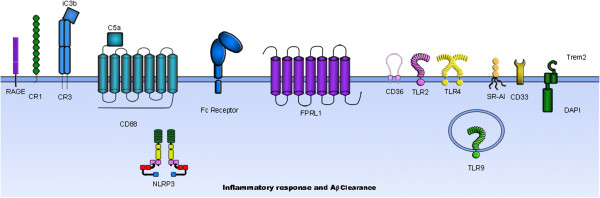
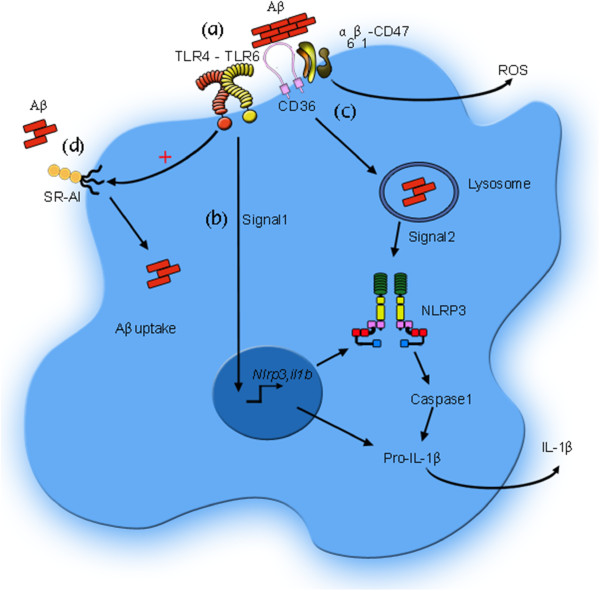
Verification
Claims the paper makes
The claims and statistics of this paper haven’t been checked yet.
Run the check — free, no account needed. It reads the open-access text and checks the sources it cites.
Claims other papers make about this one
Each is checked against this paper’s own text: does it say what the citing paper says it does?
The source backs part of the claim, not all of it — or backs it for a different population, condition or comparison.
In the citing paper
“FCγR activation also promotes Aβ clearance via phagocytosis [139, 140].”
From Microglial function, INPP5D/SHIP1 signaling, and NLRP3 inflammasome activation: implications for Alzheimer’s disease (2023) · cites this paper as [140]
Experimental — accuracy not yet measuredThe source backs part of the claim, not all of it — or backs it for a different population, condition or comparison.
In the citing paper
“Microglial LRP1 mediates Aβ uptake and activation of microglia (20–22).”
From LRPAP1 is released from activated microglia and inhibits microglial phagocytosis and amyloid beta aggregation (2023) · cites this paper as [20]
Experimental — accuracy not yet measuredThe cited source says what the claim attributes to it.
In the citing paper
“Aβ fibrils also increase inflammation148 (Fig. 5, purple), which may unanchor residual PDE4A125, and further disinhibit stress signaling pathways.”
From Stress weakens prefrontal networks: molecular insults to higher cognition (2015) · cites this paper as [148]
The check wasn’t confident either way, so it gives no verdict — never disputed.
In the citing paper
“In mouse macrophages and COS cells, SHIP1 was shown to activate the ITIM of the inhibitory receptor FCγRIIβ, which inhibits the activating receptor FCγRIIA to block FCγRIIA-mediated phagocytosis (Fig. 3C).”
From Microglial function, INPP5D/SHIP1 signaling, and NLRP3 inflammasome activation: implications for Alzheimer’s disease (2023) · cites this paper as [140]
Experimental — accuracy not yet measuredThe check wasn’t confident either way, so it gives no verdict — never disputed.
In the citing paper
“SHIP1 also was shown to directly inhibit FCγRIIA by binding to its ITAM (Fig. 3C), which prevents the activation of PI3K [134, 137–140].”
From Microglial function, INPP5D/SHIP1 signaling, and NLRP3 inflammasome activation: implications for Alzheimer’s disease (2023) · cites this paper as [140]
Experimental — accuracy not yet measured
Self-check
Percentages, sums and reported differences re-computed from the paper’s own numbers.
The self-check needs the paper’s full text.
Citations
Cites
1 retracted
Retracted: ‘Clinical trials in Alzheimer’s disease’: immunotherapy approaches
Delrieu, J., Ousset, P., Caillaud, C., & Vellas, B. J. (2011) · Journal of Neurochemistry · doi:10.1111/j.1471-4159.2011.07458.x · Cited by 147
RetractedThe Amyloid Hypothesis of Alzheimer’s Disease: Progress and Problems on the Road to Therapeutics
Hardy, J., & Selkoe, D. J. (2002) · Science · doi:10.1126/science.1072994 · Cited by 13,864
Amyloid oligomers exacerbate tau pathology in a mouse model of tauopathy
Selenica, M.-L. B., Brownlow, M., Jimenez, J. P., Lee, D. C., Pena, G., Dickey, C. A., Gordon, M. N., & Morgan, D. (2013) · Neurodegenerative Diseases · doi:10.1159/000337230 · Cited by 10,359
Gout-associated uric acid crystals activate the NALP3 inflammasome
Martinon, F., Pétrilli, V., Mayor, A., Tardivel, A., & Tschopp, J. (2006) · Nature · doi:10.1038/nature04516 · Cited by 5,326
Cytokine-mediated regulation of CXCR4 expression in human neutrophils
Nagase, H., Miyamasu, M., Yamaguchi, M., Imanishi, M., Tsuno, N. H., Matsushima, K., Yamamoto, K., Morita, Y., & Hirai, K. (2002) · Journal of Leukocyte Biology · doi:10.1189/jlb.71.4.711 · Cited by 4,713
Lemaître, B., Nicolas, E., Michaut, L., Reichhart, J., & Hoffmann, J. A. (1996) · Cell · doi:10.1016/s0092-8674(00)80172-5 · Cited by 4,224
Kettenmann, H., Hanisch, U.-K., Noda, M., & Verkhratsky, A. (2011) · Physiological Reviews · doi:10.1152/physrev.00011.2010 · Cited by 3,547
Harold, D., Abraham, R., Hollingworth, P., Sims, R., Gerrish, A., Hamshere, M. L., Pahwa, J. S., Moskvina, V., Dowzell, K., Williams, A., et al. (2009) · Nature Genetics · doi:10.1038/ng.440 · Cited by 3,326
TREM2 Variants in Alzheimer's Disease
Guerreiro, R., Wojtas, A., Bras, J., Carrasquillo, M., Rogaeva, E., Majounie, E., Cruchaga, C., Sassi, C., Kauwe, J. S. K., Younkin, S., et al. (2013) · New England Journal of Medicine · doi:10.1056/nejmoa1211851 · Cited by 3,020
NLRP3 is activated in Alzheimer’s disease and contributes to pathology in APP/PS1 mice
Heneka, M. T., Kummer, M. P., Stutz, A., Delekate, A., Schwartz, S., Vieira-Saecker, A., Griep, A., Axt, D., Remus, A., Tzeng, T.-C., et al. (2013) · Nature · doi:10.1038/nature11729 · Cited by 2,898
Variant of TREM2 Associated with the Risk of Alzheimer's Disease
Jonsson, T., Stefansson, H., Steinberg, S., Jonsdottir, I., Jonsson, P. V., Snaedal, J., Bjornsson, S., Huttenlocher, J., Levey, A. I., Lah, J. J., et al. (2013) · New England Journal of Medicine · doi:10.1056/nejmoa1211103 · Cited by 2,558
Goldstein, J. L., Ho, Y. K., Basu, S. K., & Brown, M. S. (1979) · Proceedings of the National Academy of Sciences · doi:10.1073/pnas.76.1.333 · Cited by 2,447
The NALP3 inflammasome is involved in the innate immune response to amyloid-β
Halle, A., Hornung, V., Petzold, G. C., Stewart, C. R., Monks, B. G., Reinheckel, T., Fitzgerald, K. A., Latz, E., Moore, K. J., & Golenbock, D. T. (2008) · Nature Immunology · doi:10.1038/ni.1636 · Cited by 2,441
Genome-wide association study identifies variants at CLU and CR1 associated with Alzheimer's disease
the European Alzheimer's Disease Initiative Investigators, Lambert, J.-C., Heath, S., Even, G., Campion, D., Sleegers, K., Hiltunen, M., Combarros, O., Zelenika, D., Bullido, M. J., et al. (2009) · Nature Genetics · doi:10.1038/ng.439 · Cited by 2,234
Siglecs and their roles in the immune system
Crocker, P. R., Paulson, J. C., & Varki, A. P. (2007) · Nature reviews. Immunology · doi:10.1038/nri2056 · Cited by 2,032
Bard, F., Cannon, C., Barbour, R., Burke, R.-L., Games, D., Grajeda, H., Guido, T., Hu, K., Huang, J., Johnson-Wood, K., et al. (2000) · Nature Medicine · doi:10.1038/78682 · Cited by 2,012
RAGE and amyloid-β peptide neurotoxicity in Alzheimer's disease
Yan, S. D., Chen, X., Fu, J., Chen, M., Zhu, H., Roher, A., Slattery, T., Zhao, L., Nagashima, M., Morser, J., et al. (1996) · Nature · doi:10.1038/382685a0 · Cited by 2,012
Dementia: a public health priority
Acosta, D. M., Krishnamoorthy, E. S., Wortmann, M., Prince, M. J., & Saxena, S. (2012) · Cited by 1,955
Neeper, M. P., Schmidt, A. M., Brett, J., Yan, S. D., Wang, F., Pan, Y., Elliston, K. O., Stern, D., & SHAW, A. R. (1992) · Journal of Biological Chemistry · doi:10.1016/s0021-9258(18)42138-2 · Cited by 1,545
Stewart, C. R., Stuart, L. M., Wilkinson, K., van Gils, J. M., Deng, J., Halle, A., Rayner, K. J., Boyer, L., Zhong, R., Frazier, W. A., et al. (2010) · Nature Immunology · doi:10.1038/ni.1836 · Cited by 1,513
Walport, M. J. (2001) · New England Journal of Medicine · doi:10.1056/nejm200104123441506 · Cited by 1,502
Aβ peptide immunization reduces behavioural impairment and plaques in a model of Alzheimer's disease
Janus, C., Pearson, J., McLaurin, J., Mathews, P. M., Jiang, Y., Schmidt, S. D., Chishti, M. A., Horne, P., Heslin, D., French, J., et al. (2000) · Nature · doi:10.1038/35050110 · Cited by 1,431
RAGE mediates amyloid-β peptide transport across the blood-brain barrier and accumulation in brain
Deane, R., Du Yan, S., Submamaryan, R. K., LaRue, B., Jovanovic, S., Hogg, E., Welch, D., Manness, L., Lin, C., Yu, J., et al. (2003) · Nature Medicine · doi:10.1038/nm890 · Cited by 1,426
Microglial Dysfunction and Defective β-Amyloid Clearance Pathways in Aging Alzheimer's Disease Mice
Hickman, S. E., Allison, E. K., & El Khoury, J. (2008) · The Journal of Neuroscience · doi:10.1523/jneurosci.0616-08.2008 · Cited by 1,329 · cited 4×
“SR-A Microglia, astrocytes Aβ internalization and clearance [85,88]”
BackgroundMethodInfluentialAlbert, M. L., Pearce, S. F. A., Francisco, L. M., Sauter, B., Roy, P., Silverstein, R. L., & Bhardwaj, N. (1998) · The Journal of Experimental Medicine · doi:10.1084/jem.188.7.1359 · Cited by 1,234
Microglia initiate central nervous system innate and adaptive immune responses through multiple TLRs
Olson, J. K., & Miller, S. D. (2004) · The Journal of Immunology · doi:10.4049/jimmunol.173.6.3916 · Cited by 1,215
Febbraio, M., Hajjar, D., & Silverstein, R. (2001) · Journal of Clinical Investigation · doi:10.1172/jci14006 · Cited by 1,171
Krieger, M., & Krieger, J. (1994) · Annual Review of Biochemistry · doi:10.1146/annurev.biochem.63.1.601 · Cited by 1,169
Takahashi, K., Rochford, C. D. P., & Neumann, H. (2005) · The Journal of Experimental Medicine · doi:10.1084/jem.20041611 · Cited by 1,124
Alzheimer’s Disease Risk Gene CD33 Inhibits Microglial Uptake of Amyloid Beta
Griciuc, A., Serrano-Pozo, A., Parrado, A. R., Lesinski, A. N., Asselin, C. N., Mullin, K., Hooli, B., Choi, S. H., Hyman, B. T., & Tanzi, R. E. (2013) · Neuron · doi:10.1016/j.neuron.2013.04.014 · Cited by 1,004
Broad Expression of Toll-Like Receptors in the Human Central Nervous System
Bsibsi, M., Ravid, R., Gveric, D. O., & van Noort, J. M. (2002) · Journal of Neuropathology & Experimental Neurology · doi:10.1093/jnen/61.11.1013 · Cited by 1,000
Sheedy, F. J., Grebe, A., Rayner, K. J., Kalantari, P., Ramkhelawon, B., Carpenter, S. B., Becker, C. E., Ediriweera, H. N., Mullick, A. E., Golenbock, D. T., et al. (2013) · Nature Immunology · doi:10.1038/ni.2639 · Cited by 935
CD36 is a sensor of diacylglycerides
Hoebe, K., Georgel, P., Rutschmann, S., Du, X., Mudd, S., Crozat, K., Sovath, S., Shamel, L., Hartung, T., Zähringer, U., et al. (2005) · Nature · doi:10.1038/nature03253 · Cited by 873
Savill, J., Hogg, N., Ren, Y., & Haslett, C. (1992) · Journal of Clinical Investigation · doi:10.1172/jci116019 · Cited by 818
Toll-like receptor 4 imparts ligand-specific recognition of bacterial lipopolysaccharide.
Lien, E., Means, T., Heine, H., Yoshimura, A., Kusumoto, S., Fukase, K., Fenton, M., Oikawa, M., Qureshi, N., Monks, B., et al. (2000) · Journal of Clinical Investigation · doi:10.1172/jci8541 · Cited by 798
Turnover of resident microglia in the normal adult mouse brain
Lawson, L. J., Perry, V. H., & Gordon, S. (1992) · Neuroscience · doi:10.1016/0306-4522(92)90500-2 · Cited by 709
CD36 Mediates the In Vitro Inhibitory Effects of Thrombospondin-1 on Endothelial Cells
Dawson, D. W., Pearce, S. F. A., Zhong, R., Silverstein, R. L., Frazier, W. A., & Bouck, N. (1997) · The Journal of Cell Biology · doi:10.1083/jcb.138.3.707 · Cited by 676
Deane, R., Singh, I., Sagare, A. P., Bell, R. D., Ross, N. T., LaRue, B., Love, R., Perry, S., Paquette, N., Deane, R. J., et al. (2012) · Journal of Clinical Investigation · doi:10.1172/jci58642 · Cited by 619
Lehnardt, S. (2009) · Glia · doi:10.1002/glia.20928 · Cited by 613
CD14 and Toll-Like Receptors 2 and 4 Are Required for Fibrillar Aβ-Stimulated Microglial Activation
Reed-Geaghan, E. G., Savage, J. C., Hise, A. G., & Landreth, G. E. (2009) · The Journal of Neuroscience · doi:10.1523/jneurosci.3158-09.2009 · Cited by 591
CD33 Alzheimer's disease locus: altered monocyte function and amyloid biology
Initiative, T. A. D. N., Bradshaw, E. M., Chibnik, L. B., Keenan, B. T., Ottoboni, L., Raj, T., Tang, A., Rosenkrantz, L. L., Imboywa, S., Lee, M., et al. (2013) · Nature Neuroscience · doi:10.1038/nn.3435 · Cited by 570
Role of the Toll-Like Receptor 4 in Neuroinflammation in Alzheimer’s Disease
Walter, S., Letiembre, M., Liu, Y., Heine, H., Penke, B., Hao, W., Bode, B., Manietta, N., Walter, J., Schulz-Schüffer, W., et al. (2007) · Cellular Physiology and Biochemistry · doi:10.1159/000110455 · Cited by 543
Endogenous ligands of TLR2 and TLR4: agonists or assistants?
Erridge, C. (2010) · Journal of Leukocyte Biology · doi:10.1189/jlb.1209775 · Cited by 532
Brown, M. S., Basu, S. K., Falck, J. R., Ho, Y. K., & Goldstein, J. L. (1980) · Journal of Supramolecular Structure · doi:10.1002/jss.400130107 · Cited by 528
Bertram, L., Lange, C., Mullin, K., Parkinson, M., Hsiao, M., Hogan, M. F., Schjeide, B. M. M., Hooli, B., DiVito, J., Ionita, I., et al. (2008) · The American Journal of Human Genetics · doi:10.1016/j.ajhg.2008.10.008 · Cited by 511
Binding of S100 proteins to RAGE: An update
Leclerc, E., Fritz, G., Vetter, S. W., & Heizmann, C. W. (2008) · Biochimica et Biophysica Acta (BBA) - Molecular Cell Research · doi:10.1016/j.bbamcr.2008.11.016 · Cited by 509
A Cell Surface Receptor Complex for Fibrillar β-Amyloid Mediates Microglial Activation
Bamberger, M. E., Harris, M. E., McDonald, D. R., Husemann, J., & Landreth, G. E. (2003) · The Journal of Neuroscience · doi:10.1523/jneurosci.23-07-02665.2003 · Cited by 501
Toll-like receptors in health and disease in the brain: mechanisms and therapeutic potential
Hanke, M. L., & Kielian, T. (2011) · Clinical Science · doi:10.1042/cs20110164 · Cited by 498
Role of toll-like receptor signalling in A uptake and clearance
Tahara, K., Kim, H.-D., Jin, J.-J., Maxwell, J. A., Li, L., & Fukuchi, K.-I. (2006) · Brain · doi:10.1093/brain/awl249 · Cited by 493
CD36 Mediates the Innate Host Response to β-Amyloid
El Khoury, J. B., Moore, K. J., Means, T. K., Leung, J., Terada, K., Toft, M., Freeman, M. W., & Luster, A. D. (2003) · The Journal of Experimental Medicine · doi:10.1084/jem.20021546 · Cited by 483
A role for TREM2 ligands in the phagocytosis of apoptotic neuronal cells by microglia
Hsieh, C. L., Koike, M., Spusta, S. C., Niemi, E. C., Yenari, M., Nakamura, M. C., & Seaman, W. E. (2009) · Journal of Neurochemistry · doi:10.1111/j.1471-4159.2009.06042.x · Cited by 475
Prominent neurodegeneration and increased plaque formation in complement-inhibited Alzheimer's mice
Wyss-Coray, T., Yan, F., Lin, A. H.-T., Lambris, J. D., Alexander, J. J., Quigg, R. J., & Masliah, E. (2002) · Proceedings of the National Academy of Sciences · doi:10.1073/pnas.162350199 · Cited by 446
Lue, L.-F., Walker, D. G., Brachova, L., Beach, T. G., Rogers, J., Schmidt, A. M., Stern, D. M., & Yan, S. D. (2001) · Experimental Neurology · doi:10.1006/exnr.2001.7732 · Cited by 439
TLR2 Is a Primary Receptor for Alzheimer’s Amyloid β Peptide To Trigger Neuroinflammatory Activation
Liu, S., Liu, Y., Hao, W., Wolf, L., Kiliaan, A. J., Penke, B., Rübe, C. E., Walter, J., Heneka, M. T., Hartmann, T., et al. (2012) · The Journal of Immunology · doi:10.4049/jimmunol.1101121 · Cited by 439
Contribution of inflammatory processes to Alzheimer's disease: molecular mechanisms
Sastre, M., Klockgether, T., & Heneka, M. T. (2006) · International Journal of Developmental Neuroscience · doi:10.1016/j.ijdevneu.2005.11.014 · Cited by 426
Coraci, I. S., Husemann, J., Berman, J. W., Hulette, C., Dufour, J. H., Campanella, G. K., Luster, A. D., Silverstein, S. C., & El Khoury, J. B. (2002) · The American Journal of Pathology · doi:10.1016/s0002-9440(10)64354-4 · Cited by 398
Husemann, J., Loike, J. D., Anankov, R., Febbraio, M., & Silverstein, S. C. (2002) · Glia · doi:10.1002/glia.10148 · Cited by 359
Fibrillar Amyloid-β Peptides Activate Microglia via TLR2: Implications for Alzheimer’s Disease
Jana, M., Palencia, C. A., & Pahan, K. (2008) · The Journal of Immunology · doi:10.4049/jimmunol.181.10.7254 · Cited by 338
Fang, F., Lue, L.-F., Yan, S., Xu, H., Luddy, J. S., Chen, D., Walker, D. G., Stern, D. M., Yan, S., Schmidt, A. M., et al. (2010) · The FASEB Journal · doi:10.1096/fj.09-139634 · Cited by 335
Biochemistry and cell biology of mammalian scavenger receptors
Murphy, J. E., Tedbury, P. R., Homer‐Vanniasinkam, S., Walker, J. H., & Ponnambalam, S. (2005) · Atherosclerosis · doi:10.1016/j.atherosclerosis.2005.03.036 · Cited by 331
Morisato, D., & Anderson, K. V. (1994) · Cell · doi:10.1016/0092-8674(94)90507-x · Cited by 329
A CD36-initiated Signaling Cascade Mediates Inflammatory Effects of β-Amyloid
Moore, K. J., El Khoury, J., Medeiros, L. A., Terada, K., Geula, C., Luster, A. D., & Freeman, M. W. (2002) · Journal of Biological Chemistry · doi:10.1074/jbc.m208788200 · Cited by 327
Non-Fc-Mediated Mechanisms Are Involved in Clearance of Amyloid-β In Vivo by Immunotherapy
Bacskai, B. J., Kajdasz, S. T., McLellan, M. E., Games, D., Seubert, P., Schenk, D., & Hyman, B. T. (2002) · The Journal of Neuroscience · doi:10.1523/jneurosci.22-18-07873.2002 · Cited by 323
Maier, M., Peng, Y., Jiang, L., Seabrook, T. J., Carroll, M. C., & Lemere, C. A. (2008) · Journal of Neuroscience · doi:10.1523/jneurosci.0829-08.2008 · Cited by 323
Role of complement in neurodegeneration and neuroinflammation
Bonifati, D. M., & Kishore, U. (2006) · Molecular Immunology · doi:10.1016/j.molimm.2006.03.007 · Cited by 314
Emerging role of Toll-like receptors in the control of pain and itch
Liu, T., Gao, Y., & Ji, R. (2012) · Neuroscience Bulletin · doi:10.1007/s12264-012-1219-5 · Cited by 312
Freeman, M. W., Ashkenas, J., Rees, D. J. G., Kingsley, D. M., Copeland, N. G., Jenkins, N. A., & Krieger, M. (1990) · Proceedings of the National Academy of Sciences · doi:10.1073/pnas.87.22.8810 · Cited by 309
Richard, K. L., Filali, M., Préfontaine, P., & Rivest, S. (2008) · The Journal of Neuroscience · doi:10.1523/jneurosci.1146-08.2008 · Cited by 298
Complement activation in amyloid plaques in Alzheimer’s dementia
Eikelenboom, P., Hack, C. E., Rozemüller, A. J. M., & Stam, F. C. (1988) · Virchows Archiv B Cell Pathology Including Molecular Pathology · doi:10.1007/bf02890024 · Cited by 288
Oxidative Stress in Diabetes and Alzheimer's Disease
Reddy, V. P., Zhu, X., Perry, G. L., & Smith, M. A. (2009) · Journal of Alzheimer s Disease · doi:10.3233/jad-2009-1013 · Cited by 286
Bachstetter, A. D., Xing, B., de Almeida, L., Dimayuga, E. R., Watterson, D. M., & Van Eldik, L. J. (2011) · Journal of Neuroinflammation · doi:10.1186/1742-2094-8-79 · Cited by 282
Jin, J.-J., Kim, H.-D., Maxwell, J. A., Li, L., & Fukuchi, K. (2008) · Journal of Neuroinflammation · doi:10.1186/1742-2094-5-23 · Cited by 279
Amyloid β42Activates a G-Protein-Coupled Chemoattractant Receptor, FPR-Like-1
Le, Y., Gong, W., Tiffany, H. L., Tumanov, A. V., Nedospasov, S. A., Shen, W., Dunlop, N. M., Gao, J., Murphy, P. M., Oppenheim, J. J., et al. (2001) · Journal of Neuroscience · doi:10.1523/jneurosci.21-02-j0003.2001 · Cited by 278
Song, M., Jin, J., Lim, J.-E., Kou, J., Pattanayak, A., Rehman, J. A., Kim, H.-D., Tahara, K., Lalonde, R., & Fukuchi, K.-I. (2011) · Journal of Neuroinflammation · doi:10.1186/1742-2094-8-92 · Cited by 273
Fonseca, M. I., Ager, R. R., Chu, S.-H., Yazan, O., Sanderson, S. D., LaFerla, F. M., Taylor, S. M., Woodruff, T. M., & Tenner, A. J. (2009) · The Journal of Immunology · doi:10.4049/jimmunol.0901005 · Cited by 268
Purification and characterization of a bovine acetyl low density lipoprotein receptor.
Kodama, T., Reddy, P., Kishimoto, C., & Krieger, M. (1988) · Proceedings of the National Academy of Sciences · doi:10.1073/pnas.85.23.9238 · Cited by 259
Forloni, G., Demicheli, F., Giorgi, S., Bendotti, C., & Angeretti, N. (1992) · Molecular Brain Research · doi:10.1016/0169-328x(92)90202-m · Cited by 257
Complement-dependent Proinflammatory Properties of the Alzheimer's Disease β-Peptide
Bradt, B. M., Kolb, W. P., & Cooper, N. R. (1998) · The Journal of Experimental Medicine · doi:10.1084/jem.188.3.431 · Cited by 255
Michaud, J.-P., Hallé, M., Lampron, A., Thériault, P., Préfontaine, P., Filali, M., Tribout-Jover, P., Lanteigne, A.-M., Jodoin, R., Cluff, C. W., et al. (2013) · Proceedings of the National Academy of Sciences · doi:10.1073/pnas.1215165110 · Cited by 255
Current Views of Toll-Like Receptor Signaling Pathways
Yamamoto, M., & Takeda, K. (2010) · Gastroenterology Research and Practice · doi:10.1155/2010/240365 · Cited by 248
Losing your nerves? Maybe it's the antibodies
Diamond, B., Huerta, P. T., Mina-Osorio, P., Kowal, C., & Volpe, B. T. (2009) · Nature Reviews Immunology · doi:10.1038/nri2529 · Cited by 247
TREM2 is upregulated in amyloid plaque-associated microglia in aged APP23 transgenic mice
Frank, S., Burbach, G. J., Bonin, M., Walter, M., Streit, W., Bechmann, I., & Deller, T. (2008) · Glia · doi:10.1002/glia.20710 · Cited by 247
Corneveaux, J. J., Myers, A. J., Allen, A. N., Pruzin, J. J., Ramirez, M., Engel, A., Nalls, M. A., Chen, K., Lee, W., Chewning, K., et al. (2010) · Human Molecular Genetics · doi:10.1093/hmg/ddq221 · Cited by 237
Wilcock, D. M., DiCarlo, G., Henderson, D., Jackson, J., Clarke, K., Ugen, K. E., Gordon, M. N., & Morgan, D. (2003) · The Journal of Neuroscience · doi:10.1523/jneurosci.23-09-03745.2003 · Cited by 232
Brouwers, N., Van Cauwenberghe, C., Engelborghs, S., Lambert, J.-C., Bettens, K., Le Bastard, N., Pasquier, F., Montoya, A. G., Peeters, K., Mattheijssens, M., et al. (2012) · Molecular Psychiatry · doi:10.1038/mp.2011.24 · Cited by 227
Immunotherapy for Alzheimer’s disease: Key Symposium: Immunotherapy for Alzheimer’s disease
Morgan, D. (2011) · Journal of Internal Medicine · doi:10.1111/j.1365-2796.2010.02315.x · Cited by 225
Localization and Cell Association of C1q in Alzheimer's Disease Brain
Afagh, A., Cummings, B. J., Cribbs, D. H., Cotman, C. W., & Tenner, A. J. (1996) · Experimental Neurology · doi:10.1006/exnr.1996.0043 · Cited by 224
Genetic Variation and Neuroimaging Measures in Alzheimer Disease
Biffi, A. (2010) · Archives of Neurology · doi:10.1001/archneurol.2010.108 · Cited by 222
Ying, G., Iribarren, P., Zhou, Y., Gong, W., Zhang, N., Yu, Z., Le, Y., Cui, Y., & Wang, J. M. (2004) · The Journal of Immunology · doi:10.4049/jimmunol.172.11.7078 · Cited by 221
Harmon, C. M., & Abumrad, N. A. (1993) · The Journal of Membrane Biology · doi:10.1007/bf00231876 · Cited by 221
Chen, K., Iribarren, P., Hu, J., Chen, J., Gong, W., Cho, E. H., Lockett, S., Dunlop, N. M., & Wang, J. M. (2006) · Journal of Biological Chemistry · doi:10.1074/jbc.m508125200 · Cited by 214
Frenkel, D., Wilkinson, K., Zhao, L., Hickman, S. E., Means, T. K., Puckett, L., Farfara, D., Kingery, N. D., Weiner, H. L., & El Khoury, J. (2013) · Nature Communications · doi:10.1038/ncomms3030 · Cited by 214
Amyloid-β Immunization Effectively Reduces Amyloid Deposition in FcRγ-/-Knock-Out Mice
Das, P., HOWARD, V. G., Loosbrock, N., Dickson, D. W., Murphy, M. P., & Golde, T. E. (2003) · Journal of Neuroscience · doi:10.1523/jneurosci.23-24-08532.2003 · Cited by 213
Kuroda, E., Ishii, K. J., Uematsu, S., Ohata, K., Coban, C., Akira, S., Aritake, K., Urade, Y., & Morimoto, Y. (2011) · Immunity · doi:10.1016/j.immuni.2011.03.019 · Cited by 213
Aβ-Induced Inflammatory Processes in Microglia Cells of APP23 Transgenic Mice
Bornemann, K. D., Wiederhold, K., Pauli, C., Ermini, F., Stalder, M., Schnell, L., Sommer, B., Jucker, M., & Staufenbiel, M. (2001) · American Journal Of Pathology · doi:10.1016/s0002-9440(10)63945-4 · Cited by 206
Origlia, N., Righi, M., Capsoni, S., Cattaneo, A., Fang, F., Stern, D. M., Chen, J. X., Schmidt, A. M., Arancio, O., Yan, S. D., et al. (2008) · Journal of Neuroscience · doi:10.1523/jneurosci.0204-08.2008 · Cited by 206
Immunotherapy for Alzheimer’s disease: hoops and hurdles
Lemere, C. A. (2013) · Molecular Neurodegeneration · doi:10.1186/1750-1326-8-36 · Cited by 196
Glabe, C. C. (2006) · Springer eBooks · doi:10.1007/0-387-23226-5_8 · Cited by 193
An Integrative View of the Role of Oxidative Stress, Mitochondria and Insulin in Alzheimer's Disease
Moreira, P. I., Duarte, A. I., Santos, M. S., Rego, A. C., & Oliveira, C. R. (2009) · Journal of Alzheimer s Disease · doi:10.3233/jad-2009-0972 · Cited by 190
Emerging role of Toll-like receptors in the control of pain and itch
Cheng, T., Liu, Yong-jing, Gao, Ru-Rong, & Ji (2012) · Neuroscience Bulletin · Cited by 185
Fu, H., Liu, B., Frost, J. L., Hong, S., Jin, M., Ostaszewski, B., Shankar, G. M., Costantino, I. M., Carroll, M. C., Mayadas, T. N., et al. (2012) · Glia · doi:10.1002/glia.22331 · Cited by 180
Peripheral clearance of amyloid β peptide by complement C3-dependent adherence to erythrocytes
Rogers, J., Li, R., Mastroeni, D., Grover, A., Leonard, B., Ahern, G., Cao, P., Kolody, H., Vedders, L., Kolb, W. P., et al. (2006) · Neurobiology of Aging · doi:10.1016/j.neurobiolaging.2005.09.043 · Cited by 175
(2010) · PubMed Central · Cited by 169
Complement anaphylatoxin receptors on neurons: new tricks for old receptors?
Nataf, S., Stahel, P. F., Davoust, N., & Barnum, S. R. (1999) · Trends in Neurosciences · doi:10.1016/s0166-2236(98)01390-3 · Cited by 167
Sessa, G., Podini, P., Mariani, M., Meroni, A., Spreafico, R., Sinigaglia, F., Colonna, M., Panina, P., & Meldolesi, J. (2004) · European Journal of Neuroscience · doi:10.1111/j.1460-9568.2004.03729.x · Cited by 165
Sabbagh, M. N., Agro, A., Bell, J. S., Aisen, P. S. S., Schweizer, E. E., & Galasko, D. R. (2010) · Alzheimer Disease & Associated Disorders · doi:10.1097/wad.0b013e318204b550 · Cited by 164
The Role of the Complement System and the Activation Fragment C5a in the Central Nervous System
Woodruff, T. M., Ager, R. R., Tenner, A. J., Noakes, P. G., & Taylor, S. M. (2009) · NeuroMolecular Medicine · doi:10.1007/s12017-009-8085-y · Cited by 161
Tiffany, H. L., Lavigne, M. C., Cui, Y., Wang, J., Leto, T. L., Gao, J., & Murphy, P. M. (2001) · Journal of Biological Chemistry · doi:10.1074/jbc.m101031200 · Cited by 161
Ryeom, S., Silverstein, R., Scotto, A., & Sparrow, J. (1996) · Journal of Biological Chemistry · doi:10.1074/jbc.271.34.20536 · Cited by 158
Deregulated inflammasome signaling in disease
Lamkanfi, M., Walle, L. V., & Kanneganti, T. (2011) · Immunological Reviews · doi:10.1111/j.1600-065x.2011.01042.x · Cited by 154
Christie, R. H., Freeman, M. W., & Hyman, B. T. (1996) · PubMed · Cited by 152
Co-occurrence of Alzheimer's disease β-amyloid and tau pathologies at synapses
Takahashi, R. H., Capetillo-Zarate, E., Lin, M. T., Milner, T. A., & Gouras, G. K. (2010) · Neurobiology of Aging · doi:10.1016/j.neurobiolaging.2008.07.021 · Cited by 150
Involvement of Fc Receptors in Disorders of the Central Nervous System
Okun, E., Mattson, M. P., & Arumugam, T. V. (2009) · NeuroMolecular Medicine · doi:10.1007/s12017-009-8099-5 · Cited by 149
Structural organization of the gene for human CD36 glycoprotein.
Armesilla, A. L., & Vega, M. A. (1994) · Journal of Biological Chemistry · doi:10.1016/s0021-9258(17)32263-9 · Cited by 148
Eldik, L. J. V., Thompson, W. L., Ranaivo, H. R., Behanna, H. A., & Watterson, D. M. (2007) · International review of neurobiology · doi:10.1016/s0074-7742(07)82015-0 · Cited by 141
RAGE: A Multi-Ligand Receptor Unveiling Novel Insights in Health and Disease
Alexiou, P., Chatzopoulou, M., Pegklidou, K., & Demopoulos, V. J. (2010) · Current Medicinal Chemistry · doi:10.2174/092986710791331086 · Cited by 140
Doi, Y., Mizuno, T., Maki, Y., Jin, S., Mizoguchi, H., Ikeyama, M., Doi, M., Michikawa, M., Takeuchi, H., & Suzumura, A. (2009) · The American Journal of Pathology · doi:10.2353/ajpath.2009.090418 · Cited by 135
Lee, M., Yoo, S., Cho, C., Suh, P., Kim, W., & Ryu, S. H. (2006) · The Journal of Immunology · doi:10.4049/jimmunol.177.8.5585 · Cited by 131
Complement receptor 1 (CR1) and Alzheimer's disease
Crehan, H., Holton, P., Wray, S., Pocock, J., Guerreiro, R., & Hardy, J. (2012) · Immunobiology · doi:10.1016/j.imbio.2011.07.017 · Cited by 129
FcγRIIb mediates amyloid-β neurotoxicity and memory impairment in Alzheimer’s disease
Kam, T.-I., Song, S., Gwon, Y., Park, H., Yan, J.-J., Im, I., Choi, J.-W., Choi, T.-Y., Kim, J., Song, D.-K., et al. (2013) · Journal of Clinical Investigation · doi:10.1172/jci66827 · Cited by 128
Hypoxia enhances lipid uptake in macrophages: Role of the scavenger receptors Lox1, SRA, and CD36
Crucet, M., Wüst, S., Spielmann, P., Lüscher, T. F., Wenger, R. H., & Matter, C. M. (2013) · Atherosclerosis · doi:10.1016/j.atherosclerosis.2013.04.034 · Cited by 125
Gough, P. J., Greaves, D. R., & Gordon, S. (1998) · Journal of Lipid Research · doi:10.1016/s0022-2275(20)33292-2 · Cited by 123
Mechanism mediating oligomeric Aβ clearance by naïve primary microglia
Yang, C.-N., Shiao, Y.-J., Shie, F.-S., Guo, B.-S., Chen, P.-H., Cho, C.-Y., Chen, Y.-J., Huang, F.-L., & Tsay, H.-J. (2011) · Neurobiology of Disease · doi:10.1016/j.nbd.2011.01.005 · Cited by 117
Origlia, N., Bonadonna, C., Rosellini, A., Leznik, E., Arancio, O., Yan, S. S., & Domenici, L. (2010) · The Journal of Neuroscience · doi:10.1523/jneurosci.2127-10.2010 · Cited by 111
Cui, Y., Le, Y., Gong, W., Proost, P., Damme, J. V., Murphy, W. J., & Wang, J. M. (2002) · The Journal of Immunology · doi:10.4049/jimmunol.168.1.434 · Cited by 111
Peress, N. S., Fleit, H. B., Perillo, E., Kuljiš, R. O., & Pezzullo, C. (1993) · Journal of Neuroimmunology · doi:10.1016/0165-5728(93)90060-c · Cited by 111
RAGE Expression in Human T Cells: A Link between Environmental Factors and Adaptive Immune Responses
Akirav, E. M., Preston‐Hurlburt, P., Garyu, J., Henegariu, O., Clynes, R., Schmidt, A. M., & Herold, K. C. (2012) · PLoS ONE · doi:10.1371/journal.pone.0034698 · Cited by 105
YAZAWA, H., YU, Z.-X., TAKEDA, K., LE, Y., GONG, W., FERRANS, V. J., OPPENHEIM, J. J., LI, C. C. H., & WANG, J. M. (2001) · The FASEB Journal · doi:10.1096/fj.01-0251com · Cited by 105
Garnache‐Ottou, F. (2004) · Blood · doi:10.1182/blood-2004-06-2416 · Cited by 103
Blockage of CR1 prevents activation of rodent microglia
Crehan, H., Hardy, J., & Pocock, J. (2013) · Neurobiology of Disease · doi:10.1016/j.nbd.2013.02.003 · Cited by 98
TLR4 polymorphisms and disease susceptibility
Noreen, M., Ali, M. M., Murad, S., Choudhary, S., Hussain, T., Ahmed, I., Jalil, S. F., & Raza, M. I. (2012) · Inflammation Research · doi:10.1007/s00011-011-0427-1 · Cited by 96
Silverstein, R. L., Baird, M., Lo, S. K., & Yesner, L. M. (1992) · Journal of Biological Chemistry · doi:10.1016/s0021-9258(18)42046-7 · Cited by 96
Iribarren, P., Chen, K., Hu, J., Gong, W., Cho, E. H., Lockert, S., Uranchimeg, B., & Wang, J. M. (2005) · The FASEB Journal · doi:10.1096/fj.05-4578fje · Cited by 92
Wilkinson, K., Boyd, J. D., Glicksman, M. A., Moore, K. J., & Khoury, J. B. E. (2011) · Journal of Biological Chemistry · doi:10.1074/jbc.m111.232116 · Cited by 90
Strohmeyer, R., Ramirez, M., Cole, G. J., Mueller, K., & Rogers, J. (2002) · Journal of Neuroimmunology · doi:10.1016/s0165-5728(02)00272-2 · Cited by 87
Cerebrospinal fluid levels of complement proteins C3, C4 and CR1 in Alzheimer’s disease
Daborg, J., Andréasson, U., Pekna, M., Lautner, R., Hanse, E., Minthon, L., Blennow, K., Hansson, O., & Zetterberg, H. (2012) · Journal of Neural Transmission · doi:10.1007/s00702-012-0797-8 · Cited by 87
Slowik, A., Merres, J., Elfgen, A., Jansen, S., Mohr, F., Wruck, C. J., Pufe, T., & Brandenburg, L. (2012) · Molecular Neurodegeneration · doi:10.1186/1750-1326-7-55 · Cited by 87
Zhang, D., Hu, X., Li, Q., Chen, S., Zhou, H., Wilson, B. C., Miller, D. S., & Hong, J. (2011) · Journal of Neuroinflammation · doi:10.1186/1742-2094-8-3 · Cited by 87
Frank, S., Copanaki, E., Burbach, G. J., Müller, U. C., & Deller, T. (2009) · Neuroscience Letters · doi:10.1016/j.neulet.2009.01.075 · Cited by 86 · cited 1×
“High levels of mRNA for TLR2, TLR4, TLR5, TLR7, and TLR9 have been detected in plaqueassociated brain tissue of APP23 transgenic mice [130].”
BackgroundAger, R. R., Fonseca, M. I., Chu, S., Sanderson, S. D., Taylor, S. M., Woodruff, T. M., & Tenner, A. J. (2010) · Journal of Neurochemistry · doi:10.1111/j.1471-4159.2010.06595.x · Cited by 86
Signaling pathways initiated in macrophages after engagement of type A scavenger receptors
Coller, S. P., & Paulnock, D. M. (2001) · Journal of Leukocyte Biology · doi:10.1189/jlb.70.1.142 · Cited by 85
Microglia, Alzheimer's Disease, and Complement
Crehan, H., Hardy, J., & Pocock, J. M. (2012) · International Journal of Alzheimer s Disease · doi:10.1155/2012/983640 · Cited by 85
Song, X., Tanaka, S., Cox, D., & Lee, S. C. (2004) · Journal of Leukocyte Biology · doi:10.1189/jlb.0403128 · Cited by 79
Chemotactic-like receptors and Aβ peptide induced responses in Alzheimer's Disease
Lorton, D. (2000) · Neurobiology of Aging · doi:10.1016/s0197-4580(00)00092-0 · Cited by 73
Humoral immunity in brain aging and Alzheimer's disease
Bouras, C., Riederer, B. M., Kövari, E., Hof, P. R., & Giannakopoulos, P. (2004) · Brain Research Reviews · doi:10.1016/j.brainresrev.2004.09.009 · Cited by 73
Early intraneuronal Aβ deposition in the hippocampus of APP transgenic mice
Shie, F.-S., LeBoeur, R. C., & Jin, L.-W. (2003) · NeuroReport · doi:10.1097/00001756-200301200-00023 · Cited by 70
Ricciarelli, R., d'Abramo, C., Zingg, J.-M., Giliberto, L., Markesbery, W., Azzi, A., Marinari, U. M., Pronzato, M. A., & Tabaton, M. (2004) · Free Radical Biology and Medicine · doi:10.1016/j.freeradbiomed.2004.01.007 · Cited by 66
Zaheer, A., Zaheer, S. A., Thangavel, R., Wu, Y., Sahu, S. K., & Yang, B. (2008) · Brain Research · doi:10.1016/j.brainres.2008.02.093 · Cited by 65
Gao, D., Ashraf, M. Z., Kar, N. S., Lin, D., Sayre, L. M., & Podrez, E. A. (2009) · Journal of Biological Chemistry · doi:10.1074/jbc.m109.082800 · Cited by 64
O’Barr, S. A., & Cooper, N. R. (2000) · Journal of Neuroimmunology · doi:10.1016/s0165-5728(00)00291-5 · Cited by 63
Song, X., Shapiro, S., Goldman, D. L., Casadevall, A., Scharff, M. D., & Lee, S. C. (2002) · Infection and Immunity · doi:10.1128/iai.70.9.5177-5184.2002 · Cited by 59
Complement receptor 1 polymorphisms and risk of late-onset Alzheimer's disease.
Zhang, Q., Yu, J.-T., Zhu, Q.-X., Zhang, W., Wu, Z.-C., Miao, D., & Tan, L. (2010) · Brain Research · doi:10.1016/j.brainres.2010.06.018 · Cited by 53
Brandenburg, L., Konrad, M., Wruck, C. J., Koch, T., Pufe, T., & Lucius, R. (2008) · Neuroscience · doi:10.1016/j.neuroscience.2008.07.042 · Cited by 52
Onyango, I. G., Tuttle, J. B., & Bennett, J. P. (2005) · Molecular and Cellular Neuroscience · doi:10.1016/j.mcn.2005.02.012 · Cited by 50
Murgas, P., Godoy, B., & Rommy von Bernhardi, M. (2012) · Neurotoxicity Research · doi:10.1007/s12640-011-9306-3 · Cited by 50
Braun, B. J., Slowik, A., Leib, S. L., Lucius, R., Varoga, D. J., Wruck, C. J., Jansen, S., Podschun, R., Pufe, T., & Brandenburg, L. (2011) · Journal of Neuroinflammation · doi:10.1186/1742-2094-8-11 · Cited by 48
Le, Y., Li, B., Gong, W., Shen, W., Hu, J., Dunlop, N. M., Oppenheim, J. J., & Wang, J. (2000) · Immunological Reviews · doi:10.1034/j.1600-065x.2000.17704.x · Cited by 47
Scavenger receptors: Implications in atherothrombotic disorders
Ashraf, M. Z., & Gupta, N. (2011) · The International Journal of Biochemistry & Cell Biology · doi:10.1016/j.biocel.2011.01.019 · Cited by 45
Fonseca, M. I., McGuire, S. O., Counts, S., & Tenner, A. J. (2013) · Journal of Neuroinflammation · doi:10.1186/1742-2094-10-25 · Cited by 43
Fernández‐Vizarra, P., López‐Franco, Ó., Mallavia, B., Higuera‐Matas, A., López-Parra, V., Ortiz-Muñoz, G., Ambrosio, E., Egido, J., Almeida, O. F. X., & Gómez‐Guerrero, C. (2012) · Brain · doi:10.1093/brain/aws195 · Cited by 43
Du, H., Li, P., Wang, J., Qing, X., & Li, W. (2011) · Cellular and Molecular Neurobiology · doi:10.1007/s10571-011-9744-8 · Cited by 40
Le, Y., Ye, R. D., Gong, W., Li, J., Iribarren, P., & Wang, J. M. (2005) · FEBS Journal · doi:10.1111/j.1742-4658.2004.04514.x · Cited by 39
Potential Immunotargets for Alzheimer's Disease Treatment Strategies
Fernández, P. L., Britton, G. B., & Rao, K. S. J. (2012) · Journal of Alzheimer s Disease · doi:10.3233/jad-2012-121222 · Cited by 38
Self-citationInduction of the Formyl Peptide Receptor 2 in Microglia by IFN-γ and Synergy with CD40 Ligand
Chen, K., Iribarren, P., Huang, J., Zhang, L., Gong, W., Cho, E. H., Lockett, S., Dunlop, N. M., & Wang, J. M. (2007) · The Journal of Immunology · doi:10.4049/jimmunol.178.3.1759 · Cited by 37
Complement receptor 3 (CD11b/CD18) is implicated in the elimination of β-amyloid peptides
Choucair‐Jaafar, N., Laporte, V., Levy, R., Poindron, P., Lombard, Y., & Gies, J. (2010) · Fundamental and Clinical Pharmacology · doi:10.1111/j.1472-8206.2010.00811.x · Cited by 34
Godoy, B., Murgas, P., Tichauer, J. E., & Rommy von Bernhardi, M. (2012) · Journal of Neuroimmunology · doi:10.1016/j.jneuroim.2012.06.004 · Cited by 34
DuPengtao, H., Wang, L., & Li, X. Q. (2012) · Cited by 34
Alessio, M., Greco, N., Primo, L., Ghigo, D., Bosìa, A., Tandon, N., Ockenhouse, C., Jamieson, G., & Malavasi, F. (1993) · Blood · doi:10.1182/blood.v82.12.3637.3637 · Cited by 27
Blennow, K., Wallin, A., Davidsson, P., Fredman, P., Gottfries, C., & Svennerholm, L. T. (1990) · Alzheimer Disease & Associated Disorders · doi:10.1097/00002093-199004020-00002 · Cited by 24
Engelhardt, J. I., Le, W.-D., Siklós, L., Obál, I., Boda, K., & Appel, S. H. (2000) · Archives of Neurology · doi:10.1001/archneur.57.5.681 · Cited by 19
Blennow, K., Wallin, A., Davidsson, P., et al. (1990) · Alzheimer Disease & Associated Disorders · doi:10.1097/00002093-199040200-00002 · Cited by 19
Central Nervous System IgG Synthesis Rates in Alzheimer Disease
Small, G. W., Rosenthal, M. J., & Tourtellotte, W. W. (1994) · Alzheimer Disease & Associated Disorders · doi:10.1097/00002093-199408010-00006 · Cited by 12
Bouras, C., Riederer, B. M., Hof, P. R., & Giannakopoulos, P. (2003) · Acta Neuropathologica · doi:10.1007/s00401-002-0617-6 · Cited by 9
Research works printed but not linked: 1
- 10.1146/annurev.bi.63.070194.003125 · DOI
Cited by
Sorted by citations
Neuroinflammation and microglial activation in Alzheimer disease: where do we go from here?
Leng, F., & Edison, P. (2021) · Nature Reviews Neurology · doi:10.1038/s41582-020-00435-y · Cited by 3,179
The Gut Microbiota and Alzheimer’s Disease
Jiang, C., Li, G., Huang, P., Liu, Z., & Zhao, B. (2017) · Journal of Alzheimer's Disease · doi:10.3233/jad-161141 · Cited by 852
TREM2 Is a Receptor for β-Amyloid that Mediates Microglial Function
Zhao, Y., Wu, X., Li, X., Jiang, L.-L., Gui, X., Liu, Y., Sun, Y., Zhu, B., Piña-Crespo, J. C., Zhang, M., et al. (2018) · Neuron · doi:10.1016/j.neuron.2018.01.031 · Cited by 763
Stress weakens prefrontal networks: molecular insults to higher cognition
Arnsten, A. F. T. (2015) · Nature Neuroscience · doi:10.1038/nn.4087 · Cited by 752
Hopperton, K. E., Mohammad, D., Trépanier, M. O., Giuliano, V, & Bazinet, R. P. (2018) · Molecular Psychiatry · doi:10.1038/mp.2017.246 · Cited by 567
Metadata
- Authors
- Doens, D., & Fernández, P. L.
- Affiliations
- Acharya Nagarjuna University (IN)
- Instituto de Investigaciones Científicas y Servicios de Alta Tecnología (PA)
- Corresponding author
- Fernández, Patricia L
- Venue
- Journal of Neuroinflammation
- Published
- 2014
- Volume
- 11
- Issue
- 1
- Pages
- 48
- ISSN
- 1742-2094 (ISSN-L)
- PMC
- PMC3975152
- OpenAlex
- W2100011299
- Cited by
- 348
- References
- 172
- Citations by year
- 2026: 22 · 2025: 42 · 2024: 33 · 2023: 33 · 2022: 36 · 2021: 27 · 2020: 24 · 2019: 24 · 2018: 27 · 2017: 26 · 2016: 24 · 2015: 25 · 2014: 5
- FWCI
- 2.16
- Type
- journal article
- Language
- en
- Open access
- gold
- doi.org
- Licence
- cc-by
- Locations
- Journal of Neuroinflammation (publishedVersion, cc-by)
- Europe PMC (PubMed Central) (publishedVersion, cc-by)
- PubMed Central (publishedVersion, cc-by)
- PubMed (publishedVersion)
- Greater South Information System
- Topics
- Life Sciences › Neuroscience › Neurology › Neuroinflammation and Neurodegeneration Mechanisms
- Life Sciences › Neuroscience › Cellular and Molecular Neuroscience › Alzheimer's disease research and treatments
- Life Sciences › Biochemistry, Genetics and Molecular Biology › Molecular Biology › Inflammasome and immune disorders
- Keywords
- Alzheimer's disease, amyloid-beta, microglia, innate immune receptors, neuroinflammation, amyloid clearance, receptor signaling, microglial activation, amyloid plaques, neurodegeneration
- MeSH terms
- Alzheimer Disease, Animals, Humans, Receptors, Immunologic, Amyloid beta-Peptides, Microglia
About these checks
Registry, retraction, Cites and statistics results are computed, not judged, with one exception: a printed reference that no index lists is read once by a model before it counts as a citation error. Claims are extracted by a model and kept only when their quote appears verbatim in the text; each cited source is then checked, with a model’s help, for whether it says what the claim relies on. Those verdicts can be wrong — read the claim’s quote and the cited source before relying on one.
Statistics and arithmetic are recomputed, not judged.
Confidence bands are shown only for fields calibrated on our annotated test set. None is calibrated yet, so no band is shown.
What counts as a claim ›How we measure confidence ›How we check this ›
Are you an author, or do you see a problem with this page? Request a review
