

Changes in dominant groups of the gut microbiota do not explain cereal-fiber induced improvement of whole-body insulin sensitivity
Open accessThe DOI matches its Crossref record; 40 of the 40 references it cites were found in a registry or an index.
Abstract
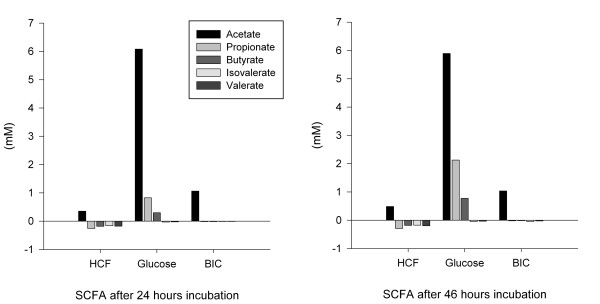
BACKGROUND: Diets high in cereal-fiber (HCF) have been shown to improve whole-body insulin sensitivity. In search for potential mechanisms we hypothesized that a supplemented HCF-diet influences the composition of the human gut microbiota and/or biomarkers of colonic carbohydrate fermentation. METHODS: We performed a randomized controlled 18-week intervention in group-matched overweight participants. Fecal samples of 69 participants receiving isoenergetic HCF (cereal-fiber 43 g/day), or control (cereal-fiber 14 g/day), or high-protein (HP, 28% of energy-intake, cereal-fiber 14 g/day), or moderately high cereal fiber/protein diets (MIX; protein 23% of energy-intake, cereal-fiber 26 g/day) with comparable fat contents were investigated for diet-induced changes of dominant groups of the gut microbiota, and of fecal short-chain fatty-acids (SCFA) including several of their proposed targets, after 0, 6, and 18-weeks of dietary intervention. In vitro fermentation of the cereal fiber extracts as used in the HCF and MIX diets was analyzed using gas chromatography. Diet-induced effects on whole-body insulin-sensitivity were measured using euglycaemic-hyperinsulinemic clamps and re-calculated in the here investigated subset of n = 69 participants that provided sufficient fecal samples on all study days. RESULTS: Gut microbiota groups and biomarkers of colonic fermentation were comparable between groups at baseline (week 0). No diet-induced differences were detected between groups during this isoenergetic intervention, neither in the full model nor in uncorrected subgroup-analyses. The cereal-fiber extract as used for preparation of the supplements in the HCF and MIX groups did not support in vitro fermentation. Fecal acetate, propionate, and butyrate concentrations remained unchanged, as well as potential targets of increased SCFA, whereas valerate increased after 6-weeks in the HP-group only (p = 0.037). Insulin-sensitivity significantly increased in the HCF-group from week-6 (baseline M-value 3.8 ± 0.4 vs 4.3 ± 0.4 mg·kg-1·min-1, p = 0.015; full model 0-18-weeks, treatment-x-time interaction, p = 0.046). CONCLUSIONS: Changes in the composition of the gut microbiota and/or markers of colonic carbohydrate fermentation did not contribute explaining the observed early onset and significant improvement of whole-body insulin sensitivity with the here investigated HCF-diet. TRIAL REGISTRATION: This trial was registered at http://www.clinicaltrials.gov as NCT00579657.
Overview
The claims and statistics of this paper haven’t been checked yet.
Free: it reads the open-access text and checks the first 5 claims that cite a source we can check. Create a free account to check every claim.
Integrity signals
Registry
Cites
Statistics
Figures
Verification
Claims the paper makes
The claims and statistics of this paper haven’t been checked yet.
Free: it reads the open-access text and checks the first 5 claims that cite a source we can check. Create a free account to check every claim.
Claims other papers make about this one
Each is checked against this paper’s own text: does it say what the citing paper says it does?
The source backs part of the claim, not all of it — or backs it for a different population, condition or comparison.
In the citing paper
“In this context, it is interesting that insoluble cereal fibres from wheat or oat extracts are non-fermentable in vivo and in vitro [65]”
From The Health Benefits of Dietary Fibre (2020) · cites this paper as [65]
Experimental — accuracy not yet measuredThe cited source says what the claim attributes to it.
In the citing paper
“However, it remains unclear whether dietary fibre-induced changes in SCFAs are indeed a key factor conveying the beneficial metabolic effects of a high fibre intake [65].”
From The Health Benefits of Dietary Fibre (2020) · cites this paper as [65]
Self-check
Percentages, sums and reported differences re-computed from the paper’s own numbers.
The self-check needs the paper’s full text.
Citations
Cites
The metabolic syndrome—a new worldwide definition
Alberti, K. G. M., Zimmet, P., & Shaw, J. (2005) · The Lancet · doi:10.1016/s0140-6736(05)67402-8 · Cited by 9,352 · cited 1×
“In brief: for eligibility participants had to be 24 - 70 years of age and to be overweight (body-mass-index (BMI) >25 kg/m2 (n = 45) or obese (BMI > 30 kg/m2, n = 66), with a waist circumference > 80 cm in females and > 94 cm in males, and show at least one more feature of the metabolic syndrome according to IDF crite…”
BackgroundA core gut microbiome in obese and lean twins
Turnbaugh, P. J., Hamady, M., Yatsunenko, T., Cantarel, B. L., Duncan, A., Ley, R. E., Sogin, M. L., Jones, W. J., Roe, B. A., Affourtit, J. P., et al. (2009) · Nature · doi:10.1038/nature07540 · Cited by 7,823
Human gut microbiota in obesity and after gastric bypass
Zhang, H., DiBaise, J. K., Zuccolo, A., Kudrna, D., Braidotti, M., Yu, Y., Parameswaran, P., Crowell, M. D., Wing, R., Rittmann, B. E., et al. (2009) · Proceedings of the National Academy of Sciences · doi:10.1073/pnas.0812600106 · Cited by 1,880 · cited 1×
“With a probe set covering essentially the same bacterial groups, coverage of 80% of the total human microbiota was shown previously [27]; however, complete coverage would require a non-targeted 16S rRNA gene-sequencing approach [39,40] that has not been available in this study.”
BackgroundMueller, S., Saunier, K., Hanisch, C., Norin, E., Alm, L., Midtvedt, T., Cresci, A., Silvi, S., Orpianesi, C., Verdenelli, M. C., et al. (2006) · Applied and Environmental Microbiology · doi:10.1128/aem.72.2.1027-1033.2006 · Cited by 1,006 · cited 4×
“The following lysozyme treatment for permeabilization and the hybridization with the respective group-specific (Cy5 labelled) and all bacteria detecting EUB 338 (FITC labelled) probes (additional file 1, Table S1) and stringency washing procedures were described by Mueller et al [22].”
MethodSelf-citationPhylogenetic Relationships of Butyrate-Producing Bacteria from the Human Gut
Barcenilla, A., Pryde, S. E., Martin, J. C., Duncan, S. H., Stewart, C. S., Henderson, C., & Flint, H. J. (2000) · Applied and Environmental Microbiology · doi:10.1128/aem.66.4.1654-1661.2000 · Cited by 995
Duncan, S. H., Belenguer, A., Holtrop, G., Johnstone, A. M., Flint, H. J., & Lobley, G. E. (2007) · Applied and Environmental Microbiology · doi:10.1128/aem.02340-06 · Cited by 941 · cited 3×
“Roseburia tended to increase in the HCF and to decrease in the HP group which was in agreement with a previous study showing decreased Roseburia with a lower carbohydrate intake [27].”
BackgroundResultWiddel, F., Kohring, G.-W., & Mayer, F. (1983) · Archives of Microbiology · doi:10.1007/bf00407804 · Cited by 941
de Munter, J. S. L., Hu, F. B., Spiegelman, D., Franz, M., & van Dam, R. M. (2007) · PLoS Medicine · doi:10.1371/journal.pmed.0040261 · Cited by 734 · cited 4×
“Most importantly, data from large prospective cohort studies consistently indicate that a high cereal fiber intake reduces diabetes risk as much as 30%, whereas more readily fermentable sorts of dietary fibers from fruit and vegetables show inconclusive results on this outcome [7,8,37].”
BackgroundInfluentialParnell, J. A., & Reimer, R. A. (2009) · The American Journal of Clinical Nutrition · doi:10.3945/ajcn.2009.27465 · Cited by 729
The contribution of the large intestine to energy supplies in man
N I, M. (1984) · The American Journal of Clinical Nutrition · doi:10.1093/ajcn/39.2.338 · Cited by 691 · cited 1×
“This was likely explained by a contribution of higher SCFA production to total energy intake [34], an effect that has been suggested to be relevant also in humans [36].”
Background
Cited by
The Health Benefits of Dietary Fibre
Barber, T. M., Kabisch, S., Pfeiffer, A. F. H., & Weickert, M. O. (2020) · Nutrients · doi:10.3390/nu12103209 · Cited by 892
“In this context, it is interesting that insoluble cereal fibres from wheat or oat extracts are non-fermentable in vivo and in vitro [65], whereas it is this type of dietary fibre (including whole grain products), and not the soluble and highly fermentable fibre types, that mainly appears to improve insulin resistance…”
BackgroundSelf-citationImpact of Dietary Fiber Consumption on Insulin Resistance and the Prevention of Type 2 Diabetes
Weickert, M. O., & Pfeiffer, A. F. (2018) · The Journal of Nutrition · doi:10.1093/jn/nxx008 · Cited by 523
Self-citationMüller, M., Canfora, E., & Blaak, E. (2018) · Nutrients · doi:10.3390/nu10030275 · Cited by 329
Role of Gut Microbiota in the Aetiology of Obesity: Proposed Mechanisms and Review of the Literature
Khan, M. J., Gerasimidis, K., Edwards, C. A., & Shaikh, M. G. (2016) · Journal of Obesity · doi:10.1155/2016/7353642 · Cited by 295
The Intestinal Microbiota in Metabolic Disease
Woting, A., & Blaut, M. (2016) · Nutrients · doi:10.3390/nu8040202 · Cited by 284
“It is also worth mentioning that dietary fiber does not always change the dominant microbial groups and the concentrations of SCFA in the gut [52].”
BackgroundSelf-citationDietary Fiber, Gut Microbiota, and Metabolic Regulation—Current Status in Human Randomized Trials
Myhrstad, M. C. W., Tunsjø, H., Charnock, C., & Telle-Hansen, V. H. (2020) · Nutrients · doi:10.3390/nu12030859 · Cited by 275
The Role of Gut Microbiota on Insulin Resistance
Caricilli, A., & Saad, M. (2013) · Nutrients · doi:10.3390/nu5030829 · Cited by 274
Impact of Diet Composition on Blood Glucose Regulation
Russell, W. R., Baka, A., Björck, I., Delzenne, N., Gao, D., Griffiths, H. R., Hadjilucas, E., Juvonen, K., Lahtinen, S., Lansink, M., et al. (2016) · Critical Reviews in Food Science and Nutrition · doi:10.1080/10408398.2013.792772 · Cited by 255
“…improved independent of various markers of colonic fermentation, SCFA profiles in faecal samples, and dominant groups of the gut microbiota (Weickert et al., 2011a, 2011b), indicating that further factors were involved in conveying improved insulin sensitivity upon the consumption of…”
BackgroundMethodInfluentialSelf-citationThe Effects of the Mediterranean Diet on Health and Gut Microbiota
Barber, T. M., Kabisch, S., Pfeiffer, A. F. H., & Weickert, M. O. (2023) · Nutrients · doi:10.3390/nu15092150 · Cited by 213
Self-citationDietary Fiber Pectin Directly Blocks Toll-Like Receptor 2–1 and Prevents Doxorubicin-Induced Ileitis
Sahasrabudhe, N. M., Beukema, M., Tian, L., Troost, B., Scholte, J., Bruininx, E., Bruggeman, G., van den Berg, M., Scheurink, A., Schols, H. A., et al. (2018) · Frontiers in Immunology · doi:10.3389/fimmu.2018.00383 · Cited by 198
“However, beneficial effects of dietary fibers independent of SCFAs have also been reported (13, 14), wherein direct immunomodulatory effects of dietary fibers on immune cells were proposed (15).”
BackgroundBarber, T. M., Kyrou, I., Randeva, H. S., & Weickert, M. O. (2021) · International Journal of Molecular Sciences · doi:10.3390/ijms22020546 · Cited by 169
Self-citationAnalysis of short-chain fatty acids in human feces: A scoping review
Primec, M., Mičetić-Turk, D., & Langerholc, T. (2017) · Analytical Biochemistry · doi:10.1016/j.ab.2017.03.007 · Cited by 165
Modulation of Gut Microbiota in the Management of Metabolic Disorders: The Prospects and Challenges
Erejuwa, O., Sulaiman, S., & Wahab, M. (2014) · International Journal of Molecular Sciences · doi:10.3390/ijms15034158 · Cited by 136
Lappi, J., Salojärvi, J., Kolehmainen, M., Mykkänen, H. M., Poutanen, K. S., de Vos, W. M., & Salonen, A. (2013) · Journal of Nutrition · doi:10.3945/jn.112.172668 · Cited by 116
Respondek, F., Gerard, P., Bossis, M., Boschat, L., Bruneau, A., Rabot, S., Wagner, A., & Martin, J.-C. (2013) · PLoS ONE · doi:10.1371/journal.pone.0071026 · Cited by 116
The Low-Carbohydrate Diet: Short-Term Metabolic Efficacy Versus Longer-Term Limitations
Barber, T. M., Hanson, P., Kabisch, S., Pfeiffer, A. F. H., & Weickert, M. O. (2021) · Nutrients · doi:10.3390/nu13041187 · Cited by 109
Self-citationLampe, J. W., Navarro, S. L., Hullar, M. A. J., & Shojaie, A. (2013) · Proceedings of the Nutrition Society · doi:10.1017/s0029665113000025 · Cited by 105
Implications of Resveratrol in Obesity and Insulin Resistance: A State-of-the-Art Review
Barber, T. M., Kabisch, S., Randeva, H. S., Pfeiffer, A. F. H., & Weickert, M. O. (2022) · Nutrients · doi:10.3390/nu14142870 · Cited by 93
Self-citationDietary Influences on the Microbiota–Gut–Brain Axis
Barber, T. M., Valsamakis, G., Mastorakos, G. P., Hanson, P., Kyrou, I., Randeva, H. S., & Weickert, M. O. (2021) · International Journal of Molecular Sciences · doi:10.3390/ijms22073502 · Cited by 86
Self-citationBeyond gut microbiota: understanding obesity and type 2 diabetes
Lau, E., Carvalho, D. M., Pina‐Vaz, C., Barbosa, J.-A., & Freitas, P. (2015) · HORMONES · doi:10.14310/horm.2002.1571 · Cited by 69
Impact of Dietary Fiber on Inflammation in Humans
Kabisch, S., Hajir, J., Sukhobaevskaia, V., Weickert, M. O., & Pfeiffer, A. F. H. (2025) · International Journal of Molecular Sciences · doi:10.3390/ijms26052000 · Cited by 65
Self-citationChapkin, R. S., Navarro, S. L., Hullar, M. A. J., & Lampe, J. W. (2020) · Digestive Diseases and Sciences · doi:10.1007/s10620-020-06106-8 · Cited by 60
Nutritional Modulation of Insulin Resistance
Weickert, M. O. (2012) · Scientifica · doi:10.6064/2012/424780 · Cited by 53
Self-citationde Bock, M., Derraik, J. G. B., Brennan, C. M., Biggs, J. B., Smith, G. C., Cameron-Smith, D., Wall, C. R., & Cutfield, W. S. (2012) · PLoS ONE · doi:10.1371/journal.pone.0041735 · Cited by 45
Chemical features and biological functions of water-insoluble dietary fiber in plant-based foods
Tian, M., Pak, S., Ma, C., Ma, L., Rengasamy, K. R. R., Xiao, J., Hu, X., Li, D., & Chen, F. (2022) · Critical Reviews in Food Science and Nutrition · doi:10.1080/10408398.2022.2110565 · Cited by 44
TLR 2/1 interaction of pectin depends on its chemical structure and conformation
Jermendi, É., Fernández‐Lainez, C., Beukema, M., López‐Velázquez, G., van den Berg, M. A., de Vos, P., & Schols, H. A. (2022) · Carbohydrate Polymers · doi:10.1016/j.carbpol.2022.120444 · Cited by 44
What dietary modification best improves insulin sensitivity and why?
Weickert, M. O. (2012) · Clinical Endocrinology · doi:10.1111/j.1365-2265.2012.04450.x · Cited by 43
Self-citationHattersley, J. G., Pfeiffer, A. F. H., Roden, M., Petzke, K.-J., Hoffmann, D., Rudovich, N. N., Randeva, H. S., Vatish, M., Osterhoff, M., Goegebakan, Ö., et al. (2014) · The Journal of Clinical Endocrinology & Metabolism · doi:10.1210/jc.2014-2302 · Cited by 37
Self-citationMetabolic-Associated Fatty Liver Disease and the Gut Microbiota
Barber, T. M., Hanson, P., & Weickert, M. O. (2023) · Endocrinology and Metabolism Clinics of North America · doi:10.1016/j.ecl.2023.01.004 · Cited by 36
Self-citationOduro-Donkor, D., Turner, M. C., Farnaud, S., Renshaw, D., Kyrou, I., Hanson, P., Hattersley, J., Weickert, M. O., Menon, V., Randeva, H. S., et al. (2020) · Expert Review of Endocrinology & Metabolism · doi:10.1080/17446651.2020.1801412 · Cited by 33
Self-citationObesity: novel and unusual predisposing factors
Hanson, P., Weickert, M. O., & Barber, T. M. (2020) · Therapeutic Advances in Endocrinology and Metabolism · doi:10.1177/2042018820922018 · Cited by 33
Self-citationSimon, M., Reinbeck, A. L., Wessel, C., Heindirk, J., Jeleník, T., Kaul, K., Arreguín-Cano, J. A., Strom, A., Blaut, M., Bäckhed, F., et al. (2019) · Journal of Biological Chemistry · doi:10.1074/jbc.ra119.010816 · Cited by 33
Self-citationSimon, M., Reinbeck, A. L., Wessel, C., Heindirk, J., Jeleník, T., Kaul, K., Arreguín-Cano, J. A., Strom, A., Blaut, M., Bäckhed, F., et al. (2020) · Journal of Biological Chemistry · doi:10.1016/s0021-9258(17)49908-x · Cited by 32
Self-citationWeickert, M. O., Hattersley, J. G., Kyrou, I., Arafat, A. M., Rudovich, N., Roden, M., Nowotny, P., von Loeffelholz, C., Matysik, S., Schmitz, G., et al. (2018) · Nutrition & Diabetes · doi:10.1038/s41387-018-0020-6 · Cited by 29
Self-citationPersonalized nutrition, microbiota, and metabolism: A triad for eudaimonia
Sarfraz, M. H., Shahid, A., Asghar, S., Aslam, B., Ashfaq, U. A., Raza, H., Prieto, M. A., Simal‐Gándara, J., Barba, F. J., Rajoka, M. S. R., et al. (2022) · Frontiers in Molecular Biosciences · doi:10.3389/fmolb.2022.1038830 · Cited by 27
Arafat, A. M., Weickert, M. O., Adamidou, A., Otto, B., Perschel, F. H., Spranger, J., Möhlig, M., & Pfeiffer, A. F. H. (2013) · The Journal of Clinical Endocrinology & Metabolism · doi:10.1210/jc.2013-1635 · Cited by 24
Self-citationUnderstanding the role of the human gut microbiome in overweight and obesity
McBurney, M. I., & Cho, C. E. (2024) · Annals of the New York Academy of Sciences · doi:10.1111/nyas.15215 · Cited by 21
Hattersley, J. G., Möhlig, M., Roden, M., Arafat, A. M., von Loeffelholz, C., Nowotny, P., Machann, J., Hierholzer, J., Osterhoff, M. A., Khan, M., et al. (2012) · PLoS ONE · doi:10.1371/journal.pone.0039029 · Cited by 21
Self-citationBarber, T. M., Bhatti, A. A., Elder, P. J. D., Ball, S., Calvez, R., Ramsden, D. B., Cuthbertson, D. J., Pfeiffer, A. F. H., Burnett, D. A., & Weickert, M. O. (2020) · The Journal of Clinical Endocrinology & Metabolism · doi:10.1210/clinem/dgaa473 · Cited by 21
Self-citationHigh fiber intake, dietary protein, and prevention of type 2 diabetes
Weickert, M. O. (2018) · Expert Review of Endocrinology & Metabolism · doi:10.1080/17446651.2018.1513320 · Cited by 18
Self-citationBai, J., Li, Y., Zhang, W., Fan, M., Qian, H., Zhang, H., Qi, X., & Wang, L. (2021) · Food & Function · doi:10.1039/d1fo00858g · Cited by 15
Moco, S., & Ross, A. B. (2014) · Molecular and integrative toxicology · doi:10.1007/978-1-4471-6539-2_5 · Cited by 15
Mak, I. E. K., Yao, Y., Ng, M. T. T., & Kim, J. E. (2025) · Critical Reviews in Food Science and Nutrition · doi:10.1080/10408398.2025.2452362 · Cited by 14
Huxley, R., Woodward, M., & Clifton, P. M. (2012) · Current Nutrition Reports · doi:10.1007/s13668-012-0030-2 · Cited by 14
Dietary interventions, intestinal microenvironment, and obesity: a systematic review
dos Santos, J. G., Alves, B. C., Hammes, T. O., & Dall’Alba, V. (2019) · Nutrition Reviews · doi:10.1093/nutrit/nuz022 · Cited by 13
Williams, G. M., Tapsell, L. C., O'Brien, C. L., Tosh, S. M., Barrett, E. M., & Beck, E. J. (2020) · Nutrition Reviews · doi:10.1093/nutrit/nuaa128 · Cited by 10
Effects of Insoluble Cereal Fibre on Body Fat Distribution in the Optimal Fibre Trial
Kabisch, S., Honsek, C., Kemper, M., Gerbracht, C., Meyer, N. M. T., Arafat, A. M., Birkenfeld, A. L., Machann, J., Dambeck, U., Osterhoff, M. A., et al. (2021) · Molecular Nutrition & Food Research · doi:10.1002/mnfr.202000991 · Cited by 10
Self-citationFiber intake and resulting health benefits
Schulz, R., & Slavin, J. L. (2022) · Elsevier eBooks · doi:10.1016/b978-0-12-821848-8.00096-2 · Cited by 5
Kagawa, T., & Yamaoka, I. (2023) · Nutrition · doi:10.1016/j.nut.2023.112271 · Cited by 5
Ancu, O., Hauge-Evans, A. C., Draicchio, F., Neculescu, D.-E., Rogers, R., Burd, N. A., Pfeiffer, A. F. H., Weickert, M. O., Hurren, N. M., & Mackenzie, R. W. A. (2026) · Journal of the Endocrine Society · doi:10.1210/jendso/bvag013 · Cited by 5
Self-citationThe Gut Microbiome as a Key Determinant of the Heritability of Body Mass Index
Barber, T. M., Kabisch, S., Pfeiffer, A. F. H., & Weickert, M. O. (2025) · Nutrients · doi:10.3390/nu17101713 · Cited by 2
Self-citationROSENBERG, E. B. (2021) · The microbiomes of humans, animals, plants, and the environment · doi:10.1007/978-3-030-65317-0_2 · Cited by 2
Abundance and Diversity of Microbiota
ROSENBERG, E. B., & Zilber‐Rosenberg, I. (2013) · Springer eBooks · doi:10.1007/978-3-319-04241-1_3 · Cited by 1
Pectin methyl-ester distribution; analysis, modification and biofunctionality
Jermendi, É. (2022) · doi:10.18174/577333 · Cited by 1
Gut microbiota and metabolic syndrome: What's new?
Saberi‐Karimian, M., Bana, H. S., Fazeli, M., Tabatabaeizadeh, S., Ferns, G. A., & Ghayour‐Mobarhan, M. (2024) · Elsevier eBooks · doi:10.1016/b978-0-323-85732-1.00050-5
Lampe, J. W., Navarro, S. L., Hullar, M. A. J., & Shojaie, A. (2013)
Pathogens Aggravating Insulin Resistance
Anshi, Sharma, S., Deepika, Yadav, A. K., & Sharma, V. (2026) · Wiley eBooks · doi:10.1002/9781394293148.ch12
Effets des fructo-oligosaccharides sur la sensibilité à l'insuline
Respondek, F. (2012) · theses.fr (ABES) · doi:10.70675/de84e5e6zb505z441bzbc5dzbfe89db28b3b
Modélisation de la dégradation des protéines alimentaires par le microbiote intestinal humain
Paulay, A. (2024) · theses.fr (ABES) · doi:10.70675/41f1d6ecz7fa4z4c7azb50ez413305795258
Harris, H. C. (2016) · Enlighten: Theses (The University of Glasgow)
Ma, X., Zhang, J., Huang, J., Liu, T., Fang, J., & Zhang, X. (2026) · Endocrine Metabolic & Immune Disorders - Drug Targets · doi:10.2174/0118715303459900260505102519
Metadata
- Authors
- Weickert, M. O., Arafat, A. M., Blaut, M., Alpert, C., Becker, N., Leupelt, V., Rudovich, N., Möhlig, M., & Pfeiffer, A. F.
- Affiliations
- German Institute of Human Nutrition (DE)
- Corresponding author
- Weickert, Martin O
- Venue
- Nutrition & Metabolism
- Published
- 2011
- Volume
- 8
- Issue
- 1
- Pages
- 90
- ISSN
- 1743-7075 (ISSN-L)
- PMC
- PMC3264513
- OpenAlex
- W2129650600
- Semantic Scholar
- 52e2eed925d595914c0094b1772a02800c1b809d
- Cited by
- 55
- References
- 40
- Citations by year
- 2025: 3 · 2024: 2 · 2023: 3 · 2022: 6 · 2021: 6 · 2020: 8 · 2019: 2 · 2018: 5 · 2017: 1 · 2016: 2 · 2015: 1 · 2014: 3 · 2013: 8 · 2012: 5
- FWCI
- 2.08
- Type
- journal article
- Language
- en
- Open access
- gold
- doi.org
- Licence
- cc-by
- Locations
- Nutrition & Metabolism (publishedVersion, cc-by)
- Europe PMC (PubMed Central) (publishedVersion, cc-by)
- PubMed Central (publishedVersion, cc-by)
- PubMed (publishedVersion)
- Warwick Research Archive Portal (University of Warwick) (acceptedVersion)
- DOAJ (DOAJ: Directory of Open Access Journals) (submittedVersion)
- Topics
- Life Sciences › Biochemistry, Genetics and Molecular Biology › Molecular Biology › Gut microbiota and health
- Health Sciences › Nursing › Nutrition and Dietetics › Food composition and properties
- Health Sciences › Nursing › Nutrition and Dietetics › Microbial Metabolites in Food Biotechnology
- Keywords
- cereal fiber, gut microbiota, insulin sensitivity, short-chain fatty acids, high-protein diet, overweight, valerate, dietary intervention, in vitro fermentation, dietary fiber supplementation, type 2 diabetes risk, gut-brain axis, gut-liver axis
About these checks
Registry, retraction, Cites and statistics results are computed, not judged, with one exception: a printed reference that no index lists is read once by a model before it counts as a citation error. Claims are extracted by a model and kept only when their quote appears verbatim in the text; each cited source is then checked, with a model’s help, for whether it says what the claim relies on. Those verdicts can be wrong — read the claim’s quote and the cited source before relying on one.
Statistics and arithmetic are recomputed, not judged.
Confidence bands are shown only for fields calibrated on our annotated test set. None is calibrated yet, so no band is shown.
What counts as a claim ›How we measure confidence ›How we check this ›
Are you an author, or do you see a problem with this page? Request a review
Data sources
Bibliographic data: Semantic Scholar, OpenAlex, Crossref.
Contains information from the Semantic Scholar Academic Graph Datasets, made available under the ODC Attribution License (ODC-BY 1.0).
Semantic Scholar’s data is described in: Kinney, R., et al. (2023). The Semantic Scholar Open Data Platform. arXiv:2301.10140.
