

Asbestos, carbon nanotubes and the pleural mesothelium: a review and the hypothesis regarding the role of long fibre retention in the parietal pleura, inflammation and mesothelioma
Open accessThe DOI matches its Crossref record; 63 of the 65 references it cites were found in a registry or an index.
Abstract
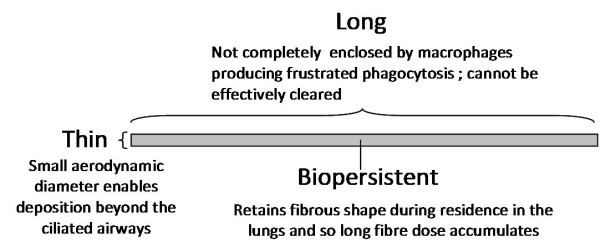
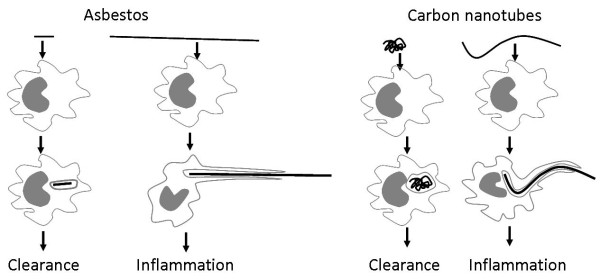
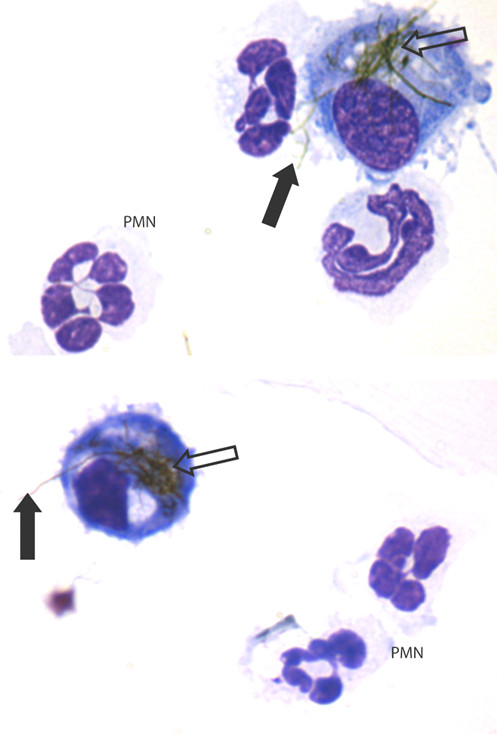
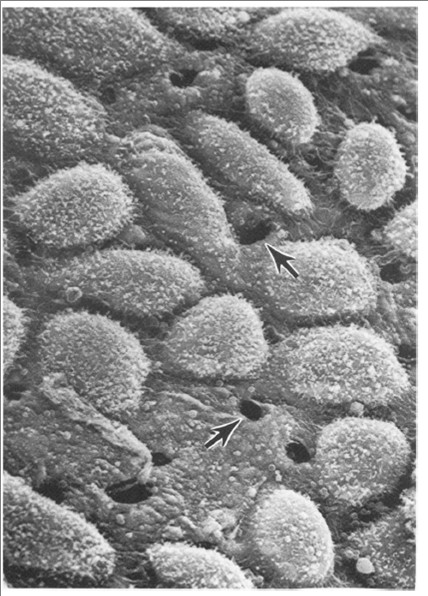
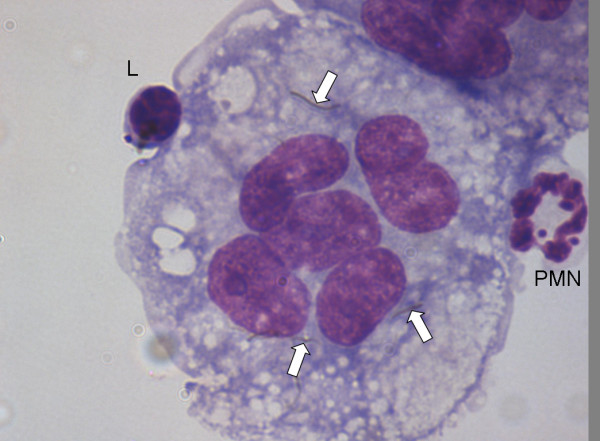
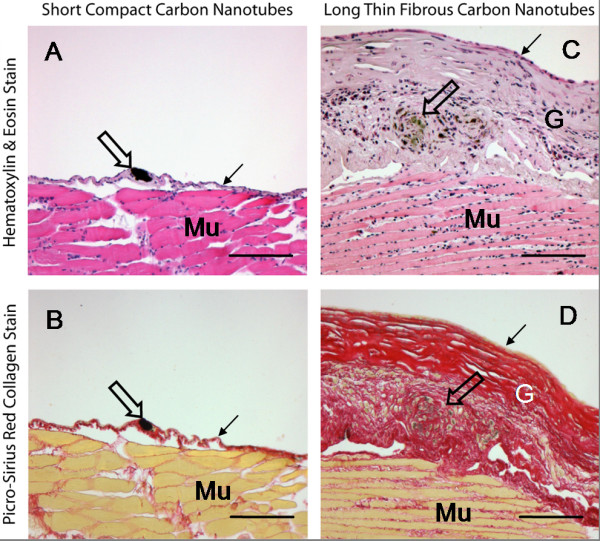
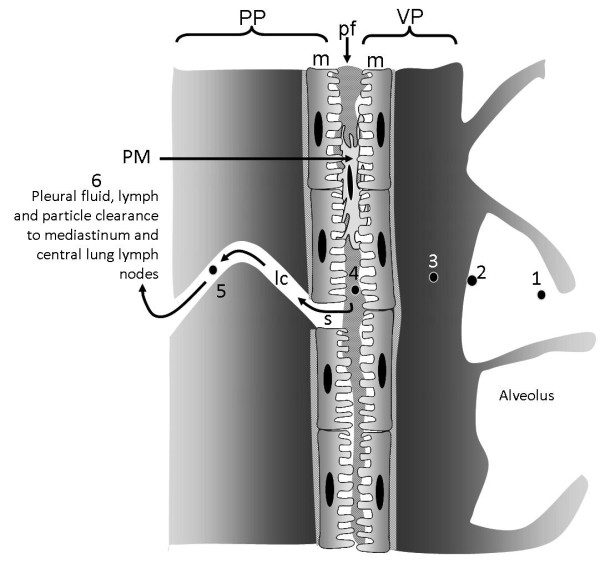
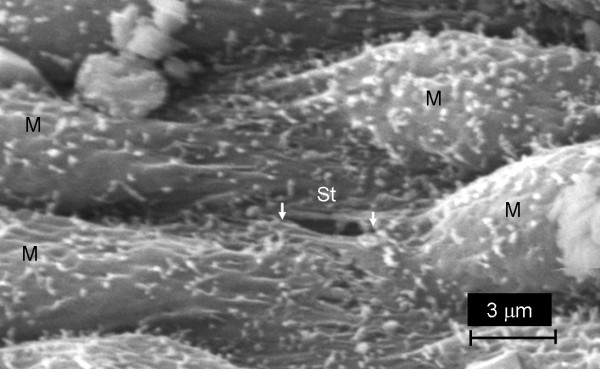
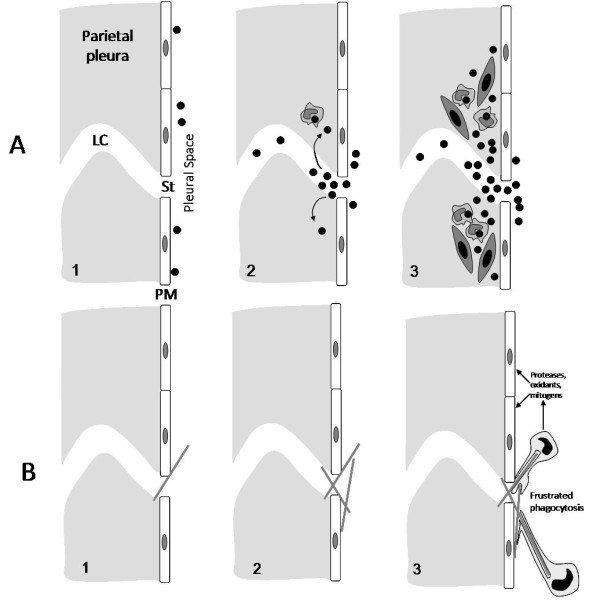
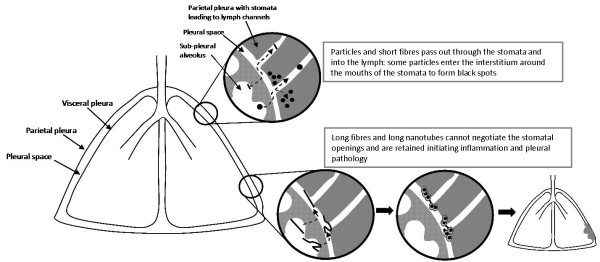
The unique hazard posed to the pleural mesothelium by asbestos has engendered concern in potential for a similar risk from high aspect ratio nanoparticles (HARN) such as carbon nanotubes. In the course of studying the potential impact of HARN on the pleura we have utilised the existing hypothesis regarding the role of the parietal pleura in the response to long fibres. This review seeks to synthesise our new data with multi-walled carbon nanotubes (CNT) with that hypothesis for the behaviour of long fibres in the lung and their retention in the parietal pleura leading to the initiation of inflammation and pleural pathology such as mesothelioma. We describe evidence that a fraction of all deposited particles reach the pleura and that a mechanism of particle clearance from the pleura exits, through stomata in the parietal pleura. We suggest that these stomata are the site of retention of long fibres which cannot negotiate them leading to inflammation and pleural pathology including mesothelioma. We cite thoracoscopic data to support the contention, as would be anticipated from the preceding, that the parietal pleura is the site of origin of pleural mesothelioma. This mechanism, if it finds support, has important implications for future research into the mesothelioma hazard from HARN and also for our current view of the origins of asbestos-initiated pleural mesothelioma and the common use of lung parenchymal asbestos fibre burden as a correlate of this tumour, which actually arises in the parietal pleura.
Overview
The claims and statistics of this paper haven’t been checked yet.
Free: it reads the open-access text and checks the first 5 claims that cite a source we can check. Create a free account to check every claim.
Integrity signals
Registry
Cites
Statistics
Figures
Verification
Claims the paper makes
The claims and statistics of this paper haven’t been checked yet.
Free: it reads the open-access text and checks the first 5 claims that cite a source we can check. Create a free account to check every claim.
Claims other papers make about this one
Each is checked against this paper’s own text: does it say what the citing paper says it does?
The source backs part of the claim, not all of it — or backs it for a different population, condition or comparison.
In the citing paper
“In MPM pathogenesis, the retention of long asbestos fibers in the respiratory tract, coupled with the defeated phagocytosis of pleural macrophages that try to ingest them, increases oxidative stress with ROS generation and forces continuous inflammation, which may promote mesothelial cell transformation [78,79].”
From Chronic Inflammation, Oxidative Stress and Metabolic Plasticity: Three Players Driving the Pro-Tumorigenic Microenvironment in Malignant Mesothelioma (2023) · cites this paper as [79]
Experimental — accuracy not yet measuredThe source backs part of the claim, not all of it — or backs it for a different population, condition or comparison.
In the citing paper
“There are several distinct mechanisms in asbestos‐induced carcinogenesis, including oxidative stress (free radical generation), molecular adsorption (hemoglobin and histones), chromosome tangling, and chronic inflammation, which work in combination.7, 8, 9, 10”
From Phlebotomy as a preventive measure for crocidolite-induced mesothelioma in male rats (2018) · cites this paper as [7]
Experimental — accuracy not yet measuredThe cited source says what the claim attributes to it.
In the citing paper
“Following decades of fibre toxicology studies, asbestos toxicity is considered a consequence of some characteristic physico-chemical properties of the material8910.”
From The interaction of asbestos and iron in lung tissue revealed by synchrotron-based scanning X-ray microscopy (2013) · cites this paper as [8]
The cited source says what the claim attributes to it.
In the citing paper
“These results suggest that ROS originates not only from frustrated phagocytosis [11] but from LDCD of macrophages.”
From Asbestos conceives Fe(II)-dependent mutagenic stromal milieu through ceaseless macrophage ferroptosis and β-catenin induction in mesothelium (2020) · cites this paper as [11]
The cited source says what the claim attributes to it.
In the citing paper
“For fibres in general, the pathogenicity is described within a toxicology structure-activity paradigm, the main determinants being fibre length, diameter and bio-persistence8.”
From The interaction of asbestos and iron in lung tissue revealed by synchrotron-based scanning X-ray microscopy (2013) · cites this paper as [8]
4 more claims about this paper
Create a free account to see every claim other papers make about this one.
Self-check
Percentages, sums and reported differences re-computed from the paper’s own numbers.
The self-check needs the paper’s full text.
Citations
Cites
Poland, C. A., Duffin, R., Kinloch, I., Maynard, A., Wallace, W. A. H., Seaton, A., Stone, V., Brown, S., MacNee, W., & Donaldson, K. (2008) · Nature Nanotechnology · doi:10.1038/nnano.2008.111 · Cited by 2,645 · cited 8×
“Therefore, we would postulate that there are two important parts to the mechanism of the pro-inflammatory effects of long fibres in the peritoneal cavity, shared by both asbestos and long MWCNT i) failure of long fibres to negotiate the diaphragmatic stomata with subsequent retention of the long fibre dose at the diap…”
BackgroundResultInfluentialSelf-citationEnvironmental Health Perspectives at 50
Kaufman, J. D. (2022) · Environmental Health Perspectives · doi:10.1289/ehp11367 · Cited by 2,284
Donaldson, K., Aitken, R., Tran, L., Stone, V., Duffin, R., Forrest, G., & Alexander, A. (2006) · Toxicological Sciences · doi:10.1093/toxsci/kfj130 · Cited by 1,167 · cited 2×
“Graphene, the basic structural component of CNT is an exceedingly strong material [31] and so is likely to be biopersistent when the graphene is pristine, with few defects and underivatised, and that is suggested by our own data (in preparation).”
BackgroundSelf-citationProceedings of the American Association for Cancer Research.
Konings, E. J. M., van den Brandt, P. A., Saris, W. H. M., Brants, H. A. M., & Goldbohm, R. A. (2001) · Cited by 764
British journal of industrial medicine
(1989) · Journal of Sound and Vibration · doi:10.1016/0022-460x(89)90628-7 · Cited by 751
Physiology and pathophysiology of pleural fluid turnover
Miserocchi, G. (1997) · European Respiratory Journal · doi:10.1183/09031936.97.10010219 · Cited by 315
Mesothelioma Epidemiology, Carcinogenesis, and Pathogenesis
Yang, H., Testa, J. R., & Carbone, M. (2008) · Current Treatment Options in Oncology · doi:10.1007/s11864-008-0067-z · Cited by 274
Inhaled Multiwalled Carbon Nanotubes Potentiate Airway Fibrosis in Murine Allergic Asthma
Ryman-Rasmussen, J. P., Tewksbury, E. W., Moss, O. R., Cesta, M. F., Wong, B. A., & Bonner, J. C. (2009) · American Journal of Respiratory Cell and Molecular Biology · doi:10.1165/rcmb.2008-0276oc · Cited by 261
Occupational & environmental medicine
LaDou, J. (1997) · Prentice-Hall International eBooks · Cited by 233
The role of the diaphragm in lymphatic absorption from the peritoneal cavity.
Abu-Hijleh, M. F., Habbal, O. A., & Moqattash, S. T. (1995) · Europe PMC (PubMed Central) · Cited by 225
Research works printed but not linked: 3
- [3]Kane AB Macdonald JL Moalli PA Acute injury and regeneration of mesothelial cells produced by crocidolite asbestos fibers American Review Of Respiratory Disease 1986 133 A198
- [14]Schlesinger RB Ben-Jebria A Dahl AR Snipes MB Ultman J Massaro EJ Disposition of inhaled toxicicants Handbook of Human Toxicology 1997 CRC Press Boca Raton 493 550
- [15]Walton WH Liddell D, Miller K Chapter 5. Airborne dusts Mineral Fibers and Health 1991 Boca Raton, FL:CRC Press 55 77
Cited by
Implant infections: adhesion, biofilm formation and immune evasion
Arciola, C. R., Campoccia, D., & Montanaro, L. (2018) · Nature Reviews Microbiology · doi:10.1038/s41579-018-0019-y · Cited by 2,241
Mechanisms of Nanoparticle-Induced Oxidative Stress and Toxicity
Manke, A., Wang, L., & Rojanasakul, Y. (2013) · BioMed Research International · doi:10.1155/2013/942916 · Cited by 1,727
Sharifi, S., Behzadi, S., Laurent, S., Laird Forrest, M., Stroeve, P., & Mahmoudi, M. (2012) · Chem. Soc. Rev. · doi:10.1039/c1cs15188f · Cited by 1,460
Current characterization methods for cellulose nanomaterials
Foster, E. J., Moon, R. J., Agarwal, U. P., Bortner, M. J., Bras, J., Camarero-Espinosa, S., Chan, K. J., Clift, M. J. D., Cranston, E. D., Eichhorn, S. J., et al. (2018) · Chemical Society Reviews · doi:10.1039/c6cs00895j · Cited by 1,021
Elsaesser, A., & Howard, C. V. (2012) · Advanced Drug Delivery Reviews · doi:10.1016/j.addr.2011.09.001 · Cited by 895
Espinosa, A., Di Corato, R., Kolosnjaj-Tabi, J., Flaud, P., Pellegrino, T., & Wilhelm, C. (2016) · ACS Nano · doi:10.1021/acsnano.5b07249 · Cited by 788
Silica and titanium dioxide nanoparticles cause pregnancy complications in mice
Yamashita, K., Yoshioka, Y., Higashisaka, K., Mimura, K., Morishita, Y., Nozaki, M., Yoshida, T., Ogura, T., Nabeshi, H., Nagano, K., et al. (2011) · Nature Nanotechnology · doi:10.1038/nnano.2011.41 · Cited by 738
Fedak, K. M., Bernal, A., Capshaw, Z. A., & Gross, S. (2015) · Emerging Themes in Epidemiology · doi:10.1186/s12982-015-0037-4 · Cited by 680
Placing nanoplastics in the context of global plastic pollution
Mitrano, D. M., Wick, P., & Nowack, B. (2021) · Nature Nanotechnology · doi:10.1038/s41565-021-00888-2 · Cited by 661
Nagai, H., Okazaki, Y., Chew, S. H., Misawa, N., Yamashita, Y., Akatsuka, S., Ishihara, T., Yamashita, K., Yoshikawa, Y., Yasui, H., et al. (2011) · Proceedings of the National Academy of Sciences · doi:10.1073/pnas.1110013108 · Cited by 535
“, length) of MWCNTs, significantly shorter MWCNTs have been previously reported to be nontoxic (42), whereas significantly longer MWCNTs compared with the ones used in the present study have been shown to be inflammogenic (14).”
BackgroundResultInfluentialSafety of Nanoparticles in Medicine
Wolfram, J., Zhu, M., Yang, Y., Shen, J., Gentile, E., Paolino, D., Fresta, M., Nie, G., Chen, C., Shen, H., et al. (2015) · Current Drug Targets · doi:10.2174/1389450115666140804124808 · Cited by 532
Huang, Y., Guo, X., Wu, Y., Chen, X., Feng, L., Xie, N., & Shen, G. (2024) · Signal Transduction and Targeted Therapy · doi:10.1038/s41392-024-01745-z · Cited by 490
A general mechanism for intracellular toxicity of metal-containing nanoparticles
Sabella, S., Carney, R. P., Brunetti, V., Malvindi, M. A., Al-Juffali, N., Vecchio, G., Janes, S. M., Bakr, O. M., Cingolani, R., Stellacci, F., et al. (2014) · Nanoscale · doi:10.1039/c4nr01234h · Cited by 467
Cell entry of one-dimensional nanomaterials occurs by tip recognition and rotation
Shi, X., von dem Bussche, A., Hurt, R. H., Kane, A. B., & Gao, H. (2011) · Nature Nanotechnology · doi:10.1038/nnano.2011.151 · Cited by 449
Tailoring Materials for Modulation of Macrophage Fate
Li, J., Jiang, X., Li, H., Gelinsky, M., & Gu, Z. (2021) · Advanced Materials · doi:10.1002/adma.202004172 · Cited by 403
Ji, Z., Wang, X., Zhang, H., Lin, S., Meng, H., Sun, B., George, S., Xia, T., Nel, A. E., & Zink, J. I. (2012) · ACS Nano · doi:10.1021/nn3012114 · Cited by 378
Schinwald, A., Murphy, F. A., Jones, A., MacNee, W., & Donaldson, K. (2012) · ACS Nano · doi:10.1021/nn204229f · Cited by 374
Self-citationPhysicochemical characteristics of nanomaterials that affect pulmonary inflammation
Braakhuis, H. M., Park, M. V., Gosens, I., De Jong, W. H., & Cassee, F. R. (2014) · Particle and Fibre Toxicology · doi:10.1186/1743-8977-11-18 · Cited by 358
The New Toxicology of Sophisticated Materials: Nanotoxicology and Beyond
Maynard, A. D., Warheit, D. B., & Philbert, M. A. (2011) · Toxicological Sciences · doi:10.1093/toxsci/kfq372 · Cited by 351
Pulmonary toxicity of carbon nanotubes and asbestos — Similarities and differences
Donaldson, K., Poland, C. A., Murphy, F. A., MacFarlane, M., Chernova, T., & Schinwald, A. (2013) · Advanced Drug Delivery Reviews · doi:10.1016/j.addr.2013.07.014 · Cited by 341
Self-citationAschberger, K., Micheletti, C., Sokull-Klüttgen, B., & Christensen, F. M. (2011) · Environment International · doi:10.1016/j.envint.2011.02.005 · Cited by 327
Modulation of Immune Responses by Particle Size and Shape
Baranov, M. V., Kumar, M., Sacanna, S., Thutupalli, S., & van den Bogaart, G. (2021) · Frontiers in Immunology · doi:10.3389/fimmu.2020.607945 · Cited by 324
Murphy, F. A., Poland, C. A., Duffin, R., Al-Jamal, K. T., Ali-Boucetta, H., Nunes, A., Byrne, F., Prina-Mello, A., Volkov, Y., Li, S., et al. (2011) · The American Journal of Pathology · doi:10.1016/j.ajpath.2011.02.040 · Cited by 323
Self-citationThe NLRP3 inflammasome in pathogenic particle and fibre-associated lung inflammation and diseases
Sayan, M., & Mossman, B. T. (2015) · Particle and Fibre Toxicology · doi:10.1186/s12989-016-0162-4 · Cited by 296
Cho, W.-S., Duffin, R., Thielbeer, F., Bradley, M., Megson, I. L., MacNee, W., Poland, C. A., Tran, C. L., & Donaldson, K. (2012) · Toxicological Sciences · doi:10.1093/toxsci/kfs006 · Cited by 295
Self-citationMaterials and Transducers Toward Selective Wireless Gas Sensing
Potyrailo, R. A., Surman, C., Nagraj, N., & Burns, A. (2011) · Chemical Reviews · doi:10.1021/cr2000477 · Cited by 285
Molecular pathogenesis of malignant mesothelioma
Sekido, Y. (2013) · Carcinogenesis · doi:10.1093/carcin/bgt166 · Cited by 279
Biological and environmental interactions of emerging two-dimensional nanomaterials
Wang, Z., Zhu, W., Qiu, Y., Yi, X., von dem Bussche, A., Kane, A., Gao, H., Koski, K., & Hurt, R. (2016) · Chemical Society Reviews · doi:10.1039/c5cs00914f · Cited by 269
Lung carcinogenicity of inhaled multi-walled carbon nanotube in rats
Kasai, T., Umeda, Y., Ohnishi, M., Mine, T., Kondo, H., Takeuchi, T., Matsumoto, M., & Fukushima, S. (2015) · Particle and Fibre Toxicology · doi:10.1186/s12989-016-0164-2 · Cited by 262
Promotion of lung adenocarcinoma following inhalation exposure to multi-walled carbon nanotubes
Sargent, L. M., Porter, D. W., Staska, L. M., Hubbs, A. F., Lowry, D. T., Battelli, L., Siegrist, K. J., Kashon, M. L., Mercer, R. R., Bauer, A. K., et al. (2014) · Particle and Fibre Toxicology · doi:10.1186/1743-8977-11-3 · Cited by 256
A decision-making framework for the grouping and testing of nanomaterials (DF4nanoGrouping)
Arts, J. H. E., Hadi, M., Irfan, M.-A., Keene, A. M., Kreiling, R., Lyon, D., Maier, M., Michel, K., Petry, T., Sauer, U. G., et al. (2015) · Regulatory Toxicology and Pharmacology · doi:10.1016/j.yrtph.2015.03.007 · Cited by 256
Aschberger, K., Johnston, H. J., Stone, V., Aitken, R. J., Hankin, S. M., Peters, S. A. K., Tran, C. L., & Christensen, F. M. (2010) · Critical Reviews in Toxicology · doi:10.3109/10408444.2010.506638 · Cited by 255
Murphy, F. A., Schinwald, A., Poland, C. A., & Donaldson, K. (2012) · Particle and Fibre Toxicology · doi:10.1186/1743-8977-9-8 · Cited by 253
Self-citationHalappanavar, S., van den Brule, S., Nymark, P., Gaté, L., Seidel, C., Valentino, S., Zhernovkov, V., Høgh Danielsen, P., De Vizcaya, A., Wolff, H., et al. (2020) · Particle and Fibre Toxicology · doi:10.1186/s12989-020-00344-4 · Cited by 246
In vitro approaches to assess the hazard of nanomaterials
Drasler, B., Sayre, P., Steinhäuser, K. G., Petri-Fink, A., & Rothen-Rutishauser, B. (2017) · NanoImpact · doi:10.1016/j.impact.2017.08.002 · Cited by 245
“High aspect ratio nanomaterials (HARN).”
BackgroundInfluentialSafe Clinical Use of Carbon Nanotubes as Innovative Biomaterials
Saito, N., Haniu, H., Usui, Y., Aoki, K., Hara, K., Takanashi, S., Shimizu, M., Narita, N., Okamoto, M., Kobayashi, S., et al. (2014) · Chemical Reviews · doi:10.1021/cr400341h · Cited by 243
A critical review of the current knowledge regarding the biological impact of nanocellulose
Endes, C., Camarero-Espinosa, S., Mueller, S., Foster, E. J., Petri-Fink, A., Rothen-Rutishauser, B., Weder, C., & Clift, M. J. D. (2016) · Journal of Nanobiotechnology · doi:10.1186/s12951-016-0230-9 · Cited by 238
Particle toxicology and health - where are we?
Riediker, M., Zink, D., Kreyling, W., Oberdörster, G., Elder, A., Graham, U., Lynch, I., Duschl, A., Ichihara, G., Ichihara, S., et al. (2019) · Particle and Fibre Toxicology · doi:10.1186/s12989-019-0302-8 · Cited by 237
“It includes issues like frustrated phagocytosis where the macrophages are not able to fully engulf the fibres, resulting in sustained generation of reactive oxygen species, as well as blocking of the stoma in the chest wall by fibres with subsequent inflammatory responses [6].”
A concise review of carbon nanotube's toxicology
Madani, S. Y., Mandel, A., & Seifalian, A. M. (2013) · Nano Reviews · doi:10.3402/nano.v4i0.21521 · Cited by 237
“However long, fibre-like particles such as asbestos fibres or CNTs cannot be fully engulfed by macrophages, leading to frustrated phagocytosis and chronic inflammation (49).”
BackgroundDistribution and persistence of pleural penetrations by multi-walled carbon nanotubes
Mercer, R. R., Hubbs, A. F., Scabilloni, J. F., Wang, L., Battelli, L. A., Schwegler-Berry, D., Castranova, V., & Porter, D. W. (2010) · Particle and Fibre Toxicology · doi:10.1186/1743-8977-7-28 · Cited by 236
“[9] argue that fiber length is critical to the development of pleural pathology, since short fibers should be cleared from the intrapleural space via ducts in the parietal pleura which drain into the lymphatics.”
BackgroundInfluentialMalignant Mesothelioma and Its Non-Asbestos Causes
Attanoos, R. L., Churg, A., Galateau-Salle, F., Gibbs, A. R., & Roggli, V. L. (2018) · Archives of Pathology & Laboratory Medicine · doi:10.5858/arpa.2017-0365-ra · Cited by 223
“Pleural inflammation has been correlated with fiber length.(52,53) Presently it is not practicable to evaluate at an epidemiologic level whether there exists any association between carbon nanotube exposure and human disease.”
BackgroundNanotoxicity: challenging the myth of nano-specific toxicity
Donaldson, K., & Poland, C. A. (2013) · Current Opinion in Biotechnology · doi:10.1016/j.copbio.2013.05.003 · Cited by 221
Self-citationTay, C. Y., Setyawati, M. I., Xie, J., Parak, W. J., & Leong, D. T. (2014) · Advanced Functional Materials · doi:10.1002/adfm.201401664 · Cited by 214
Engineered nanomaterial uptake and tissue distribution: from cell to organism
Huwyler, J., Kettiger, H., Schipanski, A., & Wick, P. (2013) · International Journal of Nanomedicine · doi:10.2147/ijn.s49770 · Cited by 210
“Tissue macrophages struggle to incorporate long and rigid fibers into phagosomes, thereby releasing harmful oxygen radicals and hydrolytic enzymes, causing chronic inflammation.(82) Similarly, the needle-like structure of carbon nanotubes may penetrate biological membranes, inflicting mechanical damage.”
Distribution and fibrotic response following inhalation exposure to multi-walled carbon nanotubes
Mercer, R. R., Scabilloni, J. F., Hubbs, A. F., Battelli, L. A., McKinney, W., Friend, S., Wolfarth, M. G., Andrew, M., Castranova, V., & Porter, D. W. (2013) · Particle and Fibre Toxicology · doi:10.1186/1743-8977-10-33 · Cited by 206
Extrapulmonary transport of MWCNT following inhalation exposure
Mercer, R. R., Scabilloni, J. F., Hubbs, A. F., Wang, L., Battelli, L. A., McKinney, W., Castranova, V., & Porter, D. W. (2013) · Particle and Fibre Toxicology · doi:10.1186/1743-8977-10-38 · Cited by 206
Takagi, A., Hirose, A., Futakuchi, M., Tsuda, H., & Kanno, J. (2012) · Cancer Science · doi:10.1111/j.1349-7006.2012.02318.x · Cited by 202
Wang, X., Xia, T., Addo Ntim, S., Ji, Z., Lin, S., Meng, H., Chung, C.-H., George, S., Zhang, H., Wang, M., et al. (2011) · ACS Nano · doi:10.1021/nn2033055 · Cited by 200
Identifying The Pulmonary Hazard of High Aspect Ratio Nanoparticles to Enable their Safety-By-Design
Donaldson, K., Murphy, F., Schinwald, A., Duffin, R., & Poland, C. A. (2011) · Nanomedicine · doi:10.2217/nnm.10.139 · Cited by 198
Self-citationClift, M. J. D., Foster, E. J., Vanhecke, D., Studer, D., Wick, P., Gehr, P., Rothen-Rutishauser, B., & Weder, C. (2011) · Biomacromolecules · doi:10.1021/bm200865j · Cited by 196
Rittinghausen, S., Hackbarth, A., Creutzenberg, O., Ernst, H., Heinrich, U., Leonhardt, A., & Schaudien, D. (2014) · Particle and Fibre Toxicology · doi:10.1186/s12989-014-0059-z · Cited by 193
“The carcinogenic effect of the tested nanotubes might be due to frustrated phagocytosis followed by chronic inflammation, which has been described for asbestos fibers [33,34] and for MWCNTs as well [35].”
BackgroundReproductive and developmental toxicity of carbon-based nanomaterials: A literature review
Ema, M., Hougaard, K. S., Kishimoto, A., & Honda, K. (2016) · Nanotoxicology · doi:10.3109/17435390.2015.1073811 · Cited by 188
A review of toxicity studies on graphene-based nanomaterials in laboratory animals
Ema, M., Gamo, M., & Honda, K. (2017) · Regulatory Toxicology and Pharmacology · doi:10.1016/j.yrtph.2017.01.011 · Cited by 188
Poulsen, S. S., Jackson, P., Kling, K., Knudsen, K. B., Skaug, V., Kyjovska, Z. O., Thomsen, B. L., Clausen, P. A., Atluri, R., Berthing, T., et al. (2016) · Nanotoxicology · doi:10.1080/17435390.2016.1202351 · Cited by 186
“Length has been proposed as a driver of MWCNT-induced toxicity (Donaldson et al., 2010; Murphy et al., 2011; Poland et al., 2008).”
BackgroundPoulsen, S. S., Saber, A. T., Williams, A., Andersen, O., Købler, C., Atluri, R., Pozzebon, M. E., Mucelli, S. P., Simion, M., Rickerby, D., et al. (2015) · Toxicology and Applied Pharmacology · doi:10.1016/j.taap.2014.12.011 · Cited by 185
Differences in the Biokinetics of Inhaled Nano- versus Micrometer-Sized Particles
Kreyling, W. G., Semmler-Behnke, M., Takenaka, S., & Möller, W. (2013) · Accounts of Chemical Research · doi:10.1021/ar300043r · Cited by 184
Boyles, M. S. P., Young, L., Brown, D. M., MacCalman, L., Cowie, H., Moisala, A., Smail, F., Smith, P. J. W., Proudfoot, L., Windle, A. H., et al. (2015) · Toxicology in Vitro · doi:10.1016/j.tiv.2015.06.012 · Cited by 182
Schinwald, A., Murphy, F. A., Prina-Mello, A., Poland, C. A., Byrne, F., Movia, D., Glass, J. R., Dickerson, J. C., Schultz, D. A., Jeffree, C. E., et al. (2012) · Toxicological Sciences · doi:10.1093/toxsci/kfs171 · Cited by 181
Self-citationEffect of particle agglomeration in nanotoxicology
Bruinink, A., Wang, J., & Wick, P. (2015) · Archives of Toxicology · doi:10.1007/s00204-015-1460-6 · Cited by 181
“For instance, Donaldson et al. (2010) suggest that fibers taken up by the lung may clog the pores of the pleural membrane as either single fibers or as agglomerates and cause adverse effects as seen after asbestos exposure.”
BackgroundHisseine, O. A., Wilson, W., Sorelli, L., Tolnai, B., & Tagnit-Hamou, A. (2019) · Construction and Building Materials · doi:10.1016/j.conbuildmat.2019.02.042 · Cited by 174
Nanomaterials: certain aspects of application, risk assessment and risk communication
Laux, P., Tentschert, J., Riebeling, C., Braeuning, A., Creutzenberg, O., Epp, A., Fessard, V., Haas, K., Haase, A., Hund‐Rinke, K., et al. (2017) · Archives of Toxicology · doi:10.1007/s00204-017-2144-1 · Cited by 174
Asbestos‐like Pathogenicity of Long Carbon Nanotubes Alleviated by Chemical Functionalization
Ali‐Boucetta, H., Nunes, A., Sainz, R., Herrero, M. A., Tian, B., Prato, M., Bianco, A., & Kostarelos, K. (2013) · Angewandte Chemie International Edition · doi:10.1002/anie.201207664 · Cited by 173
The toxicology of ion-shedding zinc oxide nanoparticles
Liu, J., Feng, X., Wei, L., Chen, L., Song, B., & Shao, L. (2016) · Critical Reviews in Toxicology · doi:10.3109/10408444.2015.1137864 · Cited by 172
Hamilton, R. F., Wu, Z., Mitra, S., Shaw, P. K., & Holian, A. (2013) · Particle and Fibre Toxicology · doi:10.1186/1743-8977-10-57 · Cited by 171
Chemical multi-fingerprinting of exogenous ultrafine particles in human serum and pleural effusion
Lu, D., Luo, Q., Chen, R., Zhuansun, Y., Jiang, J., Wang, W., Yang, X., Zhang, L., Liu, X., Li, F., et al. (2020) · Nature Communications · doi:10.1038/s41467-020-16427-x · Cited by 171
Macrophage Recognition of Crystals and Nanoparticles
Nakayama, M. (2018) · Frontiers in Immunology · doi:10.3389/fimmu.2018.00103 · Cited by 170
“Indeed, recent animal studies have shown that these CNTs have asbestos-like pathogenic behavior (9, 54).”
BackgroundBuerki‐Thurnherr, T., Brandenberger, C., Fischer, K., Diener, L., Manser, P., Maeder-Althaus, X., Kaiser, J., Krug, H. F., Rothen‐Rutishauser, B., & Wick, P. (2010) · Toxicology Letters · doi:10.1016/j.toxlet.2010.11.012 · Cited by 170
Towards a nanospecific approach for risk assessment
Dekkers, S., Oomen, A. G., Bleeker, E. A. J., Vandebriel, R. J., Micheletti, C., Cabellos, J., Janer, G., Fuentes, N., Vázquez‐Campos, S., Borges, T., et al. (2016) · Regulatory Toxicology and Pharmacology · doi:10.1016/j.yrtph.2016.05.037 · Cited by 170
Advances in mechanisms and signaling pathways of carbon nanotube toxicity
Dong, J., & Ma, Q. (2015) · Nanotoxicology · doi:10.3109/17435390.2015.1009187 · Cited by 169
Wang, X., Xia, T., Duch, M. C., Ji, Z., Zhang, H., Li, R., Sun, B., Lin, S., Meng, H., Liao, Y.-P., et al. (2012) · Nano Letters · doi:10.1021/nl300895y · Cited by 167
Near‐infrared light‐responsive nanomaterials for cancer theranostics
Kim, H., Chung, K., Lee, S., Kim, D. H., & Lee, H. (2016) · WIREs Nanomedicine and Nanobiotechnology · doi:10.1002/wnan.1347 · Cited by 167
From properties to toxicity: Comparing microplastics to other airborne microparticles
Wieland, S., Balmes, A., Bender, J., Kitzinger, J., Meyer, F., Ramsperger, A. F., Roeder, F., Tengelmann, C., Wimmer, B. H., Laforsch, C., et al. (2022) · Journal of Hazardous Materials · doi:10.1016/j.jhazmat.2021.128151 · Cited by 166
Nanotoxicology—A Pathologist’s Perspective
Hubbs, A. F., Mercer, R. R., Benkovic, S. A., Harkema, J., Sriram, K., Schwegler-Berry, D., Goravanahally, M. P., Nurkiewicz, T. R., Castranova, V., & Sargent, L. M. (2011) · Toxicologic Pathology · doi:10.1177/0192623310390705 · Cited by 165
“…between MWCNTs and amphibole asbestos fibers have been reviewed and have caused several research groups to hypothesize that MWCNTs, like asbestos, could cause mesothelioma (Donaldson et al. 2010; Jaurand, Renier, and Daubriac 2009; Pacurari, Castranova, and Vallyathan 2010; Takagi et al. 2008).”
The Biologically Effective Dose in Inhalation Nanotoxicology
Donaldson, K., Schinwald, A., Murphy, F., Cho, W.-S., Duffin, R., Tran, L., & Poland, C. (2013) · Accounts of Chemical Research · doi:10.1021/ar300092y · Cited by 164
Self-citationMurray, A. R., Kisin, E. R., Tkach, A. V., Yanamala, N., Mercer, R., Young, S.-H., Fadeel, B., Kagan, V. E., & Shvedova, A. A. (2012) · Particle and Fibre Toxicology · doi:10.1186/1743-8977-9-10 · Cited by 164
“Additionally, our data suggests that the high aspect ratio nanoparticle (HARN) paradigm [49] is not fully applicable for the assessment of the hazardous effects of carbonaceous fibrous NM.”
BackgroundMalignant Pleural Mesothelioma
Neumann, V., Löseke, S., Nowak, D., Herth, F. J. F., & Tannapfel, A. (2013) · Deutsches Ärzteblatt international · doi:10.3238/arztebl.2013.0319 · Cited by 163
Adeli, M., Soleyman, R., Beiranvand, Z., & Madani, F. (2013) · Chemical Society Reviews · doi:10.1039/c3cs35431h · Cited by 163
Human and environmental safety of carbon nanotubes across their life cycle
Kim, M., Goerzen, D., Jena, P. V., Zeng, E., Pasquali, M., Meidl, R. A., & Heller, D. A. (2023) · Nature Reviews Materials · doi:10.1038/s41578-023-00611-8 · Cited by 161
Occupational Nanosafety Considerations for Carbon Nanotubes and Carbon Nanofibers
Castranova, V., Schulte, P. A., & ZUMWALDE, R. D. (2012) · Accounts of Chemical Research · doi:10.1021/ar300004a · Cited by 159
Mechanisms of lung fibrosis induced by carbon nanotubes: towards an Adverse Outcome Pathway (AOP)
Vietti, G., Lison, D., & van den Brûle, S. (2015) · Particle and Fibre Toxicology · doi:10.1186/s12989-016-0123-y · Cited by 158
Luyts, K., Napierska, D., Nemery, B., & Hoet, P. H. M. (2013) · Environ. Sci.: Processes Impacts · doi:10.1039/c2em30237c · Cited by 153
Molecular and immunological toxic effects of nanoparticles
Pandey, R. K., & Prajapati, V. K. (2017) · International Journal of Biological Macromolecules · doi:10.1016/j.ijbiomac.2017.09.110 · Cited by 152
Genotoxicity of multi-walled carbon nanotubes at occupationally relevant doses
Siegrist, K. J., Reynolds, S. H., Kashon, M. L., Lowry, D. T., Dong, C., Hubbs, A. F., Young, S.-H., Salisbury, J. L., Porter, D. W., Benkovic, S. A., et al. (2014) · Particle and Fibre Toxicology · doi:10.1186/1743-8977-11-6 · Cited by 151
Wang, P., Nie, X., Wang, Y., Li, Y., Ge, C., Zhang, L., Wang, L., Bai, R., Chen, Z., Zhao, Y., et al. (2013) · Small · doi:10.1002/smll.201300607 · Cited by 151
Inhalation Exposure to Carbon Nanotubes (CNT) and Carbon Nanofibers (CNF): Methodology and Dosimetry
Oberdörster, G., Castranova, V., Asgharian, B., & Sayre, P. (2015) · Journal of Toxicology and Environmental Health, Part B · doi:10.1080/10937404.2015.1051611 · Cited by 150
Li, R., Ji, Z., Qin, H., Kang, X., Sun, B., Wang, M., Chang, C. H., Wang, X., Zhang, H., Zou, H., et al. (2014) · ACS Nano · doi:10.1021/nn505002w · Cited by 150
Suzui, M., Futakuchi, M., Fukamachi, K., Numano, T., Abdelgied, M., Takahashi, S., Ohnishi, M., Omori, T., Tsuruoka, S., Hirose, A., et al. (2016) · Cancer Science · doi:10.1111/cas.12954 · Cited by 150
Meunier, É., Coste, A., Olagnier, D. P., Authier, H., Lefèvre, L., Dardenne, C., Bernad, J., Béraud, M., Flahaut, E., & Pipy, B. (2011) · Nanomedicine Nanotechnology Biology and Medicine · doi:10.1016/j.nano.2011.11.004 · Cited by 145
Labib, S., Williams, A., Yauk, C. L., Nikota, J. K., Wallin, H., Vogel, U. B., & Halappanavar, S. S. (2015) · Particle and Fibre Toxicology · doi:10.1186/s12989-016-0125-9 · Cited by 145
The Road to Sustainable Nanotechnology: Challenges, Progress and Opportunities
Hutchison, J. E. (2016) · ACS Sustainable Chemistry & Engineering · doi:10.1021/acssuschemeng.6b02121 · Cited by 145
Kuempel, E. D., Geraci, C. L., & Schulte, P. A. (2012) · The Annals of Occupational Hygiene · doi:10.1093/annhyg/mes040 · Cited by 145
Interactions between Magnetic Nanowires and Living Cells: Uptake, Toxicity, and Degradation
Safi, M., Yan, M., Guedeau‐Boudeville, M., Conjeaud, H., Garnier-Thibaud, V., Boggetto, N., Baeza‐Squiban, A., Niedergang, F., Averbeck, D., & Berret, J. (2011) · ACS Nano · doi:10.1021/nn201121e · Cited by 140
Guo, Z., Chakraborty, S., Monikh, F. A., Varsou, D., Chetwynd, A. J., Afantitis, A., Lynch, I., & Zhang, P. (2021) · Advanced Biology · doi:10.1002/adbi.202100637 · Cited by 140
Functionalized carbon nanotubes as immunomodulator systems
Pescatori, M., Bedognetti, D., Venturelli, E., Ménard‐Moyon, C., Bernardini, C., Muresu, E., Piana, A. F., Maida, G., Manetti, R., Sgarrella, F., et al. (2013) · Biomaterials · doi:10.1016/j.biomaterials.2013.02.052 · Cited by 138
Nanoparticles in the diagnosis and treatment of vascular aging and related diseases
Xu, H., Li, S., & Liu, Y. (2022) · Signal Transduction and Targeted Therapy · doi:10.1038/s41392-022-01082-z · Cited by 138
Manufactured nanomaterials: categorization and approaches to hazard assessment
Gebel, T., Foth, H., Damm, G., Freyberger, A., Kramer, P.-J., Lilienblum, W., Röhl, C., Schupp, T., Weiss, C., Wollin, K.-M., et al. (2014) · Archives of Toxicology · doi:10.1007/s00204-014-1383-7 · Cited by 137
“Carcinogenesis induced by asbestos is known to depend on specific fibre properties: they need to be respirable, sufficiently biopersistent and exhibit a specific 'architecture' (Pott et al. 1972; Stanton and Wrench 1972; Stanton et al. 1981; for review, see Donaldson et al. 2010).”
BackgroundThe Toxic Truth About Carbon Nanotubes in Water Purification: a Perspective View
Das, R., Leo, B. F., & Murphy, F. (2018) · Nanoscale Research Letters · doi:10.1186/s11671-018-2589-z · Cited by 135
Self-citationA review of toxicity studies of single-walled carbon nanotubes in laboratory animals
Ema, M., Gamo, M., & Honda, K. (2015) · Regulatory Toxicology and Pharmacology · doi:10.1016/j.yrtph.2015.11.015 · Cited by 133
An in vitro testing strategy towards mimicking the inhalation of high aspect ratio nanoparticles
Voss, C., Schmid, O., Kinnear, C., Mueller, S., Camarero‐Espinosa, S., Vanhecke, D., Foster, E. J., Petri‐Fink, A., Rothen‐Rutishauser, B., Weder, C., et al. (2014) · Particle and Fibre Toxicology · doi:10.1186/s12989-014-0040-x · Cited by 131
Knudsen, K. B., Berthing, T., Jackson, P., Poulsen, S. S., Mortensen, A., Jacobsen, N. R., Skaug, V., Szarek, J., Hougaard, K. S., Wolff, H. J., et al. (2018) · Basic & Clinical Pharmacology & Toxicology · doi:10.1111/bcpt.13119 · Cited by 130
Metadata
- Authors
- Donaldson, K., Murphy, F. A., Duffin, R., & Poland, C. A.
- Affiliations
- Centre for Inflammation Research (GB)
- Corresponding author
- Donaldson, Ken
- Venue
- Particle and Fibre Toxicology
- Published
- 2010
- Volume
- 7
- Issue
- 1
- Pages
- 5
- ISSN
- 1743-8977 (ISSN-L)
- PMC
- PMC2857820
- OpenAlex
- W2160275284
- Cited by
- 916
- References
- 65
- Citations by year
- 2026: 24 · 2025: 47 · 2024: 36 · 2023: 48 · 2022: 53 · 2021: 55 · 2020: 51 · 2019: 47 · 2018: 62 · 2017: 64 · 2016: 50 · 2015: 76 · 2014: 80 · 2013: 80 · 2012: 81
- FWCI
- 12.22
- Type
- journal article
- Language
- en
- Open access
- gold
- doi.org
- Licence
- cc-by
- Locations
- Particle and Fibre Toxicology (publishedVersion, cc-by)
- PubMed Central (publishedVersion, cc-by)
- PubMed (publishedVersion)
- Strathprints: The University of Strathclyde institutional repository (University of Strathclyde) (acceptedVersion)
- DOAJ (DOAJ: Directory of Open Access Journals) (submittedVersion, cc-by-sa)
- Edinburgh Research Explorer (University of Edinburgh) (submittedVersion, cc-by)
- Funders
- National Institute for Health and Care Research
- Colt Foundation
- Topics
- Health Sciences › Medicine › Pulmonary and Respiratory Medicine › Occupational and environmental lung diseases
- Physical Sciences › Engineering › Biomedical Engineering › Graphene and Nanomaterials Applications
- Health Sciences › Medicine › Pulmonary and Respiratory Medicine › Interstitial Lung Diseases and Idiopathic Pulmonary Fibrosis
- Keywords
- asbestos, carbon nanotubes, pleural mesothelium, parietal pleura, pleural mesothelioma, high aspect ratio nanoparticles, pleural inflammation, pleural disease, tumor origin
- MeSH terms
- Air Pollutants, Animals, Asbestos, Disease Models, Animal, Epithelium, Humans, Mesothelioma, Metabolic Clearance Rate, Particle Size, Pleura, Mineral Fibers, Nanotubes, Carbon, Mice
About these checks
Registry, retraction, Cites and statistics results are computed, not judged, with one exception: a printed reference that no index lists is read once by a model before it counts as a citation error. Claims are extracted by a model and kept only when their quote appears verbatim in the text; each cited source is then checked, with a model’s help, for whether it says what the claim relies on. Those verdicts can be wrong — read the claim’s quote and the cited source before relying on one.
Statistics and arithmetic are recomputed, not judged.
Confidence bands are shown only for fields calibrated on our annotated test set. None is calibrated yet, so no band is shown.
What counts as a claim ›How we measure confidence ›How we check this ›
Are you an author, or do you see a problem with this page? Request a review
Data sources
Bibliographic data: Semantic Scholar, OpenAlex, Crossref.
Contains information from the Semantic Scholar Academic Graph Datasets, made available under the ODC Attribution License (ODC-BY 1.0).
Semantic Scholar’s data is described in: Kinney, R., et al. (2023). The Semantic Scholar Open Data Platform. arXiv:2301.10140.
