

The effectiveness and cost-effectiveness of lay counsellor-delivered psychological treatments for harmful and dependent drinking and moderate to severe depression in primary care in India: PREMIUM study protocol for randomized controlled trials
Open accessThe DOI matches its Crossref record; 69 of the 70 references it cites were found in a registry or an index.
Abstract
BACKGROUND: The leading mental health causes of the global burden of disease are depression in women and alcohol use disorders in men. A major hurdle to the implementation of evidence-based psychological treatments in primary care in developing countries is the non-availability of skilled human resources. The aim of these trials is to evaluate the effectiveness and cost-effectiveness of two psychological treatments developed for the treatment of depression and alcohol use disorders in primary care in India. METHODS/DESIGN: This study protocol is for parallel group, randomized controlled trials (Healthy Activity Program for moderate to severe depression, Counselling for Alcohol Problems for harmful and dependent drinking) in eight primary health centres in Goa, India. Adult primary care attendees will be screened with the Patient Health Questionnaire for depression and, in men only, the Alcohol Use Disorders Identification Test for drinking problems. Screen-positive attendees will be invited to participate; men who screen positive for both disorders will be invited to participate in the Counselling for Alcohol Problems trial. Those who consent will be allocated in a 1:1 ratio to receive either the respective psychological treatment plus enhanced usual care or enhanced usual care only using a computer generated allocation sequence, stratified by primary health centre and, for depression, by sex. The enhanced usual care comprises providing primary health centre doctors with contextualized World Health Organization guidelines and screening results. Psychological treatments will be delivered by lay counsellors, over a maximum period of three months. Primary outcomes are severity of disorder and remission rates at three months post-enrolment and, for the Counselling for Alcohol Problems trial, drinking and the impact of drinking on daily lives. Secondary outcomes include severity of disorder and remission rates at 12 months, disability scores, suicidal behaviour and economic impact, and cost-effectiveness at three and 12 months. 500 participants with depression and 400 participants with harmful drinking will be recruited. Primary analyses will be intention-to-treat. DISCUSSION: These trials may offer a new approach for the treatment of moderate-severe depression and drinking problems in primary care that is potentially scalable as it relies on delivery by a single pool of lay counsellors. TRIAL REGISTRATION: Both trials are registered with the International Society for the Registration of Clinical Trials (Healthy Activity Programme registration number ISRCTN95149997; Counselling for Alcohol Problems registration number ISRCTN76465238).
Overview
The claims and statistics of this paper haven’t been checked yet.
Free: it reads the open-access text and checks the first 5 claims that cite a source we can check. Create a free account to check every claim.
Integrity signals
Registry
Cites
Statistics
Figures
Verification
Claims the paper makes
The claims and statistics of this paper haven’t been checked yet.
Free: it reads the open-access text and checks the first 5 claims that cite a source we can check. Create a free account to check every claim.
Self-check
Percentages, sums and reported differences re-computed from the paper’s own numbers.
The self-check needs the paper’s full text.
Citations
Cites
The PHQ-9: Validity of a brief depression severity measure
Kroenke, K., Spitzer, R. L., & Williams, J. B. W. (2001) · Journal of General Internal Medicine · doi:10.1046/j.1525-1497.2001.016009606.x · Cited by 44,910
SAUNDERS, J. B., AASLAND, O. G., BABOR, T. F., DE LA FUENTE, J. R., & GRANT, M. (1993) · Addiction · doi:10.1111/j.1360-0443.1993.tb02093.x · Cited by 13,597 · cited 8×
“To detect HD or AD, they will use the AUDIT, a 10-item screening questionnaire for AUD, developed by the WHO [28].”
MethodInfluentialThe PHQ-9: A New Depression Diagnostic and Severity Measure
Kroenke, K., & Spitzer, R. L. (2002) · Psychiatric Annals · doi:10.3928/0048-5713-20020901-06 · Cited by 5,898 · cited 1×
“To detect depression they will use the PHQ-9, a nine-item questionnaire that has previously been validated for use in the study setting [25]; the cutpoint of 14 selected is the most accurate for detection of moderate to severe depression [26] and has a high positive predictive value for depressive disorder defined by…”
MethodMoher, D., Schulz, K. F., & Altman, D. G. (2001) · The Lancet · doi:10.1016/s0140-6736(00)04337-3 · Cited by 5,373
Sobell, L. C., & Sobell, M. B. (1992) · Measuring Alcohol Consumption · doi:10.1007/978-1-4612-0357-5_3 · Cited by 4,110 · cited 1×
“Alcohol consumed in past two weeks (g) Validated instrument [59] used in India [60].”
MethodMoher, D., Schulz, K. F., & Altman, D. G. (2001) · BMC Medical Research Methodology · doi:10.1186/1471-2288-1-2 · Cited by 2,755 · cited 1×
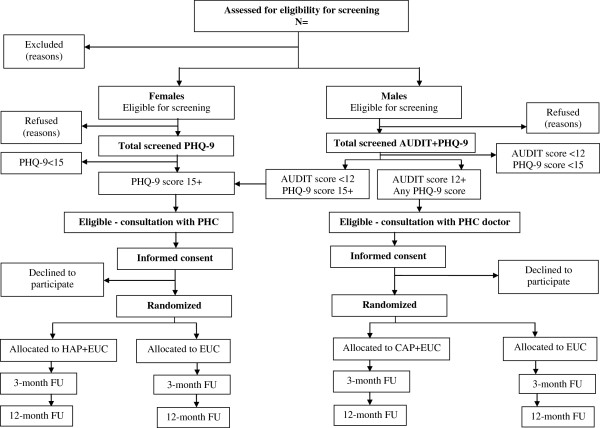
“Findings will be reported as per the CONSORT guidelines [71], including a trial flow chart.”
MethodGlobal Burden of Disease and Risk Factors
(2006) · World Bank, Washington, DC eBooks · doi:10.1596/978-0-8213-6262-4 · Cited by 2,605
Antidepressant Drug Effects and Depression Severity: A Patient-Level Meta-analysis
Fournier, J. C., DeRubeis, R. J., Hollon, S. D., Dimidjian, S., Amsterdam, J. D., Shelton, R. C., & Fawcett, J. (2010) · JAMA · doi:10.1001/jama.2009.1943 · Cited by 2,009 · cited 1×
“After consent has been obtained, the health assistant will collect the following data on potential moderators of treatment effect: age group, gender, marital status, employment status [33], duration of the illness [33] (for HAP), readiness to change drinking behaviour [34] (for CAP), severity of depression or drinking…”
MethodSelf-citationDeveloping the World Health Organization Disability Assessment Schedule 2.0
Üstün, T. B., Chatterji, S., Kostanjsek, N., Rehm, J., Kennedy, C., Epping-Jordan, J., Saxena, S., von Korff, M., & Pull, C. (2010) · Bulletin of the World Health Organization · doi:10.2471/blt.09.067231 · Cited by 1,851
Effectiveness of brief alcohol interventions in primary care populations
Kaner, E. F., Beyer, F. R., Muirhead, C., Campbell, F., Pienaar, E. D., Bertholet, N., Daeppen, J. B., Saunders, J. B., & Burnand, B. (2018) · Cochrane Database of Systematic Reviews · doi:10.1002/14651858.cd004148.pub4 · Cited by 1,665
Brief interventions for alcohol problems: a review
BIEN, T. H., MILLER, W. R., & TONIGAN, J. S. (1993) · Addiction · doi:10.1111/j.1360-0443.1993.tb00820.x · Cited by 1,577 · cited 2×
“‘Brief interventions’ are the cornerstone for the management of HD [8]; they are as effective as more extended interventions, can be effectively delivered in primary care and are twice as likely to reduce drinking compared with no intervention [9-12].”
BackgroundRahman, A., Malik, A., Sikander, S., Roberts, C., & Creed, F. (2008) · The Lancet · doi:10.1016/s0140-6736(08)61400-2 · Cited by 993 · cited 1×
“The PTs were developed in a systematic process that built upon the experiences of the investigators in adapting mental health interventions for use in under-resourced and socio-culturally diverse contexts [43-50].”
BackgroundAllocation concealment in randomised trials: defending against deciphering
Schulz, K. F., & Grimes, D. A. (2002) · The Lancet · doi:10.1016/s0140-6736(02)07750-4 · Cited by 923 · cited 1×
“The randomization code will be concealed using sequentially numbered opaque sealed envelopes to maximise allocation concealment [37].”
MethodPatel, V., Weiss, H. A., Chowdhary, N., Naik, S., Pednekar, S., Chatterjee, S., De Silva, M. J., Bhat, B., Araya, R., King, M., et al. (2010) · The Lancet · doi:10.1016/s0140-6736(10)61508-5 · Cited by 752 · cited 9×
“Validated in primary care and Konkani version validated in Goa [25].”
BackgroundMethodInfluentialSelf-citationEffectiveness of brief alcohol interventions in primary care populations
Kaner, E. F. S., Dickinson, H. O., Beyer, F. R., Campbell, F., Schlesinger, C., Heather, N., Saunders, J. B., Burnand, B., & Pienaar, E. D. (2007) · Cochrane Database of Systematic Reviews · doi:10.1002/14651858.cd004148.pub3 · Cited by 746 · cited 1×
“‘Brief interventions’ are the cornerstone for the management of HD [8]; they are as effective as more extended interventions, can be effectively delivered in primary care and are twice as likely to reduce drinking compared with no intervention [9-12].”
Group Interpersonal Psychotherapy for Depression in Rural Uganda: A Randomized Controlled Trial
Bolton, P., Bass, J., Neugebauer, R., Verdeli, H., Clougherty, K. F., Wickramaratne, P., Speelman, L., Ndogoni, L., & Weissman, M. (2003) · JAMA · doi:10.1001/jama.289.23.3117 · Cited by 655 · cited 1×
“The PTs were developed in a systematic process that built upon the experiences of the investigators in adapting mental health interventions for use in under-resourced and socio-culturally diverse contexts [43-50].”
BackgroundVASILAKI, E. I., HOSIER, S. G., & COX, W. M. (2006) · Alcohol and Alcoholism · doi:10.1093/alcalc/agl016 · Cited by 581 · cited 1×
“which found an effec treatment in reducing alcohol consumption among non-dependent drinkers [41].”
BackgroundMeta-analysis of Randomized Control Trials Addressing Brief Interventions in Heavy Alcohol Drinkers
Wilk, A. I., Jensen, N. M., & Havighurst, T. C. (1997) · Journal of General Internal Medicine · doi:10.1007/s11606-006-5063-z · Cited by 577 · cited 1×
“‘Brief interventions’ are the cornerstone for the management of HD [8]; they are as effective as more extended interventions, can be effectively delivered in primary care and are twice as likely to reduce drinking compared with no intervention [9-12].”
Backgroundvan Ginneken, N., Tharyan, P., Lewin, S., Rao, G. N., Meera, S., Pian, J., Chandrashekar, S., & Patel, V. (2013) · Cochrane Database of Systematic Reviews · doi:10.1002/14651858.cd009149.pub2 · Cited by 575 · cited 2×
“The PREMIUM trials will extend evidence on the effectiveness of PTs when delivered by NSHWs in LMIC contexts [20].”
Self-citationVittengl, J. R., Clark, L. A., Dunn, T. W., & Jarrett, R. B. (2007) · Journal of Consulting and Clinical Psychology · doi:10.1037/0022-006x.75.3.475 · Cited by 551 · cited 1×
“Furthermore, PTs are associated with lower relapse rates when compared with antidepressant medication [7] and a recent UK trial demonstrated that adding PT to routine primary care for treatment-resistant depression greatly enhanced recovery rates [5].”
ResultMindfulness meditation and substance use in an incarcerated population
Bowen, S., Witkiewitz, K., Dillworth, T. M., Chawla, N., Simpson, T. L., Ostafin, B. D., Larimer, M. E., Blume, A. W., Parks, G. A., & Marlatt, G. A. (2006) · Psychology of Addictive Behaviors · doi:10.1037/0893-164x.20.3.343 · Cited by 502 · cited 16×
“PREMIUM is a Wellcome Trust-funded programme that seeks to develop and evaluate PTs for priority mental disorders for delivery by NSHWs in routine health care settings in India.”
MethodInfluentialAraya, R., Rojas, G., Fritsch, R., Gaete, J., Rojas, M., Simon, G., & Peters, T. J. (2003) · The Lancet · doi:10.1016/s0140-6736(03)12825-5 · Cited by 450 · cited 1×
“The PTs were developed in a systematic process that built upon the experiences of the investigators in adapting mental health interventions for use in under-resourced and socio-culturally diverse contexts [43-50].”
Self-citationA meta-analysis of randomized trials of behavioural treatment of depression
Ekers, D., Richards, D., & Gilbody, S. (2008) · Psychological Medicine · doi:10.1017/s0033291707001614 · Cited by 400 · cited 1×
“00) for all behavioural interventions [39].”
Janakiramaiah, N., Gangadhar, B. N., Naga Venkatesha Murthy, P. J., Harish, M. G., Subbakrishna, D. K., & Vedamurthachar, A. (2000) · Journal of Affective Disorders · doi:10.1016/s0165-0327(99)00079-8 · Cited by 384 · cited 16×
“PREMIUM is a Wellcome Trust-funded programme that seeks to develop and evaluate PTs for priority mental disorders for delivery by NSHWs in routine health care settings in India.”
MethodInfluentialConstantino, M. J., Arnkoff, D. B., Glass, C. R., Ametrano, R. M., & Smith, J. Z. (2011) · Journal of Clinical Psychology · doi:10.1002/jclp.20754 · Cited by 367
Patel, V., Araya, R., Chowdhary, N., King, M., Kirkwood, B., Nayak, S., Simon, G., & Weiss, H. A. (2008) · Psychological Medicine · doi:10.1017/s0033291707002334 · Cited by 364 · cited 7×
“Validated in primary care and Konkani version validated in Goa [25].”
BackgroundMethodInfluentialSelf-citationBower, P., Kontopantelis, E., Sutton, A., Kendrick, T., Richards, D. A., Gilbody, S., Knowles, S., Cuijpers, P., Andersson, G., Christensen, H., et al. (2013) · BMJ · doi:10.1136/bmj.f540 · Cited by 341 · cited 1×
“42 for depressive symptoms based on low intensity interventions (internet-based or guided interventions with limited support by a health professional) [38] and of 0.”
Fournier, J. C., DeRubeis, R. J., Shelton, R. C., Hollon, S. D., Amsterdam, J. D., & Gallop, R. (2009) · Journal of Consulting and Clinical Psychology · doi:10.1037/a0015401 · Cited by 340 · cited 1×
“After consent has been obtained, the health assistant will collect the following data on potential moderators of treatment effect: age group, gender, marital status, employment status [33], duration of the illness [33] (for HAP), readiness to change drinking behaviour [34] (for CAP), severity of depression or drinking…”
MethodSelf-citationWiles, N., Thomas, L., Abel, A., Ridgway, N., Turner, N., Campbell, J., Garland, A., Hollinghurst, S., Jerrom, B., Kessler, D., et al. (2013) · The Lancet · doi:10.1016/s0140-6736(12)61552-9 · Cited by 340 · cited 4×
“Furthermore, PTs are associated with lower relapse rates when compared with antidepressant medication [7] and a recent UK trial demonstrated that adding PT to routine primary care for treatment-resistant depression greatly enhanced recovery rates [5].”
BackgroundResultInfluentialPadmanathan, P., & De Silva, M. J. (2013) · Social Science & Medicine · doi:10.1016/j.socscimed.2013.08.004 · Cited by 278 · cited 1×
“However, a recent systematic review observed that task-sharing is associated with a number of barriers, primarily a lack of resources [22], and generating further evidence on its cost-effectiveness is a key strategy to address this barrier.”
BackgroundThe Behavioral Activation for Depression Scale–Short Form: Development and Validation
Manos, R. C., Kanter, J. W., & Luo, W. (2011) · Behavior Therapy · doi:10.1016/j.beth.2011.04.004 · Cited by 276 · cited 1×
“Abbreviated Behavioural Activation for Depression Scale - short form HAP Adapted version of the Behavioural Activation for Depression Scale - short form [69].”
MethodDias, A., Dewey, M. E., D'Souza, J., Dhume, R., Motghare, D. D., Shaji, K. S., Menon, R., Prince, M., & Patel, V. (2008) · PLoS ONE · doi:10.1371/journal.pone.0002333 · Cited by 269
Self-citationLocalio, A. R., Margolis, D. J., & Berlin, J. A. (2007) · Journal of Clinical Epidemiology · doi:10.1016/j.jclinepi.2006.12.001 · Cited by 259
Effectiveness of physician-based interventions with problem drinkers: a review.
Kahan, M., Wilson, L., & Becker, L. (1995) · Europe PMC (PubMed Central) · Cited by 228
Patel, V., Chisholm, D., Rabe-Hesketh, S., Dias-Saxena, F., Andrew, G., & Mann, A. (2003) · The Lancet · doi:10.1016/s0140-6736(03)12119-8 · Cited by 217 · cited 1×
“Costs of illness (direct and indirect) Previously used in trials in the study setting [66,67] and elsewhere in India [65,21].”
Self-citationPackages of care for depression in low- and middle-income countries
Patel, V., Simon, G., Chowdhary, N., Kaaya, S., & Araya, R. (2009) · PLoS Medicine · doi:10.1371/journal.pmed.1000159 · Cited by 202 · cited 5×
“This EUC is the most intensive model of primary care for both target disorders that may be envisaged in the fore-seeable future in India or other LMICs, and is the one that is currently recommended by the WHO ’ s mhGAP [56].”
BackgroundInfluentialSelf-citationRahman, A. (2007) · Archives of Women's Mental Health · doi:10.1007/s00737-007-0193-9 · Cited by 201 · cited 1×
“The PTs were developed in a systematic process that built upon the experiences of the investigators in adapting mental health interventions for use in under-resourced and socio-culturally diverse contexts [43-50].”
BackgroundDunn, G., Maracy, M., & Tomenson, B. (2005) · Statistical Methods in Medical Research · doi:10.1191/0962280205sm403oa · Cited by 201
Substance use and addiction research in India
Murthy, P., Manjunatha, N., Subodh, B., Chand, P., & Benegal, V. (2010) · Indian Journal of Psychiatry · doi:10.4103/0019-5545.69232 · Cited by 194
Self-citationChisholm, D., James, S., Sekar, K., Kumar, K. K., Murthy, R. S., Saeed, K., & Mubbashar, M. (2000) · British Journal of Psychiatry · doi:10.1192/bjp.176.6.581 · Cited by 182 · cited 1×
“Costs of illness (direct and indirect) Previously used in trials in the study setting [66,67] and elsewhere in India [65,21].”
(2003) · PubMed · Cited by 175
Economic evaluation of a task-shifting intervention for common mental disorders in India
Buttorff, C., Hock, R., Weiss, H., Naik, S., Araya, R., Kirkwood, B., Chisholm, D., & Patel, V. (2012) · Bulletin of the World Health Organization · doi:10.2471/blt.12.104133 · Cited by 175 · cited 17×
“PREMIUM is a Wellcome Trust-funded programme that seeks to develop and evaluate PTs for priority mental disorders for delivery by NSHWs in routine health care settings in India.”
BackgroundInfluentialSelf-citationSetting priorities for global mental health research
Tomlinson, M. (2009) · Bulletin of the World Health Organization · doi:10.2471/blt.08.054353 · Cited by 173
Kumar, G., Jain, A., & Hegde, S. (2012) · Indian Journal of Psychiatry · doi:10.4103/0019-5545.102412 · Cited by 134 · cited 16×
“PREMIUM is a Wellcome Trust-funded programme that seeks to develop and evaluate PTs for priority mental disorders for delivery by NSHWs in routine health care settings in India.”
MethodInfluentialModerators and mediators of two brief interventions for alcohol in the emergency department
Barnett, N. P., Apodaca, T. R., Magill, M., Colby, S. M., Gwaltney, C., Rohsenow, D. J., & Monti, P. M. (2010) · Addiction · doi:10.1111/j.1360-0443.2009.02814.x · Cited by 104 · cited 1×
“After consent has been obtained, the health assistant will collect the following data on potential moderators of treatment effect: age group, gender, marital status, employment status [33], duration of the illness [33] (for HAP), readiness to change drinking behaviour [34] (for CAP), severity of depression or drinking…”
MethodCHATTERJEE, S., CHOWDHARY, N., PEDNEKAR, S., COHEN, A., ANDREW, G., ANDREW, G., ARAYA, R., SIMON, G., KING, M., TELLES, S., et al. (2008) · World Psychiatry · doi:10.1002/j.2051-5545.2008.tb00151.x · Cited by 103
Self-citationMaselko, J., & Patel, V (2008) · Journal of Epidemiology and Community Health · doi:10.1136/jech.2007.069351 · Cited by 100
Self-citationAlterman, A. I., Cacciola, J. S., Ivey, M. A., Habing, B., & Lynch, K. G. (2009) · Journal of Studies on Alcohol and Drugs · doi:10.15288/jsad.2009.70.304 · Cited by 97
Packages of care for alcohol use disorders in low- and middle-income countries
Benegal, V., Chand, P. K., & Obot, I. S. (2009) · PLoS Medicine · doi:10.1371/journal.pmed.1000170 · Cited by 94 · cited 5×
“This EUC is the most intensive model of primary care for both target disorders that may be envisaged in the fore-seeable future in India or other LMICs, and is the one that is currently recommended by the WHO ’ s mhGAP [56].”
BackgroundInfluentialTHE PREVALENCE AND CORRELATES OF HAZARDOUS DRINKING IN INDUSTRIAL WORKERS: A STUDY FROM GOA, INDIA
Silva, M. C., Gaunekar, G., Patel, V., Kukalekar, D. S., & Fernandes, J. (2003) · Alcohol and Alcoholism · doi:10.1093/alcalc/agg016 · Cited by 94 · cited 1×
“The AUDIT has been validated and used in cross-national studies, including in India [29], and has been field-tested in the study setting [30].”
MethodSelf-citationA Measure of Counselor Competency
Eriksen, K. P., & McAuliffe, G. J. (2003) · Counselor Education and Supervision · doi:10.1002/j.1556-6978.2003.tb01836.x · Cited by 93 · cited 1×
“Therapy quality was assessed mainly through rating of audio-taped sessions using a specially developed scale, the Quality of HAP and Quality of CAP adapted from the Counselling Skills Scale [54], the Quality of Behavioural Activation Scale (Dimidjian S, Hubley A, Martell CR, Herman-Dunn R, Dobson KS: Quality of behavi…”
MethodKunz, F. M., French, M. T., & Bazargan-Hejazi, S. (2004) · Journal of Studies on Alcohol · doi:10.15288/jsa.2004.65.363 · Cited by 89 · cited 1×
“The AUDIT has been adapted to cover a three-month period to be consistent with the three-month outcome assessment, as in other studies [31].”
ResultHARMFUL ALCOHOL USE IN GOA, INDIA, AND ITS ASSOCIATIONS WITH VIOLENCE: A STUDY IN PRIMARY CARE
D'COSTA, G., NAZARETH, I., NAIK, D., VAIDYA, R., LEVY, G., PATEL, V., & KING, M. (2006) · Alcohol and Alcoholism · doi:10.1093/alcalc/agl103 · Cited by 87
Self-citationPatel, V., Chisholm, D., Kirkwood, B. R., & Mabey, D. (2007) · Tropical Medicine & International Health · doi:10.1111/j.1365-3156.2006.01756.x · Cited by 80 · cited 2×
“Validated for international use [64] and used in previous trials in Goa [6,65].”
MethodSelf-citationMoradveisi, L., Huibers, M. J. H., Renner, F., Arasteh, M., & Arntz, A. (2013) · British Journal of Psychiatry · doi:10.1192/bjp.bp.112.113696 · Cited by 79
The need for treatment evidence for common mental disorders in developing countries
PATEL, V. (2000) · Psychological Medicine · doi:10.1017/s0033291799002147 · Cited by 75 · cited 1×
“The generalizability of these findings to LMICs is compromised by several major contextual factors, such as variations in the explanatory models of these disorders, ways of coping and dealing with them, marked variability in access to specialist services, and distinct socio-economic determinants (such as literacy) [18…”
BackgroundSelf-citationHill, Z. E., Manu, A. A., Tawiah‐Agyemang, C., Gyan, T., Turner, K., Weobong, B., ten Asbroek, A. H. A., & Kirkwood, B. R. (2008) · Journal of Perinatology · doi:10.1038/jp.2008.172 · Cited by 63 · cited 1×
“The PTs were developed in a systematic process that built upon the experiences of the investigators in adapting mental health interventions for use in under-resourced and socio-culturally diverse contexts [43-50].”
BackgroundSelf-citationAdapting smoking cessation interventions for developing countries: a model for the Middle East.
Maziak, W., Eissenberg, T., Rc, K., Keil, U., & Ward, K. D. (2004) · PubMed · Cited by 63
Field, C. A., & Caetano, R. (2010) · Drug and Alcohol Dependence · doi:10.1016/j.drugalcdep.2009.11.025 · Cited by 53
Should brief interventions in primary care address alcohol problems more strongly?
McCambridge, J., & Rollnick, S. (2014) · Addiction · doi:10.1111/add.12388 · Cited by 53 · cited 1×
“However, there is some evidence that shows that brief interventions lead to reduced drinking in patients with AD [13,14] and it is well established that rates of engagement with addictions treatment services can be enhanced [9,13,15-17].”
BackgroundSelf-citationImpact of brief interventions and brief treatment on admissions to chemical dependency treatment
Krupski, A., Sears, J. M., Joesch, J. M., Estee, S., He, L., Dunn, C. W., Huber, A., Roy‐Byrne, P., & Ries, R. K. (2010) · Drug and Alcohol Dependence · doi:10.1016/j.drugalcdep.2010.02.018 · Cited by 49 · cited 1×
“However, there is some evidence that shows that brief interventions lead to reduced drinking in patients with AD [13,14] and it is well established that rates of engagement with addictions treatment services can be enhanced [9,13,15-17].”
BackgroundLiu, S., Wu, S., Chen, S., Huang, H., Sun, F., Fang, C., Hsu, C., Huang, C., Yeh, H., & Shih, S. (2011) · Addiction · doi:10.1111/j.1360-0443.2010.03330.x · Cited by 45 · cited 1×
“However, there is some evidence that shows that brief interventions lead to reduced drinking in patients with AD [13,14] and it is well established that rates of engagement with addictions treatment services can be enhanced [9,13,15-17].”
BackgroundBreaking new ground in the study and practice of alcohol brief interventions
HEATHER, N. (2010) · Drug and Alcohol Review · doi:10.1111/j.1465-3362.2010.00204.x · Cited by 43 · cited 1×
“‘Brief interventions’ are the cornerstone for the management of HD [8]; they are as effective as more extended interventions, can be effectively delivered in primary care and are twice as likely to reduce drinking compared with no intervention [9-12].”
BackgroundAn open randomized trial comparing disulfiram and naltrexone in adolescents with alcohol dependence
De Sousa, A., & De Sousa, A. (2008) · Journal of Substance Use · doi:10.1080/14659890802305861 · Cited by 29 · cited 1×
“Alcohol consumed in past two weeks (g) Validated instrument [59] used in India [60].”
MethodA study of problem drinkers in a general hospital.
Rs, B., & Sn, S. (1997) · PubMed · Cited by 26
Fifty years of brief intervention effectiveness trials for heavy drinkers: Editorial
McCAMBRIDGE, J. (2011) · Drug and Alcohol Review · doi:10.1111/j.1465-3362.2011.00379.x · Cited by 24 · cited 1×
“However, there is some evidence that shows that brief interventions lead to reduced drinking in patients with AD [13,14] and it is well established that rates of engagement with addictions treatment services can be enhanced [9,13,15-17].”
BackgroundSelf-citationThe impact of handling missing data on alcohol consumption estimates in the UK women cohort study
Nur, U., Longford, N. T., Cade, J. E., & Greenwood, D. C. (2009) · European Journal of Epidemiology · doi:10.1007/s10654-009-9384-1 · Cited by 13 · cited 3×
“Quantitative analyses will be carried out using Stata (version 13).”
MethodInfluentialPost-discharge Brief Intervention Increases the Frequency of Alcohol Abstinence—A Randomized Trial
Bager, P., & Vilstrup, H. (2010) · Journal of Addictions Nursing · doi:10.3109/10884601003628104 · Cited by 13 · cited 1×
“B abstinence rates of 68% versus 40% two months after randomisation [42].”
BackgroundGask, L. (2011) · The British Journal of Psychiatry · doi:10.1192/bjp.bp.110.080192 · Cited by 10
Research works printed but not linked: 7
- WHO mhGAP Intervention Guide for Mental, Neurological and Substance Use Disorders in non-Specialized Health Settings 2010 Geneva, Switzerland: WHO 23741783
- NICE Alcohol Dependence and Harmful Alcohol Use: Full Guideline CG115 2011 London: NICE Press Office
- Martell CR Dimidjian S Herman-Dunn R Behavioural Activation for Depression: a Clinician’s Guide 2010 New York: The Guilford Press
- Miller WR Zweben A DiClimente C Rychtarik R Motivational Enhancement Therapy Manual: A Clinical Research Guide for Therapists Treating Individuals with Alcohol Abuse and Dependence 1994 Bethesda MD: National Institute on Alcohol Abuse and Alcoholism
- Allison J Bes R GR Motivational Interviewing Target Scheme (MITS 2.1) 2012 Edinburgh: Jeff Alisson Training Limited
- WHO mhGA: Mental Health Gap Action Programme: Scaling up Care for Mental, Neurological and Substance Use Disorders 2008 Geneva: World Health Organization 26290926
- OPSPL STAR: Sangath digital tool for advanced research 2013
Cited by
Patel, V., Weobong, B., Weiss, H. A., Anand, A., Bhat, B., Katti, B., Dimidjian, S., Araya, R., Hollon, S. D., King, M., et al. (2017) · The Lancet · doi:10.1016/s0140-6736(16)31589-6 · Cited by 448
Self-citationKohrt, B. A., Jordans, M. J. D., Rai, S., Shrestha, P., Luitel, N. P., Ramaiya, M. K., Singla, D. R., & Patel, V. (2015) · Behaviour Research and Therapy · doi:10.1016/j.brat.2015.03.009 · Cited by 370
Self-citationRaviola, G., Naslund, J. A., Smith, S. L., & Patel, V. (2019) · Current Psychiatry Reports · doi:10.1007/s11920-019-1028-x · Cited by 258
Self-citationShinde, S., Weiss, H. A., Varghese, B., Khandeparkar, P., Pereira, B., Sharma, A., Gupta, R., Ross, D. A., Patton, G., & Patel, V. (2018) · The Lancet · doi:10.1016/s0140-6736(18)31615-5 · Cited by 219
Self-citationvan Ginneken, N., Chin, W. Y., Lim, Y. C., Ussif, A., Singh, R., Shahmalak, U., Purgato, M., Rojas-García, A., Uphoff, E., McMullen, S., et al. (2021) · Cochrane Database of Systematic Reviews · doi:10.1002/14651858.cd009149.pub3 · Cited by 188
Metadata
- Authors
- Patel, V., Weobong, B., Nadkarni, A., Weiss, H. A., Anand, A., Naik, S., Bhat, B., Pereira, J., Araya, R., Dimidjian, S., Hollon, S. D., King, M., McCambridge, J., McDaid, D., Murthy, P., Velleman, R., Fairburn, C. G., & Kirkwood, B.
- Affiliations
- Sangath (IN)
- London School of Hygiene & Tropical Medicine (GB)
- University of Colorado Boulder (US)
- Vanderbilt University (US)
- University College London (GB)
- London School of Economics and Political Science (GB)
- National Institute of Mental Health and Neurosciences (IN)
- University of Bath (GB)
- University of Oxford (GB)
- Corresponding author
- Patel, Vikram
- ORCID
- Venue
- Trials
- Published
- 2014-04-02
- Volume
- 15
- Issue
- 1
- Pages
- 101-101
- ISSN
- 1745-6215 (ISSN-L)
- PMC
- PMC4230277
- OpenAlex
- W2125388060
- Semantic Scholar
- 8bd47a75f61f7f8c2c29f08960cc8bc41c6dc603
- Cited by
- 66
- References
- 70
- Citations by year
- 2026: 1 · 2025: 2 · 2024: 2 · 2023: 6 · 2022: 6 · 2021: 10 · 2020: 4 · 2019: 11 · 2018: 4 · 2017: 5 · 2016: 9 · 2015: 5 · 2014: 1
- FWCI
- 9.86
- Type
- journal article
- Language
- en
- Open access
- gold
- doi.org
- Licence
- cc-by
- Locations
- Trials (publishedVersion, cc-by)
- Europe PMC (PubMed Central) (publishedVersion, cc-by)
- PubMed Central (publishedVersion, cc-by)
- PubMed (publishedVersion)
- London School of Economics and Political Science Research Online (London School of Economics and Political Science) (acceptedVersion)
- Pure (University of Bath) (acceptedVersion, cc-by)
- London School of Economics and Political Science Theses Online (London School of Economics and Political Science) (acceptedVersion)
- LSHTM Research Online (London School of Hygiene and Tropical Medicine) (acceptedVersion)
- The University of Bath Online Publications Store (The University of Bath) (submittedVersion, cc-by)
- UCL Discovery (University College London) (submittedVersion)
- Research Portal (King's College London) (submittedVersion, cc-by)
- Greater South Information System
- Funders
- Wellcome Trust (084674, 079113, 100714, 079113/Z/06/Z, 091834, 094585)
- Medical Research Council (MR/K012126/1)
- Topics
- Health Sciences › Medicine › Psychiatry and Mental health › Mental Health Treatment and Access
- Health Sciences › Medicine › Epidemiology › Substance Abuse Treatment and Outcomes
- Social Sciences › Economics, Econometrics and Finance › Economics and Econometrics › Health Systems, Economic Evaluations, Quality of Life
- Keywords
- depression, hazardous drinking, alcoholism, primary care, cost-effectiveness, screening and brief intervention, WHO guidelines, disability
- MeSH terms
- Adolescent, Adult, Aged, Alcohol Drinking, Alcoholism, Clinical Protocols, Cost-Benefit Analysis, Counseling, Depression, Female, Humans, India, Male, Middle Aged, Primary Health Care, Psychiatric Status Rating Scales, Remission Induction, Research Design, Severity of Illness Index, Time Factors, Treatment Outcome, Health Care Costs, Young Adult, Intention to Treat Analysis
About these checks
Registry, retraction, Cites and statistics results are computed, not judged, with one exception: a printed reference that no index lists is read once by a model before it counts as a citation error. Claims are extracted by a model and kept only when their quote appears verbatim in the text; each cited source is then checked, with a model’s help, for whether it says what the claim relies on. Those verdicts can be wrong — read the claim’s quote and the cited source before relying on one.
Statistics and arithmetic are recomputed, not judged.
Confidence bands are shown only for fields calibrated on our annotated test set. None is calibrated yet, so no band is shown.
What counts as a claim ›How we measure confidence ›How we check this ›
Are you an author, or do you see a problem with this page? Request a review
Data sources
Bibliographic data: Semantic Scholar, OpenAlex, Crossref.
Contains information from the Semantic Scholar Academic Graph Datasets, made available under the ODC Attribution License (ODC-BY 1.0).
Semantic Scholar’s data is described in: Kinney, R., et al. (2023). The Semantic Scholar Open Data Platform. arXiv:2301.10140.
