

The sustainability of new programs and innovations: a review of the empirical literature and recommendations for future research
Open accessThe DOI matches its Crossref record; 210 of the 211 references it cites were found in a registry or an index.
Abstract
Background: The introduction of evidence-based programs and practices into healthcare settings has been the subject of an increasing amount of research in recent years. While a number of studies have examined initial implementation efforts, less research has been conducted to determine what happens beyond that point. There is increasing recognition that the extent to which new programs are sustained is influenced by many different factors and that more needs to be known about just what these factors are and how they interact. To understand the current state of the research literature on sustainability, our team took stock of what is currently known in this area and identified areas in which further research would be particularly helpful. This paper reviews the methods that have been used, the types of outcomes that have been measured and reported, findings from studies that reported long-term implementation outcomes, and factors that have been identified as potential influences on the sustained use of new practices, programs, or interventions. We conclude with recommendations and considerations for future research. Methods: Two coders identified 125 studies on sustainability that met eligibility criteria. An initial coding scheme was developed based on constructs identified in previous literature on implementation. Additional codes were generated deductively. Related constructs among factors were identified by consensus and collapsed under the general categories. Studies that described the extent to which programs or innovations were sustained were also categorized and summarized. Results: Although "sustainability" was the term most commonly used in the literature to refer to what happened after initial implementation, not all the studies that were reviewed actually presented working definitions of the term. Most study designs were retrospective and naturalistic. Approximately half of the studies relied on self-reports to assess sustainability or elements that influence sustainability. Approximately half employed quantitative methodologies, and the remainder employed qualitative or mixed methodologies. Few studies that investigated sustainability outcomes employed rigorous methods of evaluation (e.g., objective evaluation, judgement of implementation quality or fidelity). Among those that did, a small number reported full sustainment or high fidelity. Very little research has examined the extent, nature, or impact of adaptations to the interventions or programs once implemented. Influences on sustainability included organizational context, capacity, processes, and factors related to the new program or practice themselves. Conclusions: Clearer definitions and research that is guided by the conceptual literature on sustainability are critical to the development of the research in the area. Further efforts to characterize the phenomenon and the factors that influence it will enhance the quality of future research. Careful consideration must also be given to interactions among influences at multiple levels, as well as issues such as fidelity, modification, and changes in implementation over time. While prospective and experimental designs are needed, there is also an important role for qualitative research in efforts to understand the phenomenon, refine hypotheses, and develop strategies to promote sustainment.
Overview
The claims and statistics of this paper haven’t been checked yet.
Free: it reads the open-access text and checks the first 5 claims that cite a source we can check. Create a free account to check every claim.
Integrity signals
Registry
Cites
Statistics
Figures
Verification
Claims the paper makes
The claims and statistics of this paper haven’t been checked yet.
Free: it reads the open-access text and checks the first 5 claims that cite a source we can check. Create a free account to check every claim.
Claims other papers make about this one
Each is checked against this paper’s own text: does it say what the citing paper says it does?
The source backs part of the claim, not all of it — or backs it for a different population, condition or comparison.
In the citing paper
“findings indicating that incomplete penetration and sustainment are the norm (Stirman et al., 2012)”
From User‐centered design for psychosocial intervention development and implementation. (2016) · cites this paper as Stirman et al., 2012
Experimental — accuracy not yet measuredThe source backs part of the claim, not all of it — or backs it for a different population, condition or comparison.
In the citing paper
“A number of literature reviews of implementation frameworks have also been conducted, concentrating on particular implementation concepts, such as a particular stage, or specifically on either the factors, strategies or evaluations, rather than addressing all the concepts that could affect an innovation’s implementation [13,17,19-26].”
From A systematic review of implementation frameworks of innovations in healthcare and resulting generic implementation framework (2015) · cites this paper as [24]
Experimental — accuracy not yet measuredThe source backs part of the claim, not all of it — or backs it for a different population, condition or comparison.
In the citing paper
“Despite the significant investment of staff time and other resources, many promising initiatives fail to sustain and do not produce long term benefits [1–6].”
From Navigating the sustainability landscape: a systematic review of sustainability approaches in healthcare (2018) · cites this paper as [1]
Experimental — accuracy not yet measuredThe source backs part of the claim, not all of it — or backs it for a different population, condition or comparison.
In the citing paper
“Overall, fewer than half of the programs continued at high levels of fidelity.”
From The Sustainability of Evidence-Based Interventions and Practices in Public Health and Health Care (2018) · cites this paper as [135]
Experimental — accuracy not yet measuredThe source backs part of the claim, not all of it — or backs it for a different population, condition or comparison.
In the citing paper
“In a systematic review of 125 empirical studies focused on the sustainability of public health and clinical interventions (135), researchers found that even when full implementation was originally achieved, partial sustainability was much more common than the continued implementation of the entire intervention.”
From The Sustainability of Evidence-Based Interventions and Practices in Public Health and Health Care (2018) · cites this paper as [135]
Experimental — accuracy not yet measured
18 more claims about this paper
Create a free account to see every claim other papers make about this one.
Self-check
Percentages, sums and reported differences re-computed from the paper’s own numbers.
The self-check needs the paper’s full text.
Citations
Cites
Preferred Reporting Items for Systematic Reviews and Meta-Analyses: the PRISMA statement
Moher, D., Liberati, A., Tetzlaff, J., Altman, D. G., & for the PRISMA Group (2009) · BMJ · doi:10.1136/bmj.b2535 · Cited by 83,823
The Measurement of Observer Agreement for Categorical Data
Landis, J. R., & Koch, G. G. (1977) · Biometrics · doi:10.2307/2529310 · Cited by 81,148 · cited 2×
“61 to 1 ("moderate” to “almost perfect” [45]) on more specific categories, which were later collapsed into the three broad categories.”
Preferred Reporting Items for Systematic Reviews and Meta-Analyses: The PRISMA Statement
Moher, D., Liberati, A., Tetzlaff, J., Altman, D. G., & The PRISMA Group (2009) · PLoS Medicine · doi:10.1371/journal.pmed.1000097 · Cited by 64,042 · cited 2×
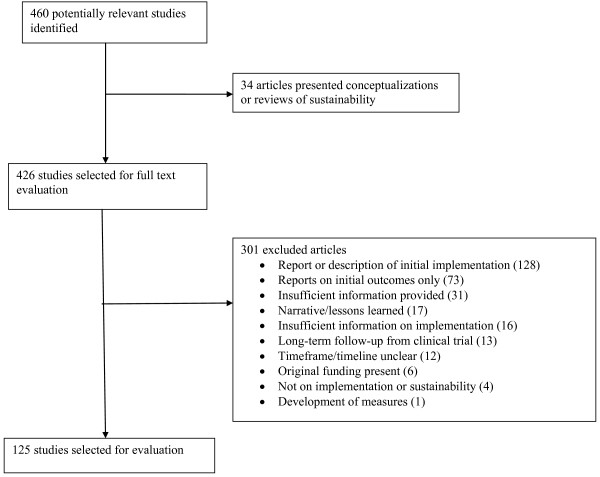
“Figure 1 is a modified PRISMA (which stands for Preferred Reporting Items for Systematic Reviews and Meta-Analyses [33]) diagram summarizing the selection process, which includes reasons that potentially relevant papers were excluded.”
Preferred reporting items for systematic reviews and meta-analyses: the PRISMA Statement.
(2009) · PubMed Central · Cited by 44,859
Rogers, E. M., Singhal, A., & Quinlan, M. M. (2019) · An Integrated Approach to Communication Theory and Research · doi:10.4324/9780203710753-35 · Cited by 37,322
Exploration and Exploitation in Organizational Learning
March, J. G. (1991) · Organization Science · doi:10.1287/orsc.2.1.71 · Cited by 21,942
Wang, G., Ma, R., Qiao, G., Wada, K., Aizawa, Y., & Satoh, T. (2015) · Integrative Medicine International · doi:10.1159/000368408 · Cited by 18,657
Organizational culture and leadership
(1993) · Long Range Planning · doi:10.1016/0024-6301(93)90120-5 · Cited by 16,462
Damschroder, L. J., Aron, D. C., Keith, R. E., Kirsh, S. R., Alexander, J. A., & Lowery, J. C. (2009) · Implementation Science · doi:10.1186/1748-5908-4-50 · Cited by 14,496 · cited 2×
“In contrast to the relatively consistent emphasis on characteristics of the innovation within conceptualizations of sustainability and the broader implementation literature, fewer studies than expected found that characteristics of the innovation were associated with sustainability [3,9,64].”
Valente, T. W. (2003) · Genetics in Medicine · doi:10.1097/01.gim.0000061743.67794.c4 · Cited by 13,723
Research works printed but not linked: 21
- Greenhalgh T How to Spread Good Ideas: A systematic review of the literature on diffusion, dissemination, and sustainability of innovations in health service delivery and organization, in Report for the National Co-ordinating Centre for NHS Service Delivery and Organisation R & D (NCCSDO) 2004 London: University College 362
- Maher L Gustafson DA Sustainability Model and Guide: Evans; 2007
- Stirman SW Sustainability: A systematic review of methods and conceptualizations. in Fourth Annual NIH Conference on the Science of Dissemination and Implementation 2011 Bethesda, MD
- Scheirer MA J Dearing An Agenda for Research on the Sustainability of Public Health Programs 2011 American Journal of Public Health in press PMC3222409 21940916
- Kimberly JR Starbuck WH Nystrom PC Managerial Innovation, in Handbook of Organizational Design 1981 New York: Oxford University Press 84 104
- Claquin P Sustainability of EPI: Utopia or Sine Qua Non Condition of Child Survival, in Resources for Child Health Project 1989 Arlington; REACH
- Lafond AK Improving the quality of investment in health: lessons on sustainability Health Policy Plan 1995 10 63 76
- Ovretveit J Making temporary quality improvement continuous 2003 Stockholm: Swedish Association of County Councils
- SW S CF R McMackin, et al Moving From the Laboratory to the Real World: Implementation Science and Effectiveness in Practice Settings, in Toward an Integrated Approach to Trauma Focused Therapy: Placing Evidence-Based Interventions in an Expanded Psychological Context American Psychological Association: Washington, D.C in press
- Davies B Tremblay D Edwards N Bick D, Ingram ID Sustaining evidence-based practice systems and measuring the impacts, in Evaluating the Impact of Implementing Evidence-Based Practice 2010 Oxford: Wiley Blackwell
- Blasinsky M Goldman HH Unutzer J Project IMPACT: a report on barriers and facilitators to sustainability Adm Policy Ment Health 2006 33 6 718 729 10.1007/s10488-006-0086-7 16967339 · DOI · Paper page
- Bowman C Sobo E Asch S Gifford A The H. I. V. Hepatitis Quality Enhancement Research Initiative: Measuring persistence of implementation: QUERI series Implement Sci 2008 3 1 21 10.1186/1748-5908-3-21 18430200 PMC2390585 · DOI · Paper page
- Gruen RL Elliott JH Nolan ML Lawton PD Parkhill A McLaren CJ Lavis JN Sustainability science: an integrated approach for health-programme planning Lancet 2008 372 9649 1579 1589 10.1016/S0140-6736(08)61659-1 18984192 · DOI · Paper page
- Massatti RR Sweeney HA Panzano PC Roth D The de-adoption of innovative mental health practices (IMHP): why organizations choose not to sustain an IMHP Adm Policy Ment Health 2008 35 1-2 50 65 10.1007/s10488-007-0141-z 17968652 · DOI
- Nilsen P Timpka T Nordenfelt L Lindqvist K Towards improved understanding of injury prevention program sustainability Saf Sci 2005 43 10 815 10.1016/j.ssci.2005.08.015 · DOI
- Plochg T Delnoij DM Hoogedoorn NP Klazinga NS Collaborating while competing? The sustainability of community-based integrated care initiatives through a health partnership BMC Health Serv Res 2006 20 6 37 PMC1464130 16549028
- Rabin B Nehl E Elliott T Deshpande A Brownson R Glanz K Individual and setting level predictors of the implementation of a skin cancer prevention program: a multilevel analysis Implement Sci 2010 5 40 53 10.1186/1748-5908-5-40 20513242 PMC2901365 · DOI
- Rohrbach LA Graham JW Hansen WB Diffusion of a school-based substance abuse prevention program: predictors of program implementation Prev Med 1993 22 2 237 260 10.1006/pmed.1993.1020 8483862 · DOI · Paper page
- Ruch-Ross H Keller D Miller N Bassewitz J Melinkovich P Evaluation of community-based health projects: the healthy tomorrows experience Pediatrics 2008 122 3 e564 e572 10.1542/peds.2006-3273 18762490 · DOI
- Scheirer MA The life cycle of an innovation: adoption versus discontinuation of the fluoride mouth rinse program in schools J Health Soc Behav 1990 31 2 203 215 10.2307/2137173 2102498 · DOI · Paper page
- Scheirer MA Hartling G Hagerman D Defining sustainability outcomes of health programs: Illustrations from an on-line survey Eval Program Plann 2008 31 4 335 346 10.1016/j.evalprogplan.2008.08.004 18835642 · DOI · Paper page
Cited by
Items 901–1,000 of 1,000
Colquhoun, H. L., Lowe, D. B., Helis, E., Belanger, D., Ens, B., Hill, S., Mayhew, A., Taylor, M. J., & Grimshaw, J. (2016) · Health Research Policy and Systems · doi:10.1186/s12961-016-0140-1 · Cited by 3
Intent to sustain use of a mental health innovation by school providers: What matters most?
Livet, M., Yannayon, M., Kocher, K., & McMillen, J. S. (2017) · Advances in School Mental Health Promotion · doi:10.1080/1754730x.2017.1295814 · Cited by 4
“Despite innovations (e.g. new practice, technology, or program) being routinely introduced in schools to support the mental health and well-being of students, only about half are successfully sustained over time (Cooper, Bumbarger, & Moore, 2015; Scheirer, 2005; Stirman et al., 2012).”
BackgroundInfluentialIreys, H. T., Brach, C., Anglin, G., Devers, K. J., & Burton, R. (2017) · Maternal and Child Health Journal · doi:10.1007/s10995-017-2391-z · Cited by 3
PCIT: Summary of 40 Years of Research
Brabson, L. A., Jackson, C. B., Liebsack, B. K., & Herschell, A. D. (2018) · Springer eBooks · doi:10.1007/978-3-030-03213-5_14 · Cited by 5
Sommer, A., Rehbock, C., Krafft, T., & Ziemann, A. (2019) · Implementation Science · doi:10.1186/s13012-019-0911-5 · Cited by 3
Challenging sustainability in school-based intervention in Nicaragua
Pettigrew, J., Razzante, R. J., Allsup, J., Lu, Y., & Ray, C. D. (2021) · Health Education · doi:10.1108/he-12-2020-0115 · Cited by 3
Seaman, A. T., Steffen, M. J. A., Tiem, J. M. V., Wardyn, S. E., Santana, X., Miller, K. L., & Solimeo, S. L. (2021) · Osteoporosis International · doi:10.1007/s00198-021-06098-9 · Cited by 4
Lengnick‐Hall, R., Willging, C. E., Aarons, G. A., & Reeder, K. (2023) · Human Services Organizations Management Leadership & Governance · doi:10.1080/23303131.2023.2194940 · Cited by 4
“In fully sustaining systems, core elements of SafeCare were maintained at a sufficient level of fidelity after initial implementation support had been withdrawn, and adequate capacity existed to maintain these core elements (Wiltsey Stirman et al., 2012).”
BackgroundSustaining local physical activity programmes: lessons from the United States
Berg, B. K. (2015) · International Journal of Sport Policy and Politics · doi:10.1080/19406940.2015.1108353 · Cited by 8
Integrating the Integrated: Merging Integrated Dual Diagnosis Treatment (IDDT) with Housing First
Pringle, J. L., Grasso, K., & Lederer, L. G. (2017) · Community Mental Health Journal · doi:10.1007/s10597-017-0107-x · Cited by 6
A view into clinical practice guidelines: who uses them, who doesn’t and possibly, why
Munteanu, M. C., & Jordan, J. C. (2017) · Qualitative Research in Medicine & Healthcare · doi:10.4081/qrmh.2017.6544 · Cited by 3
“As in Table 1, the medical specialties of the participants (n) were oncology (3), neurology (2), cardiology (1), infectious disease (1), pediatric rehabilitation (1), and internal medicine (2).”
BackgroundApproaches to evidence synthesis in international development: a research agenda
Oliver, S. R., Gough, D., Copestake, J., & Thomas, J. (2018) · Journal of Development Effectiveness · doi:10.1080/19439342.2018.1478875 · Cited by 3
“A systematic review of intervention sustainability in healthcare found studies rarely defined or rigorously evaluated sustainability (Wiltsey Stirman et al. 2012).”
BackgroundJones, C. L., Deane, F. P., Wolstencroft, K., & Zimmermann, A. (2019) · Archives of Public Health · doi:10.1186/s13690-019-0377-6 · Cited by 4
“While the implementation of EBP in mental health settings has been examined extensively, there has been less of a focus on what happens beyond that point [19].”
BackgroundThe Evaluation of Agropolitan Program in Central Java, Indonesia
Handayani, A., Jamal, R., Komalawati, K., & Kristanto, B. A. (2021) · Jurnal Bina Praja · doi:10.21787/jbp.13.2021.105-123 · Cited by 6
“Sustainability in the project or programwas defined as the continuation of the project or program activities after the project or the program stopped (Savaya & Spiro, 2011; Scheirer & Dearing, 2011; Stirman et al., 2012).”
BackgroundSustainability of hospital-based midwife-led antenatal care consultation — a qualitative study
Siegle, A., zu Sayn-Wittgenstein, F., & Roes, M. (2021) · BMC Health Services Research · doi:10.1186/s12913-021-06863-w · Cited by 4
“Routinization and institutionalization are rarely described [46].”
BackgroundCommunity Substance Use Safety
Watts, J. R., McDaniels, B. W., Rivera-Torres, S., Resiak, D., Mpofu, E., & Redwine, S. (2020) · Springer eBooks · doi:10.1007/978-3-030-59687-3_6 · Cited by 3
Thompson, C., Williams, K., Morris, D., Quinsey, K., Bird, S., Kobel, C., Andersen, P., Eckermann, S. D., & Masso, M. R. (2014) · USC Research Bank (University of the Sunshine Coast) · Cited by 4
Ndagi, J. M. (2017) · University of Nairobi Research Archive (University of Nairobi) · Cited by 6
Dusso, M. I. D. S. (2019) · Digital Library of Theses and Dissertations (Universidade de São Paulo) · doi:10.11606/t.22.2019.tde-20052019-200404 · Cited by 5
Communicating to Collaborate: Overlooked Requirements for Implementation Success
Crable, E. L., Drainoni, M., & Walkey, A. J. (2019) · Annals of the American Thoracic Society · doi:10.1513/annalsats.201903-269ed · Cited by 3
Approaches to evidence synthesis in international development
Oliver, S. R., Gough, D., & Copestake, J. (2017) · doi:10.51744/cpip3 · Cited by 3
Iverson, K. M., Brady, J. E., Adjognon, O. L., Stolzmann, K. L., Dichter, M. E., Bruce, L. E., Portnoy, G. A., Iqbal, S., Gerber, M. R., Haskell, S. G., et al. (2024) · Women s Health Issues · doi:10.1016/j.whi.2024.07.001 · Cited by 2
A Comparison of Scalable Routine Clinical Materials and Observer Ratings to Assess CBT Fidelity
Calloway, A. L., Creed, T. A., Gumport, N., Gutner, C. A., Marques, L. M., Hernandez, S., Song, J., Johnson, C. M., Youn, S. J., Elhusseini, S. A., et al. (2024) · Behaviour Research and Therapy · doi:10.1016/j.brat.2024.104655 · Cited by 2
Self-citationGood, M. K., Hoskins, R., Lund, B. C., Eyck, P. T., Dixon, B. S., Cohen, J. B., Reisinger, H. S., Kennelty, K. A., & Jalal, D. I. (2025) · Contemporary Clinical Trials · doi:10.1016/j.cct.2025.107950 · Cited by 2
dos Santos, L. E. S., Oliveira, M. D. C. S., de Sousa, M. M. M., Caetano, S. C., Valente, J. Y., & Sanchez, Z. M. (2025) · Health Promotion Practice · doi:10.1177/15248399251366355 · Cited by 2
“This may have limited their reach and compromised their long-term sustainability (Medeiros et al., 2016; Melo et al., 2022; Murta et al., 2018; Stirman et al., 2012).”
Evaluation of a tailored implementation strategy for audit-generated improvements in perinatal care
van der Woerdt-Eltink, I., Drost, A., Welker, G. A., Rosman, A. N., Erwich, J. J., & de Miranda, E. (2025) · BMJ Open Quality · doi:10.1136/bmjoq-2025-003421 · Cited by 2
“…combined with training and coaching of multidisciplinary audit teams in the ACTion method offers a valuable framework for the implementation of audit generated improvement objectives in perinatal care with stimulation of interprofessional cooperation being experienced as positive side effect.”
A Qualitative Rubric for Evaluating Program Sustainability
Hock, A., Foxe, J., & Litzler, E. (2025) · Innovative Higher Education · doi:10.1007/s10755-025-09847-4 · Cited by 3
Wachinger, J., Ntambara, J. B., Basenero, A., Pillai, V. S., Favaretti, C., Schwab, J., Weswa, I., Nalwadda, C. K., Sudharsanan, N., Kalyesubula, R., et al. (2025) · The Lancet Global Health · doi:10.1016/s2214-109x(25)00361-4 · Cited by 2
Essig, C., Latus‐Olaifa, O., Monaco, D., Tocco, J. U., Ault-Brutus, A., Kubow, S., Badrinath, T., Adelman, N. E., Sapra, M., Young, J. Q., et al. (2025) · Journal of Poverty · doi:10.1080/10875549.2025.2610607 · Cited by 2
“Without structured feedback mechanisms, fidelity monitoring, or plans for adaptation, promising interventions risk losing momentum or failing to scale effectively (Wiltsey Stirman et al., 2012).”
Promoting Diabetes Self-Management Among Vietnamese Americans: Mixed Methods Pilot Study
Nguyen, A., Eschiti, V. S., Bui, T. C., O’Neal, K. S., Nguyen, T., Nguyen, A. P.-U., Li, H., Machiorlatti, M. G., & Dwyer, K. M. (2026) · JMIR Diabetes · doi:10.2196/80177 · Cited by 2
Nilsen, P., & Kirk, J. W. (2026) · Implementation Science Communications · doi:10.1186/s43058-026-00940-z · Cited by 5
“Conversely, tools that are seen as oversimplifying the complexity of mental health or that conflict with the humanistic values and ethical principles of the discipline may be met with resistance or scepticism [90–92].”
Nyatuka, D. R., Siva, F., & Jabin, M. S. R. (2026) · Frontiers in Digital Health · doi:10.3389/fdgth.2026.1883524 · Cited by 5
Akofio-Sowah, M.-A., & Amekudzi-Kennedy, A. (2016) · Transportation Research Record Journal of the Transportation Research Board · doi:10.3141/2593-01 · Cited by 4
“Ultimately, it is clear that organizational structure should be aligned to the proposed change for an increased chance of success (21, 25, 28).”
BackgroundInfluentialImplementation Science—The Next Frontier
Mittman, B. S. (2014) · Springer eBooks · doi:10.1007/978-1-4471-6566-8_22 · Cited by 2
Achieving and sustaining improvements in gallstone improvement collaboratives
Bamber, J. R., Beckingham, I. J., Stephens, T. J., MacSween, S., & Tomlinson, R. (2022) · Bulletin of The Royal College of Surgeons of England · doi:10.1308/rcsbull.2022.148 · Cited by 2
Poole, N. L., van den Brand, F. A., Willemsen, M. C., & Nagelhout, G. E. (2023) · BMC Public Health · doi:10.1186/s12889-023-16529-3 · Cited by 2
“The role of many of the determinants identified by the respondents were already found by previous studies of (public) health intervention sustainability, not specific to smoking cessation [6, 9, 11, 13].”
Kuckertz, M., Lind, T., Lau, A. S., Motamedi, M., Wright, B., Le, K., & Brookman-Frazee, L. I. (2024) · Evidence-Based Practice in Child and Adolescent Mental Health · doi:10.1080/23794925.2024.2310512 · Cited by 3
“Supplemental data for this article can be accessed online at https://doi.org/10.1080/23794925.2024.2310512. delivery of EBPs, they face challenges ensuring the sustained delivery, or continued use, of the EBPs after the initial implementation push (Wiltsey Stirman et al., 2012).”
InfluentialKoutrou, N., Bistaraki, A., & Ikramullah, A. (2024) · Sport in Society · doi:10.1080/17430437.2024.2346145 · Cited by 2
“…the other hand, it is essential to identify the components of a programme that are critical to its success before attempting adaptations, as otherwise, these may lead to undesirable outcomes and impede the long-term sustainability of the intervention (Ooms et al. 2019; Wiltsey Stirman et al. 2012).”
InfluentialWatterson, T. L., Moon, J., Stone, J. A., Gilson, A. M., Berbakov, M. E., Hoffins, E. L., Chladek, J. S., Lehnbom, E. C., Resendiz, S. M., Mai, S., et al. (2024) · Exploratory Research in Clinical and Social Pharmacy · doi:10.1016/j.rcsop.2024.100486 · Cited by 4
Hazim, C., Coutinho, J., Crocker, J., Ásbjörnsdóttir, K., Cruz, M., Agostinho, M., Amaral, F., Cuembelo, M. D. F., Dinis, A., Fernandes, Q., et al. (2024) · JAIDS Journal of Acquired Immune Deficiency Syndromes · doi:10.1097/qai.0000000000003510 · Cited by 2
“20,26,27 This underscores the importance of robust health systems comprising strong governance and engaged leadership.”
Casline, E. P., Patel, Z. S., Toranzo, T., Ramirez, V., & Jensen‐Doss, A. (2024) · Children and Youth Services Review · doi:10.1016/j.childyouth.2024.108001 · Cited by 2
Safaeinili, N., Chuang, E., Fleming, M. D., Ramanadhan, S., Pourat, N., & Brewster, A. L. (2024) · Health Services Research · doi:10.1111/1475-6773.14418 · Cited by 3
“13,15,16 A systematic review assessing the sustainability of different health care improvement programs found that fewer than half of the studies assessed sustained high levels of implementation fidelity beyond one-year post-implementation.”
Implementation and sustainability of best practice guidelines: a tale of three hospitals
Qin, P., Wang, H., Tao, Z., Zhang, W., Wang, J., & Ma, P. (2024) · International Journal of Evidence-Based Healthcare · doi:10.1097/xeb.0000000000000486 · Cited by 2
Bartels, S. M., Nguyen, M. X., Trang, N. T., Sibley, A. L., Dang, H. N., Nong, H. T. T., Nguyen, T. K. N., Hà, T. V., Sripaipan, T., Powell, B. J., et al. (2025) · Implementation Research and Practice · doi:10.1177/26334895251319812 · Cited by 3
“This failure of sustainment represents signi fi cant losses in time, resources, and community trust in future research projects (Pluye et al., 2004; Wiltsey Stirman et al., 2012).”
Prodromou, A., & Sophocleous, H. (2025) · IGI Global eBooks · doi:10.4018/979-8-3693-9040-5.ch003 · Cited by 2
Schaafsma, J., ten Brug, A., & van der Putten, A. A. J. (2025) · Journal of Applied Research in Intellectual Disabilities · doi:10.1111/jar.70098 · Cited by 3
“…absence of attractive alternatives), professionals (e.g., training), and the organisation (e.g., organisational culture, peer- to-peer feedback opportunities, and adequate financial resources) (Daamen 2015; Doyle et al. 2013; Shelton et al. 2018; Wiltsey Stirman et al. 2012; Zurynski et al. 2023).”
Dorsey, S., Pullmann, M. D., Kerns, S. E. U., Deblinger, E., Lucid, L., Harrison, J. P., Thompson, K., & Berliner, L. (2018) · Implementation Science · doi:10.1186/s13012-018-0715-z · Cited by 2
Teams for sustainability of evidence implementation
Sfetcu, R., & Lockwood, C. S. (2021) · International Journal of Evidence-Based Healthcare · doi:10.1097/xeb.0000000000000293 · Cited by 2
Steinhöbel, R., Wolvaardt, L., & Webb, E. M. (2021) · Evaluation and Program Planning · doi:10.1016/j.evalprogplan.2021.102004 · Cited by 3
Performance of a Supervisor Observational Coding System and an Audit and Feedback Intervention
Chapman, J. E., Schoenwald, S. K., Sheidow, A. J., & Cunningham, P. B. (2022) · Administration and Policy in Mental Health and Mental Health Services Research · doi:10.1007/s10488-022-01191-5 · Cited by 4
Uhawenimana, T. C., Gray, N. M., Whitford, H., & McFadden, A. (2023) · BMC Pregnancy and Childbirth · doi:10.1186/s12884-023-05580-y · Cited by 2
“It was important to collect data at an organisational level to assess the extent to which organisations develop policy to encourage the use of evidence-based practice in providing care, and at an individual staff level to assess whether individual staff were ready to embrace the change in practice; any disconnect betw…”
BackgroundOdoom, D., Annor-Frempong, F., Akaba, S., & Mensah, A. O. (2023) · Ghana Journal of Development Studies · doi:10.4314/gjds.v20i1.10 · Cited by 2
“These findings generally uphold the position held by Stirman et al. (2012), and Schneider and Libercier, as cited in Mammah (2006) that the duration within which project interventions are delivered contributes to the sustainability of the project.”
ResultJanssens, S., Deschodt, M., Dejaeger, M., Fagard, K., Cerulus, M., Cosyns, H., Flamaing, J., Herteleer, M., & Sermon, A. (2023) · Frontiers in Health Services · doi:10.3389/frhs.2023.1249832 · Cited by 3
Nathan, N., Hall, A. E., Shoesmith, A., Bauman, A. E., Peden, B., Duggan, B., Gardner, C., Lane, C., Lecathelinais, C., Oldmeadow, C. J., et al. (2023) · BMC Public Health · doi:10.1186/s12889-023-16810-5 · Cited by 5
“A comprehensive review of 125 empirical studies of public health interventions reported less than 23% of programs were sustained at least two years following initial implementation [18].”
InfluentialGallagher, H., Methven, S., Casula, A. M., Rayner, H. C., Lenguerrand, E., Thomas, N., Dawnay, A., Kennedy, D., Woolnough, L., Nation, M., et al. (2024) · Kidney International · doi:10.1016/j.kint.2024.04.020 · Cited by 3
Norrgård, E., Wikström, E., Pickering, C., Gripenberg, J., & Spak, F. (2014) · Substance Abuse Treatment Prevention and Policy · doi:10.1186/1747-597x-9-6 · Cited by 3
“sufficient capacity within the community and within the organizations involved is required [2,5].”
BackgroundLodewijckx, C., Sermeus, W., Panella, M., Deneckere, S., Leigheb, F., Decramer, M., & Vanhaecht, K. (2012) · International Journal of Care Coordination · doi:10.1258/jicp.2012.012m09 · Cited by 3
Intelligent Association Rules for Innovative SME Collaboration
Kayakutlu, G., Argun, İ. D., Mercier‐Laurent, E., & Sennaroğlu, B. (2015) · IFIP advances in information and communication technology · doi:10.1007/978-3-319-28868-0_9 · Cited by 2
Wongrostrai, Y., Fongkaew, W., Pinyokham, N., & HANNEMAN, S. K. G. (2016) · Pacific Rim International Journal of Nursing Research · Cited by 3
Evidence Brief: Building a Primary-Care 'Home' for Every Ontarian
Wilson, M. G., Reid, R. J., Lavis, J. N., Moat, K. A., & Guţă, A. (2016) · MacSphere (McMaster University) · Cited by 4
Matlock, D. D., & Glasgow, R. E. (2018) · Journal of Cognitive Engineering and Decision Making · doi:10.1177/1555343418778703 · Cited by 2
Oguma, T., Watanabe, E., Mori, T., & Fujino, Y. (2020) · Frontiers in Public Health · doi:10.3389/fpubh.2020.00201 · Cited by 2
“Such activity patterns may reflect the proactive ingenuity of CHWs, which can be a factor to promote program sustainability (2, 4, 22, 23), rather than program deterioration.”
BackgroundSustainment Strategies for System Performance Enhancement
Sandborn, P. A., & Lucyshyn, W. (2020) · Springer eBooks · doi:10.1007/978-3-030-55732-4_12 · Cited by 2
Sarmiento‐Márquez, E. M. (2021) · The Proceedings of the International Conference on Innovative Research in Education. · doi:10.33422/3rd.ireconf.2021.07.125 · Cited by 2
Sustaining the public health intervention strategies in confronting the Covid-19 pandemic
Alsaqqa, H. H. (2022) · Journal of Public Health Research · doi:10.1177/22799036221102493 · Cited by 2
Ramsden, V., Middleton, S., McInnes, E., Babl, F. E., & Tavender, E. J. (2022) · Emergency Medicine Australasia · doi:10.1111/1742-6723.14052 · Cited by 3
Moucheraud, C., Epstein, A., Sarma, H., Kim, S. S., Nguyen, P. H., Rahman, M., Tariquijaman, M., Glenn, J. D., Payán, D. D., Menon, P., et al. (2023) · Frontiers in Health Services · doi:10.3389/frhs.2022.1005986 · Cited by 2
Sheridan, S. (2023) · Patient Education and Counseling · doi:10.1016/j.pec.2023.107806 · Cited by 3
Kennel, V. L., & Lowndes, B. R. (2023) · Elsevier eBooks · doi:10.1016/b978-0-323-91841-1.00021-x · Cited by 3
Lum, K. Y., Putera, K. A. S. I., Krishnan, M., Libasin, Z. B., Abdullah, N. N. R. B., & Saimy, I. S. (2023) · PLoS ONE · doi:10.1371/journal.pone.0294055 · Cited by 2
Scaccia, J. (2014) · Scholar Commons (University of South Carolina) · Cited by 6
WILFRED, M. K. H., Devanthini, D. G., Wee, L. H., Poh, B. K., & Talib, R. A. (2019) · Jurnal Sains Kesihatan Malaysia · doi:10.17576/jskm-2019-17si-18 · Cited by 2
Pucher, K. K. (2015) · Research Publications (Maastricht University) · doi:10.26481/dis.20151214kp · Cited by 6
What fuels the research truck? Participatory health promotion research for sustainable change
Rod, M. H., Aagaard‐Hansen, J., Bauman, A. E., Jespersen, L. N., Tørslev, M. K., Vallis, M., & Willaing, I. (2022) · Health Promotion International · doi:10.1093/heapro/daac052 · Cited by 4
Achieving policy impact on tobacco economics research: experiences and lessons learnt
Siu, E., Chaloupka, F. J., Drope, J. M., & Dorokhina, M. (2022) · Tobacco Control · doi:10.1136/tobaccocontrol-2021-056923 · Cited by 2
Staff perspectives of a near-real time feedback intervention to improve patient experiences
Chessell, S., Courtiour, S., Colman, A., Porter, S., & Heaslip, V. (2022) · British Journal of Healthcare Management · doi:10.12968/bjhc.2022.0056 · Cited by 1
Motamedi, M., Lau, A. S., Byeon, Y. V., Yu, S. H., & Brookman-Frazee, L. I. (2023) · The Journal of Behavioral Health Services & Research · doi:10.1007/s11414-023-09844-5 · Cited by 2
Sustainability of Health Assistance
Isabekova, G. (2023) · Global dynamics of social policy · doi:10.1007/978-3-031-31990-7_3 · Cited by 1
Ramsden, V., McInnes, E., Wilson, P. H., Babl, F. E., Kühn, L., Cowie, J., Campbell, P., Middleton, S., Wilson, C. L., Straiton, N., et al. (2025) · BMJ Open · doi:10.1136/bmjopen-2024-094174 · Cited by 2
Food Waste Measurement to Enhance Environmentally Friendly Food Consumption Patterns
Bux, C. (2025) · Environmental humanities: transformation, governance, ethics, law · doi:10.1007/978-3-031-82050-2_1 · Cited by 1
Donovan, L. M., Feemster, L. C., Collins, M. P., Gleason, E., Josey, K., Duan, K. I., Plumley, R., Coggeshall, S. S., Wai, T. H., Petrova, V., et al. (2025) · Contemporary Clinical Trials · doi:10.1016/j.cct.2025.107961 · Cited by 1
van Schothorst, M. M. E., den Bleijker, N. M., van Harten, P. N., de Vries, N. K., & Deenik, J. (2025) · Implementation Research and Practice · doi:10.1177/26334895251351663 · Cited by 2
“Implementing EBIs in complex systems can be hindered or facilitated by various factors, which are often inter-dependent (Bauer & Kirchner, 2020; Flottorp et al., 2013).”
Coughlan, K., Fasugba, O., Dale, S., Hill, K. M., Cadilhac, D. A.-M., McInnes, E., & Middleton, S. (2025) · Journal of Advanced Nursing · doi:10.1111/jan.70125 · Cited by 1
Drew, A. L., Yang, H., Rhoades, K. A., Slep, A. M. S., & Heyman, R. E. (2025) · Military Medicine · doi:10.1093/milmed/usaf397 · Cited by 2
The development of the sustainability measure for healthcare using a modified Delphi process
Stolldorf, D. P., Jones, A. C., & Dietrich, M. S. (2025) · BMC Health Services Research · doi:10.1186/s12913-025-13291-7 · Cited by 1
“However, the current literature lacks a consistent formal definition of sustainability [2], with definitions including concepts such as “continued program activities”, “con-tinuous health benefits”, “capacity built”, “adaptation”, and “evidence-based intervention” [3–5].”
Ramsden, V., Babl, F. E., Haskell, L., Wilson, C. L., McInnes, E., Middleton, S., Kühn, L., Wallace, A., Bourke, E. M., Jordan, F., et al. (2025) · BMJ Quality & Safety · doi:10.1136/bmjqs-2025-019007 · Cited by 1
Zein, L. E., Carrillo, V. A., Bayly, R., Glantz, E., Gregg, B. L., Grove, M., & Azar, J. (2025) · Frontiers in Public Health · doi:10.3389/fpubh.2025.1661374 · Cited by 1
Rausch, Q., Geddes, N., Liao, T., & Patter, L. E. V. (2025) · Veterinary Record · doi:10.1002/vetr.6022 · Cited by 1
“14 For programmes to be context-specific, which improves programme use, effectiveness and sustainability, 15,16 they need to be centred on community engagement and collaboration.”
Phimphasone‐Brady, P., VELA, A. M., Palmer, B. E., & Cachelin, F. M. (2026) · Current Psychology · doi:10.1007/s12144-025-08878-6 · Cited by 1
Merle, J. L., Kuharić, M., Cella, D. F., Mitchell, S. A., Austin, J. D., Ridgeway, J. L., Hassett, M. J., Paudel, R., Flores, A. M., DiMartino, L., et al. (2026) · Implementation Science Communications · doi:10.1186/s43058-026-00867-5 · Cited by 1
“The long-term sustainability of EBIs is essential for achieving lasting improvements in health outcomes, but it is influenced by various factors, including organizational capacity, leadership support, stakeholder engagement, and the fit between the intervention and the local context [4].”
Zakumumpa, H., Ssegujja, E., Kyomuhendo, M., Maritim, B., Musila, T., & Ssengooba, F. (2026) · PLoS ONE · doi:10.1371/journal.pone.0341328 · Cited by 1
“The review articles by Stirman and colleagues [25], Scheirer and Dearing [26], Shediac-Rizkallah and Bone [27] informed this study.”
Nong, H. T. T., Nguyen, H. N., Tran, H. V., Cao, A. T. V., Tran, T. T. T., Filipowicz, T., Landrum, K. R., Giang, L. M., Verhey, R., Pence, B. W., et al. (2026) · AIDS and Behavior · doi:10.1007/s10461-026-05054-0 · Cited by 1
Sofouli, E., Piat, M., & Stirman, S. W. (2026) · Mental Health and Social Inclusion · doi:10.1108/mhsi-12-2025-0331 · Cited by 1
Healthcare leaders’ perceptions of embedding organization wide change programs
Wilson, N., Hogden, A., Greenfield, D., & Eljiz, K. (2026) · International Journal of Healthcare Management · doi:10.1080/20479700.2026.2681230 · Cited by 1
Samspil mellem arbejdsmiljøviden, muskelskeletbesvær og fysisk belastende arbejde
Sundstrup, E., Jensen, J. S. D., Wilstrup, N. M. G., Sørensen, O. H., & Stochkendahl, M. J. (2021) · Tidsskrift for Arbejdsliv · doi:10.7146/tfa.v23i1.127050 · Cited by 1
Stakeholder Relationships And Sustainability: The Case Of Health Aid To The Kyrgyz Republic
Isabekova, G. (2023) · Global dynamics of social policy · doi:10.1007/978-3-031-31990-7 · Cited by 2
Evaluation Approaches for Dissemination and Implementation Research
Gaglio, B., & Glasgow, R. E. (2023) · Oxford University Press eBooks · doi:10.1093/oso/9780197660690.003.0017 · Cited by 2
Insights on Sustainability of Earth Science Data Infrastructure Projects
Virapongse, A., Gallagher, J., & Tikoff, B. (2024) · Data Science Journal · doi:10.5334/dsj-2024-014 · Cited by 3
“Despite the emphasis on sustainability of projects, evaluation models and studies that assess sustainability in a systematic way, and the variables that affect sustainability, are generally lacking for science-related projects (Stirman et al. 2012).”
Johnson, J. E., Clement, J., Sikorskii, A. E., Loree, A. M., Meulen, M. V., Roman, L., Dearing, J. W., Bolder, H., White, J. M., Sokol, R. J., et al. (2025) · Implementation Science Communications · doi:10.1186/s43058-024-00677-7 · Cited by 1
“…(provider-level): scale-up [39] (reflected by penetration, reach, control for delivery, and intervention effectiveness at scale) and sustainment [40, 42] (reflected by maintenance of fidelity to core elements, health benefits, and capacity to deliver core elements over time). c. Costs and…”
Abel-Adegbite, I., Sibley, K. M., B̀ouchard, D. R., & Kehler, D. S. (2025) · BMJ Open · doi:10.1136/bmjopen-2024-095157 · Cited by 1
“…the concept of sustainability is characterised by a significant lack of comprehensive information and inconsistent definitions in the literature, 36 37 various terms have been used inter-changeably to denote sustainability in the literature, such as ‘institutionalisation’, ‘durability’,…”
Metadata
- Authors
- Wiltsey Stirman, S., Kimberly, J., Cook, N., Calloway, A., Castro, F., & Charns, M.
- Affiliations
- University of Pennsylvania (US)
- VA Boston Healthcare System (US)
- Boston University (US)
- Venue
- Implementation Science
- Published
- 2012-03-14
- Volume
- 7
- Issue
- 1
- Pages
- 17-17
- ISSN
- 1748-5908 (ISSN-L)
- PMC
- PMC3317864
- OpenAlex
- W2158467768
- Cited by
- 1,355
- References
- 211
- Citations by year
- 2026: 69 · 2025: 77 · 2024: 113 · 2023: 116 · 2022: 125 · 2021: 145 · 2020: 136 · 2019: 110 · 2018: 103 · 2017: 100 · 2016: 62 · 2015: 90 · 2014: 55 · 2013: 47 · 2012: 7
- FWCI
- 9.51
- Type
- journal article
- Language
- en
- Open access
- gold
- doi.org
- Licence
- Locations
- Implementation Science (publishedVersion, cc-by)
- Europe PMC (PubMed Central) (publishedVersion, cc-by)
- PubMed Central (publishedVersion, cc-by)
- PubMed (publishedVersion)
- ScholarlyCommons (University of Pennsylvania) (submittedVersion, cc-by)
- ScholarlyCommons (University of Pennsylvania) (submittedVersion)
- DOAJ (DOAJ: Directory of Open Access Journals) (submittedVersion, cc-by-sa)
- Funders
- U.S. Department of Veterans Affairs (R25 MH080916-01A2)
- Washington University in St. Louis (R25 MH080916-01A2)
- National Institutes of Health
- Quality Enhancement Research Initiative (R25 MH080916-01A2)
- National Institute of Mental Health (MH080916, R00 MH 01800, R00MH080100, R25MH080916, T32MH019836)
- Topics
- Health Sciences › Health Professions › General Health Professions › Health Policy Implementation Science
- Health Sciences › Health Professions › General Health Professions › Health Sciences Research and Education
- Health Sciences › Medicine › Public Health, Environmental and Occupational Health › Clinical practice guidelines implementation
- Keywords
- program sustainability, implementation outcomes, evidence-based programs, healthcare innovation, organizational context, organizational capacity, intervention fidelity, intervention adaptation, long-term implementation, sustainability factors, research recommendations, definition of sustainability
- MeSH terms
- Delivery of Health Care, Health Planning Guidelines, Humans, Organizational Innovation, Research Design, Program Evaluation, Evidence-Based Practice
About these checks
Registry, retraction, Cites and statistics results are computed, not judged, with one exception: a printed reference that no index lists is read once by a model before it counts as a citation error. Claims are extracted by a model and kept only when their quote appears verbatim in the text; each cited source is then checked, with a model’s help, for whether it says what the claim relies on. Those verdicts can be wrong — read the claim’s quote and the cited source before relying on one.
Statistics and arithmetic are recomputed, not judged.
Confidence bands are shown only for fields calibrated on our annotated test set. None is calibrated yet, so no band is shown.
What counts as a claim ›How we measure confidence ›How we check this ›
Are you an author, or do you see a problem with this page? Request a review
Data sources
Bibliographic data: Semantic Scholar, OpenAlex, Crossref.
Contains information from the Semantic Scholar Academic Graph Datasets, made available under the ODC Attribution License (ODC-BY 1.0).
Semantic Scholar’s data is described in: Kinney, R., et al. (2023). The Semantic Scholar Open Data Platform. arXiv:2301.10140.
