

The sustainability of new programs and innovations: a review of the empirical literature and recommendations for future research
Open accessThe DOI matches its Crossref record; 210 of the 211 references it cites were found in a registry or an index.
Abstract
Background: The introduction of evidence-based programs and practices into healthcare settings has been the subject of an increasing amount of research in recent years. While a number of studies have examined initial implementation efforts, less research has been conducted to determine what happens beyond that point. There is increasing recognition that the extent to which new programs are sustained is influenced by many different factors and that more needs to be known about just what these factors are and how they interact. To understand the current state of the research literature on sustainability, our team took stock of what is currently known in this area and identified areas in which further research would be particularly helpful. This paper reviews the methods that have been used, the types of outcomes that have been measured and reported, findings from studies that reported long-term implementation outcomes, and factors that have been identified as potential influences on the sustained use of new practices, programs, or interventions. We conclude with recommendations and considerations for future research. Methods: Two coders identified 125 studies on sustainability that met eligibility criteria. An initial coding scheme was developed based on constructs identified in previous literature on implementation. Additional codes were generated deductively. Related constructs among factors were identified by consensus and collapsed under the general categories. Studies that described the extent to which programs or innovations were sustained were also categorized and summarized. Results: Although "sustainability" was the term most commonly used in the literature to refer to what happened after initial implementation, not all the studies that were reviewed actually presented working definitions of the term. Most study designs were retrospective and naturalistic. Approximately half of the studies relied on self-reports to assess sustainability or elements that influence sustainability. Approximately half employed quantitative methodologies, and the remainder employed qualitative or mixed methodologies. Few studies that investigated sustainability outcomes employed rigorous methods of evaluation (e.g., objective evaluation, judgement of implementation quality or fidelity). Among those that did, a small number reported full sustainment or high fidelity. Very little research has examined the extent, nature, or impact of adaptations to the interventions or programs once implemented. Influences on sustainability included organizational context, capacity, processes, and factors related to the new program or practice themselves. Conclusions: Clearer definitions and research that is guided by the conceptual literature on sustainability are critical to the development of the research in the area. Further efforts to characterize the phenomenon and the factors that influence it will enhance the quality of future research. Careful consideration must also be given to interactions among influences at multiple levels, as well as issues such as fidelity, modification, and changes in implementation over time. While prospective and experimental designs are needed, there is also an important role for qualitative research in efforts to understand the phenomenon, refine hypotheses, and develop strategies to promote sustainment.
Overview
The claims and statistics of this paper haven’t been checked yet.
Free: it reads the open-access text and checks the first 5 claims that cite a source we can check. Create a free account to check every claim.
Integrity signals
Registry
Cites
Statistics
Figures
Verification
Claims the paper makes
The claims and statistics of this paper haven’t been checked yet.
Free: it reads the open-access text and checks the first 5 claims that cite a source we can check. Create a free account to check every claim.
Claims other papers make about this one
Each is checked against this paper’s own text: does it say what the citing paper says it does?
The source backs part of the claim, not all of it — or backs it for a different population, condition or comparison.
In the citing paper
“findings indicating that incomplete penetration and sustainment are the norm (Stirman et al., 2012)”
From User‐centered design for psychosocial intervention development and implementation. (2016) · cites this paper as Stirman et al., 2012
Experimental — accuracy not yet measuredThe source backs part of the claim, not all of it — or backs it for a different population, condition or comparison.
In the citing paper
“A number of literature reviews of implementation frameworks have also been conducted, concentrating on particular implementation concepts, such as a particular stage, or specifically on either the factors, strategies or evaluations, rather than addressing all the concepts that could affect an innovation’s implementation [13,17,19-26].”
From A systematic review of implementation frameworks of innovations in healthcare and resulting generic implementation framework (2015) · cites this paper as [24]
Experimental — accuracy not yet measuredThe source backs part of the claim, not all of it — or backs it for a different population, condition or comparison.
In the citing paper
“Despite the significant investment of staff time and other resources, many promising initiatives fail to sustain and do not produce long term benefits [1–6].”
From Navigating the sustainability landscape: a systematic review of sustainability approaches in healthcare (2018) · cites this paper as [1]
Experimental — accuracy not yet measuredThe source backs part of the claim, not all of it — or backs it for a different population, condition or comparison.
In the citing paper
“Overall, fewer than half of the programs continued at high levels of fidelity.”
From The Sustainability of Evidence-Based Interventions and Practices in Public Health and Health Care (2018) · cites this paper as [135]
Experimental — accuracy not yet measuredThe source backs part of the claim, not all of it — or backs it for a different population, condition or comparison.
In the citing paper
“In a systematic review of 125 empirical studies focused on the sustainability of public health and clinical interventions (135), researchers found that even when full implementation was originally achieved, partial sustainability was much more common than the continued implementation of the entire intervention.”
From The Sustainability of Evidence-Based Interventions and Practices in Public Health and Health Care (2018) · cites this paper as [135]
Experimental — accuracy not yet measured
18 more claims about this paper
Create a free account to see every claim other papers make about this one.
Self-check
Percentages, sums and reported differences re-computed from the paper’s own numbers.
The self-check needs the paper’s full text.
Citations
Cites
Preferred Reporting Items for Systematic Reviews and Meta-Analyses: the PRISMA statement
Moher, D., Liberati, A., Tetzlaff, J., Altman, D. G., & for the PRISMA Group (2009) · BMJ · doi:10.1136/bmj.b2535 · Cited by 83,823
The Measurement of Observer Agreement for Categorical Data
Landis, J. R., & Koch, G. G. (1977) · Biometrics · doi:10.2307/2529310 · Cited by 81,148 · cited 2×
“61 to 1 ("moderate” to “almost perfect” [45]) on more specific categories, which were later collapsed into the three broad categories.”
Preferred Reporting Items for Systematic Reviews and Meta-Analyses: The PRISMA Statement
Moher, D., Liberati, A., Tetzlaff, J., Altman, D. G., & The PRISMA Group (2009) · PLoS Medicine · doi:10.1371/journal.pmed.1000097 · Cited by 64,042 · cited 2×
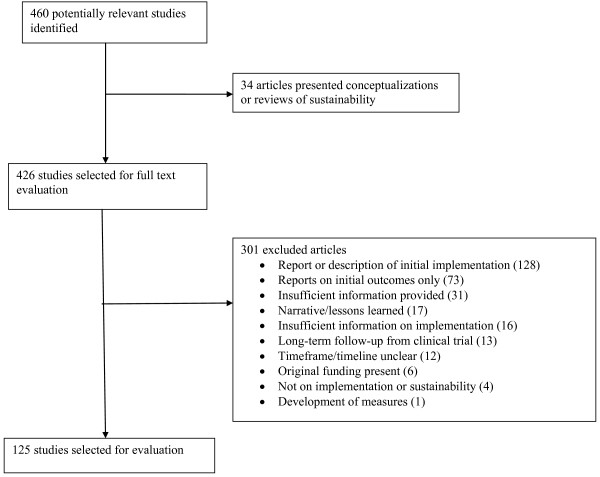
“Figure 1 is a modified PRISMA (which stands for Preferred Reporting Items for Systematic Reviews and Meta-Analyses [33]) diagram summarizing the selection process, which includes reasons that potentially relevant papers were excluded.”
Preferred reporting items for systematic reviews and meta-analyses: the PRISMA Statement.
(2009) · PubMed Central · Cited by 44,859
Rogers, E. M., Singhal, A., & Quinlan, M. M. (2019) · An Integrated Approach to Communication Theory and Research · doi:10.4324/9780203710753-35 · Cited by 37,322
Exploration and Exploitation in Organizational Learning
March, J. G. (1991) · Organization Science · doi:10.1287/orsc.2.1.71 · Cited by 21,942
Wang, G., Ma, R., Qiao, G., Wada, K., Aizawa, Y., & Satoh, T. (2015) · Integrative Medicine International · doi:10.1159/000368408 · Cited by 18,657
Organizational culture and leadership
(1993) · Long Range Planning · doi:10.1016/0024-6301(93)90120-5 · Cited by 16,462
Damschroder, L. J., Aron, D. C., Keith, R. E., Kirsh, S. R., Alexander, J. A., & Lowery, J. C. (2009) · Implementation Science · doi:10.1186/1748-5908-4-50 · Cited by 14,496 · cited 2×
“In contrast to the relatively consistent emphasis on characteristics of the innovation within conceptualizations of sustainability and the broader implementation literature, fewer studies than expected found that characteristics of the innovation were associated with sustainability [3,9,64].”
Valente, T. W. (2003) · Genetics in Medicine · doi:10.1097/01.gim.0000061743.67794.c4 · Cited by 13,723
Research works printed but not linked: 21
- Greenhalgh T How to Spread Good Ideas: A systematic review of the literature on diffusion, dissemination, and sustainability of innovations in health service delivery and organization, in Report for the National Co-ordinating Centre for NHS Service Delivery and Organisation R & D (NCCSDO) 2004 London: University College 362
- Maher L Gustafson DA Sustainability Model and Guide: Evans; 2007
- Stirman SW Sustainability: A systematic review of methods and conceptualizations. in Fourth Annual NIH Conference on the Science of Dissemination and Implementation 2011 Bethesda, MD
- Scheirer MA J Dearing An Agenda for Research on the Sustainability of Public Health Programs 2011 American Journal of Public Health in press PMC3222409 21940916
- Kimberly JR Starbuck WH Nystrom PC Managerial Innovation, in Handbook of Organizational Design 1981 New York: Oxford University Press 84 104
- Claquin P Sustainability of EPI: Utopia or Sine Qua Non Condition of Child Survival, in Resources for Child Health Project 1989 Arlington; REACH
- Lafond AK Improving the quality of investment in health: lessons on sustainability Health Policy Plan 1995 10 63 76
- Ovretveit J Making temporary quality improvement continuous 2003 Stockholm: Swedish Association of County Councils
- SW S CF R McMackin, et al Moving From the Laboratory to the Real World: Implementation Science and Effectiveness in Practice Settings, in Toward an Integrated Approach to Trauma Focused Therapy: Placing Evidence-Based Interventions in an Expanded Psychological Context American Psychological Association: Washington, D.C in press
- Davies B Tremblay D Edwards N Bick D, Ingram ID Sustaining evidence-based practice systems and measuring the impacts, in Evaluating the Impact of Implementing Evidence-Based Practice 2010 Oxford: Wiley Blackwell
- Blasinsky M Goldman HH Unutzer J Project IMPACT: a report on barriers and facilitators to sustainability Adm Policy Ment Health 2006 33 6 718 729 10.1007/s10488-006-0086-7 16967339 · DOI · Paper page
- Bowman C Sobo E Asch S Gifford A The H. I. V. Hepatitis Quality Enhancement Research Initiative: Measuring persistence of implementation: QUERI series Implement Sci 2008 3 1 21 10.1186/1748-5908-3-21 18430200 PMC2390585 · DOI · Paper page
- Gruen RL Elliott JH Nolan ML Lawton PD Parkhill A McLaren CJ Lavis JN Sustainability science: an integrated approach for health-programme planning Lancet 2008 372 9649 1579 1589 10.1016/S0140-6736(08)61659-1 18984192 · DOI · Paper page
- Massatti RR Sweeney HA Panzano PC Roth D The de-adoption of innovative mental health practices (IMHP): why organizations choose not to sustain an IMHP Adm Policy Ment Health 2008 35 1-2 50 65 10.1007/s10488-007-0141-z 17968652 · DOI
- Nilsen P Timpka T Nordenfelt L Lindqvist K Towards improved understanding of injury prevention program sustainability Saf Sci 2005 43 10 815 10.1016/j.ssci.2005.08.015 · DOI
- Plochg T Delnoij DM Hoogedoorn NP Klazinga NS Collaborating while competing? The sustainability of community-based integrated care initiatives through a health partnership BMC Health Serv Res 2006 20 6 37 PMC1464130 16549028
- Rabin B Nehl E Elliott T Deshpande A Brownson R Glanz K Individual and setting level predictors of the implementation of a skin cancer prevention program: a multilevel analysis Implement Sci 2010 5 40 53 10.1186/1748-5908-5-40 20513242 PMC2901365 · DOI
- Rohrbach LA Graham JW Hansen WB Diffusion of a school-based substance abuse prevention program: predictors of program implementation Prev Med 1993 22 2 237 260 10.1006/pmed.1993.1020 8483862 · DOI · Paper page
- Ruch-Ross H Keller D Miller N Bassewitz J Melinkovich P Evaluation of community-based health projects: the healthy tomorrows experience Pediatrics 2008 122 3 e564 e572 10.1542/peds.2006-3273 18762490 · DOI
- Scheirer MA The life cycle of an innovation: adoption versus discontinuation of the fluoride mouth rinse program in schools J Health Soc Behav 1990 31 2 203 215 10.2307/2137173 2102498 · DOI · Paper page
- Scheirer MA Hartling G Hagerman D Defining sustainability outcomes of health programs: Illustrations from an on-line survey Eval Program Plann 2008 31 4 335 346 10.1016/j.evalprogplan.2008.08.004 18835642 · DOI · Paper page
Cited by
Process evaluation of complex interventions: Medical Research Council guidance
Moore, G. F., Audrey, S., Barker, M., Bond, L., Bonell, C., Hardeman, W., Moore, L., O'Cathain, A., Tinati, T., Wight, D., et al. (2015) · BMJ · doi:10.1136/bmj.h1258 · Cited by 6,204
The dynamic sustainability framework: addressing the paradox of sustainment amid ongoing change
Chambers, D. A., Glasgow, R. E., & Stange, K. C. (2013) · Implementation Science · doi:10.1186/1748-5908-8-117 · Cited by 1,724
“Recent approaches to sustainability locate key efforts squarely in the implementation phase, arguing that once a practice has been implemented within a care system, those who manage the delivery of that practice should turn their attention to ensuring that the practice can be maintained over time [6,24].”
Wiltsey Stirman, S., Baumann, A. A., & Miller, C. J. (2019) · Implementation Science · doi:10.1186/s13012-019-0898-y · Cited by 1,329
Systematic review of the Exploration, Preparation, Implementation, Sustainment (EPIS) framework
Moullin, J. C., Dickson, K. S., Stadnick, N. A., Rabin, B., & Aarons, G. A. (2019) · Implementation Science · doi:10.1186/s13012-018-0842-6 · Cited by 1,223
The Sustainability of Evidence-Based Interventions and Practices in Public Health and Health Care
Shelton, R. C., Cooper, B. R., & Stirman, S. W. (2018) · Annual Review of Public Health · doi:10.1146/annurev-publhealth-040617-014731 · Cited by 806
Self-citationDiffusion Of Innovations Theory, Principles, And Practice
Dearing, J. W., & Cox, J. G. (2018) · Health Affairs · doi:10.1377/hlthaff.2017.1104 · Cited by 757
Stirman, S. W., Miller, C. J., Toder, K., & Calloway, A. (2013) · Implementation Science · doi:10.1186/1748-5908-8-65 · Cited by 691
“The tension between modification and fidelity is a critical issue in implementation science [4,54,55].”
BackgroundSelf-citationDeveloping a comprehensive definition of sustainability
Moore, J. E., Mascarenhas, A., Bain, J., & Straus, S. E. (2017) · Implementation Science · doi:10.1186/s13012-017-0637-1 · Cited by 630
“Most implementation studies do not include an explicit definition of sustainability [11].”
BackgroundInfluentialPublic health program capacity for sustainability: a new framework
Schell, S. F., Luke, D. A., Schooley, M. W., Elliott, M. B., Herbers, S. H., Mueller, N. B., & Bunger, A. C. (2013) · Implementation Science · doi:10.1186/1748-5908-8-15 · Cited by 563
“This framework can help establish a shared unders tanding of sustainability for practitioners, funders, and researchers working in a range of public hea th areas, and is responsive to calls for greater theoretical and definitional str uctu e and clarity [36].”
User‐centered design for psychosocial intervention development and implementation.
Lyon, A. R., & Koerner, K. (2016) · Clinical Psychology: Science and Practice · doi:10.1111/cpsp.12154 · Cited by 478
“Furthermore, findings indicating that incomplete penetration and sustainment are the norm (Stirman et al., 2012) suggest that it may be equally important for”
Using Measurement-Based Care to Enhance Any Treatment
Scott, K., & Lewis, C. C. (2015) · Cognitive and Behavioral Practice · doi:10.1016/j.cbpra.2014.01.010 · Cited by 461
The sustainability of public health interventions in schools: a systematic review
Herlitz, L., MacIntyre, H., Osborn, T., & Bonell, C. (2020) · Implementation Science · doi:10.1186/s13012-019-0961-8 · Cited by 434
Shelton, R. C., Chambers, D. A., & Glasgow, R. E. (2020) · Frontiers in Public Health · doi:10.3389/fpubh.2020.00134 · Cited by 448
“Investigators also increasingly recognize the need for a dynamic conceptualization of sustainability, in light of complex “real-world” contexts in which EBIs are delivered that require responsiveness, capacity building, and adaptation of EBIs (10, 11, 16).”
BackgroundMohr, D. C., Lyon, A. R., Lattie, E. G., Reddy, M., & Schueller, S. M. (2017) · Journal of Medical Internet Research · doi:10.2196/jmir.7725 · Cited by 432
“Even when initial implementation is successful, sustainment has rarely been examined and, when it has, a lack of sustainment is evident [79].”
BackgroundProctor, E., Luke, D., Calhoun, A., McMillen, C., Brownson, R., McCrary, S., & Padek, M. (2015) · Implementation Science · doi:10.1186/s13012-015-0274-5 · Cited by 429
“Context was understood broadly, including individual, inner setting, and outer setting factors as suggested by the Consolidated Framework for Implementation Research (CFIR) [33], such as leadership, organizational climate and culture, and system/policy factors [17, 21].”
BackgroundMethodInfluentialLennox, L., Maher, L., & Reed, J. (2018) · Implementation Science · doi:10.1186/s13012-017-0707-4 · Cited by 421
“In the current climate of rising demands, shifting priorities and competition for resources, there is a need to understand how sustainability of implemented initiatives can be influenced as health planners and other stakeholders want to ensure the long-term impact of their investments [1, 11].”
BackgroundA systematic review of barriers to public sector innovation process
Cinar, E., Trott, P., & Simms, C. (2019) · Public Management Review · doi:10.1080/14719037.2018.1473477 · Cited by 378
Evidence-based intervention sustainability strategies: a systematic review
Hailemariam, M., Bustos, T., Montgomery, B., Barajas, R., Evans, L. B., & Drahota, A. (2019) · Implementation Science · doi:10.1186/s13012-019-0910-6 · Cited by 398
A PRACTICAL IMPLEMENTATION SCIENCE HEURISTIC FOR ORGANIZATIONAL READINESS: R = MC2
Scaccia, J. P., Cook, B. S., Lamont, A., Wandersman, A., Castellow, J., Katz, J., & Beidas, R. S. (2015) · Journal of Community Psychology · doi:10.1002/jcop.21698 · Cited by 375
“Improving subadequate and maintaining adequate motivation, general capacities, and innovation-specific capacities are tasks that must be continually cultivated over the implementation process if an innovation is likely to have any sustainability (Chambers, Glasgow, & Stange, 2013; Hall & Hord, 2010; Meyers, Durlak et…”
InfluentialMoullin, J. C., Sabater-Hernández, D., Fernandez-Llimos, F., & Benrimoj, S. I. (2015) · Health Research Policy and Systems · doi:10.1186/s12961-015-0005-z · Cited by 392
Cassar, S., Salmon, J., Timperio, A., Naylor, P.-J., van Nassau, F., Contardo Ayala, A. M., & Koorts, H. (2019) · International Journal of Behavioral Nutrition and Physical Activity · doi:10.1186/s12966-019-0876-4 · Cited by 304
A scoping study of frameworks for adapting public health evidence-based interventions
Escoffery, C., Lebow-Skelley, E., Udelson, H., Böing, E. A., Wood, R., Fernandez, M. E., & Mullen, P. D. (2019) · Translational Behavioral Medicine · doi:10.1093/tbm/ibx067 · Cited by 307
“Adaptations may be made to the original program’s content, delivery, logistics, training, and evaluation [4, 7].”
BackgroundFrank, H. E., Becker-Haimes, E. M., & Kendall, P. C. (2020) · Clinical Psychology: Science and Practice · doi:10.1111/cpsp.12330 · Cited by 297
“…M anuscript A uthor M anuscript A uthor M anuscript A uthor M anuscript Despite these calls for more research and advances in implementation science (Williams & Beidas, 2019), EBI use in routine practice remains low (Becker, Smith, & Jensen-Doss, 2013; Beidas et al., 2019; Stirman et al., 2012).”
BackgroundCabassa, L. J., & Baumann, A. A. (2013) · Implementation Science · doi:10.1186/1748-5908-8-90 · Cited by 290
“However, virtually no study provided descriptions of what was adapted or the expl icit process used to adapt the intervention [29].”
Trauma-Informed Schools: Introduction to the Special Issue
Overstreet, S., & Chafouleas, S. M. (2016) · School Mental Health · doi:10.1007/s12310-016-9184-1 · Cited by 280
“As they point out, these sustainment barriers are common to those observed with other school-based mental health programs (Forman, Olin, Hoagwood, Crowe, & Saka, 2009; Stirman et al., 2012).”
Messing, S., Rütten, A., Abu-Omar, K., Ungerer-Röhrich, U., Goodwin, L., Burlacu, I., & Gediga, G. (2019) · Frontiers in Public Health · doi:10.3389/fpubh.2019.00055 · Cited by 259
Outcomes of a Partnered Facilitation Strategy to Implement Primary Care–Mental Health
Kirchner, J. E., Ritchie, M. J., Pitcock, J. A., Parker, L. E., Curran, G. M., & Fortney, J. C. (2014) · Journal of General Internal Medicine · doi:10.1007/s11606-014-3027-2 · Cited by 255
Aarons, G. A., Green, A. E., Trott, E., Willging, C. E., Torres, E. M., Ehrhart, M. G., & Roesch, S. C. (2016) · Administration and Policy in Mental Health and Mental Health Services Research · doi:10.1007/s10488-016-0751-4 · Cited by 251
Cowie, J., Nicoll, A., Dimova, E. D., Campbell, P., & Duncan, E. A. (2020) · BMC Health Services Research · doi:10.1186/s12913-020-05434-9 · Cited by 231
Implementation Science in School Mental Health: Key Constructs in a Developing Research Agenda
Owens, J. S., Lyon, A. R., Brandt, N. E., Masia Warner, C., Nadeem, E., Spiel, C., & Wagner, M. (2014) · School Mental Health · doi:10.1007/s12310-013-9115-3 · Cited by 247
“The most comprehensive literature reviews of sustainment span the disciplines of public health, medicine, and mental health (e.g., Aarons et al., 2011; Scheirer, 2005; Stirman et al., 2012).”
InfluentialWeisz, J. R., Ng, M. Y., & Bearman, S. K. (2014) · Clinical Psychological Science · doi:10.1177/2167702613501307 · Cited by 246
“Those who promote and practice DIP are concerned about evidence suggesting that the everyday practice of ESTs is not very well sustained after initial implementation (Stirman et al., 2012).”
Designing for Dissemination and Sustainability to Promote Equitable Impacts on Health
Kwan, B. M., Brownson, R. C., Glasgow, R. E., Morrato, E. H., & Luke, D. A. (2022) · Annual Review of Public Health · doi:10.1146/annurev-publhealth-052220-112457 · Cited by 234
Milat, A., Lee, K., Conte, K., Grunseit, A., Wolfenden, L., van Nassau, F., Orr, N., Sreeram, P., & Bauman, A. (2020) · Health Research Policy and Systems · doi:10.1186/s12961-019-0494-2 · Cited by 235
Iwelunmor, J., Blackstone, S., Veira, D., Nwaozuru, U., Airhihenbuwa, C., Munodawafa, D., Kalipeni, E., Jutal, A., Shelley, D., & Ogedegbe, G. (2015) · Implementation Science · doi:10.1186/s13012-016-0392-8 · Cited by 219
“ing close attention to the serious gaps in understanding [22].”
InfluentialShoesmith, A., Hall, A., Wolfenden, L., Shelton, R. C., Powell, B. J., Brown, H., McCrabb, S., Sutherland, R., Yoong, S., Lane, C., et al. (2021) · Implementation Science · doi:10.1186/s13012-021-01134-y · Cited by 209
“To achieve health benefits at the population level, effective interventions targeting these risk factors need to be implemented in an ongoing manner in these settings [12, 13].”
BackgroundHenry, K. E., Kornfield, R., Sridharan, A., Linton, R. C., Groh, C., Wang, T., Wu, A., Mutlu, B., & Saria, S. (2022) · npj Digital Medicine · doi:10.1038/s41746-022-00597-7 · Cited by 207
Barrera, M., Berkel, C., & Castro, F. G. (2017) · Prevention Science · doi:10.1007/s11121-016-0705-9 · Cited by 203
“Recommendation: Institutions are more likely to sustain portions of interventions (Wiltsey Stirman et al. 2012) and reduced intensity interventions (Cooper et al. 2015) than they are to sustain the original, full intervention.”
InfluentialSelf-citationWiltsey Stirman, S., A Gutner, C., Crits-Christoph, P., Edmunds, J., Evans, A. C., & Beidas, R. S. (2015) · Implementation Science · doi:10.1186/s13012-015-0308-z · Cited by 188
Barnett, M. L., Lau, A. S., & Miranda, J. (2018) · Annual Review of Clinical Psychology · doi:10.1146/annurev-clinpsy-050817-084825 · Cited by 182
“FUTURE DIRECTIONS FOR RESEARCH AND PRACTICE WITH LAY HEALTH WORKERS Increasingly, LHWs are being leveraged as part of the mental health workforce to address disparities in the supply of and demand for EBTs in LMICs and HICs.”
BackgroundInfluentialPeriodic reflections: a method of guided discussions for documenting implementation phenomena
Finley, E. P., Huynh, A. K., Farmer, M. M., Bean-Mayberry, B., Moin, T., Oishi, S. M., Moreau, J. L., Dyer, K. E., Lanham, H. J., Leykum, L., et al. (2018) · BMC Medical Research Methodology · doi:10.1186/s12874-018-0610-y · Cited by 177
Gramlich, L. M., Sheppard, C. E., Wasylak, T., Gilmour, L. E., Ljungqvist, O., Basualdo-Hammond, C., & Nelson, G. (2017) · Implementation Science · doi:10.1186/s13012-017-0597-5 · Cited by 182
Ament, S. M. C., de Groot, J. J. A., Maessen, J. M. C., Dirksen, C. D., van der Weijden, T., & Kleijnen, J. (2015) · BMJ Open · doi:10.1136/bmjopen-2015-008073 · Cited by 177
“Results showed that determinants of sustainability varied widely between healthcare areas(8) 9 and suggest that partial sustainability of healthcare innovations is more common than full sustainability.(10) In this systematic review, the scope of sustainability research will be narrowed to professionals’ adherence to c…”
Comer, J. S., & Barlow, D. H. (2014) · American Psychologist · doi:10.1037/a0033582 · Cited by 177
“Second, the matter of sustainability presents a major problem (see Stirman et al., 2012).”
BackgroundLong-Term Sustainability of Evidence-Based Practices in Community Mental Health Agencies
Bond, G. R., Drake, R. E., McHugo, G. J., Peterson, A. E., Jones, A. M., & Williams, J. (2014) · Administration and Policy in Mental Health and Mental Health Services Research · doi:10.1007/s10488-012-0461-5 · Cited by 172
Doyle, C., Howe, C., Woodcock, T., Myron, R., Phekoo, K., McNicholas, C., Saffer, J., & Bell, D. (2013) · Implementation Science · doi:10.1186/1748-5908-8-127 · Cited by 166
“evidence-based new practice frequently fail to apply it in a sustainable way, resulting in variable outcomes [2-4].”
The sustainability of healthcare innovations: a concept analysis
Fleiszer, A. R., Semenic, S. E., Ritchie, J. A., Richer, M., & Denis, J. (2015) · Journal of Advanced Nursing · doi:10.1111/jan.12633 · Cited by 166
Organizational theory for dissemination and implementation research
Birken, S. A., Bunger, A. C., Powell, B. J., Turner, K., Clary, A. S., Klaman, S. L., Yu, Y., Whitaker, D. J., Self, S. R., Rostad, W. L., et al. (2017) · Implementation Science · doi:10.1186/s13012-017-0592-x · Cited by 156
Assessing citation networks for dissemination and implementation research frameworks
Skolarus, T. A., Lehmann, T., Tabak, R. G., Harris, J., Lecy, J., & Sales, A. E. (2017) · Implementation Science · doi:10.1186/s13012-017-0628-2 · Cited by 163
“Furthermore, systematic efforts to reconcile determinants of healthcare professional practice across 12 different frameworks have generated practical checklists and implementation strategy recommendations to support implementation and quality improvement efforts [35].”
BackgroundLinking Sustainability Research to Intervention Types
Scheirer, M. A. (2013) · American Journal of Public Health · doi:10.2105/ajph.2012.300976 · Cited by 161
March, A., Stapley, E., Hayes, D., Town, R., & Deighton, J. (2022) · International Journal of Environmental Research and Public Health · doi:10.3390/ijerph19063587 · Cited by 215
“Although this issue in schools is well recognised, and there is wider research literature on what affects sustainability and how sustainability of effective programmes can be improved, there has been limited focus on educational settings [18,19].”
BackgroundInfluentialMalone, S., Prewitt, K., Hackett, R., Lin, J. C., McKay, V., Walsh-Bailey, C., & Luke, D. A. (2021) · Implementation Science Communications · doi:10.1186/s43058-021-00181-2 · Cited by 148
Braithwaite, J., Ludlow, K., Testa, L., Herkes, J., Augustsson, H., Lamprell, G., McPherson, E., & Zurynski, Y. (2020) · BMJ Open · doi:10.1136/bmjopen-2019-036453 · Cited by 147
Fixsen, D. L., Blasé, K. A., Metz, A. J. R., & Dyke, M. K. V. (2015) · Elsevier eBooks · doi:10.1016/b978-0-08-097086-8.10548-3 · Cited by 171
Shelton, R. C., Lee, M., Brotzman, L., Wolfenden, L., Nathan, N., & Wainberg, M. L. (2020) · International Journal of Behavioral Medicine · doi:10.1007/s12529-020-09848-x · Cited by 161
“As highlighted in recent reviews [124, 125], sustainability is increasingly recognized as a distinct and dynamic phase from implementation [124, 126, 127].”
BackgroundWeisz, J. R., Krumholz, L. S., Santucci, L., Thomassin, K., & Ng, M. Y. (2015) · Annual Review of Clinical Psychology · doi:10.1146/annurev-clinpsy-032814-112820 · Cited by 139
“Researchers have only recently begun to study these important topics, and a great deal remains to be learned (see McHugh & Barlow 2010, Stirman et al. 2012, Weisz et al. 2014).”
Rosen, C. S., Matthieu, M. M., Stirman, S. W., Cook, J. M., Landes, S. J., Bernardy, N. C., Chard, K. M., Crowley, J. J., Eftekhari, A., Finley, E. P., et al. (2016) · Administration and Policy in Mental Health and Mental Health Services Research · doi:10.1007/s10488-016-0755-0 · Cited by 153
“It is essential that health care systems see evidence-based care as a process of continual quality improvement and retain the flexibility to integrate new interventions as sufficient evidence warrants it (Stirman et al. 2012).”
BackgroundMcLeod, R. S., Aarts, M.-A. W., Chung, F. F., Eskicioglu, C., Forbes, S. S., Conn, L. G., McCluskey, S. A., McKenzie, M., Morningstar, B., Nadler, A., et al. (2015) · Annals of Surgery · doi:10.1097/sla.0000000000001067 · Cited by 146
Wiltsey Stirman, S., Gamarra, J. M., Bartlett, B. A., Calloway, A., & Gutner, C. A. (2017) · Clinical Psychology: Science and Practice · doi:10.1111/cpsp.12218 · Cited by 138
“Thus, fidelity assessment alone may provide limited understanding of whether different types of alterations are detrimental, nondetrimental, or enhancements to the treatment protocol (Stirman et al., 2012; Zvoch, 2009).”
Self-citationMiller, C. J., Wiltsey‐Stirman, S., & Baumann, A. A. (2020) · Journal of Community Psychology · doi:10.1002/jcop.22279 · Cited by 138
“…are not only common (Aarons et al., 2012; Chambers & Norton, 2016; Wiltsey Stirman et al., 2013), but may be essential to maximizing clinical effectiveness in certain settings and populations (Chambers, Glasgow, & Stange, 2013; Iwelunmor et al., 2015; Marques et al., 2019; Stirman et al., 2012).”
BackgroundKemp, C. G., Jarrett, B. A., Kwon, C.-S., Song, L., Jetté, N., Sapag, J. C., Bass, J., Murray, L., Rao, D., & Baral, S. (2019) · BMC Medicine · doi:10.1186/s12916-018-1237-x · Cited by 138
“Finally, sustainability ensures investments into stigma reduction efforts are not wasted [90, 91].”
BackgroundRationale and Considerations for the Internet-Based Delivery of Parent–Child Interaction Therapy
Comer, J. S., Furr, J. M., Cooper-Vince, C., Madigan, R. J., Chow, C., Chan, P. T., Idrobo, F., Chase, R. M., McNeil, C. B., & Eyberg, S. M. (2015) · Cognitive and Behavioral Practice · doi:10.1016/j.cbpra.2014.07.003 · Cited by 137
“Sustainability poses a serious threat to implementation (see Stirman et al., 2012), and although dissemination models highlight the need for dissemination, in practice Cogn Behav Pract.”
Tricco, A. C., Ashoor, H. M., Cardoso, R., MacDonald, H., Cogo, E., Kastner, M., Perrier, L., McKibbon, A., Grimshaw, J. M., & Straus, S. E. (2015) · Implementation Science · doi:10.1186/s13012-016-0421-7 · Cited by 139
“It has been suggested that KT interventions that are not sustained in the long-term may result in worse patient outcomes [10, 11, 14], such as decreased quality of care and quality of life.”
BackgroundMiller, C. J., Grogan-Kaylor, A., Perron, B. E., Kilbourne, A. M., Woltmann, E., & Bauer, M. S. (2013) · Medical Care · doi:10.1097/mlr.0b013e3182a3e4c4 · Cited by 130
Subedi, N., Rawstorn, J. C., Gao, L., Koorts, H., & Maddison, R. (2020) · JMIR mhealth and uhealth · doi:10.2196/17957 · Cited by 145
Birken, S. A., Haines, E. R., Hwang, S., Chambers, D. A., Bunger, A. C., & Nilsen, P. (2020) · Implementation Science · doi:10.1186/s13012-020-01040-9 · Cited by 122
Sheridan, S. M., Witte, A. L., Holmes, S. R., Coutts, M. J., Dent, A. L., Kunz, G. M., & Wu, C. (2017) · Journal of School Psychology · doi:10.1016/j.jsp.2016.12.002 · Cited by 150
“Studies testing CBC sustainability as an effective model of service delivery in rural communities would also be a valuable next step (Wiltsey Stirman et al., 2012).”
Self-management interventions for cancer survivors: a systematic review
Boland, L., Bennett, K., & Connolly, D. (2017) · Supportive Care in Cancer · doi:10.1007/s00520-017-3999-7 · Cited by 119
“Conducting longitudinal follow-up is important to determine if interventions can sustain their effectiveness [35].”
Clinical Update: Telepsychiatry With Children and Adolescents
(2017) · Journal of the American Academy of Child & Adolescent Psychiatry · doi:10.1016/j.jaac.2017.07.008 · Cited by 122
“the shortages of child and adolescent mental health specialists, a maldistribution of available specialists, the “agingout effect” of the psychiatric workforce,(6-9) and insufficient funding to sustain a stable workforce for public mental health programs.(10,11) These access deficits disproportionately affect children…”
Hodge, L. M., & Turner, K. M. T. (2016) · American Journal of Community Psychology · doi:10.1002/ajcp.12082 · Cited by 120
“…and involving appropriate individuals in the implementation of a program through a combined strategy of community education and engagement (Stirman et al., 2012), which involves shared decision making among stakeholders (August et al., 2006) and program alignment (e.g., tailoring…”
BackgroundMethodInfluentialElliott, N., Begley, C., Sheaf, G., & Higgins, A. (2016) · International Journal of Nursing Studies · doi:10.1016/j.ijnurstu.2016.03.001 · Cited by 126
“Findings showed that organisational context, pacity, processes and interactions, and components of the new programme or practice itself, are key factors that impact on sustainability and what happens after the initial implementation (Wiltsey Stirman et al., 2012).”
Sustaining Evidence-Based Prevention Programs: Correlates in a Large-Scale Dissemination Initiative
Cooper, B. R., Bumbarger, B. K., & Moore, J. E. (2015) · Prevention Science · doi:10.1007/s11121-013-0427-1 · Cited by 117
“Many terms have been used to describe this and similar processes, such as maintenance, institutionalization, and routinization, among others (Wiltsley Stirman et al. 2012).”
Martin, G. P., Weaver, S., Currie, G., Finn, R., & McDonald, R. (2012) · Health Services Management Research · doi:10.1177/0951484812474246 · Cited by 116
Pronovost, P. J., Watson, S. R., Goeschel, C. A., Hyzy, R. C., & Berenholtz, S. M. (2015) · American Journal of Medical Quality · doi:10.1177/1062860614568647 · Cited by 133
Assessing faculty professional development in STEM higher education: Sustainability of outcomes
Derting, T. L., Ebert‐May, D., Henkel, T. P., Maher, J. M., Arnold, B., & Passmore, H. A. (2016) · Science Advances · doi:10.1126/sciadv.1501422 · Cited by 135
Zurynski, Y. A., Ludlow, K., Testa, L., Augustsson, H., Herkes, J., Hutchinson, K., Lamprell, G., McPherson, E., Carrigan, A., Ellis, L. A., et al. (2023) · Implementation Science · doi:10.1186/s13012-023-01315-x · Cited by 128
Aarons, G. A., Green, A. E., Willging, C. E., Ehrhart, M. G., Roesch, S. C., Hecht, D. B., & Chaffin, M. J. (2014) · Implementation Science · doi:10.1186/s13012-014-0183-z · Cited by 107
“In a comprehensive review of the sustainment literature, both outer (system) and inner (organizational) contexts emerged as dominant features across conceptual models [12].”
Nathan, N., Powell, B. J., Shelton, R. C., Laur, C. V., Wolfenden, L., Hailemariam, M., Yoong, S. L., Sutherland, R., Kingsland, M., Waltz, T. J., et al. (2022) · Frontiers in Health Services · doi:10.3389/frhs.2022.905909 · Cited by 105
Stirman, S. W., Gutner, C. A., Langdon, K., & Graham, J. R. (2016) · Behavior Therapy · doi:10.1016/j.beth.2015.12.001 · Cited by 103
Buntaine, M. T., Hamilton, S. E., & Millones, M. (2015) · Global Environmental Change · doi:10.1016/j.gloenvcha.2015.04.001 · Cited by 102
“Additionally, as is the case with many areas of policy (Asian Development Bank, 2010; Pluye et al., 2004; Scheirer, 2005; Stirman et al., 2012), there is considerable uncertainty about medium to long-term effects of land titling programs because monitoring is not frequently pursued after programs…”
BackgroundA service research contribution to the global challenge of sustainability
Saviano, M., Barile, S., Spohrer, J., & Caputo, F. (2017) · Journal of Service Theory and Practice · doi:10.1108/jstp-10-2015-0228 · Cited by 109
Whelan, J., Love, P., Pettman, T. L., Doyle, J., Booth, S., Smith, E., & Waters, E. (2014) · Journal of Public Health · doi:10.1093/pubmed/fdu027 · Cited by 107
Flynn, R., Rotter, T., Hartfield, D. S., Newton, A. S., & Scott, S. D. (2019) · BMC Health Services Research · doi:10.1186/s12913-019-4744-3 · Cited by 114
Penno, L. N., Davies, B., Graham, I. D., Backman, C., MacDonald, I., Bain, J., Johnson, A. M., Moore, J. E., & Squires, J. E. (2019) · Implementation Science · doi:10.1186/s13012-019-0952-9 · Cited by 108
Making change last? Exploring the value of sustainability approaches in healthcare: a scoping review
Lennox, L., Linwood-Amor, A., Maher, L., & Reed, J. E. (2020) · Health Research Policy and Systems · doi:10.1186/s12961-020-00601-0 · Cited by 110
Beidas, R. S., Edmunds, J., Ditty, M., Watkins, J., Walsh, L., Marcus, S., & Kendall, P. (2014) · Administration and Policy in Mental Health and Mental Health Services Research · doi:10.1007/s10488-013-0529-x · Cited by 95
Khodadad-Saryazdi, A. (2021) · Technovation · doi:10.1016/j.technovation.2021.102273 · Cited by 108
Bird, V. J., Boutillier, C. L., Leamy, M., Williams, J., Bradstreet, S., & Slade, M. (2014) · British Journal of Psychiatry · doi:10.1192/bjp.bp.113.128314 · Cited by 90
Integrating new practices: a qualitative study of how hospital innovations become routine
Brewster, A. L., Curry, L. A., Cherlin, E. J., Talbert-Slagle, K., Horwitz, L. I., & Bradley, E. H. (2015) · Implementation Science · doi:10.1186/s13012-015-0357-3 · Cited by 91
“Within the field of health services research, several well-developed models have identified factors affecting implementation of new practices [7, 8], and recent theoretical work [4, 9–11] has highlighted the need to understand integration as a distinct and important feature of the implementation process.”
BackgroundSustainability of health information systems: a three-country qualitative study in southern Africa
Moucheraud, C., Schwitters, A. M., Boudreaux, C., Giles, D., Kilmarx, P. H., Ntolo, N., Bangani, Z., Louis, M. E. S., & Bossert, T. J. (2017) · BMC Health Services Research · doi:10.1186/s12913-016-1971-8 · Cited by 99
Metz, A. J. R., Albers, B., Burke, K., Bartley, L., Louison, L., Ward, C. S., & Farley, A. B. (2021) · Human Services Organizations Management Leadership & Governance · doi:10.1080/23303131.2021.1895401 · Cited by 118
Shelton, R. C., & Lee, M. (2019) · American Journal of Public Health · doi:10.2105/ajph.2018.304913 · Cited by 95
Sustainability of an Enhanced Recovery After Surgery Program (ERAS) in Colonic Surgery
Gillissen, F., Ament, S. M. C., Maessen, J. M. C., Dejong, C. H. C., Dirksen, C. D., van der Weijden, T., & MEYENFELDT, M. F. V. (2014) · World Journal of Surgery · doi:10.1007/s00268-014-2744-3 · Cited by 95
Lifestyle Interventions in Preschool Children: A Meta-analysis of Effectiveness
Ling, J., Robbins, L. B., Wen, F., & Zhang, N. (2017) · American Journal of Preventive Medicine · doi:10.1016/j.amepre.2017.01.018 · Cited by 91
Friend, S. E., Flattum, C. F., Simpson, D., Nederhoff, D. M., & Neumark‐Sztainer, D. (2014) · Journal of School Health · doi:10.1111/josh.12149 · Cited by 87
Robert, G., Sarre, S., Maben, J., Griffiths, P., & Chable, R. (2019) · BMJ Quality & Safety · doi:10.1136/bmjqs-2019-009457 · Cited by 92
Team-Based Care with Pharmacists to Improve Blood Pressure: a Review of Recent Literature
Kennelty, K. A., Polgreen, L. A., & Carter, B. L. (2018) · Current Hypertension Reports · doi:10.1007/s11906-018-0803-0 · Cited by 87
Moullin, J. C., Sklar, M., Ehrhart, M. G., Green, A., & Aarons, G. A. (2021) · Implementation Science · doi:10.1186/s13012-021-01152-w · Cited by 82
Hall, A., Shoesmith, A., Doherty, E., McEvoy, B., Mettert, K., Lewis, C. C., Wolfenden, L., Yoong, S., Kingsland, M., Shelton, R. C., et al. (2022) · Implementation Science · doi:10.1186/s13012-022-01252-1 · Cited by 81
Advancing Complexity Theory as a Qualitative Research Methodology
Gear, C., Eppel, E., & Koziol‐McLain, J. (2018) · International Journal of Qualitative Methods · doi:10.1177/1609406918782557 · Cited by 115
“Our research approach suggests agent interactions at multiple levels will influence the sustainability of an IPV response, meaning there is no one definitive solution to the problem (Gear et al., 2017; Shani & Mohrman, 2012; Wiltsey Stirman et al., 2012).”
MethodModel for the evaluation of implementation programs and professional pharmacy services
Moullin, J. C., Sabater‐Hernández, D., & Benrimoj, S. I. (2015) · Research in Social and Administrative Pharmacy · doi:10.1016/j.sapharm.2015.08.003 · Cited by 100
Metadata
- Authors
- Wiltsey Stirman, S., Kimberly, J., Cook, N., Calloway, A., Castro, F., & Charns, M.
- Affiliations
- University of Pennsylvania (US)
- VA Boston Healthcare System (US)
- Boston University (US)
- Venue
- Implementation Science
- Published
- 2012-03-14
- Volume
- 7
- Issue
- 1
- Pages
- 17-17
- ISSN
- 1748-5908 (ISSN-L)
- PMC
- PMC3317864
- OpenAlex
- W2158467768
- Cited by
- 1,355
- References
- 211
- Citations by year
- 2026: 69 · 2025: 77 · 2024: 113 · 2023: 116 · 2022: 125 · 2021: 145 · 2020: 136 · 2019: 110 · 2018: 103 · 2017: 100 · 2016: 62 · 2015: 90 · 2014: 55 · 2013: 47 · 2012: 7
- FWCI
- 9.51
- Type
- journal article
- Language
- en
- Open access
- gold
- doi.org
- Licence
- Locations
- Implementation Science (publishedVersion, cc-by)
- Europe PMC (PubMed Central) (publishedVersion, cc-by)
- PubMed Central (publishedVersion, cc-by)
- PubMed (publishedVersion)
- ScholarlyCommons (University of Pennsylvania) (submittedVersion, cc-by)
- ScholarlyCommons (University of Pennsylvania) (submittedVersion)
- DOAJ (DOAJ: Directory of Open Access Journals) (submittedVersion, cc-by-sa)
- Funders
- U.S. Department of Veterans Affairs (R25 MH080916-01A2)
- Washington University in St. Louis (R25 MH080916-01A2)
- National Institutes of Health
- Quality Enhancement Research Initiative (R25 MH080916-01A2)
- National Institute of Mental Health (MH080916, R00 MH 01800, R00MH080100, R25MH080916, T32MH019836)
- Topics
- Health Sciences › Health Professions › General Health Professions › Health Policy Implementation Science
- Health Sciences › Health Professions › General Health Professions › Health Sciences Research and Education
- Health Sciences › Medicine › Public Health, Environmental and Occupational Health › Clinical practice guidelines implementation
- Keywords
- program sustainability, implementation outcomes, evidence-based programs, healthcare innovation, organizational context, organizational capacity, intervention fidelity, intervention adaptation, long-term implementation, sustainability factors, research recommendations, definition of sustainability
- MeSH terms
- Delivery of Health Care, Health Planning Guidelines, Humans, Organizational Innovation, Research Design, Program Evaluation, Evidence-Based Practice
About these checks
Registry, retraction, Cites and statistics results are computed, not judged, with one exception: a printed reference that no index lists is read once by a model before it counts as a citation error. Claims are extracted by a model and kept only when their quote appears verbatim in the text; each cited source is then checked, with a model’s help, for whether it says what the claim relies on. Those verdicts can be wrong — read the claim’s quote and the cited source before relying on one.
Statistics and arithmetic are recomputed, not judged.
Confidence bands are shown only for fields calibrated on our annotated test set. None is calibrated yet, so no band is shown.
What counts as a claim ›How we measure confidence ›How we check this ›
Are you an author, or do you see a problem with this page? Request a review
Data sources
Bibliographic data: Semantic Scholar, OpenAlex, Crossref.
Contains information from the Semantic Scholar Academic Graph Datasets, made available under the ODC Attribution License (ODC-BY 1.0).
Semantic Scholar’s data is described in: Kinney, R., et al. (2023). The Semantic Scholar Open Data Platform. arXiv:2301.10140.
