

The sustainability of new programs and innovations: a review of the empirical literature and recommendations for future research
Open accessThe DOI matches its Crossref record; 210 of the 211 references it cites were found in a registry or an index.
Abstract
Background: The introduction of evidence-based programs and practices into healthcare settings has been the subject of an increasing amount of research in recent years. While a number of studies have examined initial implementation efforts, less research has been conducted to determine what happens beyond that point. There is increasing recognition that the extent to which new programs are sustained is influenced by many different factors and that more needs to be known about just what these factors are and how they interact. To understand the current state of the research literature on sustainability, our team took stock of what is currently known in this area and identified areas in which further research would be particularly helpful. This paper reviews the methods that have been used, the types of outcomes that have been measured and reported, findings from studies that reported long-term implementation outcomes, and factors that have been identified as potential influences on the sustained use of new practices, programs, or interventions. We conclude with recommendations and considerations for future research. Methods: Two coders identified 125 studies on sustainability that met eligibility criteria. An initial coding scheme was developed based on constructs identified in previous literature on implementation. Additional codes were generated deductively. Related constructs among factors were identified by consensus and collapsed under the general categories. Studies that described the extent to which programs or innovations were sustained were also categorized and summarized. Results: Although "sustainability" was the term most commonly used in the literature to refer to what happened after initial implementation, not all the studies that were reviewed actually presented working definitions of the term. Most study designs were retrospective and naturalistic. Approximately half of the studies relied on self-reports to assess sustainability or elements that influence sustainability. Approximately half employed quantitative methodologies, and the remainder employed qualitative or mixed methodologies. Few studies that investigated sustainability outcomes employed rigorous methods of evaluation (e.g., objective evaluation, judgement of implementation quality or fidelity). Among those that did, a small number reported full sustainment or high fidelity. Very little research has examined the extent, nature, or impact of adaptations to the interventions or programs once implemented. Influences on sustainability included organizational context, capacity, processes, and factors related to the new program or practice themselves. Conclusions: Clearer definitions and research that is guided by the conceptual literature on sustainability are critical to the development of the research in the area. Further efforts to characterize the phenomenon and the factors that influence it will enhance the quality of future research. Careful consideration must also be given to interactions among influences at multiple levels, as well as issues such as fidelity, modification, and changes in implementation over time. While prospective and experimental designs are needed, there is also an important role for qualitative research in efforts to understand the phenomenon, refine hypotheses, and develop strategies to promote sustainment.
Overview
The claims and statistics of this paper haven’t been checked yet.
Free: it reads the open-access text and checks the first 5 claims that cite a source we can check. Create a free account to check every claim.
Integrity signals
Registry
Cites
Statistics
Figures
Verification
Claims the paper makes
The claims and statistics of this paper haven’t been checked yet.
Free: it reads the open-access text and checks the first 5 claims that cite a source we can check. Create a free account to check every claim.
Claims other papers make about this one
Each is checked against this paper’s own text: does it say what the citing paper says it does?
The source backs part of the claim, not all of it — or backs it for a different population, condition or comparison.
In the citing paper
“findings indicating that incomplete penetration and sustainment are the norm (Stirman et al., 2012)”
From User‐centered design for psychosocial intervention development and implementation. (2016) · cites this paper as Stirman et al., 2012
Experimental — accuracy not yet measuredThe source backs part of the claim, not all of it — or backs it for a different population, condition or comparison.
In the citing paper
“A number of literature reviews of implementation frameworks have also been conducted, concentrating on particular implementation concepts, such as a particular stage, or specifically on either the factors, strategies or evaluations, rather than addressing all the concepts that could affect an innovation’s implementation [13,17,19-26].”
From A systematic review of implementation frameworks of innovations in healthcare and resulting generic implementation framework (2015) · cites this paper as [24]
Experimental — accuracy not yet measuredThe source backs part of the claim, not all of it — or backs it for a different population, condition or comparison.
In the citing paper
“Despite the significant investment of staff time and other resources, many promising initiatives fail to sustain and do not produce long term benefits [1–6].”
From Navigating the sustainability landscape: a systematic review of sustainability approaches in healthcare (2018) · cites this paper as [1]
Experimental — accuracy not yet measuredThe source backs part of the claim, not all of it — or backs it for a different population, condition or comparison.
In the citing paper
“Overall, fewer than half of the programs continued at high levels of fidelity.”
From The Sustainability of Evidence-Based Interventions and Practices in Public Health and Health Care (2018) · cites this paper as [135]
Experimental — accuracy not yet measuredThe source backs part of the claim, not all of it — or backs it for a different population, condition or comparison.
In the citing paper
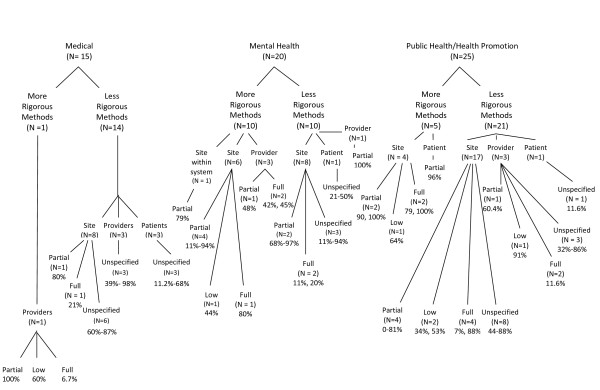
“In a systematic review of 125 empirical studies focused on the sustainability of public health and clinical interventions (135), researchers found that even when full implementation was originally achieved, partial sustainability was much more common than the continued implementation of the entire intervention.”
From The Sustainability of Evidence-Based Interventions and Practices in Public Health and Health Care (2018) · cites this paper as [135]
Experimental — accuracy not yet measured
18 more claims about this paper
Create a free account to see every claim other papers make about this one.
Self-check
Percentages, sums and reported differences re-computed from the paper’s own numbers.
The self-check needs the paper’s full text.
Citations
Cites
Preferred Reporting Items for Systematic Reviews and Meta-Analyses: the PRISMA statement
Moher, D., Liberati, A., Tetzlaff, J., Altman, D. G., & for the PRISMA Group (2009) · BMJ · doi:10.1136/bmj.b2535 · Cited by 83,823
The Measurement of Observer Agreement for Categorical Data
Landis, J. R., & Koch, G. G. (1977) · Biometrics · doi:10.2307/2529310 · Cited by 81,148 · cited 2×
“61 to 1 ("moderate” to “almost perfect” [45]) on more specific categories, which were later collapsed into the three broad categories.”
Preferred Reporting Items for Systematic Reviews and Meta-Analyses: The PRISMA Statement
Moher, D., Liberati, A., Tetzlaff, J., Altman, D. G., & The PRISMA Group (2009) · PLoS Medicine · doi:10.1371/journal.pmed.1000097 · Cited by 64,042 · cited 2×
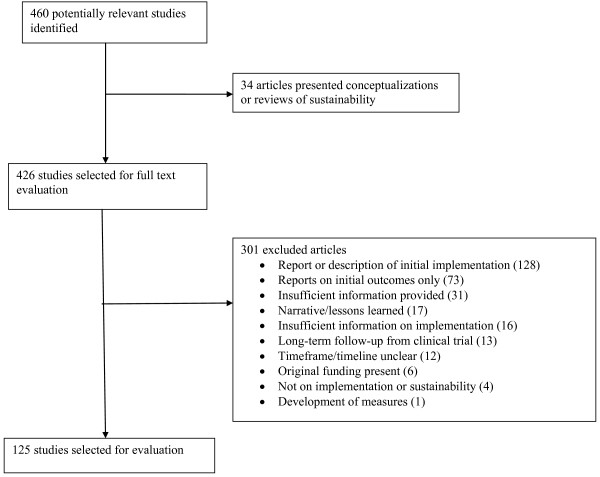
“Figure 1 is a modified PRISMA (which stands for Preferred Reporting Items for Systematic Reviews and Meta-Analyses [33]) diagram summarizing the selection process, which includes reasons that potentially relevant papers were excluded.”
Preferred reporting items for systematic reviews and meta-analyses: the PRISMA Statement.
(2009) · PubMed Central · Cited by 44,859
Rogers, E. M., Singhal, A., & Quinlan, M. M. (2019) · An Integrated Approach to Communication Theory and Research · doi:10.4324/9780203710753-35 · Cited by 37,322
Exploration and Exploitation in Organizational Learning
March, J. G. (1991) · Organization Science · doi:10.1287/orsc.2.1.71 · Cited by 21,942
Wang, G., Ma, R., Qiao, G., Wada, K., Aizawa, Y., & Satoh, T. (2015) · Integrative Medicine International · doi:10.1159/000368408 · Cited by 18,657
Organizational culture and leadership
(1993) · Long Range Planning · doi:10.1016/0024-6301(93)90120-5 · Cited by 16,462
Damschroder, L. J., Aron, D. C., Keith, R. E., Kirsh, S. R., Alexander, J. A., & Lowery, J. C. (2009) · Implementation Science · doi:10.1186/1748-5908-4-50 · Cited by 14,496 · cited 2×
“In contrast to the relatively consistent emphasis on characteristics of the innovation within conceptualizations of sustainability and the broader implementation literature, fewer studies than expected found that characteristics of the innovation were associated with sustainability [3,9,64].”
Valente, T. W. (2003) · Genetics in Medicine · doi:10.1097/01.gim.0000061743.67794.c4 · Cited by 13,723
Research works printed but not linked: 21
- Greenhalgh T How to Spread Good Ideas: A systematic review of the literature on diffusion, dissemination, and sustainability of innovations in health service delivery and organization, in Report for the National Co-ordinating Centre for NHS Service Delivery and Organisation R & D (NCCSDO) 2004 London: University College 362
- Maher L Gustafson DA Sustainability Model and Guide: Evans; 2007
- Stirman SW Sustainability: A systematic review of methods and conceptualizations. in Fourth Annual NIH Conference on the Science of Dissemination and Implementation 2011 Bethesda, MD
- Scheirer MA J Dearing An Agenda for Research on the Sustainability of Public Health Programs 2011 American Journal of Public Health in press PMC3222409 21940916
- Kimberly JR Starbuck WH Nystrom PC Managerial Innovation, in Handbook of Organizational Design 1981 New York: Oxford University Press 84 104
- Claquin P Sustainability of EPI: Utopia or Sine Qua Non Condition of Child Survival, in Resources for Child Health Project 1989 Arlington; REACH
- Lafond AK Improving the quality of investment in health: lessons on sustainability Health Policy Plan 1995 10 63 76
- Ovretveit J Making temporary quality improvement continuous 2003 Stockholm: Swedish Association of County Councils
- SW S CF R McMackin, et al Moving From the Laboratory to the Real World: Implementation Science and Effectiveness in Practice Settings, in Toward an Integrated Approach to Trauma Focused Therapy: Placing Evidence-Based Interventions in an Expanded Psychological Context American Psychological Association: Washington, D.C in press
- Davies B Tremblay D Edwards N Bick D, Ingram ID Sustaining evidence-based practice systems and measuring the impacts, in Evaluating the Impact of Implementing Evidence-Based Practice 2010 Oxford: Wiley Blackwell
- Blasinsky M Goldman HH Unutzer J Project IMPACT: a report on barriers and facilitators to sustainability Adm Policy Ment Health 2006 33 6 718 729 10.1007/s10488-006-0086-7 16967339 · DOI · Paper page
- Bowman C Sobo E Asch S Gifford A The H. I. V. Hepatitis Quality Enhancement Research Initiative: Measuring persistence of implementation: QUERI series Implement Sci 2008 3 1 21 10.1186/1748-5908-3-21 18430200 PMC2390585 · DOI · Paper page
- Gruen RL Elliott JH Nolan ML Lawton PD Parkhill A McLaren CJ Lavis JN Sustainability science: an integrated approach for health-programme planning Lancet 2008 372 9649 1579 1589 10.1016/S0140-6736(08)61659-1 18984192 · DOI · Paper page
- Massatti RR Sweeney HA Panzano PC Roth D The de-adoption of innovative mental health practices (IMHP): why organizations choose not to sustain an IMHP Adm Policy Ment Health 2008 35 1-2 50 65 10.1007/s10488-007-0141-z 17968652 · DOI
- Nilsen P Timpka T Nordenfelt L Lindqvist K Towards improved understanding of injury prevention program sustainability Saf Sci 2005 43 10 815 10.1016/j.ssci.2005.08.015 · DOI
- Plochg T Delnoij DM Hoogedoorn NP Klazinga NS Collaborating while competing? The sustainability of community-based integrated care initiatives through a health partnership BMC Health Serv Res 2006 20 6 37 PMC1464130 16549028
- Rabin B Nehl E Elliott T Deshpande A Brownson R Glanz K Individual and setting level predictors of the implementation of a skin cancer prevention program: a multilevel analysis Implement Sci 2010 5 40 53 10.1186/1748-5908-5-40 20513242 PMC2901365 · DOI
- Rohrbach LA Graham JW Hansen WB Diffusion of a school-based substance abuse prevention program: predictors of program implementation Prev Med 1993 22 2 237 260 10.1006/pmed.1993.1020 8483862 · DOI · Paper page
- Ruch-Ross H Keller D Miller N Bassewitz J Melinkovich P Evaluation of community-based health projects: the healthy tomorrows experience Pediatrics 2008 122 3 e564 e572 10.1542/peds.2006-3273 18762490 · DOI
- Scheirer MA The life cycle of an innovation: adoption versus discontinuation of the fluoride mouth rinse program in schools J Health Soc Behav 1990 31 2 203 215 10.2307/2137173 2102498 · DOI · Paper page
- Scheirer MA Hartling G Hagerman D Defining sustainability outcomes of health programs: Illustrations from an on-line survey Eval Program Plann 2008 31 4 335 346 10.1016/j.evalprogplan.2008.08.004 18835642 · DOI · Paper page
Cited by
Items 601–700 of 1,000
Sustainable Healthcare Systems
Osorio‐González, C. S., Hegde, K., Brar, S. K., Ramírez, A. A., & Surampalli, R. Y. (2020) · Wiley eBooks · doi:10.1002/9781119434016.ch18 · Cited by 14
Bux, C., & Amicarelli, V. (2025) · Journal of Foodservice Business Research · doi:10.1080/15378020.2025.2506931 · Cited by 14
Bejerholm, U., Allaskog, C., Andersson, J., Nordström, L., & Roe, D. (2022) · Health Expectations · doi:10.1111/hex.13480 · Cited by 18
Elsey, H., Azdi, Z. A., Regmi, S., Baral, S., Fatima, R., Fieroze, F., Huque, R., Karki, J., Khan, D. M., Khan, A., et al. (2022) · Health Research Policy and Systems · doi:10.1186/s12961-022-00842-1 · Cited by 13
Åhlfeldt, E., Isaksson, D., & Winblad, U. (2023) · Health & Social Care in the Community · doi:10.1155/2023/1458305 · Cited by 25
Lai, J., Maher, L. M., Li, C., Zhou, C., Alelayan, H., Fu, J., & Wu, Y. (2023) · BMC Nursing · doi:10.1186/s12912-023-01293-x · Cited by 11
“A systematic review which included 125 healthcare improvement projects, found that even when full implementation was achieved, most programs did not achieve sustainability of all aspects of the project as initially designed or achieved [9].”
BackgroundReinforcing Feedbacks for Sustainable Implementation of Rural Drinking-Water Treatment Technology
Laauwen, M., & Nowicki, S. (2024) · ACS ES&T Water · doi:10.1021/acsestwater.3c00779 · Cited by 19
Fofanah, B. D., Kamara, I. F., Kallon, C., Kamara, R. Z., Nuwagira, I. B., Musoke, R., Tengbe, S. M., Lakoh, S., Korjie, M. M., Sheriff, B., et al. (2024) · BMC Health Services Research · doi:10.1186/s12913-024-11368-3 · Cited by 11
“The core of this study was the evaluation of a locally produced ABHR formulated in strict adherence to the WHO formulation 1.”
Implementing the teen marijuana check-up in schools—a study protocol
Hartzler, B. J., Lyon, A. R., Walker, D. D., Matthews, L., King, K. M., & McCollister, K. E. (2017) · Implementation Science · doi:10.1186/s13012-017-0633-5 · Cited by 15
Sustaining and spreading quality improvement: Decreasing intrapartum malpractice risk
Santos, P., Joglekar, A., Faughnan, K., Darden, J., Masters, L., Hendrich, A. L., & McCoy, C. K. (2018) · Journal of Healthcare Risk Management · doi:10.1002/jhrm.21329 · Cited by 12
Affrunti, N. W., & Creed, T. A. (2019) · Cognitive Therapy and Research · doi:10.1007/s10608-019-09998-7 · Cited by 15
“2016b) and a significant proportion of clinicians continue to fail to deliver the therapy with fidelity even after training (Miller et al. 2004; Stirman et al. 2012).”
Pearrow, M. M., Amador, A., & Dennery, K. M. (2019) · Journal of Educational and Psychological Consultation · doi:10.1080/10474412.2019.1663743 · Cited by 12
“Some guiding influences for sustainability include appropriate training and ongoing support, modifiable programs to meet individual school needs, and ensuring that these behavioral supports fit within each organization’s mission and goals (Scheirer, 2005; Stirman et al., 2012), while also accounting for a sense of own…”
BackgroundLee, R. E., Parker, N. H., Hallett, A. M., Kao, D., Modelska, M. J., Rifai, H. S., Soltero, E. G., & O’Connor, D. P. (2020) · Translational Behavioral Medicine · doi:10.1093/tbm/ibaa058 · Cited by 13
Long-term evaluation of a train-the-trainer workshop for pharmacy faculty using the RE-AIM framework
Elkhadragy, N., Corelli, R. L., Zillich, A. J., Campbell, N. L., & Hudmon, K. S. (2020) · Research in Social and Administrative Pharmacy · doi:10.1016/j.sapharm.2020.11.018 · Cited by 11
Sullivan, J. L., Montano, A.-R. L., Hughes, J. M., Davila, H. W., O’Malley, K. A., Engle, R. L., Hawley, C. E., Shin, M. H., Smith, J. G., & Pimentel, C. B. (2022) · The Gerontologist · doi:10.1093/geront/gnac096 · Cited by 15
Minick, K. I., Hunter, S. J., Capin, J. J., Stevens‐Lapsley, J. E., Snow, G. L., Woodfield, D., Dibblee, P., & Brennan, G. P. (2022) · Journal of Orthopaedic and Sports Physical Therapy · doi:10.2519/jospt.2022.11369 · Cited by 12
Reardon, C. M., Damschroder, L. J., Widerquist, M. A. O., Arasim, M. E., Jackson, G. L., White, B. S., Cutrona, S. L., Fix, G. M., Gifford, A. L., DeLaughter, K. L., et al. (2023) · Implementation Science Communications · doi:10.1186/s43058-022-00386-z · Cited by 13
Escoffery, C., Sekar, S., Allen, C. G., Madrigal, L., Haardöerfer, R., & Mertens, A. C. (2023) · Translational Behavioral Medicine · doi:10.1093/tbm/ibac115 · Cited by 13
Touati, N., & Denis, J. (2014) · Télescope Revue d’analyse comparée en administration publique · doi:10.7202/1023837ar · Cited by 11
Dupont, C., Occelli, P., Deneux‐Tharaux, C., Touzet, S., Duclos, A., Bouvier‐Colle, M., Rudigoz, R.-C., & Huissoud, C. (2014) · European Journal of Obstetrics & Gynecology and Reproductive Biology · doi:10.1016/j.ejogrb.2014.04.021 · Cited by 13
Sustainability: A Comprehensive Literature
Mukherjee, A., Kamarulzaman, N. H., Vijayan, G., & Vaiappuri, S. K. N. (2015) · Advances in logistics, operations, and management science book series · doi:10.4018/978-1-4666-9639-6.ch015 · Cited by 14
Wieland, M. L., Nigon, J. A., Weis, J. A., Espinda-Brandt, L., Beck, D., & Sia, I. G. (2018) · Journal of Public Health Management and Practice · doi:10.1097/phh.0000000000000851 · Cited by 13
A cross-country study of mis-implementation in public health practice
Furtado, K. S., Budd, E. L., Armstrong, R., Pettman, T. L., Reis, R. S., Sung‐Chan, P., Wang, Z., & Brownson, R. C. (2019) · BMC Public Health · doi:10.1186/s12889-019-6591-x · Cited by 11
Evaluating the sustainability of health programmes: A literature review
Ishola, F., & Čekan, J. (2019) · African Evaluation Journal · doi:10.4102/aej.v7i1.369 · Cited by 15
“Stirman et al. (2012) in their review of sustainability of new programmes and innovations identified studies from a variety of fields, but the applicability of their findings to any one sector including the health sector may be somewhat limited.”
BackgroundPatel, P., Greene, M. T., Jones, K. M., Rolle, A. J., Ratz, D., Snyder, A. M., Saint, S. K., & Chopra, V. (2019) · Annals of Internal Medicine · doi:10.7326/m18-3533 · Cited by 12
Bateman, E. A., Sreenivasan, V. A., Farahani, F., Casemore, S., Chase, A. D., Duley, J. M., Evbuomwan, I. K., Flett, H. M., Ventre, A., Craven, B. C., et al. (2021) · Journal of Spinal Cord Medicine · doi:10.1080/10790268.2021.1936946 · Cited by 11
Choosing Wisely: An idea worth sustaining
Kastner, M., Makarski, J., Mossman, K., Harris, K., Hayden, L., Giraldo, M., Sharma, D., Asalya, M., Jussaume, L., Eisen, D., et al. (2021) · Health Services Research · doi:10.1111/1475-6773.13917 · Cited by 13
Kiwanuka, S. N., Tetui, M., George, A. S., Kisakye, A. N., Walugembe, D. R., & Kiracho, E. E. (2015) · Journal of Management and Sustainability · doi:10.5539/jms.v5n2p97 · Cited by 13
“Accordingly, several reviews stress its dynamic nature fuelled by interactions between stakeholders, institutions and program targets, ensuring continuation through adaptations to broader environments (Shediac-Rizkallah, 1998; Gruen et al., 2008; Stirman et al., 2012).”
BackgroundMethodInfluentialvan de Glind, I., Heinen, M. M., Geense, W. W., Mesters, I., Wensing, M., & van Achterberg, T. (2015) · Health Education Research · doi:10.1093/her/cyv020 · Cited by 13
Rieth, S. R., Stahmer, A. C., & Brookman-Frazee, L. I. (2018) · Autism and child psychopathology series · doi:10.1007/978-3-319-90994-3_27 · Cited by 11
Lelubre, M., Clerc, O., Grosjean, M., Amighi, K., Vriese, C. D., Bugnon, O., & Schneider, M. P. (2018) · BMC Health Services Research · doi:10.1186/s12913-018-3509-8 · Cited by 14
The Cost of Quality: Organizational Financial Health and Program Quality
Bunger, A. C., Despard, M., Lee, M., & Cao, Y. (2018) · Journal of Evidence-Based Social Work · doi:10.1080/23761407.2018.1536575 · Cited by 14
Gupta, R., Fitzgibbons, C., Ramsay, C., Vanderheiden, L., Toppozini, C., & Lobos, A.-T. (2019) · Medical Education Online · doi:10.1080/10872981.2019.1581521 · Cited by 11
Thompson, C., Williams, K., Morris, D., Lago, L., Kobel, C., Quinsey, K., Eckermann, S. D., Andersen, P., & Masso, M. R. (2014) · Research Online (University of Wollongong) · Cited by 11
Adams, R. J., Ellis, C., Magwood, G., Kindy, M. S., Bonilha, L., Lackland, D. T., & And the WISSDOM INVESTIGATORS (2018) · Ethnicity & Disease · doi:10.18865/ed.28.1.61 · Cited by 11
Moreland‐Russell, S., Combs, T., Gannon, J., Jost, E., Saliba, L. F., Prewitt, K., Luke, D. A., & Brownson, R. C. (2024) · Implementation Science · doi:10.1186/s13012-024-01340-4 · Cited by 14
“However, research consistently indicates that even effectively implemented interventions risk failure when funding, planning, or training ends [6, 29–31].”
Glanz, K., Escoffery, C., Elliott, T., & Nehl, E. J. (2014) · American Journal of Public Health · doi:10.2105/ajph.2014.302224 · Cited by 12
Bush, P. L., & Bengoechea, E. G. (2016) · Evaluation and Program Planning · doi:10.1016/j.evalprogplan.2016.02.005 · Cited by 14
“YMCA partners’ adaptations of our program evaluation tools indicates a potential lasting effect of this study given the sustainability of an innovation is influenced by the extent to which it may be modified (Stirman et al., 2012).”
BackgroundLindholm, L. H., Koivukangas, A., Lassila, A., & Kampman, O. (2019) · Nordic Journal of Psychiatry · doi:10.1080/08039488.2019.1582698 · Cited by 11
“a large system-wide implementation programme for EBTs targeted at post-traumatic disorder [22,23].”
BackgroundResultAllchin, B., Weimand, B. M., O’Hanlon, B., & Goodyear, M. J. (2020) · International Journal of Mental Health Nursing · doi:10.1111/inm.12754 · Cited by 12
Hall, T. L., Ortiz, C. B., Peña-Jackson, G., Fultineer, C., Werner, K., & Sunshine, J. E. (2021) · Journal of patient-centered research and reviews · doi:10.17294/2330-0698.1770 · Cited by 10
Chelagat, T., Kokwaro, G. O., Onyango, J. O., & Rice, J. (2021) · BMJ Open · doi:10.1136/bmjopen-2019-035475 · Cited by 13
Gordon, E. J., Uriarte, J. J., Anderson, N., Smith, J. D., Caicedo, J. C., & Shumate, M. (2022) · Journal of Clinical and Translational Science · doi:10.1017/cts.2022.378 · Cited by 10
“While there are a variety of study designs for sustainment research, scholars recommend assessment over multiple time points throughout a multi-year study to identify potential changes to the intervention that may affect sustainment [3,5,19].”
BackgroundShoesmith, A., Hall, A. E., Wolfenden, L., Shelton, R. C., Yoong, S. L., Crane, M. A., Lane, C., McCarthy, N., Lecathelinais, C., & Nathan, N. (2022) · BMC Public Health · doi:10.1186/s12889-022-13732-6 · Cited by 13
Are Sustainable Health Workforces Possible? Issues and a Possible Remedy
Rees, G. H., James, R., Samadashvili, L., & Scotter, C. (2023) · Sustainability · doi:10.3390/su15043596 · Cited by 12
Drew, A. L., Rhoades, K. A., Slep, A. M. S., Heyman, R. E., & Yang, H. (2023) · Military Psychology · doi:10.1080/08995605.2023.2241591 · Cited by 12
“Because this work is nascent, qualitative methods are ideal for identifying implementation determinants across the military social ecology (Wiltsey Stirman et al., 2012).”
Helsper, N., Dippon, L., Birkholz, L., Rütten, A., Kohler, S., Weber, P., Pfeifer, K., & Semrau, J. (2023) · Perspectives in Public Health · doi:10.1177/17579139231186693 · Cited by 16
“24,28,31 Factors that consider the complex intervening influences on sustainability of entire community systems are required 24,27,31 as linear influences may no longer apply to multilevel approaches.”
Adaptation for sustainability in an implementation trial of team-based collaborative care
Miller, C. J., Sullivan, J. L., Connolly, S. L., Richardson, E. J., Stolzmann, K. L., Brown, M. B., Bailey, H. M., Weaver, K. R., Sippel, L. M., & Kim, B. (2024) · Implementation Research and Practice · doi:10.1177/26334895231226197 · Cited by 12
“Healthcare interventions will have minimal public health impact if they are not sustained after initial implementation (Wiltsey Stirman et al., 2012).”
Implementing evidence-based programmes in children’s services : Key issues for success
Wiggins, M., Austerberry, H., & Ward, H. (2012) · Cited by 15
Hoekstra, F., Hettinga, F. J., den Breejen, M., Duijf, M., van der Woude, L. H. V., Dekker, R., & van der Schans, C. P. (2017) · Journal of Rehabilitation Medicine · doi:10.2340/16501977-2220 · Cited by 10
“The continuation of a program over an extended period may be even more difficult [8-11].”
Sustainability of an Evidence-Based Practice in Community Mental Health Agencies Serving Children
Horwitz, S. M., Lewis, K. D. C., Gleacher, A. A., Wang, N., Bradbury, D. M., Ray-LaBatt, M., & Hoagwood, K. (2019) · Psychiatric Services · doi:10.1176/appi.ps.201800430 · Cited by 10
Kruger, S. Z., Bronskill, S. E., Jeffs, L. P., Steinberg, M., Morris, A. M., & Bell, C. M. (2020) · Infection Control and Hospital Epidemiology · doi:10.1017/ice.2020.214 · Cited by 13
Ryba, M. M., Lo, S. B., & Andersen, B. L. (2019) · Translational Behavioral Medicine · doi:10.1093/tbm/ibz175 · Cited by 11
“applyparastyle "fig//caption/p[1]" parastyle "FigCapt" applyparastyle "fig" parastyle "Figure"”
BackgroundResultInfluentialSustainability determinants of the Burkinabe performance-based financing project
Seppey, M., Somé, P., & Ridde, V. (2021) · Journal of Health Organization and Management · doi:10.1108/jhom-04-2020-0137 · Cited by 13
Takaoka, A., Tam, B., Vanstone, M. G., Clarke, F. J., Hoad, N., Swinton, M. E., Toledo, F., Boyle, A., Woods, A., Duan, E. H., et al. (2021) · BMC Health Services Research · doi:10.1186/s12913-021-06241-6 · Cited by 11
Ma, T., Tellegen, C. L., & Sanders, M. R. (2022) · American Journal of Community Psychology · doi:10.1002/ajcp.12623 · Cited by 11
Spoelstra, S., Schueller, M., Basso, V., & Sikorskii, A. E. (2022) · Implementation Science · doi:10.1186/s13012-022-01232-5 · Cited by 10
Smoking cessation: a community-based approach to continuing medical education
Shershneva, M. B., Cohen, A., Larrison, C., Detzler, K., & Ales, M. W. (2014) · Translational Behavioral Medicine · doi:10.1007/s13142-014-0288-6 · Cited by 10
Understanding the sustainability of implementing HIV services in criminal justice settings
Visher, C. A., Yang, Y., Mitchell, S. G., Patterson, Y. O., Swan, H., & Pankow, J. (2015) · Health & Justice · doi:10.1186/s40352-015-0018-2 · Cited by 10
“Scheirer and Dearing (2011) point out that sustainable outcomes for public health programs are likely to require processes that start long before the end of initial implementation and program funding.”
BackgroundInfluentialMoore, J. E., Grouchy, M., Graham, I. D., Shandling, M. R., Doyle, W., & Straus, S. E. (2016) · Healthcare policy · doi:10.12927/hcpol.2016.24629 · Cited by 14
“Given the challenges in sustaining implementation efforts and the typically low rates of sustainability (Stirman et al. 2012), these findings are promising and indicate that the ARTIC model supports a high level of sustainment.”
Arain, M. A., Suter, E., Hepp, S. L., Nanayakkara, S., Harrison, E., Mickelson, G., Bainbridge, L., & Grymonpre, R. (2017) · Journal of Continuing Education in the Health Professions · doi:10.1097/ceh.0000000000000160 · Cited by 12
“IPE needs to be integrated into the education system to achieve sustainability.(18,19)We established a sustainability group to facilitate mechanisms for the adoption and continued use of tools, and evaluate the long-term sustainability and quality assurance of the modules.”
BackgroundStakeholder input into the implementation of a new music therapy program in a mental health service
Bibb, J., Castle, D. J., & McFerran, K. S. (2018) · Mental Health Review Journal · doi:10.1108/mhrj-12-2017-0056 · Cited by 10
Ooms, L., van Kruijsbergen, M., Collard, D. C. M., Leemrijse, C. J., & Veenhof, C. (2019) · BMC Sports Science Medicine and Rehabilitation · doi:10.1186/s13102-019-0137-5 · Cited by 14
Chavez-Rimache, L., Ugarte‐Gil, C., & Brunette, M. J. (2023) · medRxiv · doi:10.1101/2023.01.10.22283706 · Cited by 14
Ageless play: Sustaining intergenerational playgroup programmes
Stanley, M., Allen, P., Tunks, T.-A., Davenport, M., & Cartmel, J. (2021) · Journal of Early Childhood Research · doi:10.1177/1476718x211059662 · Cited by 10
“Sustainable practices are practices that ‘become part of the habits and routines of the host organizations and communities’ (Stirman et al., 2012: 2).”
BackgroundKuroda, Y., Fujita, K., Sugimoto, T., Uchida, K., Shimazu, T., Saito, J., Arai, H., & Sakurai, T. (2023) · Archives of Public Health · doi:10.1186/s13690-023-01205-0 · Cited by 10
Perrino, T., Lozano, A., Estrada, Y. A., Tapia, M. I., Brown, C. H., Horigian, V. E., Beardslee, W. R., & Prado, G. J. (2024) · Translational Behavioral Medicine · doi:10.1093/tbm/ibae056 · Cited by 11
Soler, M., Alfaro, K. M., Rauda, J. C., Torres, E., Pérez, J. R., Méndez, F., Rodriguez, G. C., Chacon, M. A., Erazo, M. P., MASCH, R. J., et al. (2025) · JCO Global Oncology · doi:10.1200/go-25-00065 · Cited by 4
Azeredo, T. B., Oliveira, M. A., Santos-Pinto, C. D. B., Miranda, E. S., & Osorio-de-Castro, C. G. S. (2017) · Ciência & Saúde Coletiva · doi:10.1590/1413-81232017228.29472016 · Cited by 11
“In a literature review on the sustainability of new programs and innovations, which included 125 health related studies, Stirman et al.(14) point out that the majority of studies neither explore the nature and reasons for changes, nor the process by which adaptations and key decisions are made.”
BackgroundInfluentialKossman, M. K., McCrae, A. J., Pryor, R. R., Frank, S. C., Hayford, R., Logan, P., Moakley, M. G., Register‐Mihalik, J. K., & Kerr, Z. Y. (2020) · Journal of Athletic Training · doi:10.4085/321-20 · Cited by 10
Caton, L., Yuan, M., Louie, D., Gallo, C. G., Abram, K. M., Palinkas, L. A., Brown, C. H., & McGovern, M. P. (2020) · Substance Abuse Treatment Prevention and Policy · doi:10.1186/s13011-020-00326-x · Cited by 10
Tierney, E., Rodríguez, L., Kennan, D., Devaney, C., Brady, B., Canavan, J., Forkan, C., Cassidy, A., Malone, P., & McGregor, C. (2022) · Journal of Children s Services · doi:10.1108/jcs-04-2021-0014 · Cited by 12
Sustainment Rates and Factors for Multidimensional Family Therapy in Europe and North America
Dakof, G. A., Ricardo, M. M., Rowe, C. L., Henderson, C. E., Rigter, H., & Liddle, H. A. (2022) · Global Implementation Research and Applications · doi:10.1007/s43477-022-00043-6 · Cited by 10
“It is generally accepted that although the boundary between implementation and sustainment is not unyielding, sustainment should be studied as a separate phase from implementation, as specific factors which influence implementation may differentially influence sustainability (Stirman et al., 2012).”
BackgroundUnderstanding How Newly Implemented Rehabilitation Best Practices Are Sustained: A Realist Review
Ataman, R., Ahmed, S., Zidan, A., & Thomas, A. (2022) · Archives of Physical Medicine and Rehabilitation · doi:10.1016/j.apmr.2022.05.016 · Cited by 12
Love, P., Laws, R., Taki, S., West, M. L., Hesketh, K. D., & Campbell, K. J. (2022) · Frontiers in Health Services · doi:10.3389/frhs.2022.1031628 · Cited by 10
Wang, B., STANTON, B. F., Lunn, S., Rolle, G., Poitier, M., Adderley, R., Li, X., Koci, V., & Deveaux, L. (2015) · Prevention Science · doi:10.1007/s11121-015-0592-5 · Cited by 11
“DEBI and related efforts supporting evidence-based practice have resulted in an increasing number of evidence-based interventions being implemented among expanded audiences in the past decade (Stirman et al. 2012).”
BackgroundSustentabilidade de intervenções em promoção da saúde: uma sistematização do conhecimento produzido
Oliveira, S. R. D. A., Potvin, L., & Medina, M. G. (2015) · Saúde em Debate · doi:10.1590/0103-110420161070357 · Cited by 13
“…aponta, ainda, que a estabilidade da força de trabalho é determinante para a sustentabilidade (SCHEIRER, 2005; JOHNSON ET AL., 2004; WILTSEY-STIRMAN ET AL., 2012); Financiamento – Muitas intervenções de promoção da saúde não conseguem se tornar sustentáveis devido à insuficiência de…”
BackgroundInfluentialLee, H. (2016) · International Journal of Social Science Studies · doi:10.11114/ijsss.v5i1.2055 · Cited by 9
“Although there is little consensus on sustainability timeframe as in one, three or five years, sustainability should be measured not only beyond the program completion but at multiple time points to capture variations over time due to its dynamic nature (Stirman et al., 2012).”
BackgroundInfluentialSustainability of Evidence-Based Acute Pain Management Practices for Hospitalized Older Adults
Shuman, C. J., Xie, X., Herr, K., & Titler, M. G. (2017) · Western Journal of Nursing Research · doi:10.1177/0193945917738781 · Cited by 10
“A seminal review called for consensus on operational and conceptual definitions of sustainability (Shediac-Rizkallah & Bone, 1998); however, few published studies (<30%) have heeded their exhortation (Stirman et al., 2012).”
BackgroundMethodResultInfluentialElkhadragy, N., Corelli, R. L., Russ, A. L., Snyder, M. E., Clabaugh, M., & Hudmon, K. S. (2019) · Research in Social and Administrative Pharmacy · doi:10.1016/j.sapharm.2019.01.005 · Cited by 9
Riordan, F., McGrath, N., Dinneen, S. F., Kearney, P. M., & McHugh, S. (2019) · International Journal of Integrated Care · doi:10.5334/ijic.4215 · Cited by 10
Implementation in Residential Youth Care: Providers Perspectives on Effective Leadership Behavior
Vaskinn, L., Mellblom, A. V., Waaler, P. M., Skagseth, O., Bjørkli, C. A., & Kjøbli, J. (2020) · Residential Treatment for Children & Youth · doi:10.1080/0886571x.2020.1774464 · Cited by 14
“While research on adoption and implementation has received much attention, research on sustainment (i.e., continued use over time with desired receiver-outcomes) has been sparse (Wiltsey Stirman et al., 2012).”
BackgroundMobilizing an underused resource: cohort studies for population health intervention research
Edwards, N. C., & Plotnikoff, R. C. (2018) · International Journal of Epidemiology · doi:10.1093/ije/dyy191 · Cited by 9
Viljoen, J. L., Cochrane, D. M., Shaffer, C. S., Muir, N. M., Brodersen, E. M., Rogers, B. J., Douglas, K. S., Roesch, R. G., McMahon, R. J., & Vincent, G. M. (2019) · Criminal Justice and Behavior · doi:10.1177/0093854819873019 · Cited by 10
“For instance, although we found improvements in the quality of case plans in the 6 months following the implementation of the ARROW, practices can drift over time (Wiltsey et al., 2012).”
BackgroundGallo, C. G., Abram, K. M., Hannah, N. D., Caton, L., Cimaglio, B., McGovern, M. P., & Brown, C. H. (2021) · PLoS ONE · doi:10.1371/journal.pone.0245920 · Cited by 11
Goedendorp, M. M., Kuiper, D., Reijneveld, S. A., Sanderman, R., & Steverink, N. (2017) · Patient Education and Counseling · doi:10.1016/j.pec.2017.01.006 · Cited by 11
“Implementation frameworks commonly cover the issue of sustainability, also referred to as continuation [17], maintenance [18], or embedding an ESI at hand [19].”
van der Kleij, R., Crone, M. R., Reis, R., & Paulussen, T. G. (2016) · Health Education Research · doi:10.1093/her/cyw047 · Cited by 12
Sustainability of cash transfer programs: A realist case study
Owusu‐Addo, E., Renzaho, A. M. N., Sarfo‐Mensah, P., Sarpong, Y. A., Niyuni, W., & Smith, B. J. (2023) · Poverty & Public Policy · doi:10.1002/pop4.367 · Cited by 17
Exploring the sustainability of virtual care interventions: A scoping review
Austin, T., Tahsin, F., Larsen, D., BAKER, R. G., & Gray, C. S. (2025) · PLOS Digital Health · doi:10.1371/journal.pdig.0000893 · Cited by 11
Ahlgren, J. Á., Annerstedt, K. S., Elinder, L. S., & Andermo, S. (2026) · Archives of Public Health · doi:10.1186/s13690-026-01835-0 · Cited by 11
“Moreover, many interventions lack systematic follow-up beyond the initial implementation phase [67] and evidence indicates that teaching staff that works with health promotion interventions need to be supported by their supervisors to avoid being over-burdened [37].”
Expectations vs Reality of an Intraoperative Artificial Intelligence Intervention
Thornton, M. A., Cher, B. A. Y., Macdonald, C. L., Baker, J., Marten, E. L., Mai, D., Sankaranarayanan, G., & Balentine, C. J. (2026) · JAMA Surgery · doi:10.1001/jamasurg.2025.6029 · Cited by 12
Noort, B. A. C., van der Vaart, T., & Ahaus, K. (2021) · PLoS ONE · doi:10.1371/journal.pone.0258337 · Cited by 9
van Bochove-Waardenburg, M., van der Jagt, M., Ginkel, J. M. D. M., & Ista, E. (2023) · Intensive and Critical Care Nursing · doi:10.1016/j.iccn.2023.103398 · Cited by 8
Engagement of Health Volunteers: A Promising Approach for Meeting Community Needs
Washburn, L. T. (2017) · Journal of Extension · doi:10.34068/joe.55.03.23 · Cited by 8
“Engagement of volunteers such as those involved in EWAP can increase the sustainability of community-based programs, an essential outcome if programs are to make long-term differences in health behaviors (O'Loughlin, Renaud, Richard, Gomez, & Paradis, 1998; Scheirer & Dearing, 2011; Stirman et al., 2012).”
BackgroundSustaining health obesity prevention programs: Lessons from real-world population settings
Crane, M. A., Lee, K., Bohn-Goldbaum, E. E., Nathan, N., & Bauman, A. E. (2024) · Evaluation and Program Planning · doi:10.1016/j.evalprogplan.2024.102404 · Cited by 9
Clasen, L., & de López, K. M. J. (2016) · Journal of Early Childhood Literacy · doi:10.1177/1468798416638405 · Cited by 9
“…into consideration the context in which the programme will be applied: literature on implementation in healthcare stresses that many newly implemented practices are initially successful, but then fail to be sustained as an integrated part of the habits and routines of users (Stirman et al., 2012).”
BackgroundBergman, J., Linnell, J. D., Scherr, R. E., Ginsburg, D., Brian, K. M., Carter, R., Donohue, S., Klisch, S. A., Hall, S., Pressman, J., et al. (2018) · Journal of Extension · doi:10.34068/joe.56.01.22 · Cited by 8
“Although there is limited research suggesting a relationship between curriculum fidelity and student outcomes (Stirman et al., 2012), our findings suggest that greater fidelity to the curriculum procedures may be associated with the success of the SHCP.”
BackgroundConway, A., Dowling, M., & Devane, D. (2019) · BMC Medical Education · doi:10.1186/s12909-019-1488-z · Cited by 11
Sarre, S., Maben, J., Griffiths, P., Chable, R., & Robert, G. (2019) · Health Services and Delivery Research · doi:10.3310/hsdr07280 · Cited by 8
“August 2010 84 80 (64) 39 (21) 69 (37) 83 (27)”
Leedham-Green, K. E., Knight, A., & Reedy, G. B. (2021) · BMJ Open · doi:10.1136/bmjopen-2020-047943 · Cited by 14
Metadata
- Authors
- Wiltsey Stirman, S., Kimberly, J., Cook, N., Calloway, A., Castro, F., & Charns, M.
- Affiliations
- University of Pennsylvania (US)
- VA Boston Healthcare System (US)
- Boston University (US)
- Venue
- Implementation Science
- Published
- 2012-03-14
- Volume
- 7
- Issue
- 1
- Pages
- 17-17
- ISSN
- 1748-5908 (ISSN-L)
- PMC
- PMC3317864
- OpenAlex
- W2158467768
- Cited by
- 1,355
- References
- 211
- Citations by year
- 2026: 69 · 2025: 77 · 2024: 113 · 2023: 116 · 2022: 125 · 2021: 145 · 2020: 136 · 2019: 110 · 2018: 103 · 2017: 100 · 2016: 62 · 2015: 90 · 2014: 55 · 2013: 47 · 2012: 7
- FWCI
- 9.51
- Type
- journal article
- Language
- en
- Open access
- gold
- doi.org
- Licence
- Locations
- Implementation Science (publishedVersion, cc-by)
- Europe PMC (PubMed Central) (publishedVersion, cc-by)
- PubMed Central (publishedVersion, cc-by)
- PubMed (publishedVersion)
- ScholarlyCommons (University of Pennsylvania) (submittedVersion, cc-by)
- ScholarlyCommons (University of Pennsylvania) (submittedVersion)
- DOAJ (DOAJ: Directory of Open Access Journals) (submittedVersion, cc-by-sa)
- Funders
- U.S. Department of Veterans Affairs (R25 MH080916-01A2)
- Washington University in St. Louis (R25 MH080916-01A2)
- National Institutes of Health
- Quality Enhancement Research Initiative (R25 MH080916-01A2)
- National Institute of Mental Health (MH080916, R00 MH 01800, R00MH080100, R25MH080916, T32MH019836)
- Topics
- Health Sciences › Health Professions › General Health Professions › Health Policy Implementation Science
- Health Sciences › Health Professions › General Health Professions › Health Sciences Research and Education
- Health Sciences › Medicine › Public Health, Environmental and Occupational Health › Clinical practice guidelines implementation
- Keywords
- program sustainability, implementation outcomes, evidence-based programs, healthcare innovation, organizational context, organizational capacity, intervention fidelity, intervention adaptation, long-term implementation, sustainability factors, research recommendations, definition of sustainability
- MeSH terms
- Delivery of Health Care, Health Planning Guidelines, Humans, Organizational Innovation, Research Design, Program Evaluation, Evidence-Based Practice
About these checks
Registry, retraction, Cites and statistics results are computed, not judged, with one exception: a printed reference that no index lists is read once by a model before it counts as a citation error. Claims are extracted by a model and kept only when their quote appears verbatim in the text; each cited source is then checked, with a model’s help, for whether it says what the claim relies on. Those verdicts can be wrong — read the claim’s quote and the cited source before relying on one.
Statistics and arithmetic are recomputed, not judged.
Confidence bands are shown only for fields calibrated on our annotated test set. None is calibrated yet, so no band is shown.
What counts as a claim ›How we measure confidence ›How we check this ›
Are you an author, or do you see a problem with this page? Request a review
Data sources
Bibliographic data: Semantic Scholar, OpenAlex, Crossref.
Contains information from the Semantic Scholar Academic Graph Datasets, made available under the ODC Attribution License (ODC-BY 1.0).
Semantic Scholar’s data is described in: Kinney, R., et al. (2023). The Semantic Scholar Open Data Platform. arXiv:2301.10140.
