

The role of the small intestine in the development of dietary fat-induced obesity and insulin resistance in C57BL/6J mice
Open accessThe DOI matches its Crossref record; 53 of the 53 references it cites were found in a registry or an index.
Abstract
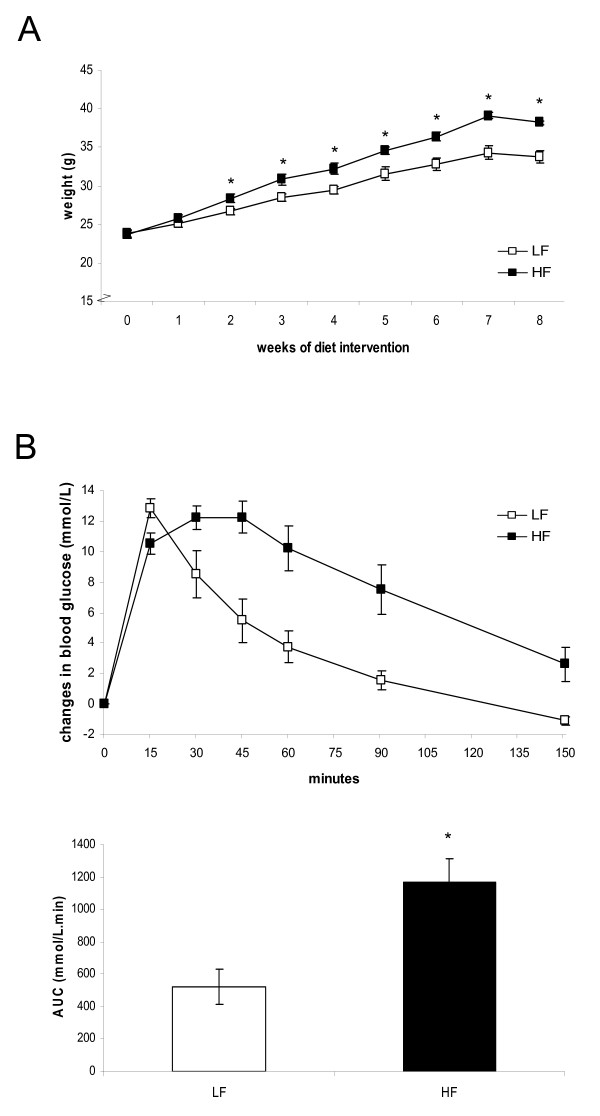
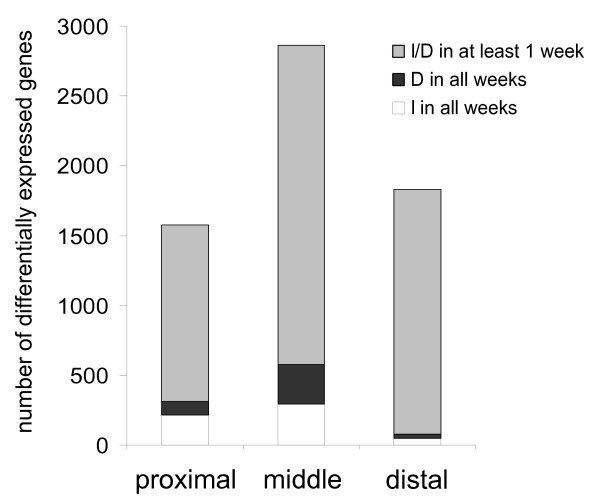
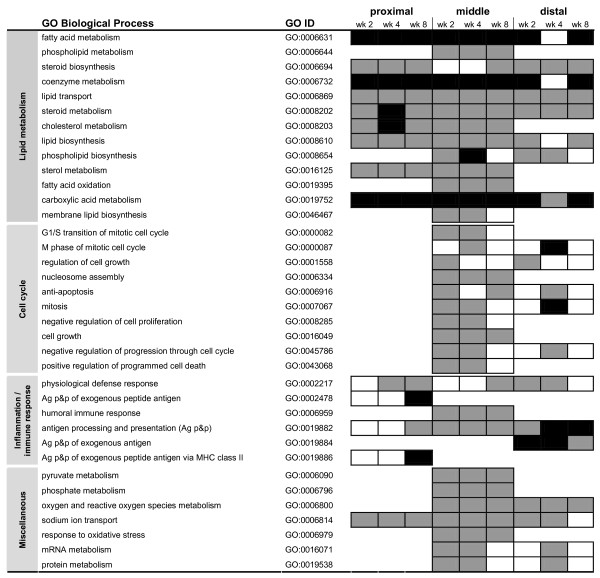
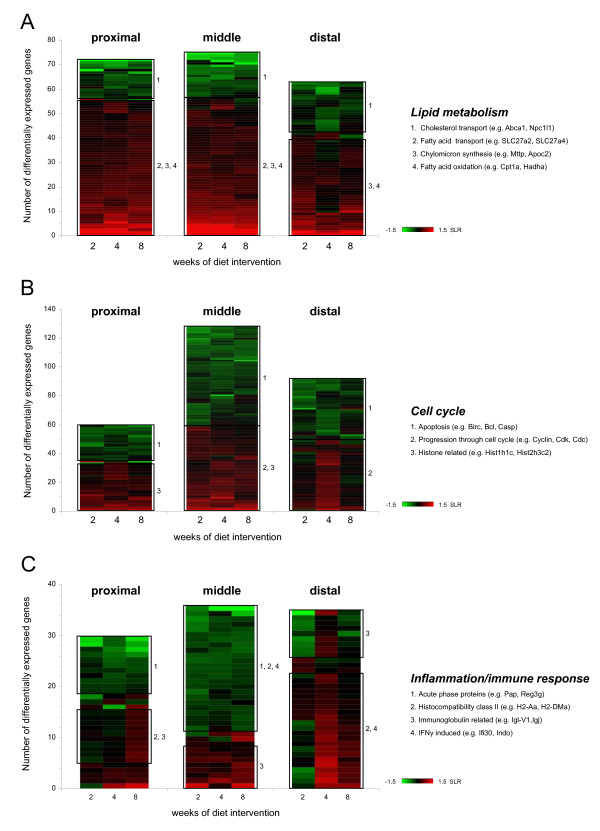
BACKGROUND: Obesity and insulin resistance are two major risk factors underlying the metabolic syndrome. The development of these metabolic disorders is frequently studied, but mainly in liver, skeletal muscle, and adipose tissue. To gain more insight in the role of the small intestine in development of obesity and insulin resistance, dietary fat-induced differential gene expression was determined along the longitudinal axis of small intestines of C57BL/6J mice. METHODS: Male C57BL/6J mice were fed a low-fat or a high-fat diet that mimicked the fatty acid composition of a Western-style human diet. After 2, 4 and 8 weeks of diet intervention small intestines were isolated and divided in three equal parts. Differential gene expression was determined in mucosal scrapings using Mouse genome 430 2.0 arrays. RESULTS: The high-fat diet significantly increased body weight and decreased oral glucose tolerance, indicating insulin resistance. Microarray analysis showed that dietary fat had the most pronounced effect on differential gene expression in the middle part of the small intestine. By overrepresentation analysis we found that the most modulated biological processes on a high-fat diet were related to lipid metabolism, cell cycle and inflammation. Our results further indicated that the nuclear receptors Ppars, Lxrs and Fxr play an important regulatory role in the response of the small intestine to the high-fat diet. Next to these more local dietary fat effects, a secretome analysis revealed differential gene expression of secreted proteins, such as Il18, Fgf15, Mif, Igfbp3 and Angptl4. Finally, we linked the fat-induced molecular changes in the small intestine to development of obesity and insulin resistance. CONCLUSION: During dietary fat-induced development of obesity and insulin resistance, we found substantial changes in gene expression in the small intestine, indicating modulations of biological processes, especially related to lipid metabolism. Moreover, we found differential expression of potential signaling molecules that can provoke systemic effects in peripheral organs by influencing their metabolic homeostasis. Many of these fat-modulated genes could be linked to obesity and/or insulin resistance. Together, our data provided various leads for a causal role of the small intestine in the etiology of obesity and/or insulin resistance.
Overview
The claims and statistics of this paper haven’t been checked yet.
Free: it reads the open-access text and checks the first 5 claims that cite a source we can check. Create a free account to check every claim.
Integrity signals
Registry
Cites
Statistics
Figures
Verification
Claims the paper makes
The claims and statistics of this paper haven’t been checked yet.
Free: it reads the open-access text and checks the first 5 claims that cite a source we can check. Create a free account to check every claim.
Claims other papers make about this one
Each is checked against this paper’s own text: does it say what the citing paper says it does?
In the citing paper
“Consistent with these findings, tempol increases the intestinal concentration of multiple taurine-conjugated bile acids, including tauro-β-muricholic acid (T-β-MCA). T-β-MCA is an antagonist of the farnesoid X receptor (FXR), a master regulator of lipid, glucose, and bile acid metabolism85, 87, 88.”
From The microbial pharmacists within us: a metagenomic view of xenobiotic metabolism (2016) · cites this paper as [87]
Self-check
Percentages, sums and reported differences re-computed from the paper’s own numbers.
The self-check needs the paper’s full text.
Citations
Cites
Primer3 on the WWW for General Users and for Biologist Programmers
Rozen, S., & Skaletsky, H. (2003) · Bioinformatics Methods and Protocols · doi:10.1385/1-59259-192-2:365 · Cited by 15,013 · cited 1×
“Primer sequences (see Additional file 3) were retrieved from the online PrimerBank database [17], or otherwise designed using the Primer3 program [18].”
An obesity-associated gut microbiome with increased capacity for energy harvest
Turnbaugh, P. J., Ley, R. E., Mahowald, M. A., Magrini, V., Mardis, E. R., & Gordon, J. I. (2006) · Nature · doi:10.1038/nature05414 · Cited by 12,444 · cited 1×
“Small intestinal factors that are previously reported to contribute to development of metabolic syndrome are gut hormones affecting satiety and glucose homeostasis [12,13], diminished fatty acid oxidative capacity of enterocytes [5] and gut microbiota-mediated modulations [6,14].”
Inflammation and metabolic disorders
Hotamisligil, G. S. (2006) · Nature · doi:10.1038/nature05485 · Cited by 9,199 · cited 1×
“In liver, muscle and adipose tissue, chronic inflammation is also considered to be a key player in the development of metabolic disorders [26].”
Obesity and insulin resistance
Kahn, B. B., & Flier, J. S. (2000) · Journal of Clinical Investigation · doi:10.1172/jci10842 · Cited by 3,225
Identification of a nuclear receptor for bile acids
Makishima, M., Okamoto, A. Y., Repa, J. J., Tu, H., Learned, R. M., Luk, A., Hull, M. V., Lustig, K. D., Mangelsdorf, D. J., & Shan, B. (1999) · Science · doi:10.1126/science.284.5418.1362 · Cited by 2,714 · cited 1×
“This receptor is activated by bile acids [22], which are supposed to be elevated in the small intestinal lumen after feeding a high-fat diet to facilitate digestion.”
Mechanisms underlying the resistance to diet-induced obesity in germ-free mice
Bäckhed, F., Manchester, J. K., Semenkovich, C. F., & Gordon, J. I. (2007) · Proceedings of the National Academy of Sciences · doi:10.1073/pnas.0605374104 · Cited by 2,615 · cited 4×
“The association between development of these disorders and excessive intake of dietary fat is frequently studied, especially in obesityprone C57BL/6J mice [ 4-8 ].”
InfluentialPPARγ Mediates High-Fat Diet–Induced Adipocyte Hypertrophy and Insulin Resistance
Kubota, N., Terauchi, Y., Miki, H., Tamemoto, H., Yamauchi, T., Komeda, K., Satoh, S., Nakano, R., Ishii, C., Sugiyama, T., et al. (1999) · Molecular Cell · doi:10.1016/s1097-2765(00)80210-5 · Cited by 1,342 · cited 1×
“Peroxisome proliferator activated receptor γ (Pparγ) -/+ mice; IR ▼ Agonists (TZDs) used as anti-diabetic agents [49, 50] minimal regulation”
Gastrointestinal regulation of food intake
Cummings, D. E., & Overduin, J. (2007) · Journal of Clinical Investigation · doi:10.1172/jci30227 · Cited by 1,216 · cited 2×
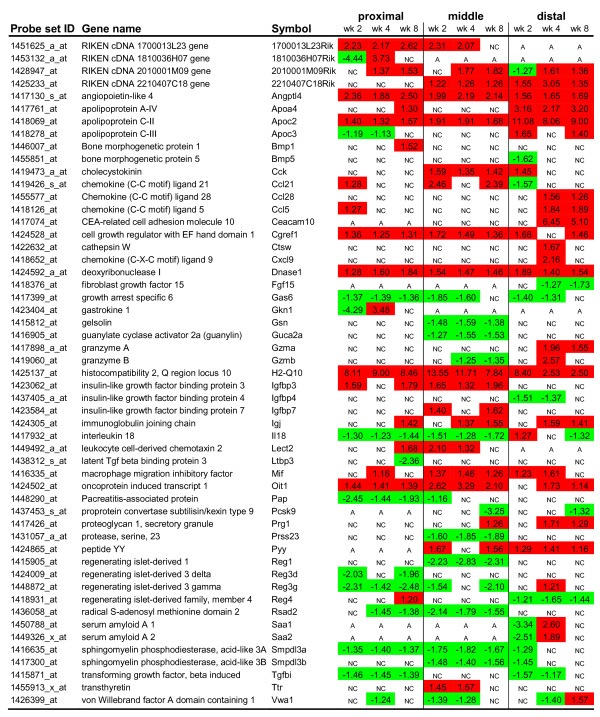
“Fibroblast growth factor 15 (Fgf15) Injection of Fgf15; glucose tolerance [41] ↓ D Glucagon-like peptide-1 (Glp1) High plasma levels; IR [12, 13] ↑ (slightly) M Gastric inhibitory polypeptide (Gip) High plasma levels; IR [13] ↑ (slightly) D Insulin-like growth factor binding protein 3 (Igfbp3) Tg mice; IR [42] ↑ P, M”
Vega, R. B., Huss, J. M., & Kelly, D. P. (2000) · Molecular and Cellular Biology · doi:10.1128/mcb.20.5.1868-1876.2000 · Cited by 1,195 · cited 1×
“Interestingly, the decreased expression of Pgc1α that we found in our study might point in the direction of a suboptimal activation of Pparα, as it is known that Pgc1α can cooperatively induce the expression of Pparα target genes and increase cellular fatty acid oxidation rates [30].”
Winzell, M. S., & Ahrén, B. (2004) · Diabetes · doi:10.2337/diabetes.53.suppl_3.s215 · Cited by 1,026 · cited 1×
“The association between development of these disorders and excessive intake of dietary fat is frequently studied, especially in obesityprone C57BL/6J mice [4-8].”
Cited by
FGF/FGFR signaling in health and disease
Xie, Y., Su, N., Yang, J., Tan, Q., Huang, S., Jin, M., Ni, Z., Zhang, B., Zhang, D., Luo, F., et al. (2020) · Signal Transduction and Targeted Therapy · doi:10.1038/s41392-020-00222-7 · Cited by 904
“The expression and production of FGF15/19 are regulated by many factors, such as BAs, nutrition, and so on.(537,538)”
The microbial pharmacists within us: a metagenomic view of xenobiotic metabolism
Spanogiannopoulos, P., Bess, E. N., Carmody, R. N., & Turnbaugh, P. J. (2016) · Nature Reviews Microbiology · doi:10.1038/nrmicro.2016.17 · Cited by 717
Li, F., Jiang, C., Krausz, K. W., Li, Y., Albert, I., Hao, H., Fabre, K. M., Mitchell, J. B., Patterson, A. D., & Gonzalez, F. J. (2013) · Nature Communications · doi:10.1038/ncomms3384 · Cited by 705
Gut-derived short-chain fatty acids are vividly assimilated into host carbohydrates and lipids
den Besten, G., Lange, K., Havinga, R., van Dijk, T. H., Gerding, A., van Eunen, K., Müller, M., Groen, A. K., Hooiveld, G. J., Bakker, B. M., et al. (2013) · American Journal of Physiology-Gastrointestinal and Liver Physiology · doi:10.1152/ajpgi.00265.2013 · Cited by 605
“Mice were fed a 82 semi-synthetic diet (based on D12450B (9), Research Diet Services, Wijk Bij Duurstede, The 83 Netherlands) for 6 weeks and had free access to drinking water.”
Self-citationRegulation of intestinal lipid metabolism: current concepts and relevance to disease
Ko, C.-W., Qu, J., Black, D. D., & Tso, P. (2020) · Nature Reviews Gastroenterology & Hepatology · doi:10.1038/s41575-019-0250-7 · Cited by 510
The Intestinal Immune System in Obesity and Insulin Resistance
Winer, D. A., Luck, H., Tsai, S., & Winer, S. (2016) · Cell Metabolism · doi:10.1016/j.cmet.2016.01.003 · Cited by 475
de Wit, N., Derrien, M., Bosch-Vermeulen, H., Oosterink, E., Keshtkar, S., Duval, C., de Vogel-van den Bosch, J., Kleerebezem, M., Müller, M., & van der Meer, R. (2012) · American Journal of Physiology-Gastrointestinal and Liver Physiology · doi:10.1152/ajpgi.00488.2011 · Cited by 428
“However, there is growing evidence that also the small intestine can contribute significantly to the development of metabolic diseases, especially in diet-induced disorders (5, 16).”
Self-citationA Consideration of Biomarkers to be Used for Evaluation of Inflammation in Human Nutritional Studies
Calder, P. C., Ahluwalia, N., Albers, R., Bosco, N., Bourdet-Sicard, R., Haller, D., Holgate, S. T., Jönsson, L. S., Latulippe, M. E., Marcos, A., et al. (2013) · British Journal of Nutrition · doi:10.1017/s0007114512005119 · Cited by 425
Self-citationNutrients and Oxidative Stress: Friend or Foe?
Tan, B. L., Norhaizan, M. E., & Liew, W.-P.-P. (2018) · Oxidative Medicine and Cellular Longevity · doi:10.1155/2018/9719584 · Cited by 403
Targeting fatty acid metabolism to improve glucose metabolism
Stinkens, R., Goossens, G. H., Jocken, J. W. E., & Blaak, E. E. (2015) · Obesity Reviews · doi:10.1111/obr.12298 · Cited by 183
Intestinal absorption of long-chain fatty acids: Evidence and uncertainties
Niot, I., Poirier, H., Tran, T. T. T., & Besnard, P. (2009) · Progress in Lipid Research · doi:10.1016/j.plipres.2009.01.001 · Cited by 184
Marcelin, G., Jo, Y.-H., Li, X., Schwartz, G. J., Zhang, Y., Dun, N. J., Lyu, R.-M., Blouet, C., Chang, J. K., & Chua, S. (2014) · Molecular Metabolism · doi:10.1016/j.molmet.2013.10.002 · Cited by 171
“Along these lines, Fgf15 expression has been reported to be reduced in the intestine of diet-induced obese mice [7] and lower FGF19 serum levels were found in patients with type 2 diabetes [8].”
Liu, T.-C., Kern, J. T., Jain, U., Sonnek, N. M., Xiong, S., Simpson, K. F., VanDussen, K. L., Winkler, E. S., Haritunians, T., Malique, A., et al. (2021) · Cell Host & Microbe · doi:10.1016/j.chom.2021.04.004 · Cited by 170
Role of intestinal inflammation as an early event in obesity and insulin resistance
Ding, S., & Lund, P. K. (2011) · Current Opinion in Clinical Nutrition and Metabolic Care · doi:10.1097/mco.0b013e3283478727 · Cited by 165
D'Aquila, T., Hung, Y.-H., Carreiro, A., & Buhman, K. K. (2016) · Biochimica et Biophysica Acta (BBA) - Molecular and Cell Biology of Lipids · doi:10.1016/j.bbalip.2016.04.012 · Cited by 133
Obesogen effects after perinatal exposure of 4,4′-sulfonyldiphenol (Bisphenol S) in C57BL/6 mice
Moral, L. I. D., Corre, L. L., Poirier, H., Niot, I., Truntzer, T., Merlin, J.-F., Rouimi, P., Besnard, P., Rahmani, R., & Chagnon, M. (2016) · Toxicology · doi:10.1016/j.tox.2016.05.023 · Cited by 146
“To study the obesogenic property of BPS, we chose a high fat diet with saturated lipids as the most efficient high fat diet (HFD) to stimulate mouse obesity development (de Wit et al., 2008) and corresponding to the phenomenon of obesity observed in western countries.”
Mao, J., Hu, X., Xiao, Y., Yang, C., Ding, Y., Hou, N., Wang, J., Cheng, H., & Zhang, X. (2013) · Diabetes · doi:10.2337/db13-0035 · Cited by 143
Fibroblast Growth Factor 15/19: From Basic Functions to Therapeutic Perspectives
Somm, E., & Jornayvaz, F. R. (2018) · Endocrine Reviews · doi:10.1210/er.2018-00134 · Cited by 116
The modulatory role of high fat feeding on gastrointestinal signals in obesity
Duca, F. A., Sakar, Y., & Covașă, M. (2013) · The Journal of Nutritional Biochemistry · doi:10.1016/j.jnutbio.2013.05.005 · Cited by 127
Hypertrophy Dependent Doubling of L-Cells in Roux-en-Y Gastric Bypass Operated Rats
Hansen, C. F., Bueter, M., Theis, N., Lutz, T., Paulsen, S., Dalbøge, L. S., Vrang, N., & Jelsing, J. (2013) · PLoS ONE · doi:10.1371/journal.pone.0065696 · Cited by 115
Rodrigues, M. E. D. S., Bekhbat, M., Houser, M. C., Chang, J., Walker, D. I., Jones, D. P., do Nascimento, C. M. P. O., Barnum, C. J., & Tansey, M. G. (2016) · Brain Behavior and Immunity · doi:10.1016/j.bbi.2016.08.021 · Cited by 128
“It has been suggested that down-regulation of IL-18 is associated with peripheral adaptations related to the development of MetS (de Wit et al., 2008; Nyima et al., 2016).”
Pavlovic, Z., & Bakovic, M. (2013) · International Journal of Molecular Sciences · doi:10.3390/ijms14022529 · Cited by 116
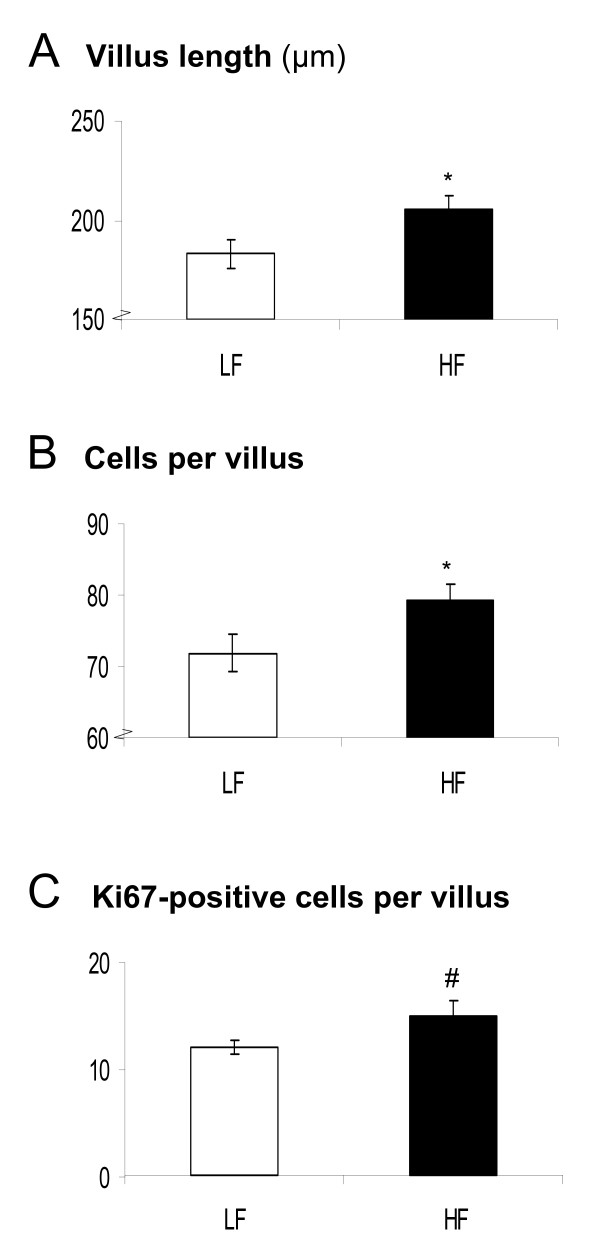
“In these mice, the number of cells per villus and body length was higher, a characteristics that may function to extend the capacity of lipid absorption [54].”
Reg3 Proteins as Gut Hormones?
Shin, J. H., & Seeley, R. J. (2019) · Endocrinology · doi:10.1210/en.2019-00073 · Cited by 116
van Aken, G. A. (2010) · Food Biophysics · doi:10.1007/s11483-010-9160-5 · Cited by 113
Jejunum: The understudied meeting place of dietary lipids and the microbiota
Lema, I., Araújo, J. R., Rolhion, N., & Demignot, S. (2020) · Biochimie · doi:10.1016/j.biochi.2020.09.007 · Cited by 103
New insights into the role of dietary triglyceride absorption in obesity and metabolic diseases
Li, X., Liu, Q., Pan, Y., Chen, S., Zhao, Y., & Hu, Y. (2023) · Frontiers in Pharmacology · doi:10.3389/fphar.2023.1097835 · Cited by 101
Lecomte, M., Couëdelo, L., Meugnier, E., Plaisancié, P., Létisse, M., Benoit, B., Gabert, L., Penhoat, A., Durand, A., Pineau, G., et al. (2015) · Molecular Nutrition & Food Research · doi:10.1002/mnfr.201500703 · Cited by 94
Systems biology of the gut: the interplay of food, microbiota and host at the mucosal interface
dos Santos, V. A. P. M., Müller, M. M., & de Vos, W. M. (2010) · Current Opinion in Biotechnology · doi:10.1016/j.copbio.2010.08.003 · Cited by 91
Self-citationHuman nutrigenomics of gene regulation by dietary fatty acids
Afman, L. A., & Müller, M. M. (2011) · Progress in Lipid Research · doi:10.1016/j.plipres.2011.11.005 · Cited by 89
Self-citationden Besten, G., Havinga, R., Bleeker, A., Rao, S., Gerding, A., van Eunen, K., Groen, A. K., Reijngoud, D.-J., & Bakker, B. M. (2014) · PLoS ONE · doi:10.1371/journal.pone.0107392 · Cited by 80
Guerville, M., Leroy, A., Sinquin, A., Laugerette, F., Michalski, M.-C., & Boudry, G. (2017) · American Journal of Physiology-Endocrinology and Metabolism · doi:10.1152/ajpendo.00372.2016 · Cited by 75
Sun, J., Qiao, Y., Qi, C., Jiang, W., Xiao, H., Shi, Y., & Le, G. (2015) · Nutrition · doi:10.1016/j.nut.2015.08.020 · Cited by 82
Baltgalvis, K. A., Berger, F. G., Peña, M. M. O., Davis, J. M., & Carson, J. A. (2009) · Cancer Prevention Research · doi:10.1158/1940-6207.capr-09-0017 · Cited by 68
“Adipose tissue is a risk factor for cancer (4) and adiposity increases when mice are fed the Western-style diet (16, 46, 47).”
Malic enzyme 1 (ME1) in the biology of cancer: it is not just intermediary metabolism
Simmen, F. A., Alhallak, I., & Simmen, R. C. M. (2020) · Journal of Molecular Endocrinology · doi:10.1530/jme-20-0176 · Cited by 79
Welcker, J., Speakman, J. R., Elliott, K. H., Hatch, S. A., & Kitaysky, A. S. (2014) · Functional Ecology · doi:10.1111/1365-2435.12321 · Cited by 78
Intestinal microflora and metabolic diseases
Serino, M., Luche, E., Chabo, C., Amar, J., & Burcelin, R. (2009) · Diabetes & Metabolism · doi:10.1016/j.diabet.2009.03.003 · Cited by 77
Brulport, A., Corre, L. L., & Chagnon, M. (2017) · Toxicology · doi:10.1016/j.tox.2017.07.017 · Cited by 76
“Concerning the HFD, we previously described that it was very efficient to induce the obesity development in the same mice strain (Ivry Del Moral et al., 2016) and it also was in accordance with study of de Wit et al (de Wit et al., 2008).”
Negoro, R., Takayama, K., Kawai, K., Harada, K., Sakurai, F., Hirata, K., & Mizuguchi, H. (2018) · Stem Cell Reports · doi:10.1016/j.stemcr.2018.10.019 · Cited by 75
Dietary fat sensing via fatty acid oxidation in enterocytes: possible role in the control of eating
Langhans, W., Leitner, C., & Arnold, M. (2010) · American Journal of Physiology-Regulatory, Integrative and Comparative Physiology · doi:10.1152/ajpregu.00610.2010 · Cited by 76
Navab, M., Hough, G., Buga, G. M., Su, F., Wagner, A. C., Meriwether, D., Chattopadhyay, A., Gao, F., Grijalva, V. R., Danciger, J. S., et al. (2013) · Journal of Lipid Research · doi:10.1194/jlr.m042051 · Cited by 73
Chatterjee, I., Zhang, Y., Zhang, J., Lu, R., Xia, Y., & Sun, J. (2021) · Journal of Crohn s and Colitis · doi:10.1093/ecco-jcc/jjab044 · Cited by 68
Glucagon-like peptide-2 and mouse intestinal adaptation to a high-fat diet
Baldassano, S., Amato, A., Cappello, F., Rappa, F., & Mulè, F. (2013) · Journal of Endocrinology · doi:10.1530/joe-12-0500 · Cited by 68
Monk, J. M., Wu, W., Lepp, D., Wellings, H. R., Hutchinson, A. L., Liddle, D. M., Gräf, D., Pauls, K. P., Robinson, L. E., & Power, K. A. (2019) · The Journal of Nutritional Biochemistry · doi:10.1016/j.jnutbio.2019.04.009 · Cited by 68
Uchida, A., Whitsitt, M. C., Eustaquio, T., Slipchenko, M. N., Leary, J. F., Cheng, J., & Buhman, K. K. (2012) · Frontiers in Physiology · doi:10.3389/fphys.2012.00026 · Cited by 66
Lipocalin-2 (LCN2) regulates PLIN5 expression and intracellular lipid droplet formation in the liver
Asimakopoulou, A., Borkham‐Kamphorst, E., Henning, M., Yagmur, E., Gaßler, N., Liedtke, C., Berger, T., Mak, T. W., & Weiskirchen, R. (2014) · Biochimica et Biophysica Acta (BBA) - Molecular and Cell Biology of Lipids · doi:10.1016/j.bbalip.2014.07.017 · Cited by 66
Steegenga, W. T., de Wit, N. J. W., Boekschoten, M. V., Ijssennagger, N., Lute, C., Keshtkar, S., Bromhaar, M. M. G., Kampman, E., de Groot, C. P. G. M., & Müller, M. M. (2012) · BMC Medical Genomics · doi:10.1186/1755-8794-5-38 · Cited by 67
Self-citationvan der Wielen, N., van Avesaat, M. H. P., de Wit, N. J. W., Vogels, J., Troost, F. J., Masclee, A., Koopmans, S. J., van der Meulen, J., Boekschoten, M. V., Müller, M. M., et al. (2014) · PLoS ONE · doi:10.1371/journal.pone.0107531 · Cited by 66
Self-citationvan Schothorst, E. M., Flachs, P., Franssen-van Hal, N. L., Kuda, O., Bunschoten, A., Molthoff, J., Vink, C., Hooiveld, G. J., Kopecky, J., & Keijer, J. (2009) · BMC Genomics · doi:10.1186/1471-2164-10-110 · Cited by 64
“Furthermore, in comparison with another high fat Western diet [35], we observed similar (up or down) gene expression regulation by EPA&DHA diet (e.”
Self-citationQin, B., Dawson, H. D., Schoene, N. W., Polansky, M. M., & Anderson, R. A. (2012) · Nutrition · doi:10.1016/j.nut.2012.03.020 · Cited by 65
“Moreover, recent studies have suggested that the small intestine may play a role in the etiology of obesity and insulin resistance [7,8], is actively involved in the regulationof lipid absorption, intracellular transport and metabolism, and is closely linked to systemic carbohydrate and lipid metabolism [8–10].”
Novel insight into the distribution of L-cells in the rat intestinal tract.
Hansen, C. F., Vrang, N., Sangild, P. T., & Jelsing, J. (2013) · Europe PMC (PubMed Central) · Cited by 61
Desmarchelier, C., Dahlhoff, C., Keller, S., Sailer, M., Jahreis, G., & Daniel, H. (2012) · BMC Genomics · doi:10.1186/1471-2164-13-84 · Cited by 59
Spatial discordances between mRNAs and proteins in the intestinal epithelium
Harnik, Y., Buchauer, L., Ben‐Moshe, S., Averbukh, I., Levin, Y., Savidor, A., Eilam, R., Moor, A. E., & Itzkovitz, S. (2021) · Nature Metabolism · doi:10.1038/s42255-021-00504-6 · Cited by 62
de Wilde, J., Smit, E., Mohren, R. J. C., Boekschoten, M. V., de Groot, P., van den Berg, S. A. A., Bijland, S., Voshol, P. J., van Dijk, K. W., de Wit, N. J. W., et al. (2009) · Lifestyle Genomics · doi:10.1159/000308466 · Cited by 62
Metabolic Adaptation of the Small Intestine to Short- and Medium-Term High-Fat Diet Exposure
Clara, R., Schumacher, M., Ramachandran, D., Fedele, S., Krieger, J.-P., Langhans, W., & Mansouri, A. (2016) · Journal of Cellular Physiology · doi:10.1002/jcp.25402 · Cited by 60
de Wit, N. J. W., Boekschoten, M. V., Bachmair, E.-M., Hooiveld, G. J. E. J., de Groot, P. J., Rubio-Aliaga, I., Daniel, H., & Müller, M. (2011) · PLoS ONE · doi:10.1371/journal.pone.0019145 · Cited by 45
Self-citationPark, C. Y., Shin, Y., Kim, J., Zhu, S., Jung, Y. S., & Han, S. N. (2020) · Nutrition & Metabolism · doi:10.1186/s12986-020-00463-x · Cited by 57
n-6 Linoleic Acid Induces Epigenetics Alterations Associated with Colonic Inflammation and Cancer
Romagnolo, D. F., Donovan, M. G., Doetschman, T. C., & Selmin, O. I. (2019) · Nutrients · doi:10.3390/nu11010171 · Cited by 54
Morphoquantitative analysis of the Ileum of C57BL/6 mice (Mus musculus) fed with a high-fat diet.
Navarrete, J. G., Vásquez, B., & Sol, M. D. (2015) · PubMed · Cited by 52
Tissue expression of angiopoietin-like protein 4 in cattle1
Mamedova, L. K., Robbins, K., Johnson, B. J., & Bradford, B. J. (2009) · Journal of Animal Science · doi:10.2527/jas.2009-2258 · Cited by 51
Dietary sphingolipids: potential for management of dyslipidemia and nonalcoholic fatty liver disease
Norris, G. H., & Blesso, C. N. (2017) · Nutrition Reviews · doi:10.1093/nutrit/nux004 · Cited by 50
Diet‐induced obesity causes metabolic impairment independent of alterations in gut barrier integrity
Kleß, C., Müller, V. M., Schüppel, V. L., Lichtenegger, M., Rychlik, M., Daniel, H., Klingenspor, M., & Haller, D. (2015) · Molecular Nutrition & Food Research · doi:10.1002/mnfr.201400840 · Cited by 48
Tremblay, A. J., Lamarche, B., Guay, V., Charest, A., Lemelin, V., & Couture, P. (2013) · American Journal of Clinical Nutrition · doi:10.3945/ajcn.113.060251 · Cited by 51
Janson, B., Prasomthong, J., Malakul, W., Boonsong, T., & Tunsophon, S. (2021) · Biomedicine & Pharmacotherapy · doi:10.1016/j.biopha.2021.111438 · Cited by 47
Egan, Á. M., Sweeney, T., Hayes, M., & O’Doherty, J. V. (2015) · PLoS ONE · doi:10.1371/journal.pone.0144127 · Cited by 44
D’Aquila, T., Zembroski, A. S., & Buhman, K. K. (2019) · Frontiers in Physiology · doi:10.3389/fphys.2019.00180 · Cited by 44
Rodrigues, L., Donado-Pestana, C. M., Moura, M. H. C., Silva, R. R. E., Pessoa, É. V. M., & Genovese, M. I. (2021) · Food Research International · doi:10.1016/j.foodres.2021.110139 · Cited by 44
Hoeks, J., de Wilde, J., Hulshof, M. F. M., van den Berg, S. A. A., Schaart, G., van Dijk, K. W., Smit, E., & Mariman, E. C. M. (2011) · PLoS ONE · doi:10.1371/journal.pone.0027274 · Cited by 44
Herbert, K. E., & Erridge, C. (2017) · Cardiovascular Research · doi:10.1093/cvr/cvx237 · Cited by 41
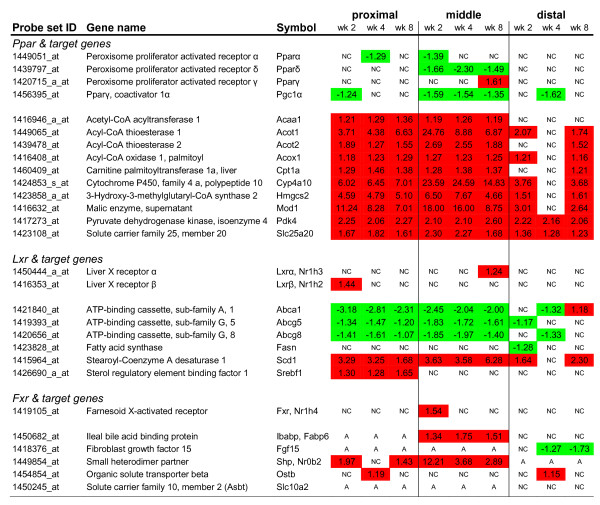
“Evidence that such inflammatory activity could impact on mediators of TICE is provided by the observations of significantly reduced expression of PPAR-d, ABCA1, ABCG5, and ABCG8 in the small intestine of mice fed HFD, compared to chow-fed mice.(95) Testing the hypothesis in man will be more challenging.”
DNA microarrays to define and search for genes associated with obesity
Kim, Y., & Park, T. (2009) · Biotechnology Journal · doi:10.1002/biot.200900228 · Cited by 40
Al‐Dwairi, A., Brown, A. R., Pabona, J. M. P., Van, T. H., Hamdan, H., Mercado, C. P., Quick, C. M., Wight, P. A., Simmen, R. C. M., & Simmen, F. A. (2014) · PLoS ONE · doi:10.1371/journal.pone.0113058 · Cited by 39
Yang, J., Yuan, Y., Monson, M. S., Wang, P., Mu, F., Zhang, Q., Wei, N., Zhang, K., Wang, Y., Leng, L., et al. (2022) · Frontiers in Microbiology · doi:10.3389/fmicb.2021.815538 · Cited by 38
Bu, S. Y., Kang, M., Kim, E., & Choi, M. (2012) · Preventive Nutrition and Food Science · doi:10.3746/pnf.2012.17.2.093 · Cited by 37
Joshi, A. D., Kaur, S., Taneja, S. K., & Mandal, R. (2023) · Biological Trace Element Research · doi:10.1007/s12011-023-03784-z · Cited by 37
Kolodziejczak, D., Spanier, B., Pais, R., Kraiczy, J., Stelzl, T., Gedrich, K., Scherling, C., Zietek, T., & Daniel, H. (2013) · American Journal of Physiology-Gastrointestinal and Liver Physiology · doi:10.1152/ajpgi.00160.2012 · Cited by 36
Adipophilin protein expression in muscle – a possible protective role against insulin resistance
de Wilde, J., Smit, E., Snepvangers, F. J. M., de Wit, N. W. J., Mohren, R., Hulshof, M. F. M., & Mariman, E. C. M. (2010) · The FEBS Journal · doi:10.1111/j.1742-4658.2009.07525.x · Cited by 31
Kim, M., Bu, S. Y., & Choi, M. (2012) · Nutrition Research and Practice · doi:10.4162/nrp.2012.6.5.421 · Cited by 34
Waise, T. M. Z., Lim, Y.-M., Danaei, Z., Zhang, S., & Lam, T. K. T. (2020) · Molecular Metabolism · doi:10.1016/j.molmet.2020.101132 · Cited by 34
“8), as previously shown in humans for Asbt [32] and in mice for Fxr [33].”
InfluentialGuo, X., Li, H., Xu, H., Halim, V., Thomas, L. N., Woo, S., Huo, Y., Chen, Y. E., Sturino, J. M., & Wu, C. (2012) · The Journal of Nutritional Biochemistry · doi:10.1016/j.jnutbio.2012.04.007 · Cited by 33
“Feeding an HFD to mice induces intestine inflammatory response, which contributes to the development of systemic insulin resistance [34].”
Role of Janus Kinase 3 in Predisposition to Obesity-associated Metabolic Syndrome
Mishra, J., Verma, R. K., Alpini, G. D., Meng, F., & Kumar, N. (2015) · Journal of Biological Chemistry · doi:10.1074/jbc.m115.670331 · Cited by 33
“High-fat diets (HFD) are among the major environmental factor that induces pro-inflammatory signaling including through TLRs, which correlates with subsequent development of obesity, NAFLD, and insulin resistance (49, 50).”
Magnuson, A. M., Fouts, J. K., Regan, D. P., Booth, A. D., Dow, S. W., & Foster, M. T. (2018) · Physiology & Behavior · doi:10.1016/j.physbeh.2018.02.044 · Cited by 33
“Hence, evidence also supports that the intestines fundamentally contribute to the development of obesity-induced metabolic disease [26] by way of inflammation.”
Nilaweera, K. N., Cabrera-Rubio, R., Speakman, J. R., O’Connor, P. M., McAuliffe, A., Guinane, C. M., Lawton, E. M., Crispie, F., Aguilera, M., Stanley, M., et al. (2017) · American Journal of Physiology-Endocrinology and Metabolism · doi:10.1152/ajpendo.00356.2016 · Cited by 32
“This may be because of the HFD-induced changes in the intestinal cellular activity (7) impacting WPI effects mediated through this tissue.”
Adiposity in Female B6C3F1 Mice Continuously Irradiated with Low-Dose-Rate γ Rays
Nakamura, S., Tanaka, I. B., Tanaka, S., Nakaya, K., Sakata, N., & Oghiso, Y. (2010) · Radiation Research · doi:10.1667/rr1962.1 · Cited by 32
“Another factor that may require careful consideration in future studies related to the increased adiposity in irradiated animals is the contribution of altered gut microbiota, which may increase energy extraction from indigestible dietary polysaccharides (increased energy absorption with no increase in feed consumptio…”
Lallès, J. P., Orozco-Solís, R., Bolaños, F. J., de Coppet, P., Dréan, G. L., & Segain, J. (2012) · The Journal of Nutritional Biochemistry · doi:10.1016/j.jnutbio.2011.10.001 · Cited by 31
“Elongated villi and crypts together with increased jejunal proliferation in rats fed the high-fat diet were observed, as previously reported [49,50].”
de Wilde, J., Hulshof, M. F. M., Boekschoten, M. V., de Groot, P., Smit, E., & Mariman, E. C. M. (2010) · BMC Genomics · doi:10.1186/1471-2164-11-176 · Cited by 32
Kroupova, P., van Schothorst, E. M., Keijer, J., Bunschoten, A., Vodička, M., Irodenko, I., Oseeva, M., Žáček, P., Kopecký, J., Rossmeisl, M., et al. (2020) · Nutrients · doi:10.3390/nu12072037 · Cited by 30
Benoit, B., Plaisancié, P., Géloën, A., Estienne, M., Debard, C., Meugnier, E., Loizon, E., Daira, P., Bodennec, J., Cousin, O., et al. (2014) · British Journal Of Nutrition · doi:10.1017/s0007114514001172 · Cited by 30
“However, a new player has been identified in obesity disorders, namely the intestine((21,22)).”
Differential transcriptomic profiles effected by oil palm phenolics indicate novel health outcomes
Leow, S.-S., Sekaran, S. D., Sundram, K., Tan, Y., & Sambanthamurthi, R. (2011) · BMC Genomics · doi:10.1186/1471-2164-12-432 · Cited by 30
New insights into the pathophysiology of nonalcoholic fatty liver disease
Chávez-Tapia, N. C., Uribe, M., Ponciano‐Rodríguez, G., Medina‐Santillán, R., & Méndez‐Sánchez, N. (2009) · Annals of Hepatology · doi:10.1016/s1665-2681(19)31821-6 · Cited by 30
Oit1/Fam3D, a gut-secreted protein displaying nutritional status-dependent regulation
de Wit, N. J. W., Ijssennagger, N., Oosterink, E., Keshtkar, S., Hooiveld, G. J. E. J., Mensink, R. P., Hammer, S., Smit, J. W. A., Müller, M. M., & van der Meer, R. (2012) · The Journal of Nutritional Biochemistry · doi:10.1016/j.jnutbio.2011.09.003 · Cited by 28
Self-citationMcIlvride, S., Nikolova, V., Fan, H. M., McDonald, J. A. K., Wahlstrom, A. M., Bellafante, E., Jansen, E. H. J. M., Adorini, L., Shapiro, D., Jones, P. M., et al. (2019) · American Journal of Physiology-Endocrinology and Metabolism · doi:10.1152/ajpendo.00407.2018 · Cited by 28
Bardoxolone Methyl Prevents High-Fat Diet-Induced Colon Inflammation in Mice
Dinh, C. H. L., Yu, Y., Szabo, A., Zhang, Q., Zhang, P., & Huang, X. (2016) · Journal of Histochemistry & Cytochemistry · doi:10.1369/0022155416631803 · Cited by 27
“A HFD increases Ki67 in various tissues, including the prostate gland and the small intestine in mice (Petit et al. 2007; De Wit et al. 2008; Benesh et al. 2013).”
Chattopadhyay, A., Navab, M., Hough, G., Grijalva, V. R., Mukherjee, P., Fogelman, H. R., Hwang, L. H., Faull, K. F., Lusis, A. J., Reddy, S. T., et al. (2016) · Journal of Lipid Research · doi:10.1194/jlr.m064352 · Cited by 27
Mechanisms of Lower Maintenance Dose of Tacrolimus in Obese Patients
Sawamoto, K., Huong, T. T., Sugimoto, N., Mizutani, Y., Sai, Y., & Miyamoto, K. (2014) · Drug Metabolism and Pharmacokinetics · doi:10.2133/dmpk.dmpk-13-rg-110 · Cited by 30
Ambery, A. G., Tackett, L., Penque, B. A., Brozinick, J. T., & Elmendorf, J. S. (2017) · Physiological Reports · doi:10.14814/phy2.13363 · Cited by 25
“…forms of the standard LF (D12450B) and HF (D12451) diets from Research Diets Inc., with adaptations regarding type of fat (palm oil instead of lard) and carbohydrates, to better mimic the fatty acid (FA)/carbohydrate composition of the average human diet in Western societies (de Wit et al. 2008).”
Sericin as treatment of obesity: morphophysiological effects in obese mice fed with high-fat diet
Kunz, R. I., Capelassi, A. N., Alegre-Maller, A. C. P., Bonfleur, M. L., Ribeiro, L. D. F. C., Brancalhão, R. M. C., & Natali, M. R. M. (2019) · Einstein (São Paulo) · doi:10.31744/einstein_journal/2020ao4876 · Cited by 24
“(1) The small intestine is responsible for effective absorption and processing of ingested nutrients.(2,3) It is also the first organ to be exposed to food energy(4) and is capable of functional and morphological adaptation in response to ingested food quantity and quality.”
Rusli, F., Boekschoten, M. V., Zubia, A. A., Lute, C., Müller, M., & Steegenga, W. T. (2015) · Molecular Nutrition & Food Research · doi:10.1002/mnfr.201400621 · Cited by 20
Self-citationSubramaniam, R., Aliakbarian, H., Bhutta, H. Y., Harris, D. A., Tavakkoli, A., & Sheu, E. G. (2019) · Obesity Surgery · doi:10.1007/s11695-019-04059-0 · Cited by 24
“For example, high-fat diet induces TNF-α, MIF, and IFN-γ-induced gene subsets in the small intestine [8, 9].”
Hung, Y.-H., Linden, M. A., Gordon, A., Rector, R. S., & Buhman, K. K. (2015) · Physiological Reports · doi:10.14814/phy2.12232 · Cited by 24
“…(Mgat2 and Dgat2) and FAO (Acox, Cpt1, Ppara) have been shown to be elevated in high-fat-diet fed, obese, compared with low fat fed, lean mice (de Wit et al. 2008; Uchida et al. 2012), whereas, in the current report O-Sed rats fed standard chow only had higher level of one gene in FAO, Ucp2, in…”
Grice, B. A., Barton, K. J., Covert, J. D., Kreilach, A. M., Tackett, L., Brozinick, J. T., & Elmendorf, J. S. (2019) · American Journal of Physiology-Endocrinology and Metabolism · doi:10.1152/ajpendo.00396.2018 · Cited by 24
Mucunguzi, O., Melouane, A., Ghanemi, A., Yoshioka, M., Boivin, A., Calvo, E.-L., & St‐Amand, J. (2017) · Nutrition & Metabolism · doi:10.1186/s12986-017-0221-3 · Cited by 23
Metadata
- Authors
- de Wit, N. J., Bosch-Vermeulen, H., de Groot, P. J., Hooiveld, G. J., Bromhaar, M. M. G., Jansen, J., Müller, M., & van der Meer, R.
- Affiliations
- TiFN (NL)
- Venue
- BMC Medical Genomics
- Published
- 2008-05-06
- Volume
- 1
- Issue
- 1
- Pages
- 14-14
- ISSN
- 1755-8794 (ISSN-L)
- PMC
- PMC2396659
- OpenAlex
- W2153535399
- Cited by
- 182
- References
- 53
- Citations by year
- 2026: 1 · 2025: 9 · 2024: 2 · 2023: 8 · 2022: 9 · 2021: 11 · 2020: 11 · 2019: 11 · 2018: 10 · 2017: 10 · 2016: 12 · 2015: 12 · 2014: 15 · 2013: 19 · 2012: 15
- FWCI
- 6.53
- Type
- journal article
- Language
- en
- Open access
- gold
- doi.org
- Licence
- Locations
- BMC Medical Genomics (publishedVersion, cc-by)
- PubMed Central (publishedVersion, cc-by)
- PubMed (publishedVersion)
- Socio-Environmental Systems Modeling (acceptedVersion)
- DOAJ (DOAJ: Directory of Open Access Journals) (submittedVersion, cc-by-sa)
- UEA Digital Repository (University of East Anglia) (submittedVersion)
- Data Archiving and Networked Services (DANS) (submittedVersion, other-oa)
- Funders
- Wageningen University and Research
- Topics
- Health Sciences › Medicine › Endocrinology, Diabetes and Metabolism › Diet, Metabolism, and Disease
- Life Sciences › Biochemistry, Genetics and Molecular Biology › Molecular Biology › Peroxisome Proliferator-Activated Receptors
- Health Sciences › Medicine › Endocrinology, Diabetes and Metabolism › Adipokines, Inflammation, and Metabolic Diseases
- Keywords
- small intestine, dietary fat, high-fat diet, obesity, insulin resistance, gene expression, lipid metabolism, nuclear receptors, peroxisome proliferator-activated receptors, liver X receptor, farnesoid X receptor, inflammation, cell cycle, oral glucose tolerance, metabolic syndrome, C57BL/6J mice
About these checks
Registry, retraction, Cites and statistics results are computed, not judged, with one exception: a printed reference that no index lists is read once by a model before it counts as a citation error. Claims are extracted by a model and kept only when their quote appears verbatim in the text; each cited source is then checked, with a model’s help, for whether it says what the claim relies on. Those verdicts can be wrong — read the claim’s quote and the cited source before relying on one.
Statistics and arithmetic are recomputed, not judged.
Confidence bands are shown only for fields calibrated on our annotated test set. None is calibrated yet, so no band is shown.
What counts as a claim ›How we measure confidence ›How we check this ›
Are you an author, or do you see a problem with this page? Request a review
Data sources
Bibliographic data: Semantic Scholar, OpenAlex, Crossref.
Contains information from the Semantic Scholar Academic Graph Datasets, made available under the ODC Attribution License (ODC-BY 1.0).
Semantic Scholar’s data is described in: Kinney, R., et al. (2023). The Semantic Scholar Open Data Platform. arXiv:2301.10140.
