

Commensal Clostridia: leading players in the maintenance of gut homeostasis
Open accessThe DOI matches its Crossref record; 104 of the 104 references it cites were found in a registry or an index.
Abstract
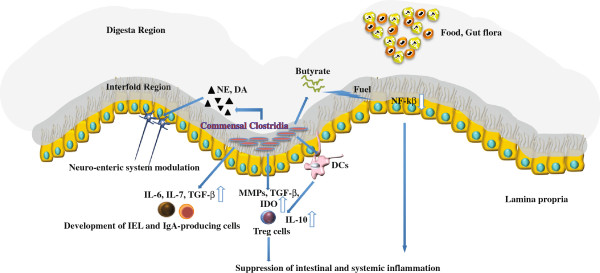
The gastrointestinal tract is a complex and dynamic network where an intricate and mutualistic symbiosis modulates the relationship between the host and the microbiota in order to establish and ensure gut homeostasis. Commensal Clostridia consist of gram-positive, rod-shaped bacteria in the phylum Firmicutes and make up a substantial part of the total bacteria in the gut microbiota. They start to colonize the intestine of breastfed infants during the first month of life and populate a specific region in the intestinal mucosa in close relationship with intestinal cells. This position allows them to participate as crucial factors in modulating physiologic, metabolic and immune processes in the gut during the entire lifespan, by interacting with the other resident microbe populations, but also by providing specific and essential functions. This review focus on what is currently known regarding the role of commensal Clostridia in the maintenance of overall gut function, as well as touch on their potential contribution in the unfavorable alteration of microbiota composition (dysbiosis) that has been implicated in several gastrointestinal disorders. Commensal Clostridia are strongly involved in the maintenance of overall gut function. This leads to important translational implications in regard to the prevention and treatment of dysbiosis, to drug efficacy and toxicity, and to the development of therapies that may modulate the composition of the microflora, capitalizing on the key role of commensal Clostridia, with the end goal of promoting gut health.
Overview
The claims and statistics of this paper haven’t been checked yet.
Free: it reads the open-access text and checks the first 5 claims that cite a source we can check. Create a free account to check every claim.
Integrity signals
Registry
Cites
Statistics
Figures
Verification
Claims the paper makes
The claims and statistics of this paper haven’t been checked yet.
Free: it reads the open-access text and checks the first 5 claims that cite a source we can check. Create a free account to check every claim.
Claims other papers make about this one
Each is checked against this paper’s own text: does it say what the citing paper says it does?
In the citing paper
“Furthermore, increased Bifidobacteria and Lactobacilli, which are linked to decreased diet-induced obesity and improved insulin sensitivity have been further supported by soy-protein consumption [165,166,167].”
From Impact of Protein Intake in Older Adults with Sarcopenia and Obesity: A Gut Microbiota Perspective (2020) · cites this paper as [166]
Self-check
Percentages, sums and reported differences re-computed from the paper’s own numbers.
The self-check needs the paper’s full text.
Citations
Cites
Diversity of the Human Intestinal Microbial Flora
Eckburg, P. B., Bik, E. M., Bernstein, C. N., Purdom, E., Dethlefsen, L., Sargent, M., Gill, S. R., Nelson, K. E., & Relman, D. A. (2005) · Science · doi:10.1126/science.1110591 · Cited by 7,913 · cited 2×
“; licensee BioMed Centr Commons Attribution License (http://creativec reproduction in any medium, provided the or in culture-independent molecular techniques, by the analysis of phylogenetic arrays, next generation 16S rRNA sequencing and metagenome sequencing derived from human mucosal biopsies, luminal contents and…”
BackgroundObesity alters gut microbial ecology
Ley, R. E., Bäckhed, F., Turnbaugh, P., Lozupone, C. A., Knight, R. D., & Gordon, J. I. (2005) · Proceedings of the National Academy of Sciences · doi:10.1073/pnas.0504978102 · Cited by 6,176 · cited 1×
“; licensee BioMed Centr Commons Attribution License (http://creativec reproduction in any medium, provided the or in culture-independent molecular techniques, by the analysis of phylogenetic arrays, next generation 16S rRNA sequencing and metagenome sequencing derived from human mucosal biopsies, luminal contents and…”
BackgroundHost-Bacterial Mutualism in the Human Intestine
Bäckhed, F., Ley, R. E., Sonnenburg, J. L., Peterson, D. A., & Gordon, J. I. (2005) · Science · doi:10.1126/science.1104816 · Cited by 5,277 · cited 2×
“An intricate and mutualistic symbiosis modulates the relationship between the host and the gut microbiota [11,18,19].”
BackgroundMetagenomic Analysis of the Human Distal Gut Microbiome
Gill, S. R., Pop, M., DeBoy, R. T., Eckburg, P. B., Turnbaugh, P. J., Samuel, B. S., Gordon, J. I., Relman, D. A., Fraser-Liggett, C. M., & Nelson, K. E. (2006) · Science · doi:10.1126/science.1124234 · Cited by 4,699 · cited 2×
“; licensee BioMed Centr Commons Attribution License (http://creativec reproduction in any medium, provided the or in culture-independent molecular techniques, by the analysis of phylogenetic arrays, next generation 16S rRNA sequencing and metagenome sequencing derived from human mucosal biopsies, luminal contents and…”
BackgroundFrank, D. N., St. Amand, A. L., Feldman, R. A., Boedeker, E. C., Harpaz, N., & Pace, N. R. (2007) · Proceedings of the National Academy of Sciences · doi:10.1073/pnas.0706625104 · Cited by 4,611 · cited 4×
“; licensee BioMed Centr Commons Attribution License (http://creativec reproduction in any medium, provided the or in culture-independent molecular techniques, by the analysis of phylogenetic arrays, next generation 16S rRNA sequencing and metagenome sequencing derived from human mucosal biopsies, luminal contents and…”
BackgroundInfluentialSokol, H., Pigneur, B., Watterlot, L., Lakhdari, O., Bermúdez-Humarán, L. G., Gratadoux, J.-J., Blugeon, S., Bridonneau, C., Furet, J.-P., Corthier, G., et al. (2008) · Proceedings of the National Academy of Sciences · doi:10.1073/pnas.0804812105 · Cited by 4,413 · cited 2×
“cluster IV, increases IL-10 production from peripheral blood mononuclear cells in vitro [98].”
BackgroundGut microbiota in health and disease
Sekirov, I., Russell, S. L., Antunes, L. C. M., & Finlay, B. B. (2010) · Physiological Reviews · doi:10.1152/physrev.00045.2009 · Cited by 4,182
Induction of Colonic Regulatory T Cells by Indigenous Clostridium Species
Atarashi, K., Tanoue, T., Shima, T., Imaoka, A., Kuwahara, T., Momose, Y., Cheng, G., Yamasaki, S., Saito, T., Ohba, Y., et al. (2011) · Science · doi:10.1126/science.1198469 · Cited by 3,752 · cited 20×
“Moreover, even the colonization with altered Schaedler flora (ASF), which includes Clostridium clostridioforme, leads to the accumulation of Tregs within the colon [97].”
BackgroundInfluentialEcological and Evolutionary Forces Shaping Microbial Diversity in the Human Intestine
Ley, R. E., Peterson, D. A., & Gordon, J. I. (2006) · Cell · doi:10.1016/j.cell.2006.02.017 · Cited by 3,358 · cited 1×
“; licensee BioMed Centr Commons Attribution License (http://creativec reproduction in any medium, provided the or in culture-independent molecular techniques, by the analysis of phylogenetic arrays, next generation 16S rRNA sequencing and metagenome sequencing derived from human mucosal biopsies, luminal contents and…”
BackgroundTopping, D. L., & Clifton, P. M. (2001) · Physiological Reviews · doi:10.1152/physrev.2001.81.3.1031 · Cited by 3,091 · cited 7×
“Dysregulation of any of the aforementioned components have been implicated, not only in the pathogenesis of IBD, but in many other GI disorders, including infectious enterocolitis, IBS, small intestinal bowel overgrowth, celiac sprue, hepatic fibrosis, atopic manifestations and food intolerance [34-36].”
BackgroundInfluential
Cited by
Items 301–400 of 785
Ružauskas, M., Armalytė, J., Lastauskienė, E., Šiugždinienė, R., Klimienė, I., Mockeliūnas, R., & Bartkienė, E. (2021) · Animals · doi:10.3390/ani11040929 · Cited by 34
Łoniewski, I., Skonieczna‐Żydecka, K., Stachowska, L., Fraszczyk-Tousty, M., Tousty, P., & Łoniewska, B. (2022) · Frontiers in Nutrition · doi:10.3389/fnut.2022.939194 · Cited by 35
“Bacteria of the genus Clostridioides produce three important SCFAs (73, 74) of which butyric acid is most important for maintaining a healthy gut.”
BackgroundGut microbiota plasticity in insular lizards under reversed island syndrome
Buglione, M., Ricca, E., Petrelli, S., Baccigalupi, L., Troiano, C., Saggese, A., Rivieccio, E., & Fulgione, D. (2022) · Scientific Reports · doi:10.1038/s41598-022-16955-0 · Cited by 34
Fecal microbiome and bile acid metabolome in adult short bowel syndrome
Boutte, H. J., Chen, J., Wylie, T. N., Wylie, K. M., Xie, Y., Geisman, M., Prabu, A., Gazit, V., Tarr, P. I., Levin, M. S., et al. (2022) · American Journal of Physiology-Gastrointestinal and Liver Physiology · doi:10.1152/ajpgi.00091.2021 · Cited by 33
Arreguin-Nava, M. A., Graham, D. B., Adhikari, B., Agnello, M., Selby, C. M., Hernández-Velasco, X., Vuong, C. N., Solís-Cruz, B., Hernández‐Patlan, D., Latorre, J. D., et al. (2019) · Poultry Science · doi:10.3382/ps/pez544 · Cited by 35
Petakh, P., Kamyshna, I. I., Nykyforuk, A., Yao, R., Imbery, J. F., Oksenych, V., Korda, M. M., & Kamyshnyi, O. (2022) · Viruses · doi:10.3390/v14030477 · Cited by 37
Effects of Intravenous Antimicrobial Drugs on the Equine Fecal Microbiome
Liepman, R. S., Swink, J. M., Habing, G. G., Boyaka, P. N., Caddey, B., Costa, M., Gómez, D. E., & Toribio, R. E. (2022) · Animals · doi:10.3390/ani12081013 · Cited by 35
Wang, Y. B., Du, W., Fu, A., ZHANG, X., Huang, Y., Lee, K. H., Yu, K., Li, W. F., & Li, Y. L. (2016) · Beneficial Microbes · doi:10.3920/bm2015.0099 · Cited by 32
“faecium EF1 decreased the portion of Proteobacteria of weaning piglets prominently, increased Bacilli class, and decreased the Clostridia class that contained significant healthcare-associated pathogens (Lopetuso et al., 2013).”
BackgroundResultMicrobiome and host crosstalk: A new paradigm to cancer therapy
Singh, A. K., Nayak, N., Rathi, P., Verma, D., Sharma, R., Chaudhary, A., Agarwal, A., Tripathi, Y. B., & Garg, N. (2020) · Seminars in Cancer Biology · doi:10.1016/j.semcancer.2020.05.014 · Cited by 35
Khudhair, Z., Al-Hallaf, R., Eichenberger, R. M., Whan, J., Kupz, A., Field, M. A., Krause, L., Wilson, D. T. R., Daly, N. L., Giacomin, P., et al. (2021) · Frontiers in Endocrinology · doi:10.3389/fendo.2020.606530 · Cited by 39
“Of note, Clostridiales are abundant producers of the SCFAs that regulate colonic Treg cell homeostasis and strongly involved in the maintenance of overall gut function (70, 71).”
BackgroundVitko, D., McQuaid, J. W., Gheinani, A. H., Hasegawa, K., DiMartino, S. E., Davis, K. H., Chung, C. Y., Petrosino, J. F., Adam, R. M., Mansbach, J. M., et al. (2021) · European Urology · doi:10.1016/j.eururo.2021.08.022 · Cited by 32
The microbiota-gut-brain axis in pathogenesis of depression: A narrative review
Yao, H., Zhang, D., Yu, H., Shen, H., Liu, H., Meng, F., Wu, X., Zhang, G., & Wang, X. (2022) · Physiology & Behavior · doi:10.1016/j.physbeh.2022.114056 · Cited by 36
Milk kefir alters fecal microbiota impacting gut and brain health in mice
Pereira, M. D. F. A., de Ávila, L. G. M., Alpino, G. D. C. Á., Cruz, B. C. D. S., Almeida, L. F., Simões, J. M., Bernardes, A. L., Campos, I. X., Ribon, A. D. O. B., Mendes, T. A. D. O., et al. (2023) · Applied Microbiology and Biotechnology · doi:10.1007/s00253-023-12630-0 · Cited by 35
“Clostridial cluster XIVa is known as a significant part of the human gut microbiota (Lopetuso et al. 2013; Guo et al. 2020), and it can exert anti-inflammatory effects and plays a role in homeostasis.”
BackgroundHe, J., Wang, W., Wu, Z. F., Pan, D., Guo, Y., Cai, Z., & Lian, L. (2018) · Journal of Functional Foods · doi:10.1016/j.jff.2018.12.010 · Cited by 33
Abdelhamed, H., Ozdemir, O., Waldbieser, G. C., Perkins, A., Lawrence, M. L., & Karsi, A. (2019) · Aquaculture Research · doi:10.1111/are.14325 · Cited by 34
Razak, S. A., & Scribner, K. T. (2020) · Applied and Environmental Microbiology · doi:10.1128/aem.02662-19 · Cited by 36
“Studies in mice indicated that commensal clostridia populate specific regions in the intestinal mucosa, thus establishing a close relationship with gut cells that perform critical physiological functions (50).”
BackgroundShi, C., Zhu, Y., Niu, Q., Wang, J., Wang, J., & Zhu, W. (2018) · Current Microbiology · doi:10.1007/s00284-018-1442-z · Cited by 33
Gut Microbial Signature of Hepatocellular Cancer in Men With Cirrhosis
Albhaisi, S. A. M., Shamsaddini, A., Fagan, A., McGeorge, S., Sikaroodi, M., Gavis, E. A., Patel, S. S., Davis, B., Acharya, C., Sterling, R. K., et al. (2021) · Liver Transplantation · doi:10.1002/lt.25994 · Cited by 37
Effects of Clinical Wastewater on the Bacterial Community Structure from Sewage to the Environment
Verburg, I., van Veelen, H. P. J., Waar, K., Rossen, J. W. A., Friedrich, A. W., Leal, L. H., García-Cobos, S., & Schmitt, H. (2021) · Microorganisms · doi:10.3390/microorganisms9040718 · Cited by 31
Clerbaux, L., Albertini, M. C., Amigó, N., Beronius, A., Bezemer, G. F. G., Coecke, S., Daskalopoulos, E. P., del Giudice, G., Greco, D., Grenga, L., et al. (2022) · Journal of Clinical Medicine · doi:10.3390/jcm11154464 · Cited by 36
“The reduction of beneficial butyrate-producing bacteria contributes to increased intestinal permeability, as butyrate facilitates the regeneration of colonocytes [466,467].”
BackgroundNanoplastics affect the growth of sea urchins (Strongylocentrotus intermedius) and damage gut health
Zeng, F., Wang, L., Zhen, H., Guo, C., Liu, A., Xia, X., Pei, H., Dong, C., & Ding, J. (2023) · The Science of The Total Environment · doi:10.1016/j.scitotenv.2023.161576 · Cited by 30
Crichton, M., Marshall, S., Marx, W., Isenring, E. A., Vázquez-Campos, X., Dawson, S. L., & Lohning, A. E. (2023) · Journal of Nutrition · doi:10.1016/j.tjnut.2023.09.002 · Cited by 32
Chen, X., Xu, J., Su, Y., & Zhu, W. (2018) · Frontiers in Microbiology · doi:10.3389/fmicb.2018.01652 · Cited by 30
“It is reported that Clostridia, as the main butyrate producer, is beneficial to the immunological development and the maintenance of gut homeostasis (Umesaki et al., 1999; Lopetuso et al., 2013).”
BackgroundHamm, A. K., Manter, D. K., Kirkwood, J. S., Wolfe, L. M., Cox‐York, K. A., & Weir, T. L. (2019) · Nutrients · doi:10.3390/nu11123004 · Cited by 29
“This may be because butyrate is absorbed by the colonic epithelial cells as a fuel source, and proprionate is shuttled to the liver, leaving feces relatively depleted [33].”
BackgroundRifkin, R. F., Vikram, S., Ramond, J., Rey‐Iglesia, A., Brand, T. B., Porraz, G., Val, A., Hall, G., Woodborne, S. M., Bailly, M. L., et al. (2020) · Microbiome · doi:10.1186/s40168-020-00832-x · Cited by 31
“93%) which is essential for IM resistance to infection and dysbiosis [66] and Pedobacter (1.”
BackgroundConnell, S., Kawashima, M., Nakamura, S., Imada, T., Yamamoto, H., Tsubota, K., & Fukuda, S. (2021) · International Journal of Molecular Sciences · doi:10.3390/ijms222212384 · Cited by 31
“form the gut microbiota, with a significant increase in the presence of commensal species of Clostridia, which are linked to gut homeostasis and immune development [62,63].”
BackgroundHu, D., Fuller, N. R., Caterson, I. D., Holmes, A. J., & Reeves, P. R. (2022) · Cell Reports · doi:10.1016/j.celrep.2021.110239 · Cited by 29
Puspitasari, F., Maki, T., Shi, G., Chen, B., Kobayashi, F., Hasegawa, H., & Iwasaka, Y. (2015) · Air Quality Atmosphere & Health · doi:10.1007/s11869-015-0367-y · Cited by 31
“Commensal Clostridium are gram-positive, rod-shaped bacteria in the phylum Firmicutes and constitute a substantial part of the total bacteria in the gut microbiota (Bryant 1959; Lopetuso et al. 2008; Nagano et al. 2012).”
BackgroundDuijster, J. W., Franz, E., Neefjes, J., & Mughini‐Gras, L. (2021) · Frontiers in Microbiology · doi:10.3389/fmicb.2021.790256 · Cited by 32
Systematically-designed mixtures outperform single fibers for gut microbiota support
Cantu-Jungles, T. M., Agamennone, V., van den Broek, T. J., Schuren, F. H. J., & Hamaker, B. R. (2024) · Gut Microbes · doi:10.1080/19490976.2024.2442521 · Cited by 30
“56 These mucosal bacteria are crucial in the production of short-chain fatty acids, particularly buty-rate, which provides numerous health benefits including nourishing the gut lining, supporting the immune system, and potentially protecting against certain types of colorectal cancer.”
Burgos-Edwards, A., Fernández-Romero, A., Carmona, M., Thuissard, I. J., Schmeda‐Hirschmann, G., & Larrosa, M. (2019) · Food Research International · doi:10.1016/j.foodres.2019.108848 · Cited by 29
Dandachi, I., Anani, H., Hadjadj, L., Brahimi, S., Lagier, J., Daoud, Z., & Rolain, J. (2021) · New Microbes and New Infections · doi:10.1016/j.nmni.2021.100863 · Cited by 29
“Clostridial cluster XIVa is known to make up a significant part of the human gut microflora [2]; it can exert anti-inflammatory effects and plays a role in homeostasis.”
BackgroundTraumatic brain injury alters the gut-derived serotonergic system and associated peripheral organs
Mercado, N. M., Zhang, G., Ying, Z., & Gómez‐Pinilla, F. (2022) · Biochimica et Biophysica Acta (BBA) - Molecular Basis of Disease · doi:10.1016/j.bbadis.2022.166491 · Cited by 30
Zeng, S., Duan, Y., Li, X., Hu, Y., Mo, Z., Dan, X., & Li, Y. (2023) · Fish & Shellfish Immunology · doi:10.1016/j.fsi.2023.108562 · Cited by 32
Tan, J., Wang, S., Dick, G. J., Young, V. B., Sherman, D. H., Burns, M. A., & Lin, X. N. (2020) · Integrative Biology · doi:10.1093/intbio/zyaa021 · Cited by 30
“However, commensals of the Neisseriaceae [56] and Clostridiales [57] are present in droplet sub-communities and have low sequence identities to NCBI 16S representatives (Supplementary Table 1).”
BackgroundShor, E. K., Brown, S. P., & Freeman, D. A. (2020) · Journal of Pineal Research · doi:10.1111/jpi.12696 · Cited by 28
Microbiota, renal disease and renal transplantation
Salvadori, M., & Tsalouchos, A. (2021) · World Journal of Transplantation · doi:10.5500/wjt.v11.i3.16 · Cited by 28
Longitudinal Characterization of the Gut Bacterial and Fungal Communities in Yaks
Wang, Y., Fu, Y., He, Y., Kulyar, M. F., Iqbal, M., Li, K., & Liu, J. (2021) · Journal of Fungi · doi:10.3390/jof7070559 · Cited by 28
“As mentioned by previous analysis, several members of Firmicutes (Blautia, Clostridium, Ruminococcus) were involved in producing SCFAs (short-chain fatty acids), which are beneficial for regulating systemic immunity [52,53].”
ResultBai, J., Barandouzi, Z. A., Rowcliffe, C., Meador, R., Tsementzi, D., & Bruner, D. W. (2021) · Frontiers in Oncology · doi:10.3389/fonc.2021.745262 · Cited by 27
Chronic ethanol exposure induced anxiety‐like behaviour by altering gut microbiota and GABA system
Yao, H., Zhang, D., Yu, H., Shen, H., Lan, X., Liu, H., Chen, X., Wu, X., Zhang, G., & Wang, X. (2022) · Addiction Biology · doi:10.1111/adb.13203 · Cited by 27
“the maintenance of the intestinal barrier, vitamin synthesis and catabolism of fibre.(10,13) Recent studies have shown that the gut microbiota not only affects the digestive system but also has a bidi-”
BackgroundConstructing Predictive Microbial Signatures at Multiple Taxonomic Levels
Wang, T., & Zhao, H. (2017) · Journal of the American Statistical Association · doi:10.1080/01621459.2016.1270213 · Cited by 32
“Clostridia are a good example, where some species convert dietary fiber into anti-inflammatory short chain fatty acids, while others cause severe colitis (Bartlett et al. 1978; Lopetuso et al. 2013).”
BackgroundAlterations in the human gut microbiome in anti‐N‐methyl‐D‐aspartate receptor encephalitis
Gong, X., Liu, X., Li, C., Chen, C., Lin, J., Li, A., An, D., Zhou, D., & Hong, Z. (2019) · Annals of Clinical and Translational Neurology · doi:10.1002/acn3.50874 · Cited by 28
“Clostridia play a crucial role in gut homeostasis and host defense mechanisms against exogenous infections.(20) Evidence of many beneficial functions of Bacteroides strains suggests their intervention capabilities in both the lipopolysaccharide-induced immune response and gut microbiome shift,(21) even having potentia…”
BackgroundSiddiqui, S., Bao, D., Doyle‐Meyers, L. A., Dufour, J., Wu, Y., Liu, Y., & Ling, B. (2020) · Scientific Reports · doi:10.1038/s41598-020-76145-8 · Cited by 27
Schropp, N., Bauer, A., Stanislas, V., Huang, K. D., Lesker, T.-R., Bielecka, A. A., Strowig, T., & Michels, K. B. (2025) · Microbiome · doi:10.1186/s40168-024-02016-3 · Cited by 27
Effects of C60 Fullerene on Thioacetamide-Induced Rat Liver Toxicity and Gut Microbiome Changes
Đurašević, S., Pejić, S., Grigorov, I., Nikolić, G., Mitić-Ćulafić, D., Dragićević, M. B., Đorđević, J., Todorović, N., Đorđević, N. O., Todorović, A., et al. (2021) · Antioxidants · doi:10.3390/antiox10060911 · Cited by 26
“The reduced Ruminococcus abundance has been reported in patients with ulcerative colitis and Crohn’s disease [78], while clostridia decrease seen in elderly people could be connected with some of their metabolic dysregulation and drop in immunity [79].”
BackgroundHelmy, Y. A., Kathayat, D., Deblais, L., Srivastava, V., Closs, G., Tokarski, R. J., Ayinde, O. R., Fuchs, J. R., & Rajashekara, G. (2022) · Microbiology Spectrum · doi:10.1128/spectrum.00286-22 · Cited by 26
“attenuating the inflammatory processes, and inhibiting pathogens growth (38, 39).”
BackgroundNakamura, Y., Suzuki, S., Murakami, S., Nishimoto, Y., Higashi, K., Watarai, N., Umetsu, J., Ishii, C., Ito, Y., Mori, Y., et al. (2022) · Computational and Structural Biotechnology Journal · doi:10.1016/j.csbj.2022.10.026 · Cited by 29
Choo, J. M., Trim, P. J., Leong, L. E. X., Abell, G. C. J., Brune, C., Jeffries, N., Wesselingh, S. L., Dear, T. N., Snel, M. F., & Rogers, G. B. (2017) · Frontiers in Microbiology · doi:10.3389/fmicb.2017.00608 · Cited by 30
“Taxa in the Clostridium XIVa cluster have been shown to induce the production of the anti-inflammatory cytokine IL-10 by T regulatory cells and inhibit the proinflammatory NF-κB pathway, implicated in tumor cell apoptosis (Hague et al., 1995; Atarashi et al., 2011; Lopetuso et al., 2013).”
BackgroundLi, Y., Li, W., Wang, X., Ding, C., Liu, J., Li, Y., Li, W., & Sun, Y. (2020) · Molecular Nutrition & Food Research · doi:10.1002/mnfr.201900965 · Cited by 26
Microscopic Colitis Patients Possess a Perturbed and Inflammatory Gut Microbiota
Hertz, S., Durack, J., Kirk, K. F., Nielsen, H. L., Lin, D. L., Fadrosh, D. W., Lynch, K. V., Piceno, Y. M., Thorlacius‐Ussing, O., Nielsen, H. V., et al. (2021) · Digestive Diseases and Sciences · doi:10.1007/s10620-021-07045-8 · Cited by 28
“Bacterial depletions in MC gut microbiomes included several genera known to be important for intestinal homeostasis such as Clostridiales [36], suggesting that loss of such microbes and their influence on immune function is characteristic and perhaps contributory to MC symptomatology.”
BackgroundResultInfluentialWang, H., Shen, J., Mu, C., Gao, K., Pi, Y., & Zhu, W. (2021) · Animal nutrition · doi:10.1016/j.aninu.2021.03.003 · Cited by 26
“…cluster IV counts in LCPC group, relative to the control and LCPA groups, are unknown, but the increase of Clostridium cluster IV may also benefit the intestinal environment as this bacterial group has been regarded to be beneficial to gut health (Lopetuso et al., 2013; Atarashi et al., 2011).”
BackgroundYan, L., Tang, L., Zhou, Z., Wei, L. U., Wang, B., Sun, Z., Jiang, X. S., Hu, D., Junqing, L. I., & Zhang, D. (2021) · Integrative Zoology · doi:10.1111/1749-4877.12585 · Cited by 26
Zhong, Y., Fu, D., Deng, Z., Tang, W., Mao, J., Zhu, T., Zhang, Y., Liu, J., & Wang, H. (2022) · Frontiers in Immunology · doi:10.3389/fimmu.2022.822754 · Cited by 28
“As one of the major inhabitants in the gut, a decrease in Clostridium IV was associated with loss of gut microbiome colonization resistance in patients with chronic gut inflammation compared to healthy subjects (54, 55).”
BackgroundMetformin exerts anti-obesity effect via gut microbiome modulation in prediabetics: A hypothesis
Maniar, K., Moideen, A., Bhattacharyya, R., & Banerjee, D. (2017) · Medical Hypotheses · doi:10.1016/j.mehy.2017.06.001 · Cited by 26
“The increase in butyrateproducing taxa is expected to increase the butyrate production and improve gut barrier [47].”
BackgroundAssociation of faecal pH with childhood stunting: Results from a cross-sectional study
Hossain, M. S., Das, S., Gazi, M. A., Alam, M. A., Haque, N. M. S., Mahfuz, M., Ahmed, T., & Damman, C. J. (2019) · BMJ Paediatrics Open · doi:10.1136/bmjpo-2019-000549 · Cited by 29
“These commensals perform their metabolic functions through the release of butyrate, which is an important SCFA, that lowers the pH in the colon and contributes in stool acidification.(21) ‘Bacillus bifidus’ or Bifidobacterium is a gram-positive, acidiphilic bacteria(34) belonging to the Bifidobacteriaceae family has t…”
InfluentialReyes, R. E., Omran, A. J. A., Davies, D. L., & Asatryan, L. (2020) · Brain Research · doi:10.1016/j.brainres.2020.147067 · Cited by 25
“Firmicutes phylum contains known beneficial commensal bacteria dominant in healthy populations (Lopetuso et al., 2013).”
BackgroundRoblin, C., Chiumento, S., Jacqueline, C., Pinloche, E., Nicoletti, C., Olleik, H., Courvoisier‐Dezord, E., Amouric, A., Basset, C., Dru, L., et al. (2021) · International Journal of Molecular Sciences · doi:10.3390/ijms22063253 · Cited by 28
Fructan‐sensitive children with irritable bowel syndrome have distinct gut microbiome signatures
Chumpitazi, B. P., Hoffman, K. L., Smith, D. P., McMeans, A. R., Musaad, S. M. A., Versalovic, J. A., Petrosino, J. F., & Shulman, R. J. (2020) · Alimentary Pharmacology & Therapeutics · doi:10.1111/apt.16204 · Cited by 24
Zhang, C., Zhang, C., Wang, Y., Du, M., Zhang, G., & Lee, Y. (2021) · Frontiers in Veterinary Science · doi:10.3389/fvets.2021.694357 · Cited by 24
“short-chained fatty acids, which are important energy sources for enterocytes and also exert immunoregulatory functions (34).”
BackgroundFerrulli, A., Drago, L., Gandini, S., Massarini, S., Bellerba, F., Senesi, P., Terruzzi, I., & Luzi, L. (2021) · International Journal of Molecular Sciences · doi:10.3390/ijms22094692 · Cited by 26
“, Clostridium coccoides, Clostridium leptum) [46].”
Goblet cell‐associated antigen passage: A gatekeeper of the intestinal immune system
Zhang, X., Chen, X., Wang, Z., Meng, X., Hoffmann‐Sommergruber, K., Cavallari, N., Wu, Y., Gao, J., Li, X., & Chen, H. (2023) · Immunology · doi:10.1111/imm.13648 · Cited by 26
Neto, C. C., Mortzfeld, B. M., Turbitt, J. R., Bhattarai, S. K., Yeliseyev, V., DiBenedetto, N., Bry, L., & Bucci, V. (2021) · Microbial Cell · doi:10.15698/mic2021.06.752 · Cited by 24
“Commensal Clostridia are strict gram-positive anaerobes that are thought to play important roles in modulating gut homeostasis, maintaining colonocyte health, participation in crosstalk between epithelial and immune cells, and can act as strong inducers of colonic Tregs [43].”
BackgroundHe, Y., Jinno, C. N., Li, C., Johnston, S. L., Xue, H., Liu, Y., & Ji, P. (2021) · Journal of Animal Science · doi:10.1093/jas/skab365 · Cited by 24
Kovtun, A. S., Averina, O. V., Zakharevich, N. V., Kasianov, A. S., & Даниленко, В. Н. (2018) · Russian Journal of Genetics · doi:10.1134/s1022795418090089 · Cited by 23
Impact of healthy aging on active bacterial assemblages throughout the gastrointestinal tract
Schütte, K., Schulz, C., Vilchez‐Vargas, R., Vasapolli, R., Palm, F., Simon, B., Schomburg, D., Lux, A., Geffers, R., Pieper, D. H., et al. (2021) · Gut Microbes · doi:10.1080/19490976.2021.1966261 · Cited by 24
Karimi, S. H., Taha-Abdelaziz, K., Yitbarek, A., Sargolzaei, M., Spahany, H., Astill, J., Shojadoost, B., Alizadeh, M., Kulkarni, R. R., Parkinson, J., et al. (2022) · Poultry Science · doi:10.1016/j.psj.2022.101864 · Cited by 29
“Overall, it appears that dietary supplementation of therapeutic levels of BMD, SA, and SAPP to chickens profoundly affected diversity and community composition of the cecal microbiome as demonstrated by depletion of several classes of beneficial bacteria, including Bacilli (Elshaghabee et al., 2017; Anani et al., 2019…”
BackgroundTo the Gut Microbiome and Beyond: The Brain-First or Body-First Hypothesis in Parkinson’s Disease
Nuzum, N. D., Loughman, A., Szymlek‐Gay, E. A., Teo, W., Hendy, A. M., & Macpherson, H. (2022) · Frontiers in Microbiology · doi:10.3389/fmicb.2022.791213 · Cited by 24
Xu, M., Li, Z., Zhao, X., & Li, W. (2022) · Foods · doi:10.3390/foods11162501 · Cited by 23
“are members of Clostridium cluster I [44].”
Littlefield, K. M., Schneider, J. M., Neff, C. P., Soesanto, V., Siebert, J., Nusbacher, N. M., Moreno-Huizar, N., Cartwright, I. M., Armstrong, A. J. S., Colgen, S. P., et al. (2022) · Frontiers in Immunology · doi:10.3389/fimmu.2022.1072720 · Cited by 31
“Particularly commensal Clostridia, through the production of short-chain fatty acids (71), can increase IL-22 production in both in vitro and in vivo models (72).”
BackgroundThe multiplicity of thioredoxin systems meets the specific lifestyles of Clostridia
Anjou, C., Lotoux, A., Zhukova, A., Royer, M., Caulat, L. C., Capuzzo, E., Morvan, C., & Martin‐Verstraete, I. (2024) · PLoS Pathogens · doi:10.1371/journal.ppat.1012001 · Cited by 24
Gut Microbiota-mediated Alleviation of Dextran Sulfate Sodium-induced Colitis in Mice
Ikeda, E., Yamaguchi, M., & Kawabata, S. (2024) · Gastro Hep Advances · doi:10.1016/j.gastha.2024.01.016 · Cited by 25
Alterations of the Gut Microbiome and TMAO Levels in Patients with Ulcerative Colitis
Laryushina, Y., Samoilova-Bedych, N., Turgunova, L., Kozhakhmetov, S., Alina, A., Suieubayev, M., & Mukhanbetzhanov, N. (2024) · Journal of Clinical Medicine · doi:10.3390/jcm13195794 · Cited by 26
“Many studies have aimed to understand the composition of the gut microbiota in people with UC, and they have found significant changes in the numbers of bacteria from three main phylum: Bacteroidetes, Firmicutes, and Proteobacteria [2–4].”
BackgroundPropionic Acid Impact on Multiple Sclerosis: Evidence and Challenges
Lorefice, L., & Żołędziewska, M. (2024) · Nutrients · doi:10.3390/nu16223887 · Cited by 25
Xie, M., Zhang, S., Xu, L., Wu, Z., Yuan, J. F., & Chen, X. (2021) · Frontiers in Microbiology · doi:10.3389/fmicb.2021.696281 · Cited by 27
Fan, Y., Wang, Y., Han, X., & Sun, H. (2024) · BMC Nephrology · doi:10.1186/s12882-024-03646-3 · Cited by 22
“Additionally, many inflammatory diseases can cause impaired intestinal barrier function, leading to significant changes in the gut micro-environment, which may inhibit the growth and proliferation of certain Clostridium strains [101].”
BackgroundCarvajal‐Aldaz, D., Guice, J. L., Page, R. C., Raggio, A. M., Martin, R. J., Husseneder, C., Durham, H. A., Geaghan, J. P., Janes, M. E., Gauthier, T. J., et al. (2016) · Molecular Nutrition & Food Research · doi:10.1002/mnfr.201600609 · Cited by 22
“Lactate and acetate are used by bacteria in Clostridium cluster IV and Clostridium cluster XIV (gram positive, [15]) to produce butyrate [16, 17].”
Dowhaniuk, J. K., Szamosi, J. C., Chorlton, S. D., Owens, J., Mileski, H., Clause, R., Pernica, J. M., Bowdish, D. M. E., Surette, M. G., & Ratcliffe, E. M. (2019) · Journal of Parenteral and Enteral Nutrition · doi:10.1002/jpen.1715 · Cited by 22
Sun, Z.-Z., Wang, W., Li, L., Zhang, X., Ning, Z., Mayne, J., Walker, K., Stintzi, A., & Figeys, D. (2022) · Microbiology Spectrum · doi:10.1128/spectrum.00412-22 · Cited by 24
“Clostridia accounts for at least 10 to 40% of the total bacteria in gut microbiota (31),”
BackgroundNikitina, D., Lehr, K., Vilchez‐Vargas, R., Jonaitis, L. V., Urba, M., Kupčinskas, J., Skiecevičienė, J., & Link, A. (2023) · World Journal of Gastroenterology · doi:10.3748/wjg.v29.i7.1202 · Cited by 22
Guillén-Watson, R., Arias-Andrés, M., Rojas-Jiménez, K., & Wehrtmann, I. S. (2023) · Frontiers in Microbiology · doi:10.3389/fmicb.2023.1197312 · Cited by 22
“Meanwhile, species of Clostridia are crucial in the modulation of physiological, metabolic, and immunological processes in the gut by interacting with other resident microbial populations (Lopetuso et al., 2013; Setälä et al., 2014).”
BackgroundClostridium Bacteria: Harnessing Tumour Necrosis for Targeted Gene Delivery
Theys, J., Patterson, A. V., & Mowday, A. M. (2024) · Molecular Diagnosis & Therapy · doi:10.1007/s40291-024-00695-0 · Cited by 26
“This genus includes some well-known pathogenic species, such as Clostridium tetani and Clostridium botulinum , but most are generally non-pathogenic and reside in the subsoil [2], or the intestinal tract of animals and humans [3].”
BackgroundHuang, H., Vlasova, A. N., Kumar, A., Kandasamy, S., Fischer, D. D., Deblais, L., Paim, F. C., Langel, S. N., Alhamo, M. A., Rauf, A., et al. (2017) · Beneficial Microbes · doi:10.3920/bm2016.0225 · Cited by 22
Cheng, S., Zhu, L., & Faden, H. S. (2019) · Physiological Genomics · doi:10.1152/physiolgenomics.00034.2019 · Cited by 23
“Regardless of the methodology used in the various studies, commensal Clostridia are ubiquitous members of the gut microbiota and essential for maintenance of gut homeostasis (32).”
BackgroundMethodChapter 14 New strategies influencing gut functionality and animal performance
González‐Ortiz, G., Gomes, G. A., dos Santos, T. T., & Bedford, M. R. (2019) · Wageningen Academic Publishers eBooks · doi:10.3920/978-90-8686-893-3_14 · Cited by 22
The Remarkable Dual-Level Diversity of Prokaryotic Flagellins
Hu, D., & Reeves, P. R. (2020) · mSystems · doi:10.1128/msystems.00705-19 · Cited by 22
Sepúlveda‐Rivera, V., Olivieri‐Henry, G., Morales, H., Ruiz‐Adames, J. A., Herrero‐Rivera, C. A., Rentas-Echeverria, A., Cardona-Berdecía, V., Soler‐Llompart, C. M., Sala‐Morales, A. C., Pérez-Montero, G., et al. (2025) · Scientific Reports · doi:10.1038/s41598-025-13262-2 · Cited by 23
“Additionally, SCFA-producing Clostridium cluster IV ( Clostridia UCG-014 ), which we found highly abundant in E2E3 and E3E4, decreased significantly in carriers of E3E3 and E4E4, which is often associated with gut dysbiosis 51 .”
Miao, S., Hong, Z., Jian, H., Xu, Q., Liu, Y., Wang, X., Li, Y., Dong, X., & Zou, X. (2022) · Animals · doi:10.3390/ani12050545 · Cited by 21
“Results showed Prevotellaceae as a biomarker of the control group, while Clostridia, Lachnospirales, Oscillospirales, and Gastranaerophilales, which are known to SCFAs producers, were biomarkers of the S500 group.”
BackgroundInfluentialGut Microbiota and Cardiovascular System: An Intricate Balance of Health and the Diseased State
Bhat, M. A., Mishra, A. K., Tantray, J. A., Alatawi, H. A., Saeed, M., Rahman, S., & Jan, A. T. (2022) · Life · doi:10.3390/life12121986 · Cited by 24
Shi, Y., Liu, Y., Xie, K., Dai, J., Wang, Y., Xie, S., Hu, Y., & Zhong, L. (2023) · Aquaculture · doi:10.1016/j.aquaculture.2023.739864 · Cited by 21
Choy, W. H., Adler, A., Morgan‐Lang, C., Gough, E. K., Hallam, S., Manges, A. R., Chew, B. H., Penniston, K. L., Miller, A. W., & Lange, D. (2024) · Urolithiasis · doi:10.1007/s00240-024-01534-x · Cited by 22
“Furthermore, 42 most abundant genes were identified in MAGs affiliated with Clostridiales spp., critical for the overall metabolic welfare of colonocytes via the production of butyrate from fermentation [52, 53].”
Understanding the role of microbes in health and disease of farmed aquatic organisms
Thompson, C. C., Wasielesky, W., Landuci, F. S., Lima, M. S., Bachá, L., Perazzolo, L. M., Lourenço‐Marques, C., Soares, F., Pousão‐Ferreira, P., Hanson, L. A., et al. (2024) · Marine Life Science & Technology · doi:10.1007/s42995-024-00248-8 · Cited by 23
“Certain groups of bacteria, including those that are known to cause disease in fish and that tend to increase in stressful conditions, have been observed when fish are exposed to different types of environmental stressors (Lopetuso et al. 2013; Pedrogo et al. 2018).”
Džunková, M., Moyá, A., Vázquez-Castellanos, J. F., Artacho, A., Chen, X., Kelly, C. P., & D’Auria, G. (2016) · mSphere · doi:10.1128/msphere.00101-16 · Cited by 21
Hugoni, M., Vellet, A., & Debroas, D. (2017) · Aquatic Microbial Ecology · doi:10.3354/ame01825 · Cited by 21
“Interestingly, among Firmicutes, the most abundant OTUs in our study were affiliated with Clostridiales, which are among the most abundant bacterial families in the mammalian gut and are strictly anaerobic (Lopetuso et al. 2013).”
BackgroundCrippen, T. L., Sheffield, C. L., Singh, B., Byrd, J. A., & Beier, R. C. (2019) · Frontiers in Microbiology · doi:10.3389/fmicb.2019.02100 · Cited by 22
Diabetogenically beneficial gut microbiota alterations in third trimester of pregnancy
Amabebe, E., & Anumba, D. O. C. (2021) · Reproduction and Fertility · doi:10.1530/raf-20-0034 · Cited by 23
Modulation of gut microbiota by chickpea-derived proteins and peptides with antioxidant capabilities
Kang, S., Yang, X., Zhang, Y., Gao, P., Guan, Y., Ku, S., Xu, J., Zhu, X., & Li, H. (2023) · LWT · doi:10.1016/j.lwt.2023.115341 · Cited by 22
Seasonal and Sexual Differences in the Microbiota of the Hoopoe Uropygial Secretion
Rodríguez‐Ruano, S. M., Martín‐Vivaldi, M., Peralta‐Sánchez, J. M., García-Martín, A. B., Martínez-García, Á., Soler, J. J., Valdivia, E., & Martínez‐Bueno, M. (2018) · Genes · doi:10.3390/genes9080407 · Cited by 20
“, in humans [52]) and may play a similar role in the uropygial gland of hoopoes.”
BackgroundFar infrared radiation induces changes in gut microbiota and activates GPCRs in mice
Khan, I., Pathan, S., Li, X., Leong, W. K., Liao, W. L., Wong, V. K. W., & Hsiao, W. L. W. (2019) · Journal of Advanced Research · doi:10.1016/j.jare.2019.12.003 · Cited by 22
Avershina, E., Larsen, M. G., Aspholm, M. E., Lindbäck, T., Storrø, O., Øien, T., Johnsen, R., & Rudi, K. (2020) · Scientific Reports · doi:10.1038/s41598-020-58858-y · Cited by 20
Kim, H.-J., Kim, D., Kim, K., Lee, S., & Jang, A. (2021) · Scientific Reports · doi:10.1038/s41598-021-90461-7 · Cited by 23
Metadata
- Authors
- Lopetuso, L. R., Scaldaferri, F., Petito, V., & Gasbarrini, A.
- Affiliations
- Agostino Gemelli University Polyclinic (IT)
- Corresponding author
- Lopetuso, Loris R
- Venue
- Gut Pathogens
- Published
- 2013
- Volume
- 5
- Issue
- 1
- Pages
- 23
- ISSN
- 1757-4749 (ISSN-L)
- PMC
- PMC3751348
- OpenAlex
- W2112738213
- Cited by
- 753
- References
- 103
- Citations by year
- 2026: 39 · 2025: 68 · 2024: 64 · 2023: 61 · 2022: 89 · 2021: 105 · 2020: 91 · 2019: 79 · 2018: 68 · 2017: 33 · 2016: 28 · 2015: 18 · 2014: 10
- FWCI
- 8.37
- Type
- journal article
- Language
- en
- Open access
- gold
- doi.org
- Licence
- cc-by
- Locations
- Gut Pathogens (publishedVersion, cc-by)
- Europe PMC (PubMed Central) (publishedVersion, cc-by)
- PubMed Central (publishedVersion, cc-by)
- PubMed (publishedVersion)
- PubliCatt (Università Cattolica del Sacro Cuore) (submittedVersion, other-oa)
- Topics
- Life Sciences › Biochemistry, Genetics and Molecular Biology › Molecular Biology › Gut microbiota and health
- Health Sciences › Medicine › Infectious Diseases › Clostridium difficile and Clostridium perfringens research
- Life Sciences › Agricultural and Biological Sciences › Food Science › Probiotics and Fermented Foods
- Keywords
- intestinal homeostasis, gut microbiota, Firmicutes, host-microbe symbiosis, intestinal colonization, infant gut colonization, dysbiosis, gastrointestinal diseases, gut health, drug efficacy and toxicity, microbiota-based therapy
About these checks
Registry, retraction, Cites and statistics results are computed, not judged, with one exception: a printed reference that no index lists is read once by a model before it counts as a citation error. Claims are extracted by a model and kept only when their quote appears verbatim in the text; each cited source is then checked, with a model’s help, for whether it says what the claim relies on. Those verdicts can be wrong — read the claim’s quote and the cited source before relying on one.
Statistics and arithmetic are recomputed, not judged.
Confidence bands are shown only for fields calibrated on our annotated test set. None is calibrated yet, so no band is shown.
What counts as a claim ›How we measure confidence ›How we check this ›
Are you an author, or do you see a problem with this page? Request a review
Data sources
Bibliographic data: Semantic Scholar, OpenAlex, Crossref.
Contains information from the Semantic Scholar Academic Graph Datasets, made available under the ODC Attribution License (ODC-BY 1.0).
Semantic Scholar’s data is described in: Kinney, R., et al. (2023). The Semantic Scholar Open Data Platform. arXiv:2301.10140.
