

Commensal Clostridia: leading players in the maintenance of gut homeostasis
Open accessThe DOI matches its Crossref record; 104 of the 104 references it cites were found in a registry or an index.
Abstract
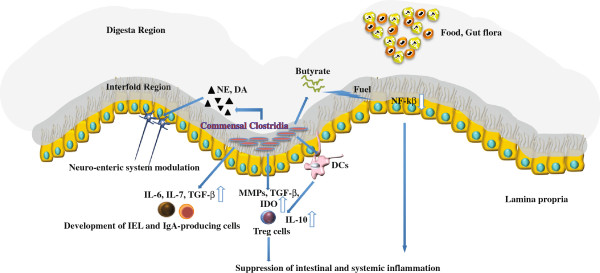
The gastrointestinal tract is a complex and dynamic network where an intricate and mutualistic symbiosis modulates the relationship between the host and the microbiota in order to establish and ensure gut homeostasis. Commensal Clostridia consist of gram-positive, rod-shaped bacteria in the phylum Firmicutes and make up a substantial part of the total bacteria in the gut microbiota. They start to colonize the intestine of breastfed infants during the first month of life and populate a specific region in the intestinal mucosa in close relationship with intestinal cells. This position allows them to participate as crucial factors in modulating physiologic, metabolic and immune processes in the gut during the entire lifespan, by interacting with the other resident microbe populations, but also by providing specific and essential functions. This review focus on what is currently known regarding the role of commensal Clostridia in the maintenance of overall gut function, as well as touch on their potential contribution in the unfavorable alteration of microbiota composition (dysbiosis) that has been implicated in several gastrointestinal disorders. Commensal Clostridia are strongly involved in the maintenance of overall gut function. This leads to important translational implications in regard to the prevention and treatment of dysbiosis, to drug efficacy and toxicity, and to the development of therapies that may modulate the composition of the microflora, capitalizing on the key role of commensal Clostridia, with the end goal of promoting gut health.
Overview
The claims and statistics of this paper haven’t been checked yet.
Free: it reads the open-access text and checks the first 5 claims that cite a source we can check. Create a free account to check every claim.
Integrity signals
Registry
Cites
Statistics
Figures
Verification
Claims the paper makes
The claims and statistics of this paper haven’t been checked yet.
Free: it reads the open-access text and checks the first 5 claims that cite a source we can check. Create a free account to check every claim.
Claims other papers make about this one
Each is checked against this paper’s own text: does it say what the citing paper says it does?
In the citing paper
“Furthermore, increased Bifidobacteria and Lactobacilli, which are linked to decreased diet-induced obesity and improved insulin sensitivity have been further supported by soy-protein consumption [165,166,167].”
From Impact of Protein Intake in Older Adults with Sarcopenia and Obesity: A Gut Microbiota Perspective (2020) · cites this paper as [166]
Self-check
Percentages, sums and reported differences re-computed from the paper’s own numbers.
The self-check needs the paper’s full text.
Citations
Cites
Diversity of the Human Intestinal Microbial Flora
Eckburg, P. B., Bik, E. M., Bernstein, C. N., Purdom, E., Dethlefsen, L., Sargent, M., Gill, S. R., Nelson, K. E., & Relman, D. A. (2005) · Science · doi:10.1126/science.1110591 · Cited by 7,913 · cited 2×
“; licensee BioMed Centr Commons Attribution License (http://creativec reproduction in any medium, provided the or in culture-independent molecular techniques, by the analysis of phylogenetic arrays, next generation 16S rRNA sequencing and metagenome sequencing derived from human mucosal biopsies, luminal contents and…”
BackgroundObesity alters gut microbial ecology
Ley, R. E., Bäckhed, F., Turnbaugh, P., Lozupone, C. A., Knight, R. D., & Gordon, J. I. (2005) · Proceedings of the National Academy of Sciences · doi:10.1073/pnas.0504978102 · Cited by 6,176 · cited 1×
“; licensee BioMed Centr Commons Attribution License (http://creativec reproduction in any medium, provided the or in culture-independent molecular techniques, by the analysis of phylogenetic arrays, next generation 16S rRNA sequencing and metagenome sequencing derived from human mucosal biopsies, luminal contents and…”
BackgroundHost-Bacterial Mutualism in the Human Intestine
Bäckhed, F., Ley, R. E., Sonnenburg, J. L., Peterson, D. A., & Gordon, J. I. (2005) · Science · doi:10.1126/science.1104816 · Cited by 5,277 · cited 2×
“An intricate and mutualistic symbiosis modulates the relationship between the host and the gut microbiota [11,18,19].”
BackgroundMetagenomic Analysis of the Human Distal Gut Microbiome
Gill, S. R., Pop, M., DeBoy, R. T., Eckburg, P. B., Turnbaugh, P. J., Samuel, B. S., Gordon, J. I., Relman, D. A., Fraser-Liggett, C. M., & Nelson, K. E. (2006) · Science · doi:10.1126/science.1124234 · Cited by 4,699 · cited 2×
“; licensee BioMed Centr Commons Attribution License (http://creativec reproduction in any medium, provided the or in culture-independent molecular techniques, by the analysis of phylogenetic arrays, next generation 16S rRNA sequencing and metagenome sequencing derived from human mucosal biopsies, luminal contents and…”
BackgroundFrank, D. N., St. Amand, A. L., Feldman, R. A., Boedeker, E. C., Harpaz, N., & Pace, N. R. (2007) · Proceedings of the National Academy of Sciences · doi:10.1073/pnas.0706625104 · Cited by 4,611 · cited 4×
“; licensee BioMed Centr Commons Attribution License (http://creativec reproduction in any medium, provided the or in culture-independent molecular techniques, by the analysis of phylogenetic arrays, next generation 16S rRNA sequencing and metagenome sequencing derived from human mucosal biopsies, luminal contents and…”
BackgroundInfluentialSokol, H., Pigneur, B., Watterlot, L., Lakhdari, O., Bermúdez-Humarán, L. G., Gratadoux, J.-J., Blugeon, S., Bridonneau, C., Furet, J.-P., Corthier, G., et al. (2008) · Proceedings of the National Academy of Sciences · doi:10.1073/pnas.0804812105 · Cited by 4,413 · cited 2×
“cluster IV, increases IL-10 production from peripheral blood mononuclear cells in vitro [98].”
BackgroundGut microbiota in health and disease
Sekirov, I., Russell, S. L., Antunes, L. C. M., & Finlay, B. B. (2010) · Physiological Reviews · doi:10.1152/physrev.00045.2009 · Cited by 4,182
Induction of Colonic Regulatory T Cells by Indigenous Clostridium Species
Atarashi, K., Tanoue, T., Shima, T., Imaoka, A., Kuwahara, T., Momose, Y., Cheng, G., Yamasaki, S., Saito, T., Ohba, Y., et al. (2011) · Science · doi:10.1126/science.1198469 · Cited by 3,752 · cited 20×
“Moreover, even the colonization with altered Schaedler flora (ASF), which includes Clostridium clostridioforme, leads to the accumulation of Tregs within the colon [97].”
BackgroundInfluentialEcological and Evolutionary Forces Shaping Microbial Diversity in the Human Intestine
Ley, R. E., Peterson, D. A., & Gordon, J. I. (2006) · Cell · doi:10.1016/j.cell.2006.02.017 · Cited by 3,358 · cited 1×
“; licensee BioMed Centr Commons Attribution License (http://creativec reproduction in any medium, provided the or in culture-independent molecular techniques, by the analysis of phylogenetic arrays, next generation 16S rRNA sequencing and metagenome sequencing derived from human mucosal biopsies, luminal contents and…”
BackgroundTopping, D. L., & Clifton, P. M. (2001) · Physiological Reviews · doi:10.1152/physrev.2001.81.3.1031 · Cited by 3,091 · cited 7×
“Dysregulation of any of the aforementioned components have been implicated, not only in the pathogenesis of IBD, but in many other GI disorders, including infectious enterocolitis, IBS, small intestinal bowel overgrowth, celiac sprue, hepatic fibrosis, atopic manifestations and food intolerance [34-36].”
BackgroundInfluential
Cited by
Oliphant, K., & Allen-Vercoe, E. (2019) · Microbiome · doi:10.1186/s40168-019-0704-8 · Cited by 1,327
Yang, W., Yu, T., Huang, X., Bilotta, A. J., Xu, L., Lu, Y., Sun, J., Pan, F., Zhou, J., Zhang, W., et al. (2020) · Nature Communications · doi:10.1038/s41467-020-18262-6 · Cited by 1,042
The intestinal microbiota: Antibiotics, colonization resistance, and enteric pathogens
Kim, S., Covington, A., & Pamer, E. G. (2017) · Immunological Reviews · doi:10.1111/imr.12563 · Cited by 741
SER-109, an Oral Microbiome Therapy for Recurrent Clostridioides difficile Infection
Feuerstadt, P., Louie, T. J., Lashner, B., Wang, E. E. L., Diao, L., Bryant, J. A., Sims, M., Kraft, C. S., Cohen, S. H., Berenson, C. S., et al. (2022) · New England Journal of Medicine · doi:10.1056/nejmoa2106516 · Cited by 558
Colston, T. J., & Jackson, C. R. (2016) · Molecular Ecology · doi:10.1111/mec.13730 · Cited by 505
“Clostridium difficile after antibiotic use), most are commensal and have been found to be important in the maintenance of gut homeostasis and the development of immunity (Lopetuso et al. 2013).”
BackgroundGarcía-Montero, C., Fraile-Martínez, O., Gómez-Lahoz, A. M., Pekarek, L., Castellanos, A. J., Noguerales-Fraguas, F., Coca, S., Guijarro, L. G., García-Honduvilla, N., Asúnsolo, A., et al. (2021) · Nutrients · doi:10.3390/nu13020699 · Cited by 431
Precision Nutrition and the Microbiome, Part I: Current State of the Science
Mills, S., Stanton, C., Lane, J., Smith, G., & Ross, R. (2019) · Nutrients · doi:10.3390/nu11040923 · Cited by 399
“Bifidobacteria are well known beneficial microbes and commensal members of Clostridiales are now known to be involved in maintenance of overall gut function [351].”
BackgroundSorbara, M. T., Littmann, E. R., Fontana, E., Moody, T. U., Kohout, C. E., Gjonbalaj, M., Eaton, V., Seok, R., Leiner, I. M., & Pamer, E. G. (2020) · Cell Host & Microbe · doi:10.1016/j.chom.2020.05.005 · Cited by 415
The avian gut microbiota: community, physiology and function in wild birds
Grond, K., Sandercock, B. K., Jumpponen, A., & Zeglin, L. H. (2018) · Journal of Avian Biology · doi:10.1111/jav.01788 · Cited by 395
Wang, J., Deng, L., Chen, M., Che, Y., Li, L., Zhu, L., Chen, G., & Feng, T. (2024) · Animal Nutrition · doi:10.1016/j.aninu.2024.01.012 · Cited by 247
Phytogenic Feed Additives in Poultry: Achievements, Prospective and Challenges
Abdelli, N., Solà-Oriol, D., & Pérez, J. F. (2021) · Animals · doi:10.3390/ani11123471 · Cited by 259
The Role of Succinate in the Regulation of Intestinal Inflammation
Connors, J., Dawe, N., & Van Limbergen, J. (2018) · Nutrients · doi:10.3390/nu11010025 · Cited by 316
“In addition, the presence of gut commensal Clostridia cluster XIVa and IV (typically 10–40% of total gut bacteria) play a crucial role in homeostasis through production of butyrate and other mechanisms of colonization resistance [79].”
BackgroundCholesterol Metabolism by Uncultured Human Gut Bacteria Influences Host Cholesterol Level
Kenny, D. J., Plichta, D. R., Shungin, D., Koppel, N., Hall, A. B., Fu, B., Vasan, R. S., Shaw, S. Y., Vlamakis, H., Balskus, E. P., et al. (2020) · Cell Host & Microbe · doi:10.1016/j.chom.2020.05.013 · Cited by 302
“Cluster IV contains species such as Faecalibacterium prausnitzii, Clostridium leptum, and Ruminococcus bromii (Figure 4A) that possess metabolic capabilities linked to host health, including short-chain fatty acid production (Lopetuso et al., 2013).”
BackgroundGut microbiota diversity across ethnicities in the United States
Brooks, A. W., Priya, S., Blekhman, R., & Bordenstein, S. R. (2018) · PLOS Biology · doi:10.1371/journal.pbio.2006842 · Cited by 304
Audebert, C., Even, G., Cian, A., The Blastocystis Investigation Group, Safadi, D. E., Certad, G., Delhaes, L., Pereira, B., Nourrisson, C., Poirier, P., et al. (2016) · Scientific Reports · doi:10.1038/srep25255 · Cited by 284
Grigor’eva, I. N. (2020) · Journal of Personalized Medicine · doi:10.3390/jpm11010013 · Cited by 277
Predictive metabolomic profiling of microbial communities using amplicon or metagenomic sequences
Mallick, H., Franzosa, E. A., Mclver, L. J., Banerjee, S., Sirota-Madi, A., Kostic, A. D., Clish, C. B., Vlamakis, H., Xavier, R. J., & Huttenhower, C. (2019) · Nature Communications · doi:10.1038/s41467-019-10927-1 · Cited by 280
The Role of Microbiota in Infant Health: From Early Life to Adulthood
Yao, Y., Cai, X., Ye, Y., Wang, F., Chen, F., & Zheng, C. (2021) · Frontiers in Immunology · doi:10.3389/fimmu.2021.708472 · Cited by 255
De Filippo, C., Di Paola, M., Ramazzotti, M., Albanese, D., Pieraccini, G., Banci, E., Miglietta, F., Cavalieri, D., & Lionetti, P. (2017) · Frontiers in Microbiology · doi:10.3389/fmicb.2017.01979 · Cited by 270
“Clostridium XIVa and Odoribacter, well-known butyrateproducer bacteria (Morgan et al., 2012; Lopetuso et al., 2013; Van den Abbeele et al., 2013), contribute to SCFAs”
BackgroundPearson-Leary, J., Zhao, C., Bittinger, K., Eacret, D., Luz, S., Vigderman, A. S., Dayanim, G., & Bhatnagar, S. (2020) · Molecular Psychiatry · doi:10.1038/s41380-019-0380-x · Cited by 206
Elshahed, M. S., Miron, A., Aprotosoaie, A. C., & Farag, M. A. (2021) · Carbohydrate Polymers · doi:10.1016/j.carbpol.2020.117388 · Cited by 188
“…(Bacter-oidetess & Firmicutes) usually representing 50 – 70 % of the microbial community; and four phyla Bacteroidetes, Firmicutes, Proteobacteria, and Actinobacteria typically representing > 95 % of the microbial community (Arumugam et al., 2011; Lopetuso, Scaldaferri, Petito, & Gasbarrini, 2013).”
BackgroundAlterations in the gut microbiotas of children with food sensitization in early life
Chen, C., Chen, K., Kong, M., Chang, H., & Huang, J. (2016) · Pediatric Allergy and Immunology · doi:10.1111/pai.12522 · Cited by 189
“Clostridium IV performs most of their metabolic functions through the release of butyrate, which is an essential fuel for colonocytes (30).”
BackgroundZhao, Y., & Jiang, Q. (2021) · Advances in Nutrition · doi:10.1093/advances/nmaa104 · Cited by 180
“Moreover, supplementation of nanoparticle curcumin increased the abundance of Clostridium cluster IV and XIVa compared with the control group in the DSS-induced colitis mice (94), and these microbes are known to contain butyrate producers (95).”
BackgroundLu, H., Xu, X., Fu, D., Gu, Y., Fan, R., Yi, H., He, X., Wang, C., Ouyang, B., Zhao, P., et al. (2022) · Cell Host & Microbe · doi:10.1016/j.chom.2022.07.003 · Cited by 190
Teissier, T., & Boulanger, É. (2019) · Biogerontology · doi:10.1007/s10522-019-09808-3 · Cited by 179
“the expense of anti-inflammatory microbiota such as bifidobacteria, Faecalibacterium prausnitzii or Clostridium cluster IV (Biagi et al. 2016; Hopkins and Macfarlane 2002; Hopkins et al. 2001; Lopetuso et al. 2013; Walton et al. 2012; Zwielehner et al. 2009).”
BackgroundTackmann, J., Matias Rodrigues, J. F., & von Mering, C. (2019) · Cell Systems · doi:10.1016/j.cels.2019.08.002 · Cited by 181
Gut microbiota alterations associated with reduced bone mineral density in older adults
Das, M., Cronin, O., Keohane, D. M., Cormac, E. M., Nugent, H., Nugent, M., Molloy, C., O’Toole, P. W., Shanahan, F., Molloy, M. G., et al. (2019) · Rheumatology · doi:10.1093/rheumatology/kez302 · Cited by 185
Alcohol or gut microbiota: who is the guilty?
Meroni, M., Longo, M., & Dongiovanni, P. (2019) · International Journal of Molecular Sciences · doi:10.3390/ijms20184568 · Cited by 183
“Indeed, gut microbiota interacts with the host, avoiding the pathogenic bacteria over-growth, modulating the immune system and the immunological tolerance of mucosal cells, and stimulating the production of pathogen-specific immunoglobulin A (IgA) [27].”
BackgroundSommariva, M., Le Noci, V., Bianchi, F., Camelliti, S., Balsari, A., Tagliabue, E., & Sfondrini, L. (2020) · Cellular and Molecular Life Sciences · doi:10.1007/s00018-020-03452-8 · Cited by 178
Onrust, L., Ducatelle, R., Van Driessche, K., De Maesschalck, C., Vermeulen, K., Haesebrouck, F., Eeckhaut, V., & Van Immerseel, F. (2015) · Frontiers in Veterinary Science · doi:10.3389/fvets.2015.00075 · Cited by 170
“Moreover, inflammatory reactions will be reduced, while the stimulation of regulatory T-lymphocytes will yield a state of tolerance toward non-harmful bacteria (46).”
BackgroundHow Diet and Physical Activity Modulate Gut Microbiota: Evidence, and Perspectives
Campaniello, D., Corbo, M. R., Sinigaglia, M., Speranza, B., Racioppo, A., Altieri, C., & Bevilacqua, A. (2022) · Nutrients · doi:10.3390/nu14122456 · Cited by 167
Kuntal, B. K., Chandrakar, P., Sadhu, S., & Mande, S. S. (2019) · The ISME Journal · doi:10.1038/s41396-018-0291-x · Cited by 181
Diversity of gut microbiomes in marine fishes is shaped by host‐related factors
Huang, Q., Sham, R. C., Deng, Y., Mao, Y., Wang, C., Zhang, T., & Leung, K. M. Y. (2020) · Molecular Ecology · doi:10.1111/mec.15699 · Cited by 174
“Clostridium is a very common group in the animal gut community (Lopetuso et al., 2013).”
BackgroundPlant Prebiotics and Their Role in the Amelioration of Diseases
Kaur, A. P., Bhardwaj, S., Dhanjal, D. S., Nepovimova, E., Cruz-Martins, N., Kuča, K., Chopra, C., Singh, R., Kumar, H., Șen, F., et al. (2021) · Biomolecules · doi:10.3390/biom11030440 · Cited by 168
“Commensal Clostridia, belonging to the phylum Firmicutes, are among the substantial colonizers of the gut, which are known to play a crucial role in modulating immune, physiologic, and metabolic processes [195].”
BackgroundNascimento, A. L., Souza, A. J., Andrade, P. A. M., Andreote, F. D., Coscione, A. R., Oliveira, F. C., & Regitano, J. B. (2018) · Frontiers in Microbiology · doi:10.3389/fmicb.2018.01462 · Cited by 166
Resistant starch, microbiome, and precision modulation
Dobranowski, P. A., & Stintzi, A. (2021) · Gut Microbes · doi:10.1080/19490976.2021.1926842 · Cited by 159
Pham, V. T., Fehlbaum, S., Seifert, N., Richard, N., Bruins, M. J., Sybesma, W., Rehman, A., & Steinert, R. E. (2021) · Gut Microbes · doi:10.1080/19490976.2021.1875774 · Cited by 174
“However, riboflavin increased Clostridium and Alistipes which have been linked previously to host health.(56,57) Lipid-soluble vitamins are not naturally produced by gut bacteria and their direct effects on the HGM employing CTDS or overdosing remain largely unexplored.”
BackgroundThe "Gut Feeling": Breaking Down the Role of Gut Microbiome in Multiple Sclerosis
Freedman, S. N., Shahi, S. K., & Mangalam, A. K. (2018) · Neurotherapeutics · doi:10.1007/s13311-017-0588-x · Cited by 168
“Clostridium species (Firmicutes) are dominant gut commensals and are strongly associated with SCFA metabolism [68].”
Host contributes to longitudinal diversity of fecal microbiota in swine selected for lean growth
Lu, D., Tiezzi, F., Schillebeeckx, C., McNulty, N. P., Schwab, C. R., Shull, C. M., & Maltecca, C. (2018) · Microbiome · doi:10.1186/s40168-017-0384-1 · Cited by 182
“The colonization of Clostridium and other genera, including Escherichia and Prevotella, begins immediately following birth [48, 49] and could be disrupted by changes in living environment and the host conditions [50, 51].”
BackgroundWlodarska, M., Willing, B. P., Bravo, D. M., & Finlay, B. B. (2015) · Scientific Reports · doi:10.1038/srep09253 · Cited by 154
Keep calm: the intestinal barrier at the interface of peace and war
Thoo, L., Noti, M., & Krebs, P. (2019) · Cell Death & Disease · doi:10.1038/s41419-019-2086-z · Cited by 159
Kim, B.-S., Choi, C. W., Shin, H., Jin, S.-P., Bae, J.-S., Han, M., Seo, E. Y., Chun, J., & Chung, J. H. (2019) · Journal of Microbiology and Biotechnology · doi:10.4014/jmb.1811.11023 · Cited by 149
“The relative abundance of Clostridium was higher in centenarians in longevity villages, compared with other groups in longevity villages and urbanized towns, similar to previous studies [50, 51].”
ResultSex, gut microbiome, and cardiovascular disease risk
Razavi, A. C., Potts, K. S., Kelly, T. N., & Bazzano, L. (2019) · Biology of Sex Differences · doi:10.1186/s13293-019-0240-z · Cited by 169
“buria, and Butyrivibrio [88, 89], remove bile acid hydroxyl, glycine, and/or taurine groups to yield secondary”
BackgroundGroundwater Isolation Governs Chemistry and Microbial Community Structure along Hydrologic Flowpaths
Maamar, S. B., Aquilina, L., Quaiser, A., Pauwels, H., Michon-Coudouel, S., Vergnaud, V., Labasque, T., Roques, C., Abbott, B. W., & Dufresne, A. (2015) · Frontiers in Microbiology · doi:10.3389/fmicb.2015.01457 · Cited by 155
“This genus is often associated with mammalian gut habitats or soil (Lopetuso et al., 2013) and Clostridium perfringens has been proposed as an indicator of fecal pollution (Araujo et al., 2004; Mueller-Spitz et al., 2010).”
BackgroundPiyathilake, C. J., Ollberding, N. J., Kumar, R., Macaluso, M., Alvarez, R. D., & Morrow, C. D. (2016) · Cancer Prevention Research · doi:10.1158/1940-6207.capr-15-0350 · Cited by 154
“In contrast, samples of noncases were enriched with Ruminococcaceae, one of the most abundant gut Firmicute families associated with good gut health (56, 57) and Clostridia, common gut microbiota involved in the maintenance of gut function (58).”
Gut microbiota link dietary fiber intake and short-chain fatty acid metabolism with eating behavior
Medawar, E., Haange, S., Rolle-Kampczyk, U. E., Engelmann, B., Dietrich, A., Thieleking, R., Wiegank, C., Fries, C., Horstmann, A., Villringer, A., et al. (2021) · Translational Psychiatry · doi:10.1038/s41398-021-01620-3 · Cited by 164
Sophisticated natural products as antibiotics
Lewis, K., Lee, R. E., Jr., Brötz‐Oesterhelt, H., Hiller, S., Rodnina, M. V., Schneider, T., Weingarth, M. H., & Wohlgemuth, I. (2024) · Nature · doi:10.1038/s41586-024-07530-w · Cited by 166
“A compound that is selective against C. difficile would be highly desirable, but it is unclear how it could be used without harming other Clostridia, which constitute a major group of gut symbionts 45 .”
Cortese, R., Lu, L., Yu, Y., Ruden, D., & Claud, E. C. (2016) · Epigenetics · doi:10.1080/15592294.2016.1155011 · Cited by 148
“Clostridia, in close contact with intestinal cells, play crucial roles in modulating physiologic, metabolic and immune processes in the gut, and are necessary for the welfare of maintaining normal gut immune homeostasis.(48) Our data indicate that antenatal dexamethasone exposure alters Clostridial abundance in the of…”
BackgroundWhitfield-Cargile, C. M., Cohen, N. D., Chapkin, R. S., Weeks, B. R., Davidson, L. A., Goldsby, J. S., Hunt, C. L., Steinmeyer, S. H., Menon, R., Suchodolski, J. S., et al. (2016) · Gut Microbes · doi:10.1080/19490976.2016.1156827 · Cited by 146
“Commensal Clostridia have been shown to be critically important in gut homeostasis, specifically members of Clostridium cluster XIVa and Clostridium cluster IV.(41) Interestingly, several members of these 2 clostridial clusters were increased in the NSAID-treated animals in which indole was co-administered.”
BackgroundWang, R., Cao, S., Bashir, M. E. H., Hesser, L. A., Su, Y., Hong, S. M. C., Thompson, A., Culleen, E., Sabados, M., Dylla, N. P., et al. (2022) · Nature Biomedical Engineering · doi:10.1038/s41551-022-00972-5 · Cited by 154
The influence of in vitro pectin fermentation on the human fecal microbiome
Bang, S.-J., Kim, G., Lim, M. Y., Song, E.-J., Jung, D.-H., Kum, J.-S., Nam, Y.-D., Park, C.-S., & Seo, D.-H. (2018) · AMB Express · doi:10.1186/s13568-018-0629-9 · Cited by 137
Tannins and Bacitracin Differentially Modulate Gut Microbiota of Broiler Chickens
Carrasco, J. M. D., Redondo, E. A., Viso, N. P., Redondo, L. M., Farber, M. D., & Fernández-Miyakawa, M. E. (2018) · BioMed Research International · doi:10.1155/2018/1879168 · Cited by 149
“On the other hand, order Clostridiales encompasses mostly nonpathogenic commensal bacteria including members that have been associated with prevention of inflammatory bowel disease andmaintenance of mucosal homeostasis, which has been attributed to the capacity of clostridia to produce butyrate [78].”
BackgroundSeasonality of the gut microbiota of free-ranging white-faced capuchins in a tropical dry forest
Orkin, J. D., Campos, F. A., Myers, M. S., Cheves Hernandez, S. E., Guadamuz, A., & Melin, A. D. (2019) · The ISME Journal · doi:10.1038/s41396-018-0256-0 · Cited by 140
Ma, Y., Wang, W., Zhang, H., Wang, J., Zhang, W., Gao, J. L., Wu, S., & Qi, G. (2018) · Scientific Reports · doi:10.1038/s41598-018-33762-8 · Cited by 150
Connerton, P. L., Richards, P. J., Lafontaine, G. M. F., O’Kane, P. M., Ghaffar, N. M., CUMMINGS, N. J., Smith, D., Fish, N. M., & Connerton, I. F. (2018) · Microbiome · doi:10.1186/s40168-018-0477-5 · Cited by 143
“jejuni, most notably Clostridium XIVa that feature in the analyses of the TEG and TLG experiments, and as major butyrateproducing bacteria play a key role in maintaining metabolic and immune functions in the gut [56].”
BackgroundVitetta, L., Vitetta, G., & Hall, S. (2018) · Frontiers in Immunology · doi:10.3389/fimmu.2018.02240 · Cited by 152
“Gram negative, obligate anaerobe In the large bowel [colon] (48) - Direct development of FoxP3+ Tregs - Bacterial polysaccharide A mediates conversion of CD4+T cells → FoxP3+Tregs - TLR2 signaling in T cells mediates this effect and not in macrophages|dendritic cells - Polysaccharide A–TLR2 −/− co-operations results i…”
BackgroundInfluentialWasimuddin, Menke, S., Melzheimer, J., Thalwitzer, S., Heinrich, S. K., Wachter, B., & Sommer, S. (2017) · Molecular Ecology · doi:10.1111/mec.14278 · Cited by 149
Impaired Autophagy in Intestinal Epithelial Cells Alters Gut Microbiota and Host Immune Responses
Yang, L., Liu, C., Zhao, W., He, C., Ding, J., Dai, R., Xu, K., Xiao, L., Luo, L., Liu, S., et al. (2018) · Applied and Environmental Microbiology · doi:10.1128/aem.00880-18 · Cited by 127
“Many protective intestinal bacterial groups are involved in the maintenance of gut homeostasis (45, 46).”
BackgroundDe novo design of self-assembling peptides with antimicrobial activity guided by deep learning
Liu, H., Song, Z., Zhang, Y. L., Wu, B., Chen, D., Zhou, Z., Zhang, H., Li, S., Feng, X., Huang, J., et al. (2025) · Nature Materials · doi:10.1038/s41563-025-02164-3 · Cited by 138
Pathophysiology of Type 1 Diabetes and Gut Microbiota Role
CHIERICO, F. D., Rapini, N., Deodati, A., Matteoli, M. C., Cianfarani, S., & Putignani, L. (2022) · International Journal of Molecular Sciences · doi:10.3390/ijms232314650 · Cited by 146
Bamberger, C., Rossmeier, A., Lechner, K., Wu, L., Waldmann, E., Fischer, S., Stark, R., Altenhofer, J., Henze, K., & Parhofer, K. (2018) · Nutrients · doi:10.3390/nu10020244 · Cited by 119
“The short chain fatty acid butyric acid is generated from fermentation of indigestible polysaccharides [30] and provides energy for intestinal epithelial cells and contributes to host health by facilitating maintenance of colon epithelial integrity and controlling inflammatory processes [31,32].”
BackgroundRibeiro, C. F. A., Silveira, G. G. D. O. S., Cândido, E. D. S., Cardoso, M. H. E. S., Carvalho, C. M. E., & Franco, O. L. (2020) · ACS Infectious Diseases · doi:10.1021/acsinfecdis.0c00036 · Cited by 139
Huang, W., Yin, H., Yang, Y., Jin, L., Lu, G., & Dang, Z. (2021) · Science of The Total Environment · doi:10.1016/j.scitotenv.2021.146264 · Cited by 125
Henn, M. R., O’Brien, E. J., Diao, L., Feagan, B. G., Sandborn, W. J., Huttenhower, C., Wortman, J. R., McGovern, B. H., Wang-Weigand, S., Lichter, D. I., et al. (2021) · Gastroenterology · doi:10.1053/j.gastro.2020.07.048 · Cited by 118
“Post-treatment genera gained included Firmicutes related to dose-species, such as Clostridium, Gemminger, Dorea, Roseburia, Blautia, and Faecalibacterium, implicated in colonocyte health, epithelial gut integrity, and regulation of immune tolerance.(31) We only observed a significant increase in the a-diversity of spo…”
BackgroundAutoimmune host–microbiota interactions at barrier sites and beyond
Ruff, W. E., & Kriegel, M. A. (2015) · Trends in Molecular Medicine · doi:10.1016/j.molmed.2015.02.006 · Cited by 121
“Clostridium clusters are a heterogeneous group containing pathogenic and commensal bacteria [61].”
BackgroundQuagliariello, A., Del Chierico, F., Russo, A., Reddel, S., Conte, G., Lopetuso, L. R., Ianiro, G., Dallapiccola, B., Cardona, F., Gasbarrini, A., et al. (2018) · Frontiers in Microbiology · doi:10.3389/fmicb.2018.00675 · Cited by 118
“Clostridia have a crucial role in gut homeostasis and host defense mechanisms against exogenous infections (Lopetuso et al., 2013).”
BackgroundSelf-citationTurpin, W., Dong, M., Sasson, G., Raygoza Garay, J. A., Espin-Garcia, O., Lee, S.-H., Neustaeter, A., Smith, M. I., Leibovitzh, H., Guttman, D. S., et al. (2022) · Gastroenterology · doi:10.1053/j.gastro.2022.05.037 · Cited by 116
Vassallo, G., Mirijello, A., Ferrulli, A., Antonelli, M., Landolfi, R., Gasbarrini, A., & Addolorato, G. (2015) · Alimentary Pharmacology & Therapeutics · doi:10.1111/apt.13164 · Cited by 121
“Fungi, protozoa, archaea and viral particles are also represented in microbiota.(12) These microorganisms start colonising the gut after birth, with a succession of different populations until a stable microbiota has been established.”
BackgroundSelf-citationCortisol-Related Signatures of Stress in the Fish Microbiome
Webster, T. M. U., Rodríguez‐Barreto, D., Consuegra, S., & de Leániz, C. G. (2020) · Frontiers in Microbiology · doi:10.3389/fmicb.2020.01621 · Cited by 130
Bacterial Volatile Compounds: Functions in Communication, Cooperation, and Competition
Netzker, T., Shepherdson, E. M. F., Zambri, M. P., & Elliot, M. A. (2020) · Annual Review of Microbiology · doi:10.1146/annurev-micro-011320-015542 · Cited by 127
Gilijamse, P. W., Hartstra, A. V., Levin, E., Wortelboer, K., Serlie, M. J., Ackermans, M. T., Herrema, H., Nederveen, A. J., Imangaliyev, S., Aalvink, S., et al. (2020) · npj Biofilms and Microbiomes · doi:10.1038/s41522-020-0127-0 · Cited by 109
Patel, S., Behara, R., Swanson, G. B., Forsyth, C. B., Voigt, R. M., & Keshavarzian, A. (2015) · Biomolecules · doi:10.3390/biom5042573 · Cited by 128
“catabolism of dietary fiber, vitamin synthesis, maintenance of the intestinal barrier, preventing the growth of pathogenic bacteria, and the microbiota can even influence behavior of the host [36,39–43].”
BackgroundHe, J., Guo, H., Zheng, W., Xue, Y., Zhao, R., & Yao, W. (2019) · Journal of Animal Science and Biotechnology/Journal of animal science and biotechnology · doi:10.1186/s40104-019-0391-0 · Cited by 120
Andersen, S. J., Groof, V. D., Khor, W. C., Roume, H., Props, R., Coma, M., & Rabaey, K. (2017) · Frontiers in Bioengineering and Biotechnology · doi:10.3389/fbioe.2017.00008 · Cited by 120
“Both of these Clostridia appear to be of the Clostridium group IV, recognized as butyrate producers in the gut microbiome (Lopetuso et al., 2013) and capable of elongation of short chain VFA through lactic acid to hexanoic acid (Zhu et al.”
BackgroundFermented Foods and Beverages in Human Diet and Their Influence on Gut Microbiota and Health
de Carvalho, N. M., Costa, E. M., Silva, S., Pimentel, L. L., Fernandes, T. H., & Pintado, M. (2018) · Fermentation · doi:10.3390/fermentation4040090 · Cited by 123
Chen, T., & Yang, C. S. (2019) · Critical Reviews in Food Science and Nutrition · doi:10.1080/10408398.2019.1654430 · Cited by 115
Gut commensals and their metabolites in health and disease
Krishnamurthy, H. K., Pereira, M., Bosco, J., George, J., Jayaraman, V., Krishna, K., Wang, T., Bei, K., & Rajasekaran, J. J. (2023) · Frontiers in Microbiology · doi:10.3389/fmicb.2023.1244293 · Cited by 124
“Clostridia populate specific regions in the intestinal mucosa in close association with intestinal cells, which enables them to participate in crucial functions such as modulating physiologic, metabolic, and immune processes in the gut (Lopetuso et al., 2013).”
BackgroundGut microbiota dysbiosis and diarrhea in kidney transplant recipients
Lee, J. R., Magruder, M. L., Zhang, L., Westblade, L. F., Satlin, M. J., Robertson, A., Edusei, E., Crawford, C. V., Ling, L., Taur, Y., et al. (2018) · American Journal of Transplantation · doi:10.1111/ajt.14974 · Cited by 119
Kintses, B., Méhi, O., Ari, E. E., Számel, M., Györkei, Á., Jangir, P. K., Nagy, I., Pál, F., Fekete, G., Tengölics, R., et al. (2018) · Nature Microbiology · doi:10.1038/s41564-018-0313-5 · Cited by 116
Simonyté Sjödin, K., Hammarström, M. ‐., Rydén, P., Sjödin, A., Hernell, O., Engstrand, L., & West, C. E. (2019) · Allergy · doi:10.1111/all.13485 · Cited by 104
“Commensal Clostridia of the phylum Firmicutes are abundant in the gut microbiota and colonize a specific region of the mucosa, in close proximity to intestinal cells.(26) As Clostridia colonize regions nearby the mucosa, they are theorized to be key players in the cross talk with intestinal cells and they are potent p…”
BackgroundWan, H., Han, J., Tang, S., Bao, W., Lu, C., Zhou, J., Ming, T., Li, Y., & Su, X. (2019) · Food & Function · doi:10.1039/c9fo02425e · Cited by 111
Carco, C., Young, W., Gearry, R. B., Talley, N. J., McNabb, W. C., & Roy, N. C. (2020) · Frontiers in Cellular and Infection Microbiology · doi:10.3389/fcimb.2020.00468 · Cited by 99
“Moreover, since the Clostridia class is thought to colonize the area surrounding the colonic mucosa and includes several major butyrate-producers (Lopetuso et al., 2013), it is likely that taxa belonging to this class have a crucial impact on the host immune system.”
BackgroundLatorre, J. D., Adhikari, B., Park, S. H., Teague, K. D., Graham, L. E., Mahaffey, B. D., Baxter, M. F. A., Hernández-Velasco, X., Kwon, Y. M., Ricke, S. C., et al. (2018) · Frontiers in Veterinary Science · doi:10.3389/fvets.2018.00199 · Cited by 106
Nuzum, N. D., Loughman, A., Szymlek-Gay, E. A., Hendy, A., Teo, W.-P., & Macpherson, H. (2020) · Neuroscience & Biobehavioral Reviews · doi:10.1016/j.neubiorev.2020.02.003 · Cited by 103
Fei, Y., Wang, R., Lü, J., Peng, S., Yang, S. Y., Wang, Y., Zheng, K., Li, R., Lin, L., & Li, M. (2023) · Geriatric Nursing · doi:10.1016/j.gerinurse.2023.03.006 · Cited by 113
Impact of Protein Intake in Older Adults with Sarcopenia and Obesity: A Gut Microbiota Perspective
Prokopidis, K., Cervo, M. M., Gandham, A., & Scott, D. (2020) · Nutrients · doi:10.3390/nu12082285 · Cited by 99
Laminarin favorably modulates gut microbiota in mice fed a high-fat diet
Nguyen, S. G., Kim, J., Guevarra, R. B., Lee, J.-H., Kim, E., Kim, S.-I., & Unno, T. (2016) · Food & Function · doi:10.1039/c6fo00929h · Cited by 105
Dahl, C., Stanislawski, M., Iszatt, N., Mandal, S., Lozupone, C., Clemente, J. C., Knight, R., Stigum, H., & Eggesbø, M. (2017) · PLOS ONE · doi:10.1371/journal.pone.0184336 · Cited by 93
“The Ruminococcaceae are active producers of the short-chained fatty acid butyrate [28].”
BackgroundShivappa, N., Wirth, M. D., Murphy, E. A., Hurley, T. G., & Hébert, J. R. (2018) · European Journal of Nutrition · doi:10.1007/s00394-018-1690-5 · Cited by 99
Schmitt, C. C., Aranias, T., Viel, T., Chateau, D., Le Gall, M., Waligora-Dupriet, A.-J., Melchior, C., Rouxel, O., Kapel, N., Gourcerol, G., et al. (2017) · Molecular Metabolism · doi:10.1016/j.molmet.2016.10.008 · Cited by 91
“These commensal bacteria show a positive impact on gut homeostasis [21], including a reduced expression of proinflammatory cytokines through butyrate production [22,23].”
BackgroundAssociation between premature ovarian insufficiency and gut microbiota
Wu, J., Zhuo, Y., Liu, Y.-L., Chen, Y., Ning, Y., & Yao, J. (2021) · BMC Pregnancy and Childbirth · doi:10.1186/s12884-021-03855-w · Cited by 104
Zhang, L., Carmody, R. N., Kalariya, H. M., Duran, R. M., Moskal, K., Poulev, A., Kuhn, P. E., Tveter, K. M., Turnbaugh, P. J., Raskin, I., et al. (2018) · The Journal of Nutritional Biochemistry · doi:10.1016/j.jnutbio.2018.02.009 · Cited by 99
“GP decreased Clostridium IV, Intestinimonas, and Acetatifactor genera, associated with metabolism of fiber and short chain fatty acid (SCFA) production [26-28]; however, this was accompanied by increases in Blautia and Akkermansia, which also produce SCFAs [29].”
BackgroundDai, D., Qiu, K., Zhang, H., Wu, S., Han, Y., Wu, Y., Qi, G., & Wang, J. (2021) · Frontiers in Microbiology · doi:10.3389/fmicb.2020.618144 · Cited by 108
study, L. C., Zhernakova, D. V., BIOS consortium, Le, T. H., Kurilshikov, A., Atanasovska, B., Bonder, M. J., Sanna, S., Claringbould, A., Võsa, U., et al. (2018) · Nature Genetics · doi:10.1038/s41588-018-0224-7 · Cited by 100
Lactobacillus Dominate in the Intestine of Atlantic Salmon Fed Dietary Probiotics
Gupta, S., Fečkaninová, A., Lokesh, J., Koščová, J., Sørensen, M., Fernandes, J. M. O., & Kiron, V. (2019) · Frontiers in Microbiology · doi:10.3389/fmicb.2018.03247 · Cited by 103
“Commensal Clostridiales are known to promote gut health by modulating gut homeostasis and taking part in immune activation (Lopetuso et al., 2013).”
BackgroundLinkage between the intestinal microbiota and residual feed intake in broiler chickens
Liu, J., Stewart, S. N., Robinson, K., Yang, Q., Lyu, W., Whitmore, M. A., & Zhang, G. (2021) · Journal of Animal Science and Biotechnology/Journal of animal science and biotechnology · doi:10.1186/s40104-020-00542-2 · Cited by 101
“Relative to that of other livestock species, the chicken intestinal microbiota has a higher proportion of Firmicutes to Bacteroidetes [9].”
BackgroundInfluentialAhrens, A. P., Culpepper, T., Saldivar, B. N., Anton, S. D., Stoll, S., Handberg, E. M., Xu, K., Pepine, C. J., Triplett, E. W., & Aggarwal, M. (2021) · Nutrients · doi:10.3390/nu13103459 · Cited by 95
“at T2 after the plant-based dietary intervention were largely characterized by increased abundances of members of Clostridia, a commensal class of Firmicutes consisting of grampositive bacteria crucial to gut homeostasis [48].”
BackgroundMicrobiomes, metagenomics, and primate conservation: New strategies, tools, and applications
Stumpf, R. M., Gomez, A. M., Amato, K. R., Yeoman, C. J., Polk, J. D., Wilson, B. A., Nelson, K. E., White, B. A., & Leigh, S. R. (2016) · Biological Conservation · doi:10.1016/j.biocon.2016.03.035 · Cited by 99
The gut microbiome and microbial translocation in multiple sclerosis
Mirza, A., & Mao‐Draayer, Y. (2017) · Clinical Immunology · doi:10.1016/j.clim.2017.03.001 · Cited by 97
Fecal Bacterial Communities in treated HIV infected individuals on two antiretroviral regimens
Pinto-Cardoso, S. M., Lozupone, C., Briceño, O., Alva-Hernández, S., Téllez-Navarrete, N. A., Adriana, A., Murakami-Ogasawara, A., & Reyes‐Terán, G. (2017) · Scientific Reports · doi:10.1038/srep43741 · Cited by 100
Metadata
- Authors
- Lopetuso, L. R., Scaldaferri, F., Petito, V., & Gasbarrini, A.
- Affiliations
- Agostino Gemelli University Polyclinic (IT)
- Corresponding author
- Lopetuso, Loris R
- Venue
- Gut Pathogens
- Published
- 2013
- Volume
- 5
- Issue
- 1
- Pages
- 23
- ISSN
- 1757-4749 (ISSN-L)
- PMC
- PMC3751348
- OpenAlex
- W2112738213
- Cited by
- 753
- References
- 103
- Citations by year
- 2026: 39 · 2025: 68 · 2024: 64 · 2023: 61 · 2022: 89 · 2021: 105 · 2020: 91 · 2019: 79 · 2018: 68 · 2017: 33 · 2016: 28 · 2015: 18 · 2014: 10
- FWCI
- 8.37
- Type
- journal article
- Language
- en
- Open access
- gold
- doi.org
- Licence
- cc-by
- Locations
- Gut Pathogens (publishedVersion, cc-by)
- Europe PMC (PubMed Central) (publishedVersion, cc-by)
- PubMed Central (publishedVersion, cc-by)
- PubMed (publishedVersion)
- PubliCatt (Università Cattolica del Sacro Cuore) (submittedVersion, other-oa)
- Topics
- Life Sciences › Biochemistry, Genetics and Molecular Biology › Molecular Biology › Gut microbiota and health
- Health Sciences › Medicine › Infectious Diseases › Clostridium difficile and Clostridium perfringens research
- Life Sciences › Agricultural and Biological Sciences › Food Science › Probiotics and Fermented Foods
- Keywords
- intestinal homeostasis, gut microbiota, Firmicutes, host-microbe symbiosis, intestinal colonization, infant gut colonization, dysbiosis, gastrointestinal diseases, gut health, drug efficacy and toxicity, microbiota-based therapy
About these checks
Registry, retraction, Cites and statistics results are computed, not judged, with one exception: a printed reference that no index lists is read once by a model before it counts as a citation error. Claims are extracted by a model and kept only when their quote appears verbatim in the text; each cited source is then checked, with a model’s help, for whether it says what the claim relies on. Those verdicts can be wrong — read the claim’s quote and the cited source before relying on one.
Statistics and arithmetic are recomputed, not judged.
Confidence bands are shown only for fields calibrated on our annotated test set. None is calibrated yet, so no band is shown.
What counts as a claim ›How we measure confidence ›How we check this ›
Are you an author, or do you see a problem with this page? Request a review
Data sources
Bibliographic data: Semantic Scholar, OpenAlex, Crossref.
Contains information from the Semantic Scholar Academic Graph Datasets, made available under the ODC Attribution License (ODC-BY 1.0).
Semantic Scholar’s data is described in: Kinney, R., et al. (2023). The Semantic Scholar Open Data Platform. arXiv:2301.10140.
