

Commensal Clostridia: leading players in the maintenance of gut homeostasis
Open accessThe DOI matches its Crossref record; 104 of the 104 references it cites were found in a registry or an index.
Abstract
The gastrointestinal tract is a complex and dynamic network where an intricate and mutualistic symbiosis modulates the relationship between the host and the microbiota in order to establish and ensure gut homeostasis. Commensal Clostridia consist of gram-positive, rod-shaped bacteria in the phylum Firmicutes and make up a substantial part of the total bacteria in the gut microbiota. They start to colonize the intestine of breastfed infants during the first month of life and populate a specific region in the intestinal mucosa in close relationship with intestinal cells. This position allows them to participate as crucial factors in modulating physiologic, metabolic and immune processes in the gut during the entire lifespan, by interacting with the other resident microbe populations, but also by providing specific and essential functions. This review focus on what is currently known regarding the role of commensal Clostridia in the maintenance of overall gut function, as well as touch on their potential contribution in the unfavorable alteration of microbiota composition (dysbiosis) that has been implicated in several gastrointestinal disorders. Commensal Clostridia are strongly involved in the maintenance of overall gut function. This leads to important translational implications in regard to the prevention and treatment of dysbiosis, to drug efficacy and toxicity, and to the development of therapies that may modulate the composition of the microflora, capitalizing on the key role of commensal Clostridia, with the end goal of promoting gut health.
Overview
The claims and statistics of this paper haven’t been checked yet.
Free: it reads the open-access text and checks the first 5 claims that cite a source we can check. Create a free account to check every claim.
Integrity signals
Registry
Cites
Statistics
Figures
Verification
Claims the paper makes
The claims and statistics of this paper haven’t been checked yet.
Free: it reads the open-access text and checks the first 5 claims that cite a source we can check. Create a free account to check every claim.
Claims other papers make about this one
Each is checked against this paper’s own text: does it say what the citing paper says it does?
In the citing paper
“Furthermore, increased Bifidobacteria and Lactobacilli, which are linked to decreased diet-induced obesity and improved insulin sensitivity have been further supported by soy-protein consumption [165,166,167].”
From Impact of Protein Intake in Older Adults with Sarcopenia and Obesity: A Gut Microbiota Perspective (2020) · cites this paper as [166]
Self-check
Percentages, sums and reported differences re-computed from the paper’s own numbers.
The self-check needs the paper’s full text.
Citations
Cites
Diversity of the Human Intestinal Microbial Flora
Eckburg, P. B., Bik, E. M., Bernstein, C. N., Purdom, E., Dethlefsen, L., Sargent, M., Gill, S. R., Nelson, K. E., & Relman, D. A. (2005) · Science · doi:10.1126/science.1110591 · Cited by 7,913 · cited 2×
“; licensee BioMed Centr Commons Attribution License (http://creativec reproduction in any medium, provided the or in culture-independent molecular techniques, by the analysis of phylogenetic arrays, next generation 16S rRNA sequencing and metagenome sequencing derived from human mucosal biopsies, luminal contents and…”
BackgroundObesity alters gut microbial ecology
Ley, R. E., Bäckhed, F., Turnbaugh, P., Lozupone, C. A., Knight, R. D., & Gordon, J. I. (2005) · Proceedings of the National Academy of Sciences · doi:10.1073/pnas.0504978102 · Cited by 6,176 · cited 1×
“; licensee BioMed Centr Commons Attribution License (http://creativec reproduction in any medium, provided the or in culture-independent molecular techniques, by the analysis of phylogenetic arrays, next generation 16S rRNA sequencing and metagenome sequencing derived from human mucosal biopsies, luminal contents and…”
BackgroundHost-Bacterial Mutualism in the Human Intestine
Bäckhed, F., Ley, R. E., Sonnenburg, J. L., Peterson, D. A., & Gordon, J. I. (2005) · Science · doi:10.1126/science.1104816 · Cited by 5,277 · cited 2×
“An intricate and mutualistic symbiosis modulates the relationship between the host and the gut microbiota [11,18,19].”
BackgroundMetagenomic Analysis of the Human Distal Gut Microbiome
Gill, S. R., Pop, M., DeBoy, R. T., Eckburg, P. B., Turnbaugh, P. J., Samuel, B. S., Gordon, J. I., Relman, D. A., Fraser-Liggett, C. M., & Nelson, K. E. (2006) · Science · doi:10.1126/science.1124234 · Cited by 4,699 · cited 2×
“; licensee BioMed Centr Commons Attribution License (http://creativec reproduction in any medium, provided the or in culture-independent molecular techniques, by the analysis of phylogenetic arrays, next generation 16S rRNA sequencing and metagenome sequencing derived from human mucosal biopsies, luminal contents and…”
BackgroundFrank, D. N., St. Amand, A. L., Feldman, R. A., Boedeker, E. C., Harpaz, N., & Pace, N. R. (2007) · Proceedings of the National Academy of Sciences · doi:10.1073/pnas.0706625104 · Cited by 4,611 · cited 4×
“; licensee BioMed Centr Commons Attribution License (http://creativec reproduction in any medium, provided the or in culture-independent molecular techniques, by the analysis of phylogenetic arrays, next generation 16S rRNA sequencing and metagenome sequencing derived from human mucosal biopsies, luminal contents and…”
BackgroundInfluentialSokol, H., Pigneur, B., Watterlot, L., Lakhdari, O., Bermúdez-Humarán, L. G., Gratadoux, J.-J., Blugeon, S., Bridonneau, C., Furet, J.-P., Corthier, G., et al. (2008) · Proceedings of the National Academy of Sciences · doi:10.1073/pnas.0804812105 · Cited by 4,413 · cited 2×
“cluster IV, increases IL-10 production from peripheral blood mononuclear cells in vitro [98].”
BackgroundGut microbiota in health and disease
Sekirov, I., Russell, S. L., Antunes, L. C. M., & Finlay, B. B. (2010) · Physiological Reviews · doi:10.1152/physrev.00045.2009 · Cited by 4,182
Induction of Colonic Regulatory T Cells by Indigenous Clostridium Species
Atarashi, K., Tanoue, T., Shima, T., Imaoka, A., Kuwahara, T., Momose, Y., Cheng, G., Yamasaki, S., Saito, T., Ohba, Y., et al. (2011) · Science · doi:10.1126/science.1198469 · Cited by 3,752 · cited 20×
“Moreover, even the colonization with altered Schaedler flora (ASF), which includes Clostridium clostridioforme, leads to the accumulation of Tregs within the colon [97].”
BackgroundInfluentialEcological and Evolutionary Forces Shaping Microbial Diversity in the Human Intestine
Ley, R. E., Peterson, D. A., & Gordon, J. I. (2006) · Cell · doi:10.1016/j.cell.2006.02.017 · Cited by 3,358 · cited 1×
“; licensee BioMed Centr Commons Attribution License (http://creativec reproduction in any medium, provided the or in culture-independent molecular techniques, by the analysis of phylogenetic arrays, next generation 16S rRNA sequencing and metagenome sequencing derived from human mucosal biopsies, luminal contents and…”
BackgroundTopping, D. L., & Clifton, P. M. (2001) · Physiological Reviews · doi:10.1152/physrev.2001.81.3.1031 · Cited by 3,091 · cited 7×
“Dysregulation of any of the aforementioned components have been implicated, not only in the pathogenesis of IBD, but in many other GI disorders, including infectious enterocolitis, IBS, small intestinal bowel overgrowth, celiac sprue, hepatic fibrosis, atopic manifestations and food intolerance [34-36].”
BackgroundInfluentialMicrobial Influences in Inflammatory Bowel Diseases
Sartor, R. B. (2008) · Gastroenterology · doi:10.1053/j.gastro.2007.11.059 · Cited by 1,927 · cited 1×
“haps also systemic, immune disorders, such as in the pathogenesis of inflammatory bowel diseases (IBD), and other gastrointestinal disorders, including gastritis, peptic ulcer, irritable bowel syndrome (IBS) and even gastric and colon cancer [14,31-33].”
BackgroundThe Firmicutes/Bacteroidetes ratio of the human microbiota changes with age
Mariat, D., Firmesse, O., Levenez, F., Guimarăes, V., Sokol, H., Doré, J., Corthier, G., & Furet, J.-P. (2009) · BMC Microbiology · doi:10.1186/1471-2180-9-123 · Cited by 1,755 · cited 1×
“In the elderly (>65 years), most available studies obtained with molecular methods showed a decrease in the number of strict anaerobes and an increase in the number of facultative anaerobes (streptococci, staphylococci, enterococci, enterobacteriaceae) [44-47].”
ResultCOLLINS, M. D., LAWSON, P. A., WILLEMS, A., CORDOBA, J. J., FERNANDEZ-GARAYZABAL, J., GARCIA, P., CAI, J., HIPPE, H., & FARROW, J. A. E. (1994) · International Journal of Systematic Bacteriology · doi:10.1099/00207713-44-4-812 · Cited by 1,669 · cited 1×
“ium, Ruminococcus and Anaerofilum genera [40].”
Microbes in Gastrointestinal Health and Disease
Neish, A. S. (2009) · Gastroenterology · doi:10.1053/j.gastro.2008.10.080 · Cited by 1,386 · cited 1×
“These basic functions are carried out in a dynamic environment inhabited by 1kg of commensal microbes that include more than 3mln of genes [3,4].”
Mucosal flora in inflammatory bowel disease
Swidsinski, A., Ladhoff, A., Pernthaler, A., Swidsinski, S., Loening–Baucke, V., Ortner, M., Weber, J., Hoffmann, U., Schreiber, S., Dietel, M., et al. (2002) · Gastroenterology · doi:10.1053/gast.2002.30294 · Cited by 1,346 · cited 1×
“haps also systemic, immune disorders, such as in the pathogenesis of inflammatory bowel diseases (IBD), and other gastrointestinal disorders, including gastritis, peptic ulcer, irritable bowel syndrome (IBS) and even gastric and colon cancer [14,31-33].”
BackgroundButyrate inhibits inflammatory responses through NFκB inhibition: implications for Crohn's disease
Segain, J.-P., de la Blétière, D. R., Bourreille, A., Leray, V, Gervois, N., Rosales, C., Ferrier, L., Bonnet, C., Blottière, H. M., & Galmiche, J.-P. (2000) · Gut · doi:10.1136/gut.47.3.397 · Cited by 1,321
The microbiology of butyrate formation in the human colon
Pryde, S. E., Duncan, S. H., Hold, G. L., Stewart, C. S., & Flint, H. J. (2002) · FEMS Microbiology Letters · doi:10.1111/j.1574-6968.2002.tb11467.x · Cited by 1,320 · cited 2×
“energy gained from the diet in herbivores, especially ruminants [55].”
BackgroundCatecholamine Metabolism: A Contemporary View with Implications for Physiology and Medicine
Eisenhofer, G., Kopin, I. J., & Goldstein, D. S. (2004) · Pharmacological Reviews · doi:10.1124/pr.56.3.1 · Cited by 1,072 · cited 1×
“Catecholamines are utilized in the central and peripheral nervous systems, which regulate various types of bodily functions, including cognitive abilities, mood [73], immune reactions [74,75], motility [73], and active water absorption of the intestine [76,77].”
BackgroundTh17 and regulatory T cells in mediating and restraining inflammation
Littman, D. R., & Rudensky, A. Y. (2010) · Cell · doi:10.1016/j.cell.2010.02.021 · Cited by 1,039 · cited 1×
“CD4Foxp3 Tregs are the most prominent regulatory cells in the body and are most abundant in the colonic lamina propria [90,91].”
BackgroundPeripheral education of the immune system by colonic commensal microbiota
Lathrop, S. K., Bloom, S. M., Rao, S. M., Nutsch, K., Lio, C.-W., Santacruz, N., Peterson, D. A., Stappenbeck, T. S., & Hsieh, C.-S. (2011) · Nature · doi:10.1038/nature10434 · Cited by 1,034
Fasano, A. (2011) · Physiological Reviews · doi:10.1152/physrev.00003.2008 · Cited by 1,003 · cited 1×
“Dysregulation of any of the aforementioned components have been implicated, not only in the pathogenesis of IBD, but in many other GI disorders, including infectious enterocolitis, IBS, small intestinal bowel overgrowth, celiac sprue, hepatic fibrosis, atopic manifestations and food intolerance [34-36].”
BackgroundTowards the human intestinal microbiota phylogenetic core
Tap, J., Mondot, S., Levenez, F., Pelletier, E., Caron, C., Furet, J., Ugarte, E., Muñoz‐Tamayo, R., Paslier, D. L. E., Nalin, R., et al. (2009) · Environmental Microbiology · doi:10.1111/j.1462-2920.2009.01982.x · Cited by 927 · cited 1×
“; licensee BioMed Centr Commons Attribution License (http://creativec reproduction in any medium, provided the or in culture-independent molecular techniques, by the analysis of phylogenetic arrays, next generation 16S rRNA sequencing and metagenome sequencing derived from human mucosal biopsies, luminal contents and…”
BackgroundIntestinal barrier function in health and gastrointestinal disease
Camilleri, M., Madsen, K., Spiller, R., Van Meerveld, B. G., & Verne, G. N. (2012) · Neurogastroenterology & Motility · doi:10.1111/j.1365-2982.2012.01921.x · Cited by 908 · cited 1×
“Dysregulation of any of the aforementioned components have been implicated, not only in the pathogenesis of IBD, but in many other GI disorders, including infectious enterocolitis, IBS, small intestinal bowel overgrowth, celiac sprue, hepatic fibrosis, atopic manifestations and food intolerance [34-36].”
BackgroundIntestinal Bacterial Colonization Induces Mutualistic Regulatory T Cell Responses
Geuking, M. B., Cahenzli, J., Lawson, M. A. E., Ng, D. C. K., Slack, E., Hapfelmeier, S., McCoy, K. D., & Macpherson, A. J. (2011) · Immunity · doi:10.1016/j.immuni.2011.03.021 · Cited by 840 · cited 1×
“Moreover, even the colonization with altered Schaedler flora (ASF), which includes Clostridium clostridioforme, leads to the accumulation of Tregs within the colon [97].”
BackgroundXenobiotics shape the physiology and gene expression of the active human gut microbiome
Maurice, C. F., Haiser, H. J., & Turnbaugh, P. J. (2013) · Cell · doi:10.1016/j.cell.2012.10.052 · Cited by 811
RNA Viral Community in Human Feces: Prevalence of Plant Pathogenic Viruses
Zhang, T., Breitbart, M., Lee, W. H., Run, J.-Q., Wei, C. L., Soh, S. W. L., Hibberd, M. L., Liu, E. T., Rohwer, F., & Ruan, Y. (2005) · PLoS Biology · doi:10.1371/journal.pbio.0040003 · Cited by 805 · cited 1×
“They belong to the three domains of life, Bacteria, Archaea and Eukarya [5-7], as well as to viral particles [8,9].”
BackgroundBiology of the Laboratory Mouse
(1941) · JAMA: The Journal of the American Medical Association · doi:10.1001/jama.1941.02820440081034 · Cited by 802
The microbiome in infectious disease and inflammation
Honda, K., & Littman, D. R. (2012) · Annual Review of Immunology · doi:10.1146/annurev-immunol-020711-074937 · Cited by 791 · cited 1×
“CD4Foxp3 Tregs are the most prominent regulatory cells in the body and are most abundant in the colonic lamina propria [90,91].”
BackgroundTlaskalová-Hogenová, H., Štěpánková, R., Hudcovic, T., Tučková, L., Cukrowska, B., Lodinová-Žádnı́ková, R., Kozáková, H., Rossmann, P., Bártová, J., Sokol, D., et al. (2004) · Immunology Letters · doi:10.1016/j.imlet.2004.02.005 · Cited by 755 · cited 1×
“Germ-free mouse models, compared to control animals, showed increased mucus accumulation in the cecum, water retention, extended epithelial cell cycles, and decreased peristalsis in the large intestine [54].”
BackgroundDuncan, S. H., Barcenilla, A., Stewart, C. S., Pryde, S. E., & Flint, H. J. (2002) · Applied and Environmental Microbiology · doi:10.1128/aem.68.10.5186-5190.2002 · Cited by 743
Asano, Y., Hiramoto, T., Nishino, R., Aiba, Y., Kimura, T., Yoshihara, K., Koga, Y., & Sudo, N. (2012) · American Journal of Physiology-Gastrointestinal and Liver Physiology · doi:10.1152/ajpgi.00341.2012 · Cited by 659 · cited 1×
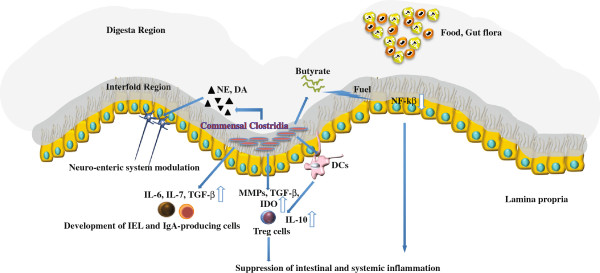
“including Norepinephrine (NE) and Dopamine (DA), in the gut lumen compared to germ free mice [71].”
BackgroundBurger-van Paassen, N., Vincent, A., Puiman, P. J., van der Sluis, M., Bouma, J., Boehm, G., van Goudoever, J. B., van Seuningen, I., & Renes, I. B. (2009) · Biochemical Journal · doi:10.1042/bj20082222 · Cited by 611
Intestinal Bacteria and the Regulation of Immune Cell Homeostasis
Hill, D. A., & Artis, D. (2010) · Annual Review of Immunology · doi:10.1146/annurev-immunol-030409-101330 · Cited by 586 · cited 1×
“haps also systemic, immune disorders, such as in the pathogenesis of inflammatory bowel diseases (IBD), and other gastrointestinal disorders, including gastritis, peptic ulcer, irritable bowel syndrome (IBS) and even gastric and colon cancer [14,31-33].”
BackgroundLiévin-Le Moal, V., & Servin, A. L. (2006) · Clinical Microbiology Reviews · doi:10.1128/cmr.19.2.315-337.2006 · Cited by 568
Diversity of the human gastrointestinal tract microbiota revisited
Rajilić‐Stojanović, M., Smidt, H., & De Vos, W. M. (2007) · Environmental Microbiology · doi:10.1111/j.1462-2920.2007.01369.x · Cited by 559 · cited 1×
“; licensee BioMed Centr Commons Attribution License (http://creativec reproduction in any medium, provided the or in culture-independent molecular techniques, by the analysis of phylogenetic arrays, next generation 16S rRNA sequencing and metagenome sequencing derived from human mucosal biopsies, luminal contents and…”
BackgroundButyrate production from dietary fibre and protection against large bowel cancer in a rat model.
McIntyre, A., Gibson, P. R., & Young, G. P. (1993) · Gut · doi:10.1136/gut.34.3.386 · Cited by 555 · cited 1×
“Butyrate has also been implicated in protection against colitis and colorectal cancer [63-65].”
Backgroundp21 WAF1 is required for butyrate-mediated growth inhibition of human colon cancer cells
Archer, S. Y., Meng, S., Shei, A., & Hodin, R. A. (1998) · Proceedings of the National Academy of Sciences · doi:10.1073/pnas.95.12.6791 · Cited by 535
Galdeano, C. M., & Perdigón, G. (2006) · Clinical and Vaccine Immunology · doi:10.1128/cvi.13.2.219-226.2006 · Cited by 535 · cited 1×
“total and pathogen-specific mucosal IgA levels upon infection [28,29], and in modulating immune system devel-”
BackgroundShort-Chain Fatty Acids in the Human Colon: Relation to Gastrointestinal Health and Disease
Mortensen, P. B., & Clausen, M. R. (1996) · Scandinavian Journal of Gastroenterology · doi:10.3109/00365529609094568 · Cited by 515 · cited 1×
“Depending on its concentration, butyrate is able to inhibit growth, but can also work as a trophic factor, inducing differentiation of human cells in tissue culture and preventing or ameliorating conditions, such as ulcerative colitis [58-60,65,67].”
BackgroundCario, E., Gerken, G., & Podolsky, D. K. (2004) · Gastroenterology · doi:10.1053/j.gastro.2004.04.015 · Cited by 475
Izcue, A., Coombes, J. L., & Powrie, F. (2006) · Immunological Reviews · doi:10.1111/j.0105-2896.2006.00423.x · Cited by 474 · cited 1×
“to control intestinal inflammation, and contributing to maintaining tolerance towards gut microbiota [94,95].”
BackgroundWilling, B., Halfvarson, J., Dicksved, J., Rosenquist, M., Järnerot, G., Engstrand, L., Tysk, C., & Jansson, J. K. (2009) · Inflammatory Bowel Diseases · doi:10.1002/ibd.20783 · Cited by 455 · cited 1×
“prausnitzii, and XIVa are significantly less abundant in IBD patients compared to healthy subjects [14,98,101].”
BackgroundBeagley, K. W., Eldridge, J. H., Lee, F., Kiyono, H., Everson, M. P., Koopman, W. J., Hirano, T., Kishimoto, T., & McGhee, J. R. (1989) · The Journal of experimental medicine · doi:10.1084/jem.169.6.2133 · Cited by 447 · cited 1×
“Furthermore, IL-6 [86] and transforming growth factor β [87] produced by the epithelia during infection can stimulate the development of Peyer’s patches and IgA production [88].”
BackgroundA dominant, coordinated T regulatory cell-IgA response to the intestinal microbiota
Cong, Y., Feng, T., Fujihashi, K., Schoeb, T. R., & Elson, C. O. (2009) · Proceedings of the National Academy of Sciences · doi:10.1073/pnas.0812681106 · Cited by 430 · cited 1×
“vent systemic T cell activation [99].”
Hague, A., Elder, D. J. E., Hicks, D. J., & Paraskeva, C. (1995) · International Journal of Cancer · doi:10.1002/ijc.2910600322 · Cited by 412 · cited 1×
“In fact, butyrate has been shown to induce apoptosis in tumor cells in vitro [66] and, although colon carcinoma cells overexpress cyclooxygenase 2 and impart resistant to butyrate-induced apoptosis, it can act as a suppressing factor for pre-cancerous cells at an earlier stage of progression [60].”
BackgroundSonnenburg, J. L., Angenent, L. T., & Gordon, J. I. (2004) · Nature Immunology · doi:10.1038/ni1079 · Cited by 404 · cited 1×
“The microbiome, the whole genome of the gut flora that vastly exceeds the human genome [52], codes several biochemical pathways that are crucial for human life.”
BackgroundAssessment of microbial diversity in human colonic samples by 16S rDNA sequence analysis
Hold, G. (2002) · FEMS Microbiology Ecology · doi:10.1016/s0168-6496(01)00190-8 · Cited by 400 · cited 3×
“of strict anaerobes: Bacteroides, Clostridium cluster XIVa and Clostridium cluster IV [10].”
BackgroundCommensal gut bacteria: mechanisms of immune modulation
Kelly, D., Conway, S., & Aminov, R. (2005) · Trends in Immunology · doi:10.1016/j.it.2005.04.008 · Cited by 393 · cited 1×
“It plays a crucial role, both by acting indirectly, for example in immune system development and modulating immunological tolerance [37], and also directly, by preventing potentially deleterious and pathogenic organisms from taking up residence.”
BackgroundShroff, K. E., Meslin, K., & Cebra, J. J. (1995) · Infection and Immunity · doi:10.1128/iai.63.10.3904-3913.1995 · Cited by 393
Watanabe, M., Ueno, Y., Yajima, T., Iwao, Y., Tsuchiya, M., Ishikawa, H., Aiso, S., Hibi, T., & Ishii, H. (1995) · Journal of Clinical Investigation · doi:10.1172/jci118002 · Cited by 380 · cited 1×
“ample, IL-7 secreted by epithelial cells can activate IL-7 receptor-bearing IEL on their progenitors [84,85].”
BackgroundRegulatory T Cells Reinforce Intestinal Homeostasis
Barnes, M. J., & Powrie, F. (2009) · Immunity · doi:10.1016/j.immuni.2009.08.011 · Cited by 376 · cited 1×
“to control intestinal inflammation, and contributing to maintaining tolerance towards gut microbiota [94,95].”
BackgroundAgeing of the human metaorganism: the microbial counterpart
Biagi, E., Candela, M., Fairweather-Tait, S., Franceschi, C., & Brigidi, P. (2012) · AGE · doi:10.1007/s11357-011-9217-5 · Cited by 365 · cited 1×
“These data suggest a decrease in the stability and in the diversity of the gut microbiota with advancing age [48].”
BackgroundViral diversity and dynamics in an infant gut
Breitbart, M., Haynes, M., Kelley, S., Angly, F., Edwards, R. A., Felts, B., Mahaffy, J. M., Mueller, J., Nulton, J., Rayhawk, S., et al. (2008) · Research in Microbiology · doi:10.1016/j.resmic.2008.04.006 · Cited by 352 · cited 1×
“They belong to the three domains of life, Bacteria, Archaea and Eukarya [5-7], as well as to viral particles [8,9].”
BackgroundUmesaki, Y., Okada, Y., Matsumoto, S., Imaoka, A., & Setoyama, H. (1995) · Microbiology and Immunology · doi:10.1111/j.1348-0421.1995.tb02242.x · Cited by 346 · cited 8×
“Conversely, the number and phenotype of IEL were similar to those in conventionally-housed mice.”
BackgroundInfluentialLeaky Gut and Autoimmune Diseases
Fasano, A. (2012) · Clinical Reviews in Allergy & Immunology · doi:10.1007/s12016-011-8291-x · Cited by 342 · cited 1×
“Dysregulation of any of the aforementioned components have been implicated, not only in the pathogenesis of IBD, but in many other GI disorders, including infectious enterocolitis, IBS, small intestinal bowel overgrowth, celiac sprue, hepatic fibrosis, atopic manifestations and food intolerance [34-36].”
BackgroundNew Insights in Gut Microbiota Establishment in Healthy Breast Fed Neonates
Jost, T., Lacroix, C., Braegger, C. P., & Chassard, C. (2012) · PLoS ONE · doi:10.1371/journal.pone.0044595 · Cited by 333 · cited 1×
“Of note, infant-type microbiota is extremely plastic [42].”
BackgroundRole of Intestinal Mucins in Innate Host Defense Mechanisms against Pathogens
Dharmani, P., Srivastava, V., Kissoon-Singh, V., & Chadee, K. (2009) · Journal of Innate Immunity · doi:10.1159/000163037 · Cited by 328
The immunoregulatory role of dopamine: An update
Sarkar, C., Basu, B., Chakroborty, D., Dasgupta, P. S., & Basu, S. (2010) · Brain, Behavior, and Immunity · doi:10.1016/j.bbi.2009.10.015 · Cited by 323 · cited 1×
“Catecholamines are utilized in the central and peripheral nervous systems, which regulate various types of bodily functions, including cognitive abilities, mood [73], immune reactions [74,75], motility [73], and active water absorption of the intestine [76,77].”
BackgroundRoediger, W. E. W., Duncan, A., Kapaniris, O., & Millard, S. (1993) · Gastroenterology · doi:10.1016/0016-5085(93)91016-b · Cited by 317 · cited 1×
“It could occur by inhibiting butyrate oxidation through sulfide toxicity, without affecting glucose metabolism, with a consequent inadequate energy supply to gut cells from butyrate [68,69].”
BackgroundScanlan, P. D., & Marchesi, J. R. (2008) · The ISME Journal · doi:10.1038/ismej.2008.76 · Cited by 316 · cited 1×
“They belong to the three domains of life, Bacteria, Archaea and Eukarya [5-7], as well as to viral particles [8,9].”
BackgroundMcCracken, V. J., & Lorenz, R. G. (2001) · Cellular Microbiology · doi:10.1046/j.1462-5822.2001.00090.x · Cited by 314 · cited 1×
“An intricate and mutualistic symbiosis modulates the relationship between the host and the gut microbiota [11,18,19].”
BackgroundLeser, T. D., & Mølbak, L. (2009) · Environmental Microbiology · doi:10.1111/j.1462-2920.2009.01941.x · Cited by 303 · cited 1×
“These basic functions are carried out in a dynamic environment inhabited by 1kg of commensal microbes that include more than 3mln of genes [3,4].”
BackgroundLi, Z. S., Schmauss, C., Cuenca, A., Ratcliffe, E., & Gershon, M. D. (2006) · The Journal of Neuroscience · doi:10.1523/jneurosci.4720-05.2006 · Cited by 276 · cited 1×
“of the neuro-enteric system [72].”
Umesaki, Y., Setoyama, H., Matsumoto, S., Imaoka, A., & Itoh, K. (1999) · Infection and Immunity · doi:10.1128/iai.67.7.3504-3511.1999 · Cited by 271 · cited 5×
“Thus, Clostridia appear to be involved in the promotion of immunological development [78] in the large intestine, but not in the small intestine.”
BackgroundInfluentialSpatial organization of intestinal microbiota in the mouse ascending colon
Nava, G. M., Friedrichsen, H. J., & Stappenbeck, T. S. (2011) · The ISME Journal · doi:10.1038/ismej.2010.161 · Cited by 270 · cited 5×
“the presence of a less dense and less homogenous material, including food particles [50].”
BackgroundInfluentialRationale for the luminal provision of butyrate in intestinal diseases
Wächtershäuser, A., & Stein, J. (2000) · European Journal of Nutrition · doi:10.1007/s003940070020 · Cited by 258 · cited 8×
“Dysregulation of any of the aforementioned components have been implicated, not only in the pathogenesis of IBD, but in many other GI disorders, including infectious enterocolitis, IBS, small intestinal bowel overgrowth, celiac sprue, hepatic fibrosis, atopic manifestations and food intolerance [34-36].”
BackgroundInfluentialLefrancois, L., & Goodman, T. (1989) · Science · doi:10.1126/science.2564701 · Cited by 254 · cited 8×
“Conversely, the number and phenotype of IEL were similar to those in conventionally-housed mice.”
BackgroundInfluentialMäkivuokko, H., Tiihonen, K., Tynkkynen, S., Paulin, L., & Rautonen, N. (2010) · British Journal of Nutrition · doi:10.1017/s0007114509991553 · Cited by 241 · cited 1×
“In the elderly (>65 years), most available studies obtained with molecular methods showed a decrease in the number of strict anaerobes and an increase in the number of facultative anaerobes (streptococci, staphylococci, enterococci, enterobacteriaceae) [44-47].”
ResultFactors controlling the bacterial colonization of the intestine in breastfed infants
Orrhage, K., & Nord, C. (1999) · Acta Paediatrica · doi:10.1111/j.1651-2227.1999.tb01300.x · Cited by 223 · cited 1×
“Thereafter, the gradual consumption of oxygen by aerobic microorganisms decreases the oxidation-reduction potential, providing optimal conditions for a more diversified and stable bacterial flora, which also includes anaerobic bacteria [43].”
BackgroundClausen, M. R., & Mortensen, P. B. (1995) · Gut · doi:10.1136/gut.37.5.684 · Cited by 216 · cited 1×
“seem to be the preferred energy source for colonocytes [56,57] and have an important influence on colonic health”
BackgroundGenomic definition of multiple ex vivo regulatory T cell subphenotypes
Feuerer, M., Hill, J. A., Kretschmer, K., von Boehmer, H., Mathis, D., & Benoist, C. (2010) · Proceedings of the National Academy of Sciences · doi:10.1073/pnas.1002006107 · Cited by 213 · cited 1×
“Several reports have determined that intestinal Foxp3 Tregs are markedly affected by the intestinal microbiota [92].”
BackgroundThe Gut Barrier: New Acquisitions and Therapeutic Approaches
Scaldaferri, F., Pizzoferrato, M., Gerardi, V., Lopetuso, L., & Gasbarrini, A. (2012) · Journal of Clinical Gastroenterology · doi:10.1097/mcg.0b013e31826ae849 · Cited by 202 · cited 1×
“Gut barrier and commensal microbiota The intestinal barrier is a functional unit, organized as a multi-layer system, in which it is possible to recognize two main parts: a superficial physical barrier, which prevents bacterial adhesion and regulates paracellular diffusion to the underlying host tissues, and a deeper f…”
BackgroundSelf-citationFactors controlling the bacterial colonization of the intestine in breastfed infants
Nord, K. O. (1999) · Acta Paediatrica · doi:10.1080/080352599750029736 · Cited by 197
Authentic Matrix Vesicles Contain Active Metalloproteases (MMP)
D'Angelo, M., Billings, P. C., Pacifici, M., Leboy, P. S., & Kirsch, T. (2001) · Journal of Biological Chemistry · doi:10.1074/jbc.m009725200 · Cited by 195
Butyrate and glucose metabolism by colonocytes in experimental colitis in mice
Ahmad, M. S., Krishnan, S., Ramakrishna, B. S., Mathan, M., Pulimood, A. B., & Murthy, S. N. (2000) · Gut · doi:10.1136/gut.46.4.493 · Cited by 185 · cited 1×
“It could occur by inhibiting butyrate oxidation through sulfide toxicity, without affecting glucose metabolism, with a consequent inadequate energy supply to gut cells from butyrate [68,69].”
BackgroundMartens, E. C., Roth, R., Heuser, J. E., & Gordon, J. I. (2009) · Journal of Biological Chemistry · doi:10.1074/jbc.m109.008094 · Cited by 183
Bacterial Cell-to-Cell Signaling in the Gastrointestinal Tract
Kaper, J. B., & Sperandio, V. (2005) · Infection and Immunity · doi:10.1128/iai.73.6.3197-3209.2005 · Cited by 178 · cited 1×
“Escherichia, Clostidium, Lactobacillus, Bacteroides, Eubacterium, Peptococcus, Peptostreptococcus, Veillonella, Fusobacterium and Bifidobacterium are the predominating microbial genera within the GI tract [38].”
BackgroundThe induction of Treg cells by gut-indigenous Clostridium
Nagano, Y., Itoh, K., & Honda, K. (2012) · Current Opinion in Immunology · doi:10.1016/j.coi.2012.05.007 · Cited by 164 · cited 1×
“cell receptors that recognize antigens derived from the gut microbiota [93].”
BackgroundThe Commensal Microbiology of the Gastrointestinal Tract
Manson, J. M., Rauch, M., & Gilmore, M. S. (2009) · Advances in Experimental Medicine and Biology · doi:10.1007/978-0-387-09550-9_2 · Cited by 162 · cited 4×
“This phenomenon is known as colonization resistance [17].”
BackgroundInfluentialLocalization of transforming growth factor β isoforms in the normal murine small intestine and colon
Barnard, J. A., Warwick, G. J., & Gold, L. I. (1993) · Gastroenterology · doi:10.1016/0016-5085(93)90011-z · Cited by 157 · cited 1×
“Furthermore, IL-6 [86] and transforming growth factor β [87] produced by the epithelia during infection can stimulate the development of Peyer’s patches and IgA production [88].”
BackgroundBeneficial health effects of low-digestible carbohydrate consumption
Scheppach, W., Luehrs, H., & Menzel, T. (2001) · British Journal of Nutrition · doi:10.1079/bjn2000259 · Cited by 157 · cited 1×
“Depending on its concentration, butyrate is able to inhibit growth, but can also work as a trophic factor, inducing differentiation of human cells in tissue culture and preventing or ameliorating conditions, such as ulcerative colitis [58-60,65,67].”
BackgroundSupplementation of an adapted formula with bovine lactoferrin: 1. Effect on the infant faecal flora
Roberts, A., Chierici, R., Sawatzki, G., Hill, M., Volpato, S., & Vigi, V (1992) · Acta Paediatrica · doi:10.1111/j.1651-2227.1992.tb12186.x · Cited by 150 · cited 1×
“Clostridia start to colonize the human intestine of breastfed infants during the first month of life [41].”
BackgroundIntestinal Uptake of Macromolecules
Walker, W. A., Wu, M. S., Isselbacher, K. J., & Bloch, K. J. (1975) · The Journal of Immunology · doi:10.4049/jimmunol.115.3.854 · Cited by 149
Walker, W. A., Wu, M., Kj, I., et al. (1975) · PubMed · Cited by 140
The characterization of butyrate transport across pig and human colonic luminal membrane
Ritzhaupt, A., Ellis, A., Hosie, K. B., & Shirazi‐Beechey, S. P. (1998) · The Journal of Physiology · doi:10.1111/j.1469-7793.1998.819bs.x · Cited by 120 · cited 1×
“seem to be the preferred energy source for colonocytes [56,57] and have an important influence on colonic health”
BackgroundNakano, K., Yamaoka, K., Hanami, K., Saito, K., Sasaguri, Y., Yanagihara, N., Tanaka, S., Katsuki, I., Matsushita, S., & Tanaka, Y. (2011) · The Journal of Immunology · doi:10.4049/jimmunol.1002475 · Cited by 114 · cited 1×
“Catecholamines are utilized in the central and peripheral nervous systems, which regulate various types of bodily functions, including cognitive abilities, mood [73], immune reactions [74,75], motility [73], and active water absorption of the intestine [76,77].”
BackgroundEffect of Bifidobacterium longum ingestion on experimental salmonellosis in mice
Silva, A. M., Barbosa, F. H. F., Duarte, R., Vieira, L. Q., Arantes, R. M. E., & Nicoli, J. R. (2004) · Journal of Applied Microbiology · doi:10.1111/j.1365-2672.2004.02265.x · Cited by 111 · cited 1×
“pathogenic bacteria by consuming nutrients and producing molecules that inhibit their growth [22-24], produc-”
BackgroundLymphocyte subsets in jejunal and ileal Peyer's patches of normal and gnotobiotic minipigs.
Rothkötter, H. ‐., & Pabst, R. (1989) · PubMed · Cited by 107
LeBlanc, J., Fliss, I., & Matar, C. (2004) · Clinical and Vaccine Immunology · doi:10.1128/cdli.11.6.1171-1181.2004 · Cited by 106 · cited 1×
“total and pathogen-specific mucosal IgA levels upon infection [28,29], and in modulating immune system devel-”
BackgroundSearle, L. E. J., Best, A., Nunez, A., Salguero, F. J., Johnson, L., Weyer, U., Dugdale, A. H., Cooley, W. A., Carter, B., Jones, G., et al. (2009) · Journal of Medical Microbiology · doi:10.1099/jmm.0.004390-0 · Cited by 93 · cited 1×
“pathogenic bacteria by consuming nutrients and producing molecules that inhibit their growth [22-24], produc-”
BackgroundCultivable and Pyrosequenced Fecal Microflora in Centenarians and Young Subjects
Drago, L., Toscano, M., Rodighiero, V., De Vecchi, E., & Mogna, G. (2012) · Journal of Clinical Gastroenterology · doi:10.1097/mcg.0b013e3182693982 · Cited by 92 · cited 1×
“, studying 14 Italian centenarians, found a significant decrease in the total number of anaerobes compared with younger adults, caused by a lower count of bifidobacteria and bacteroides, whereas the Clostridium sensu stricto genus significantly increased [49], suggesting an indispensable and key role of Clostridia in…”
ResultLührs, H., Gerke, T., Schauber, J., Dusel, G., Melcher, R., Scheppach, W. M., & Menzel, T. (2001) · International Journal of Colorectal Disease · doi:10.1007/s003840100295 · Cited by 80 · cited 1×
“the activation of the transcription factor, NF-kB, leading to decreased expression of proinflammatory cytokines and to a consequent anti-inflammatory effect [61,62].”
BackgroundButyrate, aspirin and colorectal cancer
Csordas, A. (1996) · European Journal of Cancer Prevention · doi:10.1097/00008469-199608000-00002 · Cited by 80 · cited 9×
“In fact, butyrate has been shown to induce apoptosis in tumor cells in vitro [66] and, although colon carcinoma cells overexpress cyclooxygenase 2 and impart resistant to butyrate-induced apoptosis, it can act as a suppressing factor for pre-cancerous cells at an earlier stage of progression [60].”
BackgroundInfluentialTransforming growth factor-beta enhances interleukin-6 secretion by intestinal epithelial cells.
McGee, D. W., Beagley, K. W., Aicher, W. K., & McGhee, J. R. (1992) · PubMed · Cited by 71
Truusalu, K., Mikelsaar, R.-H., Naaber, P., Karki, T., Kullisaar, T., Zilmer, M., & Mikelsaar, M. (2008) · BMC Microbiology · doi:10.1186/1471-2180-8-132 · Cited by 61
Overview of the Gastrointestinal Microbiota
Young, V. B., & Schmidt, T. M. (2009) · Advances in experimental medicine and biology · doi:10.1007/978-0-387-09550-9_3 · Cited by 60
Itoh, K., & Mitsuoka, T. (1985) · Laboratory Animals · doi:10.1258/002367785780942589 · Cited by 55 · cited 1×
“able to normalize cecal size when they are associated with germ free mice [83].”
BackgroundWalker, W. A., Margaret, W. U., Isselbacher, K. J., & Bloch, K. J. (1975) · Gastroenterology · doi:10.1016/s0016-5085(19)32314-5 · Cited by 54
Fujihashi, K., McGhee, J. R., Yamamoto, M., Peschon, J. J., & Kiyono, H. (1997) · European Journal of Immunology · doi:10.1002/eji.1830270903 · Cited by 48 · cited 1×
“ample, IL-7 secreted by epithelial cells can activate IL-7 receptor-bearing IEL on their progenitors [84,85].”
BackgroundMikelsaar, M., Štšepetova, J., Hütt, P., Kolk, H., Sepp, E., Lõivukene, K., Zilmer, K., & Zilmer, M. (2010) · Anaerobe · doi:10.1016/j.anaerobe.2010.03.001 · Cited by 45 · cited 1×
“In the elderly (>65 years), most available studies obtained with molecular methods showed a decrease in the number of strict anaerobes and an increase in the number of facultative anaerobes (streptococci, staphylococci, enterococci, enterobacteriaceae) [44-47].”
ResultEffects of Age and Region on Fecal Microflora in Elderly Subjects Living in Bama, Guangxi, China
Zhao, L., Xu, W., Ibrahim, S. A., Jin, J., Feng, J., Jiang, J., Meng, J., & Ren, F. (2010) · Current Microbiology · doi:10.1007/s00284-010-9676-4 · Cited by 35 · cited 1×
“In the elderly (>65 years), most available studies obtained with molecular methods showed a decrease in the number of strict anaerobes and an increase in the number of facultative anaerobes (streptococci, staphylococci, enterococci, enterobacteriaceae) [44-47].”
ResultHost-Microbe Communication within the GI Tract
Allen, C. A., & Torres, A. G. (2009) · Advances in experimental medicine and biology · doi:10.1007/978-0-387-09550-9_8 · Cited by 32 · cited 1×
“opment and immunological tolerance [30].”
Luminal dopamine modulates canine ileal water and electrolyte transport
Barry, M. K., Maher, M. M., Gontarek, J. D., Jimenez, R. E., & Yeo, C. J. (1995) · Digestive Diseases and Sciences · doi:10.1007/bf02212695 · Cited by 17 · cited 1×
“Catecholamines are utilized in the central and peripheral nervous systems, which regulate various types of bodily functions, including cognitive abilities, mood [73], immune reactions [74,75], motility [73], and active water absorption of the intestine [76,77].”
BackgroundLuminal adrenergic agents modulate ileal transport: Discrimination between α1 and α2 receptors
Barry, M. K., Aloisi, J. D., Pickering, S. P., & Yeo, C. J. (1994) · The American Journal of Surgery · doi:10.1016/0002-9610(94)90067-1 · Cited by 12
Cited by
Oliphant, K., & Allen-Vercoe, E. (2019) · Microbiome · doi:10.1186/s40168-019-0704-8 · Cited by 1,327
Yang, W., Yu, T., Huang, X., Bilotta, A. J., Xu, L., Lu, Y., Sun, J., Pan, F., Zhou, J., Zhang, W., et al. (2020) · Nature Communications · doi:10.1038/s41467-020-18262-6 · Cited by 1,042
The intestinal microbiota: Antibiotics, colonization resistance, and enteric pathogens
Kim, S., Covington, A., & Pamer, E. G. (2017) · Immunological Reviews · doi:10.1111/imr.12563 · Cited by 741
SER-109, an Oral Microbiome Therapy for Recurrent Clostridioides difficile Infection
Feuerstadt, P., Louie, T. J., Lashner, B., Wang, E. E. L., Diao, L., Bryant, J. A., Sims, M., Kraft, C. S., Cohen, S. H., Berenson, C. S., et al. (2022) · New England Journal of Medicine · doi:10.1056/nejmoa2106516 · Cited by 558
Colston, T. J., & Jackson, C. R. (2016) · Molecular Ecology · doi:10.1111/mec.13730 · Cited by 505
“Clostridium difficile after antibiotic use), most are commensal and have been found to be important in the maintenance of gut homeostasis and the development of immunity (Lopetuso et al. 2013).”
Background
Metadata
- Authors
- Lopetuso, L. R., Scaldaferri, F., Petito, V., & Gasbarrini, A.
- Affiliations
- Agostino Gemelli University Polyclinic (IT)
- Corresponding author
- Lopetuso, Loris R
- Venue
- Gut Pathogens
- Published
- 2013
- Volume
- 5
- Issue
- 1
- Pages
- 23
- ISSN
- 1757-4749 (ISSN-L)
- PMC
- PMC3751348
- OpenAlex
- W2112738213
- Cited by
- 753
- References
- 103
- Citations by year
- 2026: 39 · 2025: 68 · 2024: 64 · 2023: 61 · 2022: 89 · 2021: 105 · 2020: 91 · 2019: 79 · 2018: 68 · 2017: 33 · 2016: 28 · 2015: 18 · 2014: 10
- FWCI
- 8.37
- Type
- journal article
- Language
- en
- Open access
- gold
- doi.org
- Licence
- cc-by
- Locations
- Gut Pathogens (publishedVersion, cc-by)
- Europe PMC (PubMed Central) (publishedVersion, cc-by)
- PubMed Central (publishedVersion, cc-by)
- PubMed (publishedVersion)
- PubliCatt (Università Cattolica del Sacro Cuore) (submittedVersion, other-oa)
- Topics
- Life Sciences › Biochemistry, Genetics and Molecular Biology › Molecular Biology › Gut microbiota and health
- Health Sciences › Medicine › Infectious Diseases › Clostridium difficile and Clostridium perfringens research
- Life Sciences › Agricultural and Biological Sciences › Food Science › Probiotics and Fermented Foods
- Keywords
- intestinal homeostasis, gut microbiota, Firmicutes, host-microbe symbiosis, intestinal colonization, infant gut colonization, dysbiosis, gastrointestinal diseases, gut health, drug efficacy and toxicity, microbiota-based therapy
About these checks
Registry, retraction, Cites and statistics results are computed, not judged, with one exception: a printed reference that no index lists is read once by a model before it counts as a citation error. Claims are extracted by a model and kept only when their quote appears verbatim in the text; each cited source is then checked, with a model’s help, for whether it says what the claim relies on. Those verdicts can be wrong — read the claim’s quote and the cited source before relying on one.
Statistics and arithmetic are recomputed, not judged.
Confidence bands are shown only for fields calibrated on our annotated test set. None is calibrated yet, so no band is shown.
What counts as a claim ›How we measure confidence ›How we check this ›
Are you an author, or do you see a problem with this page? Request a review
Data sources
Bibliographic data: Semantic Scholar, OpenAlex, Crossref.
Contains information from the Semantic Scholar Academic Graph Datasets, made available under the ODC Attribution License (ODC-BY 1.0).
Semantic Scholar’s data is described in: Kinney, R., et al. (2023). The Semantic Scholar Open Data Platform. arXiv:2301.10140.
