

Commensal Clostridia: leading players in the maintenance of gut homeostasis
Open accessThe DOI matches its Crossref record; 104 of the 104 references it cites were found in a registry or an index.
Abstract
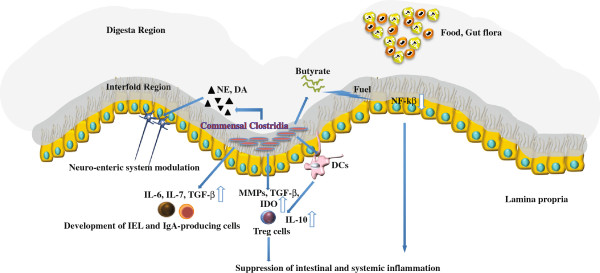
The gastrointestinal tract is a complex and dynamic network where an intricate and mutualistic symbiosis modulates the relationship between the host and the microbiota in order to establish and ensure gut homeostasis. Commensal Clostridia consist of gram-positive, rod-shaped bacteria in the phylum Firmicutes and make up a substantial part of the total bacteria in the gut microbiota. They start to colonize the intestine of breastfed infants during the first month of life and populate a specific region in the intestinal mucosa in close relationship with intestinal cells. This position allows them to participate as crucial factors in modulating physiologic, metabolic and immune processes in the gut during the entire lifespan, by interacting with the other resident microbe populations, but also by providing specific and essential functions. This review focus on what is currently known regarding the role of commensal Clostridia in the maintenance of overall gut function, as well as touch on their potential contribution in the unfavorable alteration of microbiota composition (dysbiosis) that has been implicated in several gastrointestinal disorders. Commensal Clostridia are strongly involved in the maintenance of overall gut function. This leads to important translational implications in regard to the prevention and treatment of dysbiosis, to drug efficacy and toxicity, and to the development of therapies that may modulate the composition of the microflora, capitalizing on the key role of commensal Clostridia, with the end goal of promoting gut health.
Overview
The claims and statistics of this paper haven’t been checked yet.
Free: it reads the open-access text and checks the first 5 claims that cite a source we can check. Create a free account to check every claim.
Integrity signals
Registry
Cites
Statistics
Figures
Verification
Claims the paper makes
The claims and statistics of this paper haven’t been checked yet.
Free: it reads the open-access text and checks the first 5 claims that cite a source we can check. Create a free account to check every claim.
Claims other papers make about this one
Each is checked against this paper’s own text: does it say what the citing paper says it does?
In the citing paper
“Furthermore, increased Bifidobacteria and Lactobacilli, which are linked to decreased diet-induced obesity and improved insulin sensitivity have been further supported by soy-protein consumption [165,166,167].”
From Impact of Protein Intake in Older Adults with Sarcopenia and Obesity: A Gut Microbiota Perspective (2020) · cites this paper as [166]
Self-check
Percentages, sums and reported differences re-computed from the paper’s own numbers.
The self-check needs the paper’s full text.
Citations
Cites
Diversity of the Human Intestinal Microbial Flora
Eckburg, P. B., Bik, E. M., Bernstein, C. N., Purdom, E., Dethlefsen, L., Sargent, M., Gill, S. R., Nelson, K. E., & Relman, D. A. (2005) · Science · doi:10.1126/science.1110591 · Cited by 7,913 · cited 2×
“; licensee BioMed Centr Commons Attribution License (http://creativec reproduction in any medium, provided the or in culture-independent molecular techniques, by the analysis of phylogenetic arrays, next generation 16S rRNA sequencing and metagenome sequencing derived from human mucosal biopsies, luminal contents and…”
BackgroundObesity alters gut microbial ecology
Ley, R. E., Bäckhed, F., Turnbaugh, P., Lozupone, C. A., Knight, R. D., & Gordon, J. I. (2005) · Proceedings of the National Academy of Sciences · doi:10.1073/pnas.0504978102 · Cited by 6,176 · cited 1×
“; licensee BioMed Centr Commons Attribution License (http://creativec reproduction in any medium, provided the or in culture-independent molecular techniques, by the analysis of phylogenetic arrays, next generation 16S rRNA sequencing and metagenome sequencing derived from human mucosal biopsies, luminal contents and…”
BackgroundHost-Bacterial Mutualism in the Human Intestine
Bäckhed, F., Ley, R. E., Sonnenburg, J. L., Peterson, D. A., & Gordon, J. I. (2005) · Science · doi:10.1126/science.1104816 · Cited by 5,277 · cited 2×
“An intricate and mutualistic symbiosis modulates the relationship between the host and the gut microbiota [11,18,19].”
BackgroundMetagenomic Analysis of the Human Distal Gut Microbiome
Gill, S. R., Pop, M., DeBoy, R. T., Eckburg, P. B., Turnbaugh, P. J., Samuel, B. S., Gordon, J. I., Relman, D. A., Fraser-Liggett, C. M., & Nelson, K. E. (2006) · Science · doi:10.1126/science.1124234 · Cited by 4,699 · cited 2×
“; licensee BioMed Centr Commons Attribution License (http://creativec reproduction in any medium, provided the or in culture-independent molecular techniques, by the analysis of phylogenetic arrays, next generation 16S rRNA sequencing and metagenome sequencing derived from human mucosal biopsies, luminal contents and…”
BackgroundFrank, D. N., St. Amand, A. L., Feldman, R. A., Boedeker, E. C., Harpaz, N., & Pace, N. R. (2007) · Proceedings of the National Academy of Sciences · doi:10.1073/pnas.0706625104 · Cited by 4,611 · cited 4×
“; licensee BioMed Centr Commons Attribution License (http://creativec reproduction in any medium, provided the or in culture-independent molecular techniques, by the analysis of phylogenetic arrays, next generation 16S rRNA sequencing and metagenome sequencing derived from human mucosal biopsies, luminal contents and…”
BackgroundInfluentialSokol, H., Pigneur, B., Watterlot, L., Lakhdari, O., Bermúdez-Humarán, L. G., Gratadoux, J.-J., Blugeon, S., Bridonneau, C., Furet, J.-P., Corthier, G., et al. (2008) · Proceedings of the National Academy of Sciences · doi:10.1073/pnas.0804812105 · Cited by 4,413 · cited 2×
“cluster IV, increases IL-10 production from peripheral blood mononuclear cells in vitro [98].”
BackgroundGut microbiota in health and disease
Sekirov, I., Russell, S. L., Antunes, L. C. M., & Finlay, B. B. (2010) · Physiological Reviews · doi:10.1152/physrev.00045.2009 · Cited by 4,182
Induction of Colonic Regulatory T Cells by Indigenous Clostridium Species
Atarashi, K., Tanoue, T., Shima, T., Imaoka, A., Kuwahara, T., Momose, Y., Cheng, G., Yamasaki, S., Saito, T., Ohba, Y., et al. (2011) · Science · doi:10.1126/science.1198469 · Cited by 3,752 · cited 20×
“Moreover, even the colonization with altered Schaedler flora (ASF), which includes Clostridium clostridioforme, leads to the accumulation of Tregs within the colon [97].”
BackgroundInfluentialEcological and Evolutionary Forces Shaping Microbial Diversity in the Human Intestine
Ley, R. E., Peterson, D. A., & Gordon, J. I. (2006) · Cell · doi:10.1016/j.cell.2006.02.017 · Cited by 3,358 · cited 1×
“; licensee BioMed Centr Commons Attribution License (http://creativec reproduction in any medium, provided the or in culture-independent molecular techniques, by the analysis of phylogenetic arrays, next generation 16S rRNA sequencing and metagenome sequencing derived from human mucosal biopsies, luminal contents and…”
BackgroundTopping, D. L., & Clifton, P. M. (2001) · Physiological Reviews · doi:10.1152/physrev.2001.81.3.1031 · Cited by 3,091 · cited 7×
“Dysregulation of any of the aforementioned components have been implicated, not only in the pathogenesis of IBD, but in many other GI disorders, including infectious enterocolitis, IBS, small intestinal bowel overgrowth, celiac sprue, hepatic fibrosis, atopic manifestations and food intolerance [34-36].”
BackgroundInfluential
Cited by
Items 201–300 of 785
Clostridioides difficile and Gut Microbiota: From Colonization to Infection and Treatment
Spigaglia, P. (2024) · Pathogens · doi:10.3390/pathogens13080646 · Cited by 60
“…can promote the development of intraepithelial lymphocytes (IELs), particularly alpha beta T-cell receptor (TcR)-bearing T cells and immunoglobulin A (IgA)-producing cells, through a gradient of SCFAs and secondary bile acids, contributing to the maintenance of overall gut function [54,55].”
BackgroundThe gastrointestinal microbiome – Functional interference between stomach and intestine
Lopetuso, L. R., Scaldaferri, F., Franceschi, F., & Gasbarrini, A. (2014) · Best Practice & Research Clinical Gastroenterology · doi:10.1016/j.bpg.2014.10.004 · Cited by 62
“The second barrier, organized in a complex specialized and compartmentalized network of immune cells, known as ‘gut associated lymphoid tissue’ or GALT, is able to recognize commensal and pathogenic flora, modulating the immunologic tolerance and response to pathogens [36].”
BackgroundSelf-citationLyons, T., Bielak, A., Doyle, E. M., & Kuhla, B. (2018) · Journal of Dairy Science · doi:10.3168/jds.2017-14200 · Cited by 55
“, 2014), whereas Clostridium IV are butyrate producers (Lopetuso et al., 2013).”
BackgroundPalamidi, I., & Mountzouris, K. C. (2018) · Animal nutrition · doi:10.1016/j.aninu.2018.03.007 · Cited by 58
“, 2007) including a large number of butyrate producers that are valuable for gut homeostasis (Lopetuso et al., 2013).”
BackgroundRegulation of CD4+CD8−CD25+ and CD4+CD8+CD25+ T cells by gut microbiota in chicken
Lee, I. K., Gu, M. J., Ko, K. H., Bae, S., Kim, G., Jin, G.-D., Kim, E. B., Kong, Y., Park, T. S., Park, B., et al. (2018) · Scientific Reports · doi:10.1038/s41598-018-26763-0 · Cited by 53
Gut microbiome and multiple sclerosis: New insights and perspective
Amini, M. E., Shomali, N., Bakhshi, A., Rezaei, S., Hemmatzadeh, M., Hosseinzadeh, R., Eslami, S., Babaie, F., Aslani, S., Torkamandi, S., et al. (2020) · International Immunopharmacology · doi:10.1016/j.intimp.2020.107024 · Cited by 54
He, Z., Ferlisi, B., Eckert, E. A., Brown, H. E., Aguilar, A., & Steele, M. A. (2017) · Animal Feed Science and Technology · doi:10.1016/j.anifeedsci.2017.02.010 · Cited by 59
“, 2015), Clostridium cluster XIVa (Lopetuso et al., 2013), Faecalibacterium prausnitzii (Uyeno et al.”
BackgroundYitbarek, A., Weese, J. S., Alkie, T. N., Parkinson, J., & Sharif, S. (2017) · FEMS Microbiology Ecology · doi:10.1093/femsec/fix165 · Cited by 58
Bledsoe, J. W., Waldbieser, G. C., Swanson, K. S., Peterson, B. C., & Small, B. C. (2018) · Frontiers in Microbiology · doi:10.3389/fmicb.2018.01073 · Cited by 57
“Interestingly, some of the anaerobic microbes from the family Clostridiaceae have been shown to make up a substantial portion of the human gut-associated microbiota, where they appear to serve a mutualistic or beneficial role to their host by helping to maintain proper membrane integrity and permeability and also prov…”
BackgroundMicrobiota Induced Changes in the Immune Response in Pregnant Mice
Faas, M. M., Liu, Y., Borghuis, T., Bouwman, C. A., Harmsen, H. J. M., & de Vos, P. (2020) · Frontiers in Immunology · doi:10.3389/fimmu.2019.02976 · Cited by 55
The Response of the Gut Microbiota to Dietary Changes in the First Two Years of Life
Li, Y., Faden, H. S., & Zhu, L. (2020) · Frontiers in Pharmacology · doi:10.3389/fphar.2020.00334 · Cited by 59
He, J., Zheng, W., Tao, C., Guo, H., Xue, Y., Zhao, R., & Yao, W. (2020) · Environmental Pollution · doi:10.1016/j.envpol.2020.115111 · Cited by 56
Enteric Phageome Alterations in Patients With Type 2 Diabetes
Chen, Q., Ma, X., Li, C., Shen, Y., Zhu, W., Zhang, Y., Guo, X., Zhou, J., & Liu, C. (2021) · Frontiers in Cellular and Infection Microbiology · doi:10.3389/fcimb.2020.575084 · Cited by 56
Ajibola, O., Rowan-Nash, A. D., Ogedengbe, C. O., Mshelia, M. B., Cabral, D. J., Eze, A. A., Obaro, S., & Belenky, P. A. (2019) · Scientific Reports · doi:10.1038/s41598-018-36709-1 · Cited by 54
Rueda‐Ruzafa, L., Cedillo, J. L., & Hone, A. J. (2021) · International Journal of Environmental Research and Public Health · doi:10.3390/ijerph18031189 · Cited by 53
Ruthes, A. C., Cantu-Jungles, T. M., Cordeiro, L. M. C., & Iacomini, M. (2021) · Carbohydrate Polymers · doi:10.1016/j.carbpol.2021.117940 · Cited by 54
Gut microbiota and allergic disease in children
Bridgman, S. L., Kozyrskyj, A. L., Scott, J. A., Becker, A. B., & Azad, M. B. (2016) · Annals of Allergy Asthma & Immunology · doi:10.1016/j.anai.2015.10.001 · Cited by 55
Mo, Q., Liu, T., Fu, A., Ruan, S., Zhong, H., Tang, J., Zhao, M., Li, Y., Zhu, S., Cai, H., et al. (2021) · mBio · doi:10.1128/mbio.02148-21 · Cited by 53
Zhang, Y., Pan, H., Ye, X., & Chen, S. (2022) · Food & Function · doi:10.1039/d1fo04147a · Cited by 54
Mountzouris, K. C., Dalaka, E., Palamidi, I., Paraskeuas, V. V., Demey, V., Théodoropoulos, G., & Fegeros, K. (2015) · Poultry Science · doi:10.3382/ps/pev243 · Cited by 55
Microbiome dysbiosis in cancer: Exploring therapeutic strategies to counter the disease
Sharma, V., Singh, M. P., Kumar, V., Yadav, M. K., Sehrawat, N., Sharma, D. K., & Sharma, A. K. (2020) · Seminars in Cancer Biology · doi:10.1016/j.semcancer.2020.07.006 · Cited by 51
Wong, W., Chan, B., Leung, T.-W., Chen, M., & Tai, W. (2021) · Journal of Functional Foods · doi:10.1016/j.jff.2021.104871 · Cited by 52
Meier, K. H. U., Trouillon, J., Li, H., Lang, M., Fuhrer, T., Zamboni, N., Sunagawa, S., Macpherson, A. J., & Sauer, U. (2023) · Nature Metabolism · doi:10.1038/s42255-023-00802-1 · Cited by 48
Gut microbiota in systemic lupus erythematosus: A fuse and a solution
Chen, Y., Lin, J., Xiao, L., Zhang, X., Zhao, L., Wang, M., & Li, L. (2022) · Journal of Autoimmunity · doi:10.1016/j.jaut.2022.102867 · Cited by 56
de Carvalho, N. M., Walton, G., Poveda, C. G., Silva, S., Amorim, M., Madureira, A. R., Pintado, M., Gibson, G. R., & Jauregi, P. (2019) · Journal of Functional Foods · doi:10.1016/j.jff.2019.05.024 · Cited by 49
Dietary Fatty Acids and Microbiota-Brain Communication in Neuropsychiatric Diseases
Marrone, M. C., & Coccurello, R. (2019) · Biomolecules · doi:10.3390/biom10010012 · Cited by 45
“Of note, exposure to PPA in juvenile and adult rats has been developed as a model of autism to reproduce ASD-like brain alterations (e.g., neuroinflammation and oxidative stress) and dysfunctional behaviors such as repetitive dystonic movements, hyperactivity and deficit of social interaction.”
BackgroundInfluentialThe gut microbiota: a double-edged sword in endometriosis
Talwar, C., Singh, V., & Kommagani, R. (2022) · Biology of Reproduction · doi:10.1093/biolre/ioac147 · Cited by 60
“Members of these phyla form three main groups of strict gut extremophile anaerobes: Bacteroides, Clostridium cluster XIVa (Clostridium coccoides group), and Clostridium cluster IV (Clostridium leptum group) [83, 84].”
BackgroundJovel, J., Nimaga, A., Jordan, T., O’Keefe, S. L., Patterson, J., Thiesen, A., Hotte, N., Bording‐Jorgensen, M., Subedi, S., Hamilton, J., et al. (2022) · Frontiers in Microbiology · doi:10.3389/fmicb.2022.829378 · Cited by 50
“One possibility is that CD4 + T cells reactive to enteric bacterial antigens mediate inflammatory processes (Macdonald and Monteleone, 2005).”
BackgroundAgnihotri, N., & Mohajeri, M. H. (2022) · International Journal of Molecular Sciences · doi:10.3390/ijms232415934 · Cited by 50
“difficile, it is important to mention that the naturally residing Clostridia plays a beneficial role in maintaining normal gut homeostasis through modulation of metabolic and immune processes [91].”
BackgroundLarmonier, C. B., Shehab, K. W., Laubitz, D., Jamwal, D. R., Ghishan, F. K., & Kiela, P. R. (2016) · Journal of Biological Chemistry · doi:10.1074/jbc.m116.714386 · Cited by 45
The ties that bind: skin, gut and spondyloarthritis
Gracey, E., Dumas, E., Yerushalmi, M., Qaiyum, Z., Inman, R. D., & Elewaut, D. S. (2018) · Current Opinion in Rheumatology · doi:10.1097/bor.0000000000000569 · Cited by 51
Acharya, A., Chen, T., Chan, Y., Watt, R. M., Jin, L.-J., & Mattheos, N. (2019) · Frontiers in Cellular and Infection Microbiology · doi:10.3389/fcimb.2019.00347 · Cited by 52
“Lachnospiraceae contains many genera that are butyrate producers, a trait associated with antiinflammatory properties in the gut (Lopetuso et al., 2013) but also with periodontitis progression (Tsuda et al.”
BackgroundGonzález‐Ortiz, G., Olukosi, O. A., Jurgens, G., Apajalahti, J., & Bedford, M. R. (2020) · Poultry Science · doi:10.1016/j.psj.2019.11.051 · Cited by 47
“Butyric acid is the preferred energy source for colonocytes and influences the integrity of the gut epithelium (Lopetuso et al., 2013).”
BackgroundFrost, F., Kacprowski, T., Rühlemann, M. C., Weiß, S., Bang, C., Franke, A., Pietzner, M., Aghdassi, A. A., Sendler, M., Völker, U., et al. (2021) · Scientific Reports · doi:10.1038/s41598-021-86247-6 · Cited by 49
Resende, A. S., Leite, G. S. F., & Lancha Junior, A. H. (2021) · Nutrients · doi:10.3390/nu13082839 · Cited by 44
“In agreement with our discussion, several authors have suggested that Clostridia and Streptococcus may be potential drivers of population dynamics in the intestine, capable of influencing microorganism interactions and gut homeostasis [52,54,55].”
ResultBoosting the value of insoluble dietary fiber to increase gut fermentability through food processing
Lamothe, L. M., Cantu-Jungles, T. M., Chen, T., Green, S. J., Naqib, A. D., Srichuwong, S., & Hamaker, B. R. (2021) · Food & Function · doi:10.1039/d1fo02146j · Cited by 48
Ji, Y., Sun, S., Goodrich, J. K., Kim, H., Poole, A. C., Duhamel, G. E., Ley, R. E., & Qi, L. (2014) · Cell Reports · doi:10.1016/j.celrep.2014.05.040 · Cited by 45
“potent toxins (Lopetuso et al., 2013; Songer, 2004; Taur and Pamer, 2013), which may contribute to pulmonary alveolar endothelial damage and vascular permeability (Songer, Ji et al.”
BackgroundMu, Q., Edwards, M. R., Swartwout, B. K., Cabana-Puig, X., Mao, J., Zhu, J., Grieco, J., Cecere, T. E., Prakash, M., Reilly, C. M., et al. (2020) · Frontiers in Immunology · doi:10.3389/fimmu.2020.593353 · Cited by 58
“Restoration of Bacterial DNA Attenuates Lupus in Vancomycin-Treated Mice As oral vancomycin can remove many producers of short chain fatty acids (SCFAs) (37, 38), we quantified the levels of fecal SCFAs with gas chromatography.”
MethodUmu, Ö. C. O., Fauske, A. K., Åkesson, C. P., de Nanclares, M. P., Sørby, R., Press, C. M., Øverland, M., & Sørum, H. R. (2018) · PLoS ONE · doi:10.1371/journal.pone.0209439 · Cited by 49
Impact of stress on the gut microbiome of free-ranging western lowland gorillas
Vlčková, K., Shutt, K. A., Heistermann, M., Pafčo, B., Petrželková, K. J., Todd, A. F., Modrý, D., Nelson, K. E., Wilson, B. A., Stumpf, R. M., et al. (2017) · Microbiology · doi:10.1099/mic.0.000587 · Cited by 47
“The taxa correlated with FGCM levels have been consistently found in the GIM of great apes, and could be considered to be normal commensals in non-human primates [23, 34, 35].”
BackgroundEquine Fecal Microbiota Changes Associated With Anthelmintic Administration
Kunz, I. G. Z., Reed, K. J., Metcalf, J. L., Hassel, D. M., Coleman, R., Hess, T. M., & Coleman, S. J. (2019) · Journal of Equine Veterinary Science · doi:10.1016/j.jevs.2019.01.018 · Cited by 48
Gut microbiota profile in healthy Indonesians
Rahayu, E. S., Utami, T., Mariyatun, M., Hasan, P. N., Kamil, R. Z., Setyawan, R. H., Pamungkaningtyas, F. H., Harahap, I. A., Wiryohanjoyo, D. V., Pramesi, P. C., et al. (2019) · World Journal of Gastroenterology · doi:10.3748/wjg.v25.i12.1478 · Cited by 50
Production and Sensing of Butyrate in a Probiotic E. coli Strain
Bai, Y., & Mansell, T. J. (2020) · International Journal of Molecular Sciences · doi:10.3390/ijms21103615 · Cited by 47
Naudhani, M., Thakur, K., Ni, Z., Zhang, J., & Wei, Z. (2021) · Food & Function · doi:10.1039/d1fo02942h · Cited by 47
Lawrence, A. L., Hii, S. F., Chong, R., Webb, C. E., Traub, R. J., Brown, G. K., & Šlapeta, J. R. (2015) · FEMS Microbiology Ecology · doi:10.1093/femsec/fiv134 · Cited by 48
Paraskeuas, V. V., & Mountzouris, K. C. (2018) · Poultry Science · doi:10.3382/ps/pey588 · Cited by 48
Teng, T., Sun, G., Ding, H., Song, X., Bai, G., Shi, B., & Shang, T. (2023) · Journal of Animal Science and Biotechnology/Journal of animal science and biotechnology · doi:10.1186/s40104-023-00886-5 · Cited by 44
“Rikenellaceae_ RC9_gut_group benefits the gut homeostasis, potentially SCFA-producing bacteria [83, 84].”
BackgroundArnone, D., Vallier, M., Hergalant, S., Chabot, C., Ndiaye, N. C., Moulin, D., Aignatoaei, A.-M., Alberto, J., Louis, H., Boulard, O., et al. (2021) · Frontiers in Nutrition · doi:10.3389/fnut.2021.758518 · Cited by 45
“This phylum is composed of gram-positive bacteria and includes the gut commensal Clostridia, which was shown to be a key player of intestinal homeostasis (50).”
BackgroundLuo, Z., Li, C., Cheng, Y., Hang, S., & Zhu, W. (2015) · Archives of Animal Nutrition · doi:10.1080/1745039x.2015.1034521 · Cited by 47
“The Clostridium cluster IV and XIVa play a crucial role in maintaining gut homeostasis and modulating metabolism and the gut immune system through their interaction with other microbes and account for about 10–40% of the total bacteria in the hindgut (Lopetuso et al. 2013).”
BackgroundTyagi, P., Tasleem, M., Prakash, S., & Chouhan, G. (2020) · Food Research International · doi:10.1016/j.foodres.2020.109489 · Cited by 42
Tao, L., Chai, J., Liu, H., Huang, W., Zou, Y., Wu, M., Peng, B., Wang, Q., & Tang, K. (2022) · Microorganisms · doi:10.3390/microorganisms10122373 · Cited by 42
“Firmicutes have been reported to decompose carbohydrates and plant cell wall components, and produce short-chain fatty acids as byproducts of fermentation [71,72].”
BackgroundGut microbiome diversity within Clostridia is negatively associated with human obesity
Salazar-Jaramillo, L., de la Cuesta‐Zuluaga, J., Cárdenas, L. A. C., Cadavid, M., Ley, R. E., Reyes, A., & Escobar, J. S. (2024) · mSystems · doi:10.1128/msystems.00627-24 · Cited by 50
“Prior studies have indicated that Clostridia can constitute up to 40% of the overall microbial diversity in the human gut (7), particularly in non-Western populations (8, 9).”
BackgroundThe cecal microbiome of commercial broiler chickens varies significantly by season
Oakley, B. B., Vasconcelos, E. J. R., Diniz, P. P. V. D. P., Calloway, K. N., Richardson, E., Meinersmann, R. J., Cox, N. A., & Berrang, M. E. (2018) · Poultry Science · doi:10.3382/ps/pey214 · Cited by 46
Lin, M., Zeng, C., Jia, X., Zhai, S., Li, Z., & Ma, Y. (2018) · Journal of Applied Microbiology · doi:10.1111/jam.14174 · Cited by 44
“Among Firmicutes, the genus Clostridium was the most abundant in normal-growth groups, which were dominant members of gut bacteria in many mammals, including several fish species (Sullam et al. 2012; Lopetuso et al. 2013; Rurangwa et al. 2015).”
BackgroundA comparison of nonlethal sampling methods for amphibian gut microbiome analyses
Zhou, J., Nelson, T. M., Lopez, C. M. R., Sarma, R. R., Zhou, S. J., & Rollins, L. A. (2020) · Molecular Ecology Resources · doi:10.1111/1755-0998.13139 · Cited by 47
“The genus Clostridium, a Firmicutes, performs most of its metabolic functions through the release of butyrate that is essential as fuel for colonocytes and maintains gut homeostasis (Lopetuso et al., 2013).”
BackgroundWu, Z., Zhang, Q., Zhang, T., Chen, J., Wang, S., Hao, J., Lin, Y., & Li, A. (2021) · Aquaculture · doi:10.1016/j.aquaculture.2021.736492 · Cited by 43
Kibegwa, F. M., Bett, R. C., Gachuiri, C. K., Machuka, E., Stomeo, F., & Mujibi, F. D. N. (2023) · PLoS ONE · doi:10.1371/journal.pone.0274371 · Cited by 48
“As such, Clostridia likely plays a crucial role in gut homeostasis by interacting with the other resident microbe populations and providing specific and essential functions [64].”
BackgroundMartino, L. D., Ösme, A., Ghannoum, M. A., & Cominelli, F. (2023) · Inflammatory Bowel Diseases · doi:10.1093/ibd/izac284 · Cited by 44
Gubert, C., Love, C. J., Kodikara, S., Mei Liew, J. J., Renoir, T., Lê Cao, K.-A., & Hannan, A. J. (2022) · iScience · doi:10.1016/j.isci.2021.103687 · Cited by 41
Commensal antimicrobial resistance mediates microbiome resilience to antibiotic disruption
Bhattarai, S. K., Du, M., Zeamer, A. L., Mortzfeld, B. M., Kellogg, T. D., Kaya, F., Benjamin, A., Bean, J. M., Zimmerman, M., Mardi, G., et al. (2024) · Science Translational Medicine · doi:10.1126/scitranslmed.adi9711 · Cited by 44
“Together, our analysis suggests that a higher abundance of Clostridia clusters IV and XIVa ( 47 ) and lower levels of dysbiosis-associated Enterobacteriaceae are associated with faster resolution of TB-associated peripheral inflammation.”
ResultGrosu, I. A., Pistol, G. C., Țăranu, I., & Marin, D. E. (2019) · Toxins · doi:10.3390/toxins11010025 · Cited by 43
“coccoides are important members of the gut flora by promoting healthy aging [53].”
BackgroundUerlings, J., Schroyen, M., Bautil, A., Courtin, C. M., Richel, A., Sureda, E. A., Bruggeman, G., Tanghe, S., Willems, E., Bindelle, J., et al. (2019) · British Journal Of Nutrition · doi:10.1017/s0007114519002873 · Cited by 45
Lomeli, B., Galbraith, H., Schettler, J., Saviolakis, G. A., Elamin, W. F., Osborn, B. L., Ravel, J., Hazleton, K. Z., Lozupone, C., Evans, R. J., et al. (2019) · Antimicrobial Agents and Chemotherapy · doi:10.1128/aac.01395-19 · Cited by 41
“24 Lachnospira, Roseburia) which are important indicators of a healthy gut microbiome (47, 48), 517 some Lactobacillus spp.”
BackgroundThe Lung Microbiome: A Central Mediator of Host Inflammation and Metabolism in Lung Cancer Patients?
Weinberg, F. D., Dickson, R. P., Nagrath, D., & Ramnath, N. (2020) · Cancers · doi:10.3390/cancers13010013 · Cited by 44
Zhu, Y., Li, Y., Yang, H.-Q., He, K., & Tang, K. (2021) · Frontiers in Microbiology · doi:10.3389/fmicb.2021.723682 · Cited by 45
Łoniewska, B., Fraszczyk-Tousty, M., Tousty, P., Skonieczna‐Żydecka, K., Maciejewska, D., & Łoniewski, I. (2023) · Nutrients · doi:10.3390/nu15020367 · Cited by 43
Redweik, G. A. J., Daniels, K. M., Severin, A. J., Lyte, M., & Mellata, M. (2020) · Frontiers in Microbiology · doi:10.3389/fmicb.2019.03064 · Cited by 41
He, K., Yan, W., Sun, C., Liu, J., Bai, R., Wang, T., & Qian, W. (2020) · Veterinary Parasitology · doi:10.1016/j.vetpar.2020.109298 · Cited by 40
Lactic Acid Bacteria – A Promising Tool for Controlling Chicken Campylobacter Infection
Wyszyńska, A., & Godlewska, R. A. (2021) · Frontiers in Microbiology · doi:10.3389/fmicb.2021.703441 · Cited by 42
Ilan, Y. (2016) · Clinical & Translational Immunology · doi:10.1038/cti.2015.47 · Cited by 39
Gut microbial functional maturation and succession during human early life
Cerdó, T., Ruiz-Rodriguez, A., Acuña, I., Jáuregui, R., Jehmlich, N., Haange, S., von Bergen�, M., Suárez, A., & Campoy, C. (2018) · Environmental Microbiology · doi:10.1111/1462-2920.14235 · Cited by 42
Influence of immunomodulatory drugs on the gut microbiota
Cohen, I., Ruff, W. E., & Longbrake, E. E. (2021) · Translational research · doi:10.1016/j.trsl.2021.01.009 · Cited by 39
Early life stress in mice alters gut microbiota independent of maternal microbiota inheritance
Kemp, K. M., Colson, J. C., Lorenz, R. G., Maynard, C. L., & Pollock, J. S. (2021) · American Journal of Physiology-Regulatory, Integrative and Comparative Physiology · doi:10.1152/ajpregu.00072.2020 · Cited by 40
Whitfield-Cargile, C., Chamoun‐Emanuelli, A. M., Cohen, N. D., Richardson, L. M., Ajami, N. J., & Dockery, H. J. (2018) · PLoS ONE · doi:10.1371/journal.pone.0202527 · Cited by 42
Lacey, J. A., Stanley, D., Keyburn, A. L., Ford, M. E., Chen, H., Johanesen, P., Lyras, D., & Moore, R. J. (2018) · Veterinary Microbiology · doi:10.1016/j.vetmic.2018.10.022 · Cited by 45
Wang, O., McAllister, T. A., Plastow, G., Stanford, K., Selinger, B., & Guan, L. L. (2018) · Applied and Environmental Microbiology · doi:10.1128/aem.01738-17 · Cited by 38
“It has been suggested that microbial butyrate enhances the tight junctions of the epithelium, acts as a chemoattractant to neutrophils, and provides energy to the epithelial cells (35).”
BackgroundThe Impact of Bioactive Molecules from Probiotics on Child Health: A Comprehensive Review
Guamán, L. P., Carrera-Pacheco, S. E., Zúñiga-Miranda, J., Terán, E., Erazo, C., & Barba‐Ostria, C. (2024) · Nutrients · doi:10.3390/nu16213706 · Cited by 42
“SCFAs also contribute to maintaining an optimal gut environment by lowering the pH [140,141], which supports the growth of beneficial bacteria while inhibiting gut pathogens [142].”
BackgroundHasan, S., Saha, S., Junnikkala, S., Orro, T., Peltoniemi, O. A. T., & Oliviero, C. (2018) · animal · doi:10.1017/s1751731118003518 · Cited by 38
Cantu-Jungles, T. M., Zhang, X., Kazem, A. E., Iacomini, M., Hamaker, B. R., & Cordeiro, L. M. C. (2021) · Food Research International · doi:10.1016/j.foodres.2021.110293 · Cited by 39
Lázár, B., László, S. B., Hutka, B., Tóth, A. S., Mohammadzadeh, A., Berekméri, E., Ágg, B., Balogh, M., Sajtos, V., Király, K. P., et al. (2021) · Biochemical Pharmacology · doi:10.1016/j.bcp.2021.114590 · Cited by 39
Mach, N., Midoux, C., Leclercq, S., Pennarun, S., Moyec, L. L., Rué, O., Robert, C., Sallé, G., & Barrey, É. (2022) · Communications Biology · doi:10.1038/s42003-022-03977-7 · Cited by 39
Role of fructooligosaccharides in promoting beneficial gut bacteria: A Prebiotic perspective
Singh, P., Gupta, S., Kundu, A., Grover, M., & Saha, S. (2024) · Food Bioscience · doi:10.1016/j.fbio.2024.105726 · Cited by 37
Fecal microbiome alterations in treatment-naive de novo Parkinson’s disease
Boertien, J. M., Murtomäki, K., Pereira, P. A. B., van der Zee, S., Mertsalmi, T. H., Levo, R., Nojonen, T., Mäkinen, E., Jaakkola, E., Laine, P., et al. (2022) · npj Parkinson's Disease · doi:10.1038/s41531-022-00395-8 · Cited by 38
Enrichment of sulfidogenic bacteria from the human intestinal tract
Feng, Y., Stams, A. J. M., de Vos, W. M., & Sánchez‐Andrea, I. (2017) · FEMS Microbiology Letters · doi:10.1093/femsle/fnx028 · Cited by 41
Intestinal flora and pregnancy complications: Current insights and future prospects
Tian, Z., Zhang, X., Yao, G., Jin, J., Zhang, T., Sun, C., Wang, Z., & Zhang, Q. (2024) · iMeta · doi:10.1002/imt2.167 · Cited by 41
Rurangwa, E., Sipkema, D., Kals, J., ter Veld, M., Forlenza, M., Bacanu, G. M., Smidt, H., & Palstra, A. P. (2015) · Frontiers in Physiology · doi:10.3389/fphys.2015.00133 · Cited by 39
Jamar, G., Santamarina, A. B., Dias, G. C., Masquio, D. C. L., de Rosso, V. V., & Pisani, L. P. (2018) · Food Research International · doi:10.1016/j.foodres.2018.07.002 · Cited by 37
Kok, C. R., Brabec, B., Chichlowski, M., Harris, C. L., Moore, N. D., Wampler, J. L., Vanderhoof, J. A., Rose, D. J., & Hutkins, R. W. (2020) · BMC Microbiology · doi:10.1186/s12866-020-01991-5 · Cited by 37
“This included an increase in Enterococcus and Blautia species and species belonging to the Clostridia IV and XIVa clusters, such as Ruminococcus, Dorea, Eubacterium, Roseburia, Faecalibacterium, and Coprococcus.”
BackgroundInfluentialGonzález‐Ortiz, G., dos Santos, T. T., & Bedford, M. R. (2021) · Animal nutrition · doi:10.1016/j.aninu.2020.07.008 · Cited by 39
Richards-Rios, P., Leeming, G. H., Fothergill, J., Bernardeau, M., & Wigley, P. (2019) · Applied and Environmental Microbiology · doi:10.1128/aem.02387-19 · Cited by 37
“placed in Clostridium cluster XIVa, while genera within the Ruminococcaceae have generally been placed in Clostridium cluster IV (30, 31).”
Mediterraneibacter butyricigenes sp. nov., a butyrate-producing bacterium isolated from human faeces
Kim, J., Lee, K. C., Suh, M. K., Han, K. I., Eom, M. K., Lee, J. H., Park, S.-H., Kang, S. W., Park, J.-E., Oh, B. S., et al. (2018) · The Journal of Microbiology · doi:10.1007/s12275-019-8550-8 · Cited by 35
Padayachee, T., Nzuza, N., Chen, W., Nelson, D. R., & Syed, K. (2020) · Scientific Reports · doi:10.1038/s41598-020-70686-8 · Cited by 40
Shannon, C. P., Blimkie, T. M., Ben-Othman, R., Gladish, N., Amenyogbe, N., Drissler, S., Edgar, R. D., Chan, Q. W. T., Krajden, M., Foster, L. J., et al. (2020) · Frontiers in Immunology · doi:10.3389/fimmu.2020.578801 · Cited by 38
Zhang, L. T., Westblade, L. F., Iqbal, F., Taylor, M. R., Chung, A. P., Satlin, M. J., Magruder, M. L., Edusei, E., Albakry, S., Botticelli, B., et al. (2021) · Clinical Transplantation · doi:10.1111/ctr.14260 · Cited by 41
Chen, J., Haase, N., Haange, S., Sucher, R., Münzker, J., Jäger, E., Schischke, K., Seyfried, F., von Bergen�, M., Hankir, M. K., et al. (2021) · Molecular Metabolism · doi:10.1016/j.molmet.2021.101214 · Cited by 35
“Clostridiales are known as important players for maintaining gut homeostasis [52], which have been associated with improved intestinal dysbiosis and reduced inflammation [53e55].”
BackgroundDeng, L., Tay, H., Peng, G., Lee, J. W. J., & Tan, K. S. W. (2021) · Parasites & Vectors · doi:10.1186/s13071-021-04749-8 · Cited by 36
Hao, Q., Xia, R., Zhang, Q., Xie, Y., Ran, C., Yang, Y., Zhou, W., Chu, F., Zhang, X., Wang, Y., et al. (2022) · Fish & Shellfish Immunology · doi:10.1016/j.fsi.2022.05.014 · Cited by 40
Characterization of edible swiftlet’s nest as a prebiotic ingredient using a simulated colon model
Daud, N. ‘., Sarbini, S. R., Babji, A. S., Yusop, S. M., & Lim, S. J. (2019) · Annals of Microbiology · doi:10.1007/s13213-019-01507-1 · Cited by 35
“…to show that the improvement of commensal Clostridial growth, as in the fermentation of both EBN and FOS, can restore the gut bacterial homeostasis, which can positively contribute a treatment in dysbiosis condition and liberated into normal distribution of gut microbiota (Lopetuso et al. 2013).”
BackgroundInfluentialConnect between gut microbiome and diseases of the human eye
Shivaji, S. (2019) · Journal of Biosciences · doi:10.1007/s12038-019-9931-1 · Cited by 36
Wang, B., Zhu, S., Liu, Z., Wei, H., Zhang, L., He, M., Pei, F., Zhang, J., Sun, Q., & Duan, L. (2020) · Genomics Proteomics & Bioinformatics · doi:10.1016/j.gpb.2020.06.013 · Cited by 37
“As mucin-adherent bacteria, Clostridium cluster XIVa species compose 60% of the mucosal microbiota, and stimulating mucus production may lead to a higher abundance of mucin-adherent bacteria [37].”
BackgroundInfluential
Metadata
- Authors
- Lopetuso, L. R., Scaldaferri, F., Petito, V., & Gasbarrini, A.
- Affiliations
- Agostino Gemelli University Polyclinic (IT)
- Corresponding author
- Lopetuso, Loris R
- Venue
- Gut Pathogens
- Published
- 2013
- Volume
- 5
- Issue
- 1
- Pages
- 23
- ISSN
- 1757-4749 (ISSN-L)
- PMC
- PMC3751348
- OpenAlex
- W2112738213
- Cited by
- 753
- References
- 103
- Citations by year
- 2026: 39 · 2025: 68 · 2024: 64 · 2023: 61 · 2022: 89 · 2021: 105 · 2020: 91 · 2019: 79 · 2018: 68 · 2017: 33 · 2016: 28 · 2015: 18 · 2014: 10
- FWCI
- 8.37
- Type
- journal article
- Language
- en
- Open access
- gold
- doi.org
- Licence
- cc-by
- Locations
- Gut Pathogens (publishedVersion, cc-by)
- Europe PMC (PubMed Central) (publishedVersion, cc-by)
- PubMed Central (publishedVersion, cc-by)
- PubMed (publishedVersion)
- PubliCatt (Università Cattolica del Sacro Cuore) (submittedVersion, other-oa)
- Topics
- Life Sciences › Biochemistry, Genetics and Molecular Biology › Molecular Biology › Gut microbiota and health
- Health Sciences › Medicine › Infectious Diseases › Clostridium difficile and Clostridium perfringens research
- Life Sciences › Agricultural and Biological Sciences › Food Science › Probiotics and Fermented Foods
- Keywords
- intestinal homeostasis, gut microbiota, Firmicutes, host-microbe symbiosis, intestinal colonization, infant gut colonization, dysbiosis, gastrointestinal diseases, gut health, drug efficacy and toxicity, microbiota-based therapy
About these checks
Registry, retraction, Cites and statistics results are computed, not judged, with one exception: a printed reference that no index lists is read once by a model before it counts as a citation error. Claims are extracted by a model and kept only when their quote appears verbatim in the text; each cited source is then checked, with a model’s help, for whether it says what the claim relies on. Those verdicts can be wrong — read the claim’s quote and the cited source before relying on one.
Statistics and arithmetic are recomputed, not judged.
Confidence bands are shown only for fields calibrated on our annotated test set. None is calibrated yet, so no band is shown.
What counts as a claim ›How we measure confidence ›How we check this ›
Are you an author, or do you see a problem with this page? Request a review
Data sources
Bibliographic data: Semantic Scholar, OpenAlex, Crossref.
Contains information from the Semantic Scholar Academic Graph Datasets, made available under the ODC Attribution License (ODC-BY 1.0).
Semantic Scholar’s data is described in: Kinney, R., et al. (2023). The Semantic Scholar Open Data Platform. arXiv:2301.10140.
