

Commensal Clostridia: leading players in the maintenance of gut homeostasis
Open accessThe DOI matches its Crossref record; 104 of the 104 references it cites were found in a registry or an index.
Abstract
The gastrointestinal tract is a complex and dynamic network where an intricate and mutualistic symbiosis modulates the relationship between the host and the microbiota in order to establish and ensure gut homeostasis. Commensal Clostridia consist of gram-positive, rod-shaped bacteria in the phylum Firmicutes and make up a substantial part of the total bacteria in the gut microbiota. They start to colonize the intestine of breastfed infants during the first month of life and populate a specific region in the intestinal mucosa in close relationship with intestinal cells. This position allows them to participate as crucial factors in modulating physiologic, metabolic and immune processes in the gut during the entire lifespan, by interacting with the other resident microbe populations, but also by providing specific and essential functions. This review focus on what is currently known regarding the role of commensal Clostridia in the maintenance of overall gut function, as well as touch on their potential contribution in the unfavorable alteration of microbiota composition (dysbiosis) that has been implicated in several gastrointestinal disorders. Commensal Clostridia are strongly involved in the maintenance of overall gut function. This leads to important translational implications in regard to the prevention and treatment of dysbiosis, to drug efficacy and toxicity, and to the development of therapies that may modulate the composition of the microflora, capitalizing on the key role of commensal Clostridia, with the end goal of promoting gut health.
Overview
The claims and statistics of this paper haven’t been checked yet.
Free: it reads the open-access text and checks the first 5 claims that cite a source we can check. Create a free account to check every claim.
Integrity signals
Registry
Cites
Statistics
Figures
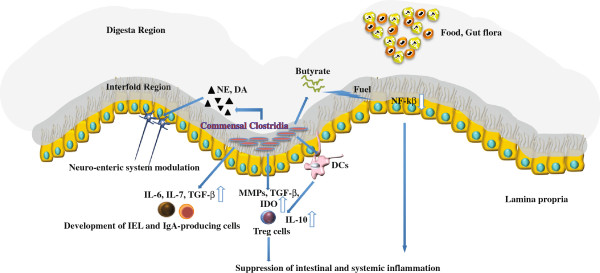
Verification
Claims the paper makes
The claims and statistics of this paper haven’t been checked yet.
Free: it reads the open-access text and checks the first 5 claims that cite a source we can check. Create a free account to check every claim.
Claims other papers make about this one
Each is checked against this paper’s own text: does it say what the citing paper says it does?
In the citing paper
“Furthermore, increased Bifidobacteria and Lactobacilli, which are linked to decreased diet-induced obesity and improved insulin sensitivity have been further supported by soy-protein consumption [165,166,167].”
From Impact of Protein Intake in Older Adults with Sarcopenia and Obesity: A Gut Microbiota Perspective (2020) · cites this paper as [166]
Self-check
Percentages, sums and reported differences re-computed from the paper’s own numbers.
The self-check needs the paper’s full text.
Citations
Cites
Diversity of the Human Intestinal Microbial Flora
Eckburg, P. B., Bik, E. M., Bernstein, C. N., Purdom, E., Dethlefsen, L., Sargent, M., Gill, S. R., Nelson, K. E., & Relman, D. A. (2005) · Science · doi:10.1126/science.1110591 · Cited by 7,913 · cited 2×
“; licensee BioMed Centr Commons Attribution License (http://creativec reproduction in any medium, provided the or in culture-independent molecular techniques, by the analysis of phylogenetic arrays, next generation 16S rRNA sequencing and metagenome sequencing derived from human mucosal biopsies, luminal contents and…”
BackgroundObesity alters gut microbial ecology
Ley, R. E., Bäckhed, F., Turnbaugh, P., Lozupone, C. A., Knight, R. D., & Gordon, J. I. (2005) · Proceedings of the National Academy of Sciences · doi:10.1073/pnas.0504978102 · Cited by 6,176 · cited 1×
“; licensee BioMed Centr Commons Attribution License (http://creativec reproduction in any medium, provided the or in culture-independent molecular techniques, by the analysis of phylogenetic arrays, next generation 16S rRNA sequencing and metagenome sequencing derived from human mucosal biopsies, luminal contents and…”
BackgroundHost-Bacterial Mutualism in the Human Intestine
Bäckhed, F., Ley, R. E., Sonnenburg, J. L., Peterson, D. A., & Gordon, J. I. (2005) · Science · doi:10.1126/science.1104816 · Cited by 5,277 · cited 2×
“An intricate and mutualistic symbiosis modulates the relationship between the host and the gut microbiota [11,18,19].”
BackgroundMetagenomic Analysis of the Human Distal Gut Microbiome
Gill, S. R., Pop, M., DeBoy, R. T., Eckburg, P. B., Turnbaugh, P. J., Samuel, B. S., Gordon, J. I., Relman, D. A., Fraser-Liggett, C. M., & Nelson, K. E. (2006) · Science · doi:10.1126/science.1124234 · Cited by 4,699 · cited 2×
“; licensee BioMed Centr Commons Attribution License (http://creativec reproduction in any medium, provided the or in culture-independent molecular techniques, by the analysis of phylogenetic arrays, next generation 16S rRNA sequencing and metagenome sequencing derived from human mucosal biopsies, luminal contents and…”
BackgroundFrank, D. N., St. Amand, A. L., Feldman, R. A., Boedeker, E. C., Harpaz, N., & Pace, N. R. (2007) · Proceedings of the National Academy of Sciences · doi:10.1073/pnas.0706625104 · Cited by 4,611 · cited 4×
“; licensee BioMed Centr Commons Attribution License (http://creativec reproduction in any medium, provided the or in culture-independent molecular techniques, by the analysis of phylogenetic arrays, next generation 16S rRNA sequencing and metagenome sequencing derived from human mucosal biopsies, luminal contents and…”
BackgroundInfluentialSokol, H., Pigneur, B., Watterlot, L., Lakhdari, O., Bermúdez-Humarán, L. G., Gratadoux, J.-J., Blugeon, S., Bridonneau, C., Furet, J.-P., Corthier, G., et al. (2008) · Proceedings of the National Academy of Sciences · doi:10.1073/pnas.0804812105 · Cited by 4,413 · cited 2×
“cluster IV, increases IL-10 production from peripheral blood mononuclear cells in vitro [98].”
BackgroundGut microbiota in health and disease
Sekirov, I., Russell, S. L., Antunes, L. C. M., & Finlay, B. B. (2010) · Physiological Reviews · doi:10.1152/physrev.00045.2009 · Cited by 4,182
Induction of Colonic Regulatory T Cells by Indigenous Clostridium Species
Atarashi, K., Tanoue, T., Shima, T., Imaoka, A., Kuwahara, T., Momose, Y., Cheng, G., Yamasaki, S., Saito, T., Ohba, Y., et al. (2011) · Science · doi:10.1126/science.1198469 · Cited by 3,752 · cited 20×
“Moreover, even the colonization with altered Schaedler flora (ASF), which includes Clostridium clostridioforme, leads to the accumulation of Tregs within the colon [97].”
BackgroundInfluentialEcological and Evolutionary Forces Shaping Microbial Diversity in the Human Intestine
Ley, R. E., Peterson, D. A., & Gordon, J. I. (2006) · Cell · doi:10.1016/j.cell.2006.02.017 · Cited by 3,358 · cited 1×
“; licensee BioMed Centr Commons Attribution License (http://creativec reproduction in any medium, provided the or in culture-independent molecular techniques, by the analysis of phylogenetic arrays, next generation 16S rRNA sequencing and metagenome sequencing derived from human mucosal biopsies, luminal contents and…”
BackgroundTopping, D. L., & Clifton, P. M. (2001) · Physiological Reviews · doi:10.1152/physrev.2001.81.3.1031 · Cited by 3,091 · cited 7×
“Dysregulation of any of the aforementioned components have been implicated, not only in the pathogenesis of IBD, but in many other GI disorders, including infectious enterocolitis, IBS, small intestinal bowel overgrowth, celiac sprue, hepatic fibrosis, atopic manifestations and food intolerance [34-36].”
BackgroundInfluential
Cited by
Items 401–500 of 785
Characterization of the consensus mucosal microbiome of colorectal cancer
Zhao, L., Grimes, S. M., Greer, S., Kubit, M. A., Lee, H., Nadauld, L. D., & Ji, H. P. (2021) · NAR Cancer · doi:10.1093/narcan/zcab049 · Cited by 20
“Most members of the Clostridia have a commensal relationship with the host and are involved in the maintenance of intestinal health (41).”
BackgroundChen, W. L., Tang, S. G. H., Jahromi, M. F., Candyrine, S. C. L., Idrus, Z., Abdullah, N., & Liang, J. B. (2018) · Poultry Science · doi:10.3382/ps/pey366 · Cited by 23
“This cluster of Clostridium is known to harbor important butyrate producers (Lopetuso et al., 2013).”
BackgroundYuan, Y., Wu, X., Hong, Y., Zhang, X., Wang, Z., & Yan, H. (2020) · Food and Chemical Toxicology · doi:10.1016/j.fct.2020.111311 · Cited by 21
Genomic reconstruction of σ54 regulons in Clostridiales
Nie, X., Dong, W., & Yang, C. (2019) · BMC Genomics · doi:10.1186/s12864-019-5918-4 · Cited by 22
“Organisms of the order Clostridiales are Gram-positive obligate anaerobes important in human health and physiology, the carbon cycle, and biotechnological applications [13, 14].”
BackgroundGriggs, J. L., Chi, L., Hanley, N. M., Kohan, M. J., Herbin-Davis, K., Thomas, D. J., Lü, K., Fry, R. C., & Bradham, K. D. (2022) · Environmental Pollution · doi:10.1016/j.envpol.2022.119753 · Cited by 19
Insight into the Role of Gut Microbiota in Duchenne Muscular Dystrophy
Jollet, M., Mariadassou, M., Rué, O., Pessemesse, L., Ollendorff, V., Ramdani, S., Vernus, B., Bonnieu, A., Bertrand‐Gaday, C., Goustard, B., et al. (2023) · American Journal Of Pathology · doi:10.1016/j.ajpath.2023.10.010 · Cited by 20
“45 Some Enterorhabdus-related species are known to degrade mucus and could expose the intestinal barrier to assault.”
BackgroundZheng, W., Wang, K., Sun, Y., & Kuo, S. (2018) · PLoS ONE · doi:10.1371/journal.pone.0205055 · Cited by 21
Characterization of the gut microbiota of Nicaraguan children in a water insecure context
Piperata, B. A., Lee, S., Mayta-Apaza, A. C., Cary, A., Vilchez, S., Oruganti, P., Garabed, R. B., Wilson, W. M., & Lee, J. (2019) · American Journal of Human Biology · doi:10.1002/ajhb.23371 · Cited by 22
Obanda, D. N., Husseneder, C., Raggio, A. M., Page, R. C., Marx, B. D., Stout, R. W., Guice, J. L., Coulon, D. B., & Keenan, M. J. (2020) · Nutrition · doi:10.1016/j.nut.2020.110893 · Cited by 21
“Furthermore, this species selectively produces butyrate which imparts anti-inflammatory properties [9,10].”
BackgroundWhole grain cereal fibers and their support of the gut commensal Clostridia for health
Ayua, E., Kazem, A. E., & Hamaker, B. R. (2020) · Bioactive Carbohydrates and Dietary Fibre · doi:10.1016/j.bcdf.2020.100245 · Cited by 20
Alterations of Intestinal Microbiome by Antibiotic Therapy in Hospitalized Children
Fernandes, M. R., Ignácio, A., Rodrigues, V. A. A., Fc, G., Cardoso, A. L., Ávila-Campos, M. J., & Nakano, V. (2016) · Microbial Drug Resistance · doi:10.1089/mdr.2015.0320 · Cited by 19
“The Clostridium species, by interacting with other members of microbiota, play a crucial role in intestinal homeostasis such as in biosynthesis of essential nutrients (vitamins K and B12), bile biotransformation, and carbohydrate degradation.(34) In this study, Clostridium butyricum/Clostridium beijerinckii were found…”
Profiling of the intestinal community of Clostridia: taxonomy and evolutionary analysis
Candeliere, F., Musmeci, E., Amaretti, A., Sola, L., Raimondi, S., & Rossi, M. (2023) · Microbiome Research Reports · doi:10.20517/mrr.2022.19 · Cited by 19
Candeliere, F., Musmeci, E., Solà, L., Amaretti, A., Raimondi, S., & Rossi, M. (2024) · Frontiers in Microbiology · doi:10.3389/fmicb.2024.1359726 · Cited by 18
Immunoprotective Effects of Probiotics in the Elderly
Marx, T. K. (2015) · Elsevier eBooks · doi:10.1016/b978-0-12-418680-4.00035-x · Cited by 27
Adewole, D. I. (2020) · Animals · doi:10.3390/ani10081429 · Cited by 19
“Moreover, members of the order Clostridiales are mostly non-pathogenic commensal bacteria, which have been reported to be associated with the prevention of inflammatory bowel disease and maintenance of mucosal homeostasis [96].”
BackgroundArreguin-Nava, M. A., Graham, B. D., Adhikari, B., Agnello, M., Selby, C. M., Hernández-Velasco, X., Vuong, C. N., Solís-Cruz, B., Hernández‐Patlan, D., Latorre, J. D., et al. (2020) · Frontiers in Veterinary Science · doi:10.3389/fvets.2020.00489 · Cited by 18
“Additionally, Bacteroides, Clostridium cluster XIVa, and Clostridium cluster IV have been described to have a profound role in intestinal homeostasis and reduction of inflammation (30, 31).”
BackgroundTurcotte, C., Thibodeau, A., Quessy, S., Topp, E., Beauchamp, G., Fravalo, P., Archambault, M., & Gaucher, M. (2020) · Frontiers in Veterinary Science · doi:10.3389/fvets.2020.547181 · Cited by 20
“The Clostridium cluster IV members includes Clostridium, Eubacterium, Ruminococcus, and Anaerofilum genera (47).”
BackgroundGut milieu shapes the bacterial communities of invasive silver carp
Khurana, H., Sharma, M., Bharti, M., Singh, D. N., & Negi, R. K. (2021) · Genomics · doi:10.1016/j.ygeno.2021.01.013 · Cited by 18
Oemcke, L. A., Anderson, R. C., Altermann, E., Roy, N. C., & McNabb, W. C. (2021) · Frontiers in Nutrition · doi:10.3389/fnut.2021.759137 · Cited by 22
Hu, J., Tang, J., Zhang, X., Yang, K., Zhong, A., Yang, Q., Liu, Y., Li, Y., & Zhang, T. (2023) · Frontiers in Microbiology · doi:10.3389/fmicb.2023.1131694 · Cited by 22
“3 Clostridium sensu stricto 1, referring to the Clostridium cluster I, which has a potential causative capacity, was associated with gallstone (Lopetuso et al., 2013).”
BackgroundNew insights into the basic biology of acute graft-versus-host-disease
Li, A. H., Abraham, C., Wang, Y., & Zhang, Y. (2020) · Haematologica · doi:10.3324/haematol.2019.240291 · Cited by 19
Jin, X., Liu, Y., Vallée, I., Karadjian, G., Liu, M., & Liu, X. (2022) · Frontiers in Immunology · doi:10.3389/fimmu.2022.926765 · Cited by 19
Sugino, K. Y., Mandala, A., Janssen, R. C., Gurung, S., Trammell, M., Day, M. W., Brush, R. S., Papin, J. F., Dyer, D. W., Agbaga, M., et al. (2022) · Frontiers in Clinical Diabetes and Healthcare · doi:10.3389/fcdhc.2022.945768 · Cited by 18
Pasam, T., & Dandekar, M. P. (2024) · Frontiers in Microbiology · doi:10.3389/fmicb.2023.1336537 · Cited by 19
Proca, A. C., Horodincu, L., Solcan, C., & Solcan, G. (2024) · Agriculture · doi:10.3390/agriculture14071142 · Cited by 17
A pea (Pisum sativum L.) seed albumin extract prevents colonic DSS induced dysbiosis in mice
Aranda‐Olmedo, I., Ruiz, R., Peinado, M. J., & Rubio, L. A. (2017) · Journal of Functional Foods · doi:10.1016/j.jff.2017.05.038 · Cited by 17
“…with chronic inflammation show lower bacterial diversity and it has been determined that Clostridium clusters IV, particularly F. prausnitzii, and XIVa are significantly less abundant in IBD patients compared to healthy subjects (Lopetuso et al., 2013), which is in line with the present results.”
ResultSilent hypoxia in COVID-19: a gut microbiota connection
Gopal, A. B., Chakraborty, S., Padhan, P. K., Barik, A., Dixit, P., Chakraborty, D., Poirah, I., Samal, S., Sarkar, A., & Bhattacharyya, A. (2021) · Current Opinion in Physiology · doi:10.1016/j.cophys.2021.06.010 · Cited by 19
LaGamma, E. F., Hu, F., Cruz, F. P., Bouchev, P., & Nankova, B. B. (2021) · Neurobiology of Stress · doi:10.1016/j.ynstr.2021.100376 · Cited by 17
“The reduced relative abundance of Clostridia species is significant as these organisms ferment enteral polysaccharides to SCFA (butyrate – essential fuel for colonocytes, and acetate) and ethanol (Lopetuso et al., 2013).”
BackgroundHe, Z., Ma, Y., Chen, X., Liu, S., Xiao, J., Wang, Y., Wang, W., Yang, H., Li, S., & Cao, Z. (2022) · Frontiers in Nutrition · doi:10.3389/fnut.2022.864080 · Cited by 19
Kolba, N., Zarei, A., Cheng, J., Agarwal, N., Dadmohammadi, Y., Khazdooz, L., Abbaspourrad, A., & Tako, E. (2022) · Nutrients · doi:10.3390/nu14153130 · Cited by 18
Jackson, C., Shukla, V., Kolba, N., Agarwal, N., Padilla‐Zakour, O. I., & Tako, E. (2022) · Nutrients · doi:10.3390/nu14234955 · Cited by 18
Gut commensal Enterocloster species host inoviruses that are secreted in vitro and in vivo
Burckhardt, J. C., Chong, D., Pett, N., & Tropini, C. (2023) · Microbiome · doi:10.1186/s40168-023-01496-z · Cited by 18
“citroniae are part of the Clostridia, a major class of mucosal colonizers of the microbiome (10–40% of total gut bacteria) that closely interact with the gut epithelium [30, 31].”
BackgroundKriaa, A., Jablaoui, A., Rhimi, S., Soussou, S., Mkaouar, H., Mariaule, V., Gruba, N., Gargouri, A., Maguin, E., Lesner, A., et al. (2021) · Cells · doi:10.3390/cells10102658 · Cited by 16
Appiah-Twum, F., Akorli, J. E. B., Okyere, L., Sagoe, K., Osabutey, D., Cappello, M., & Wilson, M. D. (2023) · Scientific Reports · doi:10.1038/s41598-023-38376-3 · Cited by 18
Li, C., Wang, Y., Zhao, X., Li, J., Wang, H., Ren, Y., Sun, H., Zhu, X., Song, Q., & Wang, J. (2024) · Animals · doi:10.3390/ani14050665 · Cited by 16
“Most Clostridia species have a commensal relationship with their host, playing a crucial role in gut homeostasis by releasing butyrate as an end-product of fermentation [43].”
BackgroundOvary metabolome and cecal microbiota changes in aged laying hens supplemented with vitamin E
Wang, Y., Xue, Y., Yan, C., Yu, X., Zhang, L., Wang, Y., Lan, Y., & Zhang, X. (2024) · Poultry Science · doi:10.1016/j.psj.2024.103760 · Cited by 18
“In addition, SCFAs are an important source of energy for host utilization and can provide 70% of the energy required by colonic epithelial cells (Chambers et al., 2018; Bana-siewicz et al., 2020).”
BackgroundInfluentialChen, S., Ling, B., Liu, X., Liu, L., Feng, J., Zhang, J., Yang, Y., Wu, D., Guo, Q. M., & Liu, Y. (2025) · Food Chemistry · doi:10.1016/j.foodchem.2025.144156 · Cited by 17
Guo, Z., Hu, B., Han, H., Lei, Z., Shimizu, K., Zhang, L., & Zhang, Z. (2020) · Food & Function · doi:10.1039/d0fo01592j · Cited by 18
Abbring, S., Engen, P. A., Naqib, A. D., Green, S. J., Garssen, J., Keshavarzian, A., & van Esch, B. C. A. M. (2021) · International Journal of Molecular Sciences · doi:10.3390/ijms22073417 · Cited by 18
“The organisms typically reside in close proximity to the host epithelium, and they can exert a strong influence on the host immune system [36,37].”
BackgroundProtective Effect of Alkaline Phosphatase Supplementation on Infant Health
Wu, H., Wang, Y., Li, H., Meng, L., Zheng, N., & Wang, J. (2022) · Foods · doi:10.3390/foods11091212 · Cited by 18
Mountzouris, K. C., Palamidi, I., Paraskeuas, V. V., Griela, E., & Fegeros, K. (2019) · Journal of Animal Physiology and Animal Nutrition · doi:10.1111/jpn.13112 · Cited by 17
Morrison, H. A., Eden, K. B., Trusiano, B., Rothschild, D. E., Qin, Y., Wade, P. A., Rowe, A., Mounzer, C., Stephens, M. C., Hanson, K. M., et al. (2024) · Cellular and Molecular Gastroenterology and Hepatology · doi:10.1016/j.jcmgh.2024.05.004 · Cited by 15
“35 Another important bacterial family that was over-expressed in the Nik -/- colon is Helicobacterceae (Figure 5 B , C , and E ).”
BackgroundShi, Y., Zhong, L., Liu, Y., Zheng, S., Xu, S., Xie, S., & Hu, Y. (2024) · Water Biology and Security · doi:10.1016/j.watbs.2024.100287 · Cited by 15
Vitetta, L., Hall, S., & Coulson, S. (2015) · Microorganisms · doi:10.3390/microorganisms3040913 · Cited by 17
“For an in-depth appraisal of this section see [15,55,64,68,69].”
BackgroundSasaki, D., Sasaki, K., Kadowaki, Y., Aotsuka, Y., & Kondo, A. (2019) · AMB Express · doi:10.1186/s13568-019-0911-5 · Cited by 16
Pinna, C., Vecchiato, C. G., Grandi, M., Mammi, L. M. E., Stefanelli, C., & Biagi, G. (2020) · Animals · doi:10.3390/ani10010098 · Cited by 16
“The n-butyrate is known to be the preferred energy source for colonocytes, stimulate cell proliferation and apoptosis, and prevent colon cancer [47,48].”
BackgroundIn Vitro Fermentation of Sheep and Cow Milk Using Infant Fecal Bacteria
Ahlborn, N. G., Young, W., Mullaney, J. A., & Samuelsson, L. M. (2020) · Nutrients · doi:10.3390/nu12061802 · Cited by 16
“Clostridium sensu stricto are a major component of the infant fecal microbiome [39,40], and disruption of the relative abundance of these bacteria, amongst other groups, can have implications on health.”
BackgroundShankregowda, A. M., Siriyappagouder, P., Kuizenga, M., Bal, T. M. P., Abdelhafiz, Y. A., Eizaguirre, C., Fernandes, J. M. O., Kiron, V., & Raeymaekers, J. A. M. (2023) · Frontiers in Microbiology · doi:10.3389/fmicb.2023.1232358 · Cited by 14
“The genus Clostridium is widely distributed in the animal intestinal community, and many Clostridium species may function as mutualistic symbionts with their hosts (Lopetuso et al., 2013).”
BackgroundZheng, P., Gao, W., Cong, S., Leng, L., Wang, T., & Shi, L. (2024) · Animals · doi:10.3390/ani14101428 · Cited by 15
“In addition, Clostridia play a crucial role in gut homeostasis and contribute to gut health by interacting with other resident microbiota [62].”
BackgroundLafond, M., Tauzin, A. S., Brüel, L., Laville, É., Lombard, V., Esque, J., André, I., Vidal, N., Pompeo, F., Quinson, N., et al. (2020) · Frontiers in Microbiology · doi:10.3389/fmicb.2020.579521 · Cited by 14
“Although some Clostridia groups possess pathogenic species, most of them have commensal relationships with the host, playing an important role in the metabolic welfare of epithelial cells of the colon by releasing butyrate as an end-product of fermentation of monosaccharides (Lopetuso et al., 2013).”
BackgroundCong, J., Zhang, Y., Xue, Y., Zhang, C., Xu, M., Liu, D., Zhang, R., & Zhu, H. (2020) · Frontiers in Microbiology · doi:10.3389/fmicb.2020.583525 · Cited by 14
Cristanziano, V. D., Farowski, F., Berrilli, F., Santoro, M., Cave, D. D., Glé, C., Daeumer, M., Thielen, A., Wirtz, M., Kaiser, R., et al. (2021) · Microorganisms · doi:10.3390/microorganisms9081763 · Cited by 15
Yu, Z., Xue, Z., Liu, C., Zhang, A., Fu, Q., Yang, K., Zhang, F., & Ran, L. (2021) · MicrobiologyOpen · doi:10.1002/mbo3.1250 · Cited by 17
“Clostridia members, including Roseburia, have been demonstrated to play crucial roles in the maintenance of gut homeostasis, with functions including resisting pathogen infection and gut inflammation (Kasahara et al., 2018; Kim et al., 2017; Lopetuso et al., 2013).”
BackgroundLiu, H., Qu, X., Yin, X., Li, J., Cao, Y., Wang, Y., Chen, L., Zhang, Z., Han, F., Wang, C., et al. (2022) · British Journal of Anaesthesia · doi:10.1016/j.bja.2022.04.028 · Cited by 16
Shi, Y., Cao, X., Zhong, L., Xu, S., Zhang, J., Xie, S., & Hu, Y. (2022) · Aquaculture · doi:10.1016/j.aquaculture.2022.738908 · Cited by 14
Díaz-Rodríguez, K., Pacheco-Aranibar, J., Manrique-Sam, C., Ita-Balta, Y., Toia, Á. M. D. C., López-Casaperalta, P., Chocano-Rosas, T., Fernandez-F, F., Villanueva-Salas, J. A., & Bernabé-Ortiz, J. C. (2022) · Children · doi:10.3390/children9111615 · Cited by 15
“points out the importance of some species of the Clostridia class in human health, especially in the immune system [31].”
BackgroundMeslé, M., Gray, C. R., Dlakić, M., & DuBois, J. L. (2023) · Microbiology Spectrum · doi:10.1128/spectrum.04815-22 · Cited by 14
“bers of the other dominant phylum, Firmicutes (59, 60).”
BackgroundEmbracing Ambiguity in the Taxonomic Classification of Microbiome Sequencing Data
Shah, N., Meisel, J. S., & Pop, M. (2019) · Frontiers in Genetics · doi:10.3389/fgene.2019.01022 · Cited by 16
“Our findings support the idea that the choice of database plays a huge role in classification accuracy (Nasko et al., 2018).”
ResultЧИЖАЕВА, А. В., Oleinikova, Y., Saubenova, M., САДАНОВ, А. К., Amangeldi, A., Aitzhanova, A., АЛЫБАЕВА, А. Ж., & Елубаевна, Е. М. (2020) · AIMS Agriculture and Food · doi:10.3934/agrfood.2020.3.521 · Cited by 14
Chen, J., Yi, C., Lu, C., Han, J., Shi, Q., Li, J., Zhou, J., & Su, X. (2021) · Journal of Functional Foods · doi:10.1016/j.jff.2021.104505 · Cited by 14
Changes in the fecal microbiota in dogs with acute hemorrhagic diarrhea during an outbreak in Norway
Herstad, K. M. V., Trosvik, P., Haaland, A. H., Haverkamp, T. H. A., de Muinck, E. J., & Skancke, E. (2021) · Journal of Veterinary Internal Medicine · doi:10.1111/jvim.16201 · Cited by 17
“35 Dysbiosis characterized by the loss of these bacteria may further enhance mucosal damage caused by pathogens.”
Role of Epigenetics in Type 2 Diabetes and Obesity
Capparelli, R., & Iannelli, D. (2021) · Biomedicines · doi:10.3390/biomedicines9080977 · Cited by 15
Rocha, M. E., Mangiavacchi, N., Marques, M., & Teixeira, L. C. R. S. (2024) · Biotechnology Letters · doi:10.1007/s10529-024-03528-6 · Cited by 13
“High abundance of Clostridium in domestic sludge is expected since it represents 10–40% of human intestinal microbiota (Lopetuso et al. 2013).”
Temporal and nutritional effects on the weaner pig ileal microbiota
Pollock, J., Glendinning, L., Smith, L. A., Mohsin, H., Gally, D. L., Hutchings, M. R., & Houdijk, J. G. M. (2021) · Animal Microbiome · doi:10.1186/s42523-021-00119-y · Cited by 15
“Commensal Clostridia such as these have been shown to have an important role in gut homeostasis [30], which may contribute to the greater stability of the porcine ileal microbiota during later growth phases.”
BackgroundGanci, M., Suleyman, E., Butt, H., & Ball, M. (2022) · BMC Psychiatry · doi:10.1186/s12888-022-03947-7 · Cited by 14
“These findings are consistent with previous research having shown similar disparities between Clostridium species [68, 69].”
ResultWestaway, J. A. F., Huerlimann, R., Kandasamy, Y., Miller, C., Norton, R. E., Watson, D., Villamil, S. I., & Rudd, D. (2022) · European Journal of Pediatrics · doi:10.1007/s00431-022-04548-y · Cited by 13
Ahmad, A. F., Caparros-Martin, J. A., Lee, S., O’Gara, F., Yeap, B. B., GREEN, D. J., Ballal, M., Ward, N. C., & Dwivedi, G. (2023) · Microorganisms · doi:10.3390/microorganisms11051126 · Cited by 13
“Patients undergoing bariatric surgery were characterized by a severe reduction in several members of commensal Clostridia, which, apart from being SCFAs producers, are also involved in the maintenance of homeostasis in the gastrointestinal tract [27].”
BackgroundCanivet, C. M., David, N., Pailhories, H., Briand, M., Guy, C. D., Bouchez, O., Hunault, G., Fizanne, L., Lannes, A., Oberti, F., et al. (2021) · Alimentary Pharmacology & Therapeutics · doi:10.1111/apt.16262 · Cited by 13
Rasmussen, T. S., Streidl, T., Hitch, T. C. A., Wortmann, E., Deptula, P., Kofoed, M. V. W., Riedel, T., Neumann‐Schaal, M., Hansen, M., Nielsen, D. S., et al. (2019) · INTERNATIONAL JOURNAL OF SYSTEMATIC AND EVOLUTIONARY MICROBIOLOGY · doi:10.1099/ijsem.0.004673 · Cited by 13
Dufourny, S., Antoine, N., Pitchugina, E., Delcenserie, V., Godbout, S., Douny, C., Scippo, M., Froidmont, É., Rondia, P., Wavreille, J., et al. (2021) · Microorganisms · doi:10.3390/microorganisms9030572 · Cited by 14
“Thirdly, the higher abundance of Clostridia in the feces of the AP group on the eighth post‐weaning day further supports the beneficial effect of AP, seen their im‐ portance for the maintenance of immune and gut homeostasis [44,45].”
BackgroundGiridhar, P., Pradhan, S., Dokania, S., Venkatesulu, B., Sarode, R., & Welsh, J. S. (2024) · American Journal of Clinical Oncology · doi:10.1097/coc.0000000000001082 · Cited by 13
Ramírez-Maldonado, L. M., Guerrero-Castro, J., Rodríguez-Mejía, J. L., Cárdenas‐Conejo, Y., Bonales-Alatorre, E. O., Valencia-Cruz, G., Anguiano-García, P. T., Vega-Juarez, I. I., Dagnino-Acosta, A., Ruvalcaba-Galindo, J., et al. (2024) · American Journal of Physiology-Gastrointestinal and Liver Physiology · doi:10.1152/ajpgi.00198.2024 · Cited by 13
Strategies to Assess the Impact of Sustainable Functional Food Ingredients on Gut Microbiota
de Carvalho, N. M., Oliveira, D., Costa, C. M., Pintado, M., & Madureira, A. R. (2023) · Foods · doi:10.3390/foods12112209 · Cited by 13
Santiago, M. D. S. A., Avellar, M. C. W., & Perobelli, J. E. (2024) · Toxicology · doi:10.1016/j.tox.2024.153751 · Cited by 13
Gong, S., Ting-Ting, Y. E., Wang, M., Hong, Z., Liu, L., Chen, H., & Qian, J. (2020) · Chinese Journal of Natural Medicines · doi:10.1016/s1875-5364(20)30010-8 · Cited by 14
“Since Firmicutes phylum have pronounced capacities to harvest nutrition from the diet over Bacteroides ([48]), our result implied that KSLP supplement is benefit for building up a healthier gut condition in the aspect of nutrition harvesting.”
BackgroundInfluentialAnalysis of the Intestinal Flora in Male Versus Female Swamp Eels (Monopterus albus)
Wang, Y., Zhang, J., Zhou, Q., Wang, Z., Gao, M., Yang, X., Liu, Y., Zhang, Z., Jiang, W., Hu, C., et al. (2020) · Frontiers in Microbiology · doi:10.3389/fmicb.2020.00699 · Cited by 14
Serbanescu, M. A., Apple, C. G., & Fernandez-Moure, J. S. (2023) · Surgical Infections · doi:10.1089/sur.2023.009 · Cited by 12
Moore, J. H., van Opstal, E. J., Kolling, G. L., Shin, J. H., Bogatcheva, E., Nikonenko, B. V., Einck, L., Phipps, A. J., Guerrant, R. L., Protopopova, M. N., et al. (2016) · Journal of Antimicrobial Chemotherapy · doi:10.1093/jac/dkv479 · Cited by 12
Mejicanos, G. A., Regassa, A., & Nyachoti, C. M. (2017) · Animal Feed Science and Technology · doi:10.1016/j.anifeedsci.2017.06.012 · Cited by 13
Nam, J., Lee, Y., Lee, S., Choi, H., Lee, S. Y., & Yang, D. (2025) · Biotechnology Advances · doi:10.1016/j.biotechadv.2025.108782 · Cited by 14
Angoa‐Pérez, M., Zagorac, B., Francescutti, D. M., Theis, K. R., & Kuhn, D. M. (2021) · Life Sciences · doi:10.1016/j.lfs.2021.119675 · Cited by 21
“Clostridia, a class of 20–30 beneficial bacteria has been identified as a crucial factor for maintenance of gut homeostasis [46] and can prevent mice from becoming obese [47].”
BackgroundCan Supplemented Skim Milk (SKM) Boost Your Gut Health?
de Carvalho, N. M., Oliveira, D., Costa, C. M., Pintado, M., & Madureira, A. R. (2022) · Fermentation · doi:10.3390/fermentation8030126 · Cited by 12
Pararoseburia lenta gen. nov., sp. nov. isolated from human faeces
Abdugheni, R., Wang, Y., Li, D., Du, M., Liu, C., Zhou, N., & Liu, S. (2022) · INTERNATIONAL JOURNAL OF SYSTEMATIC AND EVOLUTIONARY MICROBIOLOGY · doi:10.1099/ijsem.0.005371 · Cited by 11
Masasa, M., Kushmaro, A., Nguyen, D., Chernova, H., Shashar, N., & Guttman, L. (2023) · Microbiology Spectrum · doi:10.1128/spectrum.00514-23 · Cited by 13
Gut microbiota in Mexican patients with common variable immunodeficiency
Franco-Esquivias, A. P., la Peña, C. G.-D., Torres-Lozano, C., Vaca‐Paniagua, F., Díaz-Velásquez, C. E., Ortega-Cisneros, M., & Ramos, A. Q. (2023) · Gaceta Médica de México · doi:10.24875/gmm.m20000330 · Cited by 11
Alcoholic liver disease and mast cells: What's your gut got to do with it?
Tolefree, J. A., Garcia, A. J., Farrell, J., Meadows, V., Kennedy, L. L., Hargrove, L. A., Demieville, J., Francis, N., Mirabel, J., & Francis, H. (2019) · Liver Research · doi:10.1016/j.livres.2019.02.002 · Cited by 11
Adamová, L. M., Slezáková, D., Hric, I., Nechalová, L., Berisha, G., Olej, P., Chren, M., Chlapcová, A., Penesová, A., Minár, M., et al. (2024) · European Journal of Sport Science · doi:10.1002/ejsc.12166 · Cited by 11
Siddiqui, R., Lloyd, D., Maciver, S. K., & Khan, N. A. (2025) · Discover Medicine · doi:10.1007/s44337-025-00490-8 · Cited by 10
“Instead, the focus should be on how stress can initiate pathogenicity, enhance virulence, or cause functional shifts in gut microbial species [19, 20].”
The Regulatory Network of MicroRNA in the Metabolism of Colorectal Cancer
Li, W., Lü, Y., Ye, C., & Ouyang, M. (2021) · Journal of Cancer · doi:10.7150/jca.61618 · Cited by 12
“CRC: Colorectal cancer; miRNA: microRNA; GLUT1: Glucose Transporter 1; CuET: Diethyldithiocarbamate-copper complex; DSF: Disulfiram; HK: Hexokinase; HSF1: heat shock factor 1; PFK-1: Phosphofructokinase-1; F-1,6-2P: fructose1,6-bisphosphate; PFK-2: Phosphofructokinase-2; F-2,6-2P: fructose-2,6-bisphosphate; PK: Pyruva…”
BackgroundConnor, K. L., Bloise, E., DeSantis, T. Z., & Lye, S. J. (2022) · The Journal of Nutritional Biochemistry · doi:10.1016/j.jnutbio.2022.109172 · Cited by 10
González‐Ortiz, G., Lee, S. A., Vienola, K., Raatikainen, K., Jurgens, G., Apajalahti, J., & Bedford, M. R. (2021) · Animal nutrition · doi:10.1016/j.aninu.2021.06.005 · Cited by 10
“Butyric acid is the most important VFA because it is the preferred energy source for colonocytes and it maintains intestinal epithelial cell integrity (Lopetuso et al., 2013).”
BackgroundSargsian, S., Mondragón-Palomino, O., Lejeune, A., Ercelen, D., Jin, W., Varghese, A., Lim, Y. A. L., Guo, C., Loke, P., & Cadwell, K. (2024) · Microbiome · doi:10.1186/s40168-024-01793-1 · Cited by 11
“Clostridiales and the Clostridia class to which they belong are Gram-positive, spore-forming anaerobes that influence host physiology, such as through promoting differentiation of Tregs [5, 43, 44].”
BackgroundTao, Y., Wu, M., Su, B., Lin, H., Li, Q., He, Y., Zhong, T., Xiao, Y., & Yu, X. (2025) · Nutrients · doi:10.3390/nu17111894 · Cited by 12
“Based on certain research, some commensal clostridia are essential for maintaining and creating gut homeostasis [69].”
Specificities of chemosensory receptors in the human gut microbiota
Xu, W., Jalomo-Khayrova, E., Gumerov, V. M., Ross, P. A., Köbel, T. S., Schindler, D., Bange, G., Zhulin, I. B., & Sourjik, V. (2025) · Proceedings of the National Academy of Sciences · doi:10.1073/pnas.2508950122 · Cited by 9
“We focused on bacteria from the class of Clostridia due to their abundance in the gut microbiota and their critical role in the maintenance of gut homeostasis (22).”
Sharma, R., Singh, P. K., Onteru, S. K., & Singh, D. (2021) · Reproductive Biology · doi:10.1016/j.repbio.2021.100509 · Cited by 11
O׳Donnell, M., Teasdale, S. B., Chua, X., Hardman, J. R., Wu, N., Curtis, J., Samaras, K., Bolton, P., Morris, M. J., Weickert, C. S., et al. (2022) · Pathogens · doi:10.3390/pathogens11111279 · Cited by 10
“In our study, patients Pathogens 2022, 11, 1279 10 of 14 with established illness demonstrated an increase in abundance of the Proteobacteria; Bilophila, Collinsella and Haemaophilius and species belonging to the Firmicutes phyla, which is known to have a beneficial effect on gut maintenance and homoeostasis were unde…”
ResultTakahashi, K., Kuwahara, H., Horikawa, Y., Izawa, K., Kato, D., Inagaki, T., Yuki, M., Ohkuma, M., & Hongoh, Y. (2023) · The ISME Journal · doi:10.1038/s41396-023-01502-0 · Cited by 10
“Clostridia, a class in the phylum Bacillota (Firmicutes), is one of the dominant bacterial 45 taxa in the gastrointestinal tract of various animals and contributes to host nutrition via 46 the degradation of food materials and homeostasis via the production of various 47 compounds [1, 2].”
Lv, W., Li, M., Mao, Y., Huang, W., Yuan, Q., Li, M., Zhou, Q., Yang, H., & Zhou, W. (2024) · Comparative Biochemistry and Physiology Part D Genomics and Proteomics · doi:10.1016/j.cbd.2024.101273 · Cited by 12
Sall, I., Foxall, R. L., Felth, L. C., Maret, S., Rosa, Z., Gaur, A., Calawa, J., Pavlik, N., Whistler, J. L., & Whistler, C. A. (2025) · Gut Microbes · doi:10.1080/19490976.2024.2446423 · Cited by 10
“…Allobaculum, Prevotella, Erysipelotrichaceae , and Streptococcus , 108–113 increased in abundance with morphine treatment, whereas some potential mutualistic taxa, including Akkermansia , Bacteroides, Clostridium , and Rosburia , 26,114,115 decreased in abundance (Figure 3b, Supplemental Table S2).”
Kaur, K. K., Allahbadia, G. N., & Singh, M. (2020) · Obesity Research - Open Journal · doi:10.17140/oroj-7-143 · Cited by 15
Metadata
- Authors
- Lopetuso, L. R., Scaldaferri, F., Petito, V., & Gasbarrini, A.
- Affiliations
- Agostino Gemelli University Polyclinic (IT)
- Corresponding author
- Lopetuso, Loris R
- Venue
- Gut Pathogens
- Published
- 2013
- Volume
- 5
- Issue
- 1
- Pages
- 23
- ISSN
- 1757-4749 (ISSN-L)
- PMC
- PMC3751348
- OpenAlex
- W2112738213
- Cited by
- 753
- References
- 103
- Citations by year
- 2026: 39 · 2025: 68 · 2024: 64 · 2023: 61 · 2022: 89 · 2021: 105 · 2020: 91 · 2019: 79 · 2018: 68 · 2017: 33 · 2016: 28 · 2015: 18 · 2014: 10
- FWCI
- 8.37
- Type
- journal article
- Language
- en
- Open access
- gold
- doi.org
- Licence
- cc-by
- Locations
- Gut Pathogens (publishedVersion, cc-by)
- Europe PMC (PubMed Central) (publishedVersion, cc-by)
- PubMed Central (publishedVersion, cc-by)
- PubMed (publishedVersion)
- PubliCatt (Università Cattolica del Sacro Cuore) (submittedVersion, other-oa)
- Topics
- Life Sciences › Biochemistry, Genetics and Molecular Biology › Molecular Biology › Gut microbiota and health
- Health Sciences › Medicine › Infectious Diseases › Clostridium difficile and Clostridium perfringens research
- Life Sciences › Agricultural and Biological Sciences › Food Science › Probiotics and Fermented Foods
- Keywords
- intestinal homeostasis, gut microbiota, Firmicutes, host-microbe symbiosis, intestinal colonization, infant gut colonization, dysbiosis, gastrointestinal diseases, gut health, drug efficacy and toxicity, microbiota-based therapy
About these checks
Registry, retraction, Cites and statistics results are computed, not judged, with one exception: a printed reference that no index lists is read once by a model before it counts as a citation error. Claims are extracted by a model and kept only when their quote appears verbatim in the text; each cited source is then checked, with a model’s help, for whether it says what the claim relies on. Those verdicts can be wrong — read the claim’s quote and the cited source before relying on one.
Statistics and arithmetic are recomputed, not judged.
Confidence bands are shown only for fields calibrated on our annotated test set. None is calibrated yet, so no band is shown.
What counts as a claim ›How we measure confidence ›How we check this ›
Are you an author, or do you see a problem with this page? Request a review
Data sources
Bibliographic data: Semantic Scholar, OpenAlex, Crossref.
Contains information from the Semantic Scholar Academic Graph Datasets, made available under the ODC Attribution License (ODC-BY 1.0).
Semantic Scholar’s data is described in: Kinney, R., et al. (2023). The Semantic Scholar Open Data Platform. arXiv:2301.10140.
