

Commensal Clostridia: leading players in the maintenance of gut homeostasis
Open accessThe DOI matches its Crossref record; 104 of the 104 references it cites were found in a registry or an index.
Abstract
The gastrointestinal tract is a complex and dynamic network where an intricate and mutualistic symbiosis modulates the relationship between the host and the microbiota in order to establish and ensure gut homeostasis. Commensal Clostridia consist of gram-positive, rod-shaped bacteria in the phylum Firmicutes and make up a substantial part of the total bacteria in the gut microbiota. They start to colonize the intestine of breastfed infants during the first month of life and populate a specific region in the intestinal mucosa in close relationship with intestinal cells. This position allows them to participate as crucial factors in modulating physiologic, metabolic and immune processes in the gut during the entire lifespan, by interacting with the other resident microbe populations, but also by providing specific and essential functions. This review focus on what is currently known regarding the role of commensal Clostridia in the maintenance of overall gut function, as well as touch on their potential contribution in the unfavorable alteration of microbiota composition (dysbiosis) that has been implicated in several gastrointestinal disorders. Commensal Clostridia are strongly involved in the maintenance of overall gut function. This leads to important translational implications in regard to the prevention and treatment of dysbiosis, to drug efficacy and toxicity, and to the development of therapies that may modulate the composition of the microflora, capitalizing on the key role of commensal Clostridia, with the end goal of promoting gut health.
Overview
The claims and statistics of this paper haven’t been checked yet.
Free: it reads the open-access text and checks the first 5 claims that cite a source we can check. Create a free account to check every claim.
Integrity signals
Registry
Cites
Statistics
Figures
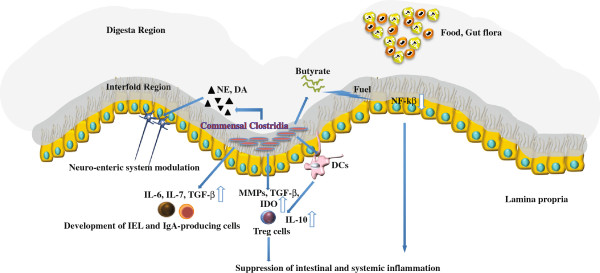
Verification
Claims the paper makes
The claims and statistics of this paper haven’t been checked yet.
Free: it reads the open-access text and checks the first 5 claims that cite a source we can check. Create a free account to check every claim.
Claims other papers make about this one
Each is checked against this paper’s own text: does it say what the citing paper says it does?
In the citing paper
“Furthermore, increased Bifidobacteria and Lactobacilli, which are linked to decreased diet-induced obesity and improved insulin sensitivity have been further supported by soy-protein consumption [165,166,167].”
From Impact of Protein Intake in Older Adults with Sarcopenia and Obesity: A Gut Microbiota Perspective (2020) · cites this paper as [166]
Self-check
Percentages, sums and reported differences re-computed from the paper’s own numbers.
The self-check needs the paper’s full text.
Citations
Cites
Diversity of the Human Intestinal Microbial Flora
Eckburg, P. B., Bik, E. M., Bernstein, C. N., Purdom, E., Dethlefsen, L., Sargent, M., Gill, S. R., Nelson, K. E., & Relman, D. A. (2005) · Science · doi:10.1126/science.1110591 · Cited by 7,913 · cited 2×
“; licensee BioMed Centr Commons Attribution License (http://creativec reproduction in any medium, provided the or in culture-independent molecular techniques, by the analysis of phylogenetic arrays, next generation 16S rRNA sequencing and metagenome sequencing derived from human mucosal biopsies, luminal contents and…”
BackgroundObesity alters gut microbial ecology
Ley, R. E., Bäckhed, F., Turnbaugh, P., Lozupone, C. A., Knight, R. D., & Gordon, J. I. (2005) · Proceedings of the National Academy of Sciences · doi:10.1073/pnas.0504978102 · Cited by 6,176 · cited 1×
“; licensee BioMed Centr Commons Attribution License (http://creativec reproduction in any medium, provided the or in culture-independent molecular techniques, by the analysis of phylogenetic arrays, next generation 16S rRNA sequencing and metagenome sequencing derived from human mucosal biopsies, luminal contents and…”
BackgroundHost-Bacterial Mutualism in the Human Intestine
Bäckhed, F., Ley, R. E., Sonnenburg, J. L., Peterson, D. A., & Gordon, J. I. (2005) · Science · doi:10.1126/science.1104816 · Cited by 5,277 · cited 2×
“An intricate and mutualistic symbiosis modulates the relationship between the host and the gut microbiota [11,18,19].”
BackgroundMetagenomic Analysis of the Human Distal Gut Microbiome
Gill, S. R., Pop, M., DeBoy, R. T., Eckburg, P. B., Turnbaugh, P. J., Samuel, B. S., Gordon, J. I., Relman, D. A., Fraser-Liggett, C. M., & Nelson, K. E. (2006) · Science · doi:10.1126/science.1124234 · Cited by 4,699 · cited 2×
“; licensee BioMed Centr Commons Attribution License (http://creativec reproduction in any medium, provided the or in culture-independent molecular techniques, by the analysis of phylogenetic arrays, next generation 16S rRNA sequencing and metagenome sequencing derived from human mucosal biopsies, luminal contents and…”
BackgroundFrank, D. N., St. Amand, A. L., Feldman, R. A., Boedeker, E. C., Harpaz, N., & Pace, N. R. (2007) · Proceedings of the National Academy of Sciences · doi:10.1073/pnas.0706625104 · Cited by 4,611 · cited 4×
“; licensee BioMed Centr Commons Attribution License (http://creativec reproduction in any medium, provided the or in culture-independent molecular techniques, by the analysis of phylogenetic arrays, next generation 16S rRNA sequencing and metagenome sequencing derived from human mucosal biopsies, luminal contents and…”
BackgroundInfluentialSokol, H., Pigneur, B., Watterlot, L., Lakhdari, O., Bermúdez-Humarán, L. G., Gratadoux, J.-J., Blugeon, S., Bridonneau, C., Furet, J.-P., Corthier, G., et al. (2008) · Proceedings of the National Academy of Sciences · doi:10.1073/pnas.0804812105 · Cited by 4,413 · cited 2×
“cluster IV, increases IL-10 production from peripheral blood mononuclear cells in vitro [98].”
BackgroundGut microbiota in health and disease
Sekirov, I., Russell, S. L., Antunes, L. C. M., & Finlay, B. B. (2010) · Physiological Reviews · doi:10.1152/physrev.00045.2009 · Cited by 4,182
Induction of Colonic Regulatory T Cells by Indigenous Clostridium Species
Atarashi, K., Tanoue, T., Shima, T., Imaoka, A., Kuwahara, T., Momose, Y., Cheng, G., Yamasaki, S., Saito, T., Ohba, Y., et al. (2011) · Science · doi:10.1126/science.1198469 · Cited by 3,752 · cited 20×
“Moreover, even the colonization with altered Schaedler flora (ASF), which includes Clostridium clostridioforme, leads to the accumulation of Tregs within the colon [97].”
BackgroundInfluentialEcological and Evolutionary Forces Shaping Microbial Diversity in the Human Intestine
Ley, R. E., Peterson, D. A., & Gordon, J. I. (2006) · Cell · doi:10.1016/j.cell.2006.02.017 · Cited by 3,358 · cited 1×
“; licensee BioMed Centr Commons Attribution License (http://creativec reproduction in any medium, provided the or in culture-independent molecular techniques, by the analysis of phylogenetic arrays, next generation 16S rRNA sequencing and metagenome sequencing derived from human mucosal biopsies, luminal contents and…”
BackgroundTopping, D. L., & Clifton, P. M. (2001) · Physiological Reviews · doi:10.1152/physrev.2001.81.3.1031 · Cited by 3,091 · cited 7×
“Dysregulation of any of the aforementioned components have been implicated, not only in the pathogenesis of IBD, but in many other GI disorders, including infectious enterocolitis, IBS, small intestinal bowel overgrowth, celiac sprue, hepatic fibrosis, atopic manifestations and food intolerance [34-36].”
BackgroundInfluential
Cited by
Items 101–200 of 785
Gut microbiota alterations are distinct for primary colorectal cancer and hepatocellular carcinoma
Jia, W. P., Rajani, C., Xu, H., & Zheng, X. (2020) · Protein & Cell · doi:10.1007/s13238-020-00748-0 · Cited by 96
Kadyan, S., Sharma, A., Arjmandi, B. H., Singh, P. R., & Nagpal, R. (2022) · Nutrients · doi:10.3390/nu14091726 · Cited by 92
“The amylopectin hydrolysis capacity of this bacteria is twice compared to amylose (Lopetuso et al., 2013).”
BackgroundAlterations in the gut bacterial microbiome in fungal Keratitis patients
Chakravarthy, S. K., Jayasudha, R., Ranjith, K., Dutta, A., Pinna, N. K., Mande, S. S., Sharma, S., Garg, P., Murthy, S. I., & Shivaji, S. (2018) · PLoS ONE · doi:10.1371/journal.pone.0199640 · Cited by 92
Knox, N., Forbes, J. D., Peterson, C.-L., Domselaar, G. V., & Bernstein, C. N. (2019) · The American Journal of Gastroenterology · doi:10.14309/ajg.0000000000000305 · Cited by 95
Potential of Prebiotic Butyrogenic Fibers in Parkinson's Disease
Cantu-Jungles, T. M., Rasmussen, H. E., & Hamaker, B. R. (2019) · Frontiers in Neurology · doi:10.3389/fneur.2019.00663 · Cited by 81
“The importance of such crossfeeding mechanisms to improve butyrate formation in the gut is still a matter of discussion as many butyrogenic bacteria occupy spatially distinct niches different than non-butyrogenic ones within the gut (70, 74, 75).”
BackgroundGenome-Resolved Metagenomics of the Chicken Gut Microbiome
Segura‐Wang, M., Grabner, N., Köstelbauer, A., Klose, V., & Ghanbari, M. (2021) · Frontiers in Microbiology · doi:10.3389/fmicb.2021.726923 · Cited by 96
Méndez-García, L. A., Bueno-Hernández, N., Cid-Soto, M. A., León, K. L. D., Mendoza-Martínez, V. M., Espinosa-Flores, A. J., Carrero-Aguirre, M., Esquivel‐Velázquez, M., León-Hernández, M., Viurcos-Sanabria, R., et al. (2022) · Microorganisms · doi:10.3390/microorganisms10020434 · Cited by 90
“Blautia coccoides seem to counter the abnormal glucose and insulin homeostasis in patients with metabolic syndrome by producing butyrate that contributes to maintaining normal blood glucose levels [21,22].”
BackgroundRecruitment and establishment of the gut microbiome in arctic shorebirds
Grond, K., Lanctot, R. B., Jumpponen, A., & Sandercock, B. K. (2017) · FEMS Microbiology Ecology · doi:10.1093/femsec/fix142 · Cited by 87
“Clostridia are also early colonizers of the human infant gastrointestinal tract and essential in maintaining gut homeostasis (Lopetuso et al. 2013).”
BackgroundManagement practices to optimize the parturition process in the hyperprolific sow
Peltoniemi, O. A. T., Oliviero, C., Yun, J., Grahofer, A., & Björkman, S. (2020) · Journal of Animal Science · doi:10.1093/jas/skaa140 · Cited by 85
Gut health modulation through phytogenics in poultry: mechanisms, benefits, and applications
Oni, A. I., & Oke, O. E. (2025) · Frontiers in Veterinary Science · doi:10.3389/fvets.2025.1616734 · Cited by 95
“Given that Clostridium is not only predominant in the ceca (93) but also helps maintain the general health of the gut, particularly through the generation of butyrate (94), this rise may be advantageous.”
Colonization Resistance of the Gut Microbiota against Clostridium difficile
Pérez-Cobas, A., Moya, A., Gosalbes, M., & Latorre, A. (2015) · Antibiotics · doi:10.3390/antibiotics4030337 · Cited by 83
“initiation of immunological signaling [151,152].”
Berding, K., Wang, M., Monaco, M. H., Alexander, L. S., Mudd, A. T., Chichlowski, M., Waworuntu, R. V., Berg, B. M., Miller, M. J., Dilger, R. N., et al. (2016) · Journal of Pediatric Gastroenterology and Nutrition · doi:10.1097/mpg.0000000000001200 · Cited by 81
“Clostridium IV belongs to the phylum Firmicutes and is the main butyrate-producing group of bacteria in the gut (49).”
Impact of Selection for Digestive Efficiency on Microbiota Composition in the Chicken
Mignon-Grasteau, S., Narcy, A., Rideau, N., Chantry-Darmon, C., Boscher, M. Y., Sellier, N. N., Chabault, M., Konsak, B. M., Bihan-Duval, É. L., & Gabriel, I. (2015) · PLoS ONE · doi:10.1371/journal.pone.0135488 · Cited by 97
Fasina, Y. O., Newman, M. M., Stough, J. M. A., & Liles, M. R. (2015) · Poultry Science · doi:10.3382/ps/pev329 · Cited by 93
“idence that commensal Clostridia may be important for maintaining normal gut immune homeostasis by in modulating physiologic, metabolic, and immune processes in the gut (Lopetuso et al., 2013).”
BackgroundLong-term effects of early life microbiota disturbance on adaptive immunity in laying hens
Simon, K., Verwoolde, M. B., Zhang, J., Smidt, H., Reilingh, G. D. V., Kemp, B., & Lammers, A. (2016) · Poultry Science · doi:10.3382/ps/pew088 · Cited by 95
“Clostridia, some of which were more abundant in control birds of the present study, on the other hand, have been found to be important for the maintenance of intestinal homeostasis by playing an important role in the induction of regulatory T cells (Atarashi et al., 2011; Lopetuso et al., 2013).”
BackgroundManasson, J., Wallach, D. S., Guggino, G., Stapylton, M., Badri, M. H., Solomon, G. E., Reddy, S. M., Coras, R., Aksenov, A. A., Jones, D. R., et al. (2019) · Arthritis & Rheumatology · doi:10.1002/art.41169 · Cited by 84
Dietary manipulation of the gut microbiome in inflammatory bowel disease patients: Pilot study
Olendzki, B. C., Bucci, V., Cawley, C., Maserati, R., McManus, M. M., Olednzki, E., Madziar, C., Chiang, D., Ward, D. V., Pellish, R. S., et al. (2022) · Gut Microbes · doi:10.1080/19490976.2022.2046244 · Cited by 87
O'Mahony, S. M., McVey Neufeld, K., Waworuntu, R. V., Pusceddu, M. M., Manurung, S., Murphy, K., Strain, C., Laguna, M. C., Peterson, V. L., Stanton, C., et al. (2020) · European Journal of Neuroscience · doi:10.1111/ejn.14514 · Cited by 79
Protective Effects of Ghrelin on Fasting-Induced Muscle Atrophy in Aging Mice
Wu, C.-S., Wei, Q., Wang, H., Kim, D. M., Balderas, M., Wu, G., Lawler, J., Safe, S., Guo, S., Devaraj, S., et al. (2020) · The Journals of Gerontology: Series A · doi:10.1093/gerona/gly256 · Cited by 81
“Roseburia and ClostridiumXIVb are butyrate-producing, gram-positive anaerobic bacteria (57,58), and butyrate protects against high fat diet-induced metabolic changes (59), reduces inflammation (60) and attenuates muscle atrophy during aging (61).”
BackgroundSplinectomeR Enables Group Comparisons in Longitudinal Microbiome Studies
Shields‐Cutler, R. R., Al-Ghalith, G. A., Yassour, M., & Knights, D. (2018) · Frontiers in Microbiology · doi:10.3389/fmicb.2018.00785 · Cited by 87
“…containing the following putatively butyrate-producing genera from Clostridium groups IV and XIV present in the OTU table: Clostridium , Coprococcus , Dorea , Lachnospira , Roseburia , Ruminococcus , and Faecalibacterium (Louis and Flint, 2009; Lopetuso et al., 2013; Van den Abbeele et al., 2013).”
BackgroundMethodCommensal Obligate Anaerobic Bacteria and Health: Production, Storage, and Delivery Strategies
Andrade, J. C., Almeida, D., Domingos, M., Seabra, C. L., Machado, D., Freitas, A. C., & Gomes, A. (2020) · Frontiers in Bioengineering and Biotechnology · doi:10.3389/fbioe.2020.00550 · Cited by 85
“, 2014) and, the only identified species of the Faecalibacterium genus which is part of the family Ruminococcaceae family also known as Clostridium cluster IV (phylum Firmicutes), a group of bacteria considered to be major players in the human microbiota (Lopetuso et al., 2013).”
BackgroundWang, S., Egan, M., Ryan, C. A., Boyaval, P., Dempsey, E. M., Ross, R. P., & Stanton, C. (2020) · FEMS Microbiology Reviews · doi:10.1093/femsre/fuaa030 · Cited by 99
The Treatment with Interleukin 17 Inhibitors and Immune-Mediated Inflammatory Diseases
Țiburcă, L., Bembea, M., Zaha, D. C., Jurcă, A. D., Vesa, C. M., Rațiu, I. A., & Jurca, C. M. (2022) · Current Issues in Molecular Biology · doi:10.3390/cimb44050127 · Cited by 85
Jenkins, T. P., Formenti, F., Castro, C., Piubelli, C., Perandin, F., Buonfrate, D., Otranto, D., Griffin, J. L., Krause, L., Bisoffi, Z., et al. (2018) · Scientific Reports · doi:10.1038/s41598-018-33937-3 · Cited by 84
The Sporobiota of the Human Gut
Egan, M., Dempsey, E. M., Ryan, C. A., Ross, R. P., & Stanton, C. (2021) · Gut Microbes · doi:10.1080/19490976.2020.1863134 · Cited by 90
“Although certain species such as Clostridium difficile (now referred to as Clostridioides difficile) and Clostridium perfringens are known for their pathogenicity, most of the Clostridia observed in the gut have a commensal relationship with the host.(51) In fact, Clostridium clusters IV and XIVa, the Clostridium lept…”
BackgroundProbiotic Potential of Clostridium spp.—Advantages and Doubts
Grenda, T., Grenda, A., Domaradzki, P., Krawczyk, P. A., & Kwiatek, K. (2022) · Current Issues in Molecular Biology · doi:10.3390/cimb44070215 · Cited by 91
“make up a huge share of the total intestinal microbiota (estimated at 10–40%) [6,10,15,16].”
BackgroundHuang, S., Li, N., Liu, C., Li, T., Wang, W., Jiang, L., Li, Z., Han, D., Tao, S., & Wang, J. (2019) · The Journal of Microbiology · doi:10.1007/s12275-019-8690-x · Cited by 83
Chen, Q., Ren, Y., Lu, J., Bartlett, M., Chen, L., Zhang, Y., Guo, X., & Liu, C. (2017) · Nutrients · doi:10.3390/nu9121341 · Cited by 84
“Clostridia are thus strongly involved in the maintenance of overall gut function [62].”
BackgroundPrizment, A. E., Staley, C. M., Onyeaghala, G. C., Vivek, S., Thyagarajan, B., Straka, R. J., Demmer, R. T., Knights, D., Meyer, K. A., Shaukat, A., et al. (2020) · Alimentary Pharmacology & Therapeutics · doi:10.1111/apt.16013 · Cited by 78
Modulation of gut microbiota by bioactive compounds for prevention and management of type 2 diabetes
Sharma, B. R., Jaiswal, S., & Veeranna, R. P. (2022) · Biomedicine & Pharmacotherapy · doi:10.1016/j.biopha.2022.113148 · Cited by 80
Lee, W., Tung, Y., Wu, C.-C., Tu, P.-S., & Yen, G. (2018) · Journal of Agricultural and Food Chemistry · doi:10.1021/acs.jafc.8b02166 · Cited by 76
Robinson, K., Becker, S. R., Xiao, Y., Lyu, W., Yang, Q., Zhu, H., Yang, H., Zhao, J., & Zhang, G. (2019) · Microorganisms · doi:10.3390/microorganisms7090282 · Cited by 76
“Both IV and XIVa clusters of Clostridia are the two most dominant bacterial taxa in the hind gut of humans and well-known for their ability to produce butyrate from indigestible carbohydrates [46,47].”
BackgroundDigestive tract microbiota of beef cattle that differed in feed efficiency
Freetly, H. C., Dickey, A. M., Lindholm‐Perry, A. K., Thallman, R. M., Keele, J. W., Foote, A. P., & Wells, J. E. (2020) · Journal of Animal Science · doi:10.1093/jas/skaa008 · Cited by 82
Enrichment of Food With Tannin Extracts Promotes Healthy Changes in the Human Gut Microbiota
Molino, S., Lerma-Aguilera, A., Jiménez‐Hernández, N., Gosalbes, M. J., Rufián‐Henares, J. Á., & Francino, M. P. (2021) · Frontiers in Microbiology · doi:10.3389/fmicb.2021.625782 · Cited by 77
“Furthermore, numerous genera of these families have been attributed the capacity to produce SCFAs (Lopetuso et al., 2013; Louis and Flint, 2017).”
BackgroundBile acid receptors and signaling crosstalk in the liver, gut and brain
Ferrell, J. M., & Chiang, J. Y. L. (2021) · Liver Research · doi:10.1016/j.livres.2021.07.002 · Cited by 77
Associations between the gut microbiome and metabolome in early life
Nguyen, Q. P., Karagas, M. R., Madan, J. C., Dade, E. F., Palys, T. J., Morrison, H. G., Pathmasiri, W., McRitche, S., Sumner, S., Frost, H. R., et al. (2021) · BMC Microbiology · doi:10.1186/s12866-021-02282-3 · Cited by 81
Libertucci, J., Dutta, U., Kaur, S., Jury, J., Rossi, L., Fontes, M. E., Shajib, M. S., Khan, W. I., Surette, M. G., Verdu, E. F., et al. (2018) · American Journal of Physiology-Gastrointestinal and Liver Physiology · doi:10.1152/ajpgi.00411.2017 · Cited by 80
“Many Clostridiales are able to digest complex carbohydrates, generating short-chain fatty acid (23).”
BackgroundMartin, O. C. B., Olier, M., Ellero‐Simatos, S., Naud, N., Dupuy, J., Laurence Therese, H. U. C., Taché, S., Graillot, V., Levêque, M., Bézirard, V., et al. (2019) · Microbiome · doi:10.1186/s40168-019-0685-7 · Cited by 76
“Increased in vivo fitness of these lipoperoxidationdependent communities inversely correlated with a loss of protective communities, such as Lactobacilli [71] and Clostidiales [72] belonging to Ruminococcaceae.”
BackgroundYi, Y., Lu, W., Shen, L., Wu, Y. F., & Zhang, Z. (2023) · Experimental Hematology and Oncology · doi:10.1186/s40164-023-00410-5 · Cited by 77
“More importantly, bacteria in class Clostridia are commonly equipped with butyrate production capacity and thus involved into immunomodulation by promoting expansion of intraepithelial lymphocytes, IgA-producing cells and colonic Tregs [65].”
BackgroundMarzal, L. N. P., Rojas-Velázquez, D., Rigters, D., Prince, N., Garssen, J., Kraneveld, A. D., Perez‐Pardo, P., & Lopez‐Rincon, A. (2024) · Scientific Reports · doi:10.1038/s41598-023-50601-7 · Cited by 77
“However, further studies should aim to understand the biological significance of these specific bacteria in ASD pathophysiology, and additional data such as metabolic function of the gut microbiome may be of great importance to pursue this line of investigation.”
BackgroundBest, A. A., Porter, A. L., Fraley, S. M., & Fraley, G. S. (2017) · Frontiers in Microbiology · doi:10.3389/fmicb.2016.02125 · Cited by 80
“Members of Clostridia cluster IV, a group known to be associated with butyrate production and to be important for gut homeostasis in mammals (Lopetuso et al., 2013), were identified as significant members of the microbiome of ducks in this study.”
BackgroundFitch, M. N., Phillippi, D., Zhang, Y., Lucero, J., Pandey, R. S., Liu, J., Brower, J., Allen, M. S., Campen, M. J., McDonald, J. D., et al. (2019) · Environmental Research · doi:10.1016/j.envres.2019.108913 · Cited by 73
Gut microbiota and inflammatory joint diseases
Bréban, M. (2016) · Joint Bone Spine · doi:10.1016/j.jbspin.2016.04.005 · Cited by 78
Association of altered gut microbiota composition with chronic urticaria
Nabizadeh, E., Jazani, N. H., Bagheri, M., & Shahabi, S. (2017) · Annals of Allergy Asthma & Immunology · doi:10.1016/j.anai.2017.05.006 · Cited by 76
Livanos, A. E., Snider, E. J., Whittier, S., Chong, D. H., Wang, T. C., Abrams, J. A., & Freedberg, D. E. (2018) · PLOS ONE · doi:10.1371/journal.pone.0200322 · Cited by 70
Low-moisture food matrices as probiotic carriers
Marcial-Coba, M. S., Knøchel, S., & Nielsen, D. S. (2019) · FEMS Microbiology Letters · doi:10.1093/femsle/fnz006 · Cited by 80
Feeding Rapidly Alters Microbiome Composition and Gene Transcription in the Clownfish Gut
Parris, D. J., Morgan, M. M., & Stewart, F. J. (2018) · Applied and Environmental Microbiology · doi:10.1128/aem.02479-18 · Cited by 76
Ma, S., Liang, X., Chen, P. C., Wang, J., Gu, X., Qin, Y., Blecker, C. S., & Xue, M. (2022) · Animal nutrition · doi:10.1016/j.aninu.2022.04.005 · Cited by 75
“sensu stricto may ferment undigested carbohydrates and amino acids into short-chain fatty acids (Lopetuso et al., 2013).”
BackgroundYard vegetation is associated with gut microbiota composition
Parajuli, A., Hui, N., Puhakka, R., Oikarinen, S., Grönroos, M., Selonen, V. A. O., Siter, N., Kramna, L., Roslund, M. I., Vari, H. K., et al. (2020) · Science of The Total Environment · doi:10.1016/j.scitotenv.2020.136707 · Cited by 64
“, 2013; RajilićStojanović and de Vos, 2014) and have been seen as a marker of degrading gut microbiota among the elderly (Drago et al., 2012; Lopetuso et al., 2013), whereas, Faecalibacterium has been associated with a healthy gut (Rajilić–Stojanović et al.”
BackgroundTun, M. H., Tun, H. M., Mahoney, J. J., Konya, T. B., Guttman, D. S., Becker, A. B., Mandhane, P. J., Turvey, S. E., Subbarao, P., Sears, M. R., et al. (2018) · Canadian Medical Association Journal · doi:10.1503/cmaj.170809 · Cited by 68
“45 Our observations of both genera are remarkably consistent with the study by Schmidt and colleagues, in which the postbirth transfer of piglets to a pathogen-free environment, aerosolized with disinfectant, caused a reduction in intestinal tissue levels of Pasteurellaceae and Clostridiaceae , and…”
ResultBarelli, C., Albanese, D., Stumpf, R. M., Asangba, A. E., Donati, C., Rovero, F., & Hauffe, H. C. (2020) · mSystems · doi:10.1128/msystems.00061-20 · Cited by 76
“On the other hand, baboons living in PF had a relatively high abundance of Clostridium sensu stricto , another group of bacteria providing protective mechanisms involved in the resistance to infection (88).”
Early exposure to agricultural soil accelerates the maturation of the early-life pig gut microbiota
Vo, N., Tsai, T.-C., Maxwell, C., & Carbonero, F. G. (2017) · Anaerobe · doi:10.1016/j.anaerobe.2017.02.022 · Cited by 72
Dutta, A., Duttagupta, S., Gupta, A., Sarkar, J., Roy, S., Mukherjee, A., & Sar, P. (2018) · Scientific Reports · doi:10.1038/s41598-018-35940-0 · Cited by 76
Adult Intestinal Toxemia Botulism
Harris, R. A., Anniballi, F., & Austin, J. W. (2020) · Toxins · doi:10.3390/toxins12020081 · Cited by 67
Gao, R., Tian, S., Wang, J., & Zhu, W. (2021) · Journal of Animal Science and Biotechnology/Journal of animal science and biotechnology · doi:10.1186/s40104-021-00612-z · Cited by 71
The Impact of Long‐Term Intake of Phenolic Compounds‐Rich Grape Pomace on Rat Gut Microbiota
Chacar, S., Itani, T. M., Hajal, J., Saliba, Y., Louka, N., Faivre, J., Maroun, R. G., & Farès, N. (2017) · Journal of Food Science · doi:10.1111/1750-3841.14006 · Cited by 66
Mo, Q., Fu, A., Deng, L., Zhao, M., Li, Y., Zhang, H., & Feng, F. (2019) · Nutrients · doi:10.3390/nu11091981 · Cited by 68
“Mice in the G1600 group exhibited higher levels of Clostridium XIVa and Oscillibacter, which have been shown to have anti-inflammatory functions and play crucial roles in the maintenance of mucosal homeostasis [38].”
BackgroundThe Osteoporosis/Microbiota Linkage: The Role of miRNA
Martinis, M. D., Ginaldi, L., Allegra, A., Sirufo, M. M., Pioggia, G., Tonacci, A., & Gangemi, S. (2020) · International Journal of Molecular Sciences · doi:10.3390/ijms21238887 · Cited by 74
“The alteration of the vitamin D receptor led to increased Eggerthella abundance and other unfavorable alterations in the intestinal microbiota in murine models [45].”
BackgroundBacillus clausii and gut homeostasis: state of the art and future perspectives
Lopetuso, L. R., Scaldaferri, F., Franceschi, F., & Gasbarrini, A. (2016) · Expert Review of Gastroenterology & Hepatology · doi:10.1080/17474124.2016.1200465 · Cited by 76
Self-citationIncreasing Dietary Fiber Intake Is Associated with a Distinct Esophageal Microbiome
Nobel, Y. R., Snider, E. J., Compres, G., Freedberg, D. E., Khiabanian, H., Lightdale, C. J., Toussaint, N. C., & Abrams, J. A. (2018) · Clinical and Translational Gastroenterology · doi:10.1038/s41424-018-0067-7 · Cited by 71
Sasaki, K., Inoue, J., Sasaki, D., Hoshi, N., Shirai, T., Fukuda, I., Azuma, T., Kondo, A., & Osawa, R. (2019) · Biotechnology Journal · doi:10.1002/biot.201800555 · Cited by 72
Utilizing the fecal microbiota to understand foal gut transitions from birth to weaning
Torre, U. D. L., Henderson, J., Furtado, K. L., Pedroja, M., Elenamarie, O., Mora, A., Pechanec, M. Y., Maga, E. A., & Mienaltowski, M. J. (2019) · PLoS ONE · doi:10.1371/journal.pone.0216211 · Cited by 71
“Commensal Clostridia are essential for proper maintenance of the gut and participate in several processes including physiology, metabolism, and immune responses [47].”
BackgroundInter‐breed diversity and temporal dynamics of the faecal microbiota in healthy horses
Massacci, F. R., Clark, A. P., Ruet, A., Lansade, L., Costa, M., & Mach, N. (2019) · Journal of Animal Breeding and Genetics · doi:10.1111/jbg.12441 · Cited by 82
Quraishi, M. N., Shaheen, W., Oo, Y. H., & Iqbal, T. H. (2019) · Clinical & Experimental Immunology · doi:10.1111/cei.13397 · Cited by 70
A Targetron-Recombinase System for Large-Scale Genome Engineering of Clostridia
Cerisy, T., Rostain, W., Chhun, A., Boutard, M., Salanoubat, M., & Tolonen, A. C. (2019) · mSphere · doi:10.1128/msphere.00710-19 · Cited by 65
“phytofermentans is a member of the Lachnospiraceae family that is abundant in soil (5), dominates the rumen (6), and includes human gut commensals that play important roles in nutrition and intestinal health (7).”
BackgroundGut microbiome signatures linked to HIV-1 reservoir size and viremia control
Borgognone, A., Noguera-Julián, M., Oriol-Tordera, B., Noël‐Romas, L., Ruiz‐Riol, M., Guillén, Y., Parera, M., Casadellà, M., Duran-Castells, C., Puertas, M. C., et al. (2022) · Microbiome · doi:10.1186/s40168-022-01247-6 · Cited by 66
“copri [36], and depleted in bacteria, traditionally associated with the maintenance of gut homeostasis through production of SCFAs [37], including R.”
BackgroundHelminth-microbiota cross-talk – A journey through the vertebrate digestive system
Cortés, A., Peachey, L., Scotti, R., Jenkins, T. P., & Cantacessi, C. (2019) · Molecular and Biochemical Parasitology · doi:10.1016/j.molbiopara.2019.111222 · Cited by 71
“Members of the latter class are known to contribute to the maintenance of gut homeostasis and modulation of immune tolerance via the production of SCFAs, amongst other mechanisms [51].”
Wipperman, M. F., Bhattarai, S. K., Vorkas, C. K., Maringanti, V. S., Taur, Y., Mathurin, L. D., McAulay, K., Vilbrun, S. C., Francois, D., Bean, J. M., et al. (2021) · Nature Communications · doi:10.1038/s41467-021-21475-y · Cited by 68
Gut Bacteria and Neuropsychiatric Disorders
Dicks, L. M. T., Hurn, D., & Hermanus, D. (2021) · Microorganisms · doi:10.3390/microorganisms9122583 · Cited by 70
Patel, N., Patel, N., Pal, S., Nathani, N. M., Pandit, R. J., Patel, M. N., Patel, N., Joshi, C. G., & Parekh, B. (2022) · BMC Women s Health · doi:10.1186/s12905-022-01681-6 · Cited by 64
Lahr, R. H., Goetsch, H., Haig, S., Noe-Hays, A., Love, N. G., Aga, D. S., Bott, C. B., Foxman, B., Jimenez, J. A., Luo, T. L., et al. (2016) · Environmental Science & Technology · doi:10.1021/acs.est.6b02094 · Cited by 67
Ezekiel, C. N., Ayeni, K. I., Ezeokoli, O. T., Sulyok, M., van Wyk, D. A. B., Oyedele, O. A., Akinyemi, M. O., Chibuzor‐Onyema, I. E., Adeleke, R. A., Nwangburuka, C. C., et al. (2019) · Frontiers in Microbiology · doi:10.3389/fmicb.2018.03282 · Cited by 63
“A few species in the Clostridium sensu stricto cluster are being reclassified and functionally annotated (Wiegel et al., 2006; Gupta and Gao, 2009; Lopetuso et al., 2013; Yutin and Galperin, 2013).”
BackgroundRushing, B. R., McRitchie, S., Arbeeva, L. S., Nelson, A. E., Azcárate-Peril, M. A., Li, Y.-Y., Qian, Y., Pathmasiri, W., Sumner, S., & Loeser, R. F. (2021) · Osteoarthritis and Cartilage · doi:10.1016/j.joca.2021.10.006 · Cited by 66
Widhani, A., Djauzi, S., Suyatna, F. D., & Dewi, B. E. (2022) · Cells · doi:10.3390/cells11213419 · Cited by 71
“Commensal Clostridia consists of Gram-positive, rod-shaped bacteria that can modulate immune responses and release butyrate, which inhibits the activation of the nuclear factor kappa-B, leading to decreased levels of proinflammatory cytokines [36].”
BackgroundGut-Brain Axis a Key Player to Control Gut Dysbiosis in Neurological Diseases
Pan, I., Issac, P. K., Rahman, M. M., Guru, A., & Arockiaraj, J. (2023) · Molecular Neurobiology · doi:10.1007/s12035-023-03691-3 · Cited by 67
Colostrum feeding shapes the hindgut microbiota of dairy calves during the first 12 h of life
Song, Y., Malmuthuge, N., Li, F., & Guan, L. L. (2018) · FEMS Microbiology Ecology · doi:10.1093/femsec/fiy203 · Cited by 71
Cárdenas, P., Garcés, D., Prado-Vivar, B., Flores, N., Fornasini, M., Cohen, H., Salvador, I., Cargua, O., & Baldeon, M. E. (2020) · European Journal of Clinical Microbiology & Infectious Diseases · doi:10.1007/s10096-020-03854-3 · Cited by 68
Guo, M., Li, M., Zhang, C., Zhang, X., & Wu, Y. (2020) · Frontiers in Microbiology · doi:10.3389/fmicb.2020.01768 · Cited by 71
“At present, with the increase in the number of laws and regulations concerning the use of antibiotics, and the difficulty of new drugs development, thus increasing the demand for growth promoter alternatives (Lupindu et al., 2015).”
BackgroundAge-related changes in the gut microbiota and the core gut microbiome of healthy Thai humans
La-ongkham, O., Nakphaichit, M., Nakayama, J., Keawsompong, S., & Nitisinprasert, S. (2020) · 3 Biotech · doi:10.1007/s13205-020-02265-7 · Cited by 67
“coli in Thai might be either a risk for dysbiosis or good for health by providing specific and essential functions, similar to many commensal Clostridia, which make up a substantial part (10–40%) of the total bacteria in the gut microbiota (Lopetuso et al. 2013).”
BackgroundMicrobiota dysbiosis and its pathophysiological significance in bowel obstruction
Hegde, S., Lin, Y.-M., Golovko, G., Khanipov, K., Cong, Y., Savidge, T., Fofanov, Y., & Shi, X.-Z. P. (2018) · Scientific Reports · doi:10.1038/s41598-018-31033-0 · Cited by 64
Zhou, S., Luo, R., Gong, G., Wang, Y., Gesang, Z., Wang, K., Xu, Z., & Suolang, S. (2020) · Frontiers in Microbiology · doi:10.3389/fmicb.2020.595066 · Cited by 70
“Many commensal species of Clostridia, a large group of obligate anaerobic and highly polyphyletic bacteria, are considered responsible for the maintenance of gut homeostasis (Lopetuso et al., 2013).”
BackgroundSchanz, O., Chijiiwa, R., Cengiz, S. C., Majlesain, Y., Weighardt, H., Takeyama, H., & Förster, I. (2020) · International Journal of Molecular Sciences · doi:10.3390/ijms21093189 · Cited by 60
Antivirulence Activity of the Human Gut Metabolome
Antunes, L. C. M., McDonald, J. A. K., Schroeter, K., Carlucci, C., Ferreira, R. B. R., Wang, M., Yurist‐Doutsch, S., Gill, H., Jacobson, K., DAVIES, J. E., et al. (2014) · mBio · doi:10.1128/mbio.01183-14 · Cited by 69
“These clostridia have critical functions for health during the entire human life span; they are involved in modulating immune functions, providing energy sources to host cells and other members of the gut microbiota, and even maintaining endocrine homeostasis (41).”
BackgroundKearney, S. M., Gibbons, S. M., Poyet, M., Gurry, T., Bullock, K., Allegretti, J. R., Clish, C. B., & Alm, E. J. (2018) · The ISME Journal · doi:10.1038/s41396-018-0192-z · Cited by 59
Novel strategies for modulating the gut microbiome for cancer therapy
Cho, Y. S., Han, K., Xu, J., & Moon, J. J. (2024) · Advanced Drug Delivery Reviews · doi:10.1016/j.addr.2024.115332 · Cited by 65
“4) [168].”
Role of Microbiota and Innate Immunity in RecurrentClostridium difficileInfection
Bibbò, S., Lopetuso, L. R., Ianiro, G., Rienzo, T. D., Gasbarrini, A., & Cammarota, G. (2014) · Journal of Immunology Research · doi:10.1155/2014/462740 · Cited by 71
“The most commensal bacteria present in human fecal flora are represented by two main groups of Firmicutes, subdivided in Clostridium coccoides (Clostridium cluster XIVa) and Clostridium leptum (Clostridium cluster IV) that are butyrate producers, and by the group of the CytophagaFlavobacterium-Bacteroides (CFB) [3, 4].”
BackgroundSelf-citationLemaire, M., Dou, S., Cahu, A., Formal, M., Normand, L. L., Rome, V., Nogret, I., Ferret‐Bernard, S., Rhimi, M., Cuinet, I., et al. (2018) · Scientific Reports · doi:10.1038/s41598-018-29971-w · Cited by 61
Maki, T., Kurosaki, Y., Onishi, K., Lee, K. C. Y., Pointing, S. B., Jugder, D., Yamanaka, N., Hasegawa, H., & Shinoda, M. (2016) · Air Quality Atmosphere & Health · doi:10.1007/s11869-016-0430-3 · Cited by 57
“The class Clostridia includes rumen bacteria dominated in animal guts (Tajima et al. 1999; Lopetuso et al. 2008).”
BackgroundJayasudha, R., Chakravarthy, S. K., Prashanthi, G. S., Sharma, S., Garg, P., Murthy, S. I., & Shivaji, S. (2018) · Journal of Biosciences · doi:10.1007/s12038-018-9798-6 · Cited by 61
Phagocytosis of Gut Bacteria by Entamoeba histolytica
Iyer, L. R., Verma, A. K., Paul, J., & Bhattacharya, A. (2019) · Frontiers in Cellular and Infection Microbiology · doi:10.3389/fcimb.2019.00034 · Cited by 65
“Butyrates are the preferred energy source for colonocytes and are important anti-inflammatory modulators (Lopetuso et al., 2013).”
BackgroundKaur, G., Behl, T., BUNGAU, S. G., Kumar, A., Uddin, M. S., Mehta, V., Zengin, G., Mathew, B., Shah, M. A., & Arora, S. (2020) · Current Neuropharmacology · doi:10.2174/1570159x18666200606233050 · Cited by 64
“In samples taken from feces of MPTP-induced Parkinson mice, that were compatible with clinical results, decreased amounts of Firmicutes clostridales and Firmicutes together with elevated values of the Turicibacterales, Enterobacteriales, and Proteobacteria have been found [74].”
ResultBaert, F., Matthys, C., Maselyne, J., Poucke, C. V., Coillie, E. V., Bergmans, B. A., & Vlaemynck, G. (2021) · npj Parkinson's Disease · doi:10.1038/s41531-021-00215-5 · Cited by 59
Roychowdhury, S., Cadnum, J., Glueck, B., Obrenovich, M., Donskey, C., & Cresci, G. A. M. (2018) · Journal of Parenteral and Enteral Nutrition · doi:10.1002/jpen.1053 · Cited by 54
Castro-Mejía, J. L., O’Ferrall, S., Krych, Ł., O’Mahony, E., Namusoke, H., Lanyero, B., Kot, W., Nabukeera‐Barungi, N., Michaelsen, K. F., Mølgaard, C., et al. (2020) · Gut Microbes · doi:10.1080/19490976.2020.1712982 · Cited by 64
Endospore‐enriched sequencing approach reveals unprecedented diversity of F irmicutes in sediments
Wunderlin, T., Junier, T., Roussel‐Delif, L., Jeanneret, N., & Junier, P. (2014) · Environmental Microbiology Reports · doi:10.1111/1758-2229.12179 · Cited by 62
“Sporulation is a physiological trait for long-term survival that enables spore-forming bacteria to spread to all possible environments (Logan et al., 2000; Chivian et al., 2008; Fichtel et al., 2008; Li et al., 2008; Kampfer et al., 2012; Lopetuso et al., 2013).”
BackgroundMolino, S., Lerma-Aguilera, A., Jiménez‐Hernández, N., Rufián‐Henares, J. Á., & Francino, M. P. (2022) · Frontiers in Microbiology · doi:10.3389/fmicb.2022.848611 · Cited by 57
Guo, X., Zhang, X., Ying, X., Ma, A., Li, Z., Liu, H., & Guo, Q. M. (2023) · Food Hydrocolloids · doi:10.1016/j.foodhyd.2023.108878 · Cited by 57
Response of broiler chickens to xylanase and butyrate supplementation
González‐Ortiz, G., dos Santos, T. T., Vienola, K., Vartiainen, S., Apajalahti, J., & Bedford, M. R. (2019) · Poultry Science · doi:10.3382/ps/pez113 · Cited by 54
“Butyric acid is the preferred energy source for colonocytes and has an important influence on the integrity of the epithelial cell line (Lopetuso et al., 2013).”
BackgroundBifidobacterium adolescentis supplementation attenuates fracture-induced systemic sequelae
Roberts, J. L., Liu, G., Darby, T. M., Fernandes, L. M., Diaz-Hernandez, M. E., Jones, R. M., & Drissi, H. (2020) · Biomedicine & Pharmacotherapy · doi:10.1016/j.biopha.2020.110831 · Cited by 52
Wang, W., Zhu, J., Cao, Q., Zhang, C., Dong, Z., Feng, D., Ye, H., & Zuo, J. (2022) · Toxins · doi:10.3390/toxins14120830 · Cited by 57
“In general, Firmicutes and Clostridia are the predominating commensal bacteria in animal gut and encompass plentiful potentially beneficial bacteria, therefore benefiting intestinal health of host [38,39].”
Background
Metadata
- Authors
- Lopetuso, L. R., Scaldaferri, F., Petito, V., & Gasbarrini, A.
- Affiliations
- Agostino Gemelli University Polyclinic (IT)
- Corresponding author
- Lopetuso, Loris R
- Venue
- Gut Pathogens
- Published
- 2013
- Volume
- 5
- Issue
- 1
- Pages
- 23
- ISSN
- 1757-4749 (ISSN-L)
- PMC
- PMC3751348
- OpenAlex
- W2112738213
- Cited by
- 753
- References
- 103
- Citations by year
- 2026: 39 · 2025: 68 · 2024: 64 · 2023: 61 · 2022: 89 · 2021: 105 · 2020: 91 · 2019: 79 · 2018: 68 · 2017: 33 · 2016: 28 · 2015: 18 · 2014: 10
- FWCI
- 8.37
- Type
- journal article
- Language
- en
- Open access
- gold
- doi.org
- Licence
- cc-by
- Locations
- Gut Pathogens (publishedVersion, cc-by)
- Europe PMC (PubMed Central) (publishedVersion, cc-by)
- PubMed Central (publishedVersion, cc-by)
- PubMed (publishedVersion)
- PubliCatt (Università Cattolica del Sacro Cuore) (submittedVersion, other-oa)
- Topics
- Life Sciences › Biochemistry, Genetics and Molecular Biology › Molecular Biology › Gut microbiota and health
- Health Sciences › Medicine › Infectious Diseases › Clostridium difficile and Clostridium perfringens research
- Life Sciences › Agricultural and Biological Sciences › Food Science › Probiotics and Fermented Foods
- Keywords
- intestinal homeostasis, gut microbiota, Firmicutes, host-microbe symbiosis, intestinal colonization, infant gut colonization, dysbiosis, gastrointestinal diseases, gut health, drug efficacy and toxicity, microbiota-based therapy
About these checks
Registry, retraction, Cites and statistics results are computed, not judged, with one exception: a printed reference that no index lists is read once by a model before it counts as a citation error. Claims are extracted by a model and kept only when their quote appears verbatim in the text; each cited source is then checked, with a model’s help, for whether it says what the claim relies on. Those verdicts can be wrong — read the claim’s quote and the cited source before relying on one.
Statistics and arithmetic are recomputed, not judged.
Confidence bands are shown only for fields calibrated on our annotated test set. None is calibrated yet, so no band is shown.
What counts as a claim ›How we measure confidence ›How we check this ›
Are you an author, or do you see a problem with this page? Request a review
Data sources
Bibliographic data: Semantic Scholar, OpenAlex, Crossref.
Contains information from the Semantic Scholar Academic Graph Datasets, made available under the ODC Attribution License (ODC-BY 1.0).
Semantic Scholar’s data is described in: Kinney, R., et al. (2023). The Semantic Scholar Open Data Platform. arXiv:2301.10140.
