

Frontostriatal functional connectivity in major depressive disorder
Open accessThe DOI matches its Crossref record; 55 of the 55 references it cites were found in a registry or an index.
Abstract
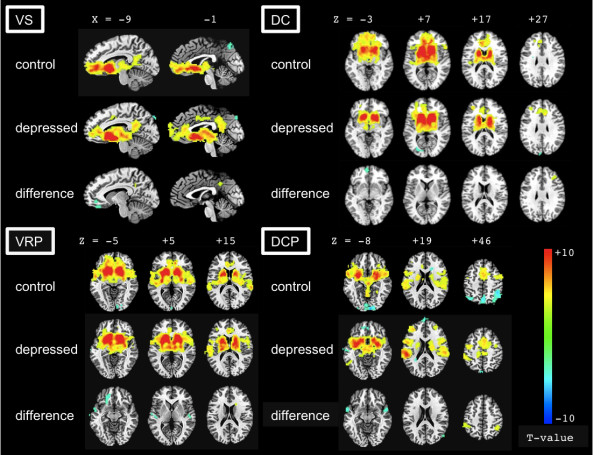
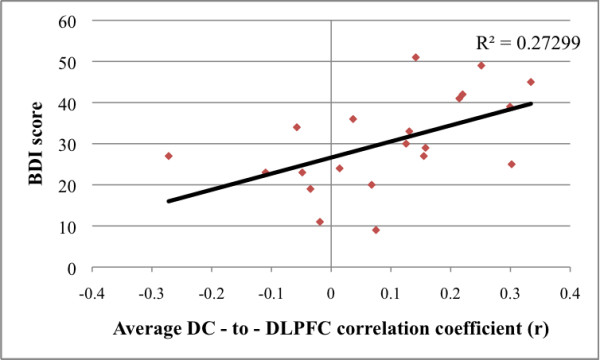
BACKGROUND: Abnormalities of the striatum and frontal cortex have been reported consistently in studies of neural structure and function in major depressive disorder (MDD). Despite speculation that compromised connectivity between these regions may underlie symptoms of MDD, little work has investigated the integrity of frontostriatal circuits in this disorder. METHODS: Functional magnetic resonance images were acquired from 21 currently depressed and 19 never-disordered women during wakeful rest. Using four predefined striatal regions-of-interest, seed-to-whole brain correlations were computed and compared between groups. RESULTS: Compared to controls, depressed participants exhibited attenuated functional connectivity between the ventral striatum and both ventromedial prefrontal cortex and subgenual anterior cingulate cortex. Depressed participants also exhibited stronger connectivity between the dorsal caudate and dorsal prefrontal cortex, which was positively correlated with severity of the disorder. CONCLUSIONS: Depressed individuals are characterized by aberrant connectivity in frontostriatal circuits that are posited to support affective and cognitive processing. Further research is required to examine more explicitly the link between patterns of disrupted connectivity and specific symptoms of depression, and the extent to which these patterns precede the onset of depression and normalize with recovery from depressive illness.
Overview
The claims and statistics of this paper haven’t been checked yet.
Free: it reads the open-access text and checks the first 5 claims that cite a source we can check. Create a free account to check every claim.
Integrity signals
Registry
Cites
Statistics
Figures
Verification
Claims the paper makes
The claims and statistics of this paper haven’t been checked yet.
Free: it reads the open-access text and checks the first 5 claims that cite a source we can check. Create a free account to check every claim.
Claims other papers make about this one
Each is checked against this paper’s own text: does it say what the citing paper says it does?
The source backs part of the claim, not all of it — or backs it for a different population, condition or comparison.
In the citing paper
“Depressed patients show an attenuated activation of the VTA-NAc pathway or the NAc itself when compared to normal patients in fMRI analyses (Epstein et al. 2006; Furman et al. 2011; Pizzagalli et al. 2009; Smoski et al. 2009).”
From Neurotrophic factors and neuroplasticity pathways in the pathophysiology and treatment of depression (2018) · cites this paper as Furman et al. 2011
Experimental — accuracy not yet measuredThe source backs part of the claim, not all of it — or backs it for a different population, condition or comparison.
In the citing paper
“Furthermore, depression severity was positively correlated with functional connectivity between frontolimbic regions (18,19).”
From Relation Between Structural and Functional Connectivity in Major Depressive Disorder (2013) · cites this paper as [18]
Experimental — accuracy not yet measuredThe source backs part of the claim, not all of it — or backs it for a different population, condition or comparison.
In the citing paper
“In line with these results both task-based and resting state studies reported abnormal functional connectivity within the frontolimbic network (4,6,17,18,55-57).”
From Relation Between Structural and Functional Connectivity in Major Depressive Disorder (2013) · cites this paper as [18]
Experimental — accuracy not yet measuredThe source backs part of the claim, not all of it — or backs it for a different population, condition or comparison.
In the citing paper
“The dlPFC primarily projects to the dorsolateral caudate to serve cognitive control and executive functioning (Furman et al., 2011), while the thalamic MDN supports cortico-striatal-cortical information transfer and modulates cortical activity through extensive connections with the PFC and midbrain dopaminergic regions (Mitchell, 2015).”
From Cortico-striatal-thalamic loop circuits of the salience network: A central pathway in psychiatric disease and treatment (2016) · cites this paper as Furman et al., 2011
Experimental — accuracy not yet measuredThe source backs part of the claim, not all of it — or backs it for a different population, condition or comparison.
In the citing paper
“For example, sgACC connectivity with limbic, thalamic, and striatal regions has been strongly implicated in the maladaptive emotion regulation underlying depression (Davey et al, 2012; Furman et al, 2011; Giacobbe et al, 2009; Lui et al, 2011)”
From Resting-state cortico-thalamic-striatal connectivity predicts response to dorsomedial prefrontal rTMS in major depressive disorder (2014) · cites this paper as Furman et al, 2011
Experimental — accuracy not yet measured
5 more claims about this paper
Create a free account to see every claim other papers make about this one.
Self-check
Percentages, sums and reported differences re-computed from the paper’s own numbers.
The self-check needs the paper’s full text.
Citations
Cites
A default mode of brain function
Raichle, M. E., MacLeod, A. M., Snyder, A. Z., Powers, W. J., Gusnard, D. A., & Shulman, G. L. (2001) · Proceedings of the National Academy of Sciences · doi:10.1073/pnas.98.2.676 · Cited by 12,190 · cited 5×
“The DMN, composed of medial frontal, lateral and medial parietal, as well as temporal lobe regions, has been implicated broadly in self-referential processing [49].”
InfluentialParallel organization of functionally segregated circuits linking basal ganglia and cortex
Alexander, G. E., DeLong, M. R., & Strick, P. L. (1986) · Annual Review of Neuroscience · doi:10.1146/annurev.ne.09.030186.002041 · Cited by 8,527 · cited 3×
“In general, these divisions along the ventral-dorsal axis of the striatum are posited to be relatively segregated, thereby differentially supporting affective, cognitive, and motor processing [8].”
The reward circuit: linking primate anatomy and human imaging
Haber, S. N., & Knutson, B. (2010) · Neuropsychopharmacology · doi:10.1038/npp.2009.129 · Cited by 3,718 · cited 1×
“Patterns of connectivity in both control and depressed participants were consistent with the results of previous studies [14]; importantly, however, striking differences between the depressed and non-depressed participants were detected in networks that have been implicated in affective and motivational processing [28…”
Nolen-Hoeksema, S., & Morrow, J. (1991) · Journal of Personality and Social Psychology · doi:10.1037/0022-3514.61.1.115 · Cited by 3,276
Gusnard, D. A., Akbudak, E., Shulman, G. L., & Raichle, M. E. (2001) · Proceedings of the National Academy of Sciences · doi:10.1073/pnas.071043098 · Cited by 2,997 · cited 2×
“Activity across the various nodes of this network is reduced during periods of non-self-referential processing, such as those that occur during the performance of demanding cognitive tasks [48,49].”
Toward discovery science of human brain function
Biswal, B. B., Mennes, M., Zuo, X.-N., Gohel, S., Kelly, C., Smith, S. M., Beckmann, C. F., Adelstein, J. S., Buckner, R. L., Colcombe, S., et al. (2010) · Proceedings of the National Academy of Sciences · doi:10.1073/pnas.0911855107 · Cited by 2,970 · cited 1×
“Previous investigators have demonstrated the feasibility of pooling data with varying acquisition parameters from multiple studies [23].”
Subgenual prefrontal cortex abnormalities in mood disorders
Drevets, W. C., Price, J. L., Simpson, J. R., Todd, R. D., Reich, T., Vannier, M., & Raichle, M. E. (1997) · Nature · doi:10.1038/386824a0 · Cited by 2,693 · cited 1×
“Functional [29], metabolic [34], and volumetric [34,35] anomalies involving the sACC are often reported in studies of MDD.”
THE BASAL GANGLIA: FOCUSED SELECTION AND INHIBITION OF COMPETING MOTOR PROGRAMS
MINK, J. W. (1996) · Progress in Neurobiology · doi:10.1016/s0301-0082(96)00042-1 · Cited by 2,486 · cited 1×
“Whereas the PFC is generally thought to serve central control or goal representation functions, investigators have argued that CSPT circuitry aids in the filtering and focusing of cortical input, selecting among potential cognitive and behavioral representations [5,6].”
Cognition and Depression: Current Status and Future Directions
Gotlib, I. H., & Joormann, J. (2010) · Annual Review of Clinical Psychology · doi:10.1146/annurev.clinpsy.121208.131305 · Cited by 2,420 · cited 1×
“Individuals diagnosed with MDD also often exhibit psychomotor retardation and deficits in executive function, typically reflected by difficulties concentrating, making decisions, and terminating the processing of negative material [2].”
Self-citationGender differences in depression: Critical review
Piccinelli, M., & Wilkinson, G. (2000) · British Journal of Psychiatry · doi:10.1192/bjp.177.6.486 · Cited by 2,376
Research works printed but not linked: 2
- 20. Beck AT, Steer RA, Brown GK: Manual for the Beck Depression Inventory-II San Antonio, TX: Psychological Corporation; 1996.
- 38. Furman et al. Biology of Mood & Anxiety Disorders 2011, 1:11 http://www.biolmoodanxietydisord.com/content/1/1/11
Cited by
Kaiser, R. H., Andrews-Hanna, J. R., Wager, T. D., & Pizzagalli, D. A. (2015) · JAMA Psychiatry · doi:10.1001/jamapsychiatry.2015.0071 · Cited by 2,281
Inflammatory cytokines in depression: neurobiological mechanisms and therapeutic implications
Felger, J. C., & Lotrich, F. E. (2013) · Neuroscience · doi:10.1016/j.neuroscience.2013.04.060 · Cited by 1,180
“…have been observed in patients with both idiopathic major depression and IFN-induced depression (Epstein et al., 2006, Capuron et al., 2007, Furman et al., 2011, Capuron et al., 2012), and changes in DA synthesis, release and/or receptor signaling have been proposed as potential mechanisms…”
BackgroundResting-state functional connectivity in major depressive disorder: A review
Mulders, P. C., van Eijndhoven, P. F., Schene, A. H., Beckmann, C. F., & Tendolkar, I. (2015) · Neuroscience & Biobehavioral Reviews · doi:10.1016/j.neubiorev.2015.07.014 · Cited by 884
Felger, J. C., Li, Z., Haroon, E., Woolwine, B. J., Jung, M. Y., Hu, X., & Miller, A. H. (2016) · Molecular Psychiatry · doi:10.1038/mp.2015.168 · Cited by 620
Peters, S. K., Dunlop, K., & Downar, J. (2016) · Frontiers in Systems Neuroscience · doi:10.3389/fnsys.2016.00104 · Cited by 611
“The SN CSTC loop has been described as a cortical input ‘‘filter’’ that selectively identifies and flags stimuli on which to base cognitive and behavioral responses (Furman et al., 2011; Choi et al., 2012).”
BackgroundInfluentialNeurotrophic factors and neuroplasticity pathways in the pathophysiology and treatment of depression
Levy, M. J. F., Boulle, F., Steinbusch, H. W., van den Hove, D. L. A., Kenis, G., & Lanfumey, L. (2018) · Psychopharmacology · doi:10.1007/s00213-018-4950-4 · Cited by 308
Salomons, T. V., Dunlop, K., Kennedy, S. H., Flint, A., Geraci, J., Giacobbe, P., & Downar, J. (2014) · Neuropsychopharmacology · doi:10.1038/npp.2013.222 · Cited by 299
“Neuropsychopharmacology been strongly implicated in the maladaptive emotion regulation underlying depression (Davey et al, 2012; Furman et al, 2011; Giacobbe et al, 2009; Lui et al, 2011) and associated with the degree of response to treatment (Anand et al, 2005, 2009; Diaconescu et al, 2011; Kozel…”
BackgroundRelation Between Structural and Functional Connectivity in Major Depressive Disorder
de Kwaasteniet, B., Ruhe, E., Caan, M., Rive, M., Olabarriaga, S., Groefsema, M., Heesink, L., van Wingen, G., & Denys, D. (2013) · Biological Psychiatry · doi:10.1016/j.biopsych.2012.12.024 · Cited by 229
“Furthermore, depression severity was positively correlated with functional connectivity between frontolimbic regions (18,19).”
Emotion-dependent functional connectivity of the default mode network in adolescent depression
Ho, T. C., Connolly, C. G., Henje Blom, E., LeWinn, K. Z., Strigo, I. A., Paulus, M. P., Frank, G., Max, J. E., Wu, J., Chan, M., et al. (2015) · Biological Psychiatry · doi:10.1016/j.biopsych.2014.09.002 · Cited by 227
Striatum-Based Circuitry of Adolescent Depression and Anhedonia
Gabbay, V., Ely, B. A., Li, Q., Bangaru, S. D., Panzer, A. M., Alonso, C. M., Castellanos, F. X., & Milham, M. P. (2013) · Journal of the American Academy of Child & Adolescent Psychiatry · doi:10.1016/j.jaac.2013.04.003 · Cited by 222
Felger, J. C., Mun, J., Kimmel, H. L., Nye, J. A., Drake, D. F., Hernandez, C. R., Freeman, A. A., Rye, D. B., Goodman, M. M., Howell, L. L., et al. (2013) · Neuropsychopharmacology · doi:10.1038/npp.2013.115 · Cited by 214
“Similarly, fronto-striatal dysfunction has also been observed in major depression, and includes alterations in functional connectivity between the ventral striatum and the anterior cingulate cortex (Furman et al, 2011).”
BackgroundSparse network-based models for patient classification using fMRI
Rosa, M. J., Portugal, L., Hahn, T., Fallgatter, A. J., Garrido, M. I., Shawe-Taylor, J., & Mourao-Miranda, J. (2015) · NeuroImage · doi:10.1016/j.neuroimage.2014.11.021 · Cited by 169
“…by our framework are consistent with the recent literature onfunctional connectivity indepression (Anand et al., 2005; Greicius et al., 2007; Furman et al., 2011; Wu et al., 2011; Fang et al., 2012; Ajilore et al., 2014), and highlight differences be-tween the groups in cortico-limbic (in…”
BackgroundResultAvissar, M., Powell, F., Ilieva, I., Respino, M., Gunning, F. M., Liston, C., & Dubin, M. J. (2017) · Brain Stimulation · doi:10.1016/j.brs.2017.07.002 · Cited by 152
“Reduced functional connectivity has been reported previously in the limbic frontostriatal projection in depression [28–32] and has correlated with anhedonia and deficits in reward processing and emotion regulation [30,48].”
BackgroundNeuronal connectivity in major depressive disorder: a systematic review
Helm, K., Viol, K., Weiger, T. M., Tass, P. A., Grefkes, C., del Monte, D., & Schiepek, G. (2018) · Neuropsychiatric Disease and Treatment · doi:10.2147/ndt.s170989 · Cited by 164
“caudate putamen to the superior temporal gyrus, middle temporal gyrus, and the posterior insula.(52) Zeng et al(65) used a machine-learning approach (clustering”
MethodAltered Striatal Functional Connectivity in Subjects With an At-Risk Mental State for Psychosis
Dandash, O., Fornito, A., Lee, J., Keefe, R. S. E., Chee, M. W. L., Adcock, R. A., Pantelis, C., Wood, S. J., & Harrison, B. J. (2014) · Schizophrenia Bulletin · doi:10.1093/schbul/sbt093 · Cited by 163
Bekhbat, M., Li, Z., Mehta, N. D., Treadway, M. T., Lucido, M. J., Woolwine, B. J., Haroon, E., Miller, A. H., & Felger, J. C. (2022) · Molecular Psychiatry · doi:10.1038/s41380-022-01715-3 · Cited by 154
Gudayol-Ferré, E., Peró-Cebollero, M., González-Garrido, A. A., & Guàrdia-Olmos, J. (2015) · Frontiers in Human Neuroscience · doi:10.3389/fnhum.2015.00582 · Cited by 127
“In other studies, sgACC connectivity with striatal regions has been related to the maladaptive emotion regulation of depressed patients (Furman et al., 2011).”
BackgroundBrain Network Dysfunction in Late-Life Depression: A Literature Review
Tadayonnejad, R., & Ajilore, O. (2014) · Journal of Geriatric Psychiatry and Neurology · doi:10.1177/0891988713516539 · Cited by 112
Sparse Network-Based Models for Patient Classification Using fMRI
Rosa, M. J., Portugal, L., Shawe-Taylor, J., & Mourao-Miranda, J. (2013) · 2013 International Workshop on Pattern Recognition in Neuroimaging · doi:10.1109/prni.2013.26 · Cited by 122
Vosberg, D. E., Leyton, M., & Flores, C. (2020) · Molecular Psychiatry · doi:10.1038/s41380-019-0561-7 · Cited by 109
“(fMRI) blood oxygen level-dependent (BOLD) signals from disparate brain regions are temporally correlated) are altered in the mesocorticolimbic system in schizophrenia [12], stimulant drug addiction [13, 14], and depression [15, 16], each of which begins to emerge in adolescence [17, 18].”
Ellard, K. K., Zimmerman, J. P., Kaur, N., Dijk, K. R. A. V., Roffman, J. L., Nierenberg, A. A., Dougherty, D. D., Deckersbach, T., & Camprodon, J. A. (2018) · Biological Psychiatry Cognitive Neuroscience and Neuroimaging · doi:10.1016/j.bpsc.2018.01.013 · Cited by 120
“Interoceptive awareness and accuracy is fundamental to the ability to selectively filter exogenous and endogenous stimuli for adaptive regulation (46).”
BackgroundSundermann, B., Olde lütke Beverborg, M., & Pfleiderer, B. (2014) · Frontiers in Human Neuroscience · doi:10.3389/fnhum.2014.00692 · Cited by 108
Bouckaert, F., De Winter, F.-L., Emsell, L., Dols, A., Rhebergen, D., Wampers, M., Sunaert, S., Stek, M., Sienaert, P., & Vandenbulcke, M. (2016) · Journal of Psychiatry and Neuroscience · doi:10.1503/jpn.140322 · Cited by 115
Age related changes in striatal resting state functional connectivity in autism
Padmanabhan, A., Lynn, A., Foran, W., Luna, B., & O'Hearn, K. (2013) · Frontiers in Human Neuroscience · doi:10.3389/fnhum.2013.00814 · Cited by 97
“Prior studies of functional connectivity during rest in typical adults have revealed a number of functionally distinct but overlapping cortico-striatal circuits (Di Martino et al., 2008; Kelly et al., 2009b; Furman et al., 2011) that underlie core motor, cognitive, affective, and reward processes.”
BackgroundResultKetamine modulates fronto-striatal circuitry in depressed and healthy individuals
Mkrtchian, A., Evans, J. W., Kraus, C., Yuan, P., Kadriu, B., Nugent, A. C., Roiser, J. P., & Zarate, C. A. (2021) · Molecular Psychiatry · doi:10.1038/s41380-020-00878-1 · Cited by 110
Acupuncture treatment modulates the corticostriatal reward circuitry in major depressive disorder
Wang, Z., Wang, X., Liu, J., Chen, J., Liu, X., Nie, G., Jorgenson, K., Sohn, K. C., Huang, R., Liu, M., et al. (2017) · Journal of Psychiatric Research · doi:10.1016/j.jpsychires.2016.09.014 · Cited by 108
“A previous study in MDD patients (Furman et al., 2011) showed attenuated rsFC between VS-MPFC in MDD compared with healthy controls.”
BackgroundMethodResultReward Network Modulation as a Mechanism of Change in Behavioral Activation
Nagy, G. A., Cernasov, P., Pisoni, A., Walsh, E. C., Dichter, G. S., & Smoski, M. J. (2018) · Behavior Modification · doi:10.1177/0145445518805682 · Cited by 107
“Attenuated connectivity between seeds in the ventral striatum and the subgenual ACC as well as the ventromedial prefrontal cortex, along with hyperconnectivity between the dorsal caudate and the dorso-lateral prefrontal cortex has been observed (Furman, Hamilton, & Gotlib, 2011).”
BackgroundHe, Z., Sheng, W., Lu, F., Long, Z., Han, S., Pang, Y., Chen, Y., Luo, W., Yu, Y., Nan, X., et al. (2018) · Progress in Neuro-Psychopharmacology and Biological Psychiatry · doi:10.1016/j.pnpbp.2018.11.009 · Cited by 105
Figueroa, C. A., Cabral, J., Mocking, R. J. T., Rapuano, K. M., van Hartevelt, T. J., Deco, G., Expert, P., Schene, A. H., Kringelbach, M. L., & Ruhé, H. G. (2019) · Human Brain Mapping · doi:10.1002/hbm.24559 · Cited by 104
Effect of Electroconvulsive Therapy on Striatal Morphometry in Major Depressive Disorder
Wade, B., Joshi, S. H., Njau, S. N., Leaver, A. M., Vasavada, M. M., Woods, R. P., Gutman, B. A., Thompson, P. M., Espinoza, R. T., & Narr, K. L. (2016) · Neuropsychopharmacology · doi:10.1038/npp.2016.48 · Cited by 104
“Functional imaging studies demonstrate depressionrelated hyporesponsivity in striatal areas (Epstein et al, 2006; Smoski et al, 2009) and disturbances in fronto-striatal connectivity (Furman et al, 2011).”
Skupio, U., Tertil, M., Sikora, M., Gołda, S., Wawrzczak‐Bargieła, A., & Przewłocki, R. (2014) · Neuroscience · doi:10.1016/j.neuroscience.2014.11.035 · Cited by 103
“These structures, along with striatal-based circuits, have been implicated in both major depressive disorder (MDD) and anhedonia, a symptom that reflects deficits of reward processing (Dunn et al., 2002; Furman et al., 2011; Gabbay et al., 2013).”
BackgroundThe anterior cingulate cortex as a key locus of ketamine’s antidepressant action
Alexander, L., Jelen, L. A., Mehta, M. A., & Young, A. H. (2021) · Neuroscience & Biobehavioral Reviews · doi:10.1016/j.neubiorev.2021.05.003 · Cited by 78
“550 ventral striatum (Haber, 2016) together with the important role of the striatum in depression (Furman et al., 2011; Hamilton et al., 2018; Kaiser et al., 2015; Treadway and Pizzagalli, 2014), it is no surprise that several of the studies implicating ACC regions in the antidepressant or anti-anhedonic response to k…”
Hwang, J. W., Xin, S., Ou, Y., Zhang, W. Y., Liang, Y., Chen, J., Yang, X., Chen, X. Y., Guo, T., Yang, X., et al. (2016) · Journal of Psychiatric Research · doi:10.1016/j.jpsychires.2016.02.005 · Cited by 93
“Furman and colleagues (Furman et al., 2011) found that depressed participants exhibited attenuated functional connectivity between the ventral striatum and the ventromedial prefrontal cortex and subgenual anterior cingulate cortex.”
BackgroundAltered Cerebral Perfusion in Executive, Affective, and Motor Networks During Adolescent Depression
Ho, T. C., Wu, J., Shin, D. D., Liu, T. T., Tapert, S. F., Yang, G., Connolly, C. G., Frank, G. K. W., Max, J. E., Wolkowitz, O., et al. (2013) · Journal of the American Academy of Child & Adolescent Psychiatry · doi:10.1016/j.jaac.2013.07.008 · Cited by 81
“Additionally, since several antidepressants affect blood flow,37,38 rCBF could also be utilized to help determine potential therapeutic targets for treatment and to assess pharmacological effects.105,106,136 Nevertheless, more research is needed to specifically link identifying patterns of perfusion with the clinical…”
InfluentialExecutive Attention Impairment in Adolescents With Major Depressive Disorder
Sommerfeldt, S. L., Cullen, K. R., Han, G., Fryza, B. J., Houri, A. K., & Klimes-Dougan, B. (2016) · Journal of Clinical Child & Adolescent Psychology · doi:10.1080/15374416.2015.1072823 · Cited by 69
Kaczkurkin, A. N., Moore, T. M., Calkins, M. E., Ciric, R., Detre, J. A., Elliott, M. A., Foa, E. B., Garcia de la Garza, A., Roalf, D. R., Rosen, A., et al. (2018) · Molecular Psychiatry · doi:10.1038/mp.2017.174 · Cited by 86
Gong, L., Yin, Y., He, C., Ye, Q., Bai, F., Yuan, Y., Zhang, H., Lv, L., Zhang, H., Xie, C., et al. (2017) · Journal of Psychiatric Research · doi:10.1016/j.jpsychires.2016.09.016 · Cited by 82
Astrocyte dysfunction drives abnormal resting-state functional connectivity in depression
Liu, J., Mo, J., Wang, X., An, Z., Zhang, S., Zhang, C.-Y., Yi, P., Leong, A. T. L., Ren, J., Chen, L.-Y., et al. (2022) · Science Advances · doi:10.1126/sciadv.abo2098 · Cited by 82
Cortical-Subcortical Interactions in Depression: From Animal Models to Human Psychopathology
Heller, A. S. (2016) · Frontiers in Systems Neuroscience · doi:10.3389/fnsys.2016.00020 · Cited by 75
“…decreased vmPFC-VS and sgACC- VS connectivity in adult depressed patients as compared Frontiers in Systems Neuroscience | www.frontiersin.org 3 March 2016 | Volume 10 | Article 20 with healthy controls (Furman et al., 2011; Kaiser et al., 2015) as well as in adolescents with MDD (Ho et al., 2015).”
MethodAmyloid Hypothesis: Is There a Role for Antiamyloid Treatment in Late-Life Depression?
Mahgoub, N., & Alexopoulos, G. S. (2016) · The American Journal of Geriatric Psychiatry · doi:10.1016/j.jagp.2015.12.003 · Cited by 81
“Abnormalities in structural and functional connectivity in frontostriatal circuits have been reported in depression (53).”
Intrinsic Brain Network Biomarkers of Antidepressant Response: a Review
Dunlop, K., Talishinsky, A., & Liston, C. (2019) · Current Psychiatry Reports · doi:10.1007/s11920-019-1072-6 · Cited by 80
Transdiagnostic neuroimaging markers of psychiatric risk: A narrative review
Vanes, L. D., & Dolan, R. J. (2021) · NeuroImage Clinical · doi:10.1016/j.nicl.2021.102634 · Cited by 79
Wu, X., He, H. G., Shi, L., Xia, Y., Zuang, K., Feng, Q., Zhang, Y., Ren, Z., Wei, D., & Qiu, J. (2018) · Journal of Affective Disorders · doi:10.1016/j.jad.2018.11.002 · Cited by 78
Yang, X., Tian, K., Wang, D., Wang, Y., Cheung, E. F. C., Xie, G., & Chan, R. C. K. (2017) · Journal of Affective Disorders · doi:10.1016/j.jad.2017.04.053 · Cited by 78
Specific functional connectivity alterations of the dorsal striatum in young people with depression
Kerestes, R., Harrison, B. J., Dandash, O., Stephanou, K., Whittle, S., Pujol, J., & Davey, C. G. (2015) · NeuroImage: Clinical · doi:10.1016/j.nicl.2014.12.017 · Cited by 75
“By contrast, Gabbay and colleagues (2013) reported increased connectivity between dorsal and ventral striatal regions and the dorsomedial prefrontal cortex in medication-free adolescents (12 – 19 years) with depression.”
InfluentialA Focus on the Functions of Area 25
Alexander, L., Clarke, H., & Roberts, A. (2019) · Brain Sciences · doi:10.3390/brainsci9060129 · Cited by 65
Matikainen-Ankney, B. A., Kezunovic, N., Menard, C., Flanigan, M. E., Zhong, Y., Russo, S. J., Benson, D. L., & Huntley, G. W. (2018) · The Journal of Neuroscience · doi:10.1523/jneurosci.1457-18.2018 · Cited by 69
“…shown that CSDS increases expression of the transcription factor delta-FosB in dorsomedial striatum (Cooper et al., 2017) and functional imaging studies in humans show altered dorsal striatal connectivity in patients with depression (Furman et al., 2011; Gabbay et al., 2013; Kerestes et al., 2015).”
BackgroundCosmo, C. S. A., Zandvakili, A., Petrosino, N. J., Berlow, Y. A., & Philip, N. S. (2021) · Current Treatment Options in Psychiatry · doi:10.1007/s40501-021-00238-y · Cited by 70
Socioeconomic disadvantage and altered corticostriatal circuitry in urban youth
Marshall, N. A., Marusak, H. A., Sala‐Hamrick, K. J., Crespo, L. M., Rabinak, C. A., & Thomason, M. E. (2018) · Human Brain Mapping · doi:10.1002/hbm.23978 · Cited by 60
Chen, G., Chen, P., Gong, J., Jia, Y., Zhong, S., Chen, F., Wang, J., Luo, Z., Qi, Z., Huang, L., et al. (2020) · Psychological Medicine · doi:10.1017/s0033291720002378 · Cited by 62
Yang, Z., Jian, L., Qiu, H., Zhang, C., Cheng, S., Ji, J., Li, T., Wang, Y., Li, J., & Li, K. (2021) · Translational Psychiatry · doi:10.1038/s41398-021-01646-7 · Cited by 60
Galandra, C., Basso, G., Manera, M. R., Crespi, C., Giorgi, I., Vittadini, G., Poggi, P., & Canessa, N. (2019) · Cortex · doi:10.1016/j.cortex.2019.01.004 · Cited by 56
Animal Models of Maternal Immune Activation in Depression Research
Ronovsky, M., Berger, S., Molz, B., Berger, A., & D. Pollak, D. (2016) · Current Neuropharmacology · doi:10.2174/1570159x14666151215095359 · Cited by 50
“functional connectivity has been described in depressed patients [196].”
BackgroundRepresentational Similarity of Social and Valence Information in the Medial pFC
Chavez, R. S., & Heatherton, T. F. (2015) · Journal of Cognitive Neuroscience · doi:10.1162/jocn_a_00697 · Cited by 53
“Another study by Furman, Hamilton, and Gotlib (2011) found that resting-state functional connectivity of the ventral striatum to the MPFC was significantly attenuated in depressed patients when compared with healthy controls, suggesting that this disconnection may contribute to anhedonia.”
BackgroundDesynchronization and Plasticity of Striato-frontal Connectivity in Major Depressive Disorder
Leaver, A. M., Espinoza, R., Joshi, S. H., Vasavada, M., Njau, S., Woods, R. P., & Narr, K. L. (2016) · Cerebral Cortex · doi:10.1093/cercor/bhv207 · Cited by 48
“Previous studies show that ventral limbic structures are hyperresponsive in depression, including the subgenual ACC and adjacent ventromedial PFC (Greicius et al. 2007), amygdala (Sheline et al. 2001; Victor et al. 2010), and VS (Greicius et al. 2007; Furman et al. 2011).”
BackgroundDeco, G., Perl, Y. S., de la Fuente, L., Sitt, J. D., Yeo, B. T. T., Tagliazucchi, E., & Kringelbach, M. L. (2023) · Network Neuroscience · doi:10.1162/netn_a_00300 · Cited by 50
“In contrast, while in bipolar disorder the overall level of nonreversibility is lower than controls, the somatomotor regions show increases in nonreversibility, perhaps linked to the findings in the literature of large, sudden swings in mood, given that the brain is in more nonequilibrium (Furman et al., 2011; Menon &…”
BackgroundAberrant corticostriatal functional circuits in adolescents with Internet addiction disorder
Lin, F., Zhou, Y., Du, Y., Zhao, Z., Qin, L.-D., Xu, J., & Lei, H. C. (2015) · Frontiers in Human Neuroscience · doi:10.3389/fnhum.2015.00356 · Cited by 49
Srivastava, S., Bhatia, M. S., Bhargava, S. K., Kumari, R., & Chandra, S. (2015) · Journal of Neuropsychiatry · doi:10.1176/appi.neuropsych.15050120 · Cited by 48
McCusker, C., & Gardiner, D. M. (2014) · Disease Models & Mechanisms · doi:10.1242/dmm.013359 · Cited by 48
“Miswired neuronal circuits are thought to have a causal role in a number of human neuropsychiatric diseases, including depression, social anxiety disorder and schizophrenia (Furman et al., 2011; Klumpp et al., 2013; Mitchell, 2011).”
BackgroundCombined cognitive, psychomotor and electrophysiological biomarkers in major depressive disorder
Koo, P. C., Berger, C., Kronenberg, G., Bartz, J., Wybitul, P., Reis, O., & Hoeppner, J. (2019) · European Archives of Psychiatry and Clinical Neuroscience · doi:10.1007/s00406-018-0952-9 · Cited by 45
Structural abnormality of the corticospinal tract in major depressive disorder
Sacchet, M. D., Prasad, G., Foland‐Ross, L. C., Joshi, S. H., Hamilton, J. P., Thompson, P. M., & Gotlib, I. H. (2014) · Biology of Mood & Anxiety Disorders · doi:10.1186/2045-5380-4-8 · Cited by 45
“Given the role of the CSTs in motor processes, it is possible that our findings of anomalous FA in these structures are related to psychomotor symptoms that often characterize MDD [34].”
BackgroundSelf-citationFunctional magnetic resonance imaging in dermatology: The skin, the brain and the invisible
Mueller, S. M., Hogg, S., Mueller, J. M., McKie, S., Itin, P. H., Reinhardt, J., Griffiths, C. E. M., & Kleyn, C. E. (2017) · Experimental Dermatology · doi:10.1111/exd.13305 · Cited by 44
Jarcho, J. M., Tanofsky-Kraff, M., Nelson, E. E., Engel, S. G., Vannucci, A., Field, S. E., Romer, A. L., Hannallah, L., Brady, S. M., Demidowich, A. P., et al. (2015) · NeuroImage · doi:10.1016/j.neuroimage.2014.12.054 · Cited by 43
“(reviewed by Ochsner (Ochsner et al., 2012)), and is often disrupted in at risk and patient populations (Guyer et al., 2008; Hardee et al., 2013; Furman et al., 2011; Prater et al., 2013).”
Janes, A. C., Zegel, M., Ohashi, K., Betts, J. M., Molokotos, E. K., Olson, D. P., Moran, L. V., & Pizzagalli, D. A. (2018) · Neuropsychopharmacology · doi:10.1038/s41386-018-0069-x · Cited by 42
Functional connectivity of supplementary motor area during finger-tapping in major depression
Sarkheil, P., Odysseos, P., Bee, I., Zvyagintsev, M., Neuner, I., & Mathiak, K. (2020) · Comprehensive Psychiatry · doi:10.1016/j.comppsych.2020.152166 · Cited by 41
Shao, T. N., Yin, G., Yin, X. L., Wu, J. Q., Du, X., Zhu, H. L., Liu, J. H., Wang, X. Q., Xu, D. W., Tang, W. J., et al. (2017) · Comprehensive Psychiatry · doi:10.1016/j.comppsych.2017.03.007 · Cited by 38
Yang, X., Wang, Y., Huang, J., Cui-ying, Z., Liu, X.-Q., Cheung, E. F. C., Xie, G., & Chan, R. C. K. (2015) · Psychiatry Research Neuroimaging · doi:10.1016/j.pscychresns.2015.09.014 · Cited by 37
“Recent evidence, however, has emerged to suggest the presence of primary functional connectivity alterations of dorsal “cognitive” cortico–striatal circuits in depressed populations (Furman et al., 2011; Gabbay et al., 2013; Kerestes et al., 2015).”
BackgroundMcCutcheon, R. A., Bloomfield, M. A. P., Dahoun, T., Mehta, M., & Howes, O. D. (2019) · Schizophrenia Research · doi:10.1016/j.schres.2018.12.011 · Cited by 35
“, 2017), although findings in those with the established disorder have been inconsistent (Furman et al., 2011; Gabbay et al., 2013).”
Wang, L., An, J., Gao, H., Zhang, P., Chen, C., Li, K., Mitchell, P. B., & Si, T. (2019) · Human Brain Mapping · doi:10.1002/hbm.24601 · Cited by 36
“Even during resting state, MDD patients also displayed increased RSFC between the DC and dorsolateral PFC, which significantly correlated with depressive severity (Furman et al., 2011).”
BackgroundSeewoo, B. J., Feindel, K. W., Etherington, S. J., & Rodger, J. (2019) · Brain stimulation · doi:10.1016/j.brs.2019.06.028 · Cited by 34
“This might be explained by the observation that patients can exhibit either hypoconnectivity between the ventromedial prefrontal cortex and ventral striatum, or hyperconnectivity between the dorsal prefrontal cortex and dorsal caudate [76].”
BackgroundChen, M.-H., Chang, W.-C., Lin, W.-C., Tu, P.-C., Li, C.-T., Bai, Y.-M., Tsai, S.-J., Huang, W.-S., & Su, T.-P. (2020) · International Journal of Neuropsychopharmacology · doi:10.1093/ijnp/pyaa056 · Cited by 28
“Previous studies have demonstrated that the integrity of frontostriatal connectivity played a major role in the pathophysiology of major depression and TRD (Furman et al., 2011; Segarra et al., 2016; Avissar et al., 2017; Walsh et al., 2017).”
BackgroundResultWhat can animal models tell us about depressive disorders?
Hoffman, K. L. (2015) · Elsevier eBooks · doi:10.1016/b978-0-08-100099-1.00002-9 · Cited by 34
Alders, G. L., Davis, A. D., MacQUEEN, G. M., Strother, S. C., Hassel, S., Zamyadi, M., Sharma, G. B., Arnott, S. R., Downar, J. H., Harris, J. K., et al. (2019) · Journal of Affective Disorders · doi:10.1016/j.jad.2019.07.037 · Cited by 33
The Role of Mesolimbic Circuitry in Buffering Election-Related Distress
Tashjian, S. M., & Galván, A. (2018) · Journal of Neuroscience · doi:10.1523/jneurosci.2470-17.2018 · Cited by 33
Hua, J. P. Y., Karcher, N. R., Merrill, A. M., O’Brien, K. J., Straub, K. T., Trull, T. J., & Kerns, J. G. (2019) · Cognitive Affective & Behavioral Neuroscience · doi:10.3758/s13415-019-00698-z · Cited by 32
Alfini, A. J., Won, J., Weiss, L. R., Nyhuis, C. C., Shackman, A. J., Spira, A. P., & Smith, J. C. (2020) · Social Cognitive and Affective Neuroscience · doi:10.1093/scan/nsaa149 · Cited by 32
“Other works highlight the potential relevance of this network to mood and anxiety disorders (Furman et al., 2011; Andreescu et al., 2015; Koch et al., 2016) and insomnia (Chen et al.”
BackgroundZhou, B., Chen, Y., Zheng, R., Jiang, Y. B., Li, S., Wei, Y., Zhang, M., Gao, X., Wen, B., Han, S., et al. (2022) · Frontiers in Psychiatry · doi:10.3389/fpsyt.2022.877417 · Cited by 32
“In this study, the reduced NAc-VMPFC/OFC RSFC and DFC were found in patients with MDD, which is both inconsistent and consistent with previous studies reporting changed NAcVMPFC/OFC RSFC in patients with MDD (26).”
BackgroundResultFischer, A. S., Holt-Gosselin, B., Fleming, S. L., Hack, L. M., Ball, T. M., Schatzberg, A. F., & Williams, L. M. (2021) · Neuropsychopharmacology · doi:10.1038/s41386-020-00905-3 · Cited by 30
Cytokine and Reward Circuitry Relationships in Treatment-Resistant Depression
Rengasamy, M. L., Brundin, L., Griffo, A., Panny, B., Capan, C. D., Forton, C., & Price, R. B. (2021) · Biological Psychiatry Global Open Science · doi:10.1016/j.bpsgos.2021.06.009 · Cited by 30
Jing, D., Lee, F. S., & Ninan, I. (2016) · Neuropharmacology · doi:10.1016/j.neuropharm.2016.06.030 · Cited by 30
“…Val66Met SNP affects synaptic function in the corticostriatal pathway, the impairment of which has been implicated in not only anxiety disorders but also drug abuse (Fumagalli et al., 2007; Furman et al., 2011; Im et al., 2010; Jeanblanc et al., 2009; McGough et al., 2004; Pittenger et al., 2011).”
BackgroundTafet, G. E., & Alonso, T. O. (2025) · Frontiers in Psychiatry · doi:10.3389/fpsyt.2025.1600165 · Cited by 31
Resende, L. S., Amaral, C. E., Soares, R. B., Alves, A. S., Alves-dos-Santos, L., Britto, L. R. G., & Chiavegatto, S. (2016) · Translational Psychiatry · doi:10.1038/tp.2016.202 · Cited by 29
Initiative, A. T. A. D. N., Wang, X., Ren, P., Mapstone, M. E., Conwell, Y., Porsteinsson, A. P., Foxe, J. J., Raizada, R. D. S., & Lin, F. V. (2017) · Brain Imaging and Behavior · doi:10.1007/s11682-017-9767-y · Cited by 28
“2013), as well as depression and anxiety (Furman et al. 2011; Etkin et al. 2009; Marchand 2010).”
Lewis, G., Srinivasan, R., Roiser, J. P., Blakemore, S., Flouri, E., & Lewis, G. (2021) · Psychological Medicine · doi:10.1017/s0033291720005000 · Cited by 27
Multiscale neural signatures of major depressive, anxiety, and stress-related disorders
Zhukovsky, P., Wainberg, M., Milic, M. S., Tripathy, S. J., Mulsant, B. H., Felsky, D., & Voineskos, A. N. (2022) · Proceedings of the National Academy of Sciences · doi:10.1073/pnas.2204433119 · Cited by 28
Association between reward-related functional connectivity and tri-level mood and anxiety symptoms
Anderson, Z. G., Damme, K. S. F., Carroll, A., Chat, I. K.-Y., Young, K. S., Craske, M. G., Bookheimer, S. Y., Zinbarg, R. E., & Nusslock, R. (2023) · NeuroImage Clinical · doi:10.1016/j.nicl.2023.103335 · Cited by 26
“Mental health problems are increasingly associated with abnormalities in structural and functional connectivity between regions in the brain (Cisler et al., 2014; Damme et al., 2017; Furman et al., 2011).”
Amemori, S., Graybiel, A. M., & Amemori, K. (2024) · Nature Communications · doi:10.1038/s41467-024-48375-1 · Cited by 26
“Fronto-cingulate 19 and fronto-striatal 20,21 interactions have been implicated in both cognition and emotion, highlighting the potential role of dlPFC in emotional regulation.”
Neurocircuitry of impaired affective sound processing: A clinical disorders perspective
Frühholz, S., & Staib, M. (2017) · Neuroscience & Biobehavioral Reviews · doi:10.1016/j.neubiorev.2017.09.009 · Cited by 25
Feng, Z., Xu, S., Huang, M., Shi, Y., Xiong, B., & Yang, H. (2015) · Progress in Neuro-Psychopharmacology and Biological Psychiatry · doi:10.1016/j.pnpbp.2015.07.008 · Cited by 24
Taraku, B., Woods, R. P., Boucher, M., Espinoza, R. T., Jog, M., Al‐Sharif, N., Narr, K. L., & Zavaliangos‐Petropulu, A. (2023) · Human Brain Mapping · doi:10.1002/hbm.26217 · Cited by 25
“Furthermore, disturbances in this network are repeatedly reported in MDD and have been linked to symptoms of anhedonia (Furman et al., 2011).”
BackgroundReviewing the neurobiology of electroconvulsive therapy on a micro- meso- and macro-level
Belge, J.-B., Mulders, P. C. R., van Diermen, L., Sienaert, P. A., Sabbe, B., Abbott, C., Tendolkar, I., Schrijvers, D. L., & van Eijndhoven, P. (2023) · Progress in Neuro-Psychopharmacology and Biological Psychiatry · doi:10.1016/j.pnpbp.2023.110809 · Cited by 23
Hagen, J., Ramkiran, S., Schnellbächer, G. J., Rajkumar, R., Collée, M., Khudeish, N., Veselinović, T., Shah, N. J., & Neuner, I. (2024) · Molecular Psychiatry · doi:10.1038/s41380-024-02669-4 · Cited by 23
Bekhbat, M., Li, Z., Dunlop, B. W., Treadway, M. T., Mehta, N. D., Revill, K. P., Lucido, M. J., Changdo, H., Andrea, A., Wommack, E. C., et al. (2024) · Brain Behavior and Immunity · doi:10.1016/j.bbi.2024.12.026 · Cited by 23
“…for FC be-tween a 3 mm radius spherical seed centered on left-VS (including nucleus accumbens) (Di Martino et al., 2008; Felger et al., 2016; Furman et al., 2011) and vmPFC ROI previously associated with neural activation to receipt of reward in neuroimaging meta -analysis(Diekhof et al.,…”
The basal ganglia: A central hub for the psychomotor effects of electroconvulsive therapy
Belge, J.-B., van Diermen, L., Schrijvers, D. L., Sabbe, B., Constant, E., de Timary, P., Keyzer, S. D., Parizel, P. M., Vansteelandt, K., Sienaert, P. A., et al. (2020) · Journal of Affective Disorders · doi:10.1016/j.jad.2020.01.033 · Cited by 22
Antipova, V., Holzmann, C., Hawlitschka, A., Witt, M., & Wree, A. (2021) · Toxins · doi:10.3390/toxins13070505 · Cited by 21
“Furman and colleagues [148] reported decreased functional connectivity between the ventral striatum and subgenual anterior cingulate cortex in adult depressed patients but increased connectivity between the dorsal caudate and dorsolateral prefrontal cortex.”
BackgroundZhang, S., He, J., Wang, Y., Zhong, G., Zhao, Y., Li, S.-Y., Xiao, X., Zheng-yi, Y., Zhao, B., Wang, L., et al. (2022) · Brain Sciences · doi:10.3390/brainsci12121730 · Cited by 20
“The decrease of rsFC in the NAc–mPFC is related to the abnormal processing of emotions and cognitive behavior [50,51], which is manifested by the lack of reward and increased fear and aversion, whereas the reaction of the NAc and dmPFC to positive stimuli in the MDD patients is reduced [52,53].”
BackgroundAltered white‐matter integrity in unaffected siblings of probands with autism spectrum disorders
Chien, Y., Chen, Y., Hsu, Y., Tseng, W. I., & Gau, S. S. (2017) · Human Brain Mapping · doi:10.1002/hbm.23810 · Cited by 20
“…integrity of the frontostriatal tract from the right DLPFC. Evidence suggests that depressed individuals are characterized by aberrant functional connectivity in the frontostriatal circuits, and that these circuits are posited to support affective and cognitive processing [Furman et al., 2011].”
BackgroundQiao, D., Qi, Y., Zhang, X., Wen, Y., Huang, Y., Li, Y., Liu, P., Li, G., & Liu, Z. (2025) · European Child & Adolescent Psychiatry · doi:10.1007/s00787-025-02709-6 · Cited by 19
“[22.33] males, 80 [77.67] females).”
InfluentialTepfer, L. J., Alloy, L. B., & Smith, D. V. (2021) · Depression and Anxiety · doi:10.1002/da.23143 · Cited by 19
“, 2019), the ventral striatum (VS; Furman et al., 2011; Kumar et al., 2018; Robinson et al., 2012), and the vmPFC (Koenigs et al.”
BackgroundHammar, Å., Neto, E., Clemo, L., Hjetland, G. J., Hugdahl, K., & Elliott, R. (2016) · PsyCh Journal · doi:10.1002/pchj.134 · Cited by 19
Metadata
- Authors
- Furman, D. J., Hamilton, J. P., & Gotlib, I. H.
- Affiliations
- Stanford University (US)
- Corresponding author
- Furman, Daniella J
- Venue
- Biology of Mood & Anxiety Disorders
- Published
- 2011-12
- Volume
- 1
- Issue
- 1
- Pages
- 11-11
- ISSN
- 2045-5380 (ISSN-L)
- PMC
- PMC3384258
- OpenAlex
- W2108891761
- Cited by
- 208
- References
- 55
- Citations by year
- 2026: 12 · 2025: 15 · 2024: 18 · 2023: 14 · 2022: 16 · 2021: 17 · 2020: 14 · 2019: 15 · 2018: 20 · 2017: 12 · 2016: 13 · 2015: 16 · 2014: 12 · 2013: 14
- FWCI
- 4.22
- Type
- journal article
- Language
- en
- Open access
- hybrid
- doi.org
- Licence
- cc-by
- creativecommons.org/licenses/by/2.0 (tdm)
- Locations
- Biology of Mood & Anxiety Disorders (publishedVersion, cc-by)
- Europe PMC (PubMed Central) (publishedVersion, cc-by)
- PubMed Central (publishedVersion, cc-by)
- PubMed (publishedVersion)
- Funders
- National Institute of Mental Health (MH59259, Grant MH59259)
- Topics
- Life Sciences › Neuroscience › Cognitive Neuroscience › Functional Brain Connectivity Studies
- Life Sciences › Neuroscience › Cognitive Neuroscience › Neural and Behavioral Psychology Studies
- Health Sciences › Medicine › Pharmacology (medical) › Treatment of Major Depression
- Keywords
- major depressive disorder, frontostriatal circuits, functional connectivity, ventral striatum, ventromedial prefrontal cortex, subgenual anterior cingulate cortex, dorsal caudate, dorsal prefrontal cortex, depression severity, women
About these checks
Registry, retraction, Cites and statistics results are computed, not judged, with one exception: a printed reference that no index lists is read once by a model before it counts as a citation error. Claims are extracted by a model and kept only when their quote appears verbatim in the text; each cited source is then checked, with a model’s help, for whether it says what the claim relies on. Those verdicts can be wrong — read the claim’s quote and the cited source before relying on one.
Statistics and arithmetic are recomputed, not judged.
Confidence bands are shown only for fields calibrated on our annotated test set. None is calibrated yet, so no band is shown.
What counts as a claim ›How we measure confidence ›How we check this ›
Are you an author, or do you see a problem with this page? Request a review
Data sources
Bibliographic data: Semantic Scholar, OpenAlex, Crossref.
Contains information from the Semantic Scholar Academic Graph Datasets, made available under the ODC Attribution License (ODC-BY 1.0).
Semantic Scholar’s data is described in: Kinney, R., et al. (2023). The Semantic Scholar Open Data Platform. arXiv:2301.10140.
