

The DOI matches its Crossref record; 140 of the 140 references it cites were found in a registry or an index.
Mapping anhedonia onto reinforcement learning: a behavioural meta-analysis
Open accessAbstract
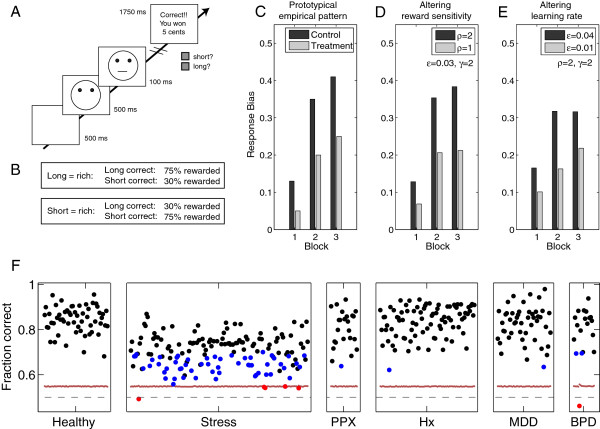
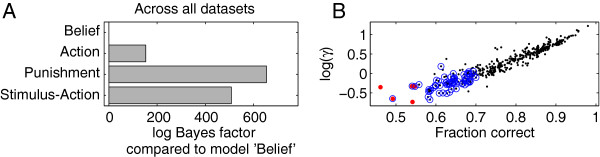
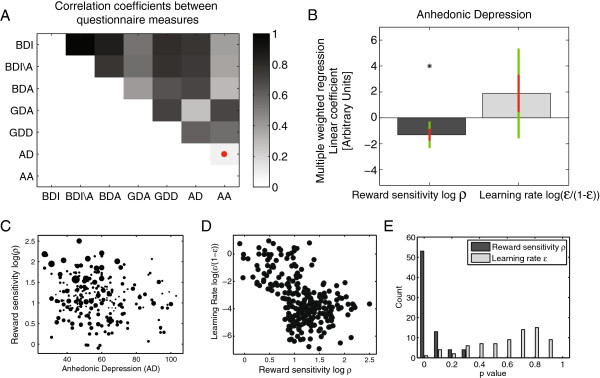
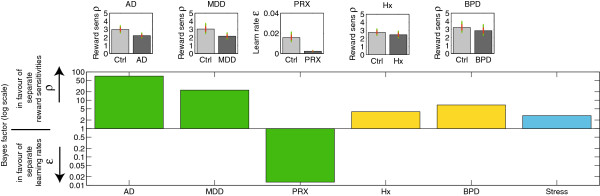
BACKGROUND: Depression is characterised partly by blunted reactions to reward. However, tasks probing this deficiency have not distinguished insensitivity to reward from insensitivity to the prediction errors for reward that determine learning and are putatively reported by the phasic activity of dopamine neurons. We attempted to disentangle these factors with respect to anhedonia in the context of stress, Major Depressive Disorder (MDD), Bipolar Disorder (BPD) and a dopaminergic challenge. METHODS: Six behavioural datasets involving 392 experimental sessions were subjected to a model-based, Bayesian meta-analysis. Participants across all six studies performed a probabilistic reward task that used an asymmetric reinforcement schedule to assess reward learning. Healthy controls were tested under baseline conditions, stress or after receiving the dopamine D2 agonist pramipexole. In addition, participants with current or past MDD or BPD were evaluated. Reinforcement learning models isolated the contributions of variation in reward sensitivity and learning rate. RESULTS: MDD and anhedonia reduced reward sensitivity more than they affected the learning rate, while a low dose of the dopamine D2 agonist pramipexole showed the opposite pattern. Stress led to a pattern consistent with a mixed effect on reward sensitivity and learning rate. CONCLUSION: Reward-related learning reflected at least two partially separable contributions. The first related to phasic prediction error signalling, and was preferentially modulated by a low dose of the dopamine agonist pramipexole. The second related directly to reward sensitivity, and was preferentially reduced in MDD and anhedonia. Stress altered both components. Collectively, these findings highlight the contribution of model-based reinforcement learning meta-analysis for dissecting anhedonic behavior.
Overview
The claims and statistics of this paper haven’t been checked yet.
Run the check — free, no account needed. It reads the open-access text and checks the sources it cites.
Integrity signals
Registry
Cites
Statistics
Figures
Verification
Claims the paper makes
The claims and statistics of this paper haven’t been checked yet.
Run the check — free, no account needed. It reads the open-access text and checks the sources it cites.
Claims other papers make about this one
Each is checked against this paper’s own text: does it say what the citing paper says it does?
In the citing paper
“Their study was consistent with evidence that reward sensitivity and not learning rates are reduced in anhedonic depression (Huys et al., 2013; Chen et al., 2015).”
From The orbitofrontal cortex: reward, emotion and depression (2020) · cites this paper as Huys et al., 2013
Self-check
Percentages, sums and reported differences re-computed from the paper’s own numbers.
The self-check needs the paper’s full text.
Citations
Cites
Diagnostic and Statistical Manual of Mental Disorders
Williams, J. B. W., & First, M. B. (2013) · Oxford University Press eBooks · doi:10.1093/acrefore/9780199975839.013.104 · Cited by 109,845
Maximum Likelihood from Incomplete Data Via the EM Algorithm
Dempster, A. P., Laird, N. M., & Rubin, D. B. (1977) · Journal of the Royal Statistical Society Series B: Statistical Methodology · doi:10.1111/j.2517-6161.1977.tb01600.x · Cited by 50,444
Hamilton, M. (1960) · Journal of Neurology, Neurosurgery & Psychiatry · doi:10.1136/jnnp.23.1.56 · Cited by 32,817
Gelman, A., Carlin, J. B., Stern, H. S., & Rubin, D. B. (2003) · doi:10.1201/9780429258480 · Cited by 27,276
Reinforcement Learning: An Introduction
Sutton, R. S., & Barto, A. G. (1998) · IEEE Transactions on Neural Networks · doi:10.1109/tnn.1998.712192 · Cited by 27,225
Reinforcement Learning: An Introduction
Sutton, R. S., & Barto, A. (2005) · IEEE Transactions on Neural Networks · doi:10.1109/tnn.2004.842673 · Cited by 25,268
Advances in neural information processing systems 7
Cios, K. J., & Shields, M. E. (1997) · Neurocomputing · doi:10.1016/s0925-2312(97)90018-7 · Cited by 22,093
Kass, R. E., & Raftery, A. E. (1995) · Journal of the American Statistical Association · doi:10.1080/01621459.1995.10476572 · Cited by 12,558
(1966) · Medical Entomology and Zoology · Cited by 10,293
A Rating Scale for Mania: Reliability, Validity and Sensitivity
Young, R. C., Biggs, J. T., Ziegler, V. E., & Meyer, D. A. (1978) · British Journal of Psychiatry · doi:10.1192/bjp.133.5.429 · Cited by 8,744
Research works printed but not linked: 3
- Beck A, Steer R, Brown G: Manual for the Beck Depression Inventory-II. 1996, San Antonio: Psychological Corporation
- Daw N: Decision Making, Affect, and Learning: Attention and Performance XXIII. Edited by: Delgado MR, Phelps EA, Robbins TW. 2009, OUP
- Dutra S, Brooks N, Lempert K, Guardado A, Goetz E, Pizzagalli D: Reward responsiveness in a remitted depressed sample: Effects of gender and trait negative affect. 23rd Annual Meeting of the Society for Research in Psychopathology. 2009, Minneapolis:
Cited by
Sorted by citations
Computational psychiatry as a bridge from neuroscience to clinical applications
Huys, Q. J. M., Maia, T. V., & Frank, M. J. (2016) · Nature Neuroscience · doi:10.1038/nn.4238 · Cited by 1,002
Self-citationNeuroscience of apathy and anhedonia: a transdiagnostic approach
Husain, M., & Roiser, J. P. (2018) · Nature reviews. Neuroscience · doi:10.1038/s41583-018-0029-9 · Cited by 682
Reward Processing in Depression: A Conceptual and Meta-Analytic Review Across fMRI and EEG Studies
Keren, H., O’Callaghan, G., Vidal-Ribas, P., Buzzell, G. A., Brotman, M. A., Leibenluft, E., Pan, P. M., Meffert, L., Kaiser, A., Wolke, S., et al. (2018) · American Journal of Psychiatry · doi:10.1176/appi.ajp.2018.17101124 · Cited by 521
The orbitofrontal cortex: reward, emotion and depression
Rolls, E. T., Cheng, W., & Feng, J. (2020) · Brain Communications · doi:10.1093/braincomms/fcaa196 · Cited by 474
The neurobiology of interoception in health and disease
Quadt, L., Critchley, H., & Garfinkel, S. N. (2018) · Annals of the New York Academy of Sciences · doi:10.1111/nyas.13915 · Cited by 488
Mood as representation of momentum
Eldar, E., Rutledge, R. B., Dolan, R. J., & Niv, Y. (2016) · Trends in Cognitive Sciences · doi:10.1016/j.tics.2015.07.010 · Cited by 383
Hassani, S. A., Oemisch, M., Balcarras, M., Westendorff, S., Ardid, S., van der Meer, M. A. A., Tiesinga, P. H. E., & Womelsdorf, T. (2017) · Scientific Reports · doi:10.1038/srep40606 · Cited by 364
Dysfunctional reward processing in depression
Admon, R., & Pizzagalli, D. A. (2015) · Current Opinion in Psychology · doi:10.1016/j.copsyc.2014.12.011 · Cited by 343
Self-citationWang, X., & Krystal, J. H. (2014) · Neuron · doi:10.1016/j.neuron.2014.10.018 · Cited by 327
Computational psychiatry: towards a mathematically informed understanding of mental illness
Adams, R. A., Huys, Q. J. M., & Roiser, J. P. (2015) · Journal of Neurology, Neurosurgery & Psychiatry · doi:10.1136/jnnp-2015-310737 · Cited by 285
Self-citationThe C factor: cognitive dysfunction as a transdiagnostic dimension in psychopathology
Abramovitch, A., Short, T., & Schweiger, A. (2021) · Clinical Psychology Review · doi:10.1016/j.cpr.2021.102007 · Cited by 269
Anxiety, Depression, and Decision Making: A Computational Perspective
Bishop, S. J., & Gagne, C. (2018) · Annual Review of Neuroscience · doi:10.1146/annurev-neuro-080317-062007 · Cited by 240
Reinforcement learning in depression: a review of computational research
Chen, C., Takahashi, T., Nakagawa, S., Inoue, T., & Kusumi, I. (2015) · Neuroscience & Biobehavioral Reviews · doi:10.1016/j.neubiorev.2015.05.005 · Cited by 233
Why not try harder? Computational approach to motivation deficits in neuro-psychiatric diseases
Pessiglione, M., Vinckier, F., Bouret, S., Jean Daunizeau, A., & Bouc, R. L. (2017) · Brain · doi:10.1093/brain/awx278 · Cited by 255
Neuromodulatory Systems and Their Interactions: A Review of Models, Theories, and Experiments
Avery, M. C., & Krichmar, J. L. (2017) · Frontiers in Neural Circuits · doi:10.3389/fncir.2017.00108 · Cited by 250
Reward-Processing Behavior in Depressed Participants Relative to Healthy Volunteers
Halahakoon, D. C., Kieslich, K., O’Driscoll, C., Nair, A., Lewis, G., & Roiser, J. P. (2020) · JAMA Psychiatry · doi:10.1001/jamapsychiatry.2020.2139 · Cited by 222
On what motivates us: a detailed review of intrinsic v. extrinsic motivation
Morris, L. S., Grehl, M. M., Rutter, S., Mehta, M., & Westwater, M. L. (2022) · Psychological Medicine · doi:10.1017/s0033291722001611 · Cited by 377
Depression: a decision-theoretic analysis
Huys, Q. J. M., Daw, N. D., & Dayan, P. (2015) · Annual Review of Neuroscience · doi:10.1146/annurev-neuro-071714-033928 · Cited by 221
Self-citationAssociation of neural and emotional impacts of reward prediction errors with major depression
Rutledge, R. B., Moutoussis, M., Smittenaar, P., Zeidman, P., Taylor, T., Hrynkiewicz, L., Lam, J., Skandali, N., Siegel, J. Z., Ousdal, O. T., et al. (2017) · JAMA Psychiatry · doi:10.1001/jamapsychiatry.2017.1713 · Cited by 209
Self-citationModeling Trait Anxiety: From Computational Processes to Personality
Raymond, J. G., Steele, J. D., & Seriès, P. (2017) · Frontiers in Psychiatry · doi:10.3389/fpsyt.2017.00001 · Cited by 209
A neurocomputational account of how inflammation enhances sensitivity to punishments versus rewards
Harrison, N. A., Voon, V., Cercignani, M., Cooper, E. A., Pessiglione, M., & Critchley, H. D. (2016) · Biological Psychiatry · doi:10.1016/j.biopsych.2015.07.018 · Cited by 185
Anhedonia in depression: biological mechanisms and computational models
Cooper, J. A., Arulpragasam, A. R., & Treadway, M. T. (2018) · Current Opinion in Behavioral Sciences · doi:10.1016/j.cobeha.2018.01.024 · Cited by 208
Advances in the computational understanding of mental illness
Huys, Q. J. M., Browning, M. D., Paulus, M. P., & Frank, M. J. (2020) · Neuropsychopharmacology · doi:10.1038/s41386-020-0746-4 · Cited by 204
Self-citationReward Processing, Neuroeconomics, and Psychopathology
Zald, D. H., & Treadway, M. T. (2017) · Annual Review of Clinical Psychology · doi:10.1146/annurev-clinpsy-032816-044957 · Cited by 190
Reinforcement Learning in Patients With Mood and Anxiety Disorders vs Control Individuals
Pike, A. C., & Robinson, O. J. (2022) · JAMA Psychiatry · doi:10.1001/jamapsychiatry.2022.0051 · Cited by 183
Altered learning under uncertainty in unmedicated mood and anxiety disorders
Aylward, J., Valton, V., Ahn, W., Bond, R. L., Dayan, P., Roiser, J. P., & Robinson, O. J. (2019) · Nature Human Behaviour · doi:10.1038/s41562-019-0628-0 · Cited by 164
Self-citationComputational Psychiatry Needs Time and Context
Hitchcock, P., Fried, E. I., & Frank, M. J. (2021) · Annual Review of Psychology · doi:10.1146/annurev-psych-021621-124910 · Cited by 145
Neural mechanisms of reinforcement learning in unmedicated patients with major depressive disorder
Rothkirch, M., Tonn, J., Köhler, S., & Sterzer, P. (2017) · Brain · doi:10.1093/brain/awx025 · Cited by 124
Neurobiology and systems biology of stress resilience
Kalisch, R., Russo, S. J., & Müller, M. B. (2024) · Physiological Reviews · doi:10.1152/physrev.00042.2023 · Cited by 149
Griffiths, K. R., Morris, R. W., & Balleine, B. W. (2014) · Frontiers in Systems Neuroscience · doi:10.3389/fnsys.2014.00101 · Cited by 118
Berwian, I. M., Wenzel, J. G., Collins, A. G. E., Seifritz, E., Stephan, K. E., Walter, H., & Huys, Q. J. M. (2020) · JAMA Psychiatry · doi:10.1001/jamapsychiatry.2019.4971 · Cited by 113
Self-citationOwens, M., Herbert, J., Jones, P. B., Sahakian, B. J., Wilkinson, P. O., Dunn, V. J., Croudace, T. J., & Goodyer, I. M. (2014) · Proceedings of the National Academy of Sciences · doi:10.1073/pnas.1318786111 · Cited by 118
Brown, V. M., Zhu, L., Solway, A., Wang, J. M., McCurry, K. L., King-Casas, B., & Chiu, P. H. (2021) · JAMA Psychiatry · doi:10.1001/jamapsychiatry.2021.1844 · Cited by 112
Computational neuroscience approach to biomarkers and treatments for mental disorders
Yahata, N., Kasai, K., & Kawato, M. (2016) · Psychiatry and Clinical Neurosciences · doi:10.1111/pcn.12502 · Cited by 135
Developing treatments for cognitive deficits in schizophrenia: The challenge of translation
Young, J. W., & Geyer, M. (2014) · Journal of Psychopharmacology · doi:10.1177/0269881114555252 · Cited by 110
Identifying Transdiagnostic Mechanisms in Mental Health Using Computational Factor Modeling
Wise, T., Robinson, O. J., & Gillan, C. M. (2023) · Biological Psychiatry · doi:10.1016/j.biopsych.2022.09.034 · Cited by 108
“A mega-analysis of a single task (46) suggested that anhedonia was associated with reduced reward sensitivity in clinical samples (i.e., consummatory pleasure) but not with reward learning per se (47).”
Pizzagalli, D. A., Smoski, M. J., Ang, Y., Whitton, A. E., Sanacora, G., Mathew, S. J., Nürnberger, J. I., Lisanby, S. H., Iosifescu, D. V., Murrough, J. W., et al. (2020) · Neuropsychopharmacology · doi:10.1038/s41386-020-0738-4 · Cited by 104
Self-citationNeural Correlates of Three Promising Endophenotypes of Depression: Evidence from the EMBARC Study
Webb, C. A., Dillon, D. G., Pechtel, P., Goer, F. K., Murray, L., Huys, Q. J., Fava, M., McGrath, P. J., Weissman, M., Parsey, R., et al. (2016) · Neuropsychopharmacology · doi:10.1038/npp.2015.165 · Cited by 103
Self-citationCognitive Control in Depression: Toward Clinical Models Informed by Cognitive Neuroscience
Grahek, I., Everaert, J., Krebs, R. M., & Koster, E. H. W. (2018) · Clinical Psychological Science · doi:10.1177/2167702618758969 · Cited by 101
Sheridan, M. A., McLaughlin, K. A., Winter, W., Fox, N., Zeanah, C., & Nelson, C. A. (2018) · Nature Communications · doi:10.1038/s41467-018-04381-8 · Cited by 101
Brain and behavioral correlates of insulin resistance in youth with depression and obesity
Singh, M. K., Leslie, S. M., West, M. P., Zaiko, Y. V., Phillips, O. R., Weisman, E. F., Wall, D. M., Jo, B., & Rasgon, N. (2018) · Hormones and Behavior · doi:10.1016/j.yhbeh.2018.03.009 · Cited by 104
Anticipatory Anxiety Disrupts Neural Valuation during Risky Choice
Engelmann, J. B., Meyer, F., Fehr, E., & Ruff, C. C. (2015) · Journal of Neuroscience · doi:10.1523/jneurosci.2880-14.2015 · Cited by 102
Whitton, A. E., Reinen, J., Slifstein, M., Ang, Y., McGrath, P. J., Iosifescu, D. V., Abi‐Dargham, A., Pizzagalli, D. A., & Schneier, F. R. (2020) · Brain · doi:10.1093/brain/awaa002 · Cited by 102
Self-citationGreenberg, T., Chase, H. W., Almeida, J. R., Stiffler, R., Zevallos, C. R., Aslam, H. A., Deckersbach, T., Weyandt, S., Cooper, C., Toups, M., et al. (2015) · American Journal of Psychiatry · doi:10.1176/appi.ajp.2015.14050594 · Cited by 93
Markou, A., Salamone, J. D., Bussey, T. J., Mar, A. C., Brunner, D., Gilmour, G., & Balsam, P. D. (2013) · Neuroscience & Biobehavioral Reviews · doi:10.1016/j.neubiorev.2013.08.007 · Cited by 95
Affective bias as a rational response to the statistics of rewards and punishments
Pulcu, E., & Browning, M. D. (2017) · eLife · doi:10.7554/elife.27879 · Cited by 88
Crawley, D., Zhang, L., Jones, E. J. H., Ahmad, J., Oakley, B. F. M., Cáceres, A. S. J., Charman, T., Buitelaar, J. K., Murphy, D., Chatham, C. H., et al. (2020) · PLoS Biology · doi:10.1371/journal.pbio.3000908 · Cited by 92
The role of learning-related dopamine signals in addiction vulnerability
Huys, Q. J. M., Tobler, P. N., Hasler, G., & Flagel, S. B. (2014) · Progress in brain research · doi:10.1016/b978-0-444-63425-2.00003-9 · Cited by 92
Self-citationInfluences of dopaminergic system dysfunction on late-life depression
Taylor, W. D., Zald, D. H., Felger, J. C., Christman, S., Claassen, D. O., Horga, G., Miller, J. M., Gifford, K., Rogers, B., Szymkowicz, S. M., et al. (2022) · Molecular Psychiatry · doi:10.1038/s41380-021-01265-0 · Cited by 89
Volatility Estimates Increase Choice Switching and Relate to Prefrontal Activity in Schizophrenia
Deserno, L., Boehme, R., Mathys, C. D., Katthagen, T., Kaminski, J. A., Stephan, K. E., Heinz, A., & Schlagenhauf, F. (2019) · Biological Psychiatry Cognitive Neuroscience and Neuroimaging · doi:10.1016/j.bpsc.2019.10.007 · Cited by 83
Nielson, D. M., Keren, H., O’Callaghan, G., Jackson, S. M., Douka, I., Vidal‐Ribas, P., Pornpattananangkul, N., Camp, C., Gorham, L. S., Wei, C. Y., et al. (2020) · Biological Psychiatry · doi:10.1016/j.biopsych.2020.06.012 · Cited by 92
Decodability of Reward Learning Signals Predicts Mood Fluctuations
Eldar, E., Roth, C., Dayan, P., & Dolan, R. J. (2018) · Current Biology · doi:10.1016/j.cub.2018.03.038 · Cited by 86
Self-citationEffects of transcranial direct current stimulation for treating depression: A modeling study
Csifcsák, G., Boayue, N. M., Puonti, O., Thielscher, A., & Mittner, M. (2018) · Journal of Affective Disorders · doi:10.1016/j.jad.2018.02.077 · Cited by 82
Patients with major depressive disorder exhibit reduced reward size coding in the striatum
Takamura, M., Okamoto, Y., Okada, G., Toki, S., Yamamoto, T., Ichikawa, N., Mori, A., Minagawa, H., Takaishi, Y., Fujii, Y., et al. (2017) · Progress in Neuro-Psychopharmacology and Biological Psychiatry · doi:10.1016/j.pnpbp.2017.07.006 · Cited by 81
Non-invasive vagus nerve stimulation boosts mood recovery after effort exertion
Ferstl, M., Teckentrup, V., Lin, W. M., Kräutlein, F., Kühnel, A., Klaus, J., Walter, M., & Kroemer, N. B. (2021) · Psychological Medicine · doi:10.1017/s0033291720005073 · Cited by 79
Huys, Q. J. M., Guitart‐Masip, M., Dolan, R. J., & Dayan, P. (2015) · Clinical Psychological Science · doi:10.1177/2167702614562040 · Cited by 85
Self-citationBlunted medial prefrontal cortico-limbic reward-related effective connectivity and depression
Rupprechter, S., Romaniuk, L., Series, P., Hirose, Y., Hawkins, E., Sandu, A.-L., Waiter, G. D., McNeil, C. J., Shen, X., Harris, M. A., et al. (2020) · Brain · doi:10.1093/brain/awaa106 · Cited by 80
Computational Neuroscience Approach to Psychiatry: A Review on Theory-driven Approaches
Khaleghi, A., Mohammadi, M. R., Shahi, K., & Nasrabadi, A. M. (2022) · Clinical Psychopharmacology and Neuroscience · doi:10.9758/cpn.2022.20.1.26 · Cited by 82
Hird, E. J., Slanina-Davies, A., Lewis, G., Hamer, M., & Roiser, J. P. (2024) · Translational Psychiatry · doi:10.1038/s41398-024-02922-y · Cited by 79
Moutoussis, M., Bullmore, E. T., Goodyer, I. M., Fonagy, P., Jones, P. B., Dolan, R. J., & Dayan, P. (2018) · PLoS Computational Biology · doi:10.1371/journal.pcbi.1006679 · Cited by 76
Self-citationThe Two Cultures of Computational Psychiatry
Bennett, D., Silverstein, S. M., & Niv, Y. (2019) · JAMA Psychiatry · doi:10.1001/jamapsychiatry.2019.0231 · Cited by 79
Emotions as ComputationsPreprint
Emanuel, A., & Eldar, E. (2022) · PsyArXiv (OSF Preprints) · doi:10.1016/j.neubiorev.2022.104977 · Cited by 84
Guillot, C. R., Bello, M. S., Tsai, J., Huh, J., Leventhal, A. M., & Sussman, S. Y. (2016) · Computers in Human Behavior · doi:10.1016/j.chb.2016.04.019 · Cited by 76
Liu, W., Roiser, J. P., Wang, L.-Z., Zhu, Y.-H., Huang, J., Neumann, D. L., Shum, D., Cheung, E. F. C., & Chan, R. C. K. (2015) · Journal of Affective Disorders · doi:10.1016/j.jad.2015.10.050 · Cited by 84
Kasanova, Z., Ceccarini, J., Frank, M. J., van Amelsvoort, T., Booij, J., Heinzel, A., Mottaghy, F. M., & Myin‐Germeys, I. (2017) · Biological Psychology · doi:10.1016/j.biopsycho.2017.04.014 · Cited by 75
Treadway, M. T., Admon, R., Arulpragasam, A. R., Mehta, M., Douglas, S., Vitaliano, G. D., Olson, D. P., Cooper, J. A., & Pizzagalli, D. A. (2017) · Biological Psychiatry · doi:10.1016/j.biopsych.2017.02.1183 · Cited by 71
Self-citationBrain structures implicated in inflammation-associated depression
Harrison, N. A. (2016) · Current Topics in Behavioral Neurosciences · doi:10.1007/7854_2016_30 · Cited by 74
Fuel not fun: Reinterpreting attenuated brain responses to reward in obesity
Kroemer, N. B., & Small, D. M. (2016) · Physiology & Behavior · doi:10.1016/j.physbeh.2016.04.020 · Cited by 74
Learning and Choice in Mood Disorders: Searching for the Computational Parameters of Anhedonia
Robinson, O. J., & Chase, H. W. (2017) · Computational Psychiatry · doi:10.1162/cpsy_a_00009 · Cited by 66
Waltmann, M., Schlagenhauf, F., & Deserno, L. (2022) · Behavior Research Methods · doi:10.3758/s13428-021-01739-7 · Cited by 69
Reward systems and cognitions in Major Depressive Disorder
Cléry-Melin, M.-L., Jollant, F., & Gorwood, P. A. P. M. (2018) · CNS Spectrums · doi:10.1017/s1092852918001335 · Cited by 73
COMTVal158Met genotype is associated with reward learning: a replication study and meta‐analysis
Corral-Frías, N. S., Pizzagalli, D. A., Carré, J. M., Michalski, L. J., Nikolova, Y. S., Perlis, R. H., Fagerness, J. A., Lee, M. R., Drabant, E. M., Lancaster, T. M., et al. (2016) · Genes Brain & Behavior · doi:10.1111/gbb.12296 · Cited by 67
Self-citationPedersen, M. L., Ironside, M., Amemori, K., McGrath, C. L., Kang, M. S., Graybiel, A. M., Pizzagalli, D. A., & Frank, M. J. (2021) · PLoS Computational Biology · doi:10.1371/journal.pcbi.1008955 · Cited by 66
Self-citationScholl, J., & Klein-Flügge, M. C. (2017) · Behavioural Brain Research · doi:10.1016/j.bbr.2017.09.050 · Cited by 69
The Cambridge Handbook of Substance and Behavioral Addictions
Sussman, S. Y. (2020) · Cambridge University Press eBooks · doi:10.1017/9781108632591 · Cited by 64
Momentary subjective well-being depends on learning and not reward
Blain, B., & Rutledge, R. B. (2020) · eLife · doi:10.7554/elife.57977 · Cited by 71
A computational analysis of mouse behavior in the sucrose preference test
Verharen, J. P. H., de Jong, J. W., Zhu, Y., & Lammel, S. (2023) · Nature Communications · doi:10.1038/s41467-023-38028-0 · Cited by 65
Active Inference in OpenAI Gym: A Paradigm for Computational Investigations Into Psychiatric Illness
Cullen, M., Davey, B., Friston, K. J., & Moran, R. (2018) · Biological Psychiatry Cognitive Neuroscience and Neuroimaging · doi:10.1016/j.bpsc.2018.06.010 · Cited by 61
“Don't [ruminate], be happy”: A cognitive perspective linking depression and anhedonia
Rutherford, A. V., McDougle, S. D., & Joormann, J. (2023) · Clinical Psychology Review · doi:10.1016/j.cpr.2023.102255 · Cited by 64
Unifying treatments for depression: an application of the free energy principle
Chekroud, A. M. (2015) · Frontiers in Psychology · doi:10.3389/fpsyg.2015.00153 · Cited by 55
Fonzo, G. A. (2018) · Neurobiology of Stress · doi:10.1016/j.ynstr.2018.10.002 · Cited by 58
Failure of hippocampal deactivation during loss events in treatment-resistant depression
Johnston, B. A., Tolomeo, S., Gradin, V. B., Christmas, D. M., Matthews, K., & Steele, J. D. (2015) · Brain · doi:10.1093/brain/awv177 · Cited by 54
Inflammation and dimensions of reward processing following exposure to the influenza vaccine
Boyle, C. C., Kuhlman, K. R., Dooley, L. N., Haydon, M. D., Robles, T. F., Ang, Y., Pizzagalli, D. A., & Bower, J. E. (2018) · Psychoneuroendocrinology · doi:10.1016/j.psyneuen.2018.11.024 · Cited by 54
Self-citationHidden state inference requires abstract contextual representations in the ventral hippocampus
Mishchanchuk, K., Gregoriou, G. C., Qü, A. J., Kastler, A., Huys, Q. J. M., Wilbrecht, L., & MacAskill, A. F. (2024) · Science · doi:10.1126/science.adq5874 · Cited by 56
Self-citationMajor Depression Impairs the Use of Reward Values for Decision-Making
Rupprechter, S., Stankevicius, A., Huys, Q. J. M., Steele, J. D., & Seriès, P. (2018) · Scientific Reports · doi:10.1038/s41598-018-31730-w · Cited by 51
Self-citationReed, D. D., Naudé, G. P., Gelino, B. W., & Amlung, M. T. (2020) · Cambridge University Press eBooks · doi:10.1017/9781108632591.011 · Cited by 48
Irisin Acts via the PGC-1α and BDNF Pathway to Improve Depression-like Behavior
Jo, D., & Song, J. (2021) · Clinical Nutrition Research · doi:10.7762/cnr.2021.10.4.292 · Cited by 49
Associability-modulated loss learning is increased in posttraumatic stress disorder
Brown, V. M., Zhu, L., Wang, J. M., Frueh, B. C., King‐Casas, B., & Chiu, P. H. (2018) · eLife · doi:10.7554/elife.30150 · Cited by 50
Genesis and Maintenance of Attentional Biases: The Role of the Locus Coeruleus-Noradrenaline System
Ehlers, M. R., & Todd, R. M. (2017) · Neural Plasticity · doi:10.1155/2017/6817349 · Cited by 50
Rouhani, N., & Niv, Y. (2019) · Psychopharmacology · doi:10.1007/s00213-019-05322-z · Cited by 47
Browning, M. D., Carter, C. S., Chatham, C. H., den Ouden, H. E. M., Gillan, C. M., Baker, J. T., Chekroud, A. M., Cools, R., Dayan, P., Gold, J. M., et al. (2020) · Biological Psychiatry · doi:10.1016/j.biopsych.2019.12.026 · Cited by 46
Self-citationThe Prevention and Treatment of Gambling Disorders: Some Art, Some Science
Derevensky, J. L. (2020) · Cambridge University Press eBooks · doi:10.1017/9781108632591.024 · Cited by 45
Gibbs-Dean, T., Katthagen, T., Tsenkova, I., Ali, R., Liang, X., Spencer, T. J., & Diederen, K. M. J. (2023) · Neuroscience & Biobehavioral Reviews · doi:10.1016/j.neubiorev.2023.105087 · Cited by 52
Considering the Overlap and Nonoverlap of Compulsivity, Impulsivity, and Addiction
Blum, A. W., & Grant, J. E. (2020) · Cambridge University Press eBooks · doi:10.1017/9781108632591.038 · Cited by 44
Neurobiological Foundations of Behavioral Addictions
Vaccaro, A. G., & Potenza, M. N. (2020) · Cambridge University Press eBooks · doi:10.1017/9781108632591.016 · Cited by 45
Neurobiology of Substance Addictions
Christie, N. C., & Bechara, A. (2020) · Cambridge University Press eBooks · doi:10.1017/9781108632591.015 · Cited by 44
Sensitization of Incentive Salience and the Transition to Addiction
Warlow, S. M., Baumgartner, H. M., Freeland, C. M., Naffziger, E. E., Olney, J. J., Berridge, K. C., & Robinson, M. J. F. (2020) · Cambridge University Press eBooks · doi:10.1017/9781108632591.006 · Cited by 46
Mindfulness-Based Interventions Applied to Addiction Treatments
Kechter, A., & Black, D. S. (2020) · Cambridge University Press eBooks · doi:10.1017/9781108632591.040 · Cited by 43
Multiple Memory Systems, Addiction, and Health Habits: New Routes for Translational Science
Stacy, A. W., Pike, J. R., & Lee, A. Y. (2020) · Cambridge University Press eBooks · doi:10.1017/9781108632591.017 · Cited by 43
Tanning as an Addiction: The State of the Research and Implications for Intervention
Miller, K. A., & Mays, D. M. (2020) · Cambridge University Press eBooks · doi:10.1017/9781108632591.037 · Cited by 43
Metadata
- Authors
- Huys, Q. J., Pizzagalli, D. A., Bogdan, R., & Dayan, P.
- Affiliations
- Gatsby Computational Neuroscience Unit (GB)
- Harvard University (US)
- Duke University (US)
- Corresponding author
- Huys, Quentin JM
- Venue
- Biology of Mood & Anxiety Disorders
- Published
- 2013-06-19
- Volume
- 3
- Issue
- 1
- Pages
- 12-12
- ISSN
- 2045-5380 (ISSN-L)
- PMC
- PMC3701611
- OpenAlex
- W2157813419
- Cited by
- 480
- References
- 139
- Citations by year
- 2026: 27 · 2025: 42 · 2024: 35 · 2023: 54 · 2022: 50 · 2021: 57 · 2020: 78 · 2019: 20 · 2018: 35 · 2017: 38 · 2016: 14 · 2015: 19 · 2014: 9 · 2013: 2
- FWCI
- 7.20
- Type
- journal article
- Language
- en
- Open access
- hybrid
- doi.org
- Licence
- Locations
- Biology of Mood & Anxiety Disorders (publishedVersion, cc-by)
- Europe PMC (PubMed Central) (publishedVersion, cc-by)
- PubMed Central (publishedVersion, cc-by)
- PubMed (publishedVersion)
- Zurich Open Repository and Archive (University of Zurich) (acceptedVersion, other-oa)
- Digital Access to Scholarship at Harvard (DASH) (Harvard University) (submittedVersion, cc-by)
- UCL Discovery (University College London) (submittedVersion)
- MPG.PuRe (Max Planck Society) (submittedVersion)
- Repository for Publications and Research Data (ETH Zurich) (submittedVersion, cc-by)
- Zurich Open Repository and Archive (University of Zurich) (submittedVersion, cc-by)
- ETH Zürich Research Collection
- Zurich Open Repository and Archive (University of Zurich)
- Funders
- AstraZeneca
- Gatsby Charitable Foundation
- Deutsche Forschungsgemeinschaft
- Servier
- National Institute of Mental Health (R01MH101521, R01MH095809, MH095809, R01MH068376, R21MH078979, MH068376)
- National Center for Complementary and Integrative Health (R21AT002974)
- Topics
- Life Sciences › Neuroscience › Cellular and Molecular Neuroscience › Neurotransmitter Receptor Influence on Behavior
- Life Sciences › Neuroscience › Cognitive Neuroscience › Neural and Behavioral Psychology Studies
- Social Sciences › Psychology › Experimental and Cognitive Psychology › Anxiety, Depression, Psychometrics, Treatment, Cognitive Processes
- Keywords
- anhedonia, reinforcement learning, reward sensitivity, prediction error, dopamine, pramipexole, major depressive disorder, bipolar disorder, stress, learning rate, probabilistic reward task, model-based reinforcement learning
About these checks
Registry, retraction, Cites and statistics results are computed, not judged, with one exception: a printed reference that no index lists is read once by a model before it counts as a citation error. Claims are extracted by a model and kept only when their quote appears verbatim in the text; each cited source is then checked, with a model’s help, for whether it says what the claim relies on. Those verdicts can be wrong — read the claim’s quote and the cited source before relying on one.
Statistics and arithmetic are recomputed, not judged.
Confidence bands are shown only for fields calibrated on our annotated test set. None is calibrated yet, so no band is shown.
What counts as a claim ›How we measure confidence ›How we check this ›
Are you an author, or do you see a problem with this page? Request a review
