

The DOI matches its Crossref record; 140 of the 140 references it cites were found in a registry or an index.
Mapping anhedonia onto reinforcement learning: a behavioural meta-analysis
Open accessAbstract
BACKGROUND: Depression is characterised partly by blunted reactions to reward. However, tasks probing this deficiency have not distinguished insensitivity to reward from insensitivity to the prediction errors for reward that determine learning and are putatively reported by the phasic activity of dopamine neurons. We attempted to disentangle these factors with respect to anhedonia in the context of stress, Major Depressive Disorder (MDD), Bipolar Disorder (BPD) and a dopaminergic challenge. METHODS: Six behavioural datasets involving 392 experimental sessions were subjected to a model-based, Bayesian meta-analysis. Participants across all six studies performed a probabilistic reward task that used an asymmetric reinforcement schedule to assess reward learning. Healthy controls were tested under baseline conditions, stress or after receiving the dopamine D2 agonist pramipexole. In addition, participants with current or past MDD or BPD were evaluated. Reinforcement learning models isolated the contributions of variation in reward sensitivity and learning rate. RESULTS: MDD and anhedonia reduced reward sensitivity more than they affected the learning rate, while a low dose of the dopamine D2 agonist pramipexole showed the opposite pattern. Stress led to a pattern consistent with a mixed effect on reward sensitivity and learning rate. CONCLUSION: Reward-related learning reflected at least two partially separable contributions. The first related to phasic prediction error signalling, and was preferentially modulated by a low dose of the dopamine agonist pramipexole. The second related directly to reward sensitivity, and was preferentially reduced in MDD and anhedonia. Stress altered both components. Collectively, these findings highlight the contribution of model-based reinforcement learning meta-analysis for dissecting anhedonic behavior.
Overview
The claims and statistics of this paper haven’t been checked yet.
Run the check — free, no account needed. It reads the open-access text and checks the sources it cites.
Integrity signals
Registry
Cites
Statistics
Figures
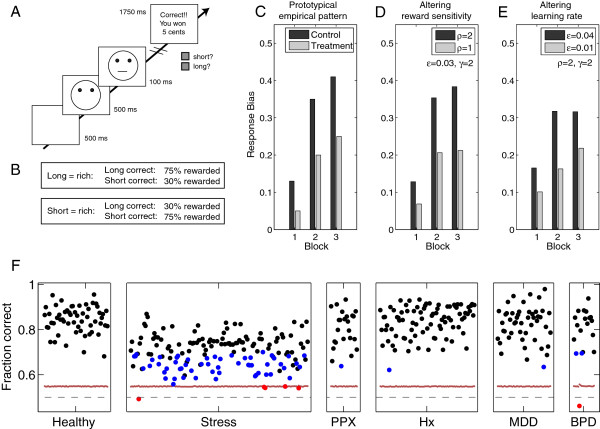
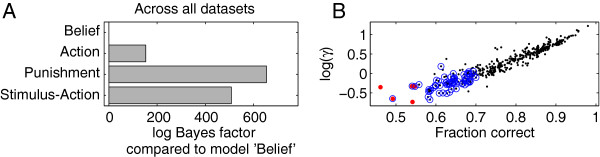
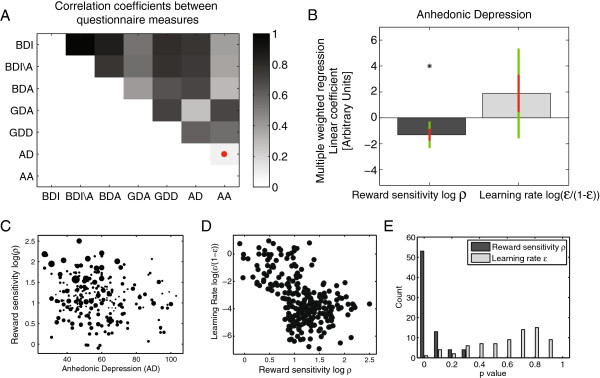
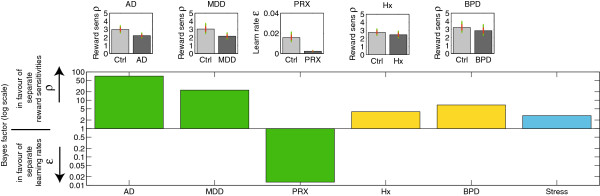
Verification
Claims the paper makes
The claims and statistics of this paper haven’t been checked yet.
Run the check — free, no account needed. It reads the open-access text and checks the sources it cites.
Claims other papers make about this one
Each is checked against this paper’s own text: does it say what the citing paper says it does?
In the citing paper
“Their study was consistent with evidence that reward sensitivity and not learning rates are reduced in anhedonic depression (Huys et al., 2013; Chen et al., 2015).”
From The orbitofrontal cortex: reward, emotion and depression (2020) · cites this paper as Huys et al., 2013
Self-check
Percentages, sums and reported differences re-computed from the paper’s own numbers.
The self-check needs the paper’s full text.
Citations
Cites
Diagnostic and Statistical Manual of Mental Disorders
Williams, J. B. W., & First, M. B. (2013) · Oxford University Press eBooks · doi:10.1093/acrefore/9780199975839.013.104 · Cited by 109,845
Maximum Likelihood from Incomplete Data Via the EM Algorithm
Dempster, A. P., Laird, N. M., & Rubin, D. B. (1977) · Journal of the Royal Statistical Society Series B: Statistical Methodology · doi:10.1111/j.2517-6161.1977.tb01600.x · Cited by 50,444
Hamilton, M. (1960) · Journal of Neurology, Neurosurgery & Psychiatry · doi:10.1136/jnnp.23.1.56 · Cited by 32,817
Gelman, A., Carlin, J. B., Stern, H. S., & Rubin, D. B. (2003) · doi:10.1201/9780429258480 · Cited by 27,276
Reinforcement Learning: An Introduction
Sutton, R. S., & Barto, A. G. (1998) · IEEE Transactions on Neural Networks · doi:10.1109/tnn.1998.712192 · Cited by 27,225
Reinforcement Learning: An Introduction
Sutton, R. S., & Barto, A. (2005) · IEEE Transactions on Neural Networks · doi:10.1109/tnn.2004.842673 · Cited by 25,268
Advances in neural information processing systems 7
Cios, K. J., & Shields, M. E. (1997) · Neurocomputing · doi:10.1016/s0925-2312(97)90018-7 · Cited by 22,093
Kass, R. E., & Raftery, A. E. (1995) · Journal of the American Statistical Association · doi:10.1080/01621459.1995.10476572 · Cited by 12,558
(1966) · Medical Entomology and Zoology · Cited by 10,293
A Rating Scale for Mania: Reliability, Validity and Sensitivity
Young, R. C., Biggs, J. T., Ziegler, V. E., & Meyer, D. A. (1978) · British Journal of Psychiatry · doi:10.1192/bjp.133.5.429 · Cited by 8,744
Rescorla, R. A. (1972) · Medical Entomology and Zoology · Cited by 7,268
Information theory, inference, and learning algorithms
(2004) · Choice Reviews Online · doi:10.5860/choice.41-5949 · Cited by 6,536
Information Theory, Inference, and Learning Algorithms
(2004) · Kybernetes · doi:10.1108/03684920410534506 · Cited by 4,937
Classical conditioning II: Current research and theory.
Black, A. H., & Prokasy, W. F. (1972) · Appleton-Century-Crofts eBooks · Cited by 4,449
What is the role of dopamine in reward: hedonic impact, reward learning, or incentive salience?
Berridge, K. C., & Robinson, T. E. (1998) · Brain Research Reviews · doi:10.1016/s0165-0173(98)00019-8 · Cited by 4,127
WIDROW, B., & HOFF, M. E. (1960) · doi:10.21236/ad0241531 · Cited by 4,009
International Classification of Diseases
Jones, F. A. (1978) · Gut · doi:10.1136/gut.19.12.1175 · Cited by 2,919
Diagnostic and Statistical Manual of Mental Disorders
Raber, G., & Spokas, M. (2024) · doi:10.4135/9781071886229.n145 · Cited by 2,806
Advances in Neural Information Processing Systems 20
Bonilla, E. V., Chai, K. M. A., & Williams, C. K. I. (2008) · neural information processing systems · Cited by 2,701
Daw, N. D., Niv, Y., & Dayan, P. (2005) · Nature Neuroscience · doi:10.1038/nn1560 · Cited by 2,533
Self-citationKrishnan, V., Han, M.-H., Graham, D. L., Berton, O., Renthal, W., Russo, S. J., LaPlant, Q., Graham, A., Lutter, M., Lagace, D. C., et al. (2007) · Cell · doi:10.1016/j.cell.2007.09.018 · Cited by 2,307 · cited 1×
“These range from the fact that DA manipulations affect mood [85] and that many antidepressants have pro-DA effects (including buproprion, sertraline, nomifensine, tranylcypromine amongst others; [86]), to a role in resilience [87,88], and suicidality in MDD [89,90].”
BackgroundA framework for mesencephalic dopamine systems based on predictive Hebbian learning
Montague, P., Dayan, P., & Sejnowski, T. (1996) · The Journal of Neuroscience · doi:10.1523/jneurosci.16-05-01936.1996 · Cited by 2,066
Self-citationThe mesolimbic dopamine reward circuit in depression
Nestler, E. J., & Carlezon, W. A. (2006) · Biological Psychiatry · doi:10.1016/j.biopsych.2005.09.018 · Cited by 2,059
Learning the value of information in an uncertain world
Behrens, T. E. J., Woolrich, M. W., Walton, M. E., & Rushworth, M. F. S. (2007) · Nature Neuroscience · doi:10.1038/nn1954 · Cited by 2,053
Willner, P., Towell, A., Sampson, D., Sophokleous, S., & Muscat, R. (1987) · Psychopharmacology · doi:10.1007/bf00187257 · Cited by 1,993
The Biochemical Basis of Neuropharmacology.
(1974) · Annals of Internal Medicine · doi:10.7326/0003-4819-81-4-575_2 · Cited by 1,882
Grace, A. A. (1991) · Neuroscience · doi:10.1016/0306-4522(91)90196-u · Cited by 1,831
Uncertainty, Neuromodulation, and Attention
Yu, A. J., & Dayan, P. (2005) · Neuron · doi:10.1016/j.neuron.2005.04.026 · Cited by 1,774
Self-citationNew approaches to antidepressant drug discovery: beyond monoamines
Berton, O., & Nestler, E. J. (2006) · Nature Reviews Neuroscience · doi:10.1038/nrn1846 · Cited by 1,589
Reconsidering anhedonia in depression: Lessons from translational neuroscience
Treadway, M. T., & Zald, D. H. (2011) · Neuroscience & Biobehavioral Reviews · doi:10.1016/j.neubiorev.2010.06.006 · Cited by 1,579
Temporal difference models and reward-related learning in the human brain
O'Doherty, J. P., Dayan, P., Friston, K., Critchley, H., & Dolan, R. J. (2003) · Neuron · doi:10.1016/s0896-6273(03)00169-7 · Cited by 1,522
Self-citationToward a modern theory of adaptive networks: Expectation and prediction.
Sutton, R. S., & Barto, A. G. (1981) · Psychological Review · doi:10.1037/0033-295x.88.2.135 · Cited by 1,450
Watson, D., Weber, K., Assenheimer, J. S., Clark, L. A., Strauss, M. E., & McCormick, R. A. (1995) · Journal of Abnormal Psychology · doi:10.1037/0021-843x.104.1.3 · Cited by 1,423
Bayesian model selection for group studies
Stephan, K. E., Penny, W. D., Daunizeau, J., Moran, R. J., & Friston, K. J. (2009) · NeuroImage · doi:10.1016/j.neuroimage.2009.03.025 · Cited by 1,423
Sutton, R. S. (1990) · Elsevier eBooks · doi:10.1016/b978-1-55860-141-3.50030-4 · Cited by 1,381
Midbrain dopamine neurons encode a quantitative reward prediction error signal
Bayer, H. M., & Glimcher, P. W. (2005) · Neuron · doi:10.1016/j.neuron.2005.05.020 · Cited by 1,304
The role of dopamine in the pathophysiology of depression
Dunlop, B. W., & Nemeroff, C. B. (2007) · Archives of General Psychiatry · doi:10.1001/archpsyc.64.3.327 · Cited by 1,244
Pizzagalli, D. A., Holmes, A. J., Dillon, D. G., Goetz, E. L., Birk, J. L., Bogdan, R., Dougherty, D. D., Iosifescu, D. V., Rauch, S. L., & Fava, M. (2009) · American Journal of Psychiatry · doi:10.1176/appi.ajp.2008.08081201 · Cited by 1,232
Self-citation“Liking” and “wanting” food rewards: Brain substrates and roles in eating disorders
Berridge, K. C. (2009) · Physiology & Behavior · doi:10.1016/j.physbeh.2009.02.044 · Cited by 1,147
Tonic dopamine: Opportunity costs and the control of response vigor
Niv, Y., Daw, N. D., Joel, D., & Dayan, P. (2007) · Psychopharmacology · doi:10.1007/s00213-006-0502-4 · Cited by 1,133
Self-citationFloresco, S. B., West, A. R., Ash, B., Moore, H., & Grace, A. A. (2003) · Nature Neuroscience · doi:10.1038/nn1103 · Cited by 1,106
Nedelman, J. R. (2005) · Computational Statistics · doi:10.1007/bf02741321 · Cited by 1,087
Deep Brain Stimulation to Reward Circuitry Alleviates Anhedonia in Refractory Major Depression
Schlaepfer, T. E., Cohen, M. X., Frick, C., Kosel, M., Brodesser, D., Axmacher, N., Joe, A. Y., Kreft, M., Lenartz, D., & Sturm, V. (2008) · Neuropsychopharmacology · doi:10.1038/sj.npp.1301408 · Cited by 1,027
A selective role for dopamine in stimulus-reward learning
Flagel, S. B., Clark, J. J., Robinson, T. E., Mayo, L., Czuj, A., Willuhn, I., Akers, C. A., Clinton, S. M., Phillips, P. E. M., & Akil, H. (2011) · Nature · doi:10.1038/nature09588 · Cited by 1,026
Dopamine responses comply with basic assumptions of formal learning theory
Waelti, P., Dickinson, A., & Schultz, W. (2001) · Nature · doi:10.1038/35083500 · Cited by 1,018
Anticipatory and consummatory components of the experience of pleasure: A scale development study
Gard, D. E., Gard, M. G., Kring, A. M., & John, O. P. (2006) · Journal of Research in Personality · doi:10.1016/j.jrp.2005.11.001 · Cited by 1,015
A meta-analysis of emotional reactivity in major depressive disorder
Bylsma, L. M., Morris, B. H., & Rottenberg, J. (2008) · Clinical Psychology Review · doi:10.1016/j.cpr.2007.10.001 · Cited by 933
Bewernick, B. H., Hurlemann, R., Matusch, A., Kayser, S., Grubert, C., Hadrysiewicz, B., Axmacher, N., Lemke, M., Cooper-Mahkorn, D., Cohen, M. X., et al. (2010) · Biological Psychiatry · doi:10.1016/j.biopsych.2009.09.013 · Cited by 865
Neuromodulation: acetylcholine and memory consolidation
Hasselmo, M. E. (1999) · Trends in Cognitive Sciences · doi:10.1016/s1364-6613(99)01365-0 · Cited by 809
Reduced hedonic capacity in major depressive disorder: evidence from a probabilistic reward task
Pizzagalli, D. A., Iosifescu, D., Hallett, L. A., Ratner, K. G., & Fava, M. (2008) · Journal of Psychiatric Research · doi:10.1016/j.jpsychires.2008.03.001 · Cited by 780
Self-citationToward an objective characterization of an anhedonic phenotype: A signal-detection approach
Pizzagalli, D. A., Jahn, A. L., & O’Shea, J. P. (2005) · Biological Psychiatry · doi:10.1016/j.biopsych.2004.11.026 · Cited by 738
Self-citationAdaptive gain and the role of the locus coeruleus–norepinephrine system in optimal performance
Aston‐Jones, G., & Cohen, J. D. (2005) · The Journal of Comparative Neurology · doi:10.1002/cne.20723 · Cited by 671
Peciña, S., & Berridge, K. C. (2005) · The Journal of Neuroscience · doi:10.1523/jneurosci.2329-05.2005 · Cited by 671
BOLD responses reflecting dopaminergic signals in the human ventral tegmental area
D'Ardenne, K., McClure, S. M., Nystrom, L. E., & Cohen, J. D. (2008) · Science · doi:10.1126/science.1150605 · Cited by 661
Swendsen, J. D., Conway, K. P., Degenhardt, L. J., Glantz, M. D., Jin, R., Merikangas, K. R., Sampson, N. A., & Kessler, R. C. (2010) · Addiction · doi:10.1111/j.1360-0443.2010.02902.x · Cited by 642
Dopaminergic modulation of limbic and cortical drive of nucleus accumbens in goal-directed behavior
Goto, Y., & Grace, A. A. (2005) · Nature Neuroscience · doi:10.1038/nn1471 · Cited by 576
Reward and Punishment Processing in Depression
Eshel, N., & Roiser, J. P. (2010) · Biological Psychiatry · doi:10.1016/j.biopsych.2010.01.027 · Cited by 575
Gelder, M. (1983) · Cited by 557
Parkinson, J. A., Olmstead, M. C., Burns, L. H., Robbins, T. W., & Everitt, B. J. (1999) · The Journal of Neuroscience · doi:10.1523/jneurosci.19-06-02401.1999 · Cited by 555
Neural Responses to Monetary Incentives in Major Depression
Knutson, B., Bhanji, J. P., Cooney, R. E., Atlas, L. Y., & Gotlib, I. H. (2008) · Biological Psychiatry · doi:10.1016/j.biopsych.2007.07.023 · Cited by 496
Learning and selective attention
Dayan, P., Kakade, S., & Montague, P. R. (2000) · Nature Neuroscience · doi:10.1038/81504 · Cited by 495
Self-citationΔFosB in brain reward circuits mediates resilience to stress and antidepressant responses
Vialou, V., Robison, A. J., LaPlant, Q. C., Covington, H. E., Dietz, D. M., Ohnishi, Y. N., Mouzon, E., Rush, A. J., Watts, E. L., Wallace, D. L., et al. (2010) · Nature Neuroscience · doi:10.1038/nn.2551 · Cited by 479
Frank, M. J., & O'Reilly, R. C. (2006) · Behavioral Neuroscience · doi:10.1037/0735-7044.120.3.497 · Cited by 472
Huys, Q. J. M., Eshel, N., O'Nions, E., Sheridan, L., Dayan, P., & Roiser, J. P. (2012) · PLoS Computational Biology · doi:10.1371/journal.pcbi.1002410 · Cited by 439
Self-citationDisentangling the Roles of Approach, Activation and Valence in Instrumental and Pavlovian Responding
Huys, Q. J. M., Cools, R., Gölzer, M., Friedel, E., Heinz, A., Dolan, R. J., & Dayan, P. (2011) · PLoS Computational Biology · doi:10.1371/journal.pcbi.1002028 · Cited by 436
Self-citationThe Occurrence of Depression in Parkinson's Disease
Tandberg, E. (1996) · Archives of Neurology · doi:10.1001/archneur.1996.00550020087019 · Cited by 413
Myin‐Germeys, I., Peeters, F., Havermans, R., Nicolson, N. A., DeVries, M. W., Delespaul, P., & Van Os, J. (2003) · Acta Psychiatrica Scandinavica · doi:10.1034/j.1600-0447.2003.02025.x · Cited by 400
Decreased responsiveness to reward in depression
Henriques, J. B., & Davidson, R. J. (2000) · Cognition & Emotion · doi:10.1080/02699930050117684 · Cited by 399
The Ventral Pallidum and Hedonic Reward: Neurochemical Maps of Sucrose “Liking” and Food Intake
Smith, K. S., & Berridge, K. C. (2005) · Journal of Neuroscience · doi:10.1523/jneurosci.1902-05.2005 · Cited by 391
Akiskal, H. S., & McKinney, W. T. (1973) · Science · doi:10.1126/science.182.4107.20 · Cited by 389 · cited 1×
“In people subjectively reporting anhedonia, reward feedback objectively has less impact in a variety of behavioural tasks [4-15].”
BackgroundEmotional reactivity to daily events in major and minor depression.
Bylsma, L. M., Taylor-Clift, A., & Rottenberg, J. (2011) · Journal of Abnormal Psychology · doi:10.1037/a0021662 · Cited by 388
The Role of Learning in the Operation of Motivational Systems
Dickinson, A., & Balleine, B. W. (2002) · Wiley eBooks · doi:10.1002/0471214426.pas0312 · Cited by 387
Abnormal temporal difference reward-learning signals in major depression
Kumar, P., Waiter, G., Ahearn, T., Milders, M., Reid, I., & Steele, J. D. (2008) · Brain · doi:10.1093/brain/awn136 · Cited by 374
Acute stress reduces reward responsiveness: Implications for depression
Bogdan, R., & Pizzagalli, D. A. (2006) · Biological Psychiatry · doi:10.1016/j.biopsych.2006.03.037 · Cited by 364
Self-citationDi Ciano, P., Cardinal, R. N., Cowell, R. A., Little, S. J., & Everitt, B. J. (2001) · The Journal of Neuroscience · doi:10.1523/jneurosci.21-23-09471.2001 · Cited by 354
Cognitive functions of the basal forebrain
Baxter, M. G., & Chiba, A. A. (1999) · Current Opinion in Neurobiology · doi:10.1016/s0959-4388(99)80024-5 · Cited by 351
Role of the dopaminergic system in depression
Kapur, S., & Mann, J. J. (1992) · Biological Psychiatry · doi:10.1016/0006-3223(92)90137-o · Cited by 350
Dysregulation of Endogenous Opioid Emotion Regulation Circuitry in Major Depression in Women
Kennedy, S. E., Koeppe, R. A., Young, E. A., & Zubieta, J. (2006) · Archives of General Psychiatry · doi:10.1001/archpsyc.63.11.1199 · Cited by 344
fMRI of alterations in reward selection, anticipation, and feedback in major depressive disorder
Smoski, M. J., Felder, J., Bizzell, J., Green, S. R., Ernst, M., Lynch, T. R., & Dichter, G. S. (2009) · Journal of Affective Disorders · doi:10.1016/j.jad.2009.01.034 · Cited by 328
Dissociation of Pavlovian and instrumental incentive learning under dopamine antagonists.
Dickinson, A., Smith, J. W., & Mirenowicz, J. (2000) · Behavioral Neuroscience · doi:10.1037//0735-7044.114.3.468 · Cited by 322
The Biochemical Basis of Neuropharmacology
Cooper, J. R., Bloom, F. E., & Roth, R. H. (2002) · doi:10.1093/oso/9780195140071.001.0001 · Cited by 317
Grant, B. F. (1995) · Journal of Substance Abuse · doi:10.1016/0899-3289(95)90017-9 · Cited by 306
Correlated Coding of Motivation and Outcome of Decision by Dopamine Neurons
Satoh, T., Nakai, S., Sato, T., & Kimura, M. (2003) · The Journal of Neuroscience · doi:10.1523/jneurosci.23-30-09913.2003 · Cited by 298
The role of dopamine in the mechanism of action of antidepressant drugs
D’Aquila, P. S., Collu, M., Gessa, G. L., & Serra, G. (2000) · European Journal of Pharmacology · doi:10.1016/s0014-2999(00)00566-5 · Cited by 289
Parkinson, J. A., Dalley, J. W., Cardinal, R. N., Bamford, A., Fehnert, B., Lachenal, G., Rudarakanchana, N., Halkerston, K. M., Robbins, T. W., & Everitt, B. J. (2002) · Behavioural Brain Research · doi:10.1016/s0166-4328(02)00291-7 · Cited by 288
Dopamine, behavioral economics, and effort
Salamone, J. D. (2009) · Frontiers in Behavioral Neuroscience · doi:10.3389/neuro.08.013.2009 · Cited by 277
Dopamine restores reward prediction errors in old age
Chowdhury, R., Guitart‐Masip, M., Lambert, C., Dayan, P., Huys, Q. J. M., Düzel, E., & Dolan, R. J. (2013) · Nature Neuroscience · doi:10.1038/nn.3364 · Cited by 267
Self-citationSelective recall of positive and negative feedback, self-control behaviors, and depression.
Nelson, R. E., & Craighead, W. E. (1977) · Journal of Abnormal Psychology · doi:10.1037//0021-843x.86.4.379 · Cited by 264
Blunted response to feedback information in depressive illness
Steele, J. D., Kumar, P., & Ebmeier, K. P. (2007) · Brain · doi:10.1093/brain/awm150 · Cited by 261
Novel Drugs and Therapeutic Targets for Severe Mood Disorders
Mathew, S. J., Manji, H. K., & Charney, D. S. (2008) · Neuropsychopharmacology · doi:10.1038/sj.npp.1301652 · Cited by 229
Tremblay, L. K., Naranjo, C. A., Cardenas, L., Herrmann, N., & Busto, U. E. (2002) · Archives of General Psychiatry · doi:10.1001/archpsyc.59.5.409 · Cited by 229
Pizzagalli, D. A., Evins, A. E., Schetter, E. C., Frank, M. J., Pajtas, P. E., Santesso, D. L., & Culhane, M. (2008) · Psychopharmacology · doi:10.1007/s00213-007-0957-y · Cited by 219
Self-citationGuitart-Masip, M., Fuentemilla, L., Bach, D. R., Huys, Q. J. M., Dayan, P., Dolan, R. J., & Duzel, E. (2011) · The Journal of Neuroscience · doi:10.1523/jneurosci.6376-10.2011 · Cited by 216
Self-citationReward fails to alter response bias in depression.
Henriques, J. B., Glowacki, J. M., & Davidson, R. J. (1994) · Journal of Abnormal Psychology · doi:10.1037//0021-843x.103.3.460 · Cited by 215
(2006) · PubMed · Cited by 207
Papp, M., Klimek, V., & Willner, P. (1994) · Psychopharmacology · doi:10.1007/bf02245566 · Cited by 205
Presynaptic regulation of dopaminergic neurotransmission
Schmitz, Y., Benoit‐Marand, M., Gonon, F., & Sulzer, D. (2003) · Journal of Neurochemistry · doi:10.1046/j.1471-4159.2003.02050.x · Cited by 202
Chase, H., Frank, M., Michael, A., Bullmore, E., Sahakian, B., & Robbins, T. (2009) · Psychological Medicine · doi:10.1017/s0033291709990468 · Cited by 194
Sensitivity to Reward Frequency in Boys With Attention Deficit Hyperactivity Disorder
Tripp, G., & Alsop, B. (1999) · Journal of Clinical Child Psychology · doi:10.1207/s15374424jccp280309 · Cited by 190
Pizzagalli, D. A., Davis, E., Ostacher, M. J., Iosifescu, D. V., & Perlis, R. H. (2008) · Biological Psychiatry · doi:10.1016/j.biopsych.2007.12.001 · Cited by 188
Self-citationBerlin, I., Givry-Steiner, L., Lecrubier, Y., & Puech, A. (1998) · European Psychiatry · doi:10.1016/s0924-9338(98)80048-5 · Cited by 178
Unipolar depression does not moderate responses to the Sweet Taste Test
Dichter, G. S., Smoski, M. J., Kampov-Polevoy, A. B., Gallop, R., & Garbutt, J. C. (2010) · Depression and Anxiety · doi:10.1002/da.20690 · Cited by 175
Reward fails to alter response bias in depression.
Henriques, J. B., Glowacki, J. M., & Davidson, R. J. (1994) · Journal of Abnormal Psychology · doi:10.1037/0021-843x.103.3.460 · Cited by 172
Elliott, R., Sahakian, B. J., Michael, A., Paykel, E. S., & Dolan, R. J. (1998) · Psychological Medicine · doi:10.1017/s0033291798006709 · Cited by 170
Piercey, M. F., Hoffmann, W. E., Smith, M., & Hyslop, D. K. (1996) · European Journal of Pharmacology · doi:10.1016/0014-2999(96)00454-2 · Cited by 167
Selective recall of positive and negative feedback, self-control behaviors, and depression.
Nelson, R. E., & Craighead, W. E. (1977) · Journal of Abnormal Psychology · doi:10.1037/0021-843x.86.4.379 · Cited by 165
International Classification of Diseases
Lutz, R., Kleva, C. S., & Keeley, J. W. (2024) · doi:10.4135/9781071886229.n237 · Cited by 165
A ‘crash’ course on psychostimulant withdrawal as a model of depression
Barr, A. M., Markou, A., & Phillips, A. G. (2002) · Trends in Pharmacological Sciences · doi:10.1016/s0165-6147(02)02086-2 · Cited by 156
Contemporary theories of depression: critique and comparison.
Blaney, P. (1977) · Journal of Abnormal Psychology · doi:10.1037/0021-843x.86.3.203 · Cited by 144
Santesso, D. L., Evins, A. E., Frank, M. J., Schetter, E. C., Bogdan, R., & Pizzagalli, D. A. (2008) · Human Brain Mapping · doi:10.1002/hbm.20642 · Cited by 143
Self-citationDepression: Loss of reinforcers of loss of reinforcer effectiveness?
Costello, C. G. (1972) · Behavior Therapy · doi:10.1016/s0005-7894(72)80084-4 · Cited by 142
Contemporary theories of depression: Critique and comparison.
Blaney, P. H. (1977) · Journal of Abnormal Psychology · doi:10.1037//0021-843x.86.3.203 · Cited by 137
Haeffel, G. J., Abramson, L. Y., Brazy, P. C., Shah, J. Y., Teachman, B. A., & Nosek, B. A. (2006) · Behaviour Research and Therapy · doi:10.1016/j.brat.2006.09.003 · Cited by 130
How Linear are Auditory Cortical Responses
Sahani, M., & Linden, J. F. (2002) · UCL Discovery (University College London) · Cited by 126
Effect of antidepressants on striatal and accumbens extracellular dopamine levels
Ichikawa, J., & Meltzer, H. Y. (1995) · European Journal of Pharmacology · doi:10.1016/0014-2999(95)00264-l · Cited by 121
Shorter Oxford Textbook of Psychiatry
Ford, P. (2011) · Occupational Medicine · doi:10.1093/occmed/kqq186 · Cited by 114
Short- and Long-Term Functional Consequences of Fluoxetine Exposure During Adolescence in Male Rats
Iñiguez, S. D., Warren, B. L., & Bolaños‐Guzmán, C. A. (2010) · Biological Psychiatry · doi:10.1016/j.biopsych.2009.12.033 · Cited by 111
Are computational models of any use to psychiatry?
Huys, Q. J. M., Moutoussis, M., & Williams, J. H. (2011) · Neural Networks · doi:10.1016/j.neunet.2011.03.001 · Cited by 106
Self-citationBogdan, R., Santesso, D. L., Fagerness, J. A., Perlis, R. H., & Pizzagalli, D. A. (2011) · Journal of Neuroscience · doi:10.1523/jneurosci.2661-11.2011 · Cited by 99
Self-citationSerotonin-Dopamine Interactions in the Control of Conditioned Reinforcement and Motor Behavior
Sasaki‐Adams, D. (2001) · Neuropsychopharmacology · doi:10.1016/s0893-133x(01)00240-8 · Cited by 98
Murschall, A., & Hauber, W. (2006) · Learning & Memory · doi:10.1101/lm.127106 · Cited by 97
Defining melancholia: the primacy of psychomotor disturbance
Parker, G. B. (2007) · Acta Psychiatrica Scandinavica · doi:10.1111/j.1600-0447.2007.00959.x · Cited by 87
In vivo binding of 3H-pimozide in mouse striatum: Effects of dopamine agonists and antagonists
Baudry, M., Martres, M., & Schwartz, J. (1977) · Life Sciences · doi:10.1016/0024-3205(77)90116-3 · Cited by 77
Garriock, H. A., Tanowitz, M., Kraft, J. B., Dang, V. C., Peters, E. J., Jenkins, G. D., Reinalda, M. S., McGrath, P. J., von Zastrow, M., Slager, S. L., et al. (2010) · American Journal of Psychiatry · doi:10.1176/appi.ajp.2009.08081167 · Cited by 64
Lex, B., & Hauber, W. (2010) · Neurobiology of Learning and Memory · doi:10.1016/j.nlm.2009.11.002 · Cited by 61
Role of dopamine in non-depressed patients with a history of suicide attempts
Pitchot, W., Hansenne, M., & Ansseau, M. (2001) · European Psychiatry · doi:10.1016/s0924-9338(01)00601-0 · Cited by 61
Samuels, E. R., Hou, R. H., Langley, R. W., Szabadi, E., & Bradshaw, C. M. (2006) · Journal of Psychopharmacology · doi:10.1177/0269881106060770 · Cited by 47
Reduced dopaminergic activity in depressed suicides
Pitchot, W., Reggers, J., Pinto, E., Hansenne, M., Fuchs, S., Pirard, S., & Ansseau, M. (2001) · Psychoneuroendocrinology · doi:10.1016/s0306-4530(00)00047-0 · Cited by 45
Neural predictive error signal correlates with depressive illness severity in a game paradigm
Steele, J. D., Meyer, M. E., & Ebmeier, K. P. (2004) · NeuroImage · doi:10.1016/j.neuroimage.2004.04.023 · Cited by 42
Behavioural and neurochemical studies on apomorphine-induced hypomotility in mice
Sumners, C., Vries, J. B. D., & Horn, A. S. (1981) · Neuropharmacology · doi:10.1016/0028-3908(81)90065-4 · Cited by 37
A Model of Antipsychotic Action in Conditioned Avoidance: A Computational Approach
Smith, A., Li, M., Becker, S., & Kapur, S. (2004) · Neuropsychopharmacology · doi:10.1038/sj.npp.1300414 · Cited by 36
Samuels, E. R., Hou, R., Langley, R. W., Szabadi, E., & Bradshaw, C. (2006) · Psychopharmacology · doi:10.1007/s00213-006-0443-y · Cited by 36
Autoreceptors mediate the inhibition of dopamine synthesis by bromocriptine and lisuride in rats
Tissari, A. H., Rossetti, Z. L., Meloni, M., FRAU, M., & Gessa, G. L. (1983) · European Journal of Pharmacology · doi:10.1016/0014-2999(83)90171-1 · Cited by 34
Fuller, R. W., Clemens, J. A., & Hynes, M. D. (1982) · PubMed · Cited by 30
Fuller, R. W., Clemens, J. A., & Hynes, M. D. (1982) · Journal of Clinical Psychopharmacology · doi:10.1097/00004714-198212000-00002 · Cited by 28
Paradoxical enhancement of choice reaction time performance in patients with major depression
Chase, H. W., Michael, A., Bullmore, E. T., Sahakian, B. J., & Robbins, T. W. (2009) · Journal of Psychopharmacology · doi:10.1177/0269881109104883 · Cited by 25
Samuels, E. R., Hou, R. H., Langley, R. W., Szabadi, E., & Bradshaw, C. M. (2007) · British Journal of Clinical Pharmacology · doi:10.1111/j.1365-2125.2007.02938.x · Cited by 20
Reinforcers and control : towards a computational aetiology of depression
Huys, Q. J. M. (2007) · UCL Discovery (University College London) · Cited by 16
Self-citationP: Psychiatry: Insights into depression through normative decision-making models
Huys, Q. J. M., Vogelstein, J. T., & Dayan, P. (2009) · Cited by 16
Self-citationShorter Oxford Textbook of Psychiatry
Harrison, P., Cowen, P., Fazel, M., & Bhui, K. (2026) · Oxford University Press eBooks · doi:10.1093/med/9780192871053.001.0001
Research works printed but not linked: 3
- Beck A, Steer R, Brown G: Manual for the Beck Depression Inventory-II. 1996, San Antonio: Psychological Corporation
- Daw N: Decision Making, Affect, and Learning: Attention and Performance XXIII. Edited by: Delgado MR, Phelps EA, Robbins TW. 2009, OUP
- Dutra S, Brooks N, Lempert K, Guardado A, Goetz E, Pizzagalli D: Reward responsiveness in a remitted depressed sample: Effects of gender and trait negative affect. 23rd Annual Meeting of the Society for Research in Psychopathology. 2009, Minneapolis:
Cited by
Sorted by citations
Computational psychiatry as a bridge from neuroscience to clinical applications
Huys, Q. J. M., Maia, T. V., & Frank, M. J. (2016) · Nature Neuroscience · doi:10.1038/nn.4238 · Cited by 1,002
Self-citationNeuroscience of apathy and anhedonia: a transdiagnostic approach
Husain, M., & Roiser, J. P. (2018) · Nature reviews. Neuroscience · doi:10.1038/s41583-018-0029-9 · Cited by 682
Reward Processing in Depression: A Conceptual and Meta-Analytic Review Across fMRI and EEG Studies
Keren, H., O’Callaghan, G., Vidal-Ribas, P., Buzzell, G. A., Brotman, M. A., Leibenluft, E., Pan, P. M., Meffert, L., Kaiser, A., Wolke, S., et al. (2018) · American Journal of Psychiatry · doi:10.1176/appi.ajp.2018.17101124 · Cited by 521
The orbitofrontal cortex: reward, emotion and depression
Rolls, E. T., Cheng, W., & Feng, J. (2020) · Brain Communications · doi:10.1093/braincomms/fcaa196 · Cited by 474
The neurobiology of interoception in health and disease
Quadt, L., Critchley, H., & Garfinkel, S. N. (2018) · Annals of the New York Academy of Sciences · doi:10.1111/nyas.13915 · Cited by 488
Metadata
- Authors
- Huys, Q. J., Pizzagalli, D. A., Bogdan, R., & Dayan, P.
- Affiliations
- Gatsby Computational Neuroscience Unit (GB)
- Harvard University (US)
- Duke University (US)
- Corresponding author
- Huys, Quentin JM
- Venue
- Biology of Mood & Anxiety Disorders
- Published
- 2013-06-19
- Volume
- 3
- Issue
- 1
- Pages
- 12-12
- ISSN
- 2045-5380 (ISSN-L)
- PMC
- PMC3701611
- OpenAlex
- W2157813419
- Cited by
- 480
- References
- 139
- Citations by year
- 2026: 27 · 2025: 42 · 2024: 35 · 2023: 54 · 2022: 50 · 2021: 57 · 2020: 78 · 2019: 20 · 2018: 35 · 2017: 38 · 2016: 14 · 2015: 19 · 2014: 9 · 2013: 2
- FWCI
- 7.20
- Type
- journal article
- Language
- en
- Open access
- hybrid
- doi.org
- Licence
- Locations
- Biology of Mood & Anxiety Disorders (publishedVersion, cc-by)
- Europe PMC (PubMed Central) (publishedVersion, cc-by)
- PubMed Central (publishedVersion, cc-by)
- PubMed (publishedVersion)
- Zurich Open Repository and Archive (University of Zurich) (acceptedVersion, other-oa)
- Digital Access to Scholarship at Harvard (DASH) (Harvard University) (submittedVersion, cc-by)
- UCL Discovery (University College London) (submittedVersion)
- MPG.PuRe (Max Planck Society) (submittedVersion)
- Repository for Publications and Research Data (ETH Zurich) (submittedVersion, cc-by)
- Zurich Open Repository and Archive (University of Zurich) (submittedVersion, cc-by)
- ETH Zürich Research Collection
- Zurich Open Repository and Archive (University of Zurich)
- Funders
- AstraZeneca
- Gatsby Charitable Foundation
- Deutsche Forschungsgemeinschaft
- Servier
- National Institute of Mental Health (R01MH101521, R01MH095809, MH095809, R01MH068376, R21MH078979, MH068376)
- National Center for Complementary and Integrative Health (R21AT002974)
- Topics
- Life Sciences › Neuroscience › Cellular and Molecular Neuroscience › Neurotransmitter Receptor Influence on Behavior
- Life Sciences › Neuroscience › Cognitive Neuroscience › Neural and Behavioral Psychology Studies
- Social Sciences › Psychology › Experimental and Cognitive Psychology › Anxiety, Depression, Psychometrics, Treatment, Cognitive Processes
- Keywords
- anhedonia, reinforcement learning, reward sensitivity, prediction error, dopamine, pramipexole, major depressive disorder, bipolar disorder, stress, learning rate, probabilistic reward task, model-based reinforcement learning
About these checks
Registry, retraction, Cites and statistics results are computed, not judged, with one exception: a printed reference that no index lists is read once by a model before it counts as a citation error. Claims are extracted by a model and kept only when their quote appears verbatim in the text; each cited source is then checked, with a model’s help, for whether it says what the claim relies on. Those verdicts can be wrong — read the claim’s quote and the cited source before relying on one.
Statistics and arithmetic are recomputed, not judged.
Confidence bands are shown only for fields calibrated on our annotated test set. None is calibrated yet, so no band is shown.
What counts as a claim ›How we measure confidence ›How we check this ›
Are you an author, or do you see a problem with this page? Request a review
