

Prevalence, management and burden of episodic and chronic headaches—a cross-sectional multicentre study in eight Austrian headache centres
Open accessThe DOI matches its Crossref record; 38 of the 38 references it cites were found in a registry or an index; 1 of the 6 sources its claims cite were checked for support.
Abstract
BACKGROUND: Episodic and chronic headaches (EH, CH) are highly prevalent disorders. Severely affected patients are usually referred to headache centres. In Austria, at least one headache centre is available in seven of nine states, but detailed multicentre data are missing. Therefore we studied prevalence rates, use of medication and health care services, impact of headaches, and comorbid depression and anxiety. METHODS: We included consecutive patients from eight Austrian outpatient headache centres. The patients filled-in the Eurolight questionnaire. In addition, the treating neurologist completed a questionnaire on clinical diagnoses and ever-before prophylactic medications. RESULTS: Of 598 patients screened, 441 questionnaires were analysed (79 % female, mean age 41.1 years). According to the Eurolight algorithm, 56.4 % of the patients had EH, 38.3 % had CH and 5.2 % did not give their headache frequency. The prevalence rates of migraine, tension-type headache, and probable medication overuse headache (pMOH) were 48.5 %, 6.3 % and 15.9 %, respectively. The concordance between clinical and Eurolight diagnoses was good for EH and moderate for CH. During the preceding month, acute medication was used by 90.9 % of the patients and prophylactic medication by 34 %. Ever-before use of five standard prophylactic drugs was recorded in 52.3 %. The proportion of patients with current pharmacoprophylaxis did not differ in EH and CH, whereas ever-before use was more common in CH (62.5 % was 45,3 %, p = 0.02). Patients with CH significantly more often consulted general practitioners and emergency departments, had a lower quality of life and more often signs of depression and anxiety. CONCLUSION: This study provides comprehensive data from eight Austrian headache centres for the first time. We found a substantial number of patients with CH including pMOH and its association with more common utilization of health care facilities and greater burden. The low use of prophylactic medication requires further examination.
Overview
CoChat Summary
## TL;DR
This multicentre cross-sectional study of 441 patients from eight Austrian headache centres found that chronic headache was common (38.3%) and was associated with greater healthcare use and higher burden than episodic headache. It also found low current use of prophylactic medication (34%) despite substantial prior use of standard preventives and frequent imaging.
## Key findings
- Of 598 patients screened, 441 questionnaires were analysed; 79% were female and mean age was 41.1 years.
- By the Eurolight algorithm, 56.4% had episodic headache, 38.3% had chronic headache, and 5.2% did not report headache frequency.
- Headache diagnoses among all patients were 48.5% migraine, 6.3% tension-type headache, and 15.9% probable medication overuse headache (pMOH).
- During the preceding month, 90.9% used acute medication and only 34% used prophylactic medication; 52.3% had ever used one of five standard prophylactic drugs.
- Patients with chronic headache more often consulted general practitioners and emergency departments, had lower quality of life, and more often had signs of depression and anxiety than patients with episodic headache.
## Methods
- Cross-sectional multicentre study in eight Austrian outpatient headache centres; consecutive first-time and follow-up patients were invited in April and September 2011.
- Patients completed the Eurolight questionnaire; treating neurologists completed a questionnaire on clinical diagnoses and ever-before prophylactic medication use.
- Analyses used descriptive statistics and chi-square tests to compare episodic vs chronic headache; concordance between clinical and Eurolight diagnoses was assessed as moderate/good/excellent by agreement thresholds.
## Limitations
- The paper states that the Eurolight questionnaire does not allow strict differentiation of chronic headache subtypes such as chronic migraine or chronic tension-type headache.
- The additional questionnaire on prophylactic medications was based on retrospective assessments and may suffer from recall bias, as stated in the paper.
- Evident from the text: the sample comes from specialized headache centres, so the findings may not generalize to all headache patients.
Model-written summary. Check it against the paper before relying on it.
Integrity signals
Registry
Cites
Statistics
Figures
Verification
Claims the paper makes
1 Valid · 0 Not valid · 3 Not checked · 54 Own results and interpretations
Every source the paper cites for this claim was checked and supports it.
In the paper
“Even though our findings and the results of the US study cannot be compared because of different methods, both studies indicate overuse of MRI and CT in primary headaches.”
§ Prevalence, management and burden of episodic and chronic headaches—a cross-sectional multicentre study in eight Austrian headache centres > Discussion For the first time this cross-sectional, prospective, multicentre study provides comprehensive data from eight Austrian headache centres. Of 441 patients included 57 % had EH, 38 % had CH and 5 % did not give their headache frequency. The prevalence of migraine, TTH and pMOH was 49 %, 6 % and 16 %, respectively. In the previous month, the vast majority—more than 90 % – of the patients had used acute medication. The percentage was higher in EH than in CH. The proportion of patients who had used prophylactic drugs in the previous month was only 34 % and there was no difference between EH and CH. Even the proportion of patients who ever-before had used at least one of five standard prophylactic drugs, i.e. betablockers, flunarizine, topiramate, valproic acid and amitriptyline was not higher than 52 %. During the previous year two thirds of the patients had undergone MRI or CT and one out of seven attended an emergency department because of headache. Health related quality of life was poor or very poor in 12 % of the patients, more than 20 % indicated that their headaches had a negative impact on their earnings, one third experienced a negative impact on their career. The burden of headache in terms of lost days because of headache was severe in 45 % with more than 20 lost days in the preceding three months, and only half of the patients had noticed that their colleagues at work accepted their headaches. Symptoms of anxiety and depression, present in 45 % and 30 %, respectively, were significantly more present in CH than in EH. > Use of health care services
What the sources say
- Supportedcites [25] Callaghan BC, Kerber KA, Pace RJ, Skolarus L, Cooper W, Burke JF (2015) Headache neuroimaging: Routine testing when guidelines recommend against them. Cephalalgia doi:10.1177/0333102415572918 PMC5522585 25676384 source
Our copy is the US study in question: a cross-sectional analysis of the 2007–2010 NAMCS (Methods > Dataset) covering outpatient visits coded for headache (ICD-9 339.xx, 784.0x, 346.xx plus tension headache 307.81), with CT and MRI utilization abstracted directly from the survey instrument (Methods > Identification of Neuroimaging). It reports combined MRI/CT use in 12.4% of any-headache visits and 15.9% when headache was the primary diagnosis, still 10.2%/8.3% after removing red flags (Results > Neuroimaging Utilization), and states that neuroimaging 'is routinely ordered in outpatient headache patients including populations where guidelines specifically recommend against their use' (Abstract > Conclusions), calling it 'guideline discordant', 'unnecessary' and 'inappropriate' utilization to be curbed (Discussion). That is the overuse-of-MRI/CT-in-primary-headache content the citing sentence attributes to this source; the 'different methods / not comparable' caveat is the citing authors' own framing, not part of what is attributed here. (LLM, conf=0.86)
hedged- Asserted: passes — The authors put it forward as true.
- Checkable: passes — It can be checked against evidence.
- Load-bearing: passes — The paper’s conclusions depend on it.
- Based: passes — The paper gives a reason why it holds.
- Rests on an assumption not shown here.
- Supported
A result the paper reports from its own data — it cites no other source for it, so there is none to check. The quote shows it is in the paper.
In the paper
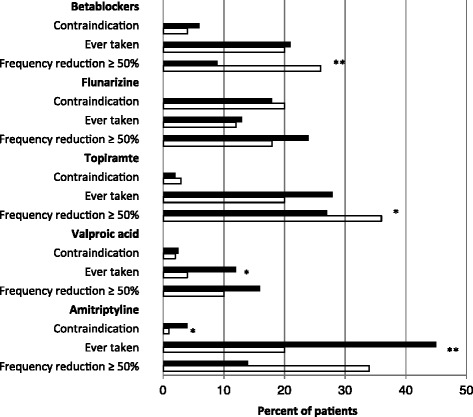
“Except for flunarizine (19.4 %) the rate of contraindications was below 10 %.”
§ Prevalence, management and burden of episodic and chronic headaches—a cross-sectional multicentre study in eight Austrian headache centres > Results > Medication
plain- Asserted: passes — The authors put it forward as true.
- Checkable: passes — It can be checked against evidence.
- Load-bearing: unclear — It is unclear whether the paper’s conclusions depend on it.
- Based: passes — The paper gives a reason why it holds.
A result the paper states — it cites no source for it, so there is none to check. The quote shows it is in the paper.
In the paper
“The Eurolight diagnosis of pMOH corresponded with the clinical diagnosis of MOH in only 52 %.”
§ Prevalence, management and burden of episodic and chronic headaches—a cross-sectional multicentre study in eight Austrian headache centres > Discussion For the first time this cross-sectional, prospective, multicentre study provides comprehensive data from eight Austrian headache centres. Of 441 patients included 57 % had EH, 38 % had CH and 5 % did not give their headache frequency. The prevalence of migraine, TTH and pMOH was 49 %, 6 % and 16 %, respectively. In the previous month, the vast majority—more than 90 % – of the patients had used acute medication. The percentage was higher in EH than in CH. The proportion of patients who had used prophylactic drugs in the previous month was only 34 % and there was no difference between EH and CH. Even the proportion of patients who ever-before had used at least one of five standard prophylactic drugs, i.e. betablockers, flunarizine, topiramate, valproic acid and amitriptyline was not higher than 52 %. During the previous year two thirds of the patients had undergone MRI or CT and one out of seven attended an emergency department because of headache. Health related quality of life was poor or very poor in 12 % of the patients, more than 20 % indicated that their headaches had a negative impact on their earnings, one third experienced a negative impact on their career. The burden of headache in terms of lost days because of headache was severe in 45 % with more than 20 lost days in the preceding three months, and only half of the patients had noticed that their colleagues at work accepted their headaches. Symptoms of anxiety and depression, present in 45 % and 30 %, respectively, were significantly more present in CH than in EH. > Headache chronicity and diagnoses The greater proportion of males among patients with CH compared to EH should not only be seen as a selection bias, but might suggest that males are less likely to seeking help or being referred to a headache centre, if they have less frequent headaches. An epidemiological survey showed that more females than males with headache consulted their general practitioner [23]. With respect to the diagnostic spectrum, the majority of the patients with EH had migraine or probable migraine, and the vast majority of the patients with CH with or without pMOH was suffering from migrainous headache, comparable to previously published studies [12]. The percentage of patients with pMOH was 38–65 % smaller than in other studies [10, 11]. This may be due to different health systems in general, to different referral systems and to different study designs. In contrast to Austria, the Danish headache centre is the only tertiary headache centre in Denmark for 5 million inhabitants [10]. Referral regulations are less restrictive in Austria. Although patients should be referred to headache centres by neurologists, a substantial number of patients attends specialized headache centres on self-referral or on referral by their general practitioner. Bigal et al. [11] included patients with transformed migraine only in their study. Unexpectedly, the number of patients classified as CH without pMOH was high (99 of 169 patients). This may be caused by the cross-sectional study design. The concordance between clinical diagnoses and Eurolight diagnoses was good for EH and moderate for CH. Conflicting diagnoses were associated with Eurolight diagnoses of probable migraine, probable TTH and other headaches. In clinical practice, neurologists tended to diagnose definite migraine or TTH more often. The Eurolight diagnosis of pMOH corresponded with the clinical diagnosis of MOH in only 52 %. The main reason for this discrepancy may be, that the Eurolight questionnaire covers the preceding four weeks, whereas clinically MOH was diagnosed, if the patients had overused acute medications for at least three months (according to ICHD-2). Moreover, some patients’ history did not indicate a clear-cut overuse. Two patients had cluster headache and were not considered as having MOH during their cluster episode despite their frequent use of triptans.
plainstates an association- Asserted: passes — The authors put it forward as true.
- Checkable: passes — It can be checked against evidence.
- Load-bearing: passes — The paper’s conclusions depend on it.
- Based: passes — The paper gives a reason why it holds.
A result the paper reports from its own data — it cites no other source for it, so there is none to check. The quote shows it is in the paper.
In the paper
“About one third of the patients (34.3 %) reported a negative impact of their headache on their career and 21.5 % indicated that their headaches had negative impact on their earnings.”
§ Prevalence, management and burden of episodic and chronic headaches—a cross-sectional multicentre study in eight Austrian headache centres > Results > Burden of headache, comorbidity
plain- Asserted: passes — The authors put it forward as true.
- Checkable: passes — It can be checked against evidence.
- Load-bearing: unclear — It is unclear whether the paper’s conclusions depend on it.
- Based: passes — The paper gives a reason why it holds.
40 more claims
Create a free account to see all 58 claims and to verify the 5 references still open.
- Probably not a substantial claim. 4
- It may state two separate claims as one. 9
Citations
Cites
Depression and quality of life in older persons: A review
Sivertsen, H., Bjørkløf, G. H., Engedal, K., Selbæk, G., & Helvik, A.-S. (2015) · Dementia and Geriatric Cognitive Disorders · doi:10.1159/000437299 · Cited by 14,152
Vos, T., Flaxman, A. D., Naghavi, M., Lozano, R., Michaud, C., Ezzati, M., Shibuya, K., Salomon, J. A., Abdalla, S., Aboyans, V., et al. (2012) · The Lancet · doi:10.1016/s0140-6736(12)61729-2 · Cited by 8,291
Development of the World Health Organization WHOQOL-BREF Quality of Life Assessment
THE WHOQOL GROUP (1998) · Psychological Medicine · doi:10.1017/s0033291798006667 · Cited by 7,933
The International Classification of Headache Disorders: 2nd edition
Olesen, J., Goadsby, P., & Steiner, T. (2003) · The Lancet Neurology · doi:10.1016/s1474-4422(03)00590-8 · Cited by 5,049
Goadsby, P. J. (2004) · Cephalalgia · doi:10.1111/j.1468-2982.2004.00711.x · Cited by 2,381
Olesen, J. (2004) · Cephalalgia · doi:10.1111/j.1468-2982.2003.00824.x · Cited by 2,056
EFNS guideline on the drug treatment of migraine—revised report of an EFNS task force
Evers, S., Áfra, J., Frese, A., Goadsby, P. J., Linde, M., May, A., & Sándor, P. S. (2009) · European Journal of Neurology · doi:10.1111/j.1468-1331.2009.02748.x · Cited by 892 · cited 2×
“In the latter case, four additional questions had to be answered: Was the treatment stopped because of intolerable adverse effects? Was the taken dose sufficient [21]? Was treatment continued for at least three months? Did the treatment result in a decrease of headache frequency by at least 50 %? Each of these questio…”
BackgroundBlumenfeld, A., Varon, S., Wilcox, T., Buse, D., Kawata, A., Manack, A., Goadsby, P., & Lipton, R. (2011) · Cephalalgia · doi:10.1177/0333102410381145 · Cited by 627
Sociodemographic and comorbidity profiles of chronic migraine and episodic migraine sufferers
Buse, D. C., Manack, A., Serrano, D., Turkel, C., & Lipton, R. B. (2010) · Journal of Neurology, Neurosurgery & Psychiatry · doi:10.1136/jnnp.2009.192492 · Cited by 622 · cited 2×
“In a longitudinal study patients with chronic migraine had lower household incomes and worked part-time more often than patients with episodic migraine [7].”
BackgroundResultPrevalence of headache in Europe: a review for the Eurolight project
Stovner, L. J., & Andree, C. (2010) · The Journal of Headache and Pain · doi:10.1007/s10194-010-0217-0 · Cited by 580 · cited 1×
“MOH, with a life-time prevalence of 1–2 % [1, 5], often represents a major challenge, exceeding the impact of migraine or TTH on everyday’s life [5].”
BackgroundHospital anxiety and depression scale, Deutsche version (HADS-D)
Petermann, F. (2011) · Zeitschrift für Psychiatrie, Psychologie und Psychotherapie · doi:10.1024/1661-4747/a000077 · Cited by 558
Chronic migraine in the population: Burden, diagnosis, and satisfaction with treatment
Bigal, M. E., Serrano, D., Reed, M., & Lipton, R. B. (2008) · Neurology · doi:10.1212/01.wnl.0000323925.29520.e7 · Cited by 490
Epidemiology of headache in Europe
Stovner, L. J., Zwart, J. ‐., Hagen, K., Terwindt, G. M., & Pascual, J. (2006) · European Journal of Neurology · doi:10.1111/j.1468-1331.2006.01184.x · Cited by 421 · cited 1×
“The one-year prevalence is 10–18 % in migraine, and 31–90 % in tension-type headache (TTH) [1–3].”
BackgroundPsychiatric comorbidities of episodic and chronic migraine
Buse, D. C., Silberstein, S. D., Manack, A. N., Papapetropoulos, S., & Lipton, R. B. (2013) · Journal of Neurology · doi:10.1007/s00415-012-6725-x · Cited by 395
The impact of headache in Europe: principal results of the Eurolight project
Steiner, T. J., Stovner, L. J., Katsarava, Z., Lainez, J. M., Lampl, C., Lantéri-Minet, M., Rastenyte, D., Ruiz de la Torre, E., Tassorelli, C., Barré, J., et al. (2014) · The Journal of Headache and Pain · doi:10.1186/1129-2377-15-31 · Cited by 382 · cited 5×
“It was demonstrated that chronic migraine imposes a greater burden on the individual patient than episodic migraine in terms of lower quality of life and headache impact [12, 26, 27], and that patients with chronic migraine or pMOH had more workdays lost, more days with reduced productivity and more days lost for fami…”
BackgroundInfluentialSelf-citationPsychiatric Comorbidity in Migraine: A Review
Radat, F., & Swendsen, J. (2005) · Cephalalgia · doi:10.1111/j.1468-2982.2004.00839.x · Cited by 299 · cited 3×
“Psychiatric comorbidity, in particular depression and anxiety, has been studied extensively in patients with recurrent or chronic headaches [31].”
BackgroundResultInfluentialExcessive acute migraine medication use and migraine progression
Bigal, M. E., & Lipton, R. B. (2008) · Neurology · doi:10.1212/01.wnl.0000335946.53860.1d · Cited by 292
Bigal, M., Rapoport, A., Sheftell, F., Tepper, S., & Lipton, R. (2004) · Cephalalgia · doi:10.1111/j.1468-2982.2004.00691.x · Cited by 275
Buse, D., Manack, A., Serrano, D., Reed, M., Varon, S., Turkel, C., & Lipton, R. (2012) · Headache: The Journal of Head and Face Pain · doi:10.1111/j.1526-4610.2011.02046.x · Cited by 239
Limmroth, V., & Katsarava, Z. (2004) · Current Opinion in Neurology · doi:10.1097/00019052-200406000-00011 · Cited by 209
Steiner, T. J., Gururaj, G., Andrée, C., Katsarava, Z., Ayzenberg, I., Yu, S.-Y., Al Jumah, M., Tekle-Haimanot, R., Birbeck, G. L., Herekar, A., et al. (2014) · The Journal of Headache and Pain · doi:10.1186/1129-2377-15-3 · Cited by 204 · cited 1×
“We applied the standard computerized algorithm to analyse data derived from the Eurolight questionnaire [22].”
MethodSelf-citationImpact of headache in Europe: a review for the Eurolight project
Stovner, L. J., Andrée, C., & On behalf of the Eurolight Steering Committee (2008) · The Journal of Headache and Pain · doi:10.1007/s10194-008-0038-6 · Cited by 154 · cited 1×
“Headaches, especially chronic headache and medication overuse headache (MOH), are associated with comorbidities such as depression, anxiety disorders, restless legs syndrome [6–8] and reduced quality of life [9].”
BackgroundSelf-citationProbable medication-overuse headache: The effect of a 2-month drug-free period
Zeeberg, P., Olesen, J., & Jensen, R. (2006) · Neurology · doi:10.1212/01.wnl.0000217914.30994.bd · Cited by 153
Probable medication-overuse headache: The effect of a 2-month drug-free period
Gotkine, M. (2007) · Neurology · doi:10.1212/01.wnl.0000256979.23115.c4 · Cited by 138 · cited 2×
“In contrast to Austria, the Danish headache centre is the only tertiary headache centre in Denmark for 5 million inhabitants [10].”
ResultSchnider, P., Aull, S., Baumgartner, C., Marterer, A., Wöber, C., Zeiler, K., & Wessely, P. (1996) · Cephalalgia · doi:10.1046/j.1468-2982.1996.1607481.x · Cited by 126
Self-citationOne-Year Prevalence of Migraine in Austria: A Nation-Wide Survey
Lampl, C., Buzath, A., Baumhackl, U., & Klingler, D. (2003) · Cephalalgia · doi:10.1046/j.1468-2982.2003.00509.x · Cited by 101 · cited 1×
“For Austria the one-year prevalence of migraine was 10 % [4].”
BackgroundSelf-citationKristoffersen, E. S., Grande, R. B., Aaseth, K., Lundqvist, C., & Russell, M. B. (2012) · The Journal of Headache and Pain · doi:10.1007/s10194-011-0391-8 · Cited by 81 · cited 1×
“An epidemiological survey showed that more females than males with headache consulted their general practitioner [23].”
BackgroundKristoffersen, E. S., Lundqvist, C., Aaseth, K., Grande, R. B., & Russell, M. B. (2013) · The Journal of Headache and Pain · doi:10.1186/1129-2377-14-5 · Cited by 75 · cited 1×
“An epidemiological survey showed that more females than males with headache consulted their general practitioner [23].”
BackgroundPrevalence and burden of primary headache disorders among a local community in Addis Ababa, Ethiopia
Mengistu, G., & Mamo, S. A. (2013) · The Journal of Headache and Pain · doi:10.1186/1129-2377-14-30 · Cited by 65
Kageneck, C., Nixdorf-Bergweiler, B. E., Messlinger, K., & Fischer, M. J. (2014) · The Journal of Headache and Pain · doi:10.1186/1129-2377-15-7 · Cited by 58
Katsarava, Z., & Obermann, M. (2013) · Current Opinion in Neurology · doi:10.1097/wco.0b013e328360d596 · Cited by 55
Headache neuroimaging: Routine testing when guidelines recommend against them
Callaghan, B. C., Kerber, K. A., Pace, R. J., Skolarus, L., Cooper, W., & Burke, J. F. (2015) · Cephalalgia · doi:10.1177/0333102415572918 · Cited by 51
Tribl, G., Schnider, P., Wöber, C., Aull, S., Auterith, A., Zeiler, K., & Wessely, P. (2001) · Cephalalgia · doi:10.1046/j.1468-2982.2001.00231.x · Cited by 51
Self-citationAndrée, C., Vaillant, M., Barre, J., Katsarava, Z., Lainez, J. M., Lair, M.-L., Lanteri-Minet, M., Lampl, C., J Steiner, T., Jacob Stovner, L., et al. (2010) · Cephalalgia · doi:10.1177/0333102409354323 · Cited by 43 · cited 2×
“After giving written informed consent the patients filled in the Eurolight questionnaire covering biographic data, headache symptoms, use of acute and prophylactic medication, former examinations due to headaches, quality of life, symptoms of anxiety and depression, the impact of headache and health related quality of…”
MethodSelf-citationAyzenberg, I., Katsarava, Z., Sborowski, A., Obermann, M., ЧЕРНЫШ, М. Ф., Osipova, V. В., Tabeeva, G. R., & Steiner, T. J. (2015) · The Journal of Headache and Pain · doi:10.1186/1129-2377-16-7 · Cited by 36 · cited 1×
“A recent study on headache yesterday in Russia showed that headache yesterday reduced productivity in 70 % of the patients [28]; likewise in an African cohort 68 % of patients with headache lost workdays [29].”
BackgroundZebenholzer, K., Thamer, M., & Wöber, C. (2011) · Clinical Journal of Pain · doi:10.1097/ajp.0b013e3182321d35 · Cited by 35 · cited 1×
“the Department of Neurology at the Medical University of Vienna, performing in-patient withdrawal treatment in 40–50 patients every year [13–15].”
MethodSelf-citationAssociation between restless legs syndrome and migraine: a population‐based study
Zanigni, S., Giannini, G., Melotti, R., Pattaro, C., Provini, F., Cevoli, S., Facheris, M. F., Cortelli, P., & Pramstaller, P. P. (2014) · European Journal of Neurology · doi:10.1111/ene.12462 · Cited by 32 · cited 1×
“Headaches, especially chronic headache and medication overuse headache (MOH), are associated with comorbidities such as depression, anxiety disorders, restless legs syndrome [6–8] and reduced quality of life [9].”
BackgroundRausa, M., Cevoli, S., Sancisi, E., Grimaldi, D., Pollutri, G., Casoria, M., Grieco, D., Bisi, A., Cortelli, P., Pozzi, E., et al. (2013) · The Journal of Headache and Pain · doi:10.1186/1129-2377-14-22 · Cited by 27
Research works printed but not linked: 1
- Steiner TJ The HALT and HART indices J Headache Pain 2007 8 S22 5
Cited by
Buse, D. C., Fanning, K. M., Reed, M. L., Murray, S., Dumas, P. K., Adams, A. M., & Lipton, R. B. (2019) · Headache: The Journal of Head and Face Pain · doi:10.1111/head.13613 · Cited by 311
“Our results related to career and finance were consistent with those reported by others.(14,18-22).”
BackgroundResultLipton, R. B., Seng, E. K., Chu, M. K., Reed, M. L., Fanning, K. M., Adams, A. M., & Buse, D. C. (2020) · Headache The Journal of Head and Face Pain · doi:10.1111/head.13914 · Cited by 117
“In addition to the well-described comorbidity of migraine, anxiety, and depression, previous studies have provided further evidence that comorbid depression and/or anxiety significantly negatively influence QoL and increase the burden of migraine.(16,17) For example, in a small population of Korean patients with migra…”
BackgroundResultFrank, F., Ulmer, H., Sidoroff, V., & Broessner, G. (2021) · Cephalalgia · doi:10.1177/03331024211018137 · Cited by 88
Self-citationLearning the full impact of migraine through patient voices: A qualitative study.
Estave, P. M., Beeghly, S., Anderson, R., Margol, C., Shakir, M., George, G., Berger, A., O’Connell, N., Burch, R., Haas, N., et al. (2021) · Headache The Journal of Head and Face Pain · doi:10.1111/head.14151 · Cited by 81
“For the larger RCT, additional areas of focus were added to include questions about (1) heat pain training; (2) questionnaires; (3) headache logs; and (4) estimated headache frequency change for life value.”
BackgroundInfluentialZebenholzer, K., Lechner, A., Broessner, G., Lampl, C., Luthringshausen, G., Wuschitz, A., Obmann, S.-M., Berek, K., & Wöber, C. (2016) · The Journal of Headache and Pain · doi:10.1186/s10194-016-0603-3 · Cited by 87
“3 % had CH, and patients with CH had a significantly lower quality of life and significantly more often depression or anxiety [11].”
BackgroundMethodResultInfluentialSelf-citation
Metadata
- Authors
- Zebenholzer, K., Andree, C., Lechner, A., Broessner, G., Lampl, C., Luthringshausen, G., Wuschitz, A., Obmann, S.-M., Berek, K., & Wöber, C.
- Affiliations
- Medical University of Vienna (AT)
- Medical University of Graz (AT)
- Innsbruck Medical University (AT)
- Christian Doppler Klinik (AT)
- Klinikum Klagenfurt (AT)
- University of Applied Sciences Kufstein (AT)
- Corresponding author
- Zebenholzer, Karin
- Venue
- The Journal of Headache and Pain
- Published
- 2015-05-19
- Volume
- 16
- Issue
- 1
- Pages
- 531-531
- ISSN
- 1129-2369 (ISSN-L)
- 1129-2377
- PMC
- PMC4437990
- OpenAlex
- W1487672835
- Cited by
- 50
- References
- 38
- Citations by year
- 2026: 2 · 2025: 3 · 2024: 1 · 2023: 4 · 2022: 1 · 2021: 5 · 2020: 7 · 2019: 6 · 2018: 4 · 2017: 4 · 2016: 10 · 2015: 3
- FWCI
- 5.68
- Type
- journal article
- Language
- en
- Open access
- gold
- doi.org
- Locations
- The Journal of Headache and Pain (publishedVersion, cc-by)
- PubMed Central (publishedVersion, cc-by)
- PubMed (publishedVersion)
- Funders
- Allergan
- Topics
- Health Sciences › Medicine › Clinical Neurology › Migraine and Headache Studies
- Health Sciences › Dentistry › Oral Surgery › Temporomandibular Joint Disorders
- Health Sciences › Medicine › Clinical Neurology › Traumatic Brain Injury Research
- Keywords
- episodic headache, chronic headache, migraine, tension-type headache, medication overuse headache, headache prevalence, preventive medication, acute medication use, health care utilization, quality of life, depression, anxiety, Austria
- MeSH terms
- Adult, Austria, Cross-Sectional Studies, Female, Headache, Health Services, Humans, Male, Middle Aged, Prevalence, Headache Disorders
About these checks
Registry, retraction, Cites and statistics results are computed, not judged, with one exception: a printed reference that no index lists is read once by a model before it counts as a citation error. Claims are extracted by a model and kept only when their quote appears verbatim in the text; each cited source is then checked, with a model’s help, for whether it says what the claim relies on. Those verdicts can be wrong — read the claim’s quote and the cited source before relying on one.
A language model drew the claims from the paper on 2026-10-11, under version 3 of the claim definition (model deepseek-v4.1-flash, prompt extract-v3).
A second model labelled each claim on 2026-10-11 (model jev-1.13-20260917, definition revision gold-guideline-v0.2).
Cited sources are checked with a language model’s help (qwen3.8-omni-flash).
Statistics and arithmetic are recomputed, not judged.
Confidence bands are shown only for fields calibrated on our annotated test set. None is calibrated yet, so no band is shown.
What counts as a claim ›How we measure confidence ›How we check this ›
Are you an author, or do you see a problem with this page? Request a review
Data sources
Bibliographic data: Semantic Scholar, OpenAlex, Crossref.
Contains information from the Semantic Scholar Academic Graph Datasets, made available under the ODC Attribution License (ODC-BY 1.0).
Semantic Scholar’s data is described in: Kinney, R., et al. (2023). The Semantic Scholar Open Data Platform. arXiv:2301.10140.
