

Calcareous sponge genomes reveal complex evolution of α-carbonic anhydrases and two key biomineralization enzymes
Open accessThe DOI matches its Crossref record; 68 of the 69 references it cites were found in a registry or an index.
Abstract
BACKGROUND: Calcium carbonate biominerals form often complex and beautiful skeletal elements, including coral exoskeletons and mollusc shells. Although the ability to generate these carbonate structures was apparently gained independently during animal evolution, it sometimes involves the same gene families. One of the best-studied of these gene families comprises the α- carbonic anhydrases (CAs), which catalyse the reversible transformation of CO2 to HCO3 - and fulfill many physiological functions. Among Porifera -the oldest animal phylum with the ability to produce skeletal elements- only the class of calcareous sponges can build calcitic spicules, which are the extracellular products of specialized cells, the sclerocytes. Little is known about the molecular mechanisms of their synthesis, but inhibition studies suggest an essential role of CAs. In order to gain insight into the evolution and function of CAs in biomineralization of a basal metazoan species, we determined the diversity and expression of CAs in the calcareous sponges Sycon ciliatum and Leucosolenia complicata by means of genomic screening, RNA-Seq and RNA in situ hybridization expression analysis. Active biomineralization was located with calcein-staining. RESULTS: We found that the CA repertoires of two calcareous sponge species are strikingly more complex than those of other sponges. By characterizing their expression patterns, we could link two CAs (one intracellular and one extracellular) to the process of calcite spicule formation in both studied species. The extracellular biomineralizing CAs seem to be of paralogous origin, a finding that advises caution against assuming functional conservation of biomineralizing genes based upon orthology assessment alone. Additionally, calcareous sponges possess acatalytic CAs related to human CAs X and XI, suggesting an ancient origin of these proteins. Phylogenetic analyses including CAs from genomes of all non-bilaterian phyla suggest multiple gene losses and duplications and presence of several CAs in the last common ancestor of metazoans. CONCLUSIONS: We identified two key biomineralization enzymes from the CA-family in calcareous sponges and propose their possible interaction in spicule formation. The complex evolutionary history of the CA family is driven by frequent gene diversification and losses. These evolutionary patterns likely facilitated the numerous events of independent recruitment of CAs into biomineralization within Metazoa.
Overview
The claims and statistics of this paper haven’t been checked yet.
Free: it reads the open-access text and checks the first 5 claims that cite a source we can check. Create a free account to check every claim.
Integrity signals
Registry
Cites
Statistics
Figures
Verification
Claims the paper makes
The claims and statistics of this paper haven’t been checked yet.
Free: it reads the open-access text and checks the first 5 claims that cite a source we can check. Create a free account to check every claim.
Claims other papers make about this one
Each is checked against this paper’s own text: does it say what the citing paper says it does?
The check wasn’t confident either way, so it gives no verdict — never disputed.
In the citing paper
“Inferred relationships among major sponge lineages (i.e., Demospongiae + Hexactinellida sister to Calcarea + Homoscleromorpha) were consistent with morphology (27,28) and most other molecular analyses that have recovered monophyletic sponges (datasets 1-27 in Figs. 2 and 3 and Figs.S1-S5) (4, 5, 8, 9, 28-30).”
From Error, signal, and the placement of Ctenophora sister to all other animals (2015) · cites this paper as [30]
Experimental — accuracy not yet measured
Self-check
Percentages, sums and reported differences re-computed from the paper’s own numbers.
The self-check needs the paper’s full text.
Citations
Cites
Basic local alignment search tool
Altschul, S. F., Gish, W., Miller, W., Myers, E. W., & Lipman, D. J. (1990) · Journal of Molecular Biology · doi:10.1006/jmbi.1990.9999 · Cited by 98,669
MAFFT Multiple Sequence Alignment Software Version 7: Improvements in Performance and Usability
Katoh, K., & Standley, D. M. (2013) · Molecular Biology and Evolution · doi:10.1093/molbev/mst010 · Cited by 46,209
MrBayes 3: Bayesian phylogenetic inference under mixed models
Ronquist, F., & Huelsenbeck, J. P. (2003) · Bioinformatics · doi:10.1093/bioinformatics/btg180 · Cited by 29,077
RSEM: accurate transcript quantification from RNA-Seq data with or without a reference genome
Li, B., & Dewey, C. N. (2011) · BMC Bioinformatics · doi:10.1186/1471-2105-12-323 · Cited by 22,179 · cited 1×
“sum of the posterior probability of each read coming from that gene over all reads [36] and adjusted with size factors of the RNASeq libraries”
BackgroundGuindon, S., Dufayard, J.-F., Lefort, V., Anisimova, M., Hordijk, W., & Gascuel, O. (2010) · Systematic Biology · doi:10.1093/sysbio/syq010 · Cited by 18,376 · cited 2×
“ML phylogenetic analysis was performed with PHYML [50], including 200 bootstrap replicates and SH-like aLRT to obtain support values.”
BackgroundMethodDifferential expression analysis for sequence count data
Anders, S., & Huber, W. (2010) · Genome Biology · doi:10.1186/gb-2010-11-10-r106 · Cited by 15,581
Selection of Conserved Blocks from Multiple Alignments for Their Use in Phylogenetic Analysis
Castresana, J. (2000) · Molecular Biology and Evolution · doi:10.1093/oxfordjournals.molbev.a026334 · Cited by 10,508
SignalP 4.0: discriminating signal peptides from transmembrane regions
Petersen, T. N., Brunak, S., von Heijne, G., & Nielsen, H. (2011) · Nature Methods · doi:10.1038/nmeth.1701 · Cited by 8,847 · cited 1×
“0 [31] and presence of the three zinc-binding histidines, considered to be required for the catalytic function of CA (e.”
BackgroundPredicting Subcellular Localization of Proteins Based on their N-terminal Amino Acid Sequence
Emanuelsson, O., Nielsen, H., Brunak, S., & von Heijne, G. (2000) · Journal of Molecular Biology · doi:10.1006/jmbi.2000.3903 · Cited by 4,263
ProtTest 3: fast selection of best-fit models of protein evolution
Darriba, D., Taboada, G. L., Doallo, R., & Posada, D. (2011) · Bioinformatics · doi:10.1093/bioinformatics/btr088 · Cited by 2,672
Pfam: clans, web tools and services
Finn, R. D. (2006) · Nucleic Acids Research · doi:10.1093/nar/gkj149 · Cited by 2,302
Sea Anemone Genome Reveals Ancestral Eumetazoan Gene Repertoire and Genomic Organization
Putnam, N. H., Srivastava, M., Hellsten, U., Dirks, B., Chapman, J., Salamov, A., Terry, A., Shapiro, H., Lindquist, E., Kapitonov, V. V., et al. (2007) · Science · doi:10.1126/science.1139158 · Cited by 1,555 · cited 1×
“Amino acid sequences of CAs from additional taxa were obtained from GenBank [56] or identified by BLAST searches against data from sequenced invertebrate genomes [42,57-63] and transcriptomes [64] from data of publicly available sources: Compagen [65,66] and Metazome v3.”
MethodThe Genome of the Sea Urchin Strongylocentrotus purpuratus
Sodergren, E., Weinstock, G. M., Davidson, E. H., Cameron, R. A., Gibbs, R. A., Angerer, R. C., Angerer, L. M., Arnone, M. I., Burgess, D. R., Burke, R. D., et al. (2006) · Science · doi:10.1126/science.1133609 · Cited by 1,132 · cited 1×
“Amino acid sequences of CAs from additional taxa were obtained from GenBank [56] or identified by BLAST searches against data from sequenced invertebrate genomes [42,57-63] and transcriptomes [64] from data of publicly available sources: Compagen [65,66] and Metazome v3.”
MethodThe Amphimedon queenslandica genome and the evolution of animal complexity
Srivastava, M., Simakov, O., Chapman, J., Fahey, B., Gauthier, M. E. A., Mitros, T., Richards, G. S., Conaco, C., Dacre, M., Hellsten, U., et al. (2010) · Nature · doi:10.1038/nature09201 · Cited by 1,049
Self-citationThe Trichoplax genome and the nature of placozoans
Srivastava, M., Begovic, E., Chapman, J., Putnam, N. H., Hellsten, U., Kawashima, T., Kuo, A., Mitros, T., Salamov, A., Carpenter, M. L., et al. (2008) · Nature · doi:10.1038/nature07191 · Cited by 889
ProtTest-HPC: Fast Selection of Best-Fit Models of Protein Evolution
Darriba, D., Taboada, G. L., Doallo, R., & Posada, D. (2011) · Lecture Notes in Computer Science · doi:10.1007/978-3-642-21878-1_22 · Cited by 811
Chapman, J. A., Kirkness, E. F., Simakov, O., Hampson, S. E., Mitros, T., Weinmaier, T., Rattei, T., Balasubramanian, P. G., Borman, J., Busam, D., et al. (2010) · Nature · doi:10.1038/nature08830 · Cited by 810
Phylogenomics Revives Traditional Views on Deep Animal Relationships
Philippe, H., Derelle, R., Lopez, P., Pick, K., Borchiellini, C., Boury-Esnault, N., Vacelet, J., Renard, E., Houliston, E., Quéinnec, E., et al. (2009) · Current Biology · doi:10.1016/j.cub.2009.02.052 · Cited by 695 · cited 3×
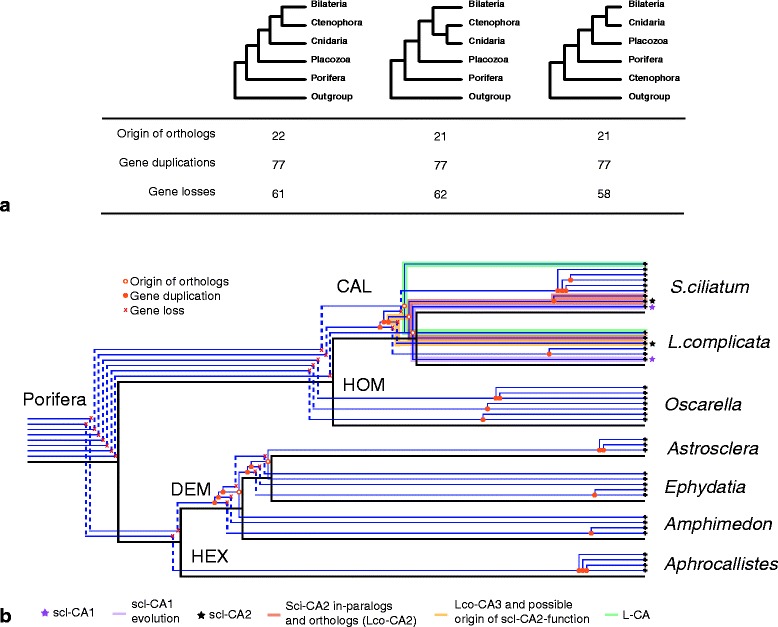
“To gain further insight in CA evolution, we reconciled our CA phylogeny with two more recent hypotheses [41,42] and a more classical hypothesis about the relationships of non-bilaterian animals with methods provided in Jane 4 [43].”
MethodThe European nucleotide archive
Leinonen, R., Akhtar, R., Birney, E., Bower, L., Cerdeno-Tarraga, A., Cheng, Y., Cleland, I., Faruque, N., Goodgame, N., Gibson, R., et al. (2011) · Nucleic Acids Research · doi:10.1093/nar/gkq967 · Cited by 690
The Genome of the Ctenophore Mnemiopsis leidyi and Its Implications for Cell Type Evolution
Ryan, J. F., Pang, K., Schnitzler, C. E., Nguyen, A.-D., Moreland, R. T., Simmons, D. K., Koch, B. J., Francis, W. R., Havlak, P., Program, N. C. S., et al. (2013) · Science · doi:10.1126/science.1242592 · Cited by 682
Hewett-Emmett, D., & Tashian, R. E. (1996) · Molecular Phylogenetics and Evolution · doi:10.1006/mpev.1996.0006 · Cited by 613
Carbonic Anhydrase: New Insights for an Ancient Enzyme
Tripp, B. C., Smith, K., & Ferry, J. G. (2001) · Journal of Biological Chemistry · doi:10.1074/jbc.r100045200 · Cited by 565
Biomineralization and Evolutionary History
Knoll, A. H. (2003) · Reviews in Mineralogy and Geochemistry · doi:10.2113/0540329 · Cited by 494
Sources and Mechanisms of Inorganic Carbon Transport for Coral Calcification and Photosynthesis
Furla, P., Galgani, I., Durand, I., & Allemand, D. (2000) · Journal of Experimental Biology · doi:10.1242/jeb.203.22.3445 · Cited by 449
Jane: a new tool for the cophylogeny reconstruction problem
Conow, C., Fielder, D., Ovadia, Y., & Libeskind-Hadas, R. (2010) · Algorithms for Molecular Biology · doi:10.1186/1748-7188-5-16 · Cited by 403
Fourth European Marine Biology Symposium.
Fogg, G. E., & Crisp, D. J. (1972) · The Journal of Ecology · doi:10.2307/2258368 · Cited by 352
Marie, B., Joubert, C., Tayalé, A., Zanella-Cléon, I., Belliard, C., Piquemal, D., Cochennec-Laureau, N., Marin, F., Gueguen, Y., & Montagnani, C. (2012) · Proceedings of the National Academy of Sciences · doi:10.1073/pnas.1210552109 · Cited by 350
Early evolution of animal cell signaling and adhesion genes
Nichols, S. A., Dirks, W., Pearse, J. S., & King, N. (2006) · Proceedings of the National Academy of Sciences · doi:10.1073/pnas.0604065103 · Cited by 327
Multiple Roles of Carbonic Anhydrase in Cellular Transport and Metabolism
Henry, R. P. (1996) · Annual Review of Physiology · doi:10.1146/annurev.ph.58.030196.002515 · Cited by 323
MOYA, A., HUISMAN, L., BALL, E. E., HAYWARD, D. C., GRASSO, L. C., CHUA, C. M., WOO, H. N., GATTUSO, J. ‐., FORÊT, S., & MILLER, D. J. (2012) · Molecular Ecology · doi:10.1111/j.1365-294x.2012.05554.x · Cited by 297
The Divergence, Actions, Roles, and Relatives of Sodium-Coupled Bicarbonate Transporters
Parker, M. D., & Boron, W. F. (2013) · Physiological Reviews · doi:10.1152/physrev.00023.2012 · Cited by 289
Riesgo, A., Farrar, N., Windsor, P. J., Giribet, G., & Leys, S. P. (2014) · Molecular Biology and Evolution · doi:10.1093/molbev/msu057 · Cited by 266 · cited 1×
“Amino acid sequences of CAs from additional taxa were obtained from GenBank [56] or identified by BLAST searches against data from sequenced invertebrate genomes [42,57-63] and transcriptomes [64] from data of publicly available sources: Compagen [65,66] and Metazome v3.”
MethodCarbonic Anhydrase in the Scleractinian Coral Stylophora pistillata
Moya, A., Tambutté, S., Bertucci, A., Tambutté, E., Lotto, S., Vullo, D., Supuran, C. T., Allemand, D., & Zoccola, D. (2008) · Journal of Biological Chemistry · doi:10.1074/jbc.m804726200 · Cited by 266
Deep metazoan phylogeny: When different genes tell different stories
Nosenko, T., Schreiber, F., Adamska, M., Adamski, M., Eitel, M., Hammel, J., Maldonado, M., Müller, W. E. G., Nickel, M., Schierwater, B., et al. (2013) · Molecular Phylogenetics and Evolution · doi:10.1016/j.ympev.2013.01.010 · Cited by 254
Self-citationLivingston, B. T., Killian, C. E., Wilt, F., Cameron, A., Landrum, M. J., Ermolaeva, O., Sapojnikov, V., Maglott, D. R., Buchanan, A. M., & Ettensohn, C. A. (2006) · Developmental Biology · doi:10.1016/j.ydbio.2006.07.047 · Cited by 243
Carbonic anhydrases in anthozoan corals—A review
Bertucci, A., Moya, A., Tambutté, S., Allemand, D., Supuran, C. T., & Zoccola, D. (2013) · Bioorganic & Medicinal Chemistry · doi:10.1016/j.bmc.2012.10.024 · Cited by 243 · cited 8×
“In corals, the origin of the carbonate carbon source is still debated and probably differs between species [11].”
BackgroundResultInfluentialCarbonic Anhydrase: Mechanism, Regulation, Links to Disease, and Industrial Applications
(2014) · Subcellular Biochemistry · doi:10.1007/978-94-007-7359-2 · Cited by 218
Zoccola, D., Tambutté, E., Kulhanek, E., Puverel, S., Scimeca, J.-C., Allemand, D., & Tambutté, S. (2004) · Biochimica et Biophysica Acta (BBA) - Biomembranes · doi:10.1016/j.bbamem.2004.02.010 · Cited by 207
Origin of metazoan cadherin diversity and the antiquity of the classical cadherin/β-catenin complex
Nichols, S. A., Roberts, B. W., Richter, D. J., Fairclough, S. R., & King, N. (2012) · Proceedings of the National Academy of Sciences · doi:10.1073/pnas.1120685109 · Cited by 193
Deep Phylogeny and Evolution of Sponges (Phylum Porifera)
Wörheide, G., Dohrmann, M., Erpenbeck, D., Larroux, C., Maldonado, M., Voigt, O., Borchiellini, C., & Lavrov, D. V. (2012) · Advances in Marine Biology · doi:10.1016/b978-0-12-387787-1.00007-6 · Cited by 166 · cited 1×
“Sponge class and family relationships correspond to these and previous results [70].”
ResultSelf-citationManuel, M., Borchiellini, C., Alivon, E., Le Parco, Y., & Boury-Esnault, J. V. N. (2003) · Systematic Biology · doi:10.1080/10635150309322 · Cited by 158
Proteomic analysis of sea urchin (Strongylocentrotus purpuratus) spicule matrix
Mann, K., Wilt, F. H., & Poustka, A. J. (2010) · Proteome Science · doi:10.1186/1477-5956-8-33 · Cited by 143
Sponge Paleogenomics Reveals an Ancient Role for Carbonic Anhydrase in Skeletogenesis
Jackson, D. J., Macis, L., Reitner, J., Degnan, B. M., & Wörheide, G. (2007) · Science · doi:10.1126/science.1141560 · Cited by 136
Leininger, S., Adamski, M., Bergum, B., Guder, C., Liu, J., Laplante, M., Bråte, J., Hoffmann, F., Fortunato, S., Jordal, S., et al. (2014) · Nature Communications · doi:10.1038/ncomms4905 · Cited by 136 · cited 4×
“Genomic and transcriptomic sequences and RNA-Seq data were obtained as described previously [27-29].”
BackgroundMethodInfluentialSelf-citationMarie, B., Jackson, D. J., Ramos‐Silva, P., Zanella‐Cléon, I., Guichard, N., & Marin, F. (2012) · FEBS Journal · doi:10.1111/febs.12062 · Cited by 130
Tambutté, S., Tambutté, É., Zoccola, D., Caminiti-Segonds, N., Lotto, S., Moya, A., Allemand, D., & Adkins, J. F. (2006) · Marine Biology · doi:10.1007/s00227-006-0452-8 · Cited by 119
Calcisponges have a ParaHox gene and dynamic expression of dispersed NK homeobox genes
Fortunato, S., Adamski, M., Ramos, O. M., Leininger, S., Liu, J. L., Ferrier, D. E. K., & Adamska, M. (2014) · Nature · doi:10.1038/nature13881 · Cited by 116
Self-citationAizenberg, J., Hanson, J., Ilan, M., Leiserowitz, L., Koetzle, T. F., Addadi, L., & Weiner, S. (1995) · The FASEB Journal · doi:10.1096/fasebj.9.2.7781928 · Cited by 115
Evolutionary Origins of Animal Skeletal Biomineralization
Murdock, D. J. E., & Donoghue, P. C. J. (2011) · Cells Tissues Organs · doi:10.1159/000324245 · Cited by 107
Phylogeny and expression of carbonic anhydrase-related proteins
Aspatwar, A., Tolvanen, M. E., & Parkkila, S. (2010) · BMC Molecular Biology · doi:10.1186/1471-2199-11-25 · Cited by 103
Hemmrich, G., & Bosch, T. C. G. (2008) · BioEssays · doi:10.1002/bies.20813 · Cited by 101
Septate junctions in the calcareous sponge Sycon ciliatum
Ledger, P. W. (1975) · Tissue and Cell · doi:10.1016/s0040-8166(75)80004-8 · Cited by 92
Carbonic Anhydrase Related Proteins: Molecular Biology and Evolution
Aspatwar, A., Tolvanen, M. E. E., Ortutay, C., & Parkkila, S. (2013) · Sub-cellular biochemistry/Subcellular biochemistry · doi:10.1007/978-94-007-7359-2_8 · Cited by 86
Fortunato, S., Adamski, M., Bergum, B., Guder, C., Jordal, S., Leininger, S., Zwafink, C., Rapp, H. T., & Adamska, M. (2012) · EvoDevo · doi:10.1186/2041-9139-3-14 · Cited by 75 · cited 4×
“Genomic and transcriptomic sequences and RNA-Seq data were obtained as described previously [27-29].”
BackgroundMethodInfluentialSelf-citation11. Biomineralization and Evolutionary History
Knoll, A. H. (2003) · De Gruyter eBooks · doi:10.1515/9781501509346-016 · Cited by 72
Spicule formation in the calcareous sponge Sycon ciliatum
Ledger, P., & Jones, W. C. (1977) · Cell and Tissue Research · doi:10.1007/bf00221776 · Cited by 59
Voigt, O., Wülfing, E., & Wörheide, G. (2012) · PLoS ONE · doi:10.1371/journal.pone.0033417 · Cited by 57
Self-citationPhylogeny and evolution of calcareous sponges
Manuel, M. (2006) · Canadian Journal of Zoology · doi:10.1139/z06-005 · Cited by 53
Carbonic Anhydrase in Calcified Endoskeleton: Novel Activity in Biocalcification in Alcyonarian
Rahman, M. A., Oomori, T., & Uehara, T. (2007) · Marine Biotechnology · doi:10.1007/s10126-007-9030-4 · Cited by 41
Dynamics and growth patterns of calcareous sponge spicules
Ilan, M., Aizenberg, J., & Gillor, O. (1996) · Proceedings of the Royal Society B Biological Sciences · doi:10.1098/rspb.1996.0021 · Cited by 40
Roy, N. L., Marie, B., Gaume, B., Guichard, N., Delgado, S., Zanella‐Cléon, I., Becchi, M., Auzoux-Bordenave, S., Sire, J., & Marin, F. (2012) · Journal of Experimental Zoology Part B Molecular and Developmental Evolution · doi:10.1002/jez.b.22452 · Cited by 38
Müller, W. E. G., Wang, X., Grebenjuk, V. A., Korzhev, M., Wiens, M., Schloßmacher, U., & Schröder, H. C. (2012) · PLoS ONE · doi:10.1371/journal.pone.0034617 · Cited by 31
Not all sponges will thrive in a high-CO2 ocean: Review of the mineralogy of calcifying sponges
Smith, A. M., Berman, J., Key, M. M., & Winter, D. J. (2013) · Palaeogeography Palaeoclimatology Palaeoecology · doi:10.1016/j.palaeo.2013.10.004 · Cited by 29
Müller, W. E. G., Schlossmacher, U., Schröder, H. C., Lieberwirth, I., Glasser, G., Korzhev, M., Neufurth, M., & Wang, X. (2014) · Acta Biomaterialia · doi:10.1016/j.actbio.2013.08.025 · Cited by 28 · cited 3×
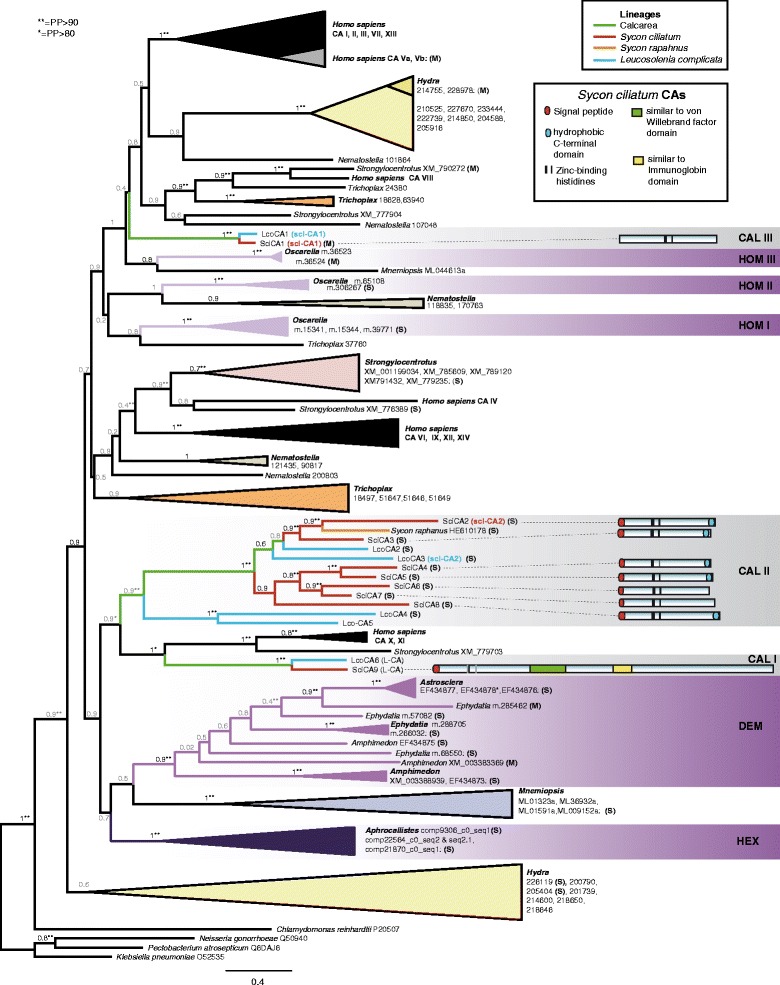
“ciliatum, scl-CA2, is most similar to the only CA so far reported from calcareous sponges, Sycon raphanus CA [23,24], and likewise shares a”
BackgroundFourth European Marine Biology Symposium
Knight‐Jones, E. W., & Crisp, D. J. (1973) · Journal of Animal Ecology · doi:10.2307/3418 · Cited by 23
Jones, W. C., & Ledger, P. W. (1986) · Comparative Biochemistry and Physiology Part A Physiology · doi:10.1016/0300-9629(86)90057-5 · Cited by 20
Minchin, E. A. (1908) · Journal of Cell Science · Cited by 16
Woodland, W. N. F. (1905) · Journal of Cell Science · doi:10.1242/jcs.s2-49.194.231 · Cited by 14
Research works printed but not linked: 3
- Wörheide G Hooper J Calcarea from the Great Barrier Reef. 1: Cryptic Calcinea from Heron Island and Wistari Reef (Capricorn-Bunker Group) Mem Queensl Mus 1999 43 2 859 891
- Manuel M Borchiellini C Alivon E Boury-Esnault N Molecular phylogeny of calcareous sponges using 18S rRNA and 28S rRNA sequences Boll Mus Ist Biol Univ Genova 2004 68 449 461
- GenBank. http://www.ncbi.nlm.nih.gov/genbank/.
Cited by
Error, signal, and the placement of Ctenophora sister to all other animals
Whelan, N. V., Kocot, K. M., Moroz, L. L., & Halanych, K. M. (2015) · Proceedings of the National Academy of Sciences · doi:10.1073/pnas.1503453112 · Cited by 331
The ‘biomineralization toolkit’ and the origin of animal skeletons
Murdock, D. J. E. (2020) · Biological Reviews · doi:10.1111/brv.12614 · Cited by 177
“Furthermore Voigt et al. (2014) find an even more complex repertoire of α-CAs in two calcarean sponges, and reconstruct eight α-CAs in the last common ancestor of Porifera, with different and independent histories of duplication and loss in each sponge lineage.”
BackgroundCavalier-Smith, T. (2017) · Philosophical Transactions of the Royal Society B: Biological Sciences · doi:10.1098/rstb.2015.0476 · Cited by 142
Roy, N. L., Ganot, P., Aranda, M., Allemand, D., & Tambutté, S. (2021) · BMC Ecology and Evolution · doi:10.1186/s12862-020-01734-0 · Cited by 109
Calcisponges have a ParaHox gene and dynamic expression of dispersed NK homeobox genes
Fortunato, S., Adamski, M., Ramos, O. M., Leininger, S., Liu, J. L., Ferrier, D. E. K., & Adamska, M. (2014) · Nature · doi:10.1038/nature13881 · Cited by 116
Self-citation
Metadata
- Authors
- Voigt, O., Adamski, M., Sluzek, K., & Adamska, M.
- Affiliations
- Ludwig-Maximilians-Universität München (DE)
- University of Bergen (NO)
- Corresponding author
- Voigt, Oliver
- Adamska, Maja
- Venue
- BMC Evolutionary Biology
- Published
- 2014-11-25
- Volume
- 14
- Issue
- 1
- Pages
- 230-230
- ISSN
- 1471-2148 (ISSN-L)
- PMC
- PMC4265532
- OpenAlex
- W2021311628
- Cited by
- 63
- References
- 69
- Citations by year
- 2026: 4 · 2025: 8 · 2024: 2 · 2023: 4 · 2022: 4 · 2021: 14 · 2020: 4 · 2019: 6 · 2018: 3 · 2017: 4 · 2016: 6 · 2015: 3 · 2014: 1
- FWCI
- 1.77
- Type
- journal article
- Language
- en
- Open access
- gold
- doi.org
- Locations
- BMC Evolutionary Biology (publishedVersion, cc-by)
- Europe PMC (PubMed Central) (publishedVersion, cc-by)
- PubMed Central (publishedVersion, cc-by)
- PubMed (publishedVersion)
- Zurich Open Repository and Archive (University of Zurich) (acceptedVersion, cc-by)
- ANU Open Research (Australian National University) (submittedVersion)
- NORA - Norwegian Open Research Archives (submittedVersion, cc-by)
- Open access LMU (Ludwid Maxmilian's Universitat Munchen) (submittedVersion)
- Zurich Open Repository and Archive (University of Zurich) (submittedVersion, cc-by)
- Zurich Open Repository and Archive (University of Zurich)
- Topics
- Physical Sciences › Materials Science › Biomaterials › Calcium Carbonate Crystallization and Inhibition
- Life Sciences › Biochemistry, Genetics and Molecular Biology › Molecular Biology › Enzyme function and inhibition
- Life Sciences › Agricultural and Biological Sciences › Animal Science and Zoology › Marine Invertebrate Physiology and Ecology
- Keywords
- alpha-carbonic anhydrase, calcareous sponges, sponges, biomineralization, gene family evolution, gene duplication and loss, paralogs, Sycon ciliatum, Leucosolenia complicata, sclerocytes, extracellular enzymes, metazoan origin
- MeSH terms
- Animals, Carbonic Anhydrases, Humans, Molecular Sequence Data, Phylogeny, Porifera, Genome, Evolution, Molecular
About these checks
Registry, retraction, Cites and statistics results are computed, not judged, with one exception: a printed reference that no index lists is read once by a model before it counts as a citation error. Claims are extracted by a model and kept only when their quote appears verbatim in the text; each cited source is then checked, with a model’s help, for whether it says what the claim relies on. Those verdicts can be wrong — read the claim’s quote and the cited source before relying on one.
Statistics and arithmetic are recomputed, not judged.
Confidence bands are shown only for fields calibrated on our annotated test set. None is calibrated yet, so no band is shown.
What counts as a claim ›How we measure confidence ›How we check this ›
Are you an author, or do you see a problem with this page? Request a review
Data sources
Bibliographic data: Semantic Scholar, OpenAlex, Crossref.
Contains information from the Semantic Scholar Academic Graph Datasets, made available under the ODC Attribution License (ODC-BY 1.0).
Semantic Scholar’s data is described in: Kinney, R., et al. (2023). The Semantic Scholar Open Data Platform. arXiv:2301.10140.
