

Systematic review to understand and improve care after stillbirth: a review of parents’ and healthcare professionals’ experiences
Open accessThe DOI matches its Crossref record; 72 of the 73 references it cites were found in a registry or an index; 62 of the 247 sources its claims cite were checked for support.
Abstract
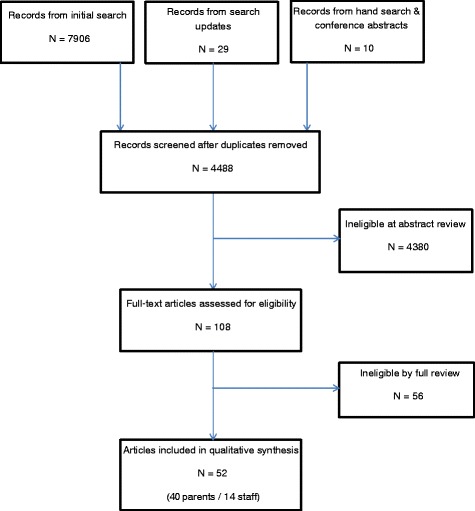
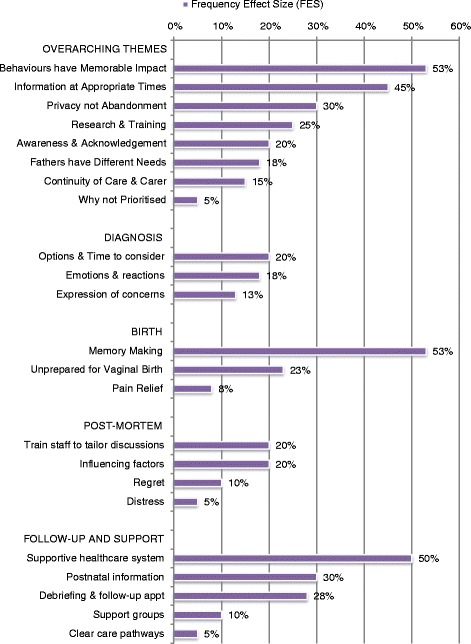
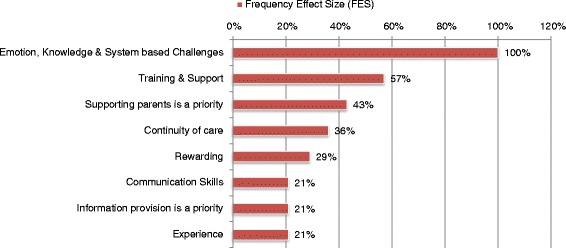
BACKGROUND: 2.7 million babies were stillborn in 2015 worldwide; behind these statistics lie the experiences of bereaved parents. The first Lancet series on stillbirth in 2011 described stillbirth as one of the "most shamefully neglected" areas of public health, recommended improving interaction between families and frontline caregivers and made a plea for increased investment in relevant research. METHODS: A systematic review of qualitative, quantitative and mixed-method studies researching parents and healthcare professionals experiences of care after stillbirth in high-income westernised countries (Europe, North America, Australia and South Africa) was conducted. The review was designed to inform research, training and improve care for parents who experience stillbirth. RESULTS: Four thousand four hundred eighty eight abstracts were identified; 52 studies were eligible for inclusion. Synthesis and quantitative aggregation (meta-summary) was used to extract findings and calculate frequency effect sizes (FES%) for each theme (shown in italics), a measure of the prevalence of that finding in the included studies. Researchers' areas of interest may influence reporting of findings in the literature and result in higher FES sizes, such as; support memory making (53%) and fathers have different needs (18%). Other parental findings were more unexpected; Parents want increased public awareness (20%) and for stillbirth care to be prioritised (5%). Parental findings highlighted lessons for staff; prepare parents for vaginal birth (23%), discuss concerns (13%), give options & time (20%), privacy not abandonment (30%), tailored post-mortem discussions (20%) and post-natal information (30%). Parental and staff findings were often related; behaviours and actions of staff have a memorable impact on parents (53%) whilst staff described emotional, knowledge and system-based barriers to providing effective care (100%). Parents reported distress being caused by midwives hiding behind 'doing' and ritualising guidelines whilst staff described distancing themselves from parents and focusing on tasks as coping strategies. Parents and staff both identified the need for improved training (parents 25% & staff 57%); continuity of care (parents 15% & staff 36%); supportive systems & structures (parents 50%); and clear care pathways (parents 5%). CONCLUSIONS: Parents' and healthcare workers' experiences of stillbirth can inform training, improve the provision of care and highlight areas for future research.
Overview
CoChat Summary
## TL;DR
This systematic review synthesized qualitative, quantitative, and mixed-method studies on parents’ and healthcare professionals’ experiences of care after stillbirth in high-income Western settings. It found that supportive, informative, individualized care and better staff training were recurring priorities, while poor communication and rigid, task-focused care could intensify parents’ distress.
## Key findings
- The review identified 52 eligible studies from 4,488 abstracts; across these, 623 individual findings were extracted, with 23 parent themes and 8 staff themes.
- Parents and staff both identified the need for improved training (parents 25%, staff 57%), continuity of care (parents 15%, staff 36%), supportive systems and structures (parents 50%), and clear care pathways (parents 5%).
- Among parent themes, higher-frequency findings included support memory making (53%), behaviours and actions of staff can have a memorable impact (53%), privacy not abandonment (30%), post-natal information (30%), and give options and time (20%).
- Staff themes highlighted emotion-, knowledge-, and system-based barriers to effective care (100%), as well as the need for improved training and a supportive working environment (57%) and continuity of care (36%).
## Methods
- Systematic review of qualitative, quantitative, and mixed-method studies about parents’ and healthcare workers’ experiences of stillbirth care in high-income Western countries (Europe, North America, Australia, and South Africa).
- Searched AMED, EMBASE, MEDLINE, Psych INFO, BNI, and CINAHL up to March 2014, plus conference abstracts from the International Stillbirth Alliance and First Candle conferences; included studies from 1996–2013.
- Used meta-summary to extract findings and calculate frequency effect sizes (FES%) and intensity effect sizes (IES), analyzed separately for parent and staff studies.
## Limitations
- The paper states that the main limitation is that the review was limited to high-income Western studies, so findings may not generalize to other settings; it notes that cultural and healthcare differences elsewhere may change results and recommendations.
- The authors state that there were a limited number of healthcare workers’ experience articles, so conclusions about staff experiences are limited.
- Evident from the text: FES may reflect the focus of prior research rather than true importance to parents, and several high-FES themes came from repeated work by the same research teams.
Model-written summary. Check it against the paper before relying on it.
Integrity signals
Registry
Cites
Statistics
Figures
Verification
Claims the paper makes
29 Valid · 1 Not valid · 32 Not checked · 20 Own results and interpretations
Some cited sources support this claim and some don’t — read each source’s verdict below.
In the paper
“Parents may regret certain decisions made regarding post-mortem and funeral arrangements, FES 10 % [31, 35, 50, 53]”
§ Systematic review to understand and improve care after stillbirth: a review of parents’ and healthcare professionals’ experiences > Results and discussion > Post-mortem thematic sentences
What the sources say
- Partly supportedcites [31] Conry J Prinsloo C Mothers’ access to supportive hospital services after the loss of a baby through stillbirth or neonatal death 2008 sourceExperimental — accuracy not yet measured
The Hospital services section reports that one mother regretted the decision not to have an autopsy, supporting the post-mortem part of the claim. It recommends helping parents with funeral plans but does not report regret about funeral arrangements or an FES figure of 10%. Page numbers are unavailable in our copy. (LLM, conf=0.87)
- Disputedcites [35] Gravensteen IK Helgadóttir LB Jacobsen E-M Rådestad I Sandset PM Ekeberg Ø Women’s experiences in relation to stillbirth and risk factors for long-term post-traumatic stress symptoms: a retrospective study BMJ Open 2013 3 10 10.1136/bmjopen-2013-003323 24154514 PMC3808779 sourceExperimental — accuracy not yet measured
The Results (page unavailable) say that none of the women whose baby had an autopsy wished it had not been carried out, contrary to the suggested regret about that post-mortem decision. The section on contact with the baby reports that many arranged funerals, but does not report regret about funeral arrangements or a 10% figure for such regret. (LLM, conf=0.75)
Checked by a reasoning model — may be wrong.
- Not checked — no full text of the sourcecites [50] Malacrida CA Perinatal death: Helping parents find their way J Fam Nurs 1997 3 2 130 148 10.1177/107484079700300203 source
- Not matchedcites [53] Flenady V Davis L Kirkwood E Horey D ISA conference 2010. Information and communication about autopsy for parents of stillborn infants (abstract). ISA conference 2010 2010
We searched by its title and found no matching paper.
hedged- Asserted: passes — The authors put it forward as true.
- Checkable: passes — It can be checked against evidence.
- Load-bearing: unclear — It is unclear whether the paper’s conclusions depend on it.
- Based: passes — The paper gives a reason why it holds.
- Partly supported
The cited sources support only part of this claim — read each source’s verdict below.
In the paper
“parents are more likely to develop prolonged psychological problems if professional support is not given [13].”
§ Systematic review to understand and improve care after stillbirth: a review of parents’ and healthcare professionals’ experiences > Background
What the sources say
- Partly supportedcites [13] Forrest GC Standish E Baum JD Support after perinatal death: a study of support and counselling after perinatal bereavement Br Med J 1982 285 6353 1475 1479 10.1136/bmj.285.6353.1475 6814610 PMC1500632 sourceExperimental — accuracy not yet measured
The Abstract reports more psychiatric symptoms at six months among mothers receiving routine care than among mothers offered counselling. But the Fathers section reports no significant difference between groups at six months, and the Abstract reports no significant difference among mothers at 14 months. The claim therefore extends a six-month finding in mothers to parents generally and to prolonged problems without a time limit. (LLM, conf=0.88)
hedgedstates a possible cause- Asserted: passes — The authors put it forward as true.
- Checkable: passes — It can be checked against evidence.
- Load-bearing: passes — The paper’s conclusions depend on it.
- Based: passes — The paper gives a reason why it holds.
- Partly supported
The cited sources support only part of this claim — read each source’s verdict below.
In the paper
“Behaviours and actions of staff can have a memorable impact on parents, FES 53 % [21, 29–48]”
§ Systematic review to understand and improve care after stillbirth: a review of parents’ and healthcare professionals’ experiences > Results and discussion > Overarching thematic sentences
What the sources say
- Not checked — no full text of the sourcecites [21] Lee C ‘She was a person, she was here’: The experience of late pregnancy loss in Australia J Reprod Infant Psychol 2012 30 1 62 76 10.1080/02646838.2012.661849 source
- Not checked — no full text of the sourcecites [29] Cacciatore J Bushfield S Stillbirth: the mother’s experience and implications for improving care J Soc Work End Life Palliat Care 2007 3 3 59 79 10.1300/J457v03n03_06 18077296 source
- Not checked — no full text of the sourcecites [30] Cacciatore J Erlandsson K Rådestad I Fatherhood and suffering: a qualitative exploration of Swedish men’s experiences of care after the death of a baby Int J Nurs Stud 2013 50 5 664 670 10.1016/j.ijnurstu.2012.10.014 23177900 source
- Supportedcites [31] Conry J Prinsloo C Mothers’ access to supportive hospital services after the loss of a baby through stillbirth or neonatal death 2008 source
The Introduction (page unavailable) says that the empathy and care parents receive from hospital staff generally colour their memories of their child. The Hospital services section also reports mothers describing supportive and unsupportive staff. The paper does not report an FES figure of 53%; that figure is not supported by this source. (LLM, conf=0.88)
- Not checked — no full text of the sourcecites [32] Dyson L While A The long shadow of Perinatal bereavement Br J Community Nurs 1998 3 9 432 439 10.12968/bjcn.1998.3.9.7183 source
- Not checked — no full text of the sourcecites [33] Erlandsson K Lindgren H Malm MC Davidsson-Bremborg A Radestad I Mothers’ experiences of the time after the diagnosis of an intrauterine death until the induction of the delivery: a qualitative Internet-based study J Obstet Gynaecol Res 2011 37 11 1677 1684 10.1111/j.1447-0756.2011.01603.x 21793995 source
- Not checked — no full text of the sourcecites [34] Erlandsson K Saflund K Wredling R Radestad I Support after stillbirth and its effect on parental grief over time J Soc Work End Life Palliat Care 2011 7 2-3 139 152 10.1080/15524256.2011.593152 21895434 source
- Partly supportedcites [35] Gravensteen IK Helgadóttir LB Jacobsen E-M Rådestad I Sandset PM Ekeberg Ø Women’s experiences in relation to stillbirth and risk factors for long-term post-traumatic stress symptoms: a retrospective study BMJ Open 2013 3 10 10.1136/bmjopen-2013-003323 24154514 PMC3808779 sourceExperimental — accuracy not yet measured
The Discussion (page unavailable) reports that women surveyed 5–18 years after stillbirth identified staff honesty, empathy, information and guidance as positive aspects of care. This supports the general point that staff actions can leave a lasting impression, but the paper does not report a 53% figure for that impact; its 53.5% figure refers to participation in a bereavement group. (LLM, conf=0.79)
- Supportedcites [36] Kavanaugh K Hershberger P Perinatal loss in low income african american parents J Obstetr Gynaecol Neonatal Nurs 2005 595–606 5 595 606 10.1177/0884217505280000 PMC1388191 16227515 source
In “Feeling intense emotions after the death,” a mother says she will never forget a nurse who comforted her, directly supporting the point that staff actions can have a memorable impact on parents. The FES 53% appears to be the citing paper’s synthesis across multiple references, not a figure attributed specifically to this source. (LLM, conf=0.92)
- Partly supportedcites [37] Kelley MC Trinidad SB Silent loss and the clinical encounter: Parents’ and physicians’ experiences of stillbirth-a qualitative analysis BMC Pregnancy Childbirth 2012 12 137 10.1186/1471-2393-12-137 23181615 PMC3533522 sourceExperimental — accuracy not yet measured
The Results section (page not supplied) describes parents remembering staff gestures, including photographs, opportunities to hold their baby, and a nurse’s personal support. This supports the claim that staff actions can have a memorable impact, but the paper does not report an FES of 53%. (LLM, conf=0.86)
plainstates a possible cause- Asserted: passes — The authors put it forward as true.
- Checkable: passes — It can be checked against evidence.
- Load-bearing: passes — The paper’s conclusions depend on it.
- Based: passes — The paper gives a reason why it holds.
The cited sources support only part of this claim — read each source’s verdict below.
In the paper
“Clear, easily understandable and structured information given sensitively at appropriate times, helps parents through their experience, FES 45 % [21, 31, 32, 34, 36, 37, 39–42, 44–51]”
§ Systematic review to understand and improve care after stillbirth: a review of parents’ and healthcare professionals’ experiences > Results and discussion > Overarching thematic sentences
What the sources say
- Not checked — no full text of the sourcecites [21] Lee C ‘She was a person, she was here’: The experience of late pregnancy loss in Australia J Reprod Infant Psychol 2012 30 1 62 76 10.1080/02646838.2012.661849 source
- Partly supportedcites [31] Conry J Prinsloo C Mothers’ access to supportive hospital services after the loss of a baby through stillbirth or neonatal death 2008 sourceExperimental — accuracy not yet measured
In “Hospital services” (page not provided), the paper recommends accurate information about the cause of death and says ongoing communication enhances parents’ wellbeing. “Suggestions for improving services” calls for clarifying information and a structured procedure for supporting bereaved mothers, but does not specifically describe structured information delivered at appropriate times or report an FES of 45%. (LLM, conf=0.84)
- Not checked — no full text of the sourcecites [32] Dyson L While A The long shadow of Perinatal bereavement Br J Community Nurs 1998 3 9 432 439 10.12968/bjcn.1998.3.9.7183 source
- Not checked — no full text of the sourcecites [34] Erlandsson K Saflund K Wredling R Radestad I Support after stillbirth and its effect on parental grief over time J Soc Work End Life Palliat Care 2011 7 2-3 139 152 10.1080/15524256.2011.593152 21895434 source
- Partly supportedcites [36] Kavanaugh K Hershberger P Perinatal loss in low income african american parents J Obstetr Gynaecol Neonatal Nurs 2005 595–606 5 595 606 10.1177/0884217505280000 PMC1388191 16227515 sourceExperimental — accuracy not yet measured
The Recommendations for Practice and Research (page not available) call for clear, explicit information about autopsy and burial policies, alongside empathy and communication. The Deciding on burial section says parents found accurate information about their options helpful. The paper does not establish that information should be structured or delivered at particular times; the FES 45% appears to be the citing authors’ synthesis, not a result attributed to this study. (LLM, conf=0.86)
- Partly supportedcites [37] Kelley MC Trinidad SB Silent loss and the clinical encounter: Parents’ and physicians’ experiences of stillbirth-a qualitative analysis BMC Pregnancy Childbirth 2012 12 137 10.1186/1471-2393-12-137 23181615 PMC3533522 sourceExperimental — accuracy not yet measured
The Results section ('From diagnosis to delivery') describes parents feeling confused and uninformed, while the Discussion says they wanted information, valued empathy, and were affected by the timing of clinicians’ responses. These passages support sensitive, appropriately timed communication, but do not specifically establish that information was structured or easily understandable. The paper does not report the citing document’s FES 45% figure. (LLM, conf=0.82)
- Not checked — no full text of the sourcecites [39] Nordlund E Borjesson A Cacciatore J Pappas C Randers I Radestad I When a baby dies: motherhood, psychosocial care and negative affect Br J Midwifery 2012 20 11 780 784 10.12968/bjom.2012.20.11.780 source
- Not checked — no full text of the sourcecites [40] O’Connell O VA, O’Donoghue. Provision of care at the time of stillbirth (abstract). First candle conference. 2012. source
- Not checked — no full text of the sourcecites [41] Pullen S Golden MA Cacciatore J “I’ll never forget those cold words as long as I live”: parent perceptions of death notification for stillbirth J Soc Work End Life Palliat Care 2012 8 4 339 355 10.1080/15524256.2012.732022 23194169 source
- Not checked — no full text of the sourcecites [42] Radestad I Stillbirth: care and long-term psychological effects Br J Midwifery 2001 9 8 474 506 10.12968/bjom.2001.9.8.7931 source
plainstates a cause- Asserted: passes — The authors put it forward as true.
- Checkable: passes — It can be checked against evidence.
- Load-bearing: passes — The paper’s conclusions depend on it.
- Based: passes — The paper gives a reason why it holds.
The cited sources support only part of this claim — read each source’s verdict below.
In the paper
“Parents want privacy not abandonment, FES 30 % [21, 31, 33–35, 37, 39, 41, 42, 46, 47, 51]”
§ Systematic review to understand and improve care after stillbirth: a review of parents’ and healthcare professionals’ experiences > Results and discussion > Overarching thematic sentences
What the sources say
- Not checked — no full text of the sourcecites [21] Lee C ‘She was a person, she was here’: The experience of late pregnancy loss in Australia J Reprod Infant Psychol 2012 30 1 62 76 10.1080/02646838.2012.661849 source
- Partly supportedcites [31] Conry J Prinsloo C Mothers’ access to supportive hospital services after the loss of a baby through stillbirth or neonatal death 2008 sourceExperimental — accuracy not yet measured
The Hospital services section (page not specified) says all 15 mothers had their own rooms, while the Formal services section reports that 11 of 15 wanted an opportunity to see a hospital counsellor. Together these support privacy alongside continued support, but the paper does not report that parents explicitly wanted “privacy not abandonment” or a 30% FES. (LLM, conf=0.84)
- Not checked — no full text of the sourcecites [33] Erlandsson K Lindgren H Malm MC Davidsson-Bremborg A Radestad I Mothers’ experiences of the time after the diagnosis of an intrauterine death until the induction of the delivery: a qualitative Internet-based study J Obstet Gynaecol Res 2011 37 11 1677 1684 10.1111/j.1447-0756.2011.01603.x 21793995 source
- Not checked — no full text of the sourcecites [34] Erlandsson K Saflund K Wredling R Radestad I Support after stillbirth and its effect on parental grief over time J Soc Work End Life Palliat Care 2011 7 2-3 139 152 10.1080/15524256.2011.593152 21895434 source
- Partly supportedcites [35] Gravensteen IK Helgadóttir LB Jacobsen E-M Rådestad I Sandset PM Ekeberg Ø Women’s experiences in relation to stillbirth and risk factors for long-term post-traumatic stress symptoms: a retrospective study BMJ Open 2013 3 10 10.1136/bmjopen-2013-003323 24154514 PMC3808779 sourceExperimental — accuracy not yet measured
In the Results (page unavailable), nine women said they wished they had not stayed on a standard postnatal ward. In ‘Contact with the baby and appraisal of the delivery and the role of the healthcare professionals’ (page unavailable), about one in four wanted staff to be more active, while 7% wanted staff to be more withdrawn. These findings are consistent with wanting both space and support, but the paper does not state that parents want ‘privacy not abandonment’ or report an FES of 30%. (LLM, conf=0.77)
- Partly supportedcites [37] Kelley MC Trinidad SB Silent loss and the clinical encounter: Parents’ and physicians’ experiences of stillbirth-a qualitative analysis BMC Pregnancy Childbirth 2012 12 137 10.1186/1471-2393-12-137 23181615 PMC3533522 sourceExperimental — accuracy not yet measured
The Results section on the labor and delivery environment describes efforts to give parents privacy, while the Results section on grief reports that parents wanted better support and resources rather than being left on their own. These findings support the qualitative point, but this paper does not report a 30% figure or FES for it. (LLM, conf=0.85)
- Not checked — no full text of the sourcecites [39] Nordlund E Borjesson A Cacciatore J Pappas C Randers I Radestad I When a baby dies: motherhood, psychosocial care and negative affect Br J Midwifery 2012 20 11 780 784 10.12968/bjom.2012.20.11.780 source
- Not checked — no full text of the sourcecites [41] Pullen S Golden MA Cacciatore J “I’ll never forget those cold words as long as I live”: parent perceptions of death notification for stillbirth J Soc Work End Life Palliat Care 2012 8 4 339 355 10.1080/15524256.2012.732022 23194169 source
- Not checked — no full text of the sourcecites [42] Radestad I Stillbirth: care and long-term psychological effects Br J Midwifery 2001 9 8 474 506 10.12968/bjom.2001.9.8.7931 source
- Not checked — no full text of the sourcecites [46] Saflund K Sjogren B Wredling R The role of caregivers after a stillbirth: views and experiences of parents Birth 2004 31 2 132 137 10.1111/j.0730-7659.2004.00291.x 15153133 source
plain- Asserted: passes — The authors put it forward as true.
- Checkable: passes — It can be checked against evidence.
- Load-bearing: passes — The paper’s conclusions depend on it.
- Based: passes — The paper gives a reason why it holds.
42 more claims · 16 with their cited sources checked
Create a free account to see all 82 claims and to verify the 1 reference still open.
- Probably not a substantial claim. 23
- It may state two separate claims as one. 15
Claims other papers make about this one
Each is checked against this paper’s own text: does it say what the citing paper says it does?
The source backs part of the claim, not all of it — or backs it for a different population, condition or comparison.
In the citing paper
“The death of a baby during pregnancy (stillbirth) or soon after birth (neonatal death) is a devastating outcome with lasting social and emotional consequences for parents, families and care providers, and wide‐ranging impacts on health systems and society (Ellis 2016; Heazell 2016).”
From Support for parents and families after stillbirth and neonatal death (2024) · cites this paper as Ellis 2016
Experimental — accuracy not yet measuredThe source backs part of the claim, not all of it — or backs it for a different population, condition or comparison.
In the citing paper
“One method of coping with grief after stillbirth is to attend support groups and/or connect with peer-to-peer support to find community through a shared experience and validate parenthood (3, 21, 31).”
From Parent-to-parent advice before the birth of a stillborn baby (2025) · cites this paper as [21]
Experimental — accuracy not yet measuredThe source backs part of the claim, not all of it — or backs it for a different population, condition or comparison.
In the citing paper
“Psychosocial care is the bedrock of bereavement care and may be effectively provided by multidisciplinary teams and HCPs with specialized training.19–21”
From Bereavement care guidelines used in health care facilities immediately following perinatal loss: a scoping review (2024) · cites this paper as [20]
Experimental — accuracy not yet measuredThe source backs part of the claim, not all of it — or backs it for a different population, condition or comparison.
In the citing paper
“The bereavement care provided after perinatal loss is of the utmost importance to facilitate coping in order to prevent worse immediate and long-term mental health outcomes, with some indication that earlier bereavement care leads to better outcomes.20,22,23”
From Bereavement care guidelines used in health care facilities immediately following perinatal loss: a scoping review (2024) · cites this paper as [20]
Experimental — accuracy not yet measuredThe source backs part of the claim, not all of it — or backs it for a different population, condition or comparison.
In the citing paper
“Key characteristics of the guidelines include using simple language and compassionate caring expressions (eg, referring to baby rather than fetus), enabling parents to spend time with their baby, providing information about autopsy, respecting culture and religion, and arranging postnatal follow-up care.20,29,31”
From Bereavement care guidelines used in health care facilities immediately following perinatal loss: a scoping review (2024) · cites this paper as [20]
Experimental — accuracy not yet measured
11 more claims about this paper
Create a free account to see every claim other papers make about this one.
Citations
Cites
Beyond PICO: The SPIDER Tool for Qualitative Evidence Synthesis
Cooke, A., Smith, D., & Booth, A. (2012) · Qualitative Health Research · doi:10.1177/1049732312452938 · Cited by 2,608
Stillbirths: rates, risk factors, and acceleration towards 2030
Lawn, J. E., Blencowe, H., Waiswa, P., Amouzou, A., Mathers, C., Hogan, D., Flenady, V., Frøen, J. F., Qureshi, Z. U., Calderwood, C., et al. (2016) · The Lancet · doi:10.1016/s0140-6736(15)00837-5 · Cited by 1,778
Self-citationAuerbach, K. G. (1991) · Journal of Human Lactation · doi:10.1177/089033449100700429 · Cited by 580
Creating Metasummaries of Qualitative Findings
Sandelowski, M., & Barroso, J. (2003) · Nursing Research · doi:10.1097/00006199-200307000-00004 · Cited by 273 · cited 5×
“Synthesis and quantitative aggregation (meta-summary) of qualitative data [27] was used as it allows aggregation and interpretation of studies that may be excluded from Cochrane reviews.”
MethodInfluentialStillbirths: progress and unfinished business
Frøen, J. F., Friberg, I. K., Lawn, J. E., Bhutta, Z. A., Pattinson, R. C., Allanson, E. R., Flenady, V., McClure, E. M., Franco, L., Goldenberg, R. L., et al. (2016) · The Lancet · doi:10.1016/s0140-6736(15)00818-1 · Cited by 252
Self-citationSupport after perinatal death: a study of support and counselling after perinatal bereavement
Forrest, G. C., Standish, E., & Baum, J. D. (1982) · BMJ · doi:10.1136/bmj.285.6353.1475 · Cited by 221 · cited 1×
“Current care for bereaved parents after a baby dies is inconsistent [11, 12], and parents are more likely to develop prolonged psychological problems if professional support is not given [13].”
BackgroundSupport for mothers, fathers and families after perinatal death
Koopmans, L., Wilson, T., Cacciatore, J., & Flenady, V. (2013) · Cochrane Database of Systematic Reviews · doi:10.1002/14651858.cd000452.pub3 · Cited by 216 · cited 2×
“A Cochrane review concluded there was insufficient evidence from randomised controlled trials to indicate whether or not there is benefit from interventions for families after perinatal loss [26].”
BackgroundSelf-citationStillbirths: the vision for 2020
Goldenberg, R. L., McClure, E. M., Bhutta, Z. A., Belizán, J. M., Reddy, U. M., Rubens, C. E., Mabeya, H., Flenady, V., & Darmstadt, G. L. (2011) · The Lancet · doi:10.1016/s0140-6736(10)62235-0 · Cited by 182
Self-citationKelley, M. C., & Trinidad, S. B. (2012) · BMC Pregnancy and Childbirth · doi:10.1186/1471-2393-12-137 · Cited by 164 · cited 1×
“FES and IES were calculated for parent and staff studies separately.”
MethodA Waste of Life: Fathers' Experience of Losing a Child Before Birth
Samuelsson, M., Rådestad, I., & Segesten, K. (2001) · Birth · doi:10.1046/j.1523-536x.2001.00124.x · Cited by 138
Research works printed but not linked: 10
- World Health Organization The prevention and elimination of disrespect and abuse during facility-based childbirth 2014 Geneva World Health Organization
- When Children Die: Improving Palliative and End-of-Life Care for Children and Their Families. Washington DC: The National Academies Press; 2003. 25057608
- Richardson R The voices of bereaved parents: survey feedback following perinatal death J Paediatr Child Health 2011 47 suppl 1 8 59
- Flenady V Davis L Kirkwood E Horey D ISA conference 2010. Information and communication about autopsy for parents of stillborn infants (abstract). ISA conference 2010 2010
- Kerslake K Parkinson S Learning from loss: remembering Rachel and Thomas Essentially MIDIRS 2012 3 3 17 21
- Hogue CJ SR. Experiences of support for women with stillbirth: report from the stillbirth collaborative research network follow up study (SCRNFS) (abstract). First candle conference. 2012.
- Begley C ‘I cried I had to’: student midwives’ experiences of stillbirth, miscarriage and neonatal death Evid Based Midwifery 2003 1 1 20 26
- Rivaldi C TD, Rimediotti L. Lucina survey: knowledge, thoughts and emotions of Italian midwives on stillbirth management (abstract). ISA conference. 2010.
- Verline AM OCO, O’Donoghue K. Factors that influence clinicians in their care of families who experience stillbirth. First candle conference. 2012.
- Redshaw MRR, Henderson J. Listening to Parents after stillbirth or the death of their baby after birth. In: Oxford: National Perinatal Epidemiology Unit; 2014.
Cited by
Items 101–200 of 307
Addressing Stillbirth in India Must Include Men
Roberts, L., Montgomery, S., Ganesh, G., Kaur, H. P., & Singh, R. (2017) · Issues in Mental Health Nursing · doi:10.1080/01612840.2017.1294220 · Cited by 14
Gower, S., Luddington, J., Khosa, D. K., Thaivalappil, A., & Papadopoulos, A. (2023) · BMC Pregnancy and Childbirth · doi:10.1186/s12884-023-05533-5 · Cited by 26
Relationship Between Mindfulness and Posttraumatic Stress in Women Who Experienced Stillbirth
Huberty, J., Green, J., Cacciatore, J., Buman, M. P., & Leiferman, J. A. (2018) · Journal of Obstetric, Gynecologic & Neonatal Nursing · doi:10.1016/j.jogn.2018.09.002 · Cited by 17
Low autopsy acceptance after stillbirth in a disadvantaged French district: a mixed methods study
Sauvegrain, P., Carayol, M., Piedvache, A., Guéry, E., Bucourt, M., & Zeitlin, J. A. (2019) · BMC Pregnancy and Childbirth · doi:10.1186/s12884-019-2261-3 · Cited by 15
Perinatal Grief Among Poor Rural and Urban Women in Central India
Roberts, L. R., Renati, S. J., Solomon, S., & Montgomery, S. (2021) · International Journal of Women s Health · doi:10.2147/ijwh.s297292 · Cited by 17
Student midwives' education needs and their experience of attending a bereavement education workshop
Doherty, J., Coughlan, B., Casey, B., Lloyd, B., Sheehy, L., Brosnan, M. C., Barry, T., McMahon, A., & Cullen, S. (2018) · British Journal of Midwifery · doi:10.12968/bjom.2018.26.8.523 · Cited by 16
Abdel Razeq, N. M., & Al‐Gamal, E. (2021) · Journal for Specialists in Pediatric Nursing · doi:10.1111/jspn.12328 · Cited by 13
Nonpharmacological pain management interventions in medical and surgical abortion: A scoping review
Qian, J., Sun, S., Wang, M., & Yu, X. (2022) · International Journal of Nursing Practice · doi:10.1111/ijn.13056 · Cited by 13
The experience of vasa praevia for Australian midwives: A qualitative study
Javid, N., Hyett, J. A., & Homer, C. (2018) · Women and Birth · doi:10.1016/j.wombi.2018.06.020 · Cited by 15
“Nevertheless, the impact of perinatal death on women (due to other reasons) and importance of appropriate care following loss have been well described in recent years (Bakhbakhi et al. 2017; Ellis et al. 2016).”
Are Effects of Violence on Life Satisfaction Gendered? A Case Study of Indigenous Australians
Jayasinghe, M. S., Selvanathan, E. A., & Selvanathan, S. (2020) · Journal of Happiness Studies · doi:10.1007/s10902-020-00219-7 · Cited by 17
Redshaw, M., Henderson, J., & Bevan, C. (2021) · BMJ Open · doi:10.1136/bmjopen-2021-050832 · Cited by 12
A qualitative study of bereaved parents and healthcare professionals on perinatal loss
Jansens, J., Faes, K., Coninck, M. D., Gilissen, J., & kelst, L. V. (2024) · European Journal of Midwifery · doi:10.18332/ejm/194159 · Cited by 21
Abayneh, M., Rent, S. M., Ubuane, P. O., Carter, B. S., Deribessa, S. J., Kassa, B. B., Tekleab, A. M., & Kukora, S. K. (2023) · Frontiers in Pediatrics · doi:10.3389/fped.2023.1217209 · Cited by 22
Hildingsson, I., Berterö, C., Hultcrantz, M., Fredriksson, M. K., Peira, N., Silverstein, R. A., Persson, M., & Sveen, J. (2024) · Women and Birth · doi:10.1016/j.wombi.2024.01.007 · Cited by 15
Stillbirth research: Recruitment barriers and participant feedback
Cronin, R. S., Bradford, B. F., Culling, V., Thompson, J., Mitchell, E. A., & McCowan, L. M. E. (2019) · Women and Birth · doi:10.1016/j.wombi.2019.03.010 · Cited by 13
Emotional Effect of the Loss of One or Both Fetuses in a Monochorionic Twin Pregnancy
Druguet, M., Nuño, L., Rodó, C., Arévalo, S., Carreras, E., & Gómez-Benito, J. (2018) · Journal of Obstetric, Gynecologic & Neonatal Nursing · doi:10.1016/j.jogn.2018.01.004 · Cited by 11
“…and the mother may require professional help to prevent complicated grief and the emergence of psychological disorders or to treat any such problems that she is already experiencing (Ellis et al., 2016; Hutti, Armstrong, Myers, & Hall, 2015; Lisy, Peters, Riitano, Jordan, & Aromataris, 2016).”
BackgroundChristou, A., Alam, A., Hofiani, S. M. S., Mubasher, A., Rasooly, M. H., Rashidi, M. K., & Raynes-Greenow, C. (2021) · Journal of Perinatology · doi:10.1038/s41372-020-00907-5 · Cited by 11
Kassa, B. G. (2021) · International Journal of Women s Health · doi:10.2147/ijwh.s279698 · Cited by 13
RetractedBereavement Care Practices Following Stillbirths: Health-Care Provider's Perspective
Sharma, B., Kulshreshtha, S., Aggarwal, N., Suri, V., & Nehra, R. (2022) · Indian Journal of Community Medicine · doi:10.4103/ijcm.ijcm_676_21 · Cited by 12
Communication and shared decision-making after stillbirth: Results of the ShaDeS study
Ravaldi, C., Mercuro, C., Mosconi, L., Roper, F., Lotto, L., Vannacci, A., & Gavaruzzi, T. (2023) · Women and Birth · doi:10.1016/j.wombi.2023.04.001 · Cited by 13
Buchholtz, S., Fangmann, L., Siedentopf, N., Bührer, C., & Garten, L. (2022) · Journal of Palliative Medicine · doi:10.1089/jpm.2022.0172 · Cited by 15
“36,37 Perinatal bereavement is associated with increased risk for persistent psychological difficulties, including posttraumatic stress disorder, major depressive disorder, and prolonged grief disorder.”
Bakhbakhi, D., Siassakos, D. M., Davies, A. K., Merriel, A., Barnard, K., Stead, E., Shakespeare, C., Duffy, J. M., Hinton, L., McDowell, K., et al. (2023) · BJOG An International Journal of Obstetrics & Gynaecology · doi:10.1111/1471-0528.17390 · Cited by 17
“There is a consensus among the stillbirth research community and bereaved parents that there needs to be more evidencebased care available to improve care following stillbirth for families worldwide.(4,6,7) There is a range of potential interventions that tackle different aspects of care after a stillbirth across the…”
BackgroundSelf-citation“Death is a sensitive topic when you are surrounded by life”: Nurses experiences with pregnancy loss
Martins, M. V., Valente, V. A., Silva, A. D., Ramalho, C. M. A., & Costa, M. E. (2023) · Sexual & Reproductive Healthcare · doi:10.1016/j.srhc.2023.100817 · Cited by 24
Lai, W., Liu, L.-C., Chen, H., & Anna, A. (2023) · Nurse Education Today · doi:10.1016/j.nedt.2023.105812 · Cited by 14
Hackett, J., Heavey, E., & Beresford, B. (2022) · Palliative Medicine · doi:10.1177/02692163211059345 · Cited by 15
Marwah, S., Gaikwad, H. S., & Mittal, P. (2019) · The Journal of Obstetrics and Gynecology of India · doi:10.1007/s13224-018-1173-x · Cited by 10
Good practices in perinatal bereavement care in public maternity hospitals in Southern Spain
Martínez-García, E., Lara-Rodríguez, H., Álvarez‐Serrano, M. A., González‐García, A., Salvador, A. M., Gázquez‐López, M., & Pérez‐Morente, M. Á. (2023) · Midwifery · doi:10.1016/j.midw.2023.103749 · Cited by 20
The effect of maternal age on fetal and neonatal mortality
Chaudhary, S., & Contag, S. A. (2017) · Journal of Perinatology · doi:10.1038/jp.2017.36 · Cited by 12
Coping Strategies of Norwegian Healthcare Professionals Facing Perinatal Death—A Qualitative Study
André, B., Dahlø, R., Eilertsen, T., Hildingsson, I., Shorey, S., & Ringdal, G. I. (2019) · International Journal of Childbirth · doi:10.1891/ijcbirth-d-19-00019 · Cited by 12
“this study described their attempts to develop a strong relationship with the parents (Ellis et al., 2016).”
BackgroundInfluentialGaleotti, M., Heaney, S., Robinson, M., & Aventin, Á. (2023) · BMC Nursing · doi:10.1186/s12912-023-01408-4 · Cited by 17
“Furthermore, HCPs also highlight inadequate knowledge and training as a barrier to providing effective care [19, 21].”
BackgroundHennessy, M., & O’Donoghue, K. (2024) · Health Research Policy and Systems · doi:10.1186/s12961-024-01103-z · Cited by 17
“Public knowledge concerning the incidence, risk factors and causes of various forms of pregnancy loss is limited [23–26], with calls for the implementation of evidence-based interventions to enhance public awareness and knowledge [8, 27, 28].”
BackgroundCena, L., & Stefana, A. (2020) · Frontiers in Psychology · doi:10.3389/fpsyg.2020.01216 · Cited by 10
“Very few studies have explored the experience in depth from the parents’ point of view, with the partial exception of certain qualitative studies that investigate the mother’s experiences (Ellis et al., 2016).”
BackgroundSsegujja, E., Ddumba, I., & Andipartin, M. (2021) · BMC Health Services Research · doi:10.1186/s12913-020-06046-z · Cited by 11
Hackett, J., & Beresford, B. (2021) · Palliative Medicine · doi:10.1177/0269216320984335 · Cited by 12
Experiences of Volunteers Supporting Parents Following a Fatal Fetal Anomaly Diagnosis
Power, S., O’Donoghue, K., & Meaney, S. (2021) · Qualitative Health Research · doi:10.1177/1049732320987834 · Cited by 11
Fernández‐Basanta, S., Coronado, C., & Movilla‐Fernández, M. (2022) · Journal of Midwifery & Women's Health · doi:10.1111/jmwh.13353 · Cited by 9
Cassidy, P. R. (2022) · Journal of Perinatal Medicine · doi:10.1515/jpm-2021-0489 · Cited by 11
Brierley‐Jones, L., Crawley, R. A., Jones, E., Gordon, I., Knight, J., & Hinshaw, K. (2018) · European Journal of Obstetrics & Gynecology and Reproductive Biology · doi:10.1016/j.ejogrb.2018.01.007 · Cited by 16
Fernández‐Basanta, S., Rodríguez-Pérez, R., Coronado, C., & Fernández, M. J. M. (2023) · Midwifery · doi:10.1016/j.midw.2023.103827 · Cited by 9
Loughnan, S. A., Boyle, F. M., Ellwood, D. A., Crocker, S., Lancaster, A., Astell, C., Dean, J., Horey, D., Callander, E. J., Jackson, C. L., et al. (2022) · Trials · doi:10.1186/s13063-022-06363-0 · Cited by 13
Self-citationvon Rieben, M. A., Boyd, L., & Sheen, J. A. (2022) · Frontiers in Psychology · doi:10.3389/fpsyg.2022.986472 · Cited by 11
Noble‐Carr, D., Carroll, K., Copland, S., & Waldby, C. (2023) · Breastfeeding Medicine · doi:10.1089/bfm.2022.0242 · Cited by 11
“30,31,34,35 To this end, existing perinatal bereavement care policies, guidelines, and training programs should be reviewed to assess whether a more comprehensive coverage of the full spectrum of bereaved lactation care options is required to help guide the provision of comprehensive lactation care…”
Adams, M., Hartley, J., Sanford, N., Heazell, A. E. P., Iedema, R. A. M., Bevan, C., Booker, M., Treadwell, M., & Sandall, J. (2023) · BMC Health Services Research · doi:10.1186/s12913-023-09033-2 · Cited by 10
Self-citationPercepção Sobre o Cuidado à Perda Gestacional: Estudo Qualitativo com Casais Brasileiros
Vescovi, G., & Levandowski, D. C. (2023) · Psicologia Ciência e Profissão · doi:10.1590/1982-3703003252071 · Cited by 50
“Especificamente, a lite-ratura tem demonstrado que o cuidado despendido pela equipe de saúde após uma PG tem influências duradouras sobre os pais enlutados (Ellis et al., 2016; Kingdon, O’Donnell et al., 2015), podendo promover a resiliência ou dificultá-la.”
Sauvegrain, P., & Zeitlin, J. A. (2020) · BMJ Open · doi:10.1136/bmjopen-2019-034715 · Cited by 8
Sterpu, I., Bolk, J., Öberg, S. P., Varli, I. H., & Wiberg‐Itzel, E. (2020) · BMC Pregnancy and Childbirth · doi:10.1186/s12884-020-03402-z · Cited by 8
“A sensible explanation of what has happened can be a consolation in the grief process [40].”
BackgroundDev, A. (2022) · BMC Pregnancy and Childbirth · doi:10.1186/s12884-022-04819-4 · Cited by 10
Kuforiji, O., Mills, T. A., & Lovell, K. (2024) · Women and Birth · doi:10.1016/j.wombi.2023.11.004 · Cited by 7
“Ellis et al. [10] in their systematic review from high income countries found that follow-up support following discharge was appreciated by mothers following perinatal death.”
Grief, bereavement and prolonged grief disorder: scoping and mapping the evidence
Raine, G., Khouja, C., Khatwa, M., Fulbright, H., Sutcliffe, K., & Sowden, A. J. (2025) · BJPsych Open · doi:10.1192/bjo.2025.10050 · Cited by 12
Women’s Length of Stay in a Danish Specialized Unit for Perinatally Bereaved Parents
Hvidtjørn, D., Mørk, S., Eklund, M. V., Maimburg, R. D., & Henriksen, T. B. (2021) · Journal of Obstetric, Gynecologic & Neonatal Nursing · doi:10.1016/j.jogn.2021.06.009 · Cited by 7
Okondo, C., Ndwiga, C., Sripad, P., Abuya, T., & Warren, C. (2022) · Frontiers in Health Services · doi:10.3389/frhs.2022.947334 · Cited by 9
Qian, J., Wu, G., Jevitt, C. M., Sun, S., Wang, M., Sun, X., & Yu, X. (2024) · BMC Psychiatry · doi:10.1186/s12888-024-05534-4 · Cited by 11
“Given that the psychological outcomes of parents are influenced by the ability of nurses and midwives to provide effective bereavement support [5, 6], those professionals should be fully equipped to provide perinatal bereavement care (PBC).”
BackgroundAndré, B., Dahlø, R., Eilertsen, T., Shorey, S., & Ringdal, G. I. (2020) · International Journal of Health Professions · doi:10.2478/ijhp-2020-0003 · Cited by 10
“Seeing the importance of healthcare professionals’ experiences and needs in caring for bereaved parents, recent reviews have focused on the perspectives of healthcare professionals working in maternity units (Ellis et al., 2016; Wallbank & Robertson, 2008).”
BackgroundArab Muslims' Perceptions of Perinatal Loss Care in the United States of America
Alaradi, M., Hutti, M. H., & Chaffin, N. (2021) · Health & Social Care in the Community · doi:10.1111/hsc.13563 · Cited by 10
Nursing Care of Childbearing Families After Previous Perinatal Loss
Chichester, M., Tepner, L., & Côté‐Arsenault, D. (2022) · Nursing for Women s Health · doi:10.1016/j.nwh.2022.07.011 · Cited by 8
Blocksidge, H., Wittkowski, A., Heazell, A. E. P., & Smith, D. M. (2026) · Death Studies · doi:10.1080/07481187.2025.2452486 · Cited by 6
“To date, the majority of research has focused on mothers’ experiences of perinatal death (Ellis et al., 2016).”
Self-citationProfessional approach to the care of women who have suffered a perinatal loss
Rubio‐Alvarez, A., Jiménez‐Ramos, C., Bravo‐Vaquero, C., Pulgarín‐Pulgarín, B., Rodríguez‐Almagro, J., & Hernández‐Martínez, A. (2024) · Nursing & Health Sciences · doi:10.1111/nhs.13116 · Cited by 6
The Impact of Perinatal Loss Nursing Simulation among Undergraduate Students
Kang, S. J., & Kim, Y. (2022) · International Journal of Environmental Research and Public Health · doi:10.3390/ijerph19148569 · Cited by 6
“[8], the attitude and communication skills of healthcare providers were important factors for treating women who have had a perinatal loss.”
BackgroundSsegujja, E., Ddumba, I., & Andipatin, M. (2023) · BMC Pregnancy and Childbirth · doi:10.1186/s12884-023-05913-x · Cited by 7
“The provision of support to mothers after stillbirth is often an emotion-laden experience for health workers [2, 3].”
BackgroundGaps in Stillbirth Bereavement Care: A Cross-Sectional Survey of U.S. Hospitals by Birth Volume
Gold, K. J., Boggs, M. E., & Plegue, M. A. (2023) · Maternal and Child Health Journal · doi:10.1007/s10995-023-03861-8 · Cited by 8
“(Ellis et al., 2016; Peters et al., 2015) We encourage high-volume hospitals to partner with smaller hospitals in their state or community to share bereavement training and resources.”
Linares‐Gallego, M. D. L. Á., Martínez‐Linares, J. M., Moreno‐Ávila, I. D. M., & Cortés‐Martín, J. (2024) · Journal of Advanced Nursing · doi:10.1111/jan.16385 · Cited by 13
“It is important to note that, in these cases, behaviours and actions of staff have a memorable impact on parents (Ellis et al., 2016 ).”
Healthcare professionals’ needs when providing perinatal bereavement care: A qualitative study
Atashsokhan, G., Farjamfar, M., Khosravi, A., Taher, M., Abadian, K., & Keramat, A. (2024) · Journal of Education and Health Promotion · doi:10.4103/jehp.jehp_807_23 · Cited by 10
“[6,7] Healthcare professionals are often exposed to occupational stress from an imbalance between skills and commitments, organizational failures, or lack of support.”
BackgroundStillbirth, still life: A qualitative patient-led study on parents’ unsilenced stories of stillbirth
Gillis, C., Wheatley, V., Jones, A., Roland, B., Gill, M., Marlett, N. J., & Shklarov, S. (2020) · Bereavement Care · doi:10.1080/02682621.2020.1828724 · Cited by 11
Ending preventable stillbirths 4 Stillbirths: recall to action in high-income countries
Flenady, V., Wojcieszek, A. M., Ellwood, D. A., Erwich, J. J., Coory, M. D., Khong, T. Y., Silver, R. M., Smith, G. C. S., Boyle, F. M., Blencowe, H. K., et al. (2016) · Cited by 8
Self-citationDiagnostic Utility of Pathological Investigations in Late Gestation Stillbirth: A Cohort Study
Lou, S. K., Keating, S. J., Kolomietz, E., & Shannon, P. T. (2019) · Pediatric and Developmental Pathology · doi:10.1177/1093526619860353 · Cited by 6
“Determination of the cause of death (COD) provides not only closure for parents but also identification of recurrent risks, which have implications in the management of subsequent pregnancies.(1) Unfortunately, a large proportion of stillbirths are not explained by clinical criteria.”
BackgroundRoberts, L. R., Sarpy, N. L., Peters, J., Nick, J. M., & Tamares, S. (2022) · JBI Evidence Synthesis · doi:10.11124/jbies-21-00053 · Cited by 5
Stanhope, K. K., Temple, J. R., Christiansen‐Lindquist, L., Dudley, D. J., Stoll, B. J., Varner, M. W., & HOGUE, C. J. R. (2024) · Maternal and Child Health Journal · doi:10.1007/s10995-023-03894-z · Cited by 6
“…perinatal loss, current findings add to existing evidence demonstrating the benefits families receive from support following loss (Caicedo et al., 2019 ; Hennegan et al., 2015 ; our study recommended further contact with the care team following the loss (Ellis et al., 2016 ; Heazell et al., 2016).”
Developing text-messaging support for fathers after perinatal loss
Fletcher, R. J., Regan, C., May, C. D., Rennie, A., Ludski, K., & StGeorge, J. M. (2024) · Women and Birth · doi:10.1016/j.wombi.2024.101594 · Cited by 7
Factors Contributing to Uptake of Stillbirth Evaluations: A Qualitative Analysis
Riches, N. O., Workalemahu, T., Johnson, E. P., Lopez, S., Blue, N. R., Pagé, J., Silver, R. M., & Rothwell, E. (2024) · BJOG An International Journal of Obstetrics & Gynaecology · doi:10.1111/1471-0528.18038 · Cited by 9
“Another key area that could facilitate decision-making, is educating clinicians and hospital staff on best practices for interacting with grieving parents [39].”
Fogarty, S. (2022) · International Journal of Therapeutic Massage & Bodywork Research Education & Practice · doi:10.3822/ijtmb.v15i1.695 · Cited by 10
Almansa-Sáez, A. M., Carmona-Samper, M. E., Merchán, A., & Fernández‐Medina, I. M. (2023) · Death Studies · doi:10.1080/07481187.2023.2193811 · Cited by 11
Alderdice, F. A. (2017) · Journal of Reproductive and Infant Psychology · doi:10.1080/02646838.2016.1267010 · Cited by 6
“barriers to providing effective care (Ellis et al., 2016).”
BackgroundWalczak‐Kozłowska, T., Wilczyńska, D. M., Santos‐Rocha, R., & Szumilewicz, A. (2025) · Applied Psychology Health and Well-Being · doi:10.1111/aphw.70043 · Cited by 5
Interventions to Improve Outcomes After Pregnancy Loss: A Systematic Review
MacGregor, B., Madejowski, S., Leach, H., Macdonald, C., Dale, J. R., Grove, A., Heazell, A. E. P., Parsons, J., Staniszewska, S. H., & Hillman, S. (2025) · BJOG An International Journal of Obstetrics & Gynaecology · doi:10.1111/1471-0528.70043 · Cited by 7
“It is also vital that any future research is co-produced with women and their families to include their perspectives and experiences and ensure that potential interventions are acceptable to women and meet their needs [62, 64].”
Self-citationKrawczyk, M., Jangir, R., & Siek, K. A. (2026) · ACM Transactions on Computing for Healthcare · doi:10.1145/3779305 · Cited by 5
“Findings in this subsection align with prior work, which found that people experiencing pregnancy loss often need more than one care intervention [3] and sometimes receive too much of one support category and not enough of another [25, 34].”
White Tears: A Phenomenological Study of Perinatal Loss
Pekyiğit, A., Yıldız, D., Deniz, A. Ö., & BAĞRIYANIK, B. Ç. (2024) · OMEGA - Journal of Death and Dying · doi:10.1177/00302228241234381 · Cited by 6
“They may, therefore, focus on medical tasks rather than providing holistic care to the individual (Ellis et al., 2016).”
Grant, A., Griffiths, C., Williams, K., & Brown, A. (2024) · Midwifery · doi:10.1016/j.midw.2024.104266 · Cited by 11
“Within stillbirth care, parents have described the impact of systems which can be distressing, and interpersonal aspects of care provided by staff, with a mixture of positive reports and areas for improvement (Ellis et al., 2016).”
Warland, J., Pollock, D., Collier, A., Horey, D., & Boyle, F. M. (2023) · Australian and New Zealand Journal of Obstetrics and Gynaecology · doi:10.1111/ajo.13759 · Cited by 7
Living with Loss: Evaluating an Internet-Based Program for Parents Following Perinatal Death
Loughnan, S. A., Lancaster, A., Crocker, S., Astell, C., Griffin, A., Wojcieszek, A. M., Boyle, F. M., Ellwood, D. A., Dean, J., Horey, D., et al. (2024) · Journal of Loss and Trauma · doi:10.1080/15325024.2024.2415708 · Cited by 8
“The death of a baby during pregnancy or soon after birth is devastating for families, with enduring psychosocial and emotional effects (Ellis et al., 2016; Heazell et al., 2016).”
Self-citationAvagliano, L., Martini, E., Antuono, M., & Bulfamante, G. (2022) · Clinical and Experimental Obstetrics & Gynecology · doi:10.31083/j.ceog4911245 · Cited by 4
“It is important for caregivers to note that parents who choose not to have fetal autopsy may experience later regret [15,18] due to the lack of knowledge about the cause of death.”
BackgroundStillbirth: Perceptions among hospital staff in the Middle East and the UK
Mohan, S., Gray, T. G., Li, W., Alloub, M. I. A., Farkas, A., Lindow, S. W., & Farrell, T. J. (2019) · European Journal of Obstetrics & Gynecology and Reproductive Biology X · doi:10.1016/j.eurox.2019.100019 · Cited by 6
The presence of absence: Tensions and frictions of pregnancy losses – An introduction
Kuberska, K., & Turner, S. (2019) · Women s Studies International Forum · doi:10.1016/j.wsif.2019.03.009 · Cited by 9
Fogarty, S., Heazell, A. E. P., Munk, N., & Hay, P. (2024) · Pilot and Feasibility Studies · doi:10.1186/s40814-024-01499-z · Cited by 6
“Women who have experienced a stillbirth in their previous pregnancy are at increased risk of adverse pregnancy outcomes in subsequent pregnancies such as pre-term birth and low birthweight (7, 9).”
BackgroundSelf-citationSupport for parents and families after stillbirth and neonatal death
Loughnan, S., Bakhbakhi, D., Ellwood, D. A., Boyle, F., Middleton, P., Burden, C., Ludski, K., Saunders, R., & Flenady, V. (2024) · Cochrane Database of Systematic Reviews · doi:10.1002/14651858.cd015798 · Cited by 3
Self-citationPerinatal Loss and Parents’ Grief Amidst the COVID-19 Pandemic: A Mixed-Method Research
Vincenzo, C. D., Cena, L., Trainini, A., Nieddu, C., Iacona, E., Ronconi, L., & Testoni, I. (2024) · Behavioral Sciences · doi:10.3390/bs14040339 · Cited by 8
“Mothers had to attend medical visits alone and often interacted with unsympathetic healthcare personnel, causing them profound distress [59].”
BackgroundConfidential Audit of Perinatal Mortality in the Republic of Kazakhstan: A Pilot Study
Marat, А., Khamidullina, Z., Muratbekova, S., Jaxalykova, K., Karin, B., Samatova, N., У.У., У., Sharipova, M., Kobetayeva, A., Terzić, M., et al. (2025) · Medical Sciences · doi:10.3390/medsci13020077 · Cited by 6
Dandona, R., Kumar, G. A., Akbar, M., Dora, S. S. P., Majumder, M., Mukherjee, R., & Dandona, L. (2026) · BMC Pregnancy and Childbirth · doi:10.1186/s12884-026-08650-z · Cited by 3
“A growing body of evidence suggests beneficial effects for parents who received supportive care including the option to see and hold their baby, especially from HICs [65, 66], with a mixed evidence from LMICs [67–71].”
Research on stillbirth: back and forth between the researcher’s and mother’s perspective
Deforges, C. (2023) · Journal of Reproductive and Infant Psychology · doi:10.1080/02646838.2023.2228095 · Cited by 3
“In the end, in the name of ethics, are we not confusing the need for privacy with abandonment (Ellis et al., 2016)?”
BackgroundRacial and ethnic inequities in stillbirth in the US: Looking upstream to close the gap
Debbink, M. P., Stanhope, K. K., & HOGUE, C. J. R. (2023) · Seminars in Perinatology · doi:10.1016/j.semperi.2023.151865 · Cited by 4
Postle, V., Adams, J., & Hor, S.-Y. (2024) · Women and Birth · doi:10.1016/j.wombi.2024.101627 · Cited by 5
Fernández‐Basanta, S., Coronado, C., & Fernández, M. J. M. (2024) · Midwifery · doi:10.1016/j.midw.2024.104107 · Cited by 6
Lee, L., Gerber, K., & Kammers, M. P. M. (2024) · Midwifery · doi:10.1016/j.midw.2024.104233 · Cited by 7
Hennessy, M., Dennehy, R., Matvienko‐Sikar, K., O’Sullivan-Lago, R., Dhúbhgáin, J. U., Lucey, C., & O’Donoghue, K. (2025) · BMJ Open · doi:10.1136/bmjopen-2024-094753 · Cited by 6
“You First Break the News to the Relative”: Stillbirth Bereavement Care Practices in Nigeria
Popoola, T. (2025) · Journal of Transcultural Nursing · doi:10.1177/10436596251376218 · Cited by 3
“Midwives’ ability to meet parents’ need for respectful care is important, not only because it has a long-lasting impact on the parental grief journey (Ellis et al., 2016), but also because it provides a means of identifying gaps in bereavement care.”
Alipanahpour, S., Zarshenas, M., & Akbarzadeh, M. (2021) · Journal of Education and Health Promotion · doi:10.4103/jehp.jehp_924_20 · Cited by 4
Fetal Remains Post-Spontaneous Abortion: Ethical Consideration
Nahidi, S. M., Awad, F., Mills, D., et al. (2021) · International Journal of Clinical Pediatrics · doi:10.14740/ijcp466 · Cited by 3
Stillbirth aftercare in a tertiary obstetric center – parents’ experiences
Pekkola, M., Tikkanen, M., Loukovaara, M. J., Paavonen, J. A., & Stefanović, V. (2022) · Journal of Perinatal Medicine · doi:10.1515/jpm-2022-0246 · Cited by 5
Curricular Quality Improvement in Midwifery: Simulating Unexpected Perinatal Loss
Altman, S. D., Tilley, C. P., Feldman, R., Brennan, M., & Wholihan, D. J. (2023) · Journal of Midwifery & Women s Health · doi:10.1111/jmwh.13498 · Cited by 3
Zou, Y., Lan, Q., Chen, L., Zheng, Y., & Zhai, J. (2024) · Nurse Education Today · doi:10.1016/j.nedt.2024.106324 · Cited by 4
Conjugalidade e parentalidade subsequentes à perda gestacional: revisão sistemática
Vescovi, G., da Silva, F. S., Levandowski, D. C., da Costa, C. B., & Faculdade do Centro de Estudos da Família e do Indivíduo, P. A.-R. (2022) · Revista da SPAGESP · doi:10.32467/issn.2175-3628v23n1a13 · Cited by 3
Metadata
- Authors
- Ellis, A., Chebsey, C., Storey, C., Bradley, S., Jackson, S., Flenady, V., Heazell, A., & Siassakos, D.
- Affiliations
- Southmead Hospital (GB)
- University of Surrey (GB)
- The University of Queensland (AU)
- Manchester Academic Health Science Centre (GB)
- Corresponding author
- Ellis, Alison
- Venue
- BMC Pregnancy and Childbirth
- Published
- 2016-01-25
- Volume
- 16
- Issue
- 1
- Pages
- 16-16
- ISSN
- 1471-2393 (ISSN-L)
- PMC
- PMC4727309
- OpenAlex
- W2268322770
- Cited by
- 322
- References
- 73
- Citations by year
- 2026: 35 · 2025: 35 · 2024: 37 · 2023: 35 · 2022: 39 · 2021: 37 · 2020: 34 · 2019: 21 · 2018: 24 · 2017: 15 · 2016: 10
- FWCI
- 3.45
- Type
- journal article
- Language
- en
- Open access
- gold
- doi.org
- Licence
- cc-by
- Locations
- BMC Pregnancy and Childbirth (publishedVersion, cc-by)
- PubMed Central (publishedVersion, cc-by)
- PubMed (publishedVersion)
- Explore Bristol Research (publishedVersion, cc-by)
- Research Explorer (The University of Manchester) (submittedVersion)
- Bristol Research (University of Bristol) (submittedVersion, cc-by)
- Topics
- Social Sciences › Psychology › Clinical Psychology › Grief, Bereavement, and Mental Health
- Health Sciences › Medicine › Pediatrics, Perinatology and Child Health › Global Maternal and Child Health
- Health Sciences › Medicine › Public Health, Environmental and Occupational Health › Palliative Care and End-of-Life Issues
- Keywords
- stillbirth, bereaved parents, health professionals' experiences, parental support, employee training, continuity of care, care pathways, memory formation
- MeSH terms
- Adult, Australia, Bereavement, Europe, Female, Health Personnel, Humans, Male, North America, Parents, Pregnancy, South Africa, Qualitative Research, Stillbirth
About these checks
Registry, retraction, Cites and statistics results are computed, not judged, with one exception: a printed reference that no index lists is read once by a model before it counts as a citation error. Claims are extracted by a model and kept only when their quote appears verbatim in the text; each cited source is then checked, with a model’s help, for whether it says what the claim relies on. Those verdicts can be wrong — read the claim’s quote and the cited source before relying on one.
The claim verdicts this report counts are experimental: their accuracy is not yet measured.
A language model drew the claims from the paper on 2026-10-09, under version 3 of the claim definition (model deepseek-v4.1-flash, prompt extract-v3).
A second model labelled each claim on 2026-10-09 (model jev-1.13-20260917, definition revision gold-guideline-v0.2).
Cited sources are checked with a language model’s help (gpt-6-sol).
Statistics and arithmetic are recomputed, not judged.
Confidence bands are shown only for fields calibrated on our annotated test set. None is calibrated yet, so no band is shown.
What counts as a claim ›How we measure confidence ›How we check this ›
Are you an author, or do you see a problem with this page? Request a review
Data sources
Bibliographic data: Semantic Scholar, OpenAlex, Crossref.
Contains information from the Semantic Scholar Academic Graph Datasets, made available under the ODC Attribution License (ODC-BY 1.0).
Semantic Scholar’s data is described in: Kinney, R., et al. (2023). The Semantic Scholar Open Data Platform. arXiv:2301.10140.
