

Systematic review to understand and improve care after stillbirth: a review of parents’ and healthcare professionals’ experiences
Open accessThe DOI matches its Crossref record; 72 of the 73 references it cites were found in a registry or an index; 62 of the 247 sources its claims cite were checked for support.
Abstract
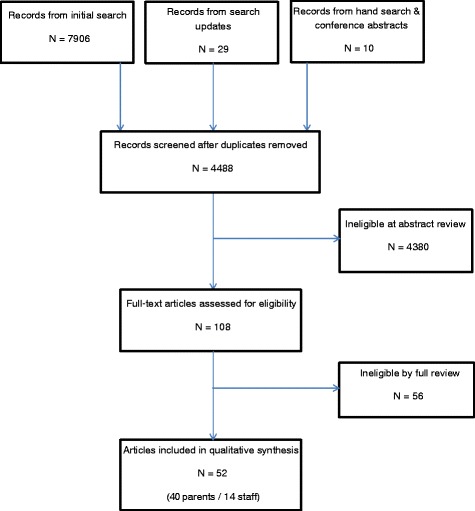
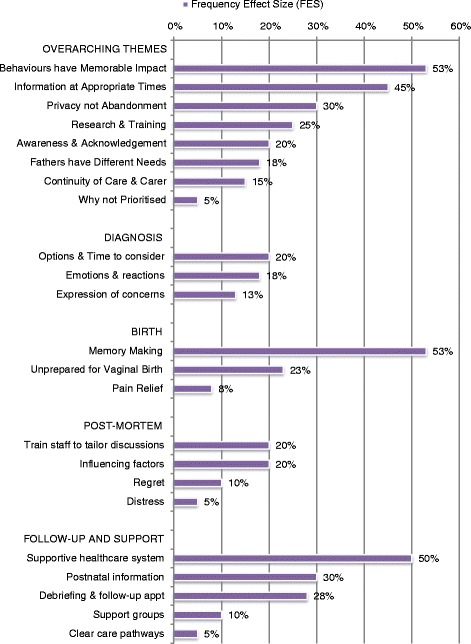
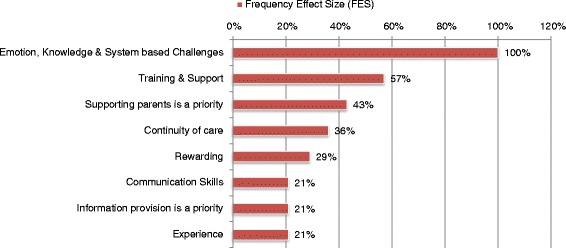
BACKGROUND: 2.7 million babies were stillborn in 2015 worldwide; behind these statistics lie the experiences of bereaved parents. The first Lancet series on stillbirth in 2011 described stillbirth as one of the "most shamefully neglected" areas of public health, recommended improving interaction between families and frontline caregivers and made a plea for increased investment in relevant research. METHODS: A systematic review of qualitative, quantitative and mixed-method studies researching parents and healthcare professionals experiences of care after stillbirth in high-income westernised countries (Europe, North America, Australia and South Africa) was conducted. The review was designed to inform research, training and improve care for parents who experience stillbirth. RESULTS: Four thousand four hundred eighty eight abstracts were identified; 52 studies were eligible for inclusion. Synthesis and quantitative aggregation (meta-summary) was used to extract findings and calculate frequency effect sizes (FES%) for each theme (shown in italics), a measure of the prevalence of that finding in the included studies. Researchers' areas of interest may influence reporting of findings in the literature and result in higher FES sizes, such as; support memory making (53%) and fathers have different needs (18%). Other parental findings were more unexpected; Parents want increased public awareness (20%) and for stillbirth care to be prioritised (5%). Parental findings highlighted lessons for staff; prepare parents for vaginal birth (23%), discuss concerns (13%), give options & time (20%), privacy not abandonment (30%), tailored post-mortem discussions (20%) and post-natal information (30%). Parental and staff findings were often related; behaviours and actions of staff have a memorable impact on parents (53%) whilst staff described emotional, knowledge and system-based barriers to providing effective care (100%). Parents reported distress being caused by midwives hiding behind 'doing' and ritualising guidelines whilst staff described distancing themselves from parents and focusing on tasks as coping strategies. Parents and staff both identified the need for improved training (parents 25% & staff 57%); continuity of care (parents 15% & staff 36%); supportive systems & structures (parents 50%); and clear care pathways (parents 5%). CONCLUSIONS: Parents' and healthcare workers' experiences of stillbirth can inform training, improve the provision of care and highlight areas for future research.
Overview
CoChat Summary
## TL;DR
This systematic review synthesized qualitative, quantitative, and mixed-method studies on parents’ and healthcare professionals’ experiences of care after stillbirth in high-income Western settings. It found that supportive, informative, individualized care and better staff training were recurring priorities, while poor communication and rigid, task-focused care could intensify parents’ distress.
## Key findings
- The review identified 52 eligible studies from 4,488 abstracts; across these, 623 individual findings were extracted, with 23 parent themes and 8 staff themes.
- Parents and staff both identified the need for improved training (parents 25%, staff 57%), continuity of care (parents 15%, staff 36%), supportive systems and structures (parents 50%), and clear care pathways (parents 5%).
- Among parent themes, higher-frequency findings included support memory making (53%), behaviours and actions of staff can have a memorable impact (53%), privacy not abandonment (30%), post-natal information (30%), and give options and time (20%).
- Staff themes highlighted emotion-, knowledge-, and system-based barriers to effective care (100%), as well as the need for improved training and a supportive working environment (57%) and continuity of care (36%).
## Methods
- Systematic review of qualitative, quantitative, and mixed-method studies about parents’ and healthcare workers’ experiences of stillbirth care in high-income Western countries (Europe, North America, Australia, and South Africa).
- Searched AMED, EMBASE, MEDLINE, Psych INFO, BNI, and CINAHL up to March 2014, plus conference abstracts from the International Stillbirth Alliance and First Candle conferences; included studies from 1996–2013.
- Used meta-summary to extract findings and calculate frequency effect sizes (FES%) and intensity effect sizes (IES), analyzed separately for parent and staff studies.
## Limitations
- The paper states that the main limitation is that the review was limited to high-income Western studies, so findings may not generalize to other settings; it notes that cultural and healthcare differences elsewhere may change results and recommendations.
- The authors state that there were a limited number of healthcare workers’ experience articles, so conclusions about staff experiences are limited.
- Evident from the text: FES may reflect the focus of prior research rather than true importance to parents, and several high-FES themes came from repeated work by the same research teams.
Model-written summary. Check it against the paper before relying on it.
Integrity signals
Registry
Cites
Statistics
Figures
Verification
Claims the paper makes
29 Valid · 1 Not valid · 32 Not checked · 20 Own results and interpretations
Some cited sources support this claim and some don’t — read each source’s verdict below.
In the paper
“Parents may regret certain decisions made regarding post-mortem and funeral arrangements, FES 10 % [31, 35, 50, 53]”
§ Systematic review to understand and improve care after stillbirth: a review of parents’ and healthcare professionals’ experiences > Results and discussion > Post-mortem thematic sentences
What the sources say
- Partly supportedcites [31] Conry J Prinsloo C Mothers’ access to supportive hospital services after the loss of a baby through stillbirth or neonatal death 2008 sourceExperimental — accuracy not yet measured
The Hospital services section reports that one mother regretted the decision not to have an autopsy, supporting the post-mortem part of the claim. It recommends helping parents with funeral plans but does not report regret about funeral arrangements or an FES figure of 10%. Page numbers are unavailable in our copy. (LLM, conf=0.87)
- Disputedcites [35] Gravensteen IK Helgadóttir LB Jacobsen E-M Rådestad I Sandset PM Ekeberg Ø Women’s experiences in relation to stillbirth and risk factors for long-term post-traumatic stress symptoms: a retrospective study BMJ Open 2013 3 10 10.1136/bmjopen-2013-003323 24154514 PMC3808779 sourceExperimental — accuracy not yet measured
The Results (page unavailable) say that none of the women whose baby had an autopsy wished it had not been carried out, contrary to the suggested regret about that post-mortem decision. The section on contact with the baby reports that many arranged funerals, but does not report regret about funeral arrangements or a 10% figure for such regret. (LLM, conf=0.75)
Checked by a reasoning model — may be wrong.
- Not checked — no full text of the sourcecites [50] Malacrida CA Perinatal death: Helping parents find their way J Fam Nurs 1997 3 2 130 148 10.1177/107484079700300203 source
- Not matchedcites [53] Flenady V Davis L Kirkwood E Horey D ISA conference 2010. Information and communication about autopsy for parents of stillborn infants (abstract). ISA conference 2010 2010
We searched by its title and found no matching paper.
hedged- Asserted: passes — The authors put it forward as true.
- Checkable: passes — It can be checked against evidence.
- Load-bearing: unclear — It is unclear whether the paper’s conclusions depend on it.
- Based: passes — The paper gives a reason why it holds.
- Partly supported
The cited sources support only part of this claim — read each source’s verdict below.
In the paper
“parents are more likely to develop prolonged psychological problems if professional support is not given [13].”
§ Systematic review to understand and improve care after stillbirth: a review of parents’ and healthcare professionals’ experiences > Background
What the sources say
- Partly supportedcites [13] Forrest GC Standish E Baum JD Support after perinatal death: a study of support and counselling after perinatal bereavement Br Med J 1982 285 6353 1475 1479 10.1136/bmj.285.6353.1475 6814610 PMC1500632 sourceExperimental — accuracy not yet measured
The Abstract reports more psychiatric symptoms at six months among mothers receiving routine care than among mothers offered counselling. But the Fathers section reports no significant difference between groups at six months, and the Abstract reports no significant difference among mothers at 14 months. The claim therefore extends a six-month finding in mothers to parents generally and to prolonged problems without a time limit. (LLM, conf=0.88)
hedgedstates a possible cause- Asserted: passes — The authors put it forward as true.
- Checkable: passes — It can be checked against evidence.
- Load-bearing: passes — The paper’s conclusions depend on it.
- Based: passes — The paper gives a reason why it holds.
- Partly supported
The cited sources support only part of this claim — read each source’s verdict below.
In the paper
“Behaviours and actions of staff can have a memorable impact on parents, FES 53 % [21, 29–48]”
§ Systematic review to understand and improve care after stillbirth: a review of parents’ and healthcare professionals’ experiences > Results and discussion > Overarching thematic sentences
What the sources say
- Not checked — no full text of the sourcecites [21] Lee C ‘She was a person, she was here’: The experience of late pregnancy loss in Australia J Reprod Infant Psychol 2012 30 1 62 76 10.1080/02646838.2012.661849 source
- Not checked — no full text of the sourcecites [29] Cacciatore J Bushfield S Stillbirth: the mother’s experience and implications for improving care J Soc Work End Life Palliat Care 2007 3 3 59 79 10.1300/J457v03n03_06 18077296 source
- Not checked — no full text of the sourcecites [30] Cacciatore J Erlandsson K Rådestad I Fatherhood and suffering: a qualitative exploration of Swedish men’s experiences of care after the death of a baby Int J Nurs Stud 2013 50 5 664 670 10.1016/j.ijnurstu.2012.10.014 23177900 source
- Supportedcites [31] Conry J Prinsloo C Mothers’ access to supportive hospital services after the loss of a baby through stillbirth or neonatal death 2008 source
The Introduction (page unavailable) says that the empathy and care parents receive from hospital staff generally colour their memories of their child. The Hospital services section also reports mothers describing supportive and unsupportive staff. The paper does not report an FES figure of 53%; that figure is not supported by this source. (LLM, conf=0.88)
- Not checked — no full text of the sourcecites [32] Dyson L While A The long shadow of Perinatal bereavement Br J Community Nurs 1998 3 9 432 439 10.12968/bjcn.1998.3.9.7183 source
- Not checked — no full text of the sourcecites [33] Erlandsson K Lindgren H Malm MC Davidsson-Bremborg A Radestad I Mothers’ experiences of the time after the diagnosis of an intrauterine death until the induction of the delivery: a qualitative Internet-based study J Obstet Gynaecol Res 2011 37 11 1677 1684 10.1111/j.1447-0756.2011.01603.x 21793995 source
- Not checked — no full text of the sourcecites [34] Erlandsson K Saflund K Wredling R Radestad I Support after stillbirth and its effect on parental grief over time J Soc Work End Life Palliat Care 2011 7 2-3 139 152 10.1080/15524256.2011.593152 21895434 source
- Partly supportedcites [35] Gravensteen IK Helgadóttir LB Jacobsen E-M Rådestad I Sandset PM Ekeberg Ø Women’s experiences in relation to stillbirth and risk factors for long-term post-traumatic stress symptoms: a retrospective study BMJ Open 2013 3 10 10.1136/bmjopen-2013-003323 24154514 PMC3808779 sourceExperimental — accuracy not yet measured
The Discussion (page unavailable) reports that women surveyed 5–18 years after stillbirth identified staff honesty, empathy, information and guidance as positive aspects of care. This supports the general point that staff actions can leave a lasting impression, but the paper does not report a 53% figure for that impact; its 53.5% figure refers to participation in a bereavement group. (LLM, conf=0.79)
- Supportedcites [36] Kavanaugh K Hershberger P Perinatal loss in low income african american parents J Obstetr Gynaecol Neonatal Nurs 2005 595–606 5 595 606 10.1177/0884217505280000 PMC1388191 16227515 source
In “Feeling intense emotions after the death,” a mother says she will never forget a nurse who comforted her, directly supporting the point that staff actions can have a memorable impact on parents. The FES 53% appears to be the citing paper’s synthesis across multiple references, not a figure attributed specifically to this source. (LLM, conf=0.92)
- Partly supportedcites [37] Kelley MC Trinidad SB Silent loss and the clinical encounter: Parents’ and physicians’ experiences of stillbirth-a qualitative analysis BMC Pregnancy Childbirth 2012 12 137 10.1186/1471-2393-12-137 23181615 PMC3533522 sourceExperimental — accuracy not yet measured
The Results section (page not supplied) describes parents remembering staff gestures, including photographs, opportunities to hold their baby, and a nurse’s personal support. This supports the claim that staff actions can have a memorable impact, but the paper does not report an FES of 53%. (LLM, conf=0.86)
plainstates a possible cause- Asserted: passes — The authors put it forward as true.
- Checkable: passes — It can be checked against evidence.
- Load-bearing: passes — The paper’s conclusions depend on it.
- Based: passes — The paper gives a reason why it holds.
The cited sources support only part of this claim — read each source’s verdict below.
In the paper
“Clear, easily understandable and structured information given sensitively at appropriate times, helps parents through their experience, FES 45 % [21, 31, 32, 34, 36, 37, 39–42, 44–51]”
§ Systematic review to understand and improve care after stillbirth: a review of parents’ and healthcare professionals’ experiences > Results and discussion > Overarching thematic sentences
What the sources say
- Not checked — no full text of the sourcecites [21] Lee C ‘She was a person, she was here’: The experience of late pregnancy loss in Australia J Reprod Infant Psychol 2012 30 1 62 76 10.1080/02646838.2012.661849 source
- Partly supportedcites [31] Conry J Prinsloo C Mothers’ access to supportive hospital services after the loss of a baby through stillbirth or neonatal death 2008 sourceExperimental — accuracy not yet measured
In “Hospital services” (page not provided), the paper recommends accurate information about the cause of death and says ongoing communication enhances parents’ wellbeing. “Suggestions for improving services” calls for clarifying information and a structured procedure for supporting bereaved mothers, but does not specifically describe structured information delivered at appropriate times or report an FES of 45%. (LLM, conf=0.84)
- Not checked — no full text of the sourcecites [32] Dyson L While A The long shadow of Perinatal bereavement Br J Community Nurs 1998 3 9 432 439 10.12968/bjcn.1998.3.9.7183 source
- Not checked — no full text of the sourcecites [34] Erlandsson K Saflund K Wredling R Radestad I Support after stillbirth and its effect on parental grief over time J Soc Work End Life Palliat Care 2011 7 2-3 139 152 10.1080/15524256.2011.593152 21895434 source
- Partly supportedcites [36] Kavanaugh K Hershberger P Perinatal loss in low income african american parents J Obstetr Gynaecol Neonatal Nurs 2005 595–606 5 595 606 10.1177/0884217505280000 PMC1388191 16227515 sourceExperimental — accuracy not yet measured
The Recommendations for Practice and Research (page not available) call for clear, explicit information about autopsy and burial policies, alongside empathy and communication. The Deciding on burial section says parents found accurate information about their options helpful. The paper does not establish that information should be structured or delivered at particular times; the FES 45% appears to be the citing authors’ synthesis, not a result attributed to this study. (LLM, conf=0.86)
- Partly supportedcites [37] Kelley MC Trinidad SB Silent loss and the clinical encounter: Parents’ and physicians’ experiences of stillbirth-a qualitative analysis BMC Pregnancy Childbirth 2012 12 137 10.1186/1471-2393-12-137 23181615 PMC3533522 sourceExperimental — accuracy not yet measured
The Results section ('From diagnosis to delivery') describes parents feeling confused and uninformed, while the Discussion says they wanted information, valued empathy, and were affected by the timing of clinicians’ responses. These passages support sensitive, appropriately timed communication, but do not specifically establish that information was structured or easily understandable. The paper does not report the citing document’s FES 45% figure. (LLM, conf=0.82)
- Not checked — no full text of the sourcecites [39] Nordlund E Borjesson A Cacciatore J Pappas C Randers I Radestad I When a baby dies: motherhood, psychosocial care and negative affect Br J Midwifery 2012 20 11 780 784 10.12968/bjom.2012.20.11.780 source
- Not checked — no full text of the sourcecites [40] O’Connell O VA, O’Donoghue. Provision of care at the time of stillbirth (abstract). First candle conference. 2012. source
- Not checked — no full text of the sourcecites [41] Pullen S Golden MA Cacciatore J “I’ll never forget those cold words as long as I live”: parent perceptions of death notification for stillbirth J Soc Work End Life Palliat Care 2012 8 4 339 355 10.1080/15524256.2012.732022 23194169 source
- Not checked — no full text of the sourcecites [42] Radestad I Stillbirth: care and long-term psychological effects Br J Midwifery 2001 9 8 474 506 10.12968/bjom.2001.9.8.7931 source
plainstates a cause- Asserted: passes — The authors put it forward as true.
- Checkable: passes — It can be checked against evidence.
- Load-bearing: passes — The paper’s conclusions depend on it.
- Based: passes — The paper gives a reason why it holds.
The cited sources support only part of this claim — read each source’s verdict below.
In the paper
“Parents want privacy not abandonment, FES 30 % [21, 31, 33–35, 37, 39, 41, 42, 46, 47, 51]”
§ Systematic review to understand and improve care after stillbirth: a review of parents’ and healthcare professionals’ experiences > Results and discussion > Overarching thematic sentences
What the sources say
- Not checked — no full text of the sourcecites [21] Lee C ‘She was a person, she was here’: The experience of late pregnancy loss in Australia J Reprod Infant Psychol 2012 30 1 62 76 10.1080/02646838.2012.661849 source
- Partly supportedcites [31] Conry J Prinsloo C Mothers’ access to supportive hospital services after the loss of a baby through stillbirth or neonatal death 2008 sourceExperimental — accuracy not yet measured
The Hospital services section (page not specified) says all 15 mothers had their own rooms, while the Formal services section reports that 11 of 15 wanted an opportunity to see a hospital counsellor. Together these support privacy alongside continued support, but the paper does not report that parents explicitly wanted “privacy not abandonment” or a 30% FES. (LLM, conf=0.84)
- Not checked — no full text of the sourcecites [33] Erlandsson K Lindgren H Malm MC Davidsson-Bremborg A Radestad I Mothers’ experiences of the time after the diagnosis of an intrauterine death until the induction of the delivery: a qualitative Internet-based study J Obstet Gynaecol Res 2011 37 11 1677 1684 10.1111/j.1447-0756.2011.01603.x 21793995 source
- Not checked — no full text of the sourcecites [34] Erlandsson K Saflund K Wredling R Radestad I Support after stillbirth and its effect on parental grief over time J Soc Work End Life Palliat Care 2011 7 2-3 139 152 10.1080/15524256.2011.593152 21895434 source
- Partly supportedcites [35] Gravensteen IK Helgadóttir LB Jacobsen E-M Rådestad I Sandset PM Ekeberg Ø Women’s experiences in relation to stillbirth and risk factors for long-term post-traumatic stress symptoms: a retrospective study BMJ Open 2013 3 10 10.1136/bmjopen-2013-003323 24154514 PMC3808779 sourceExperimental — accuracy not yet measured
In the Results (page unavailable), nine women said they wished they had not stayed on a standard postnatal ward. In ‘Contact with the baby and appraisal of the delivery and the role of the healthcare professionals’ (page unavailable), about one in four wanted staff to be more active, while 7% wanted staff to be more withdrawn. These findings are consistent with wanting both space and support, but the paper does not state that parents want ‘privacy not abandonment’ or report an FES of 30%. (LLM, conf=0.77)
- Partly supportedcites [37] Kelley MC Trinidad SB Silent loss and the clinical encounter: Parents’ and physicians’ experiences of stillbirth-a qualitative analysis BMC Pregnancy Childbirth 2012 12 137 10.1186/1471-2393-12-137 23181615 PMC3533522 sourceExperimental — accuracy not yet measured
The Results section on the labor and delivery environment describes efforts to give parents privacy, while the Results section on grief reports that parents wanted better support and resources rather than being left on their own. These findings support the qualitative point, but this paper does not report a 30% figure or FES for it. (LLM, conf=0.85)
- Not checked — no full text of the sourcecites [39] Nordlund E Borjesson A Cacciatore J Pappas C Randers I Radestad I When a baby dies: motherhood, psychosocial care and negative affect Br J Midwifery 2012 20 11 780 784 10.12968/bjom.2012.20.11.780 source
- Not checked — no full text of the sourcecites [41] Pullen S Golden MA Cacciatore J “I’ll never forget those cold words as long as I live”: parent perceptions of death notification for stillbirth J Soc Work End Life Palliat Care 2012 8 4 339 355 10.1080/15524256.2012.732022 23194169 source
- Not checked — no full text of the sourcecites [42] Radestad I Stillbirth: care and long-term psychological effects Br J Midwifery 2001 9 8 474 506 10.12968/bjom.2001.9.8.7931 source
- Not checked — no full text of the sourcecites [46] Saflund K Sjogren B Wredling R The role of caregivers after a stillbirth: views and experiences of parents Birth 2004 31 2 132 137 10.1111/j.0730-7659.2004.00291.x 15153133 source
plain- Asserted: passes — The authors put it forward as true.
- Checkable: passes — It can be checked against evidence.
- Load-bearing: passes — The paper’s conclusions depend on it.
- Based: passes — The paper gives a reason why it holds.
42 more claims · 16 with their cited sources checked
Create a free account to see all 82 claims and to verify the 1 reference still open.
- Probably not a substantial claim. 23
- It may state two separate claims as one. 15
Claims other papers make about this one
Each is checked against this paper’s own text: does it say what the citing paper says it does?
The source backs part of the claim, not all of it — or backs it for a different population, condition or comparison.
In the citing paper
“The death of a baby during pregnancy (stillbirth) or soon after birth (neonatal death) is a devastating outcome with lasting social and emotional consequences for parents, families and care providers, and wide‐ranging impacts on health systems and society (Ellis 2016; Heazell 2016).”
From Support for parents and families after stillbirth and neonatal death (2024) · cites this paper as Ellis 2016
Experimental — accuracy not yet measuredThe source backs part of the claim, not all of it — or backs it for a different population, condition or comparison.
In the citing paper
“One method of coping with grief after stillbirth is to attend support groups and/or connect with peer-to-peer support to find community through a shared experience and validate parenthood (3, 21, 31).”
From Parent-to-parent advice before the birth of a stillborn baby (2025) · cites this paper as [21]
Experimental — accuracy not yet measuredThe source backs part of the claim, not all of it — or backs it for a different population, condition or comparison.
In the citing paper
“Psychosocial care is the bedrock of bereavement care and may be effectively provided by multidisciplinary teams and HCPs with specialized training.19–21”
From Bereavement care guidelines used in health care facilities immediately following perinatal loss: a scoping review (2024) · cites this paper as [20]
Experimental — accuracy not yet measuredThe source backs part of the claim, not all of it — or backs it for a different population, condition or comparison.
In the citing paper
“The bereavement care provided after perinatal loss is of the utmost importance to facilitate coping in order to prevent worse immediate and long-term mental health outcomes, with some indication that earlier bereavement care leads to better outcomes.20,22,23”
From Bereavement care guidelines used in health care facilities immediately following perinatal loss: a scoping review (2024) · cites this paper as [20]
Experimental — accuracy not yet measuredThe source backs part of the claim, not all of it — or backs it for a different population, condition or comparison.
In the citing paper
“Key characteristics of the guidelines include using simple language and compassionate caring expressions (eg, referring to baby rather than fetus), enabling parents to spend time with their baby, providing information about autopsy, respecting culture and religion, and arranging postnatal follow-up care.20,29,31”
From Bereavement care guidelines used in health care facilities immediately following perinatal loss: a scoping review (2024) · cites this paper as [20]
Experimental — accuracy not yet measured
11 more claims about this paper
Create a free account to see every claim other papers make about this one.
Citations
Cites
Beyond PICO: The SPIDER Tool for Qualitative Evidence Synthesis
Cooke, A., Smith, D., & Booth, A. (2012) · Qualitative Health Research · doi:10.1177/1049732312452938 · Cited by 2,608
Stillbirths: rates, risk factors, and acceleration towards 2030
Lawn, J. E., Blencowe, H., Waiswa, P., Amouzou, A., Mathers, C., Hogan, D., Flenady, V., Frøen, J. F., Qureshi, Z. U., Calderwood, C., et al. (2016) · The Lancet · doi:10.1016/s0140-6736(15)00837-5 · Cited by 1,778
Self-citationAuerbach, K. G. (1991) · Journal of Human Lactation · doi:10.1177/089033449100700429 · Cited by 580
Creating Metasummaries of Qualitative Findings
Sandelowski, M., & Barroso, J. (2003) · Nursing Research · doi:10.1097/00006199-200307000-00004 · Cited by 273 · cited 5×
“Synthesis and quantitative aggregation (meta-summary) of qualitative data [27] was used as it allows aggregation and interpretation of studies that may be excluded from Cochrane reviews.”
MethodInfluentialStillbirths: progress and unfinished business
Frøen, J. F., Friberg, I. K., Lawn, J. E., Bhutta, Z. A., Pattinson, R. C., Allanson, E. R., Flenady, V., McClure, E. M., Franco, L., Goldenberg, R. L., et al. (2016) · The Lancet · doi:10.1016/s0140-6736(15)00818-1 · Cited by 252
Self-citationSupport after perinatal death: a study of support and counselling after perinatal bereavement
Forrest, G. C., Standish, E., & Baum, J. D. (1982) · BMJ · doi:10.1136/bmj.285.6353.1475 · Cited by 221 · cited 1×
“Current care for bereaved parents after a baby dies is inconsistent [11, 12], and parents are more likely to develop prolonged psychological problems if professional support is not given [13].”
BackgroundSupport for mothers, fathers and families after perinatal death
Koopmans, L., Wilson, T., Cacciatore, J., & Flenady, V. (2013) · Cochrane Database of Systematic Reviews · doi:10.1002/14651858.cd000452.pub3 · Cited by 216 · cited 2×
“A Cochrane review concluded there was insufficient evidence from randomised controlled trials to indicate whether or not there is benefit from interventions for families after perinatal loss [26].”
BackgroundSelf-citationStillbirths: the vision for 2020
Goldenberg, R. L., McClure, E. M., Bhutta, Z. A., Belizán, J. M., Reddy, U. M., Rubens, C. E., Mabeya, H., Flenady, V., & Darmstadt, G. L. (2011) · The Lancet · doi:10.1016/s0140-6736(10)62235-0 · Cited by 182
Self-citationKelley, M. C., & Trinidad, S. B. (2012) · BMC Pregnancy and Childbirth · doi:10.1186/1471-2393-12-137 · Cited by 164 · cited 1×
“FES and IES were calculated for parent and staff studies separately.”
MethodA Waste of Life: Fathers' Experience of Losing a Child Before Birth
Samuelsson, M., Rådestad, I., & Segesten, K. (2001) · Birth · doi:10.1046/j.1523-536x.2001.00124.x · Cited by 138
Research works printed but not linked: 10
- World Health Organization The prevention and elimination of disrespect and abuse during facility-based childbirth 2014 Geneva World Health Organization
- When Children Die: Improving Palliative and End-of-Life Care for Children and Their Families. Washington DC: The National Academies Press; 2003. 25057608
- Richardson R The voices of bereaved parents: survey feedback following perinatal death J Paediatr Child Health 2011 47 suppl 1 8 59
- Flenady V Davis L Kirkwood E Horey D ISA conference 2010. Information and communication about autopsy for parents of stillborn infants (abstract). ISA conference 2010 2010
- Kerslake K Parkinson S Learning from loss: remembering Rachel and Thomas Essentially MIDIRS 2012 3 3 17 21
- Hogue CJ SR. Experiences of support for women with stillbirth: report from the stillbirth collaborative research network follow up study (SCRNFS) (abstract). First candle conference. 2012.
- Begley C ‘I cried I had to’: student midwives’ experiences of stillbirth, miscarriage and neonatal death Evid Based Midwifery 2003 1 1 20 26
- Rivaldi C TD, Rimediotti L. Lucina survey: knowledge, thoughts and emotions of Italian midwives on stillbirth management (abstract). ISA conference. 2010.
- Verline AM OCO, O’Donoghue K. Factors that influence clinicians in their care of families who experience stillbirth. First candle conference. 2012.
- Redshaw MRR, Henderson J. Listening to Parents after stillbirth or the death of their baby after birth. In: Oxford: National Perinatal Epidemiology Unit; 2014.
Cited by
Stillbirths: recall to action in high-income countries
Flenady, V., Wojcieszek, A. M., Middleton, P., Ellwood, D., Erwich, J. J., Coory, M., Khong, T. Y., Silver, R. M., Smith, G. C. S., Boyle, F. M., et al. (2016) · The Lancet · doi:10.1016/s0140-6736(15)01020-x · Cited by 667
Self-citationDepression, anxiety, PTSD, and OCD after stillbirth: a systematic review
Westby, C. L., Erlandsen, A. R., Nilsen, S. A., Visted, E., & Thimm, J. C. (2021) · BMC Pregnancy and Childbirth · doi:10.1186/s12884-021-04254-x · Cited by 148
The impact of stillbirth on bereaved parents: A qualitative study
Nuzum, D., Meaney, S., & O’Donoghue, K. (2018) · PLoS ONE · doi:10.1371/journal.pone.0191635 · Cited by 127
“[20, 21, 26, 27] In an Irish context where termination of pregnancy is not a permissible option this study sheds important light on the importance of a perinatal palliative care approach for babies and their parents following a diagnosis of a life-limiting condition in-utero .”
Jones, K., Robb, M., Murphy, S., & Davies, A. (2019) · Midwifery · doi:10.1016/j.midw.2019.102531 · Cited by 105
“also had deleterious consequences (Ellis et al., 2016; Samuelsson et al, 2001).”
BackgroundInfluentialWahlberg, Å., Sachs, M. A., Johannesson, K. B., Hallberg, G., Jonsson, M., Svanberg, A. S., & Högberg, U. (2016) · BJOG An International Journal of Obstetrics & Gynaecology · doi:10.1111/1471-0528.14259 · Cited by 124
Shakespeare, C., Merriel, A., Bakhbakhi, D., Baneszova, R., Barnard, K., Lynch, M., Storey, C., Blencowe, H., Boyle, F., Flenady, V, et al. (2019) · BJOG: An International Journal of Obstetrics & Gynaecology · doi:10.1111/1471-0528.15430 · Cited by 102
Stillbirth and perinatal care: Are professionals trained to address parents’ needs?
Ravaldi, C., Levi, M., Angeli, E., Romeo, G., Biffino, M., Bonaiuti, R., & Vannacci, A. (2018) · Midwifery · doi:10.1016/j.midw.2018.05.008 · Cited by 98
The experiences and needs of healthcare professionals facing perinatal death: A scoping review
Shorey, S., André, B., & Lopez, V. (2017) · International Journal of Nursing Studies · doi:10.1016/j.ijnurstu.2016.12.007 · Cited by 96
Baschieri, A., Gordeev, V. S., Akuze, J., Kwesiga, D., Blencowe, H., Cousens, S., Waiswa, P., Fisker, A. B., Thysen, S. M., Rodrigues, A., et al. (2019) · Journal of Global Health · doi:10.7189/jogh.09.010901 · Cited by 94
Clinical practice guidelines for perinatal bereavement care — an overview
Boyle, F. M., Horey, D., Middleton, P. F., & Flenady, V. (2020) · Women and Birth · doi:10.1016/j.wombi.2019.01.008 · Cited by 90
“The quality of bereavement care is an important determinant of immediate and longer-term wellbeing, but health care professionals often report feeling poorly equipped to provide parents with the support needed, and at the same time, feel personally and professionally affected by a baby’s death.(8,9)”
BackgroundInfluentialSelf-citationHuberty, J., Sullivan, M., Green, J., Kurka, J., Leiferman, J., Gold, K., & Cacciatore, J. (2020) · BMC Complementary Medicine and Therapies · doi:10.1186/s12906-020-02926-3 · Cited by 89
“Mothers often report seeking help through support groups, psychotherapy, and medication [13] to help cope with the stressors of traumatic grief.”
BackgroundMunir, K. (2021) · Journal of Cleaner Production · doi:10.1016/j.jclepro.2021.129991 · Cited by 115
Shittu, O. S. (2019) · Journal of Cleaner Production · doi:10.1016/j.jclepro.2019.119034 · Cited by 105
The psychological, social, and economic impact of stillbirth on families
Murphy, S., & Cacciatore, J. (2017) · Seminars in Fetal and Neonatal Medicine · doi:10.1016/j.siny.2017.02.002 · Cited by 82
“’s [42] ‘pathway to a peaceful mind’ has already been referred to in this article.”
BackgroundHealthcare professionals’ experiences of perinatal loss: A systematic review
Gandino, G., Bernaudo, A., Di Fini, G., Vanni, I., & Veglia, F. (2019) · Journal of Health Psychology · doi:10.1177/1359105317705981 · Cited by 79
Siassakos, D., Jackson, S., Gleeson, K., Chebsey, C., Ellis, A., Storey, C., & the INSIGHT Study Group (2018) · BJOG: An International Journal of Obstetrics & Gynaecology · doi:10.1111/1471-0528.14765 · Cited by 75
Self-citationCare in subsequent pregnancies following stillbirth: an international survey of parents
Wojcieszek, A., Boyle, F., Belizán, J., Cassidy, J., Cassidy, P., Erwich, J., Farrales, L., Gross, M., Heazell, A., Leisher, S., et al. (2018) · BJOG: An International Journal of Obstetrics & Gynaecology · doi:10.1111/1471-0528.14424 · Cited by 75
“These elements of care also reflect good practice in bereavement care, where similar deficiencies in quality have been identified (2, 18, 27).”
BackgroundSelf-citationThe RESPECT Study for consensus on global bereavement care after stillbirth
Shakespeare, C., Merriel, A., Bakhbakhi, D., Blencowe, H., Boyle, F. M., Flenady, V., Gold, K., Horey, D., Lynch, M., Mills, T. A., et al. (2020) · International Journal of Gynecology & Obstetrics · doi:10.1002/ijgo.13110 · Cited by 74
Self-citationSacks, E. (2017) · Reproductive Health · doi:10.1186/s12978-017-0326-1 · Cited by 87
Gopichandran, V., Subramaniam, S., & Kalsingh, M. J. (2018) · BMC Pregnancy and Childbirth · doi:10.1186/s12884-018-1742-0 · Cited by 73
Andalibi, N., & Garcia, P. (2021) · Proceedings of the ACM on Human-Computer Interaction · doi:10.1145/3449201 · Cited by 71
“healthcare professionals tend to address clinical needs and not the emotional needs after a loss [41].”
BackgroundInfluentialBakhbakhi, D., Burden, C., Storey, C., & Siassakos, D. (2017) · Seminars in Fetal and Neonatal Medicine · doi:10.1016/j.siny.2017.02.008 · Cited by 66
Self-citationPregnancy and infant loss: a survey of families’ experiences in Ontario Canada
Watson, J., Simmonds, A., La Fontaine, M., & Fockler, M. E. (2019) · BMC Pregnancy and Childbirth · doi:10.1186/s12884-019-2270-2 · Cited by 64
“Our findings align with the work of others that have highlighted the need to invest in better supports for families, as well as the need to clearly identify supports to families [14, 19, 22, 26, 45, 53, 55, 69].”
BackgroundResultParents' experiences about support following stillbirth and neonatal death
Camacho Ávila, M., Fernández Medina, I. M., Jiménez-López, F. R., Granero-Molina, J., Hernández-Padilla, J. M., Hernández Sánchez, E., & Fernández-Sola, C. (2020) · Advances in Neonatal Care · doi:10.1097/anc.0000000000000703 · Cited by 63
Camacho-Ávila, M., Fernández-Sola, C., Jiménez-López, F. R., Granero-Molina, J., Fernández-Medina, I. M., Martínez-Artero, L., & Hernández-Padilla, J. M. (2019) · BMC Pregnancy and Childbirth · doi:10.1186/s12884-019-2666-z · Cited by 61
“Furthermore, healthcare professionals should encourage parents’ intimacy and avoid placing them in the maternity area as if they were parents of healthy babies [12, 63, 64].”
BackgroundWeng, S., Chang, J., Yeh, M.-K., Wang, S., Lee, C.-F., & Chen, Y. (2018) · BJOG An International Journal of Obstetrics & Gynaecology · doi:10.1111/1471-0528.15105 · Cited by 69
Obst, K. L., Oxlad, M., Due, C., & Middleton, P. (2021) · BMC Pregnancy and Childbirth · doi:10.1186/s12884-020-03514-6 · Cited by 61
Integrative Review of Emotional Care Following Perinatal Loss
Furtado-Eraso, S., Escalada-Hernández, P., & Marín-Fernández, B. (2021) · Western Journal of Nursing Research · doi:10.1177/0193945920954448 · Cited by 51
“Regarding implications for practice, the need of communication skills and grief counseling training for health care professionals is currently widely acknowledged in the literature and numerous strategies have been implemented worldwide (Chan & Arthur, 2009; Ellis et al., 2016).”
BackgroundPredicting grief intensity after recent perinatal loss
Hutti, M. H., Myers, J., Hall, L. A., Polivka, B. J., White, S., Hill, J., Kloenne, E., Hayden, J., & Grisanti, M. M. (2017) · Journal of Psychosomatic Research · doi:10.1016/j.jpsychores.2017.07.016 · Cited by 53
Sun, S., Li, J., Ma, Y., Bu, H., Luo, Q., & Yu, X. (2018) · International Journal of Nursing Practice · doi:10.1111/ijn.12614 · Cited by 50
Ravaldi, C., Carelli, E., Frontini, A., Mosconi, L., Tagliavini, S., Cossu, E., Crescioli, G., Lombardi, N., Bonaiuti, R., Bettiol, A., et al. (2021) · Women and Birth · doi:10.1016/j.wombi.2021.01.003 · Cited by 70
When a baby dies: a systematic review of experimental interventions for women after stillbirth
Huberty, J. L., Matthews, J., Leiferman, J., Hermer, J., & Cacciatore, J. (2017) · Reproductive Sciences · doi:10.1177/1933719116670518 · Cited by 46
Kamala, B. A., Ersdal, H. L., Dalen, I., Abeid, M. S., Ngarina, M., Perlman, J. M., & Kidanto, H. L. (2018) · PLoS ONE · doi:10.1371/journal.pone.0205698 · Cited by 45
Mills, T., Ayebare, E., Mukhwana, R., Mweteise, J., Nabisere, A., Nendela, A., Ndungu, P., Okello, M., Omoni, G., Wakasiaka, S., et al. (2021) · BJOG: An International Journal of Obstetrics & Gynaecology · doi:10.1111/1471-0528.16413 · Cited by 44
Stillbirth: prevention and supportive bereavement care
Atkins, B., Kindinger, L. M., Mahindra, M. P., Moatti, Z., & Siassakos, D. M. (2023) · BMJ Medicine · doi:10.1136/bmjmed-2022-000262 · Cited by 57
“Two major systematic reviews exist of parents and healthcare professionals' experiences of care after stillbirth; the first addresses primarily research from high income countries 84 and the second low and middle income countries.”
Self-citationSetúbal, M. S. V., Gonçalves, A. V., Rocha, S. R., & Amaral, E. M. (2017) · Revista Brasileira Ginecologia e Obstetrícia · doi:10.1055/s-0037-1604490 · Cited by 48
No. 369-Management of Pregnancy Subsequent to Stillbirth
Ladhani, N. N. N., Fockler, M. E., Stephens, L., Barrett, J. F. R., & Heazell, A. E. P. (2018) · Journal of Obstetrics and Gynaecology Canada · doi:10.1016/j.jogc.2018.07.002 · Cited by 43
Self-citationImproving Perinatology Residents' Skills in Breaking Bad News: A Randomized Intervention Study
Setúbal, M. S. V., Antonio, M. A. R. G. M., Amaral, E. M., & Boulet, J. R. (2018) · Revista Brasileira Ginecologia e Obstetrícia · doi:10.1055/s-0037-1621741 · Cited by 52
“8 12 Ellis et al, 11 in a systematic review on the experiences of parents and health care professionals, suggests that improvements to training programs are needed.”
BackgroundMulticultural coping experiences of parents following perinatal loss: A meta‐ethnographic synthesis
Fernández‐Basanta, S., Coronado, C., & Movilla‐Fernández, M. (2020) · Journal of Advanced Nursing · doi:10.1111/jan.14211 · Cited by 42
Qian, J., Sun, S., Wang, M., Liu, L., & Yu, X. (2022) · BMJ Open · doi:10.1136/bmjopen-2021-059660 · Cited by 54
Doherty, J., Cullen, S., Casey, B., Lloyd, B., Sheehy, L., Brosnan, M., Barry, T., McMahon, A., & Coughlan, B. (2018) · Midwifery · doi:10.1016/j.midw.2018.06.026 · Cited by 41
Midwives’ experience of delivery care in late foetal death: a qualitative study
Martínez-Serrano, P., Palmar-Santos, A. M., Solís-Muñoz, M., Álvarez-Plaza, C., & Pedraz-Marcos, A. (2018) · Midwifery · doi:10.1016/j.midw.2018.08.010 · Cited by 39
Care quality following intrauterine death in Spanish hospitals: results from an online survey
Cassidy, P. R. (2018) · BMC Pregnancy and Childbirth · doi:10.1186/s12884-017-1630-z · Cited by 39
Farrales, L. L., Cacciatore, J., Jonas-Simpson, C., Dharamsi, S., Ascher, J., & Klein, M. C. (2020) · BMC Psychology · doi:10.1186/s40359-020-0385-x · Cited by 39
“Consonant with prior research illuminating the importance of staff training and preparedness [28], grieving parents would likely benefit by furthering education on traumatic grief for HCPs, especially models specifically focused on support across various spaces such as hospitals, doctor’s offices, communities, and wor…”
Bakhbakhi, D., Siassakos, D. M., Burden, C., Jones, F., Yoward, F. J., Redshaw, M., Murphy, S., & Storey, C. (2017) · BMC Pregnancy and Childbirth · doi:10.1186/s12884-017-1509-z · Cited by 40
“A systematic review published in 2016 found that parents would appreciate a healthcare system that provides support following discharge from hospital and also a follow up appointment that might resolve uncertainty [4].”
BackgroundSelf-citationInvoluntary Pregnancy Loss and Nursing Care: A Meta-Ethnography
Fernández-Basanta, S., Movilla-Fernández, M.-J., Coronado, C., Llorente-García, H., & Bondas, T. (2020) · International Journal of Environmental Research and Public Health · doi:10.3390/ijerph17051486 · Cited by 39
“Professional support for parents experiencing the involuntary pregnancy loss is needed, and nursing staff are those who accompany parents during pregnancy losses [13].”
BackgroundInfluentialPreparing nurses and midwives to provide perinatal bereavement care: A systematic scoping review
Qian, J., Sun, S., Wu, M., Liu, L., Yaping, S., & Yu, X. (2021) · Nurse Education Today · doi:10.1016/j.nedt.2021.104962 · Cited by 38
Leitao, S., Helps, A., Cotter, R., & O'Donoghue, K. (2021) · Midwifery · doi:10.1016/j.midw.2021.102978 · Cited by 36
Barriers and opportunities for health service access among fathers: A review of empirical evidence
Wynter, K. H., Mansour, K. A., Forbes, F., & Macdonald, J. A. (2024) · Health Promotion Journal of Australia · doi:10.1002/hpja.846 · Cited by 48
Adeyinka, D. A., Olakunde, B. O., & Muhajarine, N. (2019) · Scientific Reports · doi:10.1038/s41598-019-56326-w · Cited by 44
Qian, J., Pan, P., Wu, M., Zheng, Q., Sun, S., Liu, L., Sun, Y., & Yu, X. (2021) · Journal of Advanced Nursing · doi:10.1111/jan.14853 · Cited by 51
The experience of mothers and fathers in cases of stillbirth in Spain. A qualitative study
Martínez-Serrano, P., Pedraz-Marcos, A., Solís-Muñoz, M., & Palmar-Santos, A. M. (2019) · Midwifery · doi:10.1016/j.midw.2019.06.013 · Cited by 35
Power, S., Meaney, S., & O’Donoghue, K. (2020) · BJOG An International Journal of Obstetrics & Gynaecology · doi:10.1111/1471-0528.16502 · Cited by 36
Lewis, C., Hutchinson, J. C., Riddington, M., Hill, M. K., Arthurs, O. J., Fisher, J., Wade, A. M., Doré, C. J., Chitty, L. S., & Sebire, N. J. (2019) · Health Technology Assessment · doi:10.3310/hta23460 · Cited by 35
The public awareness of stillbirth: an Irish population study
Nuzum, D., Meaney, S., & O’Donoghue, K. (2017) · BJOG An International Journal of Obstetrics & Gynaecology · doi:10.1111/1471-0528.14939 · Cited by 39
“16) A recently published metasynthesis confirmed that bereaved parents would like increased public awareness and prioritisation of stillbirth care.((17))”
Kuforiji, O., Mills, T. A., & Lovell, K. (2022) · Women and Birth · doi:10.1016/j.wombi.2022.07.170 · Cited by 53
Barnes, S., Jordan, Z., & Broom, M. (2020) · JBI Evidence Synthesis · doi:10.11124/jbisrir-d-19-00156 · Cited by 50
Sheehy, A., & Baird, K. M. (2022) · Women and Birth · doi:10.1016/j.wombi.2022.01.009 · Cited by 47
Rao, K. D., Srivastava, S., Warren, N., Mayra, K., Gore, A., Das, A., & Ahmed, S. (2019) · BMJ Open · doi:10.1136/bmjopen-2018-027147 · Cited by 32
Shen, Q., Liang, J., & Gao, Y. (2022) · Nurse Education Today · doi:10.1016/j.nedt.2021.105159 · Cited by 30
Care of late intrauterine fetal death and stillbirth: Green‐top Guideline No. 55
Burden, C., Merriel, A., Bakhbakhi, D., Heazell, A. E. P., & Siassakos, D. M. (2024) · BJOG An International Journal of Obstetrics & Gynaecology · doi:10.1111/1471-0528.17844 · Cited by 68
“78 75-78”
Self-citationPredicting Need for Follow-Up Due to Severe Anxiety and Depression Symptoms After Perinatal Loss
Hutti, M. H., Myers, J. A., Hall, L. A., Polivka, B. J., White, S., Hill, J., Grisanti, M., Hayden, J., & Kloenne, E. (2018) · Journal of Obstetric, Gynecologic & Neonatal Nursing · doi:10.1016/j.jogn.2018.01.003 · Cited by 29
Fernández-Basanta, S., Coronado, C., Bondas, T., & Movilla-Fernández, M.-J. (2021) · Midwifery · doi:10.1016/j.midw.2020.102863 · Cited by 27
Persson, M., Hildingsson, I., Hultcrantz, M., Fredriksson, M. K., Peira, N., Silverstein, R. A., Sveen, J., & Berterö, C. (2023) · PLoS ONE · doi:10.1371/journal.pone.0289617 · Cited by 40
In the hospital there are no care guidelines’: experiences and practices in perinatal loss in Spain
Fernández‐Alcántara, M., Schul‐Martin, L., García Caro, M. P., Montoya‐Juárez, R., Pérez‐Marfil, M. N., & Zech, E. (2020) · Scandinavian Journal of Caring Sciences · doi:10.1111/scs.12816 · Cited by 26
Boyle, F. M., Horey, D., Dean, J. H., Loughnan, S., Ludski, K., Mead, J., Homer, C. S., de Wilde, D., Morris, J., & Flenady, V. J. (2020) · Women and Birth · doi:10.1016/j.wombi.2020.08.006 · Cited by 25
Fernández‐Basanta, S., Coronado, C., Bondas, T. E., Llorente‐García, H., & Movilla‐Fernández, M. (2021) · Scandinavian Journal of Caring Sciences · doi:10.1111/scs.13028 · Cited by 40
“Under an unsupportive organisational culture, lack of preparation or knowledge and an emotionally demanding care, caring for these parents is a stressful and challenging event [3, 7].”
BackgroundBedwell, C., Blaikie, K., Danna, V. A., Sutton, C., Laisser, R. M., Kasengele, C. T., Wakasiaka, S., Victor, S., & Lavender, T. (2020) · BJOG An International Journal of Obstetrics & Gynaecology · doi:10.1111/1471-0528.16629 · Cited by 28
Gordon, A., Chan, L., Andrews, C. J., Ludski, K., Mead, J., Brezler, L., Foord, C., Mansfield, J., Middleton, P., Flenady, V., et al. (2020) · Women and Birth · doi:10.1016/j.wombi.2020.09.010 · Cited by 22
Self-citationMills, T. A., Ayebare, E., Mweteise, J., Nabisere, A., Mukhwana, R., Nendela, A., Omoni, G., Wakasiaka, S., & Lavender, T. (2023) · Women and Birth · doi:10.1016/j.wombi.2022.02.012 · Cited by 22
Pregnancy decisions after fetal or perinatal death: systematic review of qualitative research
Dyer, E., Bell, R., Graham, R. H., & Rankin, J. M. (2019) · BMJ Open · doi:10.1136/bmjopen-2019-029930 · Cited by 28
Iwanowicz-Palus, G., Mróz, M., Bień, A., & Jurek, K. (2021) · BMC Pregnancy and Childbirth · doi:10.1186/s12884-021-04093-w · Cited by 29
“Page 3/16 improvements in the patient’s well-being to enable effective functioning, not only physical but also mental and social [1, 11, 12, 13].”
BackgroundJones, E. E., Crawley, R. A., Brierley‐Jones, L., & Kenny, C. (2021) · Journal of Reproductive and Infant Psychology · doi:10.1080/02646838.2021.1972951 · Cited by 29
“Systematic reviews of care following stillbirth report that grief can be disenfranchised for some parents of stillborn babies (Burden et al., 2016; Ellis et al., 2016).”
BackgroundRoberts, L. R., Nick, J. M., Sarpy, N. L., Peters, J., & Tamares, S. (2024) · JBI Evidence Synthesis · doi:10.11124/jbies-23-00149 · Cited by 27
Abrampah, N. A. M., Okwaraji, Y. B., You, D., Hug, L., Maswime, S., Pule, C., Blencowe, H. K., & Jackson, D. J. (2023) · International Journal of Health Policy and Management · doi:10.34172/ijhpm.2023.7391 · Cited by 32
Care in pregnancies subsequent to stillbirth or perinatal death
Graham, N., Stephens, L., & Heazell, A. E. P. (2020) · The Obstetrician & Gynaecologist · doi:10.1111/tog.12708 · Cited by 24
Self-citationExperience of care of hospitalized newborns and young children and their parents: A scoping review
Ndwiga, C., Warren, C., Okondo, C., Abuya, T., & Sripad, P. (2022) · PLoS ONE · doi:10.1371/journal.pone.0272912 · Cited by 29
“all contribute to mistreatment of newborns [15, 30].”
Cena, L., Lazzaroni, S., & Stefana, A. (2021) · Zeitschrift für psychosomatische Medizin und Psychotherapie · doi:10.13109/zptm.2021.67.3.329 · Cited by 26
Perinatal loss: experiences of midwives and nurses
Yenal, K., Tektaş, P., Dönmez, A., & Okumuş, H. (2023) · OMEGA - Journal of Death and Dying · doi:10.1177/00302228211029143 · Cited by 20
“Studies have shown that good communication skills and attitudes on the part of health professionals have a positive effect on families’ grieving and recovery (Ellis et al., 2016; Fernández-Basanta, Coronado, et al., 2020; Flenady et al., 2014).”
Stillbirth - a challenge for the 21st century
Heazell, A. E. P. (2016) · BMC Pregnancy and Childbirth · doi:10.1186/s12884-016-1181-8 · Cited by 19
Schirmann, A., Boyle, F. M., Horey, D., Siassakos, D. M., Ellwood, D. A., Rowlands, I. J., & Flenady, V. (2018) · Birth · doi:10.1111/birt.12344 · Cited by 19
Self-citationGraham, N., Stephens, L., Johnstone, E., & Heazell, A. E. P. (2020) · Acta Obstetricia Et Gynecologica Scandinavica · doi:10.1111/aogs.14076 · Cited by 20
Self-citationMilk Donation Following a Perinatal Loss: A Phenomenological Study
Fernández‐Medina, I. M., Jiménez‐Lasserrotte, M. D. M., Fernández, M. D. R., Granero‐Molina, J., Fernández‐Sola, C., & Hernández‐Padilla, J. M. (2022) · Journal of Midwifery & Women s Health · doi:10.1111/jmwh.13342 · Cited by 21
Atkins, B., Blencowe, H. K., Boyle, F. M., Sacks, E., Horey, D., & Flenady, V. (2022) · BJOG An International Journal of Obstetrics & Gynaecology · doi:10.1111/1471-0528.17138 · Cited by 29
Self-citationLoughnan, S. A., Gautam, R. K., Silverio, S. A., Boyle, F. M., Cassidy, J., Ellwood, D. A., Homer, C., Horey, D., Leisher, S. H., de Montigny, F., et al. (2022) · BMJ Open · doi:10.1136/bmjopen-2022-061550 · Cited by 22
Self-citationFatal fetal anomaly: Experiences of women and their partners
Jackson, P., Power, S., Dennehy, R., & O’Donoghue, K. (2023) · Prenatal Diagnosis · doi:10.1002/pd.6311 · Cited by 18
Less‐invasive autopsy for early pregnancy loss
Simcock, I. C., Lamouroux, A., Sebire, N. J., Shelmerdine, S. C., & Arthurs, O. J. (2023) · Prenatal Diagnosis · doi:10.1002/pd.6361 · Cited by 20
Hennegan, J. M., Henderson, J., & Redshaw, M. (2018) · Journal of Reproductive and Infant Psychology · doi:10.1080/02646838.2018.1424325 · Cited by 17
“, 1993; Turton, Evans, & Hughes, 2009) and also highlighted the importance of care during this critical time (Ellis et al., 2016; Kelley & Trinidad, 2012; Mills et al., 2014).”
BackgroundInfluentialAggarwal, N., & Moatti, Z. (2021) · Best Practice & Research Clinical Obstetrics & Gynaecology · doi:10.1016/j.bpobgyn.2021.10.008 · Cited by 24
Qian, J., Wang, W., Sun, S., Wu, M., Liu, L., Sun, Y., & Yu, X. (2022) · BMC Pregnancy and Childbirth · doi:10.1186/s12884-022-04787-9 · Cited by 37
Duelo perinatal: Perspectivas de los Profesionales de la Salud
Valenzuela, M. T., Bernales, M., & Jaña, P. (2020) · Revista chilena de obstetricia y ginecología · doi:10.4067/s0717-75262020000300281 · Cited by 22
Initial Impact of Perinatal Loss on Mothers and Their Partners
Delgado, L., Cobo, J., Giménez, C., Fucho, G. F., Sammut, S., Martí, L. R., Heredia, C. L., Puig, S., Gutiérrez, N. O., Canet, Y., et al. (2023) · International Journal of Environmental Research and Public Health · doi:10.3390/ijerph20021304 · Cited by 28
Qian, J., Chen, S., Jevitt, C. M., Sun, S., Wang, M., & Yu, X. (2023) · Frontiers in Medicine · doi:10.3389/fmed.2023.1122472 · Cited by 27
“Organizational support is necessary to create conditions that enable nursing and midwifery professionals to provide high-quality bereavement care (20).”
BackgroundStillbirth in Lao PDR: a healthcare provider perspective
Choummanivong, M., Karimi, S., Durham, J., Sychareun, V., Flenady, V., Horey, D., & Boyle, F. M. (2020) · Global Health Action · doi:10.1080/16549716.2020.1786975 · Cited by 25
Self-citation“Your heart keeps bleeding”: lived experiences of parents with a perinatal death in Northern Uganda
Arach, A. A. O., Kiguli, J., Nankabirwa, V., Nakasujja, N., Mukunya, D., Musaba, M. W., Napyo, A. K., Tumwine, J. K., Ndeezi, G., & Rujumba, J. (2022) · BMC Pregnancy and Childbirth · doi:10.1186/s12884-022-04788-8 · Cited by 27
“This finding is consistent with previous studies where health care providers were insensitive and inconsiderate [16, 25, 60], partly because they distanced themselves from parents and focused on tasks as coping strategies [20].”
ResultQian, J., Cai, W., Sun, S., Wang, M., & Yu, X. (2022) · Nurse Education Today · doi:10.1016/j.nedt.2022.105479 · Cited by 22
Carroll, K., Noble‐Carr, D., Sweeney, L., & Waldby, C. (2020) · Journal of Human Lactation · doi:10.1177/0890334420926946 · Cited by 19
“This search uncovered a growing body of research that often incorporated bereaved parents’ perspectives, and advocated for the need to improve lactation care and guidance for bereaved parents (e.g., Britz & Henry, 2013; Carroll & Lenne, 2019; Carroll, Lenne, McEgan et al., 2014; Cole, 2012; Ellis et al., 2016; Fry & H…”
BackgroundBoyle, F. M., Horey, D., Siassakos, D. M., Burden, C., Bakhbakhi, D., Silver, R. M., & Flenady, V. (2020) · BJOG An International Journal of Obstetrics & Gynaecology · doi:10.1111/1471-0528.16529 · Cited by 16
Self-citationActis Danna, V., Lavender, T., Laisser, R., Chimwaza, A., Chisuse, I., Kasengele, C. T., Kimaro, D., Kuzenza, F. D., Lyangenda, K., Mwamadi, M., et al. (2023) · Women and Birth · doi:10.1016/j.wombi.2022.04.006 · Cited by 15
A mother’s voice: the construction of maternal identity following perinatal loss
Rossen, L., Opie, J. E., & O’Dea, G. (2026) · OMEGA - Journal of Death and Dying · doi:10.1177/00302228231209769 · Cited by 14
“…adverse emotional effects on bereaved parents (Burden et al., 2016; Huberty et al., 2016; Johnson & Langford, 2015), and is associated with severe anxiety, major depression, posttraumatic stress disorder, and suicidal ideation (Burden et al., 2016; Ellis et al., 2016; Heazell et al., 2016).”
Metadata
- Authors
- Ellis, A., Chebsey, C., Storey, C., Bradley, S., Jackson, S., Flenady, V., Heazell, A., & Siassakos, D.
- Affiliations
- Southmead Hospital (GB)
- University of Surrey (GB)
- The University of Queensland (AU)
- Manchester Academic Health Science Centre (GB)
- Corresponding author
- Ellis, Alison
- Venue
- BMC Pregnancy and Childbirth
- Published
- 2016-01-25
- Volume
- 16
- Issue
- 1
- Pages
- 16-16
- ISSN
- 1471-2393 (ISSN-L)
- PMC
- PMC4727309
- OpenAlex
- W2268322770
- Cited by
- 322
- References
- 73
- Citations by year
- 2026: 35 · 2025: 35 · 2024: 37 · 2023: 35 · 2022: 39 · 2021: 37 · 2020: 34 · 2019: 21 · 2018: 24 · 2017: 15 · 2016: 10
- FWCI
- 3.45
- Type
- journal article
- Language
- en
- Open access
- gold
- doi.org
- Licence
- cc-by
- Locations
- BMC Pregnancy and Childbirth (publishedVersion, cc-by)
- PubMed Central (publishedVersion, cc-by)
- PubMed (publishedVersion)
- Explore Bristol Research (publishedVersion, cc-by)
- Research Explorer (The University of Manchester) (submittedVersion)
- Bristol Research (University of Bristol) (submittedVersion, cc-by)
- Topics
- Social Sciences › Psychology › Clinical Psychology › Grief, Bereavement, and Mental Health
- Health Sciences › Medicine › Pediatrics, Perinatology and Child Health › Global Maternal and Child Health
- Health Sciences › Medicine › Public Health, Environmental and Occupational Health › Palliative Care and End-of-Life Issues
- Keywords
- stillbirth, bereaved parents, health professionals' experiences, parental support, employee training, continuity of care, care pathways, memory formation
- MeSH terms
- Adult, Australia, Bereavement, Europe, Female, Health Personnel, Humans, Male, North America, Parents, Pregnancy, South Africa, Qualitative Research, Stillbirth
About these checks
Registry, retraction, Cites and statistics results are computed, not judged, with one exception: a printed reference that no index lists is read once by a model before it counts as a citation error. Claims are extracted by a model and kept only when their quote appears verbatim in the text; each cited source is then checked, with a model’s help, for whether it says what the claim relies on. Those verdicts can be wrong — read the claim’s quote and the cited source before relying on one.
The claim verdicts this report counts are experimental: their accuracy is not yet measured.
A language model drew the claims from the paper on 2026-10-09, under version 3 of the claim definition (model deepseek-v4.1-flash, prompt extract-v3).
A second model labelled each claim on 2026-10-09 (model jev-1.13-20260917, definition revision gold-guideline-v0.2).
Cited sources are checked with a language model’s help (gpt-6-sol).
Statistics and arithmetic are recomputed, not judged.
Confidence bands are shown only for fields calibrated on our annotated test set. None is calibrated yet, so no band is shown.
What counts as a claim ›How we measure confidence ›How we check this ›
Are you an author, or do you see a problem with this page? Request a review
Data sources
Bibliographic data: Semantic Scholar, OpenAlex, Crossref.
Contains information from the Semantic Scholar Academic Graph Datasets, made available under the ODC Attribution License (ODC-BY 1.0).
Semantic Scholar’s data is described in: Kinney, R., et al. (2023). The Semantic Scholar Open Data Platform. arXiv:2301.10140.
