

Mindfulness intervention, homogeneous medical concept, and concentrated solution nursing for colorectal cancer patients: a retrospective study
Open accessThe DOI matches its Crossref record; 37 of the 40 references it cites were found in a registry or an index; 4 of the 8 sources its claims cite were checked for support.
Abstract
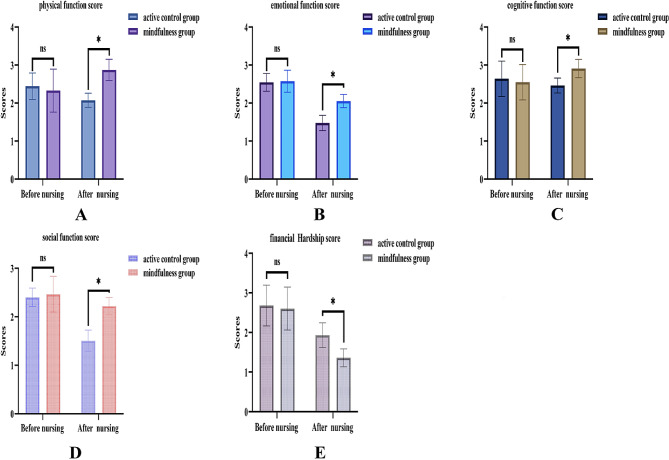
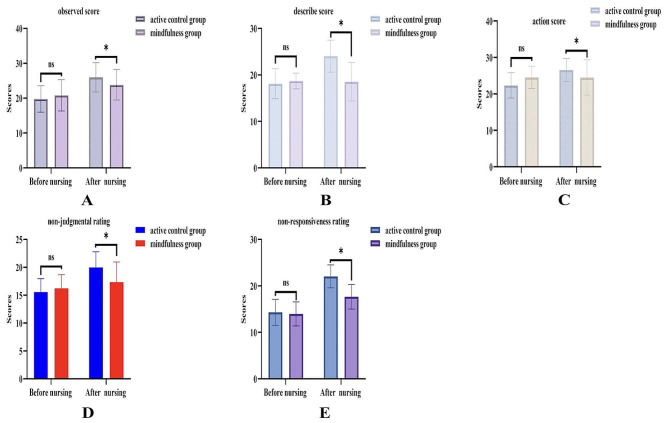
Objective: We aim to explore the differences of the psychological distress of postoperative chemotherapy patients with colorectal cancer between mindfulness intervention combined with homogeneous medical concepts and mindfulness intervention only. Methods: One hundred patients with colorectal cancer undergoing chemotherapy after surgery from Sep 2020 to Sep 2022 were enrolled and divided into active control group (Solution centered nursing interventions; homogenized medical and nursing professional teams; dedicated personnel responsible for “admission notices”; Regular follow-up after discharge) and mindfulness group (homogeneous medical concept + and concentrated solution + Mindfulness intervention) with 50 cases in each group according to different nursing methods. Results: After nursing, the physical function, emotional function, cognitive function, and social function of the patients in the mindfulness group were significantly higher than those in the active control group. However, the overall life and economic difficulties of the patients in the mindfulness group were significantly lower than those in the active control group (P < 0.05). After nursing, the observation score, description score, action score, intrinsic experience score, non-judgment score and non-reaction score of the mindfulness group were significantly higher than those of the active control group (P < 0.05). Conclusion: The implementation of mindfulness intervention in colorectal cancer patients undergoing chemotherapy can alleviate the patients’ negative emotions, improve the level of mindfulness, and improve the quality of life of patients. © The Author(s) 2024.
Overview
CoChat Summary
TL;DR
This retrospective study compared mindfulness intervention plus homogeneous medical concept/concentrated solution nursing versus nursing without mindfulness in 100 postoperative colorectal cancer chemotherapy patients. The mindfulness group had significantly better quality of life, higher mindfulness scores, and lower anxiety/depression after nursing (all reported as *P* < 0.05).
Key findings
- The study enrolled 100 postoperative colorectal cancer chemotherapy patients from Sep 2020 to Sep 2022, with 50 cases in each group.
- After nursing, the mindfulness group had significantly higher physical, emotional, cognitive, and social function scores, and significantly lower economic difficulty than the active control group (*P* < 0.05).
- After nursing, the mindfulness group’s observation, description, action, intrinsic experience, non-judgment, and non-reaction scores were all significantly higher than the active control group’s (*P* < 0.05).
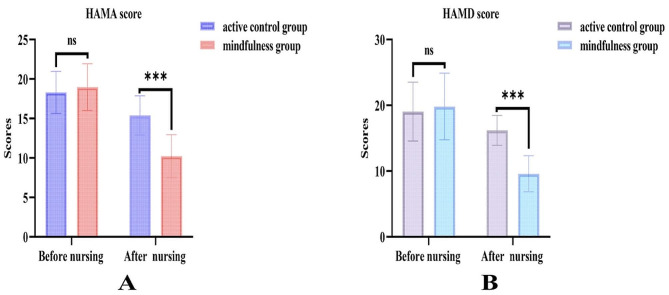
- After nursing, the mindfulness group’s HAMA and HAMD scores were significantly lower than those of the active control group (*P* < 0.05).
Methods
- Design: Retrospective comparison of two nursing methods during hospitalization and discharge follow-up.
- Sample/data: Medical records of 100 colorectal cancer patients undergoing chemotherapy after surgery; divided into an active control group and a mindfulness group (50 each).
- Analysis: Baseline comparability was checked with t tests and chi-square tests; outcomes were analyzed in SPSS 28.0 using independent-samples t tests for measurement data and χ² tests for count data.
Limitations
- The paper states that the study has “certain shortcomings” due to “objective conditions” and needs further improvement and supplementation.
- It says the clinical sample size is small, and the region and patient population are relatively limited; the authors call for large-sample multicenter clinical studies.
- Evident from the text: the intervention description and reporting are incomplete in places (for example, the “Mindfulness intervention” and some discussion passages are truncated), which makes the protocol and some results harder to fully evaluate.
Model-written summary. Check it against the paper before relying on it.
Integrity signals
Registry
Cites
Statistics
Figures
Verification
Claims the paper makes
1 Valid · 3 Not valid · 4 Not checked · 23 Own results and interpretations
The cited sources that could be checked couldn’t confirm or dispute this claim.
In the paper
“However, the current clinical nursing mode of homogeneous medical concept combined with focused solution mode lacks the ability to perceive the patient’s physiological state and enhance the patient’s sense of self-control [8].”
§ Mindfulness intervention, homogeneous medical concept, and concentrated solution nursing for colorectal cancer patients: a retrospective study > Introduction
What the sources say
- Could not verifycites [8] Yu IS, Cheung WY. Metastatic Colorectal Cancer in the Era of Personalized Medicine: A More Tailored Approach to Systemic Therapy[J]. Can J Gastroenterol Hepatol, 2018, 2018: 9450754. PMC6241232 30519549 sourceExperimental — accuracy not yet measured
The Introduction and Conclusion discuss tailoring systemic therapy for metastatic colorectal cancer, while §7 (Elderly Population) discusses assessing patients’ fitness for treatment. Searches for the named nursing mode and for patients’ physiological awareness or sense of self-control found no passage addressing the claimed limitation. (LLM, conf=0.76)
plain- Asserted: passes — The authors put it forward as true.
- Checkable: passes — It can be checked against evidence.
- Load-bearing: passes — The paper’s conclusions depend on it.
- Based: passes — The paper gives a reason why it holds.
- Could not verify
A result the paper reports from its own data — it cites no other source for it, so there is none to check. The quote shows it is in the paper.
In the paper
“but the economic difficulty score of the mindfulness group was significantly lower than that of the active control group”
- Also stated in: § Results · plain
“However, the overall life and economic difficulties of the patients in the mindfulness group were significantly lower than those in the active control group (P < 0.05).”
§ Mindfulness intervention, homogeneous medical concept, and concentrated solution nursing for colorectal cancer patients: a retrospective study > Results > Quality of life score comparison
plainstates a cause- Asserted: passes — The authors put it forward as true.
- Checkable: passes — It can be checked against evidence.
- Load-bearing: passes — The paper’s conclusions depend on it.
- Based: passes — The paper gives a reason why it holds.
- Also stated in: § Results · plain
A result the paper reports from its own data — it cites no other source for it, so there is none to check. The quote shows it is in the paper.
In the paper
“After nursing, the observation score, descriptive score, action score, intrinsic experience score, non-judgment score, and non-reaction score of the mindfulness group were significantly higher than those of the active control group”
- Also stated in: § Results · plain
“After nursing, the observation score, description score, action score, intrinsic experience score, non-judgment score and non-reaction score of the mindfulness group were significantly higher than those of the active control group (P < 0.05).”
§ Mindfulness intervention, homogeneous medical concept, and concentrated solution nursing for colorectal cancer patients: a retrospective study > Results > Comparison of mindfulness levels
plain- Asserted: passes — The authors put it forward as true.
- Checkable: passes — It can be checked against evidence.
- Load-bearing: passes — The paper’s conclusions depend on it.
- Based: passes — The paper gives a reason why it holds.
- Also stated in: § Results · plain
16 more claims
Create a free account to see all 31 claims and every source verdict.
- Probably not a substantial claim. 7
- It may state two separate claims as one. 4
Citations
Cites
von Elm, E., Altman, D. G., Egger, M., Pocock, S. J., Gøtzsche, P. C., & Vandenbroucke, J. P. (2007) · The Lancet · doi:10.1016/s0140-6736(07)61602-x · Cited by 21,320
Mindfulness-based interventions for psychiatric disorders: A systematic review and meta-analysis
Goldberg, S. B., Tucker, R. P., Greene, P. A., Davidson, R. J., Wampold, B. E., Kearney, D. J., & Simpson, T. L. (2018) · Clinical Psychology Review · doi:10.1016/j.cpr.2017.10.011 · Cited by 1,145 · cited 1×
“…quality of life scores between the two groups ( P > 0.05). as sitting, scanning, meditation, etc., so that the patient can achieve emotional regulation through making people more conscious about their emotions and reactivity when facing stress and be able to choose a more conscious response [17].”
InfluentialMrazek, M. D., Franklin, M. S., Phillips, D. T., Baird, B., & Schooler, J. W. (2013) · Psychological Science · doi:10.1177/0956797612459659 · Cited by 1,063 · cited 1×
“…intervention does not allow patients to avoid difficult emotions, but allows patients to truly perceive the existence of difficult emotions and accept their own difficult emotions, and then people become more able to tolerant of difficult emotions and the negative reactions when they appear [27].”
Patel, S. G., Karlitz, J. J., Yen, T., Lieu, C. H., & Boland, C. R. (2022) · The Lancet Gastroenterology & Hepatology · doi:10.1016/s2468-1253(21)00426-x · Cited by 812 · cited 1×
“They can lead to increased physical and psychological stress, and cause patients The quality of sleep decreases, and the difficult emotions such as fear, depression, and anxiety are aggravated [4].”
Conceptual and methodological issues in research on mindfulness and meditation.
Davidson, R. J., & Kaszniak, A. W. (2015) · American Psychologist · doi:10.1037/a0039512 · Cited by 773 · cited 1×
“Mindfulness therapy is a kind of psychotherapy and a meditation method, which has become one of the main methods for the treatment of mental illness in China [18].”
Parsons, C. E., Crane, C., Parsons, L. J., Fjorback, L. O., & Kuyken, W. (2017) · Behaviour Research and Therapy · doi:10.1016/j.brat.2017.05.004 · Cited by 550 · cited 1×
“…theory, method and technical theoretical basis of mindfulness therapy, it is found that attachment and breaking of attachment can keep the body away from mental illness and achieve true health and happiness, which significantly improves the precision and science of mindfulness therapy [20].”
Huberty, J., Green, J., Glissmann, C., Larkey, L., Puzia, M., & Lee, C. (2019) · JMIR mHealth and uHealth · doi:10.2196/14273 · Cited by 488 · cited 1×
“Mindfulness therapy is a meditation method founded by Zen Buddhism that pays attention to the moment, does not judge, and is aware [16].”
Song, Y., & Lindquist, R. (2015) · Nurse Education Today · doi:10.1016/j.nedt.2014.06.010 · Cited by 434 · cited 1×
“The high economic burden caused by the family, etc., eventually leads the patient to be in a state of mental stress with high tension and excessive anxiety, which gradually makes the mindfulness of colorectal cancer patients in a lower state [33].”
Carpenter, J. K., Conroy, K., Gomez, A. F., Curren, L. C., & Hofmann, S. G. (2019) · Clinical Psychology Review · doi:10.1016/j.cpr.2019.101785 · Cited by 342
Bühlmayer, L., Birrer, D., Röthlin, P., Faude, O., & Donath, L. (2017) · Sports Medicine · doi:10.1007/s40279-017-0752-9 · Cited by 327
Artificial Intelligence in Colorectal Cancer Screening, Diagnosis and Treatment. A New Era
Mitsala, A., Tsalikidis, C., Pitiakoudis, M., Simopoulos, C., & Tsaroucha, A. K. (2021) · Current Oncology · doi:10.3390/curroncol28030149 · Cited by 271 · cited 1×
“According to relevant research reports, the morbidity and mortality of colorectal cancer patients in my country rank third and fourth among many cancer diseases, and the patients are obviously younger [2, 3].”
Emerging trends in colorectal cancer: Dysregulated signaling pathways (Review)
Ahmad, R., Singh, J., Wunnava, A., Al‑Obeed, O., Abdulla, M., & Srivastava, S. (2021) · International Journal of Molecular Medicine · doi:10.3892/ijmm.2021.4847 · Cited by 189 · cited 1×
“The solution-focused mode is characterized by fully respecting individual resources and potential, and emphasizing that the focus of problem-solving is on the positive aspects of people [6].”
Effects of a mindfulness intervention on sports-anxiety, pessimism, and flow in competitive cyclists
Scott‐Hamilton, J., Schutte, N. S., & Brown, R. F. (2016) · Applied Psychology: Health and Well-Being · doi:10.1111/aphw.12063 · Cited by 174 · cited 1×
“This has positive implications for alleviating the automatic emotional responses generated by negative beliefs, thereby improving patients’ sleep quality and solving physiological problems [28].”
Effects of mindfulness meditation on mindfulness, mental well-being, and perceived stress
Zollars, I., Poirier, T. I., & Pailden, J. (2019) · Currents in Pharmacy Teaching and Learning · doi:10.1016/j.cptl.2019.06.005 · Cited by 151 · cited 1×
“But with the deepening of research [19].”
Unraveling tumor microenvironment of small-cell lung cancer: Implications for immunotherapy
Li, T. X., & Qiao, T. (2022) · Seminars in Cancer Biology · doi:10.1016/j.semcancer.2022.09.005 · Cited by 142 · cited 1×
“Neoplasms remain the main cause of death worldwide [21–24].”
Self-citationThe colorectal cancer immune microenvironment and approach to immunotherapies
Koi, M., & Carethers, J. M. (2017) · Future Oncology · doi:10.2217/fon-2017-0145 · Cited by 132 · cited 1×
“The contradiction between the disease and the psychological problems caused by colorectal cancer is becoming more and more tense, which in turn leads to the lower level of mindfulness and quality of life in patients with colorectal cancer, which gradually affects their living standards [10].”
Colorectal cancer in Malaysia: Its burden and implications for a multiethnic country
Veettil, S. K., Lim, K. G., Chaiyakunapruk, N., Ching, S. M., & Hassan, M. R. A. (2016) · Asian Journal of Surgery · doi:10.1016/j.asjsur.2016.07.005 · Cited by 127 · cited 1×
“More-over, this cognitive behavior will have a higher positive effect on the patients in the next stage of treatment, thus making the colorectal cancer patients’ awareness behavior at a higher level [35].”
Ameli, R., Sinaii, N., West, C. P., Luna, M. J., Panahi, S., Zoosman, M., Rusch, H. L., & Berger, A. (2020) · JAMA Network Open · doi:10.1001/jamanetworkopen.2020.13424 · Cited by 94
SOX11: friend or foe in tumor prevention and carcinogenesis?
Yang, Z. P., Jiang, S., Lu, C., Ji, T., Yang, W., Li, T. X., Lv, J., Hu, W., Yang, Y., & Jin, Z. (2019) · Therapeutic Advances in Medical Oncology · doi:10.1177/1758835919853449 · Cited by 84
Self-citationThapsigargin sensitizes human esophageal cancer to TRAIL-induced apoptosis via AMPK activation
Ma, Z., Fan, C., Yang, Y., Di, S., Hu, W. M., Li, T. X., Zhu, Y., Han, J., Xin, Z., Wu, G., et al. (2016) · Scientific Reports · doi:10.1038/srep35196 · Cited by 81
Self-citationMelatonin: does it have utility in the treatment of haematological neoplasms?
Li, T. X., Yang, Z. Z., Jiang, S., Di, W., Ma, Z., Hu, W., Chen, F., Reiter, R. J., & Yang, Y. (2017) · British Journal of Pharmacology · doi:10.1111/bph.13966 · Cited by 71 · cited 1×
“Neoplasms remain the main cause of death worldwide [21–24].”
Self-citationPorcellini, E., Laprovitera, N., Riefolo, M., Ravaioli, M., Garajova, I., & Ferracin, M. (2018) · Cancer Letters · doi:10.1016/j.canlet.2018.01.049 · Cited by 66
Targeting Colorectal Cancer Stem Cells as an Effective Treatment for Colorectal Cancer
Ma, Y., Li, W., Liu, Y., Shi, Y., Lin, Q., & Fu, D. (2020) · Technology in Cancer Research & Treatment · doi:10.1177/1533033819892261 · Cited by 64 · cited 1×
“According to relevant research reports, the morbidity and mortality of colorectal cancer patients in my country rank third and fourth among many cancer diseases, and the patients are obviously younger [2, 3].”
Colorectal Cancer: From the Genetic Model to Posttranscriptional Regulation by Noncoding RNAs
Lizarbe, M. A., Calle-Espinosa, J., Fernández-Lizarbe, E., Fernández‐Lizarbe, S., Robles-Ramos, M. Á., Olmo, N., & Turnay, J. (2017) · BioMed Research International · doi:10.1155/2017/7354260 · Cited by 58 · cited 1×
“…shows that mindfulness intervention is of great significance for affecting the physiological susceptibility of individuals to difficult emotions, thereby improving the negative emotions in patients with colorectal cancer chemotherapy, and improving the quality of sleep and life of patients [30].”
Inflammasomes in Colitis and Colorectal Cancer: Mechanism of Action and Therapies.
Pandey, A., Shen, C. X., & Man, S. M. (2019) · Europe PMC (PubMed Central) · Cited by 53
Yu, I. S., & Cheung, W. Y. (2018) · Canadian Journal of Gastroenterology and Hepatology · doi:10.1155/2018/9450754 · Cited by 47 · cited 1×
“However, the current clinical nursing mode of homogeneous medical concept combined with focused solution mode lacks the ability to perceive the patient’s physiological state and enhance the patient’s sense of self-control [8].”
Lin, H.-S., & Lin, C.-H. (2019) · Journal of Affective Disorders · doi:10.1016/j.jad.2018.10.105 · Cited by 45
Wang, G., An, Y., Zhang, X., Ding, P., Bi, H., & Zhao, Z. (2021) · Gels · doi:10.3390/gels7040247 · Cited by 45
Daitch, C. (2018) · American Journal of Clinical Hypnosis · doi:10.1080/00029157.2018.1458594 · Cited by 30 · cited 1×
“In order to improve the patient’s psychological coping ability, cultivate the patient’s health awareness and healthy behavior, improve the patient’s coping ability and psychological status, and improve the patient’s quality of life as a whole [32].”
Colorectal cancer screening in Lynch syndrome: Indication, techniques and future perspectives
Perrod, G., Rahmi, G., & Cellier, C. (2021) · Digestive Endoscopy · doi:10.1111/den.13702 · Cited by 28 · cited 1×
“Colorectal cancer is one of the common tumor diseases caused by the digestive tract system, which mainly presents symptoms such as local abdominal pain, blood in the stool, anemia and weight loss [1].”
Mindfulness meditation for Chinese patients with psychosis: A systematic review and meta-analysis
Tao, T. J., Hui, C. L. M., Lam, B. S. T., Ho, E. C. N., Hui, P. W. M., Suen, Y. N., Lin, J. J., Tong, A. C. Y., Lee, E. H. M., Chan, S. K. W., et al. (2021) · Schizophrenia Research · doi:10.1016/j.schres.2021.08.033 · Cited by 21 · cited 1×
“…connections can even alter the parenchymal structure of the brain, improving the cortical areas of the right anterior lobe and right anterior limbic system, which are important for regulating mood and memory in patients, reducing the automated emotions generated by negative beliefs reaction [29].”
A Randomized Controlled Trial of Mindfulness in Recovery from Colorectal Cancer
McCombie, A., Jordan, J., Mulder, R., Dee, K., Ong, E. L., Zimmermann, F. F., Frampton, C. M., & Frizelle, F. (2023) · Chinese Journal of Integrative Medicine · doi:10.1007/s11655-023-3632-1 · Cited by 16 · cited 1×
“Andrew et al. [36] conducted a 4-week randomized controlled study on 68 patients and found that compared with the active control group, the increase in awkward symptoms in the mindfulness group was significantly reduced at week 8.”
Moons, L., Mariman, A., Vermeir, P., Colemont, L., Clays, E., Van Vlierberghe, H., & Vogelaers, D. (2020) · Acta Clinica Belgica · doi:10.1080/17843286.2018.1563736 · Cited by 13 · cited 1×
“Studies have shown that in addition to conventional care and psychological care measures, mindfulness interventions can effectively reduce difficult emotions and improve quality of life in patients with colorectal pain [11].”
Role of Cellular Biomolecules in Screening, Diagnosis and Treatment of Colorectal Cancer
Mei, X.-L., & Zheng, Q.-F. (2019) · Current Drug Metabolism · doi:10.2174/1389200220666191018153428 · Cited by 7 · cited 1×
“According to related studies, colorectal cancer patients have obvious anxiety and depression, and the severity of the disease is increasing [9].”
Paredes, S. R., Chan, C., & Rickard, M. J. F. X. (2019) · ANZ Journal of Surgery · doi:10.1111/ans.15586 · Cited by 7 · cited 1×
“…patients include: colorectal cancer chemotherapy patients need to face the threat of individual life, and at the same time need to accept the reality of self-image damage, especially younger patients are particularly prone to anxiety, depression, difficult emotions such as anxiety [25].”
Baudrier, C., Tran, Y., Delanoy, N., Katsahian, S., Sabatier, B., & Perrin, G. (2022) · Health Informatics Journal · doi:10.1177/14604582221101526 · Cited by 7 · cited 1×
“Homogeneous healthcare refers to a group of individuals who have identified similar patterns of medical resource utilization, treatment sequences, prognosis, and care trajectories [5].”
Treatment sequencing of metastatic colorectal cancer based on primary tumor location
Temraz, S. N., Mukherji, D., Nassar, F. J., Moukalled, N. M., & Shamseddine, A. I. (2021) · Seminars in Oncology · doi:10.1053/j.seminoncol.2021.05.001 · Cited by 5 · cited 1×
“Che-motherapy requires a lot of costs for patients, and the beneficiaries are worried that the excessive treatment costs will increase the financial burden of the family, and they will also worry that their own disease will affect the harmony of the family [26].”
Cited by
Ferroptosis and immunosenescence in colorectal cancer
Wang, Y., Cao, X., Yang, C., Fan, J., Zhang, X., Wu, X., Guo, W., Sun, S., Liu, M., Zhang, L., et al. (2024) · Seminars in Cancer Biology · doi:10.1016/j.semcancer.2024.10.003 · Cited by 52
Self-citationNOX4 Suppresses Ferroptosis Through Regulation of the Pentose Phosphate Pathway in Colorectal Cancer
Zhu, J., Jiang, C., Wang, F., Tao, M., Wang, H., Sun, Y., & Hui, H. (2025) · Current Medical Science · doi:10.1007/s11596-025-00013-7 · Cited by 9
Patel, P. G., Dagli, C. S., Al‐Antary, N., Nair, M., Babatunde, O. A., Osazuwa‐Peters, N., Satheeshkumar, P. S., & Boakye, E. A. (2025) · Cancer Medicine · doi:10.1002/cam4.71107 · Cited by 5
“…psychological distress among postoperative chemotherapy patients with CRC found that the implementation of mindfulness intervention compared to mindfulness intervention combined with homogeneous medical concepts played a role in alleviating and improving patients emotions and quality of life [29].”
Li, J., Zheng, T., Xu, Y., Tian, M., Shi, L., Chen, J., Tian, L., & Zhang, Z. (2024) · Tissue and Cell · doi:10.1016/j.tice.2024.102648 · Cited by 5
Liu, J., Han, S., Cui, Y., Zhao, Q., Wang, Y., Li, T. X., & Li, X. (2025) · Journal of Cellular and Molecular Medicine · doi:10.1111/jcmm.70421 · Cited by 4
Self-citation
Metadata
- Authors
- Feng, Y., Wang, K., Fan, J., Wu, X., Li, T., & Yang, Z.
- Affiliations
- Hebei North University (CN)
- Air Force Medical University (CN)
- Corresponding author
- Wu, Xueliang
- Li, Tian
- Yang, Zhili
- Venue
- BMC Cancer
- Published
- 2024-08-27
- Volume
- 24
- Issue
- 1
- Pages
- 1055-1055
- ISSN
- 1471-2407 (ISSN-L)
- PMC
- PMC11348521
- OpenAlex
- W4401898093
- Cited by
- 26
- References
- 40
- Citations by year
- 2026: 8 · 2025: 14 · 2024: 4
- FWCI
- 4.42
- Type
- journal article
- Language
- en
- Open access
- gold
- doi.org
- Licence
- cc-by-nc-nd
- creativecommons.org/licenses/by-nc-nd/4.0 (tdm)
- creativecommons.org/licenses/by-nc-nd/4.0 (vor)
- Locations
- BMC Cancer (publishedVersion, cc-by-nc-nd)
- PubMed Central (publishedVersion, cc-by-nc-nd)
- PubMed (publishedVersion)
- DOAJ (DOAJ: Directory of Open Access Journals) (submittedVersion)
- Funders
- Key Project of Medical science of Hebei Provincial Health and Family Planning Commission (20220597)
- Topics
- Health Sciences › Medicine › Oncology › Cancer survivorship and care
- Social Sciences › Psychology › Clinical Psychology › Mindfulness and Compassion Interventions
- Social Sciences › Health › Religion, Spirituality, and Psychology
- Keywords
- mindfulness-based interventions, colorectal cancer, postoperative chemotherapy, psychological distress, quality of life, emotional functioning, nursing care
- MeSH terms
- Psychological Distress, Adult, Aged, Female, Humans, Male, Middle Aged, Quality of Life, Retrospective Studies, Stress, Psychological, Colorectal Neoplasms, Mindfulness
About these checks
Registry, retraction, Cites and statistics results are computed, not judged, with one exception: a printed reference that no index lists is read once by a model before it counts as a citation error. Claims are extracted by a model and kept only when their quote appears verbatim in the text; each cited source is then checked, with a model’s help, for whether it says what the claim relies on. Those verdicts can be wrong — read the claim’s quote and the cited source before relying on one.
The claim verdicts this report counts are experimental: their accuracy is not yet measured.
A language model drew the claims from the paper on 2026-10-11, under version 3 of the claim definition (model deepseek-v4.1-flash, prompt extract-v3).
A second model labelled each claim on 2026-10-11 (model jev-1.13-20260917, definition revision gold-guideline-v0.2).
Cited sources are checked with a language model’s help (gpt-6-sol).
Statistics and arithmetic are recomputed, not judged.
Confidence bands are shown only for fields calibrated on our annotated test set. None is calibrated yet, so no band is shown.
What counts as a claim ›How we measure confidence ›How we check this ›
Are you an author, or do you see a problem with this page? Request a review
Data sources
Bibliographic data: Semantic Scholar, OpenAlex, Crossref.
Contains information from the Semantic Scholar Academic Graph Datasets, made available under the ODC Attribution License (ODC-BY 1.0).
Semantic Scholar’s data is described in: Kinney, R., et al. (2023). The Semantic Scholar Open Data Platform. arXiv:2301.10140.
