

Take A Breath: study protocol for a randomized controlled trial of an online group intervention to reduce traumatic stress in parents of children with a life threatening illness or injury
Open accessThe DOI matches its Crossref record; 58 of the 58 references it cites were found in a registry or an index; 9 of the 44 sources its claims cite were checked for support.
Abstract
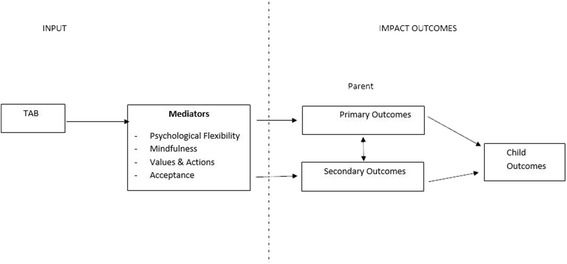
Background: A substantial proportion of parents whose child is diagnosed with a life-threatening illness, experience high levels of distress that can lead to long-term difficulties in mental health, family functioning and child adjustment. This study evaluates the efficacy of an Acceptance Commitment Therapy-based group intervention designed to reduce distress symptoms in these parents. The program is delivered using videoconferencing to overcome factors that prevent participation in traditional face-to-face therapy. Method/design: The study is a randomized control trial of the Take A Breath group intervention for parents demonstrating elevated symptoms of acute stress, delivered via videoconferencing in six 90 min group sessions. Participants are the primary caregivers of children aged 0 to 18 years admitted for a life threatening illness or injury to the Oncology, Cardiology, Neurology or Intensive Care Departments of a tertiary pediatric hospital. Parents will be randomized to intervention or waitlist control 4-10 months after their child's diagnosis. Measures will be collected prior to and immediately post intervention for intervention and waitlist parents to assess program efficacy. Intervention parents will be followed up at 6 months to assess the maintenance of program effects. We predict that intervention parents will show fewer symptoms post intervention than waitlist parents (primary outcomes: traumatic stress, depression, anxiety, stress symptoms), reflecting improvements in the psychological skills addressed in the intervention (mediating factors). It is anticipated that reductions in mental health difficulties for intervention parents will be maintained up to 6 months post-intervention and will be associated with broader improvements in parents' adjustment, child adjustment and child wellbeing (secondary outcomes). Discussion: This study is unique in evaluating a group intervention delivered to parents of children affected by of a diverse range life-threatening illness or injury. Online communication technology is employed to reduce participation barriers. If proven efficacious, this trans-diagnostic approach offers the potential for broad use as part of the suite of psychosocial services provided to families through tertiary pediatric settings. Trial registration:ACTRN12611000090910. Trial Registration Date: 14/09/2011 Protocol Date/version: September 2015, version M Study Status: Ongoing © 2016 Rayner et al.
Overview
CoChat Summary
## TL;DR
This paper is a study protocol for a randomized controlled trial testing whether the online, videoconference-delivered Take A Breath (TAB) group program reduces traumatic stress and related distress in parents of children with life-threatening illness or injury. The trial compares TAB with waitlist control and plans to assess immediate effects and 6-month maintenance.
## Key findings
- Not stated in the paper.
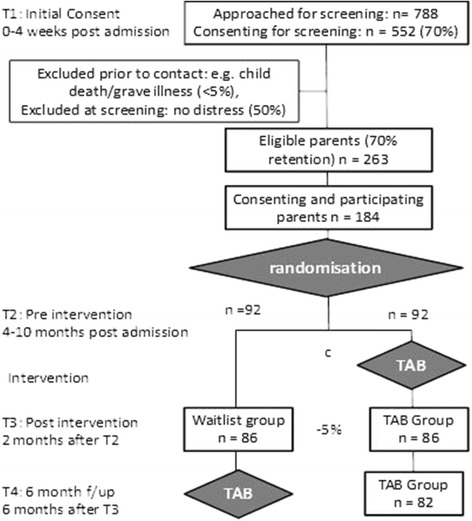
- The trial is designed to detect a clinically meaningful between-group difference of 6.0 points on the PCL-S (SD 13.9) with 0.05 significance and 0.80 power; this requires 86 participants per condition at post-intervention and N = 184 total recruited and randomized.
- In prior uncontrolled feasibility work, online TAB with N = 13 was associated with significant reductions on three measures of parental psychological symptoms from pre-intervention to 6-month follow-up.
- Background data cited in the paper report PTSD in up to 29% of mothers and 18% of fathers 6–12 months after child diagnosis, and sub-threshold post-traumatic stress symptoms in 46% of mothers and 28% of fathers 6 months after a child’s cancer diagnosis.
## Methods
- Design: Superiority randomized controlled trial using CONSORT guidelines, with parent-reported questionnaires at T1 screening, T2 pre-intervention, T3 post-intervention, and T4 6-month follow-up for the intervention arm.
- Sample/setting: Primary caregivers of children aged 0–18 years recruited from Cardiology, Oncology, Neurology, and PICU at the Royal Children’s Hospital, Melbourne; parents must have elevated acute stress symptoms on the ASDS and meet eligibility criteria described in the paper.
- Intervention and analysis: TAB is a six-session ACT-based group program delivered by videoconferencing (five 90-min weekly sessions plus a booster session); primary analyses use intention-to-treat with generalized estimating equations, plus regression adjustment, moderator/confounder exploration, and supplementary per-protocol/sensitivity analyses.
## Limitations
- The paper states that the waitlist control is a major design weakness because waitlisted parents receive the program after T3, which precludes comparison at 6-month follow-up.
- The paper states that high dropout by non-intervention participants may make the retained sample less representative and that imputing missing data is limited by high and non-random loss to follow-up.
- Evident from the protocol text: this is a protocol, so it reports predicted rather than observed efficacy outcomes.
Model-written summary. Check it against the paper before relying on it.
Integrity signals
Registry
Cites
Statistics
Figures
Verification
Claims the paper makes
7 Valid · 1 Not valid · 14 Not checked · 12 Own results and interpretations
The cited sources that could be checked couldn’t confirm or dispute this claim.
In the paper
“Studies have reported equivalent outcomes to those found in face-to-face groups for 125 clients with posttraumatic stress disorder [25, 29, 30] and seven clients with traumatic brain injury [28].”
§ Take A Breath: study protocol for a randomized controlled trial of an online group intervention to reduce traumatic stress in parents of children with a life threatening illness or injury > Background
What the sources say
- Could not verifycites [25] Stubbings DR Comparing in-person to videoconference-based cognitive behavioral therapy for mood and anxiety disorders: randomized controlled trial J Med Internet Res 2013 15 11 e258 10.2196/jmir.2564 24252663 PMC3842436 sourceExperimental — accuracy not yet measured
The citation to this paper is attached to the claim about seven clients with traumatic brain injury. The Introduction reports comparable outcomes for 125 participants with posttraumatic stress disorder, but neither it nor the additional passages retrieved for traumatic brain injury and seven clients addresses the cited claim. (LLM, conf=0.76)
- Not checked — no full text of the sourcecites [29] Morland LA Telemedicine for anger management therapy in a rural population of combat veterans with posttraumatic stress disorder: a randomized noninferiority trial J Clin Psychiatry 2010 71 7 855 63 10.4088/JCP.09m05604blu 20122374 source
- Not checked — no full text of the sourcecites [30] Mitchell JE A randomized trial comparing the efficacy of cognitive-behavioral therapy for bulimia nervosa delivered via telemedicine versus face-to-face Behav Res Ther 2008 46 5 581 92 10.1016/j.brat.2008.02.004 18374304 PMC2633728 source
- Not checked — no full text of the sourcecites [28] Tsaousides T Delivering group treatment via videoconference to individuals with traumatic brain injury: a feasibility study Neuropsychol Rehabil 2014 24 5 784 803 10.1080/09602011.2014.907186 24810148 source
plainn = 7- Asserted: passes — The authors put it forward as true.
- Checkable: passes — It can be checked against evidence.
- Load-bearing: passes — The paper’s conclusions depend on it.
- Based: passes — The paper gives a reason why it holds.
- Could not verify
The sources with a verdict support this claim; the rest weren’t checked yet, have no full text we could read, or their verdicts aren’t rated yet.
In the paper
“One-on-one videoconferencing (a single client and clinician) is comparable with face-to-face interventions in terms of effectiveness, client ratings of the therapeutic relationship, client satisfaction [25, 29] and treatment retention [30] for a variety of psychological conditions [29].”
§ Take A Breath: study protocol for a randomized controlled trial of an online group intervention to reduce traumatic stress in parents of children with a life threatening illness or injury > Background
What the sources say
- Supportedcites [25] Stubbings DR Comparing in-person to videoconference-based cognitive behavioral therapy for mood and anxiety disorders: randomized controlled trial J Med Internet Res 2013 15 11 e258 10.2196/jmir.2564 24252663 PMC3842436 source
The Principal Findings report comparable outcomes for videoconference and in-person CBT, with no significant differences in working alliance or client satisfaction. The Attrition section describes similar treatment completion across conditions, and the Participants section documents a mixed diagnostic group with mood and anxiety disorders. Page numbers are unavailable in our copy. (LLM, conf=0.91)
- Not checked — no full text of the sourcecites [29] Morland LA Telemedicine for anger management therapy in a rural population of combat veterans with posttraumatic stress disorder: a randomized noninferiority trial J Clin Psychiatry 2010 71 7 855 63 10.4088/JCP.09m05604blu 20122374 source
- Not checked — no full text of the sourcecites [30] Mitchell JE A randomized trial comparing the efficacy of cognitive-behavioral therapy for bulimia nervosa delivered via telemedicine versus face-to-face Behav Res Ther 2008 46 5 581 92 10.1016/j.brat.2008.02.004 18374304 PMC2633728 source
plain- Asserted: passes — The authors put it forward as true.
- Checkable: passes — It can be checked against evidence.
- Load-bearing: unclear — It is unclear whether the paper’s conclusions depend on it.
- Based: passes — The paper gives a reason why it holds.
- Supported
The cited sources support only part of this claim — read each source’s verdict below.
In the paper
“The use of technology to deliver interventions in the home is a promising alternative to traditional face-to-face delivery [25].”
§ Take A Breath: study protocol for a randomized controlled trial of an online group intervention to reduce traumatic stress in parents of children with a life threatening illness or injury > Background
What the sources say
- Partly supportedcites [25] Stubbings DR Comparing in-person to videoconference-based cognitive behavioral therapy for mood and anxiety disorders: randomized controlled trial J Med Internet Res 2013 15 11 e258 10.2196/jmir.2564 24252663 PMC3842436 sourceExperimental — accuracy not yet measured
The Principal Findings report comparable outcomes for videoconference-based and in-person CBT, supporting its promise as an alternative. But the Procedure states that videoconference participants attended a clinic treatment room, so this study does not establish delivery in the home. The indexed passages do not provide page numbers. (LLM, conf=0.89)
hedged- Asserted: passes — The authors put it forward as true.
- Checkable: passes — It can be checked against evidence.
- Load-bearing: passes — The paper’s conclusions depend on it.
- Based: passes — The paper gives a reason why it holds.
- Partly supported
Every source the paper cites for this claim was checked and supports it.
In the paper
“Our team has collected longitudinal data from a large cohort of parents of children with life-threatening illnesses recruited in the same setting and using similar eligibility criteria, measurement tools, and assessment time points [38].”
§ Take A Breath: study protocol for a randomized controlled trial of an online group intervention to reduce traumatic stress in parents of children with a life threatening illness or injury > Method > Strengths and limitations
What the sources say
- Supportedcites [38] Muscara F Parent distress reactions following a serious illness or injury in their child: A protocol paper for The Take a Breath Cohort Study BMC Psychiatry 2015 15 153 10.1186/s12888-015-0519-5 26152134 PMC4495936 source
The Abstract (Method/Design) describes a prospective longitudinal cohort of parents of children with life-threatening illness or injury at the Royal Children’s Hospital, with eligibility criteria, questionnaires and four assessment time points. Methods/Design (Sample and baseline descriptive data) reports 256 participating parents. The cited paper identifies the cohort the citing authors refer to; the comparison with their other study is the citing authors’ framing. (LLM, conf=0.90)
plain- Asserted: passes — The authors put it forward as true.
- Checkable: passes — It can be checked against evidence.
- Load-bearing: passes — The paper’s conclusions depend on it.
- Based: passes — The paper gives a reason why it holds.
- Supported
The cited sources support only part of this claim — read each source’s verdict below.
In the paper
“The large sample size for this observational study (145 parents assessed at the equivalent of the current study’s proposed 6 month follow-up) provides us the opportunity to compare the long term adjustment of intervention families from the current study with a non-intervention normative population.”
§ Take A Breath: study protocol for a randomized controlled trial of an online group intervention to reduce traumatic stress in parents of children with a life threatening illness or injury > Method > Strengths and limitations
What the sources say
- Partly supportedcites [38] Muscara F Parent distress reactions following a serious illness or injury in their child: A protocol paper for The Take a Breath Cohort Study BMC Psychiatry 2015 15 153 10.1186/s12888-015-0519-5 26152134 PMC4495936 sourceExperimental — accuracy not yet measured
Split into 2 atoms — 0 confirmed, 2 partially supported, 0 disputed, 0 misattributed, 0 unverifiable. Expand the claim to see per-atom verdicts.
plain- Asserted: passes — The authors put it forward as true.
- Checkable: passes — It can be checked against evidence.
- Load-bearing: passes — The paper’s conclusions depend on it.
- Based: passes — The paper gives a reason why it holds.
- Partly supported
11 more claims
Create a free account to see all 34 claims and every source verdict.
- It may state two separate claims as one. 11
- Probably not a substantial claim. 10
Citations
Cites
Lovibond, P. F., & Lovibond, S. H. (1995) · Behaviour Research and Therapy · doi:10.1016/0005-7967(94)00075-u · Cited by 14,523
CONSORT 2010 Statement: updated guidelines for reporting parallel group randomised trials
the CONSORT Group, Schulz, K. F., Altman, D. G., & Moher, D. (2010) · BMC Medicine · doi:10.1186/1741-7015-8-18 · Cited by 13,371
Using Self-Report Assessment Methods to Explore Facets of Mindfulness
Baer, R. A., Smith, G. T., Hopkins, J., Krietemeyer, J., & Toney, L. (2006) · Assessment · doi:10.1177/1073191105283504 · Cited by 7,511 · cited 1×
“87 [41] n/a Pre, post, follow-up”
Acceptance and commitment therapy: model, processes and outcomes
Hayes, S. C., Luoma, J. B., Bond, F. W., Masuda, A., & Lillis, J. (2006) · Behaviour Research and Therapy · doi:10.1016/j.brat.2005.06.006 · Cited by 6,587 · cited 1×
“Briefly, the program utilizes an Acceptance and Commitment Therapy (ACT) approach [21], including ACT’s key elements of acceptance, mindfulness, values clarification and goal setting.”
MethodHenry, J. D., & Crawford, J. R. (2005) · British Journal of Clinical Psychology · doi:10.1348/014466505x29657 · Cited by 5,801 · cited 1×
“90 stress [44].”
Psychometric properties of the PTSD checklist (PCL)
Blanchard, E. B., Jones-Alexander, J., Buckley, T. C., & Forneris, C. A. (1996) · Behaviour Research and Therapy · doi:10.1016/0005-7967(96)00033-2 · Cited by 3,997 · cited 1×
“92 arousal subscales [43].”
Bond, F. W., Hayes, S. C., Baer, R. A., Carpenter, K. M., Guenole, N., Orcutt, H. K., Waltz, T., & Zettle, R. D. (2011) · Behavior Therapy · doi:10.1016/j.beth.2011.03.007 · Cited by 3,950 · cited 1×
“Mediating factors Cognitive/psychological skills Acceptance and Action Questionnaire – II (AAQ-II; [39]).”
BackgroundDepression Anxiety Stress Scales
Lovibond, S. H., & Lovibond, P. F. (2011) · PsycTESTS Dataset · doi:10.1037/t01004-000 · Cited by 2,416
Internet-based cognitive behaviour therapy for symptoms of depression and anxiety: A meta-analysis
SPEK, V., CUIJPERS, P., NYKLÍČEK, I., RIPER, H., KEYZER, J., & POP, V. (2007) · Psychological Medicine · doi:10.1017/s0033291706008944 · Cited by 1,586 · cited 1×
“[26] and maintain treatment effects for longer periods [27] than self-directed treatments.”
BackgroundBehavior Assessment System for Children
Reynolds, C. R. (2010) · The Corsini Encyclopedia of Psychology · doi:10.1002/9780470479216.corpsy0114 · Cited by 1,025 · cited 1×
“Behavior Assessment System for Children, Second Edition (BASC-2; [51]) 134-items for children aged 2–5 years, and 160-items for children aged over 6 years which assess maladaptive and adaptive behaviours and self-perceptions of children.”
MethodBohlmeijer, E., ten Klooster, P. M., Fledderus, M., Veehof, M., & Baer, R. (2011) · Assessment · doi:10.1177/1073191111408231 · Cited by 990 · cited 1×
“Five Facet Mindfulness Questionnaire – Short Form (FFMQ-SF; [40]) 24 items assessing general tendency towards day to day mindfulness.”
BackgroundA short form of the Posttraumatic Growth Inventory
Cann, A., Calhoun, L. G., Tedeschi, R. G., Taku, K., Vishnevsky, T., Triplett, K. N., & Danhauer, S. C. (2010) · Anxiety, Stress, & Coping · doi:10.1080/10615800903094273 · Cited by 789
Videoconferencing psychotherapy: a systematic review
Backhaus, A., Agha, Z., Maglione, M. L., Repp, A., Ross, B., Zuest, D., Rice-Thorp, N. M., Lohr, J., & Thorp, S. R. (2012) · Psychological Services · doi:10.1037/a0027924 · Cited by 586
Briggs-Gowan, M. J. (2004) · Journal of Pediatric Psychology · doi:10.1093/jpepsy/jsh017 · Cited by 573 · cited 1×
“The BITSEA has good internal consistency and inter-rater reliability, and excellent test-retest reliability [50].”
BackgroundBehavior Assessment System for Children‐2
Dumont, R., Willis, J. O., Viezel, K., & Zibulsky, J. (2014) · Encyclopedia of Special Education · doi:10.1002/9781118660584.ese0297 · Cited by 456
Short- and long-term social outcomes following pediatric traumatic brain injury
YEATES, K. O., SWIFT, E., TAYLOR, H. G., WADE, S. L., DROTAR, D., STANCIN, T., & MINICH, N. (2004) · Journal of the International Neuropsychological Society · doi:10.1017/s1355617704103093 · Cited by 421 · cited 1×
“It is not surprising that the combination of parental trauma and poorer family functioning predicts the longer-term psychological, behavioral and general wellbeing of the ill child [6, 10, 11, 16–18], and has been associated with elevated rates of child psychological, social and health difficulties, including weight a…”
BackgroundAcute stress disorder scale: A self-report measure of acute stress disorder.
Bryant, R. A., Moulds, M. L., & Guthrie, R. M. (2000) · Psychological Assessment · doi:10.1037//1040-3590.12.1.61 · Cited by 416 · cited 1×
“Acute stress Acute Stress Disorder Scale [ASDS: [54]).”
BackgroundAssessment of Parental Psychological Stress in Pediatric Cancer: A Review
Jantien Vrijmoet-Wiersma, C. M., van Klink, J. M. M., Kolk, A. M., Koopman, H. M., Ball, L. M., & Maarten Egeler, R. (2008) · Journal of Pediatric Psychology · doi:10.1093/jpepsy/jsn007 · Cited by 389
Family adjustment to childhood cancer: a systematic review.
Long, K. A., & Marsland, A. L. (2011) · Clinical Child and Family Psychology Review · doi:10.1007/s10567-010-0082-z · Cited by 377 · cited 3×
“It is not surprising that the combination of parental trauma and poorer family functioning predicts the longer-term psychological, behavioral and general wellbeing of the ill child [6, 10, 11, 16–18], and has been associated with elevated rates of child psychological, social and health difficulties, including weight a…”
BackgroundTraumatic stress in parents of children admitted to the pediatric intensive care unit.
Balluffi, A., Kassam-Adams, N., Kazak, A., Tucker, M., Dominguez, T., & Helfaer, M. (2004) · Pediatric Critical Care Medicine · doi:10.1097/01.pcc.0000137354.19807.44 · Cited by 377 · cited 1×
“However, higher levels of distress reactions in this early phase have been shown to predict later, persistent parent mental health difficulties [5, 8, 9] placing parents and the ill child at high risk of mental health problems [10, 11].”
BackgroundKazak, A. E., Alderfer, M. A., Streisand, R., Simms, S., Rourke, M. T., Barakat, L. P., Gallagher, P., & Cnaan, A. (2004) · Journal of Family Psychology · doi:10.1037/0893-3200.18.3.493 · Cited by 303
Landolt, M. A., Vollrath, M., Ribi, K., Gnehm, H. E., & Sennhauser, F. H. (2003) · Journal of Child Psychology and Psychiatry · doi:10.1111/1469-7610.00201 · Cited by 292 · cited 1×
“child with an optimal post-hospital environment [7].”
Posttraumatic Stress Symptoms During Treatment in Parents of Children With Cancer
Kazak, A. E., Boeving, C. A., Alderfer, M. A., Hwang, W.-T., & Reilly, A. (2005) · Journal of Clinical Oncology · doi:10.1200/jco.2005.09.110 · Cited by 290 · cited 1×
“Persistent distress can impair a parent’s ability to respond to the demands of their child’s illness [12–14], and result in the utilization of more hospital resources [15].”
BackgroundShaw, R. J., Bernard, R. S., DeBlois, T., Ikuta, L. M., Ginzburg, K., & Koopman, C. (2009) · Psychosomatics · doi:10.1176/appi.psy.50.2.131 · Cited by 288 · cited 1×
“However, higher levels of distress reactions in this early phase have been shown to predict later, persistent parent mental health difficulties [5, 8, 9] placing parents and the ill child at high risk of mental health problems [10, 11].”
BackgroundMorland, L. A., Greene, C. J., Rosen, C. S., Foy, D., Reilly, P., Shore, J., He, Q., & Frueh, C. (2010) · The Journal of Clinical Psychiatry · doi:10.4088/jcp.09m05604blu · Cited by 274 · cited 2×
“Studies have reported equivalent outcomes to those found in face-to-face groups for 125 clients with posttraumatic stress disorder [25, 29, 30] and seven clients with traumatic brain injury [28].”
BackgroundResultCONSORT 2010 Statement: Updated Guidelines for Reporting Parallel Group Randomized Trials
Schulz, K. F., Altman, D. G., & Moher, D. (2011) · Annals of Internal Medicine · doi:10.7326/0003-4819-154-4-201102150-00017 · Cited by 259
The pediatric cancer quality of life inventory-32 (PCQL-32): I. Reliability and validity
Varni, J. W., Katz, E. R., Seid, M., Quiggins, D. J. L., & Friedman-Bender, A. (1998) · Cancer · doi:10.1002/(sici)1097-0142(19980315)82:6<1184::aid-cncr25>3.0.co;2-1 · Cited by 231
The pediatric cancer quality of life inventory-32 (PCQL-32): I. Reliability and validity
Varni, J. W., Katz, E. R., Seid, M., Quiggins, D. J. L., & Friedman-Bender, A. (1998) · Cancer · doi:10.1002/(sici)1097-0142(19980315)82:6<1146::aid-cncr20>3.0.co;2-5 · Cited by 217
Mitchell, J. E., Crosby, R. D., Wonderlich, S. A., Crow, S., Lancaster, K., Simonich, H., Swan-Kremeier, L., Lysne, C., & Cook Myers, T. (2008) · Behaviour Research and Therapy · doi:10.1016/j.brat.2008.02.004 · Cited by 210 · cited 2×
“One-on-one videoconferencing (a single client and clinician) is comparable with face-to-face interventions in terms of effectiveness, client ratings of the therapeutic relationship, client satisfaction [25, 29] and treatment retention [30] for a variety of psychological conditions [29].”
BackgroundResultSahler, O. J. Z., Dolgin, M. J., Phipps, S., Fairclough, D. L., Askins, M. A., Katz, E. R., Noll, R. B., & Butler, R. W. (2013) · Journal of Clinical Oncology · doi:10.1200/jco.2011.39.1870 · Cited by 195 · cited 2×
“…face-to-face programs include recurrent illness and/or ongoing disability in the child, time, childcare and financial pressures that have arisen from the child ’ s illness, and a preference to spend time at home following family separations associated with the child ’ s hospitalization [22 – 24].”
BackgroundKazak, A. E., Cant, M. C., Jensen, M. M., McSherry, M., Rourke, M. T., Hwang, W.-T., Alderfer, M. A., Beele, D., Simms, S., & Lange, B. J. (2003) · Journal of Clinical Oncology · doi:10.1200/jco.2003.12.156 · Cited by 194 · cited 3×
“It is not surprising that the combination of parental trauma and poorer family functioning predicts the longer-term psychological, behavioral and general wellbeing of the ill child [6, 10, 11, 16–18], and has been associated with elevated rates of child psychological, social and health difficulties, including weight a…”
BackgroundAssessment of the Psychometric Properties of the Family Management Measure
Knafl, K., Deatrick, J. A., Gallo, A., Dixon, J., Grey, M., Knafl, G., & O’Malley, J. (2011) · Journal of Pediatric Psychology · doi:10.1093/jpepsy/jsp034 · Cited by 183 · cited 1×
“Family Management Measure (FaMM; [48]) Condition Management Ability Subscale 12 items assessing how families manage caring for a child with a chronic condition; e.”
Landolt, M. A., Ystrom, E., Sennhauser, F. H., Gnehm, H. E., & Vollrath, M. E. (2012) · Journal of Child Psychology and Psychiatry · doi:10.1111/j.1469-7610.2011.02520.x · Cited by 178 · cited 2×
“…of parental trauma and poorer family functioning predicts the longer-term psychological, behavioral and general wellbeing of the ill child [6, 10, 11, 16 – 18], and has been associated with elevated rates of child psychological, social and health difficulties, including weight and eating…”
BackgroundStubbings, D. R., Rees, C. S., Roberts, L. D., & Kane, R. T. (2013) · Journal of Medical Internet Research · doi:10.2196/jmir.2564 · Cited by 162 · cited 3×
“Studies have reported equivalent outcomes to those found in face-to-face groups for 125 clients with posttraumatic stress disorder [25, 29, 30] and seven clients with traumatic brain injury [28].”
BackgroundResultPosttraumatic Stress Symptoms in Parents of Children with Acute Burns
Hall, E., Saxe, G., Stoddard, F., Kaplow, J., Koenen, K., Chawla, N., Lopez, C., King, L., & King, D. (2006) · Journal of Pediatric Psychology · doi:10.1093/jpepsy/jsj016 · Cited by 151 · cited 1×
“For example, in oncology, distress as the 6th vital sign has been endorsed by numerous policy and organisational bodies [1].”
BackgroundStehl, M. L., Kazak, A. E., Alderfer, M. A., Rodriguez, A., Hwang, W.-T., Pai, A. L. H., Boeving, A., & Reilly, A. (2009) · Journal of Pediatric Psychology · doi:10.1093/jpepsy/jsn130 · Cited by 148 · cited 2×
“…face-to-face programs include recurrent illness and/or ongoing disability in the child, time, childcare and financial pressures that have arisen from the child ’ s illness, and a preference to spend time at home following family separations associated with the child ’ s hospitalization [22 – 24].”
BackgroundBlankers, M., Koeter, M. W. J., & Schippers, G. M. (2011) · Journal of Consulting and Clinical Psychology · doi:10.1037/a0023498 · Cited by 146
Bronner, M. B., Peek, N., Knoester, H., Bos, A. P., Last, B. F., & Grootenhuis, M. A. (2010) · Journal of Pediatric Psychology · doi:10.1093/jpepsy/jsq004 · Cited by 139 · cited 1×
“…trauma and poorer family functioning predicts the longer-term psychological, behavioral and general wellbeing of the ill child [6, 10, 11, 16 – 18], and has been associated with elevated rates of child psychological, social and health difficulties, including weight and eating difficulties,…”
BackgroundKing, V. L., Stoller, K. B., Kidorf, M., Kindbom, K., Hursh, S., Brady, T., & Brooner, R. K. (2009) · Journal of Substance Abuse Treatment · doi:10.1016/j.jsat.2008.06.011 · Cited by 135
Development and Validation of the Parent Experience of Child Illness
Bonner, M. J., Hardy, K. K., Guill, A. B., McLaughlin, C., Schweitzer, H., & Carter, K. (2006) · Journal of Pediatric Psychology · doi:10.1093/jpepsy/jsj034 · Cited by 130 · cited 1×
“Parent Experience of Child Illness (PECI; [47]) 25 items assessing parent adjustment (guilt and worry; emotional resources; unresolved sorrow and anger; long-term uncertainty) to a child’s serious or chronic illness; e.”
BackgroundColletti, C. J. M., Wolfe‐Christensen, C., Carpentier, M. Y., Page, M. C., McNall‐Knapp, R. Y., Meyer, W. H., Chaney, J. M., & Mullins, L. L. (2008) · Pediatric Blood & Cancer · doi:10.1002/pbc.21577 · Cited by 128 · cited 1×
“However, higher levels of distress reactions in this early phase have been shown to predict later, persistent parent mental health difficulties [5, 8, 9] placing parents and the ill child at high risk of mental health problems [10, 11].”
BackgroundCONSORT 2010 Statement: Updated Guidelines for Reporting Parallel Group Randomized Trials
Bian, Z.-X., & Shang, H.-C. (2011) · Annals of Internal Medicine · doi:10.7326/0003-4819-154-4-201102150-00016 · Cited by 118
Wagner, J. L. (2003) · Journal of Pediatric Psychology · doi:10.1093/jpepsy/jsg036 · Cited by 111
Acute stress disorder and posttraumatic stress disorder in parents of injured children
Kassam‐Adams, N., Fleisher, C. L., & Winston, F. K. (2009) · Journal of Traumatic Stress · doi:10.1002/jts.20424 · Cited by 110 · cited 1×
“after child diagnosis [3–6], with a further 46 % of mothers”
BackgroundWoolf, C., Muscara, F., Anderson, V. A., & McCarthy, M. C. (2016) · Journal of Clinical Psychology in Medical Settings · doi:10.1007/s10880-015-9430-y · Cited by 109
Self-citationKarabekiroglu, K., Briggs-Gowan, M. J., Carter, A. S., Rodopman-Arman, A., & Akbas, S. (2010) · Infant Behavior and Development · doi:10.1016/j.infbeh.2010.07.001 · Cited by 103
Development of the parental psychological flexibility questionnaire
Burke, K., & Moore, S. (2015) · Child Psychiatry & Human Development · doi:10.1007/s10578-014-0495-x · Cited by 94 · cited 2×
“Preliminary (non-controlled) outcomes from pilot studies of TAB delivered face-to-face and online have been described elsewhere [19, 20].”
BackgroundSelf-citationMcCarthy, M. C., Ashley, D. M., Lee, K. J., & Anderson, V. A. (2012) · Journal of Traumatic Stress · doi:10.1002/jts.21745 · Cited by 83 · cited 1×
“However, higher levels of distress reactions in this early phase have been shown to predict later, persistent parent mental health difficulties [5, 8, 9] placing parents and the ill child at high risk of mental health problems [10, 11].”
BackgroundSelf-citationFrueh, B. C., Monnier, J., Grubaugh, A. L., Elhai, J. D., Yim, E., & Knapp, R. (2007) · Behavior Modification · doi:10.1177/0145445507302125 · Cited by 82 · cited 1×
“In comparison with face-to-face therapy, videoconferencing groups for veterans with posttraumatic stress disorder (N = 38) showed equal levels of adherence, empathy and rapport, and more favourable ratings of therapist competence in the videoconferencing conditions [33].”
BackgroundMuscara, F., Burke, K., McCarthy, M. C., Anderson, V. A., Hearps, S. J., Hearps, S. J., Dimovski, A., & Nicholson, J. M. (2015) · BMC Psychiatry · doi:10.1186/s12888-015-0519-5 · Cited by 69 · cited 1×
“Our team has collected longitudinal data from a large cohort of parents of children with life-threatening illnesses recruited in the same setting and using similar eligibility criteria, measurement tools, and assessment time points [38].”
MethodSelf-citationTan, C. S. (2007) · Assessment for Effective Intervention · doi:10.1177/15345084070320020301 · Cited by 62
Longer-term psychiatric adjustment of children and parents after meningococcal disease
Garralda, M. E., Gledhill, J., Nadel, S., Neasham, D., OʼConnor, M., & Shears, D. (2009) · Pediatric Critical Care Medicine · doi:10.1097/pcc.0b013e3181ae785a · Cited by 54 · cited 1×
“Post-traumatic stress disorder has been reported for up to 29 % of mothers and up to 18 % of fathers 6 – 12 months after child diagnosis [3 – 6], with a further 46 % of mothers and 28 % of fathers experiencing significant sub-threshold levels of post-traumatic stress symptoms 6 months after their…”
BackgroundTsaousides, T., D'Antonio, E., Varbanova, V., & Spielman, L. (2014) · Neuropsychological Rehabilitation · doi:10.1080/09602011.2014.907186 · Cited by 49 · cited 2×
“Studies have reported equivalent outcomes to those found in face-to-face groups for 125 clients with posttraumatic stress disorder [25, 29, 30] and seven clients with traumatic brain injury [28].”
MethodResultRayner, M., Dimovski, A., Muscara, F., Yamada, J., Burke, K., McCarthy, M., Hearps, S. J. C., Anderson, V. A., Coe, A., Hayes, L., et al. (2016) · Child & Family Behavior Therapy · doi:10.1080/07317107.2016.1203145 · Cited by 37 · cited 3×
“Preliminary (non-controlled) outcomes from pilot studies of TAB delivered face-to-face and online have been described elsewhere [19, 20].”
BackgroundMethodSelf-citationKolaitis, G., Giannakopoulos, G., Liakopoulou, M., Pervanidou, P., Charitaki, S., Mihas, C., Ferentinos, S., Papassotiriou, I., Chrousos, G. P., & Tsiantis, J. (2011) · Journal of Traumatic Stress · doi:10.1002/jts.20667 · Cited by 28 · cited 1×
“…parental trauma and poorer family functioning predicts the longer-term psychological, behavioral and general wellbeing of the ill child [6, 10, 11, 16 – 18], and has been associated with elevated rates of child psychological, social and health difficulties, including weight and eating…”
BackgroundSchulz, K. F., Altman, D. G., & Moher, D. (2011) · Annals of Internal Medicine · Cited by 26
Depression Anxiety Stress Scale-17
Ali, A. M., & Green, J. (2019) · PsycTESTS Dataset · doi:10.1037/t78228-000 · Cited by 24
Smout, M., Davies, M., Burns, N., et al. (2014) · PsycTESTS Dataset · doi:10.1037/t61189-000 · Cited by 3
Research works printed but not linked: 4
- Weathers FW, Litz BT, Herman DS, Huska JA, Keane TM et al. The PTSD checklist(PCL): Reliability, validity, & diagnostic utility. Paper presented at the 9th Annual Conference of the ISTSS, San Antonio, TX. 1993.
- Murphy B Australian WHOQoL instruments: User’s manual and interpretation guide 2000 Melbourne Australian WHOQoL Field Study Centre
- Briggs-Gowan M Carter A Brief infant-toddler social and emotional assessment (BITSEA) manual, version 2.0 2002 New Haven Y. University
- Parenting Research Centre Consumer satisfaction scale 2010 Melbourne Parenting Research Centre
Cited by
Rychik, J., Atz, A. M., Celermajer, D. S., Deal, B. J., Gatzoulis, M. A., Gewillig, M. H., Hsia, T.-Y., Hsu, D. T., Kovacs, A. H., McCrindle, B. W., et al. (2019) · Circulation · doi:10.1161/cir.0000000000000696 · Cited by 1,011
Michel, G., Brinkman, T. M., Wakefield, C. E., & Grootenhuis, M. (2020) · Pediatric Clinics of North America · doi:10.1016/j.pcl.2020.07.005 · Cited by 133
Bradshaw, S., Bem, D., Shaw, K. L., Taylor, B., Chiswell, C., Salama, M., Bassett, E., Kaur, G., & Cummins, C. (2019) · BMC Pediatrics · doi:10.1186/s12887-019-1648-7 · Cited by 120
Muscara, F., McCarthy, M. C., Rayner, M., Nicholson, J. M., Dimovski, A., McMillan, L., Hearps, S. J. C., Yamada, J., Burke, K., Walser, R., et al. (2020) · JAMA Network Open · doi:10.1001/jamanetworkopen.2020.8507 · Cited by 57
Self-citationMuscara, F., McCarthy, M., Hearps, S. J. C., Nicholson, J. M., Burke, K., Dimovski, A., Darling, S. J., Rayner, M., & Anderson, V. A. (2018) · Journal of Pediatric Psychology · doi:10.1093/jpepsy/jsy035 · Cited by 61
Self-citation
Metadata
- Authors
- Rayner, M., Muscara, F., Dimovski, A., McCarthy, M. C., Yamada, J., Anderson, V. A., Burke, K., Walser, R., & Nicholson, J. M.
- Affiliations
- Royal Children's Hospital (AU)
- The University of Queensland (AU)
- University of California, Berkeley (US)
- La Trobe University (AU)
- Corresponding author
- Rayner, Meredith
- Venue
- BMC Psychiatry
- Published
- 2016-05-27
- Volume
- 16
- Issue
- 1
- Pages
- 169-169
- ISSN
- 1471-244X (ISSN-L)
- PMC
- PMC4884427
- OpenAlex
- W2404072839
- Cited by
- 18
- References
- 58
- Citations by year
- 2025: 1 · 2023: 2 · 2022: 1 · 2021: 2 · 2020: 4 · 2019: 3 · 2018: 5
- FWCI
- 3.57
- Type
- journal article
- Language
- en
- Open access
- gold
- doi.org
- Licence
- Locations
- BMC Psychiatry (publishedVersion, cc-by)
- Europe PMC (PubMed Central) (publishedVersion, cc-by)
- PubMed Central (publishedVersion, cc-by)
- PubMed (publishedVersion)
- Minerva Access (University of Melbourne) (submittedVersion, cc-by)
- eScholarship (California Digital Library) (submittedVersion)
- eScholarship (California Digital Library) (submittedVersion, cc-by)
- Figshare (submittedVersion, cc-by)
- La Trobe University (cc-by)
- Funders
- Royal Children's Hospital Foundation
- Victorian Department of Human Services
- Parenting Research Centre
- Topics
- Social Sciences › Psychology › Clinical Psychology › Mindfulness and Compassion Interventions
- Social Sciences › Psychology › Clinical Psychology › Family and Disability Support Research
- Social Sciences › Psychology › Clinical Psychology › Family Support in Illness
- Keywords
- traumatic stress, acceptance and commitment therapy, online group intervention, videoconferencing, pediatric intensive care, pediatric oncology, pediatric cardiology, pediatric neurology, parental distress, depression, anxiety, stress symptoms, child adjustment, family functioning, child well-being, maintenance of treatment effects
- MeSH terms
- Adolescent, Anxiety, Child, Child, Preschool, Clinical Protocols, Female, Humans, Infant, Male, Parents, Psychotherapy, Group, Research Design, Stress, Psychological
About these checks
Registry, retraction, Cites and statistics results are computed, not judged, with one exception: a printed reference that no index lists is read once by a model before it counts as a citation error. Claims are extracted by a model and kept only when their quote appears verbatim in the text; each cited source is then checked, with a model’s help, for whether it says what the claim relies on. Those verdicts can be wrong — read the claim’s quote and the cited source before relying on one.
The claim verdicts this report counts are experimental: their accuracy is not yet measured.
A language model drew the claims from the paper on 2026-10-11, under version 3 of the claim definition (model deepseek-v4.1-flash, prompt extract-v3).
A second model labelled each claim on 2026-10-11 (model jev-1.13-20260917, definition revision gold-guideline-v0.2).
Cited sources are checked with a language model’s help (gpt-6-sol).
Statistics and arithmetic are recomputed, not judged.
Confidence bands are shown only for fields calibrated on our annotated test set. None is calibrated yet, so no band is shown.
What counts as a claim ›How we measure confidence ›How we check this ›
Are you an author, or do you see a problem with this page? Request a review
Data sources
Bibliographic data: Semantic Scholar, OpenAlex, Crossref.
Contains information from the Semantic Scholar Academic Graph Datasets, made available under the ODC Attribution License (ODC-BY 1.0).
Semantic Scholar’s data is described in: Kinney, R., et al. (2023). The Semantic Scholar Open Data Platform. arXiv:2301.10140.
