

Euthanasia for people with psychiatric disorders or dementia in Belgium: analysis of officially reported cases
Open accessThe DOI matches its Crossref record; 43 of the 43 references it cites were found in a registry or an index.
Abstract
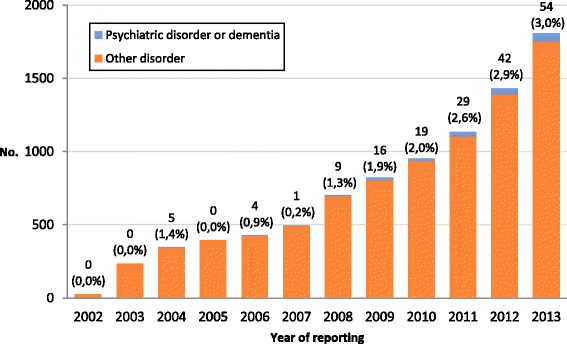
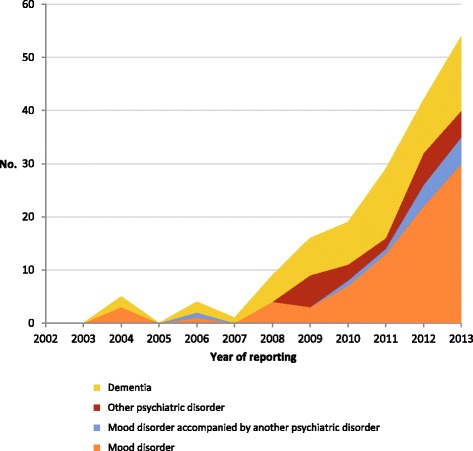
BACKGROUND: Euthanasia for people who are not terminally ill, such as those suffering from psychiatric disorders or dementia, is legal in Belgium under strict conditions but remains a controversial practice. As yet, the prevalence of euthanasia for people with psychiatric disorders or dementia has not been studied and little is known about the characteristics of the practice. This study aims to report on the trends in prevalence and number of euthanasia cases with a psychiatric disorder or dementia diagnosis in Belgium and demographic, clinical and decision-making characteristics of these cases. METHODS: We analysed the anonymous databases of euthanasia cases reported to the Federal Control and Evaluation Committee Euthanasia from the implementation of the euthanasia law in Belgium in 2002 until the end of 2013. The databases we received provided the information on all euthanasia cases as registered by the Committee from the official registration forms. Only those with one or more psychiatric disorders or dementia and no physical disease were included in the analysis. RESULTS: We identified 179 reported euthanasia cases with a psychiatric disorder or dementia as the sole diagnosis. These consisted of mood disorders (N = 83), dementia (N = 62), other psychiatric disorders (N = 22) and mood disorders accompanied by another psychiatric disorder (N = 12). The proportion of euthanasia cases with a psychiatric disorder or dementia diagnosis was 0.5% of all cases reported in the period 2002-2007, increasing from 2008 onwards to 3.0% of all cases reported in 2013. The increase in the absolute number of cases is particularly evident in cases with a mood disorder diagnosis. The majority of cases concerned women (58.1% in dementia to 77.1% in mood disorders). All cases were judged to have met the legal requirements by the Committee. CONCLUSIONS: While euthanasia on the grounds of unbearable suffering caused by a psychiatric disorder or dementia remains a comparatively limited practice in Belgium, its prevalence has risen since 2008. If, as this study suggests, people with psychiatric conditions or dementia are increasingly seeking access to euthanasia, the development of practice guidelines is all the more desirable if physicians are to respond adequately to these highly delicate requests.
Overview
The claims and statistics of this paper haven’t been checked yet.
Free: it reads the open-access text and checks the first 5 claims that cite a source we can check. Create a free account to check every claim.
Integrity signals
Registry
Cites
Statistics
Figures
Verification
Claims the paper makes
The claims and statistics of this paper haven’t been checked yet.
Free: it reads the open-access text and checks the first 5 claims that cite a source we can check. Create a free account to check every claim.
Claims other papers make about this one
Each is checked against this paper’s own text: does it say what the citing paper says it does?
The source backs part of the claim, not all of it — or backs it for a different population, condition or comparison.
In the citing paper
“Currently, guidelines are silent on whether suicidal ideation and behavior should play a role in how “irremediability” is defined, potentially exacerbating the risk for error.”
From Psychiatric euthanasia, suicide and the role of gender (2022) · cites this paper as [33]
Experimental — accuracy not yet measuredThe source backs part of the claim, not all of it — or backs it for a different population, condition or comparison.
In the citing paper
“In Belgium, MAiD-NT due to psychiatric disorder have increased from 0.5% of all cases reported in the period 2002–2007 to 3.0% of all cases reported in 2011, [60]”
From Debating Euthanasia and Physician-Assisted Death in People with Psychiatric Disorders (2022) · cites this paper as [60]
Experimental — accuracy not yet measuredThe source backs part of the claim, not all of it — or backs it for a different population, condition or comparison.
In the citing paper
“Some authors interpret historical trends in countries such as the Netherlands and Belgium as evidence of incremental expansion in MAiD use, though the data remain limited and difficult to compare.39 40”
From Medical Assistance in Dying for the Sole Underlying Condition of Mental Disorder (MAiD MD-SUMC): an analysis and qualitative evidence synthesis (2026) · cites this paper as [40]
Experimental — accuracy not yet measuredThe source backs part of the claim, not all of it — or backs it for a different population, condition or comparison.
In the citing paper
“Patients with only mood disorders were generally older than 60 years of age (65%), whereas the others were generally younger than 60.”
From Euthanasia and assisted suicide in psychiatric patients: A systematic review of the literature (2021) · cites this paper as Dierickx et al., 2017
Experimental — accuracy not yet measuredThe source backs part of the claim, not all of it — or backs it for a different population, condition or comparison.
In the citing paper
“Women were preponderant in both pEAS-C and pEAS-R (Dierickx et al., 2017;Groenewoud et al., 1997;Kim et al., 2016;Nicolini et al., 2019;Thienpont et al., 2015a;van Veen et al., 2018).”
From Euthanasia and assisted suicide in psychiatric patients: A systematic review of the literature (2021) · cites this paper as Dierickx et al., 2017
Experimental — accuracy not yet measured
18 more claims about this paper
Create a free account to see every claim other papers make about this one.
Self-check
Percentages, sums and reported differences re-computed from the paper’s own numbers.
The self-check needs the paper’s full text.
Citations
Cites
The empirical status of cognitive-behavioral therapy: A review of meta-analyses
Butler, A. C., Chapman, J. E., Forman, E. M., & Beck, A. T. (2006) · Clinical Psychology Review · doi:10.1016/j.cpr.2005.07.003 · Cited by 3,215
Cooney, G. M., Dwan, K., Greig, C. A., Lawlor, D. A., Rimer, J., Waugh, F. R., McMurdo, M., & Mead, G. E. (2013) · Cochrane Database of Systematic Reviews · doi:10.1002/14651858.cd004366.pub6 · Cited by 1,834
Cipriani, A., Furukawa, T. A., Salanti, G., Geddes, J. R., Higgins, J. P., Churchill, R., Watanabe, N., Nakagawa, A., Omori, I. M., McGuire, H., et al. (2009) · The Lancet · doi:10.1016/s0140-6736(09)60046-5 · Cited by 1,654
Kim, S. Y. H., De Vries, R. G., & Peteet, J. R. (2016) · JAMA Psychiatry · doi:10.1001/jamapsychiatry.2015.2887 · Cited by 320
End-of-life decisions in medical practice in Flanders, Belgium: a nationwide survey
Deliens, L., Mortier, F., Bilsen, J., Cosyns, M., Stichele, R. V., Vanoverloop, J., & Ingels, K. (2000) · The Lancet · doi:10.1016/s0140-6736(00)03233-5 · Cited by 307
A meta-analysis of electroconvulsive therapy efficacy in depression
Kho, K. H., van Vreeswijk, M. F., Simpson, S., & Zwinderman, A. H. (2003) · The Journal of ECT · doi:10.1097/00124509-200309000-00005 · Cited by 265
Mental capacity in psychiatric patients: Systematic review
Okai, D., Owen, G., McGuire, H., Singh, S., Churchill, R., & Hotopf, M. (2007) · British Journal of Psychiatry · doi:10.1192/bjp.bp.106.035162 · Cited by 262
Thienpont, L., Verhofstadt, M., Van Loon, T., Distelmans, W., Audenaert, K., & De Deyn, P. P. (2015) · BMJ Open · doi:10.1136/bmjopen-2014-007454 · Cited by 231 · cited 1×
“This finding differs from a recent study of 100 people suffering from a psychiatric disorder who requested euthanasia, which found that most cases involved younger people [38].”
ResultBolt, E. E., Snijdewind, M. C., Willems, D. L., van der Heide, A., & Onwuteaka-Philipsen, B. D. (2015) · Journal of Medical Ethics · doi:10.1136/medethics-2014-102150 · Cited by 178 · cited 1×
“A Dutch study, however, has shown that a minority of Dutch physicians find it conceivable that they would grant a euthanasia request in the case of a psychiatric disorder (34%) or early-stage dementia (40%) [22].”
BackgroundOwen, G. S., Richardson, G., David, A. S., Szmukler, G., Hayward, P., & Hotopf, M. (2008) · BMJ · doi:10.1136/bmj.39580.546597.be · Cited by 172
Research works printed but not linked: 1
- Tholen A Berghmans R Huisman J Legemaate J Nolen W Polak F Guideline dealing with the request for assisted suicide by patients with a psychiatric disorder [Richtlijn omgaan met het verzoek om hulp bij zelfdoding door patiënten met een psychiatrische stoornis (in Dutch)] 2009 Utrecht Dutch Psychiatric Association
Cited by
Assisted dying around the world: a status quaestionis
Mroz, S., Dierickx, S., Deliens, L., Cohen, J., & Chambaere, K. (2021) · Annals of Palliative Medicine · doi:10.21037/apm-20-637 · Cited by 264
“In Canada, Luxembourg and the United States, a person must be at least 18 years old to request physician-assisted suicide (7).”
BackgroundInfluentialSelf-citationEuthanasia and assisted suicide in psychiatric patients: A systematic review of the literature
Calati, R., Olié, E., Dassa, D., Gramaglia, C., Guillaume, S., Madeddu, F., & Courtet, P. (2021) · Journal of Psychiatric Research · doi:10.1016/j.jpsychires.2020.12.006 · Cited by 88
A systematic review of older adults’ request for or attitude toward euthanasia or assisted-suicide
Castelli Dransart, D. A., Lapierre, S., Erlangsen, A., Canetto, S. S., Heisel, M., Draper, B., Lindner, R., Richard-Devantoy, S., Cheung, G., Scocco, P., et al. (2021) · Aging & Mental Health · doi:10.1080/13607863.2019.1697201 · Cited by 77
Nicolini, M. E., Kim, S. Y. H., Churchill, M. E., & Gastmans, C. (2020) · Psychological Medicine · doi:10.1017/s0033291720001543 · Cited by 77
Evenblij, K., Pasman, H. R. W., Pronk, R., & Onwuteaka-Philipsen, B. D. (2019) · BMC Psychiatry · doi:10.1186/s12888-019-2053-3 · Cited by 75
Elwyn, R. (2023) · Journal of Eating Disorders · doi:10.1186/s40337-022-00729-0 · Cited by 61
“Euthanasia and physician-assisted suicide (EAS) is currently accessible for individuals with EDs in different countries [72, 191], however in the judgement of requests for EAS, an AN diagnosis has been sufficient to facilitate this process [72, 191].”
BackgroundVerhofstadt, M., Van Assche, K., Sterckx, S., Audenaert, K., & Chambaere, K. (2019) · International Journal of Law and Psychiatry · doi:10.1016/j.ijlp.2019.04.004 · Cited by 60
Self-citationSuffering is not enough: Assisted dying for people with mental illness
Trachsel, M., & Jox, R. J. (2022) · Bioethics · doi:10.1111/bioe.13002 · Cited by 48
Euthanasia in Belgium: Shortcomings of the Law and Its Application and of the Monitoring of Practice
Raus, K., Vanderhaegen, B., & Sterckx, S. (2021) · The Journal of Medicine and Philosophy: A Forum for Bioethics and Philosophy of Medicine · doi:10.1093/jmp/jhaa031 · Cited by 45
Psychiatric euthanasia, suicide and the role of gender
Nicolini, M. E., Gastmans, C., & Kim, S. Y. H. (2022) · The British Journal of Psychiatry · doi:10.1192/bjp.2021.95 · Cited by 40
Debating Euthanasia and Physician-Assisted Death in People with Psychiatric Disorders
Grassi, L., Folesani, F., Marella, M., Tiberto, E., Riba, M. B., Bortolotti, L., Toffanin, T., Palagini, L., Belvederi Murri, M., Biancosino, B., et al. (2022) · Current Psychiatry Reports · doi:10.1007/s11920-022-01339-y · Cited by 39
Rickstal, R. V., Vleminck, A. D., Aldridge, M. D., Morrison, S. R., Koopmans, R. T. C. M., van der Steen, J. T., Engelborghs, S., & den Block, L. V. (2019) · Palliative Medicine · doi:10.1177/0269216319864777 · Cited by 43
Doherty, A. M., Axe, C. J., & Jones, D. A. (2022) · BJPsych Open · doi:10.1192/bjo.2022.71 · Cited by 37
Assisted dying and palliative care in three jurisdictions: Flanders, Oregon, and Quebec
Gerson, S. M., Koksvik, G. H., Richards, N., Materstvedt, L. J., & Clark, D. (2020) · Annals of Palliative Medicine · doi:10.21037/apm-20-632 · Cited by 51
“The relationship between assisted dying and palliative care is influenced by legal regulations that are subject to change (49,50), variable and sometimes inconsistent institutional policies and support systems, the type of assisted dying offered (medically or self-administered), and structures of healthcare funding (5…”
BackgroundVerhofstadt, M., Pardon, K., Audenaert, K., Deliens, L., Mortier, F., Liégeois, A., & Chambaere, K. (2021) · Journal of Psychiatric Research · doi:10.1016/j.jpsychires.2021.09.032 · Cited by 32
Self-citationKono, M., Arai, N., & Takimoto, Y. (2023) · Palliative & Supportive Care · doi:10.1017/s1478951522001699 · Cited by 46
Scopetti, M., Morena, D., Padovano, M., Manetti, F., Fazio, N. D., Delogu, G., Ferracuti, S., Frati, P., & Fineschi, V. (2023) · Healthcare · doi:10.3390/healthcare11101470 · Cited by 48
“5% of all cases in the period 2002–2007 to 3% in 2013), for patients diagnosed with psychiatric disorders or dementia [33,34].”
BackgroundVerhofstadt, M., Audenaert, K., Van den Broeck, K., Deliens, L., Mortier, F., Titeca, K., Pardon, K., & Chambaere, K. (2020) · BMC Psychiatry · doi:10.1186/s12888-020-02775-x · Cited by 28
“Since the Belgian Law on Euthanasia came into effect in 2002, reported euthanasia rates based on psychiatric conditions (other than dementia) have risen from five cases in the first five years of the euthanasia law and 72 cases in the second to 181 cases in the third [5, 6].”
BackgroundSelf-citationDemedts, D., Roelands, M., Libbrecht, J., & Bilsen, J. (2018) · Journal of Psychiatric and Mental Health Nursing · doi:10.1111/jpm.12475 · Cited by 28
Binder, M. D., Loos, S., Sterckx, S., Thys, E., & Assche, K. V. (2022) · Frontiers in Psychiatry · doi:10.3389/fpsyt.2022.933748 · Cited by 43
Moureau, L., Verhofstadt, M., & Liégeois, A. (2023) · Frontiers in Psychiatry · doi:10.3389/fpsyt.2023.1094038 · Cited by 36
Hodel, M. A., Hoff, P., Irwin, S. A., Biller-Andorno, N., Riese, F., & Trachsel, M. (2019) · Palliative and Supportive Care · doi:10.1017/s1478951519000233 · Cited by 25
“In the few countries where AS on the basis of a primary psychiatric diagnosis is legal, the number of patients seeking AS continues to increase (Dierickx et al., 2017; Kim & Lemmens, 2016).”
BackgroundMarijnissen, R. M., Chambaere, K., & Oude Voshaar, R. C. (2022) · Frontiers in Psychiatry · doi:10.3389/fpsyt.2022.857131 · Cited by 25
Self-citationWhat medical conditions lead to a request for euthanasia? A rapid scoping review
Rahimian, Z., Rahimian, L., López‐Castromán, J., Ostovarfar, J., Fallahi, M. J., Nayeri, M. A., & Vardanjani, H. M. (2024) · Health Science Reports · doi:10.1002/hsr2.1978 · Cited by 29
Data and Trends in Assisted Suicide and Euthanasia, and Some Related Demographic Issues
Colombo, A. D., & Dalla‐Zuanna, G. (2024) · Population and Development Review · doi:10.1111/padr.12605 · Cited by 23
Verhofstadt, M., Audenaert, K., Van den Broeck, K., Deliens, L., Mortier, F., Titeca, K., De Bacquer, D., & Chambaere, K. (2021) · Science Progress · doi:10.1177/00368504211029775 · Cited by 21
“To our knowledge, only two retrospective studies exist, which were limited in scope because one only reported about performed euthanasia cases, and the other only reported about requests from a single practice.(10,13) One study revealed that the consultation process takes an average of 9months, involving an average of…”
BackgroundSelf-citationVerhofstadt, M., Chambaere, K., Pardon, K., Mortier, F., Liégeois, A., Deliens, L., & Audenaert, K. (2022) · BMC Psychiatry · doi:10.1186/s12888-022-04039-2 · Cited by 19
Self-citationMedical assistance in dying and older persons in Belgium: trends, emerging issues and challenges
Van Den Noortgate, N., & Van Humbeeck, L. (2021) · Age and Ageing · doi:10.1093/ageing/afaa116 · Cited by 18
The ethics of euthanasia in dementia: A qualitative content analysis of case summaries (2012–2020)
Groenewoud, S., Leijten, E., van den Oever, S., van Sommeren, J., & Boer, T. A. (2022) · Journal of the American Geriatrics Society · doi:10.1111/jgs.17707 · Cited by 22
Assisted death in eating disorders: a systematic review of cases and clinical rationales
Roff, C., & Cook-Cottone, C. (2024) · Frontiers in Psychiatry · doi:10.3389/fpsyt.2024.1431771 · Cited by 16
“Belgium: The Federal Committee for Evaluation and Control (FCCE) in Belgium is responsible for oversight of euthanasia.”
BackgroundInfluentialVerhofstadt, M., Audenaert, K., Van Assche, K., Sterckx, S., & Chambaere, K. (2019) · BMC Medical Ethics · doi:10.1186/s12910-019-0400-z · Cited by 15
Self-citationMedical assistance in dying in Canada: A scoping review on the concept of suffering
Henry, M., Alias, A., Bisson‐Gervais, V., Liu, J. Y., Dargis, L., Gauthier, L. R., Tapp, D., Greenfield, B. J., & Mishara, B. L. (2023) · Psycho-Oncology · doi:10.1002/pon.6196 · Cited by 21
Verhofstadt, M., Audenaert, K., Van den Broeck, K., Deliens, L., Mortier, F., Titeca, K., Pardon, K., De Bacquer, D., & Chambaere, K. (2020) · BMC Psychiatry · doi:10.1186/s12888-020-02792-w · Cited by 14
Self-citationSuicide and self-harm in older adults
Connors, M. H., Draper, B., Wand, A. P. F., Leo, D. D., & Reppermund, S. (2025) · Nature Reviews Psychology · doi:10.1038/s44159-025-00454-w · Cited by 19
“Assisted suicide for psychiatric conditions 269 seems to be most frequently requested by older women with depression and/or personality disorder, according to studies from Switzerland and Belgium 270,271 .”
Euthanasia in the case of dementia: a survey among Flemish GPs
Cleemput, J., & Schoenmakers, B. (2019) · BJGP Open · doi:10.3399/bjgpopen19x101677 · Cited by 14
“Research among Belgian psychiatrists showed that over threequarters of the doctors would agree to carry out euthanasia at a late stage of dementia, based on a recent advance directive.(8,9) Other research showed that religious doctors were more reluctant to perform euthanasia than non- religious doctors, and that doct…”
ResultMöller, H. (2020) · International Journal of Psychiatry in Clinical Practice · doi:10.1080/13651501.2020.1797097 · Cited by 21
“Dierickx et al. (2017) analysed reported cases of euthanasia in people with psychiatric disorders or dementia in Belgium, where EAS is legal under strict conditions but remains controversial.”
BackgroundInfluentialLengvenyte, A., Strumila, R., Courtet, P., Kim, S. Y. H., & Olié, E. (2020) · The Canadian Journal of Psychiatry · doi:10.1177/0706743720931237 · Cited by 13
The First into the Dark: The Nazi Persecution of the Disabled
Robertson, M. S., Ley, A., & Light, E. M. (2019) · University of Technology, Sydney eBooks · doi:10.5130/aae · Cited by 19
Requests for Medical Assistance in Dying by Young Dutch People With Psychiatric Disorders
Schweren, L. J. S., Rasing, S. P. A., Kammeraat, M., Middelkoop, L. A., Werner, R., Mérelle, S. Y. M., Garcia, J. M., Creemers, D. H. M., & van Veen, S. M. P. (2025) · JAMA Psychiatry · doi:10.1001/jamapsychiatry.2024.4006 · Cited by 11
A Netnographic Approach: Views on Assisted Dying for Individuals With Dementia
Dehkhoda, A., Owens, R. G., & Malpas, P. J. (2020) · Qualitative Health Research · doi:10.1177/1049732320925795 · Cited by 16
“From the beginning of assisted dying legis lation, the validity of AEDs for this group of patients has been central to debate (Dierickx et al., 2017) because such directives are subjected to rigorous moral and ethical evalu ation.”
BackgroundPhysician-Assisted Suicide in Dementia: Paradoxes, Pitfalls and the Need for Prudence
Rajkumar, R. P. (2021) · Frontiers in Sociology · doi:10.3389/fsoc.2021.815233 · Cited by 11
“If the presence of these symptoms in dementia is considered a sufficient indication for PAS, this opens the door to the approval of PAS in patients with any severe or resistant mental illness or behavioural disorder; this has already occurred in some countries where PAS has been legalized (Dierickx et al., 2017; Verho…”
BackgroundInfluentialVerhofstadt, M., Moureau, L., Pardon, K., & Liégeois, A. (2024) · BMC Medical Ethics · doi:10.1186/s12910-024-01063-7 · Cited by 37
Verhofstadt, M., Chambaere, K., Leontjevas, R., & Peters, G.-J. (2019) · BJPsych Open · doi:10.1192/bjo.2019.25 · Cited by 15
Self-citationRight to Life or Right to Die in Advanced Dementia: Physician-Assisted Dying
Jakhar, J. K., Ambreen, S., & Prasad, S. (2021) · Frontiers in Psychiatry · doi:10.3389/fpsyt.2020.622446 · Cited by 17
Advance Directives and Alzheimer's Disease
Davis, D. S. (2018) · The Journal of Law Medicine & Ethics · doi:10.1177/1073110518804235 · Cited by 11
Depression and Physician-Aid-in-Dying
Tully, I. (2022) · The Journal of Medicine and Philosophy A Forum for Bioethics and Philosophy of Medicine · doi:10.1093/jmp/jhac004 · Cited by 11
About the practice of psychiatric euthanasia: a commentary
Lopez-Castroman, J. (2017) · BMC Medicine · doi:10.1186/s12916-017-0896-3 · Cited by 9
“[6] describes 179 psychiatric and dementia patients, with no comorbid physical illnesses motivating their request, who were accepted for euthanasia in Belgium between 2002 and 2013.”
BackgroundVerhofstadt, M., Assche, K. V., Pardon, K., Gleydura, M., Titeca, K., & Chambaere, K. (2024) · International Journal of Law and Psychiatry · doi:10.1016/j.ijlp.2024.101961 · Cited by 15
Self-citationMroz, S., Deliëns, L., Cohen, J., & Chambaere, K. (2022) · Deutsches Ärzteblatt international · doi:10.3238/arztebl.m2022.0378 · Cited by 26
Self-citationMondragón, J. D., Salame, L., Kraus-Weisman, A., & Deyn, P. P. D. (2020) · Bioethics News · doi:10.1007/s40592-020-00112-2 · Cited by 12
Glaz, A. L., Berrouiguet, S., Kim-Dufor, D.-H., Walter, M., & Lemey, C. (2019) · The American Journal of Bioethics · doi:10.1080/15265161.2019.1654019 · Cited by 9
Relationship Between COVID-19, Euthanasia and Old Age: A Study from a Legal-Ethical Perspective
Mengual, J. S. (2021) · Journal of Religion and Health · doi:10.1007/s10943-021-01280-z · Cited by 13
Ketamine-assisted meaning-centered psychotherapy for a patient with severe suicidal behavior
Forcén, F. E., Marengo, L., & Behn, M. (2022) · Palliative & Supportive Care · doi:10.1017/s1478951522001304 · Cited by 9
La pratique de l’euthanasie et du suicide assisté pour motif psychiatrique
Guérinet, L., & Tournier, M. (2021) · L Encéphale · doi:10.1016/j.encep.2020.10.002 · Cited by 9
Loizeau, A., Cohen, S., Mitchell, S. L., Theill, N., Eicher, S., Martin, M., & Riese, F. (2019) · Neurodegenerative Diseases · doi:10.1159/000499113 · Cited by 10
Dom, G., Stoop, H., Haekens, A., & Sterckx, S. (2020) · Psychiatria Polska · doi:10.12740/pp/124078 · Cited by 7
“Given the overall increase in euthanasia, this also reflects a substantial increase in the absolute number of cases, specifically for mood disorders (4 cases in 2008 increasing to 30 cases in 2013) [14].”
BackgroundWhite, B. P., Willmott, L., Villar, K. D., Hewitt, J. E., Close, E., Greaves, L. L., Cameron, J., Meehan, R., & Downie, J. (2022) · University of New South Wales law journal · doi:10.53637/fyid9182 · Cited by 7
To be or not to be: The active inference of suicide
Krupnik, V., & Danilova, N. (2024) · Neuroscience & Biobehavioral Reviews · doi:10.1016/j.neubiorev.2023.105531 · Cited by 6
Fazio, N. D., Romano, S., Fante, Z. D., Santoro, P., Fineschi, V., & Frati, P. (2021) · Frontiers in Psychiatry · doi:10.3389/fpsyt.2021.675706 · Cited by 10
Keis, A., Aluoja, A., Pisarev, H., Uusküla, A., & Suija, K. (2025) · BMJ Open · doi:10.1136/bmjopen-2024-096450 · Cited by 5
Unbearable Suffering: A Concept Analysis.
Ortega‐Galán, Á. M., Fernández, M. D. R., Roldán-Rodríguez, L., Ramos‐Pichardo, J. D., Cabrera‐Troya, J., Gómez-Beltrán, P. A., & Amo, R. O. (2022) · PubMed · doi:10.1097/njh.0000000000000844 · Cited by 4
“In Europe, the Netherlands was the first country to legalize euthanasia and assisted suicide in 2002, followed by Belgium, which was also a pioneer in legalizing child euthanasia with no age limit.(3) Luxembourg followed Belgium in 2009, and Switzerland legalized assisted suicide for non-Swiss residents.”
BackgroundAnalysis of Factors Influencing Polish Students’ Opinions on Euthanasia
Stokłosa, I., Stokłosa, M., Więckiewicz, G., Porwolik, M. J., Bugajski, M., Masarczyk, W., Męcik-Kronenberg, T., Piegza, M. J., Pudło, R., & Gorczyca, P. W. (2022) · International Journal of Environmental Research and Public Health · doi:10.3390/ijerph19095019 · Cited by 7
“Now, 20 years after the legalization of euthanasia in the Benelux countries, there is also a growing percentage of people who choose to receive help to end their lives, and are struggling with severe mental disorders such as dementia, major depression, bipolar disorder, and conversion disorder [13,14].”
BackgroundFinished with Life Anyway and Then Stigmatized for Attempting Suicide—An Overview
Eilers, J. J., & Kasten, E. (2022) · Healthcare · doi:10.3390/healthcare10112303 · Cited by 8
“Therefore, it must also be examined in this case to what extent a death wish is a psychopathological expression rather than a conscious intention to die before an assisted suicide is considered [118].”
BackgroundThe Reakiro Care Model for Persons With a Chronic Death Wish: An Epidemiological Study
Vanhie, T., Verdegem, S., Cuypers, A., Bemelmans, L., Onghena, P., & Vandenberghe, J. U. (2025) · Journal of Humanistic Psychology · doi:10.1177/00221678241313088 · Cited by 7
Fonseca, L., Castro, L., Rêgo, G., & Nunes, R. (2024) · Healthcare · doi:10.3390/healthcare12111078 · Cited by 3
“As the experience of the countries where euthanasia is available for people with mental illness shows us, psychiatric patients are increasingly seeking access to euthanasia [91].”
BackgroundDødshjelp: Lovverk, praksis og holdninger i de skandinaviske land
Kleiven, D. J. H., Hartling, O. J., Ståhle, F., Horn, M. A., & Magelssen, M. (2020) · doi:10.23865/noasp.96.ch3 · Cited by 9
Voluntary Assisted Dying/Euthanasia: Will This Have an Impact on Cancer Care in Future Years?
Philip, J. A. M., Le, B. H. C., Brooy, C. L., Olver, I., Kerridge, I., & Komesaroff, P. A. (2023) · Current Treatment Options in Oncology · doi:10.1007/s11864-023-01126-8 · Cited by 7
Harper, L., Tomaras, C. A., Powell, R. A., Reddon, J. R., & Hawrelak, E. (2025) · American Journal of Hospice and Palliative Medicine® · doi:10.1177/10499091241247835 · Cited by 3
“An analysis of 179 reported MAiD cases, in which individuals requested MAiD in Belgium found that 83 of those cases were individuals with a mood disorder such as depression and 22 cases of those with a psychiatric disorder, such as schizophrenia (Dierickx et al., 2017).”
Waddell, M. M. (2020) · Journal of Disability & Religion · doi:10.1080/23312521.2019.1694463 · Cited by 3
“…little evidence of this heightened level of caution or attention to the nuances of autism in either the case reports or the scholarly studies of cases involving individuals on the spectrum (cf. Dierickx et al., 2017; Doernberg, Peteet, & Kim, 2016; Kim & Lemmens, 2016; Tuffrey-Wijne et al., 2018).”
Physician-Assisted Suicide, Euthanasia, and Bioethics in Nazi and Contemporary Cinema
Rubenfeld, S., & Sulmasy, D. P. (2022) · The International Library of Bioethics · doi:10.1007/978-3-031-01987-6_10 · Cited by 3
Persons with mental disorders and assisted dying practices in Spain: In response to Ramos et al.
Pifarré, J., Esquerda, M., Torralba, F., Bátiz, J., & Bofarull, M. (2024) · International Journal of Law and Psychiatry · doi:10.1016/j.ijlp.2024.101980 · Cited by 7
Sufrimiento insoportable, salud mental y eutanasia. Apuntes para las enfermeras
Pozón, S. R. (2020) · Cultura de los Cuidados · doi:10.14198/cuid.2020.58.20 · Cited by 10
Impact de l’euthanasie pour dépression dans le débat sur la fatigue de vivre
Glaz, A. L., Walter, M., Gentric, A., & Griner-Abraham, V. (2021) · Gérontologie et société · doi:10.3917/gs1.164.0133 · Cited by 3
Le vieil homme et la mort: De la finitude de la vie à la revendication d’un droit à mourir
Chastang, F., Lorenceau, H., Omnès, C., Védrinne, J., & Walter, M. (2021) · Gérontologie et société · doi:10.3917/gs1.164.0117 · Cited by 4
Dehkhoda, A., Owens, R. G., & Malpas, P. J. (2020) · Dementia · doi:10.1177/1471301220922766 · Cited by 5
“Reports also show a gradual increase in the prevalence of assisted dying for individuals with dementia in Belgium from 2008 onwards (from 5 reported cases in 2008 to 14 cases in 2013) (Dierickx et al., 2017).”
BackgroundAttitudes and Behaviors of Palliative Care Nurses on Euthanasia
Şener, Ş., & Dikmen, Y. (2023) · Florence Nightingale Journal of Nursing · doi:10.5152/fnjn.2023.23056 · Cited by 5
Neurology and physician-assisted suicide: glossary of definitions and terminology
Solari, A., Ticozzi, N., Comi, G., Mancardi, G., Provinciali, L., Padovani, A., & Pucci, E. (2025) · Neurological Sciences · doi:10.1007/s10072-025-08064-3 · Cited by 3
Bersani, G., Iannitelli, A., Pimpinella, P., Sessa, F., Salerno, M., Chisari, M. G., & Rinaldi, R. (2025) · Healthcare · doi:10.3390/healthcare13162019 · Cited by 4
“While the decisions appear to align with prevailing practices in Belgium and other jurisdictions where psychiatric euthanasia is legal [12–14], they also expose gaps in clinical rigor and ethical safeguards.”
El derecho a morir dignamente: una oportunidad para el impulso ético del Trabajo Social
Carbonell, Á., Pérez, J. J. N., & Botija, M. (2021) · Trabajo Social Global-Global Social Work · doi:10.30827/tsg-gsw.v11.11453 · Cited by 7
Hert, M. D. H. M. D., Loos, S., & Assche, K. V. (2023) · Tijdschrift voor Geneeskunde · doi:10.47671/tvg.79.23.006 · Cited by 2
EUTHANASIA: THE RIGHT TO DIE BETWEEN GOD’S WILL AND THE WILL OF A MAN
Čović, A. V. (2023) · Strani pravni zivot · doi:10.56461/spz_23204kj · Cited by 2
“…cases with a psychiatric disorder or dementia diagnosis was 0.5% of all cases reported in the period 2002–2007, increasing from 2008 onwards to 3.0% of all cases reported in 2013, and the majority of cases concerned women (58.1% in dementia to 77.1% in mood disorders) (Dierickx et al., 2017).”
BackgroundInfluentialWels, J., & Hamarat, N. (2024) · medRxiv · doi:10.1101/2024.10.16.24315619 · Cited by 2
“Although concerning a small proportion of the causes of euthanasia in Belgium 25 , psychiatric disorders are often identified to be a cause of concern 14 but data on such a population is sparse 26 .”
Courtet, P., & Olié, E. (2021) · Oxford Textbook of Suicidology and Suicide Prevention · doi:10.1093/med/9780198834441.003.0018 · Cited by 1
Vers une liberté à revendiquer le droit à mourir
Chastang, F., Gerard, P., Omnès, C., Védrinne, J., & Walter, M. (2021) · Soins Psychiatrie · doi:10.1016/j.spsy.2021.04.009 · Cited by 2
Binder, M. D., Sterckx, S., & Assche, K. V. (2023) · The International Library of Bioethics · doi:10.1007/978-3-031-25315-7_11 · Cited by 2
Shifting the pendulum – but with checks and balances
Steinert, T. (2024) · World Psychiatry · doi:10.1002/wps.21232 · Cited by 1
Arshad, W., Dehkhoda, A., Carey, M., Menkes, D. B., Hoeh, N. R., Sundram, F., Frey, R., & Cheung, G. (2025) · BMC Palliative Care · doi:10.1186/s12904-025-01838-8 · Cited by 1
“Finally, Belgian research highlighted the importance of interdisciplinary team support and the challenges of maintaining therapeutic relationships when patients request euthanasia [11, 12].”
Hamarat, N., & Wels, J. (2025) · BMC Public Health · doi:10.1186/s12889-025-24839-x · Cited by 1
Tobore, T. O. (2026) · Frontiers in Public Health · doi:10.3389/fpubh.2026.1695897 · Cited by 1
Exploring the legal, medical, and ethical controversy: obstacles to euthanasia legalization in China
Xie, Z., & Duan, Z. (2026) · Critical Public Health · doi:10.1080/09581596.2026.2671479 · Cited by 1
Pavlović, B., Tiosavljević, D., & Sinadinović, D. (2019) · Srpski arhiv za celokupno lekarstvo · doi:10.2298/sarh190514108p · Cited by 1
“Apart from the mentioned legal regulations, it is necessary to underline that there are various ethical and medical doubts within the essential criteria primarily related to the (in)ability of meeting these criteria in case of mentally ill people [15].”
BackgroundInfluentialA Rend in the Fabric of Medicine.
Trimble, M. (2019) · PubMed Central · Cited by 1
Horn, M. A. (2020) · doi:10.23865/noasp.96.ch9 · Cited by 3
In Whose Interests? The Prohibition of Assisted Suicide in the United Kingdom
Jackson, E. (2021) · Oxford University Press eBooks · doi:10.1093/oso/9780198852681.003.0009 · Cited by 1
Ha, E. (2022) · Japan Journal of Nursing Science · doi:10.1111/jjns.12467 · Cited by 2
Resident Perspective on Medical Assistance in Dying Expansion in Canada: Challenges and Concerns
Prasad, U. (2024) · American Journal of Psychiatry Residents Journal · doi:10.1176/appi.ajp-rj.2024.200105 · Cited by 1
En kritisk granskning av Oregonmodellen
Ekström, A., & Luthman, M. (2020) · doi:10.23865/noasp.96.ch14 · Cited by 1
Dødshjelp i Norden? Etikk, klinikk og politikk
Horn, M. A., Kleiven, D. J. H., & Magelssen, M. (2020) · doi:10.23865/noasp.96 · Cited by 5
Pawluk, A., Arksey, E., Jansens, H., Qiao, S., & McFarlane, L. (2026) · BMJ Open · doi:10.1136/bmjopen-2025-105129
“Moreover, the absence of uniform international reporting standards, such as diagnostic categorisation in Switzerland, further limits conclusions about global trajectories.”
Bhui, K. S. (2017) · The British Journal of Psychiatry · doi:10.1192/bjp.211.4.258
Metadata
- Authors
- Dierickx, S., Deliens, L., Cohen, J., & Chambaere, K.
- Affiliations
- Vrije Universiteit Brussel (BE)
- Corresponding author
- Dierickx, Sigrid
- Venue
- BMC Psychiatry
- Published
- 2017-06-23
- Volume
- 17
- Issue
- 1
- Pages
- 203-203
- ISSN
- 1471-244X (ISSN-L)
- PMC
- PMC5481967
- OpenAlex
- W2617356614
- Cited by
- 129
- References
- 43
- Citations by year
- 2026: 6 · 2025: 11 · 2024: 13 · 2023: 12 · 2022: 18 · 2021: 18 · 2020: 29 · 2019: 17 · 2018: 2 · 2017: 3
- FWCI
- 13.10
- Type
- journal article
- Language
- en
- Open access
- gold
- doi.org
- Licence
- cc-by
- Locations
- BMC Psychiatry (publishedVersion, cc-by)
- Europe PMC (PubMed Central) (publishedVersion, other-oa)
- PubMed Central (publishedVersion, cc-by)
- PubMed (publishedVersion)
- Ghent University Academic Bibliography (Ghent University) (submittedVersion, cc-by)
- DOAJ (DOAJ: Directory of Open Access Journals) (submittedVersion)
- VUBIR (Vrije Universiteit Brussel) (submittedVersion)
- Funders
- Internal funding
- Topics
- Health Sciences › Medicine › Public Health, Environmental and Occupational Health › Palliative Care and End-of-Life Issues
- Health Sciences › Medicine › Public Health, Environmental and Occupational Health › Palliative and Oncologic Care
- Health Sciences › Medicine › Public Health, Environmental and Occupational Health › Ethics and bioethics in healthcare
- Keywords
- euthanasia, mental illness, dementia, mood disorders, prevalence trends, Belgium, euthanasia legislation, unbearable suffering, physician decision-making, clinical guidelines
- MeSH terms
- Mental Disorders, Belgium, Decision Making, Dementia, Euthanasia, Female, Humans, Male, Middle Aged, Sex Factors
About these checks
Registry, retraction, Cites and statistics results are computed, not judged, with one exception: a printed reference that no index lists is read once by a model before it counts as a citation error. Claims are extracted by a model and kept only when their quote appears verbatim in the text; each cited source is then checked, with a model’s help, for whether it says what the claim relies on. Those verdicts can be wrong — read the claim’s quote and the cited source before relying on one.
Statistics and arithmetic are recomputed, not judged.
Confidence bands are shown only for fields calibrated on our annotated test set. None is calibrated yet, so no band is shown.
What counts as a claim ›How we measure confidence ›How we check this ›
Are you an author, or do you see a problem with this page? Request a review
Data sources
Bibliographic data: Semantic Scholar, OpenAlex, Crossref.
Contains information from the Semantic Scholar Academic Graph Datasets, made available under the ODC Attribution License (ODC-BY 1.0).
Semantic Scholar’s data is described in: Kinney, R., et al. (2023). The Semantic Scholar Open Data Platform. arXiv:2301.10140.
