

The impact of Facebook use on self-reported eating disorders during the COVID-19 lockdown
Open accessThe DOI matches its Crossref record; 71 of the 71 references it cites were found in a registry or an index.
Abstract
Background: The social isolation due to the COVID-19-related lockdown has had an impact on social media consumption around the world. This study examines the relationship between fear of COVID-19, Facebook use and disordered eating. Methods: Structural Equation Modeling was used to analyse two-wave survey data (T0: Italian first lockdown; T1: after two months) during the pandemic. Young adults with self-reported dysfunctional eating behaviors (N = 115; 91.3% females; mean age = 28.60 ± 7.31) were recruited to complete an online survey at T0; 66 participants (92.4% females; mean age = 28.85 ± 7.85) completed the survey at T1. They were assessed on Facebook use, dysfunctional eating cognitions, and fear of COVID-19. Results: Participants’ disordered eating cognitions increased during the pandemic. At T0, higher fear of COVID-19 was positively associated to time spent on Facebook, which in turn predicted disordered eating cognitions at T1. Moreover, maladaptive Facebook use mediated the relationship between daily time on Facebook and Shape concerns. Conclusions: The findings of this study suggest an influence of dysfunctional Facebook use in increasing disordered eating cognitions during the pandemic.
Overview
The claims and statistics of this paper haven’t been checked yet.
Free: it reads the open-access text and checks the first 5 claims that cite a source we can check. Create a free account to check every claim.
Integrity signals
Registry
Cites
Statistics
Figures
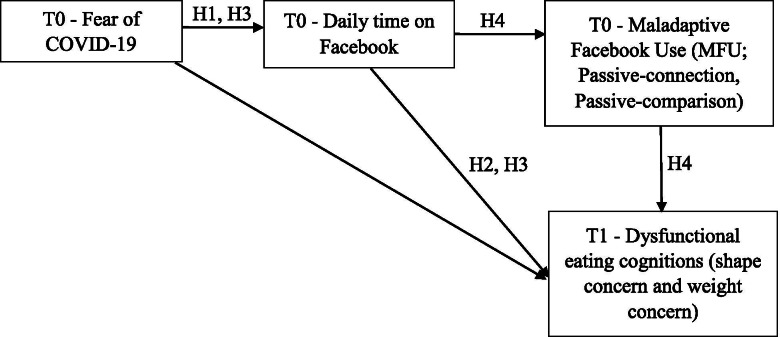
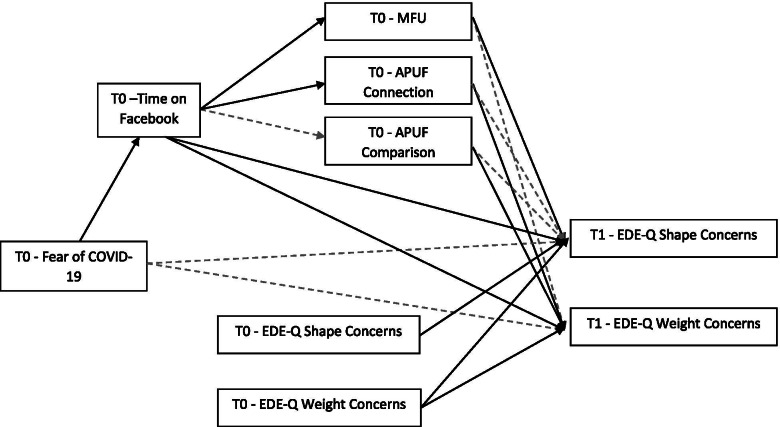
Verification
Claims the paper makes
The claims and statistics of this paper haven’t been checked yet.
Free: it reads the open-access text and checks the first 5 claims that cite a source we can check. Create a free account to check every claim.
Claims other papers make about this one
Each is checked against this paper’s own text: does it say what the citing paper says it does?
The cited source doesn’t support the claim as written.
In the citing paper
“one longitudinal study conducted during the pandemic evidenced that time spent on Facebook was associated with increased body image and weight concerns, which was explained by passive but not active use (Mannino et al., 2021).”
From Pathways of association between disordered eating in adolescence and mental health outcomes in young adulthood during the COVID-19 pandemic (2023) · cites this paper as Mannino et al., 2021
Checked by a reasoning model — may be wrong.
Experimental — accuracy not yet measured
Self-check
Percentages, sums and reported differences re-computed from the paper’s own numbers.
The self-check needs the paper’s full text.
Citations
Cites
Hu, L., & Bentler, P. M. (1999) · Structural Equation Modeling A Multidisciplinary Journal · doi:10.1080/10705519909540118 · Cited by 108,788
Tabachnick, B. G., & Fidell, L. S. (1983) · Cited by 80,054
The psychological impact of quarantine and how to reduce it: Rapid review of the evidence
Brooks, S. K., Webster, R. K., Smith, L. E., Woodland, L., Wessely, S., Greenberg, N., & Rubin, G. J. (2020) · The Lancet · doi:10.1016/s0140-6736(20)30460-8 · Cited by 16,378 · cited 1×
“COVID‐19 and eating disorders Although quarantine and social distancing are important preventive measures during major infectious disease outbreaks, there is evidence that they may be associated with negative psychological effects [11].”
Background(2007) · Cited by 10,092
A test of missing completely at random for multivariate data with missing values
Little, R. J. A. (1988) · Journal of the American Statistical Association · doi:10.1080/01621459.1988.10478722 · Cited by 8,963 · cited 2×
“Moreover, Little’s [48] MCAR test was not significant, χ2(15) = 5.622, p = .985, indicating that drop-out likely occurred at random.”
InfluentialStructural Equation Modeling: Concepts, Issues, and Applications.
Smith, M. D., & Hoyle, R. H. (1996) · The Statistician · doi:10.2307/2988418 · Cited by 6,814
Constructing validity: Basic issues in objective scale development.
Clark, L. A., & Watson, D. (1995) · Psychological Assessment · doi:10.1037/1040-3590.7.3.309 · Cited by 6,567 · cited 1×
“50 indicate adequate internal consistency [51].”
Analysis of Incomplete Multivariate Data
Schafer, J. L. (1997) · doi:10.1201/9781439821862 · Cited by 6,012
The Fear of COVID-19 Scale: Development and Initial Validation
Ahorsu, D. K., Lin, C.-Y., Imani, V., Saffari, M., Griffiths, M. D., & Pakpour, A. H. (2022) · International Journal of Mental Health and Addiction · doi:10.1007/s11469-020-00270-8 · Cited by 4,332 · cited 5×
““When watching news and stories about Coronavirus-19 on social media, I become nervous or anxious”) which showed robust psychometric properties in previous studies [1, 5] as well as in the present study (Cronbach’s α = .”
BackgroundMethodInfluentialTimely mental health care for the 2019 novel coronavirus outbreak is urgently needed
Xiang, Y.-T., Yang, Y., Li, W., Zhang, L., Zhang, Q., Cheung, T., & Ng, C. H. (2020) · The Lancet Psychiatry · doi:10.1016/s2215-0366(20)30046-8 · Cited by 3,598
Holmbeck, G. N. (1997) · Journal of Consulting and Clinical Psychology · doi:10.1037//0022-006x.65.4.599 · Cited by 2,972
Psychological interventions for people affected by the COVID-19 epidemic
Duan, L., & Zhu, G. (2020) · The Lancet Psychiatry · doi:10.1016/s2215-0366(20)30073-0 · Cited by 1,885
Writing about structural equation models.
Hoyle, R. H., & Panter, A. T. (1995) · Cited by 1,708
Holland, G., & Tiggemann, M. (2016) · Body Image · doi:10.1016/j.bodyim.2016.02.008 · Cited by 1,395
Contemporary Approaches to Assessing Mediation in Communication Research
Preacher, K. J., & Hayes, A. F. (2008) · The SAGE Sourcebook of Advanced Data Analysis Methods for Communication Research · doi:10.4135/9781452272054.n2 · Cited by 1,310 · cited 1×
“Finally, 95% confidence intervals (CIs) were computed using 5000 bootstrap resamples for indirect effects [55].”
MethodChou, H.-T. G., & Edge, N. (2012) · Cyberpsychology, Behavior, and Social Networking · doi:10.1089/cyber.2011.0324 · Cited by 1,166 · cited 1×
“Facebook friends) do, think and talk about on Facebook without direct exchanges, and passive users are more likely to believe that others are more satisfied with their body [35, 36].”
BackgroundWu, T., Jia, X., Shi, H., Niu, J., Yin, X., Xie, J., & Wang, X. (2021) · Journal of Affective Disorders · doi:10.1016/j.jad.2020.11.117 · Cited by 1,138
Satici, B., Gocet-Tekin, E., Deniz, M. E., & Satici, S. A. (2021) · International Journal of Mental Health and Addiction · doi:10.1007/s11469-020-00294-0 · Cited by 922 · cited 1×
“[2–5]; and there is evidence on their association with psychological distress during the pandemic [6, 7].”
BackgroundWhat social media told us in the time of COVID-19: A scoping review
Tsao, S.-F., Chen, H., Tisseverasinghe, T., Yang, Y., Li, L., & Butt, Z. A. (2021) · The Lancet Digital Health · doi:10.1016/s2589-7500(20)30315-0 · Cited by 816 · cited 2×
“Discussion Social media such Facebook can have a crucial role in disseminating health information and tackling infodemics and misinformation during the COVID-19 pandemic [57].”
BackgroundResultNetGirls: The Internet, Facebook, and body image concern in adolescent girls
Tiggemann, M., & Slater, A. (2013) · International Journal of Eating Disorders · doi:10.1002/eat.22141 · Cited by 741 · cited 1×
“Some studies suggested that time spent on SNSs is related to higher eating disorder symptoms and concerns [26, 29, 30].”
BackgroundThe impact of the COVID‐19 pandemic on eating disorder risk and symptoms
Rodgers, R. F., Lombardo, C., Cerolini, S., Franko, D. L., Omori, M., Fuller‐Tyszkiewicz, M., Linardon, J., Courtet, P., & Guillaume, S. (2020) · International Journal of Eating Disorders · doi:10.1002/eat.23318 · Cited by 650 · cited 3×
“The present study Although the investigation of the effects of social media use on eating disorder risks and symptoms is a research priority during the pandemic crisis [10], to date, the negative impact of Facebook use on disordered eating behavior and cognitions during the COVID-19 crisis has received limited researc…”
BackgroundInfluentialFear of COVID-19 and the mental health consequences in America.
Fitzpatrick, K. M., Harris, C., & Drawve, G. (2020) · Psychological Trauma: Theory, Research, Practice, and Policy · doi:10.1037/tra0000924 · Cited by 594 · cited 1×
“[2–5]; and there is evidence on their association with psychological distress during the pandemic [6, 7].”
BackgroundFacebook Photo Activity Associated with Body Image Disturbance in Adolescent Girls
Meier, E. P., & Gray, J. (2014) · Cyberpsychology Behavior and Social Networking · doi:10.1089/cyber.2013.0305 · Cited by 585 · cited 3×
“For instance, people reporting higher levels of social media use could be more likely to be exposed to influential visual material which may promote the slimness ideal and a frequent appearance comparison that present risks for the development or exacerbation of eating concerns [29, 43].”
BackgroundFardouly, J., & Vartanian, L. R. (2015) · Body Image · doi:10.1016/j.bodyim.2014.10.004 · Cited by 522 · cited 1×
“For instance, people reporting higher levels of social media use could be more likely to be exposed to influential visual material which may promote the slimness ideal and a frequent appearance comparison that present risks for the development or exacerbation of eating concerns [29, 43].”
BackgroundSocial Media, Body Image and Food Choices in Healthy Young Adults: A Mixed Methods Systematic Review
Rounsefell, K., Gibson, S., McLean, S., Blair, M., Molenaar, A., Brennan, L., Truby, H., & McCaffrey, T. A. (2020) · Nutrition & Dietetics · doi:10.1111/1747-0080.12581 · Cited by 472
Social Comparison 2.0: Examining the Effects of Online Profiles on Social-Networking Sites
Haferkamp, N., & Krämer, N. C. (2011) · Cyberpsychology, Behavior, and Social Networking · doi:10.1089/cyber.2010.0120 · Cited by 457 · cited 1×
“Facebook friends) do, think and talk about on Facebook without direct exchanges, and passive users are more likely to believe that others are more satisfied with their body [35, 36].”
BackgroundPhillipou, A., Meyer, D., Neill, E., Tan, E. J., Toh, W. L., Van Rheenen, T. E., & Rossell, S. L. (2020) · International Journal of Eating Disorders · doi:10.1002/eat.23317 · Cited by 437
Validation and Psychometric Evaluation of the Italian Version of the Fear of COVID-19 Scale
Soraci, P., Ferrari, A., Abbiati, F. A., Del Fante, E., De Pace, R., Urso, A., & Griffiths, M. D. (2022) · International Journal of Mental Health and Addiction · doi:10.1007/s11469-020-00277-1 · Cited by 427 · cited 1×
““When watching news and stories about Coronavirus-19 on social media, I become nervous or anxious”) which showed robust psychometric properties in previous studies [1, 5] as well as in the present study (Cronbach’s α = .”
COVID ‐19 and implications for eating disorders
Fernández‐Aranda, F., Casas, M., Claes, L., Bryan, D. C., Favaro, A., Granero, R., Gudiol, C., Jiménez‐Murcia, S., Karwautz, A., Le Grange, D., et al. (2020) · European Eating Disorders Review · doi:10.1002/erv.2738 · Cited by 392 · cited 4×
“Also Fernandez-Aranda and colleagues [17], in a retrospective study, showed an increase in eating symptomatology and in psychopathology of patients with an ED due to home-confinement.”
BackgroundResultInfluentialJiotsa, B., Naccache, B., Duval, M., Rocher, B., & Grall-Bronnec, M. (2021) · International Journal of Environmental Research and Public Health · doi:10.3390/ijerph18062880 · Cited by 337 · cited 1×
“Maladaptive social media use has been identified as a potential mental health problem [63], and there is initial evidence showing the association between the frequency of comparing one’s own physical appearance to that of people followed on social media, and body dissatisfaction [64].”
BackgroundCOVID-19 anxiety symptoms associated with problematic smartphone use severity in Chinese adults
Elhai, J. D., Yang, H., McKay, D., & Asmundson, G. J. G. (2020) · Journal of Affective Disorders · doi:10.1016/j.jad.2020.05.080 · Cited by 325 · cited 3×
“Abbreviations EDs: Eating Disorders; MFU: Maladaptive Facebook Usage Scale; EDE-Q: Eating Disorder Examination Questionnaire; APUF: Active and Passive Facebook Use; AIP: Italian Psychological Association; PSU: Problematic Smartphone Use.”
BackgroundDo you “like” my photo? Facebook use maintains eating disorder risk.
Mabe, A. G., Forney, K. J., & Keel, P. K. (2014) · International Journal of Eating Disorders · doi:10.1002/eat.22254 · Cited by 321 · cited 3×
“This finding seems to be consistent with previous studies which assessed the association between frequency of social media use and eating concerns [26, 60, 61].”
BackgroundMethodResultde Vries, D. A., Peter, J., de Graaf, H., & Nikken, P. (2016) · Journal of Youth and Adolescence · doi:10.1007/s10964-015-0266-4 · Cited by 320 · cited 1×
“One of the few longitudinal studies on this issue showed that more frequent SNS use predicted increased body dissatisfaction among adolescents 18 months later, but body dissatisfaction did not predict SNS use [31].”
BackgroundZhao, N., & Zhou, G. (2020) · Applied Psychology: Health and Well-Being · doi:10.1111/aphw.12226 · Cited by 314 · cited 1×
“Moreover, previous research suggested that higher levels of social media use can be associated with worse mental health symptoms during the pandemic [62].”
BackgroundBoursier, V., Gioia, F., Musetti, A., & Schimmenti, A. (2020) · Frontiers in Psychiatry · doi:10.3389/fpsyt.2020.586222 · Cited by 309 · cited 1×
“The experience of fear during COVID-19-related home confinement has had the potential to drive people to staying socially connected by social media [8].”
BackgroundTermorshuizen, J. D., Watson, H. J., Thornton, L. M., Borg, S., Flatt, R. E., MacDermod, C. M., Harper, L. E., van Furth, E. F., Peat, C. M., & Bulik, C. M. (2020) · doi:10.1101/2020.05.28.20116301 · Cited by 304
Association of the COVID-19 pandemic with internet search volumes: a Google Trends™ analysis
Effenberger, M., Kronbichler, A., Shin, J. I., Mayer, G., Tilg, H., & Perco, P. (2020) · International Journal of Infectious Diseases · doi:10.1016/j.ijid.2020.04.033 · Cited by 270
Lin, C.-Y., Broström, A., Griffiths, M. D., & Pakpour, A. H. (2020) · Internet Interventions · doi:10.1016/j.invent.2020.100345 · Cited by 269 · cited 1×
“Our findings are in line with previous evidence indicating that daily time spent online with social media activities increased during the COVID-19 crisis [9, 57] and that problematic and excessive social media use is associated with fear of COVID [58].”
ResultSchlegl, S., Maier, J., Meule, A., & Voderholzer, U. (2020) · International Journal of Eating Disorders · doi:10.1002/eat.23374 · Cited by 258 · cited 2×
“purging, social insecurity, body dissatisfaction, shape and weight concerns, drive for physical activity) psychopathology during the pandemic [19, 20].”
BackgroundResultThe effects of Social Networking Site (SNS) use on college students’ friendship and well-being
Wang, J.-L., Jackson, L. A., Gaskin, J., & Wang, H.-Z. (2014) · Computers in Human Behavior · doi:10.1016/j.chb.2014.04.051 · Cited by 240 · cited 1×
“Saffran and colleagues [38] showed that looking at Facebook pages without communicating was associated with greater eating disorder psychopathology, according to research which showed that passive SNS usage negatively predicted users’ well-being [39].”
ResultAppel, H., Crusius, J., & Gerlach, A. L. (2015) · Journal of Social and Clinical Psychology · doi:10.1521/jscp.2015.34.4.277 · Cited by 229
The Association between Social Media Use and Eating Concerns among US Young Adults
Sidani, J. E., Shensa, A., Hoffman, B., Hanmer, J., & Primack, B. A. (2016) · Journal of the Academy of Nutrition and Dietetics · doi:10.1016/j.jand.2016.03.021 · Cited by 228 · cited 1×
“This finding seems to be consistent with previous studies which assessed the association between frequency of social media use and eating concerns [26, 60, 61].”
ResultCastellini, G., Cassioli, E., Rossi, E., Innocenti, M., Gironi, V., Sanfilippo, G., Felciai, F., Monteleone, A. M., & Ricca, V. (2020) · International Journal of Eating Disorders · doi:10.1002/eat.23368 · Cited by 223 · cited 2×
“Castellini and colleagues [68] showed that the COVID-19 pandemic has significantly impacted on ED patients’ symptomatology during the lockdown, when compared to the previous time.”
BackgroundResultBranley-Bell, D., & Talbot, C. V. (2020) · Journal of Eating Disorders · doi:10.1186/s40337-020-00319-y · Cited by 221 · cited 2×
“Moreover, there is preliminary evidence regarding the impact of restrictions due to COVID-19 on the mental state of people who were suffering from mental health problems before the pandemic, who may be more at risk of increasing distress and worsening of their mental health status due to the disruption of treatment se…”
BackgroundSystematic Review and Meta-Analysis of Fear of COVID-19
Luo, F., Ghanei Gheshlagh, R., Dalvand, S., Saedmoucheshi, S., & Li, Q. (2021) · Frontiers in Psychology · doi:10.3389/fpsyg.2021.661078 · Cited by 209
Hussain, Z., & Griffiths, M. D. (2018) · Frontiers in Psychiatry · doi:10.3389/fpsyt.2018.00686 · Cited by 203 · cited 1×
“Maladaptive social media use has been identified as a potential mental health problem [63], and there is initial evidence showing the association between the frequency of comparing one’s own physical appearance to that of people followed on social media, and body dissatisfaction [64].”
BackgroundRø, Ø., Reas, D. L., & Stedal, K. (2015) · European Eating Disorders Review · doi:10.1002/erv.2372 · Cited by 200 · cited 1×
“According to the EDE-Q cut-off for different BMI range [46], 55.”
MethodEffects of COVID‐19 lockdown on eating disorders and obesity: A systematic review and meta‐analysis
Sideli, L., Lo Coco, G., Bonfanti, R. C., Borsarini, B., Fortunato, L., Sechi, C., & Micali, N. (2021) · European Eating Disorders Review · doi:10.1002/erv.2861 · Cited by 173
Self-citationRole of social media during the COVID-19 pandemic: Beneficial, destructive, or reconstructive?
Sahni, H., & Sharma, H. (2020) · International Journal of Academic Medicine · doi:10.4103/ijam.ijam_50_20 · Cited by 172 · cited 1×
“Although some scholars argued a positive side to social media use during COVID-19-related quarantine [40, 41], it is also likely that people suffering from eating problems would be involved more negatively in on-line Facebook communities during the pandemic, given the heightened feelings of loneliness and the lack of…”
BackgroundSmith, A. R., Hames, J. L., & Joiner, T. E. (2013) · Journal of Affective Disorders · doi:10.1016/j.jad.2013.01.032 · Cited by 168 · cited 9×
“MFU is a 7-item questionnaire (e.g. “I tend to read the status updates of others to see if they are feeling the way I am”).”
BackgroundMethodInfluentialWaller, G., Pugh, M., Mulkens, S., Moore, E., Mountford, V. A., Carter, J., Wicksteed, A., Maharaj, A., Wade, T. D., Wisniewski, L., et al. (2020) · International Journal of Eating Disorders · doi:10.1002/eat.23289 · Cited by 151 · cited 1×
“Although some scholars argued a positive side to social media use during COVID-19-related quarantine [40, 41], it is also likely that people suffering from eating problems would be involved more negatively in on-line Facebook communities during the pandemic, given the heightened feelings of loneliness and the lack of…”
BackgroundFacebook Use and Disordered Eating in College-Aged Women
Walker, M., Thornton, L., De Choudhury, M., Teevan, J., Bulik, C. M., Levinson, C. A., & Zerwas, S. (2015) · Journal of Adolescent Health · doi:10.1016/j.jadohealth.2015.04.026 · Cited by 148 · cited 3×
“In summary, the examination of Facebook usage patterns and their associations with problematic eating behavior is an important research topic to pursue in the context of COVID-19-related home confinement, given that people moved to online social media interactions in mass [28] and spent less time communicating face to…”
BackgroundAccess to evidence‐based care for eating disorders during the COVID ‐19 crisis
Weissman, R. S., Bauer, S., & Thomas, J. J. (2020) · International Journal of Eating Disorders · doi:10.1002/eat.23279 · Cited by 143 · cited 1×
“Moreover, there is preliminary evidence regarding the impact of restrictions due to COVID-19 on the mental state of people who were suffering from mental health problems before the pandemic, who may be more at risk of increasing distress and worsening of their mental health status due to the disruption of treatment se…”
BackgroundSocial Media Use During Social Distancing
Wiederhold, B. K. (2020) · Cyberpsychology Behavior and Social Networking · doi:10.1089/cyber.2020.29181.bkw · Cited by 138 · cited 2×
“Wiederhold [9] suggested that social media use may have been used during the COVID-19 pandemic as a way to alleviate anxiety, by connecting people with others, creating a sense of normalcy and sharing information with friends and relatives.”
BackgroundResultVuillier, L., May, L., Greville-Harris, M., Surman, R., & Moseley, R. L. (2021) · Journal of Eating Disorders · doi:10.1186/s40337-020-00362-9 · Cited by 130
Ruggieri, S., Ingoglia, S., Bonfanti, R. C., & Lo Coco, G. (2021) · Personality and Individual Differences · doi:10.1016/j.paid.2020.110486 · Cited by 107 · cited 1×
“Although some scholars argued a positive side to social media use during COVID-19-related quarantine [40, 41], it is also likely that people suffering from eating problems would be involved more negatively in on-line Facebook communities during the pandemic, given the heightened feelings of loneliness and the lack of…”
Self-citationA qualitative exploration of the impact of COVID-19 on individuals with eating disorders in the UK
Brown, S., Opitz, M.-C., Peebles, A. I., Sharpe, H., Duffy, F., & Newman, E. (2021) · Appetite · doi:10.1016/j.appet.2020.104977 · Cited by 107 · cited 1×
“In addition, qualitative studies also suggested a multifaceted experience of people with EDs during the pandemic [15, 22].”
BackgroundHummel, A. C., & Smith, A. R. (2015) · International Journal of Eating Disorders · doi:10.1002/eat.22336 · Cited by 105 · cited 1×
“It is worth noting that although scholars have extensively examined the association between Facebook use and dysfunctional eating behavior, the specific negative consequences of its active or passive usage needs further investigation [66].”
BackgroundFacebook is linked to body dissatisfaction: comparing users and non-users.
Stronge, S., Greaves, L. M., Milojev, P., West-Newman, T., Barlow, F. K., & Sibley, C. G. (2015) · Sex Roles · doi:10.1007/s11199-015-0517-6 · Cited by 97 · cited 1×
“Although prior research evidenced a negative impact of Facebook use on fostering and maintaining disordered eating cognitions [27, 28], there is a dearth of studies exploring the link between fear of COVID and social media use during the pandemic.”
BackgroundClark Bryan, D., Macdonald, P., Ambwani, S., Cardi, V., Rowlands, K., Willmott, D., & Treasure, J. (2020) · European Eating Disorders Review · doi:10.1002/erv.2762 · Cited by 93 · cited 1×
“Although some scholars argued a positive side to social media use during COVID-19-related quarantine [40, 41], it is also likely that people suffering from eating problems would be involved more negatively in on-line Facebook communities during the pandemic, given the heightened feelings of loneliness and the lack of…”
BackgroundMonteleone, A. M., Marciello, F., Cascino, G., Daga, G. A., Anselmetti, S., Baiano, M., Balestrieri, M., Barone, E., Bertelli, S., Carpiniello, B., et al. (2021) · Journal of Affective Disorders · doi:10.1016/j.jad.2021.02.037 · Cited by 84 · cited 4×
“purging, social insecurity, body dissatisfaction, shape and weight concerns, drive for physical activity) psychopathology during the pandemic [19, 20].”
BackgroundResultInfluentialBennett, B. L., Whisenhunt, B. L., Hudson, D. L., Wagner, A. F., Latner, J. D., Stefano, E. C., & Beauchamp, M. T. (2020) · Journal of American College Health · doi:10.1080/07448481.2019.1583236 · Cited by 81 · cited 1×
“On the contrary, other studies found that time spent using social media was not a significant predictor of body dissatisfaction, while the number of social media sites visited was [32].”
ResultScharmer, C., Martinez, K., Gorrell, S., Reilly, E. E., Donahue, J. M., & Anderson, D. A. (2020) · International Journal of Eating Disorders · doi:10.1002/eat.23395 · Cited by 79
Lo Coco, G., Gentile, A., Bosnar, K., Milovanović, I., Bianco, A., Drid, P., & Pišot, S. (2021) · International Journal of Environmental Research and Public Health · doi:10.3390/ijerph18052586 · Cited by 60
Facebook usage among those who have received treatment for an eating disorder in a group setting
Saffran, K., Fitzsimmons‐Craft, E. E., Kass, A. E., Wilfley, D. E., Taylor, C. B., & Trockel, M. (2016) · International Journal of Eating Disorders · doi:10.1002/eat.22567 · Cited by 43 · cited 1×
“Saffran and colleagues [38] showed that looking at Facebook pages without communicating was associated with greater eating disorder psychopathology, according to research which showed that passive SNS usage negatively predicted users’ well-being [39].”
ResultTosun, L. P., & Kaşdarma, E. (2020) · Journal of Media Psychology · doi:10.1027/1864-1105/a000269 · Cited by 43
Conducting eating disorders research in the time of COVID ‐19: A survey of researchers in the field
Weissman, R. S., Klump, K. L., & Rose, J. S. (2020) · International Journal of Eating Disorders · doi:10.1002/eat.23303 · Cited by 30
Mingoia, J., Hutchinson, A. D., Gleaves, D. H., Corsini, N., & Wilson, C. (2017) · Psychology & Health · doi:10.1080/08870446.2017.1347788 · Cited by 28
Sakib, M. N., Butt, Z. A., Morita, P. P., Oremus, M., Fong, G. T., & Hall, P. A. (2020) · Journal of Medical Internet Research · doi:10.2196/19930 · Cited by 22
Coco, G. L., Salerno, L., Giordano, C., Blasi, M. D., & Rodgers, R. F. (2020) · Current Psychology · doi:10.1007/s12144-020-00847-5 · Cited by 21 · cited 1×
“This finding seems to be consistent with previous studies which assessed the association between frequency of social media use and eating concerns [26, 60, 61].”
ResultSelf-citationAlbano, G., Bonfanti, R. C., Gullo, S., Salerno, L., & Coco, G. L. (2021) · Research in Psychotherapy Psychopathology Process and Outcome · doi:10.4081/ripppo.2021.557 · Cited by 13 · cited 1×
“It is likely that online social support was important for people with a high level of fear of COVID who shared several information about the pandemic [23].”
BackgroundSelf-citation
Research works printed but not linked: 3
- Fioravanti G Casale S The active and passive use of Facebook: measurement and relationship to Facebook addiction J Psychopathol 2020 26 176 182 10.36148/2284-0249329 · doi:10.36148/2284-0249329
- Fairburn CG Fairburn CG Eating disorder examination (edition 16.0D) and eating disorder examination questionnaire (EDE-Q 6.0) Cognitive therapy and eating disorders 2009 New York Guildford Press 265 313
- Schermelleh-Engel K Moosbrugger H Müller H Evaluating the fit of structural equation models: tests of significance and descriptive goodness-of-fit measures Psychol Methods 2003 8 2 23 74
Cited by
Bonfanti, R. C., Melchiori, F., Teti, A., Albano, G., Raffard, S., Rodgers, R., & Lo Coco, G. (2025) · Body Image · doi:10.1016/j.bodyim.2024.101841 · Cited by 154
Self-citationOliveira, J., Pedras, S., Inman, R. A., & Ramalho, S. M. (2024) · Frontiers in Psychology · doi:10.3389/fpsyg.2024.1272643 · Cited by 48
“…because internet addiction is associated with adverse psychosocial outcomes for students, including academic difficulties (Marahatta et al., 2015) and a heightened risk for mental health issues and psychopathology [see meta-analysis of 223 studies by Mannino et al. (2021) and Cai et al. (2023)].”
BackgroundStangl, F. J., Riedl, R., Kiemeswenger, R., & Montag, C. (2023) · Frontiers in Psychology · doi:10.3389/fpsyg.2023.1141663 · Cited by 22
“, 2021), passive use of Facebook for social connection (Mannino et al., 2021), and perceived social comparison on Facebook (Puccio et al.”
BackgroundInfluential(2022) · PubMed Central · Cited by 20
A multi‐school study in England, to assess problematic smartphone usage and anxiety and depression
Carter, B., Payne, M., Rees, P., Sohn, S. Y., Brown, J. S. L., & Kalk, N. J. (2024) · Acta Paediatrica · doi:10.1111/apa.17317 · Cited by 35
“15,16 The primary pre-specified hypothesis was to assess if there was any increased risk of probable anxiety in those participants with problematic smartphone usage, compared to those without.”
Metadata
- Authors
- Mannino, G., Salerno, L., Bonfanti, R. C., Albano, G., & Lo Coco, G.
- Affiliations
- Libera Università Maria SS. Assunta (IT)
- University of Palermo (IT)
- Corresponding author
- Salerno, Laura
- Venue
- BMC Psychiatry
- Published
- 2021-12
- Volume
- 21
- Issue
- 1
- Pages
- 611-611
- ISSN
- 1471-244X (ISSN-L)
- PMC
- PMC8651245
- OpenAlex
- W4200001061
- Semantic Scholar
- ae84c7c613bcb6bffa986d99b08d2bb3ad703275
- Cited by
- 21
- References
- 69
- Citations by year
- 2025: 3 · 2024: 6 · 2023: 8 · 2022: 4
- FWCI
- 3.07
- Type
- journal article
- Language
- en
- Open access
- gold
- doi.org
- Licence
- cc-by
- creativecommons.org/licenses/by/4.0 (tdm)
- creativecommons.org/licenses/by/4.0 (vor, 6 d)
- Locations
- BMC Psychiatry (publishedVersion, cc-by)
- PubMed Central (publishedVersion, cc-by)
- PubMed (publishedVersion)
- Nova Science Publishers (Nova Science Publishers, Inc.) (submittedVersion, other-oa)
- DOAJ (DOAJ: Directory of Open Access Journals) (submittedVersion, cc-by-sa)
- Topics
- Social Sciences › Psychology › Clinical Psychology › Eating Disorders and Behaviors
- Social Sciences › Sociology and Political Science › Impact of Technology on Adolescents
- Health Sciences › Nursing › Nutrition and Dietetics › Nutrition, Health and Food Behavior
- Keywords
- Facebook use, disordered eating, eating disorders, COVID-19 lockdown, fear of COVID-19, shape concern, social media use, young adults, social isolation
- MeSH terms
- COVID-19, SARS-CoV-2, Adult, Feeding and Eating Disorders, Communicable Disease Control, Female, Humans, Male, Young Adult, Self Report, Social Media
About these checks
Registry, retraction, Cites and statistics results are computed, not judged, with one exception: a printed reference that no index lists is read once by a model before it counts as a citation error. Claims are extracted by a model and kept only when their quote appears verbatim in the text; each cited source is then checked, with a model’s help, for whether it says what the claim relies on. Those verdicts can be wrong — read the claim’s quote and the cited source before relying on one.
Statistics and arithmetic are recomputed, not judged.
Confidence bands are shown only for fields calibrated on our annotated test set. None is calibrated yet, so no band is shown.
What counts as a claim ›How we measure confidence ›How we check this ›
Are you an author, or do you see a problem with this page? Request a review
Data sources
Bibliographic data: Semantic Scholar, OpenAlex, Crossref.
Contains information from the Semantic Scholar Academic Graph Datasets, made available under the ODC Attribution License (ODC-BY 1.0).
Semantic Scholar’s data is described in: Kinney, R., et al. (2023). The Semantic Scholar Open Data Platform. arXiv:2301.10140.
