

The DOI matches its Crossref record; 55 of the 55 references it cites were found in a registry or an index.
Social media use in healthcare: A systematic review of effects on patients and on their relationship with healthcare professionals
Open accessAbstract
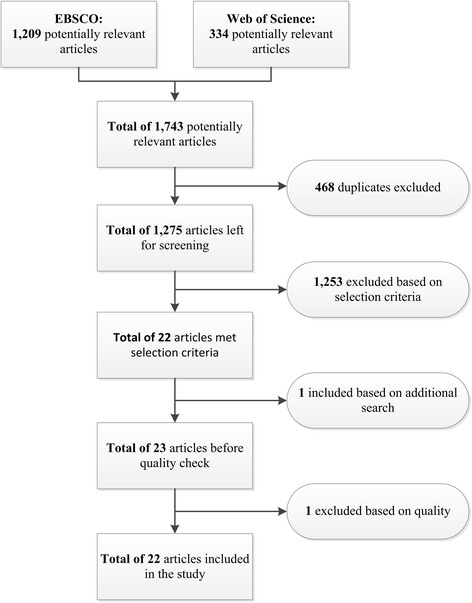
BACKGROUND: Since the emergence of social media in 2004, a growing percentage of patients use this technology for health related reasons. To reflect on the alleged beneficial and potentially harmful effects of social media use by patients, the aim of this paper is to provide an overview of the extant literature on the effects of social media use for health related reasons on patients and their relationship with healthcare professionals. METHODS: We conducted a systematic literature review on empirical research regarding the effects of social media use by patients for health related reasons. The papers we included met the following selection criteria: (1) published in a peer-reviewed journal, (2) written in English, (3) full text available to the researcher, (4) contain primary empirical data, (5) the users of social media are patients, (6) the effects of patients using social media are clearly stated, (7) satisfy established quality criteria. RESULTS: Initially, a total of 1,743 articles were identified from which 22 were included in the study. From these articles six categories of patients' use of social media were identified, namely: emotional, information, esteem, network support, social comparison and emotional expression. The types of use were found to lead to seven identified types of effects on patients, namely improved self-management and control, enhanced psychological well-being, and enhanced subjective well-being, diminished subjective well-being, addiction to social media, loss of privacy, and being targeted for promotion. Social media use by patients was found to affect the healthcare professional and patient relationship, by leading to more equal communication between the patient and healthcare professional, increased switching of doctors, harmonious relationships, and suboptimal interaction between the patient and healthcare professional. CONCLUSIONS: Our review provides insights into the emerging utilization of social media in healthcare. In particular, it identifies types of use by patients as well as the effects of such use, which may differ between patients and doctors. Accordingly, our results framework and propositions can serve to guide future research, and they also have practical implications for healthcare providers and policy makers.
Overview
The claims and statistics of this paper haven’t been checked yet.
Run the check — free, no account needed. It reads the open-access text and checks the sources it cites.
Integrity signals
Registry
Cites
Statistics
Figures
Verification
Claims the paper makes
The claims and statistics of this paper haven’t been checked yet.
Run the check — free, no account needed. It reads the open-access text and checks the sources it cites.
Claims other papers make about this one
Each is checked against this paper’s own text: does it say what the citing paper says it does?
The source backs part of the claim, not all of it — or backs it for a different population, condition or comparison.
In the citing paper
“Health promotion on social media also encouraged patients to seek medical attention more willingly [11].”
From Social Media Use Among Parents and Caregivers of Children With Rare Genetic Diseases: Scoping Review (2025) · cites this paper as [11]
Experimental — accuracy not yet measuredThe source backs part of the claim, not all of it — or backs it for a different population, condition or comparison.
In the citing paper
“Most patients discuss information they have found online with their health care provider”
From Social Media Use Among Parents and Caregivers of Children With Rare Genetic Diseases: Scoping Review (2025) · cites this paper as [11]
Experimental — accuracy not yet measuredThe source backs part of the claim, not all of it — or backs it for a different population, condition or comparison.
In the citing paper
“however, physicians often react negatively to discussions involving information sourced from social media [11-13].”
From Social Media Use Among Parents and Caregivers of Children With Rare Genetic Diseases: Scoping Review (2025) · cites this paper as [11]
Experimental — accuracy not yet measuredThe cited source says what the claim attributes to it.
In the citing paper
“Prior literature has highlighted both benefits and risks of social media in healthcare,4–13 but there remains limited understanding of how generational perspectives shape views of professionalism in healthcare social media use.”
From Evaluating perceptions of social media professionalism by healthcare workers (2026) · cites this paper as [5]
The cited source says what the claim attributes to it.
In the citing paper
“Social media use is also related to shorter relationships with health care providers, as online discussions prompted patients to seek specific providers [11].”
From Social Media Use Among Parents and Caregivers of Children With Rare Genetic Diseases: Scoping Review (2025) · cites this paper as [11]
The cited source says what the claim attributes to it.
In the citing paper
“social media empowers patients to be more informed and involved in their own care”
From Social Media Use Among Parents and Caregivers of Children With Rare Genetic Diseases: Scoping Review (2025) · cites this paper as [11]
The cited source says what the claim attributes to it.
In the citing paper
“allowing for improved communication with medical professionals [11,12].”
From Social Media Use Among Parents and Caregivers of Children With Rare Genetic Diseases: Scoping Review (2025) · cites this paper as [11]
The check wasn’t confident either way, so it gives no verdict — never disputed.
In the citing paper
“popularity of SM has also been embraced by health care professionals (HCPs) [5].”
From Dangers and Benefits of Social Media on E-Professionalism of Health Care Professionals: Scoping Review (2021) · cites this paper as [5]
Experimental — accuracy not yet measured
Self-check
Percentages, sums and reported differences re-computed from the paper’s own numbers.
The self-check needs the paper’s full text.
Citations
Cites
Preferred Reporting Items for Systematic Reviews and Meta-Analyses: the PRISMA statement
Moher, D., Liberati, A., Tetzlaff, J., Altman, D. G., & for the PRISMA Group (2009) · BMJ · doi:10.1136/bmj.b2535 · Cited by 83,823
Preferred reporting items for systematic reviews and meta-analyses: the PRISMA Statement.
(2009) · PubMed Central · Cited by 44,859
Users of the world, unite! The challenges and opportunities of Social Media
Kaplan, A. M., & Haenlein, M. (2010) · Business Horizons · doi:10.1016/j.bushor.2009.09.003 · Cited by 17,875 · cited 4×
“Among other uses, blogs can be used as personals diaries to express thoughts, feelings, and stories [9].”
BackgroundMethodInfluentialHappiness is everything, or is it? Explorations on the meaning of psychological well-being.
Ryff, C. D. (1989) · Journal of Personality and Social Psychology · doi:10.1037/0022-3514.57.6.1069 · Cited by 14,847 · cited 2×
“Moreover, “self-actualizers are described as having strong feelings of empathy and affection for all human beings and as being capable of greater love, deeper friendship, and more complete identification with others” [33].”
BackgroundPower, politics, and MIS implementation
Markus, M. L. (1983) · Communications of the ACM · doi:10.1145/358141.358148 · Cited by 2,224 · cited 1×
“According to the political variant of the interaction theory [49], “a product of the interaction of system”
BackgroundSocial capital, self-esteem, and use of online social network sites: A longitudinal analysis.
Steinfield, C., Ellison, N. B., & Lampe, C. (2008) · Journal of Applied Developmental Psychology · doi:10.1016/j.appdev.2008.07.002 · Cited by 1,919
Social Support Measurement and Intervention
(2000) · Oxford University Press eBooks · doi:10.1093/med:psych/9780195126709.001.0001 · Cited by 1,887 · cited 1×
“process of interaction in relationships which is intended to improve coping, esteem, belonging, and competence through actual or perceived exchanges of psychosocial resources” [19].”
BackgroundStandard Quality Assessment Criteria for Evaluating Primary Research Papers from a Variety of Fields
Kmet, L. M., Cook, L. S., & Lee, R. C. (2004) · University of Alberta Library · doi:10.7939/r37m04f16 · Cited by 1,682 · cited 3×
“The articles were assessed on their quality by using the standard quality assessment criteria as identified by [12].”
MethodInfluentialThe health-related functions of social support
Schaefer, C. A., Coyne, J. C., & Lazarus, R. S. (1981) · Journal of Behavioral Medicine · doi:10.1007/bf00846149 · Cited by 1,326 · cited 2×
“Social support is represented through five different categories and four of these categories were found to be common types of social media use by patients for health related purposes [18].”
BackgroundThe decision and the organization
MacDougall, C. D., & Wilson, H. (1965) · Marzani & Munsell eBooks · Cited by 1,149
Research works printed but not linked: 4
- Williams J. A new roadmap for healthcare business success. J Healthc Financ Manage Assoc. 2011;65(5):62–9.
- Mattson M, Hall JG. Health as communication nexus: A service-learning approach. Dubuque: Kendall Hunt; 2011.
- Sahoo FM, Mohapatra L. Psychological well-Being in professional groups. J Indian Acad Appl Psychol. 2009;35(2):211–7.
- Simon HA. Decision and organization. Amsterdam: North-Holland Publishing; 1972.
Cited by
Sorted by citations
Items 101–200 of 825
Clercq, E. D., Rost, M., Gumy‐Pause, F., Diesch, T., Espeli, V. G., & Elger, B. S. (2020) · Journal of Adolescent and Young Adult Oncology · doi:10.1089/jayao.2019.0168 · Cited by 29
“19 Thanks to this empowerment, they also feel more confident in asking questions to health care professionals (HCPs) and are more likely to participate in shared decision-making.”
Rhidenour, K. B., Blackburn, K. G., Barrett, A. K., & Taylor, S. (2021) · Health Communication · doi:10.1080/10410236.2021.1886411 · Cited by 27
“Research shows that people with diseases not only engage in SNS to gain information about their condition, but to talk about how their illness is viewed in the medical field (Smailhodzic et al., 2016).”
BackgroundRezaallah, B., Lewis, D. J., Pierce, C. E., Zeilhofer, H., & Berg, B.-. (2019) · Journal of Medical Internet Research · doi:10.2196/13003 · Cited by 29
The Saudi Experience of Health-Related Social Media Use: A Scoping Review
Kheir, D. Y. M. E., Boumarah, D. N., Bukhamseen, F. M., Masoudi, J. H., & Boubshait, L. A. (2021) · Saudi Journal of Health Systems Research · doi:10.1159/000516473 · Cited by 29
Online health communities and the patient-doctor relationship: An institutional logics perspective
Bernardi, R., & Wu, P. F. (2022) · Social Science & Medicine · doi:10.1016/j.socscimed.2022.115494 · Cited by 30
Social Media and Ophthalmology: Perspectives of Patients and Ophthalmologists
Clarke, C., Smith, E. R., Khan, M. J., & Al-Mohtaseb, Z. N. (2018) · Journal of Medical Systems · doi:10.1007/s10916-018-1079-2 · Cited by 29
Nordin, N., Hassali, M. A., & Sarriff, A. (2017) · Asian Journal of Pharmaceutical and Clinical Research · doi:10.22159/ajpcr.2017.v10i11.19884 · Cited by 28
“Therefore, it is advisable to use the available social media such as blogs, Facebook, YouTube, Wikipedia, bulletin, and newspaper to educate the people [30] and GPs [31] about the potential of these extended services to improve patients’ quality of life.”
BackgroundThe Influence of Social Media on Intrapartum Decision Making
Wright, E. M., Matthai, M. T., & Meyer, E. (2019) · The Journal of Perinatal & Neonatal Nursing · doi:10.1097/jpn.0000000000000377 · Cited by 28
“Studies indicate that patients who used social media reported improved self-management and control over decisions through a feeling of a more equal relationship with providers.(6,12) Research has also suggested that misinformation travels quickly and could lead to negative effects on patient health, as information pos…”
BackgroundQamar, F. N., Batool, R., Qureshi, S., Ali, M., Sadaf, T., Mehmood, J., Iqbal, K., Sultan, A., Duff, N., & Yousafzai, M. T. (2020) · Vaccines · doi:10.3390/vaccines8040697 · Cited by 28
“Use of digital media has significant effects on healthcare utilization [34,35].”
BackgroundThomas, R., Alabraba, V., Barnard, S., Beba, H., Brake, J., Cox, A., Bowker, R., Edwards, D., Epps, A., Fletcher-Salt, T., et al. (2021) · Journal of Diabetes Science and Technology · doi:10.1177/19322968211054862 · Cited by 28
Liu, Z., & Zou, W. (2023) · Health Communication · doi:10.1080/10410236.2023.2181677 · Cited by 32
“Health influencers on social media are playing an increasingly important role in their followers’ health outcomes and well-being by providing information and reducing uncertainty and anxiety (Smailhodzic et al., 2016).”
BackgroundAnastasio, A. T., Tabarestani, T. Q., Bagheri, K., Bethell, M. A., Prado, I. P., Taylor, J. R., & Adams, S. B. (2023) · Foot & Ankle Orthopaedics · doi:10.1177/24730114231171117 · Cited by 28
Social media hospital ratings and HCAHPS survey scores
Chakraborty, S., & Church, E. M. (2020) · Journal of Health Organization and Management · doi:10.1108/jhom-08-2019-0234 · Cited by 27
Ure, C., Cooper-Ryan, A. M., Condie, J., & Galpin, A. J. (2020) · Journal of Medical Internet Research · doi:10.2196/16902 · Cited by 27
“Women negotiate their entitlement to care [52] and use social media to supplement information provided by HCPs [53-55].”
BackgroundJames, G., Nyman, E., Fitz-Randolph, M., Niklasson, A., Hedman, K., Hedberg, J., Wittbrodt, E. T., Medin, J., Quinn, C. M., Allum, A. M., et al. (2020) · Journal of Medical Internet Research · doi:10.2196/18548 · Cited by 27
“Through their engagement with such communities, patients experience improved emotional and social well-being, as well as increased confidence in their interactions with health care providers, and greater optimism and control in relation to their condition [14,15].”
Xie, L. F., Itzkovitz, A., Roy‐Fleming, A., Costa, D. D., & Brazeau, A. (2020) · Journal of Medical Internet Research · doi:10.2196/18355 · Cited by 27
“These web-based interventions can be in a guided format by including features such as electronic counseling (e-counseling) and long-distance monitoring by health care professionals (HCPs) [10] or can be self-guided, defined in this paper as an absence of individual or face-to-face contact between HCPs and the users.”
BackgroundYoutube videos as an information source about urinary incontinence
Baran, C., & Baran, Ş. Y. (2021) · Journal of Gynecology Obstetrics and Human Reproduction · doi:10.1016/j.jogoh.2021.102197 · Cited by 27
Yoon, S., Wee, S. S. H., Lee, V. S. Y., Lin, J., & Thumboo, J. (2021) · BMC Public Health · doi:10.1186/s12889-021-11370-y · Cited by 30
“In healthcare settings, social media has become an increasingly popular tool for communication and information sharing [7].”
BackgroundBizzotto, N., Marciano, L., de Bruijn, G., & Schulz, P. J. (2022) · Journal of Medical Internet Research · doi:10.2196/36964 · Cited by 29
“For example, in a recent systematic review, Smailhodzic et al [42] found that social media use fostered equal communication between patients and health care professionals and empowered patients through improved disease management and control.”
Ng, J. Y., Verhoeff, N., & Steen, J. P. (2023) · BMC Complementary Medicine and Therapies · doi:10.1186/s12906-023-03856-6 · Cited by 29
The Role of Social Media in Breast Cancer Care and Survivorship: A Narrative Review
Aristokleous, I., Karakatsanis, A., Masannat, Y., & Kastora, S. L. (2023) · Breast Care · doi:10.1159/000531136 · Cited by 27
Future healthcare providers and professionalism on social media: a cross-sectional study
Soubra, R., Hasan, I., Ftouni, L., Saab, A., & Shaarani, I. (2022) · BMC Medical Ethics · doi:10.1186/s12910-022-00742-7 · Cited by 26
“However, this blurring of the lines creates pitfalls in approaching professionalism on social media, especially since the usage of these platforms is high among healthcare professionals [55], and a wrong understanding of the value of such standards online can render professionals unaware of the ethical and legal oblig…”
BackgroundZigdon, A., Zigdon, T., & Moran, D. S. (2020) · Journal of Medical Internet Research · doi:10.2196/16133 · Cited by 26
“With greater online accessibility comes significantly greater consumption of health information by patients [23].”
BackgroundInternet access, usage and trust among medical professionals in China: A web-based survey
Zhou, H., Zhang, J., & Su, J. Y. (2020) · International Journal of Nursing Sciences · doi:10.1016/j.ijnss.2020.07.003 · Cited by 26
Cherak, S. J., Rosgen, B. K., Amarbayan, M. M., Plotnikoff, K. M., Wollny, K., Stelfox, H. T., & Fiest, K. M. (2020) · PLoS ONE · doi:10.1371/journal.pone.0238803 · Cited by 27
“healthcare settings have found that patients’ value in-person interaction with healthcare providers more than social media communication, and that healthcare providers are regarded as the most important source of information [69].”
BackgroundÍslind, A. S., Johansson, V., Hult, H. V., Alsén, P., Andréasson, E., Angenete, E., & Gellerstedt, M. (2020) · Supportive Care in Cancer · doi:10.1007/s00520-020-05810-5 · Cited by 26
Building Your Brand: Analysis of Successful Oculoplastic Surgeons on Social Media
Park, S. E., Akella, S. S., Moon, J., Zarrin, B., Patel, S. R., Doshi, H., & Barmettler, A. (2020) · Ophthalmic Plastic and Reconstructive Surgery · doi:10.1097/iop.0000000000001654 · Cited by 26
Social Media and the Orthopaedic Surgeon: a Mixed Methods Study
(2019) · Acta Informatica Medica · doi:10.5455/aim.2019.27.23-28 · Cited by 25
“Most of what is discussed in the literature addresses the patients’ perspective on social media (6, 8, 25).”
BackgroundZanoni, B. C., Archary, M., Sibaya, T., Musinguzi, N., Gethers, C. T., Goldstein, M. H., Bergam, S. J., Psaros, C., Marconi, V. C., & Haberer, J. E. (2024) · AIDS Care · doi:10.1080/09540121.2024.2361240 · Cited by 25
“The use of mobile phones among adolescents in South Africa is growing rapidly and o ff ers an excellent opportunity to deliver a social support intervention (Smailhodzic et al., 2016).”
Gamble, J., Traynor, R. L., Gruzd, A. A., Mai, P., Dormuth, C. R., & SKETRIS, I. S. (2018) · Pharmacoepidemiology and Drug Safety · doi:10.1002/pds.4401 · Cited by 24
Patalano, F., Gutzwiller, F. S., Shah, B., Kumari, C., & Cook, N. S. (2019) · Advances in Therapy · doi:10.1007/s12325-019-01134-x · Cited by 25
Vasilica, C. M., Oates, T., Clausner, C., Ormandy, P., Barratt, J., & Graham-Brown, M. P. M. (2021) · Kidney International Reports · doi:10.1016/j.ekir.2021.02.030 · Cited by 25
“International Reports (2021) 6, 1317–1325 communicate and exchange information,(3) including how patients search for information and support relating to medical conditions.(4) Accessing appropriate, reliable information through social media and on the Internet remains a challenge for patients with longterm conditions.”
BackgroundMittal, R., Ahmed, W., Mittal, A., & Aggarwal, I. (2021) · Information Discovery and Delivery · doi:10.1108/idd-08-2020-0102 · Cited by 24
“Platforms such as Twitter and Facebook were originally designed to provide a way of communication between friends and family (Smailhodzic et al. 2016), however, they later gained wide acceptance for sharing feedback, ideas, feelings, and emotions even with strangers about almost anything and…”
BackgroundFayn, M.-G., Garets, V. D., & Rivière, A. (2021) · BMC Health Services Research · doi:10.1186/s12913-021-06988-y · Cited by 28
Scott, J. L., Hockey, S. J., Ospina‐Pinillos, L., Doraiswamy, P. M., Álvarez‐Jiménez, M., & Hickie, I. B. (2021) · Acta Psychiatrica Scandinavica · doi:10.1111/acps.13390 · Cited by 30
Is social media the way to empower patients to share their experiences of dental care?
Barber, S., Lam, Y., Hodge, T., & Pavitt, S. H. (2018) · The Journal of the American Dental Association · doi:10.1016/j.adaj.2018.01.007 · Cited by 25
Viskić, J., Jokić, D., Marelić, M., Machala Poplašen, L., Relić, D., Sedak, K., & Vukušić Rukavina, T. (2021) · Croatian Medical Journal · doi:10.3325/cmj.2021.62.569 · Cited by 24
Social Media Use Among Foot and Ankle Orthopedic Surgeons
Garofolo, G., Iturriaga, C. R., Pasternack, J. B., Bitterman, A. D., & Guyton, G. P. (2021) · Foot & Ankle Orthopaedics · doi:10.1177/2473011420981926 · Cited by 24
“While numerous orthopedic studies have questioned the clinical usefulness of the educational material on this platform,(2,5,29) increases in digital presence can enhance the physician-patient relationship and promote equal communication.(22,24) Given these findings, we recommend that orthopedic F&A surgeons culture a…”
BackgroundFurstrand, D., Pihl, A. F., Orbe, E. B., Kingod, N., & Søndergaard, J. (2021) · Journal of Medical Internet Research · doi:10.2196/24586 · Cited by 24
“However, negative reactions from health care professionals toward patients’ social media activity might negatively affect patient-physician symmetries [9]; this underlines the need for health care professionals to engage on social media platforms to facilitate a positive physician-patient dynamic.”
BackgroundIyer, A. A., Barzilay, J. R., & Tabor, H. K. (2020) · Genetics in Medicine · doi:10.1038/s41436-020-0890-6 · Cited by 21
Dyson, M. P., Shave, K., Fernandes, R. M., Scott, S. D., & Hartling, L. (2017) · Journal of Medical Internet Research · doi:10.2196/jmir.6655 · Cited by 23
“Social media use may also impact, both positively and negatively, the relationships that patients have with their health care providers [8].”
Handayani, P. W., Dartanto, T., Moeis, F. R., Pinem, A. A., Azzahro, F., Hidayanto, A. N., Denny, D., & Ayuningtyas, D. (2021) · Heliyon · doi:10.1016/j.heliyon.2021.e08068 · Cited by 28
“Furthermore, doctors could also communicate with the patients the health referral process using social media, since social media could lead to more equal communication between the patient and healthcare professional [23].”
BackgroundOlsacher, A., Bade, C., Ehlers, J. P., & Fehring, L. (2023) · Social Science & Medicine · doi:10.1016/j.socscimed.2023.116226 · Cited by 23
Cimiano, P., Collins, B., Vuono, M. C. D., Escudier, T., Gottowik, J., Härtung, M., Leddin, M., Neupane, B., Rodriguez‐Esteban, R., Schmidt, A. L., et al. (2024) · Frontiers in Medicine · doi:10.3389/fmed.2024.1274688 · Cited by 23
“It can provide background to understand treatment seeking and treatment selection behavior and the main factors involved therein (38, 55, 56).”
Benedict, C., Victorson, D. E., Love, B., Fuehrer, D., Lazard, A. J., Saffer, A. J., Linscott, T., & Zachary, M. (2017) · Journal of Adolescent and Young Adult Oncology · doi:10.1089/jayao.2017.0038 · Cited by 24
Corter, A. L., Speller, B., Sequeira, S., Campbell, C., Facey, M. E., & Baxter, N. N. (2019) · Journal of Adolescent and Young Adult Oncology · doi:10.1089/jayao.2018.0125 · Cited by 23
“As in other research, 20 we found that participant’s experienced challenges in online information seeking.”
Internet Usage within Healthcare: How College Students Use the Internet to Obtain Health Information
Kwan, G., Shaw, J. A., & Murnane, L. (2019) · Journal of Consumer Health on the Internet · doi:10.1080/15398285.2019.1681247 · Cited by 23
“…2011; Kam et al. 2010; Semigran et al. 2015; White and Horvitz 2009; Hesse et al. 2005; Fallows 2003; Escoffery et al. 2005; Moorhead et al. 2013; Smailhodzic et al. 2016; Iverson, Howard, and Penney 2008; Gerber and Eiser 2001; Kim, Sinn, and Syn 2018; Black 2009; North et al. 2012; Wolters…”
BackgroundAnsari, S., Alzahrani, A. A., Abomelha, A., Elhalwagy, A. A., Alalawi, T. M., & Sadiq, T. M. (2020) · Journal of Family Medicine and Primary Care · doi:10.4103/jfmpc.jfmpc_442_20 · Cited by 23
“[4] Its use has definitely changed the entire face of the healthcare system and the overall relationship between healthcare professionals and their patients.[5] Influence of Social Media towards the Selection of Hollywood Smile among the University Students in Riyadh City”
BackgroundPredictors of COVID-19 Preventive Behavior Adoption Intention in Malaysia
Dawi, N. M., Namazi, H., & Marešová, P. (2021) · Frontiers in Psychology · doi:10.3389/fpsyg.2021.616749 · Cited by 26
“Past studies have explored the link between social media and public health (Laranjo et al., 2014; Smailhodzic et al., 2016; Sharma et al., 2017; Misra et al., 2018).”
BackgroundDigital Transformation in Healthcare and Medical Practices
Martín, M. S., & Urbistondo, P. A. (2024) · Advances in healthcare information systems and administration book series · doi:10.4018/979-8-3693-1214-8.ch009 · Cited by 24
Ippolito, A., Smaldone, F., & Ruberto, M. (2019) · The TQM Journal · doi:10.1108/tqm-04-2019-0096 · Cited by 22
Committed to Health: Key Factors to Improve Users’ Online Engagement through Facebook
Alonso-Cañadas, J., Galán-Valdivieso, F., Saraite-Sariene, L., & Pérez, M. D. C. C. (2020) · International Journal of Environmental Research and Public Health · doi:10.3390/ijerph17061814 · Cited by 22
“In this sense, patients use social networks based on different motivations which can be summarized in the following categories: emotional, information, esteem, network support, social comparison and emotional expression [9].”
BackgroundInfluentialHopfer, S., Duong, H. T., García, S., & Tanjasiri, S. P. (2021) · The Journal of Primary Prevention · doi:10.1007/s10935-021-00643-2 · Cited by 23
“Social media is increasingly used to access health information, especially among young adult minority women, to complement in-person medical care (Smailhodzic et al., 2016).”
BackgroundMarshal, M., Niranjan, V. R., Spain, E., MacDonagh, J., O’Doherty, J., O'Connor, R., & O’Regan, A. (2021) · BMJ Open · doi:10.1136/bmjopen-2020-047991 · Cited by 22
Shiyab, W., Halcomb, E., Rolls, K., & Ferguson, C. (2023) · Journal of Medical Internet Research · doi:10.2196/38429 · Cited by 25
“Delivery of social media intervention by health care providers can also improve intervention efficacy, as patients use social media to complement health care professionals rather than as a substitute [50].”
Bethell, M. A., Anastasio, A. T., Adu-Kwarteng, K., Tabarestani, T. Q., & Lau, B. C. (2023) · Orthopaedic Journal of Sports Medicine · doi:10.1177/23259671231218668 · Cited by 22
“33 With this understanding, health care professionals have started to utilize social media platforms to reach underserved communities and further their impact beyond in-person interactions.”
BackgroundToward a maturity model for the application of social media in healthcare
Pour, M. J., & Jafari, S. M. (2019) · Online information review (Print) · doi:10.1108/oir-02-2018-0038 · Cited by 14
Vallance, A. E., Harji, D. P., Fearnhead, N. S., Acheson, A., Adams, K., Adams, R., Alsina, D., Antoniou, A., Arnott, R., Bach, S. P., et al. (2019) · European Journal of Surgical Oncology · doi:10.1016/j.ejso.2019.04.005 · Cited by 22
Patel, R. R., Yazd, N. K. K., & Dellavalle, R. P. (2017) · Dermatology Online Journal · doi:10.5070/d3237035731 · Cited by 21
Jiang, S., Tay, J., Ngien, A., & Basnyat, I. (2022) · Health Communication · doi:10.1080/10410236.2022.2150809 · Cited by 27
“With a range of advantages, such as disseminating health information quickly and allowing health organizations to interact with target audiences, many countries have started to use social media for health promotion (Smailhodzic et al., 2016).”
BackgroundPłaciszewski, K., Wierzba, W., Ostrowski, J., Pinkas, J., & Jankowski, M. (2022) · International Journal of Environmental Research and Public Health · doi:10.3390/ijerph192316315 · Cited by 23
“Healthcare service providers and medical facilities are often present on the Internet and social media [36].”
BackgroundA Bibliometric Review of Constituents, Themes, and Trends in Online Medical Consultation Research
Lu, W., Ngai, C. S. B., & Yi, L. (2022) · Health Communication · doi:10.1080/10410236.2022.2163108 · Cited by 23
“Likewise, patients are empowered to change doctors if needed (Smailhodzic et al., 2016).”
BackgroundNi, Z., Zhu, L., Li, S., Zhang, Y., & Zhao, R. (2024) · BMC Public Health · doi:10.1186/s12889-024-17758-w · Cited by 23
“Because this period witnessed revolutionary advancements in ICTs including mobile devices and social media developments [24, 25], and there is evidence that the majority of studies on the use of social media in healthcare were published after 2010 [26, 27].”
BackgroundJiang, S., & Liu, J. (2020) · Chinese Journal of Communication · doi:10.1080/17544750.2020.1769700 · Cited by 21
Wu, Q. J., & Jiang, S. (2023) · Journal of Health Communication · doi:10.1080/10810730.2023.2208537 · Cited by 20
Pearson, C., Swindale, R., Keighley, P., McKinlay, A. R., & Ridsdale, L. (2019) · Journal of Medical Internet Research · doi:10.2196/10479 · Cited by 20
“For some, use of social media for health care purposes may represent an unfulfilled need with their existing care and support networks [35].”
LaBarge, G., & Broom, M. (2019) · PubMed Central · Cited by 20
Health-Related Quality of Life Among Healthcare Providers in Pakistan
Iqbal, M. S. (2020) · Journal of Pharmacy And Bioallied Sciences · doi:10.4103/jpbs.jpbs_265_20 · Cited by 20
“To manage numerous diseases and address healthcare problems, HPs need to be extremely competent, trustworthy, highly educated, who have access to the latest healthcare facilities, and most importantly, they should build a consistent and esteem relationship with their patients.[41] In Pakistan, due to several reasons,…”
BackgroundWisk, L. E., Magane, K. M., Nelson, E. B., Tsevat, R. K., Levy, S., & Weitzman, E. R. (2021) · Journal of Medical Internet Research · doi:10.2196/26418 · Cited by 20
Evolving Role of Social Media in Health Promotion
Roy, R., & Malloy, J. A. (2023) · IntechOpen eBooks · doi:10.5772/intechopen.111967 · Cited by 20
Exploring how members of the public access and use health research and information: a scoping review
Heaton‐Shrestha, C., Hanson, K., Quirke‐McFarlane, S., Delaney, N., Vandrevala, T., & Bearne, L. (2023) · BMC Public Health · doi:10.1186/s12889-023-16918-8 · Cited by 22
Public social media consultations for dermatologic conditions: an online survey
Schoenberg, E., Shalabi, D., Wang, J. V., Saedi, N., & Keller, M. S. (2020) · Dermatology Online Journal · doi:10.5070/d3263047975 · Cited by 20
“Social media may offer patient benefits, including social, emotional, and informational support [4].”
BackgroundThe Reel Health Care Professionals of Instagram: A Systematic Review
Amon, K. L., Brunner, M., & Campbell, A. (2024) · Cyberpsychology Behavior and Social Networking · doi:10.1089/cyber.2023.0311 · Cited by 20
“21 Although there are some reviews evaluating the use of SNSs for health, 22,23 no systematic reviews have focused on Instagram use by health care professionals.”
The role of social media on COVID-19 preventive behaviors worldwide, systematic review
Fenta, E. T., Bogale, E. K., & Anagaw, T. F. (2024) · PLoS ONE · doi:10.1371/journal.pone.0306284 · Cited by 19
de Moel‐Mandel, C., Donnelly, A., & Bugden, M. (2025) · Perspectives on Sexual and Reproductive Health · doi:10.1111/psrh.70025 · Cited by 19
Topic Modeling and User Network Analysis on Twitter during World Lupus Awareness Day
Pirri, S., Lorenzoni, V., Andreozzi, G., Mosca, M., & Turchetti, G. (2020) · International Journal of Environmental Research and Public Health · doi:10.3390/ijerph17155440 · Cited by 19
“A recent literature review [20] that explored the effects of social media interaction on patient and healthcare professional relationships pointed out how patients mainly use social media for social support, which is represented through information support, emotional support, esteem support, and network support.”
BackgroundThe effect of Instagram posts related to #Wisdomteeth on patients
Güler, A. Y. (2021) · Journal of Stomatology Oral and Maxillofacial Surgery · doi:10.1016/j.jormas.2021.05.007 · Cited by 19
Analysis of Informative Content on Cerebral Palsy Presented in Brazilian-Portuguese YouTube Videos
Furtado, M. A. D. S., de Sousa, R. R., Soares, L. A., Soares, B. A., de Mendonça, K. T., Rosenbaum, P., Oliveira, V. C., Camargos, A. C. R., & Leite, H. R. (2022) · Physical & Occupational Therapy In Pediatrics · doi:10.1080/01942638.2022.2046677 · Cited by 19
“About 95% of Brazilian internet users watch YouTube videos (ELife.com.br, n.d.), where a variety of content is exposed about health conditions such as CP (Canty et al., 2019; Smailhodzic et al., 2016).”
BackgroundCarnevale, L., Celesti, A., Fiumara, G., Galletta, A., & Villari, M. (2020) · Applied Soft Computing · doi:10.1016/j.asoc.2020.106155 · Cited by 19
Zanoni, B. C., Archary, M., Sibaya, T., Goldstein, M. H., Bergam, S. J., Denton, D., Cordero, V., Peng, C., Psaros, C., Marconi, V. C., et al. (2021) · JMIR Research Protocols · doi:10.2196/35455 · Cited by 18
“The use of social media and access to mobile phones among adolescents in South Africa is growing rapidly and offers an excellent opportunity to deliver a social support intervention [18].”
InfluentialTrending Tubes: A Social Media Analysis of Tympanostomy Tubes in Children
Rossi, N. A. A., French, K., Evans, C. L., Ohlstein, J. F., Neve, L. D., Daram, S. P., Young, D. L., McKinnon, B. J., & Pine, H. S. (2022) · OTO Open · doi:10.1177/2473974x221086964 · Cited by 19
Stimpson, J. P., Park, S., Wilson, F. A., & Ortega, A. N. (2024) · JMIR Public Health and Surveillance · doi:10.2196/56881 · Cited by 18
“…media plays in the support networks for individuals with specific health issues, perhaps mitigating or exacerbating the adverse impacts of mis-and disinformation through peer-supplied information and emotional support, which could interact with trust and past experiences of discrimination [55].”
Media Use by Older Adults With Hearing Loss: An Exploratory Survey
Manchaiah, V. K. C., Bellon-Harn, M. L., Kelly-Campbell, R. J., Beukes, E. W., Bailey, A., & Pyykkö, I. V. (2020) · American Journal of Audiology · doi:10.1044/2020_aja-19-00039 · Cited by 18
Risks and Benefits of Using Social Media in Dermatology: Cross-sectional Questionnaire Study
Bressler, M. Y., Grudnikoff, E., Bressler, Y., Tamez, R., & Zampella, J. G. (2021) · JMIR Dermatology · doi:10.2196/24737 · Cited by 18
“Studies point to improved patient well-being and empowerment through the use of social media, especially among those with new medical diagnoses [3].”
BackgroundSamtani, R. G., Webb, A. J., Burleson, J. R., Berven, S., Theologis, A. A., Abotsi, E. J., Burch, S., Deviren, V., & Haddas, R. (2021) · Global Spine Journal · doi:10.1177/21925682211035716 · Cited by 18
“The use of social media by providers can enhance patient education,(3) complement offline information, allows patients to receive support, stimulate brand building, and strengthen the organization’s market position.(4) Healthcare professionals can use social media to improve health outcomes by empowering patients, all…”
BackgroundPsihogios, A. M., Ahmed, A. M., McKelvey, E. R., Toto, D. R., Avila, I., Hekimian-Brogan, E., Steward, Z., Schwartz, L. A., & Barakat, L. P. (2022) · Clinical Practice in Pediatric Psychology · doi:10.1037/cpp0000459 · Cited by 22
The emotional side of taking part in a cancer clinical trial
Chichua, M., Filipponi, C., Mazzoni, D., & Pravettoni, G. (2023) · PLoS ONE · doi:10.1371/journal.pone.0284268 · Cited by 18
Sheridan, G. A., O’Brien, C., Masri, B. A., Duncan, C. P., & Garbuz, D. S. (2020) · World Journal of Orthopedics · doi:10.5312/wjo.v11.i2.82 · Cited by 18
Leveraging social media for medical education: Learning from patients in online spaces
Giroux, C. M., & Moreau, K. A. (2020) · Medical Teacher · doi:10.1080/0142159x.2020.1779920 · Cited by 18
Conte, F., Vitale, P., Vollero, A., & Siano, A. (2018) · Sustainability · doi:10.3390/su10124447 · Cited by 19
“In fact, informing the public of how healthcare organizations approach sustainability increases positive perspectives of their role in society, especially if social media (such as Facebook) are used to highlight their scientific contribution to the well-being of society [9].”
BackgroundPandit, V., Schmitt, M., Cummins, N., & Schuller, B. W. (2020) · Information Processing & Management · doi:10.1016/j.ipm.2020.102347 · Cited by 19
Association of Dental Caries with Use of Internet and Social Media among 12 and 15-Year-Olds
Almoddahi, D., Machuca Vargas, C., & Sabbah, W. (2022) · Acta Odontologica Scandinavica · doi:10.1080/00016357.2021.1951349 · Cited by 17
“People use social media for health-related reasons mainly as a complement to professional healthcare and seeking for social support to fulfil unmet needs by health services [29].”
BackgroundHiatt, J. S., Brown, T. E., Banks, M., Lewis, C., & Bauer, J. D. (2020) · Supportive Care in Cancer · doi:10.1007/s00520-020-05576-w · Cited by 17
“Internet use can provide psychosocial support to patients and carers, serving as an aid to foster autonomy and complement information from healthcare professionals [27, 52].”
BackgroundMiller, T., Maurer, S. H., & Felker, J. T. (2022) · Cancer Medicine · doi:10.1002/cam4.4693 · Cited by 17
Analysis of Tweets Containing Information Related to Rheumatological Diseases on Twitter
Abbasi-Perez, A., Álvarez-Mon, M. Á., Donat‐Vargas, C., Ortega, M. A., Monserrat, J., Pérez-Gómez, A., Sanz, I., & Álvarez‐Mon, M. (2021) · International Journal of Environmental Research and Public Health · doi:10.3390/ijerph18179094 · Cited by 16
“Currently, the distribution and access to the information in general and to that related to health and disease in particular has been transformed by the increase use of internet and the popularity of social media [34].”
BackgroundYang, W., Wang, S., Peng, Z., Shi, C., Ma, X., & Yang, D. (2022) · Proceedings of the International AAAI Conference on Web and Social Media · doi:10.1609/icwsm.v16i1.19366 · Cited by 17
“Health-related misinformation and rumors circulating on social media pose a substantial threat to the public (Smailhodzic et al. 2016), influencing people’s medical decisions and even threatening their lives (Wang et al. 2019).”
BackgroundSun, Q., Tang, G., Xu, W., & Zhang, S. (2024) · Frontiers in Public Health · doi:10.3389/fpubh.2024.1459536 · Cited by 17
“Research indicates that such social media behavior can enhance patients’ self-management and control (3), contribute to preventive behaviors (5), and support health behavior change interventions (6).”
BackgroundGiuffrida, A., Saia-Owenby, C., Andriano, C., Beall, D. P., Bailey-Classen, A., Buchanan, P. J., Budwany, R. R., Desai, M. J., Comer, A., Dudas, A., et al. (2024) · Journal of Pain Research · doi:10.2147/jpr.s488590 · Cited by 19
“10,11 However, inappropriate messages from peers or practitioners on social media can lead to the acceptance of misinformation, increase shame and stigma, and create cognitive overload, which in turn may discourage individuals from seeking care.”
BackgroundMapping the terrain of social media misinformation: A scientometric exploration of global research
Wang, J., Zhai, Y., & Shahzad, F. (2025) · Acta Psychologica · doi:10.1016/j.actpsy.2025.104691 · Cited by 21
Wallace, C. M., McCosker, A., Farmer, J., & White, C. (2021) · Journal of Applied Communication Research · doi:10.1080/00909882.2021.1934513 · Cited by 16
“Emphasis has been placed on the equalizing potential of social media as more informal and more personalized modes of health communication (Smailhodzic et al., 2016).”
Metadata
- Authors
- Smailhodzic, E., Hooijsma, W., Boonstra, A., & Langley, D. J.
- Affiliations
- University of Groningen (NL)
- Netherlands Organisation for Applied Scientific Research (NL)
- Venue
- BMC Health Services Research
- Published
- 2016-08-26
- Volume
- 16
- Issue
- 1
- Pages
- 442-442
- ISSN
- 1472-6963 (ISSN-L)
- PMC
- PMC5000484
- OpenAlex
- W2512433998
- Cited by
- 827
- References
- 55
- Citations by year
- 2026: 75 · 2025: 107 · 2024: 107 · 2023: 99 · 2022: 111 · 2021: 127 · 2020: 96 · 2019: 61 · 2018: 29 · 2017: 14
- FWCI
- 6.51
- Type
- journal article
- Language
- en
- Open access
- gold
- doi.org
- Licence
- cc-by
- Locations
- BMC Health Services Research (publishedVersion, cc-by)
- PubMed Central (publishedVersion, cc-by)
- PubMed (publishedVersion)
- Data Archiving and Networked Services (DANS) (acceptedVersion)
- TNO Repository (submittedVersion)
- University of Groningen research database (University of Groningen / Centre for Information Technology) (submittedVersion, cc-by)
- Repository hosted by TU Delft Library (TU Delft) (submittedVersion)
- Topics
- Social Sciences › Health › Social Media in Health Education
- Health Sciences › Health Professions › General Health Professions › Health Literacy and Information Accessibility
- Social Sciences › Sociology and Political Science › Impact of Technology on Adolescents
- Keywords
- social media use, patient self-management, psychological well-being, subjective well-being, social media addiction, privacy loss, social comparison, network support, patient-physician communication
- MeSH terms
- Female, Health Personnel, Humans, Male, Professional-Patient Relations, Self Care, Consumer Health Information, Social Media
About these checks
Registry, retraction, Cites and statistics results are computed, not judged, with one exception: a printed reference that no index lists is read once by a model before it counts as a citation error. Claims are extracted by a model and kept only when their quote appears verbatim in the text; each cited source is then checked, with a model’s help, for whether it says what the claim relies on. Those verdicts can be wrong — read the claim’s quote and the cited source before relying on one.
Statistics and arithmetic are recomputed, not judged.
Confidence bands are shown only for fields calibrated on our annotated test set. None is calibrated yet, so no band is shown.
What counts as a claim ›How we measure confidence ›How we check this ›
Are you an author, or do you see a problem with this page? Request a review
